
Is Beef Liver Good for You? 7 Benefits of Eating Beef Liver
Kaya Kozanecka
Article · · 11 min read
Some foods simply fill a gap. Beef liver does something else entirely.
It is one of those old-world foods that can feel almost suspiciously nourishing in a modern diet built on convenience, sameness, and beige nutrition. It does not come with slick branding. It is not trendy. But gram for gram, it is one of the most nutrient-dense foods you can eat. In just 3 ounces of pan-fried beef liver, you get 6,582 mcg RAE vitamin A, 70.7 mcg vitamin B12, 5 mg iron, 356 mg choline, 12,400 mcg copper, and 2.9 mg riboflavin. That is an extraordinary amount of nutrition in a very small serving.
So, is beef liver good for you?
For most people, yes. Deeply so. The key is understanding why, and also respecting the fact that this is a potent food, not something to mindlessly shovel onto your plate every day.
Why beef liver is so nutrient dense
Beef liver earns its reputation because it is rich in nutrients that support some of the body’s most important jobs. Vitamin A supports vision, immune function, growth and development, cellular communication, and the normal formation and maintenance of organs. Vitamin B12 is essential for neurological health. Choline is needed to make acetylcholine, a neurotransmitter involved in memory, mood, muscle control, and nervous system function. Copper supports energy production, iron metabolism, connective tissue synthesis, and neurotransmitter synthesis. Riboflavin helps convert food into usable energy.
That is why liver feels so different from standard protein foods. It is not just about macros. It is about density. It is about getting more nourishment per bite. It is about eating something that feels closer to the way humans have traditionally fed themselves when strength, resilience, and recovery actually mattered.
If you are new to this whole world, our guide to what nose-to-tail eating actually means is the best place to start. And if you love the idea but need a more practical route, our piece on benefits of beef organ supplements is worth reading too. Muscle meat is only part of the nutritional picture, with organs supplying many of the vitamins and minerals modern diets miss.
 Benefits of eating beef liver
1. It supports energy in a very real, food-first way
Beef liver is one of the rare foods that brings iron, B12, copper, and riboflavin together in meaningful amounts. Iron is an essential part of haemoglobin, the protein in red blood cells that carries oxygen from your lungs to your tissues. Copper helps with iron metabolism. Riboflavin plays a major role in energy production. B12 supports healthy nerve function and red blood cell formation. Put together, that makes liver a compelling food for people who feel flat, depleted, or like their diet has become nutritionally thin.
This is part of why people often describe liver as nature’s multivitamin. Not because it is a miracle, and not because one serving will transform your life overnight, but because it delivers a concentration of nutrients that can otherwise be hard to gather from a few polite chicken breasts and a token handful of spinach.
2. It is one of the richest food sources of preformed vitamin A
There is a reason liver has been prized for generations. Vitamin A is not a minor nutrient. It matters for vision, immune function, reproduction, and growth and development. NIH guidance also notes that preformed vitamin A is found in animal foods including organ meats, and concentrations are highest in liver. A 3 ounce serving of beef liver contains 6,582 mcg RAE vitamin A.
In practical terms, that means beef liver is not just “healthy” in a vague wellness sense. It is a genuinely efficient way to bring a lot of nutritional value into a small serving. Few foods come close.
3. It gives you choline, the underrated brain nutrient
Choline still does not get nearly enough attention, which is mad when you consider how important it is. Your body needs it to make acetylcholine, a neurotransmitter involved in memory, mood, muscle control, and broader nervous system function. It also plays a role in cell membrane integrity, lipid transport, metabolism, and early brain development. Beef liver is one of the standout food sources, with 356 mg in a 3 ounce serving.
For that reason alone, liver deserves more respect than it gets. In a world full of brain supplements, focus powders, and expensive stacks in shiny tubs, beef liver is a profoundly unsexy answer. Which is often how you know it is the real thing.
4. It pairs iron with the nutrients that help your body use it
When people think of iron, they often think of isolated tablets, constipation, and vague advice about “boosting your levels.” Beef liver is more elegant than that. Yes, it contains iron. But it also contains copper, which plays an important role in iron metabolism. That combination matters. It means liver is not just bringing one nutrient to the table. It is bringing part of the supporting cast too.
This is one of the quiet strengths of real food. Nutrients do not arrive alone. They arrive in context. Check out our nutrient absorption guide for information on this topic.
5. It makes nose-to-tail eating more than just a nice idea
One of the reasons people feel so much better when they shift toward a more ancestral way of eating is that they stop relying on muscle meat alone. Muscle meat is valuable, but it is not the full nutritional story. Organs provide dense, bioavailable nutrients that are harder to find elsewhere. That is why eating beef liver can feel like restoring something, rather than merely adding something.
6. It can be one of the most cost-effective nutrient boosts in the butcher’s counter
The irony with liver is that it is often one of the least glamorous cuts, and therefore one of the most accessible. Our guide on lesser-known butcher cuts makes exactly this point. Nutrient-dense parts like liver and offal were once dietary cornerstones, but the modern food system has pushed them to the margins. That means there is often serious value to be had if you are willing to buy beyond the usual steak-and-mince routine.
So yes, beef liver can be good for your health, but it can also be good for your food budget. Not a bad combination.
7. A little goes a long way
This is perhaps the most important point. Beef liver is powerful precisely because it is so concentrated. That is a benefit, but it is also why portion awareness matters. This is not a food that needs to be eaten in giant quantities to be useful. In fact, its potency is exactly why smaller servings make sense. The NIH notes that high intakes of preformed vitamin A can be harmful, and sets the adult upper limit at 3,000 mcg per day from all sources.
The beauty of liver is that it does not need to dominate your plate to earn its place on it.

Is beef liver healthy for everyone?
For most people, beef liver can absolutely be part of a healthy diet. But there is one major caveat, and it matters.
Pregnancy changes the conversation.
The NHS advises pregnant women to avoid liver and liver products because they are high in vitamin A, and too much vitamin A can harm a baby’s development. So while beef liver is incredibly nutritious, pregnancy is not the moment to freestyle with it. If that is relevant to you, read our beef organ supplements and pregnancy guide and speak to your GP, midwife, pharmacist, or clinician about your own situation.
Outside of pregnancy, the general principle is simple: treat beef liver as a concentrated whole food, not an all-day everyday staple. Especially if you also take multivitamins, retinol, cod liver oil, or other supplements that contribute to your total vitamin A intake.
This article is general information, not personal medical advice. If you have a health condition, are under medical care, or are unsure whether liver is right for you, check with a qualified professional.
Best ways to eat beef liver without making it a chore
The biggest barrier for most people is not nutrition. It is taste.
Beef liver is rich, distinctive, and not exactly subtle. Some people love that. Others need an easier way in. Both are completely fair.
If you want to start with whole food, one of the simplest options is to mix a small amount of finely chopped or blended liver into beef mince for burgers, meatballs, chilli, or bolognese. You still get the nutritional benefits, but in a way that feels much more approachable. Pate is another classic option, and gently frying liver with onions, butter or ghee can make it far more enjoyable.
But let’s be honest. Not everyone wants to prep liver from scratch, and not everyone is going to keep it in regular rotation. That is exactly why Organised exists.
Organised makes it easier to get the benefits of beef organs without needing to shop for, prepare, or eat them in their whole form. By using a blend of grass-fed beef organs in a convenient daily serving, Organised gives you a more practical way to bring nose-to-tail nutrition into modern life. It is the same ancestral logic, just made far easier to stick to.
So if you love cooking liver, great. If you want the nourishment without the effort, flavour, or texture, Organised is a simple way to make that nutrition part of your routine.

Final thought
So, is beef liver good for you?
Yes. For most people, in sensible amounts, it can be one of the most nourishing foods in the diet. It is rich in vitamin A, B12, iron, choline, copper, and riboflavin. It supports energy, brain function, and nutrient density in a way that few foods can match. And it does all of this not as a synthetic formula, but as real food.
In other words, beef liver is not glamorous. It is better than glamorous. It is useful. It is ancestral. It is deeply, almost absurdly, nourishing.
Quick answers to common questions
Is beef liver good for you?
Yes, beef liver is one of the most nutrient-dense foods you can eat. It contains high levels of vitamin A, vitamin B12, iron, choline, copper, and riboflavin, which support energy, immunity, brain function, and overall health.
What are the benefits of eating beef liver?
The main benefits of eating beef liver include a high intake of vitamin A, B12, iron, and choline in a small serving. It can help support energy production, red blood cell formation, nervous system function, and a more nutrient-dense diet overall.
Is beef liver healthier than steak?
Beef liver and steak offer different benefits. Steak is an excellent source of protein and minerals, but beef liver is much higher in certain vitamins and nutrients like vitamin A, B12, copper, and choline. Liver is often considered more nutrient-dense gram for gram.
How often should you eat beef liver?
Because beef liver is very rich in vitamin A, a small serving once in a while is usually enough for most people. It is best thought of as a concentrated whole food rather than something to eat every day in large amounts.
Can you eat beef liver every day?
Eating beef liver every day is usually unnecessary because it is so nutrient-dense. Regular large amounts may lead to too much preformed vitamin A, especially if you also take supplements containing vitamin A.
Is beef liver a good source of iron?
Yes, beef liver is a good source of iron. It also contains other nutrients involved in energy production and iron metabolism, which is one reason it is often valued in traditional diets.
Is beef liver good for energy?
Beef liver can support energy because it contains iron, vitamin B12, copper, and riboflavin. These nutrients play important roles in oxygen transport, energy production, and nervous system function.
Is beef liver good for the brain?
Beef liver contains choline and vitamin B12, both of which are important for brain and nervous system health. Choline is involved in the production of acetylcholine, a neurotransmitter linked to memory, mood, and muscle control.
Is beef liver safe during pregnancy?
Pregnant women are generally advised to avoid liver and liver products because they are very high in vitamin A. Too much vitamin A during pregnancy can be harmful to a baby’s development. Anyone who is pregnant should speak to a healthcare professional before consuming liver or liver-based supplements.
What is the best way to eat beef liver?
If you are new to it, one of the easiest ways to eat beef liver is to mix a small amount into beef mince for burgers, meatballs, or bolognese. Pate and gently fried liver with onions are also popular options.
What if I do not like the taste of beef liver?
If you do not enjoy the taste or texture of beef liver, you can start with small amounts mixed into other meals. Some people also choose organ supplements or organ blends as a more convenient way to include these nutrients in their diet.
Is beef liver part of a nose-to-tail diet?
Yes, beef liver is one of the best-known foods in a nose-to-tail approach to eating. It reflects the idea of using more of the animal and gaining the nutritional benefits that come from organ meats as well as muscle meat.
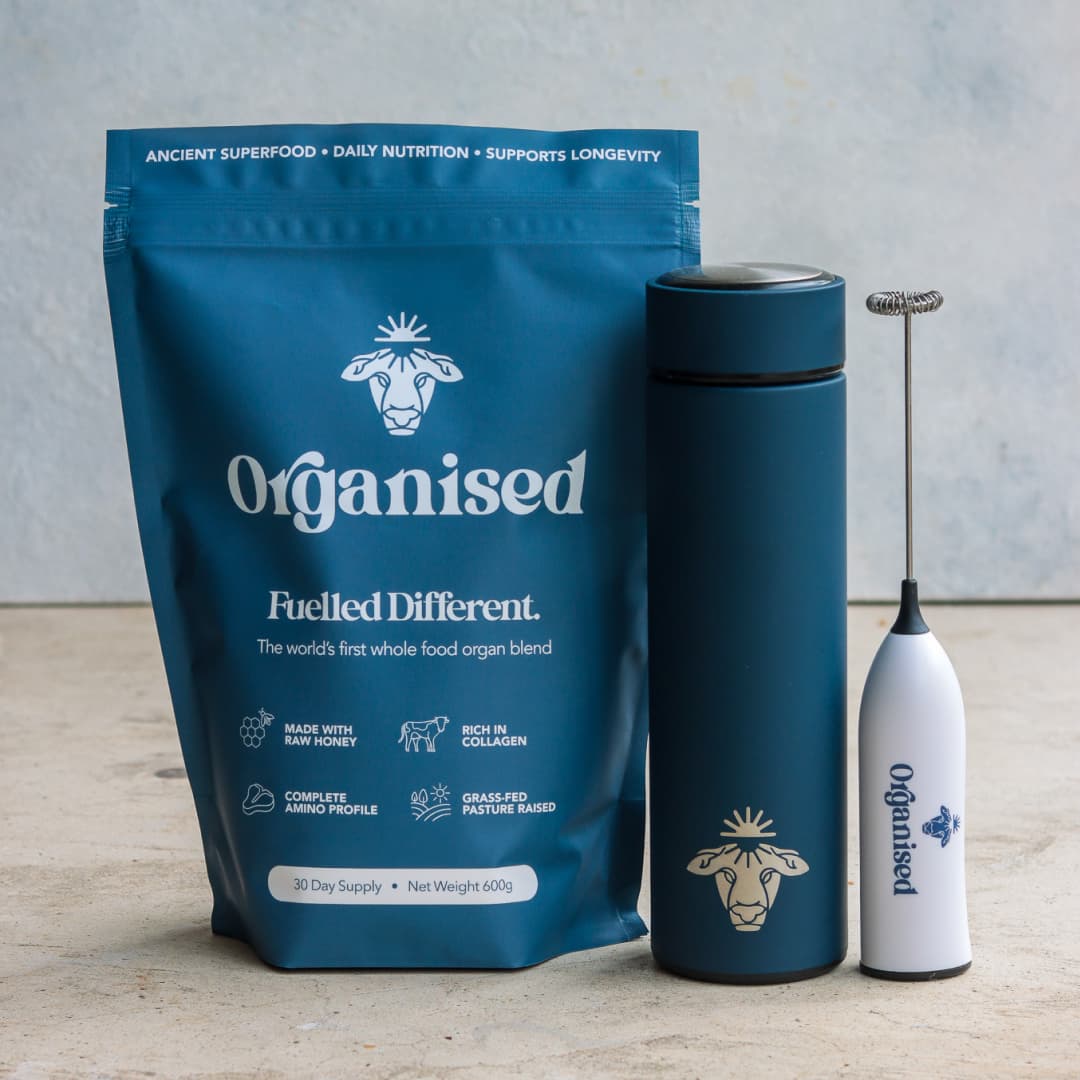
Nourishment, without the taste.
Cooking organs twice a week doesn’t fit every routine. Organised is the whole organ in a capsule — grass-fed, freeze-dried, nothing else.