Collagen-Rich Beef Stew: Slow-Cooked Nourishment
Most beef stew is made with lean cuts, treated as the primary protein, cooked quickly so it stays tender. This approach makes for tough, fibrous meat. Real beef stew comes from the opposite strategy: slow-cooked collagen-rich cuts that become gelatinous and nourishing.
By Niall Kiddle, Founder, Organised

Reviewed by Pedro Rodrigues, Agronomist (farming and sourcing only) ·
6 min read · Published · Updated · 1 cited source
Makers of the Organised Daily blend, a grass-fed beef organ supplement from regenerative UK farms
- Prep
- 20 min
- Cook
- 4 hr
- Total
- 4 hr 20 min
- Type
- Main
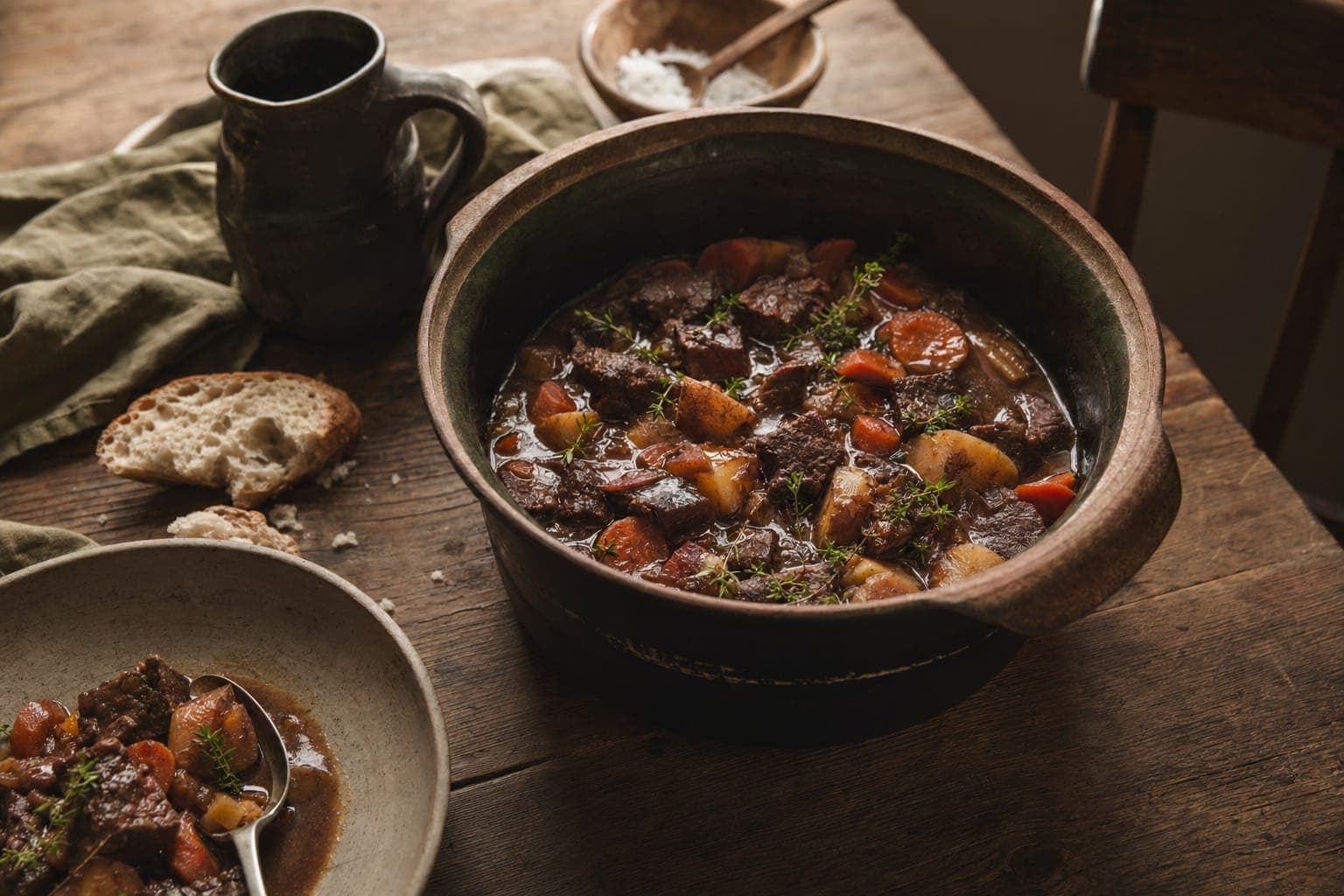
When you cook collagen slowly, gently, for hours, it converts to gelatine. The broth becomes rich and silky. The meat becomes tender from the inside out, not because it's been pulverised, but because the connective tissue has melted into it. You end up with stew that's genuinely good for your gut and your joints, not just stew that tastes good.
This is a winter recipe. It's also a slow-cooker recipe. Three hours in the morning before work, and dinner is ready when you come home. That timing is not accidental. Slow-cooked collagen stew is practical as well as nourishing.
Why cut matters
Collagen lives in connective tissue. In beef, that means cuts like chuck, short ribs, oxtail, and brisket. These are the cuts that butchers and grandmothers have always used for stew. They're also the cheapest cuts in the butcher shop because most modern cooks don't know what to do with them.
When you cook these cuts slowly, the connective tissue (collagen and elastin) breaks down into gelatine and amino acids.1 The broth thickens naturally, becoming velvety. The meat doesn't toughen. It becomes so tender it falls apart under the pressure of a spoon.
A lean cut like sirloin will never achieve this. It has no connective tissue, so no matter how long you cook it, it won't contribute to the stew's richness. It becomes stringy and dry.
The cut you choose determines the entire character of your stew. Choose a collagen-rich cut and your stew becomes restorative. Choose lean, and you're just making soup.
The collagen extraction process
Collagen extraction isn't complicated. It's just heat, time, and water. The process happens in three stages.
First, you brown the meat. This isn't for flavour (though that helps). It's for texture. A browned exterior seals in some of the meat's moisture, leading to more tender results. The browning takes about 10 minutes in a hot pot with a little oil.
Second, you add liquid (stock or water) and vegetables, then cook very gently, at a temperature just below a boil. Too hot and the meat toughens. Too cold and collagen never converts to gelatine. The sweet spot is a slow simmer, barely bubbling.
Third, you wait. Slow-cooking for 3 to 4 hours is the minimum. Overnight (8 to 10 hours) in a slow cooker is ideal. The longer the cooking, the more collagen converts to gelatine, and the richer the broth becomes.
This isn't active cooking. You brown meat and vegetables, add liquid, turn the heat to low, and leave it alone. You're not stirring, tasting, adjusting. You're simply letting time do the work.
Ingredients and sourcing
- 1kg beef chuck, cut into large chunks (or 800g chuck plus 300g short ribs for extra collagen)
- 2 medium onions, roughly chopped
- 4 large carrots, cut into chunks
- 3 medium potatoes (waxy varieties like Charlotte or fingerlings), quartered
- 4 cloves garlic, crushed
- 750ml beef stock (or water if you can't find good stock)
- 250ml red wine (optional but adds depth)
- 2 bay leaves
- 4 to 5 sprigs fresh thyme
- 1 tsp sea salt
- 1/2 tsp black pepper
- 2 tbsp olive oil
The beef should come from a proper butcher, not a supermarket. Grass-fed beef has more connective tissue and deeper flavour. Ask for chuck for stewing. Short ribs are premium but worth including if available; they're packed with collagen around the bone.
The stock matters. Homemade bone broth is ideal. Shop-bought stock is fine if the ingredient list is short (meat, salt, water, herbs). Avoid bouillon cubes; they're mostly salt and MSG.
The vegetables should be fresh. Winter root vegetables (carrots, parsnips, turnips, swedes) are ideal. Potatoes provide substance. Onions and garlic are non-negotiable.
Get recipes and routines, free
Two short reads a week of simple, nutrient-dense recipes and daily routines.
By signing up you agree to receive emails from us. No spam, unsubscribe anytime.
The method, step by step
Pat your beef chunks dry with a clean cloth or paper towel. Moisture on the surface prevents proper browning. Season generously with sea salt and black pepper.
Heat your heavy-bottomed pot or Dutch oven over a high heat with the olive oil. You want the oil shimmering, nearly smoking. Working in two batches, brown the beef pieces for 2 to 3 minutes on each side. You're not cooking them through. You're just sealing the surface. Transfer the browned meat to a plate.
In the same pot, add the chopped onions and cook gently for 3 to 4 minutes until softened and translucent. Add the garlic and cook for another minute. The pot still smells of beef, now layered with sweet onion and sharp garlic.
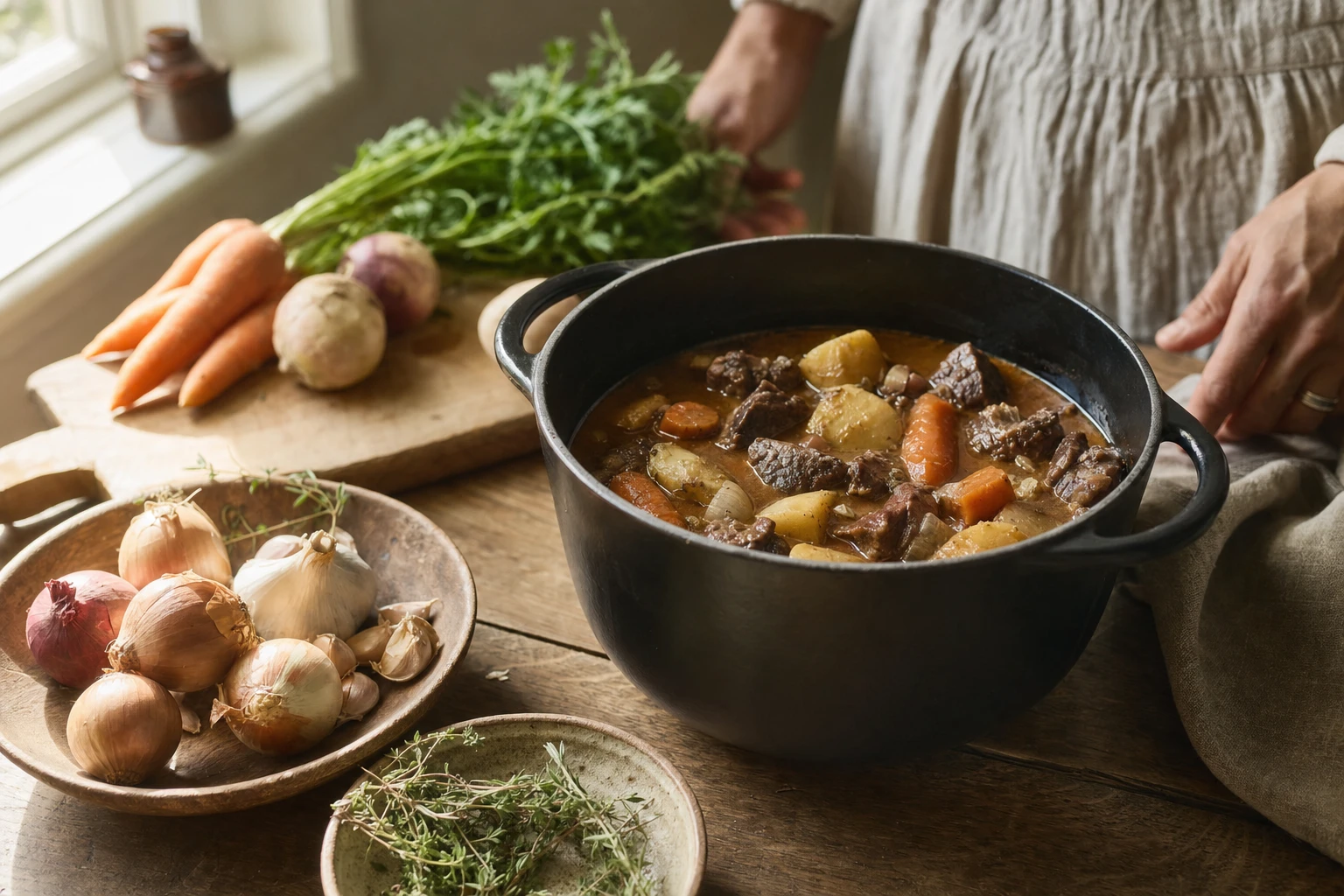
Return the beef to the pot. Add your wine (if using) and scrape the bottom of the pot with a wooden spoon, lifting all the caramelised bits. This is called deglazing. Let the wine simmer for 2 minutes, then add your stock. Add the bay leaves and thyme. The liquid should come about three-quarters up the meat, not completely submerging it.
Bring to a bare simmer (small bubbles breaking the surface, not a rolling boil). Cover the pot and place it in a 160C oven, or transfer everything to a slow cooker set to low heat.
If using the oven: cook covered for 3 to 4 hours. If using a slow cooker: cook on low for 6 to 8 hours, or on high for 3 to 4 hours (though low and slow is genuinely better).
After 2 hours (if using the oven) or 4 hours (slow cooker), add the carrots and potatoes. They need less time than the meat; adding them at the beginning makes them mushy.
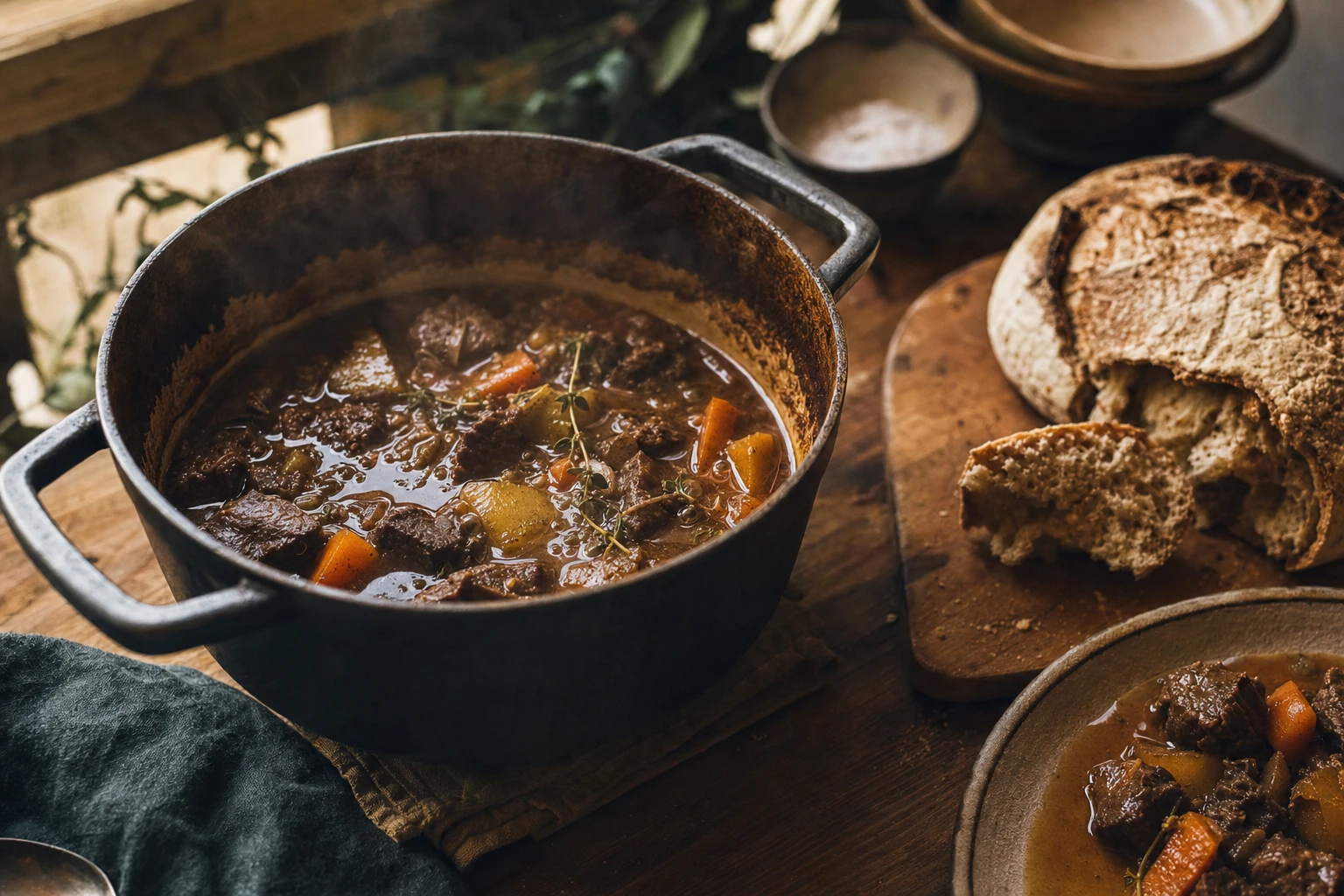
The stew is done when the meat shreds easily under pressure from a wooden spoon, and the broth is rich and slightly syrupy. If you skim the surface after cooking, you'll see the layer of gelatine that has rendered from the meat. That's the collagen doing its work.
The stew should taste primarily of beef, enriched by the vegetables and herbs. It shouldn't taste spicy, sweet, or heavily seasoned. The restraint lets the collagen broth shine.



1 of 9
Daily blend
100,000+ thriving families4.9 on Trustpilot
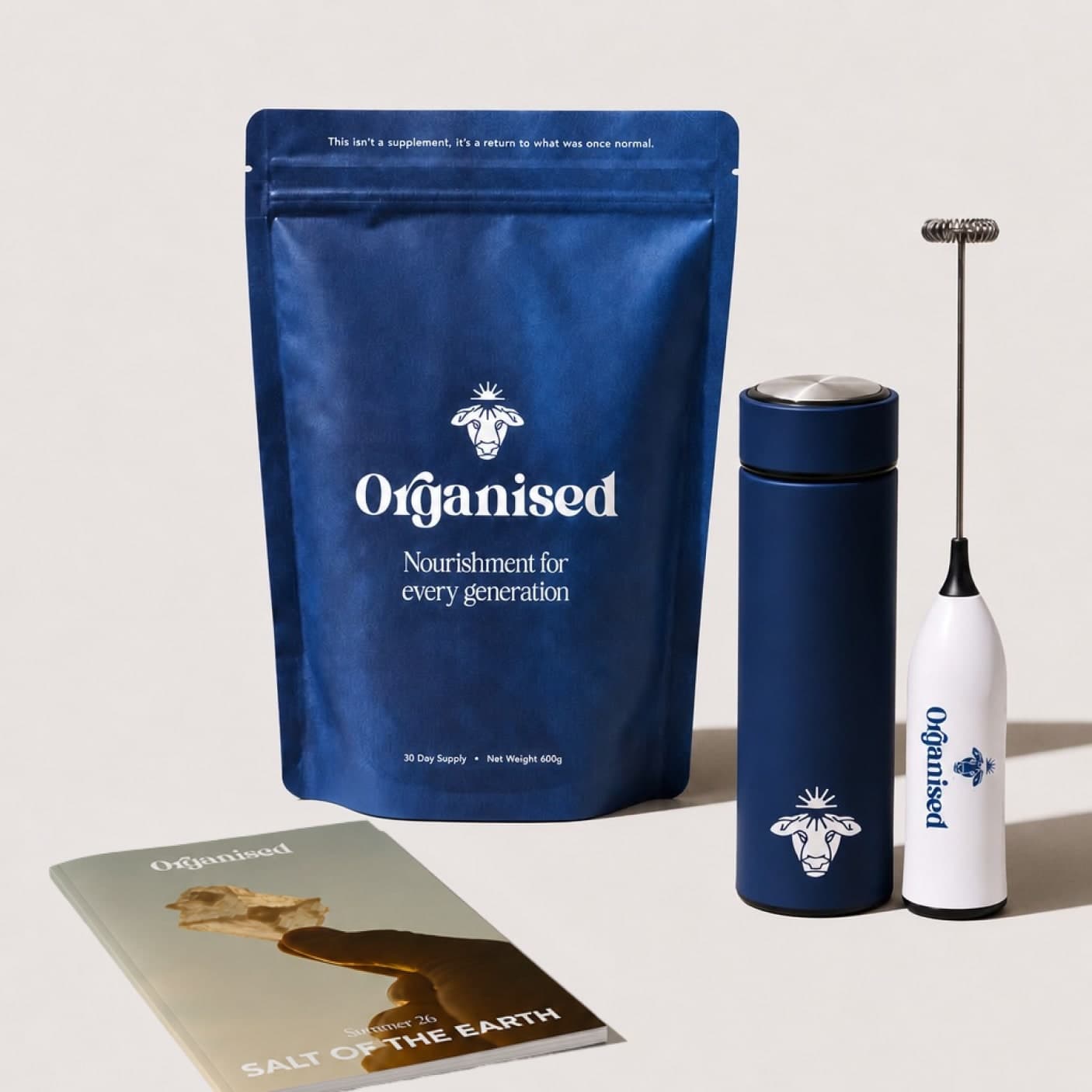
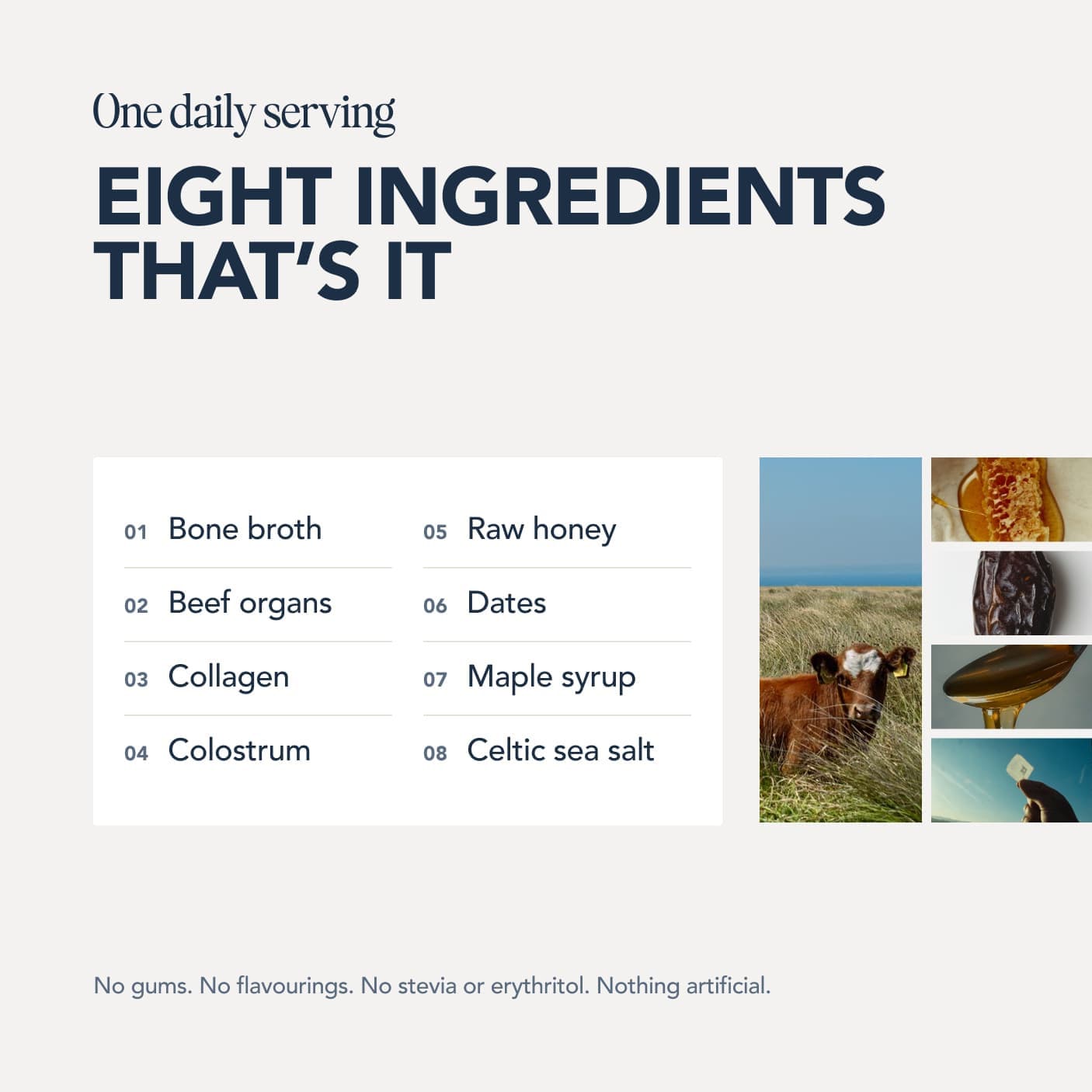
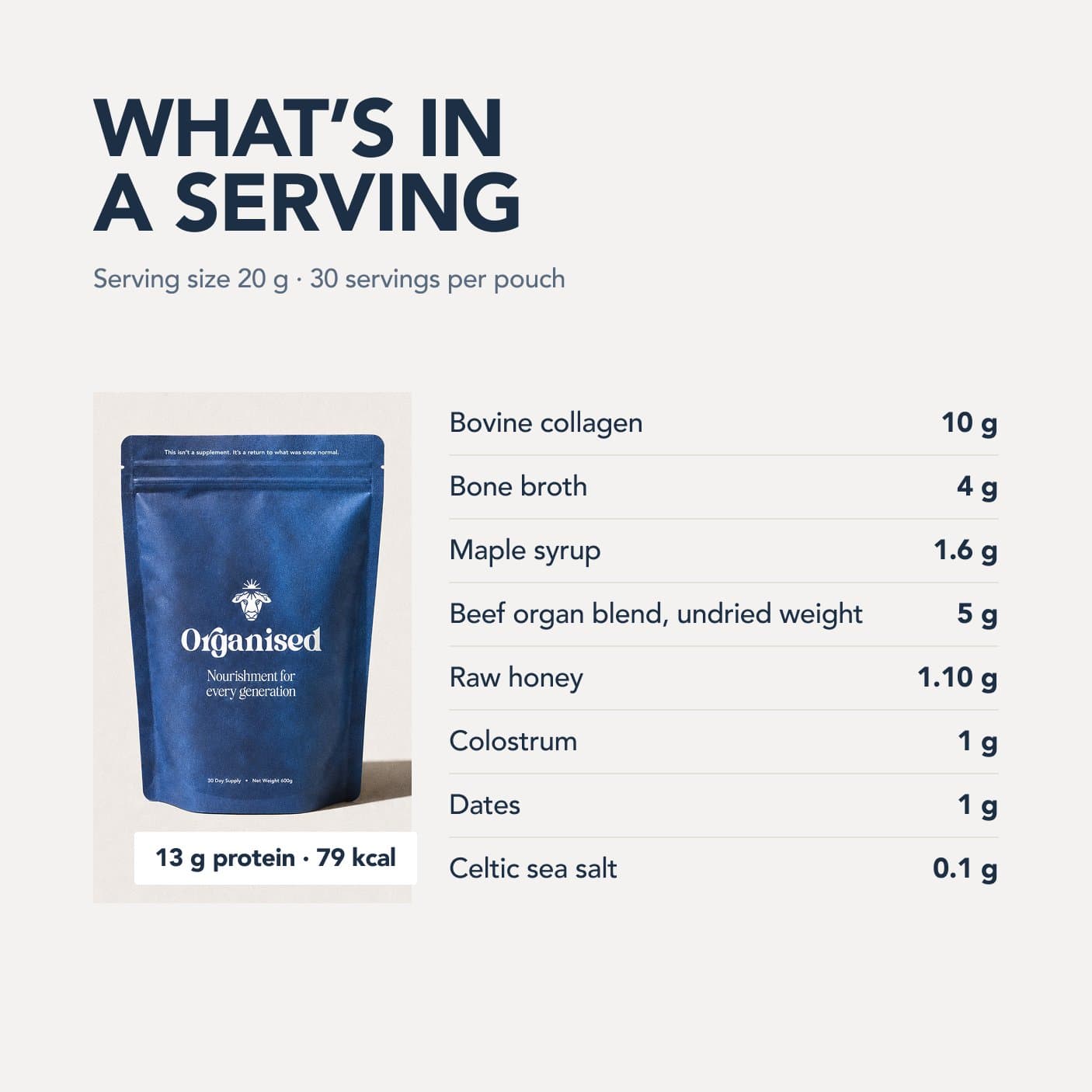
Eight real ingredients built around grass-fed beef organs, collagen and colostrum. Nothing synthetic added.
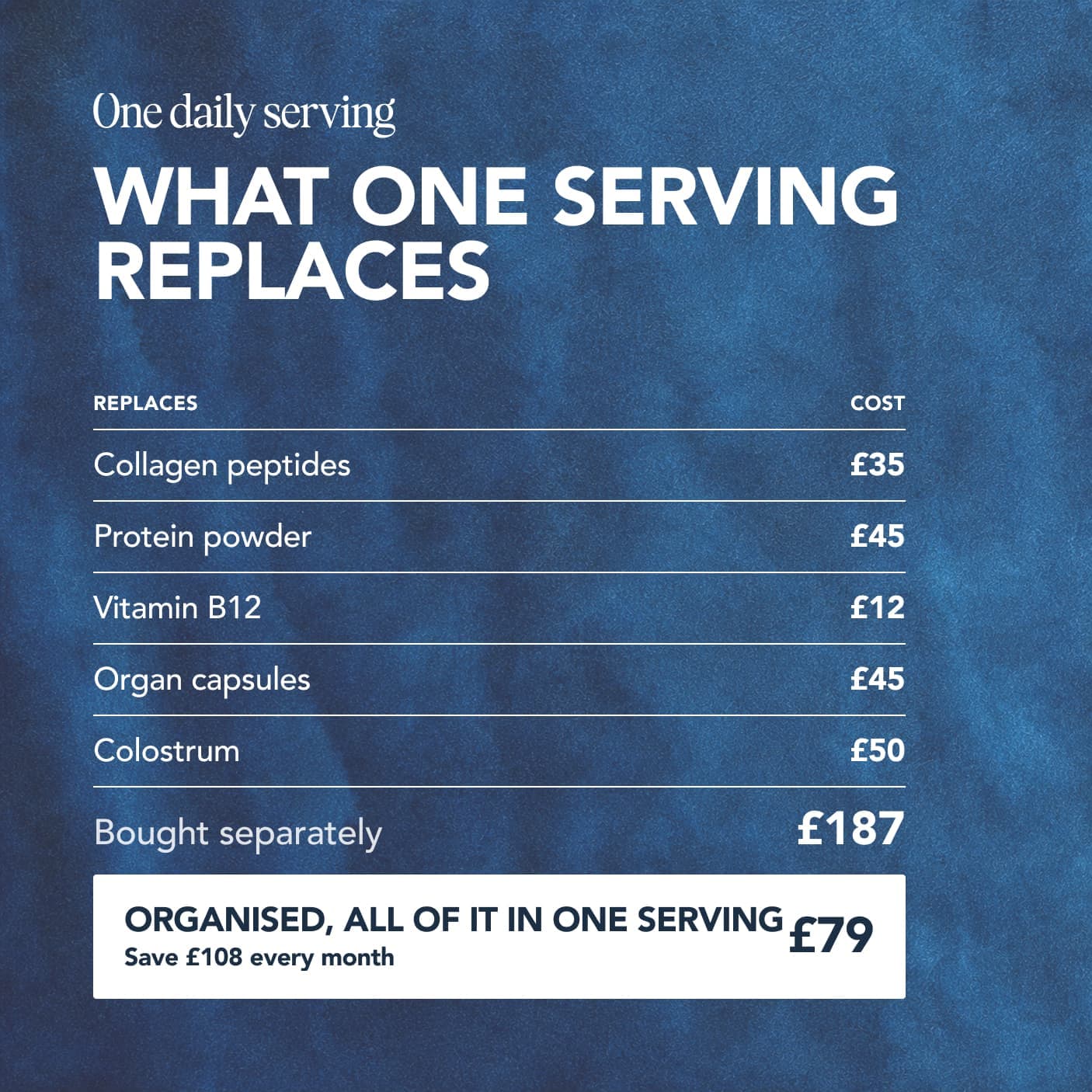
Free with your first order, worth £38. Plus £10 off the pouch with a subscription.


Free UK shipping · Made in England · 100 day money back guarantee on your first pouch · Skip, pause or cancel anytime
Seasonality and vegetables
This is autumn and winter food. Late September through March. Use vegetables that are actually in season where you live. In winter, that's root vegetables. In autumn, it's mushrooms, leeks, and root vegetables.
Mushrooms are particularly good additions if you're cooking in autumn. A handful of dark field mushrooms or ceps add earthiness and umami. Add them in the same batch as the carrots and potatoes.
Avoid using soft vegetables (courgettes, tomatoes, beans) in this stew. They dissolve into the broth rather than hold their shape. This stew is about structure, not softness.
Serving and storage
Serve in a wide, shallow bowl with crusty bread for soaking up the broth. A small dollop of wholegrain mustard alongside is traditional and not unwelcome.
This stew actually improves over a day or two as flavours meld. Make it the night before you want to eat it. The night of cooking, skim the top layer of fat (it'll solidify once cold) and store in the fridge. Reheat gently on the stovetop with a splash of water or broth to thin it.
The stew freezes well for up to 3 months. Portion it into containers, leaving a little space for expansion. Thaw overnight in the fridge before reheating.
A note on nutrition
This stew delivers collagen, amino acids (particularly glycine and proline), minerals from both the broth and the vegetables, and fat-soluble vitamins from the beef.1 It's not just food. It's actively restorative.
A bowl of this stew does for your gut and joints what a supplement could never do. It's food in its proper form. Slow-cooked, whole, nourishing. This is what winter eating should be.
References
Every source below was checked on 27 August 2026. Each PubMed, PMC and DOI identifier was resolved against NCBI or Crossref, and what it opens is printed under the citation, so you can see the link goes where the citation says without leaving the page. Where a citation and its identifier disagreed, the citation was corrected to the record or the reference was deleted along with the sentence marker that pointed at it, and where the resolved paper turned out not to support the sentence, the sentence was cut back to what it does support. Borrowed authority is worse than none, because it looks like rigour.
- Ricard-Blum S. The Collagen Family. Cold Spring Harbor Perspectives in Biology, 2011. PMC3003457.Checked 27 August 2026: PMC3003457 opens Ricard-Blum S, The collagen family. Cold Spring Harb Perspect Biol 2011;3(1):a004978. PubMed indexes it as: Review.
Who wrote and reviewed this guide
Niall Kiddle
Author · Founder, Organised
Niall is the founder of Organised. He started the company in 2024 after fixing his own health the slow way: in 2022 he swapped a cupboard of synthetic supplements for real food, raw milk, organ meats, bone broth and honey, and felt the difference within months.
Areas of expertise: Ancestral nutrition, Organ meats, Whole-food supplementation, Gut health, Regenerative sourcing
Read Niall's full profile
Pedro Rodrigues
Reviewer · Agronomist (farming and sourcing only)
Pedro is the agronomist Organised works with on farming and sourcing. His job on the guides is to keep the science honest: he reviews what we publish about soil health, regenerative agriculture, grazing and the way food is actually produced.
Areas of expertise: Regenerative agriculture, Agronomy, Soil health, Grass-fed farming, Food sourcing
Reviewed this guide on
Read Pedro's full profileMore on recipes
View all- 10 Ways to Use Organised That Aren't Just a Shake
- 5-Minute High-Protein Breakfasts Using Organised
- Ancestral Breakfast Ideas from Around the World
- Bone Broth from Scratch: A Step-by-Step Guide
- Energy Balls with Organised, Dates and Raw Honey
- Gut-Healing Marshmallows with Collagen and Raw Honey
- How to Make Bone Marrow Butter
- How to Make Your Own Gelatine Gummies
- Liver Pate for Beginners: A Gentle Introduction to Organ Meats
- Matcha Latte Gummies with Collagen and Gelatine
- Organ Bolognese: The Family Dinner That Heals
- Organised Chia Pudding with Raw Honey and Berries
Browse the guides library
All guidesKeep reading

Recipes & routines
Evening Wind-Down: A Nutrition Protocol for Better Sleep
A science-backed evening nutrition protocol for deeper sleep. Timing, glycine-rich foods, magnesium, and how to reduce blue light exposure.
Recipes & routines
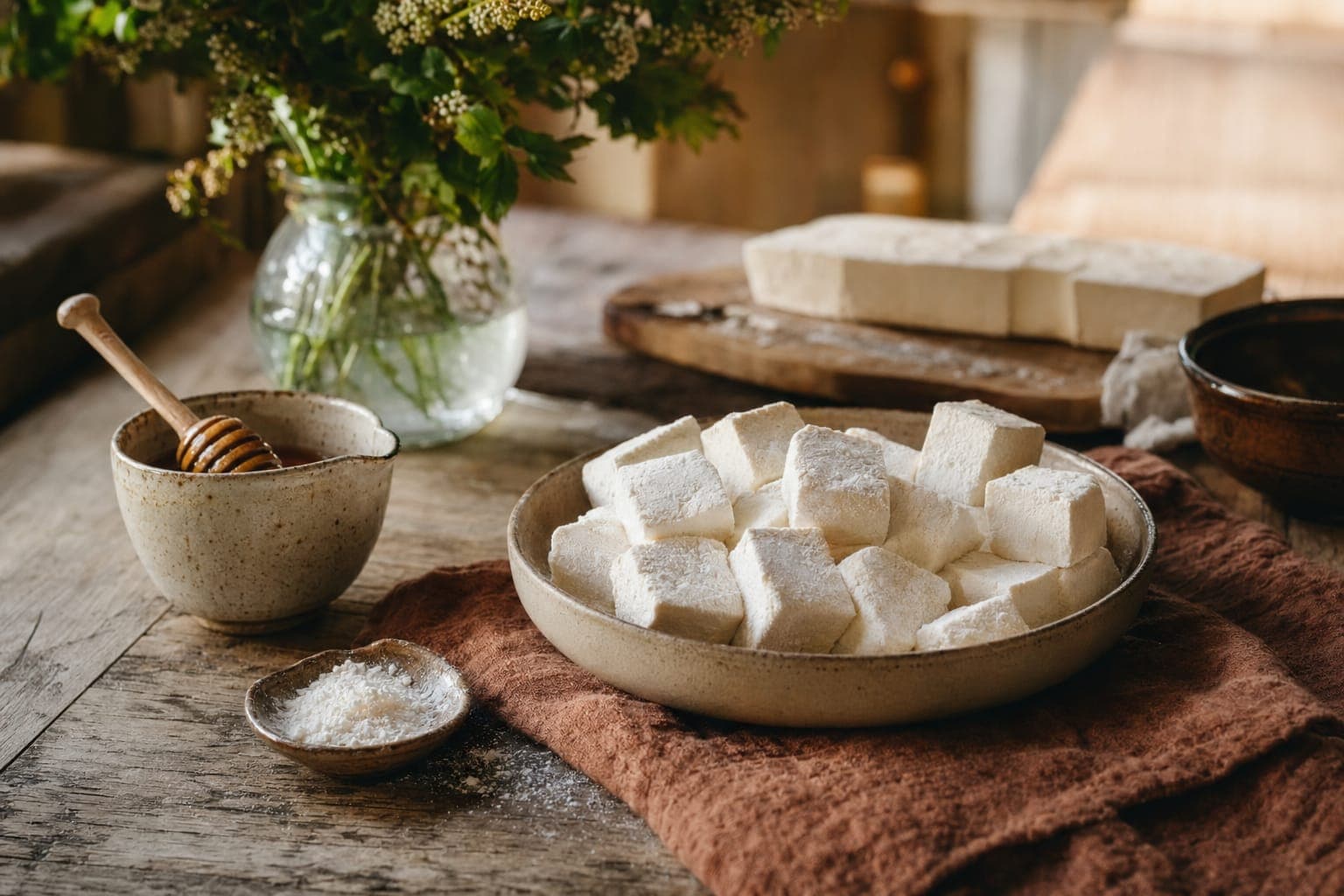
Gut-Healing Marshmallows with Collagen and Raw Honey
Learn to make gut-healing marshmallows with collagen and raw honey. A shareable treat that sneaks nutrition into every bite. Easy recipe with video tips.
Recipes & routines
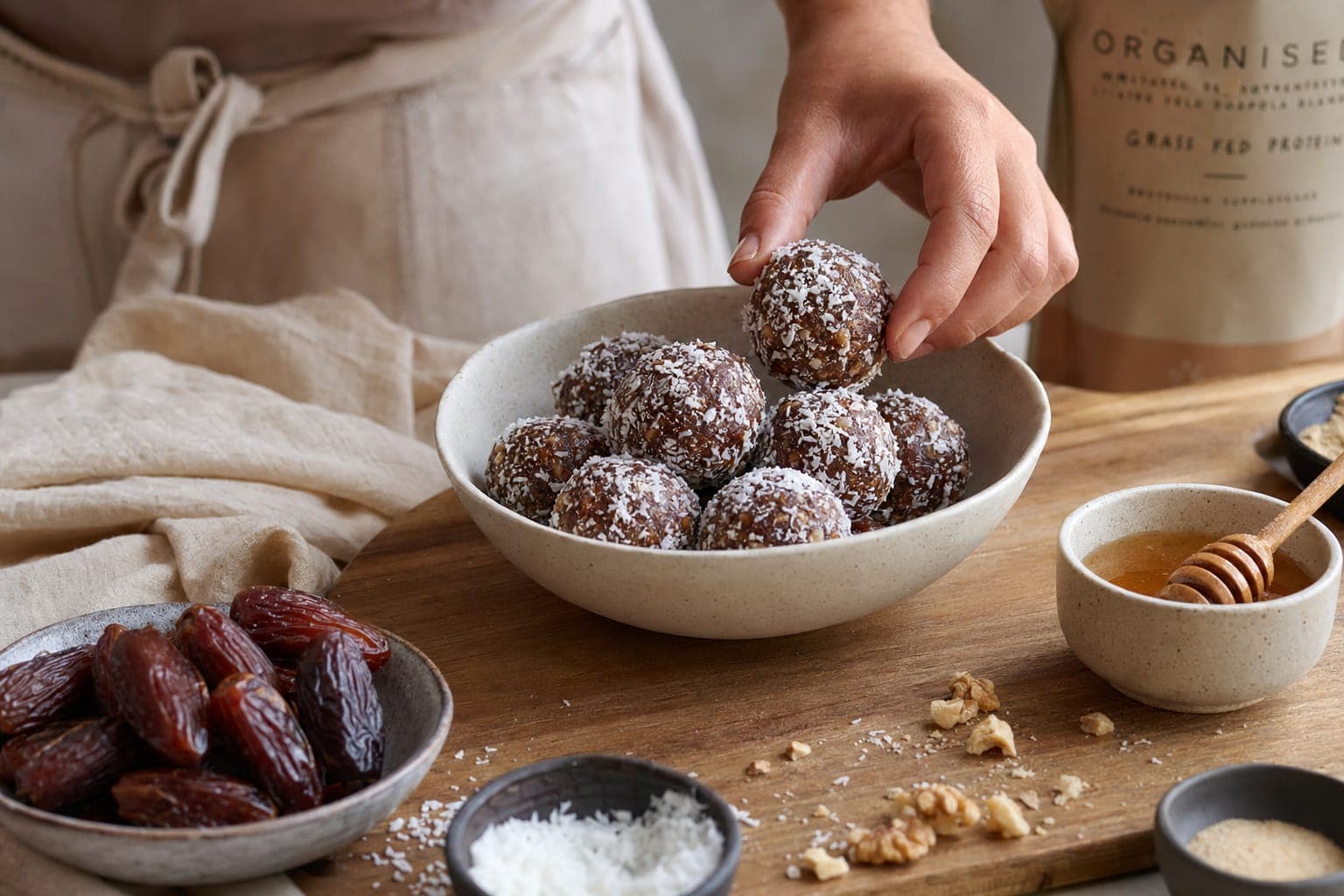
Energy Balls with Organised, Dates and Raw Honey
Make no-bake energy balls with Organised, dates, and raw honey. Perfect lunch box, pre-workout, or on-the-go snack. Simple recipe.
Real food, made effortless
Add it to my routineA few ways to use it
All recipesEnergy Balls with Organised, Dates and Raw Honey
Make no-bake energy balls with Organised, dates, and raw honey. Perfect lunch box, pre-workout, or on-the-go snack. Simple recipe.
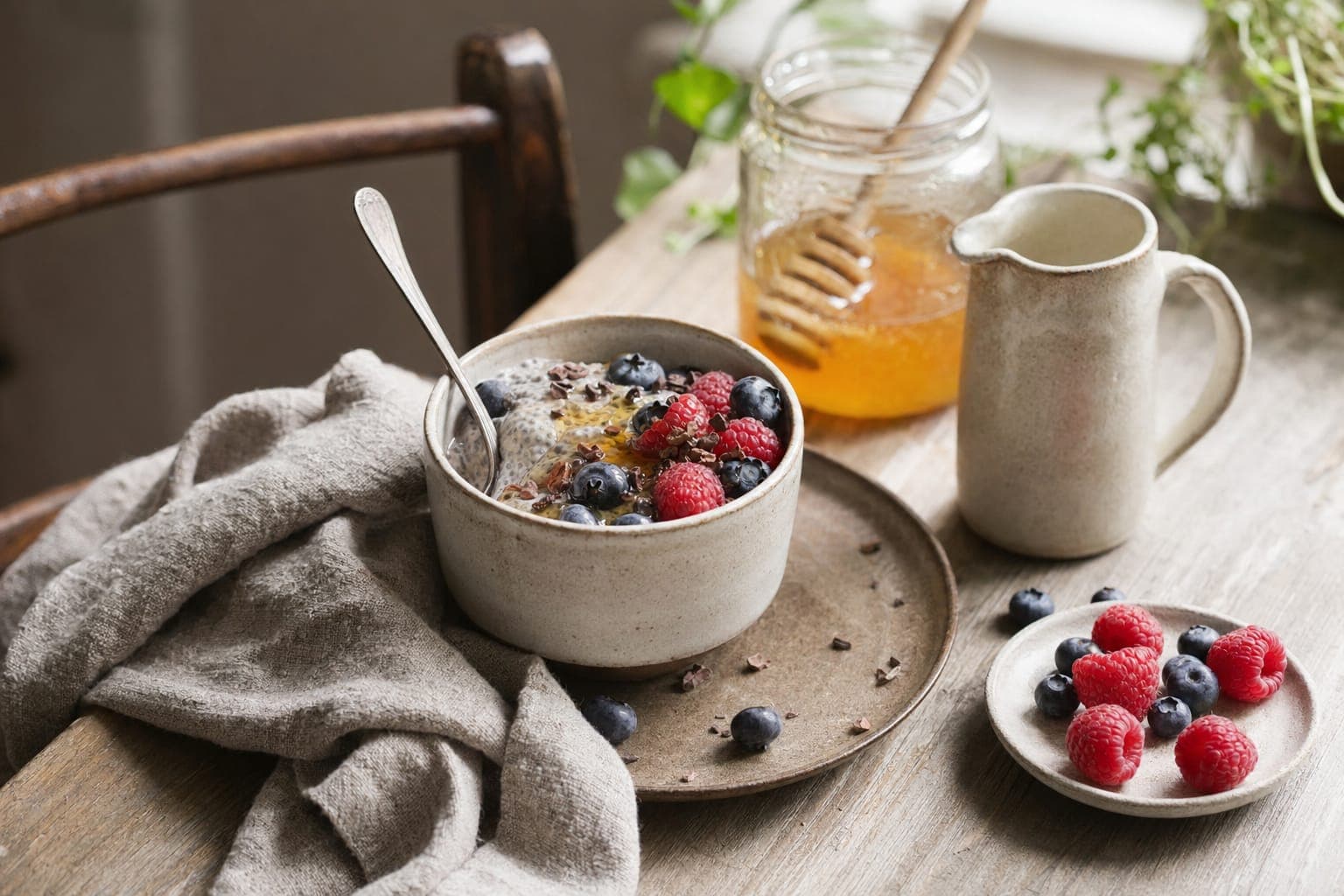
Organised Chia Pudding with Raw Honey and Berries
A no-cook chia seed pudding made with raw milk, collagen, berries, and raw honey. Prep it the night before and eat for breakfast.
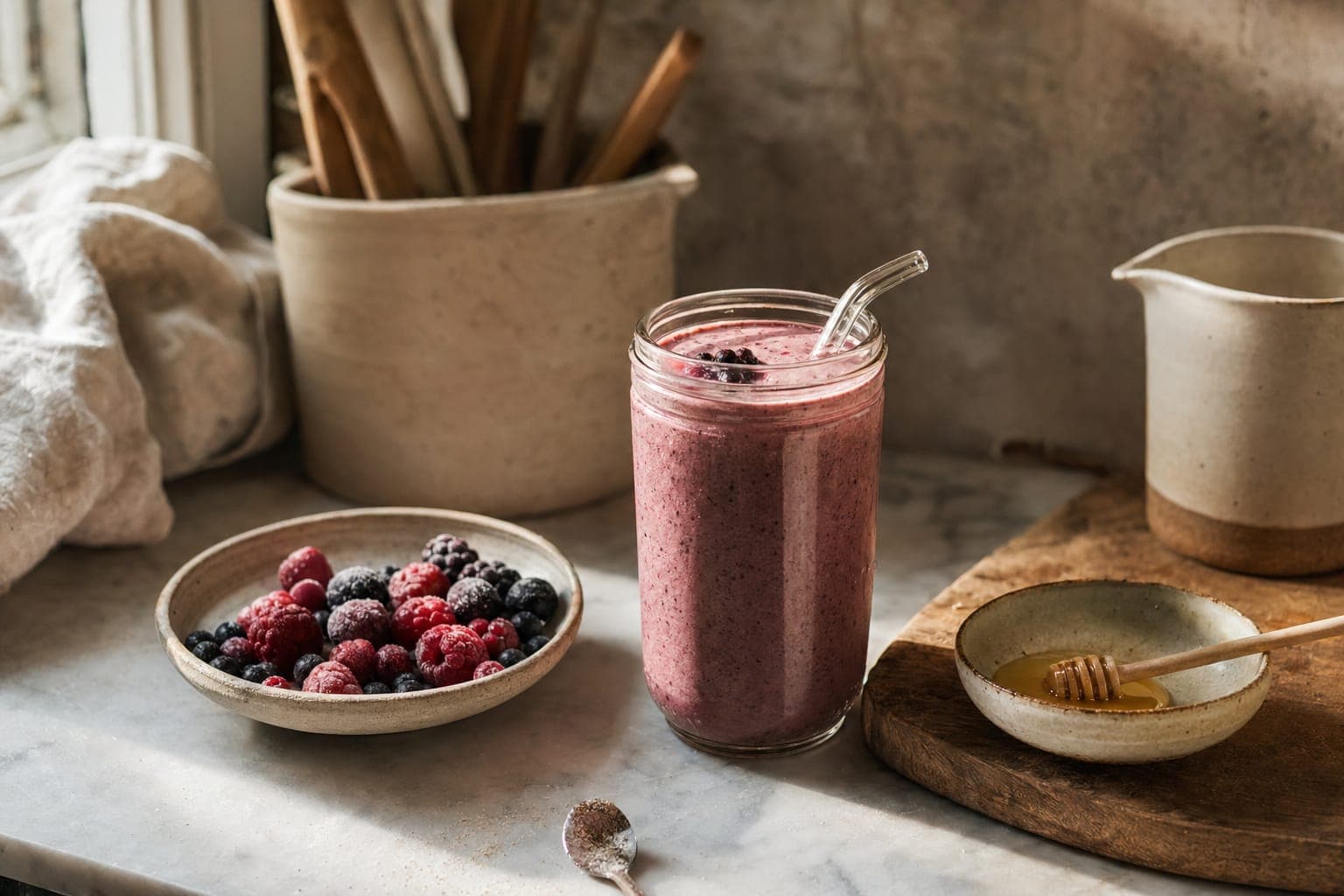
The Organised Recovery Smoothie for After Exercise
A recovery smoothie made with beef protein, raw milk, frozen berries, collagen, and honey. Optimal nutrition in the 30-minute window after exercise.


 Join over 100,000+ members
Build a better food system with us
The Organised community is thousands of people choosing real food and backing the farmers who grow it, all of us trying to leave the world a little better than we found it. If that is what you care about too, you belong here.