Raw Milk Ice Cream with Organised
Ice cream is often where nutrition goes to die. By the time shop-bought ice cream reaches your freezer, it's been through homogenisation, pasteurisation, and chemical stabilisers. Raw milk ice cream is the inverse. It's genuinely nourishing whilst tasting exactly like an indulgence.
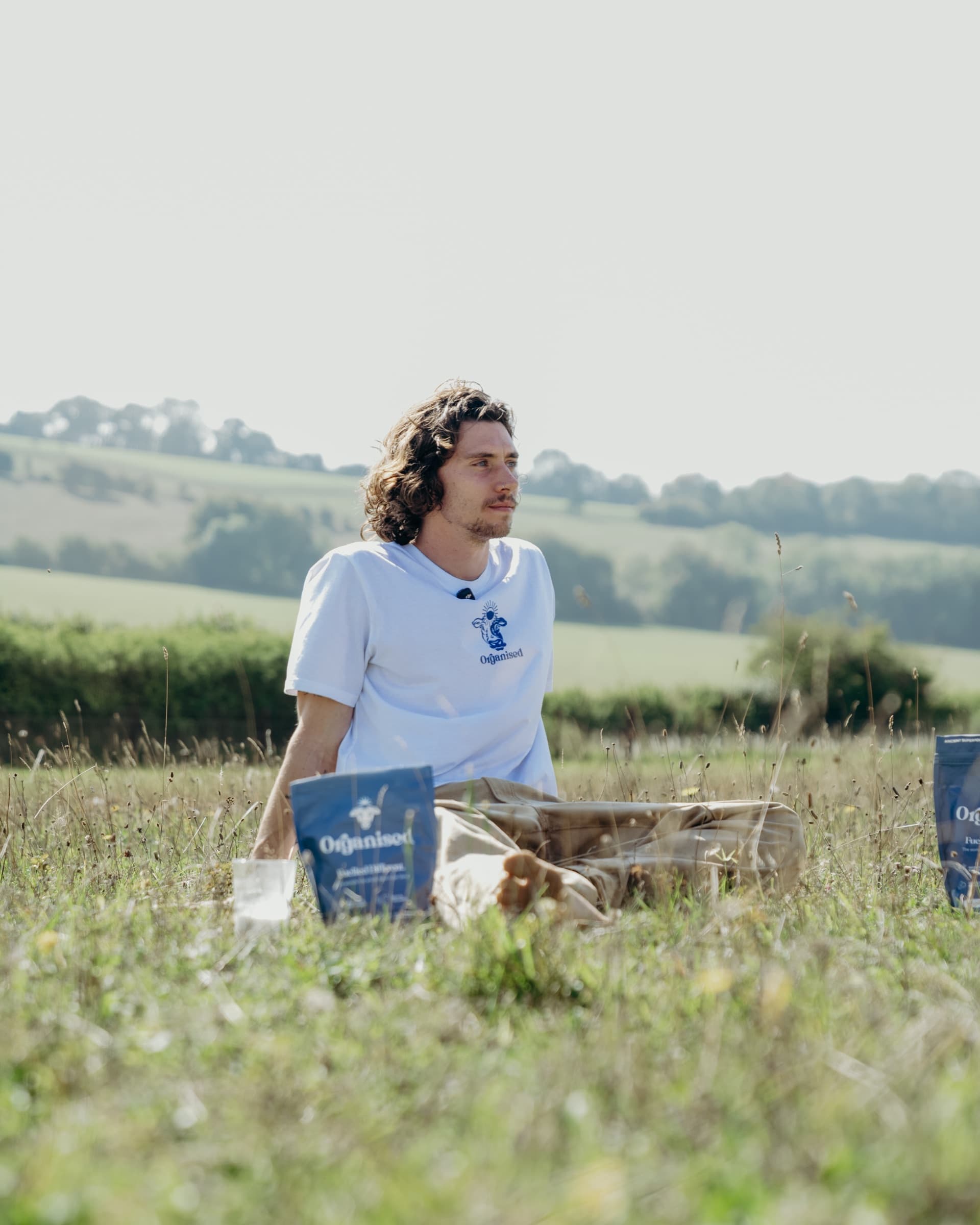
By Niall Kiddle, Founder, Organised

Reviewed by Pedro Rodrigues, Agronomist (farming and sourcing only) ·
5 min read · Published · Updated · 2 cited sources
Makers of the Organised Daily blend, a grass-fed beef organ supplement from regenerative UK farms
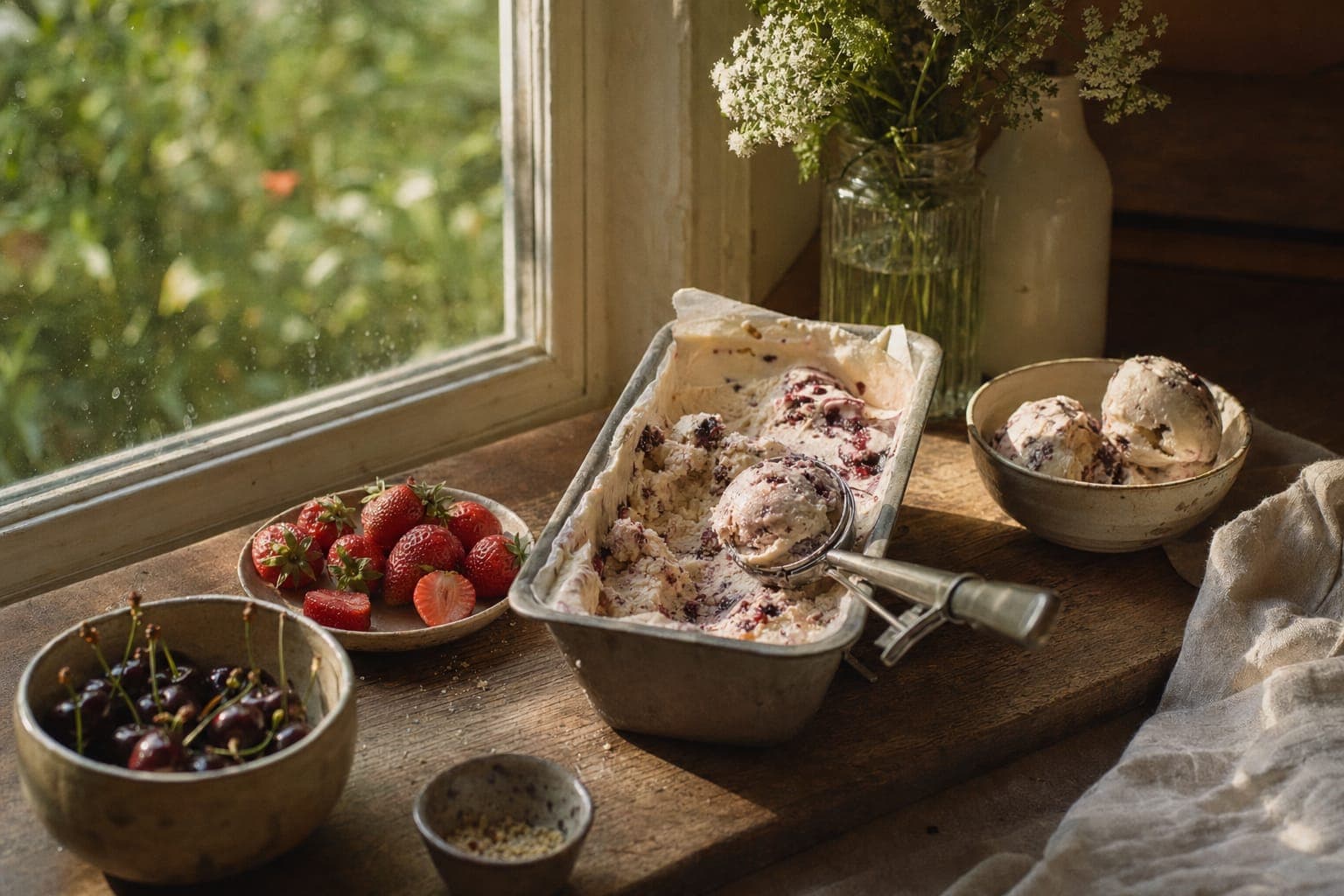
Raw milk is milk in its whole form, unheated and unprocessed. It contains live enzymes, beneficial bacteria, and fat-soluble vitamins that pasteurisation alters.1 When you freeze raw milk with proper technique, those elements remain intact. You're eating ice cream that's both delicious and alive with nutrition.
The addition of Organised turns ice cream into something that can genuinely be called food. You're not adding a supplement shake taste. You're adding a naturally sweet blend, its sweetness from raw honey, dates and maple syrup, that deepens the creaminess and extends satiety. One serving leaves you satisfied, not hungry again in 20 minutes.
Why raw milk changes everything
The difference between raw and pasteurised milk is the difference between food and food product. Raw milk is fresh. It tastes richer, creamier, with a slightly sweet undertone. Pasteurised milk tastes flat by comparison.
In ice cream, this difference is magnified. The fat in raw milk stays properly emulsified without the chemical stabilisers that conventional ice cream relies on. The flavour is cleaner, more distinct. Vanilla actually tastes like vanilla. Chocolate actually tastes like chocolate.
Raw milk ice cream is a seasonal luxury that also happens to be genuinely good for you. That's rare enough that it's worth making deliberately.
If you don't have access to raw milk, use the highest-quality pasteurised whole milk you can find. Single-origin dairy is worth seeking out. The difference isn't as dramatic, but it's noticeable.
Ice cream as a delivery vehicle
Organised is naturally sweet and rich, which is exactly what ice cream wants. When you add it, it doesn't create a protein shake taste. It makes the ice cream richer, gently sweeter, and creamier. You're eating what tastes like a traditional dessert, but with protein woven throughout.
This matters because it means your ice cream doesn't just taste good. It actually provides sustained energy. The protein and fat slow the digestion of sugar, preventing the blood glucose crash that normally follows ice cream.
One serving becomes genuinely satisfying. You don't need three. You don't find yourself back at the freezer in an hour. That shift in satiety changes your relationship with frozen desserts entirely.
The basic recipe
You'll need: a blender or food processor, an ice cream maker (or the freezer-and-fork method if you're patient), a bowl, and a whisk.
- 500ml raw whole milk
- 200ml raw double cream
- 3 tbsp raw honey
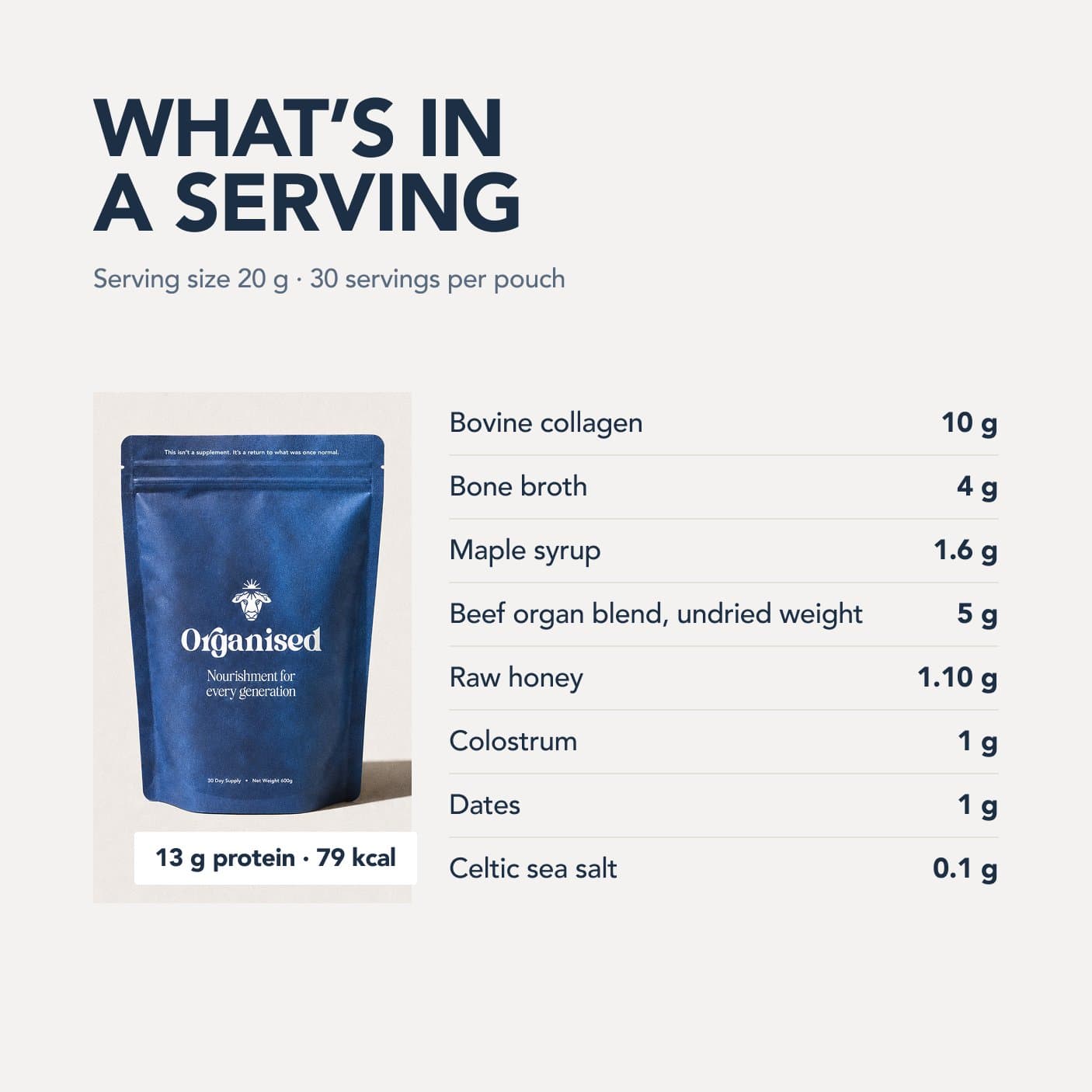
- 20g of Organised (two heaped tablespoons)
- 1 tsp vanilla extract
- Pinch of sea salt
- Flavour-specific ingredients (see variations below)
The ratio of milk to cream determines the texture. More cream makes it richer and less icy. More milk makes it lighter. This recipe hits the middle. The honey is optional; you can reduce it or skip it if you prefer less sweetness.
Whisk the milk, cream, honey, protein powder, and salt together gently. Don't over-whisk; you're mixing, not aerating. Add your flavour ingredients. Chill the base in the fridge for at least 2 hours before churning, or overnight is better. Cold base freezes more evenly.
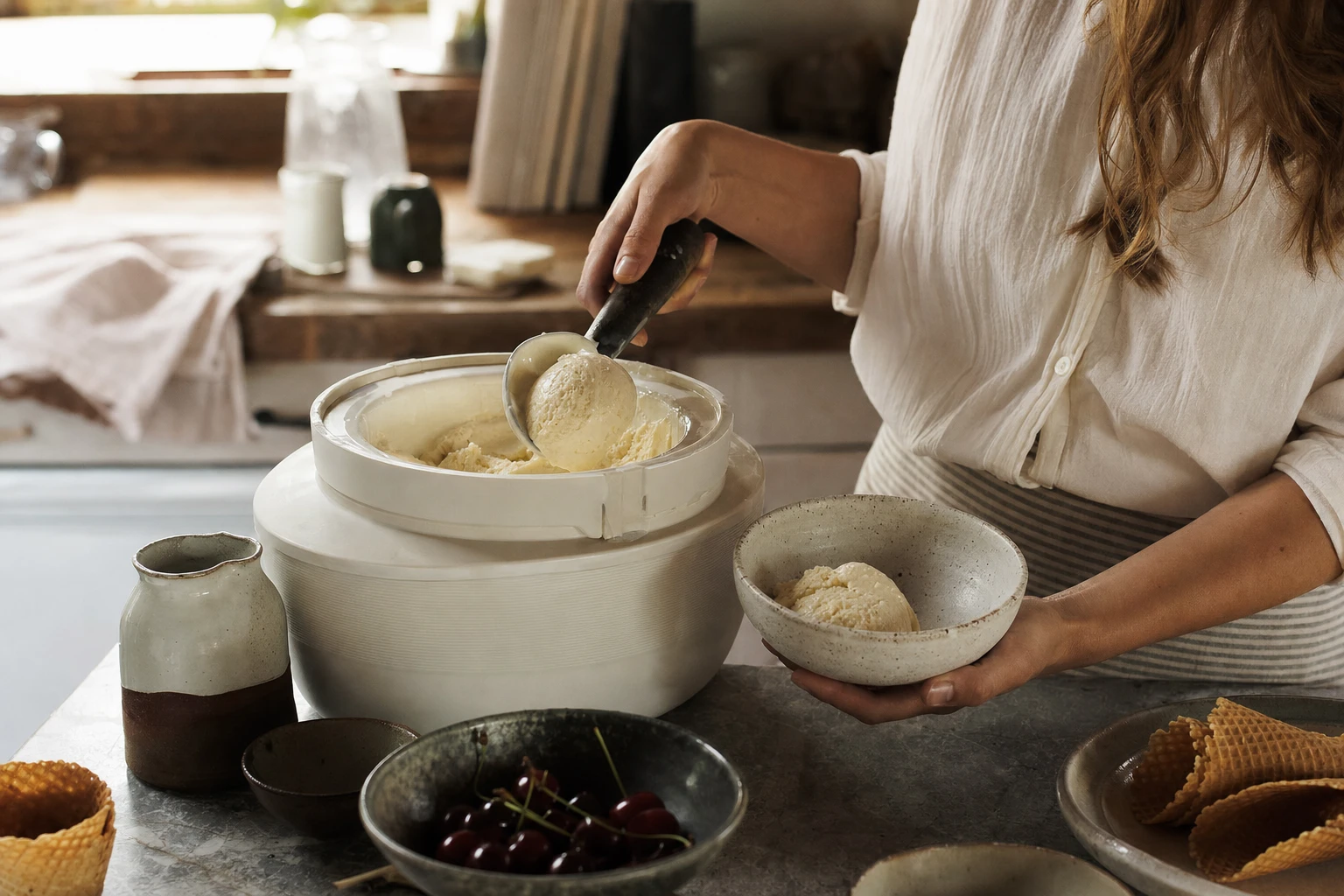
If you have an ice cream maker, follow the manufacturer's instructions. Most machines churn for 20 to 30 minutes, producing soft ice cream that's perfectly scoopable when fresh.
If you're using the freezer-and-fork method: pour the base into a shallow container, freeze for 1 hour, then scrape with a fork every 30 minutes for the next 3 hours. This creates a granular, creamy texture. It's not quite as smooth as machine-churned, but it works.
Get recipes and routines, free
Two short reads a week of simple, nutrient-dense recipes and daily routines.
By signing up you agree to receive emails from us. No spam, unsubscribe anytime.
Variation 1: Vanilla and raw honey
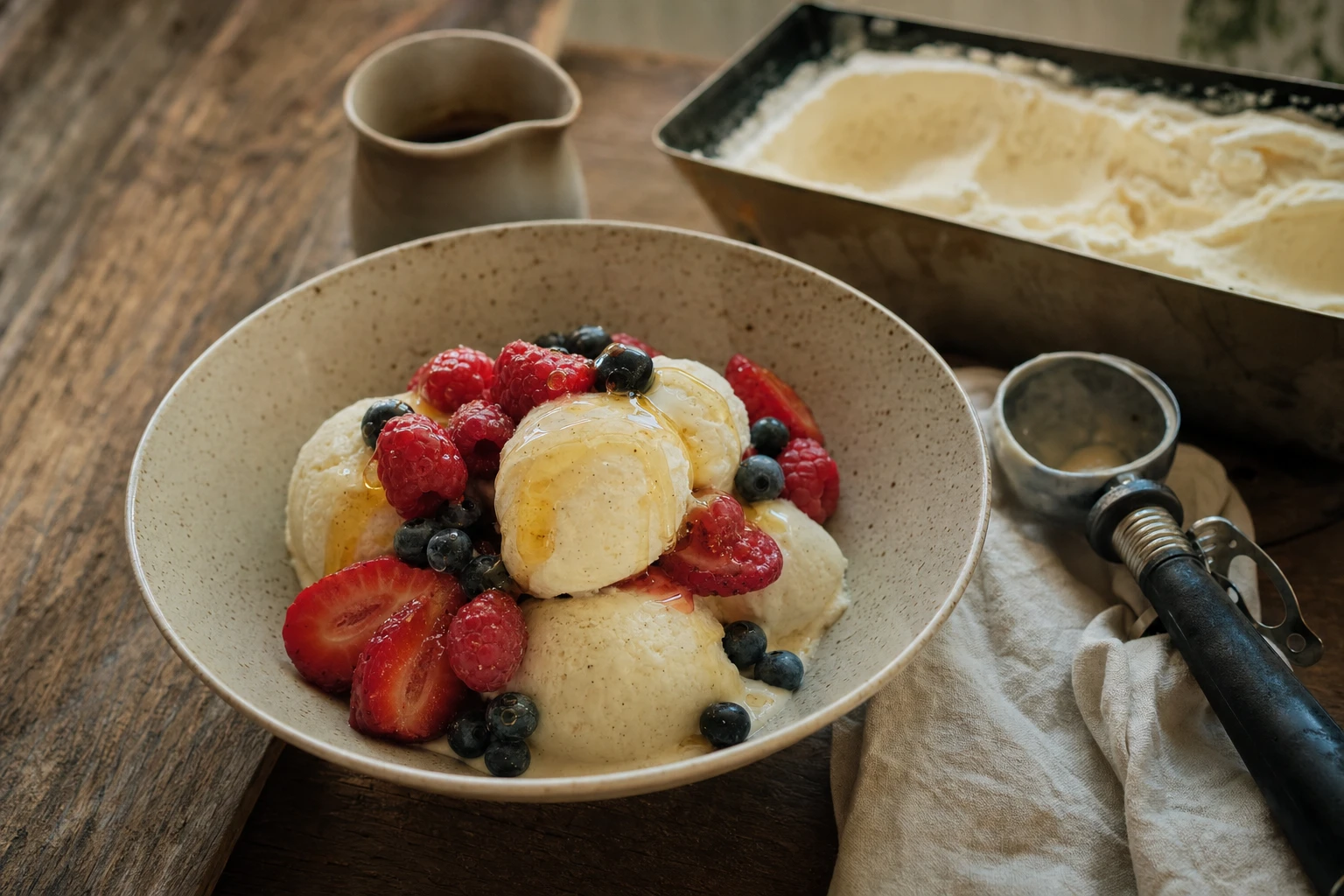
This is the base recipe with an extra teaspoon of vanilla extract. The vanilla becomes the main flavour. Raw honey is the only sweetener, so you taste its subtle caramel notes underneath the cream.
Top with a drizzle of extra raw honey and a tiny pinch of fleur de sel. This simple finish amplifies the flavour considerably.
Variation 2: Dark chocolate and sea salt
To the base recipe, add:
- 40g raw cocoa powder (unsweetened)
- 1 extra tbsp raw honey
- 1/2 tsp vanilla extract (reduced, so cocoa stays central)
- 1/4 tsp sea salt (an extra pinch for saltiness)
Whisk the cocoa powder into the milk mixture first, breaking up all clumps. The cocoa makes the base darker and richer. The extra salt amplifies the cocoa depth and creates the kind of flavour complexity that comes from proper chocolate ice cream, not the sweet-chocolate taste of cheap versions.
Serve with a small sprinkle of fleur de sel on top. The salt-chocolate pairing is classic for a reason.
This ice cream tastes like something a proper ice cream maker would create, except you made it at home and you know every ingredient that's in it.

1 of 9
Daily blend
100,000+ thriving families4.9 on Trustpilot
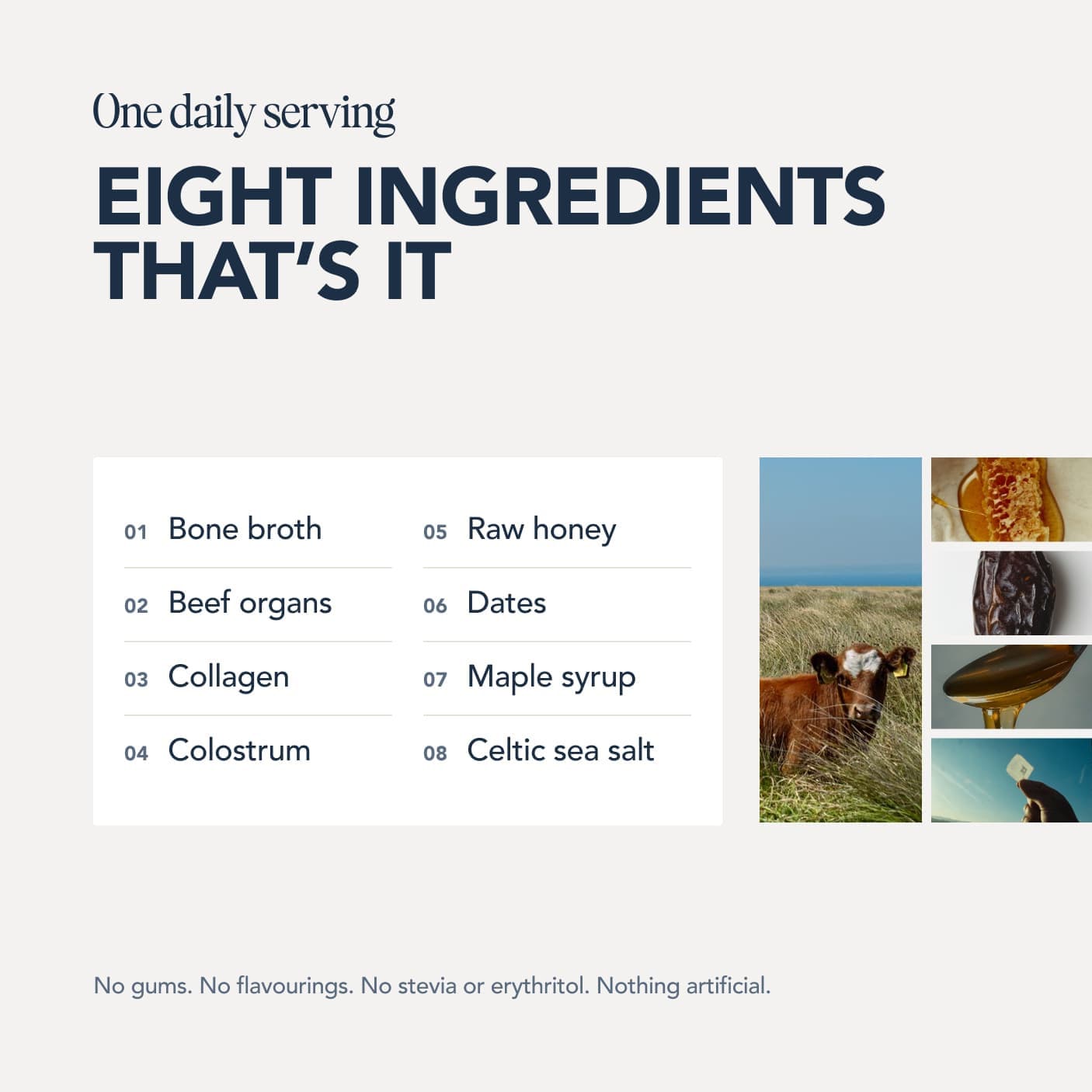
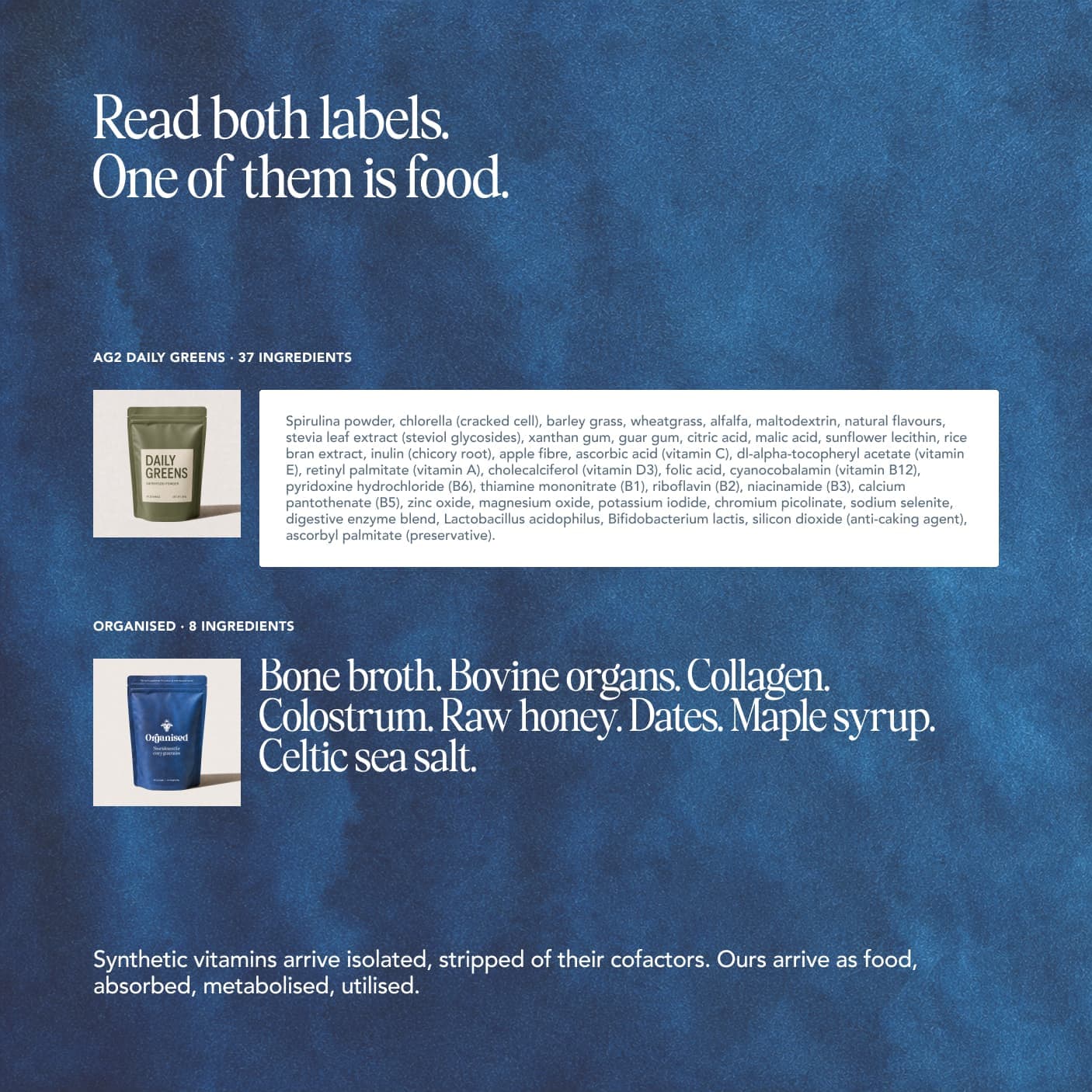
Eight real ingredients built around grass-fed beef organs, collagen and colostrum. Nothing synthetic added.
Free with your first order, worth £38. Plus £10 off the pouch with a subscription.

Free UK shipping · Made in England · 100 day money back guarantee on your first pouch · Skip, pause or cancel anytime
Variation 3: Strawberry and rosewater
To the base recipe, add:
- 200g fresh strawberries (hulled and roughly chopped)
- 1/4 tsp rosewater (start with this; you can add more but you can't take it out)
- 1 tbsp raw honey (extra, for the strawberries)
- Pinch of sea salt
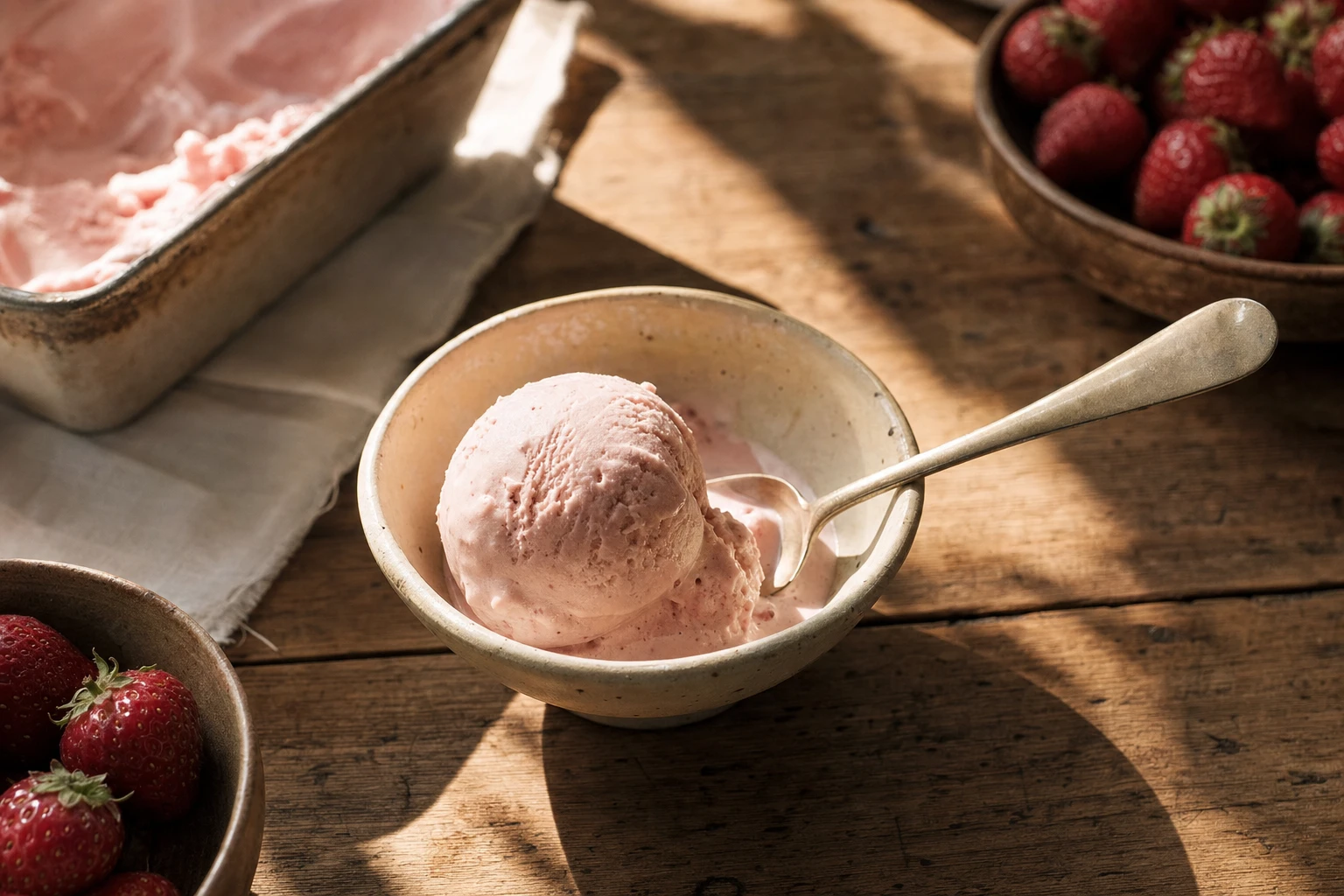
Macerate the strawberries in the extra honey and a pinch of salt for 30 minutes. This draws out their juice and intensifies their flavour. Add the strawberries and rosewater to the base milk mixture just before chilling, stirring gently.
The rosewater is subtle. It shouldn't be noticeable as a flavour. It should just make you wonder why this strawberry ice cream tastes more like strawberry than strawberry ice cream usually does.
Freezing and serving
Once churned, transfer to an airtight container and freeze for at least 2 hours before scooping. This firms up the ice cream to a proper texture. Machine-churned ice cream is soft but firm enough to scoop. Freezer-and-fork ice cream may be softer; you might need to let it soften slightly before scooping.
These keep for 2 to 3 weeks in the freezer, though they're best eaten within 1 week. The texture degrades slightly over time as ice crystals form.
Serve in a chilled bowl. The coldness matters. Ice cream in a room-temperature bowl melts too quickly. A cold bowl lets you taste the flavour before it disappears.
This is ice cream that tastes like summer itself. The kind you make when berries are at their peak and raw milk is easy to find. Worth planning for.
References
Every source below was checked on 27 August 2026. Each PubMed, PMC and DOI identifier was resolved against NCBI or Crossref, and what it opens is printed under the citation, so you can see the link goes where the citation says without leaving the page. Where a citation and its identifier disagreed, the citation was corrected to the record or the reference was deleted along with the sentence marker that pointed at it, and where the resolved paper turned out not to support the sentence, the sentence was cut back to what it does support. Borrowed authority is worse than none, because it looks like rigour.
- UK Food Standards Agency. Raw drinking milk. https://www.food.gov.uk/safety-hygiene/raw-drinking-milk [accessed May 2026].
- Sun L, Goh HJ, Govindharajulu P, et al. Postprandial glucose, insulin and incretin responses differ by test meal macronutrient ingestion sequence (PATTERN study). Clin Nutr. https://pubmed.ncbi.nlm.nih.gov/31053510/ [accessed May 2026].Checked 27 August 2026: PMID 31053510 opens Sun L, Goh HJ, Govindharajulu P et al, Postprandial glucose, insulin and incretin responses differ by test meal macronutrient ingestion sequence (PATTERN study). Clin Nutr 2020;39(3):950-957. PubMed indexes it as: Randomized Controlled Trial.
Who wrote and reviewed this guide
Niall Kiddle
Author · Founder, Organised
Niall is the founder of Organised. He started the company in 2024 after fixing his own health the slow way: in 2022 he swapped a cupboard of synthetic supplements for real food, raw milk, organ meats, bone broth and honey, and felt the difference within months.
Areas of expertise: Ancestral nutrition, Organ meats, Whole-food supplementation, Gut health, Regenerative sourcing
Read Niall's full profile
Pedro Rodrigues
Reviewer · Agronomist (farming and sourcing only)
Pedro is the agronomist Organised works with on farming and sourcing. His job on the guides is to keep the science honest: he reviews what we publish about soil health, regenerative agriculture, grazing and the way food is actually produced.
Areas of expertise: Regenerative agriculture, Agronomy, Soil health, Grass-fed farming, Food sourcing
Reviewed this guide on
Read Pedro's full profileMore on recipes
View all- 10 Ways to Use Organised That Aren't Just a Shake
- 5-Minute High-Protein Breakfasts Using Organised
- Ancestral Breakfast Ideas from Around the World
- Bone Broth from Scratch: A Step-by-Step Guide
- Collagen-Rich Beef Stew: Slow-Cooked Nourishment
- Energy Balls with Organised, Dates and Raw Honey
- Gut-Healing Marshmallows with Collagen and Raw Honey
- How to Make Bone Marrow Butter
- How to Make Your Own Gelatine Gummies
- Liver Pate for Beginners: A Gentle Introduction to Organ Meats
- Matcha Latte Gummies with Collagen and Gelatine
- Organ Bolognese: The Family Dinner That Heals
Browse the guides library
All guidesKeep reading
Recipes & routines
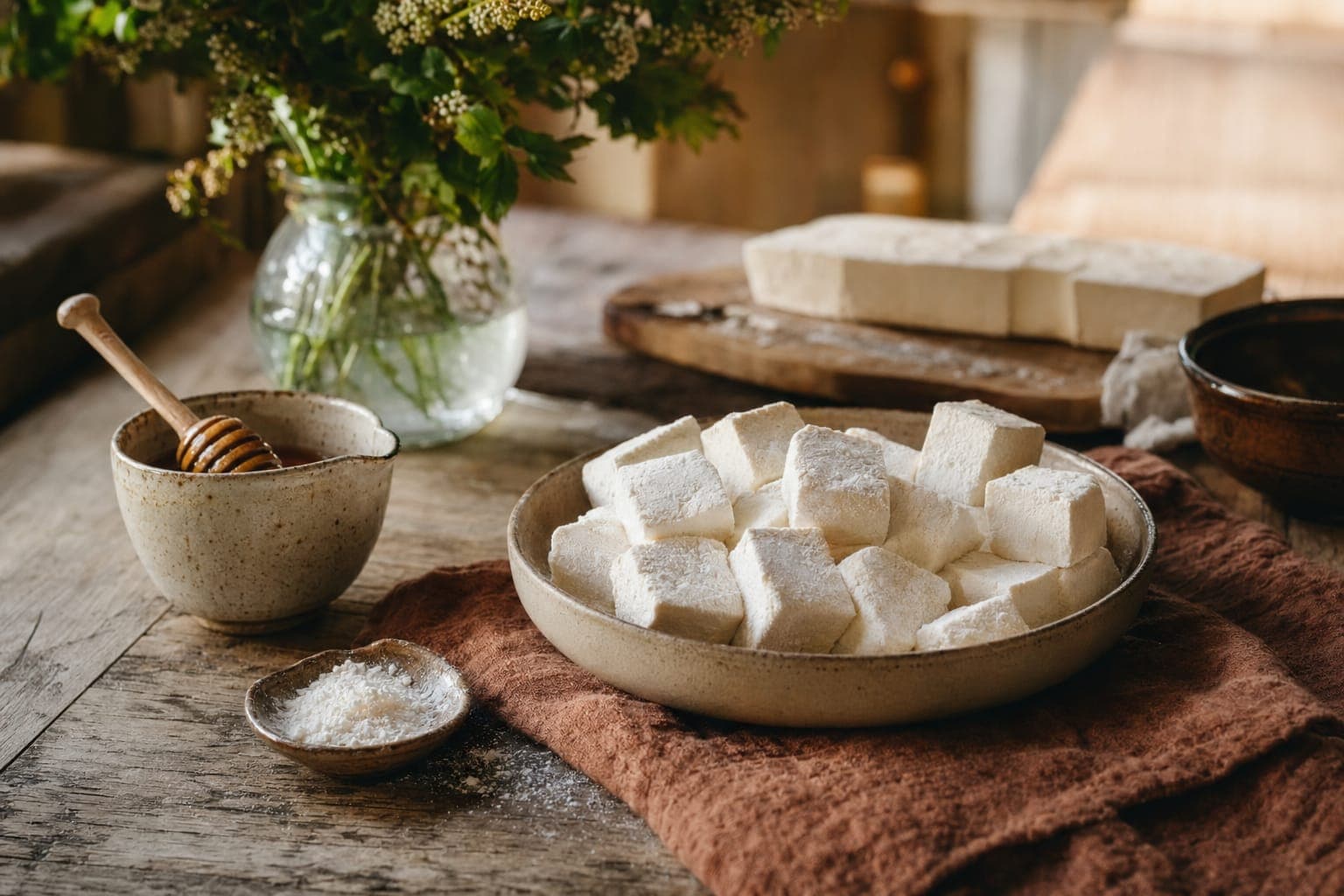
Gut-Healing Marshmallows with Collagen and Raw Honey
Learn to make gut-healing marshmallows with collagen and raw honey. A shareable treat that sneaks nutrition into every bite. Easy recipe with video tips.
Recipes & routines
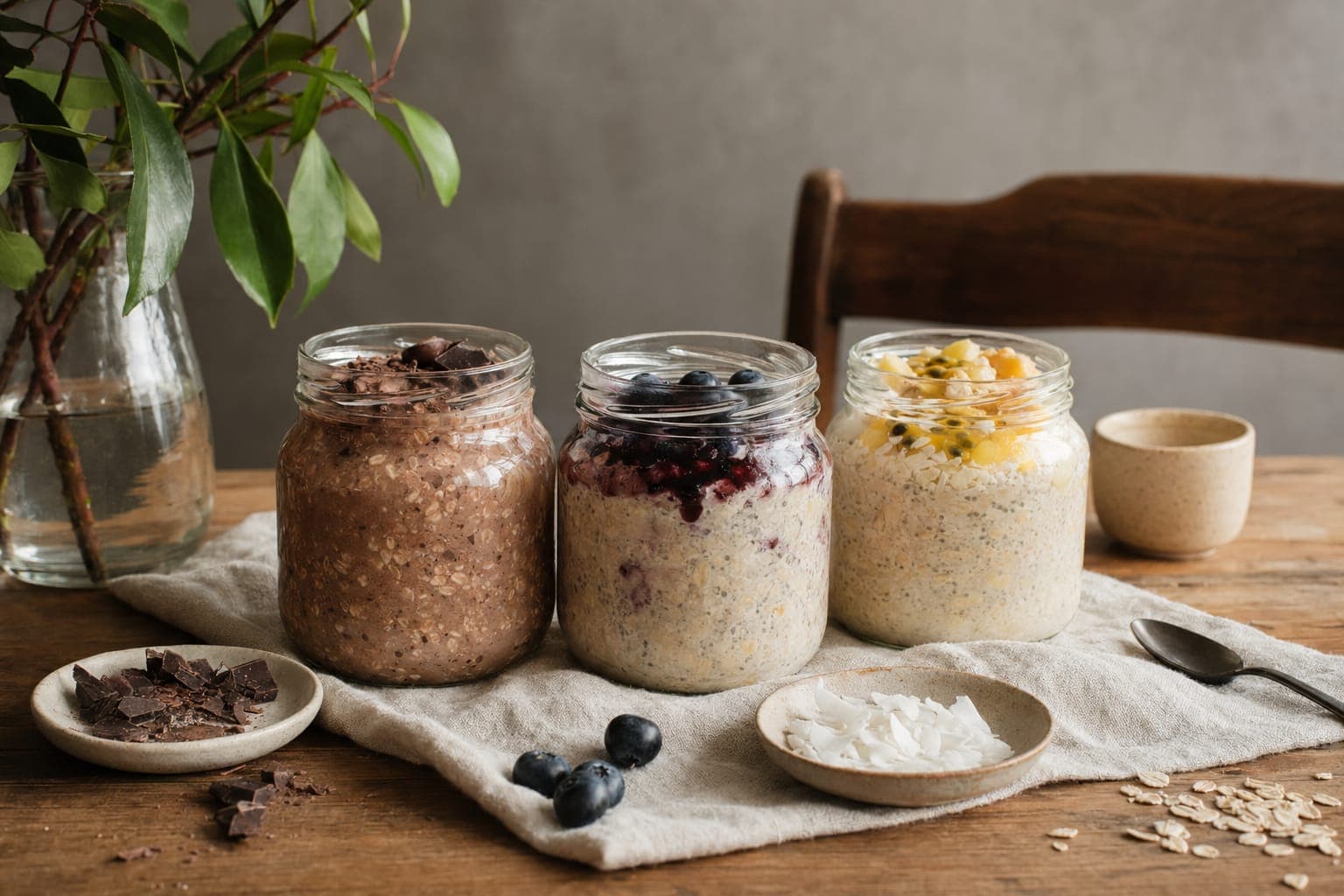
Organised Overnight Oats: 3 Variations
Three delicious overnight oats variations with Organised. Chocolate, berry, tropical flavours. Make them Sunday, eat them all week.

Recipes & routines
Travel Nutrition: How to Stay Nourished on the Go
Practical guide to maintaining whole-food nutrition while travelling. Tips for packing Organised, airport choices, hydration, and managing jet lag.
Real food, made effortless
Add it to my routineA few ways to use it
All recipes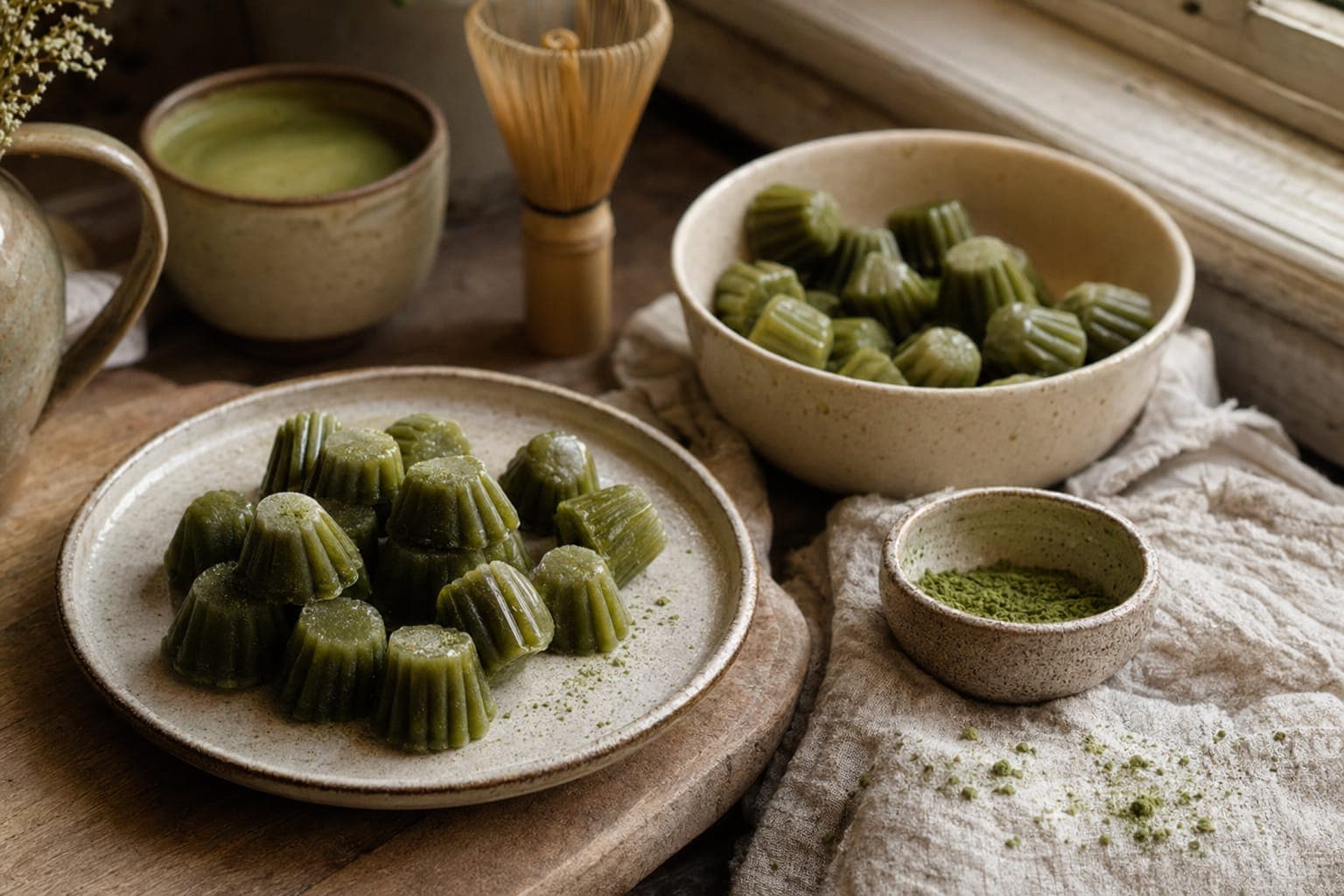
Matcha Latte Gummies with Collagen and Gelatine
Make visually stunning matcha latte gummies infused with collagen and gelatine. Simple recipe for gut-healing sweets you'll actually want to eat.
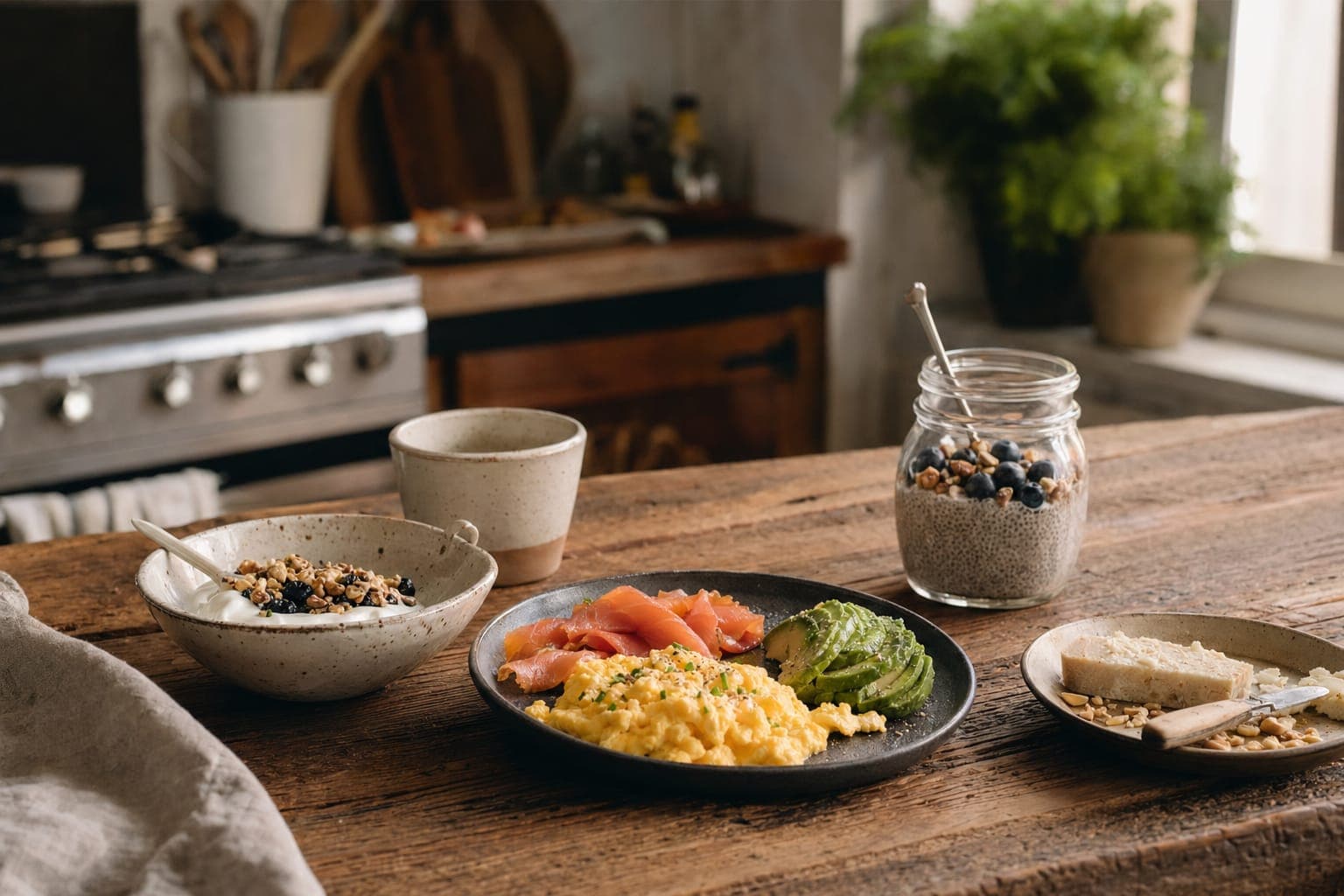
5-Minute High-Protein Breakfasts Using Organised
Quick, high-protein breakfast ideas using Organised. Five recipes you can make in minutes with real food. No fussing around.
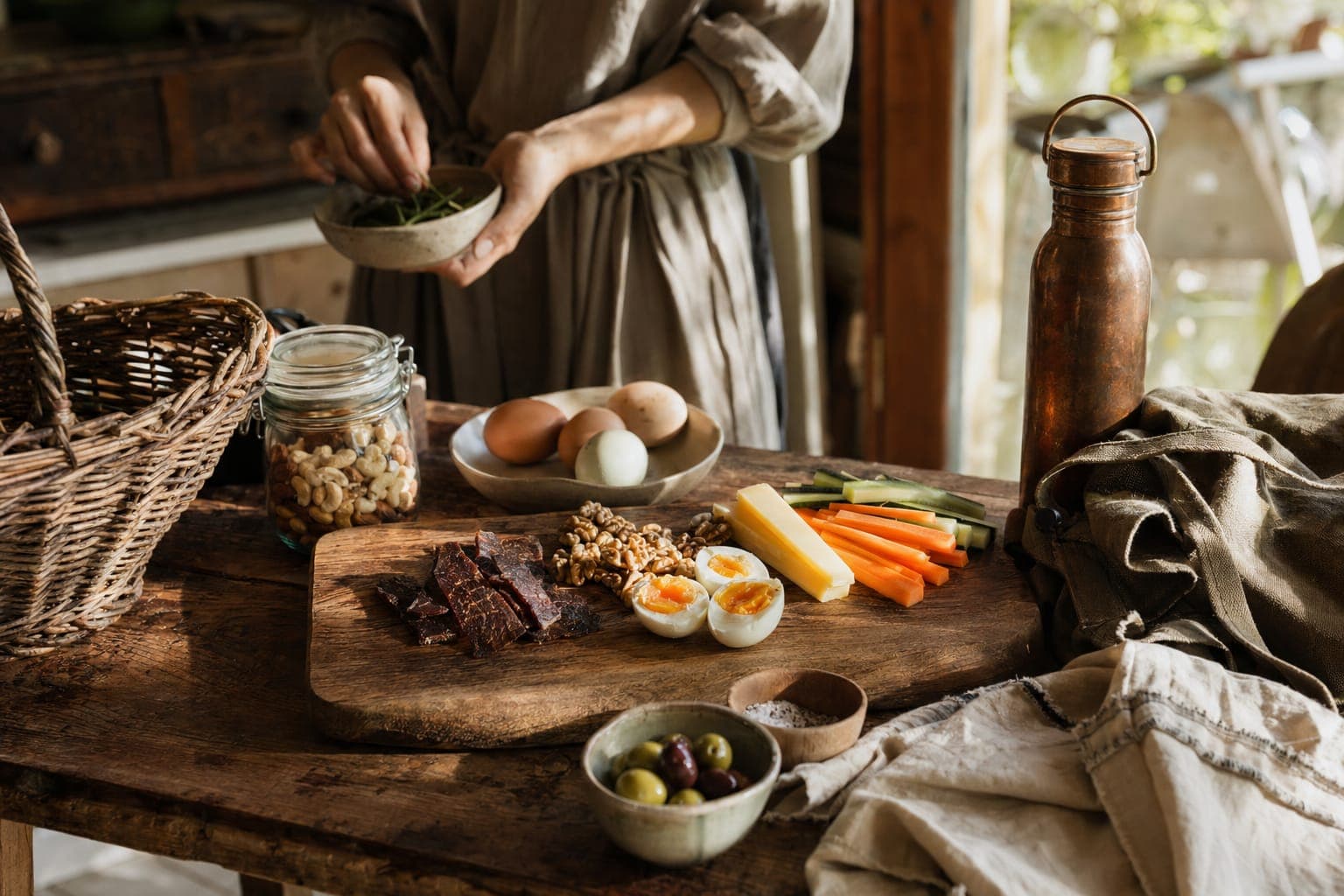
Whole Food Snacks for Busy Days
Practical whole food snacks that travel well and sustain energy. No refined carbs, no seed oils. Real food options for when you're busy.


 Join over 100,000+ members
Build a better food system with us
The Organised community is thousands of people choosing real food and backing the farmers who grow it, all of us trying to leave the world a little better than we found it. If that is what you care about too, you belong here.