Travel Nutrition: How to Stay Nourished on the Go
Travel has a way of undoing months of nutritional groundwork. Airports, hotels, and unfamiliar kitchens conspire to knock you off course. But staying nourished whilst away doesn't require willpower alone, it requires a plan. Here's how.
By Niall Kiddle, Founder, Organised

Reviewed by Pedro Rodrigues, Agronomist (farming and sourcing only) ·
6 min read · Published · Updated · 2 cited sources
Makers of the Organised Daily blend, a grass-fed beef organ supplement from regenerative UK farms
The problem with travel food
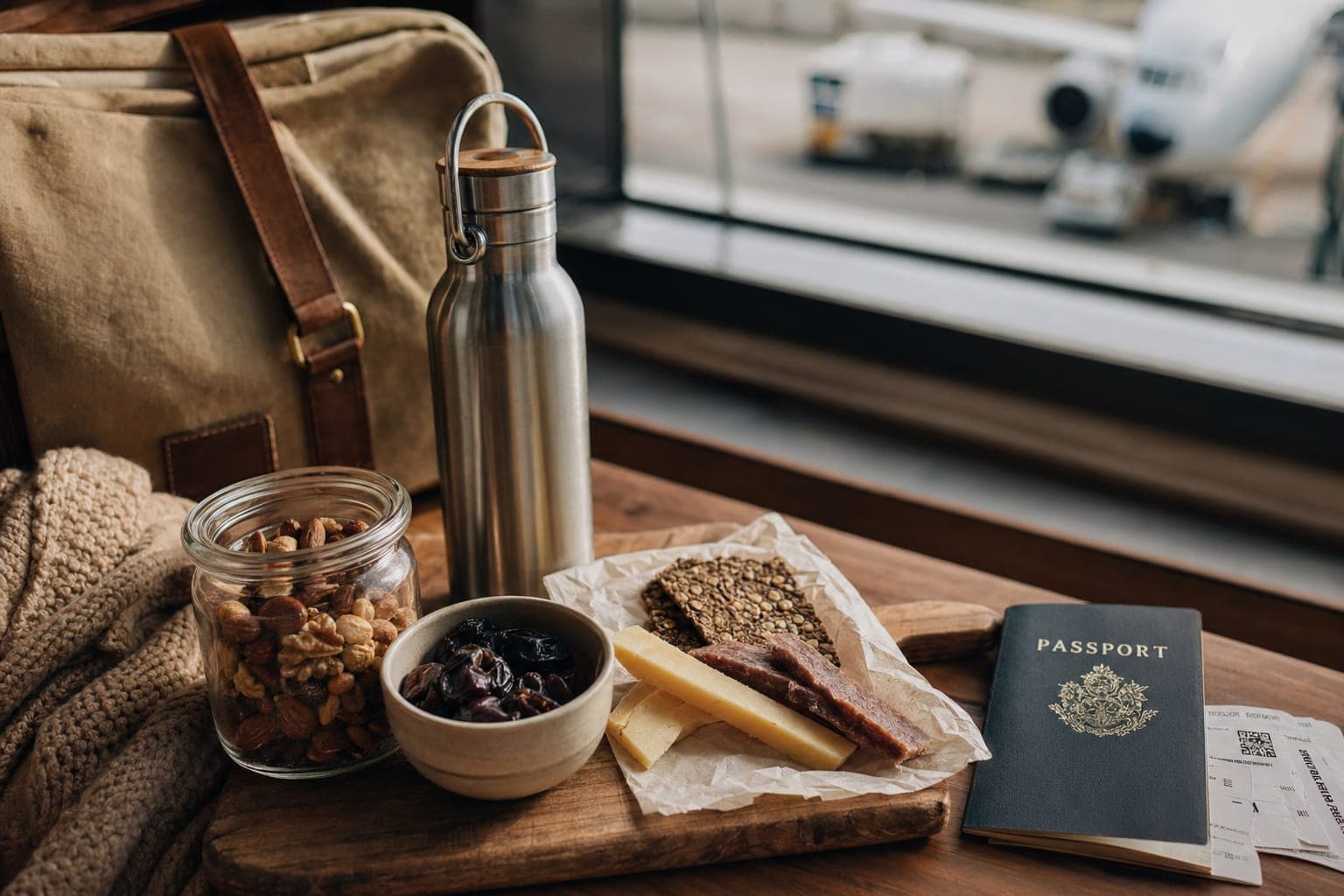
You arrive at the airport tired, your defences are low, and suddenly the only foods available are precisely the ones you've been avoiding at home. Refined carbohydrates, seed oils, and ultra-processed options dominate every shop and café. The problem isn't weakness. It's that most travelling people face a genuine food scarcity.
Add airport delays, jet lag, and the dehydration of cabin pressure, and your body is already stressed. Making it worse with inflammatory food choices compounds the damage.
The solution is to travel with your own food as your foundation, not your backup. Build your journey around real food, then navigate the rest from a position of strength.
What to pack before you go
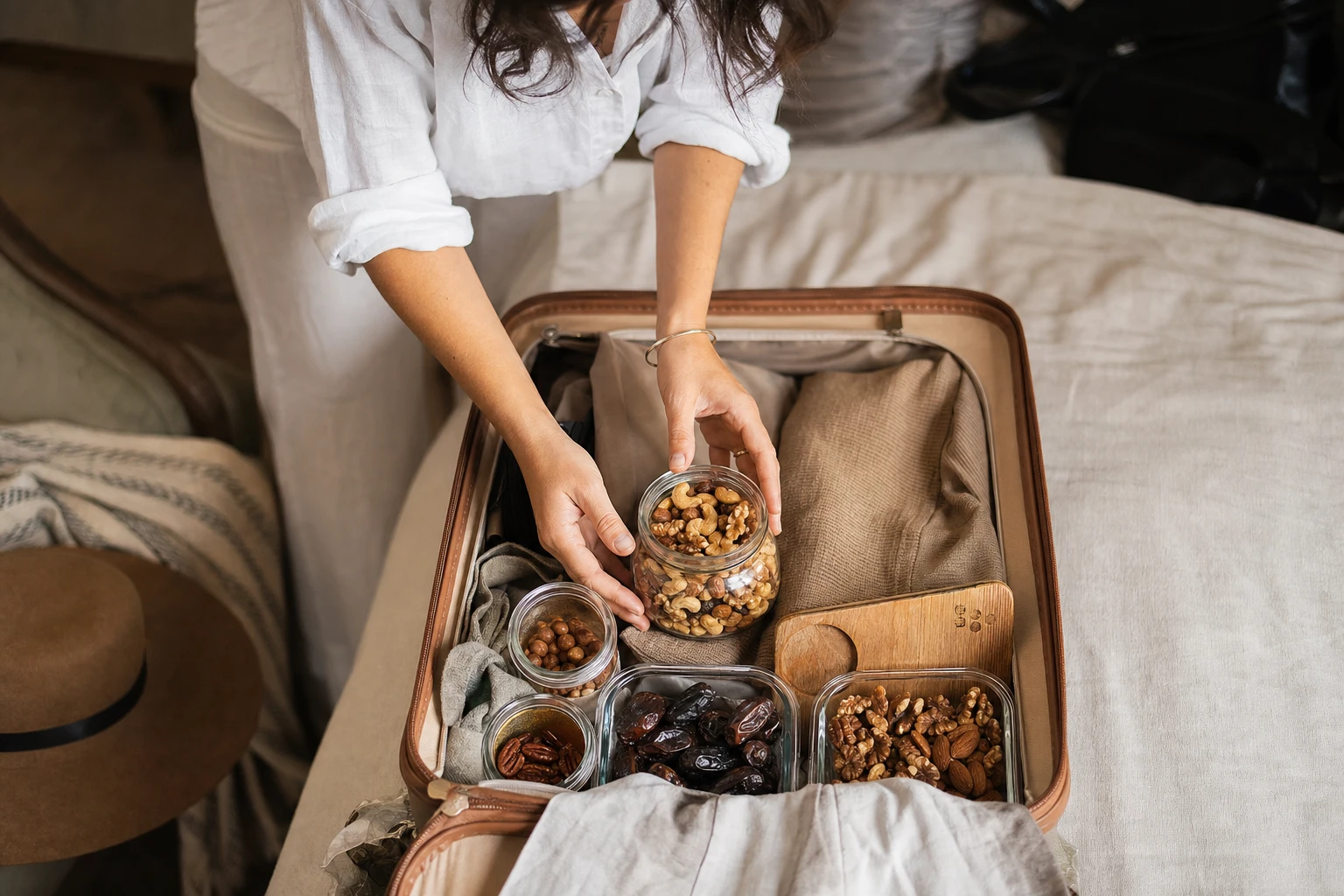
The single best travel hack is refusing to rely on destination food. Pack a small bag of essentials that travel well and provide real nutrition. These don't expire, don't spoil, and turn every hotel room or layover into a proper meal option.
- Organised , a few days' worth of servings measured into a small airtight container (two heaped tablespoons per day). It doesn't need refrigeration, stirs into yoghurt, milk or porridge wherever you land, and turns any breakfast into protein-dense nutrition.
- Raw nuts and seeds , almonds, macadamias, or walnuts in a sealed container. Calorie-dense, travel-proof, full of fat-soluble vitamins.
- Dried fruit , dates, figs, or berries without added sugar. Provides carbohydrate and natural sweetness without the blood-sugar crash of airport pastries.
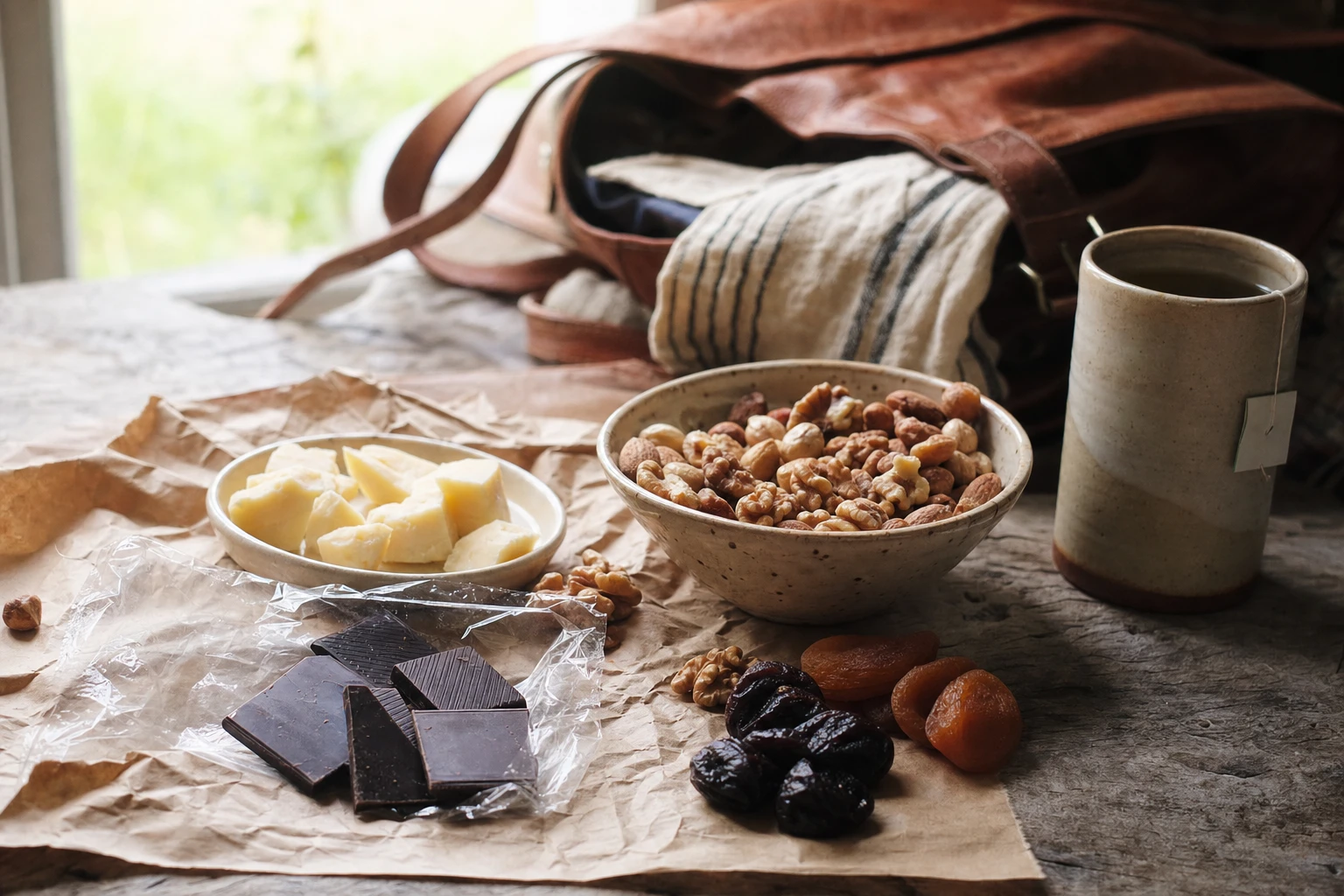
- Hard cheeses , if your journey is short and you have cooler space. Cheddar or Parmesan keep for days without refrigeration once cut.
- Cacao nibs or dark chocolate , for mental resilience and a source of magnesium when travel stress peaks.
- Herbal tea bags , in your carry-on. Hotels have hot water. Chamomile, ginger, or peppermint tea beats airport coffee and calms digestion.
This small bag becomes your anchor. Wherever you land, you've already got breakfast sorted.
Airport and in-flight strategy
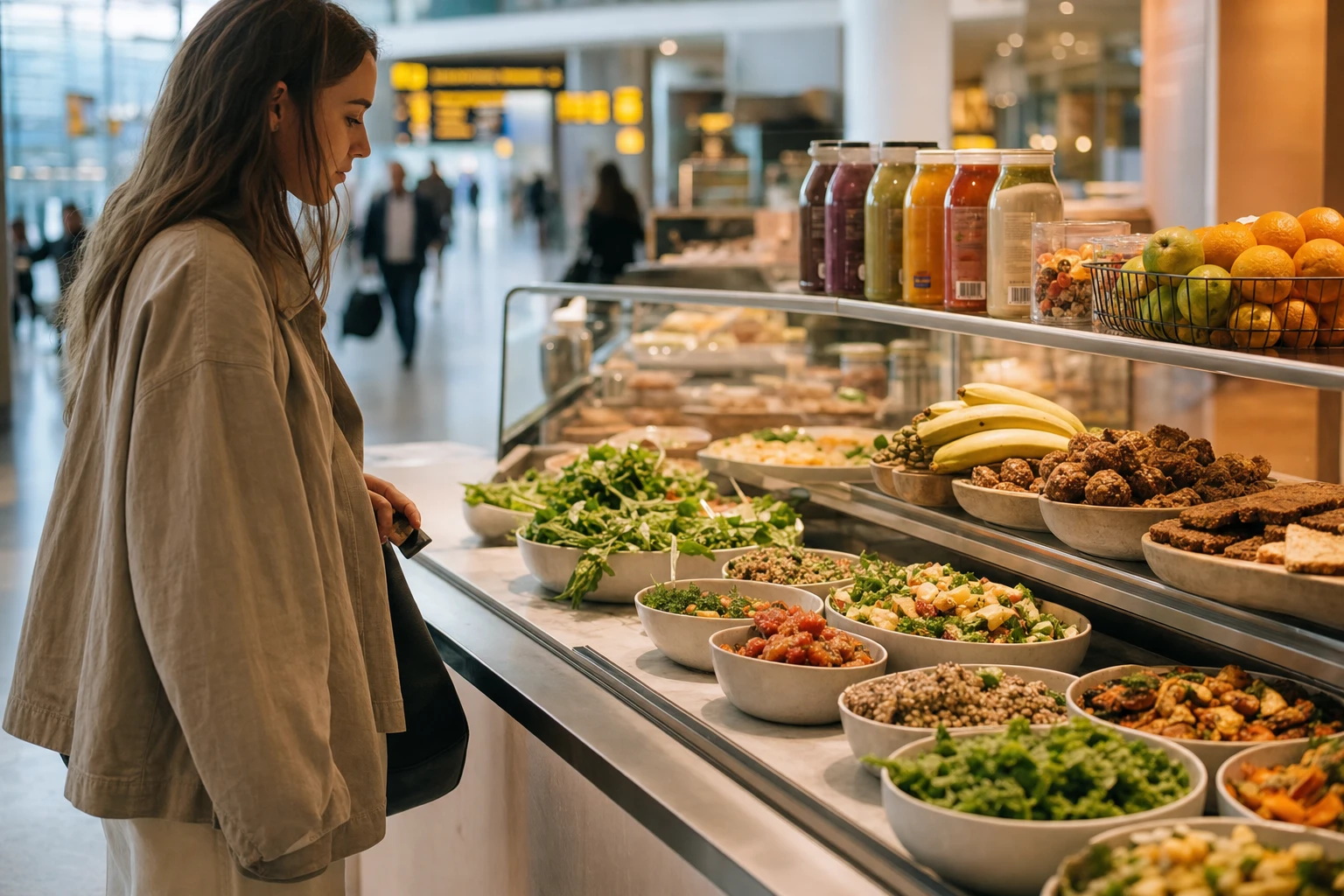
An airport is designed to make you buy expensive convenience food. You've got limited time, limited options, and shops strategically placed to catch you when you're hungry and tired. Don't fight it on their terms.
Eat a proper meal at home before you leave. Arrive at the airport already fed. This shifts you from desperate-for-food to strategically-choosing. You can then browse the shops without urgency, which is when you actually find the decent options.
Look for: eggs (most airports now stock hard-boiled eggs), smoked salmon or cured meats, nuts and seeds, fruit, and good-quality coffee. Avoid the pastry aisle entirely.
If your flight provides food, examine it honestly. A supermarket sandwich with seed oil spread and additives doesn't become food just because it's offered. You're not obligated. Eat from your packed supplies instead.
Drink water relentlessly. Cabin air is aggressively dehydrating, and dehydration mimics hunger.1 Ask for water at every service. Aim for 250ml every hour you're airborne.
Navigating accommodation nutrition
Once you've landed, your food environment changes. Most accommodation has either a full kitchen, a kitchenette, or nothing at all.
If you've got kitchen access, your task simplifies dramatically. Find a local supermarket (ask your hotel or use Google Maps), buy butter, eggs, and vegetables, and eat much like you would at home. Organised mixed with local milk, eggs for breakfast, roasted vegetables with olive oil. Standard whole food.
If you've got no cooking facilities, eat from restaurants and cafés. Your strategy here is to order simply: grilled meat or fish, vegetables, and ask for olive oil or butter. Most places will oblige. Avoid bread baskets. Order extra eggs if available.
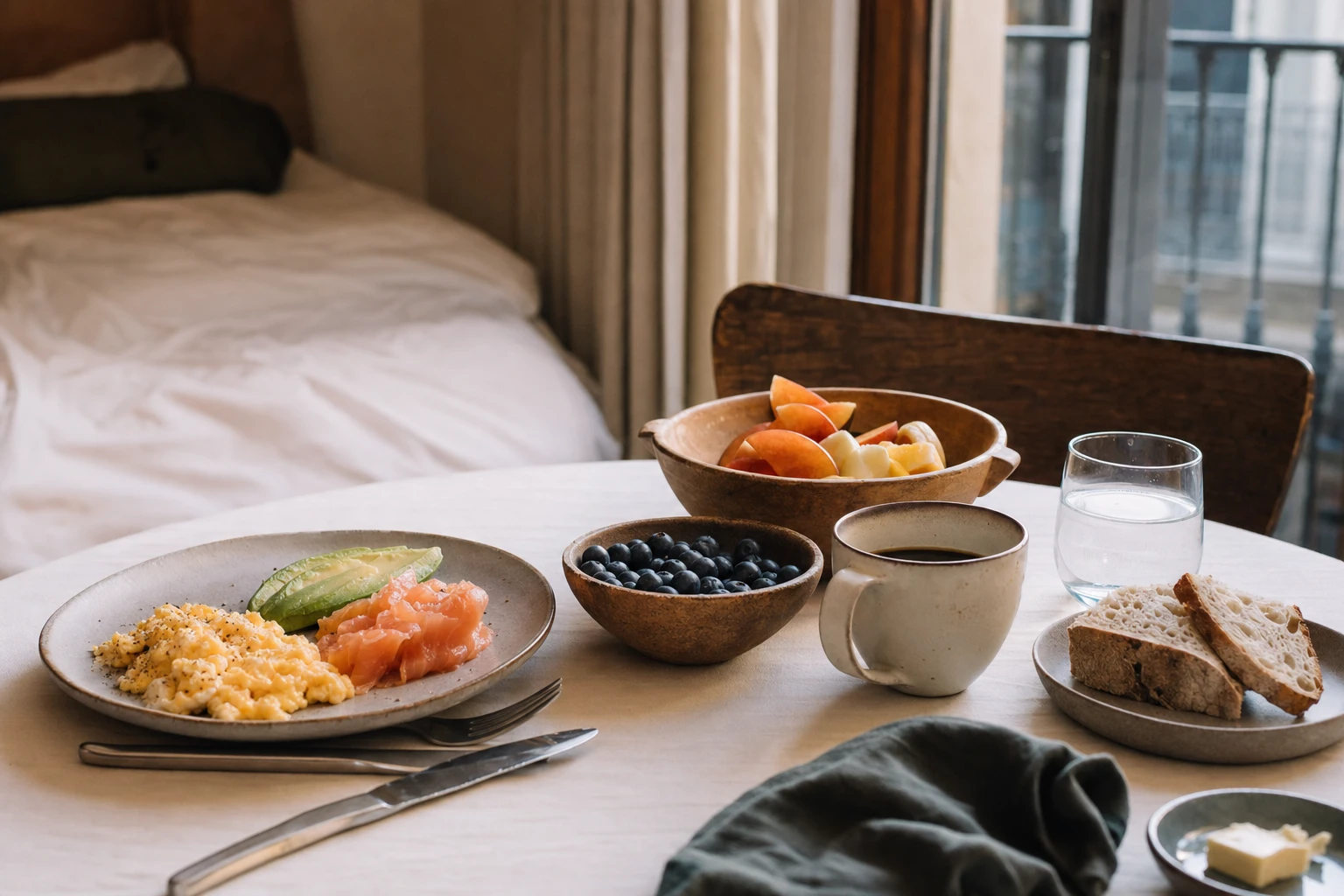
Breakfast is your friend when travelling without a kitchen. Eggs are universal, widely available, and still legitimate food when cooked in a café kitchen.
Managing jet lag with food
Jet lag isn't just about tiredness. Your circadian rhythm has been disrupted, your digestion is confused, and your body doesn't know what time it is. Food timing helps reset this faster than anything else.
When you arrive at your destination, eat according to the local clock, not your body's expectations. A high-protein, high-fat breakfast immediately on arrival signals to your body that a new day has started.2 Organised mixed with eggs and butter does this beautifully. This meal, eaten at the local breakfast time, resets your clock faster than sleeping.
Avoid heavy meals in the evening at your destination. Your body is confused enough. Light meals, soup, broth, grilled fish, allow sleep to come without the metabolic burden of digestion.
Get recipes and routines, free
Two short reads a week of simple, nutrient-dense recipes and daily routines.
By signing up you agree to receive emails from us. No spam, unsubscribe anytime.
Staying hydrated across time zones
Hydration becomes harder when you're crossing time zones because your thirst mechanism is also thrown off. You might feel parched in a time zone where you're actually well-hydrated, or forget to drink because your body thinks it's night.
Set a simple rule: drink water with every meal and at each location change. Carry a refillable bottle. In hotels, ask for jugs of water in your room. If you're travelling with Organised, have a glass of water alongside your morning serving; the extra hydration matters more than usual in the air.
Coconut water, if available fresh, is a sensible option for electrolyte replacement. Avoid the bottled stuff; look for fresh young coconuts if you're in the right part of the world.

The role of real food in travel recovery
When you arrive at your destination, your body has been through a genuine physiological event. Cabin air pressure is roughly equivalent to 2,400 metres altitude. Cabin humidity is around 10 to 20 percent.1 Your cortisol is elevated. Your immune system is suppressed. Your digestion is sluggish. This is why so many people get sick after flying.
The fastest recovery protocol is real food. Your immune system heals fastest when fed properly. Bone broth, if available, is extraordinary during travel recovery. The collagen, the gelatin, the minerals, all support gut healing and immune function. If you can access a café that serves bone broth, drink a mug as soon as you arrive.
Second choice is any protein and fat meal. Grilled fish with olive oil and vegetables. Eggs with butter. Meat with roasted roots. Your body needs the raw materials to rebuild. Provide them and you'll recover from travel in 24 hours instead of a week.

1 of 9
Daily blend
100,000+ thriving families4.9 on Trustpilot
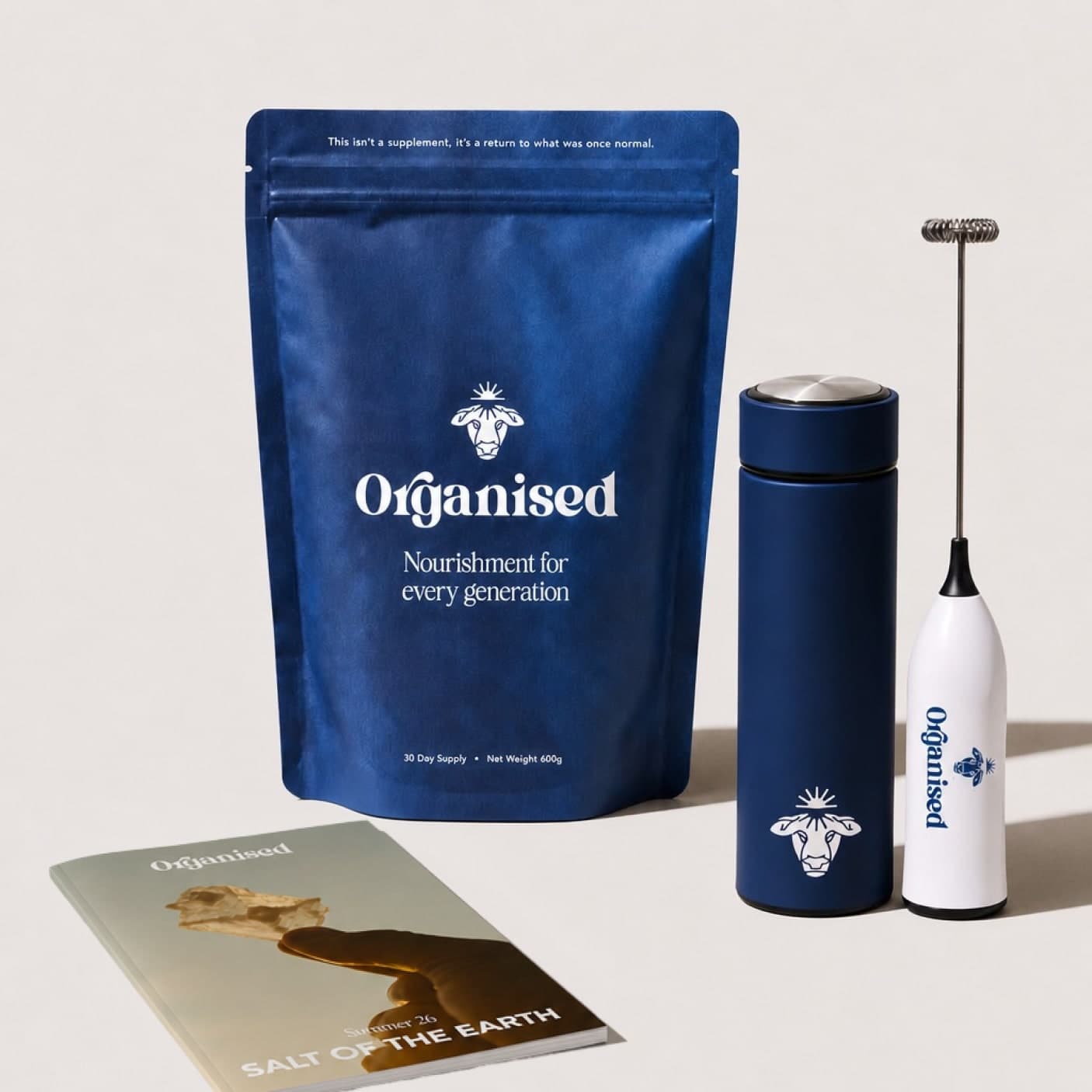
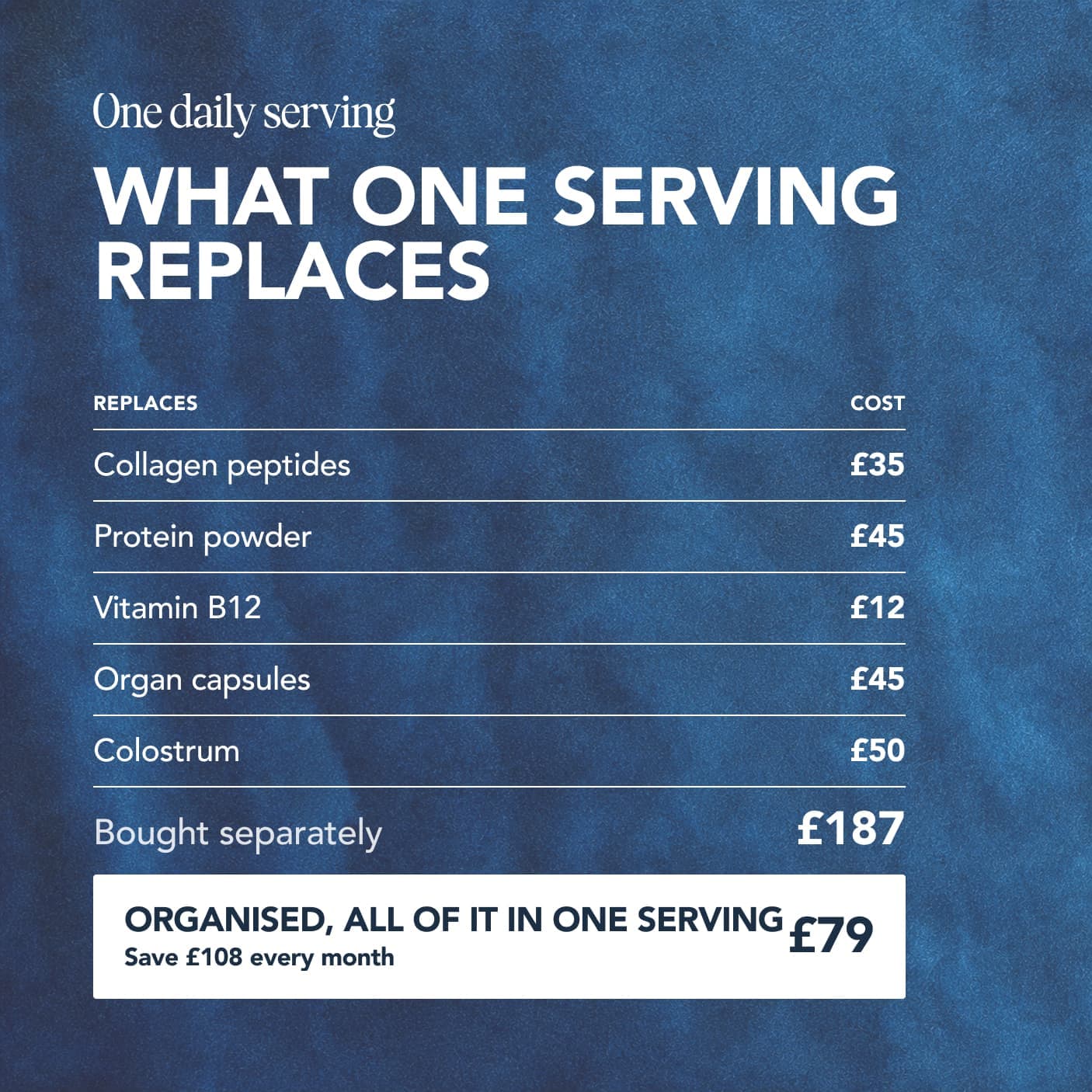
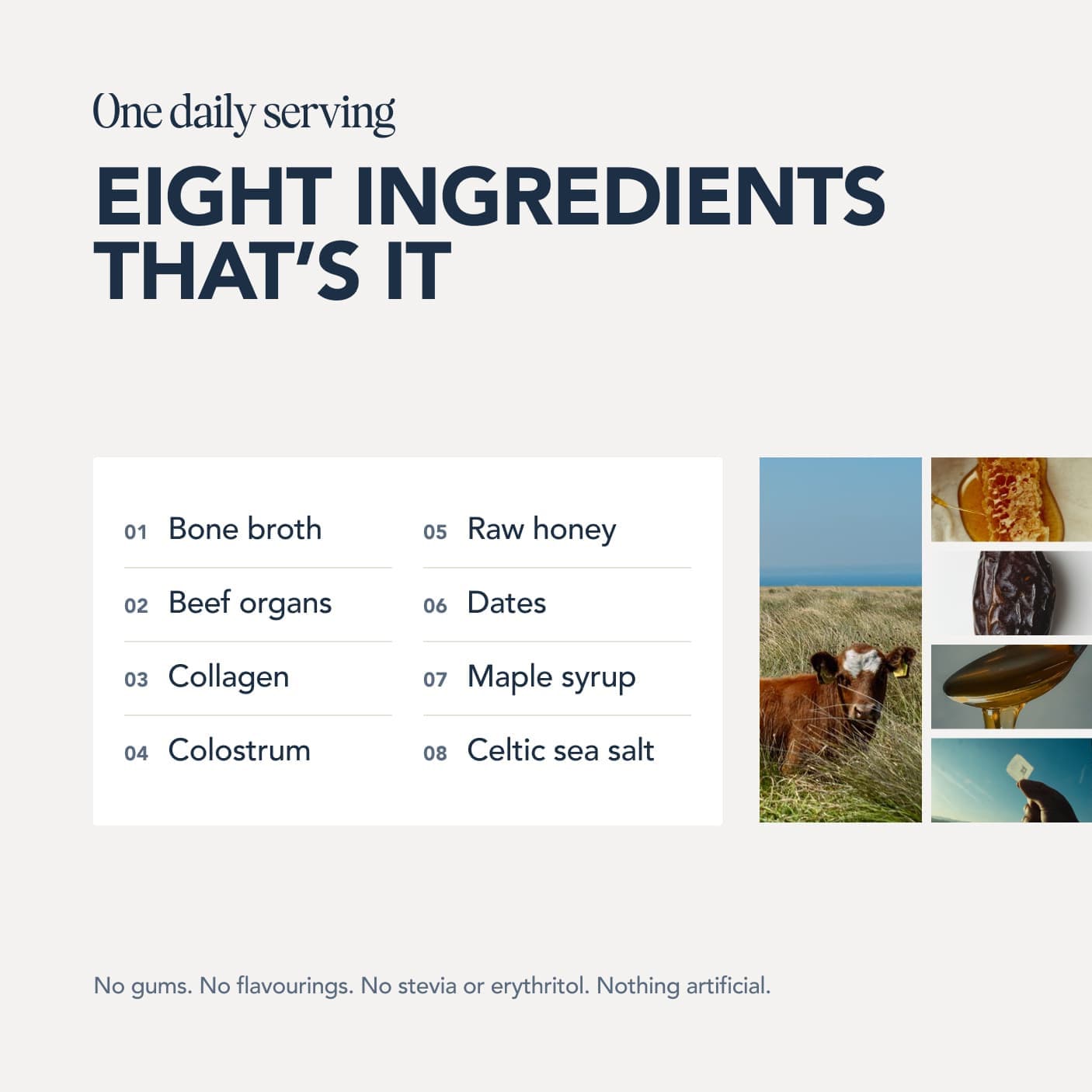
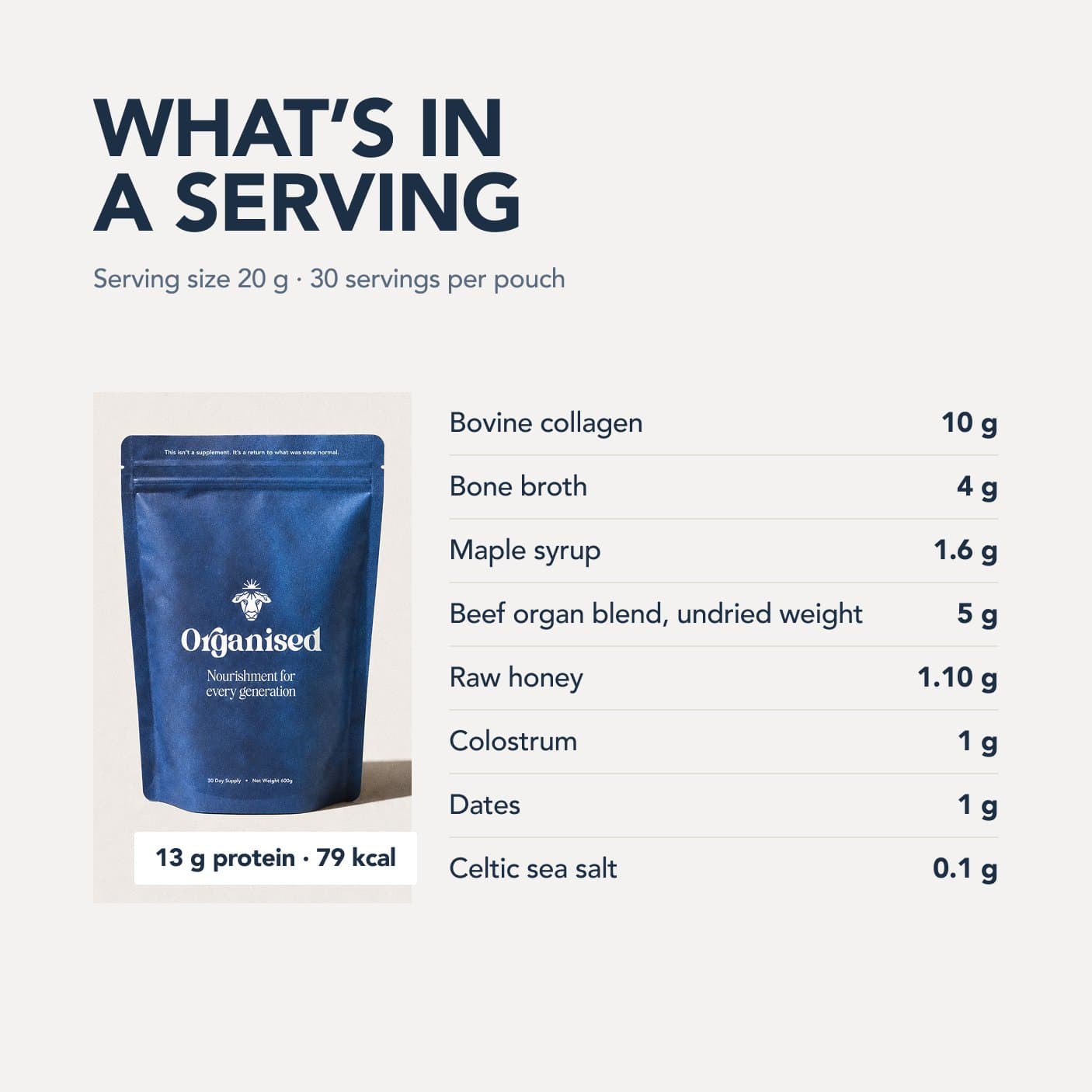
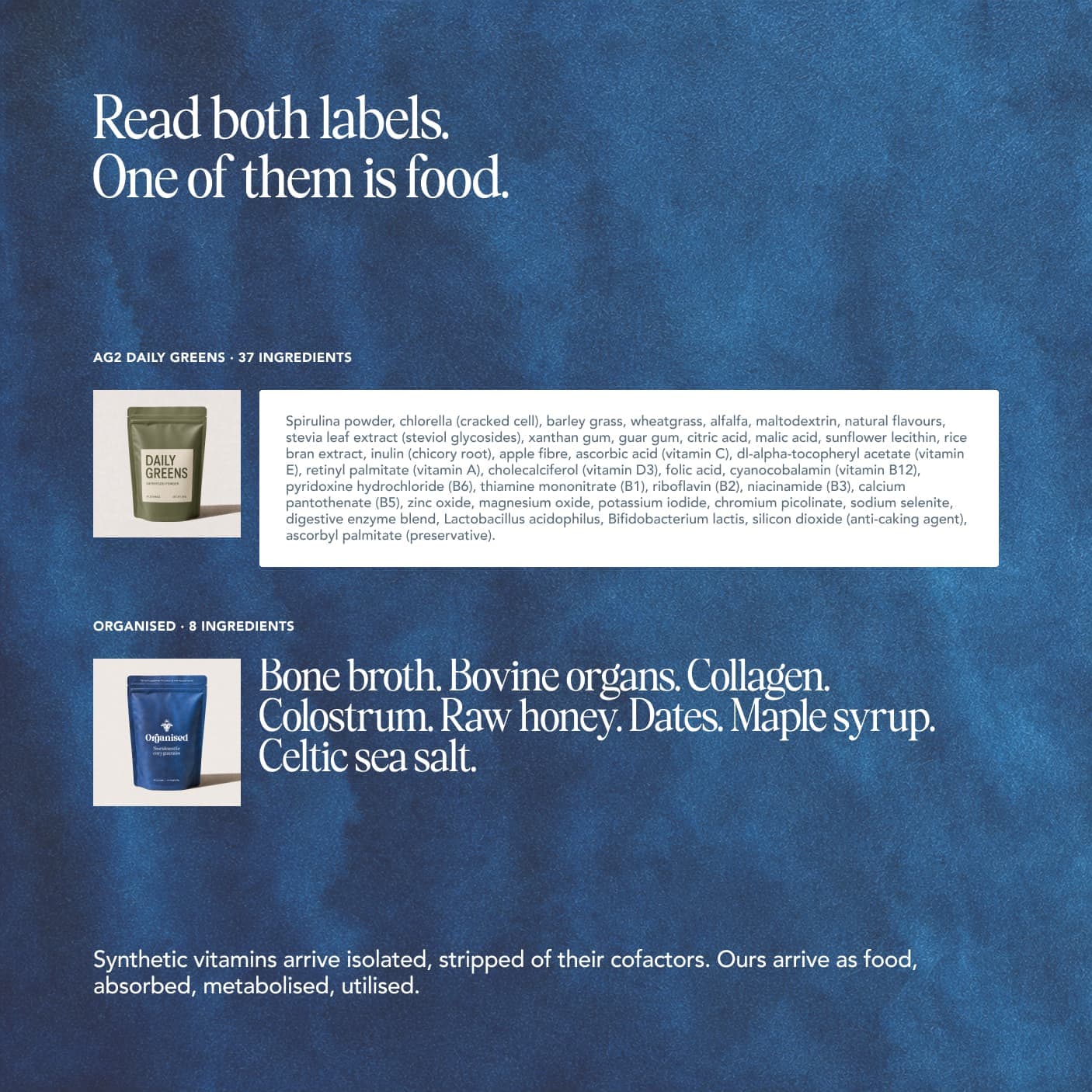
Eight real ingredients built around grass-fed beef organs, collagen and colostrum. Nothing synthetic added.
Free with your first order, worth £38. Plus £10 off the pouch with a subscription.
Free UK shipping · Made in England · 100 day money back guarantee on your first pouch · Skip, pause or cancel anytime
Managing food choices in unfamiliar cuisines
Not every destination serves food you recognise. Your strategy shifts but doesn't change. Look for the protein. In Thai cuisine, that's grilled fish and meat curries cooked in coconut milk. In Indian food, it's tandoori meat, dal, and clarified butter. In Japanese restaurants, it's sashimi, grilled fish, and egg dishes. Every cuisine has whole food options if you know what you're looking for.
The universal strategy: order a meat or fish dish. Ask for extra vegetables. Request olive oil or butter rather than the house oils. Most restaurants will oblige. Avoid the grain-heavy dishes (noodles, bread, rice) if you want to maintain energy stability.
Travelling teaches you that protein and fat transcend cuisine. Seek these in whatever cooking tradition you land in, and you're never short of food.
The bottom line
Travelling doesn't require abandoning good nutrition. It requires being more intentional about what you pack, when you eat, and what options you actually choose when presented with food.
Pack your anchor foods. Eat before you're desperate. Navigate restaurants with simple, clear orders. Reset your clock with food timing. Stay hydrated. And remember: the best travel nutrition hack is arriving at your destination already well-fed, calm, and in control.
Have you got go-to travel snacks that travel well? We'd love to hear them.
References
Every source below was checked on 27 August 2026. Each PubMed, PMC and DOI identifier was resolved against NCBI or Crossref, and what it opens is printed under the citation, so you can see the link goes where the citation says without leaving the page. Where a citation and its identifier disagreed, the citation was corrected to the record or the reference was deleted along with the sentence marker that pointed at it, and where the resolved paper turned out not to support the sentence, the sentence was cut back to what it does support. Borrowed authority is worse than none, because it looks like rigour.
- National Research Council. The Airliner Cabin Environment and the Health of Passengers and Crew. Washington, DC: National Academies Press; 2002. https://nap.nationalacademies.org/catalog/10238/
- Eastman CI, Burgess HJ. How to travel the world without jet lag. Sleep Medicine Clinics. 2009;4(2):241-255. https://pmc.ncbi.nlm.nih.gov/articles/PMC2829880/Checked 27 August 2026: PMC2829880 opens Eastman CI, Burgess HJ, How To Travel the World Without Jet lag. Sleep Med Clin 2009;4(2):241-255.
Corrections
What this page used to say, and why it no longer says it. Corrections are dated and are never removed, because deleting the record of an error is a second error. Every guide we have corrected is listed at our corrections log.
- 27 August 2026. “A high-protein, high-fat breakfast immediately on arrival signals to your body that a new day has started” was footnoted to Eastman and Burgess on jet lag. That paper is entirely about timed bright light and melatonin and does not discuss food composition at all. The claim that a breakfast resets your circadian clock has been removed, along with the product suggestion attached to it. The page now says what the source supports and says plainly that we could not find a trial for the food claim.
Who wrote and reviewed this guide
Niall Kiddle
Author · Founder, Organised
Niall is the founder of Organised. He started the company in 2024 after fixing his own health the slow way: in 2022 he swapped a cupboard of synthetic supplements for real food, raw milk, organ meats, bone broth and honey, and felt the difference within months.
Areas of expertise: Ancestral nutrition, Organ meats, Whole-food supplementation, Gut health, Regenerative sourcing
Read Niall's full profile
Pedro Rodrigues
Reviewer · Agronomist (farming and sourcing only)
Pedro is the agronomist Organised works with on farming and sourcing. His job on the guides is to keep the science honest: he reviews what we publish about soil health, regenerative agriculture, grazing and the way food is actually produced.
Areas of expertise: Regenerative agriculture, Agronomy, Soil health, Grass-fed farming, Food sourcing
Reviewed this guide on
Read Pedro's full profileMore on routines
View all- The Busy Parent's Guide to Whole Food Nutrition
- The Morning Routine That Changed My Health
- A Day of Eating for Optimal Skin Health
- Evening Wind-Down: A Nutrition Protocol for Better Sleep
- How to Build a Supplement-Free Daily Routine
- How to Meal Prep for a Week of Whole Food Nutrition
- Shift Workers: How to Eat for Energy When Your Schedule Is Upside Down
- The Healthy Morning Routine Reddit Swears By: An Honest Breakdown
- The Weekend Reset: A 2-Day Whole Food Protocol
Browse the guides library
All guidesKeep reading

Recipes & routines
Evening Wind-Down: A Nutrition Protocol for Better Sleep
A science-backed evening nutrition protocol for deeper sleep. Timing, glycine-rich foods, magnesium, and how to reduce blue light exposure.
Recipes & routines
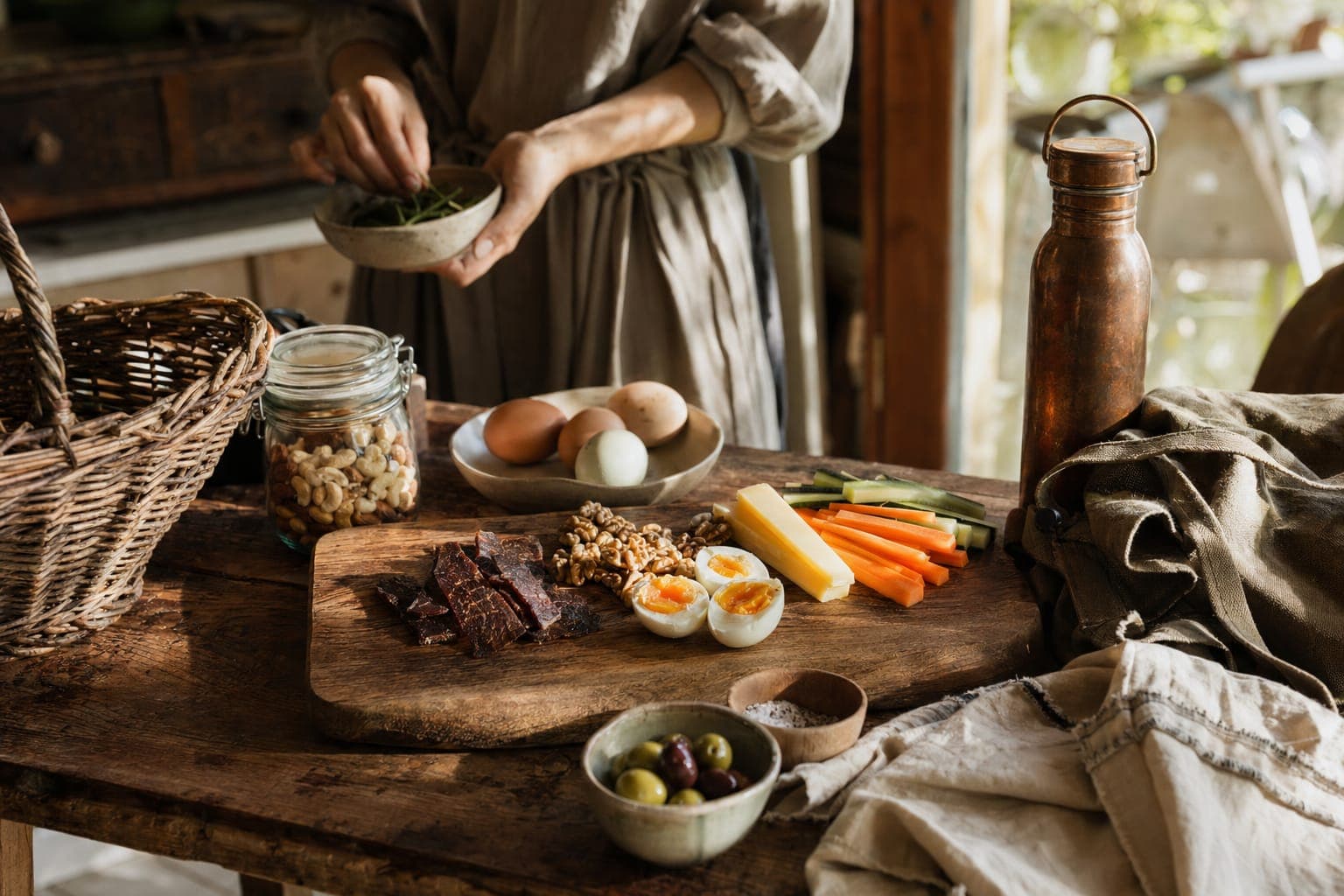
Whole Food Snacks for Busy Days
Practical whole food snacks that travel well and sustain energy. No refined carbs, no seed oils. Real food options for when you're busy.
Recipes & routines
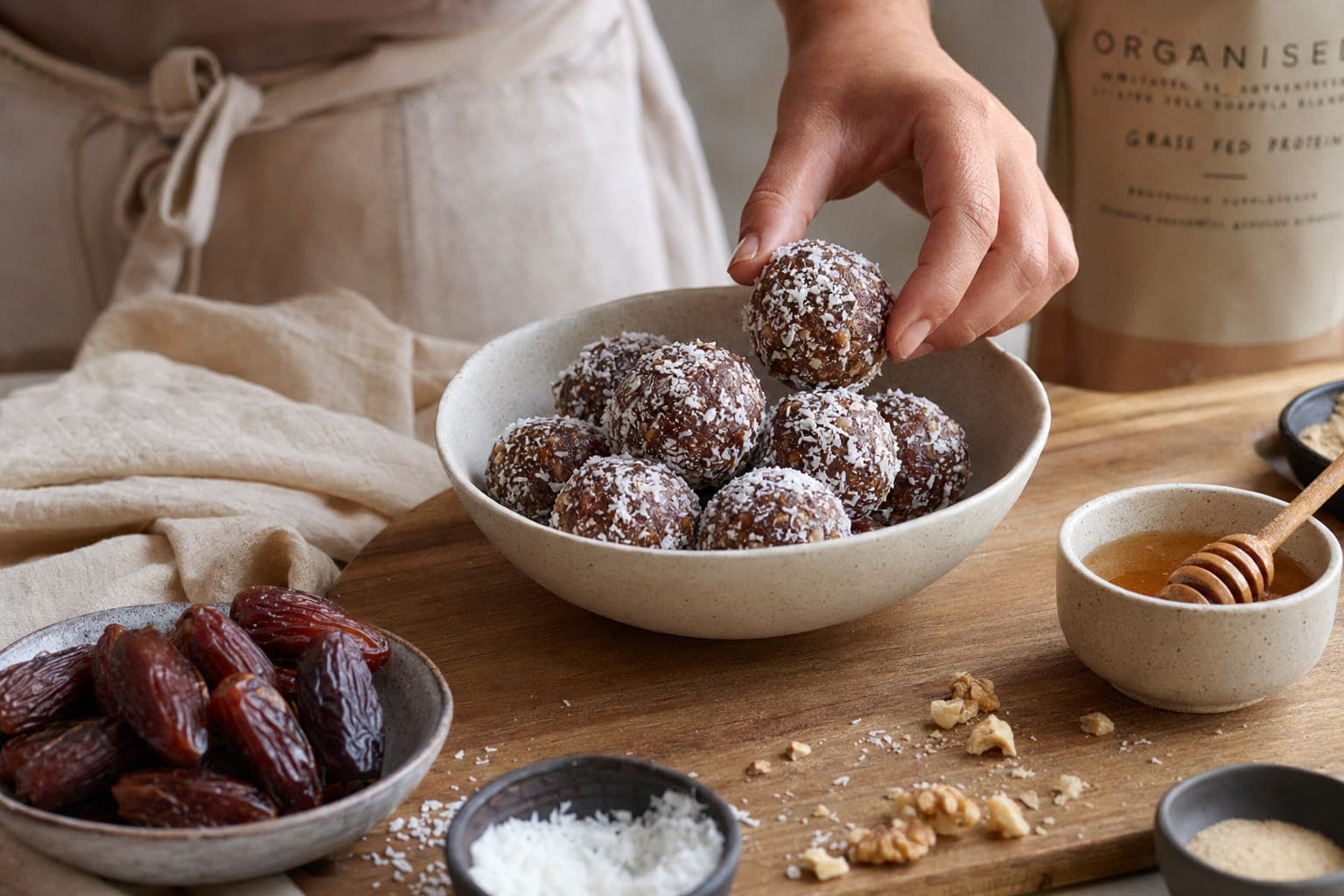
Energy Balls with Organised, Dates and Raw Honey
Make no-bake energy balls with Organised, dates, and raw honey. Perfect lunch box, pre-workout, or on-the-go snack. Simple recipe.
Real food, made effortless
Add it to my routineA few ways to use it
All recipesEnergy Balls with Organised, Dates and Raw Honey
Make no-bake energy balls with Organised, dates, and raw honey. Perfect lunch box, pre-workout, or on-the-go snack. Simple recipe.
Gut-Healing Marshmallows with Collagen and Raw Honey
Learn to make gut-healing marshmallows with collagen and raw honey. A shareable treat that sneaks nutrition into every bite. Easy recipe with video tips.
Organised Chia Pudding with Raw Honey and Berries
A no-cook chia seed pudding made with raw milk, collagen, berries, and raw honey. Prep it the night before and eat for breakfast.


 Join over 100,000+ members
Build a better food system with us
The Organised community is thousands of people choosing real food and backing the farmers who grow it, all of us trying to leave the world a little better than we found it. If that is what you care about too, you belong here.