Collagen Peptides vs Gelatin: Same Protein, Different Forms
They're made from the same animal parts - bones, skin, tendons. But collagen peptides dissolve in your cold coffee. Gelatin requires heat. That difference matters more than most people realise.

By Niall Kiddle, Founder, Organised

Reviewed by Pedro Rodrigues, Agronomist (farming and sourcing only) ·
5 min read · Published · Updated · 3 cited sources
Makers of the Organised Daily blend, a grass-fed beef organ supplement from regenerative UK farms
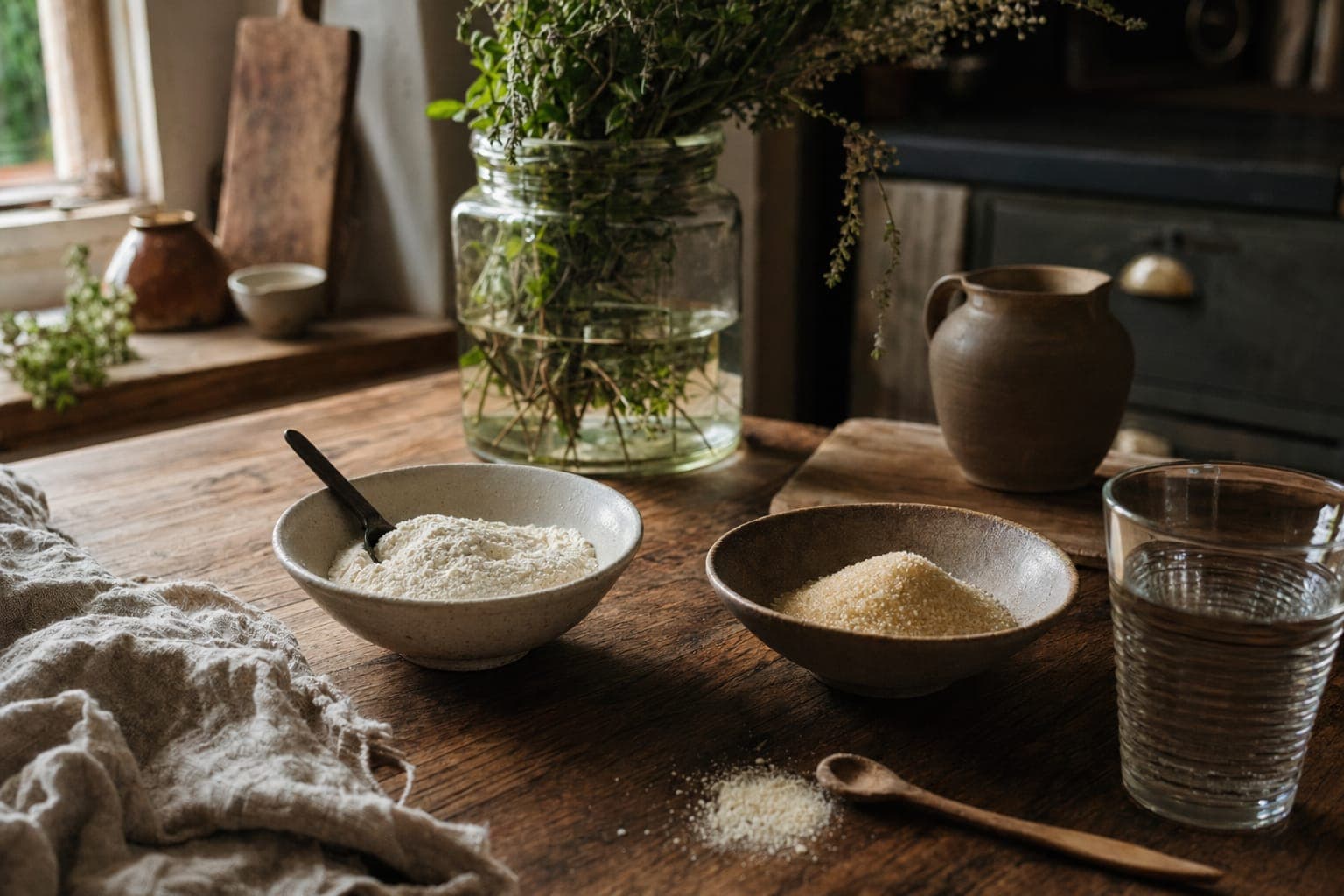
The collagen market is full of pseudo-sophistication. Marketers have convinced people that collagen peptides are newer, more advanced, more effective than plain old gelatin. In reality, they're the same protein in different molecular forms, each with advantages depending on how you actually want to use them.
The manufacturing difference
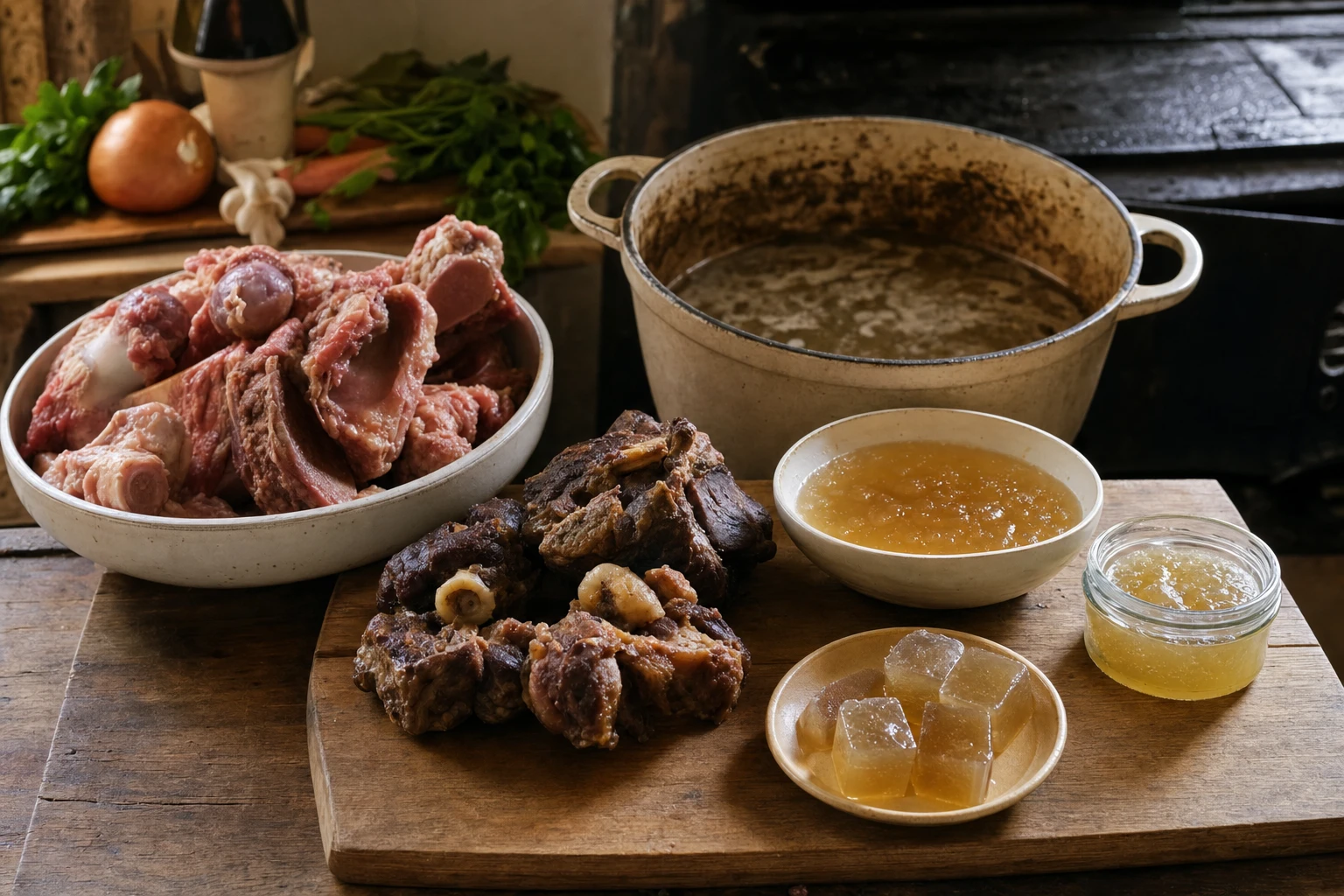
Both start with animal connective tissue - the stuff you'd normally throw away. Bones, skin, cartilage, tendons. These are boiled down to extract collagen, which is then dried.
At this point, you have collagen in its raw form - a protein called tropocollagen. This is what you get if you make bone broth at home and let it cool. It's gelatinous because tropocollagen molecules link together and form a gel matrix.
Gelatin stops here. The raw collagen is dried and powdered. When you add hot water, the heat breaks some of the bonds between collagen molecules, and you get a gel. When it cools, it gels again. This is why gelatin requires heat and creates that wobbling texture.
Collagen peptides go one step further. The raw collagen is hydrolysed - essentially broken apart into smaller peptide chains using heat, enzymes, or acid. Hydrolysed collagen peptides typically have molecular weights in the range of 2-10 kDa, much smaller than native collagen.1
Hydrolysis breaks collagen into fragments. This is why peptides dissolve in cold liquid while gelatin needs heat to disperse.
This isn't new technology. Hydrolysed collagen has been used in medicine for decades. But the supplement industry rebranded it as \"collagen peptides\" to make it sound more advanced, then charged a premium.
Peptides: the convenient form
Collagen peptides are popular because they're convenient.
They dissolve instantly in cold water, coffee, smoothies, or juice. No heating required. No texture change. You can add 10 grams to your morning coffee and it's invisible. This makes compliance easy - most people actually take it consistently because there's no friction.
The smaller molecular weight means faster absorption. Hydroxyproline-containing collagen peptides have been shown to appear in blood within 1-2 hours after ingestion of hydrolysed collagen.1, whereas gelatin takes longer to break down. This matters if you're trying to optimise nutrient timing, though research suggests the timing difference is modest.
Peptides are also the better choice if you have weak digestion. If you have low stomach acid, poor gut health, or malabsorption issues, the smaller peptide fragments are easier for your system to process. Your body doesn't have to work as hard to break them down further.
The amino acid composition of collagen and its hydrolysed peptides is similar — collagen is rich in glycine (~33%), proline (~12%), and hydroxyproline (~10%).2 The hydrolysis doesn't change what amino acids are present, only their molecular arrangement.

The downside: peptides are more expensive because they require extra processing. You're paying for convenience, not for better amino acids.
Gelatin: the traditional form
Gelatin is collagen in its simpler form, without the hydrolysis step.
It requires heat, but that heat does something interesting. It breaks the molecular bonds between collagen strands in a gentle way that preserves some of the three-dimensional structure. When it cools, these structures partially reassemble, creating the gel.
This gelation has real benefits. Gelatin supports your digestive system in ways hydrolysed peptides don't. The gel structure itself is soothing to an inflamed gut. This is why bone broth made with gelatin-rich bones (knuckles, feet, skin) is so effective for gut healing. You're not just getting amino acids. You're getting the structural form that supports barrier repair.
Gelatin is also the traditional form. Every culture that ate animals nose-to-tail used gelatin in their cooking - through broths, aspics, and stocks. Your body evolved to process gelatin. There's an intuitive rightness to it that peptides can't match, because peptides are a modern extraction technique.
Gelatin is also significantly cheaper than peptides. A kilogram of quality gelatin costs roughly half what peptides do. If budget is a concern, gelatin wins.
Gelatin requires heat, but it preserves something collagen peptides lose in processing. The gel structure matters for gut healing, not just the amino acids.
The downside: it's inconvenient. You have to warm water or use it in recipes. Most people don't develop a consistent habit with gelatin because there's friction every time they want to take it. Convenience matters for long-term compliance.
Get honest comparisons, free
Two short reads a week cutting through supplement marketing with what the evidence says.
By signing up you agree to receive emails from us. No spam, unsubscribe anytime.
Amino acid profiles and function
This is where the hype falls apart.
Both gelatin and peptides have identical amino acid compositions. Same glycine. Same proline. Same hydroxyproline. The only difference is molecular size and how quickly you absorb them.
Glycine is required for collagen synthesis and is one of the three amino acids in glutathione synthesis.3 You get roughly the same amount from gelatin as from peptides - it's just absorbed at different speeds.
Hydroxyproline is unique to collagen. It's not found in other proteins. Your body uses it specifically for collagen cross-linking, which is what makes collagen structurally sound. Again, both forms provide the same amount.
The idea that hydrolysed peptides are somehow \"better absorbed\" or \"more bioavailable\" is marketing nonsense. Your digestive system breaks both down into the same amino acids and peptides anyway. Hydrolysis just pre-breaks the peptides for you. Your body does the same work if you give it gelatin - it just takes slightly longer.


1 of 9
Daily blend
100,000+ thriving families4.9 on Trustpilot
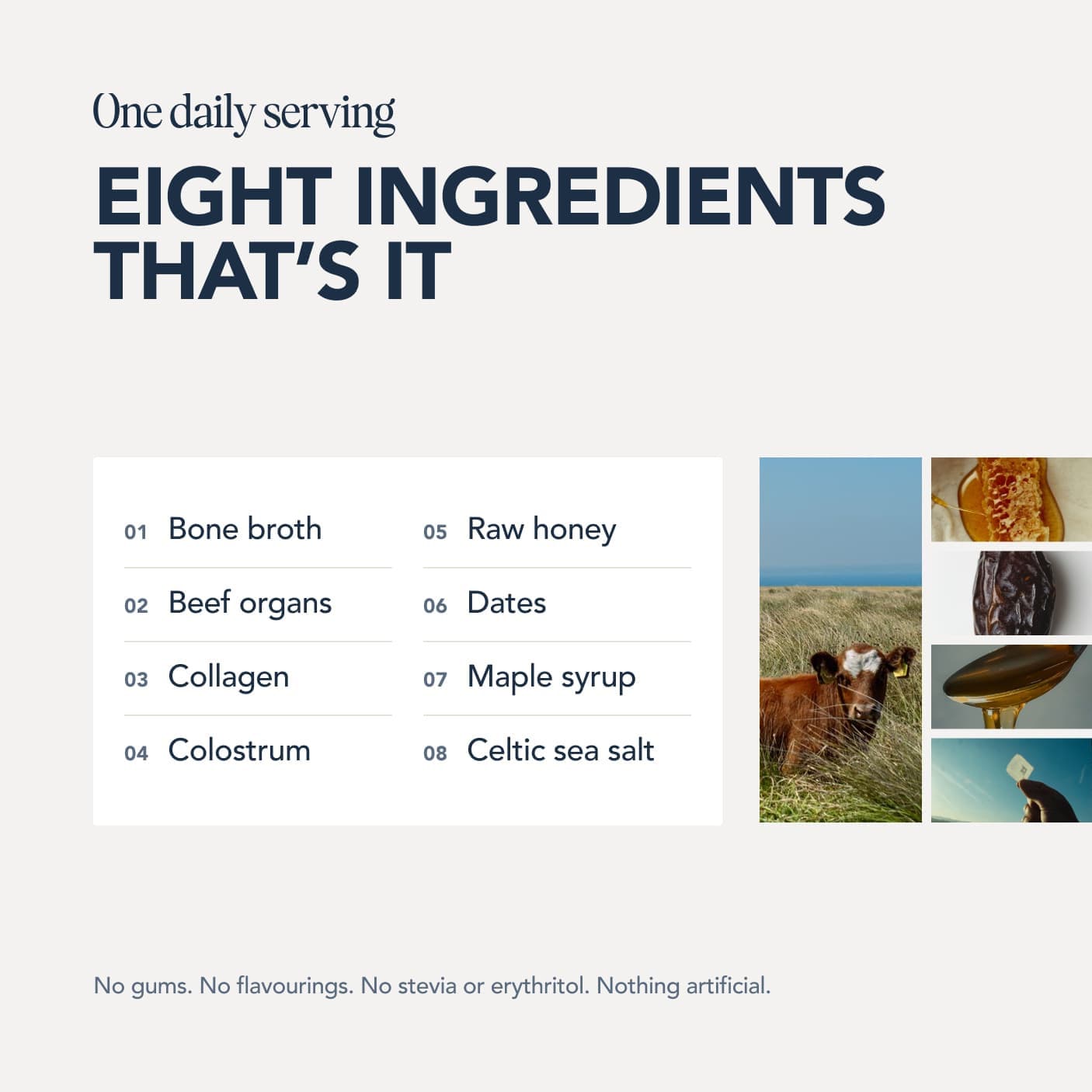
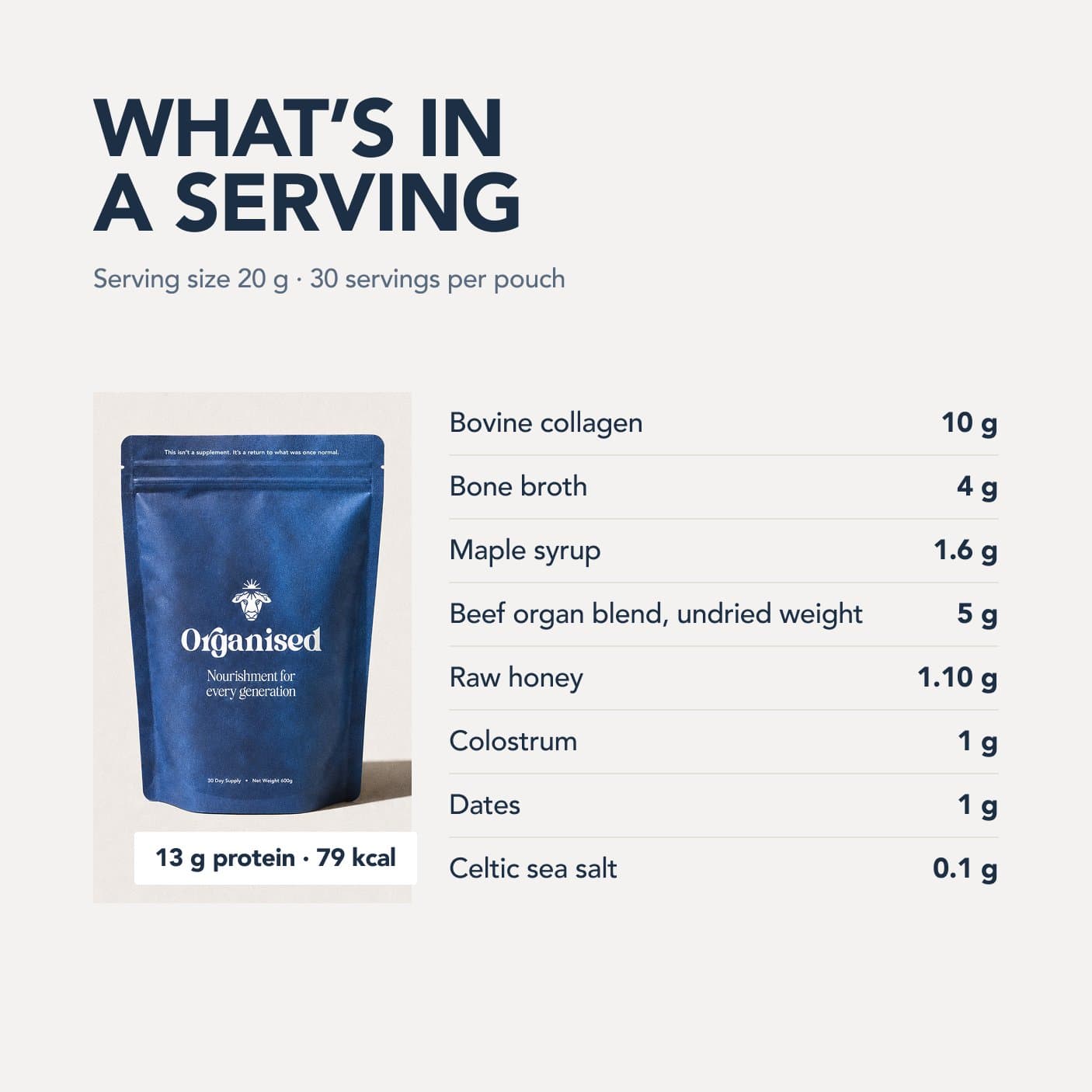
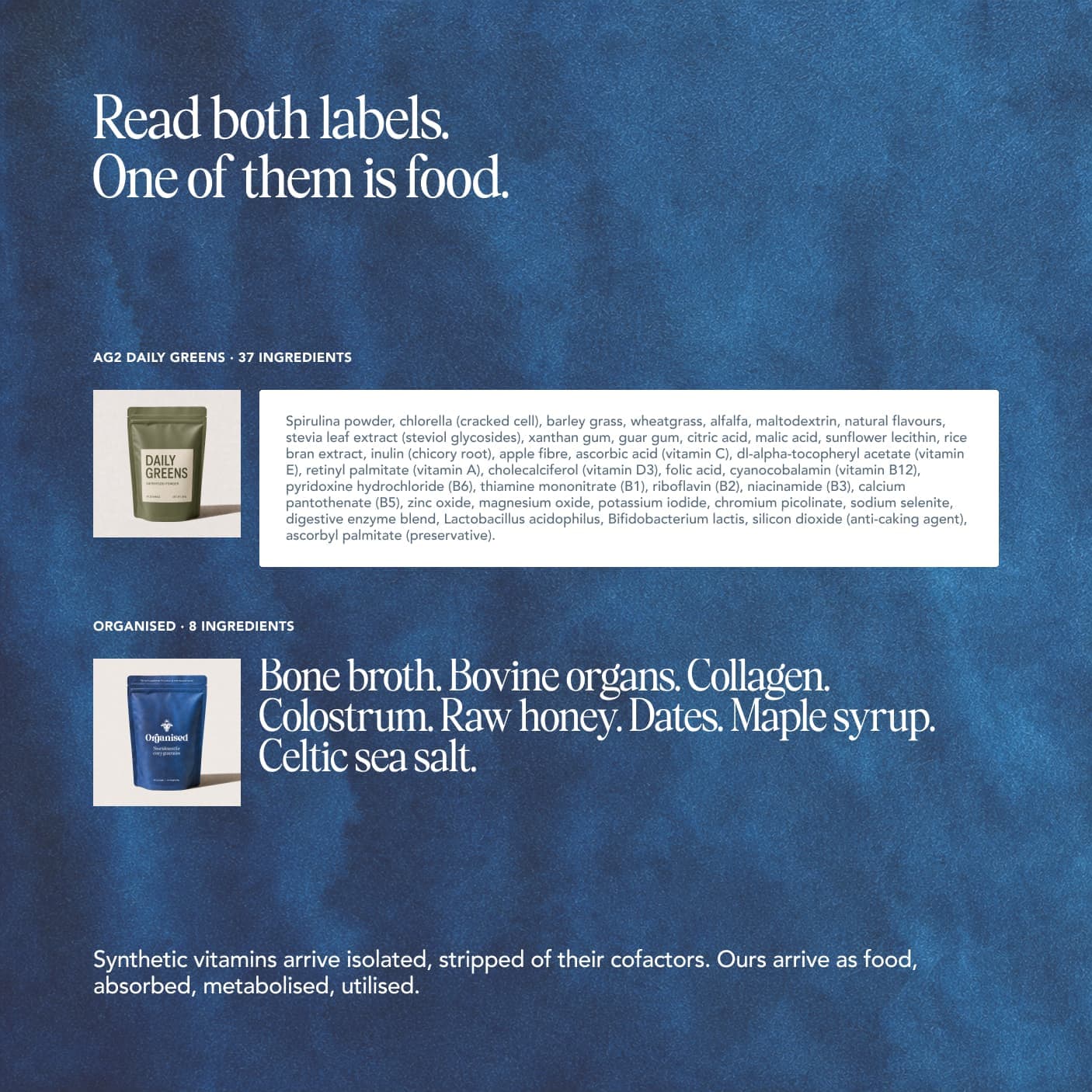
Eight real ingredients built around grass-fed beef organs, collagen and colostrum. Nothing synthetic added.
Free with your first order, worth £38. Plus £10 off the pouch with a subscription.
Free UK shipping · Made in England · 100 day money back guarantee on your first pouch · Skip, pause or cancel anytime
Which should you use
If you're already making bone broth regularly, you don't need either. You're getting gelatin naturally, and the gel structure is intact.
If you're not making broth, the decision is convenience versus cost.
Choose peptides if you struggle with consistency. If the barrier to entry (needing heat, needing to plan recipes) prevents you from actually taking collagen, pay the premium for peptides. Peptides in your coffee every morning beats gelatin you never quite get around to using. Consistency trumps cost.
Choose gelatin if cost matters more than convenience. If you're willing to add gelatin to warm drinks or use it in recipes, you're getting the same amino acids at half the price. You're also getting the gel structure, which might be superior for gut healing.
A practical approach: use peptides for daily maintenance (post-coffee collagen habit), and use gelatin in bone broth or warm broths for the gel structure when you're actively trying to heal your gut. You get consistency with peptides and additional benefit from gelatin.
Peptides are convenience. Gelatin is tradition and gel structure. Pick based on what you'll actually use consistently and which form your body needs right now.
The bottom line
Collagen peptides and gelatin come from the same source and contain identical amino acids. Peptides are hydrolysed, making them soluble in cold liquid. Gelatin is raw collagen, requiring heat and offering gel structure. Choose peptides for convenience and consistency. Choose gelatin for cost and gut-healing gel benefits. Neither is objectively better - better is whichever one you'll actually use.
References
Every source below was checked on 27 August 2026. Each PubMed, PMC and DOI identifier was resolved against NCBI or Crossref, and what it opens is printed under the citation, so you can see the link goes where the citation says without leaving the page. Where a citation and its identifier disagreed, the citation was corrected to the record or the reference was deleted along with the sentence marker that pointed at it, and where the resolved paper turned out not to support the sentence, the sentence was cut back to what it does support. Borrowed authority is worse than none, because it looks like rigour.
- Yazaki M, et al. Oral Ingestion of Collagen Hydrolysate Leads to the Transportation of Highly Concentrated Gly-Pro-Hyp and Its Hydrolyzed Form of Pro-Hyp into the Bloodstream. J Agric Food Chem. 2017. PMID 28244315Checked 27 August 2026: PMID 28244315 opens Yazaki M, Ito Y, Yamada M et al, Oral Ingestion of Collagen Hydrolysate Leads to the Transportation of Highly Concentrated Gly-Pro-Hyp and Its Hydrolyzed Form of Pro-Hyp into the Bloodstream and Skin. J Agric Food Chem 2017;65(11):2315-2322.
- Eastoe JE. The amino acid composition of mammalian collagen and gelatin. Biochem J. 1955;61(4):589-600. PMID 13276342Checked 27 August 2026: PMID 13276342 opens EASTOE JE, The amino acid composition of mammalian collagen and gelatin. Biochem J 1955;61(4):589-600.
- Wu G, et al. Glutathione metabolism and its implications for health. J Nutr. 2004;134(3):489-92. PMID 14988435Checked 27 August 2026: PMID 14988435 opens Wu G, Fang YZ, Yang S et al, Glutathione metabolism and its implications for health. J Nutr 2004;134(3):489-92. PubMed indexes it as: Review.
Who wrote and reviewed this guide
Niall Kiddle
Author · Founder, Organised
Niall is the founder of Organised. He started the company in 2024 after fixing his own health the slow way: in 2022 he swapped a cupboard of synthetic supplements for real food, raw milk, organ meats, bone broth and honey, and felt the difference within months.
Areas of expertise: Ancestral nutrition, Organ meats, Whole-food supplementation, Gut health, Regenerative sourcing
Read Niall's full profile
Pedro Rodrigues
Reviewer · Agronomist (farming and sourcing only)
Pedro is the agronomist Organised works with on farming and sourcing. His job on the guides is to keep the science honest: he reviews what we publish about soil health, regenerative agriculture, grazing and the way food is actually produced.
Areas of expertise: Regenerative agriculture, Agronomy, Soil health, Grass-fed farming, Food sourcing
Reviewed this guide on
Read Pedro's full profileBrowse the guides library
All guidesKeep reading
Science
Amino Acids 101: Essential, Non-Essential and Conditional
There are nine essential amino acids you must eat. But four conditionally essential amino acids matter more than most people realise.

Recipes & routines
Organised Protein Pancakes: A Weekend Favourite
A high-protein pancake recipe using beef protein, eggs, and raw milk. Cooked in cast iron, naturally sweetened with banana and honey. Real food breakfast.
Comparisons
Collagen vs Hyaluronic Acid: What Actually Works for Skin?
Collagen vs hyaluronic acid for skin: one rebuilds from within, the other holds water at the surface. See how each works and which one you actually need.
Real food, made effortless
Try the blendA few ways to use it
All recipes
Organ Bolognese: The Family Dinner That Heals
Practical organ meat recipe using fresh beef liver and heart. Family-friendly bolognese that bridges supplements to whole food.
Raw Milk Ice Cream with Organised
Make raw milk ice cream at home with Organised for a seasonal, nutrient-dense treat. Three simple flavours to try whenever the craving strikes.
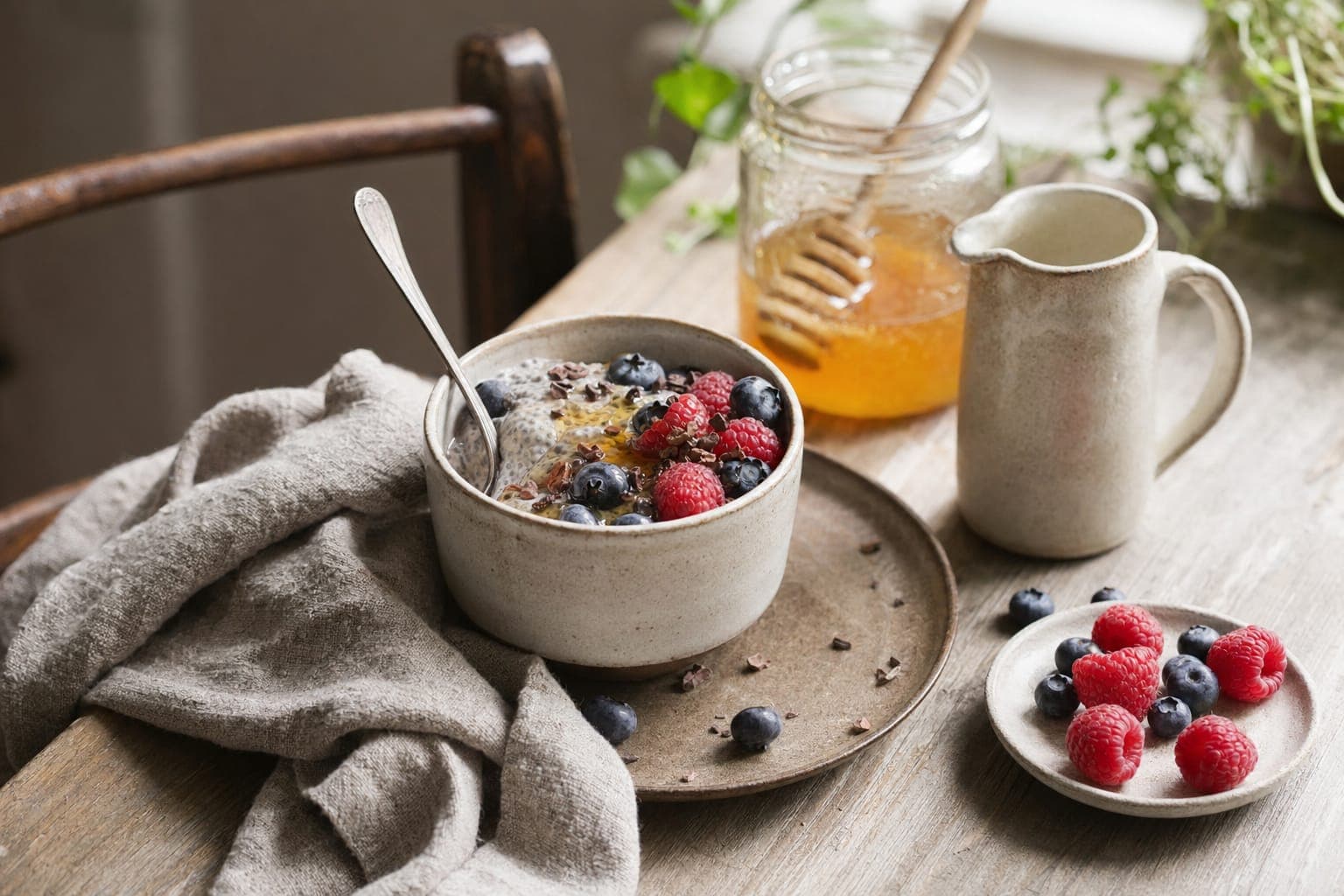
Organised Chia Pudding with Raw Honey and Berries
A no-cook chia seed pudding made with raw milk, collagen, berries, and raw honey. Prep it the night before and eat for breakfast.


 Join over 100,000+ members
Build a better food system with us
The Organised community is thousands of people choosing real food and backing the farmers who grow it, all of us trying to leave the world a little better than we found it. If that is what you care about too, you belong here.