Amino Acids 101: Essential, Non-Essential and Conditional
You know you need protein. But most people have no idea that amino acids are not created equal. Nine of them your body can't make at all. Four others only matter when you're stressed, injured, or training hard.
By Niall Kiddle, Founder, Organised

Reviewed by Pedro Rodrigues, Agronomist (farming and sourcing only) ·
7 min read · Published · Updated · 6 cited sources
Makers of the Organised Daily blend, a grass-fed beef organ supplement from regenerative UK farms
The nine amino acids your body cannot make
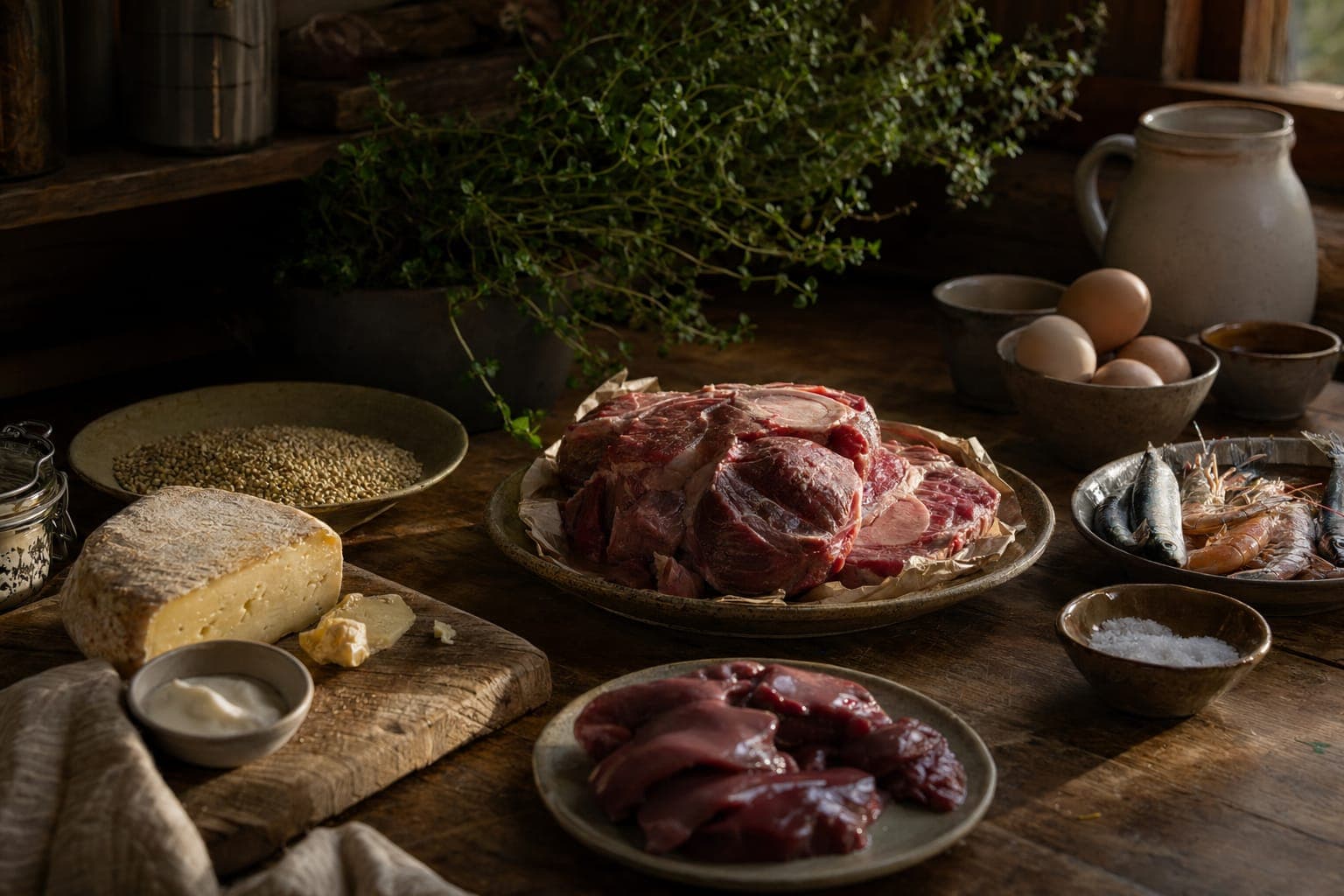
There are 20 amino acids your body uses. Your body manufactures 11 of them from other precursors. Nine, it cannot. These are called essential amino acids because they are essential that you eat them. Your body has no alternative. If you don't consume them, you cannot make protein.
The nine are histidine, isoleucine, leucine, lysine, methionine, phenylalanine, threonine, tryptophan, and valine.1 Three of them, leucine, isoleucine, and valine, are branched-chain amino acids. They're particularly important for muscle protein synthesis, recovery from training, and preventing muscle loss during caloric restriction.2
A complete protein is one that contains all nine essential amino acids. Animal foods like meat, fish, eggs, and dairy are complete proteins. Plant foods like beans, legumes, nuts, and grains are mostly incomplete, they're high in some essential amino acids but deficient in others (usually lysine and methionine). You can combine plant foods to create a complete amino acid profile (rice and beans, peanut butter and whole grain bread), but it requires intentionality.
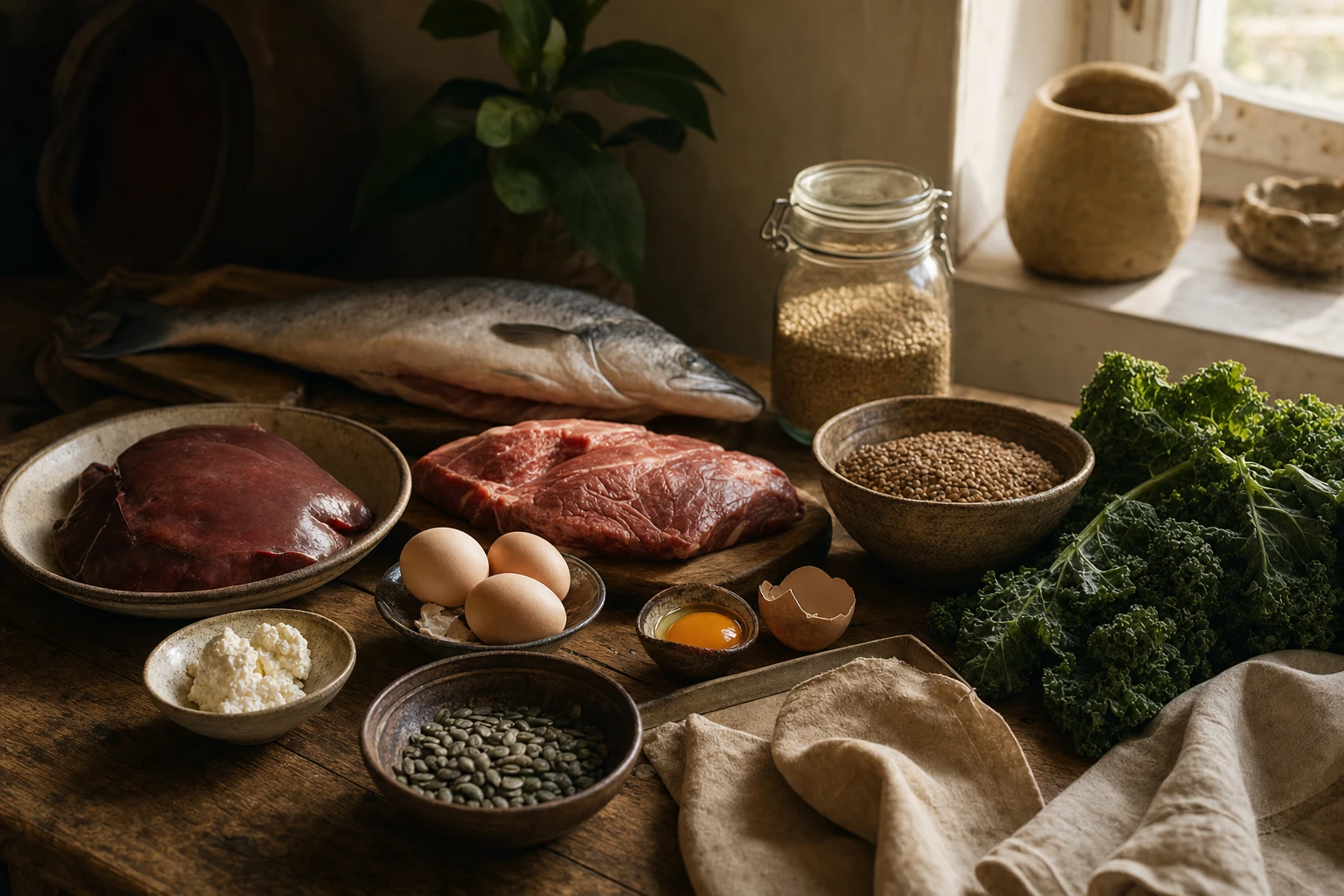
Every animal food you eat contains all nine essential amino acids. Most plant foods do not. This is why nose-to-tail eating is nutritionally superior to plant-based eating.
Your body cannot store amino acids the way it stores fat or carbohydrates. Your muscles are a protein reservoir. When you're deficient in amino acids, your body breaks down muscle to supply the shortfall. Chronically low amino acid intake, particularly in women and older adults, leads to sarcopenia, the loss of muscle mass and strength with age.
The four amino acids that become essential under stress
Your body manufactures cysteine, tyrosine, glutamine, and arginine under normal circumstances. These are called non-essential amino acids. But under physiological stress (injury, intense training, infection, chronic stress), endogenous synthesis may not meet demand and these amino acids become conditionally essential.3 Demand exceeds supply. They become conditionally essential. You have to eat them.
Glutamine is the amino acid your intestinal cells use for fuel. During periods of intense training or stress, glutamine demand spikes, intestinal glutamine stores deplete, and the gut barrier becomes permeable. Bone broth, chicken, beef, fish, and eggs are rich in glutamine. When you're training hard or recovering from illness, glutamine becomes critical.
Arginine is a precursor to nitric oxide, a signalling molecule that regulates blood pressure, endothelial function, and immune response. It's also critical for wound healing and tissue repair. During injury or illness, arginine demand exceeds your body's production capacity. Pork, beef, chicken, pumpkin seeds, and spirulina are arginine-rich.
Cysteine is a precursor to glutathione, the body's major intracellular antioxidant.4 During periods of oxidative stress, which includes training hard, environmental toxin exposure, and illness, cysteine demand spikes. Garlic, onions, and eggs are cysteine-rich.
Tyrosine is a precursor to dopamine, adrenaline, and noradrenaline. When you're under chronic stress, when you're training hard, when you're recovering from illness, your neurotransmitter demand is elevated. Tyrosine supplementation has been shown to improve cognitive performance under acute stress and enhance recovery from training.
Glycine, the forgotten amino acid
Glycine is technically non-essential, meaning your body manufactures it. But like the conditionally essential amino acids, if you're not eating it, you're probably deficient. Modern diets are chronically low in glycine.
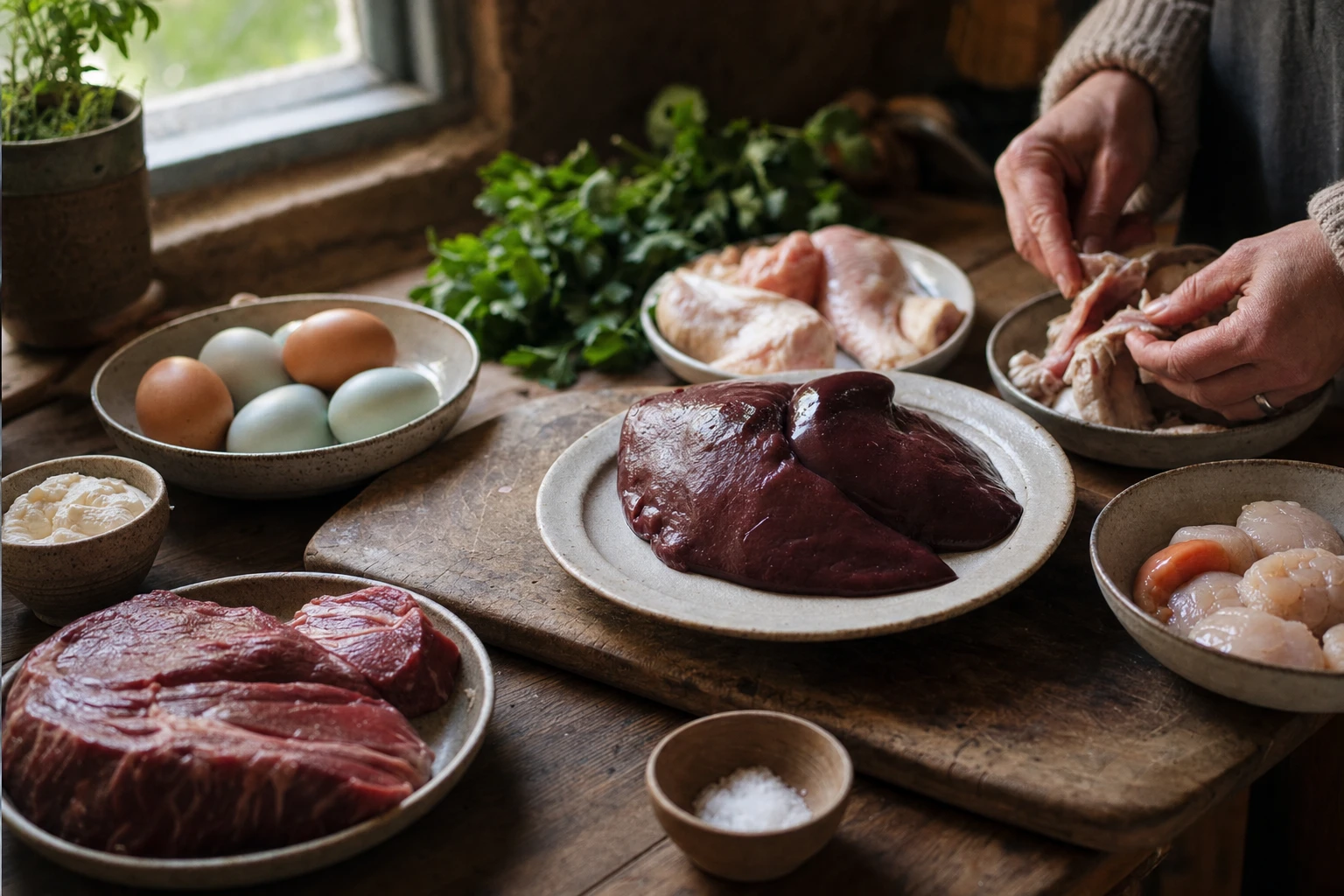
Glycine is found almost exclusively in connective tissue, skin, and bone. It's in bone broth, gelatinous cuts of meat, organ meats, fish skin. It's almost completely absent from lean muscle meat, the type that dominates modern supermarkets. A person eating only chicken breast and minced beef is systematically deficient in glycine.
Your body uses glycine to synthesise creatine, glutathione, and haem, and as a major component of collagen.5 It's essential for collagen formation, for gut barrier integrity, for sleep quality, and for inflammation regulation. Chronically low glycine is associated with poor sleep, slow wound healing, poor skin quality, weak connective tissue, and increased inflammation.
Glycine is manufactured by your body, but not in amounts sufficient to support modern stress, training, and ageing. You have to eat it.
How to ensure you're getting all of them
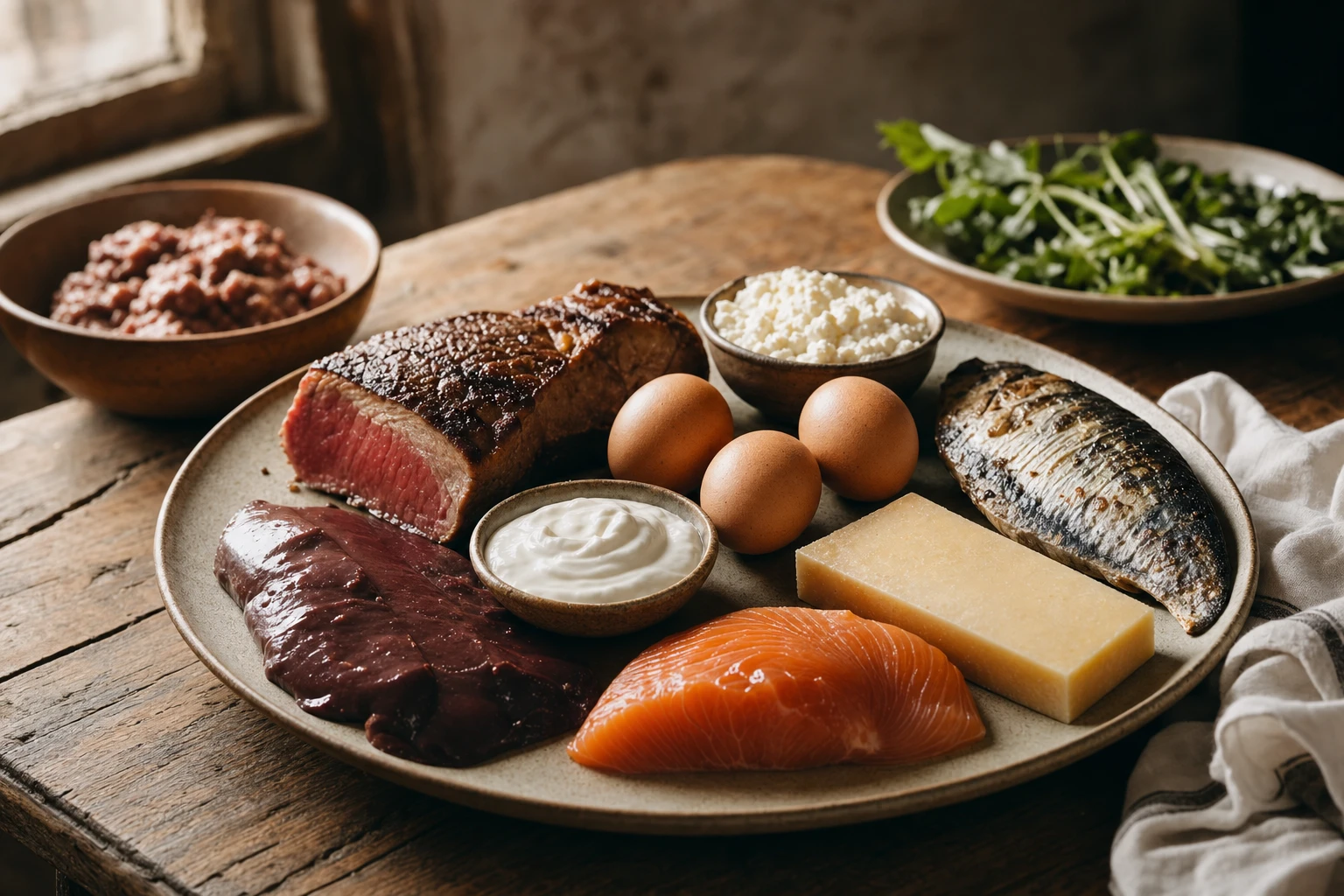
The simplest approach is nose-to-tail eating. Eat muscle meat for the essential and branched-chain amino acids. Eat organ meats, bone broth, and gelatinous cuts for glycine and the conditionally essential amino acids. Eggs provide complete amino acids and cysteine and choline.
If you're eating only lean muscle meat, you're getting the essential amino acids, but you're getting none of the conditionally essential ones and very little glycine. You're setting yourself up for poor recovery, weak connective tissue, and difficulty managing stress.
- Beef liver, chicken liver, kidney - Complete amino acids plus arginine, taurine, and conditionally essential amino acids.
- Bone broth - Glycine, proline, glutamine, and collagen-building amino acids.
- Beef cheeks, oxtail, pork belly skin - Gelatinous sources of glycine and collagen.
- Eggs - All nine essential amino acids plus cysteine and choline.
- Fish - Complete protein plus omega-3 fatty acids and taurine.
- Full-fat dairy - Complete amino acids plus calcium and vitamin K2.
Get the science, plainly, free
Two short reads a week on what the research actually says about nutrition.
By signing up you agree to receive emails from us. No spam, unsubscribe anytime.
Amino acid requirements shift with age and training
Your amino acid needs are not constant across your lifespan. A sedentary young adult has relatively low amino acid requirements. An older adult, particularly one not training, requires more protein to maintain muscle mass. An athlete requires substantially more. A person recovering from illness requires significantly more again.
Research suggests older adults benefit from higher protein intakes (often cited as 1.0-1.2 g/kg or higher) to maintain muscle mass, compared to the standard RDA of 0.8 g/kg.6 For someone aged 70 who weighs 70 kilograms, that's roughly 85 to 112 grams of protein daily, up from the official RDA of 56 grams.
Moreover, older adults have reduced capacity to synthesise essential amino acids from precursors. Arginine and glycine synthesis decline. This is why older people on low-protein diets develop sarcopenia so rapidly. They need more protein than younger people, and they synthesise less of the conditionally essential amino acids from that protein.
Athletes and people training hard require 1.6 to 2.0 grams per kilogram, or roughly 112 to 140 grams for a 70-kilogram person. But more than the quantity, the composition matters. Adequate branched-chain amino acids (roughly 35 percent of total essential amino acid intake) for muscle protein synthesis. Adequate glycine and arginine for recovery. Adequate glutamine for gut integrity under training stress.
A person eating a vegan diet of legumes and grains might hit protein targets by volume, but if those foods are low in branched-chain amino acids and completely lacking in glycine, the protein won't translate into muscle synthesis or recovery. Quantity and composition both matter.
Signs you might be amino acid deficient
Many people operate in a state of subclinical amino acid deficiency without realising it. Here are markers worth noting.
Slow wound healing or poor skin quality suggests low amino acid availability. Your skin is constantly turning over. Collagen is constantly being synthesised and replaced. Glycine deficiency specifically impairs collagen synthesis. If your wounds heal slowly or your skin quality is poor despite adequate general nutrition, glycine and proline insufficiency is worth investigating.
Poor recovery from training is a clear sign of conditionally essential amino acid deficiency. You're training hard but not getting stronger. You're sore for days after sessions. You catch colds frequently. These are signs that your body doesn't have enough glutamine, arginine, or general amino acid availability for recovery.
Poor sleep quality, particularly difficulty staying asleep or waking unrefreshed, is associated with glycine deficiency. Glycine supports sleep quality through GABA and serotonin pathways. A person deficient in glycine often improves sleep dramatically once glycine intake increases.
Hair loss, weak nails, and poor skin elasticity suggest low amino acid availability and particularly low methionine or cysteine. These amino acids are critical for keratin synthesis in hair and skin.
Mood disturbances, particularly low motivation or poor stress resilience, can indicate low tyrosine and arginine. Tyrosine is a dopamine precursor. Arginine supports nitric oxide production. Deficiency in either is associated with mood and motivation changes.
If you're experiencing any of these, auditing your protein intake and specifically your nose-to-tail eating patterns is worth doing.

1 of 9
Daily blend
100,000+ thriving families4.9 on Trustpilot
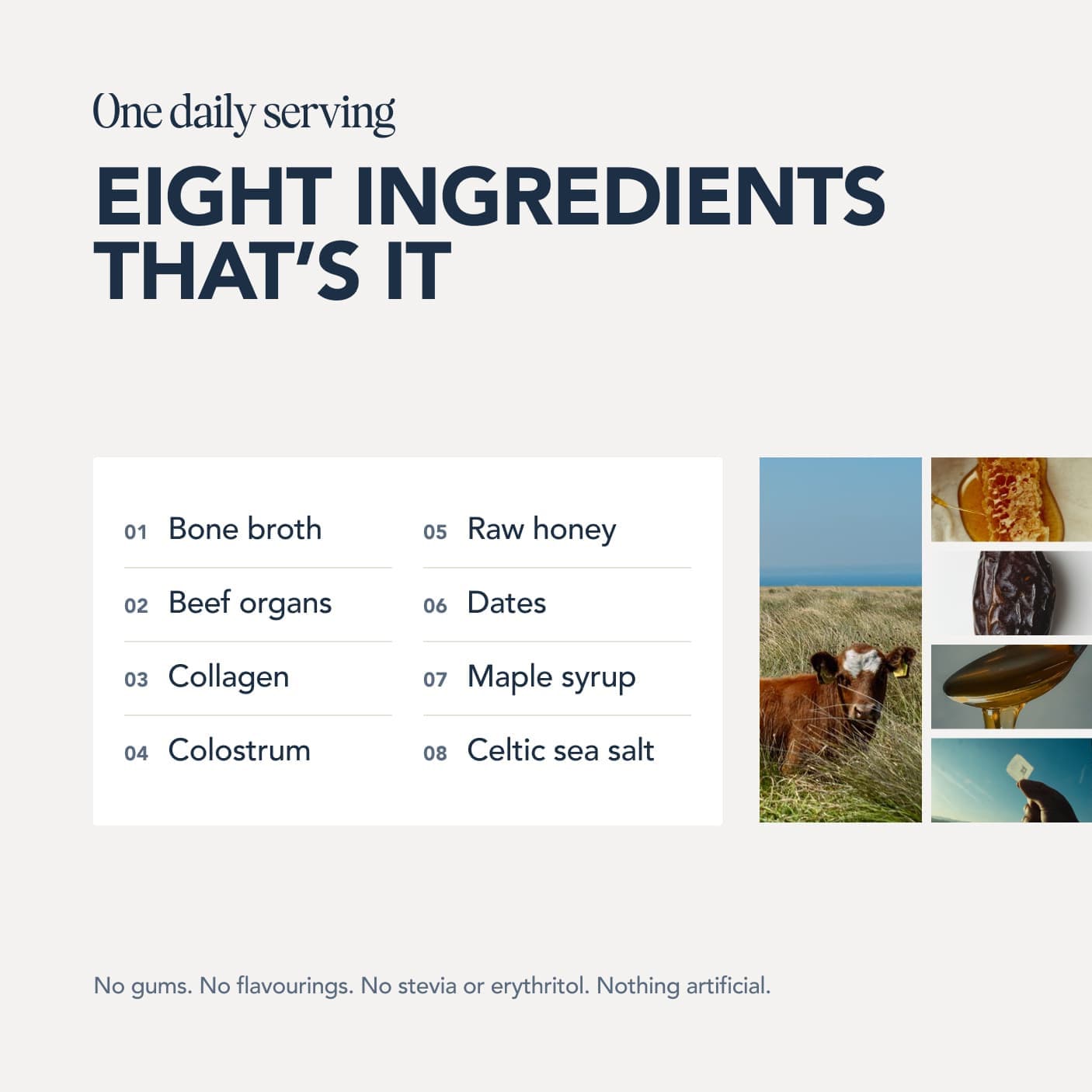
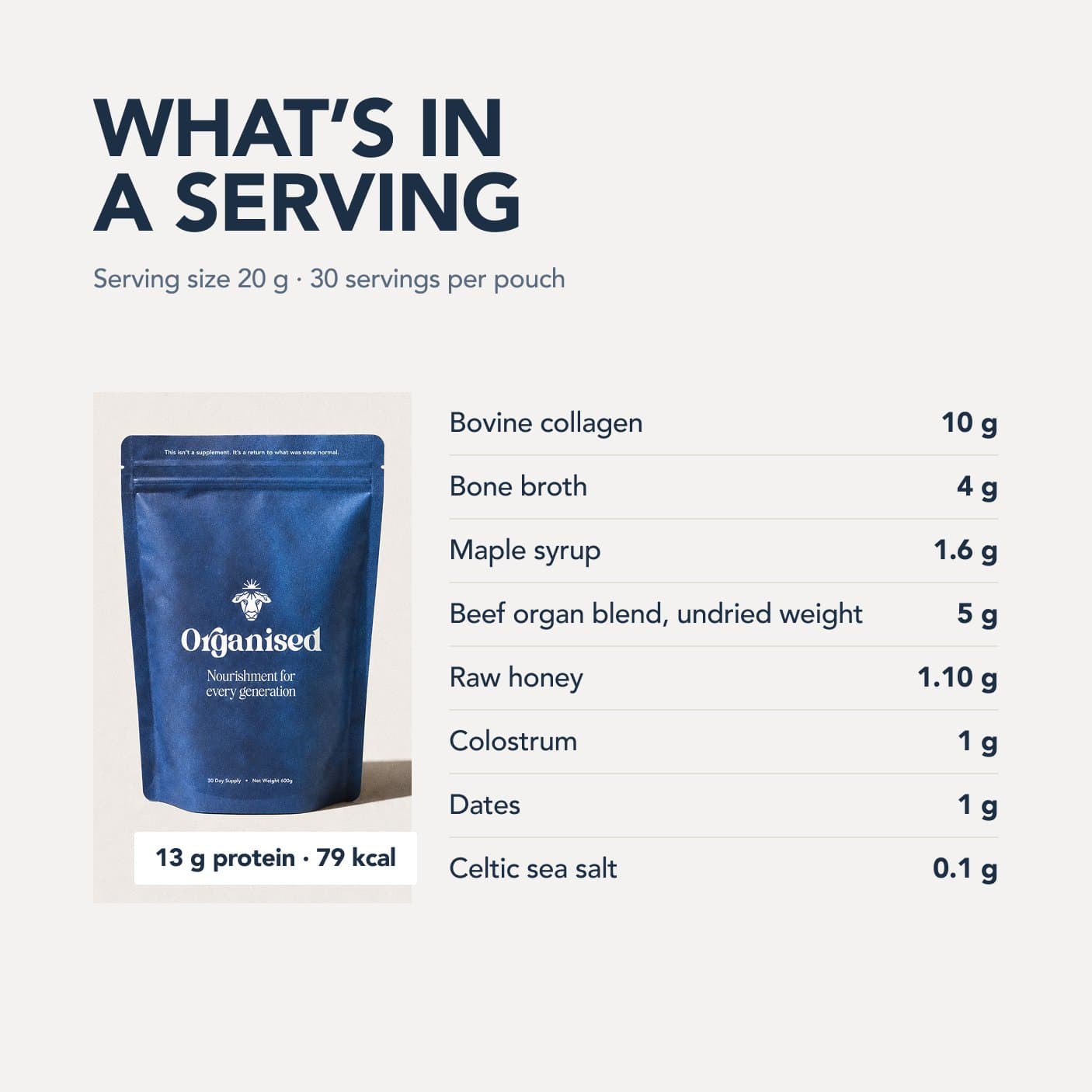
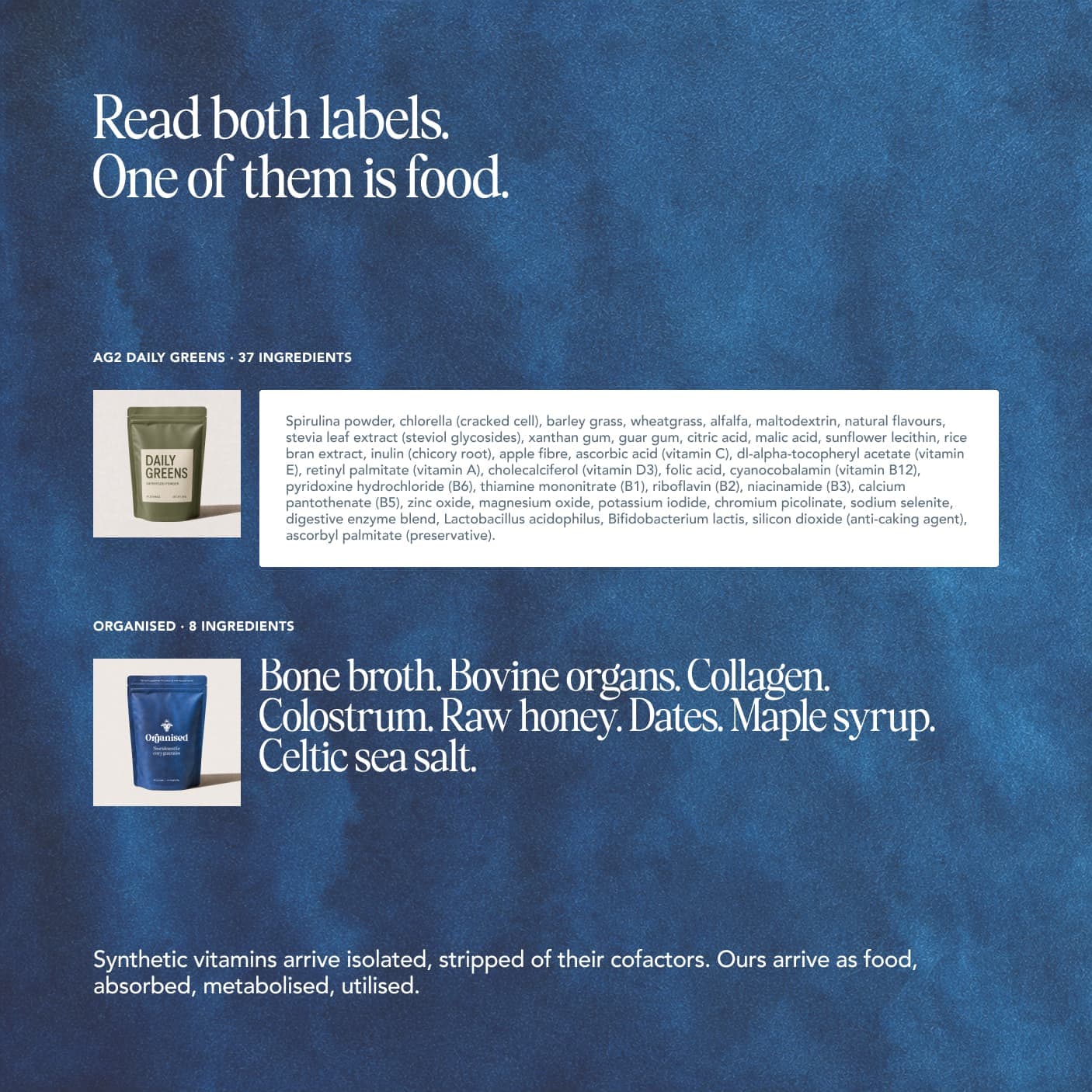
Eight real ingredients built around grass-fed beef organs, collagen and colostrum. Nothing synthetic added.
Free with your first order, worth £38. Plus £10 off the pouch with a subscription.
Free UK shipping · Made in England · 100 day money back guarantee on your first pouch · Skip, pause or cancel anytime
The bottom line
You need all nine essential amino acids daily. They're non-negotiable. But if you're training, stressed, injured, or ageing, the four conditionally essential amino acids and glycine become equally important. You cannot eat your way to good health on lean muscle meat alone. Nose-to-tail eating is not a trend. It's how to actually get the full spectrum of amino acids your body needs to remain resilient and strong.
References
Every source below was checked on 27 August 2026. Each PubMed, PMC and DOI identifier was resolved against NCBI or Crossref, and what it opens is printed under the citation, so you can see the link goes where the citation says without leaving the page. Where a citation and its identifier disagreed, the citation was corrected to the record or the reference was deleted along with the sentence marker that pointed at it, and where the resolved paper turned out not to support the sentence, the sentence was cut back to what it does support. Borrowed authority is worse than none, because it looks like rigour.
- Institute of Medicine. Dietary Reference Intakes for Energy, Carbohydrate, Fiber, Fat, Fatty Acids, Cholesterol, Protein, and Amino Acids. National Academies Press; 2005.
- Wolfe RR. Branched-chain amino acids and muscle protein synthesis in humans: myth or reality? J Int Soc Sports Nutr. 2017;14:30. PMID: 28852372.Checked 27 August 2026: PMID 28852372 opens Wolfe RR, Branched-chain amino acids and muscle protein synthesis in humans: myth or reality? J Int Soc Sports Nutr 2017;14:30. PubMed indexes it as: Review.The authors' own declaration, from the record: ETHICS APPROVAL AND CONSENT TO PARTICIPATE: Not Applicable. CONSENT FOR PUBLICATION: Not Applicable. COMPETING INTERESTS: Dr. Wolfe has received research grants and/or honoraria from the National Cattleman's Beef Checkoff program Abbott Nutrition, Danone and PepsiCo. Dr. Wolfe owns shares in Essential Blends, LLC, and has been a consultant for Axcella LLC. PUBLISHER'S NOTE: Springer Nature remains neutral with … (abridged; the full declaration is on the record)
- Wu G. Functional amino acids in growth, reproduction, and health. Adv Nutr. 2010;1(1):31-7. PMID: 22043449.Checked 27 August 2026: PMID 22043449 opens Wu G, Functional amino acids in growth, reproduction, and health. Adv Nutr 2010;1(1):31-7.The authors' own declaration, from the record: Author disclosure: G. Wu, no conflicts of interest.
- Lu SC. Glutathione synthesis. Biochim Biophys Acta. 2013;1830(5):3143-53. PMID: 22995213.Checked 27 August 2026: PMID 22995213 opens Lu SC, Glutathione synthesis. Biochim Biophys Acta 2013;1830(5):3143-53. PubMed indexes it as: Review.
- Li P, Wu G. Roles of dietary glycine, proline, and hydroxyproline in collagen synthesis and animal growth. Amino Acids. 2018;50(1):29-38. PMID: 28929384.Checked 27 August 2026: PMID 28929384 opens Li P, Wu G, Roles of dietary glycine, proline, and hydroxyproline in collagen synthesis and animal growth. Amino Acids 2018;50(1):29-38. PubMed indexes it as: Review.
- Bauer J et al. Evidence-based recommendations for optimal dietary protein intake in older people: a position paper from the PROT-AGE Study Group. J Am Med Dir Assoc. 2013;14(8):542-59. PMID: 23867520.Checked 27 August 2026: PMID 23867520 opens Bauer J, Biolo G, Cederholm T et al, Evidence-based recommendations for optimal dietary protein intake in older people: a position paper from the PROT-AGE Study Group. J Am Med Dir Assoc 2013;14(8):542-59. PubMed indexes it as: Consensus Statement, Review.
Who wrote and reviewed this guide
Niall Kiddle
Author · Founder, Organised
Niall is the founder of Organised. He started the company in 2024 after fixing his own health the slow way: in 2022 he swapped a cupboard of synthetic supplements for real food, raw milk, organ meats, bone broth and honey, and felt the difference within months.
Areas of expertise: Ancestral nutrition, Organ meats, Whole-food supplementation, Gut health, Regenerative sourcing
Read Niall's full profile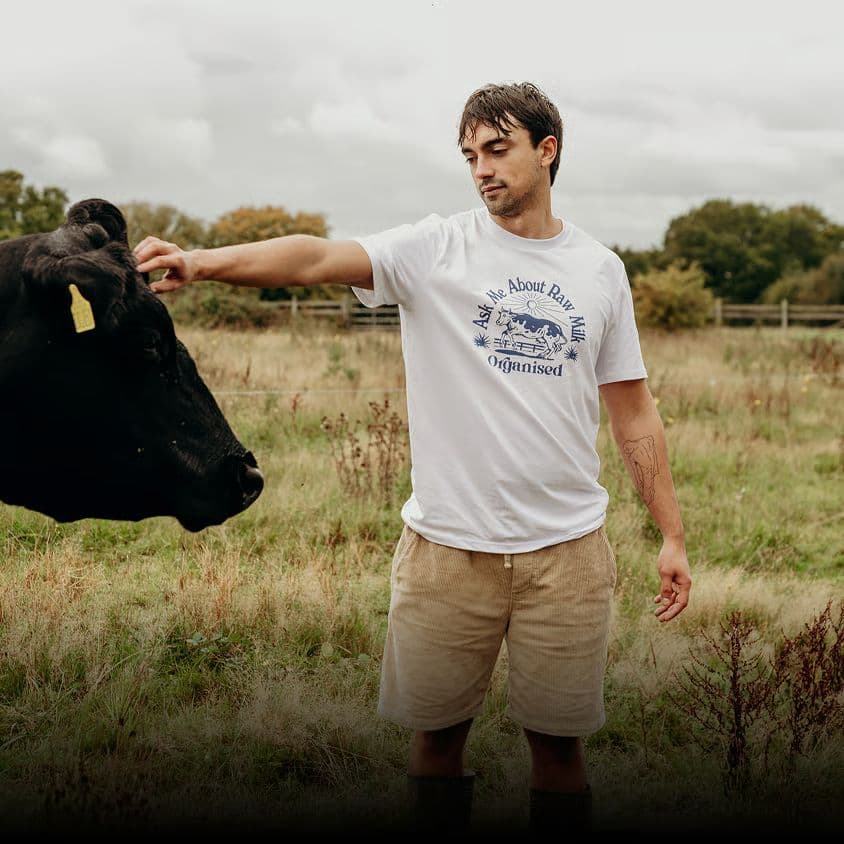
Pedro Rodrigues
Reviewer · Agronomist (farming and sourcing only)
Pedro is the agronomist Organised works with on farming and sourcing. His job on the guides is to keep the science honest: he reviews what we publish about soil health, regenerative agriculture, grazing and the way food is actually produced.
Areas of expertise: Regenerative agriculture, Agronomy, Soil health, Grass-fed farming, Food sourcing
Reviewed this guide on
Read Pedro's full profileMore on nutrient deep-dives
View allBrowse the guides library
All guidesKeep reading

Life stage
Teenage Athletes: Protein and Nutrient Needs for Growing Bodies
Protein, calories, iron, B12: what teenage athletes actually need. Why bars and shakes miss the mark. Real food for growing bodies.
Science
Cholesterol in Organ Meats: Should You Be Worried?
Do organ meats raise cholesterol? The science on dietary cholesterol and serum cholesterol, plus the 2015 guideline shift.
Science
The Real Reason Your Doctor Says 'Eat Less Red Meat'
Your doctor says eat less red meat, but the science is muddier than the advice. Learn about confounders, processed meat and what the evidence really shows.
Real food, made effortless
See the blendA few ways to use it
All recipes
The Perfect Organised Morning Shake: Our Favourite Recipe
Our signature morning shake: Organised, raw milk, banana, honey. Simple, nourishing, and optimised for an empty stomach.

Organised Protein Pancakes: A Weekend Favourite
A high-protein pancake recipe using beef protein, eggs, and raw milk. Cooked in cast iron, naturally sweetened with banana and honey. Real food breakfast.
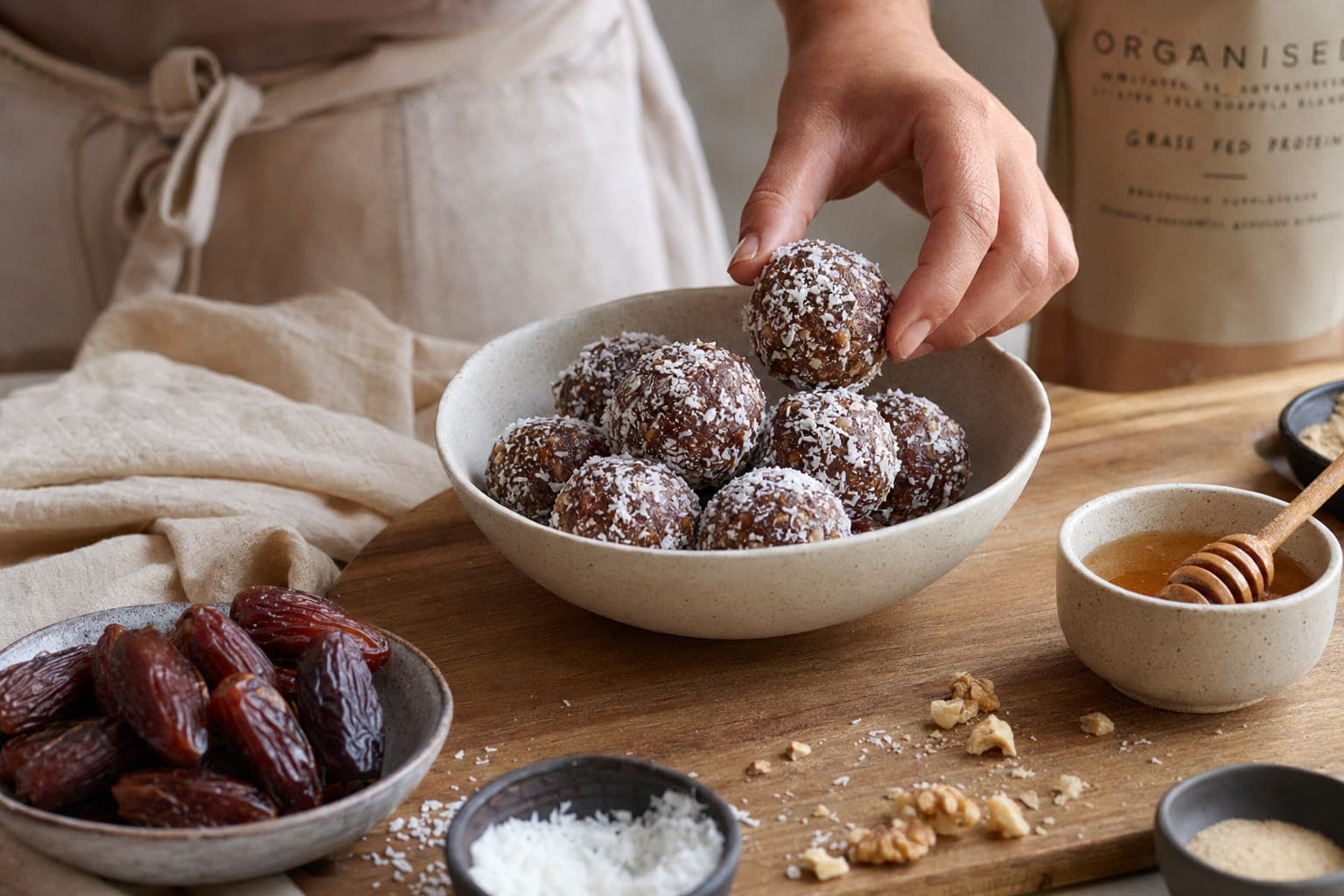
Energy Balls with Organised, Dates and Raw Honey
Make no-bake energy balls with Organised, dates, and raw honey. Perfect lunch box, pre-workout, or on-the-go snack. Simple recipe.


 Join over 100,000+ members
Build a better food system with us
The Organised community is thousands of people choosing real food and backing the farmers who grow it, all of us trying to leave the world a little better than we found it. If that is what you care about too, you belong here.