Memory and Nutrition: Feeding Your Brain at Every Age
Memory isn't destiny. The decline you see as you age isn't inevitable. It's the result of accumulating nutritional deficit. Young brains can usually compensate for poor nutrition. Older brains can't. Feed your brain well when you're young and you build a reserve. Feed it poorly and you accelerate decline. And if you're already experiencing memory loss, the right nutrition can often halt it and sometimes reverse it.
By Niall Kiddle, Founder, Organised

Reviewed by Pedro Rodrigues, Agronomist (farming and sourcing only) ·
5 min read · Published · Updated · 4 cited sources
Makers of the Organised Daily blend, a grass-fed beef organ supplement from regenerative UK farms

Feed your brain well when you're young and you build a reserve. Feed it poorly and you accelerate decline. And if you're already experiencing memory loss, the right nutrition can often halt it and sometimes reverse it.

Memory from a nutritional perspective
Memory is the ability of your neurons to form and maintain connections (synapses). Memory formation requires building protein, producing neurotransmitters, creating myelin (the insulation around nerves), and maintaining the energy systems that power all of this. Every single one of these processes requires specific nutrients.
The nutrients don't change much across life. What changes is the margin for error. A 20-year-old brain with suboptimal nutrition can still form memories. A 60-year-old brain with suboptimal nutrition begins to forget them. This is why memory complaints increase with age. It's not that your brain changed. It's that the nutritional buffer you had when you were young is gone.
The neuroplasticity of your brain also changes with age. Young brains are highly plastic. They form new connections easily. Older brains are less plastic. But reduced plasticity doesn't mean your brain can't change. It just means it requires better nutrition and more consistency to maintain neural connections. This is why the nutrient demands actually increase with age, not decrease.

Childhood and brain building
The first three years of life are critical for brain development. The foundations of memory, learning, and emotional regulation are laid then. If a child is malnourished, particularly deficient in iron, zinc, B12, or choline, the brain doesn't develop properly. The permanent damage is done before they're five.
For school-age children, the nutrition bar is lower than for infants, but still crucial. Choline is a nutrient many children are deficient in. Choline is required for acetylcholine synthesis and supports memory function.1 It's found almost exclusively in animal foods: eggs, beef, chicken, fish, and dairy. A child who eats eggs, meat, and milk is getting adequate choline. A child on a vegetarian or vegan diet is likely deficient.
B12 is required for myelin maintenance and nervous system function. B12 is found only in animal foods.2 Deficiency in childhood impairs learning and attention. Iron is required for oxygen transport and energy production in the brain. Iron deficiency in childhood is associated with reduced cognitive performance.3
The nutrition children get in their first 18 years largely determines their cognitive reserve as adults. A child fed nutrient-dense real food has more cognitive reserve. A child fed ultra-processed food has less.
Parents sometimes worry that eating a lot of meat and eggs is expensive or time-consuming. But consider the alternative: a child with poor memory, reduced learning capacity, and lifelong cognitive struggles because they weren't fed properly when their brain was building. The cost of good nutrition now is far less than the cost of cognitive decline later.
Peak performance years
In young adulthood (your 20s and 30s), your brain is still plastic and resilient. Memory can be excellent even on suboptimal nutrition because your brain can compensate. But you're still building your cognitive reserve.
If you eat well during these years, you build a buffer. If you don't, you're starting to deplete. The difference isn't obvious yet. You still remember names, dates, why you walked into a room. But at the cellular level, neuroinflammation is starting. Neuronal connections are beginning to fray.
This is also when most people develop their adult eating patterns. If you eat processed food, skip breakfast, rely on caffeine and energy drinks, and drink regularly, you're building deficits that will show up as memory loss in your 50s and 60s.
The good news is that if you're in this phase and you shift to nutrient-dense eating, the gains are dramatic. You rebuild your cognitive reserve. You prevent the decline before it starts. A 35-year-old who shifts to eating liver, eggs, fish, and bone broth will have dramatically better memory function at 65 than a 35-year-old who doesn't make that shift. The difference compounds over decades.

Get health guides like this, free
Two short reads a week on eating for energy, gut health, skin, sleep and more.
By signing up you agree to receive emails from us. No spam, unsubscribe anytime.
Protecting your memory as you age
In your 40s and 50s, memory decline becomes noticeable. You forget words mid-sentence. Names don't come as quickly. You misplace things more. This is often attributed to age or stress, but nutrition is a major driver.
Your body's ability to absorb nutrients declines with age. Your stomach acid decreases. Your nutrient requirements actually increase for some nutrients (B12, vitamin D, calcium). And simultaneously, most people start restricting food and eating less, thinking they need fewer calories. This is the perfect storm for nutrient deficiency.
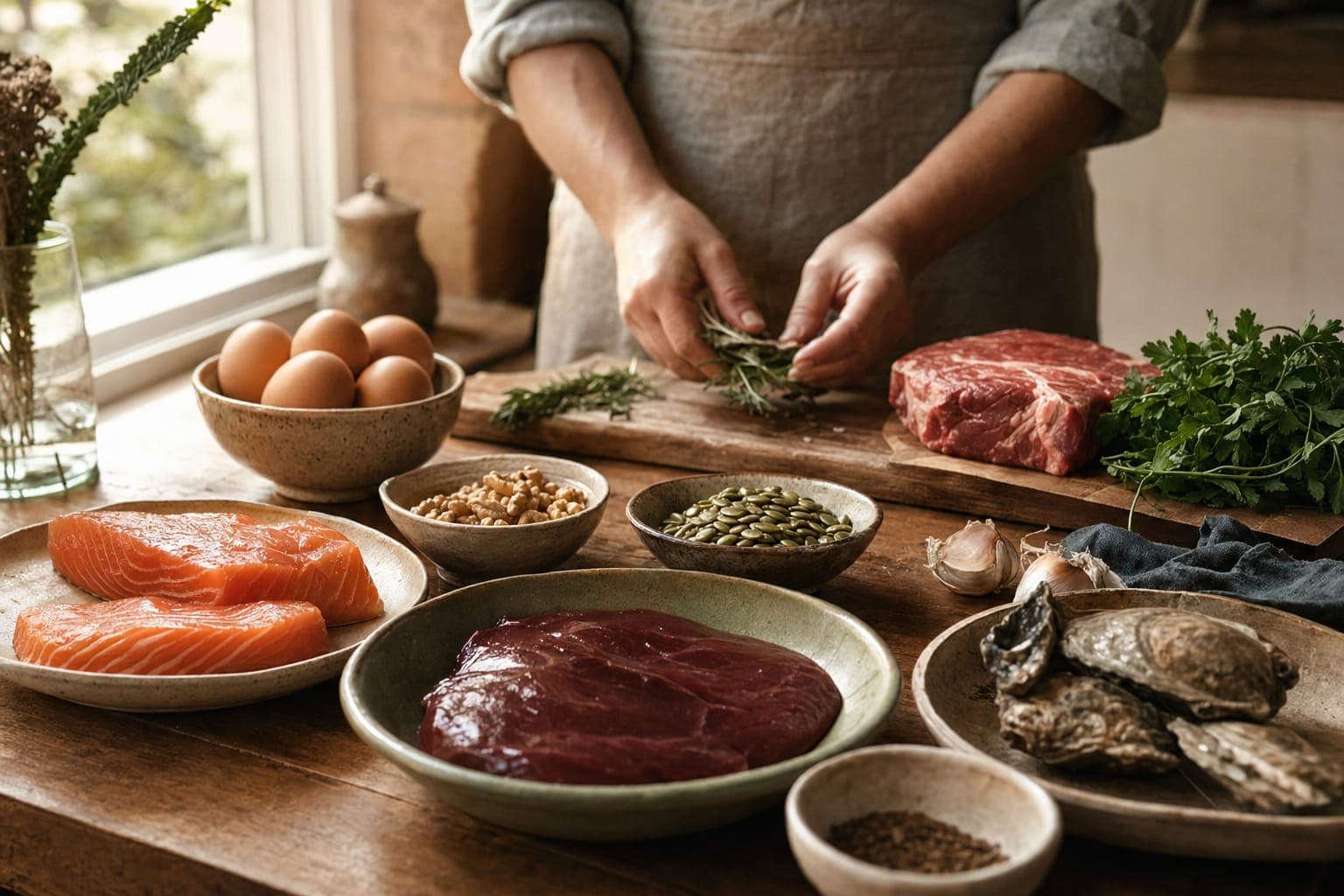
If you want to protect your memory, you need to actively increase nutrient density as you age, not decrease it. Eat more organ meats, not less. Eat more eggs, not fewer. Eat more fish, more oysters, more bone broth. You need these foods more at 60 than you did at 30.
B12 becomes critical. Many people over 60 have reduced B12 status because stomach acid declines with age and absorption is impaired.2 B12 is required for myelin maintenance and prevents memory loss. It's found only in animal foods. Liver, red meat, oysters, eggs, and dairy are the best sources.
DHA (the omega-3 found in fatty fish) is structural to brain phospholipids and has anti-inflammatory effects.4 Fish, particularly wild salmon, mackerel, and sardines, should be a regular part of your diet.
One often-overlooked element is physical activity. Your brain needs physical stress to maintain neural connections. A sedentary 60-year-old will lose memory faster than an active 60-year-old even with identical nutrition. Combine nutrient-dense eating with regular movement and your cognitive reserve strengthens dramatically.

1 of 9
Daily blend
100,000+ thriving families4.9 on Trustpilot
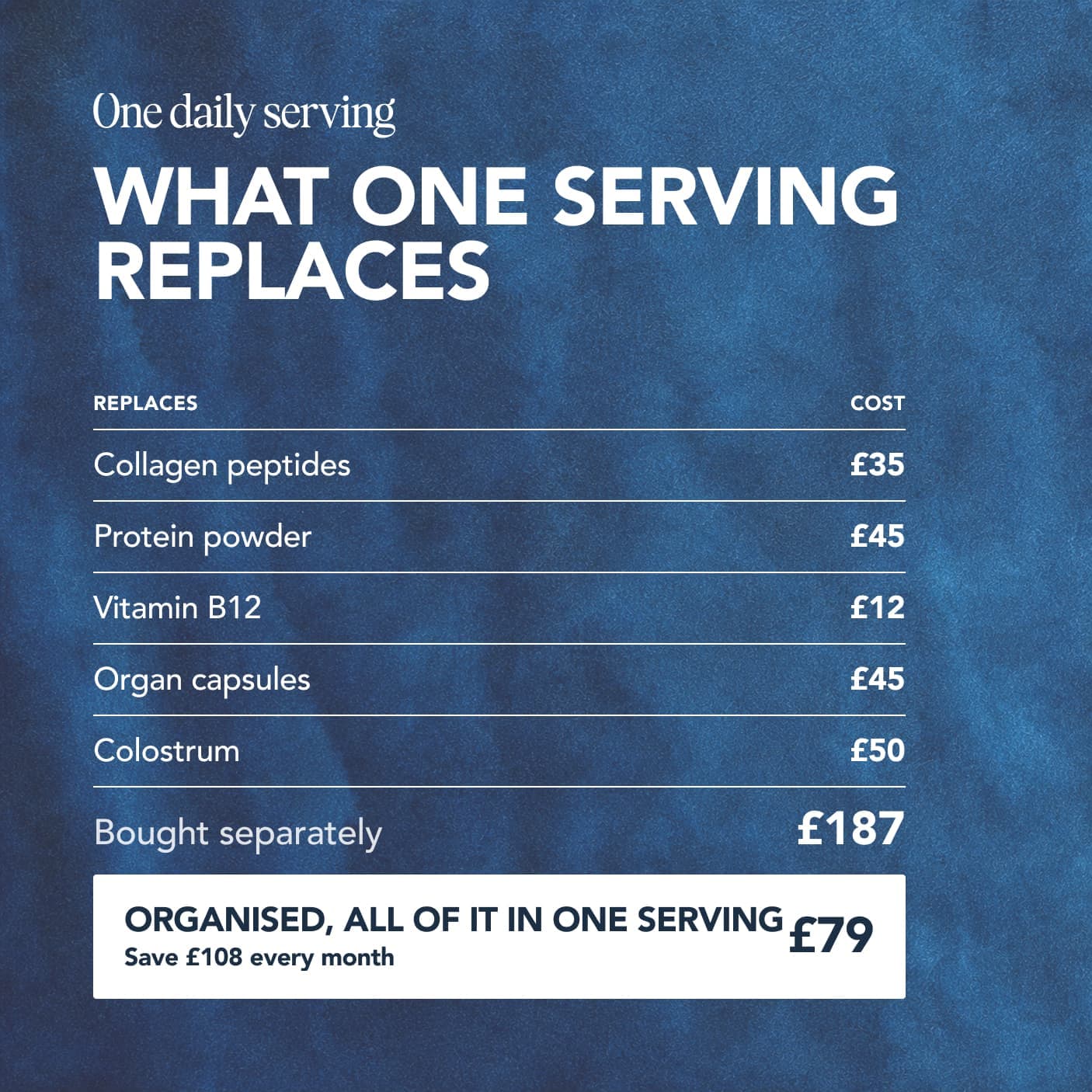
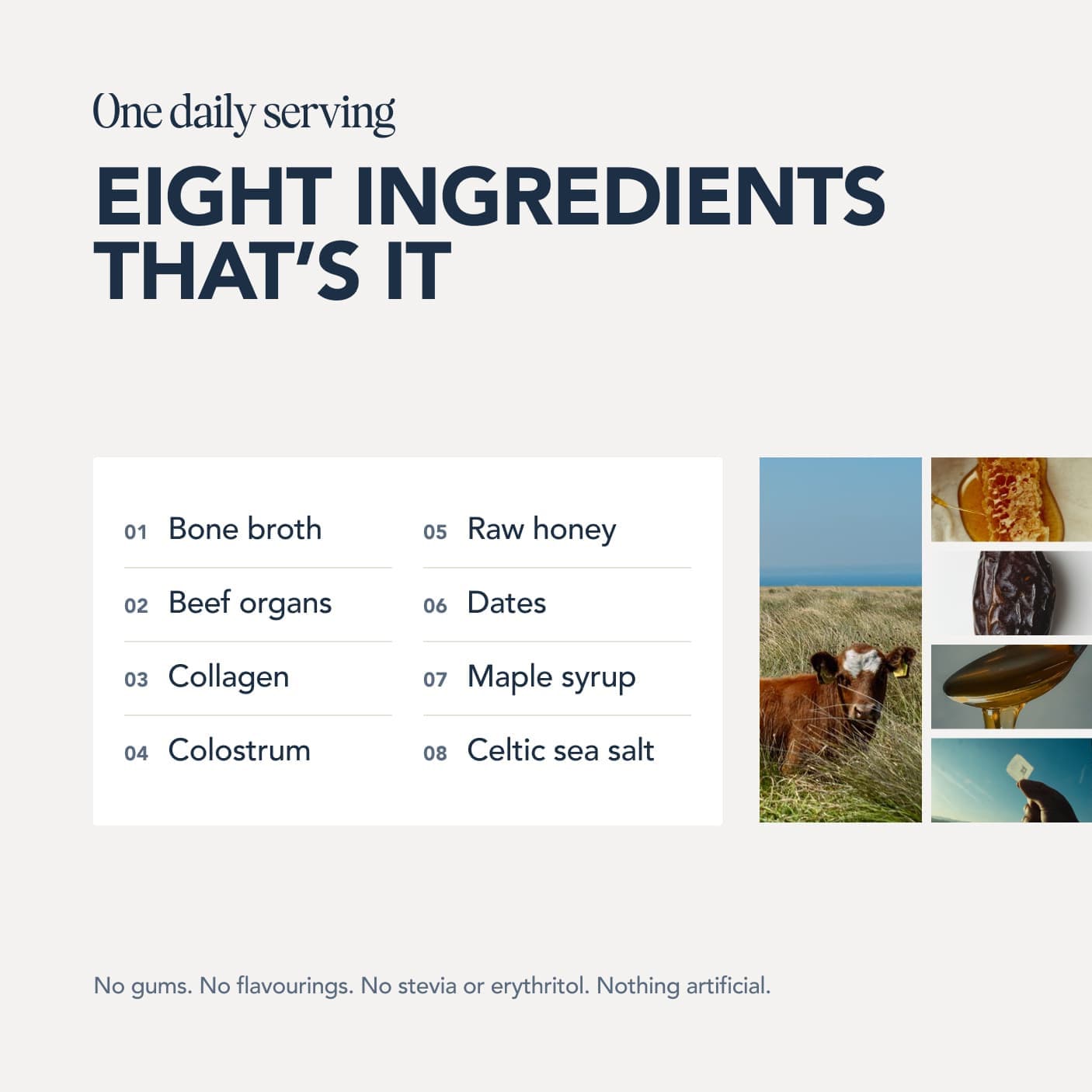
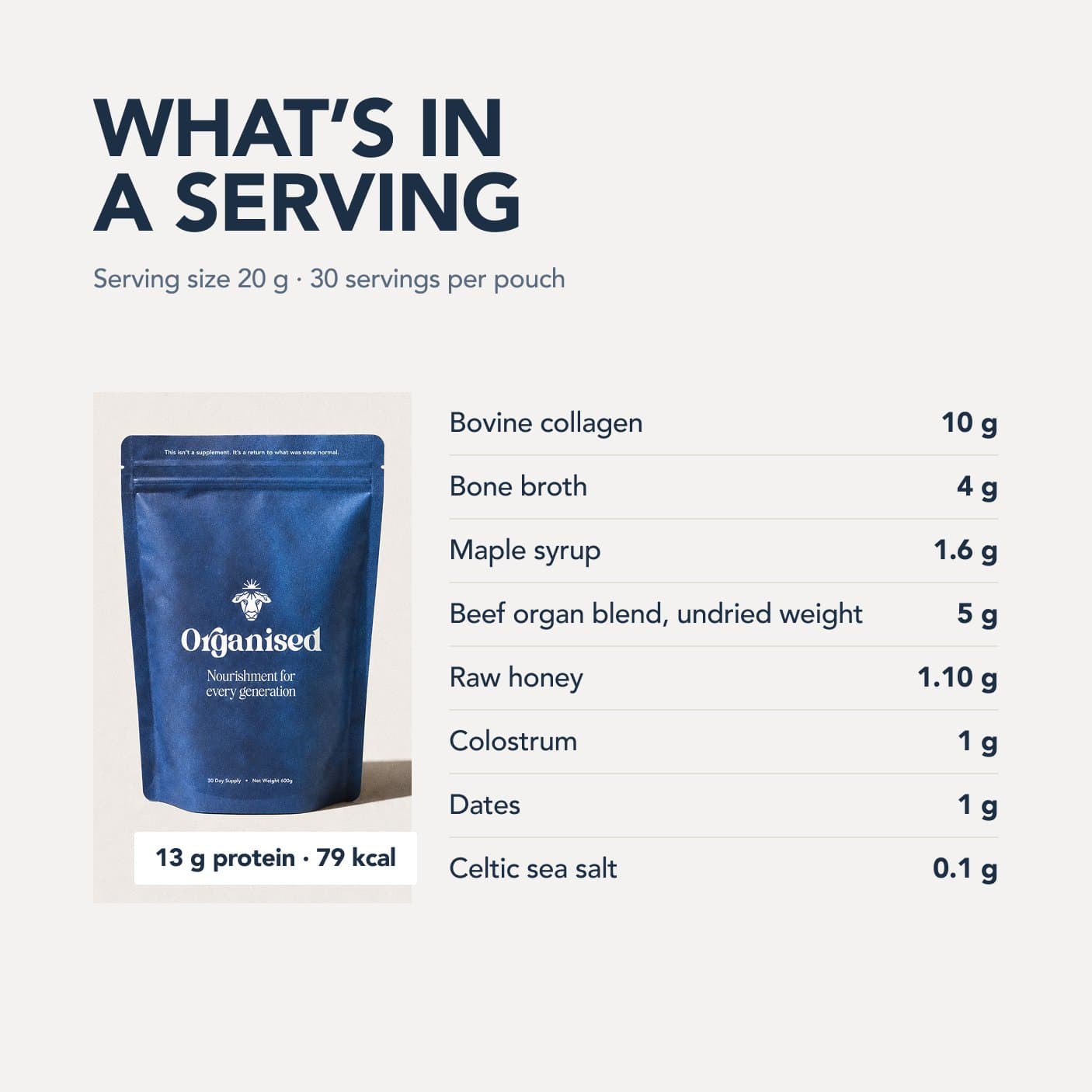
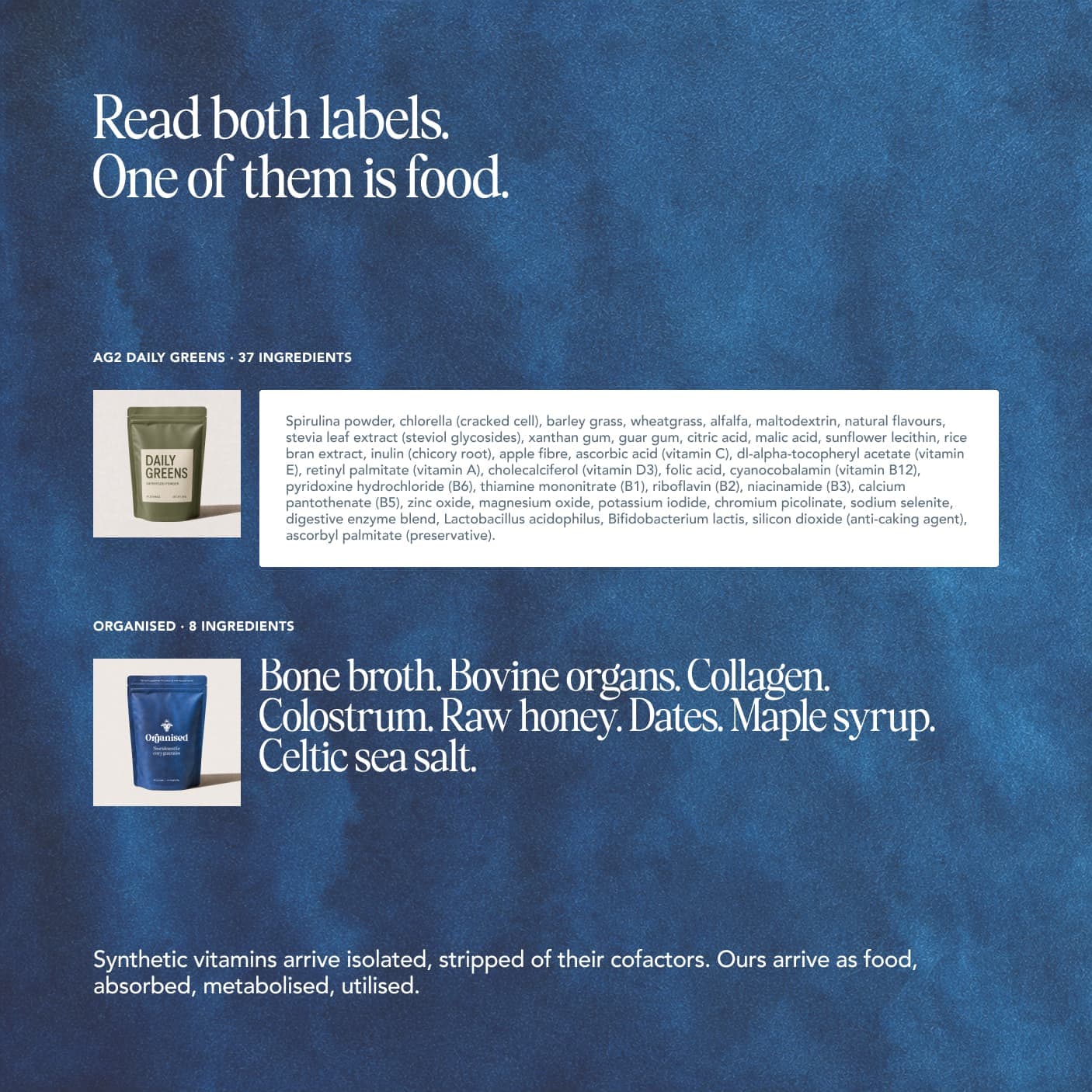
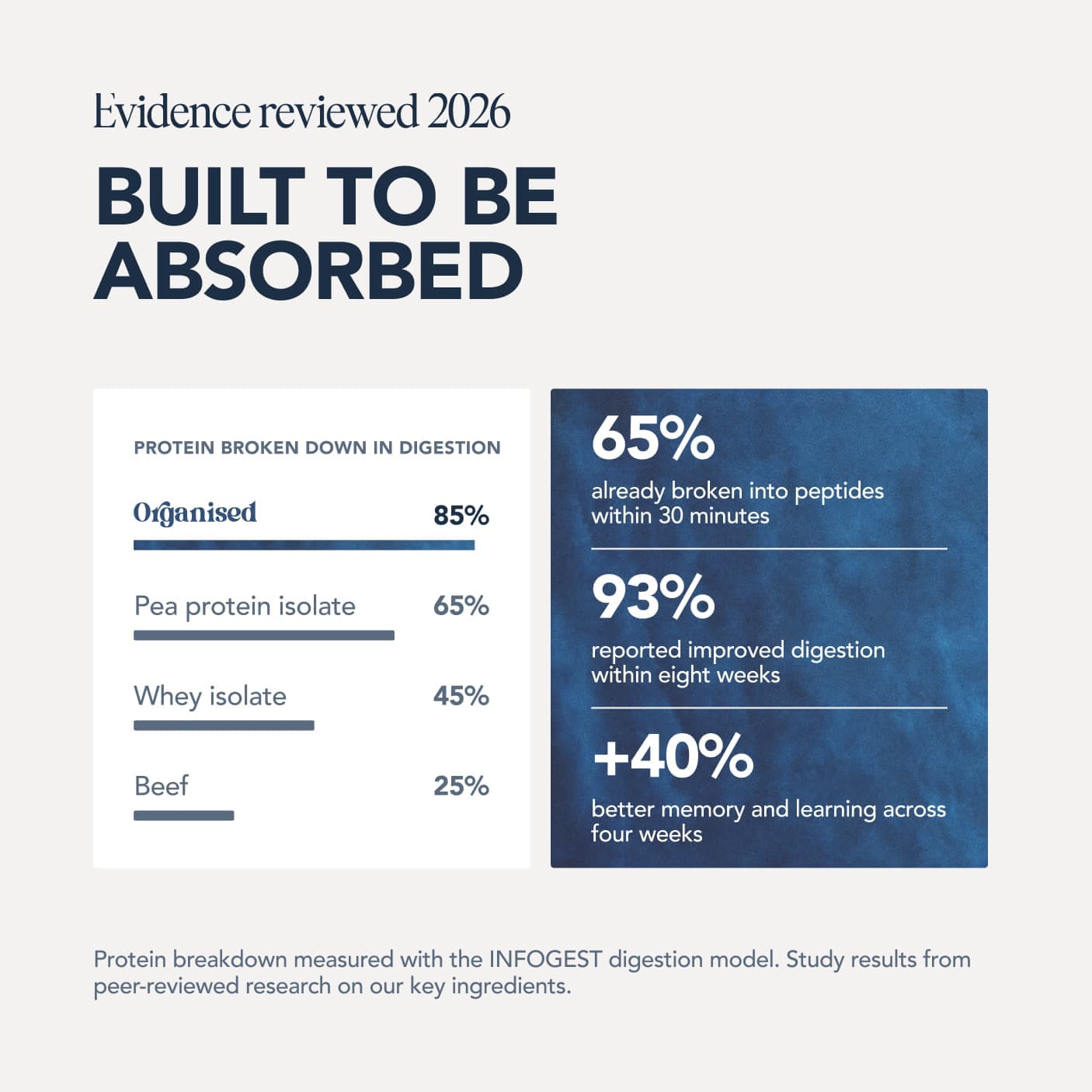
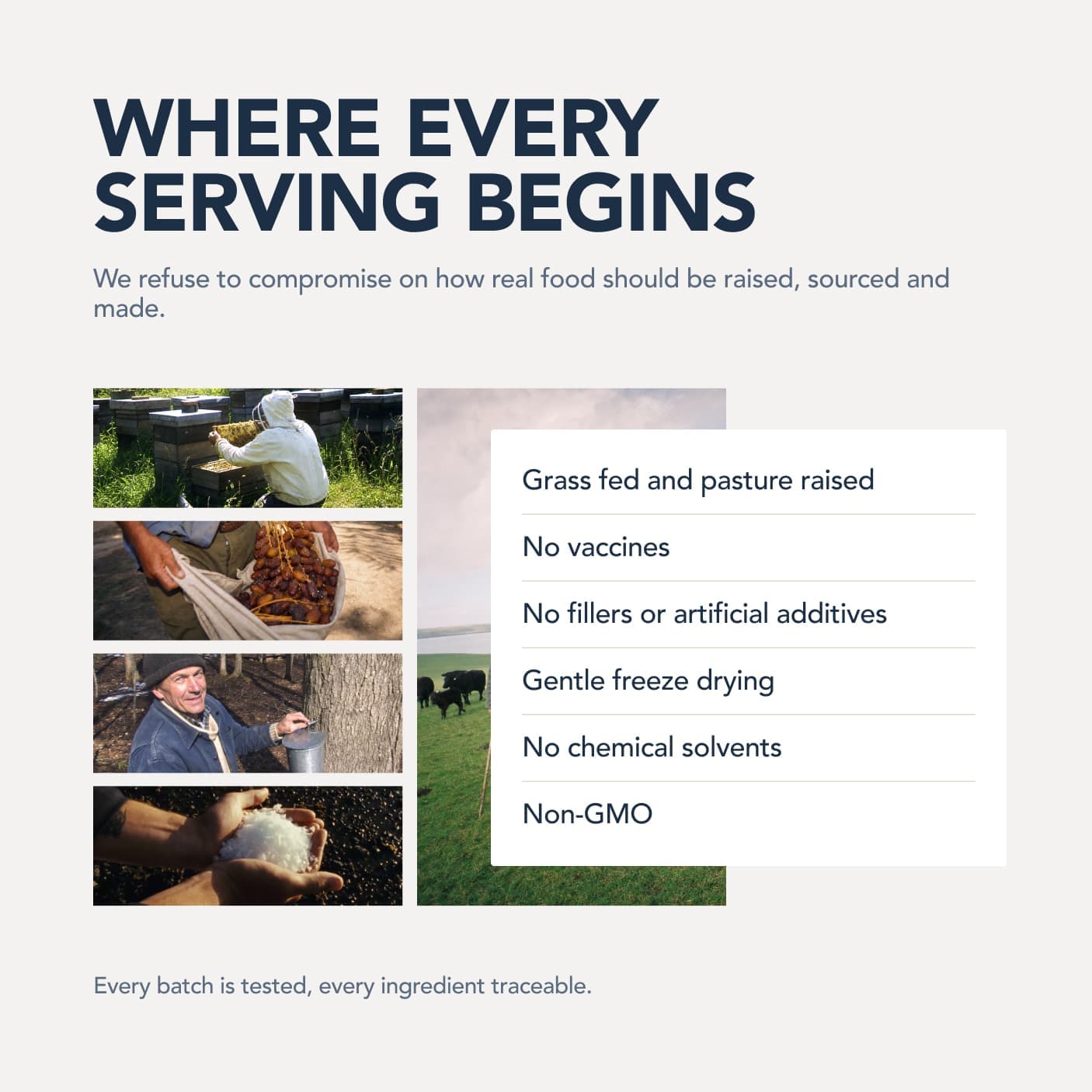
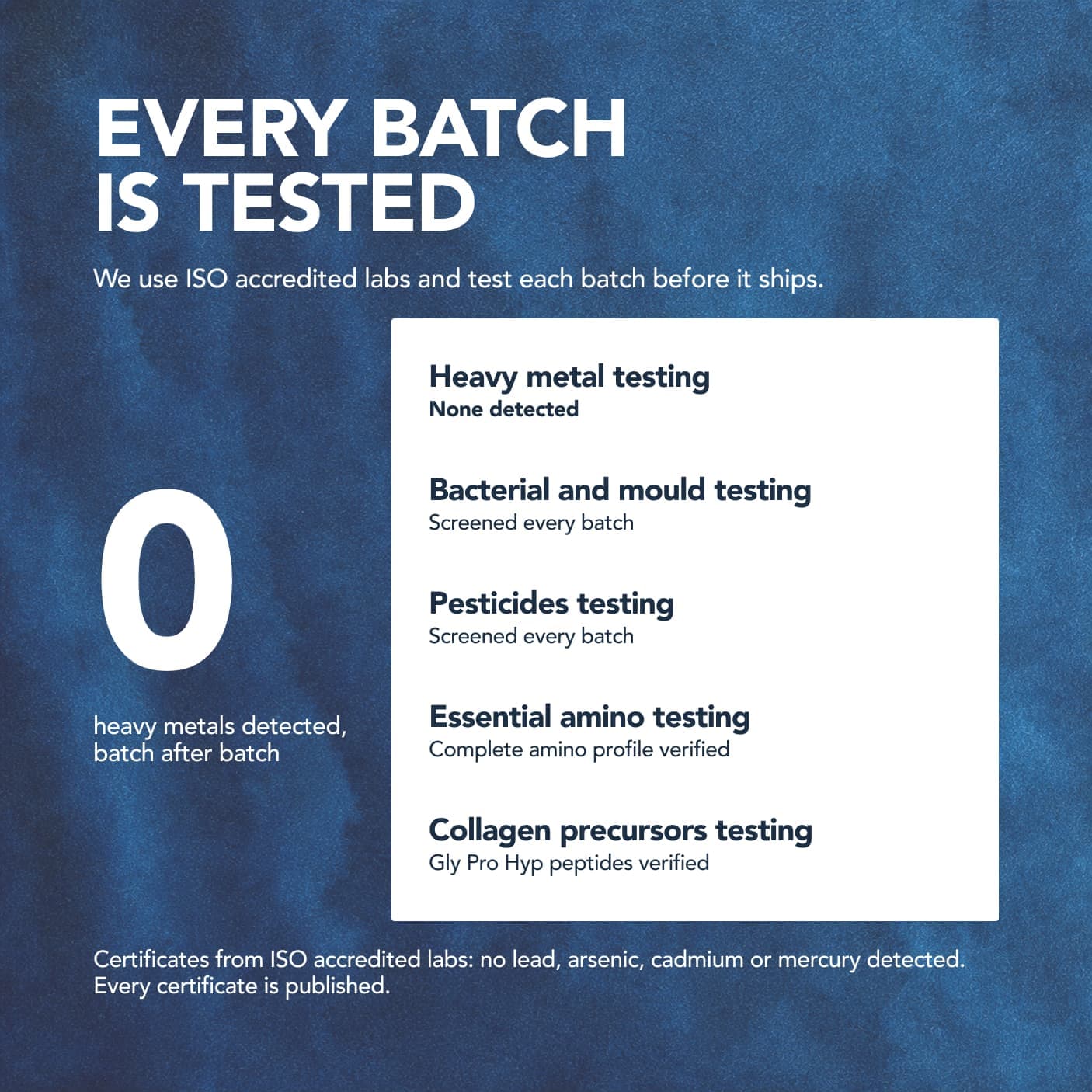
Eight real ingredients built around grass-fed beef organs, collagen and colostrum. Nothing synthetic added.
Free with your first order, worth £38. Plus £10 off the pouch with a subscription.


Free UK shipping · Made in England · 100 day money back guarantee on your first pouch · Skip, pause or cancel anytime
The critical nutrients
Choline is required for acetylcholine production throughout life. Inadequate choline is associated with age-related memory loss. Eggs are the richest source. Beef, fish, and dairy also provide it.
B vitamins (particularly B6, B12, and folate) are required for neurotransmitter synthesis and myelin maintenance. B12 is only in animal foods. The others are best absorbed from animal foods too. Liver provides all of them abundantly.
Iron is required for energy production in the brain and for myelination. Decline in iron stores is associated with cognitive decline. Liver and red meat are the richest sources.
Zinc is required for synaptic plasticity, the ability of neurons to change and adapt. Zinc deficiency impairs memory formation. Oysters and beef are excellent sources.
Copper is often overlooked but required for myelin formation and for brain cell signalling. Beef liver is the richest source. Deficiency is associated with cognitive decline.
Your memory at 70 is built on the nutrition you eat in your 20s, 30s, 40s, and 50s. If you're experiencing memory loss now, the time to address it is today.
The bottom line
Memory decline with age is not inevitable. It's the result of cumulative nutritional deficit. Protect your memory by eating nutrient-dense foods throughout your life. Liver, red meat, eggs, fish, oysters, dairy. These foods are the foundation of good memory at every age. Start now, regardless of your age, and your memory will improve.
References
Every source below was checked on 27 August 2026. Each PubMed, PMC and DOI identifier was resolved against NCBI or Crossref, and what it opens is printed under the citation, so you can see the link goes where the citation says without leaving the page. Where a citation and its identifier disagreed, the citation was corrected to the record or the reference was deleted along with the sentence marker that pointed at it, and where the resolved paper turned out not to support the sentence, the sentence was cut back to what it does support. Borrowed authority is worse than none, because it looks like rigour.
- National Institutes of Health, Office of Dietary Supplements. Choline: Fact Sheet for Health Professionals.
- National Institutes of Health, Office of Dietary Supplements. Vitamin B12: Fact Sheet for Health Professionals.
- Lozoff B et al. Long-lasting neural and behavioral effects of iron deficiency in infancy. Nutr Rev. 2006;64(5 Pt 2):S34-43. PMID: 16770951.Checked 27 August 2026: PMID 16770951 opens Lozoff B, Beard J, Connor J et al, Long-lasting neural and behavioral effects of iron deficiency in infancy. Nutr Rev 2006;64(5 Pt 2):S34-43; discussion S72-91. PubMed indexes it as: Review.
- Weiser MJ, Butt CM, Mohajeri MH. Docosahexaenoic acid and cognition throughout the lifespan. Nutrients. 2016;8(2):99.Checked 27 August 2026: PMC4772061 opens Weiser MJ, Butt CM, Mohajeri MH, Docosahexaenoic Acid and Cognition throughout the Lifespan. Nutrients 2016;8(2):99. PubMed indexes it as: Review.
Who wrote and reviewed this guide
Niall Kiddle
Author · Founder, Organised
Niall is the founder of Organised. He started the company in 2024 after fixing his own health the slow way: in 2022 he swapped a cupboard of synthetic supplements for real food, raw milk, organ meats, bone broth and honey, and felt the difference within months.
Areas of expertise: Ancestral nutrition, Organ meats, Whole-food supplementation, Gut health, Regenerative sourcing
Read Niall's full profile
Pedro Rodrigues
Reviewer · Agronomist (farming and sourcing only)
Pedro is the agronomist Organised works with on farming and sourcing. His job on the guides is to keep the science honest: he reviews what we publish about soil health, regenerative agriculture, grazing and the way food is actually produced.
Areas of expertise: Regenerative agriculture, Agronomy, Soil health, Grass-fed farming, Food sourcing
Reviewed this guide on
Read Pedro's full profileMore on brain & cognition
View all- Feeding Your Brain: The Nutrients Behind Focus, Memory and Clarity
- ADHD and Nutrition: Emerging Research and Practical Approaches
- Brain Fog: Nutritional Causes and How to Clear It
- Choline and Brain Development: From Pregnancy to Old Age
- Neuroinflammation: The Hidden Driver of Brain Fog and Low Mood
- The Link Between Iron Deficiency and Poor Concentration
Browse the guides library
All guidesKeep reading
Health goals
Feeding Your Brain: The Nutrients Behind Focus, Memory and Clarity
Discover which nutrients power your brain: DHA, choline, B12, iron, zinc, creatine. Food sources for lasting focus, memory, and mental clarity.
Health goals
What Plant Defence Chemicals Do to Your Gut
Lectins, oxalates, and phytates aren't poisonous, but they damage your gut lining and block nutrient absorption. Here's what they do and how to handle them.
Health goals
Psoriasis and Nutrition: What Helps and What Hinders
Manage psoriasis with targeted nutrition: vitamin D, omega-3 balance, zinc, elimination trials. Complementary to medical care.
Real food, made effortless
Start my daily blendA few ways to use it
All recipes
Raw Milk Ice Cream with Organised
Make raw milk ice cream at home with Organised for a seasonal, nutrient-dense treat. Three simple flavours to try whenever the craving strikes.

How to Make Your Own Gelatine Gummies
A simple recipe for homemade gelatine gummies using grass-fed gelatine, fresh juice, and raw honey. Better than shop-bought, kids love them.
Ancestral Breakfast Ideas from Around the World
Traditional breakfast recipes from cultures that got nutrition right. Japanese, Turkish, Scottish, and more. Whole-food breakfast inspiration.


 Join over 100,000+ members
Build a better food system with us
The Organised community is thousands of people choosing real food and backing the farmers who grow it, all of us trying to leave the world a little better than we found it. If that is what you care about too, you belong here.