Protein, Satiety and Why Diets Fail
You're starving yourself and you can't figure out why the weight won't budge. The problem isn't willpower. It's not discipline. It's that you've been chasing the wrong thing entirely. Your body isn't designed to count calories. It's designed to get enough protein.

By Niall Kiddle, Founder, Organised

Reviewed by Pedro Rodrigues, Agronomist (farming and sourcing only) ·
6 min read · Published · Updated · 3 cited sources
Makers of the Organised Daily blend, a grass-fed beef organ supplement from regenerative UK farms

This is the insight that changes everything about how you think about eating, weight loss, and why so many people give up on diets before they even begin.
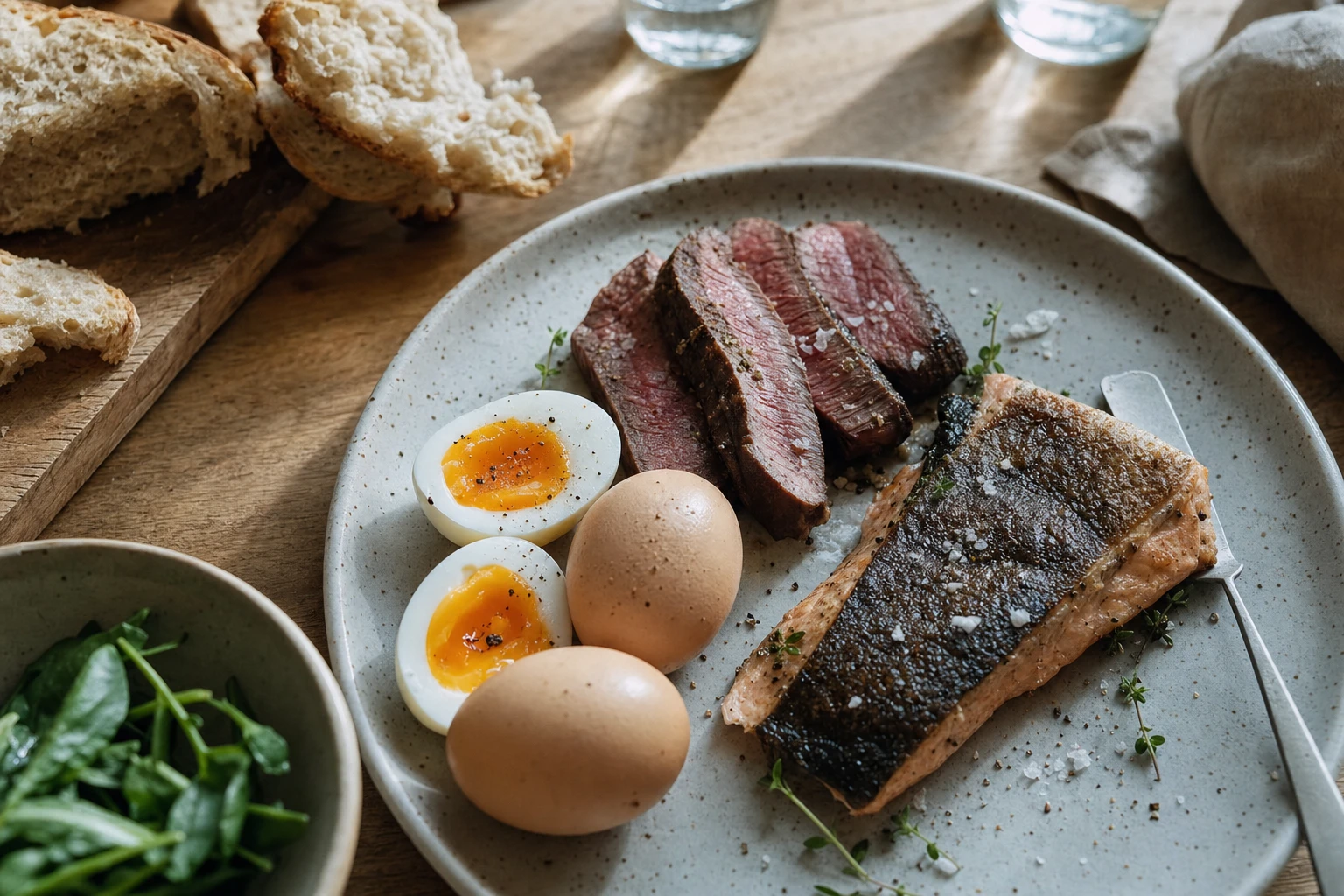
Your body is searching for protein, not calories
The standard diet narrative goes like this: eat fewer calories, move more, lose weight. Simple arithmetic. Except your body doesn't work like a calculator. It works like a security system. And right now, it's in lockdown.
Every cell in your body needs amino acids to survive. Your muscles, your organs, your skin, your hair, your immune system, your neurotransmitters all depend on a steady supply of protein. When your body isn't getting enough, it sends out a message: keep eating until you get what you need.
That message is hunger. Real hunger. Not boredom, not emotion, not habit. Your nervous system is literally demanding protein, and it will keep demanding it until you provide it. You can ignore this signal for a while, but eventually, you'll crack. You'll eat. And you'll probably eat more than you planned because your body is desperate and doesn't want to take any chances.
Low-protein diets create a biological imperative to eat more. Your body doesn't care about your calorie target. It cares about hitting its protein requirement.
This is why calorie restriction without attention to protein is a recipe for failure. You can eat 1500 calories of bread, pasta, and seed oils, hit your calorie target, and still be starving because your body hasn't gotten the nutrient it actually needs.

The protein leverage hypothesis explained
The protein leverage hypothesis, developed by researcher Stephen Simpson and colleagues, is this: your body has a specific protein target it's trying to hit.1 It doesn't care how many calories you consume in the process. It will keep driving hunger and food intake until protein is adequate.
Think of it like a thermostat. Your body's thermostat is set to a certain protein level. Too low? The alarm keeps ringing. You stay hungry. You keep eating. The only way to turn off the alarm is to reach the target.
In ancestral eating patterns, protein was scarce. When you hunted an animal or caught fish, you were motivated to eat a lot of it because your body knew the next meal was uncertain. But modern food is engineered differently. It's cheap to add carbohydrates and fats and skip the protein. A biscuit, a piece of bread, a bowl of pasta, even a "healthy" granola bar. All calories. Minimal protein. Your body keeps the alarm on.
The study of populations and their protein intake bears this out. People eating 50g of protein a day from a low-protein diet will eat substantially more total calories than people eating 150g of protein a day. The body drives intake until the protein target is met.
How leucine triggers satiety
Leucine is one of the three branched-chain amino acids and is particularly important because it acts as a nutrient sensor in the body. When leucine levels rise, your mTOR signalling pathway activates, which tells your brain that protein has arrived.2 When that signal reaches your hypothalamus, hunger suppresses. You feel full.
This is why a high-protein meal feels different in your stomach. It's not just fullness from volume. It's a biochemical signal. Leucine is essentially the key that unlocks satiety.
Leucine-rich foods like red meat, eggs, fish, and dairy are the most powerful satiety tools you have. They flip off hunger at the neurological level.
Not all protein sources are equal in leucine content. Whey protein is high in leucine. Red meat is high in leucine. Eggs are high in leucine. Plant-based proteins, generally speaking, are lower. This matters when you're trying to get your body to feel genuinely satisfied.
The 30-gram threshold per meal
Research suggests there's a leucine threshold of roughly 2.5 to 3 grams of leucine per meal that activates the mTOR signalling pathway and creates satiety. This translates roughly to 25 to 30 grams of quality protein per meal for most people.2
Below this threshold, your satiety signal isn't robust. You eat the meal, your hunger decreases temporarily, but the signal is weak. An hour or two later, you're hungry again. You're fighting your biology.
Above this threshold, your body gets a clear signal. Protein has arrived. I can stop sending hunger signals now. And this effect lasts. A high-protein meal creates satiety that persists for hours.
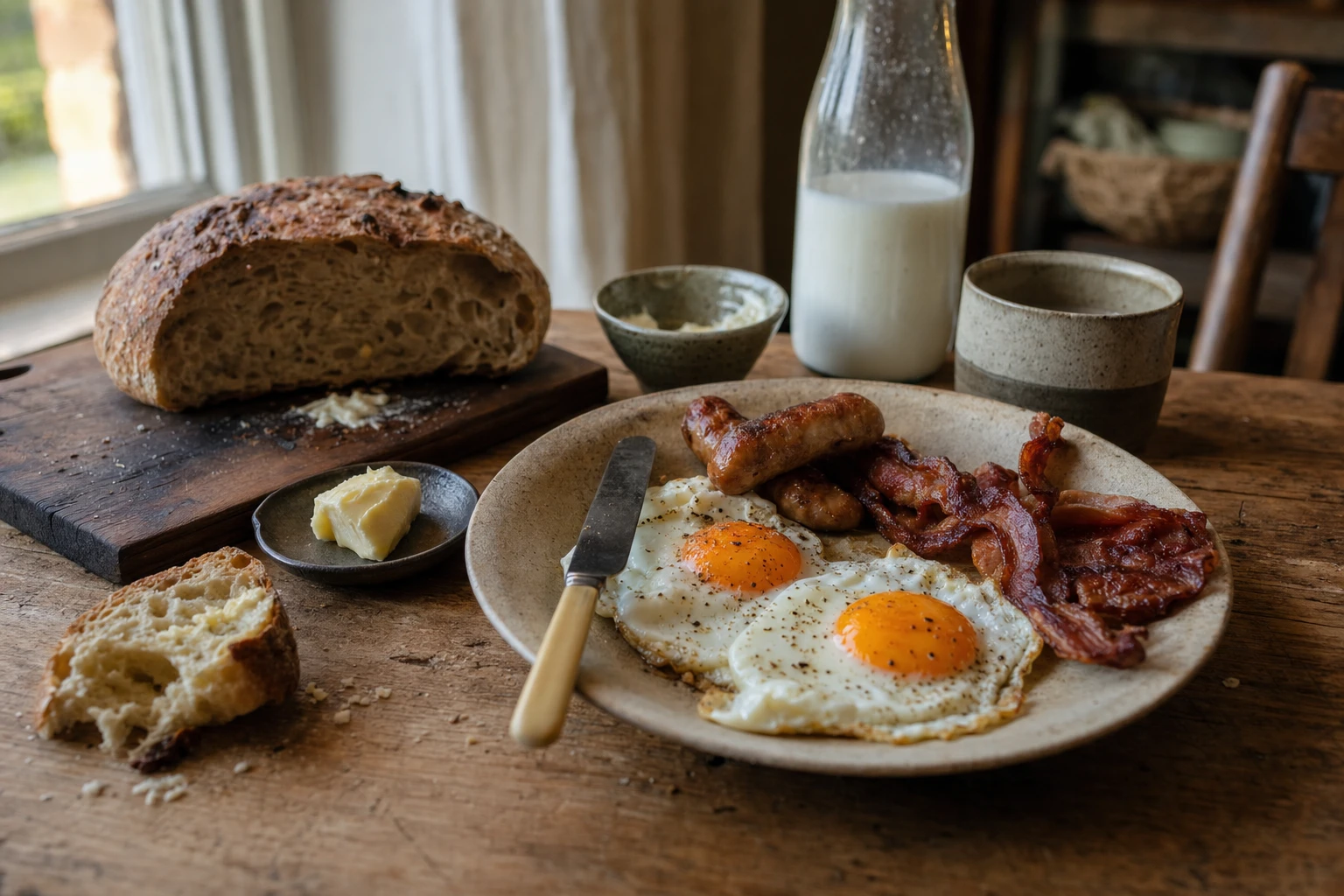
This is why breakfast matters. If you eat a breakfast of 5 grams of protein (say, a single slice of toast with jam), you haven't hit the threshold. Your hunger suppression signal is barely activated. By mid-morning, you're ravenous. You'll eat a larger lunch to compensate. But if you eat 30 grams of protein at breakfast (eggs, some meat, a bit of full-fat dairy), you're genuinely satisfied. You eat less throughout the day almost without thinking about it.
Get health guides like this, free
Two short reads a week on eating for energy, gut health, skin, sleep and more.
By signing up you agree to receive emails from us. No spam, unsubscribe anytime.
Low-protein diets backfire
The standard low-fat, high-carbohydrate diet popularised in the 1990s was often low in protein too. People were eating bread, pasta, cereal, and lean chicken breast. Sounds reasonable. Except they weren't hitting their protein targets, which meant they were fighting hunger the whole time.
Research shows that low-protein diets, even when calories are controlled, lead to higher overall calorie intake because the body keeps searching for protein.3 You can measure it in studies. Give someone a low-protein diet at the same calories as a high-protein diet, and the low-protein group will report higher hunger and will eat more if given the opportunity.
This is also why high-protein diets seem to work "too easily" for some people. They're not fighting hunger all day. Their body got what it needed. They naturally eat less. It looks like willpower. It's actually biology.
Your body is not your enemy. It's not trying to sabotage your weight loss. It's just trying to get the nutrients it needs. Give it adequate protein and the hunger goes away.
Real food sources that hit the target
Getting to 30 grams of protein per meal isn't difficult if you're eating real food. The challenge comes when you're trying to do it with processed foods.
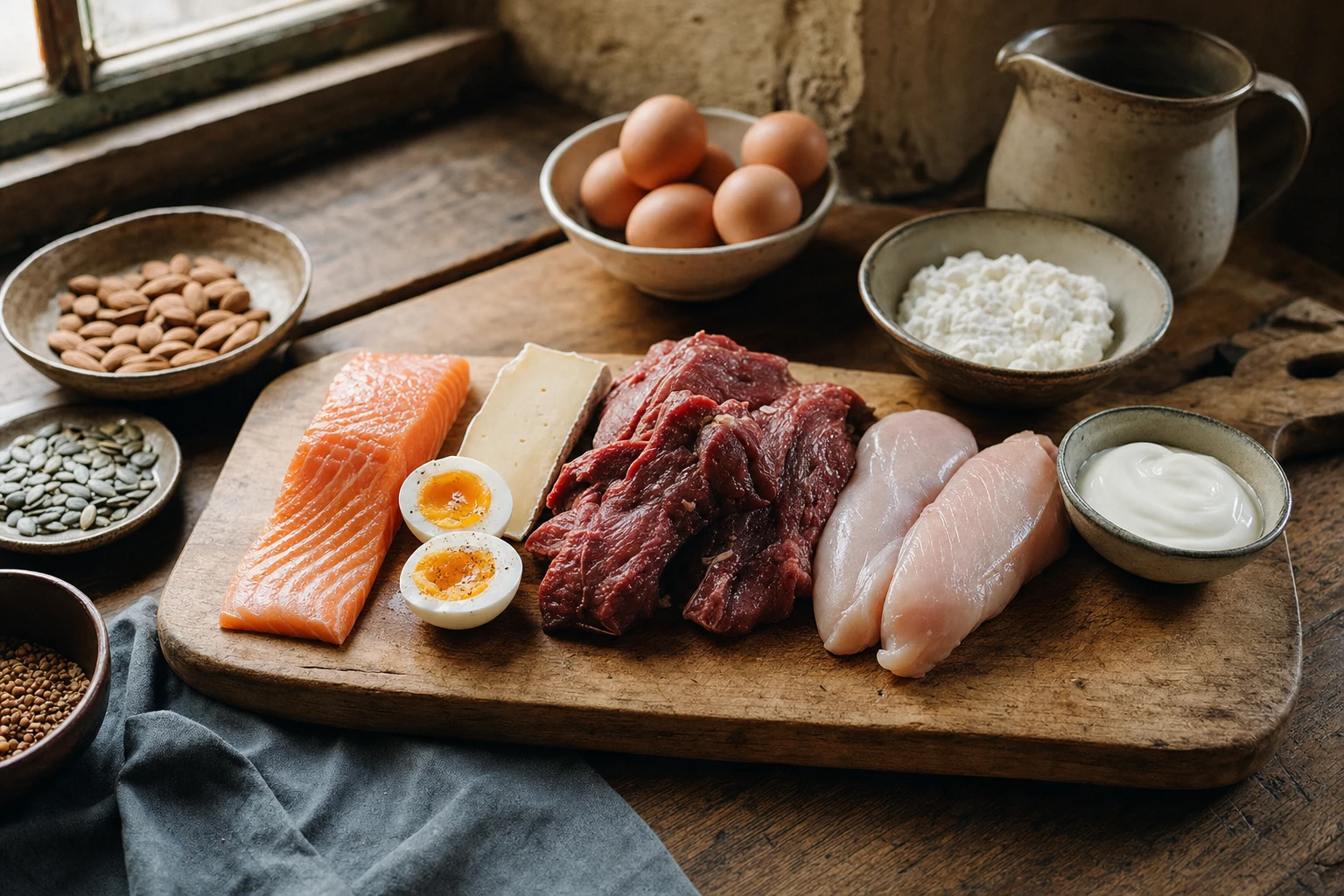
- Beef: 100 grams of steak is roughly 25-30 grams of protein. One palm-sized portion.
- Eggs: Three large eggs contain about 18 grams of protein. Add a bit of cheese or meat and you're there.
- Fish: 100 grams of salmon or cod is 25-30 grams of protein.
- Chicken: A small breast (150 grams) is about 35 grams of protein.
- Full-fat dairy: Greek yoghurt, cottage cheese, and hard cheeses are protein-dense and include fat for additional satiety.
- Organ meats: Liver and kidney are incredibly protein-rich and packed with micronutrients.
The pattern is clear: meat, fish, eggs, and full-fat dairy get you there easily. Vegetables don't. Fruit doesn't. Bread, pasta, and cereal won't get you close. This is why meals centred around animal products are so satiating. Your body is getting the protein it needs and the lever is pulled.
1 of 9
Daily blend
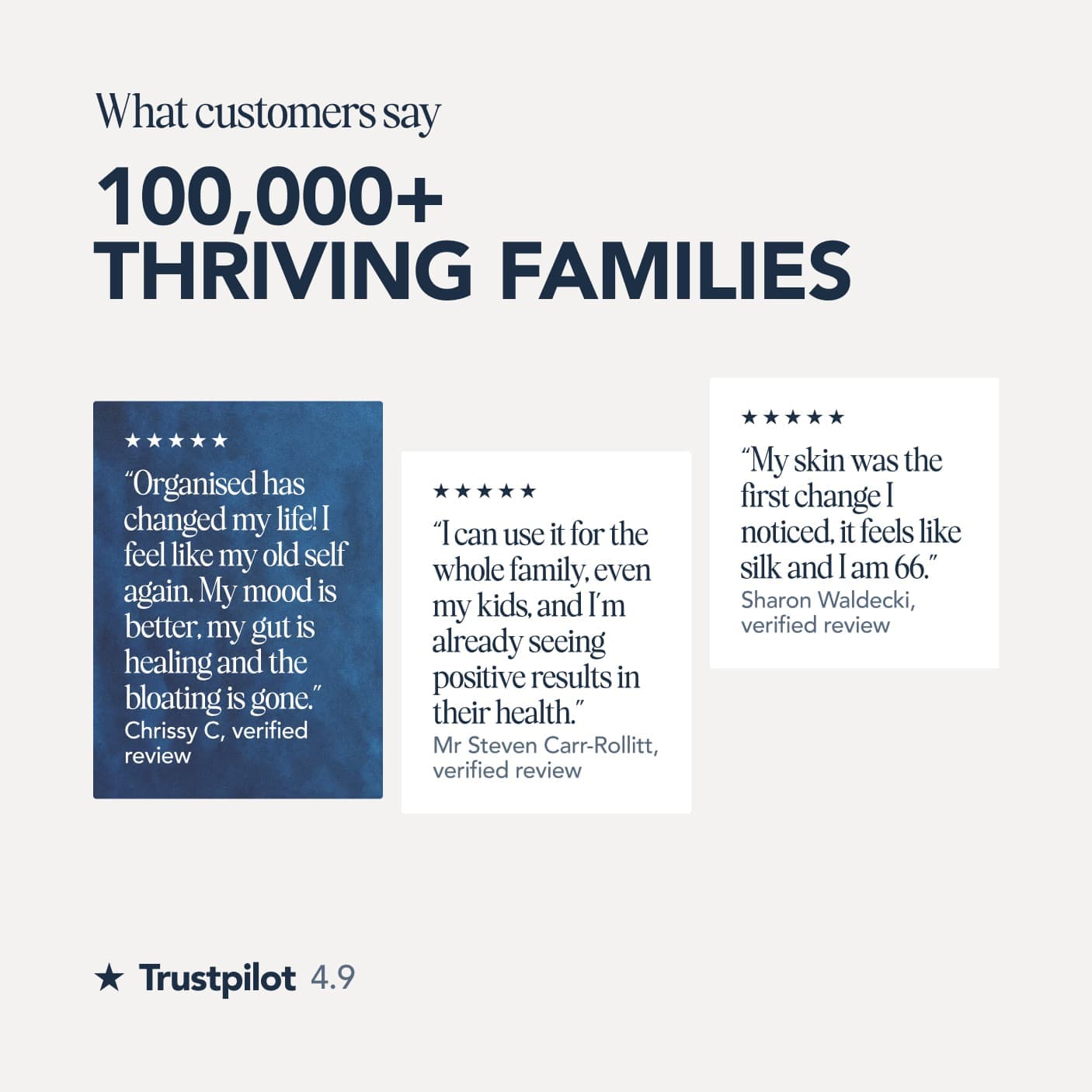
100,000+ thriving families4.9 on Trustpilot
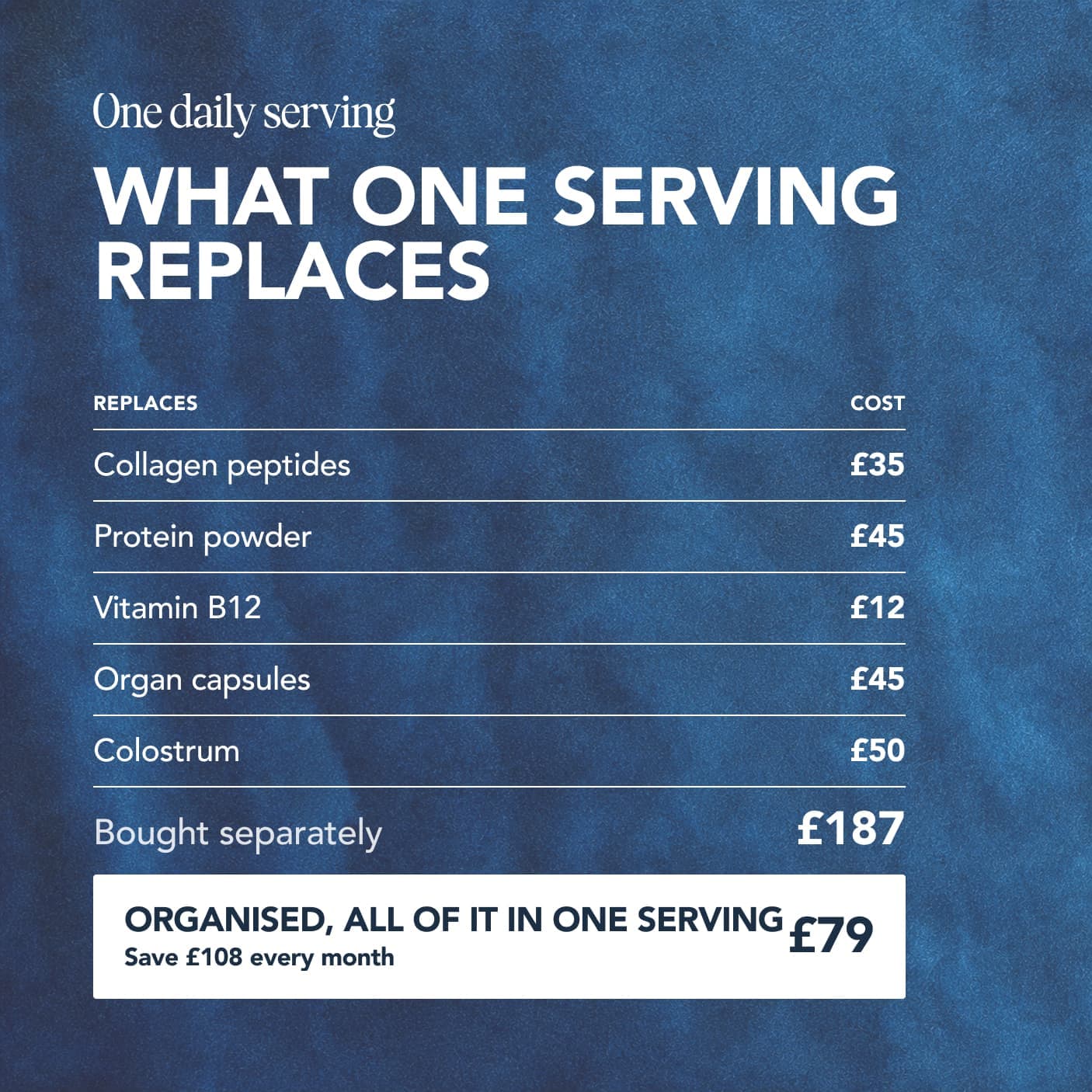
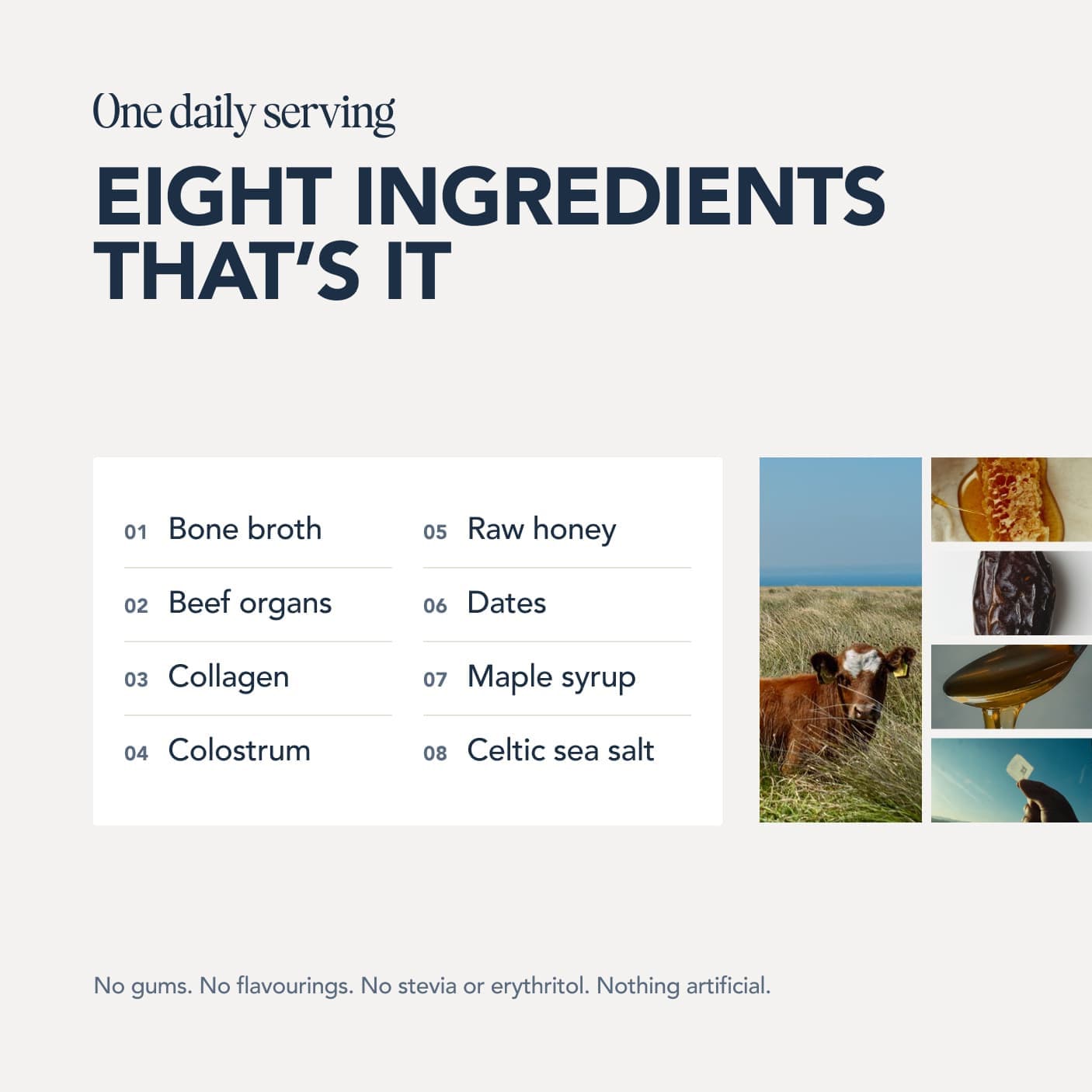
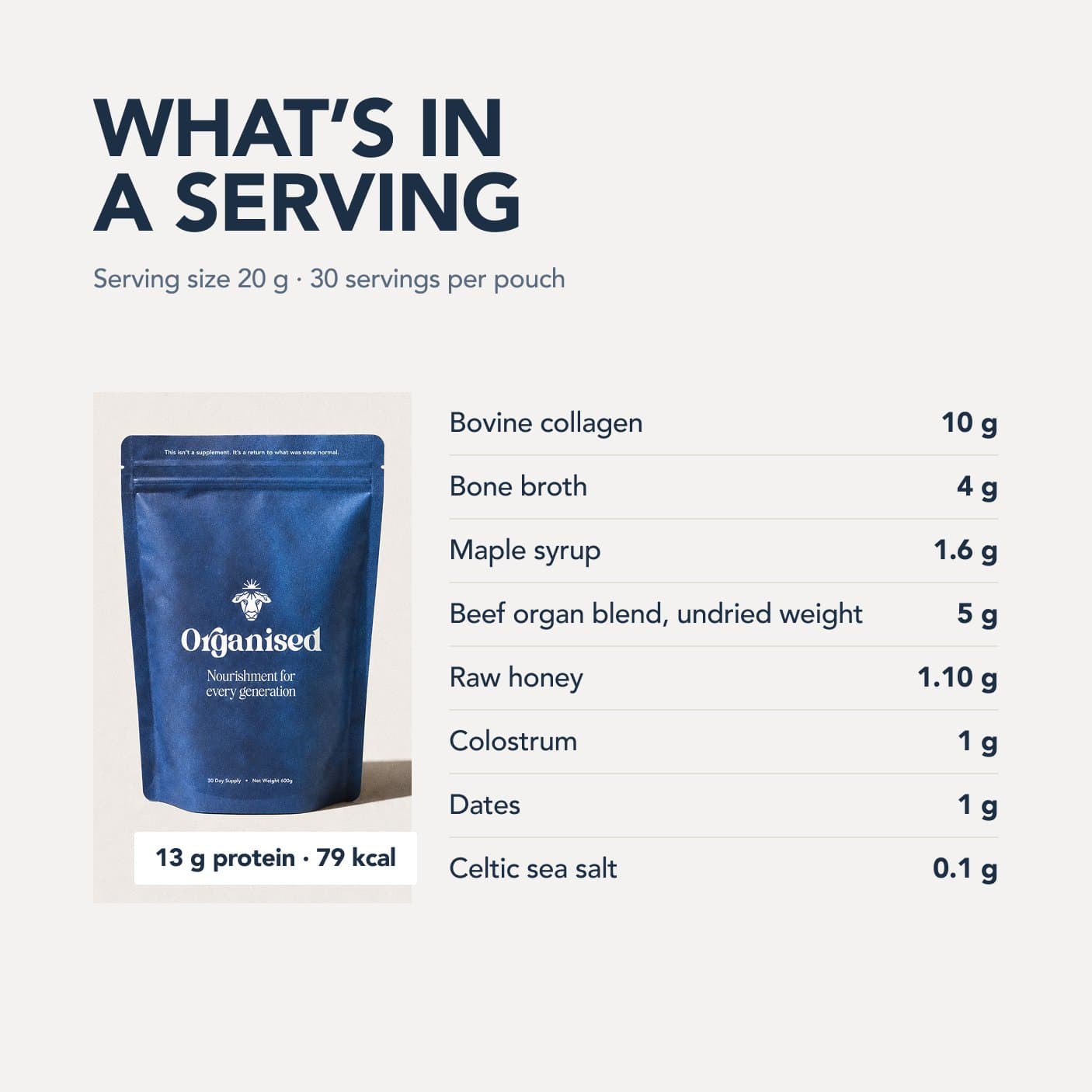
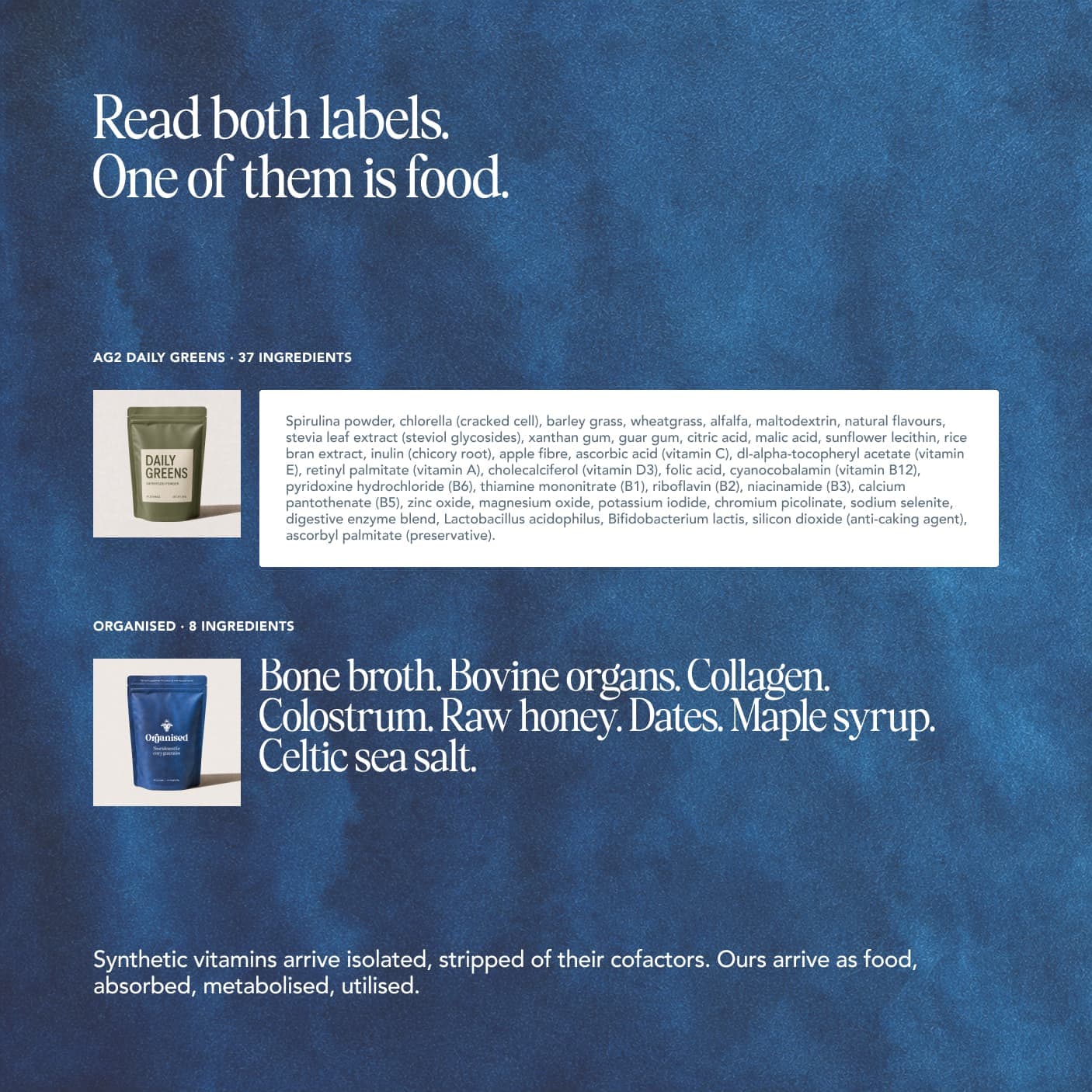
Eight real ingredients built around grass-fed beef organs, collagen and colostrum. Nothing synthetic added.
Free with your first order, worth £38. Plus £10 off the pouch with a subscription.

Free UK shipping · Made in England · 100 day money back guarantee on your first pouch · Skip, pause or cancel anytime
The bottom line
Diets fail because they ignore how your body actually works. You're not a simple energy balance machine. You're a protein-seeking system. Hit your protein target, particularly the leucine threshold of around 30 grams per meal, and hunger becomes manageable. Fall short and you're fighting biology.
This changes everything about how you approach eating. It's not about restriction. It's about sufficiency. Give your body what it needs and weight loss becomes almost automatic, not because you have exceptional willpower, but because you're not spending all day starving.
The next time you're hungry, ask yourself: have I eaten enough protein today? Not calories. Protein. If the answer is no, the hunger isn't weakness. It's information. Eat some meat, fish, eggs, or full-fat dairy. Your body will thank you.
References
Every source below was checked on 27 August 2026. Each PubMed, PMC and DOI identifier was resolved against NCBI or Crossref, and what it opens is printed under the citation, so you can see the link goes where the citation says without leaving the page. Where a citation and its identifier disagreed, the citation was corrected to the record or the reference was deleted along with the sentence marker that pointed at it, and where the resolved paper turned out not to support the sentence, the sentence was cut back to what it does support. Borrowed authority is worse than none, because it looks like rigour.
- Simpson SJ, Raubenheimer D. Obesity: the protein leverage hypothesis. Obes Rev. 2005;6(2):133-42. PMID: 15836464.Checked 27 August 2026: PMID 15836464 opens Simpson SJ, Raubenheimer D, Obesity: the protein leverage hypothesis. Obes Rev 2005;6(2):133-42. PubMed indexes it as: Review.
- Wilkinson DJ et al. Association of postprandial postexercise muscle protein synthesis rates with dietary leucine: a systematic review. Physiol Rep. 2023;11(15):e15775.Checked 27 August 2026: PMC10400406 opens Wilkinson K, Koscien CP, Monteyne AJ et al, Association of postprandial postexercise muscle protein synthesis rates with dietary leucine: A systematic review. Physiol Rep 2023;11(15):e15775. PubMed indexes it as: Systematic Review.The authors' own declaration, from the record: No conflicts of interest, financial or otherwise, are declared by the authors.
- Gosby AK et al. Testing protein leverage in lean humans: a randomised controlled experimental study. PLoS One. 2011;6(10):e25929. PMID: 22022472.Checked 27 August 2026: PMID 22022472 opens Gosby AK, Conigrave AD, Lau NS et al, Testing protein leverage in lean humans: a randomised controlled experimental study. PLoS One 2011;6(10):e25929. PubMed indexes it as: Randomized Controlled Trial.The authors' own declaration, from the record: Competing Interests: SAJ receives a fee from the Rosemary Conley Diet and Fitness Company for nutrition-related articles and lectures. This does not alter the authors' adherence to all the PLoS ONE policies on sharing data and materials. The authors have declared that no other competing interests exist.
Who wrote and reviewed this guide
Niall Kiddle
Author · Founder, Organised
Niall is the founder of Organised. He started the company in 2024 after fixing his own health the slow way: in 2022 he swapped a cupboard of synthetic supplements for real food, raw milk, organ meats, bone broth and honey, and felt the difference within months.
Areas of expertise: Ancestral nutrition, Organ meats, Whole-food supplementation, Gut health, Regenerative sourcing
Read Niall's full profile
Pedro Rodrigues
Reviewer · Agronomist (farming and sourcing only)
Pedro is the agronomist Organised works with on farming and sourcing. His job on the guides is to keep the science honest: he reviews what we publish about soil health, regenerative agriculture, grazing and the way food is actually produced.
Areas of expertise: Regenerative agriculture, Agronomy, Soil health, Grass-fed farming, Food sourcing
Reviewed this guide on
Read Pedro's full profileBrowse the guides library
All guidesKeep reading
Science
Why Nutrient Density Should Replace Calorie Counting
Why calories aren't the whole story. How nutrient density changes your body composition and health without restricting calories.

Health goals
Muscle Loss After 40: Why Protein Quality Matters More Than Ever
After 40, your muscles are less responsive to protein. Here's why quality matters, what leucine does, and why animal protein is superior.

Health goals
Protecting Your Joints as You Age: A Nutritional Blueprint
Protect your joints as you age. The role of collagen, glycine, vitamin C, glucosamine, and real food in joint longevity.
Real food, made effortless
Start my daily blendA few ways to use it
All recipes
Gut-Healing Marshmallows with Collagen and Raw Honey
Learn to make gut-healing marshmallows with collagen and raw honey. A shareable treat that sneaks nutrition into every bite. Easy recipe with video tips.
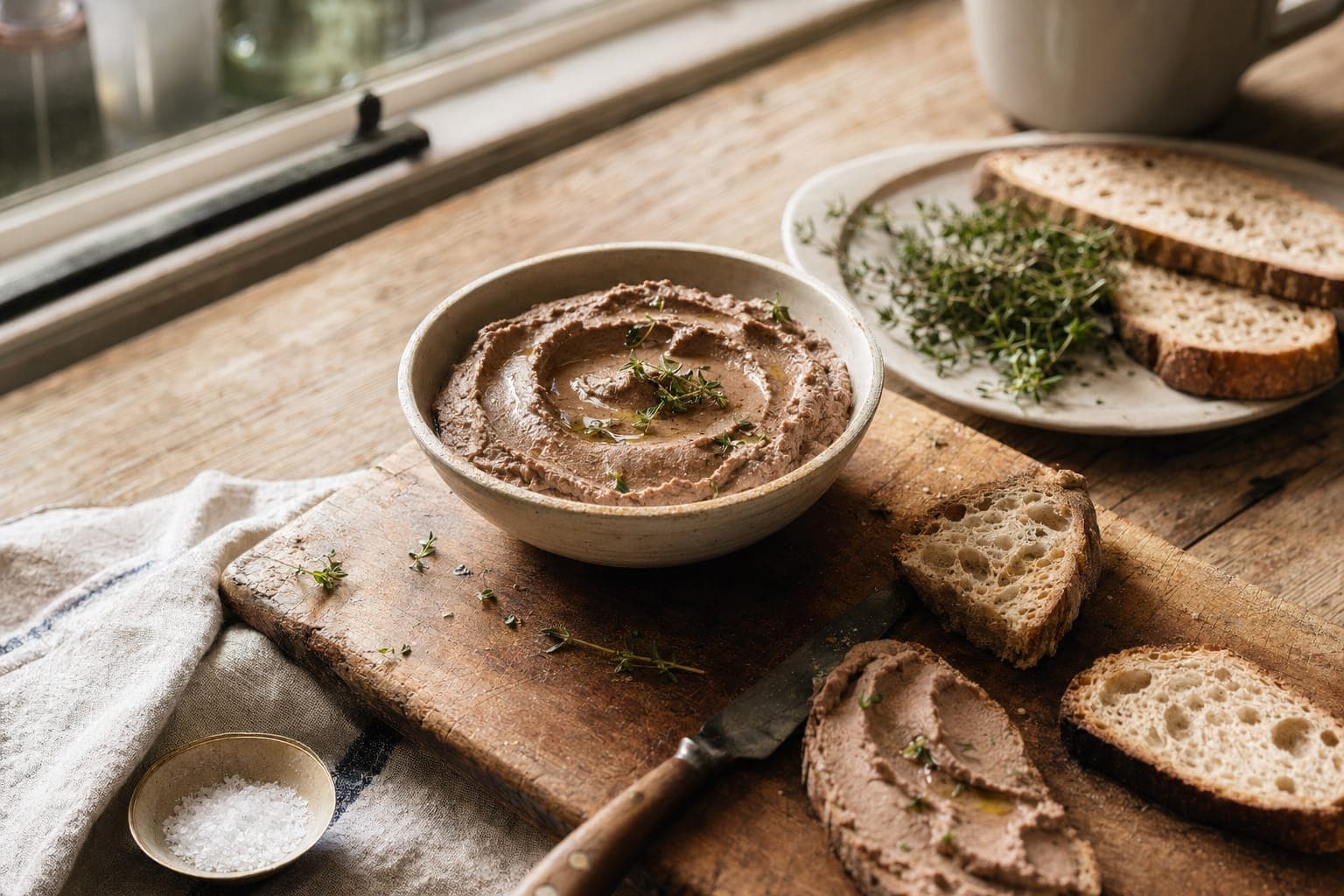
Liver Pate for Beginners: A Gentle Introduction to Organ Meats
Simple liver pate recipe to start eating organ meats. Chicken liver, butter, and herbs. Gentle introduction to nutrient-dense whole foods.

Bone Broth from Scratch: A Step-by-Step Guide
Step-by-step guide to making bone broth at home. Stovetop, slow cooker, and Instant Pot methods. Rich in collagen and gut-healing minerals.


 Join over 100,000+ members
Build a better food system with us
The Organised community is thousands of people choosing real food and backing the farmers who grow it, all of us trying to leave the world a little better than we found it. If that is what you care about too, you belong here.