Muscle Loss After 40: Why Protein Quality Matters More Than Ever
After you turn 40, your muscles become stubborn. You can lift the same weight, eat the same protein, and lose muscle anyway. This isn't weakness. It's a biological shift called anabolic resistance, and it changes everything about how you need to eat to preserve strength.
By Niall Kiddle, Founder, Organised

Reviewed by Pedro Rodrigues, Agronomist (farming and sourcing only) ·
8 min read · Published · Updated · 4 cited sources
Makers of the Organised Daily blend, a grass-fed beef organ supplement from regenerative UK farms
Most people don't realise this is happening until they notice they look smaller despite doing everything right. Your body is changing its response to the inputs you've always provided. The fix isn't working harder. It's eating smarter.

Sarcopenia and anabolic resistance
Sarcopenia is the age-related loss of muscle mass and strength.1 It begins around age 30, accelerates after 40, and becomes dramatic after 60 if you don't intervene. By age 80, the average person has lost 30 to 50 percent of their muscle mass.1 This is not inevitable. It's what happens when you're not aware of anabolic resistance and adapt your nutrition accordingly.
Anabolic resistance is the name given to your muscles' declining ability to build new protein in response to amino acids as you age. In your 20s, eating a 20-gram serving of protein and doing strength training is enough to trigger muscle protein synthesis.2 Your muscles respond robustly. At 50, the same stimulus produces a blunted response. Your muscles have become resistant.
The biological mechanism is complex, involving declined mTOR signalling, reduced satellite cell activation, and altered neuromuscular junction function. But the practical consequence is simple: you need more protein, higher quality protein, and you need to pay attention to the amino acid composition in ways you didn't when you were younger.
This isn't a choice between working out and eating well. It's both. But the eating part has shifted. You can't coast on quantity anymore. Quality is everything.
After 40, your muscles are less forgiving. They demand higher quality protein, higher doses per meal, and more consistency to stay intact.
Why quantity alone doesn't work anymore
The recommendation to eat 0.8 grams of protein per kilogram of body weight (or 0.36 grams per pound) was derived from studies mostly conducted on younger adults. It's the absolute minimum to prevent deficiency, not the optimal amount to build or maintain muscle.
For adults over 40 trying to preserve muscle mass, the evidence now suggests 1.2 to 1.6 grams per kilogram of body weight (or 0.54 to 0.73 grams per pound). For a 70-kilogram person, that's 84 to 112 grams per day, spread across multiple meals.
But here's the catch: it's not just total protein. It's how you distribute it. Your muscles have a leucine3 threshold (roughly 2.5 to 3 grams of leucine per meal). Below this threshold, even if you're hitting your total daily protein target, you're not triggering robust muscle protein synthesis at each meal.
Imagine two people both eating 120 grams of protein per day. One eats 30 grams at breakfast, 30 at lunch, 30 at dinner, and 30 in a snack. The other eats 10 grams at breakfast, 20 at lunch, 80 at dinner, and 10 in a snack. The first person, despite hitting the same daily total, will preserve significantly more muscle because each meal triggers the anabolic response. The second person, with most protein in one meal, fails to stimulate muscle synthesis during the other meals when they're eating and recovering.
This matters because as you age, the window during which protein triggers muscle synthesis narrows. You have fewer opportunities to build or maintain muscle. You can't waste them on sub-threshold meals.
Leucine threshold and muscle protein synthesis
Leucine is the lead sensor in muscle protein synthesis. When leucine concentration in your blood rises sufficiently, it activates mTOR, which signals your muscles to start building new protein. This process takes about 30 to 60 minutes, and the signal fades relatively quickly. Roughly 3 to 4 hours after the meal, the synthesis window closes.
The leucine threshold for muscle protein synthesis in older adults is roughly 2.5 to 3 grams of leucine per meal. Below this, the stimulus is weak. Above this, the response is robust. You can't compensate by eating one huge protein meal per day. You miss the other windows.
This is why meal frequency and distribution matter more as you age. A 70-year-old eating one 120-gram protein meal per day and living sedentary will lose more muscle than a 70-year-old eating 30 grams at each of four meals and doing strength training. Both are hitting the same daily total. But only the second is triggering the anabolic response multiple times per day.
Practically, this means aiming for 25 to 35 grams of high-quality protein at each main meal (breakfast, lunch, dinner) and ideally a small protein-rich snack in the afternoon. Not because 100 grams is magic, but because distributing your protein helps you hit the leucine threshold multiple times per day.
PDCAAS, DIAAS, and protein quality scores
Not all protein is equal. Protein quality is measured by the amino acid composition and digestibility. Two older systems (PDCAAS and DIAAS) attempt to measure this.
PDCAAS (Protein Digestibility Corrected Amino Acid Score) was the standard for decades. It measured how digestible the protein is and how well it provides the nine essential amino acids. The score is out of 100. A score of 100 means the protein is completely digestible and provides all essential amino acids in the ratios your body needs.
DIAAS (Digestible Indispensable Amino Acid Score) is the newer, more accurate measure.4 It accounts for how much of each essential amino acid is actually digestible and available to your body. This matters because some foods contain amino acids that are bound or unavailable for absorption.
The highest quality proteins (DIAAS of 95 to 100+) are animal proteins: beef, chicken, fish, eggs, and dairy. The lowest quality are plant-based proteins: legumes typically score 50 to 80. A pea protein isolate might score 90+, but whole peas or lentils score much lower. This isn't opinion. It's biochemistry.
For muscle preservation after 40, the quality of your protein matters as much as the quantity. A high-quality source does more per gram.
Get health guides like this, free
Two short reads a week on eating for energy, gut health, skin, sleep and more.
By signing up you agree to receive emails from us. No spam, unsubscribe anytime.
Animal protein versus plant protein
Animal proteins are complete (containing all nine essential amino acids) and have superior amino acid profiles for muscle synthesis. They're also higher in leucine per gram. A 100-gram serving of beef delivers roughly 3.5 grams of leucine. The same serving of lentils delivers roughly 0.8 grams of leucine.
This isn't a moral judgment. It's a biological fact relevant to muscle preservation. If you're eating plant-based, you need to eat significantly more total protein to hit the same leucine threshold. You'd need roughly 250 grams of lentils to equal the leucine in 100 grams of beef.
For older adults trying to preserve muscle, this is practically difficult. Eating 250 grams of lentils is a lot. Eating 100 grams of beef is a normal portion. The calorie content is also different. Beef is nutrient-dense and relatively calorie-light per gram of protein. Plant proteins often require additional carbohydrates to make them palatable, adding calories without adding muscle-building amino acids.
This is why populations that have traditionally preserved muscle mass into old age have eaten animal products. Not because plant foods are toxic or immoral, but because they're mechanistically inferior for this specific goal: muscle preservation.
If you're vegan or vegetarian, you can preserve muscle, but you need to be highly intentional. You need more total protein (1.5 to 2 times as much as someone eating animal protein), you need to hit the leucine threshold through strategic food combinations, and you likely benefit from supplementation with essential amino acids or leucine specifically.
The 30-gram rule gets stricter after 40
We discussed earlier the rough guideline of 30 grams of protein per meal. After 40, with the onset of anabolic resistance, this becomes a harder floor than a gentle guideline.
For someone in their 20s, 20 grams of protein can trigger muscle protein synthesis reasonably well. For someone in their 60s, 20 grams is almost useless. It doesn't cross the leucine threshold sufficiently. You're wasting that meal's opportunity to build or preserve muscle.
Practically, this means: 30 grams at breakfast, 30 at lunch, 30 at dinner, ideally from high-quality sources (meat, fish, eggs, dairy). If you're in significant calorie deficit or doing very heavy strength training, you might aim for 35 to 40 grams per meal.
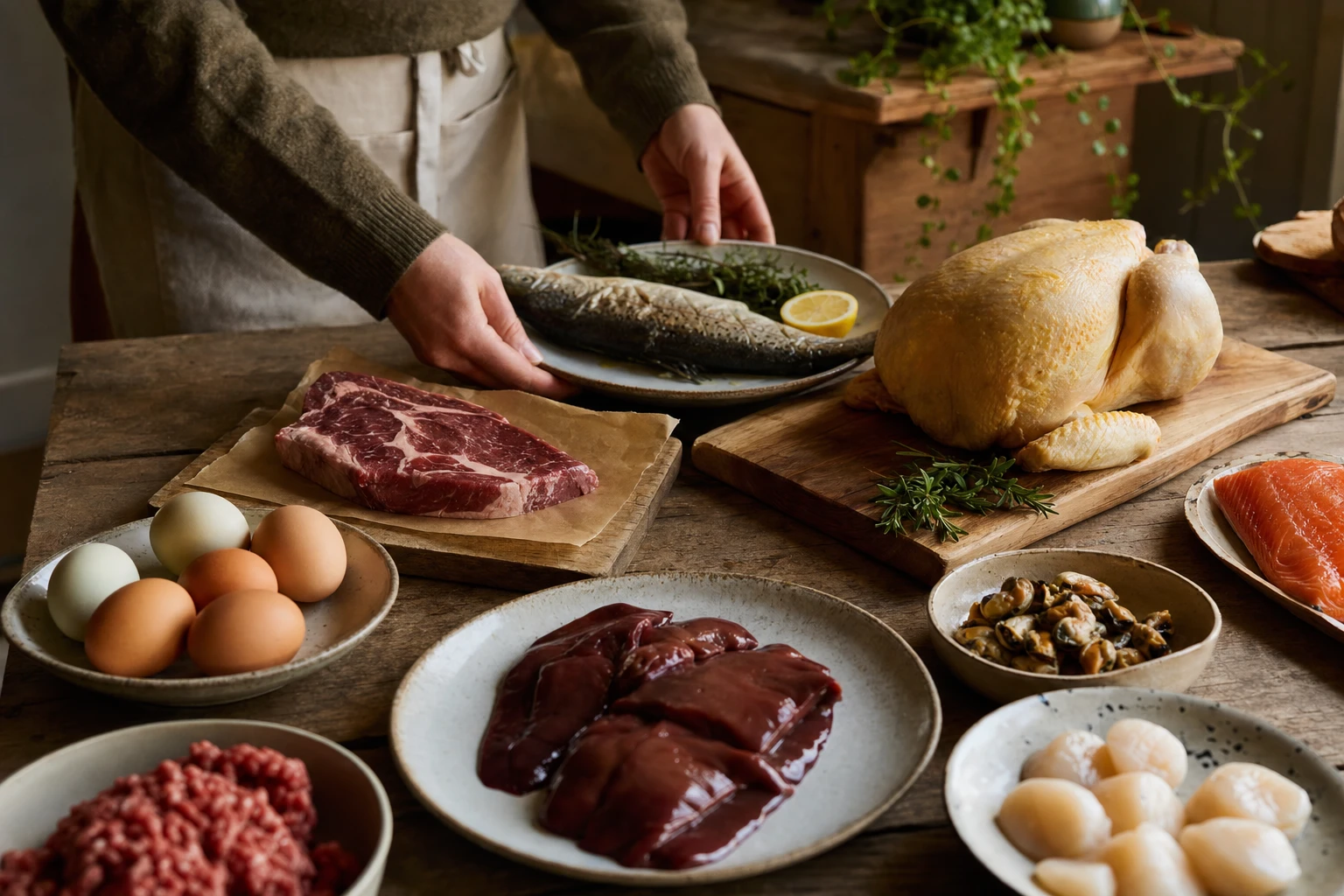
This is not excessive. A 150-gram steak is 35 to 40 grams of protein. Three eggs is 18 grams, but add 50 grams of cheese or meat and you're there. A salmon fillet is 35 to 45 grams depending on size. A Greek yoghurt and granola bowl can easily be 25 to 30 grams.

1 of 9
Daily blend
100,000+ thriving families4.9 on Trustpilot
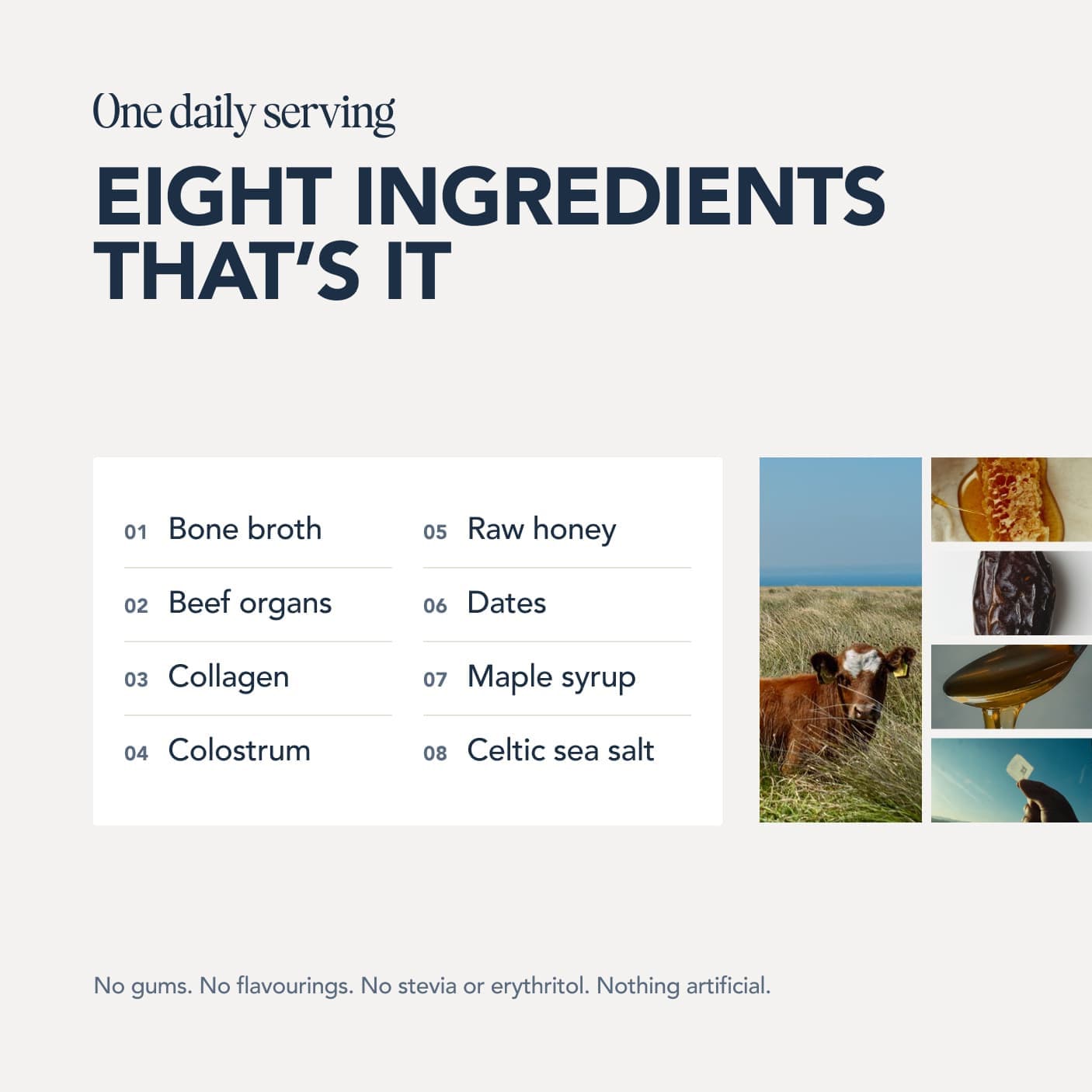
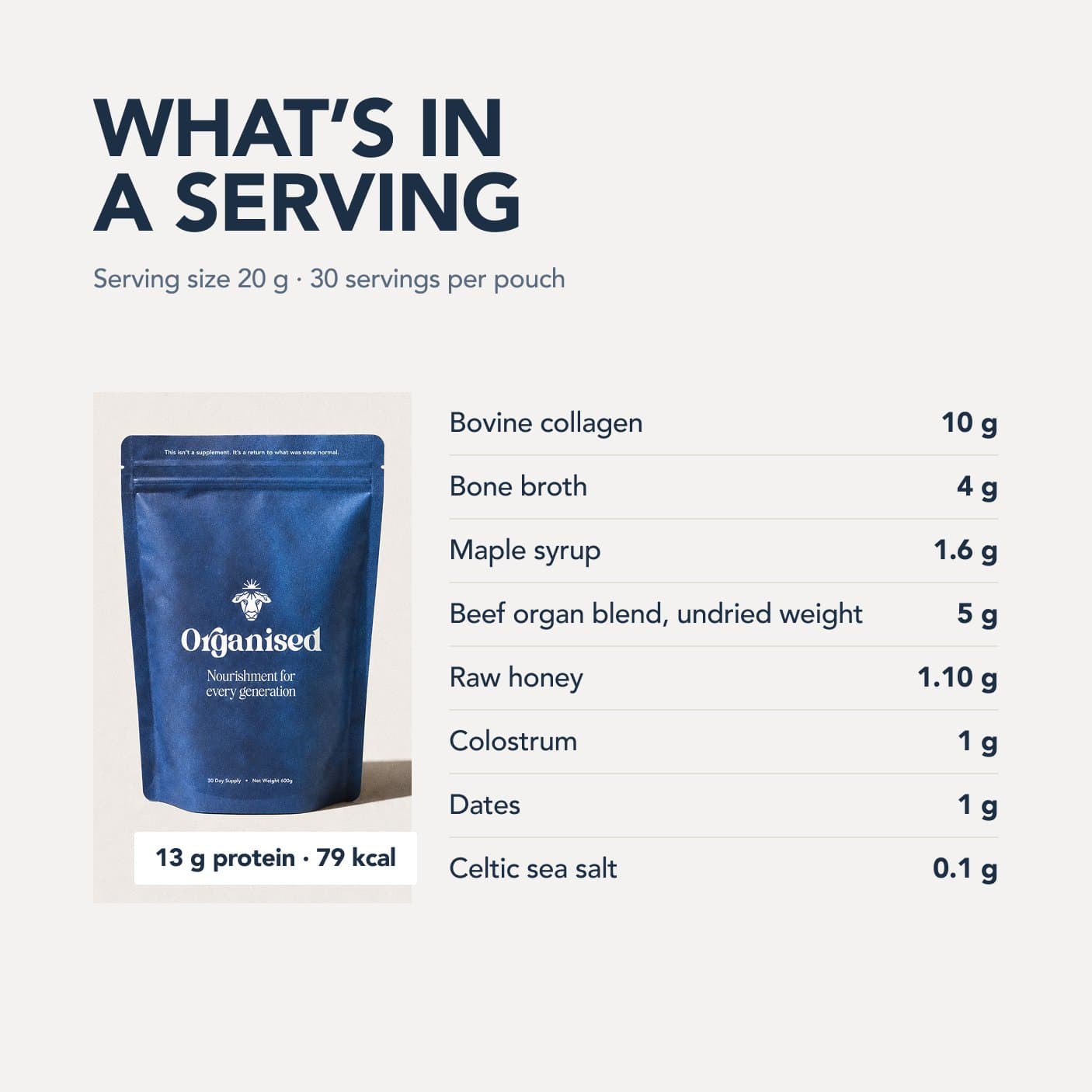
Eight real ingredients built around grass-fed beef organs, collagen and colostrum. Nothing synthetic added.
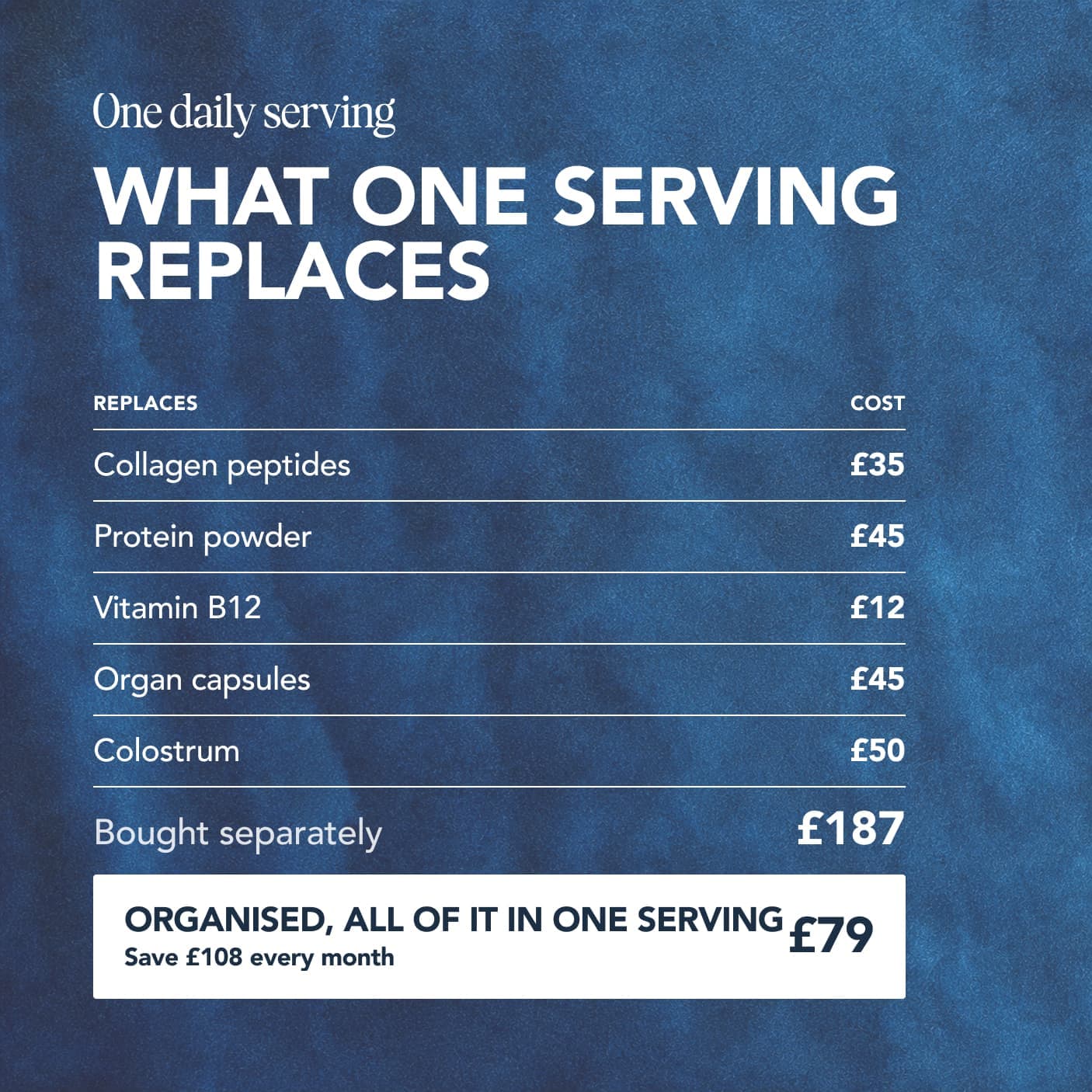
Free with your first order, worth £38. Plus £10 off the pouch with a subscription.

Free UK shipping · Made in England · 100 day money back guarantee on your first pouch · Skip, pause or cancel anytime
Strategic eating for muscle preservation
The practical framework is simple: eat 25 to 35 grams of high-quality protein at each main meal, distributed throughout the day. Prioritise animal proteins for their superior amino acid profiles. If you do strength training, do it consistently (three times per week minimum) because muscle only gets built in response to mechanical tension plus adequate nutrition.
If you're vegetarian or vegan, know that you need to eat more total protein and be more strategic about amino acid combinations. Supplementing with essential amino acids or leucine-rich plant powders becomes practical rather than optional.
Strength training is part of the equation, but it's not the whole equation. You can lift perfectly and lose muscle if your protein intake is inadequate or too low in leucine. Conversely, you can maintain muscle better with adequate protein even if your training is suboptimal (though training is always better).

The bottom line
After 40, your body's response to protein changes. You need more of it, distributed more strategically across the day. You need it to be higher quality (animal proteins outperform plant proteins per gram). And you need each meal to cross the leucine threshold to trigger muscle protein synthesis.
This isn't about aging gracefully by accepting decline. This is about actively resisting decline through informed nutrition. Most people who lose muscle after 40 aren't losing it because they're old. They're losing it because they're eating like they're still 25, and their 55-year-old muscles have different requirements.
Adjust your protein intake upward. Distribute it across the day. Choose quality sources. Combine with resistance training. And watch your muscle preservation shift. This is one of the few aging processes you have genuine control over.
References
Every source below was checked on 27 August 2026. Each PubMed, PMC and DOI identifier was resolved against NCBI or Crossref, and what it opens is printed under the citation, so you can see the link goes where the citation says without leaving the page. Where a citation and its identifier disagreed, the citation was corrected to the record or the reference was deleted along with the sentence marker that pointed at it, and where the resolved paper turned out not to support the sentence, the sentence was cut back to what it does support. Borrowed authority is worse than none, because it looks like rigour.
- Cruz-Jentoft AJ, et al. Sarcopenia: revised European consensus on definition and diagnosis. Age Ageing. 2019. PMID 30312372.Checked 27 August 2026: PMID 30312372 opens Cruz-Jentoft AJ, Bahat G, Bauer J et al, Sarcopenia: revised European consensus on definition and diagnosis. Age Ageing 2019;48(1):16-31. PubMed indexes it as: Consensus Statement.
- Bauer J, et al. Evidence-based recommendations for optimal dietary protein intake in older people: PROT-AGE Study Group. J Am Med Dir Assoc. 2013. PMID 23867520.Checked 27 August 2026: PMID 23867520 opens Bauer J, Biolo G, Cederholm T et al, Evidence-based recommendations for optimal dietary protein intake in older people: a position paper from the PROT-AGE Study Group. J Am Med Dir Assoc 2013;14(8):542-59. PubMed indexes it as: Consensus Statement, Review.
- Wilkinson DJ, et al. Effects of leucine and its metabolite β-hydroxy-β-methylbutyrate on human skeletal muscle protein metabolism. J Physiol. 2013. PMC3690694.Checked 27 August 2026: PMC3690694 opens Wilkinson DJ, Hossain T, Hill DS et al, Effects of leucine and its metabolite β-hydroxy-β-methylbutyrate on human skeletal muscle protein metabolism. J Physiol 2013;591(11):2911-23.
- Phillips SM, et al. Protein "requirements" beyond the RDA: implications for optimizing health. Appl Physiol Nutr Metab. 2016. PMID 26960445.Checked 27 August 2026: PMID 26960445 opens Phillips SM, Chevalier S, Leidy HJ, Protein "requirements" beyond the RDA: implications for optimizing health. Appl Physiol Nutr Metab 2016;41(5):565-72. PubMed indexes it as: Review.
Who wrote and reviewed this guide
Niall Kiddle
Author · Founder, Organised
Niall is the founder of Organised. He started the company in 2024 after fixing his own health the slow way: in 2022 he swapped a cupboard of synthetic supplements for real food, raw milk, organ meats, bone broth and honey, and felt the difference within months.
Areas of expertise: Ancestral nutrition, Organ meats, Whole-food supplementation, Gut health, Regenerative sourcing
Read Niall's full profile
Pedro Rodrigues
Reviewer · Agronomist (farming and sourcing only)
Pedro is the agronomist Organised works with on farming and sourcing. His job on the guides is to keep the science honest: he reviews what we publish about soil health, regenerative agriculture, grazing and the way food is actually produced.
Areas of expertise: Regenerative agriculture, Agronomy, Soil health, Grass-fed farming, Food sourcing
Reviewed this guide on
Read Pedro's full profileBrowse the guides library
All guidesKeep reading
Health goals
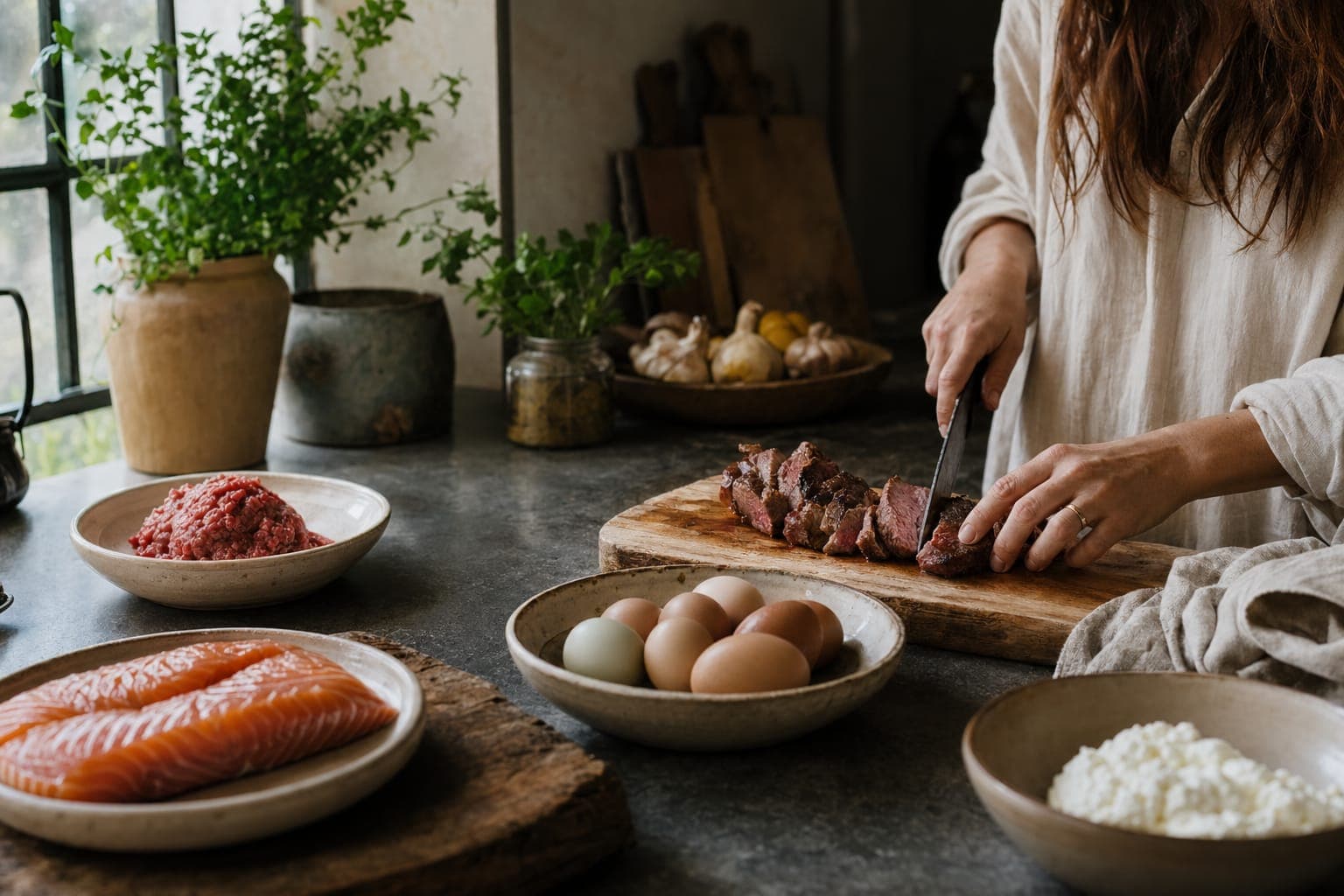
Protein, Satiety and Why Diets Fail
Most diets fail because they ignore how protein controls hunger. Learn the protein leverage hypothesis and why 30g per meal matters.

Health goals
Ageing Well: The Nutrients That Support Healthy Longevity
Ageing well requires specific nutrients: collagen, B12, magnesium, K2, glutathione. Here's where to find them and why they matter.
Health goals
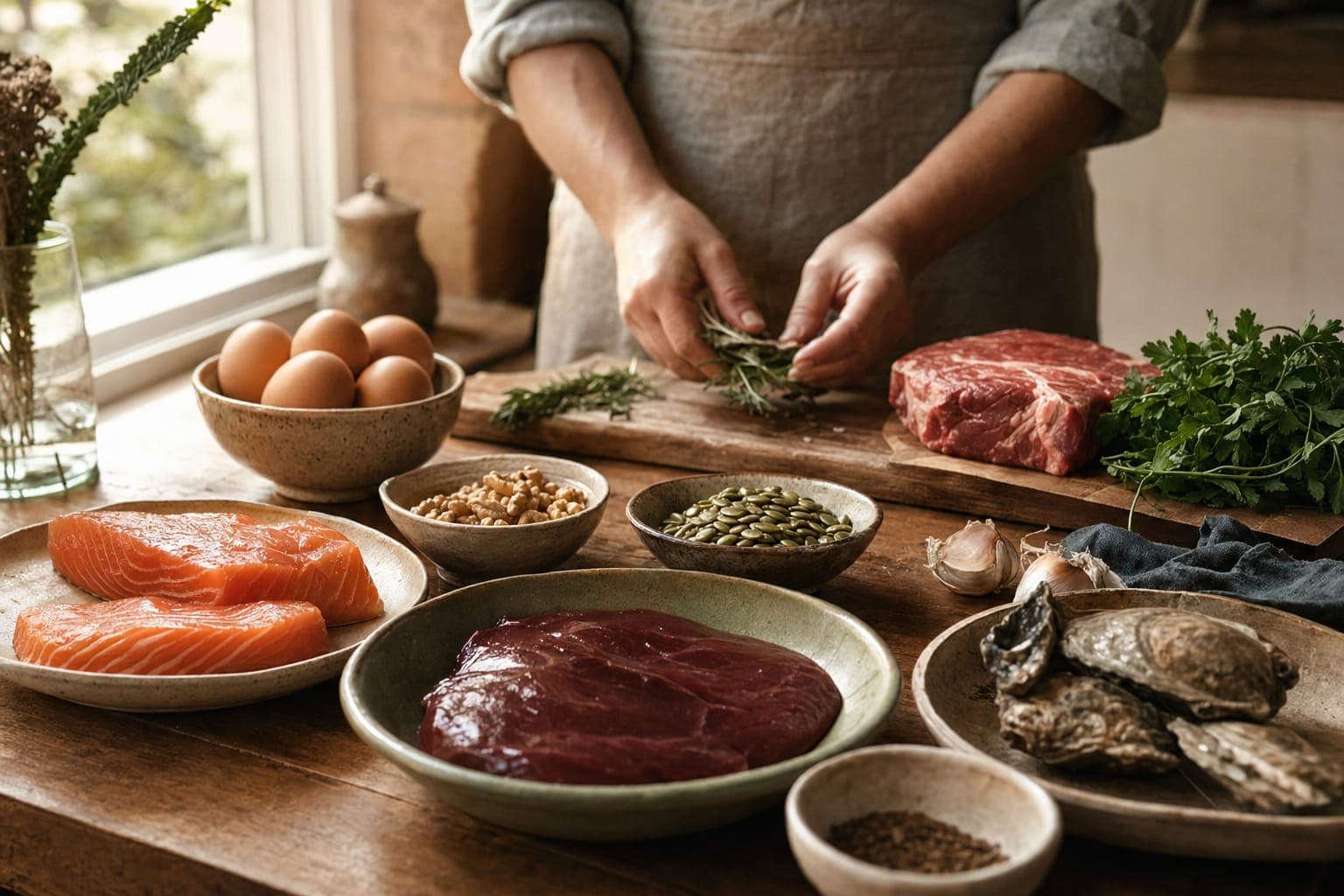
Feeding Your Brain: The Nutrients Behind Focus, Memory and Clarity
Discover which nutrients power your brain: DHA, choline, B12, iron, zinc, creatine. Food sources for lasting focus, memory, and mental clarity.
Real food, made effortless
Start my daily blendA few ways to use it
All recipes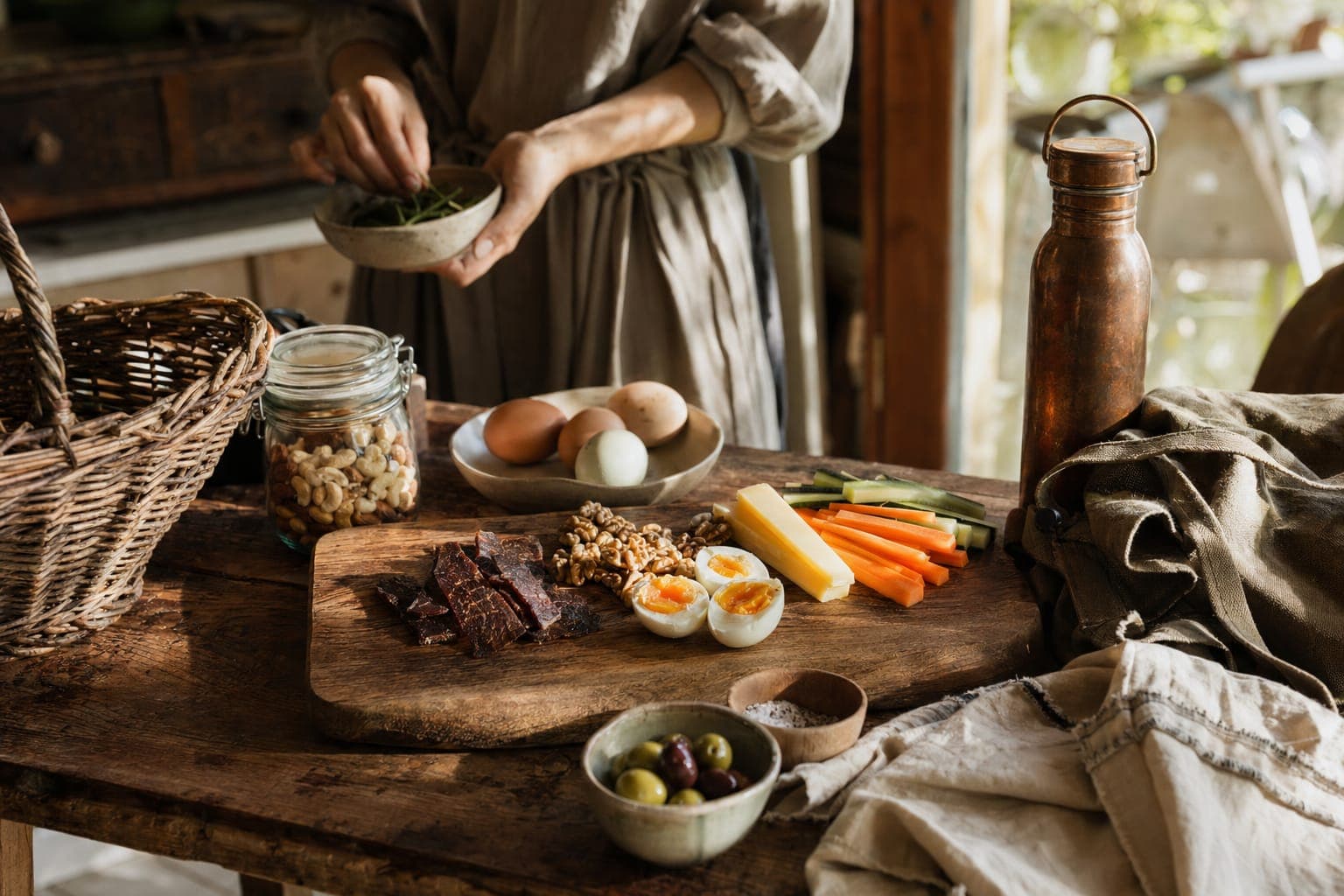
Whole Food Snacks for Busy Days
Practical whole food snacks that travel well and sustain energy. No refined carbs, no seed oils. Real food options for when you're busy.
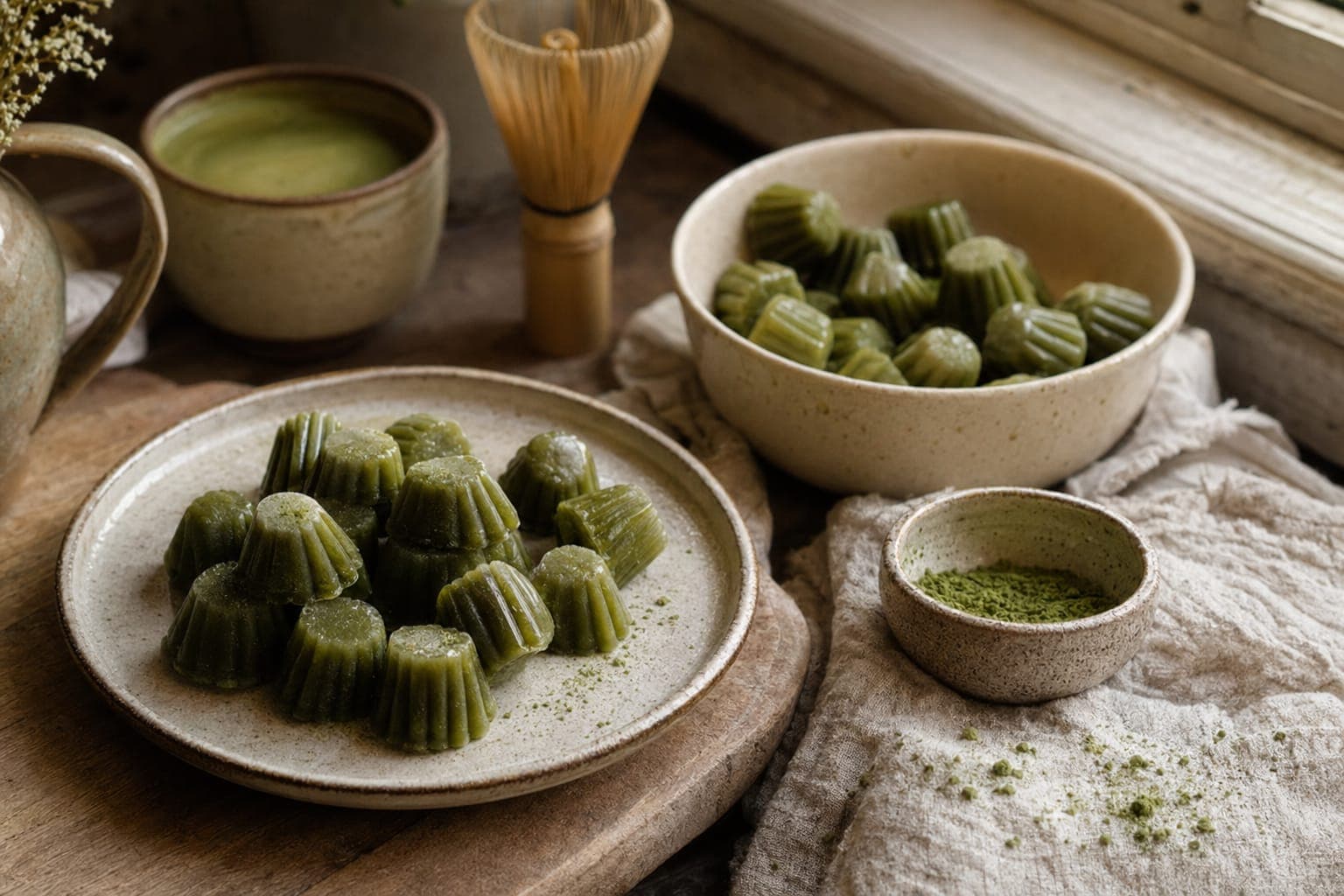
Matcha Latte Gummies with Collagen and Gelatine
Make visually stunning matcha latte gummies infused with collagen and gelatine. Simple recipe for gut-healing sweets you'll actually want to eat.
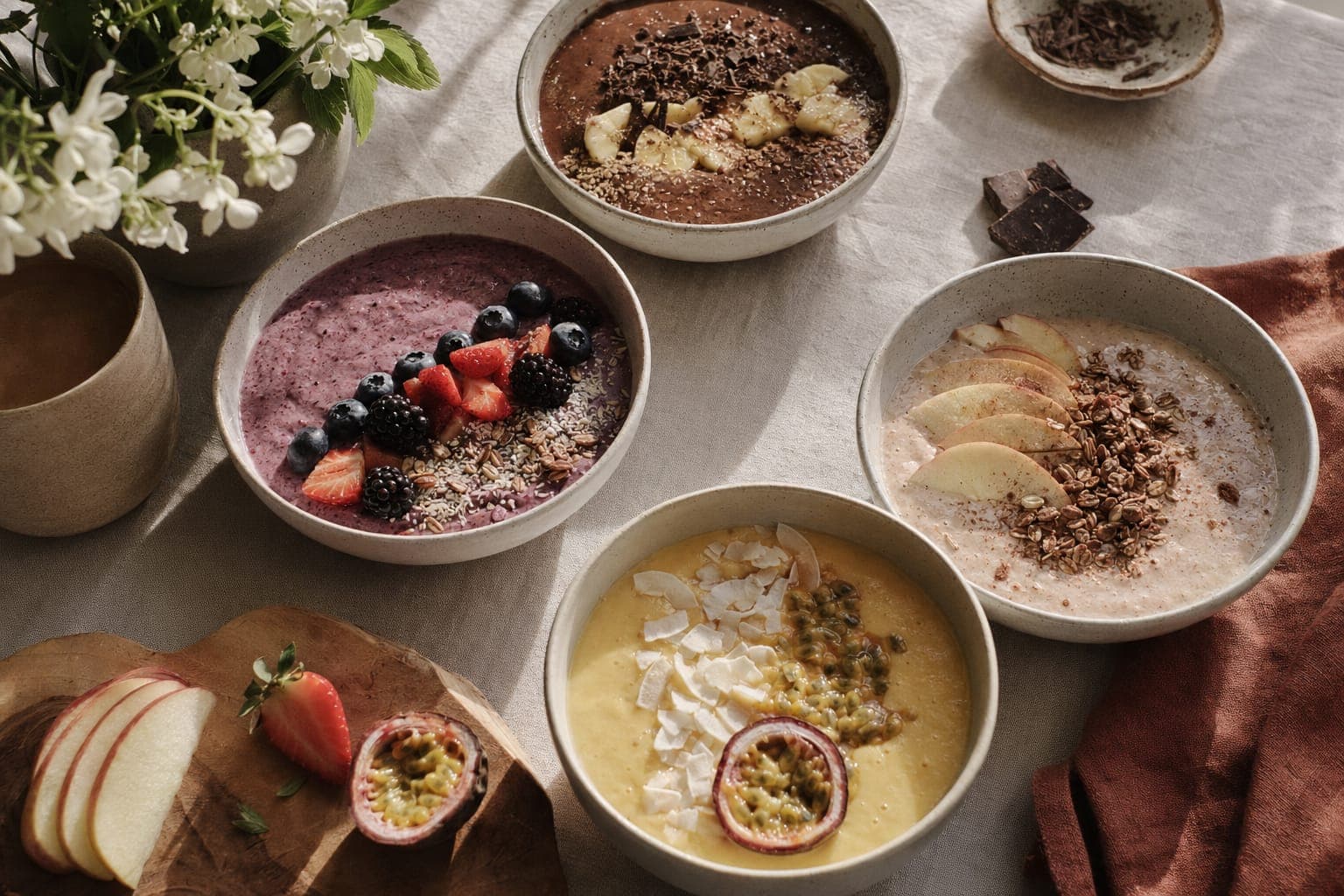
Organised Smoothie Bowl Recipes for Every Season
Four seasonal smoothie bowl recipes using Organised. Berry in summer, apple-cinnamon in autumn, tropical in spring, warming chocolate in winter.


 Join over 100,000+ members
Build a better food system with us
The Organised community is thousands of people choosing real food and backing the farmers who grow it, all of us trying to leave the world a little better than we found it. If that is what you care about too, you belong here.