Growth Factors in Colostrum: What Are IGF-1 and IGF-2?
Colostrum contains growth factors that signal your body to repair tissue, build muscle, and restore resilience. But the quantities matter, and so does understanding how they actually work.

By Niall Kiddle, Founder, Organised

Reviewed by Pedro Rodrigues, Agronomist (farming and sourcing only) ·
6 min read · Published · Updated · 3 cited sources
Makers of the Organised Daily blend, a grass-fed beef organ supplement from regenerative UK farms
This is where colostrum marketing often diverges from the biology. Growth factors are powerful, but not in the way most people imagine.

What IGF-1 and IGF-2 are
IGF-1 (insulin-like growth factor 1) and IGF-2 (insulin-like growth factor 2) are peptide hormones produced throughout your body, but most abundantly by the liver in response to growth hormone signalling. They are called insulin-like because their structure resembles insulin, but their functions are distinct.
IGF-1 is the primary growth factor. It signals cells to grow, divide, and resist apoptosis (cell death).1 It is essential for childhood growth, muscle development, bone strength, and throughout life for tissue repair and metabolic function. Low IGF-1 is associated with rapid ageing, weak muscles, poor recovery, and increased mortality risk.
IGF-2 is a fetal growth factor, more abundant during development and less active in adults. It plays a role in fetal growth, some aspects of tissue repair, and metabolic regulation, but is less well studied than IGF-1.
Both are produced by your body endogenously (internally). The question colostrum raises is whether consuming additional IGF from external sources (bovine colostrum) provides benefit, or whether it simply gets digested and broken down like any other protein.
IGF-1 and IGF-2 are growth signals your body produces. Colostrum contains them. But consumption does not mean absorption, and absorption does not mean function.
The role of growth factors in tissue repair
After training or injury, your body must repair damaged tissue. This requires signals (growth factors) and raw materials (amino acids, minerals, cofactors). Growth factors orchestrate the repair process.
When you train hard, muscle fibres are damaged. IGF-1 signals muscle satellite cells to activate, proliferate, and differentiate into new muscle cells. Growth hormone and testosterone support this process. The amino acids you eat provide the material for protein synthesis. The result is muscle repair and growth.
When your gut is damaged (from illness, antibiotics, or exercise-induced permeability), growth factors signal intestinal epithelial cells to repair the damage. IGF-1 directly promotes cell division and protein synthesis in intestinal tissue. It also promotes the production of mucins (the protective mucus layer lining your gut).
This is why growth factors matter. They are not just present in colostrum for show. They actively facilitate tissue repair. If you are training hard or recovering from illness or gut damage, adequate growth factor status supports faster, more complete recovery.
The challenge is delivering growth factors in useful form. Most dietary proteins (including growth factors) are broken down into amino acids during digestion. The intact growth factor molecules are typically too large to cross the intestinal barrier and enter the bloodstream.
Physiological vs supraphysiological levels
This is where the confusion sets in. Colostrum marketing claims that the IGF-1 in colostrum is absorbed and has physiological effects. This is partly true but requires nuance.
Your body maintains a tightly regulated blood level of IGF-1. In healthy adults, this level sits around 100 to 300 ng/ml, depending on age, sex, and growth hormone status. This is the physiological level that supports normal tissue repair and metabolic function.
Colostrum contains roughly 2 to 5 micrograms of IGF-1 per gram of colostrum (quality varies).2 A 25-gram serving contains 50 to 125 micrograms of IGF-1. Even if all of this were absorbed intact (which it is not), it would be a negligible amount compared to your body's endogenous production, which is roughly 10 to 40 micrograms per kilogram of body weight daily. For a 70-kilogram person, that is 700 to 2,800 micrograms daily from internal sources alone.
So the colostrum-derived IGF-1 is not achieving supraphysiological levels (high enough to cause the exaggerated effects sometimes promised). It is providing a small amount of dietary IGF-1 that may contribute to physiological needs but is not a game-changer on its own.3
However, the mechanism of action might not be direct. Rather than intact IGF-1 being absorbed and exerting effects, the amino acids from colostrum (particularly the branched-chain amino acids) may stimulate your own endogenous IGF-1 production. Additionally, the growth hormone in colostrum may stimulate your liver's IGF-1 production.
Colostrum does not contain enough IGF-1 to raise your blood levels substantially. But it may stimulate your body to produce more of its own, which is arguably more useful.
How much IGF is actually in colostrum
Quality bovine colostrum contains roughly 2 to 5 micrograms of IGF-1 per gram, and 5 to 10 micrograms of IGF-2 per gram.2 These are not large quantities.
The highest-quality, freeze-dried colostrum powders contain the highest IGF concentrations. Powders that have been heated or processed extensively (pasteurised at high temperature) have reduced growth factor content because growth factors are sensitive to heat. Liquid colostrum from the supermarket is likely to be significantly lower in growth factors than quality powdered colostrum.
Source matters. Colostrum from grass-fed cattle appears to have higher growth factor content than colostrum from grain-fed cattle, though the evidence is not definitive. Colostrum collected in the first 6 to 12 hours post-delivery is richer in growth factors than colostrum collected later in the lactation cycle (when growth factor concentrations decline).
The practical point: if you are choosing colostrum specifically for growth factor content, quality matters immensely. You could be taking 5 times more or 5 times less IGF depending on sourcing and processing.
Get ingredient guides like this, free
Two short reads a week on the ingredients that matter and how to actually use them.
By signing up you agree to receive emails from us. No spam, unsubscribe anytime.
Bioavailability and absorption
IGF-1 is a peptide hormone. It is not stable in your stomach's acidic environment, and it is too large to cross the intestinal barrier intact.3 Most dietary IGF-1 is broken down into constituent amino acids during digestion.
This means that the IGF-1 you consume in colostrum is likely not being absorbed as intact IGF-1 and circulated in your bloodstream. Instead, it is being hydrolysed into amino acids and dipeptides. Some small amount might be absorbed intact if there is intestinal permeability, but this is not the primary mechanism.
What is useful is the amino acid profile. IGF-1 is made from amino acids, and the amino acids from digested IGF-1 can be used by your body to synthesise its own IGF-1 or other proteins. Additionally, the branched-chain amino acids (particularly leucine) from colostrum stimulate muscle protein synthesis and may trigger your own growth hormone and IGF-1 production.
So the practical benefit of colostrum's growth factors is not that you absorb intact growth factors. It is that colostrum provides amino acids and compounds that stimulate your body to produce and utilise its own growth factors more effectively.
This is less romantic than the idea that you are absorbing pre-made growth factors, but it is also more realistic and actually more useful. You cannot rely on external sources of growth factors, but you can support your body's own capacity to produce them.

1 of 9
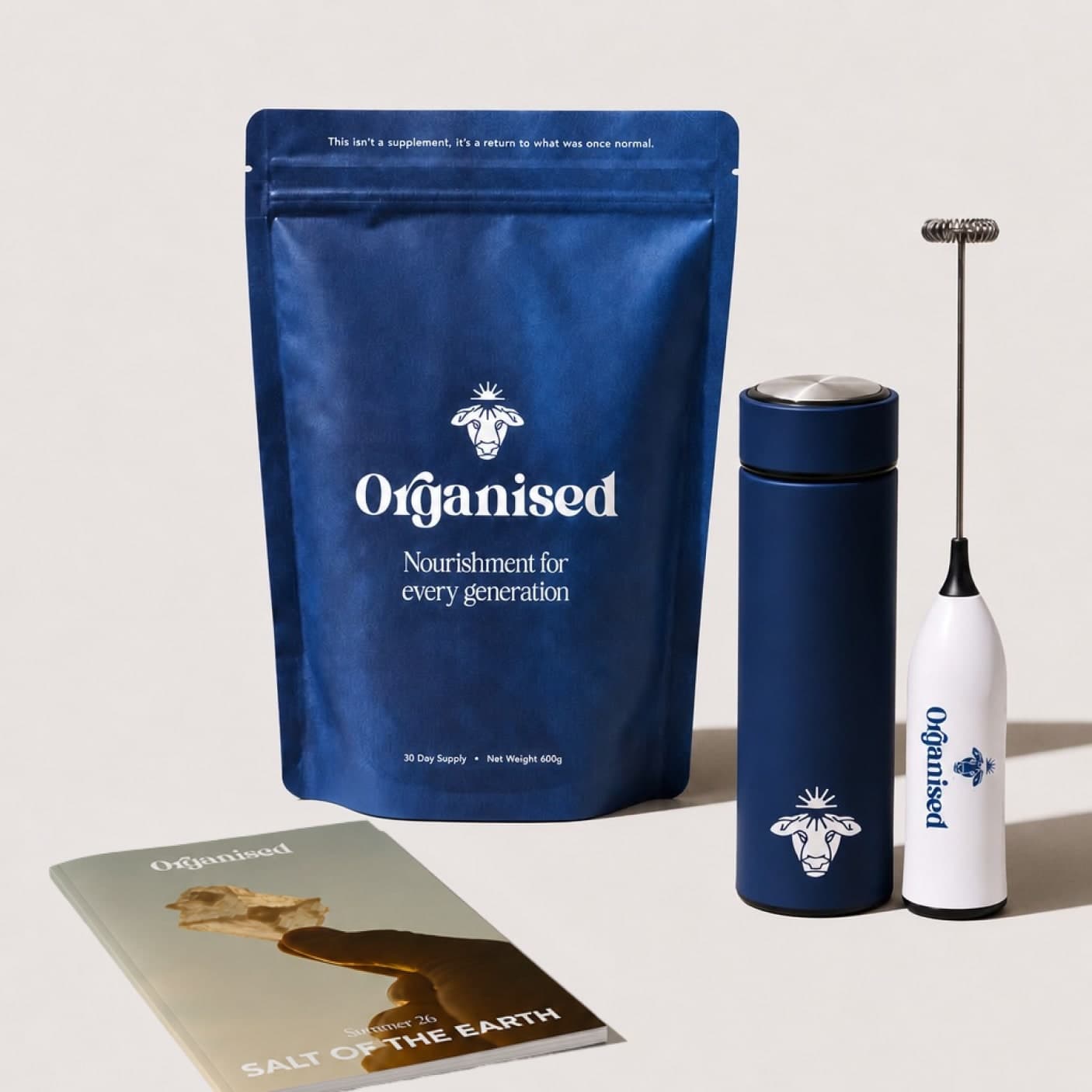
Daily blend
100,000+ thriving families4.9 on Trustpilot
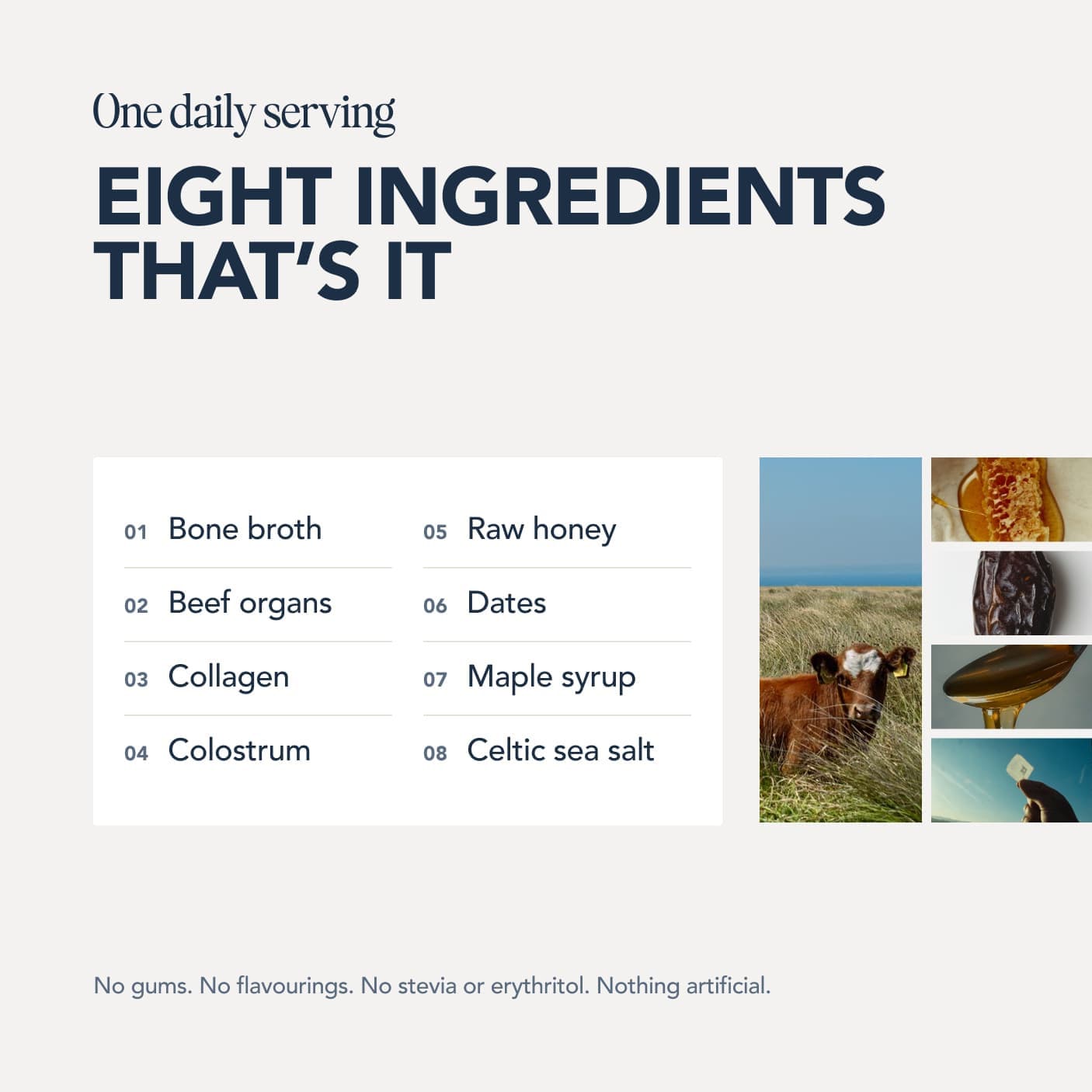
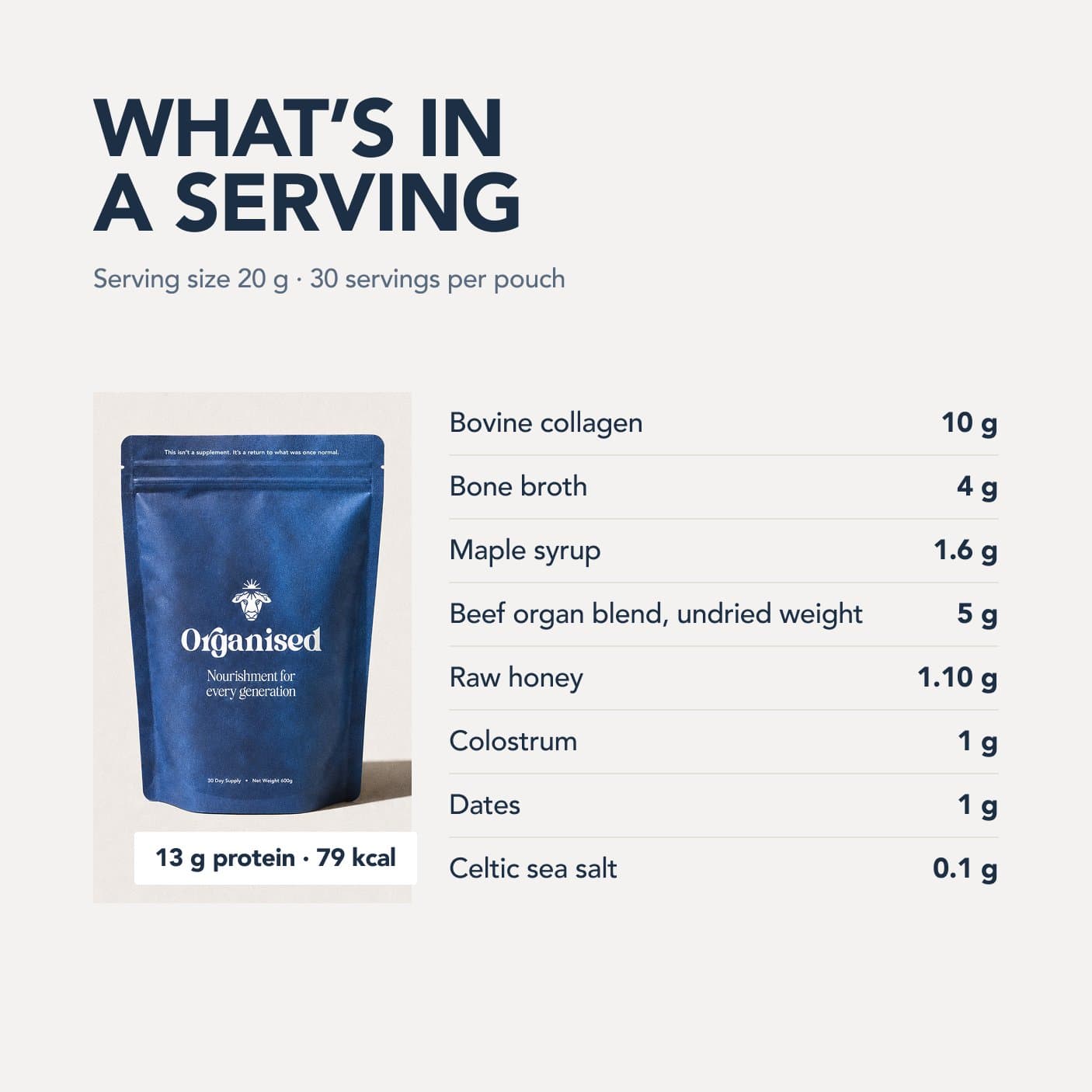
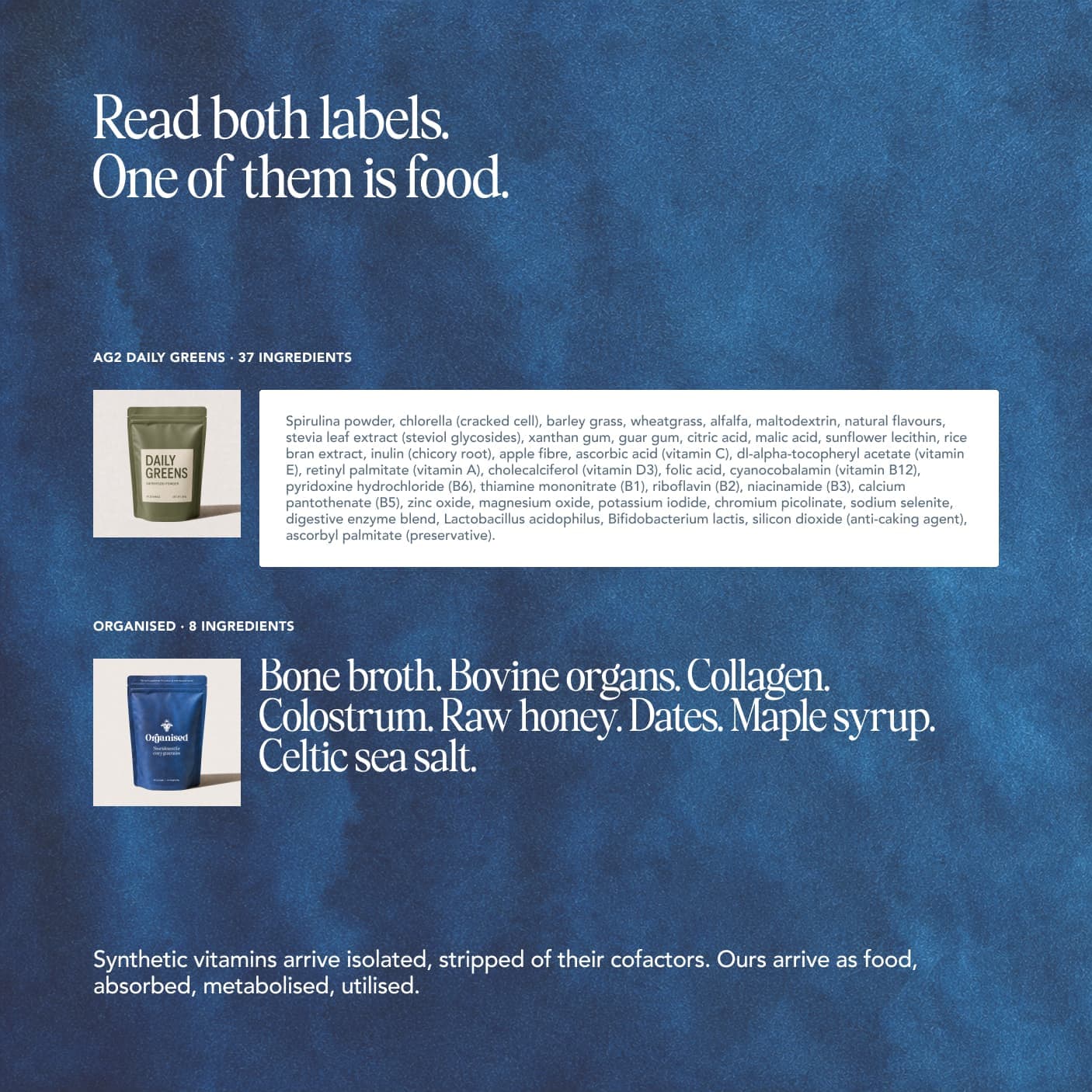
Eight real ingredients built around grass-fed beef organs, collagen and colostrum. Nothing synthetic added.
Free with your first order, worth £38. Plus £10 off the pouch with a subscription.
Free UK shipping · Made in England · 100 day money back guarantee on your first pouch · Skip, pause or cancel anytime
Practical implications for recovery
Understanding growth factor bioavailability changes how you use colostrum effectively.
Colostrum's value for recovery is not primarily because it delivers intact growth factors. It is because it provides a concentrated source of amino acids, immunoglobulins, lactoferrin, and other compounds that support immune function, gut integrity, and tissue repair.
The growth factors themselves are less important than the amino acid profile. A 25-gram serving of quality colostrum provides 7 to 10 grams of protein, including substantial branched-chain amino acids (roughly 1 to 2 grams of leucine). These amino acids directly stimulate muscle protein synthesis and trigger endogenous growth factor production.
If your goal is to maximise recovery, take colostrum immediately post-training (within 30 to 60 minutes), in the window when your muscles are most responsive to growth signals and amino acids. Combine it with vitamin C (which supports growth factor signalling) and adequate carbohydrates (which promote anabolic hormonal status).
The combination of colostrum's amino acids, immunoglobulins, and immune-supporting compounds, taken during this window, supports recovery more effectively than any single component alone.
Additionally, consistent colostrum supplementation during heavy training blocks (20 to 30 grams daily) maintains immune function and gut integrity, allowing your body's own growth factor production to proceed unimpeded by infection or intestinal inflammation. This is arguably more valuable than the growth factors in colostrum itself.
Growth factors in colostrum are present and potentially useful, but their value is subtle. They support tissue repair and adaptation, but not through dramatic mechanisms. Expect modest benefits, not transformation. Taken consistently as part of a broader recovery strategy (adequate sleep, training stimulus, nutrient density, stress management), colostrum is an effective tool. Expected as a standalone recovery solution, it disappoints.
References
Every source below was checked on 27 August 2026. Each PubMed, PMC and DOI identifier was resolved against NCBI or Crossref, and what it opens is printed under the citation, so you can see the link goes where the citation says without leaving the page. Where a citation and its identifier disagreed, the citation was corrected to the record or the reference was deleted along with the sentence marker that pointed at it, and where the resolved paper turned out not to support the sentence, the sentence was cut back to what it does support. Borrowed authority is worse than none, because it looks like rigour.
- Laron Z. Insulin-like growth factor 1 (IGF-1): a growth hormone. Mol Pathol. 2001;54(5):311-316. PMC1187088Checked 27 August 2026: PMC1187088 opens Laron Z, Insulin-like growth factor 1 (IGF-1): a growth hormone. Mol Pathol 2001;54(5):311-6. PubMed indexes it as: Review.
- Yalçıntaş YM, et al. Revealing the Potency of Growth Factors in Bovine Colostrum. Animals. 2024. PMC11279796Checked 27 August 2026: PMC11279796 opens Yalçıntaş YM, Duman H, López JMM et al, Revealing the Potency of Growth Factors in Bovine Colostrum. Nutrients 2024;16(14). PubMed indexes it as: Review.The authors' own declaration, from the record: The authors declare no conflicts of interest.
- Davison G, et al. Oral bovine colostrum supplementation does not increase circulating insulin-like growth factor-1 concentration in healthy adults. Eur J Clin Nutr. 2019. PMID 31123862Checked 27 August 2026: PMID 31123862 opens Davison G, Jones AW, Marchbank T et al, Oral bovine colostrum supplementation does not increase circulating insulin-like growth factor-1 concentration in healthy adults: results from short- and long-term administration studies. Eur J Nutr 2020;59(4):1473-1479.The authors' own declaration, from the record: RJP is a scientific advisor for Pantheryx Inc who produce commercial bovine colostrum.
Corrections
What this page used to say, and why it no longer says it. Corrections are dated and are never removed, because deleting the record of an error is a second error. Every guide we have corrected is listed at our corrections log.
- 27 August 2026. Reference 2 was credited to “Arslan A, et al.” in Animals. The record is by Yalçıntaş et al. in Nutrients 2024. Corrected.
Who wrote and reviewed this guide
Niall Kiddle
Author · Founder, Organised
Niall is the founder of Organised. He started the company in 2024 after fixing his own health the slow way: in 2022 he swapped a cupboard of synthetic supplements for real food, raw milk, organ meats, bone broth and honey, and felt the difference within months.
Areas of expertise: Ancestral nutrition, Organ meats, Whole-food supplementation, Gut health, Regenerative sourcing
Read Niall's full profile
Pedro Rodrigues
Reviewer · Agronomist (farming and sourcing only)
Pedro is the agronomist Organised works with on farming and sourcing. His job on the guides is to keep the science honest: he reviews what we publish about soil health, regenerative agriculture, grazing and the way food is actually produced.
Areas of expertise: Regenerative agriculture, Agronomy, Soil health, Grass-fed farming, Food sourcing
Reviewed this guide on
Read Pedro's full profileMore on colostrum
View all- Bovine Colostrum: The Complete Guide to Nature's First Food
- Colostrum and the Immune System: What the Science Actually Shows
- Colostrum for Athletes: Recovery, Immunity and Performance
- Colostrum for Gut Health: How Immunoglobulins Repair the Gut Lining
- Colostrum vs Probiotics: Do You Need Both?
- Is Colostrum Safe for Lactose-Intolerant People?
- What Is Lactoferrin and Why Is It in Colostrum?
Browse the guides library
All guidesKeep reading
Ingredients
Medjool Dates: Nature's Energy Bar
Discover the benefits of Medjool dates: fibre, potassium, and natural sugars for steady energy. See why whole dates beat processed bars and sugary drinks.
Ingredients
Colostrum for Gut Health: How Immunoglobulins Repair the Gut Lining
Learn how colostrum's immunoglobulins and growth factors repair intestinal permeability and restore gut barrier integrity.
Ingredients
What Is Raw Milk? A Clear Guide (Benefits, Risks & How to Source It Well)
Raw milk is unpasteurised milk. That’s the whole definition, but it’s not the whole story. Because it hasn’t been heat-treated, it’s handled differently,
Real food, made effortless
Try the organ blendA few ways to use it
All recipes
Ancestral Breakfast Ideas from Around the World
Traditional breakfast recipes from cultures that got nutrition right. Japanese, Turkish, Scottish, and more. Whole-food breakfast inspiration.
10 Ways to Use Organised That Aren't Just a Shake
Move beyond the basic shake. Discover 10 creative ways to use Organised in smoothie bowls, oats, yoghurt, baking, and more.
Liver Pate for Beginners: A Gentle Introduction to Organ Meats
Simple liver pate recipe to start eating organ meats. Chicken liver, butter, and herbs. Gentle introduction to nutrient-dense whole foods.


 Join over 100,000+ members
Build a better food system with us
The Organised community is thousands of people choosing real food and backing the farmers who grow it, all of us trying to leave the world a little better than we found it. If that is what you care about too, you belong here.