Why Beef Protein Is Easier to Digest Than You Think
You've probably been told beef is heavy, that it sits in your stomach for hours, that it's hard to digest. You've been lied to. Beef protein is extraordinarily digestible, and the reasons why are baked into every cut.

By Niall Kiddle, Founder, Organised

Reviewed by Pedro Rodrigues, Agronomist (farming and sourcing only) ·
6 min read · Published · Updated · 4 cited sources
Makers of the Organised Daily blend, a grass-fed beef organ supplement from regenerative UK farms
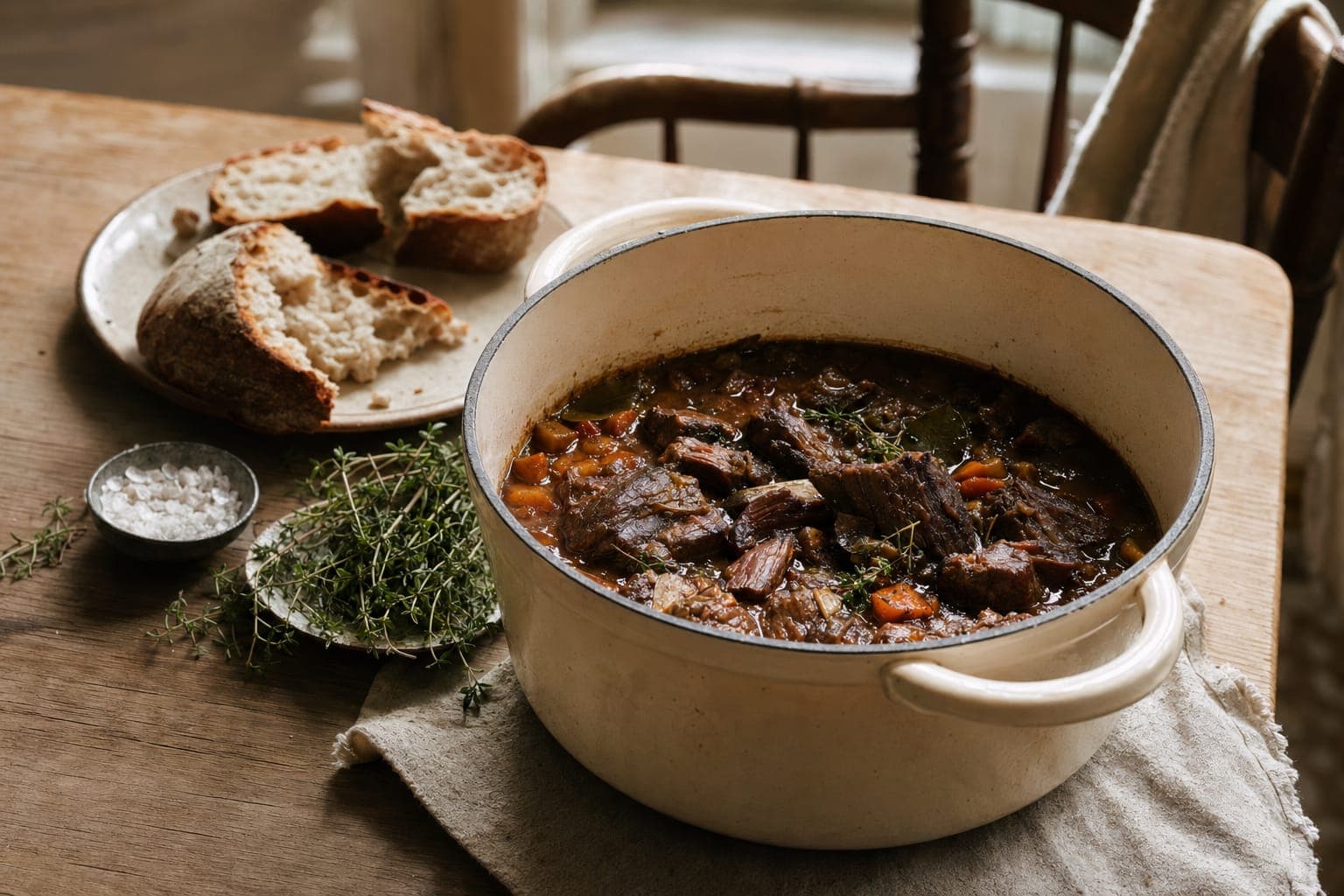
The claim that beef is hard to digest comes from a cultural moment that was never actually science. It's rooted in the idea that anything substantial must be difficult. A light meal of chicken breast is easy to digest. A steak must be heavy. But when you look at actual digestibility metrics, beef is absorbed nearly completely. Between 92 and 98 percent of beef protein is absorbed in the small intestine.1 That's not heavy. That's remarkably efficient.
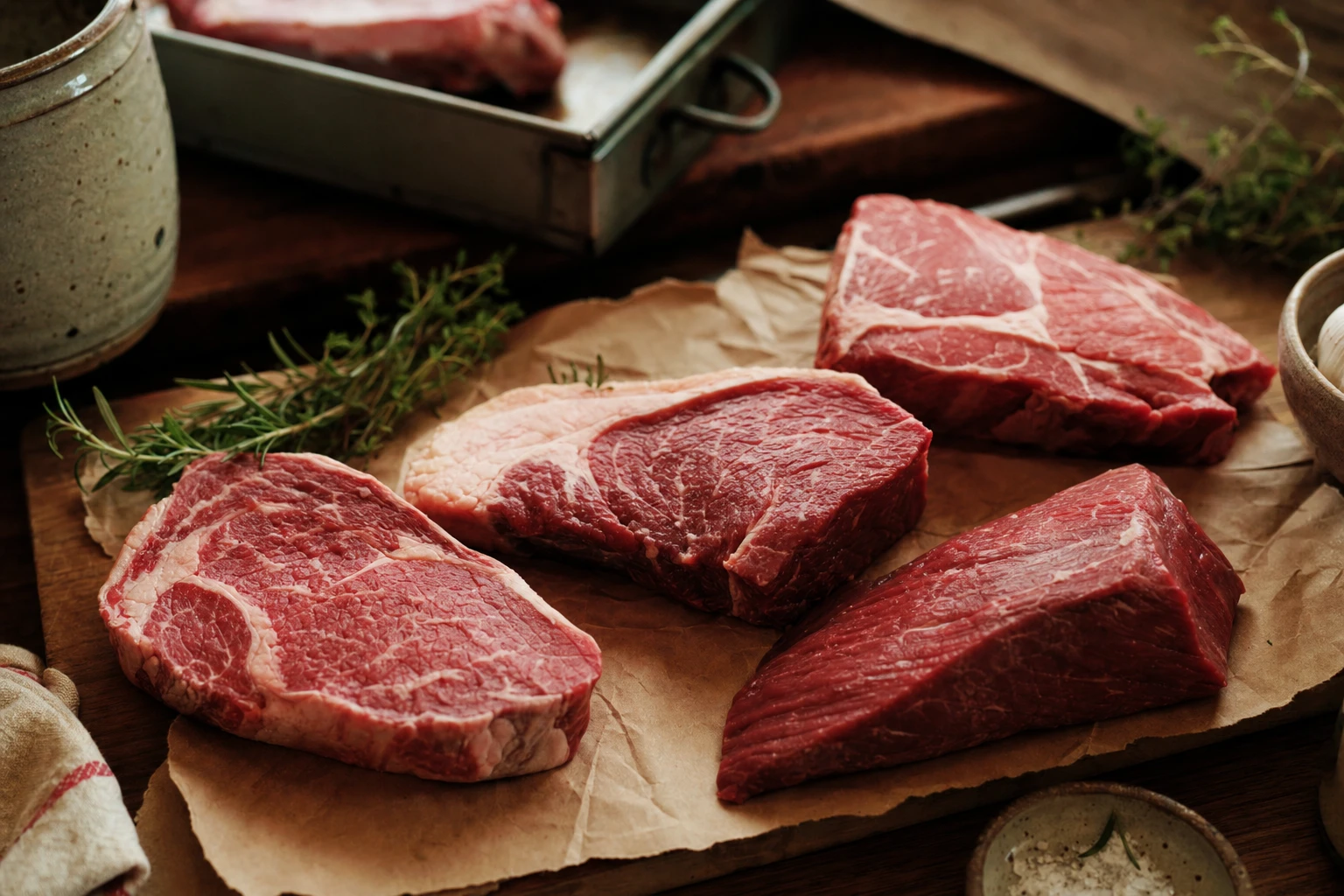
What makes beef protein so digestible
Beef protein is digestible because it's structured in a way that your digestive system recognises immediately. You evolved eating muscle meat. Your stomach acid, your pepsin enzymes, your entire proteolytic cascade is optimised for breaking down muscle tissue. Beef enters your stomach, the acidity and enzymes go to work, and the proteins denature and break apart systematically.
This isn't a slow process. It's not beef sitting in your stomach for eight hours. Your stomach empties beef protein relatively quickly because the amino acid chains are being broken down efficiently. The peptides move into your small intestine where additional enzymes complete the process. Absorption happens readily because your intestinal lining is structured to absorb these exact molecules.
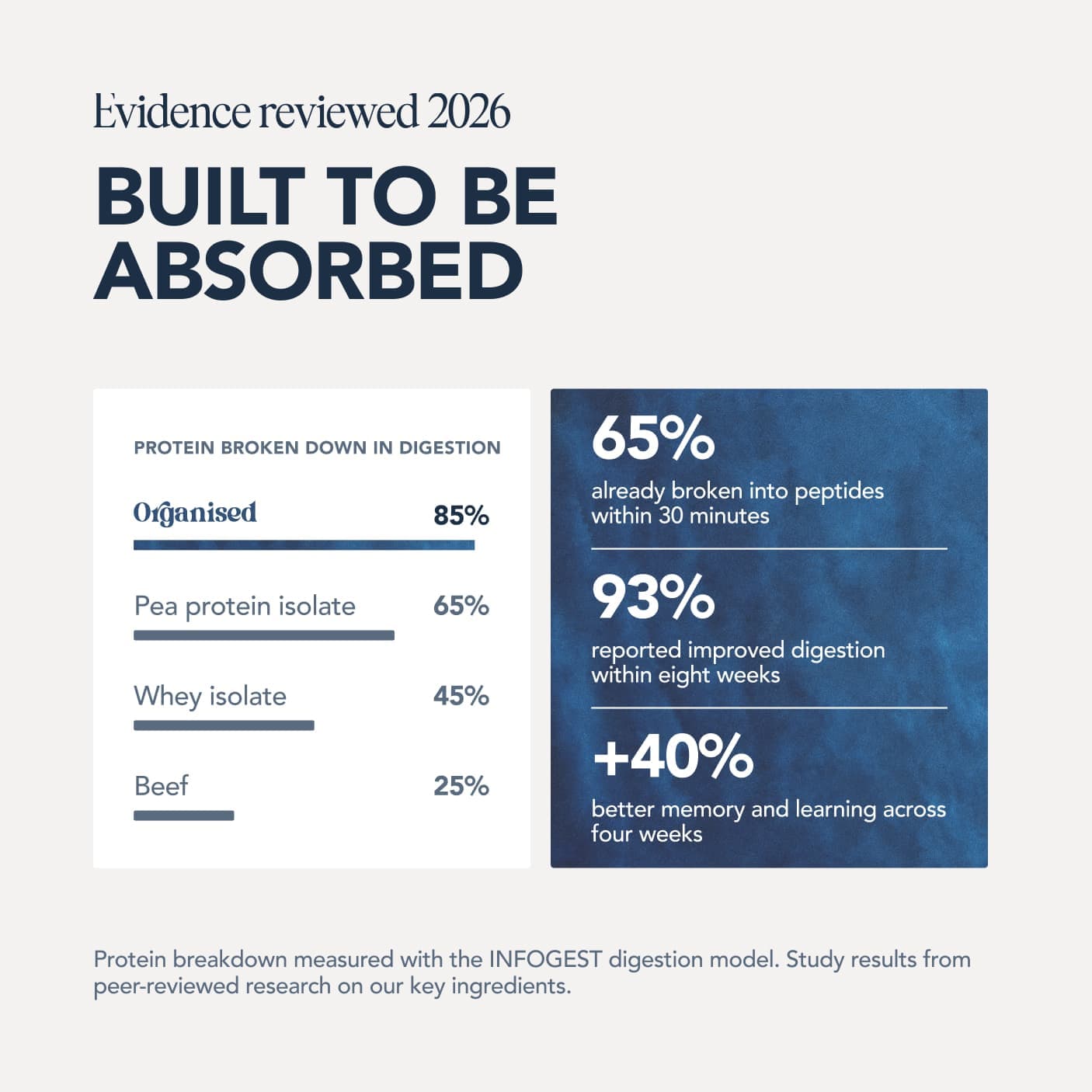
Compare this to plant protein. Plant proteins are surrounded by fibre, bound up in lectins, and protected by cell walls that your digestive system has to work harder to break through. The absorption rate is lower. It takes longer. The body expends more energy to extract less usable protein. This isn't a moral failing of plants. It's just how they're structured. Plants evolved to resist being eaten. Animals didn't.
Your digestive system recognises beef protein as something your body was designed to process. The efficiency shows up immediately.
The amino acid profile that works for your body
Beef contains all nine essential amino acids, the ones your body cannot manufacture.2 But it's not just that beef is complete. It's the ratio of amino acids that matters.
Beef is extraordinarily rich in branched-chain amino acids, leucine, isoleucine, and valine, which are critical for muscle protein synthesis. If your goal is to build or maintain muscle, the amino acid profile of beef is nearly perfect. Leucine, in particular, is the primary trigger for the mTOR pathway, which signals your body to synthesise new muscle proteins.3
Beef also contains high levels of creatine, carnosine, and taurine, compounds that are either completely absent or nearly absent from plant foods.4 Creatine supports muscle and brain energy production. Carnosine is a dipeptide that buffers lactic acid in muscles and supports muscle contraction. Taurine is essential for heart function, bile acid metabolism, and nervous system health.
Plant proteins, even when they contain all nine amino acids, typically lack one or more of the branched-chain amino acids in sufficient quantity. An individual would need to eat substantially more plant protein to achieve the same amino acid profile as beef, which means consuming much larger volumes of food and expending more digestive energy.
Collagen: the protein your body can't make
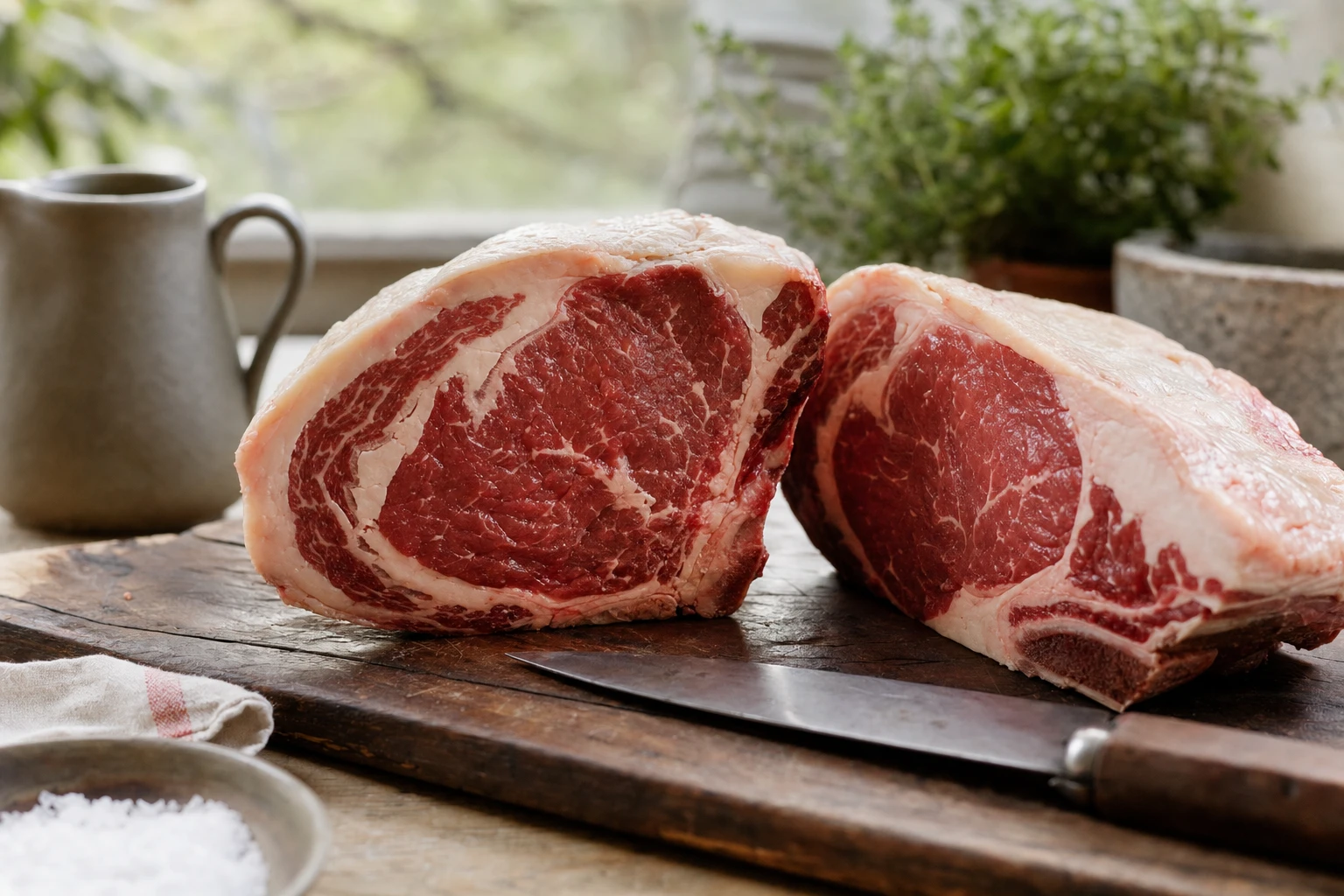
Beef, especially bone-in cuts and those with visible connective tissue, contains collagen, which is the most abundant protein in your body. Collagen makes up your skin, your tendons, your ligaments, your bones, and your digestive tract lining. Your body synthesises collagen from amino acids, but it requires specific ones, particularly glycine and proline, in the right proportions.
Beef collagen contains these amino acids in abundance, in the exact ratio your body needs. When you eat beef with the connective tissue, including the gelatinous bits between muscles, you're consuming something your body can readily convert into the collagen structures that keep your joints functional, your skin elastic, and your gut lining intact.
Modern processing has encouraged us to trim away these collagen-rich cuts, to eat only the pure muscle. But this is a relatively recent luxury. Ancestrally, the most prized portions of an animal were often these collagen-rich bits, the parts closest to the bones, the gelatinous tissues. They understood, without the language of amino acid profiles, that these parts were essential to health.
Include these cuts. Eat bone broth made from beef bones and connective tissue. Include the gelatin. Your joints, your skin, and your gut lining will respond to this differently than to pure muscle protein alone.
Get ingredient guides like this, free
Two short reads a week on the ingredients that matter and how to actually use them.
By signing up you agree to receive emails from us. No spam, unsubscribe anytime.
How natural enzymes support beef digestion
Raw or lightly cooked beef contains natural enzymes that support its own digestion. Protease breaks down proteins. Lipase breaks down fats. These enzymes work alongside your own digestive enzymes to break beef down more efficiently than your stomach and small intestine could manage alone.
When you cook beef, heat denatures these enzymes. This isn't a catastrophe. Your own digestive system is more than capable of handling cooked beef. But rare or lightly cooked beef has this additional enzyme support, which is one reason ancestral populations sometimes ate meat raw or barely cooked.
If you're eating cooked beef and notice that you're not digesting it well, the problem is rarely the beef itself. The problem is usually insufficient stomach acid, inadequate digestive enzyme production, or compromised gut integrity. These are conditions of your digestive system, not properties of beef.
Beef versus plant protein: the comparison
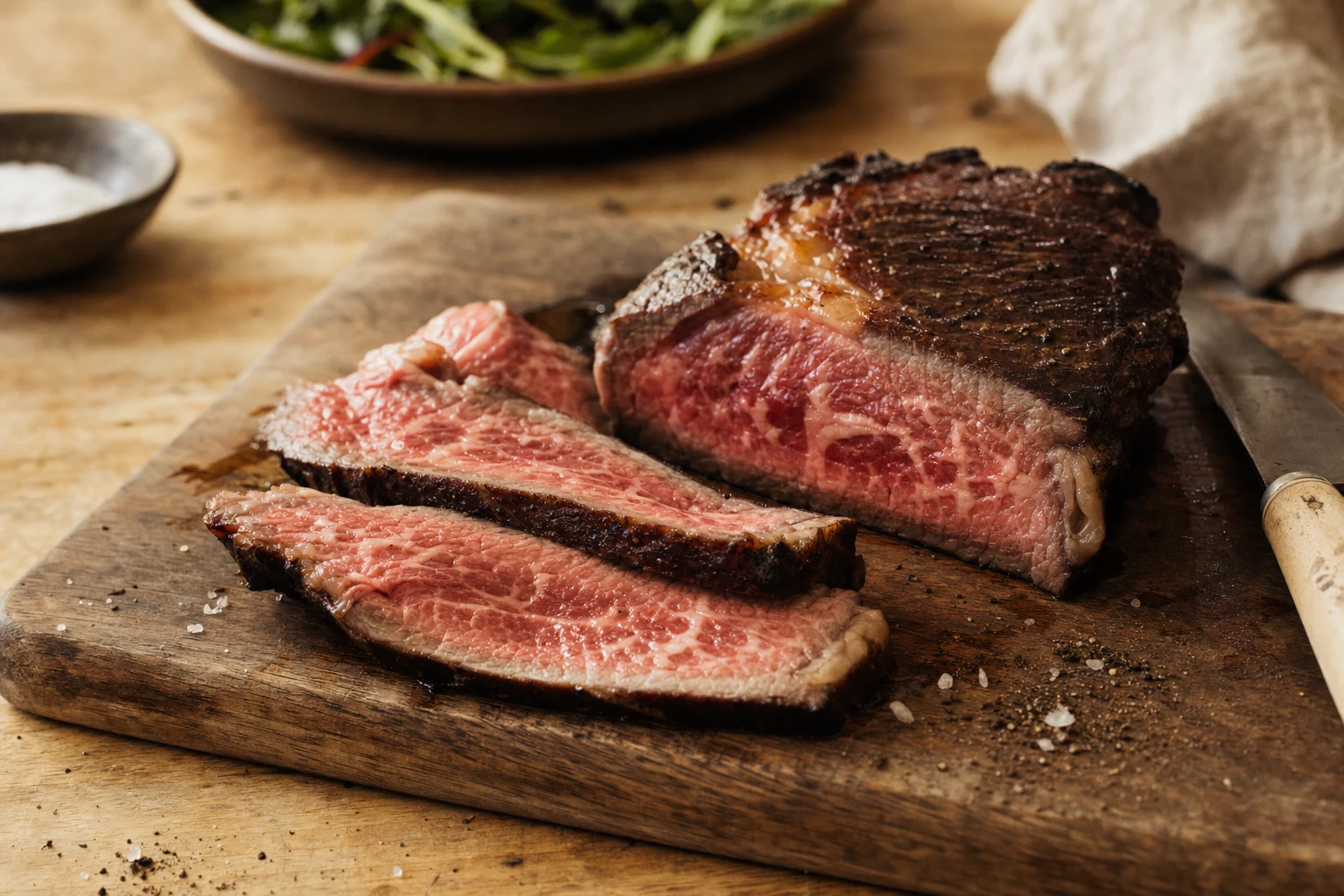
One hundred grams of raw beef contains approximately 26 grams of protein, with a digestibility of 92 to 98 percent.1 This means your body actually absorbs roughly 24 to 25 grams of usable protein.
One hundred grams of cooked lentils contains approximately 9 grams of protein, with a digestibility of around 75 to 85 percent. This means your body absorbs roughly 7 to 8 grams of usable protein. The difference is substantial. You'd need to eat 300 grams of lentils to get the usable protein from 100 grams of beef.
Beyond quantity and digestibility, beef provides complete amino acids in the right ratios. Lentils lack methionine. Beans lack methionine. Grains lack lysine. Nuts lack lysine. To get a complete amino acid profile from plants, you need to combine multiple sources and eat considerably larger quantities.
This isn't an argument against plant foods. Vegetables are valuable. Legumes have their place. But when it comes to protein, the density, digestibility, and amino acid completeness of beef are unmatched by plant sources. If protein is your priority, beef is simply more efficient.


1 of 9
Daily blend
100,000+ thriving families4.9 on Trustpilot
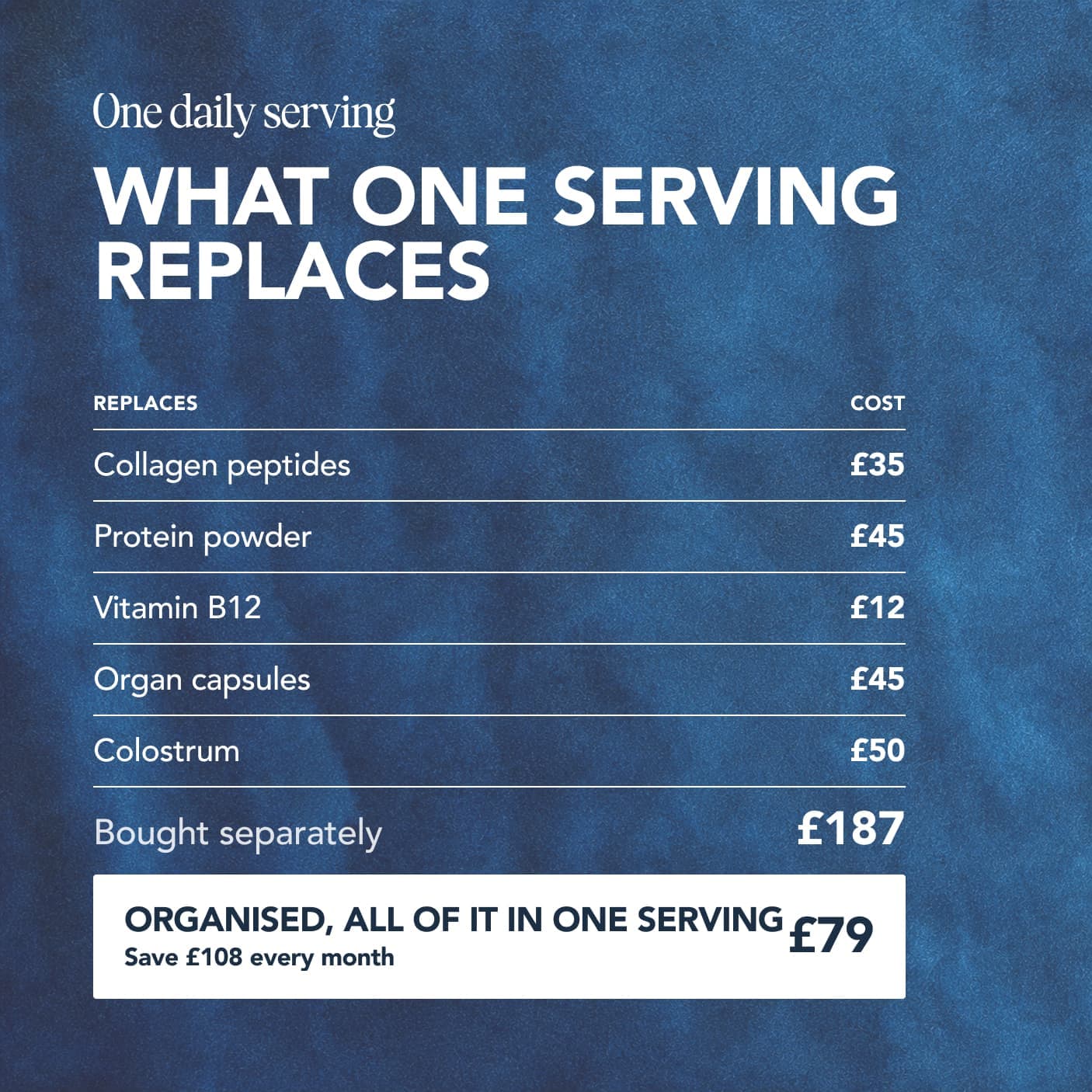
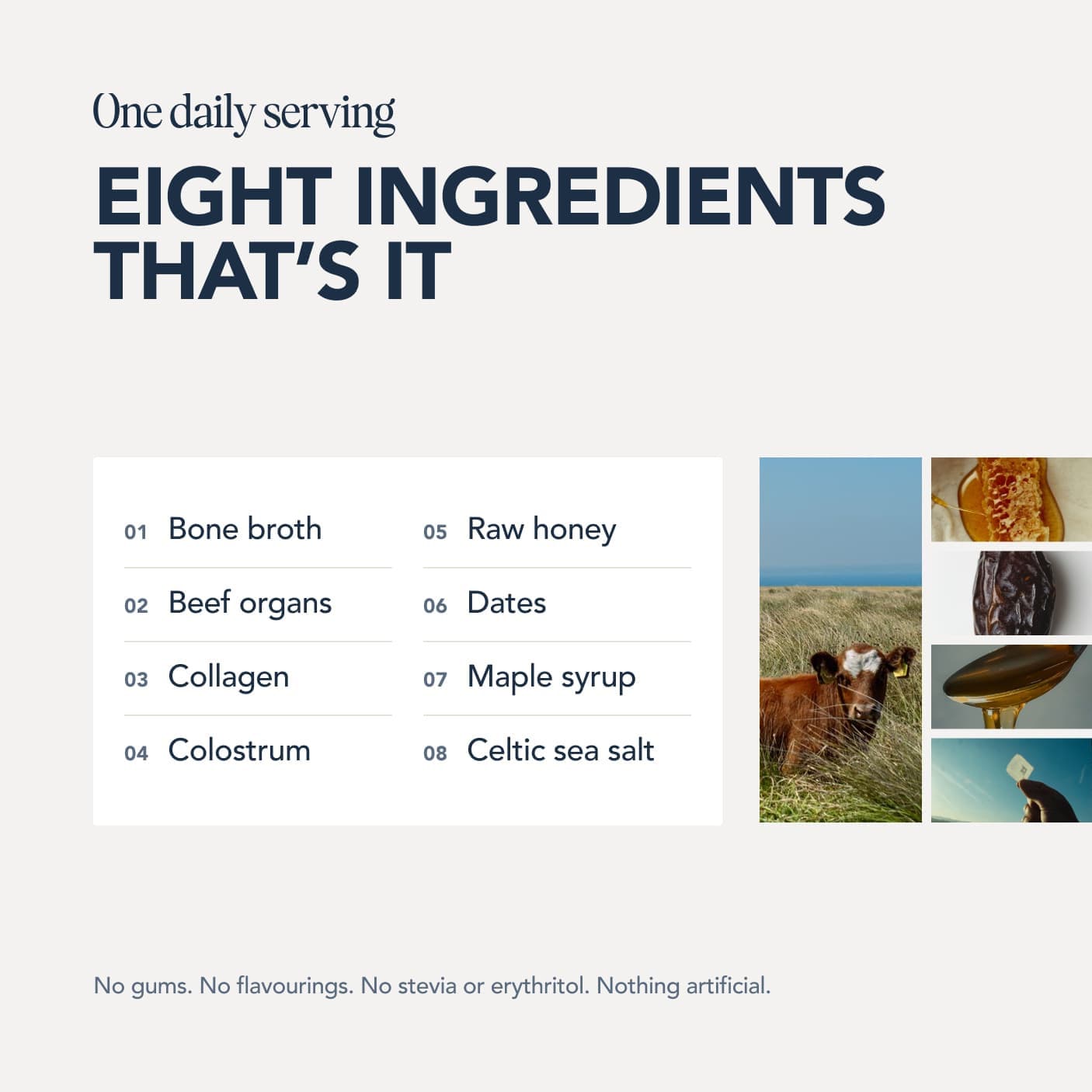
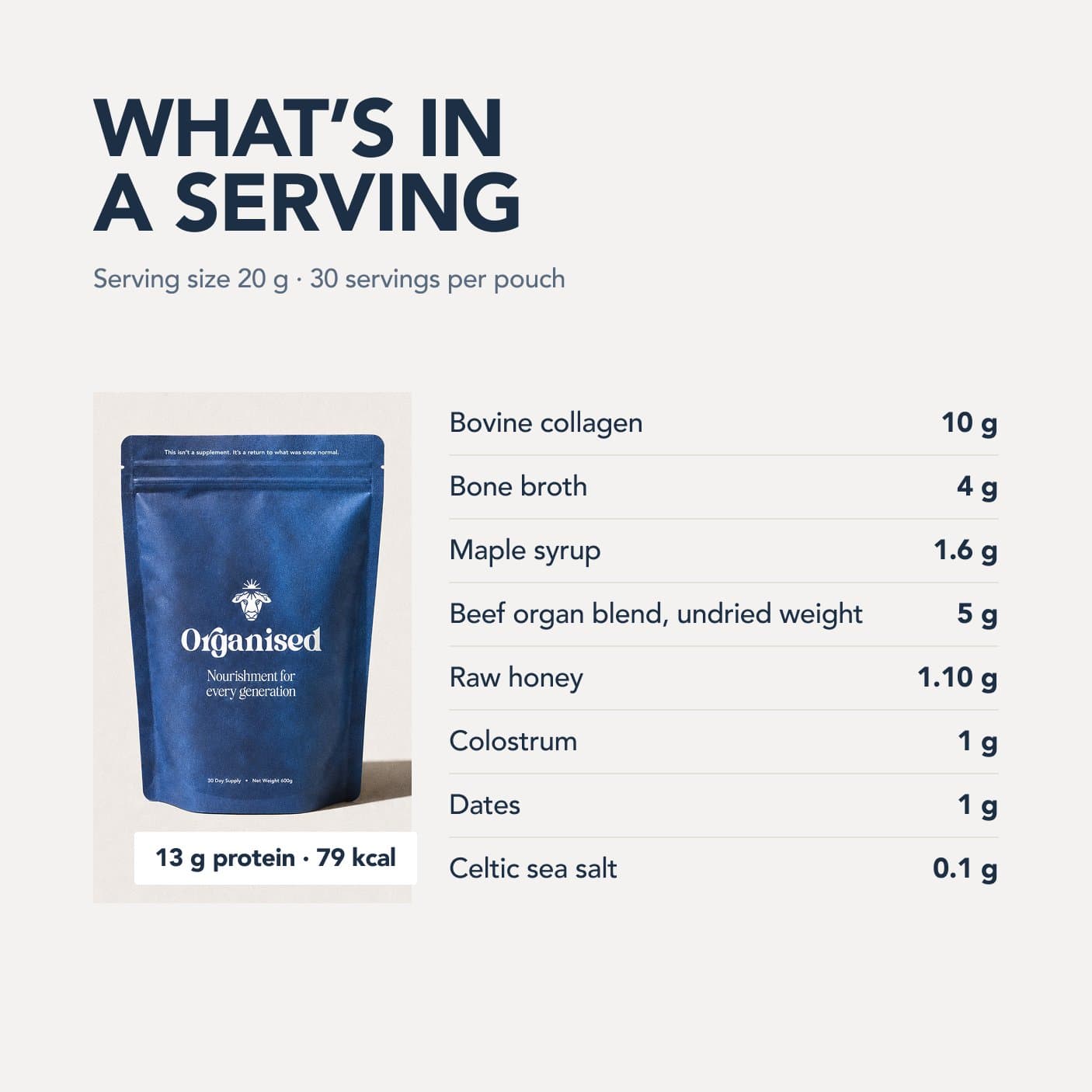
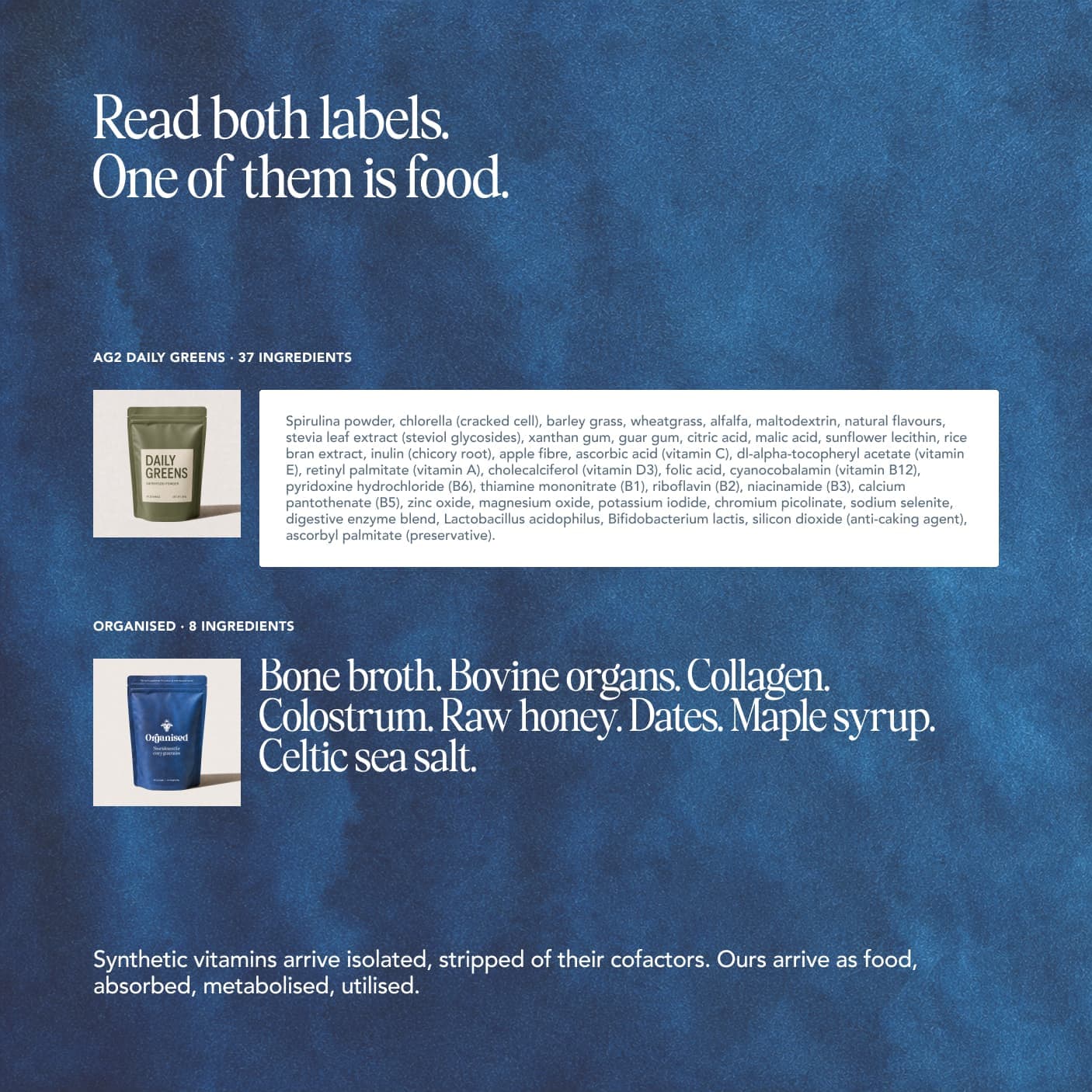
Eight real ingredients built around grass-fed beef organs, collagen and colostrum. Nothing synthetic added.
Free with your first order, worth £38. Plus £10 off the pouch with a subscription.



Free UK shipping · Made in England · 100 day money back guarantee on your first pouch · Skip, pause or cancel anytime
Red meat digestion in ancestral diets
Every population that had access to red meat ate it regularly. The amount varied by geography and season. But from the Arctic to Africa, from the Americas to Asia, when meat was available, it was consumed, often in substantial quantities. These populations didn't develop digestive problems from meat consumption. They thrived.
The idea that red meat is hard to digest is a modern cultural belief, not an ancestral reality. Your digestive system is built to process it. The enzymes, the stomach acid, the intestinal transporters, all of it is optimised for animal protein. This is written into your biology.
Your ancestors ate meat regularly. Their digestive systems processed it efficiently. Your digestive system is built the same way.
The bottom line
Beef is not heavy. It's not hard to digest. It's efficiently processed, absorbed at high rates, and provides amino acids and nutrients your body recognises and utilises immediately. The idea that beef is difficult comes from cultural bias, not from actual digestive physiology. Eat it. Your digestion will handle it. Your muscles will thank you.
References
Every source below was checked on 27 August 2026. Each PubMed, PMC and DOI identifier was resolved against NCBI or Crossref, and what it opens is printed under the citation, so you can see the link goes where the citation says without leaving the page. Where a citation and its identifier disagreed, the citation was corrected to the record or the reference was deleted along with the sentence marker that pointed at it, and where the resolved paper turned out not to support the sentence, the sentence was cut back to what it does support. Borrowed authority is worse than none, because it looks like rigour.
- FAO. Dietary protein quality evaluation in human nutrition: Report of an FAO Expert Consultation. https://www.fao.org/3/i3124e/i3124e.pdf [accessed May 2026].
- Williams P. Nutritional composition of red meat. Nutrition & Dietetics. https://onlinelibrary.wiley.com/doi/10.1111/j.1747-0080.2007.00197.x [accessed May 2026].Checked 27 August 2026: doi:10.1111/j.1747-0080.2007.00197.x opens WILLIAMS P, Nutritional composition of red meat Nutrition & Dietetics 2007;64(s4).
- Anthony JC, Anthony TG, Kimball SR, Jefferson LS. Signaling pathways involved in translational control of protein synthesis by amino acids. J Nutr. https://pubmed.ncbi.nlm.nih.gov/11238774/ [accessed May 2026].Checked 27 August 2026: PMID 11238774 opens Anthony JC, Anthony TG, Kimball SR et al, Signaling pathways involved in translational control of protein synthesis in skeletal muscle by leucine. J Nutr 2001;131(3):856S-860S. PubMed indexes it as: Review.
- Wu G. Important roles of dietary taurine, creatine, carnosine, anserine and 4-hydroxyproline in human nutrition and health. Amino Acids. https://pmc.ncbi.nlm.nih.gov/articles/PMC7088015/ [accessed May 2026].Checked 27 August 2026: PMC7088015 opens Wu G, Important roles of dietary taurine, creatine, carnosine, anserine and 4-hydroxyproline in human nutrition and health. Amino Acids 2020;52(3):329-360. PubMed indexes it as: Review.The authors' own declaration, from the record: The author declares no conflict of interest.
Who wrote and reviewed this guide
Niall Kiddle
Author · Founder, Organised
Niall is the founder of Organised. He started the company in 2024 after fixing his own health the slow way: in 2022 he swapped a cupboard of synthetic supplements for real food, raw milk, organ meats, bone broth and honey, and felt the difference within months.
Areas of expertise: Ancestral nutrition, Organ meats, Whole-food supplementation, Gut health, Regenerative sourcing
Read Niall's full profile
Pedro Rodrigues
Reviewer · Agronomist (farming and sourcing only)
Pedro is the agronomist Organised works with on farming and sourcing. His job on the guides is to keep the science honest: he reviews what we publish about soil health, regenerative agriculture, grazing and the way food is actually produced.
Areas of expertise: Regenerative agriculture, Agronomy, Soil health, Grass-fed farming, Food sourcing
Reviewed this guide on
Read Pedro's full profileMore on nutritional deep-dives
View all- B12 from Organs vs B12 Supplements: Bioavailability Matters
- Can Adults Benefit from Colostrum? (It's Not Just for Calves)
- CoQ10 from Beef Heart vs CoQ10 Supplements: Is There a Difference?
- Honey and Gut Health: Prebiotic Properties You Might Not Know About
- How Organ Meats Were Eaten Throughout History
- Selenium in Beef Kidney: Why This Trace Mineral Is Essential
- Why We Stopped Being Afraid of Salt (And You Should Too)
Browse the guides library
All guidesKeep reading

Ingredients
Does Collagen Actually Work for Skin? What the Research Says
Discover what research actually shows about collagen for skin health. We cut through the marketing to reveal what's proven and what's emerging science.

Ingredients
Pure Maple Syrup: More Than Just a Sweetener
Pure maple syrup delivers trace minerals and polyphenols that refined sugar lacks. See why these maple syrup minerals make it a real whole food.

Ingredients
Are You Actually Dehydrated? The Role of Electrolytes in Real Hydration
Real hydration needs electrolytes, not just water. Learn how sodium, potassium, magnesium, and calcium keep you hydrated and how to top them up daily.
Real food, made effortless
Try the organ blendA few ways to use it
All recipes
Ancestral Breakfast Ideas from Around the World
Traditional breakfast recipes from cultures that got nutrition right. Japanese, Turkish, Scottish, and more. Whole-food breakfast inspiration.

Raw Milk Hot Chocolate with Collagen
A nourishing evening hot chocolate made with raw milk, grass-fed collagen, raw cacao, and honey. A nighttime ritual that supports sleep and gut health.

Organised Chia Pudding with Raw Honey and Berries
A no-cook chia seed pudding made with raw milk, collagen, berries, and raw honey. Prep it the night before and eat for breakfast.


 Join over 100,000+ members
Build a better food system with us
The Organised community is thousands of people choosing real food and backing the farmers who grow it, all of us trying to leave the world a little better than we found it. If that is what you care about too, you belong here.