How Organ Meats Were Eaten Throughout History
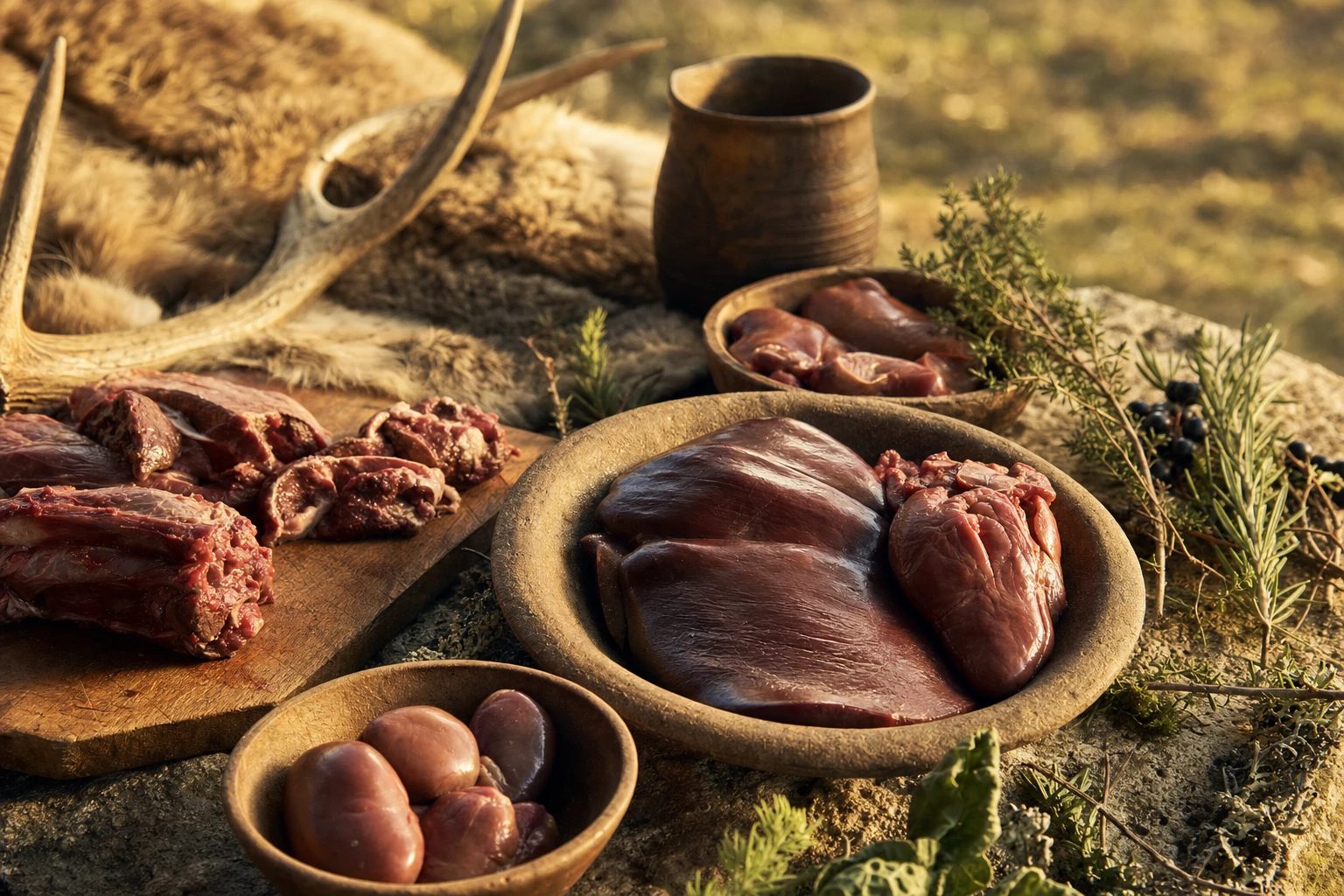
Open a Victorian-era cookbook. Skip past the recipes for boiled vegetables and roasted joints. Look for offal. Liver pâtés, kidney pies, oxtail stews, bone marrow on toast, tongue, hearts, sweetbreads. Every culture, every era, every population that had access to organs ate them. Not as a last resort. As the most prized parts of the animal.
By Niall Kiddle, Founder, Organised

Reviewed by Pedro Rodrigues, Agronomist (farming and sourcing only) ·
7 min read · Published · Updated · 2 cited sources
Makers of the Organised Daily blend, a grass-fed beef organ supplement from regenerative UK farms
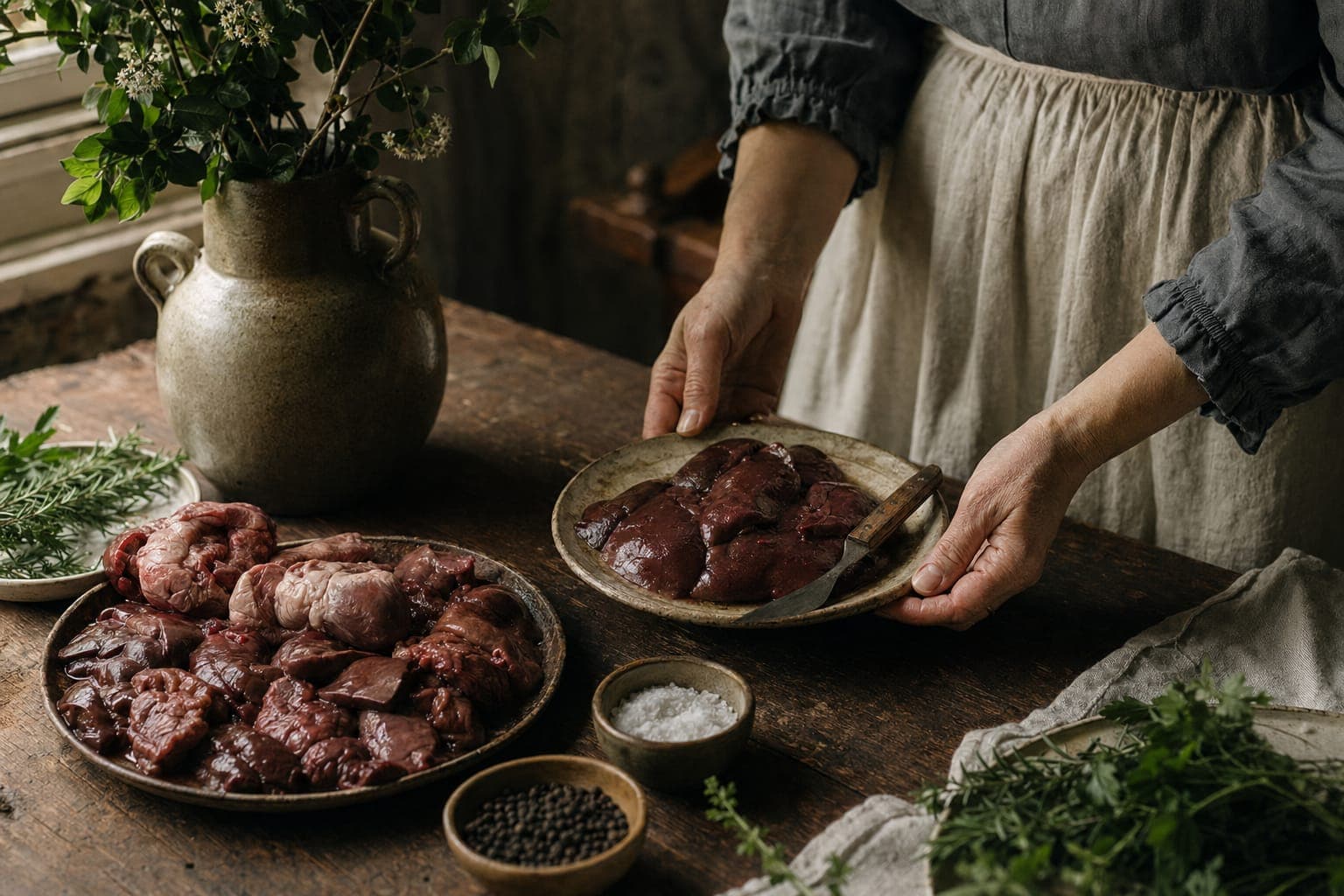
Understanding how organ meats were eaten throughout history isn't just nostalgia. It's a reminder that what we're told is waste was once valued so highly that commoners fought for access to it and the wealthy competed for the finest preparations.
What hunter-gatherers actually valued
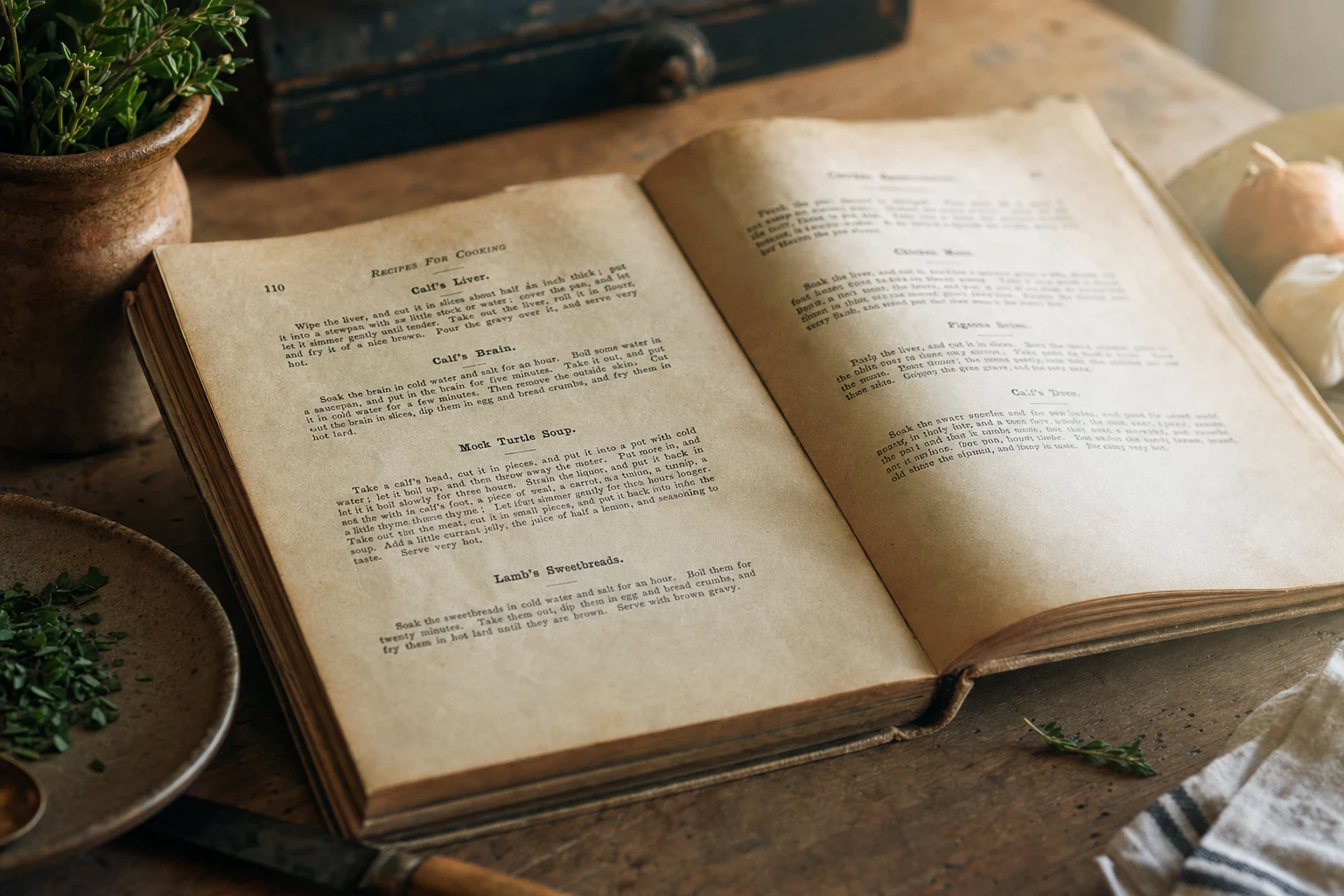
Modern mythology suggests that ancestral hunters ate primarily muscle meat because that's what they could get. The truth is more complex. When a hunter killed a large animal, the organs were often distributed first; ethnographic and archaeological accounts of hunter-gatherer butchery describe organs such as the liver, kidneys, marrow and tongue being prioritised, with fat-rich tissues sought specifically to avoid "rabbit-starvation" (protein-only) effects.1
Archaeological evidence shows this. Butchering patterns from ancient kill sites reveal that organs were processed separately from muscle meat. They were treated with care. They were preserved and transported. This wasn't waste or accident. This was deliberate prioritisation.
Indigenous populations across Australia, Africa, the Arctic, and the Americas followed similar patterns: ethnographic accounts of the Hadza, for example, describe hunters eating the kidney, heart and liver of large game first, before transporting the carcass back to camp.1
Many ancestral cultures had oral traditions about which organs healed which ailments. Liver for blood health. Kidneys for the kidneys. Heart for the heart. Eyes for vision. Bone for bone. Whether or not the specifics were accurate, the underlying recognition was consistent: organs healed. Organs restored. Organs were medicine.
Victorian and Edwardian organ culture
In the Victorian and Edwardian eras, offal was everywhere on the dinner table. The poor ate organs because meat was rationed and organs made the rest of the animal affordable. But the wealthy ate organs because they were valued, because they were understood as superior to muscle meat, and because skill in preparing them was a mark of culinary sophistication.
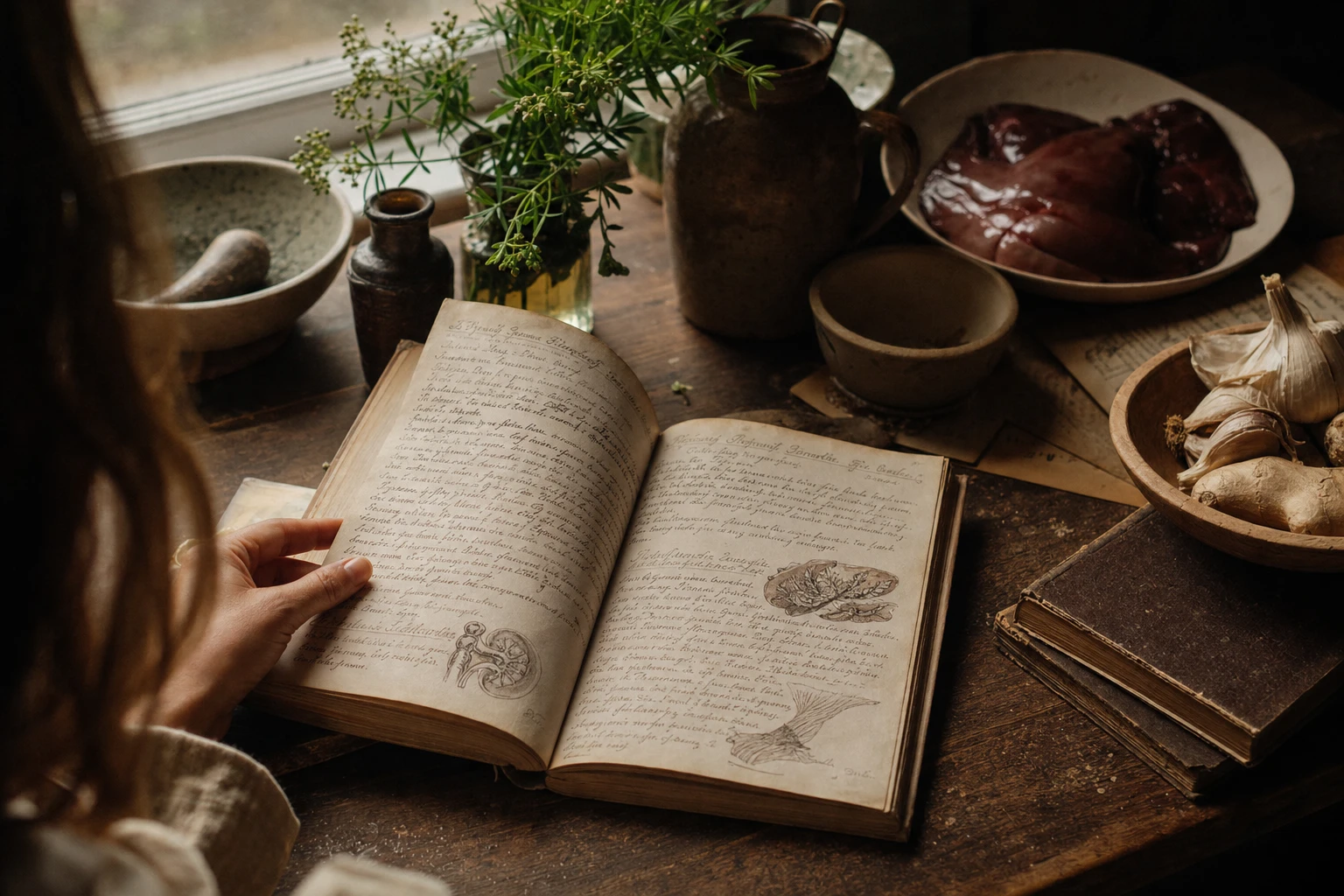
Mrs Beeton's cookbook, one of the most famous guides to Victorian cooking, contains hundreds of recipes for organs. Calf liver pâté. Kidney pudding. Oxtail soup. Tongue with sauce. Bone marrow on toast. Tripe curry. These weren't humble foods. These were dishes that appeared on refined tables, in fine houses, cooked with care and skill.
The recipes themselves reveal knowledge. Liver was cooked rare or briefly, never overcooked, because heat destroys its delicate properties. Kidneys were soaked before cooking to remove flavour compounds. Tripe was long-cooked to develop richness. Bone marrow was reverently extracted and spread on warm toast. The techniques show deep understanding of how to prepare these foods to maximise both nutrition and palatability.
When meat rationing occurred during World War I, organs were protected and made available. They were understood as essential to national health. Children were given liver. Pregnant women were given organs. The sick were given bone broth made from bones and organs. This wasn't sentiment. This was nutritional knowledge embedded in policy.
Organs in traditional medicine systems
Traditional Chinese medicine has prescribed organs for thousands of years. Liver to support the liver. Kidney to support the kidney. Heart to calm the spirit. These prescriptions weren't based on microscopic examination of nutrient content, but they were based on detailed observation. People who ate organs recovered from illness faster. Their energy was higher. Their reproductive function was better. The connection was obvious even without biochemistry to explain it.
Ayurvedic medicine similarly prescribed organs. In Western herbalism, organs were recommended for recovery after blood loss, for infertility, for weakness. Naturopathic practitioners recommended organ meats to their patients. The modern idea that organs are optional is genuinely novel. For centuries, practitioners across different traditions prescribed them with confidence.
Traditional cultures understood the concept of like cures like. If your heart was weak, eat heart. If your liver was sluggish, eat liver. If your bones were brittle, eat bone marrow and bone. This isn't mysticism. This is accurate observation. Organs contain the nutrients that tissue needs to function and repair. Eating heart provides the exact molecules heart tissue needs. The principle is biochemically sound.
WWII rationing and organ importance
During World War II, the UK Ministry of Food, under Lord Woolton, designed rationing around national nutrition needs. Offal was largely off-ration, and special allowances such as cod liver oil, extra milk and orange juice were issued to pregnant and nursing women, infants, and invalids.2
Liver was given to pregnant women and nursing mothers. Kidneys and sweetbreads were distributed to the elderly and the sick. Children received liver regularly as part of school feeding programmes. Bone was encouraged for soup. Tripe and other organ meats were standard rations.
The rationing data is telling. Organisations that could maximise nutrition whilst minimising calorie expenditure prioritised organs. They didn't have time for sentimentality. They had people to feed and limited calories to do it with. Organs were the answer.
Post-war, as rationing ended and abundance became possible, organ consumption declined. It wasn't that organs became less nutritious. It was that muscle meat became cheap and culturally prestigious. The cultural association changed. Organs became associated with poverty and rationing rather than nourishment and tradition. The knowledge was lost in a single generation.
Get ingredient guides like this, free
Two short reads a week on the ingredients that matter and how to actually use them.
By signing up you agree to receive emails from us. No spam, unsubscribe anytime.
How organs were prepared and preserved
Organs are more perishable than muscle meat. In the pre-refrigeration era, this meant they had to be processed quickly. Livers became pâtés. Kidneys became potted meats. Organs were cooked into broths and stocks. They were salted and dried. They were preserved in fat, what the French called rillettes. These preservation methods aren't arbitrary. They're solutions to the problem of keeping organs fresh.
The development of these preparations shows deep knowledge. Liver was made into pâté because cooking liver releases its delicate fats and proteins, and packing it in additional fat preserves it and develops its flavour. Kidneys were potted in the same way. Bone marrow was rendered and stored. These preparations, far from being crude ways to preserve waste, represent sophisticated culinary technique that maximised both nutrition and palatability.
Many of these preparations are now luxury foods. Pâté costs fifteen to twenty pounds per kilogram. It's served in fine restaurants. Yet it's made from liver, which still costs only five to eight pounds per kilogram. The markup reflects that pâté is labour-intensive. But it also reflects that the Victorian and Edwardian understanding of the value of organs has never fully disappeared. Even now, those who know still value them.

1 of 9
Daily blend
100,000+ thriving families4.9 on Trustpilot
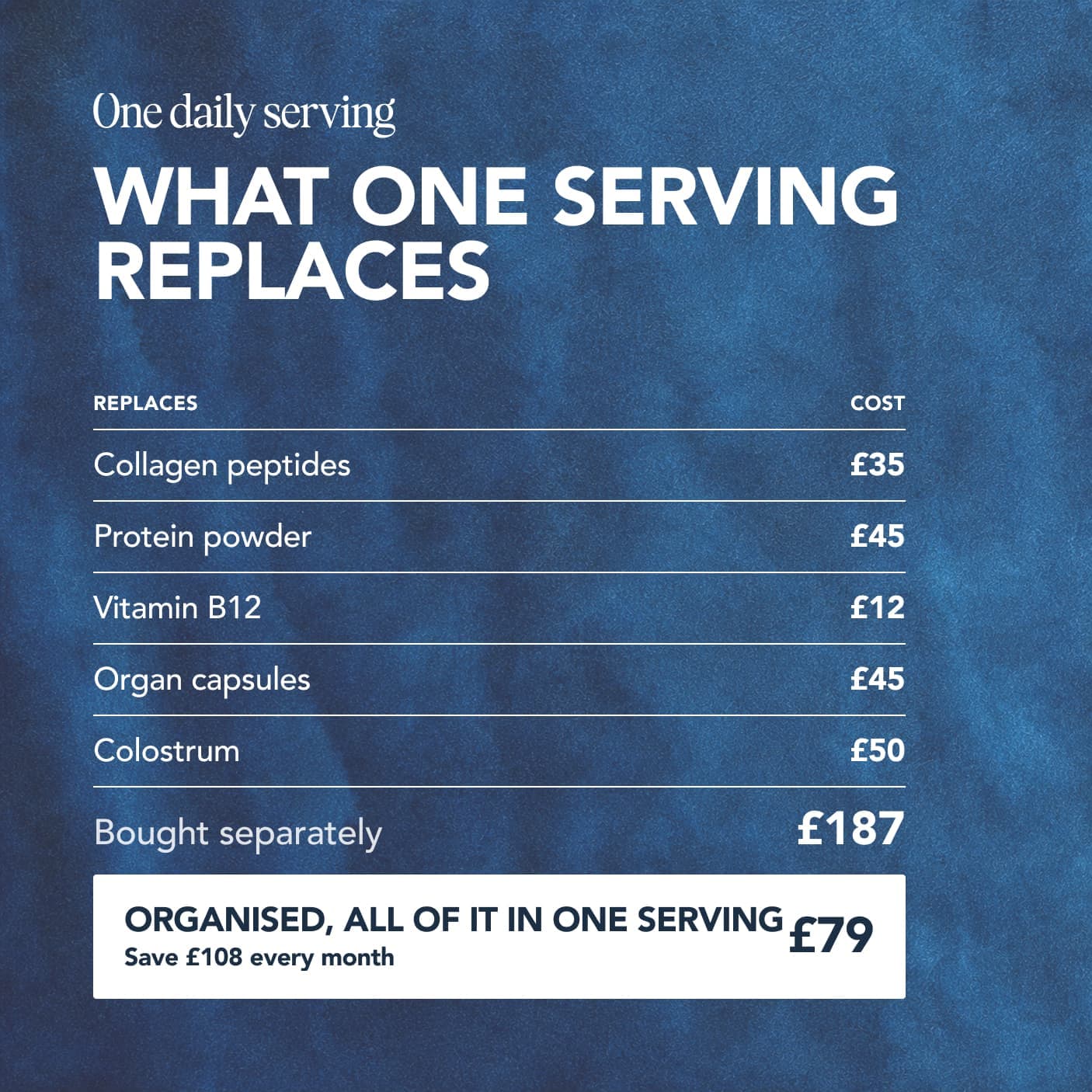
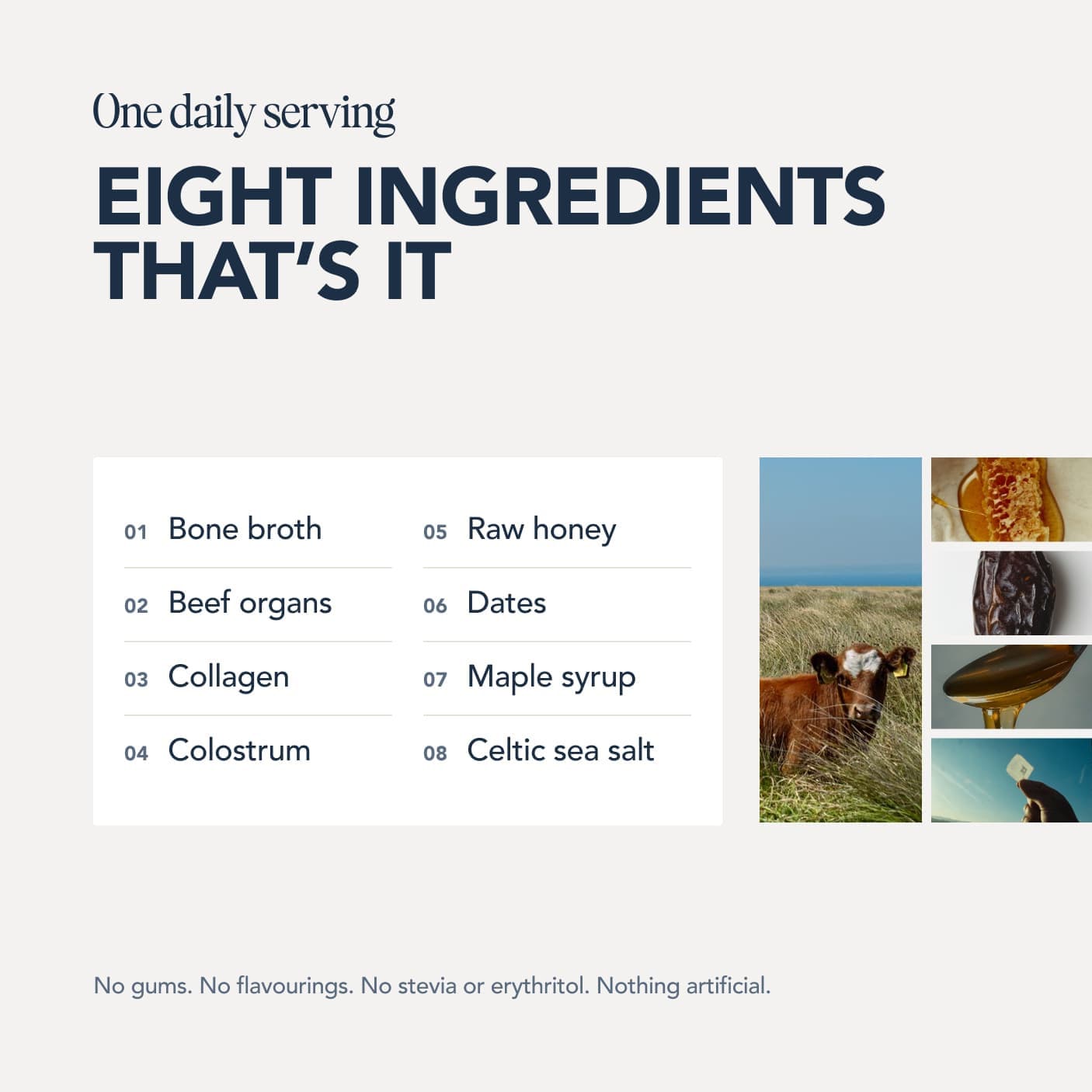
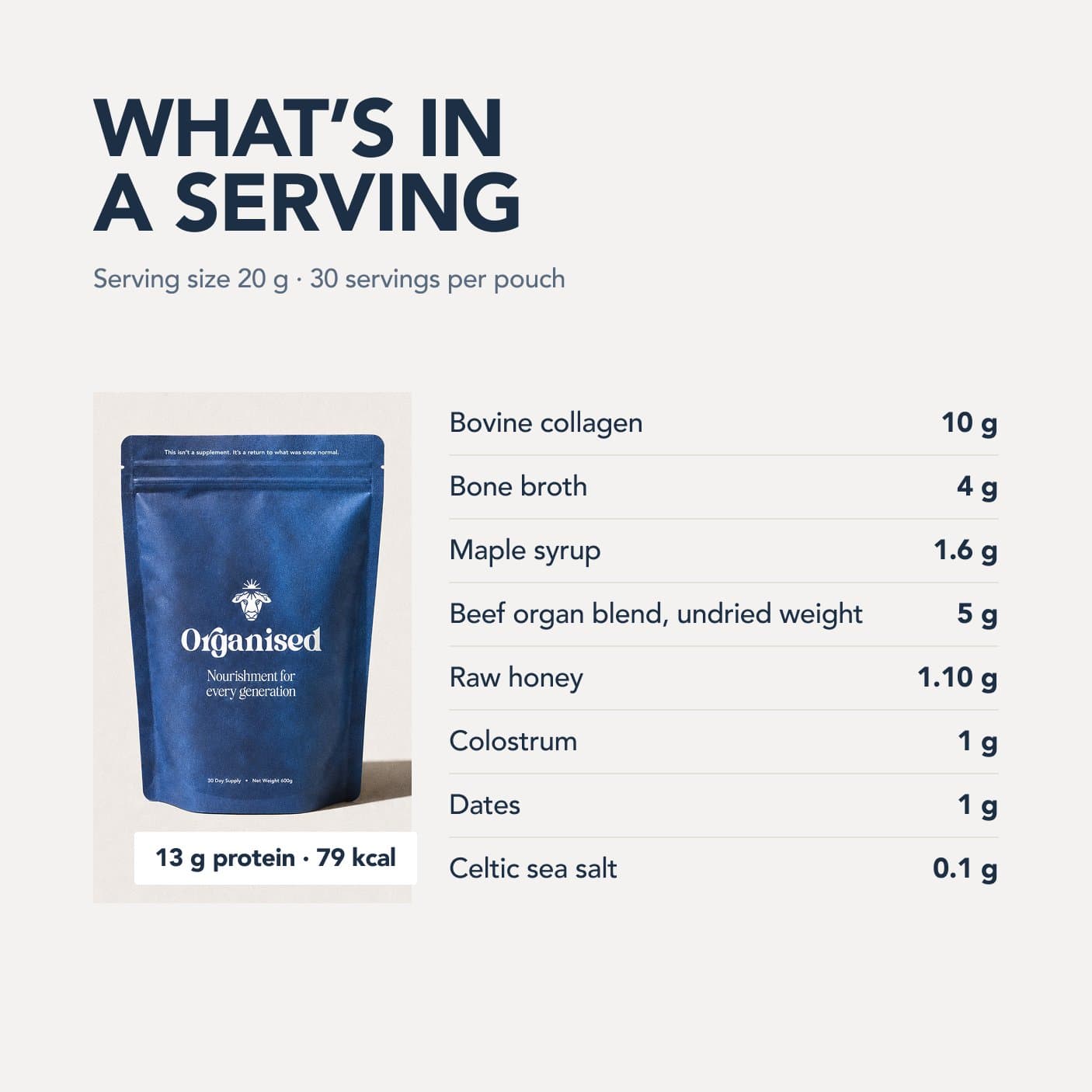
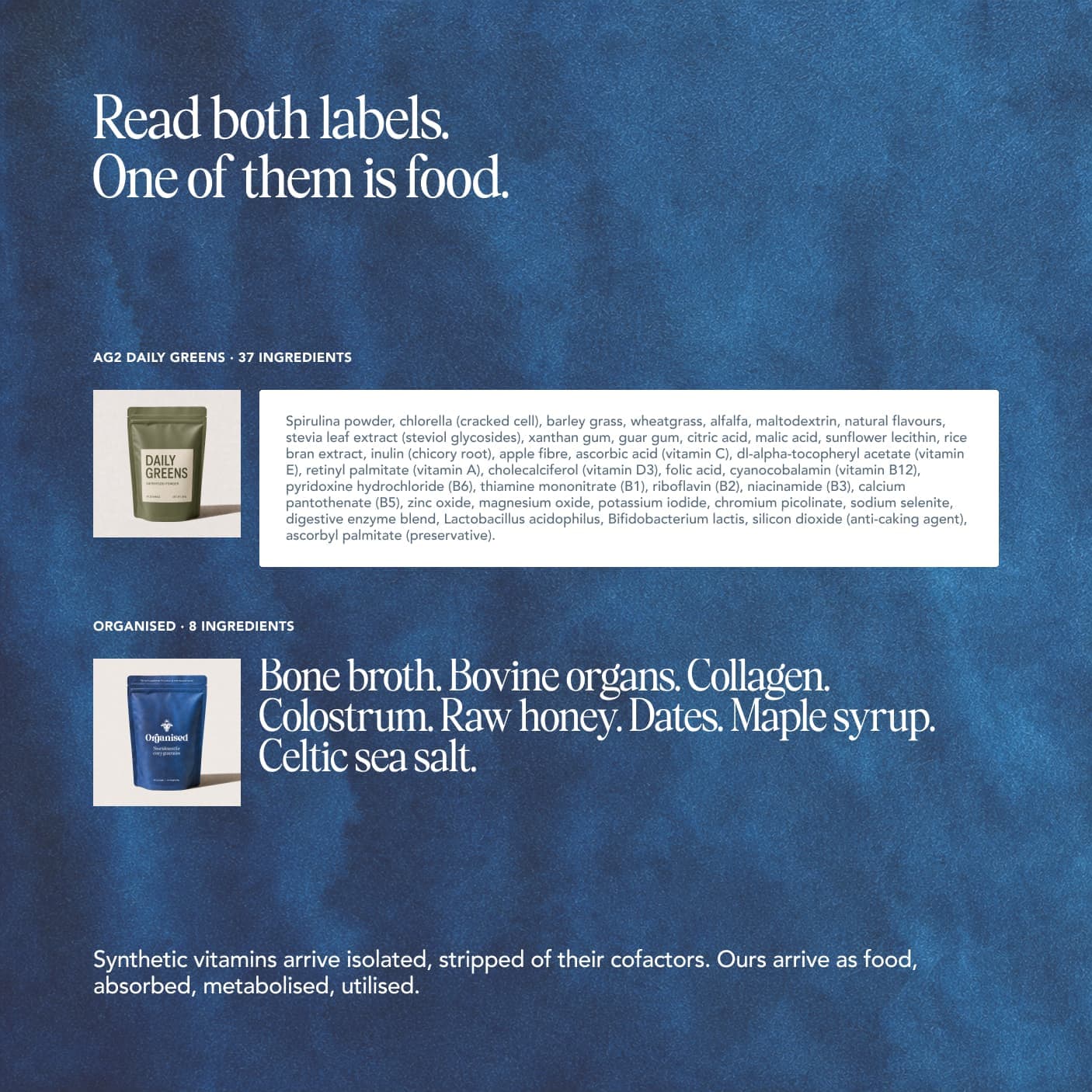
Eight real ingredients built around grass-fed beef organs, collagen and colostrum. Nothing synthetic added.
Free with your first order, worth £38. Plus £10 off the pouch with a subscription.

Free UK shipping · Made in England · 100 day money back guarantee on your first pouch · Skip, pause or cancel anytime
The nutrient knowledge without the science
Ancestral cultures didn't have blood tests or biochemical analysis. But they had something equally valuable: generations of observation. They observed what happened when people ate organs. Energy improved. Fertility improved. Wounds healed faster. Mental clarity increased. The cultural practices that developed reflected this observation.
The idea that organ meats are superior isn't a modern reinvention. It's a return to knowledge that was embedded in every culture, in every cookbook, in every traditional medicine system. The modern orthodoxy that muscle meat is the standard and organs are optional is actually the aberration. The historical norm was organs first, organs as the most valuable parts, organs as medicine.
Pregnancy and nursing were the times when organs were most strongly prescribed. Pregnant women in traditional cultures were given liver regularly. Why? Modern science explains: the folate, the choline, the iron, the B vitamins, all concentrated in liver, all essential for fetal development. But the traditional knowledge didn't need the biochemistry. It needed only the observation that pregnancies went better when organs were eaten.
Why we abandoned the practice
The abandonment of organ eating wasn't gradual. It was rapid, coinciding with post-war prosperity and the availability of cheap muscle meat. Suddenly, eating organs became associated with poverty. The cultural narrative flipped. Organs were waste. Organs were for the poor. Organs were for those who couldn't afford the good stuff.
Marketing played a role. The livestock industry wanted to sell muscle meat, which is what most of the animal is. Organs were an awkward side product. The cultural shift made organs easy to discourage. A generation grew up without eating organs, without learning the recipes, without the cultural knowledge of how to prepare them. By the time the nutritional science caught up and validated what every traditional culture had always known, the knowledge was nearly lost.
Now we're relearning what was forgotten in just sixty years. We're rediscovering that liver is the most nutrient-dense food on the planet. That kidneys contain more nutrients per kilogram than any plant food. That bone marrow contains compounds that support joint health. That tongue is tender, flavourful, and extraordinarily nutritious.
The bottom line
Every culture that had access to organs ate them. Not because they had no other choice, but because they understood them to be valuable. The specific knowledge might have been lost in the narrative, but the practice itself is ancient and universal. What we're doing now, returning to organs, isn't trendy. It's ancestral. It's what humans always did when they could. The only aberration was the sixty-year pause.
References
Every source below was checked on 27 August 2026. Each PubMed, PMC and DOI identifier was resolved against NCBI or Crossref, and what it opens is printed under the citation, so you can see the link goes where the citation says without leaving the page. Where a citation and its identifier disagreed, the citation was corrected to the record or the reference was deleted along with the sentence marker that pointed at it, and where the resolved paper turned out not to support the sentence, the sentence was cut back to what it does support. Borrowed authority is worse than none, because it looks like rigour.
- Cordain L, Eaton SB, Miller JB, Mann N, Hill K. The paradoxical nature of hunter-gatherer diets: meat-based, yet non-atherogenic. Eur J Clin Nutr. 2002. https://pubmed.ncbi.nlm.nih.gov/11965522/Checked 27 August 2026: PMID 11965522 opens Cordain L, Eaton SB, Miller JB et al, The paradoxical nature of hunter-gatherer diets: meat-based, yet non-atherogenic. Eur J Clin Nutr 2002;56 Suppl 1:S42-52. PubMed indexes it as: Historical Article, Review.
- Imperial War Museums / UK National Archives. Rationing in the United Kingdom during the Second World War. See also: BGS, "As We Once Were: Wartime Rationing." https://www.bgs.org.uk/resources/as-we-once-were-wartime-rationing
Who wrote and reviewed this guide
Niall Kiddle
Author · Founder, Organised
Niall is the founder of Organised. He started the company in 2024 after fixing his own health the slow way: in 2022 he swapped a cupboard of synthetic supplements for real food, raw milk, organ meats, bone broth and honey, and felt the difference within months.
Areas of expertise: Ancestral nutrition, Organ meats, Whole-food supplementation, Gut health, Regenerative sourcing
Read Niall's full profile
Pedro Rodrigues
Reviewer · Agronomist (farming and sourcing only)
Pedro is the agronomist Organised works with on farming and sourcing. His job on the guides is to keep the science honest: he reviews what we publish about soil health, regenerative agriculture, grazing and the way food is actually produced.
Areas of expertise: Regenerative agriculture, Agronomy, Soil health, Grass-fed farming, Food sourcing
Reviewed this guide on
Read Pedro's full profileMore on nutritional deep-dives
View all- B12 from Organs vs B12 Supplements: Bioavailability Matters
- Can Adults Benefit from Colostrum? (It's Not Just for Calves)
- CoQ10 from Beef Heart vs CoQ10 Supplements: Is There a Difference?
- Honey and Gut Health: Prebiotic Properties You Might Not Know About
- Selenium in Beef Kidney: Why This Trace Mineral Is Essential
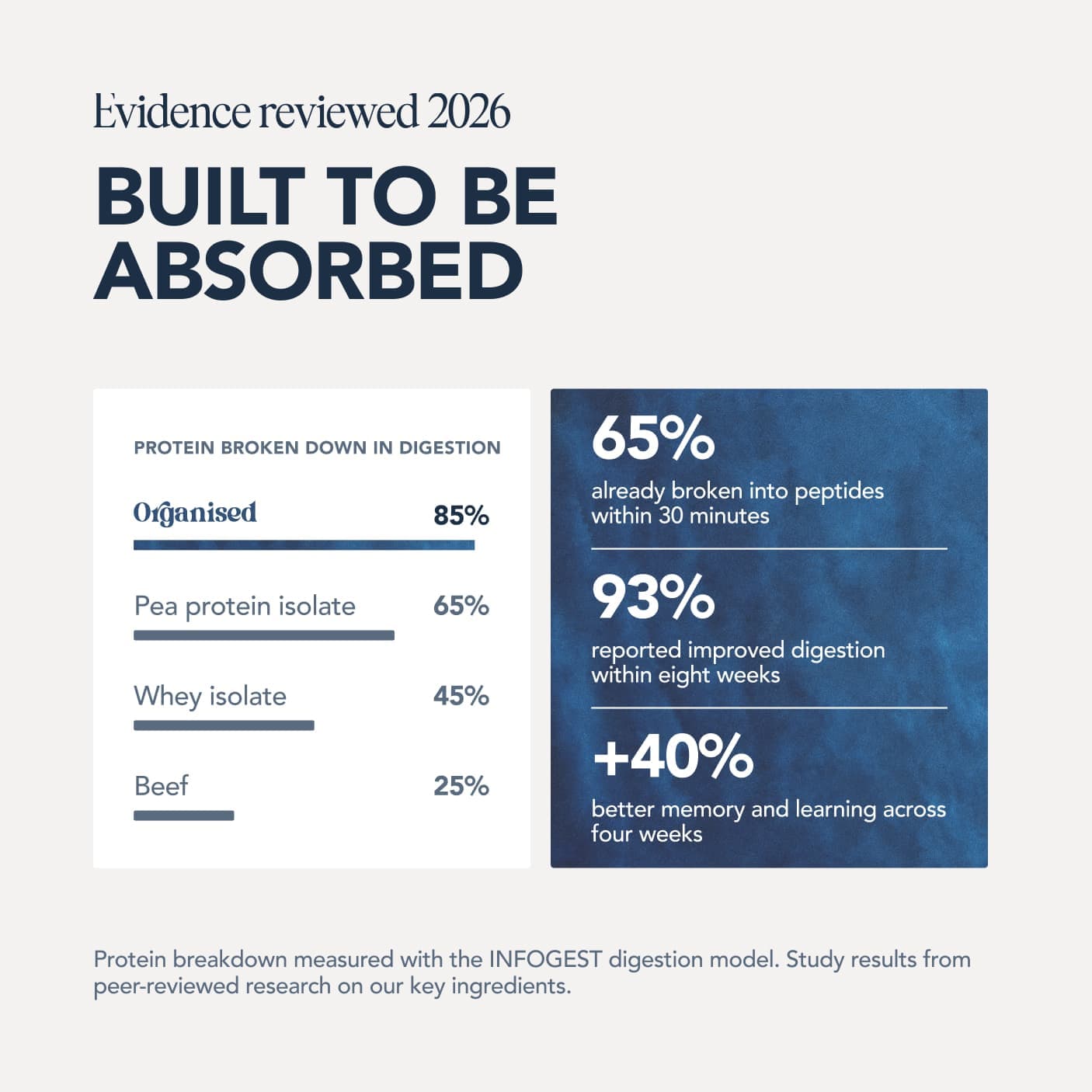
- Why Beef Protein Is Easier to Digest Than You Think
- Why We Stopped Being Afraid of Salt (And You Should Too)
Browse the guides library
All guidesKeep reading
Comparisons
Bovine Collagen vs Marine Collagen: Which Is Better?
Compare bovine vs marine collagen on amino acid profiles, sustainability, and cost to find which is better for your skin, joints, and gut. A clear breakdown.
Ingredients
Why We Sweeten with Honey Instead of Stevia
Wondering about honey vs stevia? Research links stevia to gut microbiome disruption, while raw honey feeds it. Here is why we choose honey, and you might too.
Ingredients
How Much Vitamin A Is in Beef Liver? (And Is It Too Much?)
Find out how much vitamin A (retinol) is in beef liver, whether you can take too much, and what the research shows about safe amounts for everyday eating.
Real food, made effortless
Try the organ blendA few ways to use it
All recipes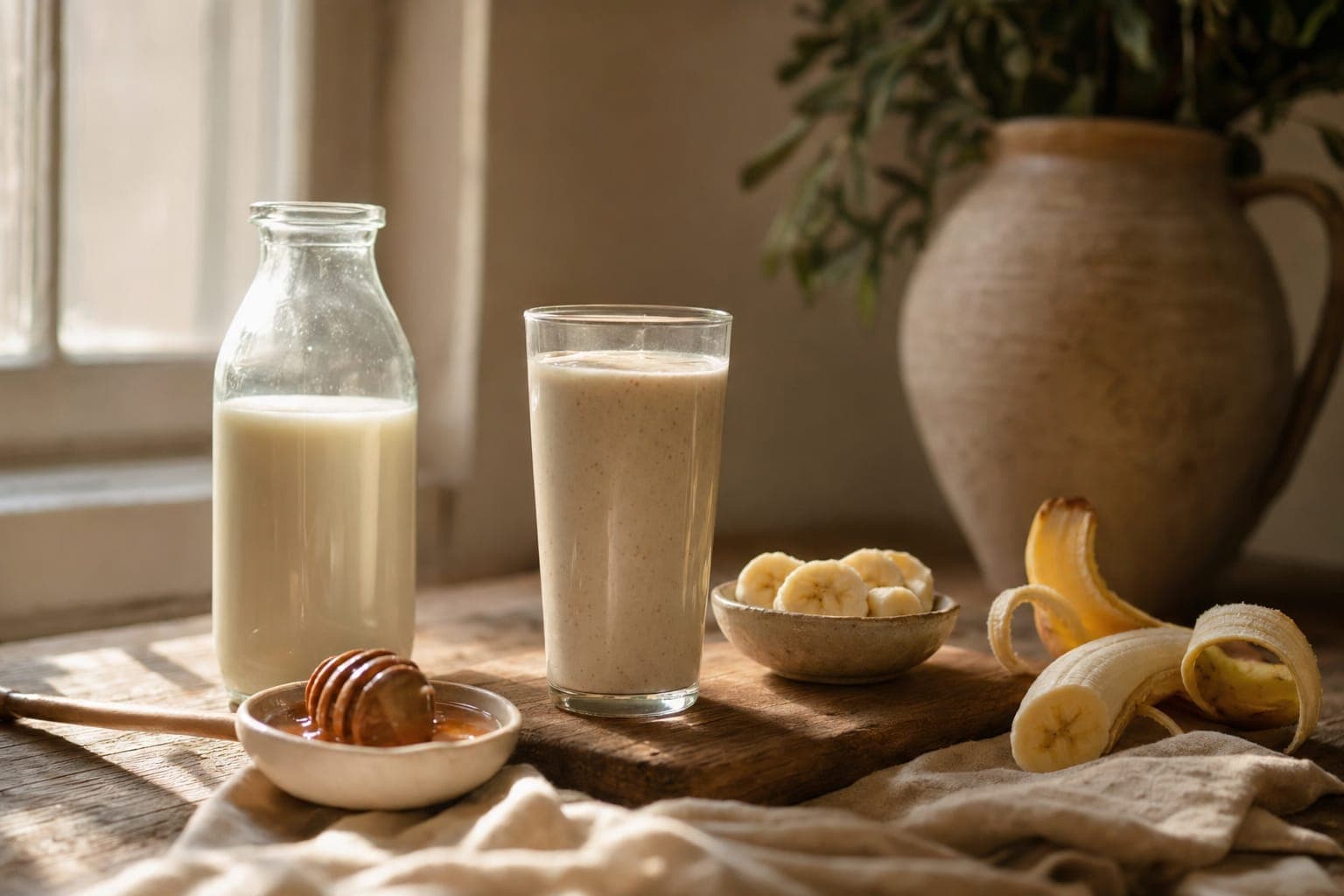
The Perfect Organised Morning Shake: Our Favourite Recipe
Our signature morning shake: Organised, raw milk, banana, honey. Simple, nourishing, and optimised for an empty stomach.
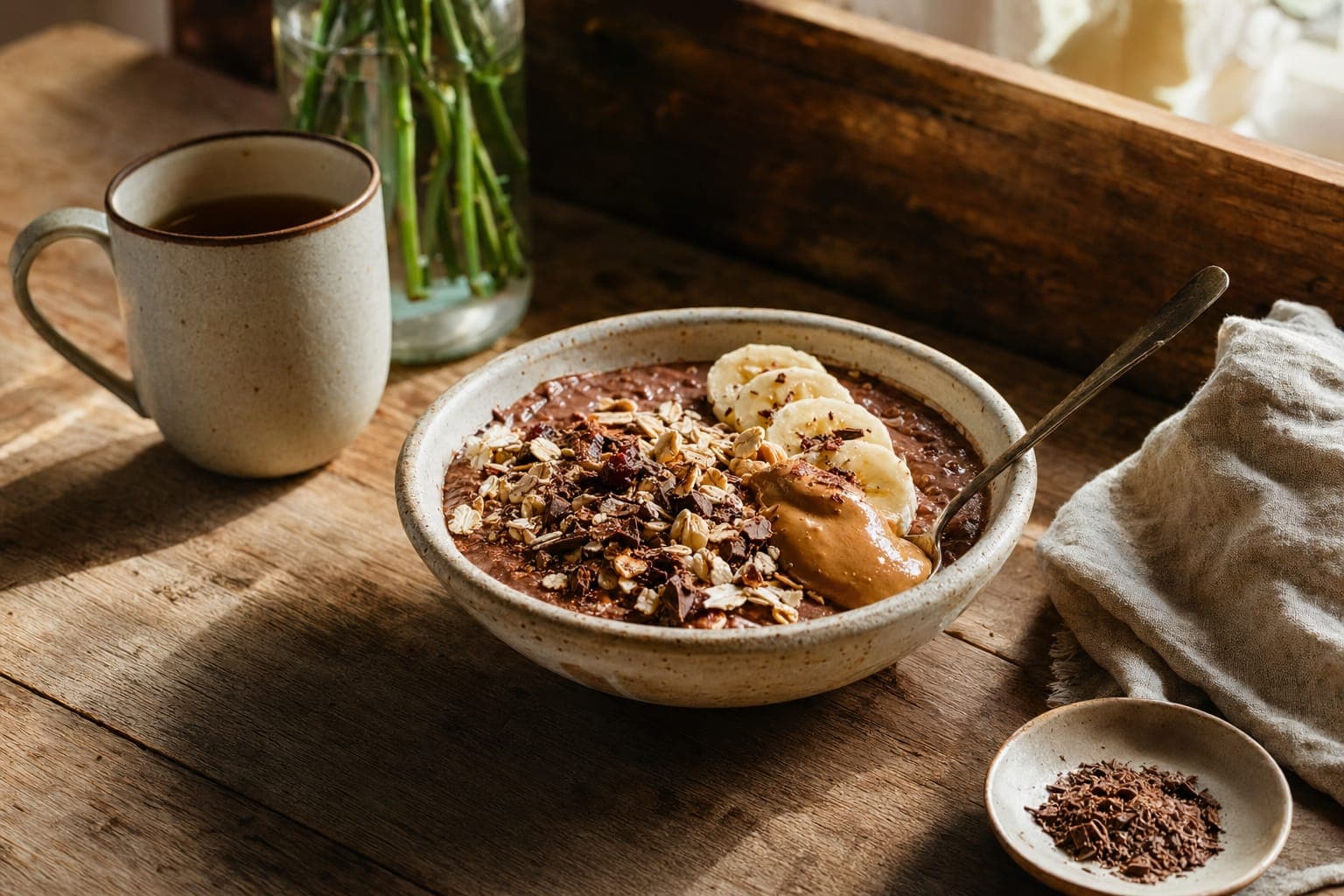
10 Ways to Use Organised That Aren't Just a Shake
Move beyond the basic shake. Discover 10 creative ways to use Organised in smoothie bowls, oats, yoghurt, baking, and more.
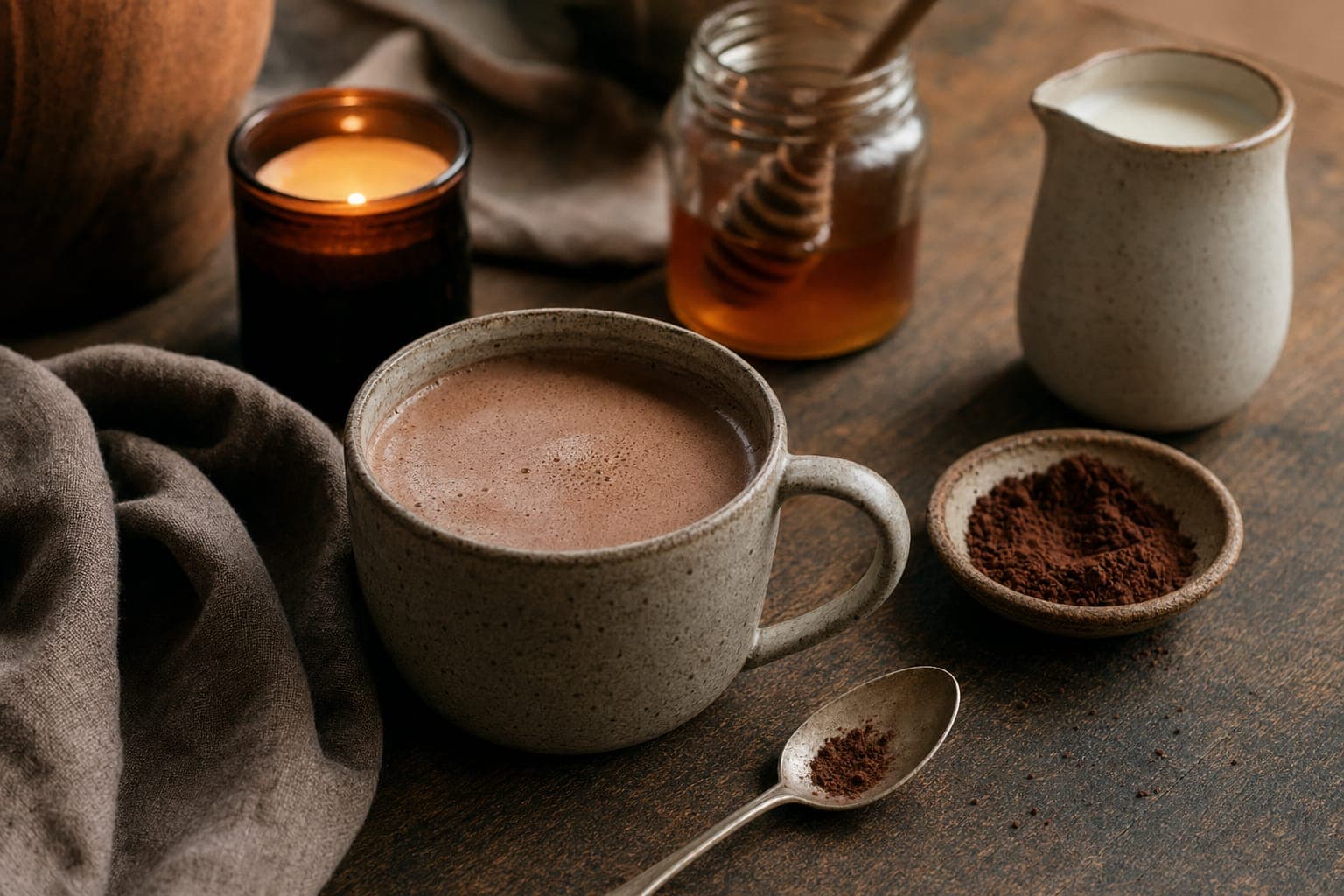
Raw Milk Hot Chocolate with Collagen
A nourishing evening hot chocolate made with raw milk, grass-fed collagen, raw cacao, and honey. A nighttime ritual that supports sleep and gut health.


 Join over 100,000+ members
Build a better food system with us
The Organised community is thousands of people choosing real food and backing the farmers who grow it, all of us trying to leave the world a little better than we found it. If that is what you care about too, you belong here.