Bone Broth from Scratch: A Step-by-Step Guide
Bone broth sits in the odd space between food and supplement. It's genuinely nourishing, gelatinous, mineral-rich, packed with collagen and glycine. But it's also fundamentally cheap to make at home, which is why shop-bought versions exist in the first place. Here's how to do it.

By Niall Kiddle, Founder, Organised

Reviewed by Pedro Rodrigues, Agronomist (farming and sourcing only) ·
7 min read · Published · Updated · 3 cited sources
Makers of the Organised Daily blend, a grass-fed beef organ supplement from regenerative UK farms
Why make it at home
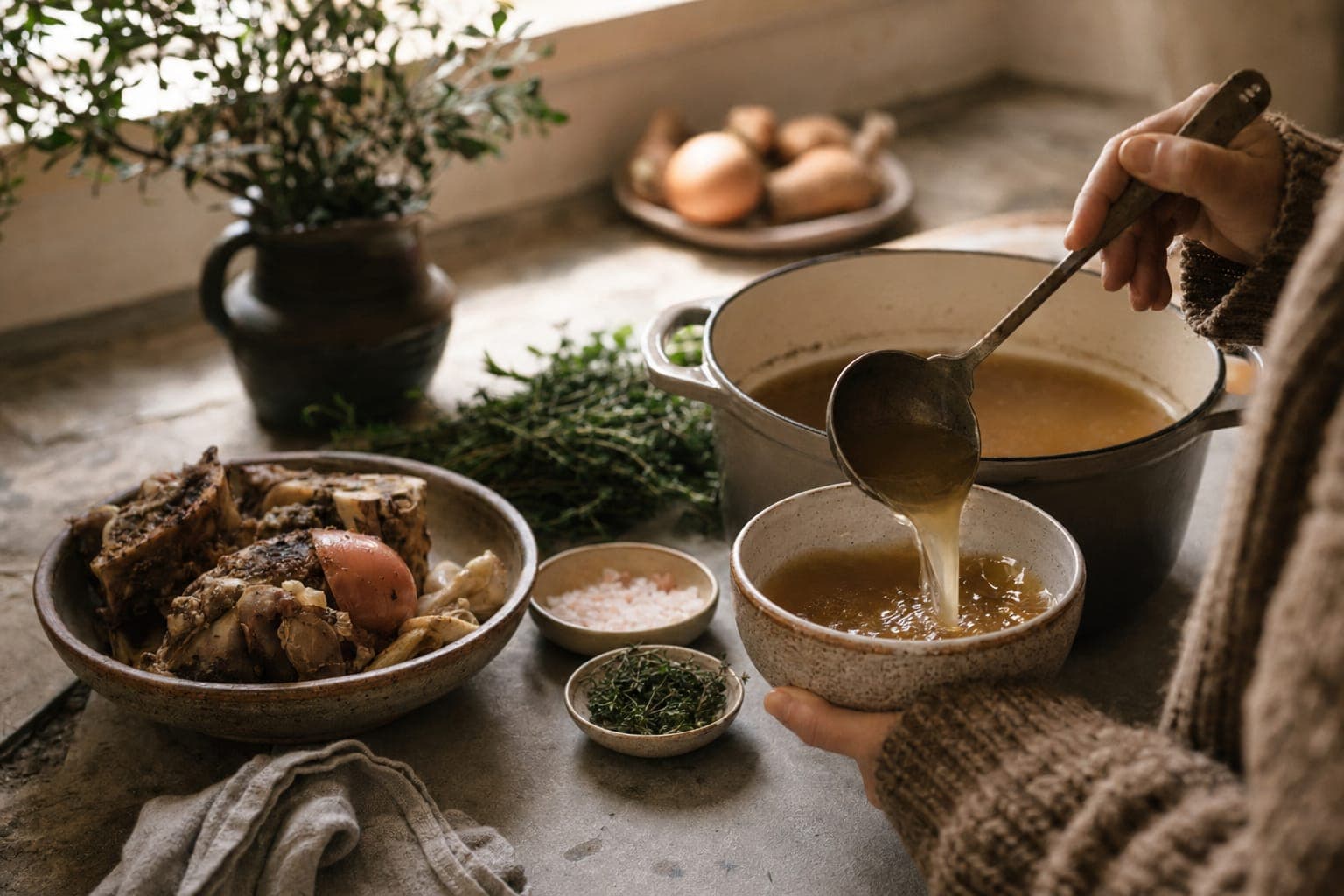
Most commercial bone broth is boiled for 8-12 hours and then filtered, which reduces it to something closer to a brown liquid than a proper broth. It contains collagen, yes, but the lengthy processing means much of the mineral content has been concentrated and then diluted again through filtering.3
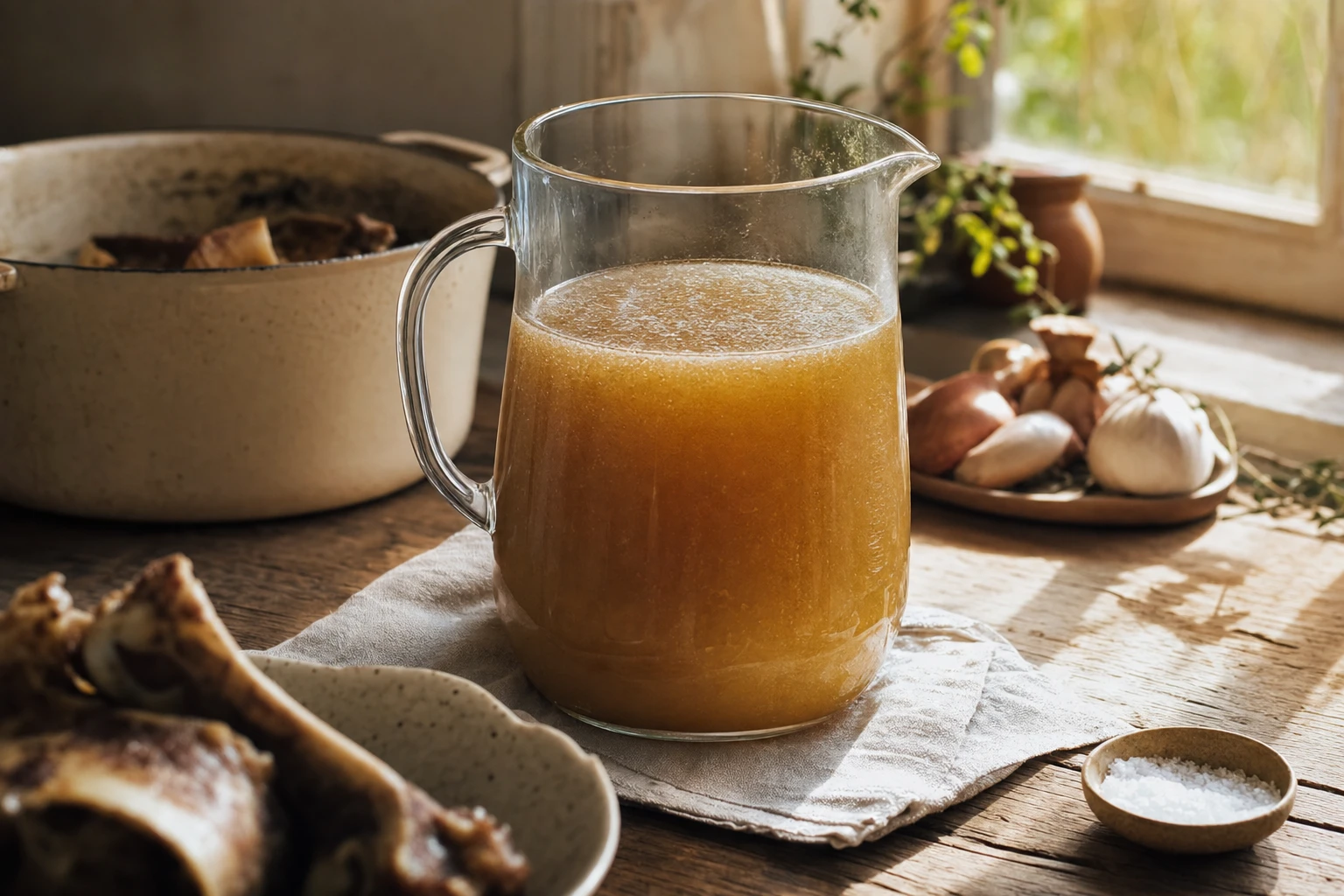
Home-made broth, cooked gently for 18-24 hours, becomes gelatinous, that wobble in a cold mug means genuine collagen content.1 You can make it to your own standards, use bones from sources you trust, and add vegetables and herbs that matter to you.
The cost of making broth at home is roughly £0.30-0.50 per litre. Shop-bought bone broth costs £5-8 per 500ml.
What bones to use
Beef bones work best. Ask a butcher for knuckle bones, marrow bones, or mixed beef bones with connective tissue still attached. They'll often give them to you free or for a few pounds per kilogram because most customers want meat, not bones.
Chicken bones work too, carcasses from roast chickens, or ask the butcher for a whole chicken carcass. The result is a lighter broth, less gelatinous, but still valuable. Pork bones and lamb bones work similarly to beef. Fish bones create fish stock, which is different but equally useful.
For maximum gelatin, use bones from animals raised on pasture. Grass-fed beef bones produce a more gelatinous broth than grain-fed equivalents. It's measurable.
The stovetop method
This is the traditional way, requiring attention but giving you full control.
- Bones: 2kg mixed beef bones (knuckle, marrow, neck)
- Water: 4-5 litres filtered or spring water
- Vegetables: 2-3 carrots (unpeeled), 2 celery stalks, 1 onion (halved)
- Herbs: handful of parsley, 2-3 bay leaves, 6-8 peppercorns
- Sea salt: teaspoon (add at the end)
- Place bones in a large pot. Cover with cold water. Bring to a boil over high heat.
- Boil for 5 minutes. This is called "blanching". A grey scum will rise to the surface.
- Drain the bones. Rinse under running water. Rinse the pot.
- Return bones to the pot. Add fresh cold water until bones are covered by 5cm. Bring to a very gentle simmer (small bubbles, not rolling).
- Add vegetables and herbs. Do not use salt yet.
- Simmer gently for 18-24 hours. Top up with water if the level drops below the bones.
- Turn off heat. Let cool until you can handle it safely. Strain through a fine sieve or cheesecloth into a large bowl or container.
- Add sea salt to taste (usually 1-2 teaspoons per litre).
- Chill in the fridge. A layer of fat will solidify on top, this is good. It protects the broth.
The key is a very gentle simmer, not a boil. Boiling emulsifies the fat and turns the broth cloudy. A gentle simmer keeps it clear and allows collagen to break down into gelatin without damaging other proteins.

The slow cooker method
This is the lazy version. It requires zero attention once started.
- Blanch bones as above and rinse thoroughly.
- Place in a slow cooker (5-6 litre capacity).
- Add cold water to cover by 5cm. Add vegetables and herbs.
- Set to low. Cook for 24 hours.
- Strain and chill as above.
Slow cookers maintain a very gentle temperature, which is ideal. The broth will be slightly less gelatinous than stovetop broth because the temperature is even lower, but it will still be excellent.
The Instant Pot method
This is the fastest version, and the pressure actually helps break down collagen efficiently.
- Blanch and rinse bones.
- Place trivet in Instant Pot. Add 1 litre water (the minimum for pressure cooking).
- Add bones, vegetables, and herbs to the pot (on the trivet).
- Seal the lid. Set to high pressure for 2 hours.
- Allow natural pressure release (takes 20-30 minutes). Do not force the pressure down.
- Carefully open. Strain and chill.
Instant Pot broth is ready in 2.5 hours start to finish. It's not quite as gelatinous as 24-hour broth, but it's genuinely useful and takes a fraction of the time.
How to store and use it
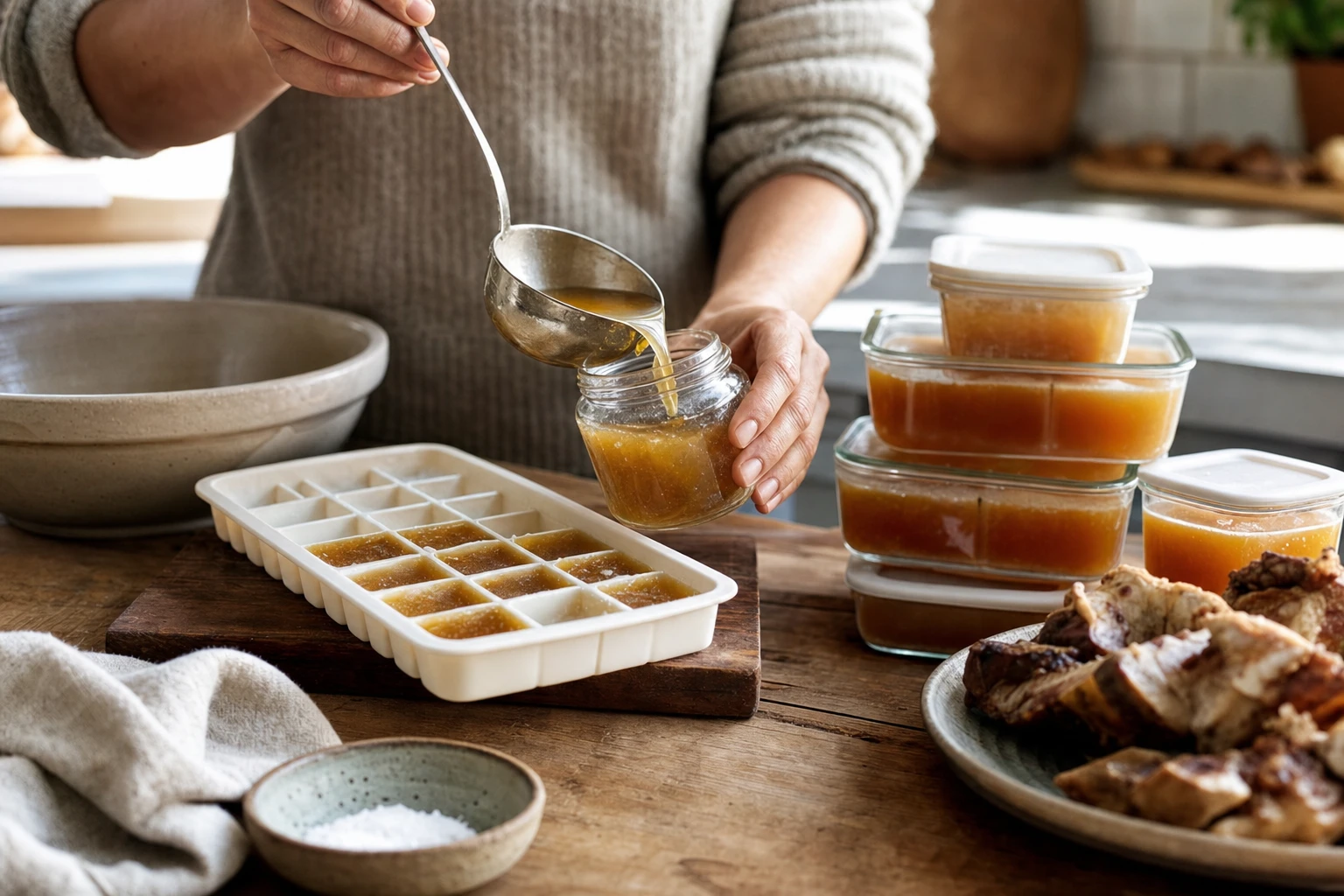
Broth keeps in the fridge for 5-7 days under that protective fat cap. Freeze it in 250ml or 500ml portions using ice cube trays, silicone muffin moulds, or glass containers. Frozen broth keeps for 3-4 months.
Use it as a base for soups. Drink it warm as a digestive tonic. Use it to cook grains like rice. Add it to sauces. The collagen supports joint health, skin, and gut lining integrity. The glycine is calming to the nervous system.2
What to expect
Fresh, homemade broth tastes rich and clean, nothing like the salty, slightly flat taste of shop-bought versions. You might notice your digestion feels calmer. Your joints might feel smoother. These changes typically take a week or two of regular consumption to become apparent.
Some people notice their skin improves. Others report better sleep. The research on collagen absorption and its effects on connective tissue is growing, but the lived experience of people drinking broth for centuries is clear: it nourishes the parts of your body that need rebuilding.
The bottom line
You can spend £40 per week on shop-bought bone broth, or you can spend £5-10 per week making it yourself. The home version is better. Make a big batch, portion it, freeze it, and you've got something genuinely nutritious on hand for months. It's one of the simplest upgrades to a whole-food kitchen.
Get recipes and routines, free
Two short reads a week of simple, nutrient-dense recipes and daily routines.
By signing up you agree to receive emails from us. No spam, unsubscribe anytime.
How long to simmer
The more time your broth spends on heat, the more collagen and minerals you extract. A minimum good broth is 12 hours. A proper deep broth is 24 to 48 hours. If you're using a slow cooker, 24 hours on low is ideal. On the stovetop with a simmer, you can go 18 to 20 hours without the pot drying out if you cover it loosely.
Some people insist on 72 hours. Honestly, the law of diminishing returns kicks in after 36 hours. You're getting more gelatin, yes, but you're also concentrating any impurities that were in the bones. A 24-hour broth, made properly, is excellent.
The smell of bone broth simmering for a day is the smell of nutrient extraction happening. Your kitchen will smell like a proper kitchen.
Troubleshooting your broth
If your broth is cloudy, that's fine. Those are collagen particles in suspension. Some people prefer to blanch the bones first (boil for five minutes, rinse, then start fresh), which gives you a clearer broth. But cloudy broth is actually more nutrient-dense, so we don't bother.
If your broth is thin and watery after straining, you didn't use enough bones or you didn't simmer long enough. Next time, use a higher bone-to-water ratio or simmer longer. You can also reduce it on the stove: bring it to a gentle simmer for two to three hours and you'll concentrate the gelatin.
What to do with your finished broth
Once cooled, bone broth should set into a wobbly gel in the fridge. That wobble is gelatin, that's the good stuff. You can drink it warm, use it as a base for soups, or add a cup to your cooking water for rice or grains. Some people add a teaspoon to their morning eggs or their evening stew.
Frozen broth keeps for months. Poured into ice cube trays, you can pull out a cube whenever you need it. This turns bone broth from a luxury into a staple in your cooking.


1 of 9
Daily blend
100,000+ thriving families4.9 on Trustpilot
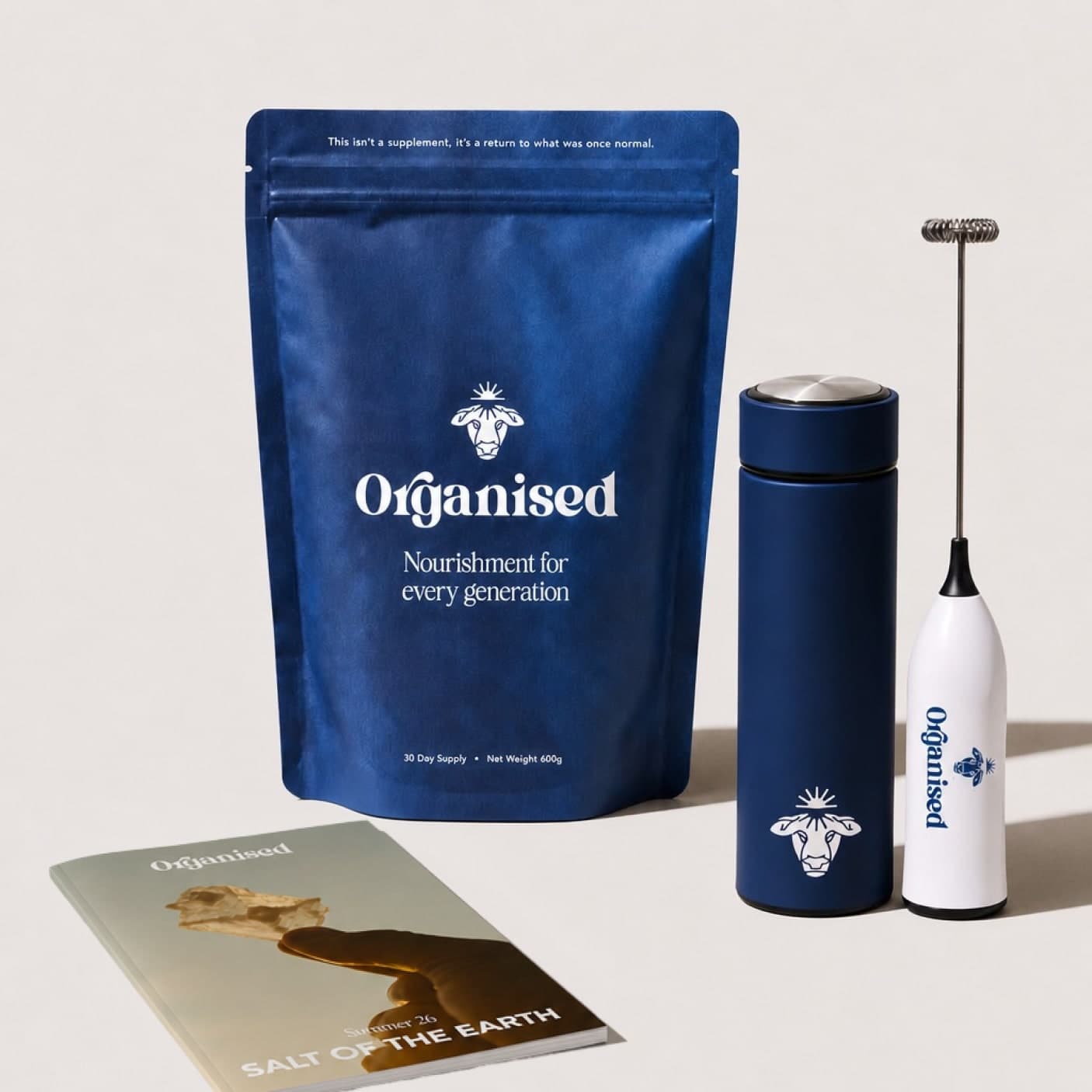
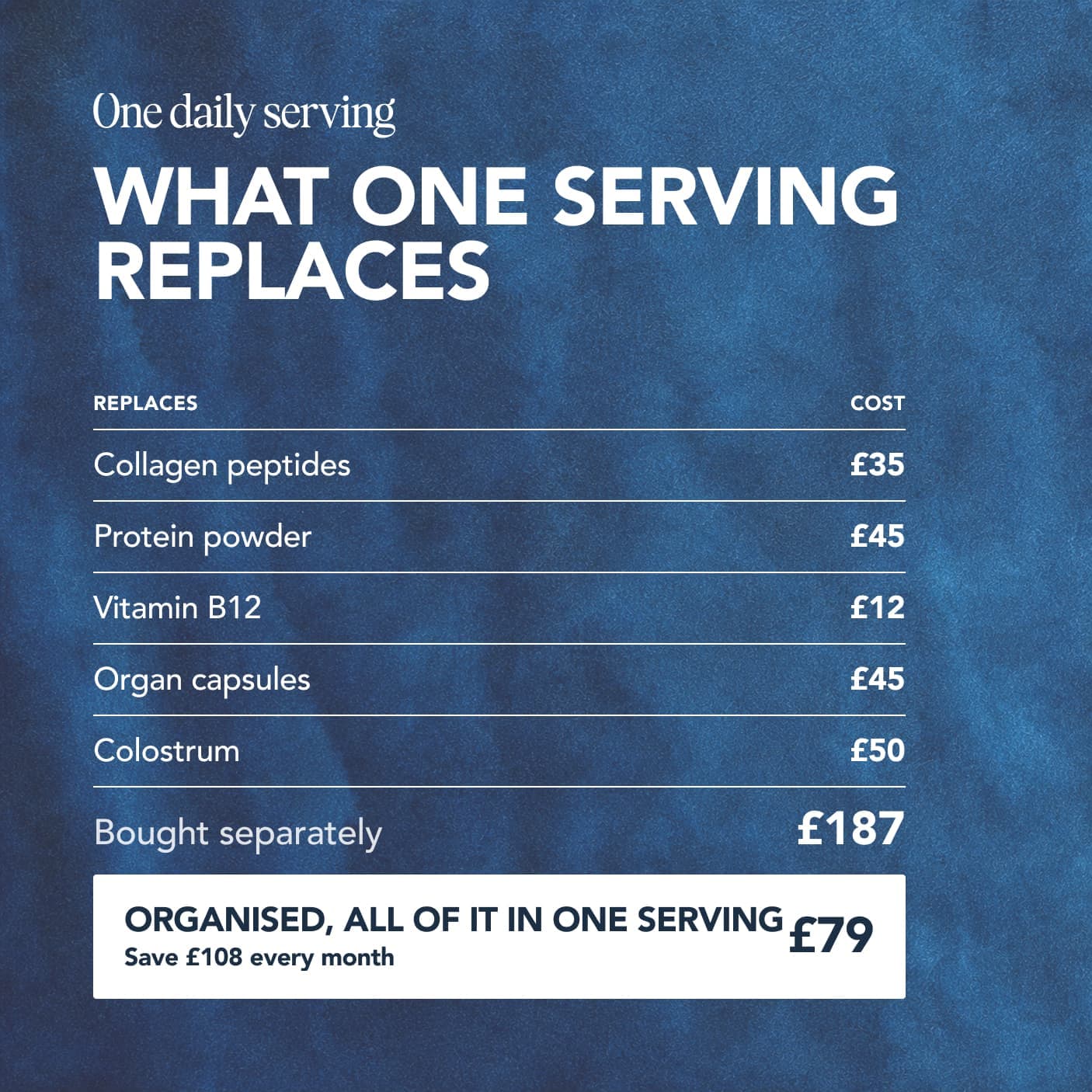
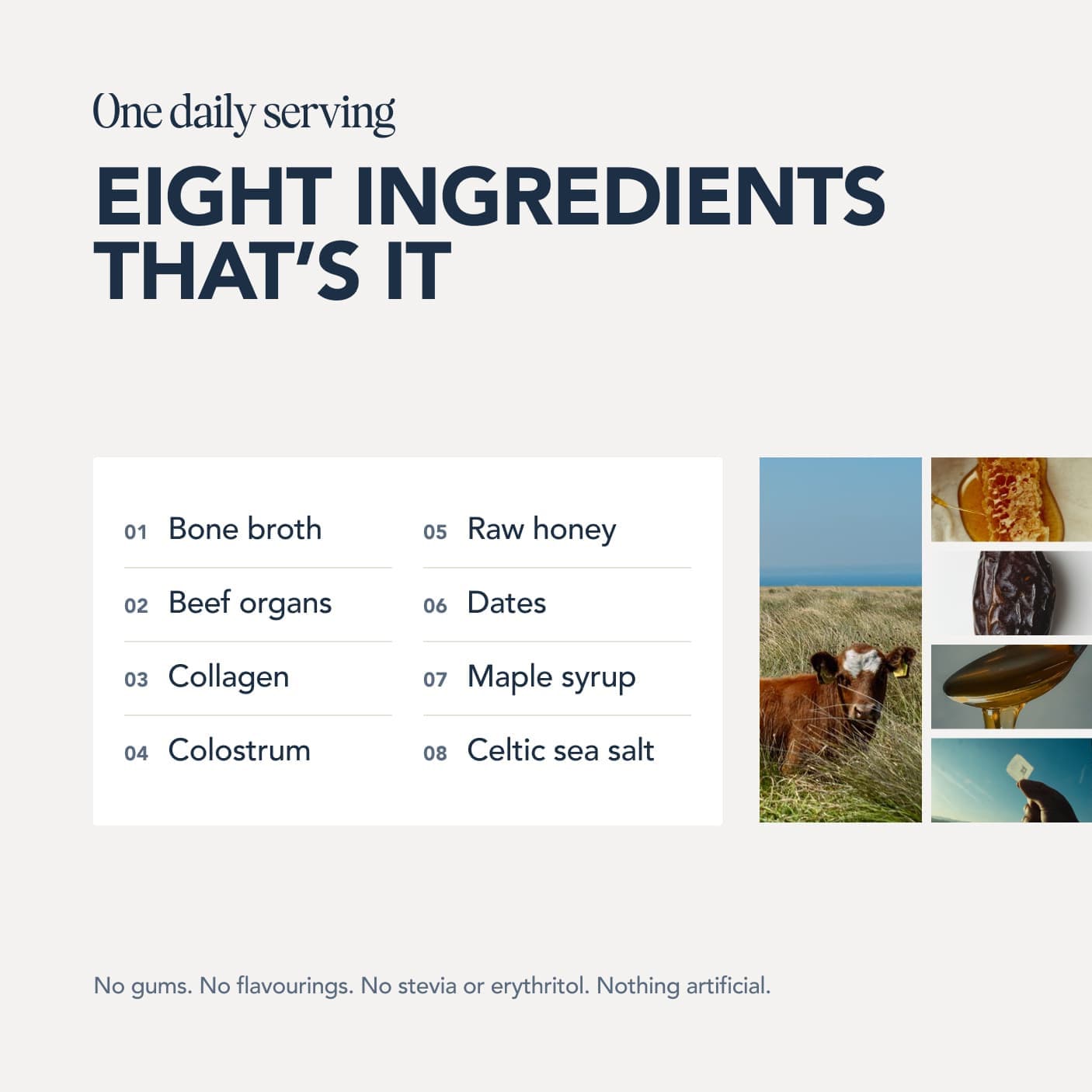
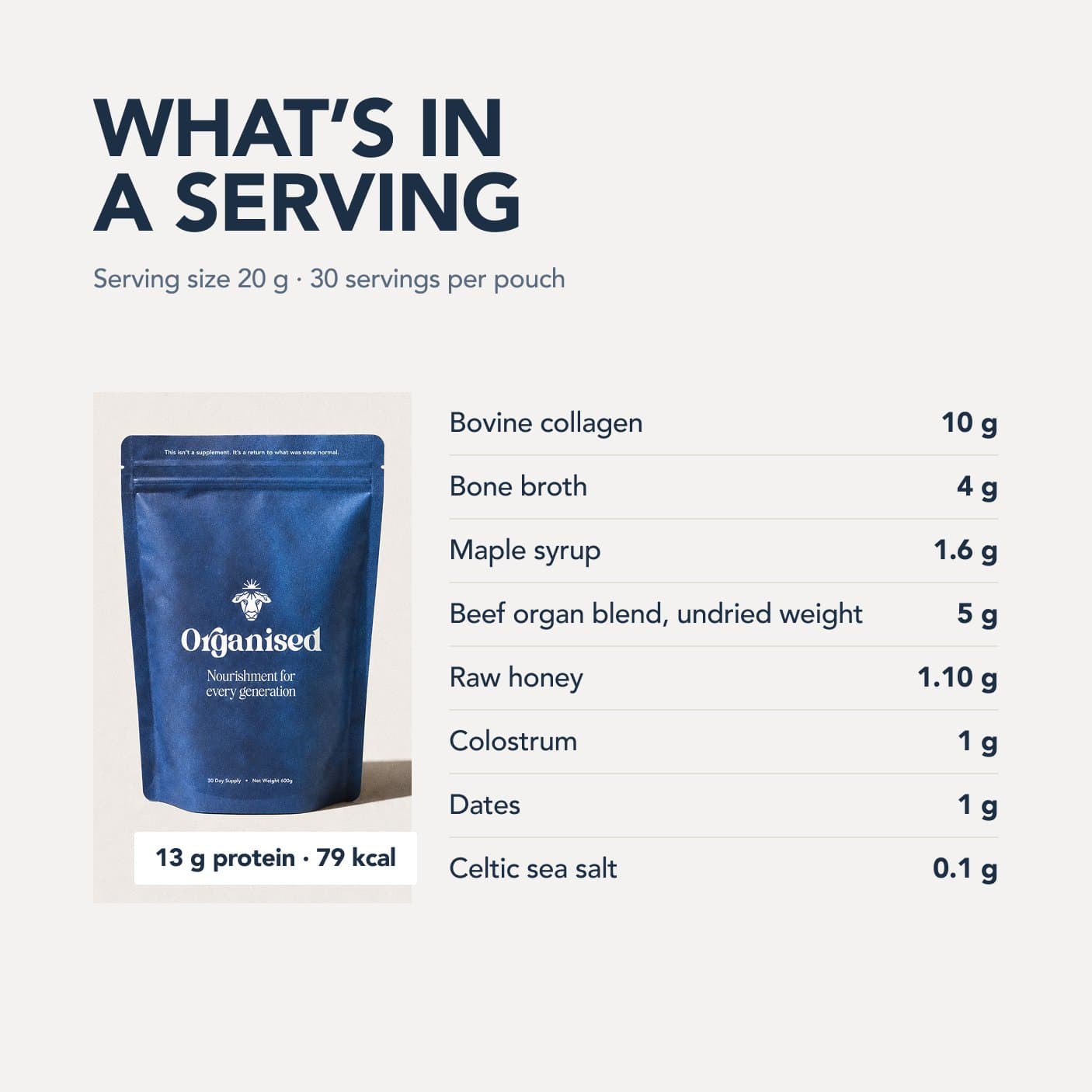
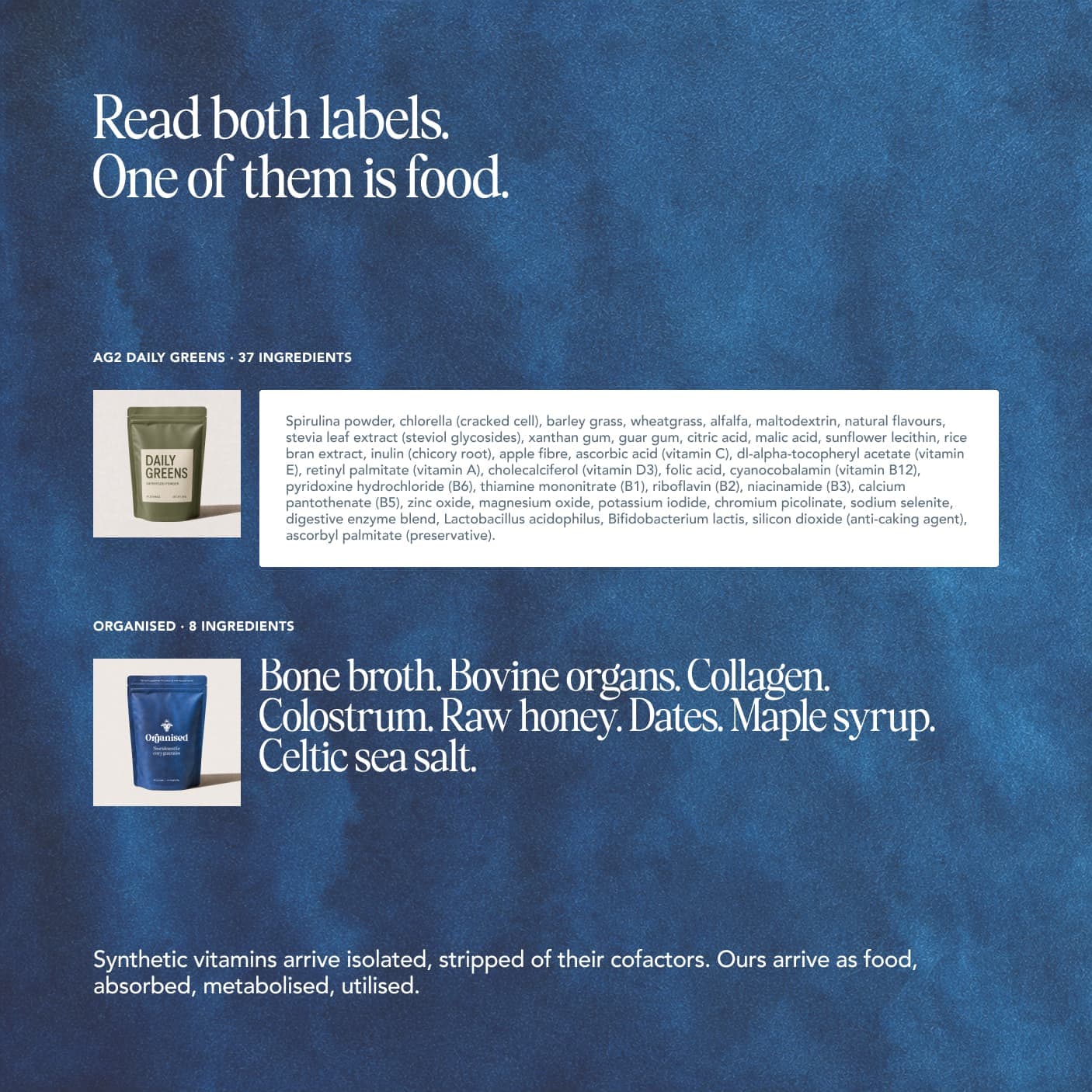
Eight real ingredients built around grass-fed beef organs, collagen and colostrum. Nothing synthetic added.
Free with your first order, worth £38. Plus £10 off the pouch with a subscription.


Free UK shipping · Made in England · 100 day money back guarantee on your first pouch · Skip, pause or cancel anytime
Instant pot method for busy people
An Instant Pot can make bone broth in 120 minutes. This is objectively not better than 24 hours on the stove, the slow gentle heating extracts more collagen, but it's infinitely better than no broth at all. If time is your limiting factor, the Instant Pot works.
Fill the pot with bones and water as you would for stovetop. Add a splash of vinegar if you want it. Close the lid, set to high pressure, 120 minutes. When done, let the pressure release naturally. Strain. The result is thinner than a true long-simmered broth but still useful and still more nutrient-dense than store-bought broth.
Imperfect broth made regularly beats perfect broth made never. Get some gelatin into your system.
Freezing and long-term storage
Properly made bone broth will keep in the fridge for up to a week. Beyond that, freeze it. Pour into ice cube trays for easy portioning, or freeze in jars for bulk storage. Frozen broth keeps for months. This turns a single batch into dozens of small meals or supplements to other dishes.
When thawing, do it slowly in the fridge or gently on the stove. Rapid temperature changes can sometimes cause the gelatin to separate, though this doesn't affect the nutritional value. A good broth, properly frozen and thawed, retains its gelatin structure and nutritional density.
Why shop-bought isn't the same
Commercially produced bone broth is heat-treated for safety, which damages some of the delicate compounds. It's also usually simmered for a standard time that suits production, not nutritional optimisation. And there's no way to know if the bones were from regenerative farms or factory farms.
Making your own is the only way to know exactly what you're getting. What bones, how long simmered, what kind of heating. You control every variable. This is why serious people make their own broth. It's not superiority, it's just certainty.
Broth in your actual diet
A cup of broth as a morning drink. A cup as an afternoon snack. Added to your cooking water for rice or grains. A base for soups. A sip before bed. These aren't fancy preparations. They're how you integrate broth into life so it's not a special thing but a normal thing. Consistency matters more than perfection.
References
Every source below was checked on 27 August 2026. Each PubMed, PMC and DOI identifier was resolved against NCBI or Crossref, and what it opens is printed under the citation, so you can see the link goes where the citation says without leaving the page. Where a citation and its identifier disagreed, the citation was corrected to the record or the reference was deleted along with the sentence marker that pointed at it, and where the resolved paper turned out not to support the sentence, the sentence was cut back to what it does support. Borrowed authority is worse than none, because it looks like rigour.
- Mar-Solis LM et al. Analysis of the Anti-Inflammatory Capacity of Bone Broth in a Murine Model of Ulcerative Colitis. Medicina (Kaunas). PMC8618064.Checked 27 August 2026: PMC8618064 opens Mar-Solís LM, Soto-Domínguez A, Rodríguez-Tovar LE et al, Analysis of the Anti-Inflammatory Capacity of Bone Broth in a Murine Model of Ulcerative Colitis. Medicina (Kaunas) 2021;57(11).The authors' own declaration, from the record: The authors declare no conflict of interest.
- Bannai M, Kawai N. New therapeutic strategy for amino acid medicine: glycine improves the quality of sleep. J Pharmacol Sci. PubMed PMID: 22293292.Checked 27 August 2026: PMID 22293292 opens Bannai M, Kawai N, New therapeutic strategy for amino acid medicine: glycine improves the quality of sleep. J Pharmacol Sci 2012;118(2):145-8. PubMed indexes it as: Review.
- Li P, Wu G. Roles of dietary glycine, proline, and hydroxyproline in collagen synthesis and animal growth. Amino Acids. PubMed PMID: 28929384.Checked 27 August 2026: PMID 28929384 opens Li P, Wu G, Roles of dietary glycine, proline, and hydroxyproline in collagen synthesis and animal growth. Amino Acids 2018;50(1):29-38. PubMed indexes it as: Review.
Who wrote and reviewed this guide
Niall Kiddle
Author · Founder, Organised
Niall is the founder of Organised. He started the company in 2024 after fixing his own health the slow way: in 2022 he swapped a cupboard of synthetic supplements for real food, raw milk, organ meats, bone broth and honey, and felt the difference within months.
Areas of expertise: Ancestral nutrition, Organ meats, Whole-food supplementation, Gut health, Regenerative sourcing
Read Niall's full profile
Pedro Rodrigues
Reviewer · Agronomist (farming and sourcing only)
Pedro is the agronomist Organised works with on farming and sourcing. His job on the guides is to keep the science honest: he reviews what we publish about soil health, regenerative agriculture, grazing and the way food is actually produced.
Areas of expertise: Regenerative agriculture, Agronomy, Soil health, Grass-fed farming, Food sourcing
Reviewed this guide on
Read Pedro's full profileMore on recipes
View all- 10 Ways to Use Organised That Aren't Just a Shake
- 5-Minute High-Protein Breakfasts Using Organised
- Ancestral Breakfast Ideas from Around the World
- Collagen-Rich Beef Stew: Slow-Cooked Nourishment
- Energy Balls with Organised, Dates and Raw Honey
- Gut-Healing Marshmallows with Collagen and Raw Honey
- How to Make Bone Marrow Butter
- How to Make Your Own Gelatine Gummies
- Liver Pate for Beginners: A Gentle Introduction to Organ Meats
- Matcha Latte Gummies with Collagen and Gelatine
- Organ Bolognese: The Family Dinner That Heals
- Organised Chia Pudding with Raw Honey and Berries
Browse the guides library
All guidesKeep reading
Recipes & routines
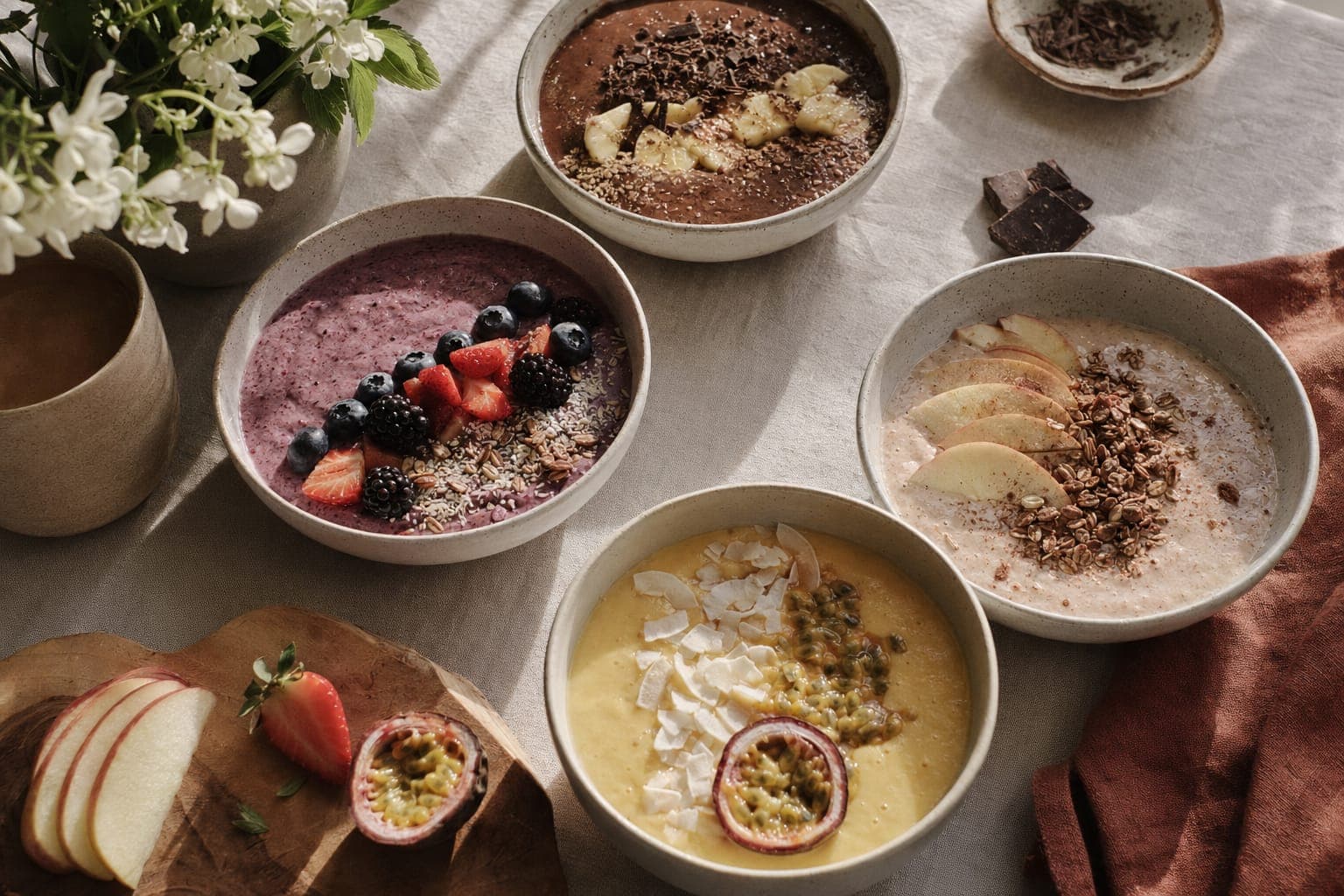
Organised Smoothie Bowl Recipes for Every Season
Four seasonal smoothie bowl recipes using Organised. Berry in summer, apple-cinnamon in autumn, tropical in spring, warming chocolate in winter.

Recipes & routines
How to Start Taking Organised: A Beginner's Guide
New to Organised? Your serving is two heaped tablespoons a day. The tastiest ways to take it, how to build the habit, and what your first 90 days look like.
Recipes & routines
Raw Milk Ice Cream with Organised
Make raw milk ice cream at home with Organised for a seasonal, nutrient-dense treat. Three simple flavours to try whenever the craving strikes.
Real food, made effortless
Add it to my routineA few ways to use it
All recipesRaw Milk Ice Cream with Organised
Make raw milk ice cream at home with Organised for a seasonal, nutrient-dense treat. Three simple flavours to try whenever the craving strikes.
The Organised Recovery Smoothie for After Exercise
A recovery smoothie made with beef protein, raw milk, frozen berries, collagen, and honey. Optimal nutrition in the 30-minute window after exercise.

Organised Protein Pancakes: A Weekend Favourite
A high-protein pancake recipe using beef protein, eggs, and raw milk. Cooked in cast iron, naturally sweetened with banana and honey. Real food breakfast.


 Join over 100,000+ members
Build a better food system with us
The Organised community is thousands of people choosing real food and backing the farmers who grow it, all of us trying to leave the world a little better than we found it. If that is what you care about too, you belong here.