Organised Smoothie Bowl Recipes for Every Season
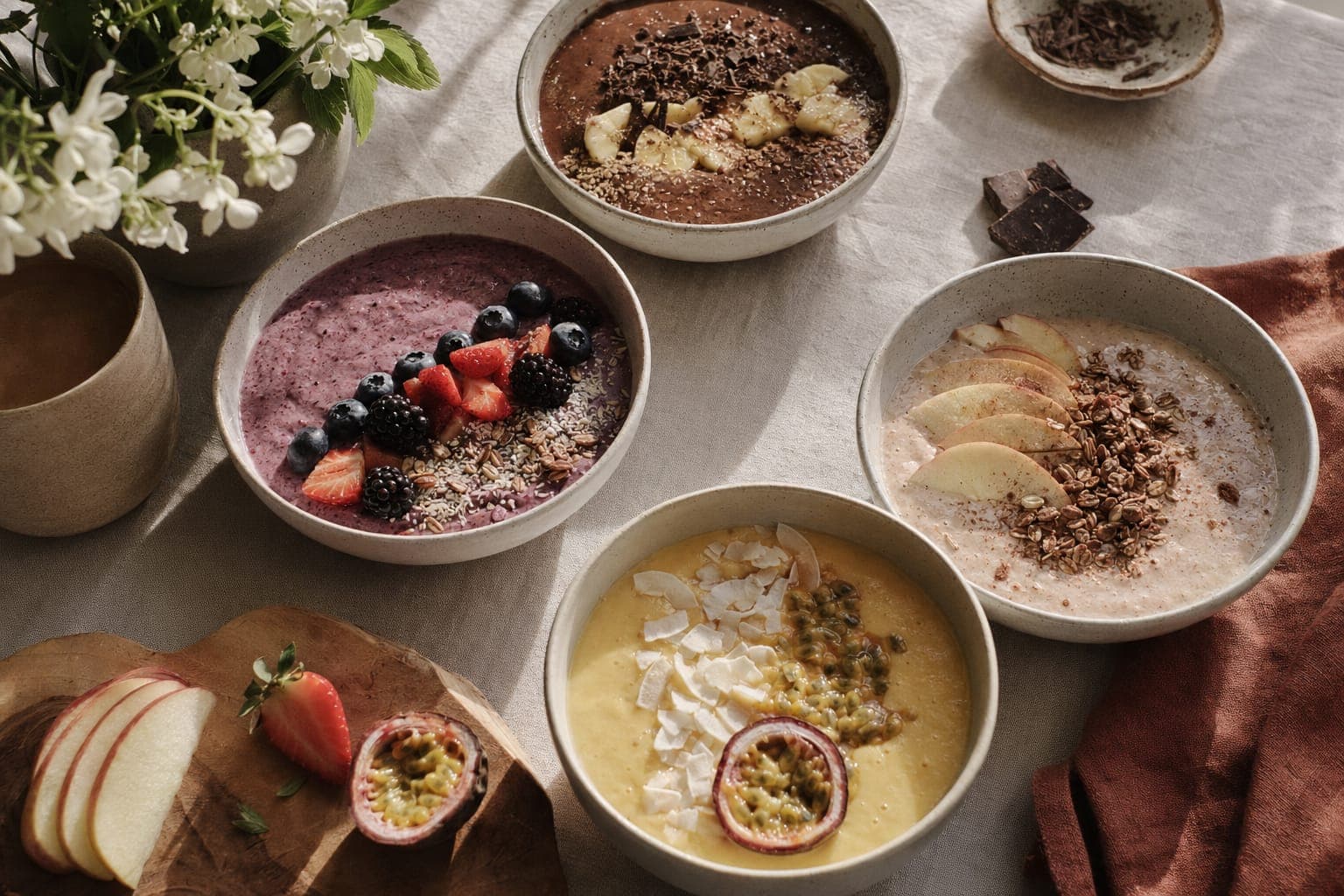
A smoothie bowl is where breakfast becomes something worth photographing. It's not just a shake in a bowl, it's texture on texture, topping on topping, a real meal pretending to be art. Organised slides underneath everything, providing protein and structure. Here are four seasonal versions.

By Niall Kiddle, Founder, Organised

Reviewed by Pedro Rodrigues, Agronomist (farming and sourcing only) ·
6 min read · Published · Updated · 1 cited source
Makers of the Organised Daily blend, a grass-fed beef organ supplement from regenerative UK farms
Summer: Berry and coconut
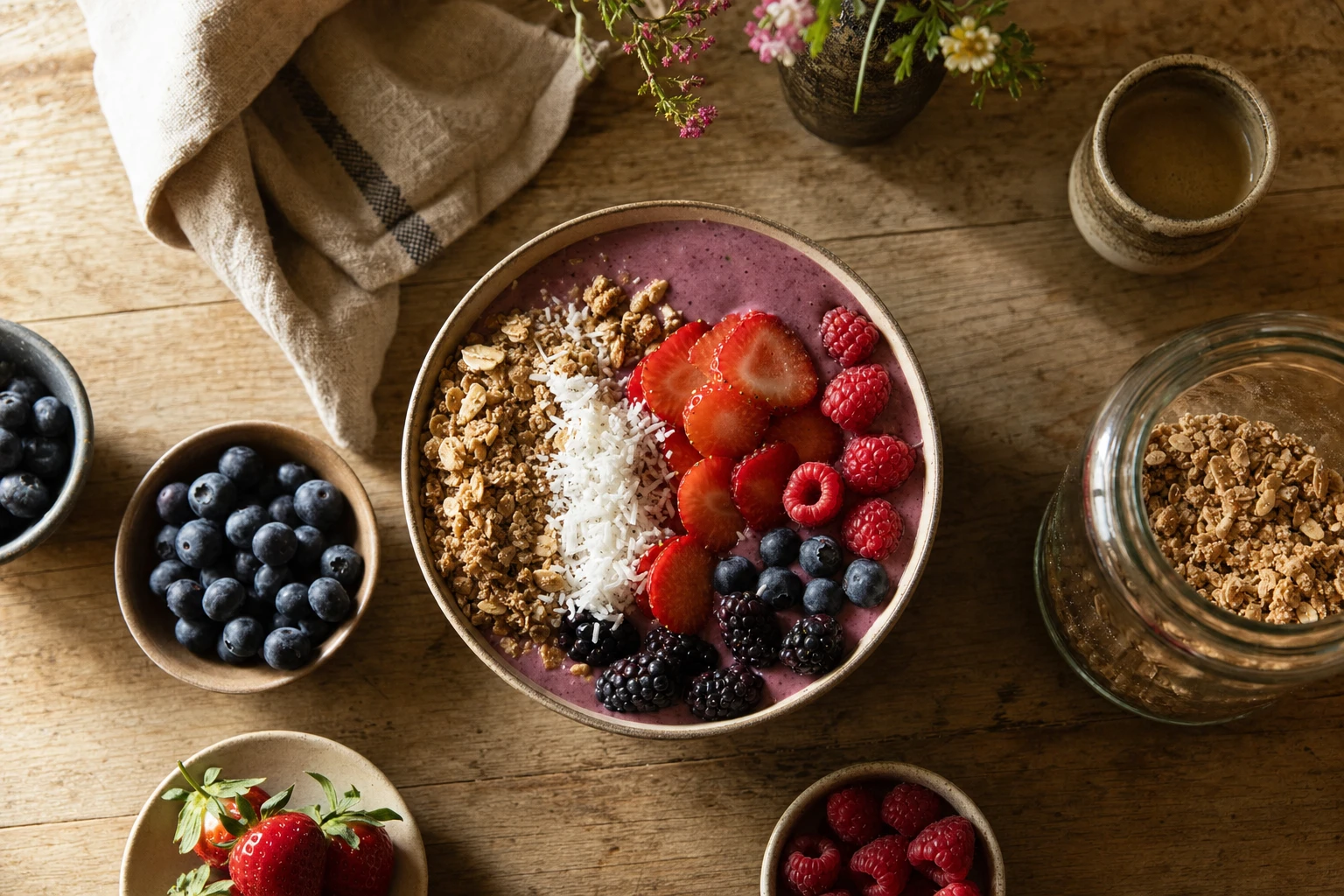
This one is bright. Frozen mixed berries, raw milk, Organised, a touch of honey. Blend until thick and pour into a bowl.
- Organised: 1 serving (20g)
- Frozen mixed berries: 200g (blueberries, raspberries, blackberries)
- Raw milk: 150ml
- Raw honey: 1 teaspoon
- Ice: handful
For toppings: desiccated coconut, crushed almonds, fresh berries, a drizzle of raw honey, granola made with butter and coconut.
The key is freezing the berries solid before blending. This creates a thick, scoopable base rather than a smoothie you'd drink through a straw.
Autumn: Apple and cinnamon
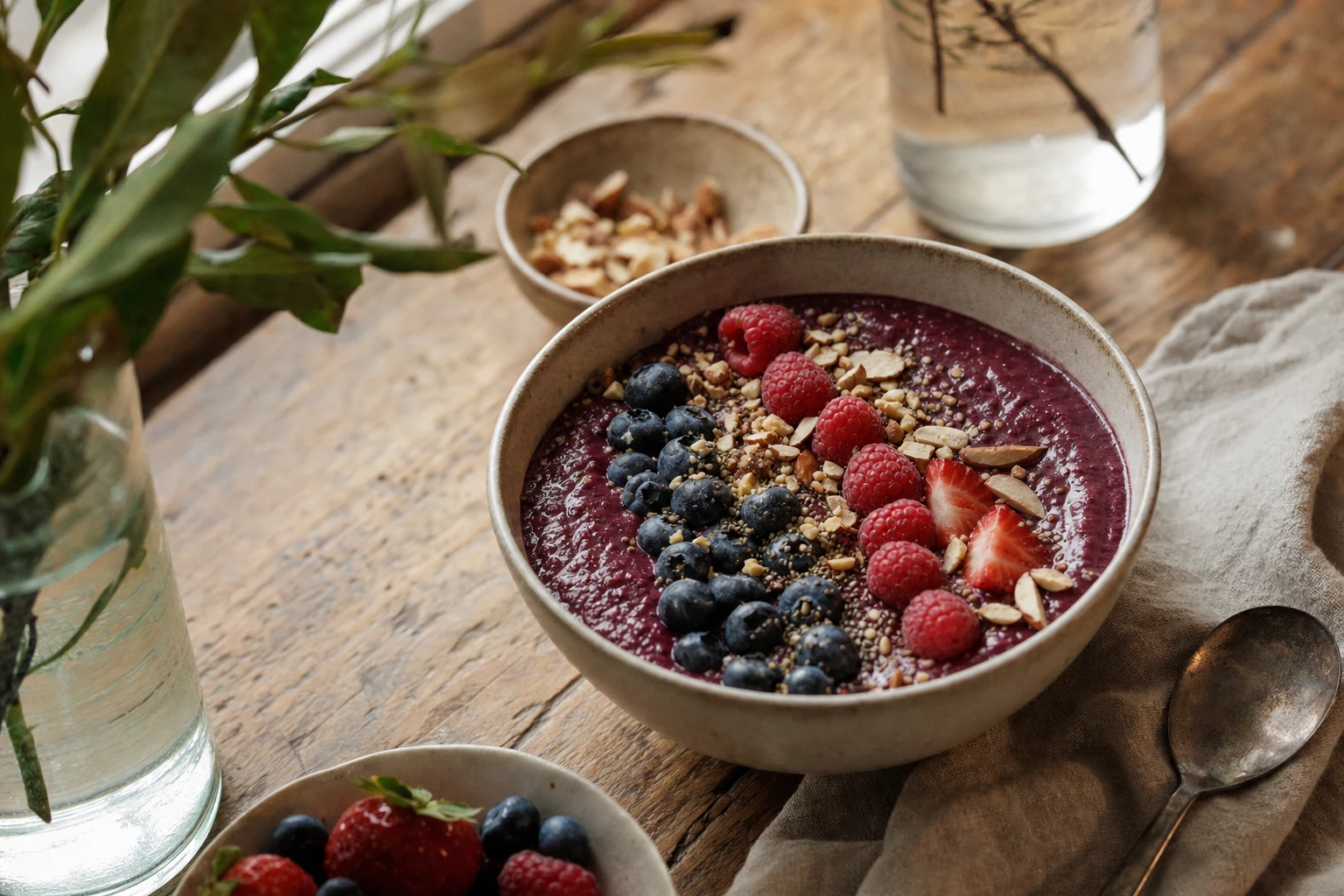
This one tastes like September. Frozen apple (or fresh, with extra ice), cinnamon, Organised, a touch of raw honey. The spice comes through warm and grounding.
- Organised: 1 serving
- Apple: 2 medium, frozen and chunked (or fresh with extra ice)
- Raw milk: 150ml
- Ground cinnamon: half teaspoon
- Raw honey: 1 teaspoon
- Vanilla extract: 2-3 drops (optional)
For toppings: granola, crushed walnuts, fresh apple slices, a sprinkle of cinnamon, a tiny drizzle of raw honey.
If using fresh apples, add a handful of ice to the blend to make it thick enough.
Spring: Tropical mango
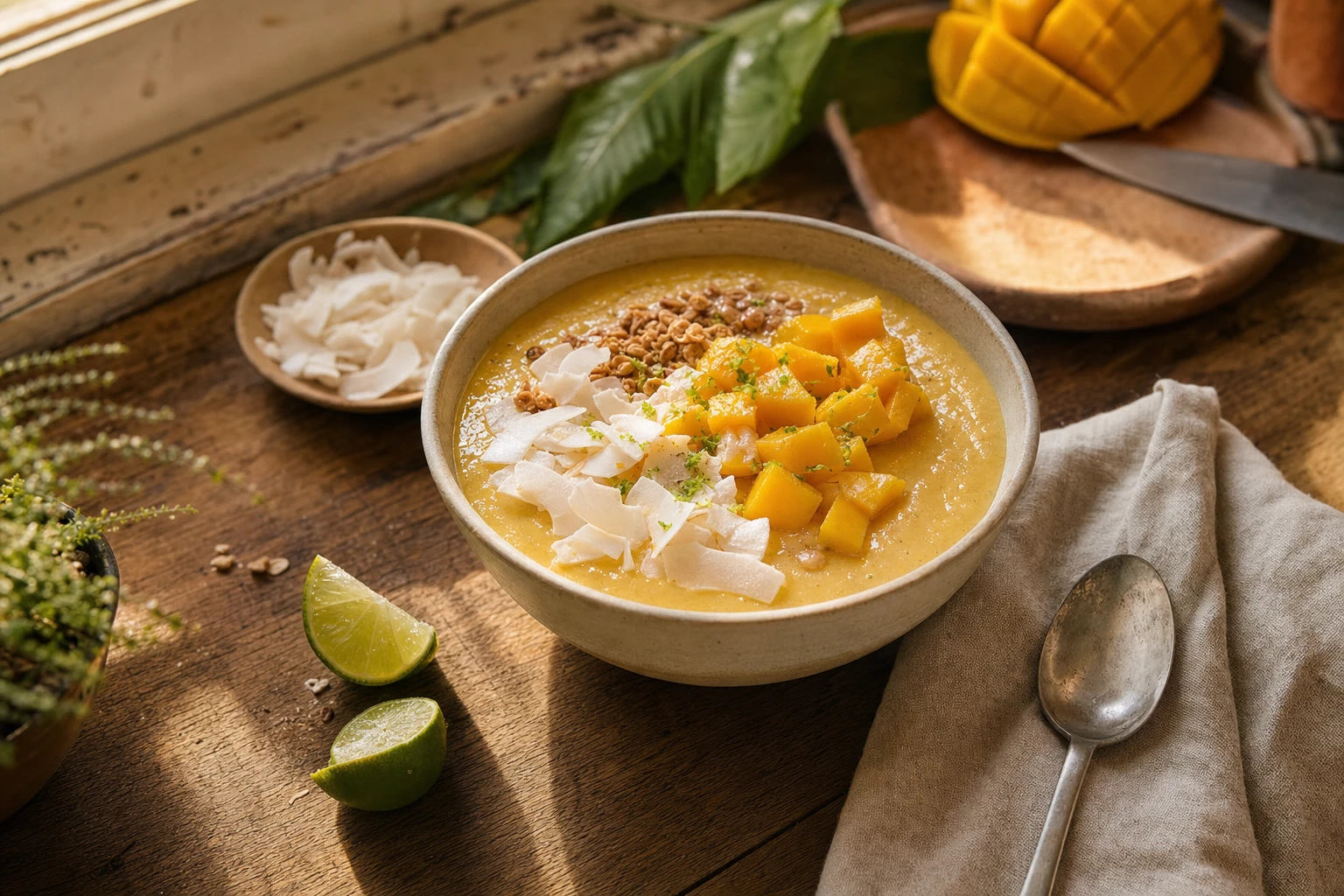
This one is bright again, but different from summer. Mango (frozen or fresh), coconut milk instead of regular milk, Organised, a touch of ginger or turmeric.
- Organised: 1 serving
- Frozen mango: 250g (or fresh with ice)
- Coconut milk: 150ml
- Fresh ginger: pinch of grated (optional but good)
- Raw honey: 1 teaspoon
- Ice: handful if using fresh mango
For toppings: toasted coconut flakes, crushed pistachios, fresh mango, a sprinkle of lime zest, granola.
Frozen mango makes this genuinely thick. Fresh mango requires extra ice but tastes brighter if you can get good fruit in season.
Winter: Chocolate and date
This one is warming. Cocoa powder, banana, dates (for sweetness), raw milk, Organised. It tastes like brownie before dinner.
- Organised: 1 serving
- Raw milk: 200ml
- Cocoa powder: 2 tablespoons (not drinking chocolate, actual cocoa)
- Banana: 1 medium, frozen
- Dates: 3-4, soaked briefly in warm water and pitted
- Pinch of sea salt
For toppings: crushed walnuts or pecans, goji berries, a drizzle of raw honey, cocoa nibs, a few crushed dates.
The frozen banana makes this thick. The dates provide natural sweetness.1 You don't need added honey with this one, but a tiny drizzle at the end is nice.
How to assemble
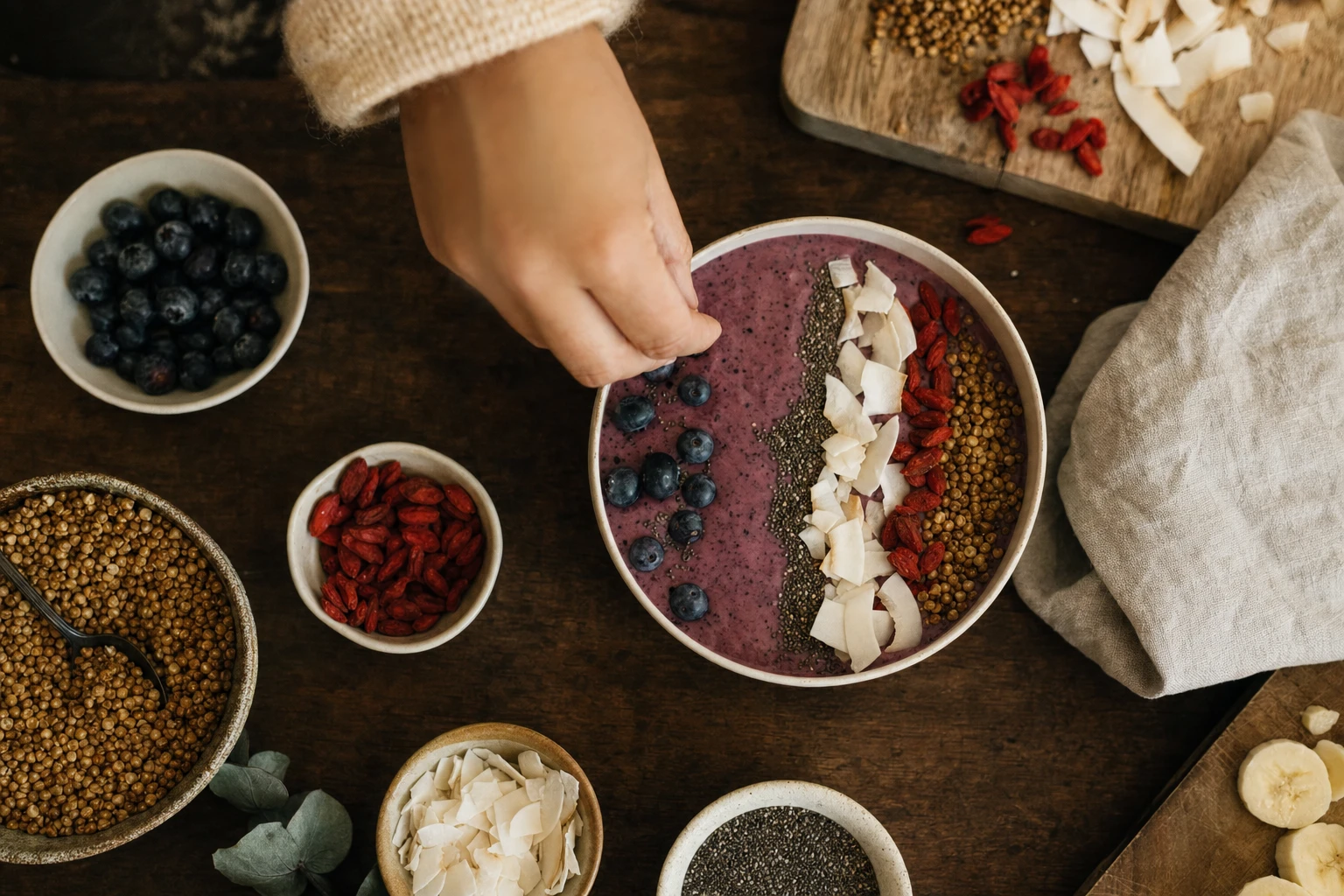
Blend your base (liquid, fruit, Organised) for 45-60 seconds until thick and creamy. Pour into a wide bowl or shallow dish. The bowl should be full but not overflowing.
Add toppings in sections: one side granola, one side fresh fruit, another side crushed nuts. This creates visual interest and ensures variety with every spoonful.
Eat immediately. A smoothie bowl starts to separate if you leave it sitting. The toppings begin to soften. It's a now-food, not a food you can make and ignore for an hour.
The order of toppings matters for aesthetics but not nutrition. Layer what looks good to you.
Make-ahead notes
You can prepare the base liquid (blend everything except ice, store in the fridge for 12 hours) and add ice when you blend it fresh in the morning. You can chop and measure toppings the night before, storing them separately.
But the actual bowl? Make it fresh, in the 5 minutes before eating. It's worth the extra effort. The texture, the temperature, the way everything sits together, it's different when it's just been made.
Ingredient variations and substitutions
Frozen fruit is essential for the right texture, but fresh fruit with extra ice works in summer. Mango and pineapple are particularly good fresh because they're fibrous enough to stay thick when blended. Berries tend to release more water, so stick with frozen berries if you want the perfect texture.
Can't access raw milk? Full-fat pasteurised milk works. Coconut milk is good in tropical bowls, though it adds distinct flavour. Goat's milk is slightly richer than cow's milk and works particularly well in the winter chocolate bowl. The ratio stays the same regardless of milk type: aim for a blend that's thick enough to hold a spoon but liquid enough to pour.
For honey alternatives, pure maple syrup works beautifully, particularly in the autumn bowl. Date paste (soaked dates blended with a tiny splash of water) is excellent in the winter version. The sweetness shifts slightly but the structure of the recipe stays intact.
Get recipes and routines, free
Two short reads a week of simple, nutrient-dense recipes and daily routines.
By signing up you agree to receive emails from us. No spam, unsubscribe anytime.
Topping strategies and combinations
The best smoothie bowls balance three textures: creamy (the base), crunchy (granola, nuts, seeds), and chewy (dates, dried fruit). If you're missing one of these, the bowl feels incomplete.
For summer, pair berry bowls with coconut, almonds, and fresh berries on top. The fresh fruit echoes the frozen base. For autumn, walnuts and pecans work better than almonds with apple and cinnamon. Toasted nuts have deeper flavour that complements spiced bowls. For spring, pistachios and coconut are lighter and brighter. For winter, dark nuts (walnuts, pecans) balance the richness of chocolate.
If you're aiming for real nutrition, add something green: a handful of spinach in the winter bowl (it disappears into the chocolate), sunflower seeds or pumpkin seeds for minerals, a tablespoon of nut butter swirled on top for sustained energy.


1 of 9
Daily blend
100,000+ thriving families4.9 on Trustpilot
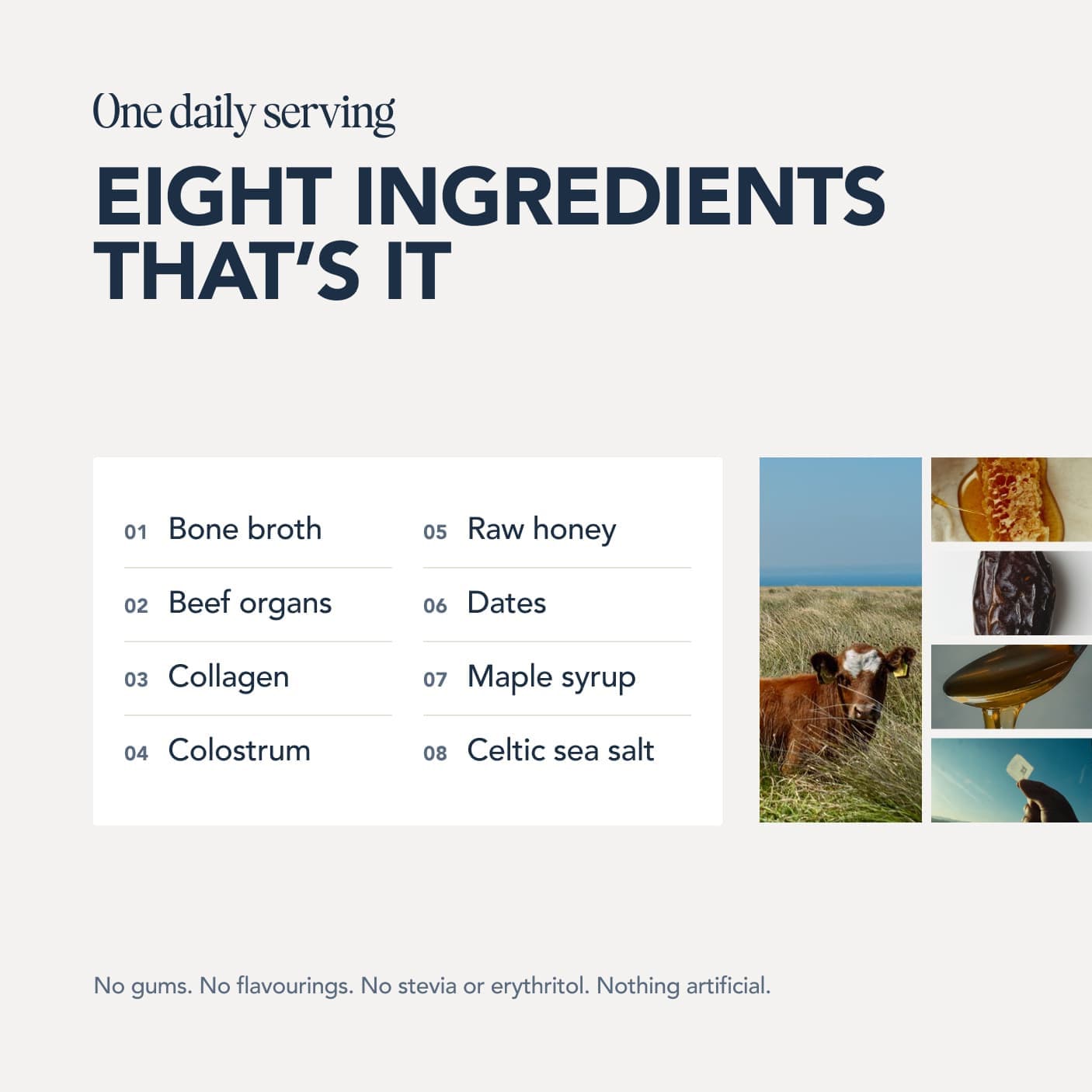
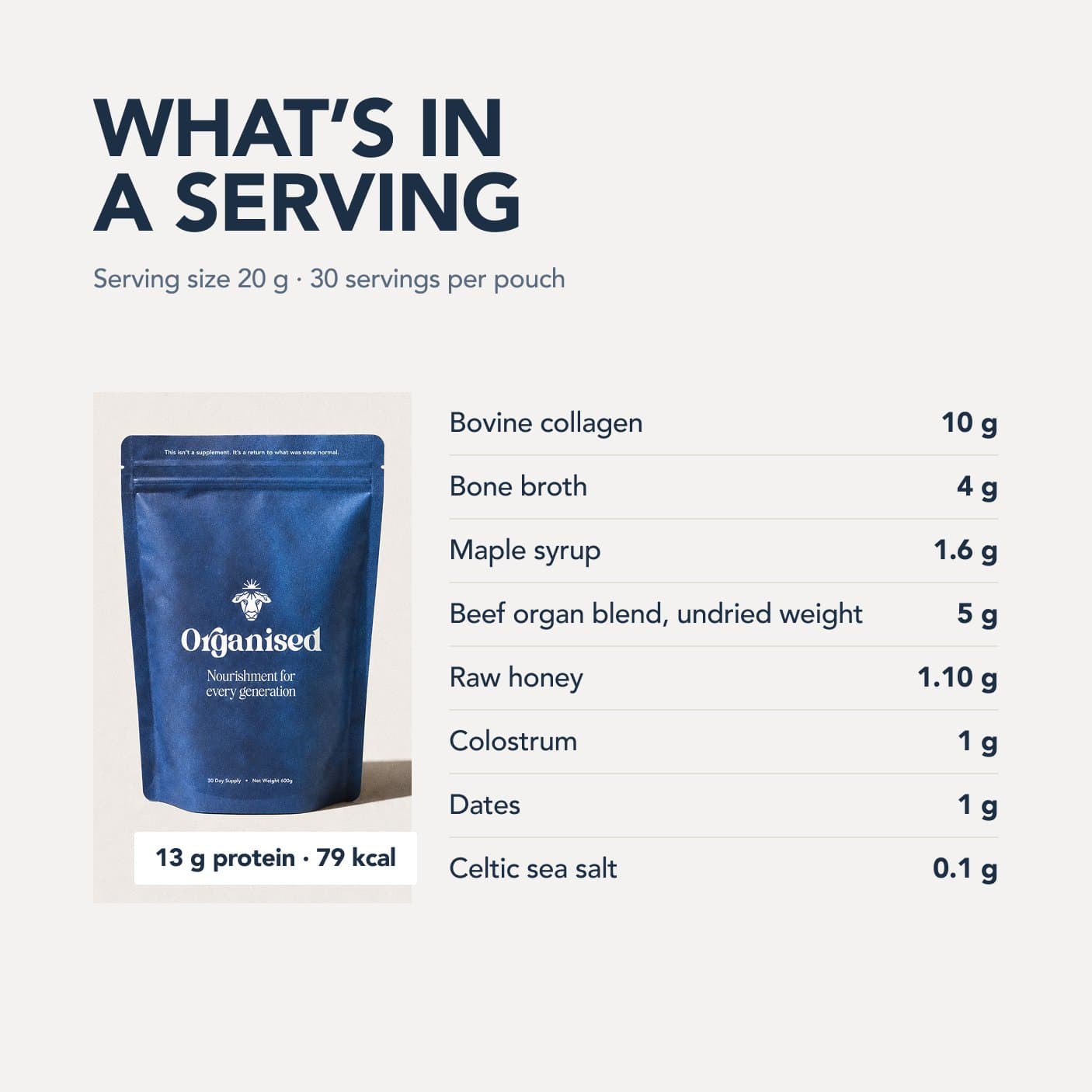
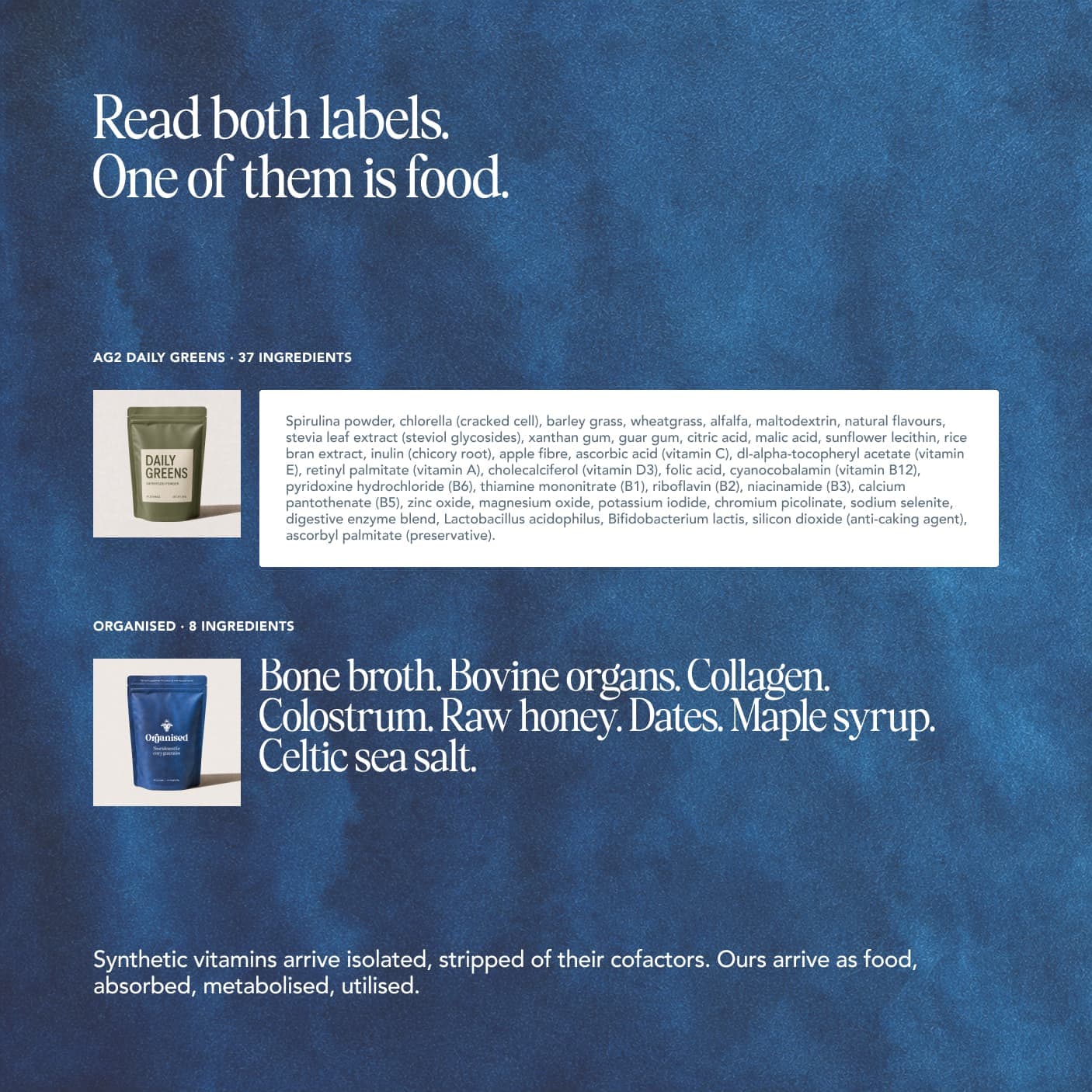
Eight real ingredients built around grass-fed beef organs, collagen and colostrum. Nothing synthetic added.
Free with your first order, worth £38. Plus £10 off the pouch with a subscription.
Free UK shipping · Made in England · 100 day money back guarantee on your first pouch · Skip, pause or cancel anytime
Making smoothie bowls ahead
You can prepare the base liquid up to 12 hours in advance by blending everything except ice, then storing it in a glass container in the fridge. In the morning, add ice and blend again to get the right thickness. This saves genuine time on weekday mornings.
Toppings can be measured and stored in separate containers the night before. Keep granola, nuts, and seeds in one container, fresh fruit in another, dried fruit in another. In the morning, you're blending for two minutes and assembling in five. Total time: seven minutes.
Don't prepare the assembled bowl in advance, even if you're bringing it to work. Smoothie bowls separate and soften within an hour. The toppings become soggy. The aesthetic falls apart. Make it fresh, eat it immediately.
Troubleshooting texture problems
If your smoothie bowl is too thin and pourable, you need more frozen fruit or less milk. Next time, add another 50g of frozen fruit and reduce milk by 50ml. Too much liquid and you've made a smoothie, not a bowl.
If it's too thick to pour, add milk 50ml at a time until it reaches the right consistency. The goal is something you can scoop but that holds its shape on the spoon, not soup and not frozen slush.
If the base separates during blending (fruit juice pools at the bottom), you're probably over-blending. Stop at 45 seconds. The mixture should be thick but not completely uniform. Some texture variation is fine.
Seasonal sourcing and ripeness
Summer berries are at their peak from June through August in the UK. Buy them at farmers markets at peak ripeness, freeze them the day you get home. Winter apples (Granny Smith, Braeburn) store for months, so you can buy them in autumn and freeze them whenever. Spring mango is imported but increasingly available year-round. Winter cocoa is year-round but pair it with frozen banana, which stores brilliantly after ripening on the counter.
If you can't access the exact fruit for your season, adapt. Summer in November? Make the spring tropical bowl. Spring fruit unavailable? Reach for the winter chocolate. There's no rule that seasons must align with calendar months.
The bottom line
Smoothie bowls are a genuine vehicle for eating real food that happens to include Organised. Pick your season, follow the proportions loosely, add toppings that sound good, and eat it whilst it's cold and thick. The rest is flexibility. Once you've made these four once, you'll adapt them endlessly. Temperature, texture, toppings, it's all yours to adjust.
References
Every source below was checked on 27 August 2026. Each link was requested and read. Where a citation and its identifier disagreed, the citation was corrected to the record or the reference was deleted along with the sentence marker that pointed at it, and where the resolved paper turned out not to support the sentence, the sentence was cut back to what it does support. Borrowed authority is worse than none, because it looks like rigour.
- USDA FoodData Central. Dates, medjool. https://fdc.nal.usda.gov/ [accessed May 2026].
Who wrote and reviewed this guide
Niall Kiddle
Author · Founder, Organised
Niall is the founder of Organised. He started the company in 2024 after fixing his own health the slow way: in 2022 he swapped a cupboard of synthetic supplements for real food, raw milk, organ meats, bone broth and honey, and felt the difference within months.
Areas of expertise: Ancestral nutrition, Organ meats, Whole-food supplementation, Gut health, Regenerative sourcing
Read Niall's full profile
Pedro Rodrigues
Reviewer · Agronomist (farming and sourcing only)
Pedro is the agronomist Organised works with on farming and sourcing. His job on the guides is to keep the science honest: he reviews what we publish about soil health, regenerative agriculture, grazing and the way food is actually produced.
Areas of expertise: Regenerative agriculture, Agronomy, Soil health, Grass-fed farming, Food sourcing
Reviewed this guide on
Read Pedro's full profileMore on recipes
View all- 10 Ways to Use Organised That Aren't Just a Shake
- 5-Minute High-Protein Breakfasts Using Organised
- Ancestral Breakfast Ideas from Around the World
- Bone Broth from Scratch: A Step-by-Step Guide
- Collagen-Rich Beef Stew: Slow-Cooked Nourishment
- Energy Balls with Organised, Dates and Raw Honey
- Gut-Healing Marshmallows with Collagen and Raw Honey
- How to Make Bone Marrow Butter
- How to Make Your Own Gelatine Gummies
- Liver Pate for Beginners: A Gentle Introduction to Organ Meats
- Matcha Latte Gummies with Collagen and Gelatine
- Organ Bolognese: The Family Dinner That Heals
Browse the guides library
All guidesKeep reading
Recipes & routines
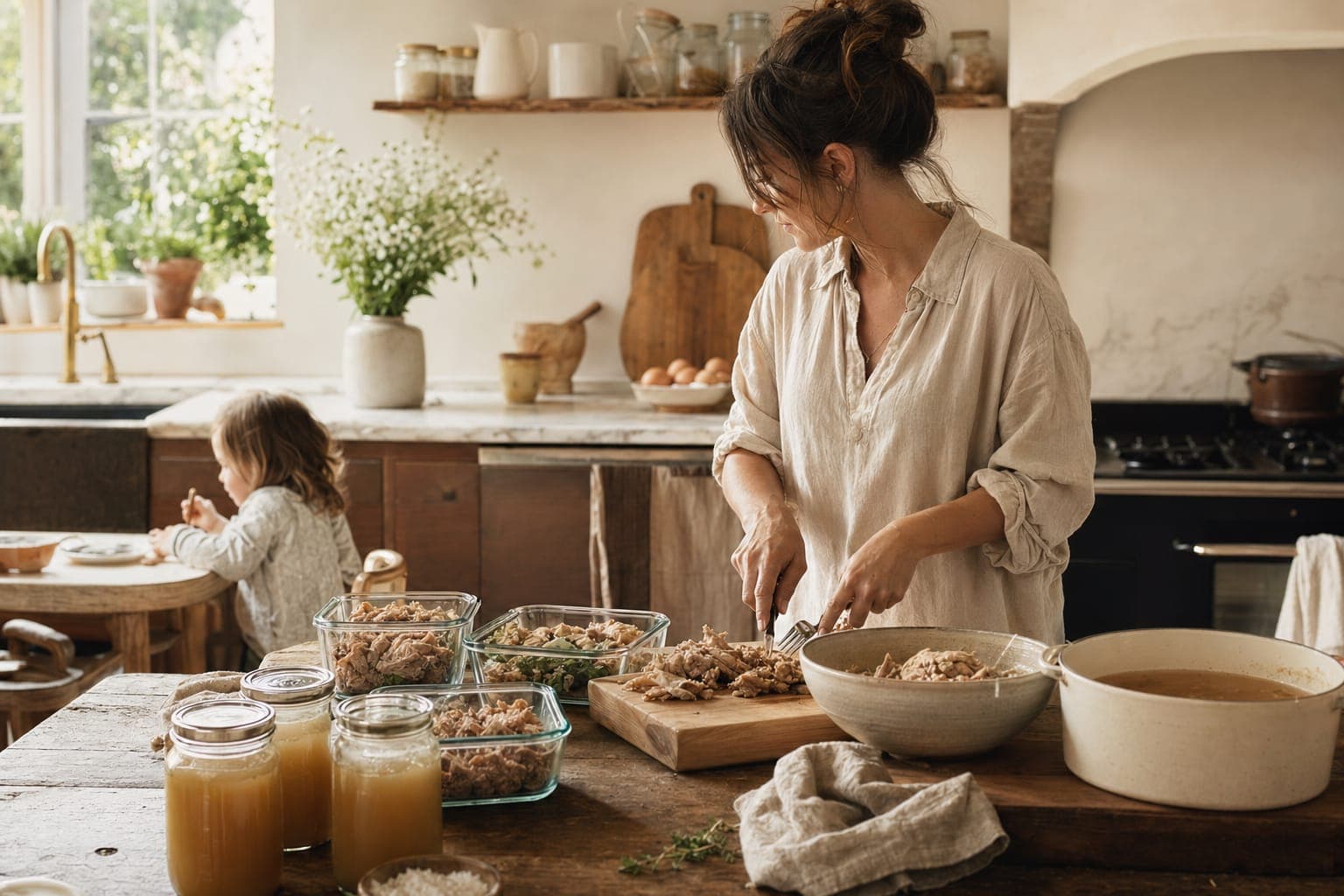
The Busy Parent's Guide to Whole Food Nutrition
Batch cooking, freezer meals, bone broth routines. Real food nutrition that doesn't require three hours of cooking every night.
Recipes & routines
Collagen-Rich Beef Stew: Slow-Cooked Nourishment
Beef stew that delivers collagen from connective tissue and bone broth. Winter comfort food that actually nourishes. Simple slow cooker recipe.
Recipes & routines
Can I Take Organised While Fasting?
Can you take Organised during a fast? Covers whether it breaks a fast and why we recommend eating in the morning instead.
Real food, made effortless
Add it to my routineA few ways to use it
All recipesCollagen-Rich Beef Stew: Slow-Cooked Nourishment
Beef stew that delivers collagen from connective tissue and bone broth. Winter comfort food that actually nourishes. Simple slow cooker recipe.
Ancestral Breakfast Ideas from Around the World
Traditional breakfast recipes from cultures that got nutrition right. Japanese, Turkish, Scottish, and more. Whole-food breakfast inspiration.
Liver Pate for Beginners: A Gentle Introduction to Organ Meats
Simple liver pate recipe to start eating organ meats. Chicken liver, butter, and herbs. Gentle introduction to nutrient-dense whole foods.


 Join over 100,000+ members
Build a better food system with us
The Organised community is thousands of people choosing real food and backing the farmers who grow it, all of us trying to leave the world a little better than we found it. If that is what you care about too, you belong here.