How Much Organised Should I Take Per Day?
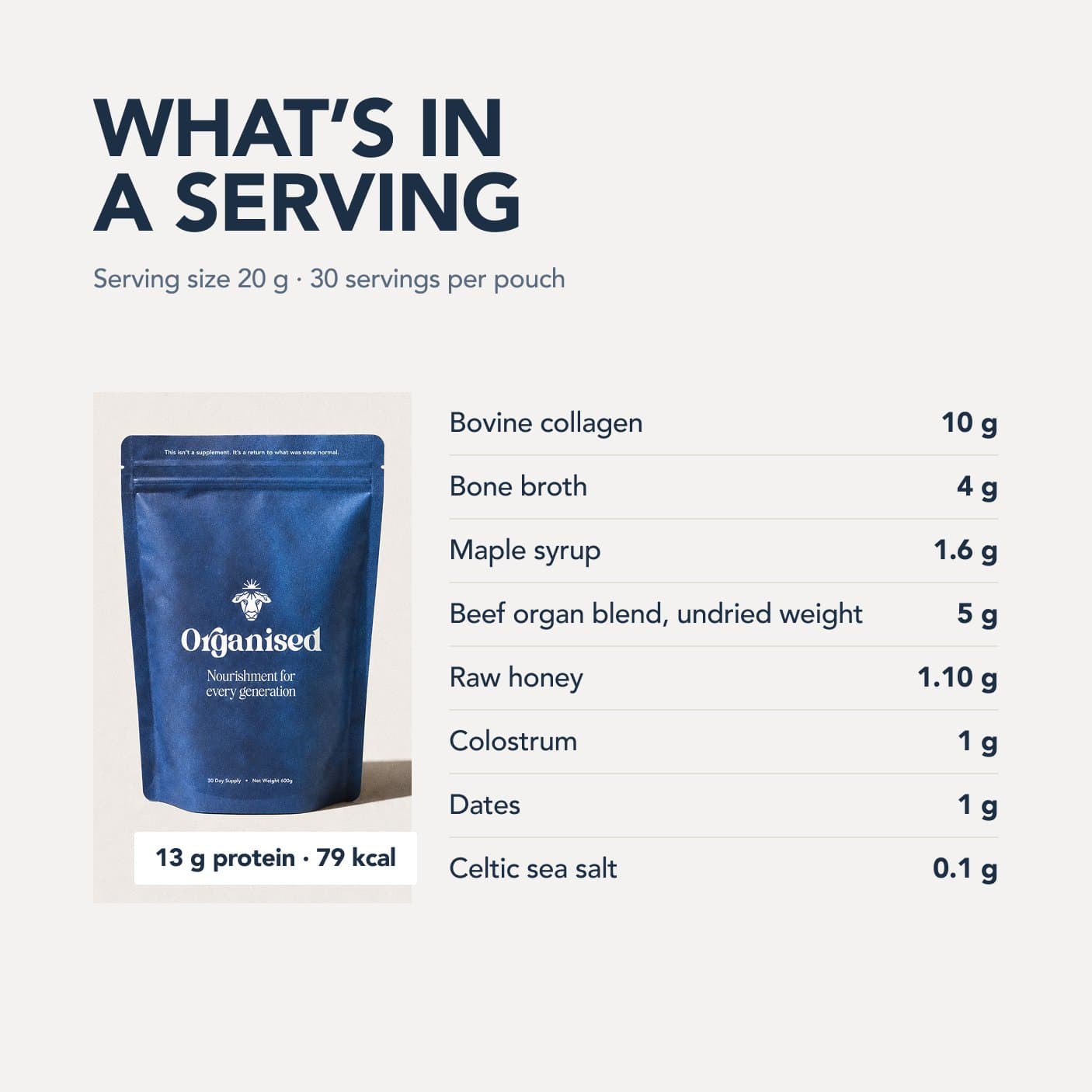
A serving of Organised is 20 grams, about two heaped tablespoons, once a day. That's the standard for almost everyone. Here's how much is enough, how much is safe, and how it works for the whole family.
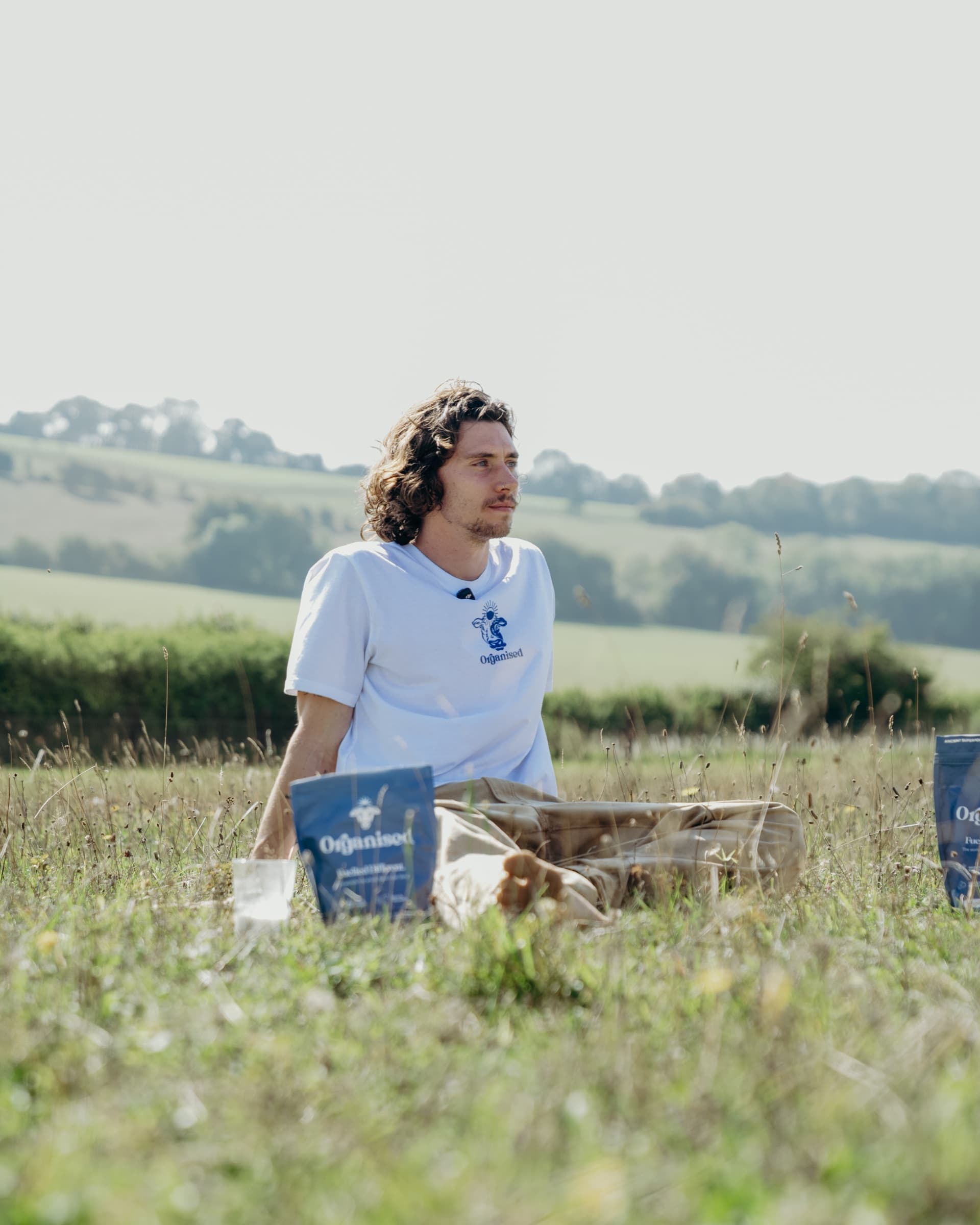
By Niall Kiddle, Founder, Organised

Reviewed by Pedro Rodrigues, Agronomist (farming and sourcing only) ·
3 min read · Published · Updated
Makers of the Organised Daily blend, a grass-fed beef organ supplement from regenerative UK farms

The standard serving
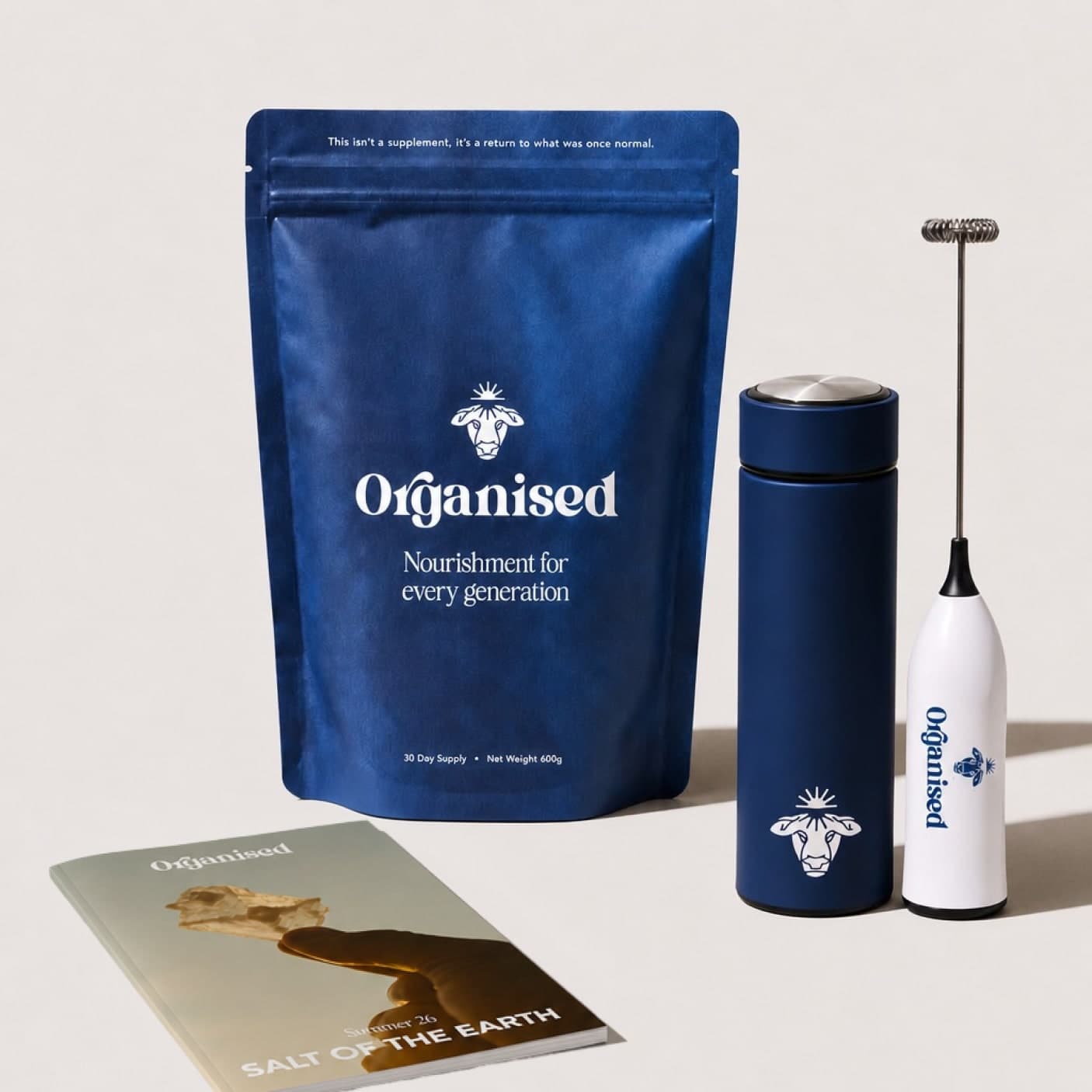
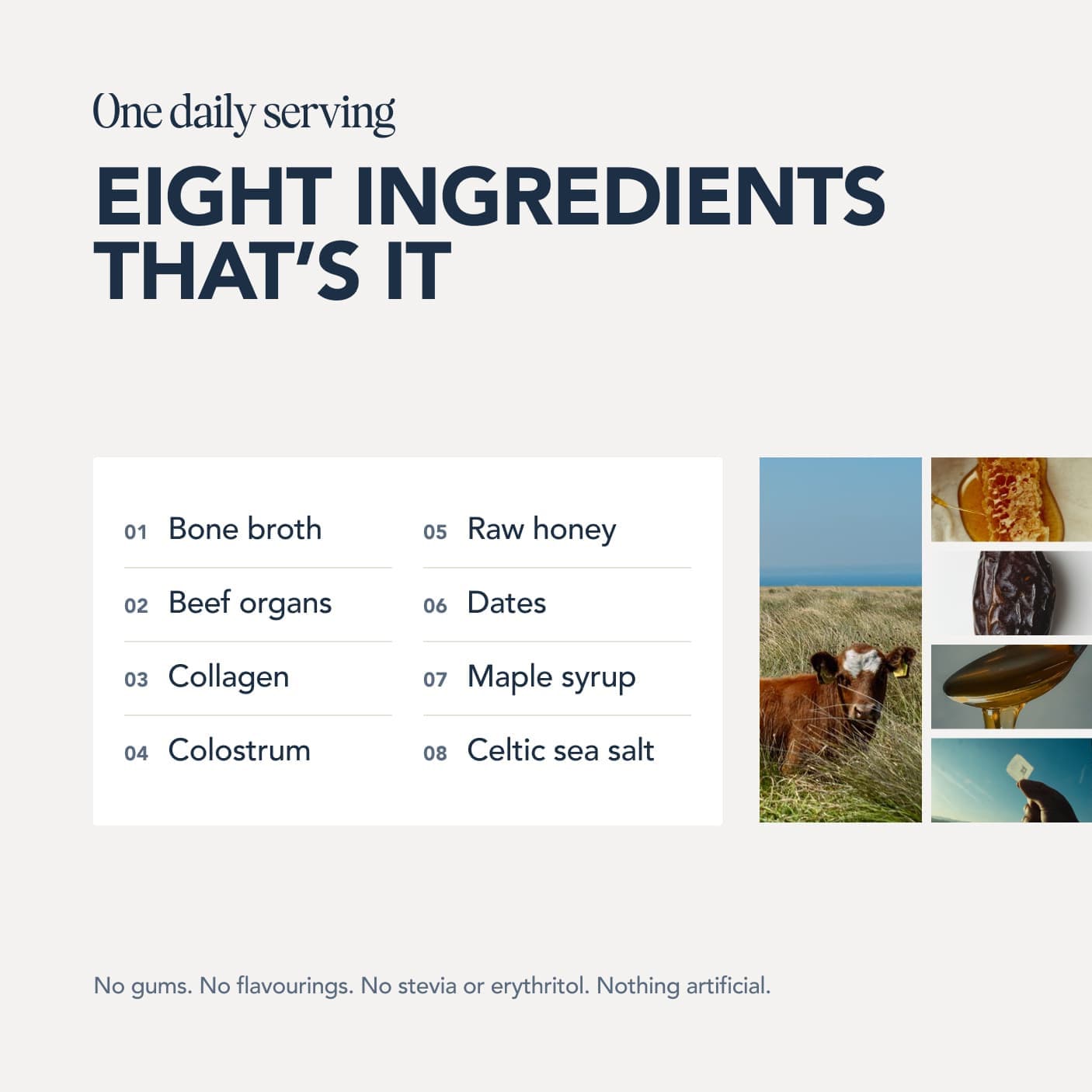
Two heaped tablespoons, once a day. A pouch holds 30 servings, one for each day of the month. That single serving carries the full blend: grass-fed bone broth, the five organs, collagen peptides, colostrum, and the raw honey, dates and maple syrup that make it naturally sweet.
You feel genuinely full. Your blood sugar stays stable. You're feeding foundational nutritional needs without the serving taking over your entire breakfast.
There's one surprisingly simple difference between the people who feel amazing on Organised and the people who don't: they take it every day. Consistency is the product.
Why there is no escalation ladder
You might expect the advice to ramp: start small, build to more, take extra on hard days. It doesn't. Organised is whole food, not a compound you titrate. One serving a day, taken daily, does the work. And because it is food, there is headroom rather than a hard ceiling: up to four servings a day is safe. Most people simply never need more than one.
Taken every day, the effects compound quietly. Fuller, steadier mornings in the first few days. Energy evening out and digestion settling across the first month. The deep work, in your skin, hair, cycles and iron, over the first 90 days. Skipping days and doubling up later doesn't get you there. Daily does.

For athletes and gym-goers
Start with the same serving. If you're training hard, your overall protein needs are higher, and the place to meet them is still your plate: more meat, eggs, fish and dairy across the day. Organised is the nutrient-dense floor under all of that, not a replacement for proper meals. If you want more from the pouch itself, take 40g a day, two servings, and remember that up to four servings a day is safe.
For pregnancy and postpartum
You're in very good company, many in our community are pregnant or breastfeeding too. Organised was created with this chapter of life in mind, as a nourishing addition to your everyday routine, helping fortify your body while you grow and nourish your baby. Your usual daily serving is a great place to start, and there's no need to increase it. As with anything in pregnancy, check with your GP or midwife.
Get recipes and routines, free
Two short reads a week of simple, nutrient-dense recipes and daily routines.
By signing up you agree to receive emails from us. No spam, unsubscribe anytime.
For children
Everything in the pouch is food, so the whole house can share it. For little ones aged 1 to 3, start with half a teaspoon. For ages 3 and up, start with 1 teaspoon. Banana and honey milkshakes are an easy win, or sneak it into pancakes or bolognese. One firm rule: Organised contains raw honey, so it's not for babies under 12 months.

1 of 9
Daily blend
100,000+ thriving families4.9 on Trustpilot
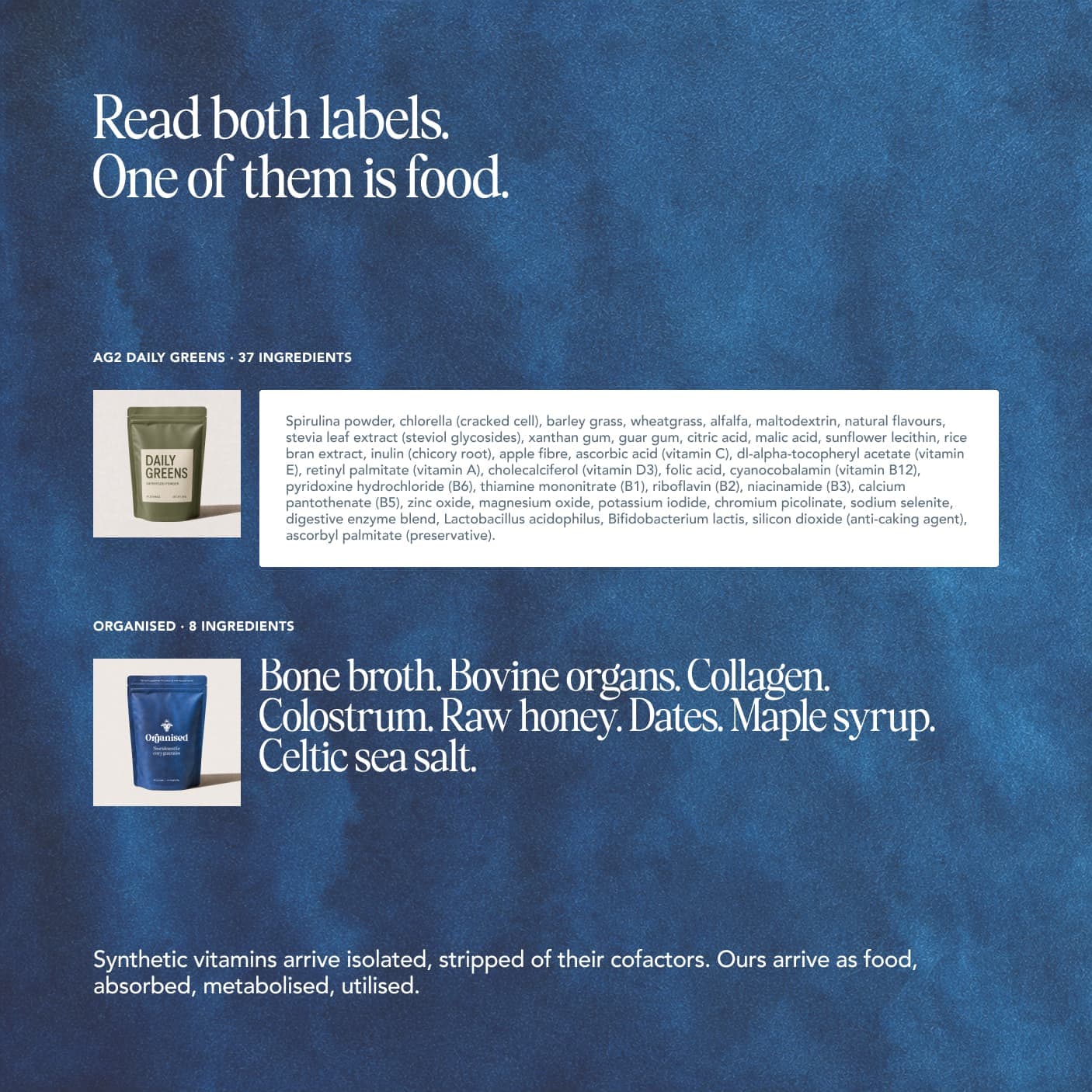
Eight real ingredients built around grass-fed beef organs, collagen and colostrum. Nothing synthetic added.
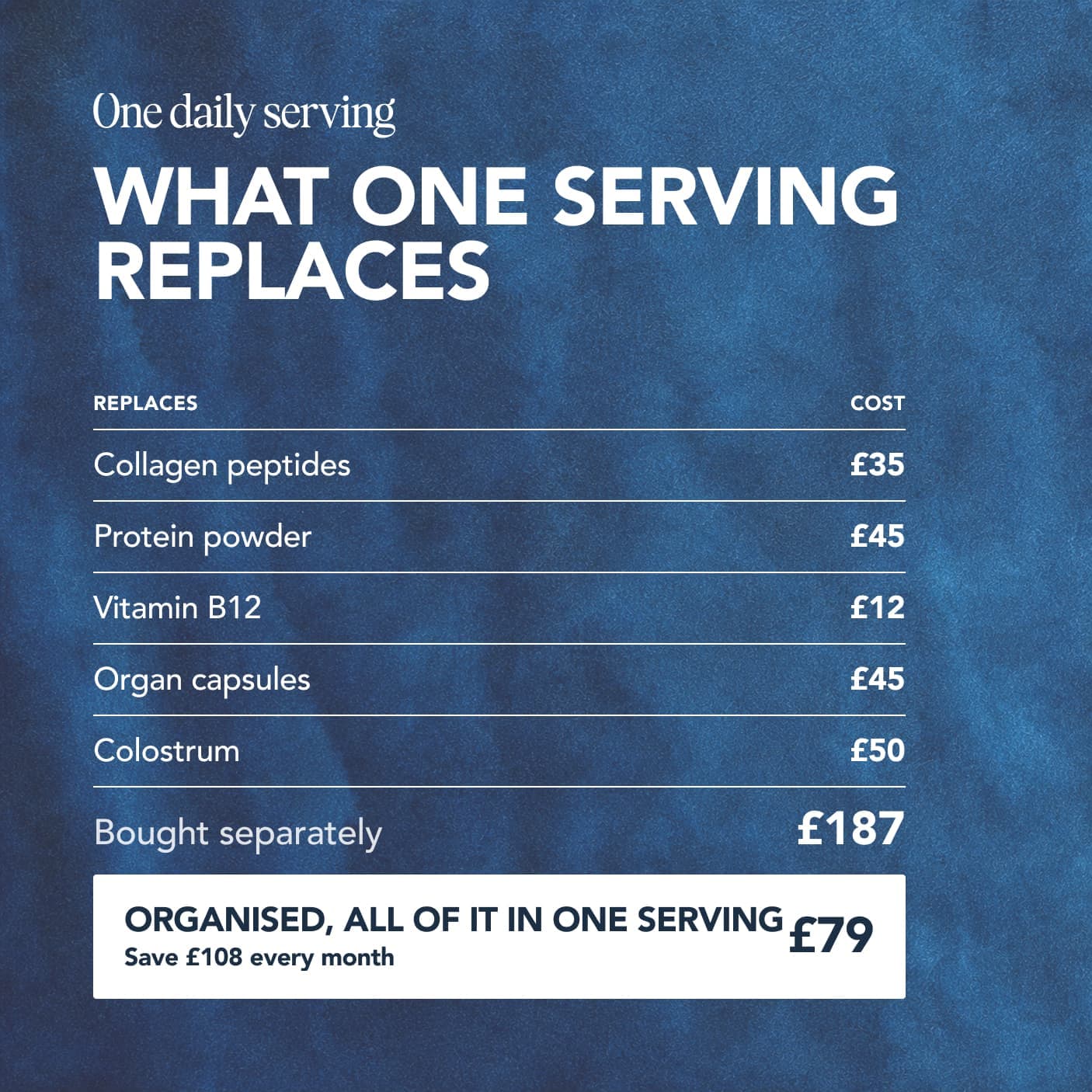
Free with your first order, worth £38. Plus £10 off the pouch with a subscription.

Free UK shipping · Made in England · 100 day money back guarantee on your first pouch · Skip, pause or cancel anytime
Sensitive stomachs
If you have a sensitive stomach, starting with half a serving, one heaped tablespoon, for the first few days is completely fine. Work up to the full two heaped tablespoons as things settle. That's all the adjusting the serving needs, and it's temporary.

The serving you'll actually take
The perfect serving is the one you'll take every day, and that's exactly why it's fixed. Two heaped tablespoons stirred through thick yoghurt with a drizzle of honey, blended into a smoothie with milk and banana, or spooned into porridge or overnight oats. Tuck it into a part of the morning you already love and stop thinking about quantities.
The bottom line
Two heaped tablespoons, 20 grams, once a day, is the standard for every adult, pregnancy included. Athletes who want more can take 40g a day, two servings, and up to four servings a day is safe. Children start with teaspoons. Sensitive stomachs can start with half. The question that matters isn't how much. It's whether you took it today.
Who wrote and reviewed this guide
Niall Kiddle
Author · Founder, Organised
Niall is the founder of Organised. He started the company in 2024 after fixing his own health the slow way: in 2022 he swapped a cupboard of synthetic supplements for real food, raw milk, organ meats, bone broth and honey, and felt the difference within months.
Areas of expertise: Ancestral nutrition, Organ meats, Whole-food supplementation, Gut health, Regenerative sourcing
Read Niall's full profile
Pedro Rodrigues
Reviewer · Agronomist (farming and sourcing only)
Pedro is the agronomist Organised works with on farming and sourcing. His job on the guides is to keep the science honest: he reviews what we publish about soil health, regenerative agriculture, grazing and the way food is actually produced.
Areas of expertise: Regenerative agriculture, Agronomy, Soil health, Grass-fed farming, Food sourcing
Reviewed this guide on
Read Pedro's full profileMore on guides
View all- How to Start Taking Organised: A Beginner's Guide
- Can I Take Organised While Fasting?
- Can You Cook with Organised?
- How to Mix Organised with Cold Water (And Make It Taste Great)
- Organised and Raw Milk: The Perfect Pairing
- Organised FAQ: Every Question Answered
- The Best Time of Day to Take Organised
- The Complete Guide to Mixing Organised into Anything
- The Organised Stacking Guide: Adding Real Food to Your Routine
- What to Expect in Your First 30 Days Taking Organised
Browse the guides library
All guidesKeep reading
Recipes & routines
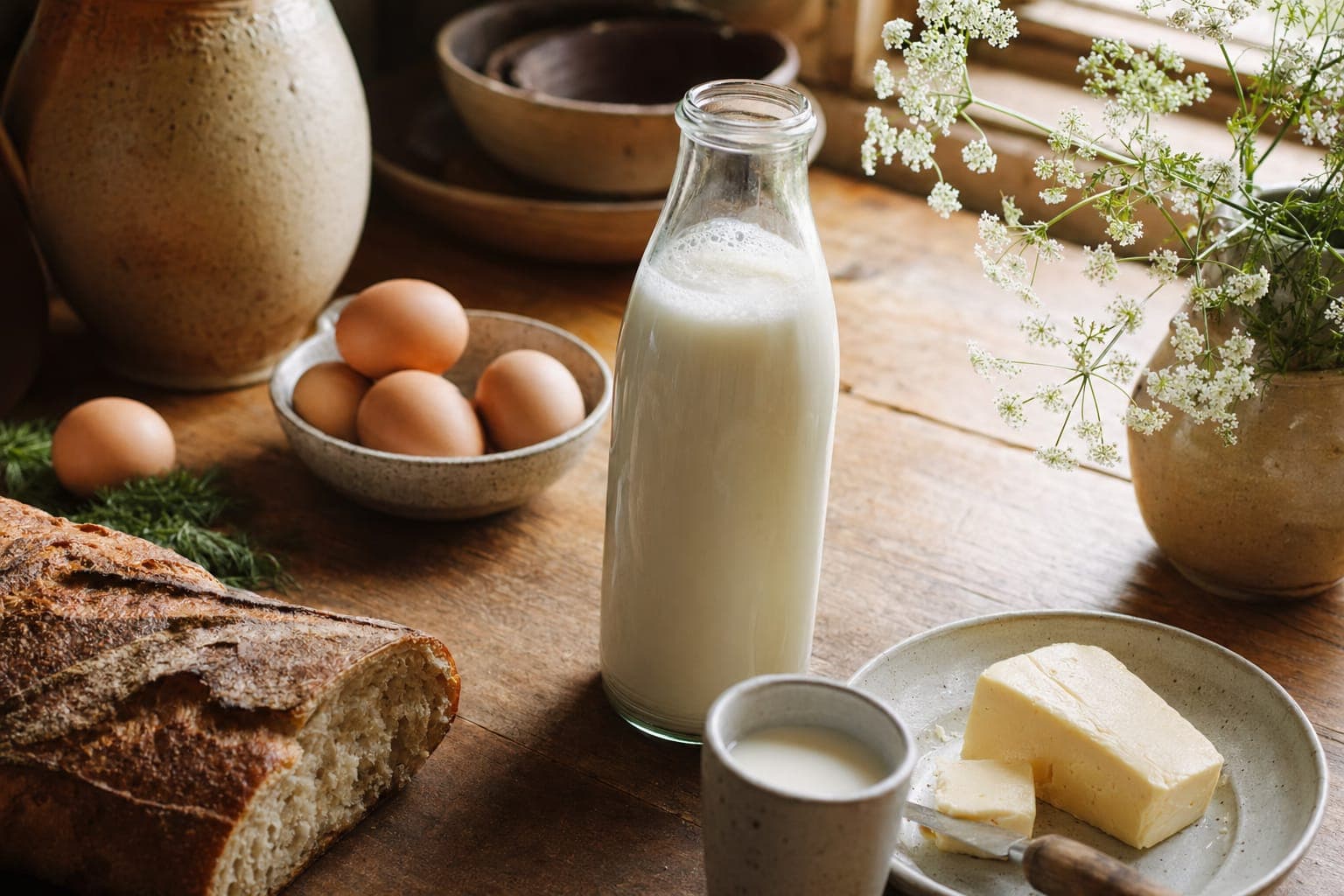
Organised and Raw Milk: The Perfect Pairing
Why raw milk maximises nutrient absorption of Organised. Fat-soluble vitamins, enzyme preservation, and optimal digestion.

Recipes & routines
Travel Nutrition: How to Stay Nourished on the Go
Practical guide to maintaining whole-food nutrition while travelling. Tips for packing Organised, airport choices, hydration, and managing jet lag.
Recipes & routines
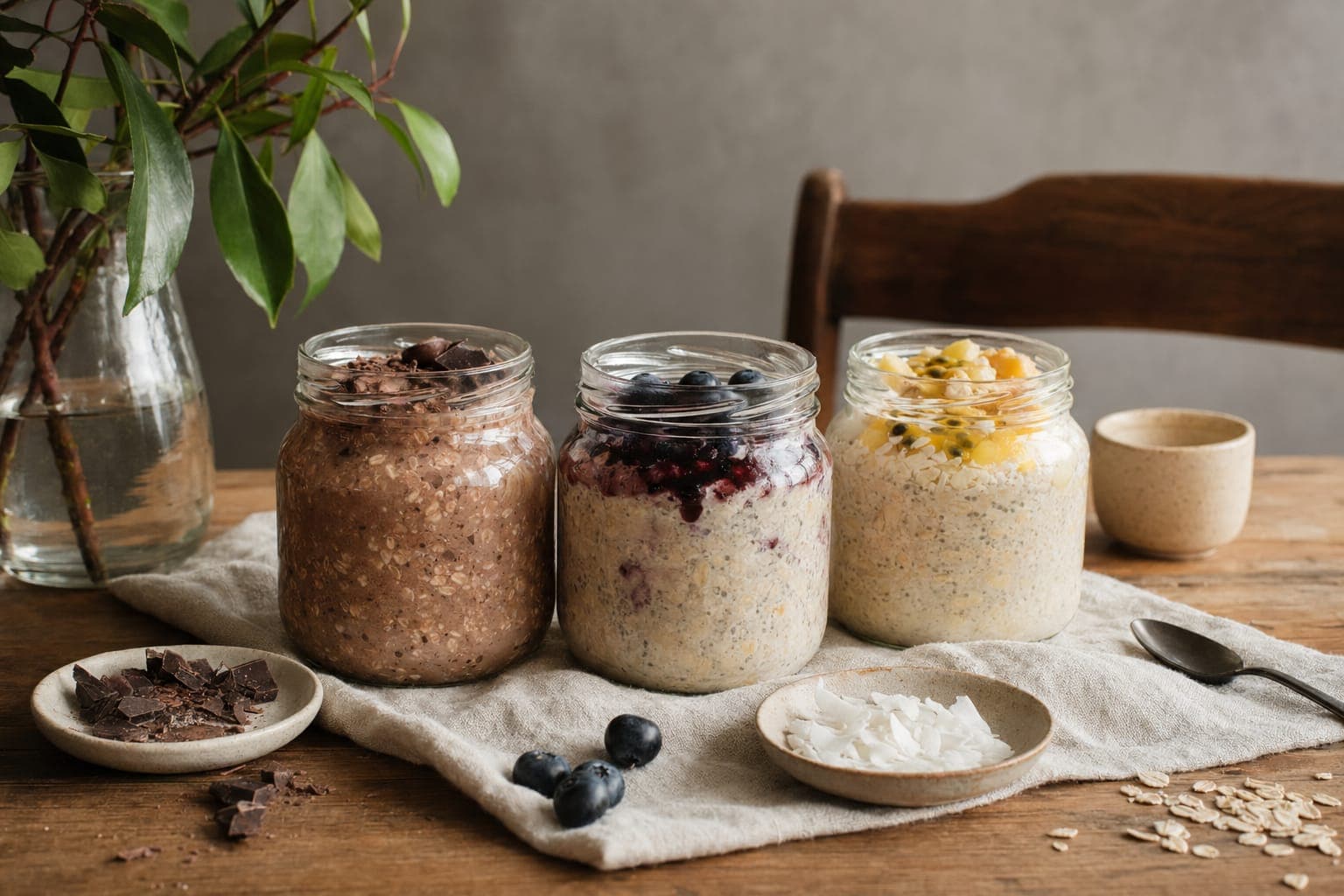
Organised Overnight Oats: 3 Variations
Three delicious overnight oats variations with Organised. Chocolate, berry, tropical flavours. Make them Sunday, eat them all week.
Real food, made effortless
Add it to my routineA few ways to use it
All recipesOrganised Overnight Oats: 3 Variations
Three delicious overnight oats variations with Organised. Chocolate, berry, tropical flavours. Make them Sunday, eat them all week.
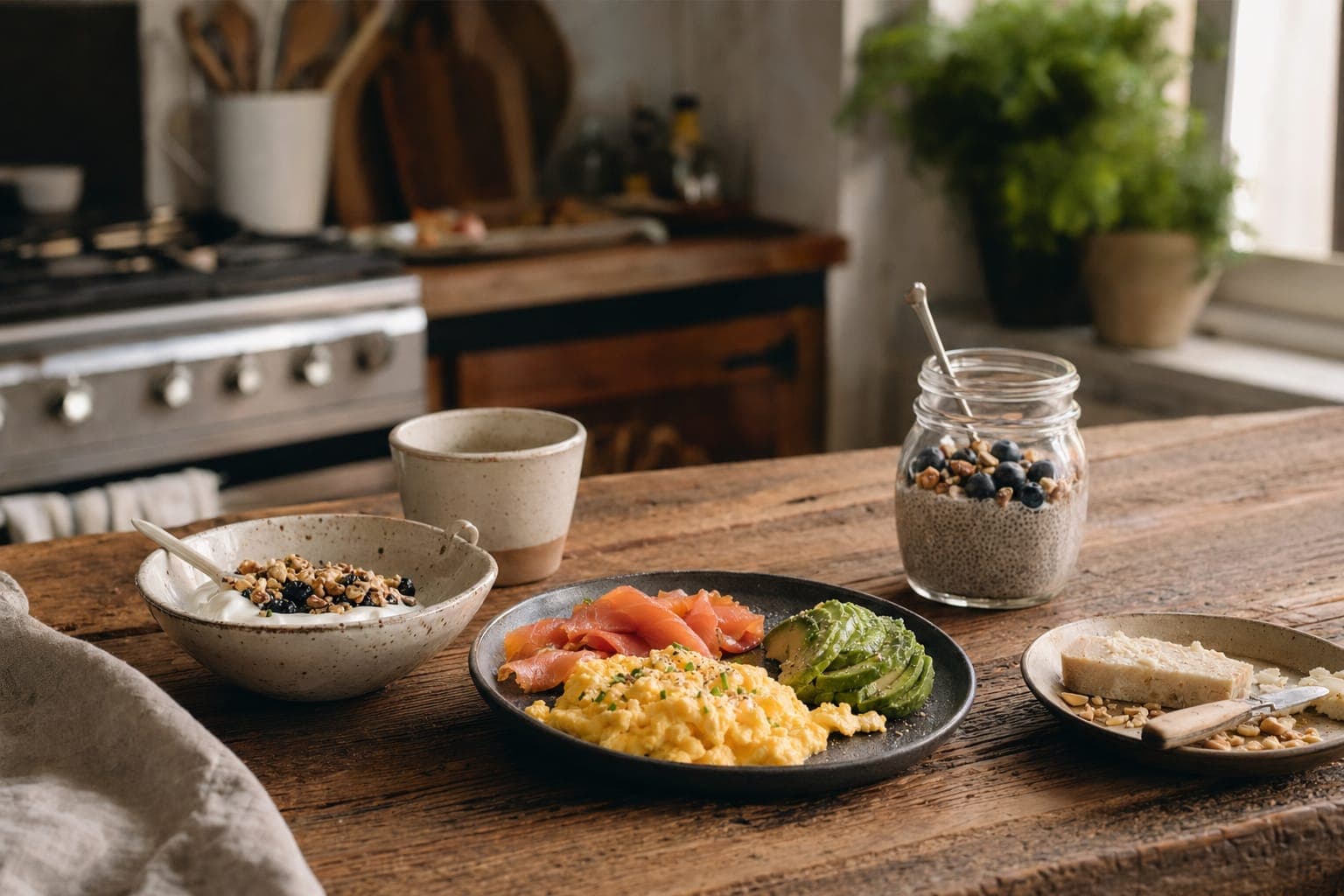
5-Minute High-Protein Breakfasts Using Organised
Quick, high-protein breakfast ideas using Organised. Five recipes you can make in minutes with real food. No fussing around.
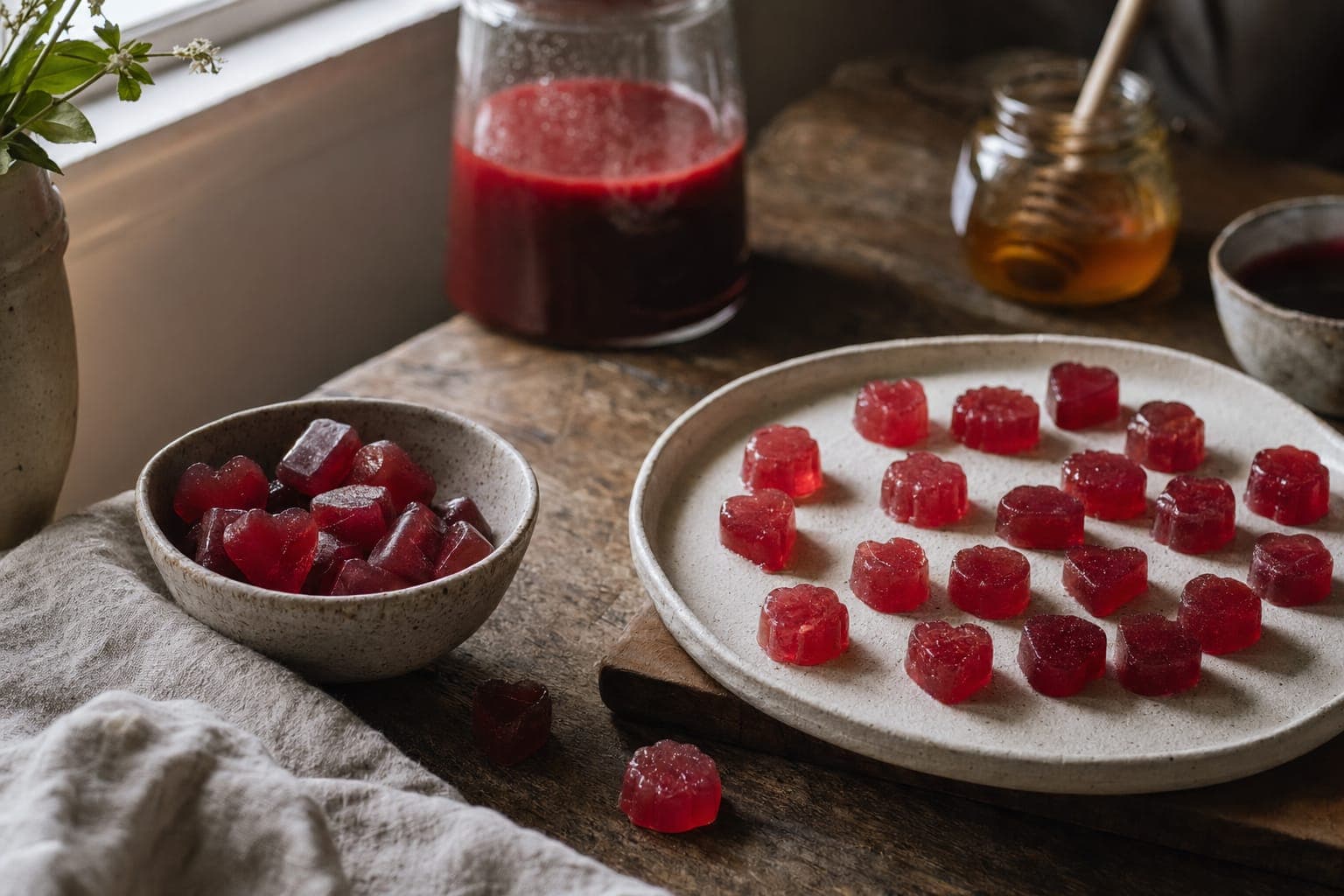
How to Make Your Own Gelatine Gummies
A simple recipe for homemade gelatine gummies using grass-fed gelatine, fresh juice, and raw honey. Better than shop-bought, kids love them.


 Join over 100,000+ members
Build a better food system with us
The Organised community is thousands of people choosing real food and backing the farmers who grow it, all of us trying to leave the world a little better than we found it. If that is what you care about too, you belong here.