Organised and Raw Milk: The Perfect Pairing
Most people mix Organised with water, or regular milk, or coffee. These work. But there's one pairing that genuinely maximises what your body does with the product: raw milk. Here's why.

By Niall Kiddle, Founder, Organised

Reviewed by Pedro Rodrigues, Agronomist (farming and sourcing only) ·
6 min read · Published · Updated · 4 cited sources
Makers of the Organised Daily blend, a grass-fed beef organ supplement from regenerative UK farms
Why raw milk matters
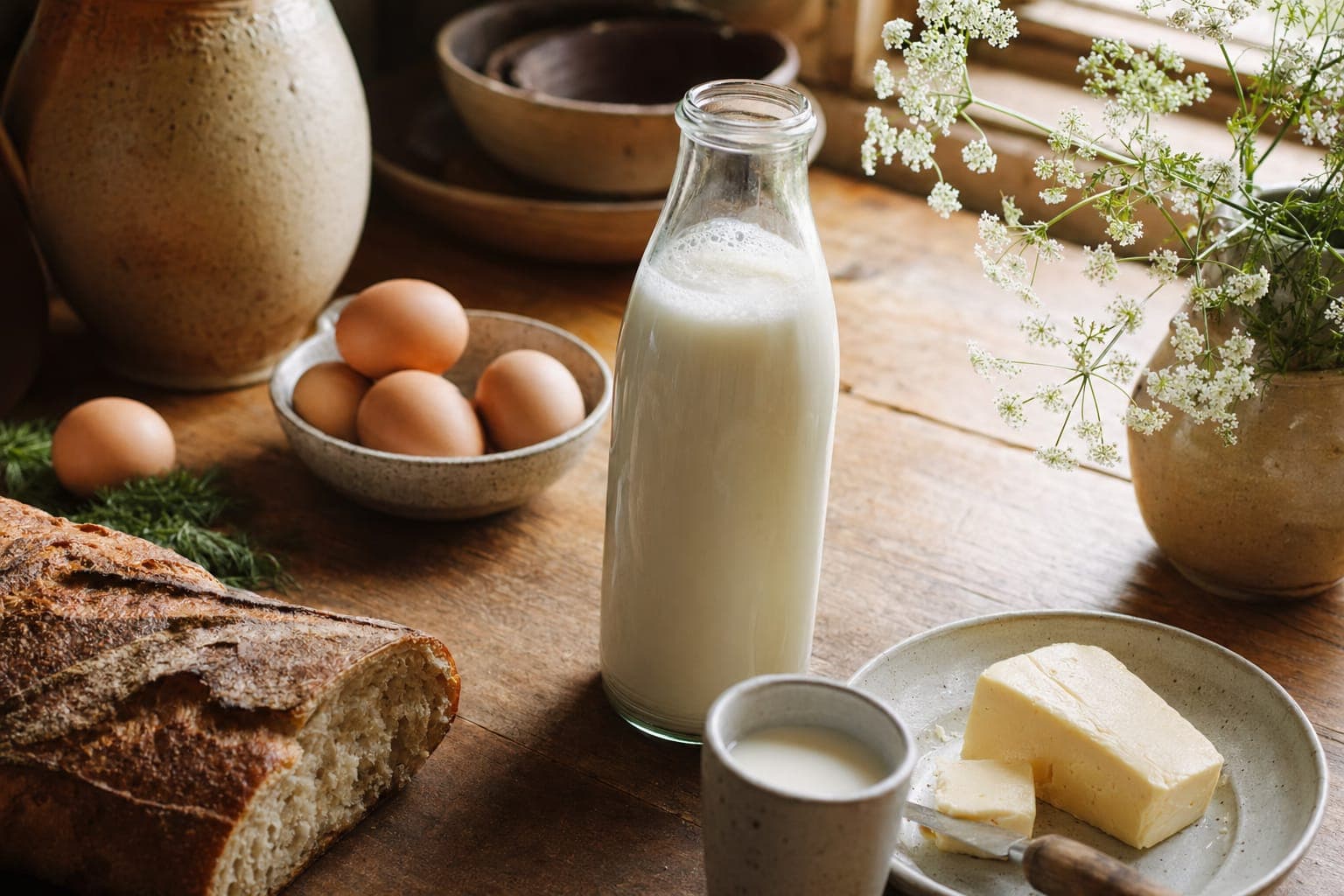
Raw milk is milk in its original state, untouched by heat, unpasteurised, unmolested. It contains living enzymes (lactase for digestion, alkaline phosphatase for mineral absorption), living bacteria (lactobacilli, streptococcus thermophilus), and fat in its native structure.
Pasteurised milk has been heated to a defined temperature for a defined period (typically 63°C for 30 minutes for batch pasteurisation, or 72°C for 15 seconds for HTST).1 This kills the living components. It extends shelf life. It makes milk shelf-stable. It also removes the mechanisms that make milk genuinely digestible and nutrient-dense.
Raw milk is not inherently dangerous if it comes from healthy, grass-fed cows. The risk narrative was built around industrial dairy, where poor hygiene made pasteurisation necessary. Good raw milk is safe milk.
Fat-soluble vitamin absorption
Organised contains fat-soluble vitamins because it comes from whole animals, retinol (vitamin A), vitamin D, vitamin K2. Your body absorbs fat-soluble vitamins more efficiently when they're consumed with dietary fat.2
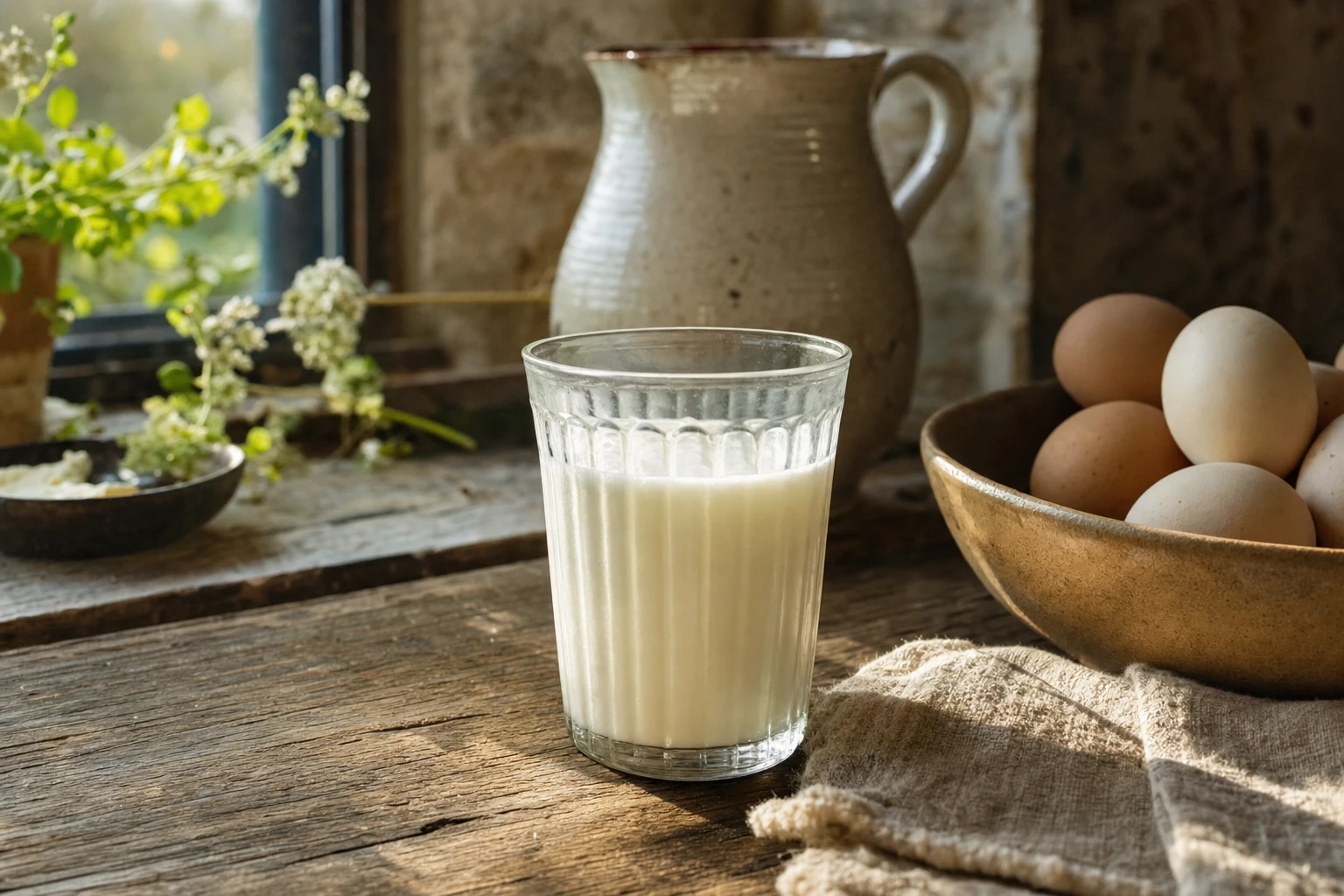
Raw milk's fat is in a native emulsion. Your digestive system recognises it and processes it efficiently. The bile acids that emulsify fat are already triggered. The vitamins in Organised absorb more readily.
Pasteurised milk has had its fat structure altered by heat, making it slightly less bioavailable. Water has no fat at all, so fat-soluble vitamin absorption drops significantly. Coffee with milk helps, but it's competing with caffeine's effects on digestion.
Living enzymes
Raw milk contains microbial enzymes including lactase activity.3 If you're sensitive to lactose in regular milk, raw milk is often fine because the lactase is still alive, ready to help your body break down the lactose.
Raw milk also contains alkaline phosphatase, which directly supports the absorption of minerals (calcium, magnesium, phosphorus). These minerals pair beautifully with collagen, they support mineralisation of bone and connective tissue.
When you drink Organised in raw milk, you're delivering collagen, fat-soluble vitamins, and mineral-absorption enzymes all at once. It's genuinely synergistic.
Gut health synergy
Collagen is a gut-healing nutrient. It's particularly good at rebuilding the intestinal lining. Raw milk contains lactic acid bacteria that feed on the proteins in milk, creating a slightly acidic environment that supports good bacteria growth.
Together, they support gut restoration better than either alone. Collagen rebuilds the structure. Beneficial bacteria thrive on the fermentation environment created by raw milk's living enzymes.
How to source it
Raw milk is legal in England, Wales, and Northern Ireland when sold from registered farms.4 Find a local dairy through the Raw Milk Company or a farmers market. You're looking for milk from grass-fed, well-managed cows. The milk should be bottled the day of collection or the day after. It should be pale cream, not bright white.
Cost varies, but typically £0.80-1.50 per litre. It's slightly more than pasteurised milk, but for the sake of true nutrient density, it's worth it.

The perfect ratio
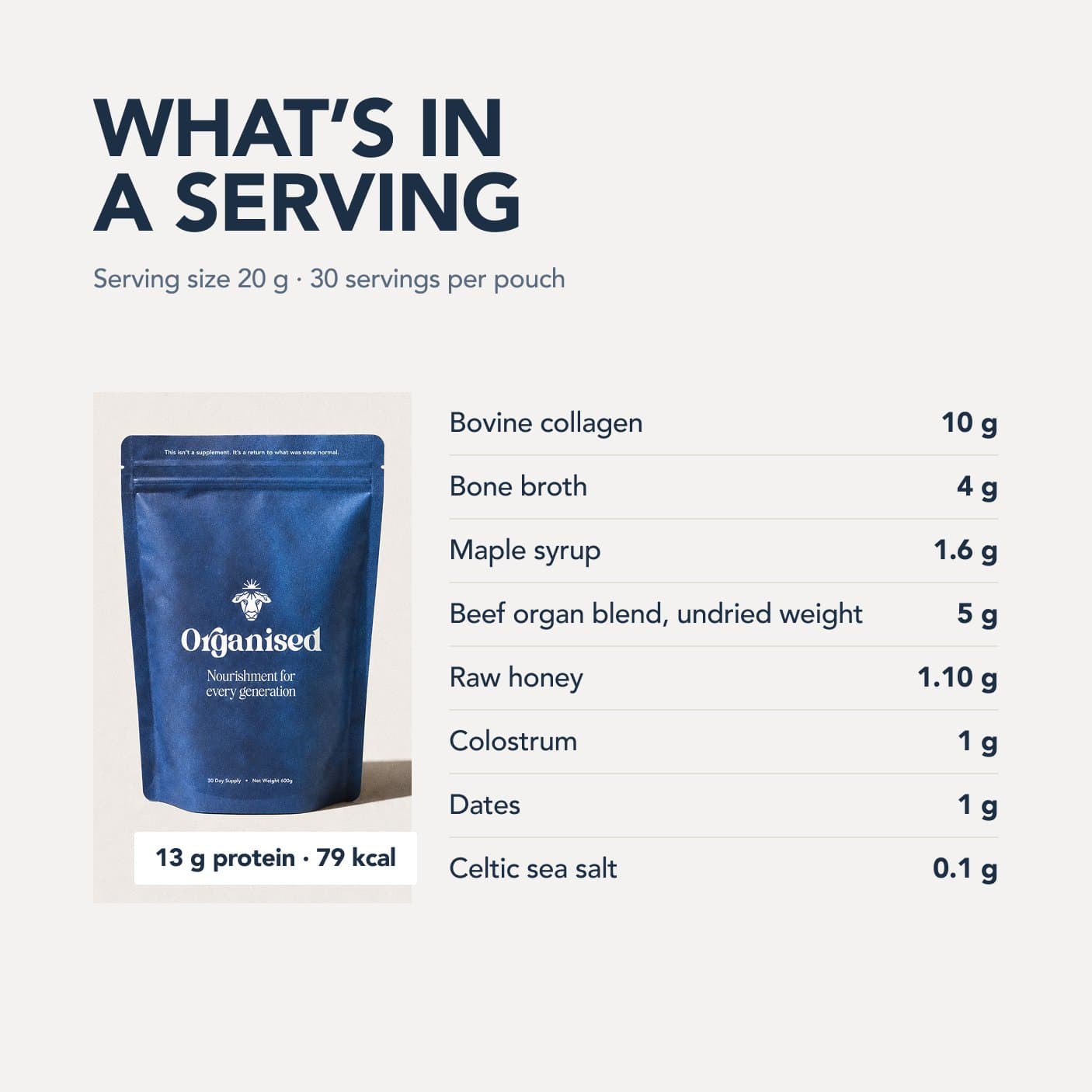
One serving of Organised (20g) mixed with 250ml raw milk. The ratio is light enough that the milk doesn't become overwhelmingly thick, but concentrated enough that you get genuine satiety and sustained energy.
Some people go 200ml milk for a thicker shake. Others use 300ml for something more liquid. The range of 200-300ml is genuinely flexible.
Comparing other liquid options
Water is convenient but offers zero fat for fat-soluble vitamin absorption. Organised dissolves in water but the vitamins can't absorb without dietary fat present elsewhere in your meal.
Pasteurised whole milk is substantially better than water. The fat helps absorption. You lose the enzymes, but you gain stability and shelf life. If raw milk isn't accessible where you live, full-fat pasteurised milk is your second-best option.
Coffee with milk is popular but caffeine interferes with nutrient absorption. The gallic acid in coffee binds minerals, reducing bioavailability. If you must drink Organised with coffee, do it at separate times of day. Don't combine them in the same cup.
Goat's milk is slightly richer than cow's milk and carries different fat-soluble vitamin profiles. It works beautifully with Organised. The fat structure is slightly smaller (more easily digested), which some people prefer. Sheep's milk is richer still and particularly good if you find cow's milk heavy.
Plant-based milk (almond, coconut, oat) is suboptimal. Most commercial versions are thin, heavily processed, and carry additives. If you must use plant milk, choose coconut (naturally higher in fat) and make it yourself. Even then, you're losing the enzyme synergy that raw milk provides.
Get recipes and routines, free
Two short reads a week of simple, nutrient-dense recipes and daily routines.
By signing up you agree to receive emails from us. No spam, unsubscribe anytime.
Storage and freshness of raw milk
Raw milk stays fresh in the fridge for 7-10 days if properly sealed. Some sources say two weeks. The variation depends on the initial bacterial load (lower is better) and how cold your fridge runs. Keep it at the back of the fridge where it's coldest, never on the door.
A test: open the milk and smell it. Fresh raw milk smells fresh and slightly creamy. Spoiling raw milk smells distinctly sour and vinegary. If it smells off, it's off. Trust your nose.
If you buy raw milk infrequently, you can freeze it in ice cube trays. Defrost one cube at a time as needed. This preserves the milk for several months. Freezing does damage some of the enzyme structure, but the fat and vitamins stay intact. It's better than letting milk go to waste.
Safety considerations and sourcing
Raw milk from healthy, well-managed cows is genuinely safe. The risk narrative comes from industrial dairy, where poor sanitation made milk a vector for disease. Small-scale pasture-based dairies have virtually zero incidents of pathogenic contamination.
When sourcing raw milk, visit the farm if possible. See the cows. Check their condition. Meet the farmer. Ask about testing, cleanliness protocols, and their personal consumption practices. If the farmer drinks their own milk raw, that's a good sign.
If you're immunocompromised, pregnant, or have a severely compromised gut, talk to your GP before drinking raw milk. The standard advice is to avoid it, though individual circumstances vary.

1 of 9
Daily blend
100,000+ thriving families4.9 on Trustpilot
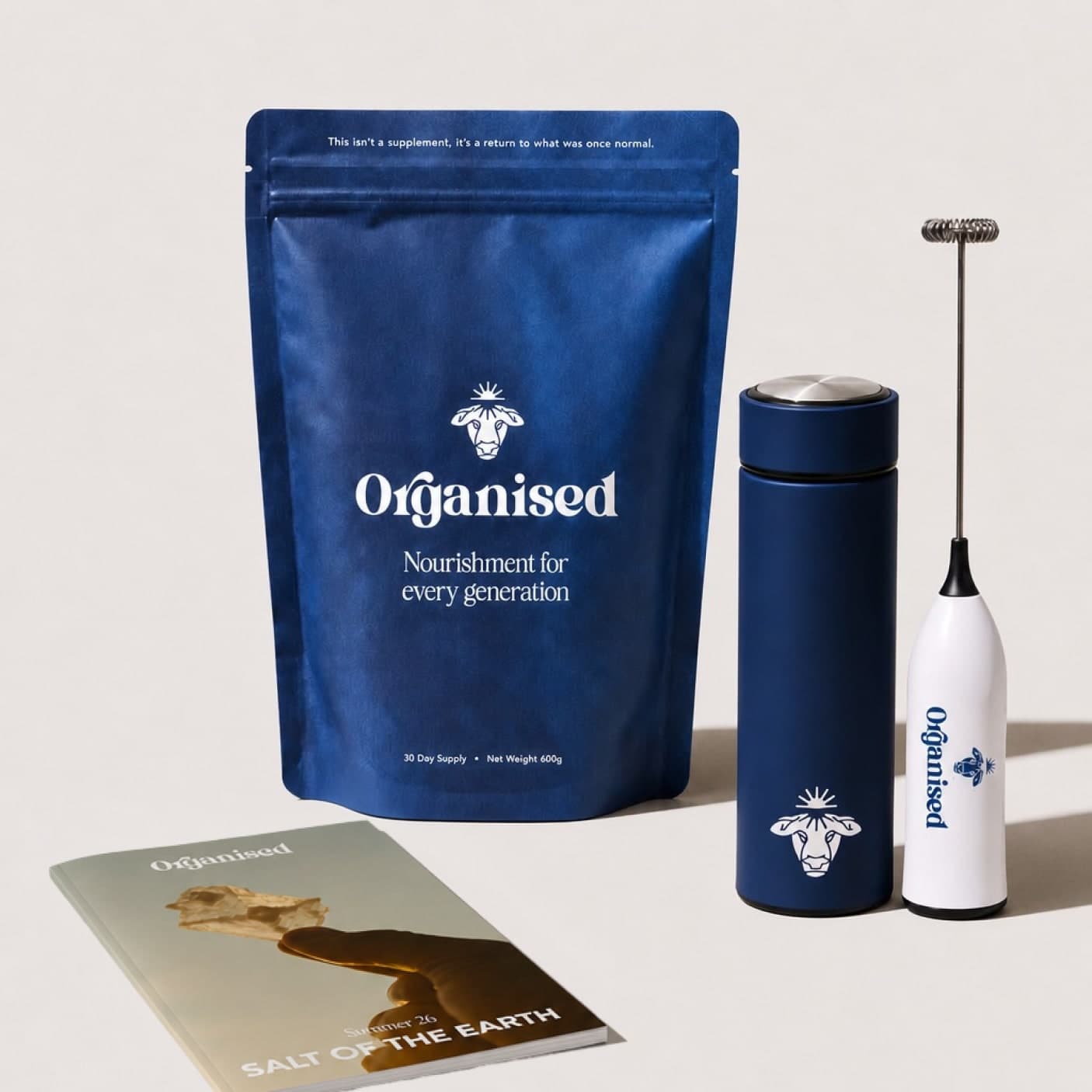
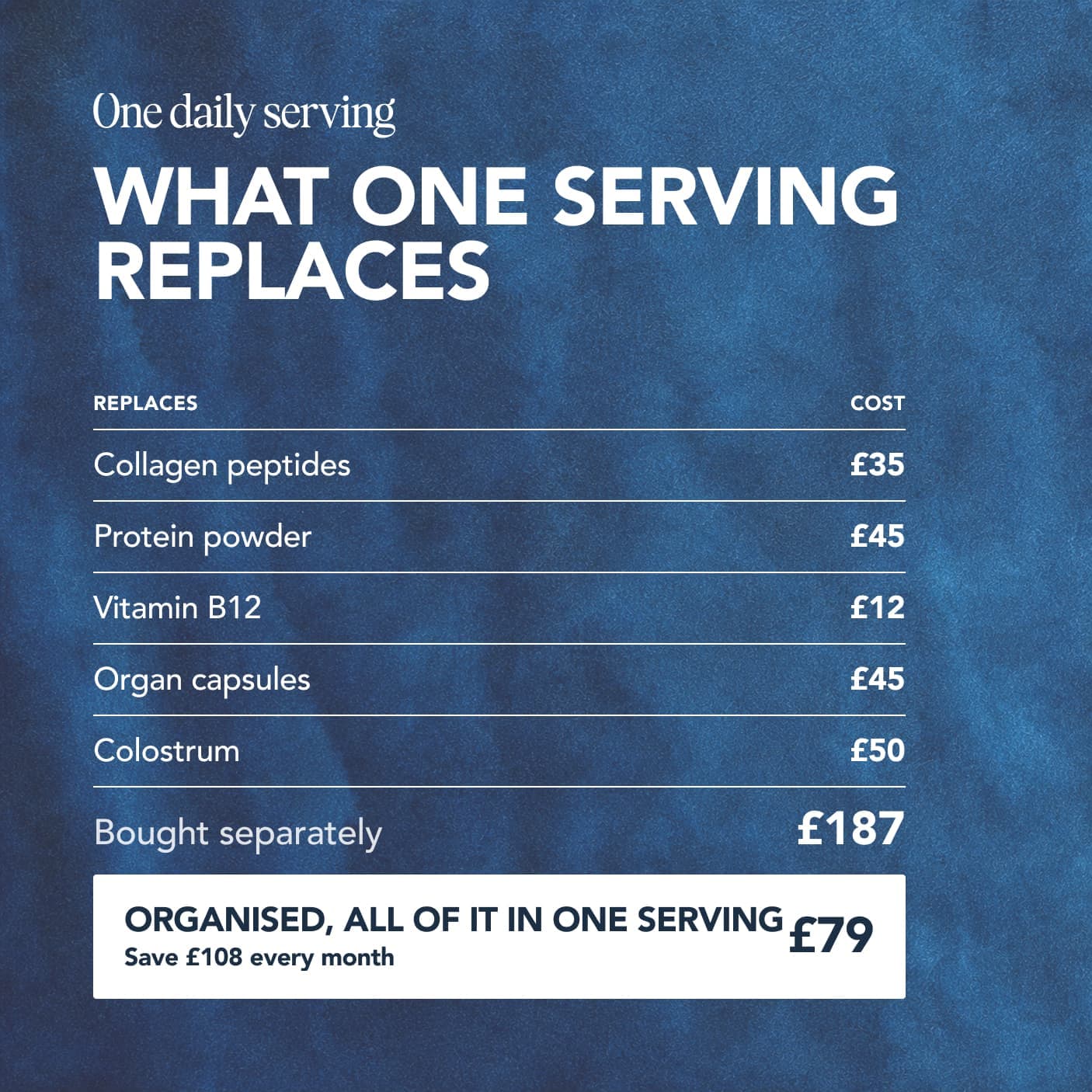
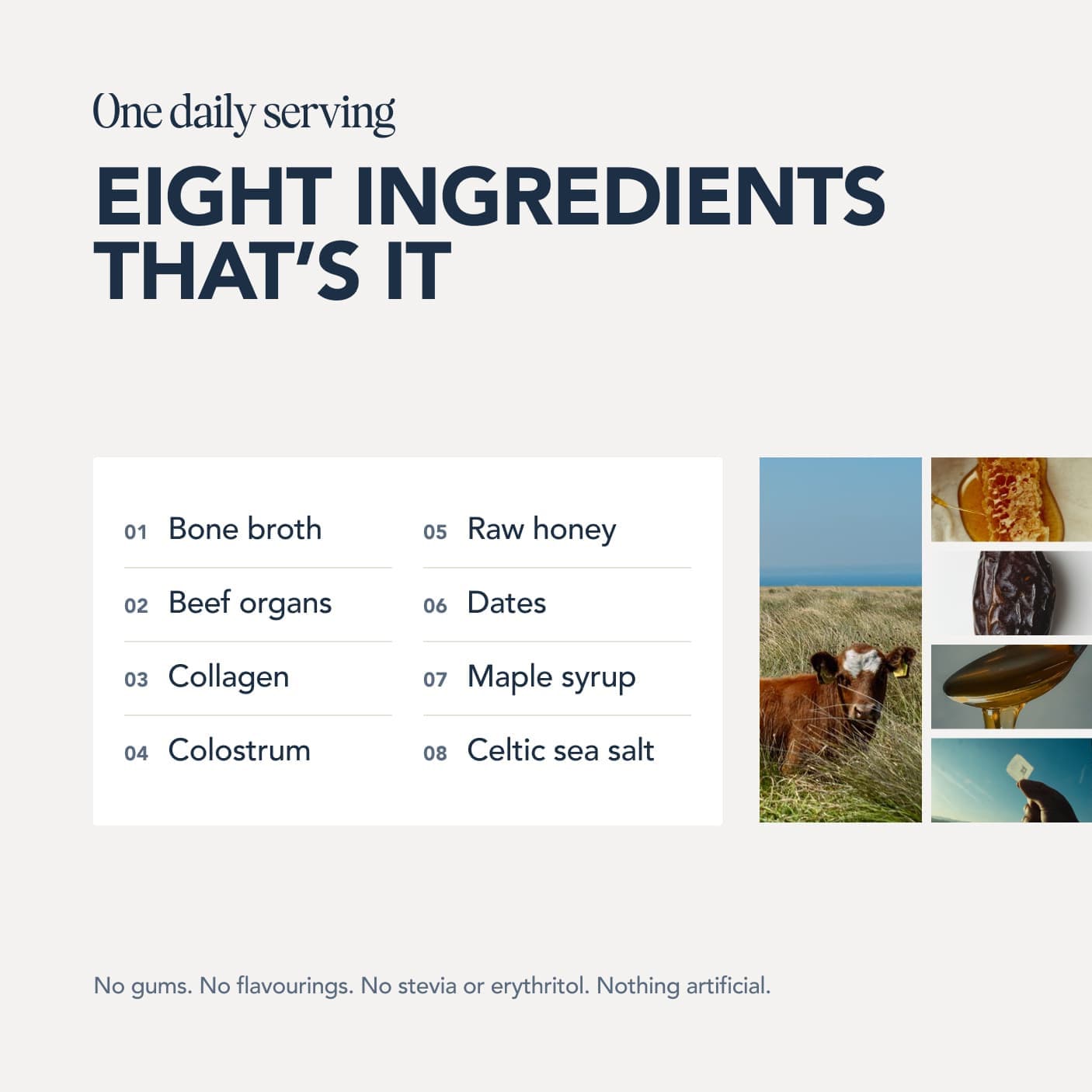
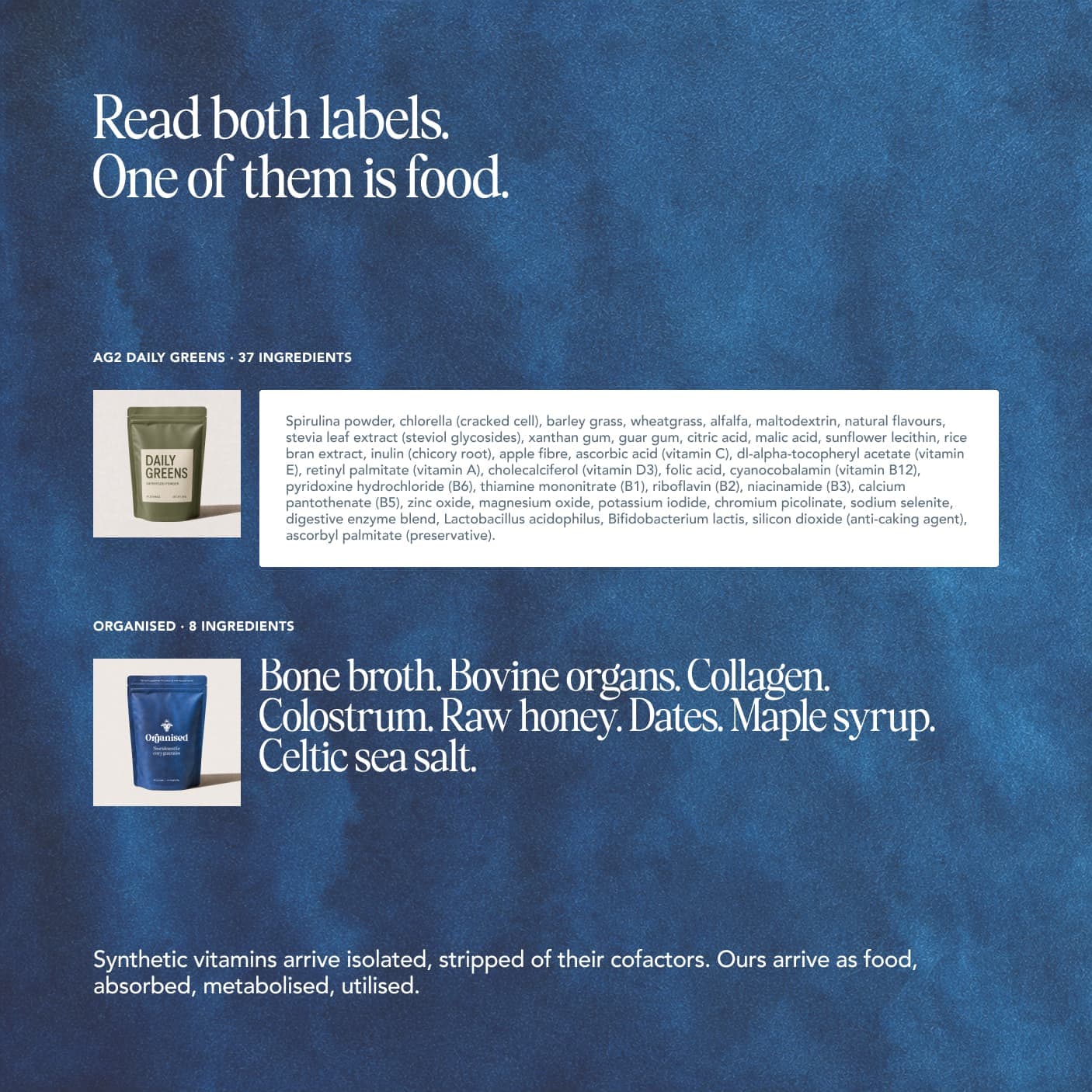
Eight real ingredients built around grass-fed beef organs, collagen and colostrum. Nothing synthetic added.
Free with your first order, worth £38. Plus £10 off the pouch with a subscription.



Free UK shipping · Made in England · 100 day money back guarantee on your first pouch · Skip, pause or cancel anytime
Making the most of the pairing
The ideal way to use this combination is simple: one serving of Organised mixed into 250ml raw milk. Stir or blend smoothly. Drink within five minutes or let it sit up to 30 minutes if you prefer it thicker.
You can drink it cold or warm it gently (never boil, heating above 40°C damages the enzyme structure). Some people warm it to body temperature and sip it slowly, treating it like a medicine rather than a drink. This slows digestion slightly and improves absorption further.
If you're combining this with a meal (breakfast, lunch), timing matters slightly. Drink the Organised and raw milk shake five to ten minutes before eating solid food. This gives your digestive enzymes time to wake up and prepare for the incoming meal. The minerals and fat-soluble vitamins from the shake signal your body that nutrition is coming.
Long-term consistency and results
The synergy between Organised and raw milk compounds over weeks. Week one, you'll notice slightly smoother digestion. Week two, your energy becomes more stable. Week three, your skin quality often improves (good fat and collagen together). Week four, your hair and nails become noticeably stronger. These aren't dramatic changes, they're shifts you notice when you're paying attention.
If you stop using raw milk and switch to pasteurised, you won't feel immediate difference. But over weeks, the nutrient absorption drops. Your energy dips slightly. Your skin becomes less clear. These are subtle losses, not dramatic ones, but they're real.
The bottom line
If you're going to take Organised, and you have access to raw milk, use it. The combination genuinely maximises absorption and delivery in ways that other liquids don't. It's not a dramatic difference. It's a measurable improvement. Over weeks and months, measurable improvements compound. That's where the real shift happens, not in single days or meals, but in the consistency of choosing the best option repeatedly.
References
Every source below was checked on 27 August 2026. Each PubMed, PMC and DOI identifier was resolved against NCBI or Crossref, and what it opens is printed under the citation, so you can see the link goes where the citation says without leaving the page. Where a citation and its identifier disagreed, the citation was corrected to the record or the reference was deleted along with the sentence marker that pointed at it, and where the resolved paper turned out not to support the sentence, the sentence was cut back to what it does support. Borrowed authority is worse than none, because it looks like rigour.
- UK Food Standards Agency. Dairy hygiene.
- National Institutes of Health, Office of Dietary Supplements. Vitamin A and Carotenoids: Fact Sheet for Health Professionals.
- Macdonald LE et al. A systematic review and meta-analysis of the effects of pasteurization on milk vitamins, and evidence for raw milk consumption and other health-related outcomes. J Food Prot. 2011;74(11):1814-32. PMID: 22054181.Checked 27 August 2026: PMID 22054181 opens Macdonald LE, Brett J, Kelton D et al, A systematic review and meta-analysis of the effects of pasteurization on milk vitamins, and evidence for raw milk consumption and other health-related outcomes. J Food Prot 2011;74(11):1814-32. PubMed indexes it as: Meta-Analysis, Systematic Review.
- UK Food Standards Agency. Raw drinking milk.
Who wrote and reviewed this guide
Niall Kiddle
Author · Founder, Organised
Niall is the founder of Organised. He started the company in 2024 after fixing his own health the slow way: in 2022 he swapped a cupboard of synthetic supplements for real food, raw milk, organ meats, bone broth and honey, and felt the difference within months.
Areas of expertise: Ancestral nutrition, Organ meats, Whole-food supplementation, Gut health, Regenerative sourcing
Read Niall's full profile
Pedro Rodrigues
Reviewer · Agronomist (farming and sourcing only)
Pedro is the agronomist Organised works with on farming and sourcing. His job on the guides is to keep the science honest: he reviews what we publish about soil health, regenerative agriculture, grazing and the way food is actually produced.
Areas of expertise: Regenerative agriculture, Agronomy, Soil health, Grass-fed farming, Food sourcing
Reviewed this guide on
Read Pedro's full profileMore on guides
View all- How to Start Taking Organised: A Beginner's Guide
- Can I Take Organised While Fasting?
- Can You Cook with Organised?
- How Much Organised Should I Take Per Day?
- How to Mix Organised with Cold Water (And Make It Taste Great)
- Organised FAQ: Every Question Answered
- The Best Time of Day to Take Organised
- The Complete Guide to Mixing Organised into Anything
- The Organised Stacking Guide: Adding Real Food to Your Routine
- What to Expect in Your First 30 Days Taking Organised
Browse the guides library
All guidesKeep reading
Recipes & routines
10 Ways to Use Organised That Aren't Just a Shake
Move beyond the basic shake. Discover 10 creative ways to use Organised in smoothie bowls, oats, yoghurt, baking, and more.

Recipes & routines
Organised FAQ: Every Question Answered
The complete Organised FAQ: taste, the two heaped tablespoon serving, mixing, pregnancy, children, allergens, storage, results, and the 100-day guarantee.

Recipes & routines
Ancestral Breakfast Ideas from Around the World
Traditional breakfast recipes from cultures that got nutrition right. Japanese, Turkish, Scottish, and more. Whole-food breakfast inspiration.
Real food, made effortless
Add it to my routineA few ways to use it
All recipes10 Ways to Use Organised That Aren't Just a Shake
Move beyond the basic shake. Discover 10 creative ways to use Organised in smoothie bowls, oats, yoghurt, baking, and more.
Ancestral Breakfast Ideas from Around the World
Traditional breakfast recipes from cultures that got nutrition right. Japanese, Turkish, Scottish, and more. Whole-food breakfast inspiration.
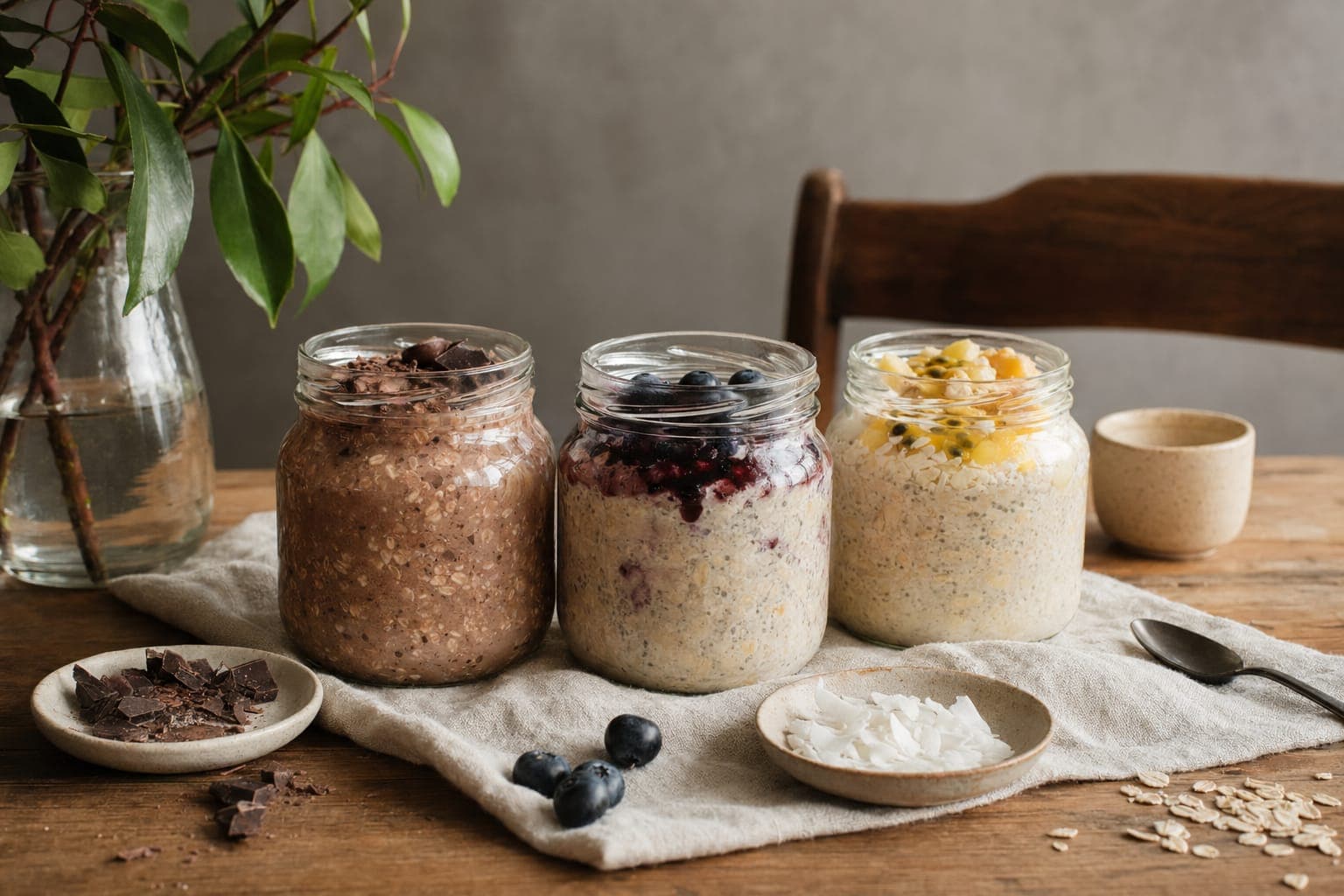
Organised Overnight Oats: 3 Variations
Three delicious overnight oats variations with Organised. Chocolate, berry, tropical flavours. Make them Sunday, eat them all week.


 Join over 100,000+ members
Build a better food system with us
The Organised community is thousands of people choosing real food and backing the farmers who grow it, all of us trying to leave the world a little better than we found it. If that is what you care about too, you belong here.