How to Make Your Own Gelatine Gummies
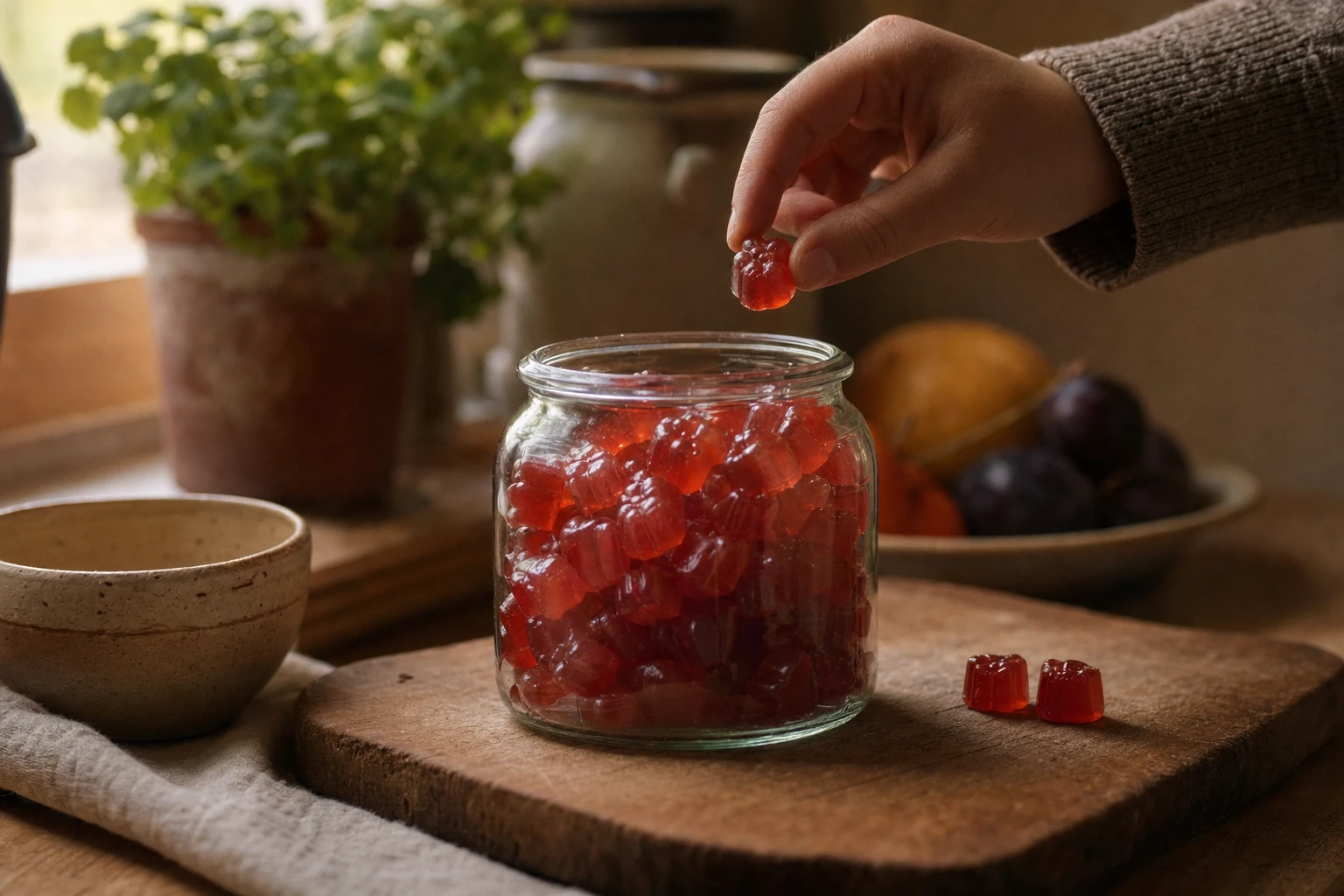
The gummy aisle at the supermarket is one of the most aggressively marketed sections of the entire store. Every product is shaped like something a child loves, coloured with synthetic dyes, and sweetened with sugar or artificial sweeteners. You can make these at home with three real ingredients and a silicone mould.

By Niall Kiddle, Founder, Organised

Reviewed by Pedro Rodrigues, Agronomist (farming and sourcing only) ·
4 min read · Published · Updated · 2 cited sources
Makers of the Organised Daily blend, a grass-fed beef organ supplement from regenerative UK farms
- Prep
- 5 min
- Cook
- 5 min
- Total
- 4 hr
- Makes
- 1 batch of gummies
- Type
- Snack
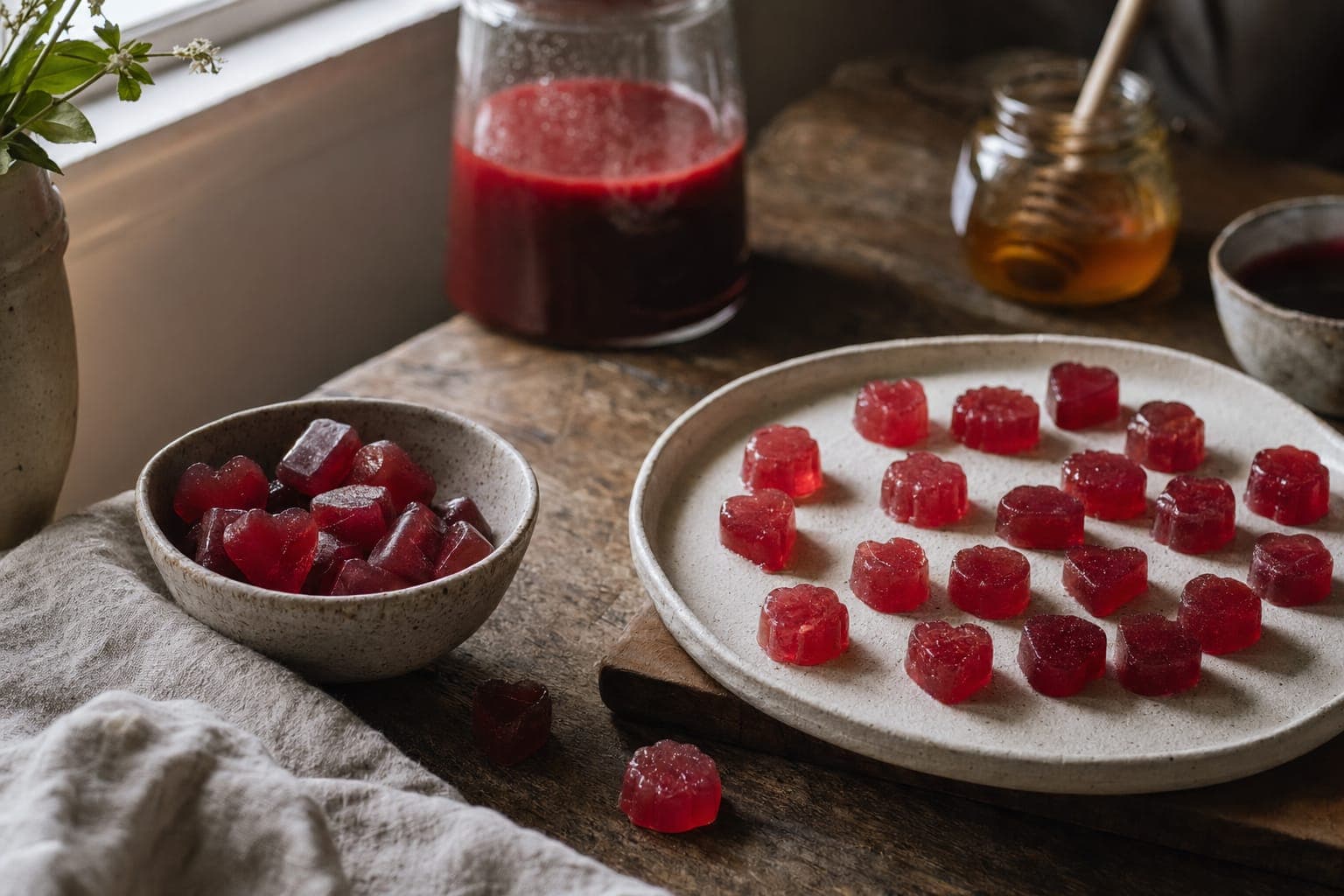
Shop-bought gummies are engineered specifically to be addictive. They hit the taste receptors for sweet, they're texturally satisfying, and they come in fun shapes. Your child's brain is wired to want more. These homemade gummies carry the texture and the fun but swap the processed ingredients for whole food. Grass-fed gelatine, real fruit juice, raw honey. That's it.
Why homemade gummies matter
Gelatine isn't something most people think about much. It's a protein derived from the collagen in animal bones and connective tissue.1 When you eat grass-fed gelatine, you're getting the same compounds that support gut lining integrity, skin elasticity2, and joint health.
Your gut lining is a barrier. When it's intact, only fully digested nutrients pass through. When it's compromised, undigested food particles, toxins, and inflammatory compounds slip through. Gelatine is glycine-rich, and glycine is one of the three amino acids that build the proteins that hold your gut lining together. Every gummy your child eats is literally building their digestive system.
You're not just making a sweet treat your kids enjoy. You're making a functional food that tastes like a reward but behaves like medicine. The trick is not telling them that part.
Fresh fruit juice carries vitamins and natural sugars alongside water. Raw honey brings minerals and enzymes. When mixed with gelatine and set in a mould, you've created something that doesn't spike blood sugar the way sugar-based gummies do. The protein and the fats from the gelatine slow absorption of the fruit sugars.
Ingredients and sourcing
Makes roughly 20-24 gummies depending on mould size. Serves as snacks throughout the week.
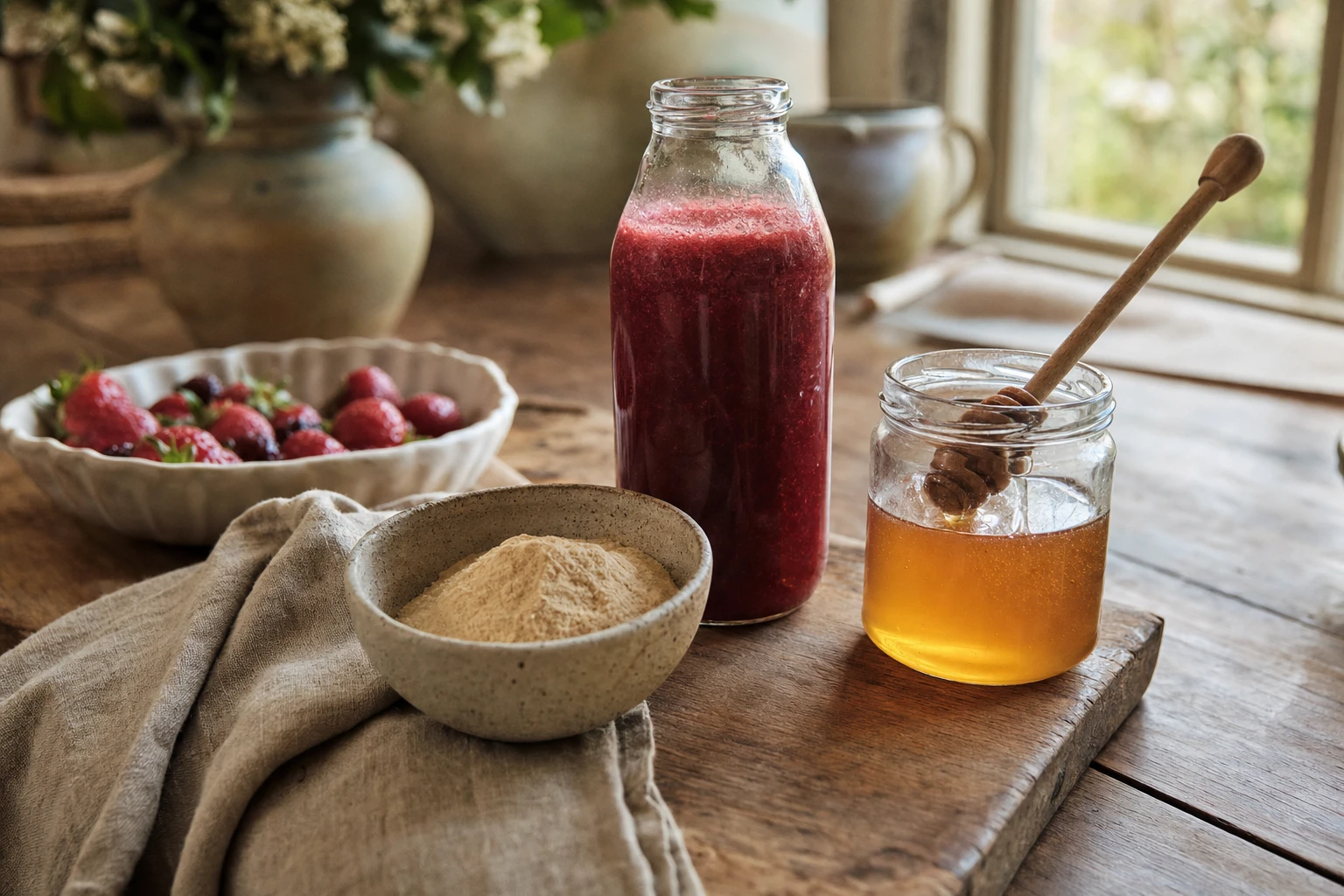
- Grass-fed gelatine powder - 15 grams (three teaspoons). This is crucial. Look for pasture-raised, non-GMO gelatine. Skip any product that doesn't specify the source. Mass-produced gelatine often comes from animals raised in poor conditions. The transparency matters.
- Fresh fruit juice - 240 millilitres (one cup). Apple juice, berry juice, or orange juice. Look for juice that's cold-pressed or freshly squeezed if you can find it. The heat used in pasteurisation damages some of the vitamin content, but the natural sugars and flavour remain.
- Raw honey - 1-2 tablespoons, depending on juice sweetness and taste preference. The honey isn't just for sweetness. It's a preservative and adds minerals (calcium, magnesium, zinc).
- Optional: lemon juice - half a teaspoon. This cuts any cloying sweetness and adds brightness.
You'll also need a silicone gummy mould. These are inexpensive and reusable. Avoid plastic moulds that stain easily. Silicone lasts indefinitely.
Get recipes and routines, free
Two short reads a week of simple, nutrient-dense recipes and daily routines.
By signing up you agree to receive emails from us. No spam, unsubscribe anytime.
Method
Takes 10 minutes active time, plus 2-4 hours setting time.
- Pour the fruit juice into a small saucepan. Warm it gently over medium heat until it's warm to the touch but not steaming. Around 45-50°C is ideal. You want it warm enough to dissolve the gelatine, but not so hot that you damage the juice's micronutrients.
- Add the gelatine powder slowly, stirring constantly with a fork or whisk. Take your time. You're dissolving the powder completely into the juice. Lumpy gelatine will set unevenly and taste gritty. Proper stirring takes about two minutes.
- Once the gelatine is fully dissolved and the mixture is smooth, remove from heat and stir in the raw honey and optional lemon juice. Taste. You want sweetness but not cloyingness. Remember that the flavour becomes more concentrated as it sets.
- Let the mixture cool slightly for two minutes. It should still be warm but not hot enough to hurt your lips.
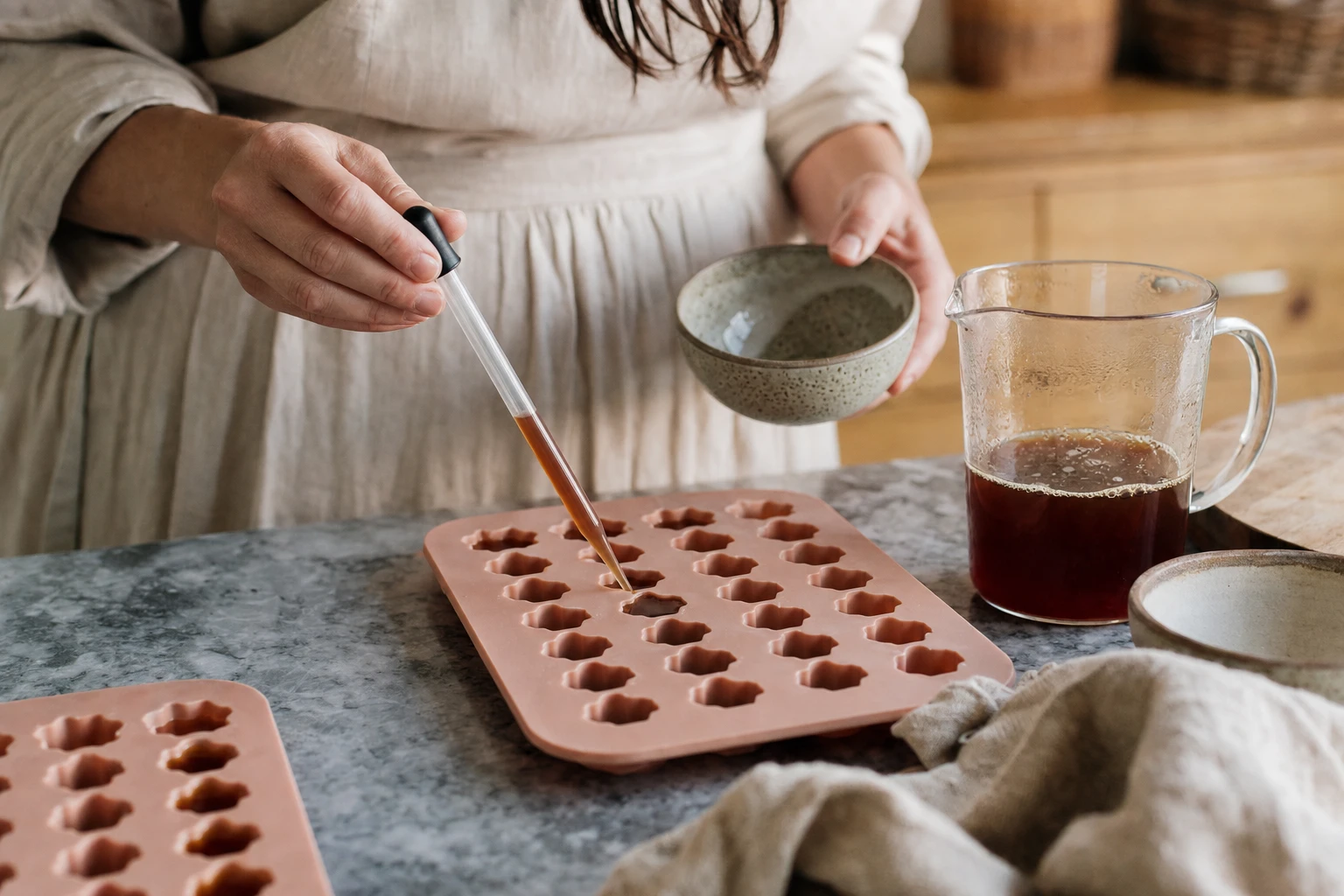
- Using a pipette, dropper, or small spoon, carefully fill the silicone moulds. Don't overfill. Leave roughly 2 millimetres of space at the top.
- Carefully transfer the moulds to the fridge on a level surface. If you tilt or shake them whilst the gelatine is setting, you'll get uneven, wobbly gummies.
- Set for 2-4 hours depending on mould size. Smaller moulds set faster. You can test readiness by gently pressing the top. It should feel firm but still yield slightly.
- Pop the gummies out by flexing the silicone or pressing gently from the base. Store in an airtight container in the fridge for up to one week.
Temperature control is the only trick here. Too hot and you damage the juice nutrients. Too cold and you'll get grainy texture. Warm, not hot.


1 of 9
Daily blend
100,000+ thriving families4.9 on Trustpilot
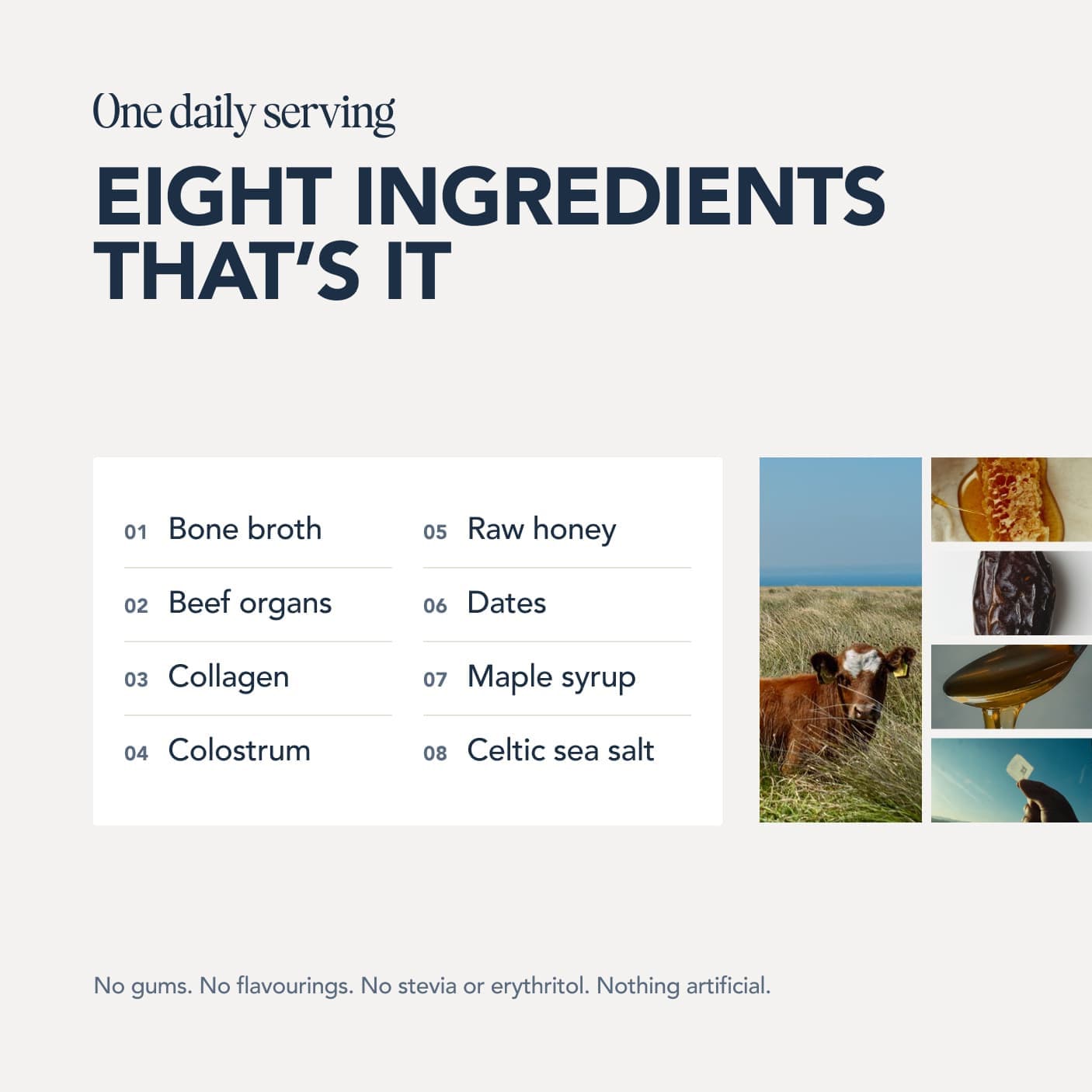
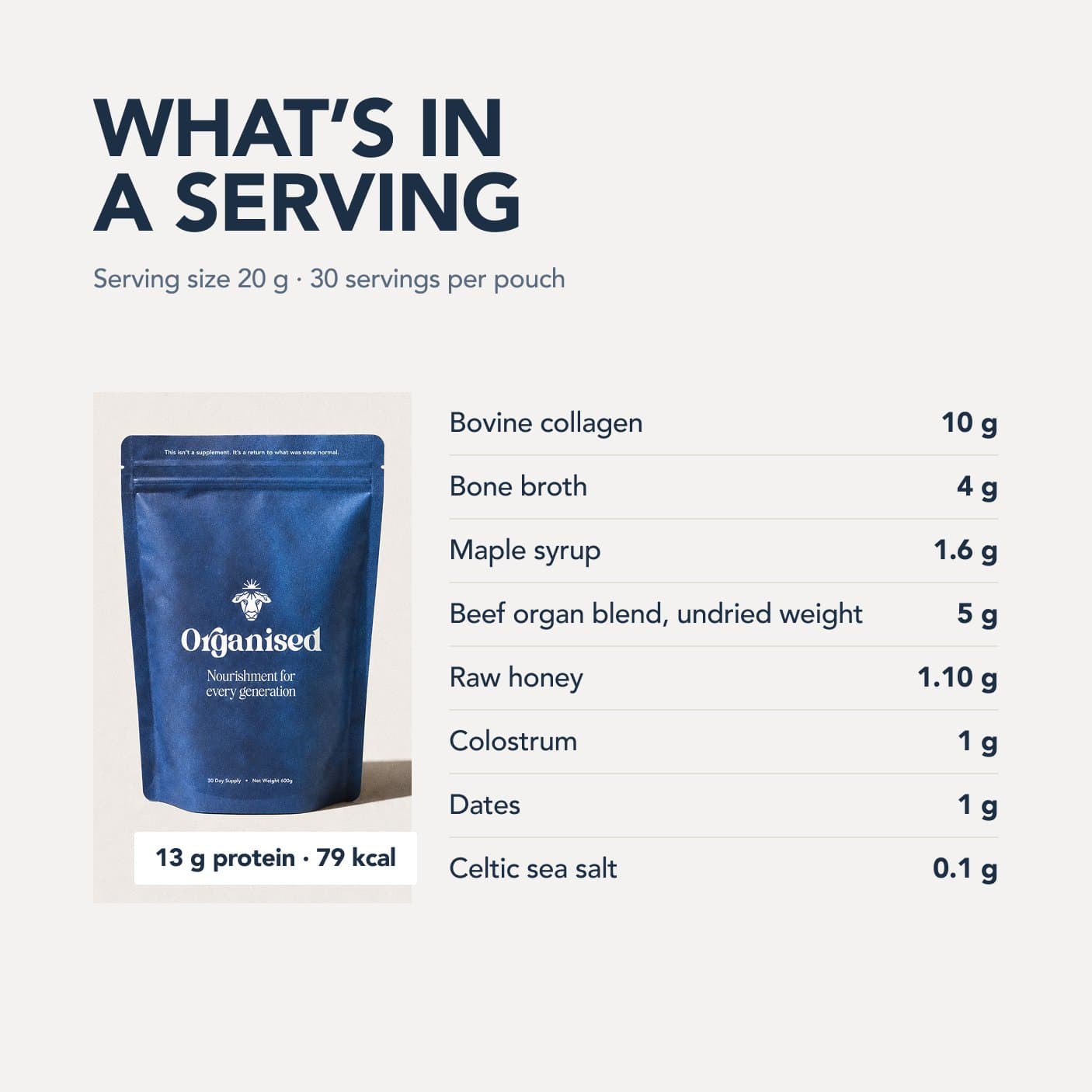
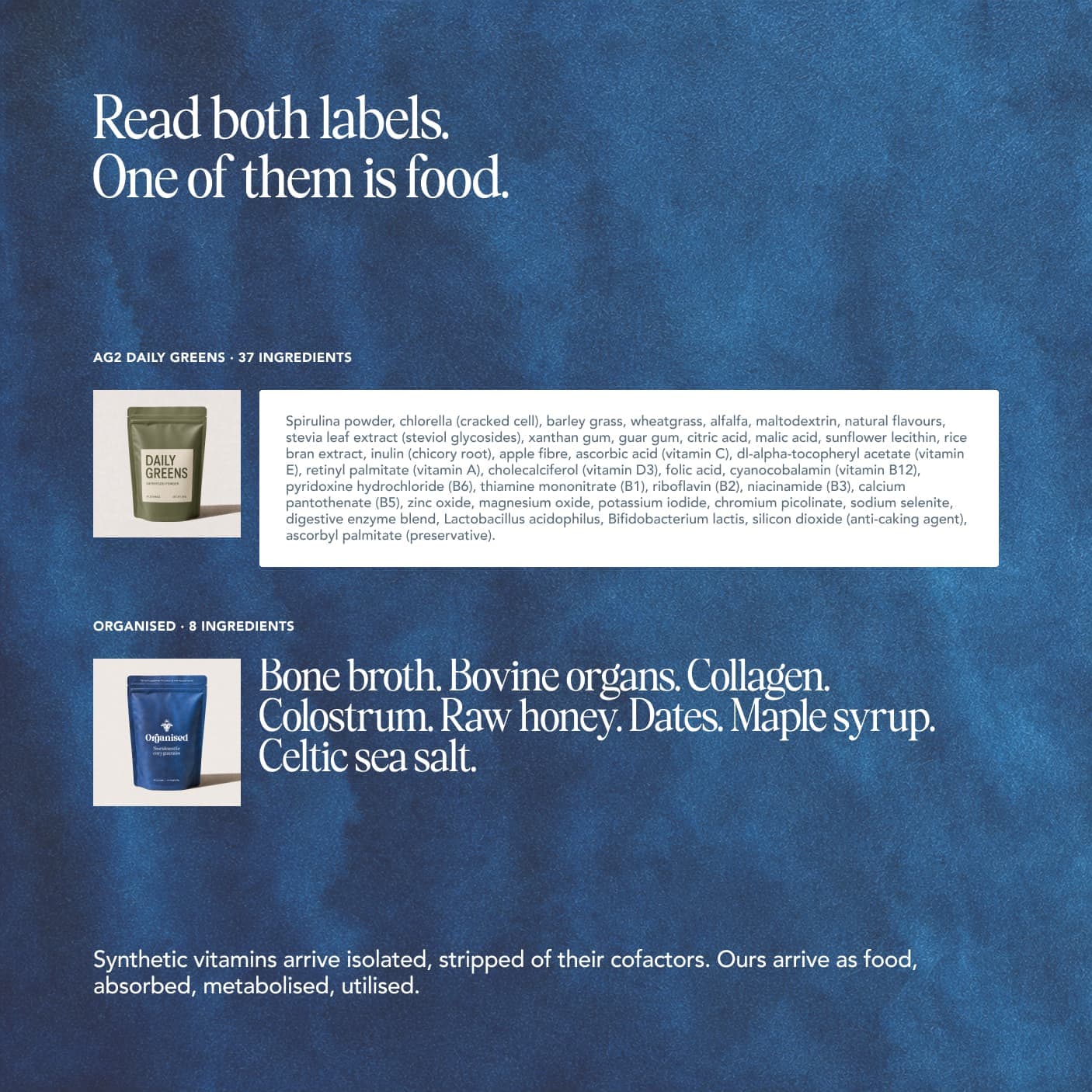
Eight real ingredients built around grass-fed beef organs, collagen and colostrum. Nothing synthetic added.
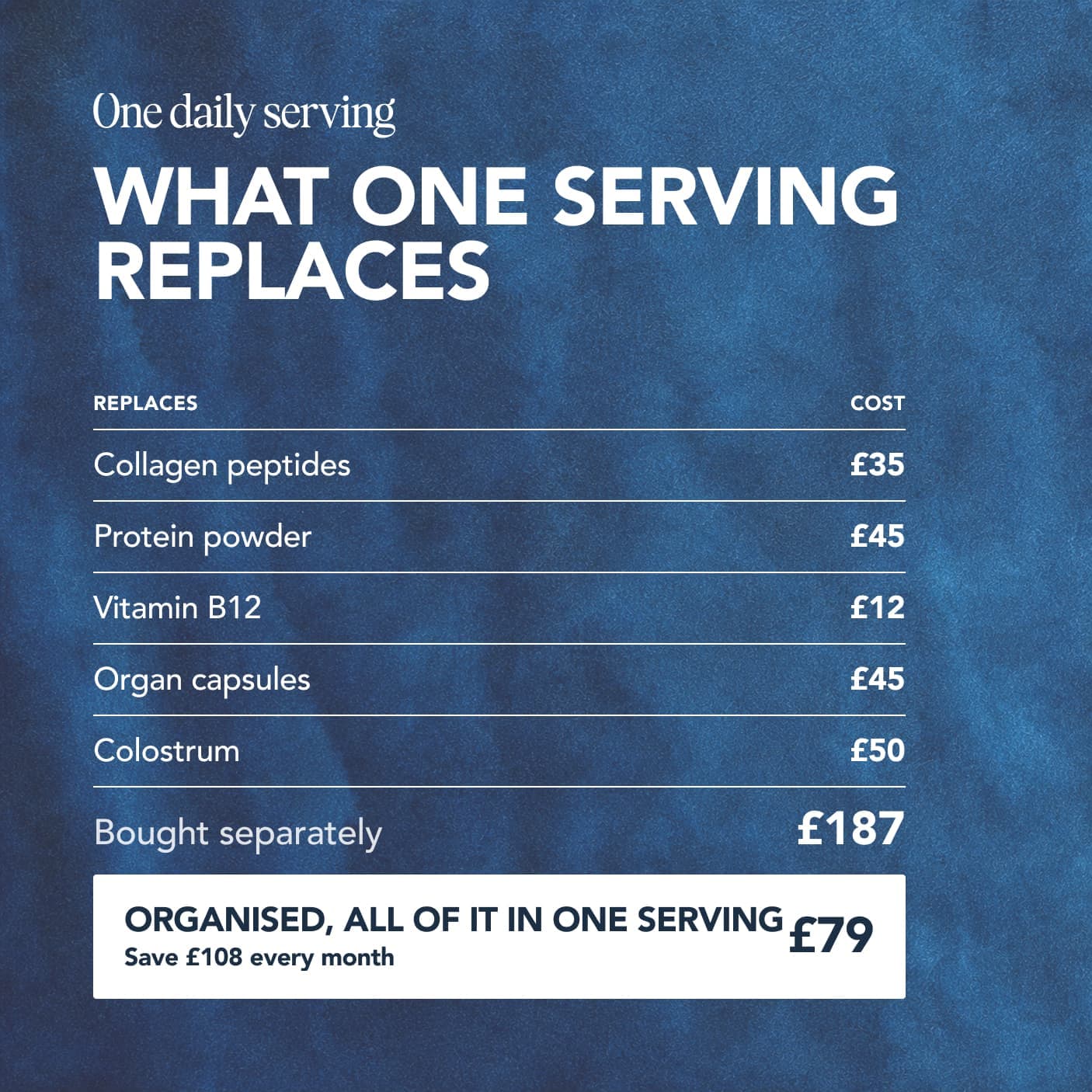
Free with your first order, worth £38. Plus £10 off the pouch with a subscription.

Free UK shipping · Made in England · 100 day money back guarantee on your first pouch · Skip, pause or cancel anytime
Storage and variations
Keep gummies in the fridge in an airtight container. They'll last a week easily. They'll soften slightly at room temperature, so don't leave them out if you want them to hold their shape.
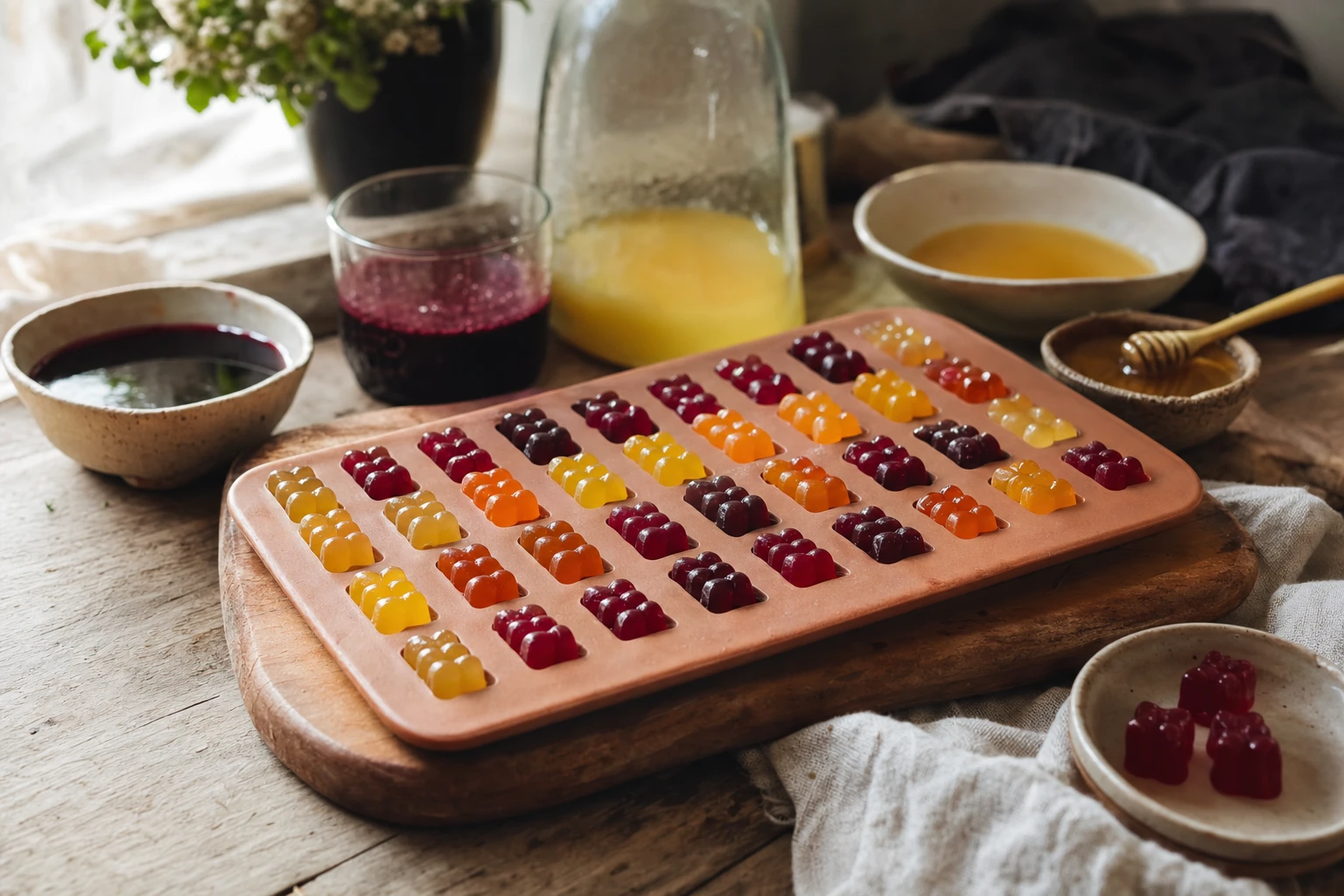
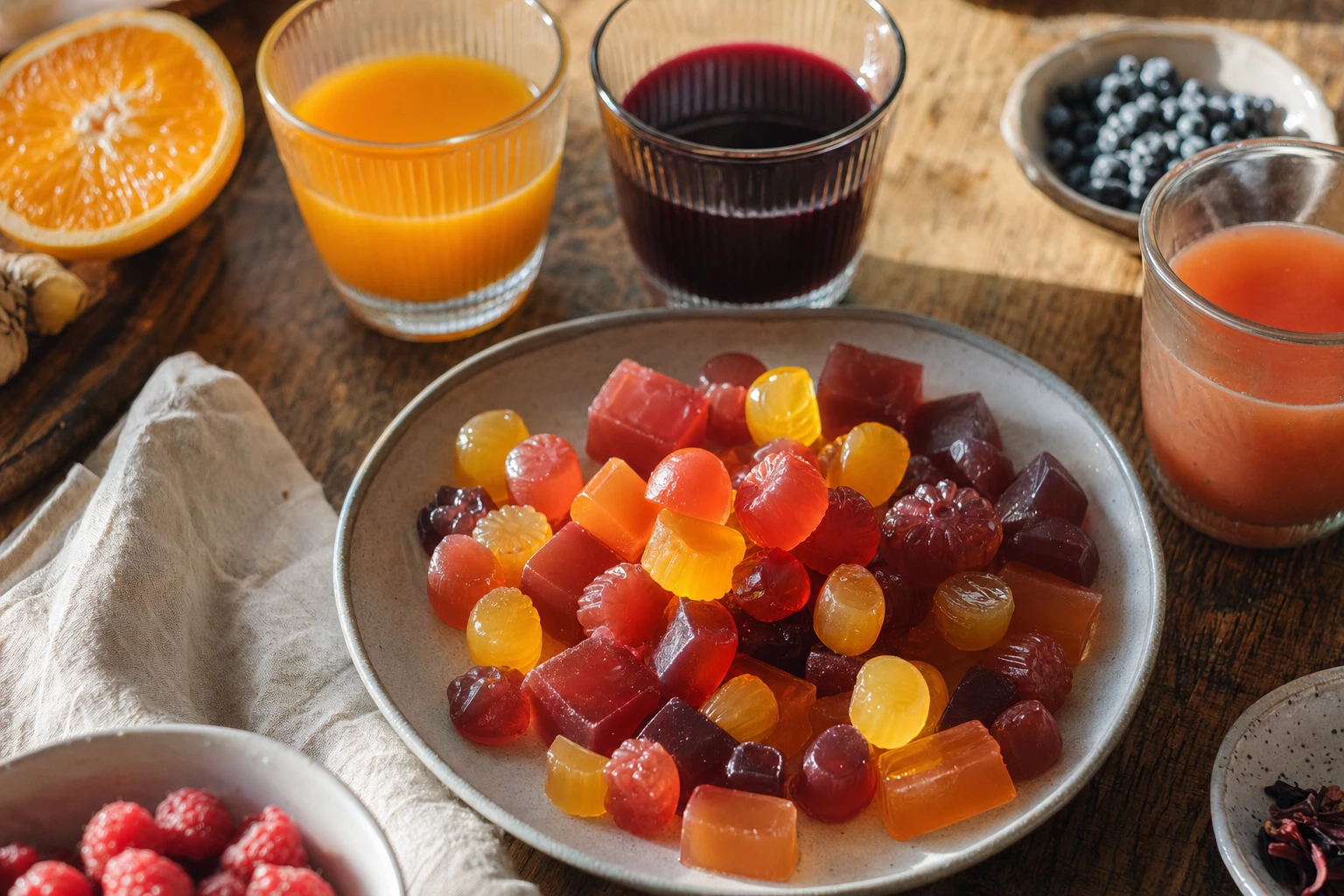
Variations are endless. Try different juices. Cranberry makes deep red gummies. Mango makes golden ones. Berry blends create jewel-like colours without food dyes. Some people add a teaspoon of collagen powder to increase the protein and glycine content, though this changes the texture slightly.
You can also use herbal tea instead of juice. Chamomile tea with honey makes calming gummies. Green tea with honey makes energising ones. The mechanism is the same. Gelatine plus liquid plus honey plus time equals gummies your kids actually want to eat.
The bottom line
Making these is absurdly simple. The ingredients are real. The result is something your children will choose over the supermarket versions once they realise you're the one making them. That power shift, where homemade food becomes the treat rather than the supermarket product, is worth the ten minutes of your time. Build this into a weekend routine and you've solved the snack problem for most of the week.
References
Every source below was checked on 27 August 2026. Each PubMed, PMC and DOI identifier was resolved against NCBI or Crossref, and what it opens is printed under the citation, so you can see the link goes where the citation says without leaving the page. Where a citation and its identifier disagreed, the citation was corrected to the record or the reference was deleted along with the sentence marker that pointed at it, and where the resolved paper turned out not to support the sentence, the sentence was cut back to what it does support. Borrowed authority is worse than none, because it looks like rigour.
- Karim AA, Bhat R. Gelatin alternatives for the food industry: recent developments, challenges and prospects. Trends Food Sci Technol. 2008. sciencedirect.com.
- Proksch E, et al. Oral supplementation of specific collagen peptides has beneficial effects on human skin physiology: a double-blind, placebo-controlled study. Skin Pharmacol Physiol. 2014. PMID 23949208.Checked 27 August 2026: PMID 23949208 opens Proksch E, Segger D, Degwert J et al, Oral supplementation of specific collagen peptides has beneficial effects on human skin physiology: a double-blind, placebo-controlled study. Skin Pharmacol Physiol 2014;27(1):47-55. PubMed indexes it as: Randomized Controlled Trial.
Who wrote and reviewed this guide
Niall Kiddle
Author · Founder, Organised
Niall is the founder of Organised. He started the company in 2024 after fixing his own health the slow way: in 2022 he swapped a cupboard of synthetic supplements for real food, raw milk, organ meats, bone broth and honey, and felt the difference within months.
Areas of expertise: Ancestral nutrition, Organ meats, Whole-food supplementation, Gut health, Regenerative sourcing
Read Niall's full profile
Pedro Rodrigues
Reviewer · Agronomist (farming and sourcing only)
Pedro is the agronomist Organised works with on farming and sourcing. His job on the guides is to keep the science honest: he reviews what we publish about soil health, regenerative agriculture, grazing and the way food is actually produced.
Areas of expertise: Regenerative agriculture, Agronomy, Soil health, Grass-fed farming, Food sourcing
Reviewed this guide on
Read Pedro's full profileMore on recipes
View all- 10 Ways to Use Organised That Aren't Just a Shake
- 5-Minute High-Protein Breakfasts Using Organised
- Ancestral Breakfast Ideas from Around the World
- Bone Broth from Scratch: A Step-by-Step Guide
- Collagen-Rich Beef Stew: Slow-Cooked Nourishment
- Energy Balls with Organised, Dates and Raw Honey
- Gut-Healing Marshmallows with Collagen and Raw Honey
- How to Make Bone Marrow Butter
- Liver Pate for Beginners: A Gentle Introduction to Organ Meats
- Matcha Latte Gummies with Collagen and Gelatine
- Organ Bolognese: The Family Dinner That Heals
- Organised Chia Pudding with Raw Honey and Berries
Browse the guides library
All guidesKeep reading

Recipes & routines
The Busy Parent's Guide to Whole Food Nutrition
Batch cooking, freezer meals, bone broth routines. Real food nutrition that doesn't require three hours of cooking every night.

Recipes & routines
What to Expect in Your First 30 Days Taking Organised
Week-by-week breakdown of what most people experience in their first month on Organised. Manage expectations, reduce early churn.
Recipes & routines
How to Mix Organised with Cold Water (And Make It Taste Great)
Can you mix Organised with cold water? You can, but we don't recommend it. Here's why, plus the ways in that actually taste great: yoghurt, smoothies, milk, and porridge.
Real food, made effortless
Add it to my routineA few ways to use it
All recipes
Raw Milk Hot Chocolate with Collagen
A nourishing evening hot chocolate made with raw milk, grass-fed collagen, raw cacao, and honey. A nighttime ritual that supports sleep and gut health.
Bone Broth from Scratch: A Step-by-Step Guide
Step-by-step guide to making bone broth at home. Stovetop, slow cooker, and Instant Pot methods. Rich in collagen and gut-healing minerals.
Raw Milk Ice Cream with Organised
Make raw milk ice cream at home with Organised for a seasonal, nutrient-dense treat. Three simple flavours to try whenever the craving strikes.


 Join over 100,000+ members
Build a better food system with us
The Organised community is thousands of people choosing real food and backing the farmers who grow it, all of us trying to leave the world a little better than we found it. If that is what you care about too, you belong here.