What to Expect in Your First 30 Days Taking Organised
Most supplement companies market you a story of immediate transformation. More energy. Clearer skin. Better mood. By day three. The truth is more patient. Here's what actually happens, week by week, in your first thirty days on Organised.
By Niall Kiddle, Founder, Organised

Reviewed by Pedro Rodrigues, Agronomist (farming and sourcing only) ·
6 min read · Published · Updated · 4 cited sources
Makers of the Organised Daily blend, a grass-fed beef organ supplement from regenerative UK farms

Week one: adjustment
Your body is processing something new. A serving is two heaped tablespoons, 20 grams of freeze-dried whole food, and that's the serving for everyone. Starting with half a serving for the first few days is a fine option if you have a sensitive stomach, but it's an option, not a rule. Either way, the blend is genuinely novel to your digestive system even if the ingredients are not.
What to expect: you might feel slightly fuller than usual. Breakfast keeps you satisfied longer. Your afternoon snacking might naturally reduce. You might notice you're less interested in sugar. None of these are dramatic shifts, they're subtle notifications that something is landing in your system.
Some people notice nothing in week one. This is completely normal. Your body doesn't send a memo when it's integrating new nutrition.
Sleep quality might be slightly different, sometimes better, sometimes slightly more vivid dreams. This settles quickly. And if the taste is new to you, give it ten goes before you judge it. That's roughly how long a palate takes to adjust.

Week two: settling
Your two heaped tablespoons are part of the morning now. Your digestion has adapted. The novelty has worn off. You're now into the routine part.
What happens: the fullness effect continues. Your appetite likely feels more stable. If you had afternoon energy crashes before, you might notice them becoming less severe. This is because collagen delivers a steady amino acid profile that doesn't spike blood sugar the way carbohydrate-heavy breakfasts do.
Mood might shift subtly. Not dramatically. But if you were chronically wired, you might feel slightly calmer. If you were drained, you might feel slightly steadier. The effect is real but quiet, nothing like a stimulant or a nootropic hitting you at hour two.
Skin: no visible change yet. Collagen works from the inside out, and two weeks isn't enough time for new skin cells (which turnover every 28 days) to show differences.3
Week three: first signals
You've been consistent for three weeks. If there's going to be something genuinely noticeable, this is where it starts to appear.
What most people report: digestion feels more efficient. If you had bloating, it's reduced. If you had irregular toilet patterns, they've often normalised. This is because glycine (one of the primary amino acids in collagen) directly supports gut lining integrity and smooth muscle function.1
Some people sleep better in week three. Not more hours, but deeper sleep, fewer middle-of-the-night wake-ups. Again, this is glycine's effect on the nervous system.2
Energy levels stabilise. Not a spike, but a smoothing out. Your afternoon doesn't crash the way it might have before. This is the blood-sugar-stability effect you'd get from a well-designed breakfast, multiplied by the fact you're now doing this consistently.
Hair and nails might look slightly stronger. Skin tone might look slightly clearer. These are genuinely visible if you're comparing photos from day one to day 21. It's subtle but measurable.

Week four: the pattern emerges
By day 30, you've integrated a genuinely new nutritional habit. Your body has stopped treating Organised as novelty and started treating it as normal.
What becomes apparent: you feel noticeably more stable throughout the day. Energy doesn't spike and crash. Your appetite is regulated without effort. Your digestion is working well. These aren't dramatic revelations, they're the absence of problems you might have had before.
Joint mobility often improves subtly. If you had stiffness in your knees or shoulders, it might ease. This is because collagen is the primary building block of cartilage and connective tissue, and you're now feeding that system consistently.4
Skin texture improves genuinely. Not overnight. But if you compare day 1 to day 30, the difference is real. Elasticity increases. Dryness reduces. Breakouts often diminish. This is the actual structural effect of collagen on skin, the dermal layer is being rebuilt from the inside.
Mood feels more even. If you dealt with mood swings, they're flatter now. This isn't euphoria, it's stability. Your nervous system isn't being asked to run on empty every afternoon.
What doesn't happen
You probably won't lose weight. Organised isn't a fat-loss tool. It might reduce your appetite, which could lead to naturally eating less, but that's secondary to collagen's real job (structural rebuilding).
Your life won't transform. You won't suddenly have six-pack abs or Olympic-level strength. Collagen is foundational nutrition, not a supplement that creates visible muscle.
You probably won't feel a dramatic energy spike like you would on caffeine or a stimulant. If anything, you might feel slightly calmer because your blood sugar is more stable.
Get recipes and routines, free
Two short reads a week of simple, nutrient-dense recipes and daily routines.
By signing up you agree to receive emails from us. No spam, unsubscribe anytime.
When to expect more
The real changes happen between weeks 4 and 12. Your skin continues improving. Your joints feel progressively smoother. Hair growth accelerates (both speed and strength). Nails grow faster and stronger.
Three months in, people often notice they look genuinely younger. Not a dramatic facelift, but a quieter, more sustained shift in skin quality and overall vitality. This is collagen doing its job in the dermis (skin layers) where visible change takes time.
The best results happen between months three and six. By that point, you've rebuilt genuine structural tissue, skin, joint cartilage, the lining of your gut. The effects compound.

The bottom line
Week one is about adjustment. Week two is about settling. Week three is where you notice the first real signals. Week four is where you realise the baseline has shifted. And then, quietly, month after month, the effects deepen. Your skin doesn't suddenly glow. Your joints don't suddenly feel young again. But they improve, steadily, in ways that become obvious when you compare photo to photo, or when you realise you haven't thought about your knees in weeks. That's how this works.
Days 8 to 14: The acclimation phase deepens
By the second week, your body is past the initial adjustment. This is when many people start noticing changes they didn't expect. Sleep quality often improves. Digestion becomes more regular. Some people report their skin looks clearer. Hair and nails might look slightly healthier, though this takes longer to notice.
Mentally, many people feel a shift. The afternoon fog that was normal now feels unusual. You might realise you haven't reached for a snack at 3 PM without thinking about it. These micro-shifts add up. By day 14, you're establishing that this actually feels different than before.
Week two is when it stops feeling like you're taking something and starts feeling like your actual baseline is improving.
1 of 9
Daily blend
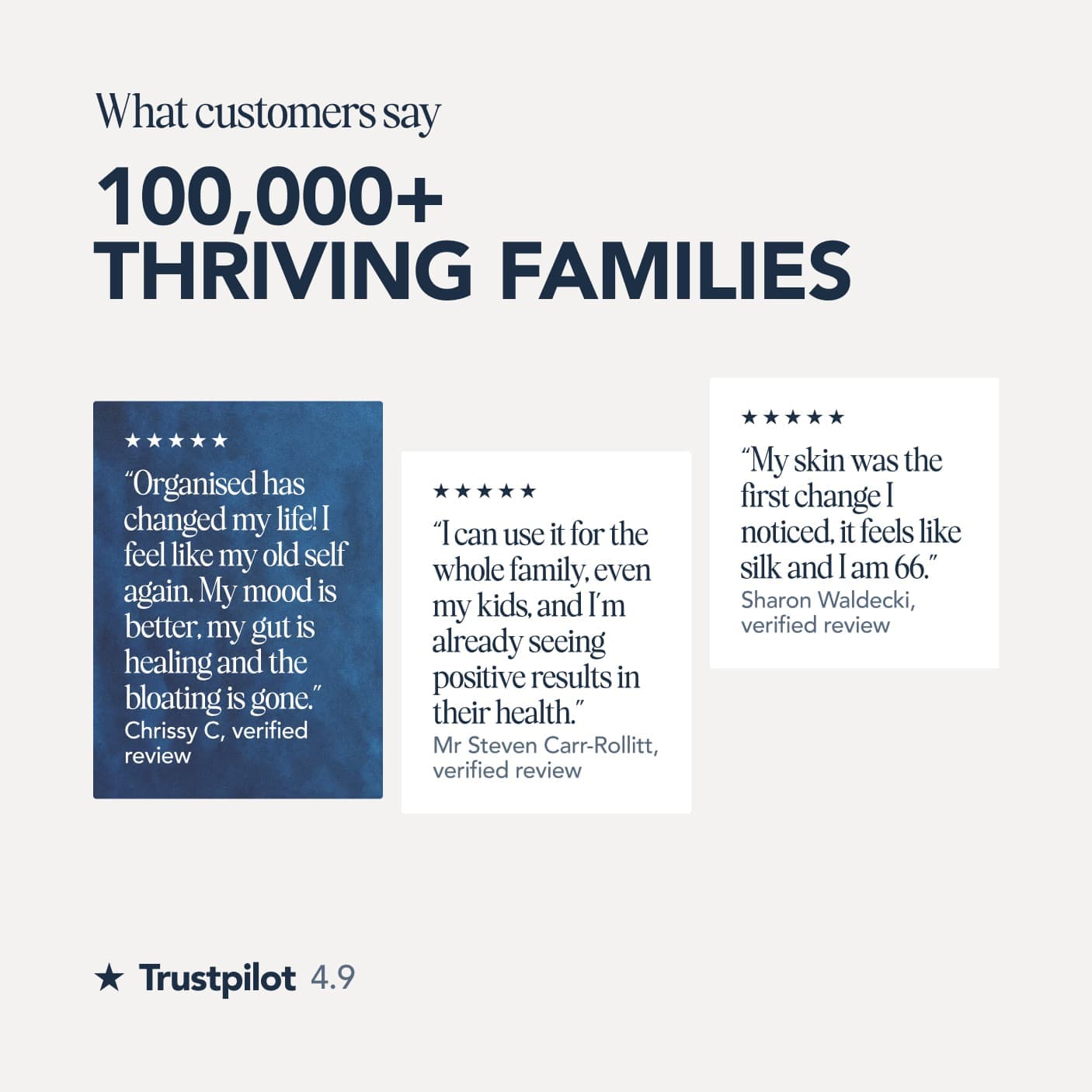
100,000+ thriving families4.9 on Trustpilot
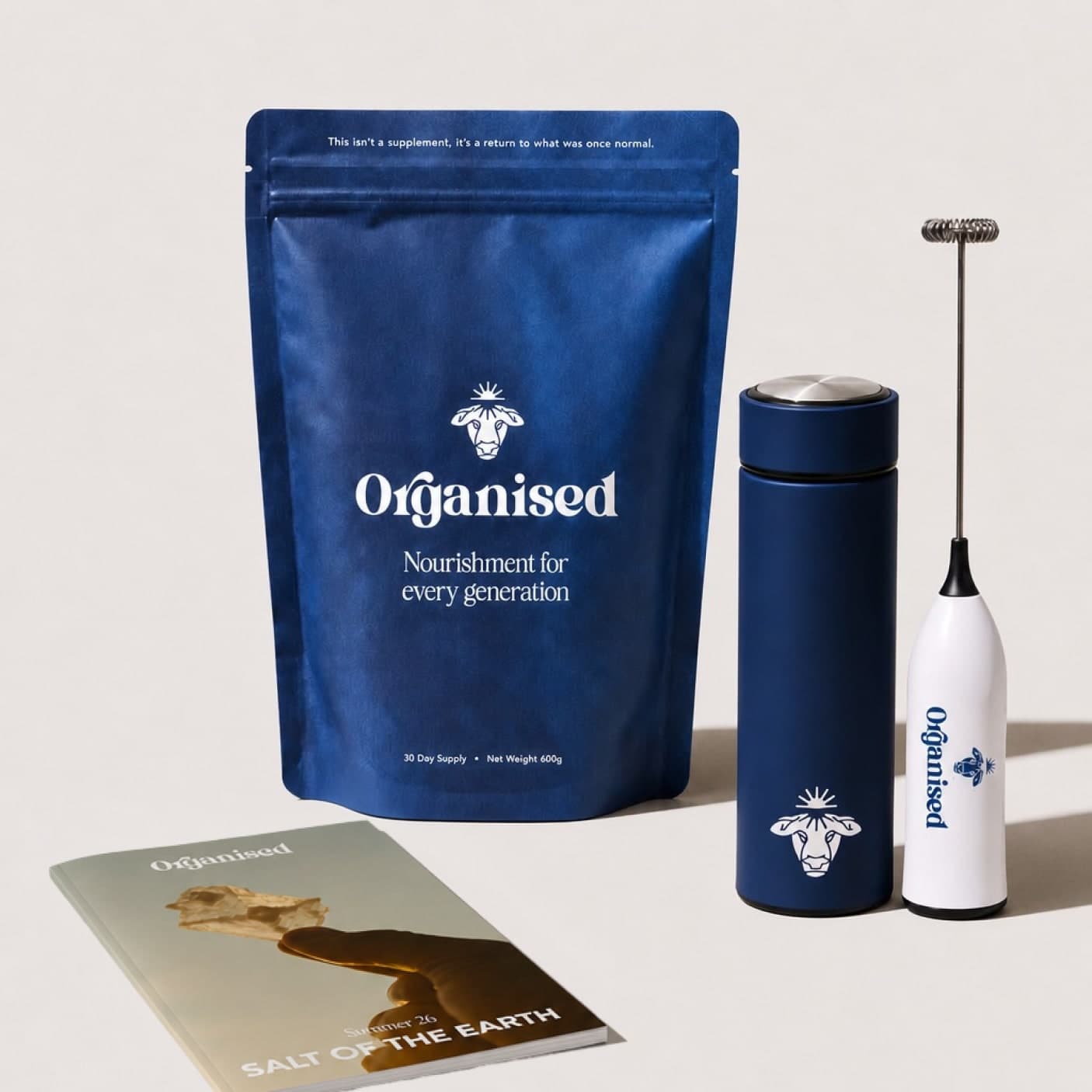
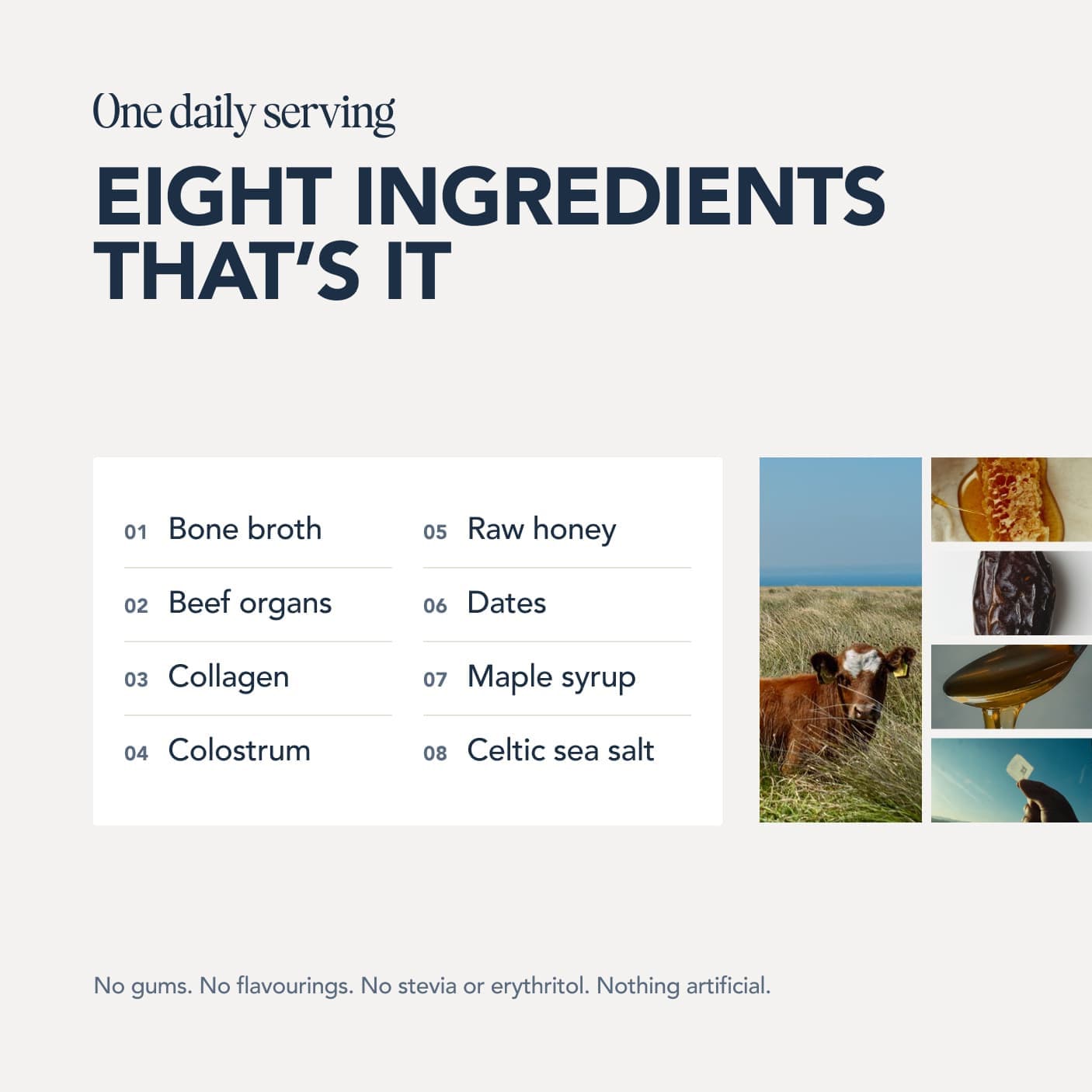
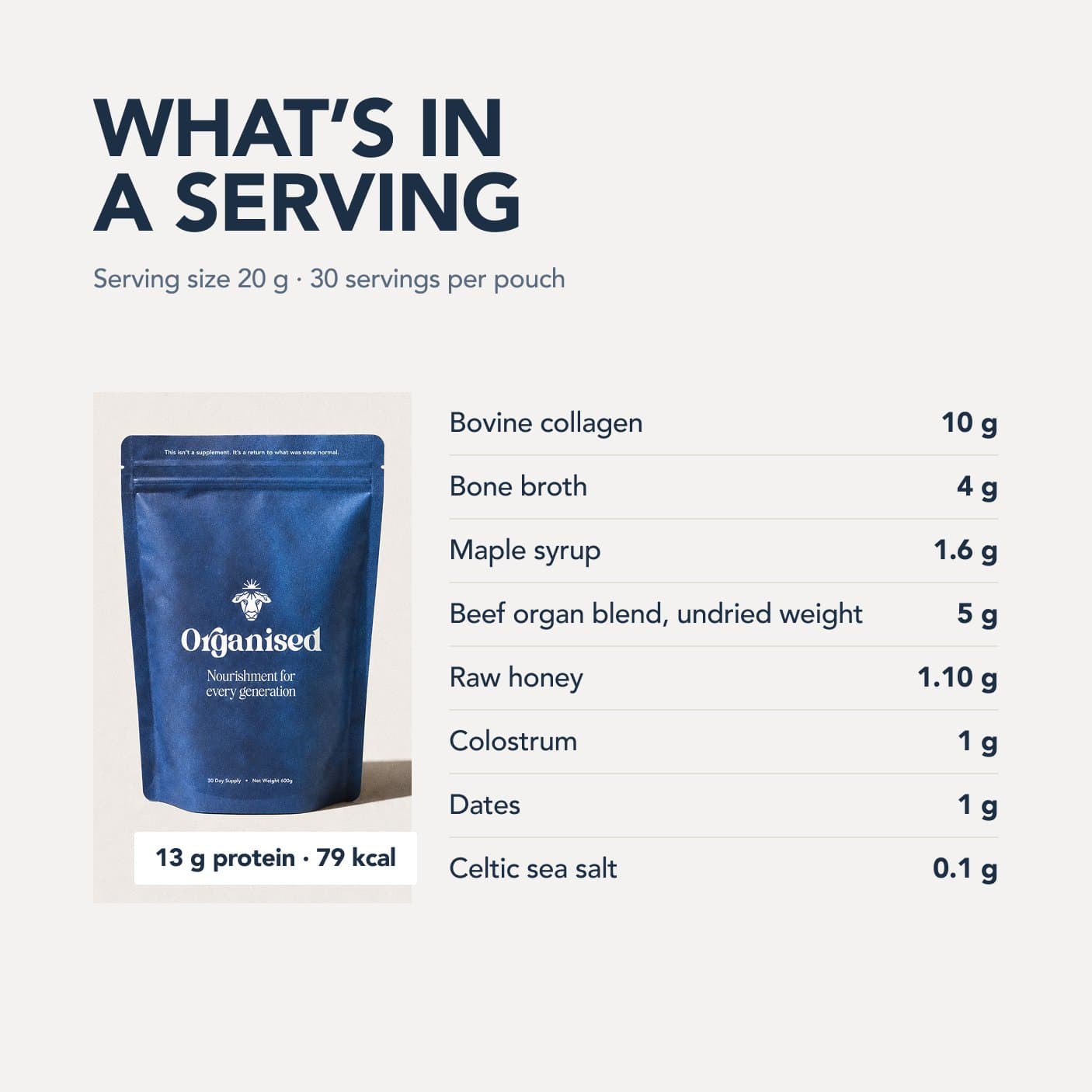
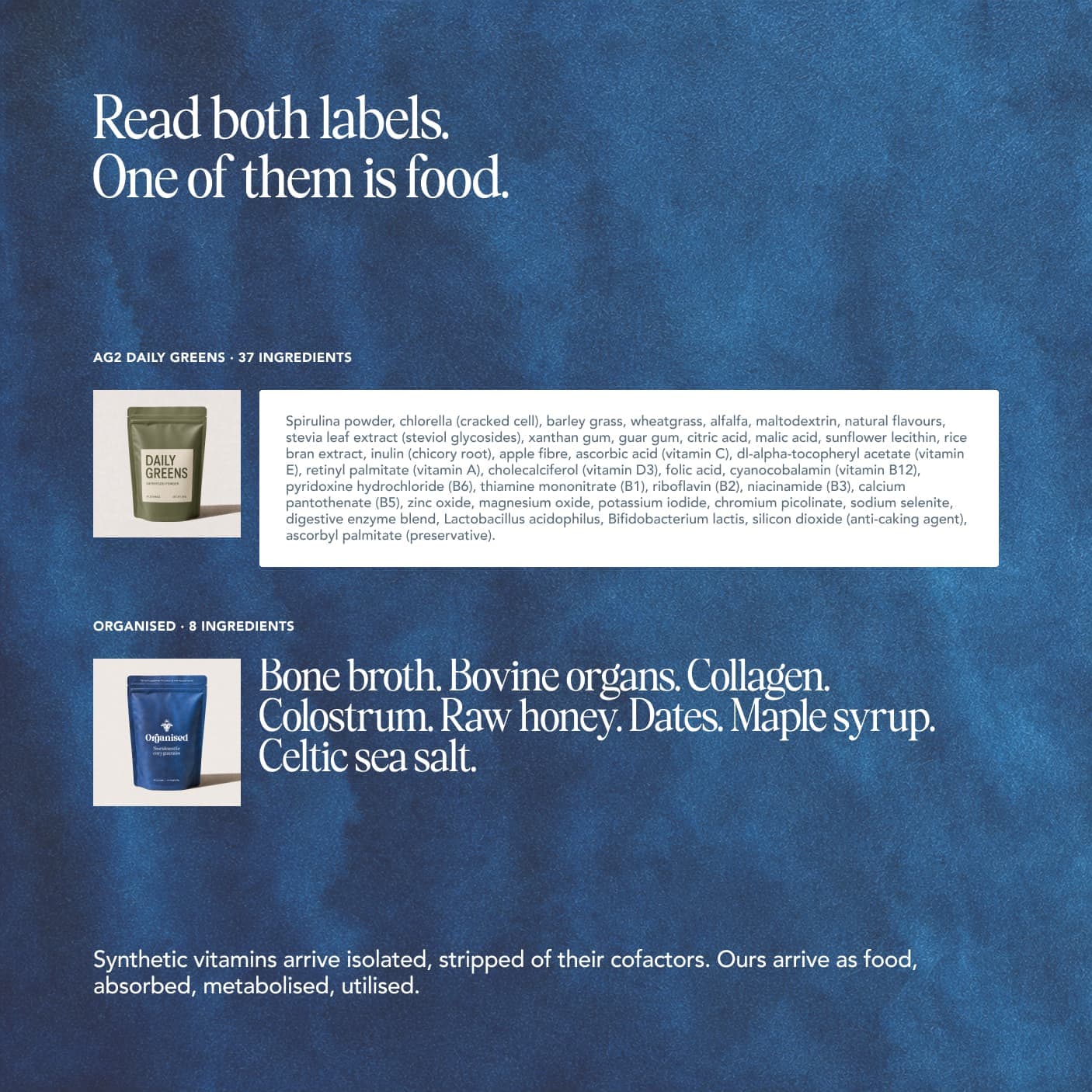
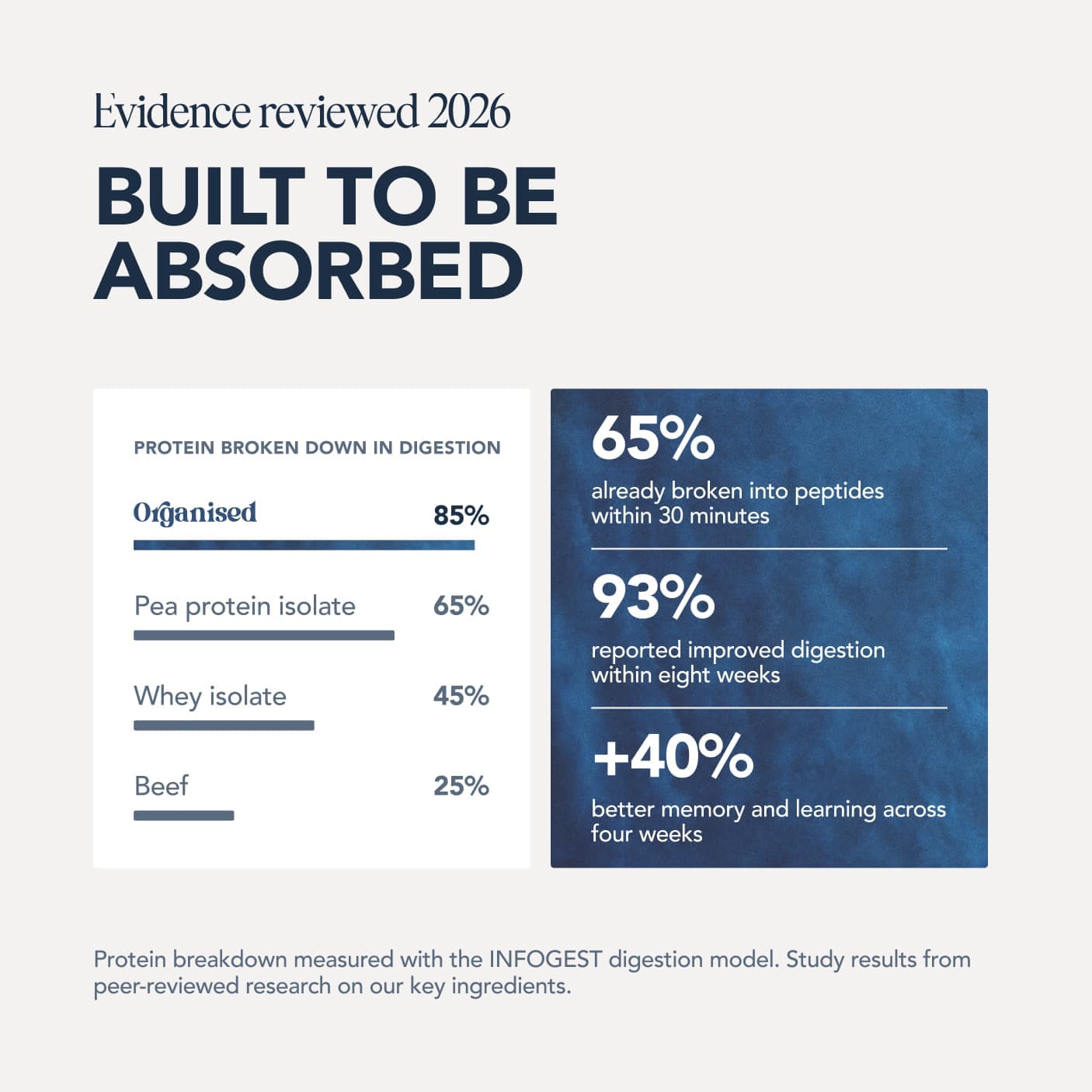
Eight real ingredients built around grass-fed beef organs, collagen and colostrum. Nothing synthetic added.
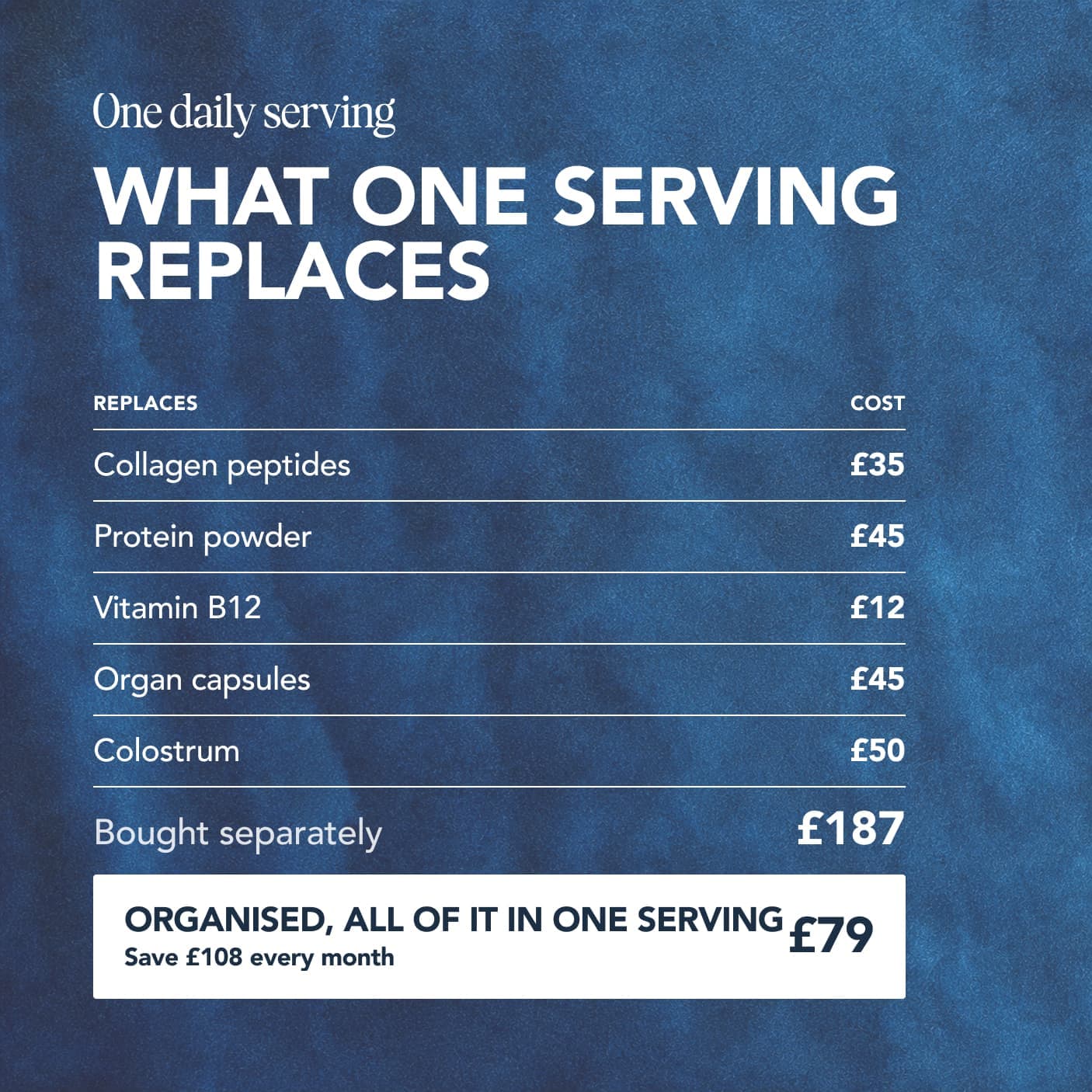
Free with your first order, worth £38. Plus £10 off the pouch with a subscription.

Free UK shipping · Made in England · 100 day money back guarantee on your first pouch · Skip, pause or cancel anytime
Days 15 to 21: Stabilisation and clarity
The third week is when most people report their first genuine "aha" moment. Energy is stable. Hunger signals are clearer and less frantic. Digestion is reliable. If you were struggling with bloating or digestive upset before, it's often resolved by this point. Your gut has adapted to real food as the baseline.
Physically, you might notice changes: clearer skin, better recovery if you're exercising, stronger hair. Psychologically, mood tends to settle. If you were prone to afternoon anxiety or 3 PM jitters, those often disappear. Not because Organised is a supplement that fixes anything, but because your nutritional status is improving and your body is calming down.
Days 22 to 30: The new normal arrives
By the end of the first month, most people have stopped thinking of Organised as something they're "taking" and started thinking of it as something they eat. It's breakfast. Your body expects it. Your digestion has integrated it. You might even notice that skipping a day feels noticeable, not because you're addicted, but because your body recognises the nutritional difference.
This is the point where people often say, "I didn't realise how much better I could feel." Not euphoria. Not a burst of new capability. Just: quieter hunger, steadier mood, better sleep, clearer thinking. The compounding effect of one month of proper nutrition is surprisingly powerful.
References
Every source below was checked on 27 August 2026. Each PubMed, PMC and DOI identifier was resolved against NCBI or Crossref, and what it opens is printed under the citation, so you can see the link goes where the citation says without leaving the page. Where a citation and its identifier disagreed, the citation was corrected to the record or the reference was deleted along with the sentence marker that pointed at it, and where the resolved paper turned out not to support the sentence, the sentence was cut back to what it does support. Borrowed authority is worse than none, because it looks like rigour.
- Razak MA et al. Multifarious Beneficial Effect of Nonessential Amino Acid, Glycine: A Review. Oxid Med Cell Longev. PMC5350494.Checked 27 August 2026: PMC5350494 opens Razak MA, Begum PS, Viswanath B et al, Multifarious Beneficial Effect of Nonessential Amino Acid, Glycine: A Review. Oxid Med Cell Longev 2017;2017:1716701. PubMed indexes it as: Review.The authors' own declaration, from the record: The authors declare that they have no competing interests.
- Bannai M, Kawai N. New therapeutic strategy for amino acid medicine: glycine improves the quality of sleep. J Pharmacol Sci. PubMed PMID: 22293292.Checked 27 August 2026: PMID 22293292 opens Bannai M, Kawai N, New therapeutic strategy for amino acid medicine: glycine improves the quality of sleep. J Pharmacol Sci 2012;118(2):145-8. PubMed indexes it as: Review.
- Yousef H et al. Anatomy, Skin (Integument), Epidermis. StatPearls. NCBI Bookshelf NBK470464.
- Shoulders MD, Raines RT. Collagen structure and stability. Annu Rev Biochem. PMC2846778.Checked 27 August 2026: PMC2846778 opens Shoulders MD, Raines RT, Collagen structure and stability. Annu Rev Biochem 2009;78:929-58. PubMed indexes it as: Review.
Who wrote and reviewed this guide
Niall Kiddle
Author · Founder, Organised
Niall is the founder of Organised. He started the company in 2024 after fixing his own health the slow way: in 2022 he swapped a cupboard of synthetic supplements for real food, raw milk, organ meats, bone broth and honey, and felt the difference within months.
Areas of expertise: Ancestral nutrition, Organ meats, Whole-food supplementation, Gut health, Regenerative sourcing
Read Niall's full profile
Pedro Rodrigues
Reviewer · Agronomist (farming and sourcing only)
Pedro is the agronomist Organised works with on farming and sourcing. His job on the guides is to keep the science honest: he reviews what we publish about soil health, regenerative agriculture, grazing and the way food is actually produced.
Areas of expertise: Regenerative agriculture, Agronomy, Soil health, Grass-fed farming, Food sourcing
Reviewed this guide on
Read Pedro's full profileMore on guides
View all- How to Start Taking Organised: A Beginner's Guide
- Can I Take Organised While Fasting?
- Can You Cook with Organised?
- How Much Organised Should I Take Per Day?
- How to Mix Organised with Cold Water (And Make It Taste Great)
- Organised and Raw Milk: The Perfect Pairing
- Organised FAQ: Every Question Answered
- The Best Time of Day to Take Organised
- The Complete Guide to Mixing Organised into Anything
- The Organised Stacking Guide: Adding Real Food to Your Routine
Browse the guides library
All guidesKeep reading

Recipes & routines
Organised and Raw Milk: The Perfect Pairing
Why raw milk maximises nutrient absorption of Organised. Fat-soluble vitamins, enzyme preservation, and optimal digestion.

Recipes & routines
Evening Wind-Down: A Nutrition Protocol for Better Sleep
A science-backed evening nutrition protocol for deeper sleep. Timing, glycine-rich foods, magnesium, and how to reduce blue light exposure.

Recipes & routines
Bone Broth from Scratch: A Step-by-Step Guide
Step-by-step guide to making bone broth at home. Stovetop, slow cooker, and Instant Pot methods. Rich in collagen and gut-healing minerals.
Real food, made effortless
Add it to my routineA few ways to use it
All recipesBone Broth from Scratch: A Step-by-Step Guide
Step-by-step guide to making bone broth at home. Stovetop, slow cooker, and Instant Pot methods. Rich in collagen and gut-healing minerals.

How to Make Your Own Gelatine Gummies
A simple recipe for homemade gelatine gummies using grass-fed gelatine, fresh juice, and raw honey. Better than shop-bought, kids love them.

Organised Protein Pancakes: A Weekend Favourite
A high-protein pancake recipe using beef protein, eggs, and raw milk. Cooked in cast iron, naturally sweetened with banana and honey. Real food breakfast.


 Join over 100,000+ members
Build a better food system with us
The Organised community is thousands of people choosing real food and backing the farmers who grow it, all of us trying to leave the world a little better than we found it. If that is what you care about too, you belong here.