The Morning Routine That Changed My Health
The morning is where your entire day gets decided. Not the breakfast. Not the gym. The first hour. What you expose yourself to, how you move, what signal you send your nervous system, these compound into the difference between a day that flows and a day you're fighting.
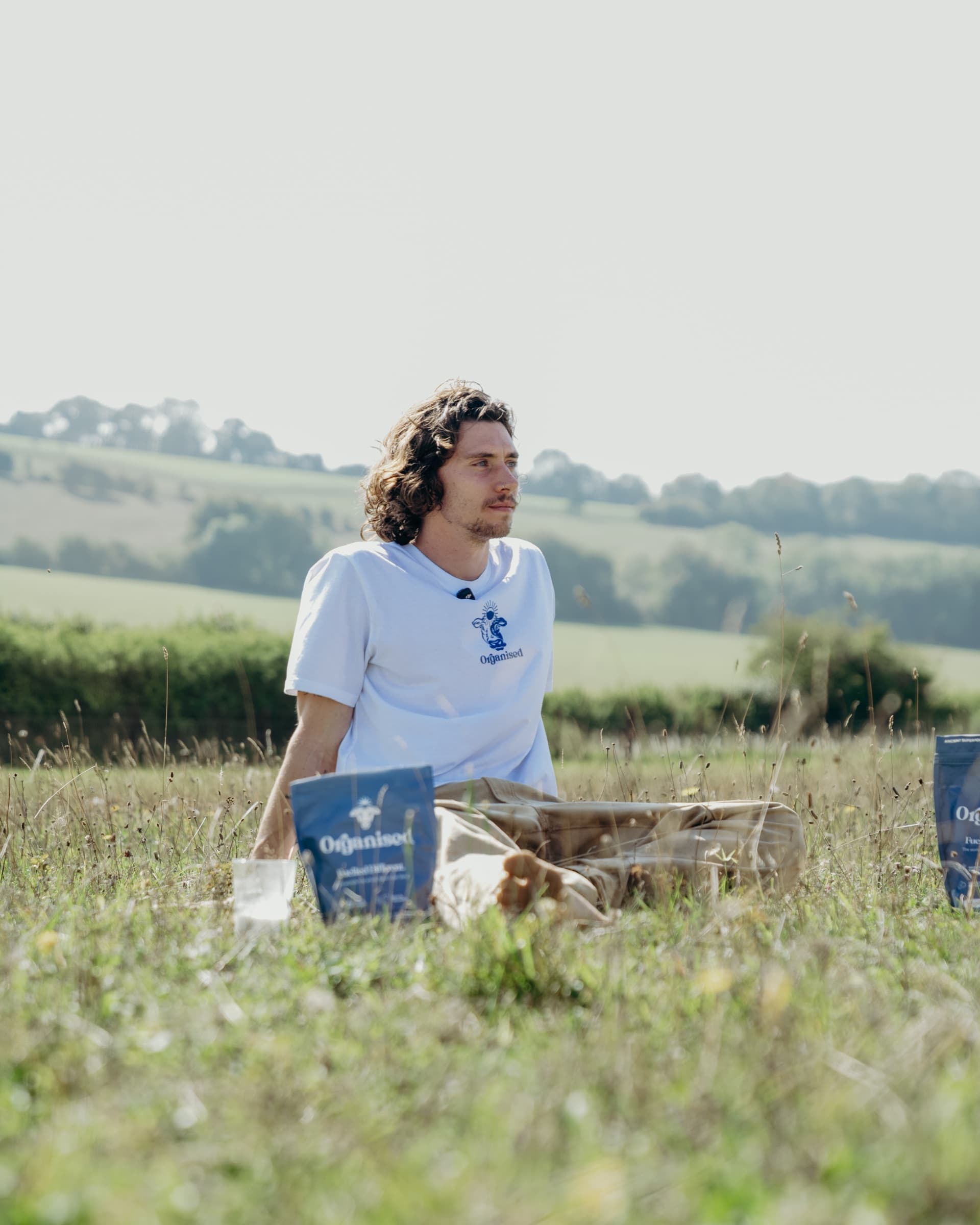
By Niall Kiddle, Founder, Organised

Reviewed by Pedro Rodrigues, Agronomist (farming and sourcing only) ·
6 min read · Published · Updated · 2 cited sources
Makers of the Organised Daily blend, a grass-fed beef organ supplement from regenerative UK farms

Sunlight first
Within one hour of waking, get outside. Light entering the eye is detected by intrinsically photosensitive retinal ganglion cells, which project to the suprachiasmatic nucleus to entrain the circadian clock and suppress melatonin secretion.1
This single act anchors everything that follows. It tells your nervous system it's daytime. It regulates your sleep-wake cycle. It improves mood within minutes. No supplement does this. No app does this. Sunlight does.
Cortisol normally rises sharply in the 30 to 45 minutes after waking (the cortisol awakening response) and then declines across the day; a robust CAR is a marker of healthy HPA-axis function.2

Hydration
You've been asleep for eight hours without water. Your body is dehydrated. Drink mineral-rich water, spring water, or tap water remineralised with a pinch of mineral salt. 300-500ml. Not all at once. Sip it.
This rehydrates your tissues and jump-starts your metabolic processes. It's not about forcing water for health. It's about genuinely replacing what you lost during sleep.
Movement before food
Walk. Stretch. Do mobility work. Dance. Anything that wakes up your body without exhausting it. Fifteen minutes is enough. The goal isn't a workout, it's activation.
Moving before eating helps your muscles take up glucose more efficiently. It signals to your body that resources are available. It improves your appetite regulation for the rest of the day.
The breakfast shake
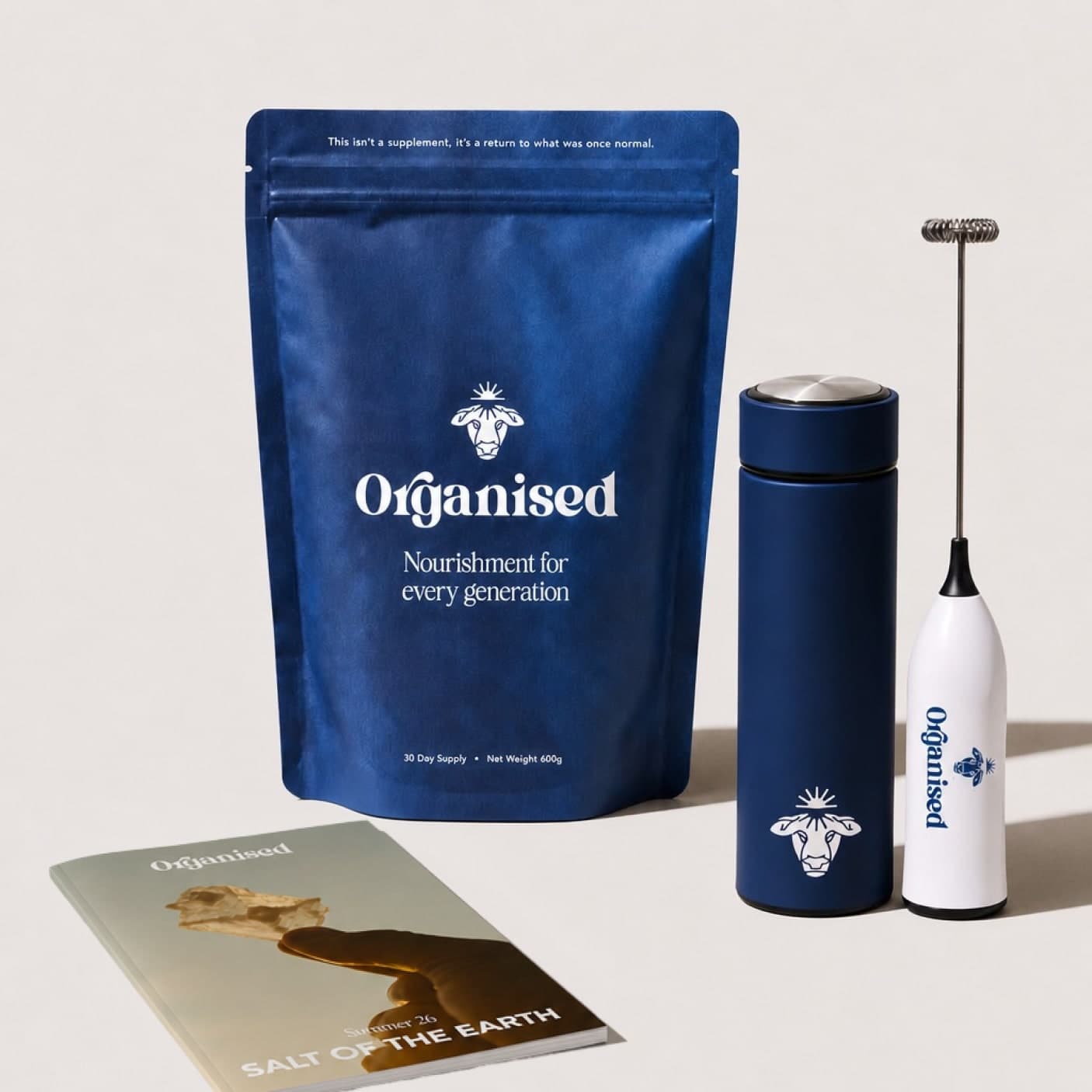
One serving of Organised, raw milk, banana, raw honey, sea salt. Blend smooth. Drink it within thirty minutes of your walk.
This timing matters. You've moved, you're hydrated, your digestive system is awake. Food lands cleanly, absorbs well, provides stable energy for the next three to four hours.
The order matters: sunlight, hydration, movement, then food. Not sunlight-and-breakfast. Not movement-then-sleep-in. The sequence is the ritual.

Stillness or intention
After breakfast, spend ten minutes not doing anything demanding. Sit outside if weather permits. Journal if you want. Read. Meditate. The point is non-negotiable quiet before the day's noise starts.
This isn't spiritual. It's neurological. Your nervous system is primed for the day. You need a moment to settle into that state before emails and demands arrive.
Building the ritual
The first week, this takes conscious effort. By the second week, your body starts expecting it. By the fourth week, skipping it feels genuinely wrong. Your nervous system craves the pattern.
Don't try to do all of this perfectly from day one. Start with sunlight. Add hydration next week. Add movement the week after. Add the shake after that. Each layer is a building block.
Timing and sequencing
The sequence matters more than the exact times. Sunlight first, whilst your eyes are barely open. Your brain is still offline. Light hits the light-sensitive cells and the message travels directly to your circadian clock before conscious thought gets in the way. Within 5-10 minutes, hydration. Then movement. Then food.
If you get this sequence wrong, the effects diminish. Sunlight after breakfast is less effective because your cortisol has already started rising naturally. Movement immediately after eating can interfere with digestion, particularly for people with sensitive stomachs. The order is biology, not preference.
In winter, particularly in the UK, sunlight in the first hour is difficult. Go outside anyway. The light is lower but still sufficient to signal your brain. If you live somewhere with weeks of continuous darkness, you can supplement with a 10,000 lux light box for 20-30 minutes, but actual sunlight is preferable.
Real-world obstacles and solutions
If you have a baby or dependent and you can't leave the house, start the routine indoors. Open the curtains fully. Stand at the window. It's not ideal (window glass filters wavelengths) but it's substantially better than nothing. Add five minutes to the light exposure time to compensate.
If your work schedule starts before sunrise, you can compress this routine. Sunlight on your commute. Hydration when you arrive. Movement in the office (stairs, a walk around the building). The shake at your desk. Not perfect, but the sequence is there.
If you're irregular with wake times, your circadian rhythm will suffer no matter how good your morning routine is. Start by fixing your wake time first. Get up at the same time every day for two weeks, then layer in the rest of the routine. Your nervous system needs consistency before it responds to the stacking.
Get recipes and routines, free
Two short reads a week of simple, nutrient-dense recipes and daily routines.
By signing up you agree to receive emails from us. No spam, unsubscribe anytime.
Scaling the routine as you adapt
Week one, focus on sunlight alone. That's your only change. Notice your sleep, your energy, your mood. Most people feel difference within three days.
Week two, add hydration. You're now adding water and the light exposure. Your digestion starts improving. Your energy stabilises further.
Week three, add movement. This is where things accelerate. Your body begins to trust that resources are available. Appetite regulation shifts. Many people notice their relationship with food changes in week three.
Week four, add the shake. By now, your body is already primed. The Organised delivers the micronutrients your liver needs to process that coffee, to handle the day's stress, to recover from the night's fasting. It lands in a body that's ready to use it.
Week five, add stillness. By this point, your nervous system is already stabilised. Stillness deepens that state rather than creating it from scratch.
Modifications for different bodies
If you have a sensitive stomach or history of acid reflux, eat your shake slightly later. You don't have to eat immediately after movement. Thirty minutes can work. The key is that you've moved before you eat, not that you've eaten within two minutes of finishing movement.
If you're injured or immobilised, movement can be stretching, breathing exercises, or mobility work in bed. The point isn't exhaustion, it's activation. Your body is waking up.
If you've been diagnosed with a circadian rhythm disorder or sleep phase syndrome, this routine becomes even more important. Sunlight exposure is one of the few tools that can reset a disrupted rhythm. Stick with it for three to four weeks before judging whether it's working.



1 of 9
Daily blend
100,000+ thriving families4.9 on Trustpilot
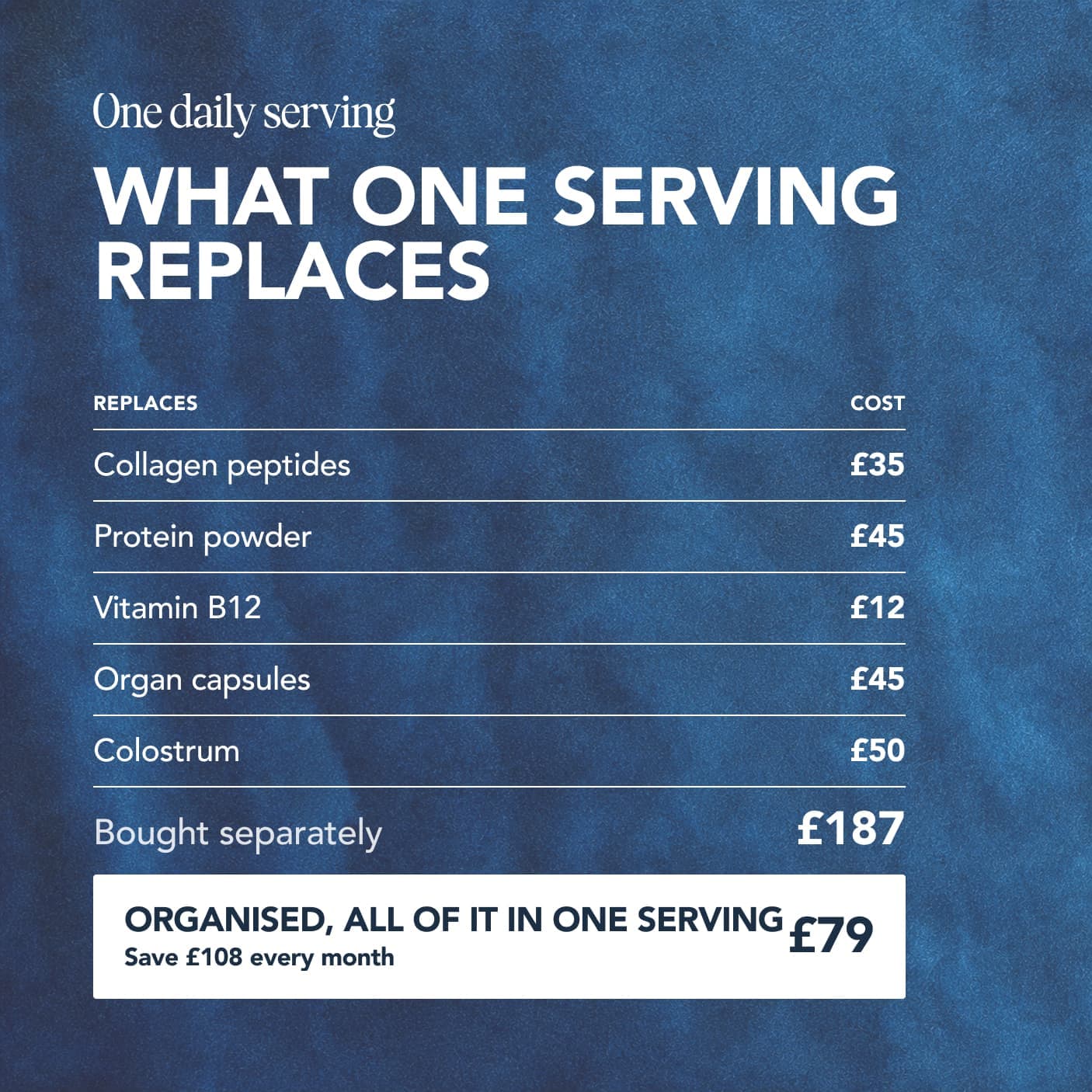
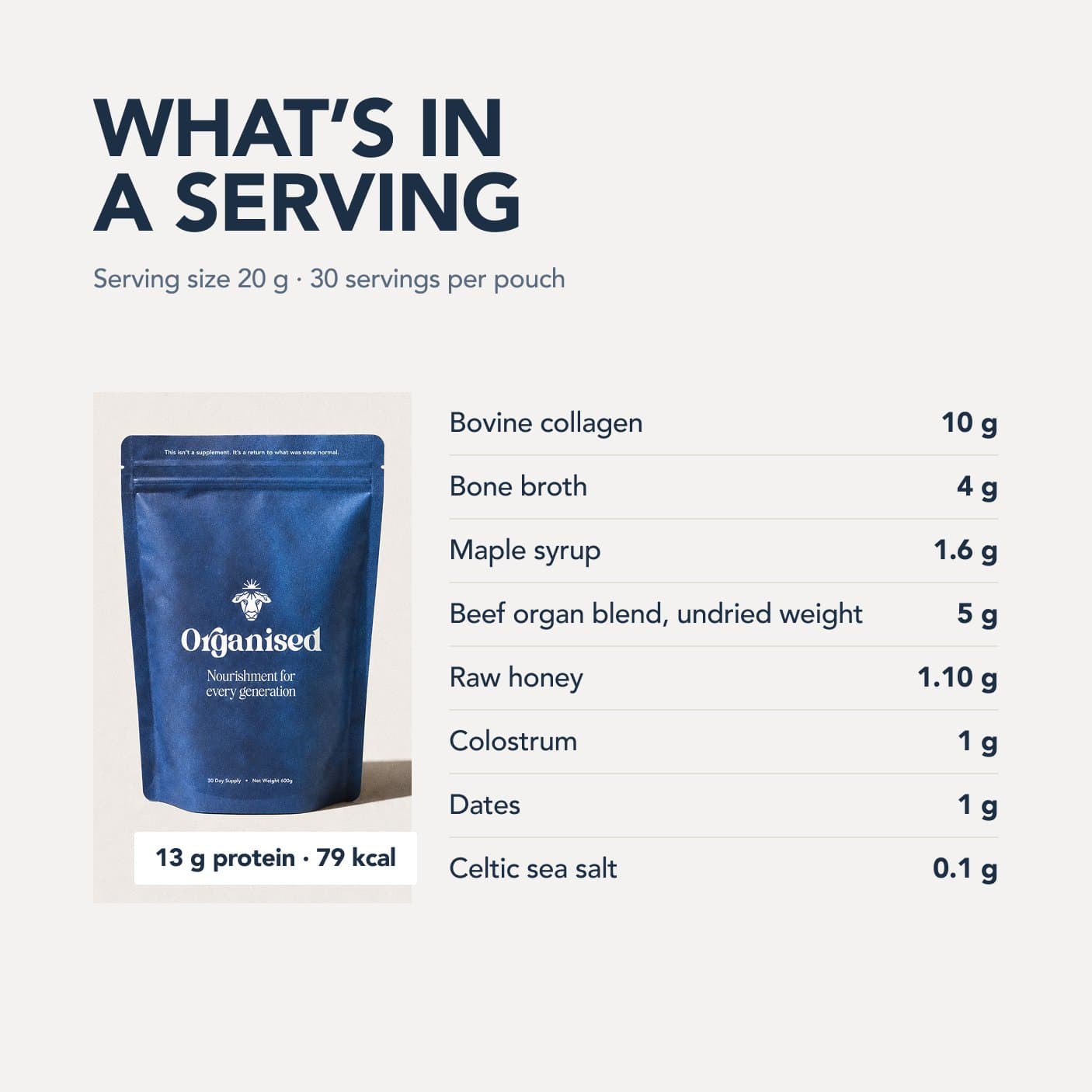
Eight real ingredients built around grass-fed beef organs, collagen and colostrum. Nothing synthetic added.
Free with your first order, worth £38. Plus £10 off the pouch with a subscription.

Free UK shipping · Made in England · 100 day money back guarantee on your first pouch · Skip, pause or cancel anytime
Measuring the shift
You won't need a biomarker to know if this is working. You'll sleep better. Your 3 AM wake-ups will stop. Your morning energy will shift from foggy to clear within a week. Your appetite will normalise. Your cravings for sugar and coffee will diminish. You'll notice these things immediately, not in some distant future.
If after four weeks you feel genuinely no different, something about your implementation is off. Most commonly: the sunlight isn't bright enough, the movement is either too intense or too gentle, or your overall stress load is so high that this routine, alone, can't restore balance. You may need to address sleep separately, stress separately, or other health factors. This routine is powerful but it isn't magic.
Why the morning matters more than you think
Your nervous system is most receptive to input in the first hour after waking. Your circadian rhythm is setting itself for the next 24 hours. Your cortisol is building. Your body is transitioning from sleep mode to activity mode. What you do in this window compounds exponentially.
An hour spent getting sunlight, moving, and eating real food creates a metabolic, neurological, and hormonal cascade that carries through your entire day. This isn't woo. This is biology. Light exposure sets your circadian clock. Movement signals resource availability. Food signals safety. Your nervous system responds to these signals by optimising digestion, immune function, and energy production for the next 16 hours.
The bottom line
What changes your health isn't one thing. It's the accumulation of small, repetitive actions that signal to your body that it's safe, that resources are abundant, that today is something to be present for. This routine does that. The Organised shake is part of it, but it's not the whole story. The whole story is the morning, done right, repeatedly. Layer it in slowly. Commit for a month. Notice what shifts.
References
Every source below was checked on 27 August 2026. Each PubMed, PMC and DOI identifier was resolved against NCBI or Crossref, and what it opens is printed under the citation, so you can see the link goes where the citation says without leaving the page. Where a citation and its identifier disagreed, the citation was corrected to the record or the reference was deleted along with the sentence marker that pointed at it, and where the resolved paper turned out not to support the sentence, the sentence was cut back to what it does support. Borrowed authority is worse than none, because it looks like rigour.
- Berson DM, Dunn FA, Takao M. Phototransduction by retinal ganglion cells that set the circadian clock. Science. 2002. https://pubmed.ncbi.nlm.nih.gov/11834835/Checked 27 August 2026: PMID 11834835 opens Berson DM, Dunn FA, Takao M, Phototransduction by retinal ganglion cells that set the circadian clock. Science 2002;295(5557):1070-3.
- Clow A, Hucklebridge F, Stalder T, Evans P, Thorn L. The cortisol awakening response: more than a measure of HPA axis function. Neuroscience & Biobehavioral Reviews. 2010. https://pubmed.ncbi.nlm.nih.gov/20026350/Checked 27 August 2026: PMID 20026350 opens Clow A, Hucklebridge F, Stalder T et al, The cortisol awakening response: more than a measure of HPA axis function. Neurosci Biobehav Rev 2010;35(1):97-103. PubMed indexes it as: Review.
Who wrote and reviewed this guide
Niall Kiddle
Author · Founder, Organised
Niall is the founder of Organised. He started the company in 2024 after fixing his own health the slow way: in 2022 he swapped a cupboard of synthetic supplements for real food, raw milk, organ meats, bone broth and honey, and felt the difference within months.
Areas of expertise: Ancestral nutrition, Organ meats, Whole-food supplementation, Gut health, Regenerative sourcing
Read Niall's full profile
Pedro Rodrigues
Reviewer · Agronomist (farming and sourcing only)
Pedro is the agronomist Organised works with on farming and sourcing. His job on the guides is to keep the science honest: he reviews what we publish about soil health, regenerative agriculture, grazing and the way food is actually produced.
Areas of expertise: Regenerative agriculture, Agronomy, Soil health, Grass-fed farming, Food sourcing
Reviewed this guide on
Read Pedro's full profileMore on routines
View all- The Busy Parent's Guide to Whole Food Nutrition
- A Day of Eating for Optimal Skin Health
- Evening Wind-Down: A Nutrition Protocol for Better Sleep
- How to Build a Supplement-Free Daily Routine
- How to Meal Prep for a Week of Whole Food Nutrition
- Shift Workers: How to Eat for Energy When Your Schedule Is Upside Down
- The Healthy Morning Routine Reddit Swears By: An Honest Breakdown
- The Weekend Reset: A 2-Day Whole Food Protocol
- Travel Nutrition: How to Stay Nourished on the Go
Browse the guides library
All guidesKeep reading

Recipes & routines
Energy Balls with Organised, Dates and Raw Honey
Make no-bake energy balls with Organised, dates, and raw honey. Perfect lunch box, pre-workout, or on-the-go snack. Simple recipe.

Recipes & routines
Raw Milk Ice Cream with Organised
Make raw milk ice cream at home with Organised for a seasonal, nutrient-dense treat. Three simple flavours to try whenever the craving strikes.

Recipes & routines
How Much Organised Should I Take Per Day?
How much Organised to take per day: two heaped tablespoons (20g), once a day as standard, with headroom for athletes. Plus children's servings and pregnancy.
Real food, made effortless
Add it to my routineA few ways to use it
All recipesEnergy Balls with Organised, Dates and Raw Honey
Make no-bake energy balls with Organised, dates, and raw honey. Perfect lunch box, pre-workout, or on-the-go snack. Simple recipe.
Raw Milk Ice Cream with Organised
Make raw milk ice cream at home with Organised for a seasonal, nutrient-dense treat. Three simple flavours to try whenever the craving strikes.
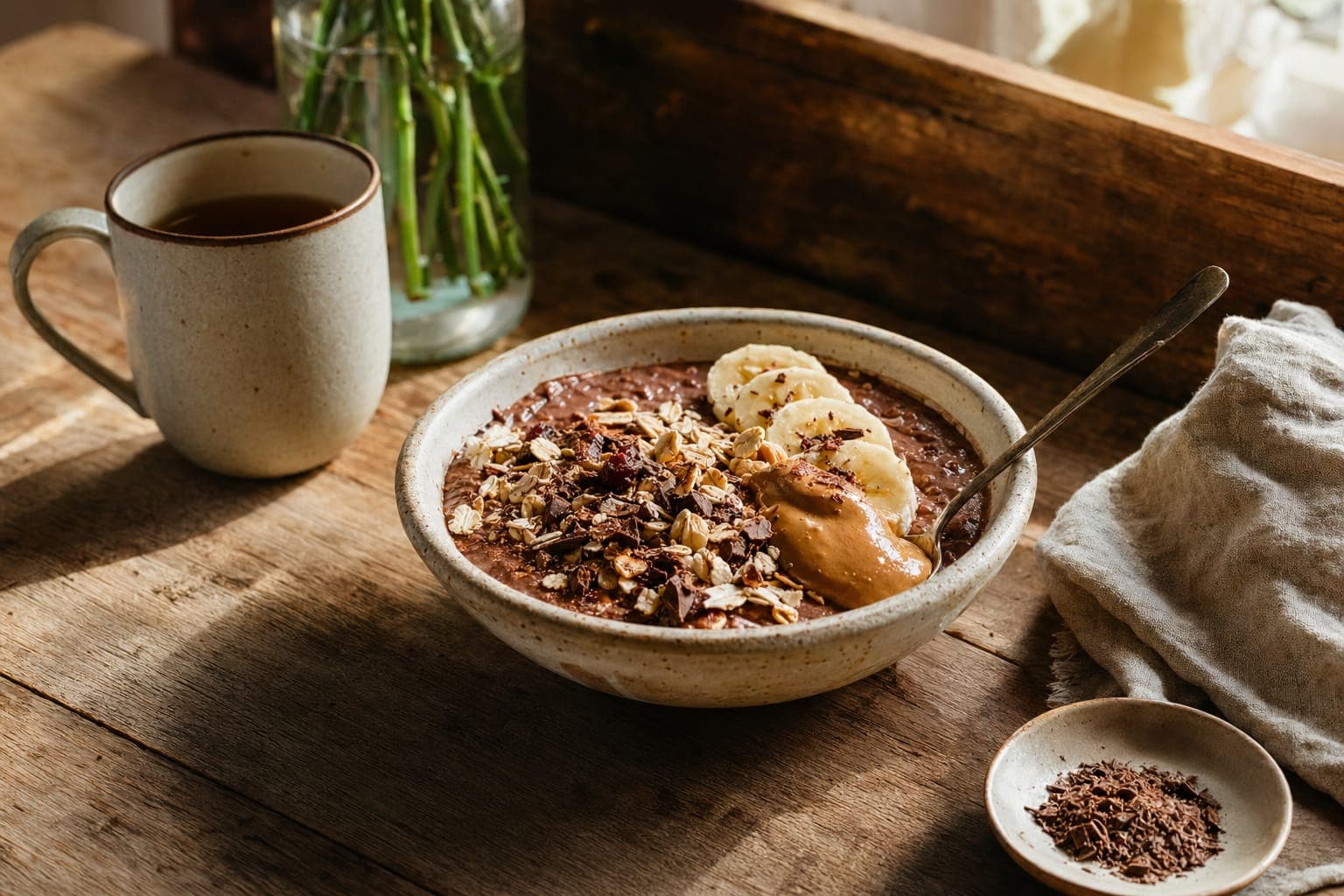
10 Ways to Use Organised That Aren't Just a Shake
Move beyond the basic shake. Discover 10 creative ways to use Organised in smoothie bowls, oats, yoghurt, baking, and more.


 Join over 100,000+ members
Build a better food system with us
The Organised community is thousands of people choosing real food and backing the farmers who grow it, all of us trying to leave the world a little better than we found it. If that is what you care about too, you belong here.