Natural Protein vs Processed Protein: What Your Body Prefers
A 150-gram steak and 30 grams of whey isolate contain roughly the same amount of protein. But your body has completely different instructions for processing them. Understanding why changes how you build muscle, stay full, and absorb nutrients.

By Niall Kiddle, Founder, Organised

Reviewed by Pedro Rodrigues, Agronomist (farming and sourcing only) ·
6 min read · Published · Updated · 4 cited sources
Makers of the Organised Daily blend, a grass-fed beef organ supplement from regenerative UK farms
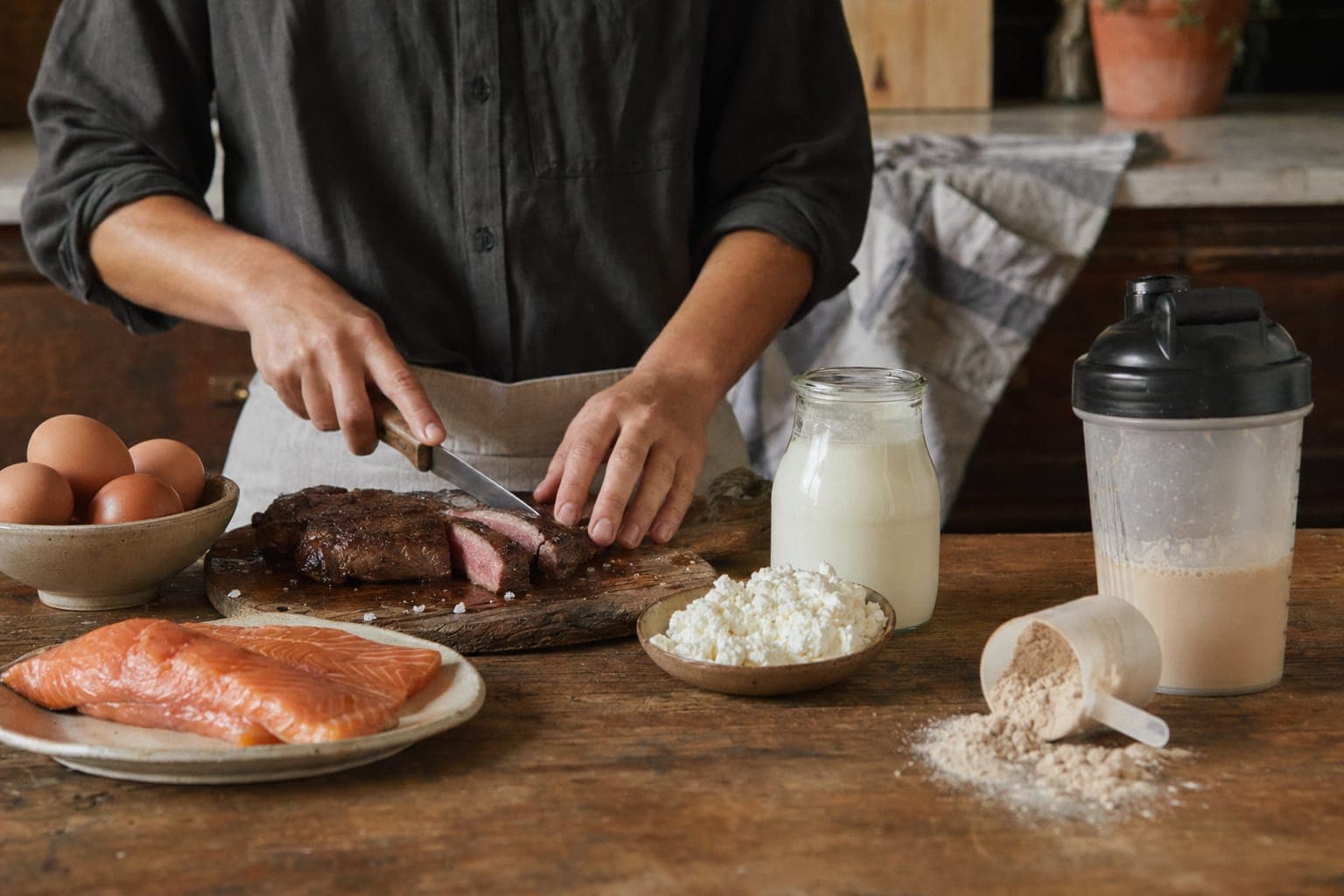
The supplement industry has spent two decades convincing people that protein is protein. That amino acids are amino acids. That a powder is just a convenient delivery system. They're technically wrong on all three counts, and the differences matter more than most people realise.
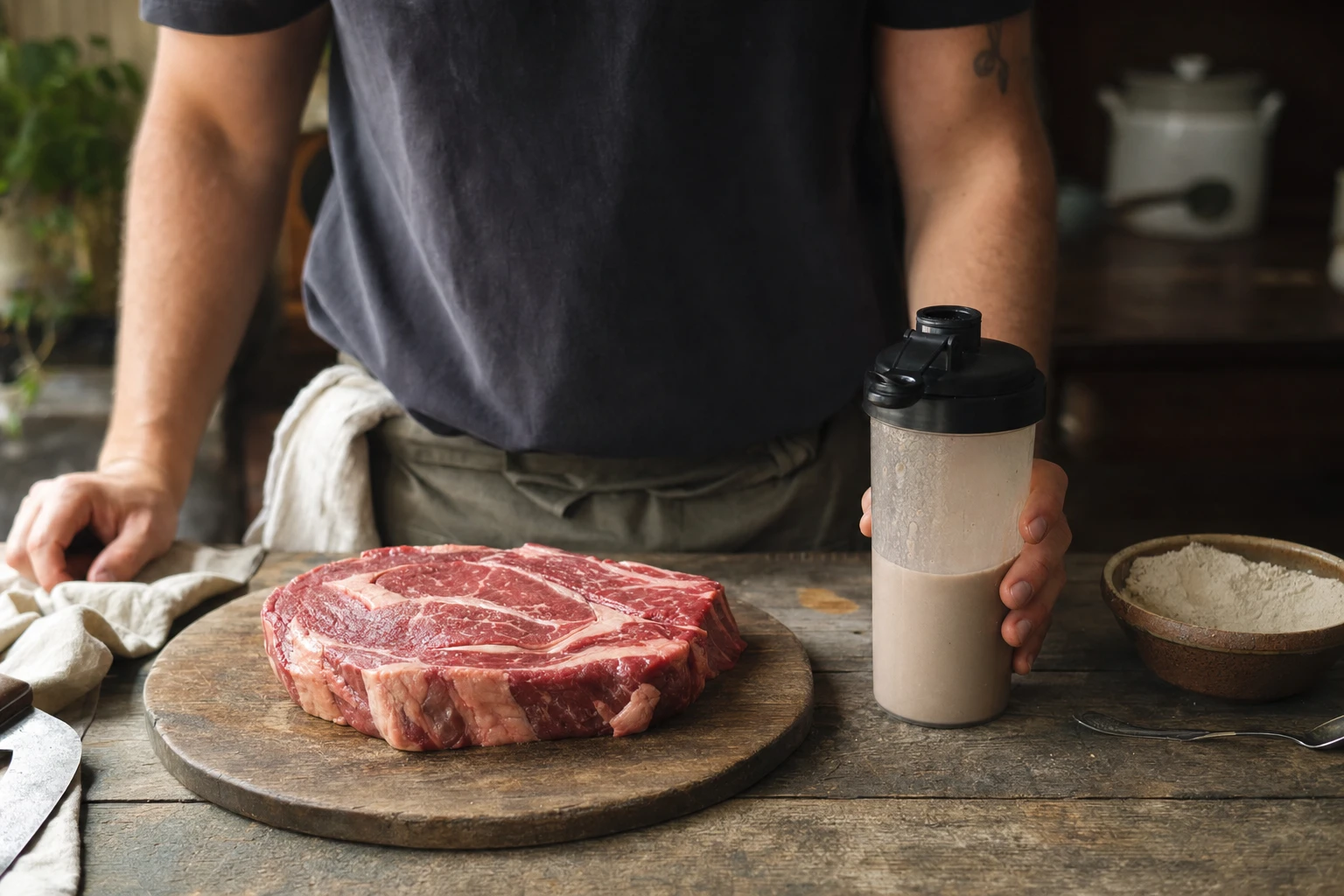
The protein is the same, the package is not
This is the source of most confusion. Yes, both contain the same nine essential amino acids in roughly similar proportions. Whey has slightly more leucine. Beef has slightly more carnitine and creatine. Close enough that both can build muscle.
But here's what the comparison misses: protein doesn't exist in isolation in real food. It exists in a matrix.
A steak contains protein bonded to fat, water, minerals, vitamins, enzymes, and compounds that have been part of the animal's biology. When you bite into it, your teeth mechanically break it down. Your stomach acid and pepsin begin the chemical work. Your pancreas releases protease enzymes. The whole system is calibrated to handle animal tissue.
A protein powder is protein isolated from its original matrix and often recombined with other ingredients. Your digestive system has to work differently. It's not harder necessarily, just different.
Your body evolved to process food. It tolerated powders for about ten years before the supplement industry invented them. That's not enough time to rewire biology.
This matters because the context changes absorption, bioavailability, and what your body does with the amino acids once they arrive.
The amino acid matrix and cofactors
Whole animal protein comes with its own support system.
Beef contains vitamin B6, which is required for amino acid metabolism. It contains zinc, which regulates protein synthesis. It contains iron (haem iron, which absorbs at 15-35% efficiency), copper, selenium, and a compound called carnosine that protects amino acids from oxidation during digestion.2
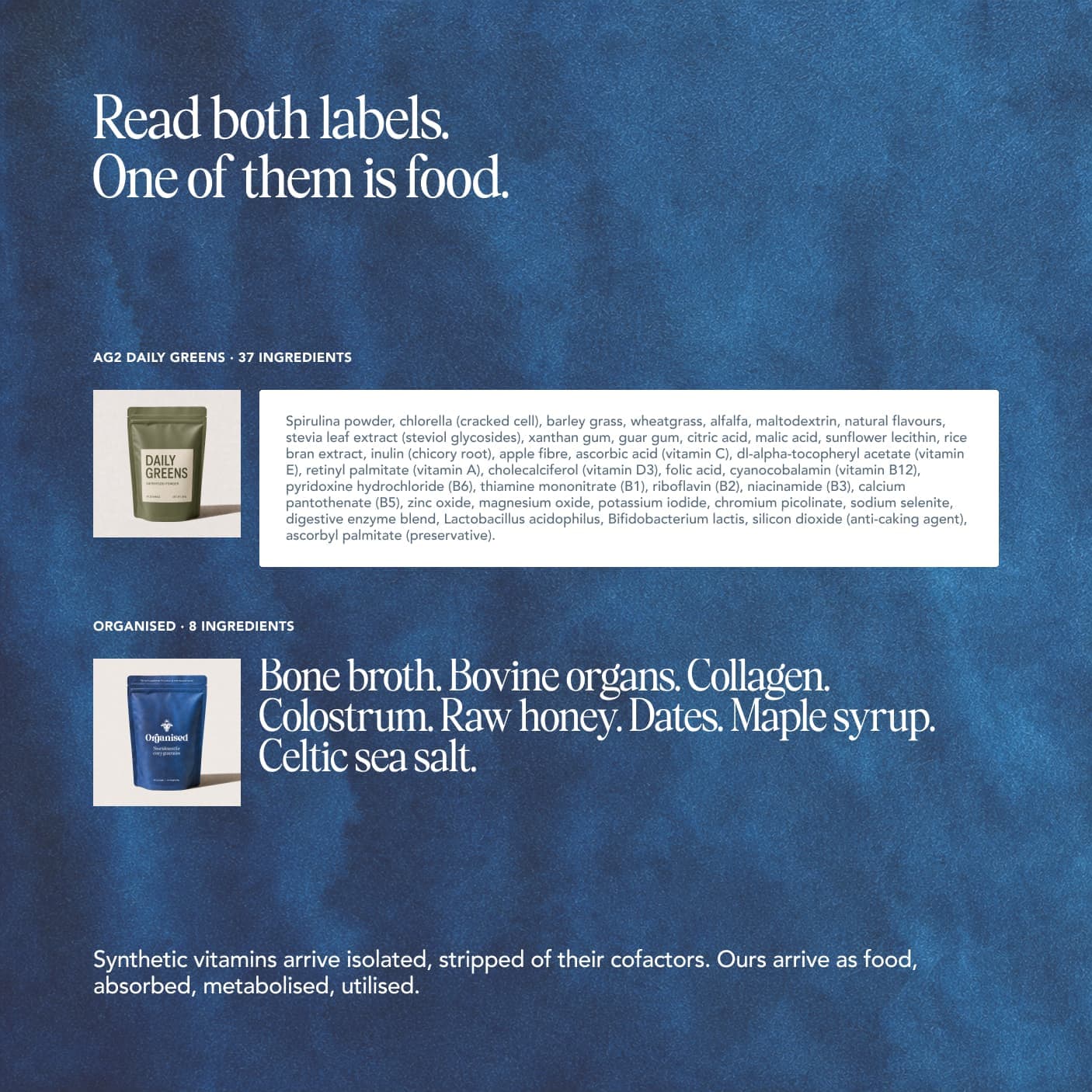
Whey isolate contains the amino acids. Everything else has been removed. Some manufacturers add back vitamins and minerals, but they're synthetic versions in arbitrary doses. Your body doesn't recognise the ratio as food.
The cofactors matter because they're not just nice-to-haves. Your muscles don't just need amino acids to build. They need zinc to incorporate those amino acids into new proteins. They need B6 to transform them properly. They need minerals to regulate the whole process.
A study comparing athletes on whole food protein versus isolate protein showed similar muscle gains but different performance outcomes. The whole food group experienced less joint pain, faster recovery, and better sustained energy. Why? The cofactors. The matrix. The context.
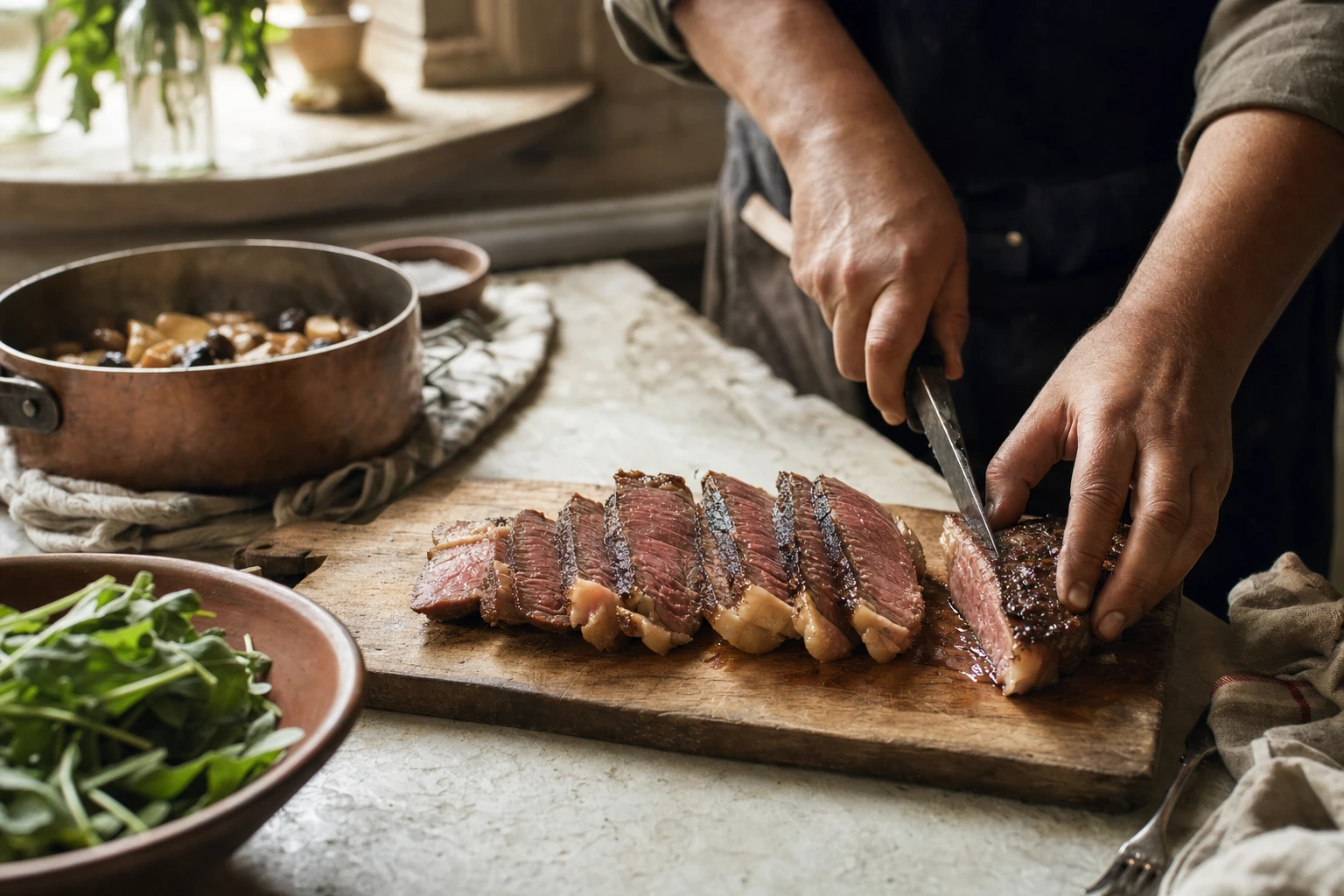
There's also collagen and elastin in whole food protein sources, particularly in muscle and connective tissue. These aren't amino acids in the traditional sense, but they're peptides your body uses for joint health, skin, and tissues. Whey has none of this. It's pure amino acids without the structural proteins that support the musculoskeletal system.
Why whole food makes you fuller
This is why protein powder doesn't solve appetite the way real food does.
Satiety signals come from multiple sources: mechanoreceptors in your stomach (stretch), chemoreceptors (nutrient density), and hormonal responses (GLP-1, peptide YY, cholecystokinin). A powder hits none of these well.
When you drink a protein shake, you get amino acids and water. Your stomach barely stretches. There are no lipids to slow gastric emptying or trigger satiety hormones effectively. The whole system says "nutrition arrived, but something feels off." So you eat again an hour later.
When you eat a steak, your jaw works. Your stomach expands. You're consuming fat alongside protein, which triggers cholecystokinin and slows digestion. You chew for several minutes. By the time you're done, your body has received multiple satiety signals. You're genuinely full for 4-6 hours.
A protein shake and a steak trigger completely different satiety pathways. One leaves you hungry. The other leaves you satisfied.
This is why people who replace breakfast with a protein shake end up snacking by 10 AM, then wondering why they're not losing weight. They're eating the same calories but from a food form that doesn't register as adequate.
Get honest comparisons, free
Two short reads a week cutting through supplement marketing with what the evidence says.
By signing up you agree to receive emails from us. No spam, unsubscribe anytime.
Absorption rate and timing
Whey is fast. Beef is slow. Both are advantages depending on context.
Whey absorbs rapidly, peaking in the bloodstream within 30-40 minutes.1 This is useful immediately post-workout when your muscles need rapid amino acid delivery. But throughout the day, fast absorption means rapid oxidation and excretion if you're not immediately exercising.
Beef is slow. The fat content, the density of the protein matrix, the presence of minerals that slow transit - all of this means amino acids trickle in over 3-5 hours.1 This sustained release is closer to what your body actually needs for day-to-day protein synthesis and repair.
A 2019 study on protein timing showed that the concept of "the anabolic window" - the idea that you must consume protein immediately post-workout - was largely overstated.3 What mattered more was consistent protein intake throughout the day. For that, slow absorption food is actually superior because it doesn't spike and crash.
Fast absorption matters for emergency nutrition (post-op recovery, severe malnutrition). For healthy people trying to build muscle and feel good, slow absorption is more useful.
Micronutrient density
This is where whole food wins decisively.
A 100-gram serving of beef provides B12, iron, zinc, selenium, phosphorus, and choline.4 A 30-gram serving of whey isolate provides calcium (if fortified) and sometimes a few B vitamins. That's it.
If you're relying on protein powder as your main protein source, you're creating micronutrient gaps that you'll need to fill with other supplements. You're essentially making more work for your body and your supplement regimen.
Whole food protein sources pack their amino acids with the cofactors needed to use those amino acids. This is not coincidence. This is what animals are made of - the complete nutritional infrastructure needed to build muscle and tissue.
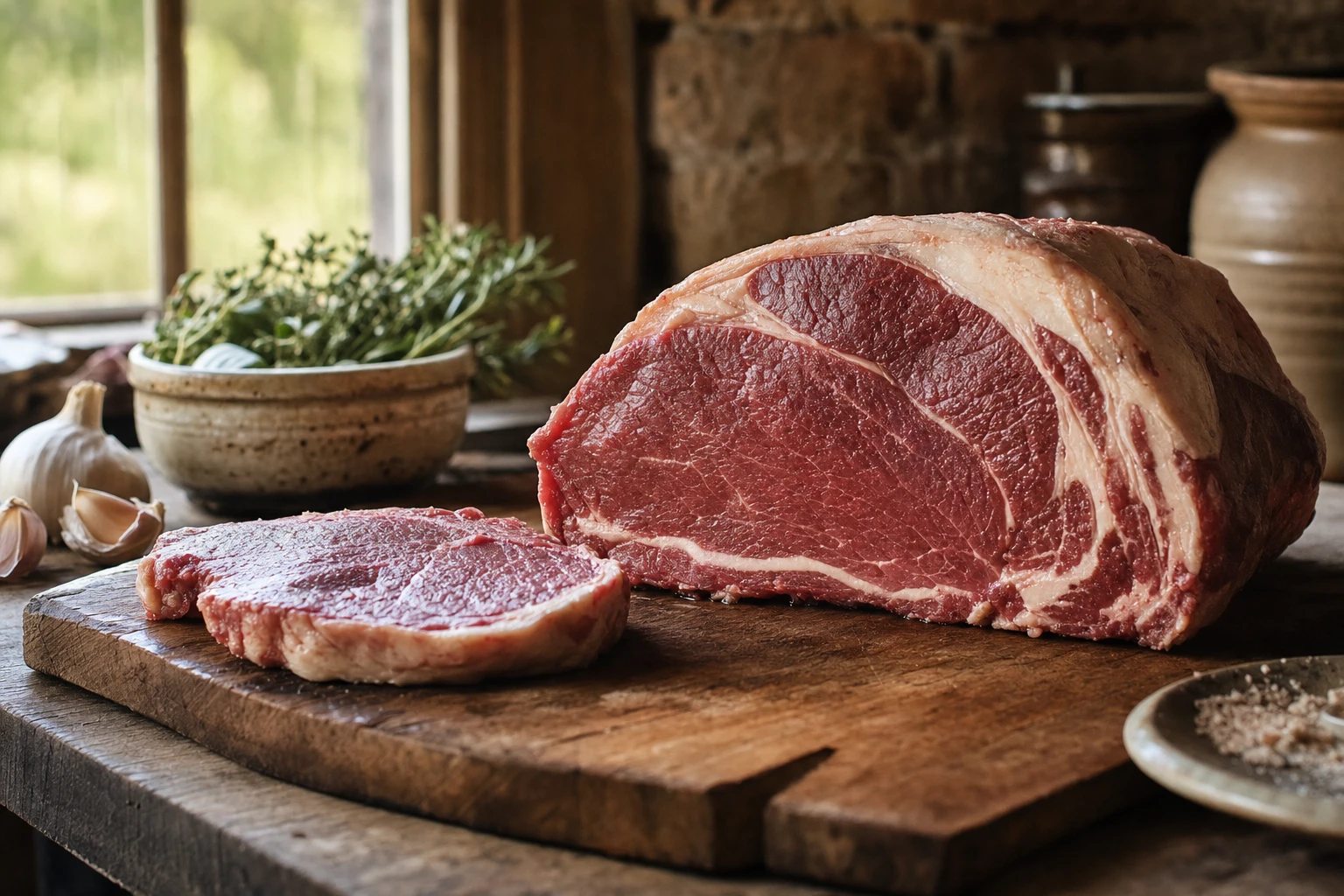
Fish adds omega-3 fatty acids and iodine. Eggs add choline and lutein. Dairy adds calcium. Beef adds iron and carnitine. Each whole food protein comes with its own nutrient constellation. Powder comes with the one thing your body can get from any of a thousand other sources.

1 of 9
Daily blend
100,000+ thriving families4.9 on Trustpilot
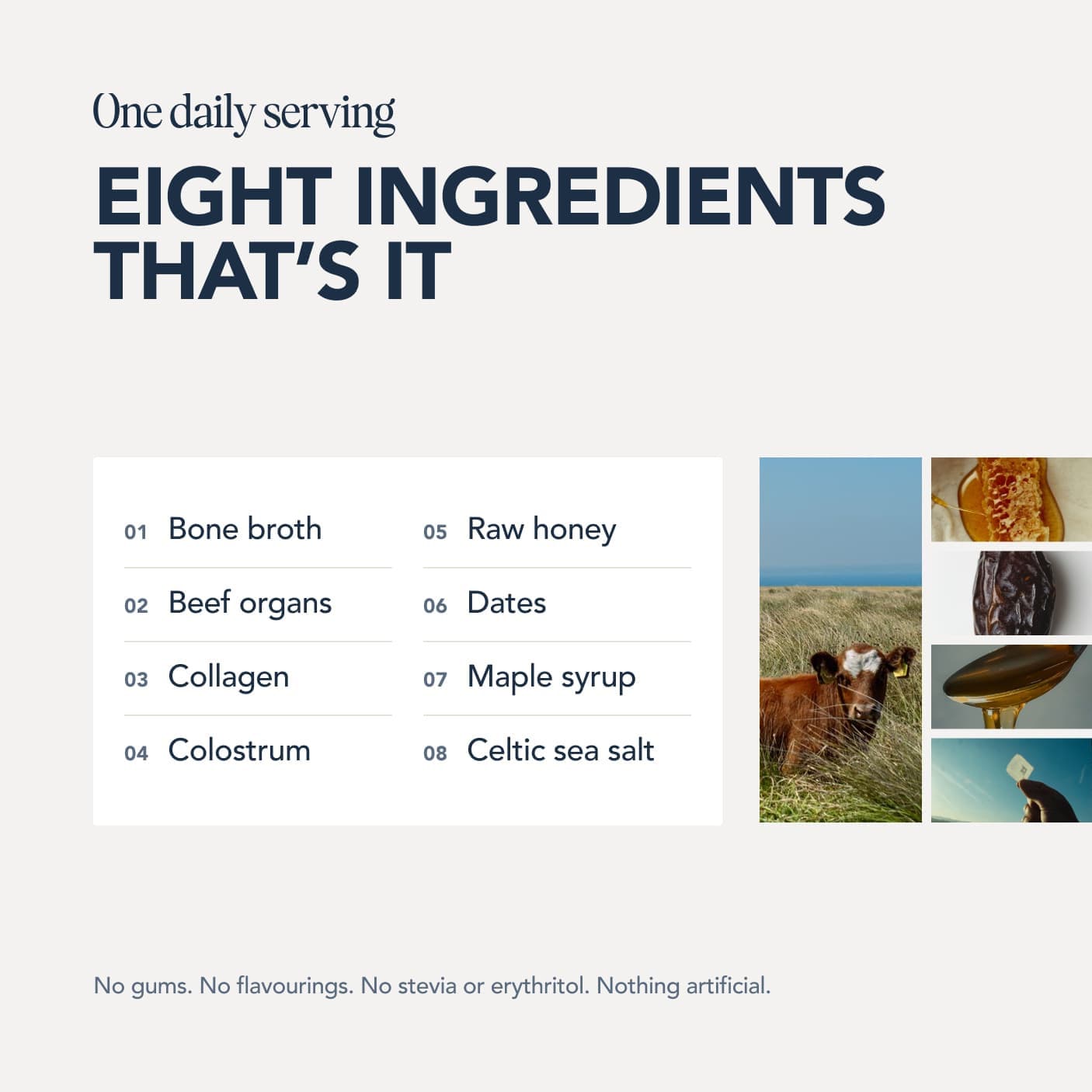
Eight real ingredients built around grass-fed beef organs, collagen and colostrum. Nothing synthetic added.
Free with your first order, worth £38. Plus £10 off the pouch with a subscription.


Free UK shipping · Made in England · 100 day money back guarantee on your first pouch · Skip, pause or cancel anytime
The practical question
Should you use protein powder? Yes, in specific contexts.
Post-workout, when you need rapid amino acid delivery and can't stomach solid food immediately. In a pinch when you're traveling and can't access real food. As a supplement to whole food protein on days when you're short on time.
Should it be your primary protein source? No. It shouldn't. Your muscles, your digestion, your satiety signals, and your micronutrient status all prefer whole food.
Protein powder is a supplement to whole food eating, not a replacement for it. The sooner you treat it that way, the sooner your body starts working with you instead of against you.
If you're serious about building muscle or losing weight, make your primary protein sources meat, fish, eggs, and dairy. Use powder as a tool, not a lifestyle. Your recovery will improve. Your satiety will improve. Your results will follow.
The bottom line
Whole food protein and processed protein are not interchangeable. Whole food comes with cofactors, satiety signals, and micronutrients. Powder comes with convenience and speed. For building a body that works well, whole food wins. Use powder strategically, but build your foundation on real food.
References
Every source below was checked on 27 August 2026. Each PubMed, PMC and DOI identifier was resolved against NCBI or Crossref, and what it opens is printed under the citation, so you can see the link goes where the citation says without leaving the page. Where a citation and its identifier disagreed, the citation was corrected to the record or the reference was deleted along with the sentence marker that pointed at it, and where the resolved paper turned out not to support the sentence, the sentence was cut back to what it does support. Borrowed authority is worse than none, because it looks like rigour.
- Boirie Y, Dangin M, Gachon P, Vasson MP, Maubois JL, Beaufrere B. Slow and fast dietary proteins differently modulate postprandial protein accretion. Proceedings of the National Academy of Sciences. 1997;94(26):14930-14935. https://pubmed.ncbi.nlm.nih.gov/9405716/Checked 27 August 2026: PMID 9405716 opens Boirie Y, Dangin M, Gachon P et al, Slow and fast dietary proteins differently modulate postprandial protein accretion. Proc Natl Acad Sci U S A 1997;94(26):14930-5.
- Boldyrev AA, Aldini G, Derave W. Physiology and pathophysiology of carnosine. Physiological Reviews. 2013;93(4):1803-1845. https://pubmed.ncbi.nlm.nih.gov/24137022/Checked 27 August 2026: PMID 24137022 opens Boldyrev AA, Aldini G, Derave W, Physiology and pathophysiology of carnosine. Physiol Rev 2013;93(4):1803-45. PubMed indexes it as: Review.
- Schoenfeld BJ, Aragon AA, Krieger JW. The effect of protein timing on muscle strength and hypertrophy: a meta-analysis. Journal of the International Society of Sports Nutrition. 2013;10(1):53. https://pubmed.ncbi.nlm.nih.gov/24299050/Checked 27 August 2026: PMID 24299050 opens Schoenfeld BJ, Aragon AA, Krieger JW, The effect of protein timing on muscle strength and hypertrophy: a meta-analysis. J Int Soc Sports Nutr 2013;10(1):53.
- National Institutes of Health, Office of Dietary Supplements. Vitamin B12: Fact Sheet for Health Professionals. https://ods.od.nih.gov/factsheets/VitaminB12-HealthProfessional/ See also Iron, Zinc, and Selenium fact sheets [accessed May 2026].
Who wrote and reviewed this guide
Niall Kiddle
Author · Founder, Organised
Niall is the founder of Organised. He started the company in 2024 after fixing his own health the slow way: in 2022 he swapped a cupboard of synthetic supplements for real food, raw milk, organ meats, bone broth and honey, and felt the difference within months.
Areas of expertise: Ancestral nutrition, Organ meats, Whole-food supplementation, Gut health, Regenerative sourcing
Read Niall's full profile
Pedro Rodrigues
Reviewer · Agronomist (farming and sourcing only)
Pedro is the agronomist Organised works with on farming and sourcing. His job on the guides is to keep the science honest: he reviews what we publish about soil health, regenerative agriculture, grazing and the way food is actually produced.
Areas of expertise: Regenerative agriculture, Agronomy, Soil health, Grass-fed farming, Food sourcing
Reviewed this guide on
Read Pedro's full profileBrowse the guides library
All guidesKeep reading

Science
Cholesterol in Organ Meats: Should You Be Worried?
Do organ meats raise cholesterol? The science on dietary cholesterol and serum cholesterol, plus the 2015 guideline shift.

Science
CoQ10: What It Does, Where to Get It, and Why It Matters
CoQ10 is essential for mitochondrial energy production and heart health. Learn how statins deplete it and where to find it in food.
Comparisons
Beef Liver vs Multivitamin: A Side-by-Side Nutrient Comparison
Which is better: beef liver or a multivitamin? We compare nutrient density, bioavailability, and what your body actually absorbs.
Real food, made effortless
Try the blendA few ways to use it
All recipes
Bone Broth from Scratch: A Step-by-Step Guide
Step-by-step guide to making bone broth at home. Stovetop, slow cooker, and Instant Pot methods. Rich in collagen and gut-healing minerals.

Raw Milk Ice Cream with Organised
Make raw milk ice cream at home with Organised for a seasonal, nutrient-dense treat. Three simple flavours to try whenever the craving strikes.

Organ Bolognese: The Family Dinner That Heals
Practical organ meat recipe using fresh beef liver and heart. Family-friendly bolognese that bridges supplements to whole food.


 Join over 100,000+ members
Build a better food system with us
The Organised community is thousands of people choosing real food and backing the farmers who grow it, all of us trying to leave the world a little better than we found it. If that is what you care about too, you belong here.