Beef Liver vs Multivitamin: A Side-by-Side Nutrient Comparison
Every multivitamin label looks impressive. Twenty nutrients, high percentages of daily values, that sense that you're covering your bases. But here's what most people miss: your body doesn't absorb a synthetic vitamin the same way it absorbs the same nutrient from food. And a multivitamin has to cram 20+ nutrients into a single pill, which means compromise on dose and form. Let's compare what you actually get from beef liver versus a typical multivitamin.

By Niall Kiddle, Founder, Organised

Reviewed by Pedro Rodrigues, Agronomist (farming and sourcing only) ·
5 min read · Published · Updated · 5 cited sources
Makers of the Organised Daily blend, a grass-fed beef organ supplement from regenerative UK farms
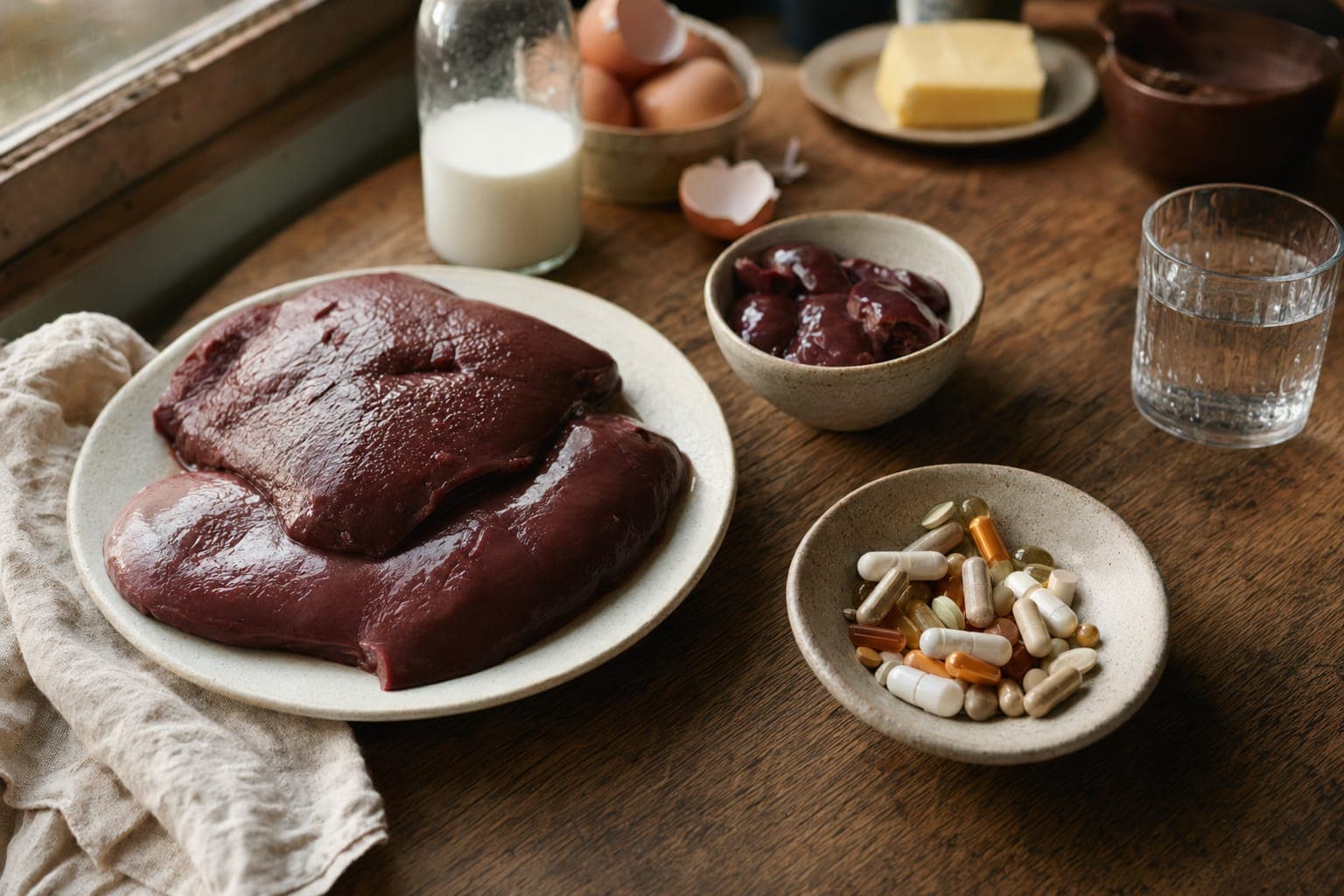
This isn't a gotcha. Multivitamins serve a purpose. But if you're trying to decide between taking a multivitamin and eating liver (or supplementing with a liver powder), the comparison is worth making.
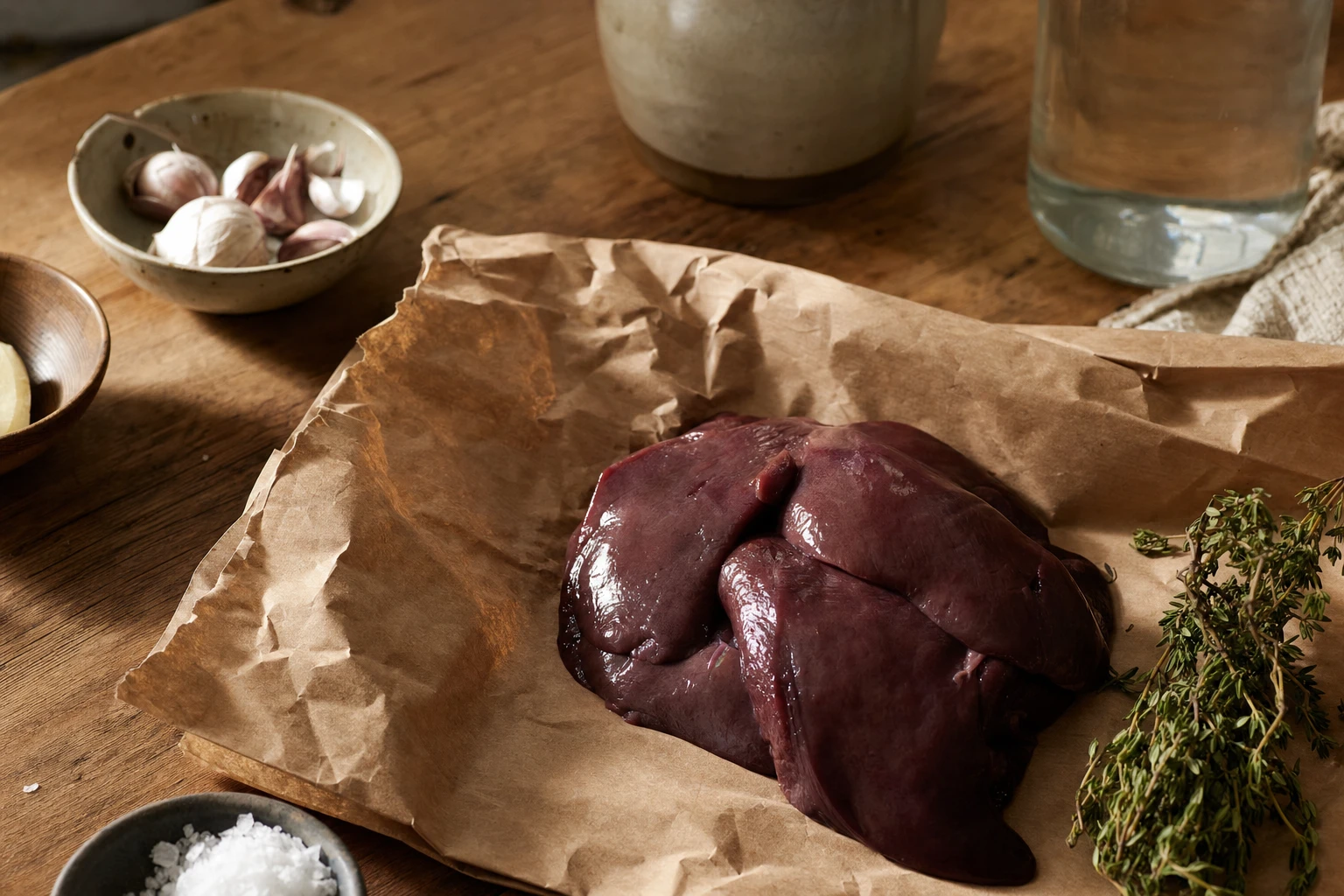
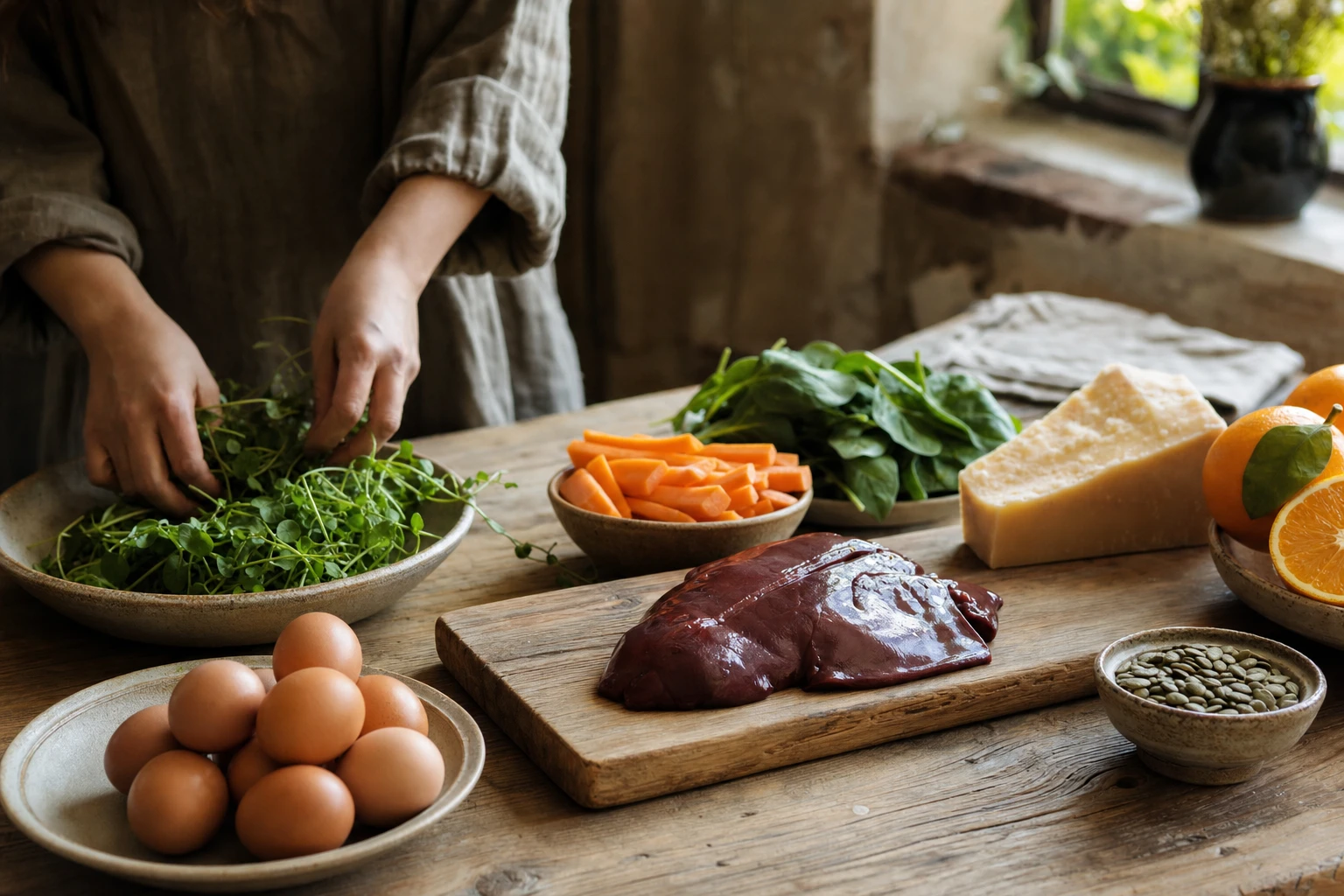
What beef liver contains
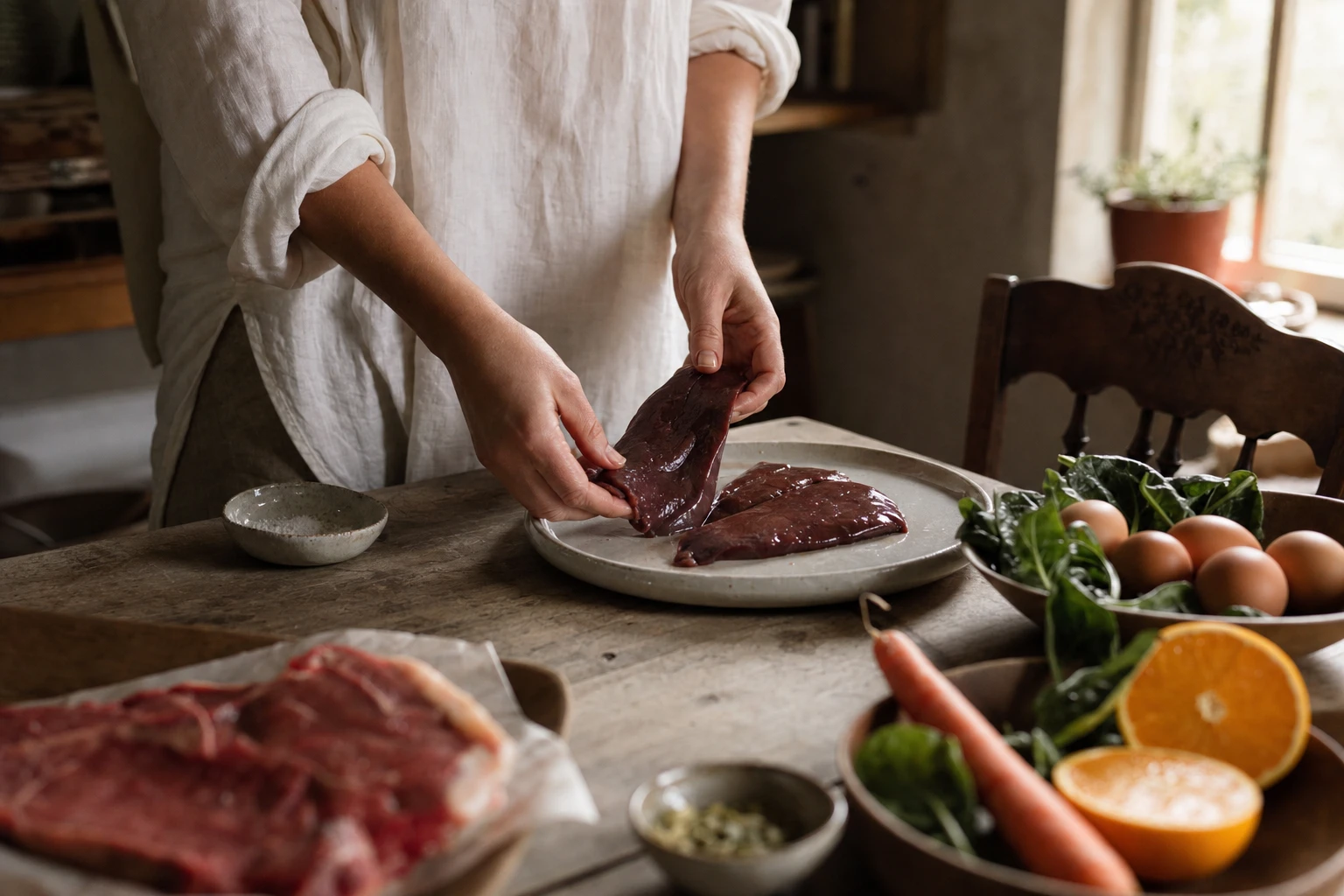
One 100-gram serving of beef liver carries:
- Vitamin A: around 30,000 IU per 100 g raw (preformed retinol, not beta-carotene; USDA FoodData Central)1
- B vitamins: B1 (thiamine) 0.12mg, B2 (riboflavin) 2.6mg, B3 (niacin) 6.9mg, B5 (pantothenic acid) 6.7mg, B6 (pyridoxine) 0.7mg, B12 (cobalamin) 59 mcg, folate 145 mcg
- Iron: 5.2mg (heme iron, the most bioavailable form)
- Copper: 12.3mg
- Selenium: 36.7 mcg
- Zinc: 4.0mg
- Choline: 418mg
- CoQ10: trace amounts, but present
That's without fillers, without binders, without the pill coating. It's whole food. It also includes cofactors your body needs to use those nutrients. Copper alongside iron. Fat-soluble vitamins embedded in a matrix of fat. Amino acids. Enzymes. A multivitamin can't replicate that matrix.
What a typical multivitamin contains
A standard multivitamin tries to cover the bases. Here's a realistic example of what's in a common brand (let's call it Generic Multi):
- Vitamin A: 5,000 IU (mixed beta-carotene and retinyl palmitate)
- B vitamins: typically 1-2mg of each (lower than beef liver)
- B12: 6-12 mcg (lower than beef liver)
- Folate: 200-400 mcg (synthetic folic acid, not natural folate)
- Iron: 8-18mg (ferrous sulphate or ferrous fumarate, non-heme iron)
- Copper: 0.9-1.2mg (much lower than beef liver)
- Selenium: 70 mcg (higher than beef liver, but isolated)
- Zinc: 8-11mg
Notice what's missing: choline (crucial for brain and liver function). CoQ10 (essential for heart health). The exact amino acid and enzyme matrix beef liver carries. These gaps exist because a multivitamin has to fit 20+ nutrients into a single pill. Something has to give.
The bioavailability difference
Vitamin A: Beef liver carries preformed retinol, which your body uses directly. A multivitamin contains beta-carotene and retinyl palmitate. Your body has to convert beta-carotene to retinol, and it does this inefficiently (roughly 12:1 ratio, meaning you need 12 units of beta-carotene to get 1 unit of usable retinol). Retinyl palmitate is synthetic. It's bioavailable but it's not the form your body evolved to use.
B vitamins: Beef liver carries methylated forms of B vitamins that your body absorbs easily. A multivitamin typically contains synthetic versions. Your body has to convert them. If you have a genetic variation (like MTHFR) that slows conversion, you won't absorb the synthetic forms well. Beef liver works regardless.
Folate: Natural folate (from liver) is different from folic acid (synthetic). Your body has to convert folic acid to usable folate. Again, this conversion is slowed by genetic variation. Somewhere between 30-50% of the population has a genetic variation that makes this conversion difficult.3 They absorb natural folate from liver fine but struggle with folic acid from supplements.
Iron: Beef liver carries heme iron, which your body absorbs at a rate of 15-35%. Non-heme iron (from supplements or plants) absorbs at only 2-20%.2 That's a massive difference. If you're anaemic and need iron, heme iron from beef liver is dramatically more useful than ferrous sulphate from a multivitamin.
Copper: Beef liver carries 12.3mg per 100g.4 A multivitamin carries 0.9-1.2mg. The difference is so large that if you're taking a multivitamin and eating no copper from food, you're probably deficient in copper. Copper is essential for iron metabolism, brain health, and connective tissue. A deficiency is subtle but real.
Get honest comparisons, free
Two short reads a week cutting through supplement marketing with what the evidence says.
By signing up you agree to receive emails from us. No spam, unsubscribe anytime.
What you actually absorb
This is where the real story comes out. You don't absorb a multivitamin the way the label suggests. A study on multivitamin bioavailability found that your body absorbs roughly 20-40% of what the label claims, depending on the nutrient and your individual genetics.5
Beef liver is different. Because it's whole food, your body treats it like food. You absorb the nutrients in context with their cofactors. Your absorption efficiency is higher. Not 100%, but closer to 70-80% for most of the nutrients (the ones your body needs). Your body also self-regulates. You won't absorb excess copper from liver the way you would from a supplement (which is why you see copper toxicity from oversupplementation but rarely from food).
A multivitamin sitting in your stomach is a foreign object. Your body has to figure out what to do with isolated nutrients. It's awkward. It works, but not efficiently.
1 of 9
Daily blend
100,000+ thriving families4.9 on Trustpilot
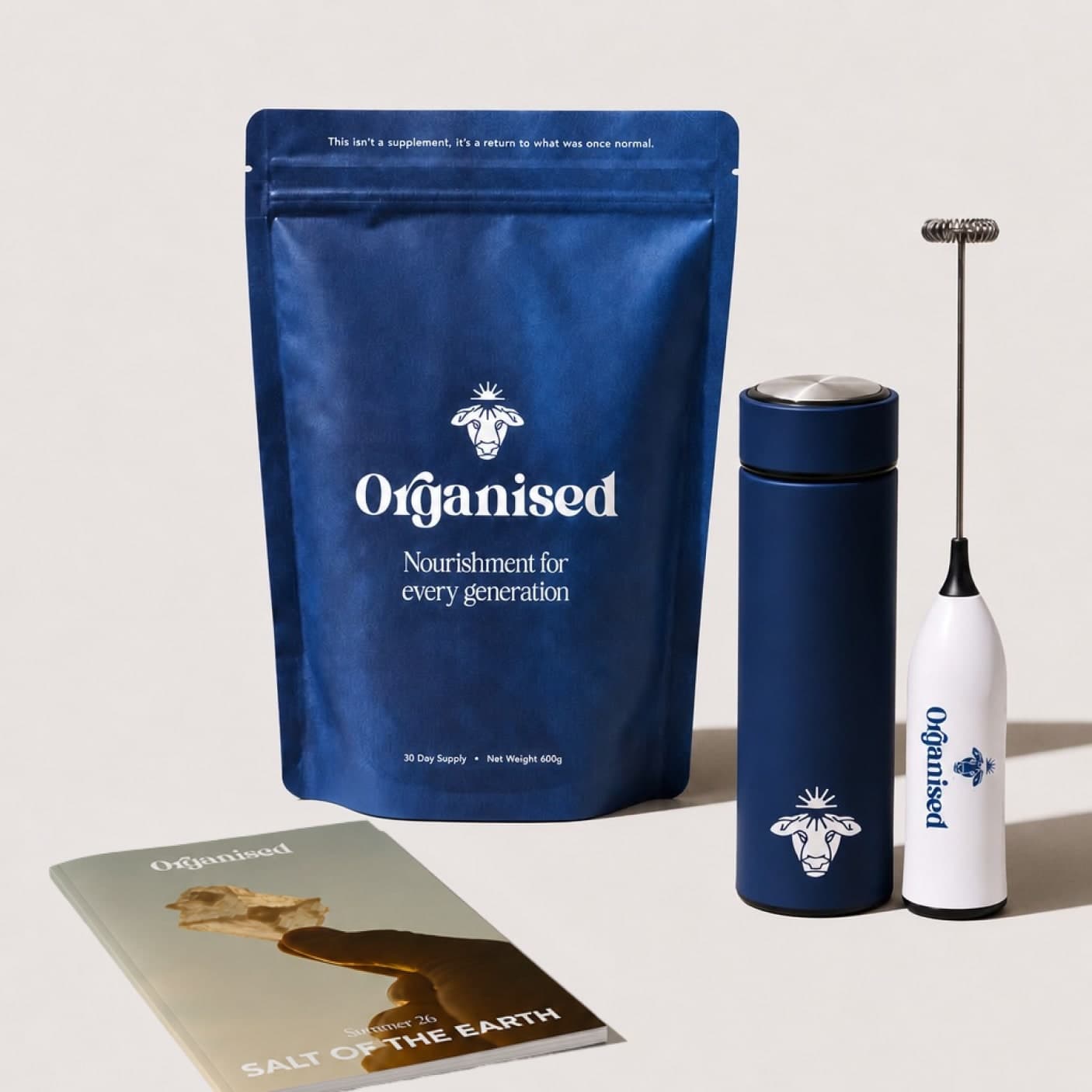
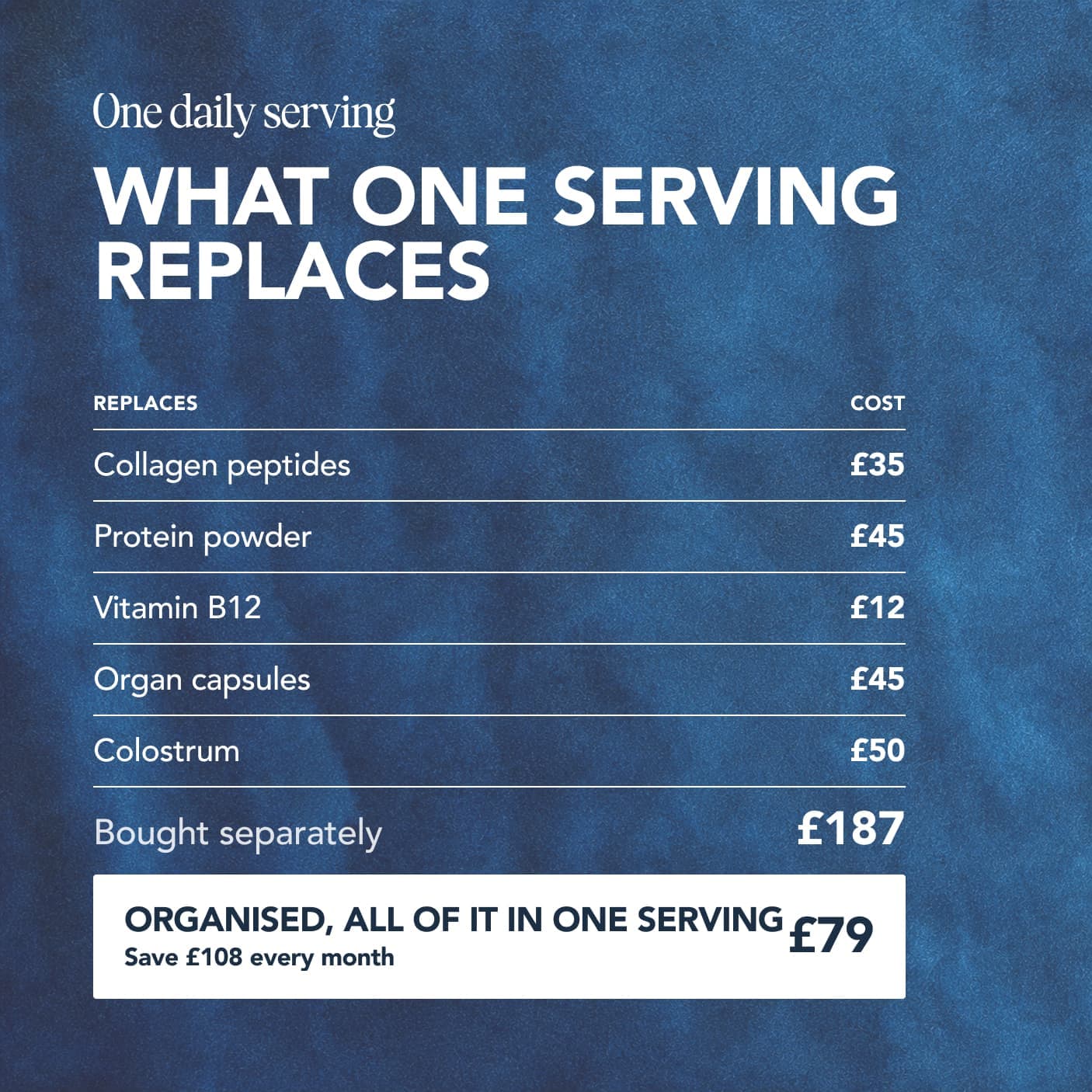
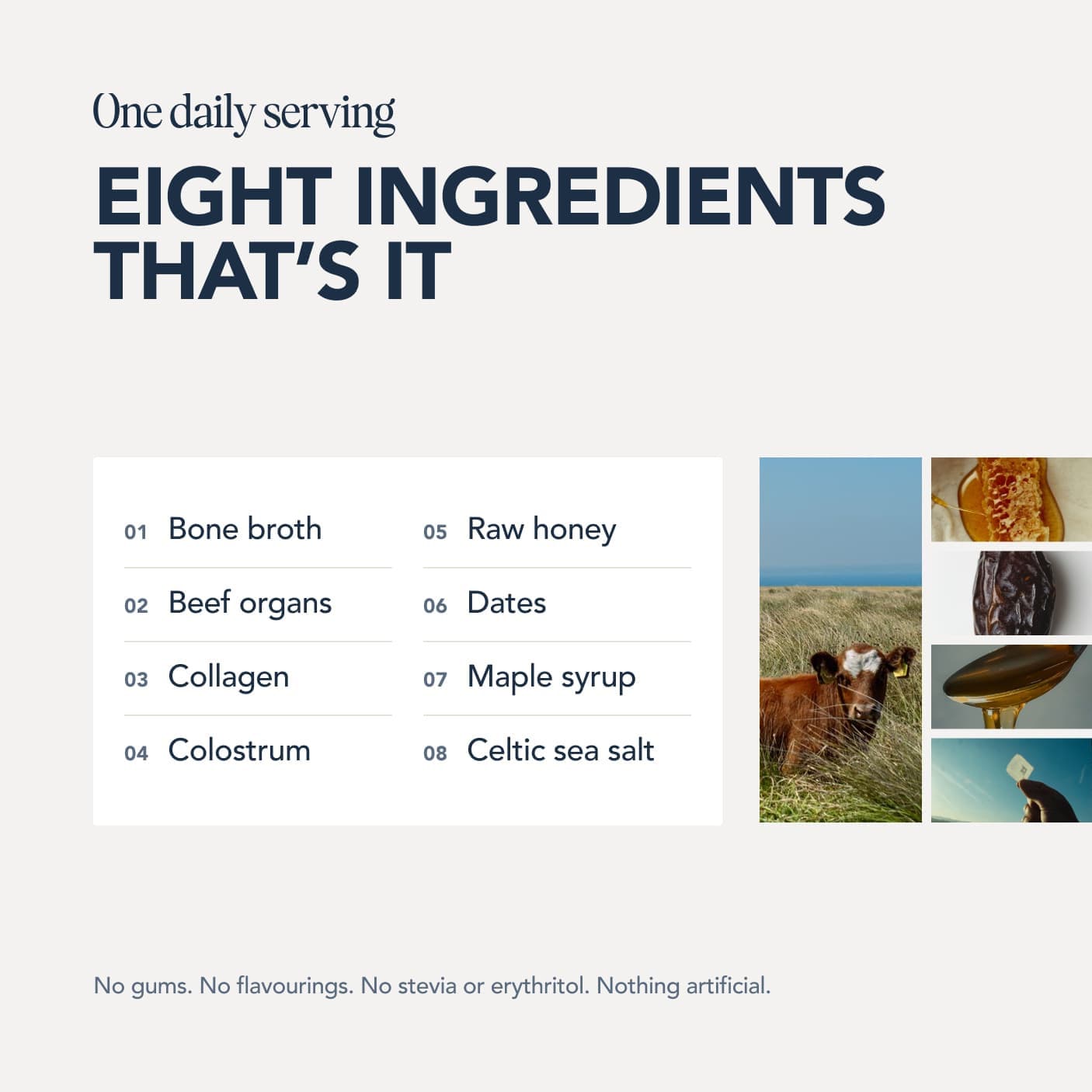
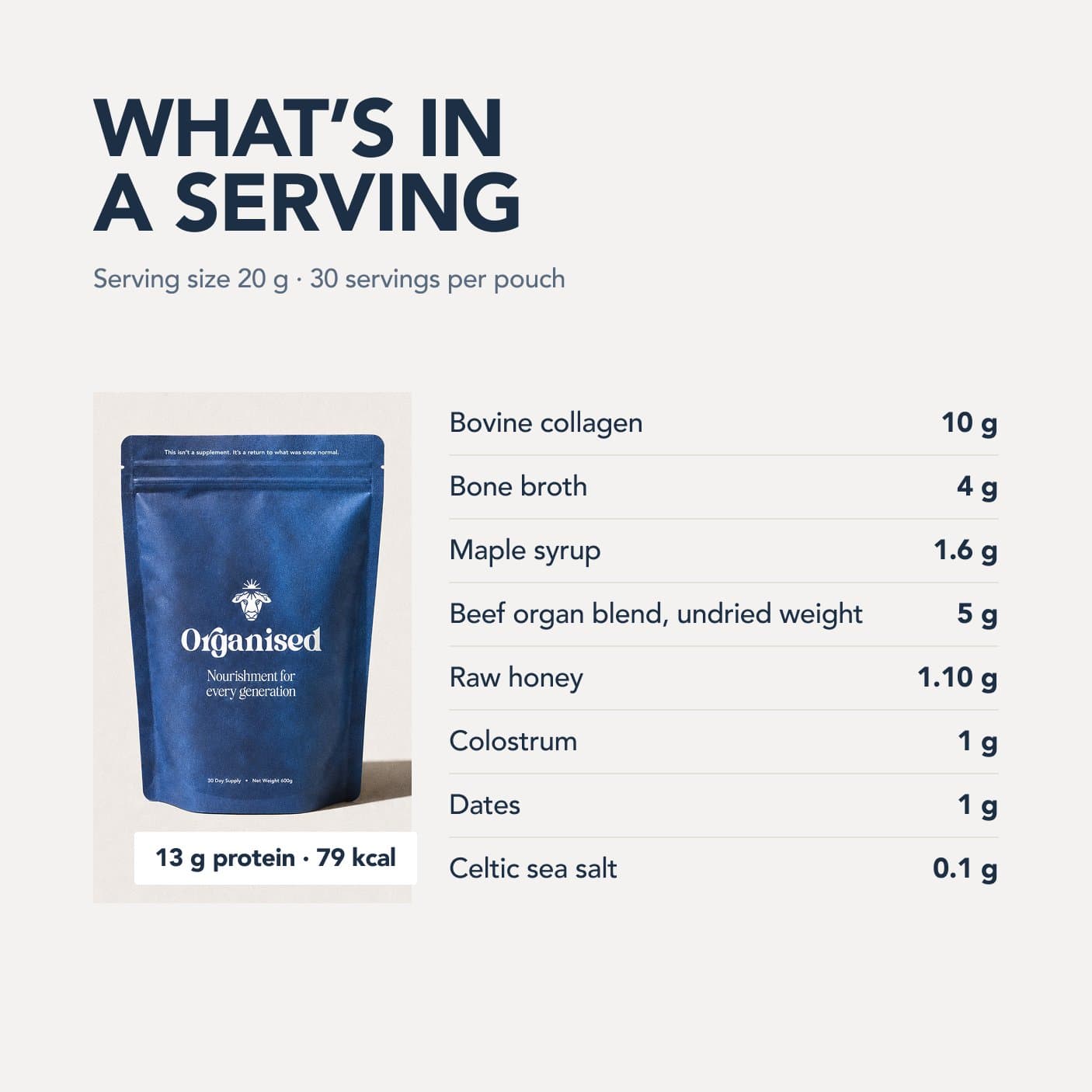
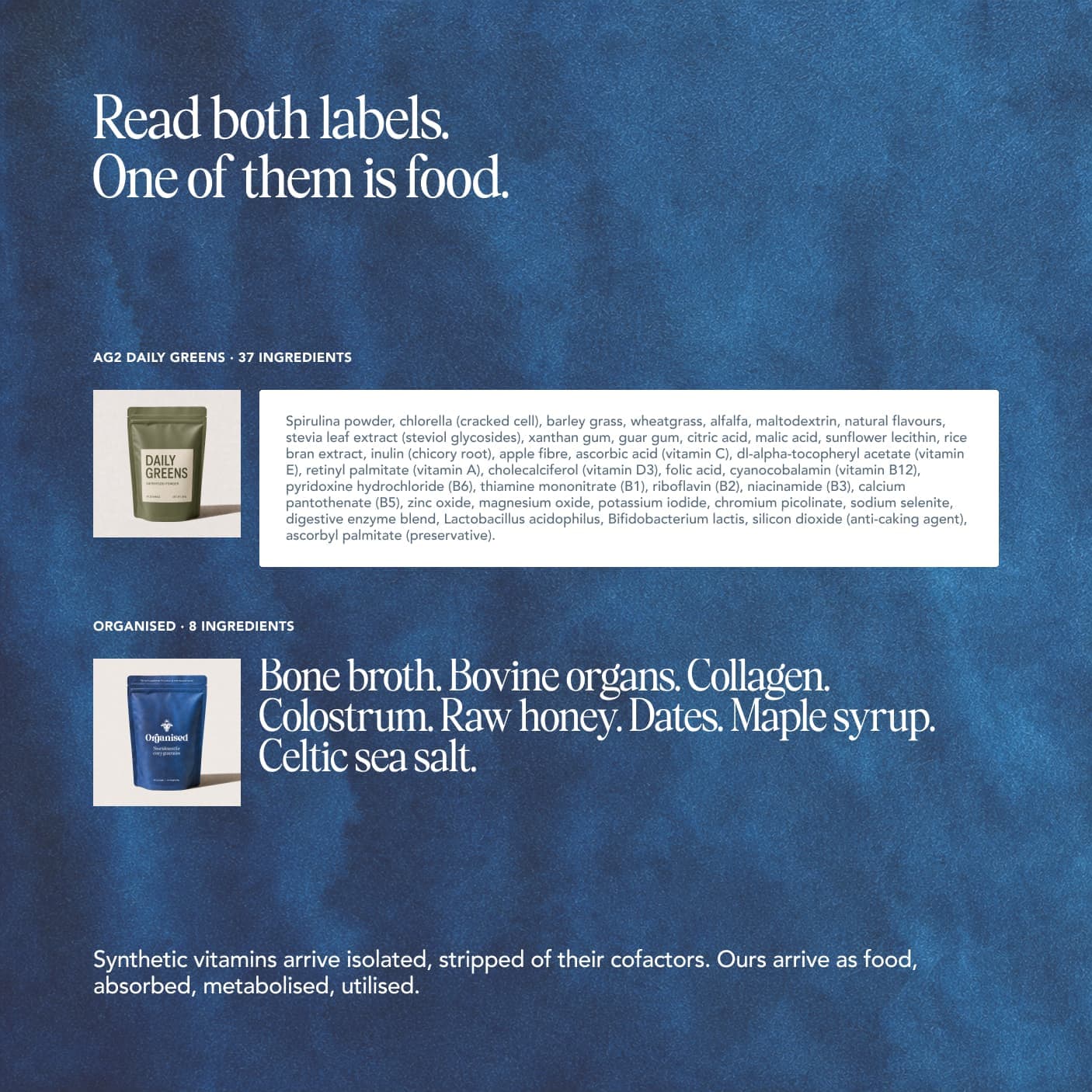
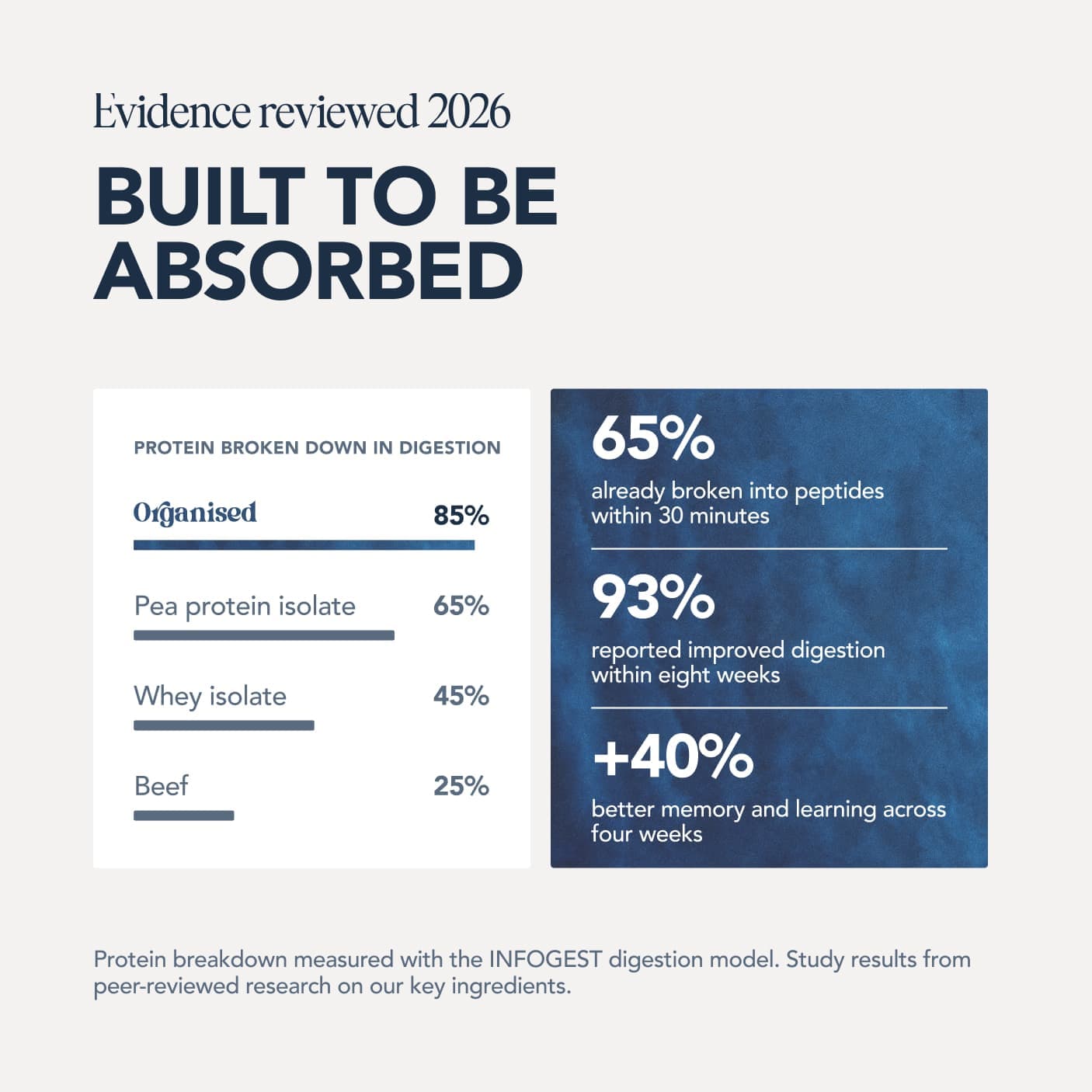
Eight real ingredients built around grass-fed beef organs, collagen and colostrum. Nothing synthetic added.
Free with your first order, worth £38. Plus £10 off the pouch with a subscription.

Free UK shipping · Made in England · 100 day money back guarantee on your first pouch · Skip, pause or cancel anytime
Should you choose one or the other
Here's the honest answer: it depends on your situation.
If you're mostly healthy and eating reasonably well, beef liver (or a liver supplement) is more useful than a multivitamin. You get more of what you need, in a form your body uses easily. The cost is similar (£20-40 per month for either). The benefit is higher with beef liver.
If you have specific deficiencies (anaemia, low folate, copper deficiency,diagnosed by testing), beef liver is the better choice. The heme iron and natural folate absorb better than supplements. But you might also benefit from targeted supplementation alongside eating liver.
If you're taking medications that interfere with nutrient absorption (PPIs for acid reflux, metformin for diabetes), a multivitamin is insurance. It's not ideal, but it's better than nothing. Still, add beef liver if you can.
If you hate eating organs, a desiccated liver supplement bridges the gap. It's beef liver in powder or capsule form. Same nutrients, less taste barrier. This is better than a multivitamin.
A multivitamin is a floor, not a ceiling. It keeps you from being acutely deficient. Beef liver is nutrition. It actually builds health, not just prevents disease.
The real comparison
If you're forced to choose between a multivitamin and beef liver, choose beef liver. You'll absorb more, you'll get more diversity, and you'll avoid the pitfalls of synthetic nutrient forms that don't work well for everyone.
But here's the nuance: you don't have to choose. Eat beef liver weekly (or take a liver supplement daily) and skip the multivitamin entirely. That's the win. You get the nutrient density of liver plus the simplicity of not managing a pill. Your body gets real nutrition, not supplemental insurance.
References
Every source below was checked on 27 August 2026. Each PubMed, PMC and DOI identifier was resolved against NCBI or Crossref, and what it opens is printed under the citation, so you can see the link goes where the citation says without leaving the page. Where a citation and its identifier disagreed, the citation was corrected to the record or the reference was deleted along with the sentence marker that pointed at it, and where the resolved paper turned out not to support the sentence, the sentence was cut back to what it does support. Borrowed authority is worse than none, because it looks like rigour.
- U.S. Department of Agriculture, FoodData Central. Beef, variety meats, liver — nutrient profile.
- Hurrell R, Egli I. Iron bioavailability and dietary reference values. American Journal of Clinical Nutrition, 2010. PMID 20200263.Checked 27 August 2026: PMID 20200263 opens Hurrell R, Egli I, Iron bioavailability and dietary reference values. Am J Clin Nutr 2010;91(5):1461S-1467S.
- National Institutes of Health, Office of Dietary Supplements. Folate — Health Professional Fact Sheet.
- National Institutes of Health, Office of Dietary Supplements. Copper — Health Professional Fact Sheet.
- National Institutes of Health, Office of Dietary Supplements. Multivitamin/mineral Supplements — Health Professional Fact Sheet.
Who wrote and reviewed this guide
Niall Kiddle
Author · Founder, Organised
Niall is the founder of Organised. He started the company in 2024 after fixing his own health the slow way: in 2022 he swapped a cupboard of synthetic supplements for real food, raw milk, organ meats, bone broth and honey, and felt the difference within months.
Areas of expertise: Ancestral nutrition, Organ meats, Whole-food supplementation, Gut health, Regenerative sourcing
Read Niall's full profile
Pedro Rodrigues
Reviewer · Agronomist (farming and sourcing only)
Pedro is the agronomist Organised works with on farming and sourcing. His job on the guides is to keep the science honest: he reviews what we publish about soil health, regenerative agriculture, grazing and the way food is actually produced.
Areas of expertise: Regenerative agriculture, Agronomy, Soil health, Grass-fed farming, Food sourcing
Reviewed this guide on
Read Pedro's full profileMore on nutrient comparisons
View all- Beef Organs vs Desiccated Liver: Why a Blend Is Better
- Beef Protein vs Plant Protein: A Nutritional Reality Check
- Bone Broth vs Collagen Supplements: Do You Need Both?
- Bone Broth vs Collagen: What Reddit Says You Actually Need
- Bovine Colostrum vs Goat Colostrum: Does the Source Matter?
- Celtic Sea Salt vs Table Salt: A Mineral Analysis
- Collagen vs Hyaluronic Acid: What Actually Works for Skin?
- Folate from Liver vs Folic Acid from Supplements
- Grass-Fed Collagen vs Marine Collagen vs Vegan Collagen
- Methylcobalamin vs Cyanocobalamin: Which B12 Is Better?
- Retinol from Food vs Retinol in Supplements: Bioavailability Compared
Browse the guides library
All guidesKeep reading
Comparisons
Folate from Liver vs Folic Acid from Supplements
Folate from food is methylfolate. Folic acid is synthetic and requires conversion. Why natural folate matters, especially in pregnancy.
Comparisons
Beef Protein vs Plant Protein: A Nutritional Reality Check
Compare beef and plant protein. Learn why amino acid completeness, anti-nutrients, and digestion make beef protein nutritionally superior for most people.
Comparisons
Retinol from Food vs Retinol in Supplements: Bioavailability Compared
Preformed retinol from liver is nearly 100% bioavailable. Supplements vary widely. Here's what the research actually shows about absorption and safety.
Real food, made effortless
Try the blendA few ways to use it
All recipes
Collagen-Rich Beef Stew: Slow-Cooked Nourishment
Beef stew that delivers collagen from connective tissue and bone broth. Winter comfort food that actually nourishes. Simple slow cooker recipe.

Organ Bolognese: The Family Dinner That Heals
Practical organ meat recipe using fresh beef liver and heart. Family-friendly bolognese that bridges supplements to whole food.
How to Make Bone Marrow Butter
Roast grass-fed marrow bones, scoop the marrow, and mix with butter and herbs. A nutrient-dense spread with fat-soluble vitamins.


 Join over 100,000+ members
Build a better food system with us
The Organised community is thousands of people choosing real food and backing the farmers who grow it, all of us trying to leave the world a little better than we found it. If that is what you care about too, you belong here.