Organ Supplements vs Synthetic Multivitamins: A Nutrient-by-Nutrient Comparison
A multivitamin capsule and an organ supplement capsule look identical on the shelf. But one is made of isolated synthetic molecules. The other is made of whole food. By the time you swallow them, your body knows the difference.

By Niall Kiddle, Founder, Organised

Reviewed by Pedro Rodrigues, Agronomist (farming and sourcing only) ·
7 min read · Published · Updated · 3 cited sources
Makers of the Organised Daily blend, a grass-fed beef organ supplement from regenerative UK farms

The multivitamin industry sells the idea that if you put the right molecules in a pill, your body will use them the same way it would use them from food. Two decades of research says that's naive. Form matters. Context matters. The cofactors your body evolved alongside matter.
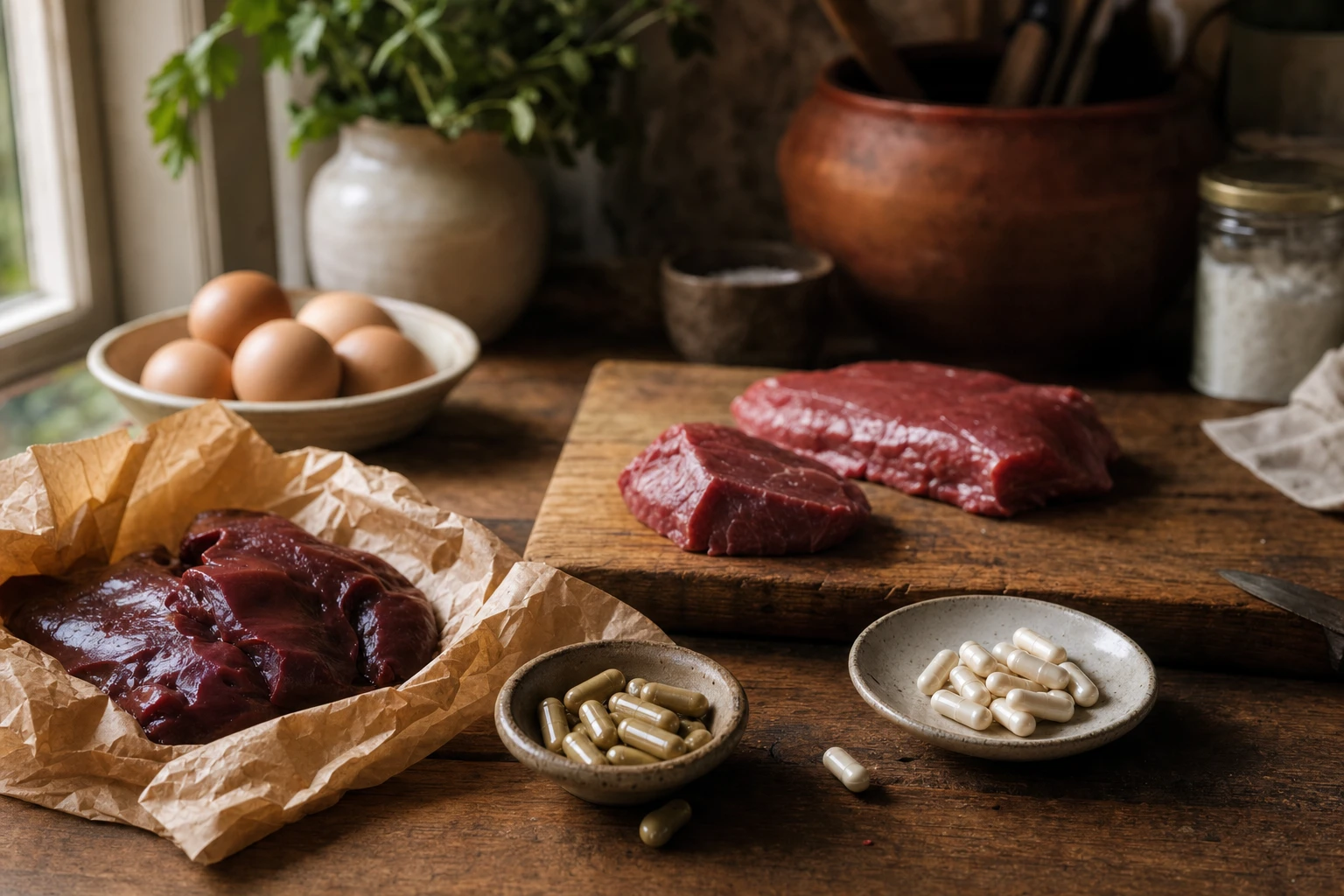
Why form matters
Your body didn't evolve to absorb molecules. It evolved to absorb food.
When you eat a piece of liver, your stomach recognises it as animal tissue. It secretes specific enzymes. Your small intestine deploys specific transporters. Your liver prepares to process it. The whole system is calibrated to break down tissue and extract what's useful.
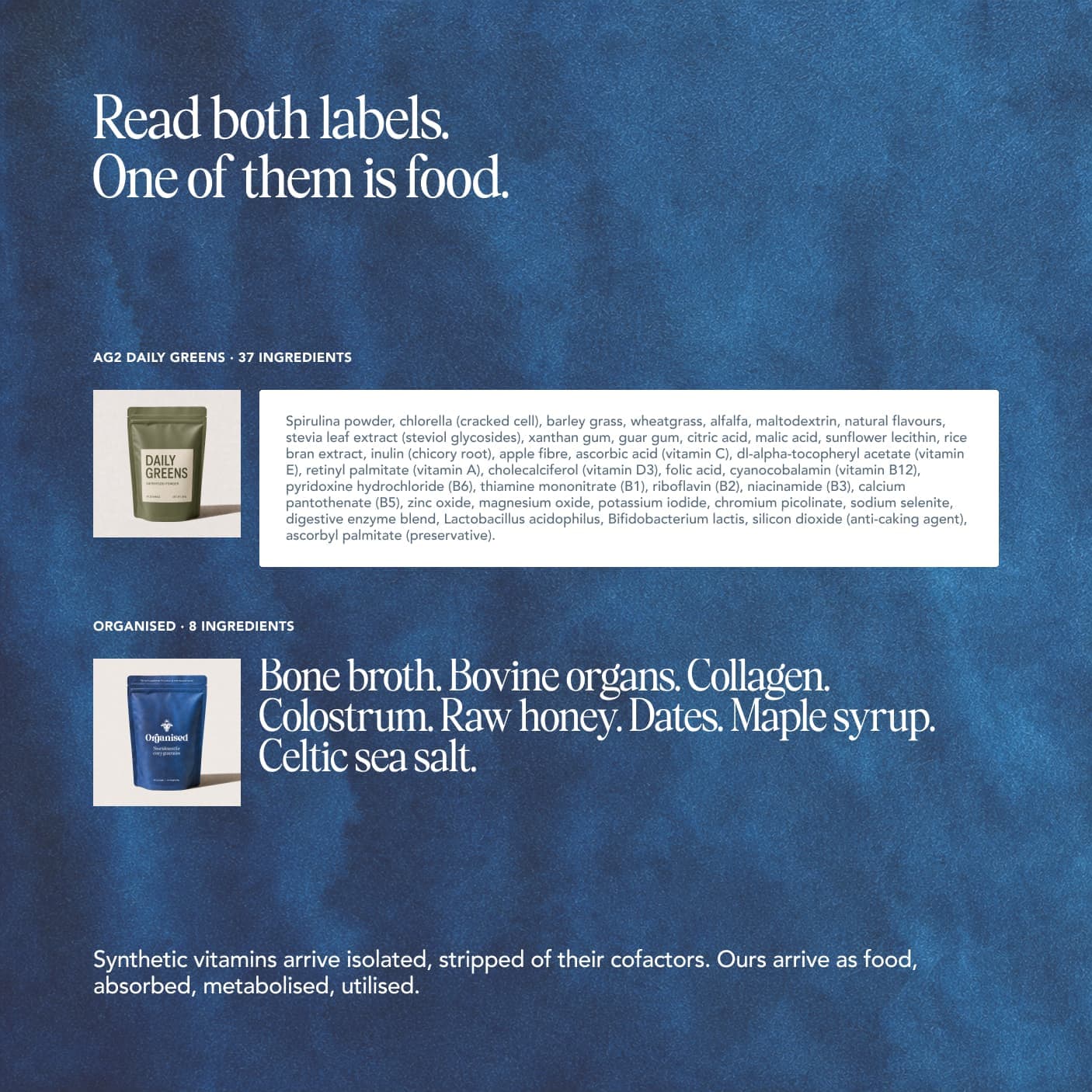
When you swallow a multivitamin, your body sees 27 isolated molecules in forms it's never seen in nature. Your absorption machinery has to improvise. Some molecules get absorbed efficiently. Some barely absorb at all. Some create metabolic burden because your body treats them as foreign compounds.
Organ supplements are food. Dehydrated, concentrated, but still tissue. Your body recognises it and knows what to do with it.
Form determines bioavailability. Bioavailability determines whether you actually absorb what you swallowed.
This isn't metaphysical. This is biochemistry. And it shows up dramatically when you compare nutrient by nutrient.
Vitamin A and retinol
Most multivitamins contain vitamin A as beta-carotene or palmitate esters.
Your body has to convert beta-carotene into retinol. Conversion efficiency ranges from 3% to 50%, depending on your genetics, gut health, bile production, and about a dozen other factors. Most people convert at around 10-15%.
Palmitate esters are synthetic vitamin A. Your body can absorb them, but they're not the same form as natural retinol. They need processing. They can accumulate in tissues differently than natural retinol. They often trigger symptoms like headaches, dry skin, or nausea at lower doses than food-based retinol.
Beef liver contains preformed retinol. The NIH ODS reports that the body absorbs roughly 70–90% of preformed retinol from food, compared with only 10–30% absorption of beta-carotene.1
To get equivalent retinol from synthetic beta-carotene, you'd need roughly 100,000 IU of supplemental beta-carotene. That's five to ten times the amount, and you'd absorb a fraction of it.
Winner: organ supplements, decisively.

B vitamins and absorption
This is where the difference becomes extreme.
B12 in multivitamins is usually cyanocobalamin, which the body converts to active methylcobalamin and adenosylcobalamin. The NIH ODS notes existing evidence does not show meaningful differences among forms in absorption or bioavailability for most people.3
Beef liver contains methylcobalamin naturally. Your body uses it directly with no conversion step. Absorption efficiency is 60-80%, but you start with the right form so the whole process is smoother.
B9 (folate) shows similar patterns. Multivitamins usually contain folic acid (a synthetic form). Your body has to convert it to tetrahydrofolate. But roughly 40% of the population has genetic variants (MTHFR polymorphisms) that slow this conversion. They're paying full price for a supplement they can't efficiently use.
Liver contains natural folate (5-methyltetrahydrofolate). No conversion needed. Everyone absorbs it efficiently, regardless of genetics.
B6, B5, B3 - same pattern. Synthetic forms in multivitamins require conversion. Natural forms in organ meat absorb directly.
For every B vitamin, organ supplements skip the conversion step. That's why they work faster and more reliably.
Winner: organ supplements across the board.
Iron: haem vs non-haem
Iron is where the difference becomes practically important.
Heme iron from animal sources has substantially higher bioavailability than non-heme iron from plant or supplemental sources, with mixed-diet absorption around 14–18% versus 5–12% for vegetarian diets.2
To get 18mg of iron (the recommended daily amount for menstruating women) from a multivitamin, you'd need roughly 100-200mg of supplemental iron, assuming optimistic absorption. That dosage causes constipation and upset stomach in most people.
100 grams of beef liver provides about 6-8mg of haem iron. Absorption efficiency is 4-5 times higher. You get the iron you need with none of the side effects.
For anyone with iron deficiency or heavy menstrual bleeding, this difference is massive. Multivitamins don't work. Organ supplements work.
Winner: organ supplements decisively.

Zinc and mineral cofactors
Multivitamins typically contain zinc as zinc oxide, zinc citrate, or zinc glycinate.
Your body can absorb these, but zinc competes with other minerals for absorption. Iron interferes with zinc absorption. Copper interferes with zinc absorption. Calcium interferes with zinc absorption. Most multivitamins contain all three, working against each other.
Beef liver contains zinc bound to amino acids and proteins in specific ratios that don't interfere with absorption. The zinc naturally comes with copper in the ratio your body needs (roughly 8:1 zinc to copper). Nothing is competing. Everything is synergistic.
Studies on zinc supplementation show that even "optimal" synthetic dosages only marginally improve zinc status. Studies on whole food supplementation show dramatic improvements. Why? Because the food form includes the cofactors and ratios your body evolved with.
The same pattern holds for magnesium, selenium, and phosphorus. Synthetic versions absorb poorly. Food forms absorb efficiently because they include the proper cofactors and don't interfere with each other.
Minerals in food don't compete. Minerals in multivitamins fight each other for absorption. Your body was never designed for chemical supplements.
Winner: organ supplements.
Get honest comparisons, free
Two short reads a week cutting through supplement marketing with what the evidence says.
By signing up you agree to receive emails from us. No spam, unsubscribe anytime.
Copper and ceruloplasmin
This is a fascinating one that most people don't think about.
Copper in multivitamins is usually copper oxide or copper gluconate. Your body absorbs it, but without the proper protein context. Excess copper in your bloodstream that isn't bound to ceruloplasmin (the copper transport protein) is actually toxic. It creates oxidative stress.
Beef liver contains copper naturally complexed with proteins and cofactors. It arrives with the machinery needed to transport it safely. Your body makes ceruloplasmin specifically designed for the form of copper found in food.
This is why copper toxicity from supplementation is real, but copper toxicity from food is virtually unknown. It's not the copper. It's the form.
Organ supplements skip this problem because the copper is already in the right form.
Winner: organ supplements.



1 of 9
Daily blend
100,000+ thriving families4.9 on Trustpilot
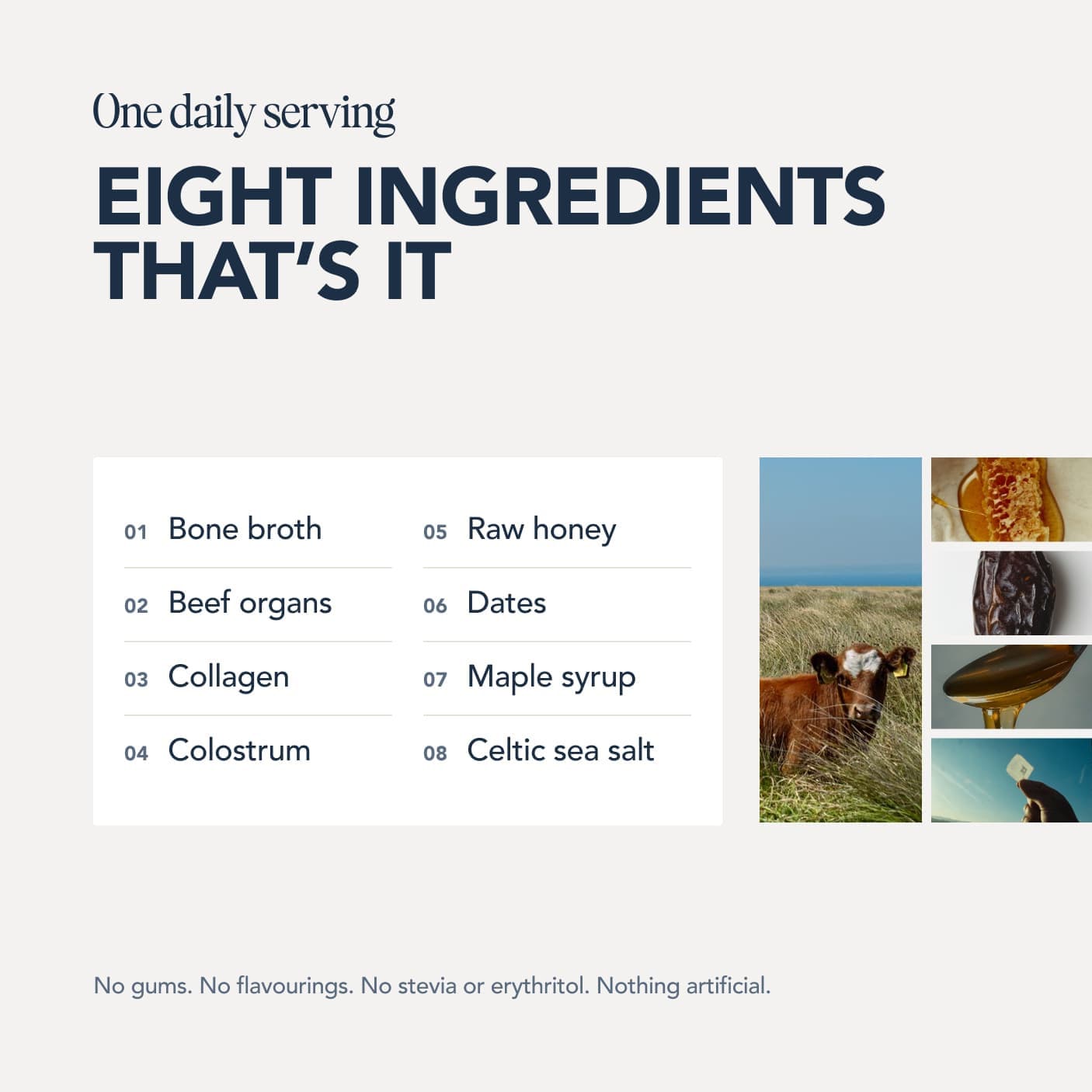
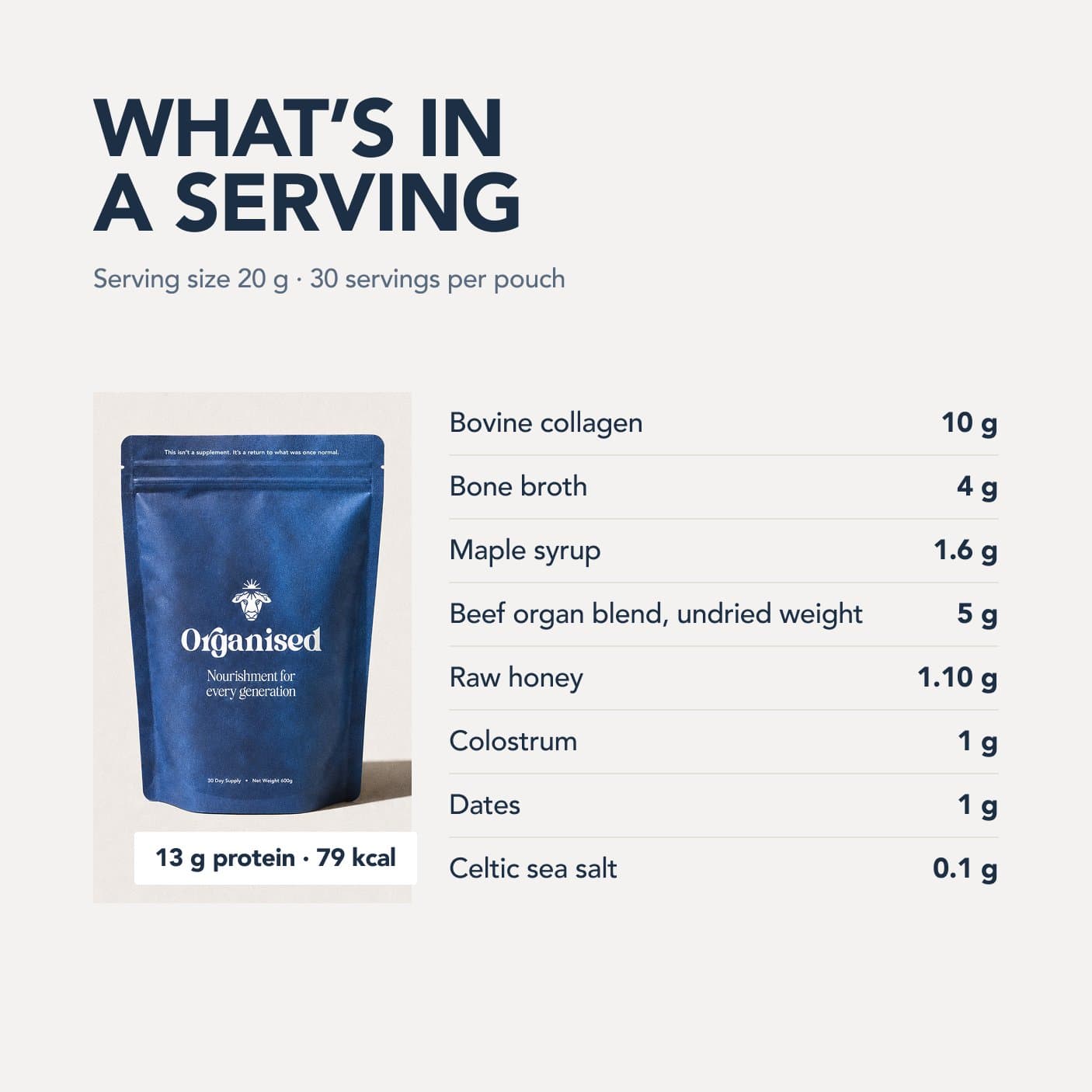
Eight real ingredients built around grass-fed beef organs, collagen and colostrum. Nothing synthetic added.
Free with your first order, worth £38. Plus £10 off the pouch with a subscription.

Free UK shipping · Made in England · 100 day money back guarantee on your first pouch · Skip, pause or cancel anytime
Cost per usable nutrient
Let's do the math that matters.
A high-quality multivitamin costs roughly GBP 15-25 for a month's supply (30 capsules). You're getting synthetic vitamins at absorption efficiencies of roughly 5-60% depending on the nutrient.
Organ supplements (beef liver, kidney, heart concentrate) cost roughly GBP 15-30 per month depending on the brand. You're getting naturally-occurring nutrients at absorption efficiencies of 70-90%.
The cost per capsule is similar. But the cost per actual usable nutrient is wildly different. You're absorbing maybe 30-40% of a multivitamin's nutrients. You're absorbing 70-90% of organ supplements.
The organ supplement costs half as much per absorbed nutrient. And it doesn't come with the unwanted side effects (constipation from iron, nausea from copper, etc.) that synthetic supplements often trigger.
If you had to pick a metric that mattered, cost per absorbed nutrient favours organ supplements by a factor of three to one.
Vitamin D and fish oil
One place multivitamins have an advantage: vitamin D3.
Multivitamins usually contain D3 (cholecalciferol), which your body absorbs well. Organ supplements are rarely concentrated in vitamin D - you'd need cod liver oil for that. And vitamin D from whole food sources is nearly impossible to obtain in sufficient quantities. Sun exposure and fish oil are your realistic options.
Similarly, for omega-3 fatty acids (EPA and DHA), fish supplements or fish oil are superior to organ supplements because the concentration is so much higher. These long-chain omega-3s are found almost exclusively in fish, seaweed, and fish oil. Land animals don't provide meaningful amounts.
This is actually why the best nutritional strategy isn't organ supplements alone. It's organ supplements plus fish oil. Organ supplements close the mineral and vitamin gaps. Fish oil covers the vitamin D and omega-3 gaps that food alone might not fill.
If vitamin D status is a major gap, you probably need dedicated supplementation - either fish oil or a dedicated D3 supplement. Same for omega-3s if you eat very little fish. But for every other nutrient, organ supplements win decisively over multivitamins.
Use organ supplements as your foundation. Add fish oil for omega-3s and vitamin D if your blood tests show deficiency. Skip the multivitamin entirely.
The bottom line
A multivitamin is a convenient fiction. It says "complete nutrition" on the label, but you're absorbing maybe 30-40% of what's inside. An organ supplement is real food, concentrated and dehydrated. You absorb 70-90% of what's inside because your body recognises it as food.
If you can afford one supplement, choose organ meat over multivitamin. If you can afford two, add fish oil for vitamin D and omega-3s. If you want the safest, most comprehensive approach, cycle beef liver, beef kidney, and beef heart throughout the week. You'll close virtually every nutritional gap without creating any of the side effects synthetic supplements cause.
References
Every source below was checked on 27 August 2026. Each link was requested and read. Where a citation and its identifier disagreed, the citation was corrected to the record or the reference was deleted along with the sentence marker that pointed at it, and where the resolved paper turned out not to support the sentence, the sentence was cut back to what it does support. Borrowed authority is worse than none, because it looks like rigour.
- National Institutes of Health, Office of Dietary Supplements. Vitamin A and Carotenoids — Health Professional Fact Sheet. https://ods.od.nih.gov/factsheets/VitaminA-HealthProfessional/
- National Institutes of Health, Office of Dietary Supplements. Iron — Health Professional Fact Sheet. https://ods.od.nih.gov/factsheets/Iron-HealthProfessional/
- National Institutes of Health, Office of Dietary Supplements. Vitamin B12 — Health Professional Fact Sheet. https://ods.od.nih.gov/factsheets/VitaminB12-HealthProfessional/
Who wrote and reviewed this guide
Niall Kiddle
Author · Founder, Organised
Niall is the founder of Organised. He started the company in 2024 after fixing his own health the slow way: in 2022 he swapped a cupboard of synthetic supplements for real food, raw milk, organ meats, bone broth and honey, and felt the difference within months.
Areas of expertise: Ancestral nutrition, Organ meats, Whole-food supplementation, Gut health, Regenerative sourcing
Read Niall's full profile
Pedro Rodrigues
Reviewer · Agronomist (farming and sourcing only)
Pedro is the agronomist Organised works with on farming and sourcing. His job on the guides is to keep the science honest: he reviews what we publish about soil health, regenerative agriculture, grazing and the way food is actually produced.
Areas of expertise: Regenerative agriculture, Agronomy, Soil health, Grass-fed farming, Food sourcing
Reviewed this guide on
Read Pedro's full profileBrowse the guides library
All guidesKeep reading

Recipes & routines
Raw Milk Hot Chocolate with Collagen
A nourishing evening hot chocolate made with raw milk, grass-fed collagen, raw cacao, and honey. A nighttime ritual that supports sleep and gut health.
Recipes & routines
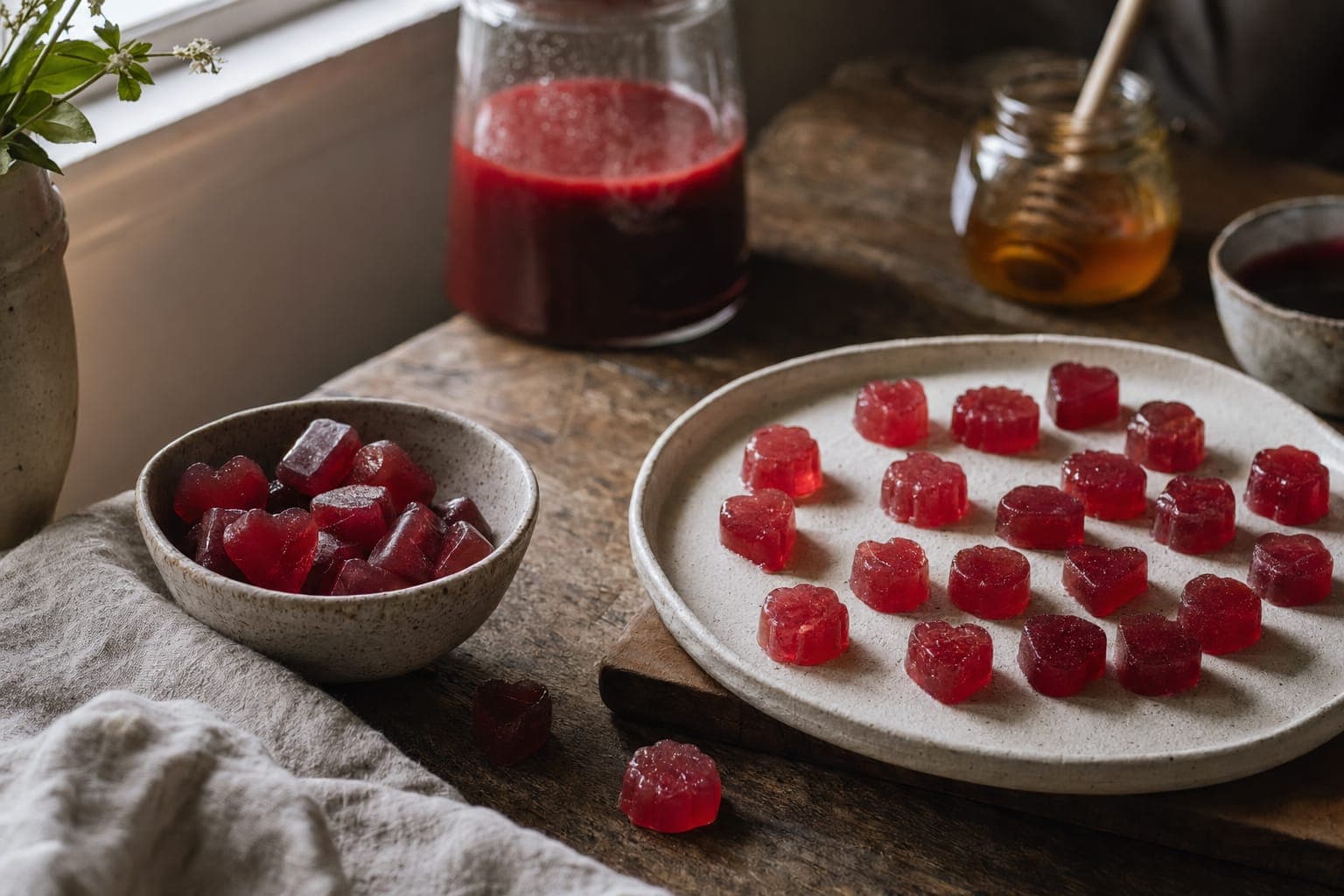
How to Make Your Own Gelatine Gummies
A simple recipe for homemade gelatine gummies using grass-fed gelatine, fresh juice, and raw honey. Better than shop-bought, kids love them.

Comparisons
Beef Liver vs Cod Liver Oil: Which Has More Vitamin A?
Beef liver has more vitamin A per gram. Cod liver oil has D3 and EPA/DHA. They serve different purposes. Here's what each is actually good for.
Real food, made effortless
Try the blendA few ways to use it
All recipes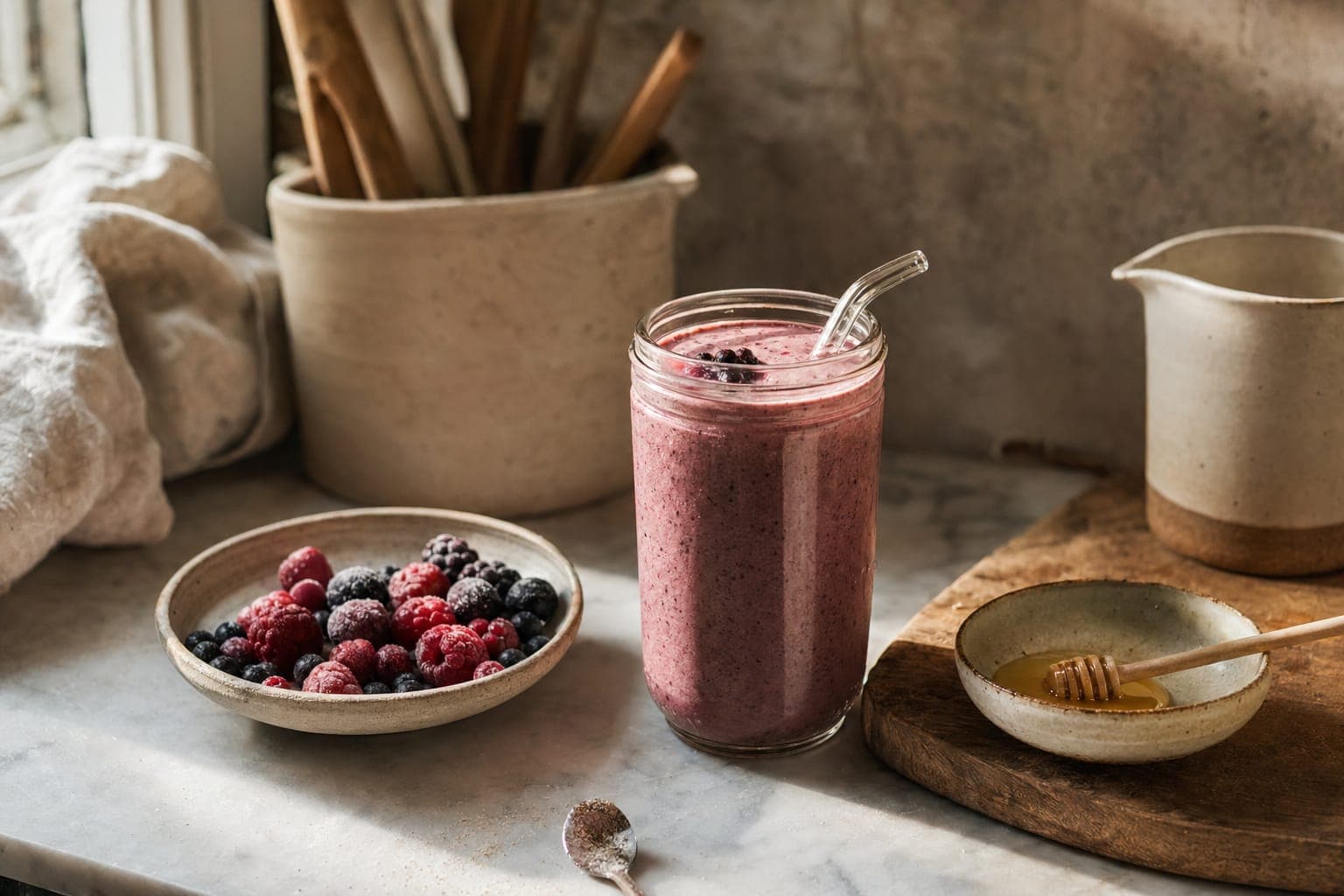
The Organised Recovery Smoothie for After Exercise
A recovery smoothie made with beef protein, raw milk, frozen berries, collagen, and honey. Optimal nutrition in the 30-minute window after exercise.
Raw Milk Hot Chocolate with Collagen
A nourishing evening hot chocolate made with raw milk, grass-fed collagen, raw cacao, and honey. A nighttime ritual that supports sleep and gut health.

Whole Food Snacks for Busy Days
Practical whole food snacks that travel well and sustain energy. No refined carbs, no seed oils. Real food options for when you're busy.


 Join over 100,000+ members
Build a better food system with us
The Organised community is thousands of people choosing real food and backing the farmers who grow it, all of us trying to leave the world a little better than we found it. If that is what you care about too, you belong here.