Grass-Fed Collagen vs Marine Collagen vs Vegan Collagen
You walk past the supplement section and see three collagen products. One says grass-fed bovine. One says marine. One says vegan collagen. They're sold side by side as if they're equivalent. They're not. One is real collagen from real animals. One is questionable. The third isn't collagen at all. Here's what actually works.

By Niall Kiddle, Founder, Organised

Reviewed by Pedro Rodrigues, Agronomist (farming and sourcing only) ·
7 min read · Published · Updated · 2 cited sources
Makers of the Organised Daily blend, a grass-fed beef organ supplement from regenerative UK farms
What collagen actually is
Collagen is a protein made up of amino acids, specifically high in glycine, proline, and hydroxyproline.1 It forms the structural matrix of your skin, joints, tendons, bones, and connective tissue. Only animals make collagen. Plants don't produce it. This is an important detail and it's central to everything that follows.
When you take collagen powder, you're taking hydrolysed collagen, which is collagen that's been broken down into smaller chains so your body can absorb the amino acids more easily.2 That hydrolysed collagen has to come from an animal source. There's no way around this. The amino acid profile is distinct and difficult to replicate synthetically.
Grass-fed bovine collagen: the gold standard
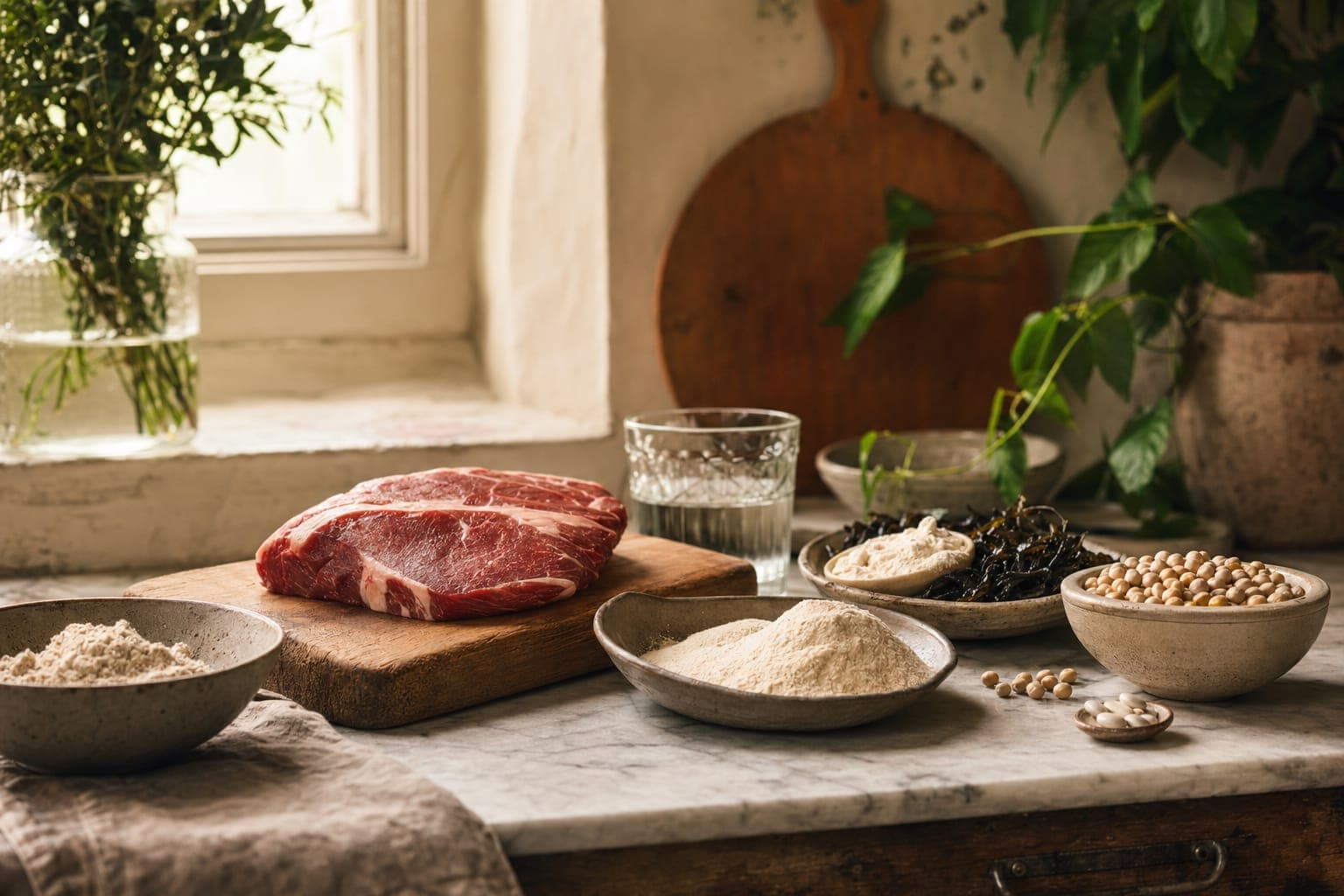
Grass-fed beef collagen comes from cattle that spent their lives grazing on pasture, not eating grain in feedlots. The collagen from grass-fed animals is richer in micronutrients, has a better amino acid profile, and the cattle were likely exposed to fewer antibiotics and inflammatory seed oils.
Grass-fed bovine collagen (usually from hides and bones) delivers mainly type I and type III collagen, which are the types your skin, hair, and connective tissue are built from. This is the collagen form that skin-health studies use. It's the form that shows benefits for skin elasticity, hydration, and joint health. The research backing grass-fed bovine collagen is also more robust than alternatives.
Grass-fed bovine collagen is the gold standard because it comes from animals raised the way their bodies evolved to be raised. The nutrient profile is better. The bioavailability is better. And there's more research backing it.
Grass-fed bovine collagen is also more expensive than other sources. But if you're going to supplement, you're supplementing for a reason. Worth getting the good version. You're making a months-long commitment, so the quality of the source matters.
Marine collagen: legitimate but limited
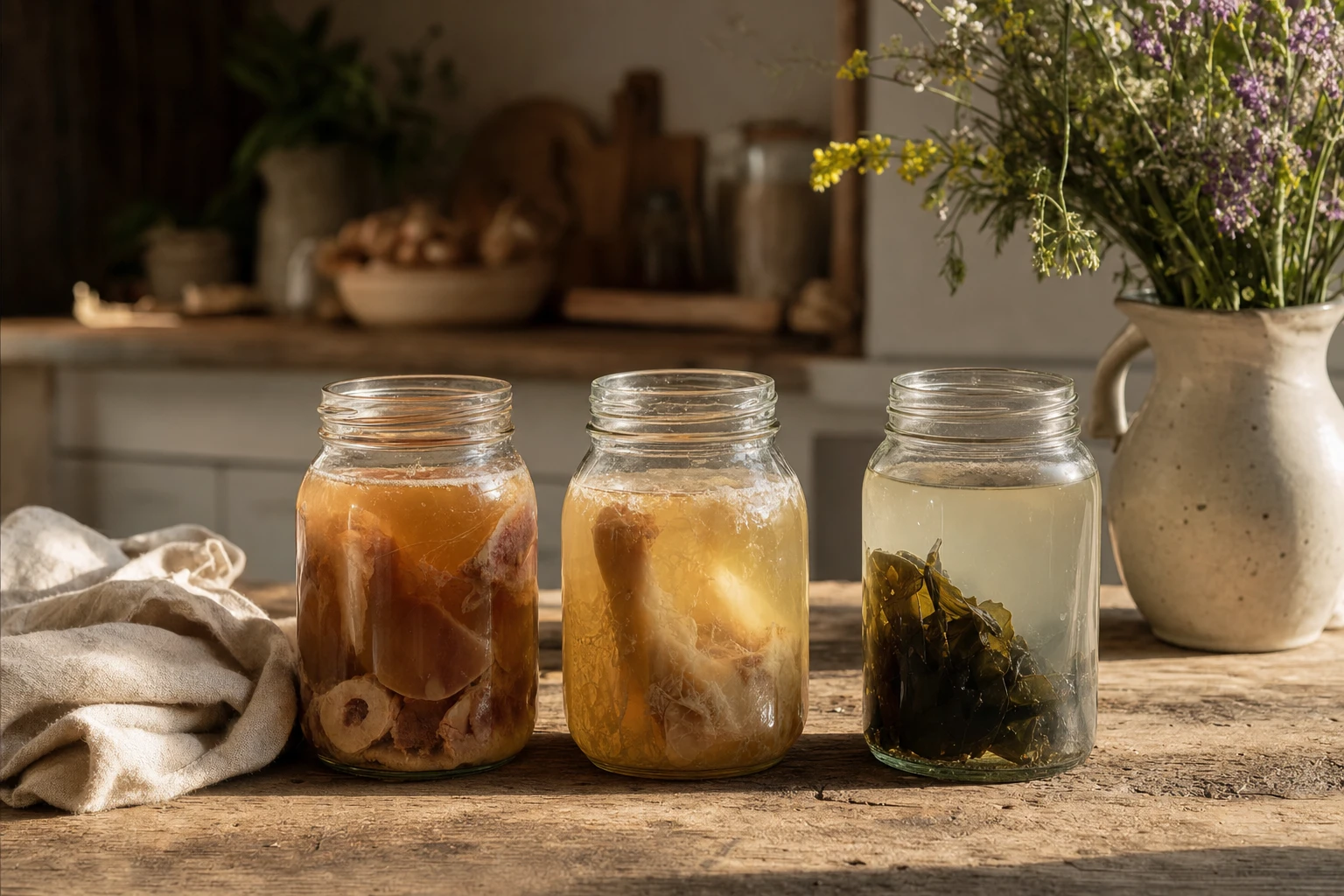
Marine collagen comes from fish scales, skin, and bones. It's a real collagen. Your body can use it. It's also slightly more bioavailable than some bovine collagens because it hydrolyses more easily (the peptides are smaller). This is a genuine advantage for absorption.
But marine collagen has limits. It's mostly type I collagen, which is fine for skin. It's weak in type II collagen, which is what supports your joints and cartilage. If you're supplementing specifically for joint health, marine collagen is a poorer choice than bovine. And we have much less research on marine collagen's long-term effects compared to bovine.
Marine collagen is also more likely to come from farmed fish, which raises ethical and quality concerns. Wild-caught fish collagen exists, but it's expensive and hard to source. Environmental contamination is also a concern with marine sources.

Marine collagen works. It's not a bad choice. But it's not superior to grass-fed bovine. And it doesn't have the type II advantage for joint health.
Vegan collagen: the marketing trick
This is where it gets important. Vegan collagen doesn't exist.
What companies sell as "vegan collagen" is usually a blend of plant-based amino acids like leucine, glycine, and proline extracted from sources like algae, sweet potato, or rice. These are amino acids similar to those found in collagen. They are not collagen. The distinction isn't semantic. It's fundamental.
Your body can use amino acids from plants. But they're missing the full spectrum of amino acids in the proportions your body actually needs for collagen synthesis. And there's essentially no research showing that vegan collagen blends improve skin or joint health the way animal collagen does. The few studies that exist show minimal benefit.
Calling something "vegan collagen" is marketing sleight of hand. It's amino acids from plants. It's not collagen. Don't confuse the two.
Type one versus type two collagen
This detail matters. Type I collagen makes up about 90% of your skin, hair, and connective tissue. Type I is what skin-health products focus on. It's what gives your skin its firmness and elasticity.
Type II collagen is what your cartilage and joints are built from. If you're supplementing for joint health, type II collagen is what you need. Most collagen studies focused on joint pain and mobility use type II.
Grass-fed bovine collagen contains both. Marine collagen is mostly type I. Vegan collagen isn't really either, because it's not collagen. If you're supplementing for multiple purposes, grass-fed bovine gives you both types in one supplement.
The bioavailability question
All animal collagens are hydrolysed to roughly similar degrees, so bioavailability is similar across bovine and marine sources. The difference is in how your body uses the amino acids once they're absorbed. Your body is adapted to recognise and use collagen-derived amino acids in the proportions they naturally occur in animal collagen.
Vegan amino acid blends are trying to mimic that, but they're not the same molecule your body evolved to recognise. The bioavailability is lower and the utilisation is less efficient.
Amino Acid Profile Deep Dive
All collagen types contain similar amino acid profiles: roughly 33 percent glycine, 11 percent proline, 10 percent hydroxyproline. These are the three amino acids most critical for collagen synthesis in your body.
Grass-fed bovine and marine collagen ratios are nearly identical. The real difference isn't in amino acid content but in associated nutrients. Grass-fed bovine comes with minerals and co-factors. Marine comes with different trace minerals. Vegan alternatives don't contain actual collagen at all.
Environmental Impact Comparison
Grass-fed bovine: if sourced from regenerative farms, actually improves soil health and carbon sequestration through rotational grazing. This is the environmental gold standard.
Marine collagen: requires fishing with ecosystem impact. Wild-caught fish affects marine ecosystems. Farmed fish creates different environmental burden through feed requirements and waste.
Vegan alternatives: require agricultural crops with environmental impact through water use, pesticides, and land use.
From a regenerative agriculture perspective, grass-fed bovine is superior. The question is whether sourcing is genuinely regenerative or just grass-fed in a conventional sense.
Get honest comparisons, free
Two short reads a week cutting through supplement marketing with what the evidence says.
By signing up you agree to receive emails from us. No spam, unsubscribe anytime.
Bioavailability and Absorption Rates
Marine collagen has slightly smaller peptide chains (2-3 kDa average) compared to grass-fed bovine (3-5 kDa). This theoretical size difference means marine collagen absorbs slightly more quickly. However, both absorb effectively within 30-60 minutes.
The practical difference is minimal for most people. Consistency of consumption matters far more than marginal absorption speed differences.
Price Differential Factors
Grass-fed bovine collagen: moderate cost, widely available, established supply chains.
Marine collagen: roughly 20 percent more expensive due to fishing complexity and supply chain costs.
Vegan collagen alternatives: variable pricing depending on amino acid blend composition.
For most people, price becomes a practical deciding factor. The nutrient difference between options is less significant than the price difference for many budgets.
Allergen and Sensitivity Considerations
Grass-fed bovine collagen rarely causes allergic reactions except in those with severe beef allergy. Purity and processing matter: some products may contain additional ingredients causing reactions.
Marine collagen can trigger reactions in fish-sensitive individuals. If you have shellfish allergies, verify whether the marine source has potential shellfish contamination risk. Some marine collagen comes from fish bones and skin only. Others include mollusks.
Vegan alternatives are typically from plants and safe for most people unless specific plant allergies exist.

1 of 9
Daily blend
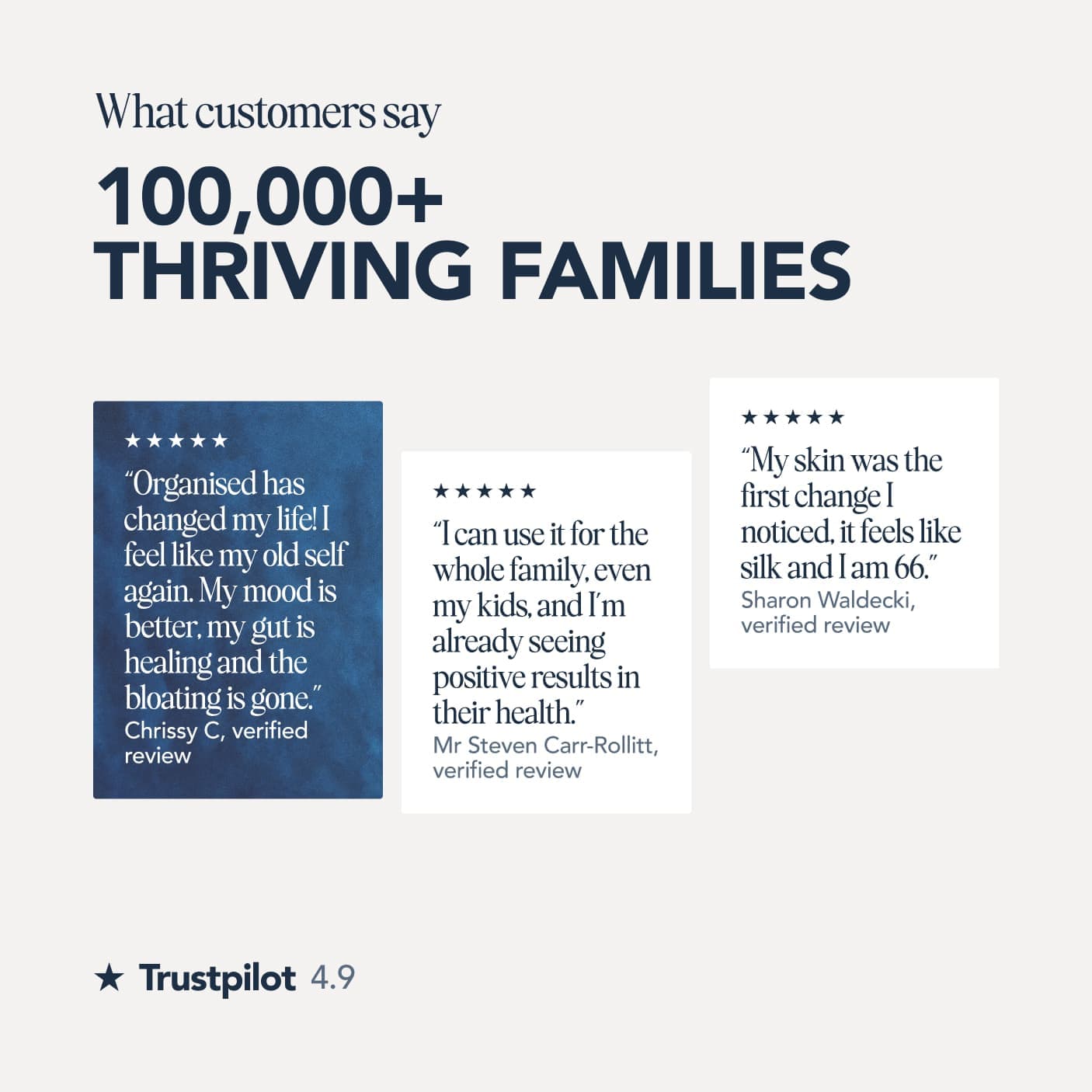
100,000+ thriving families4.9 on Trustpilot
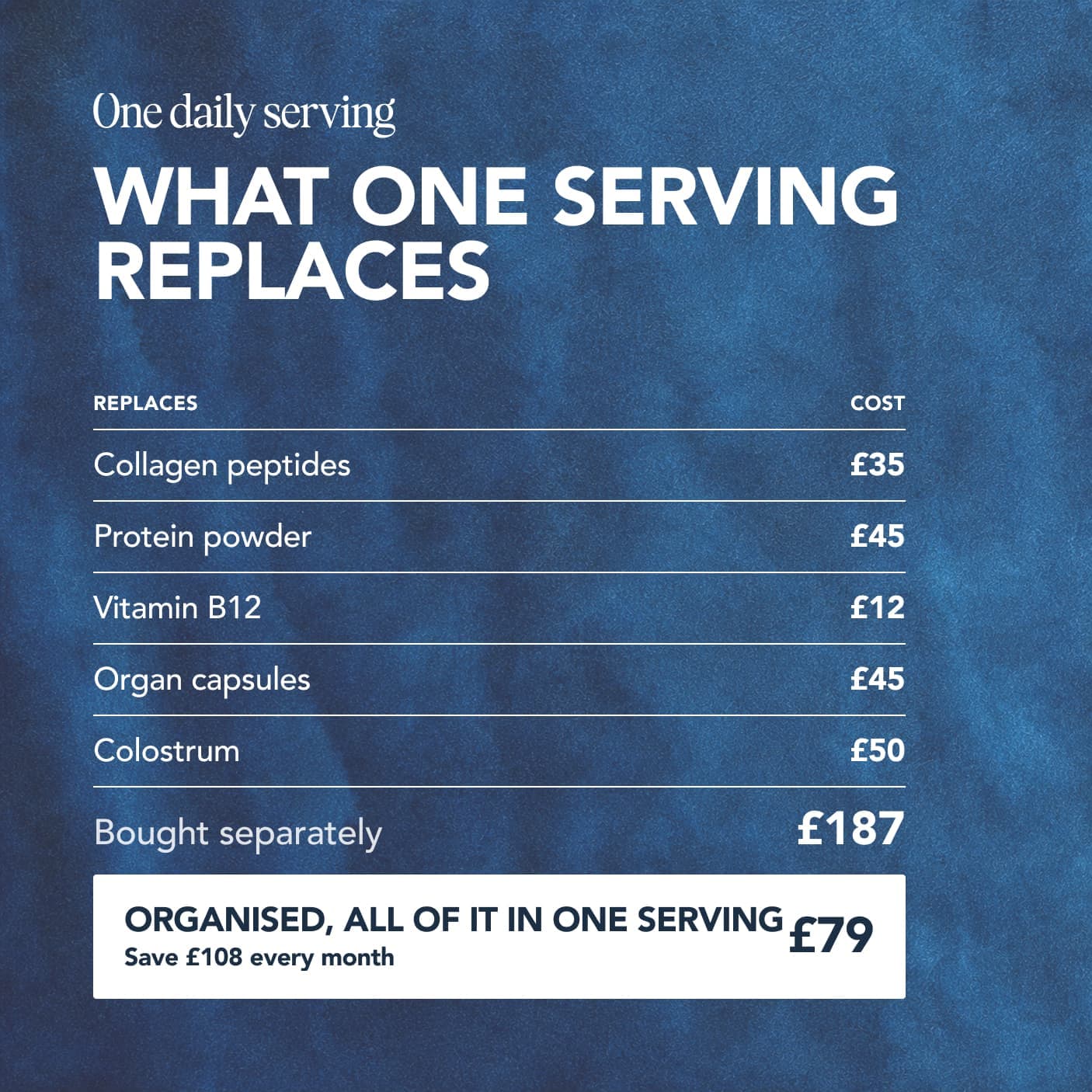
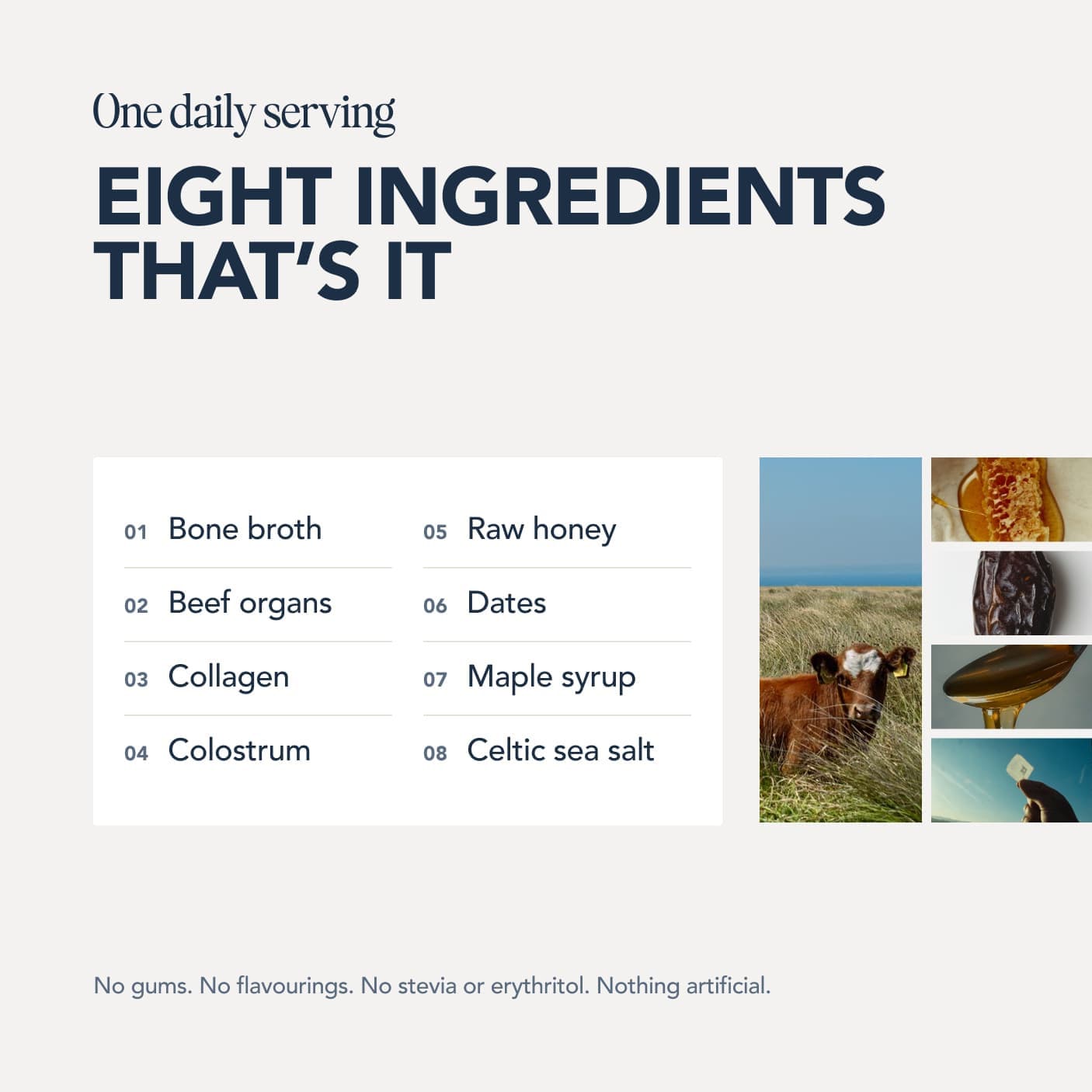
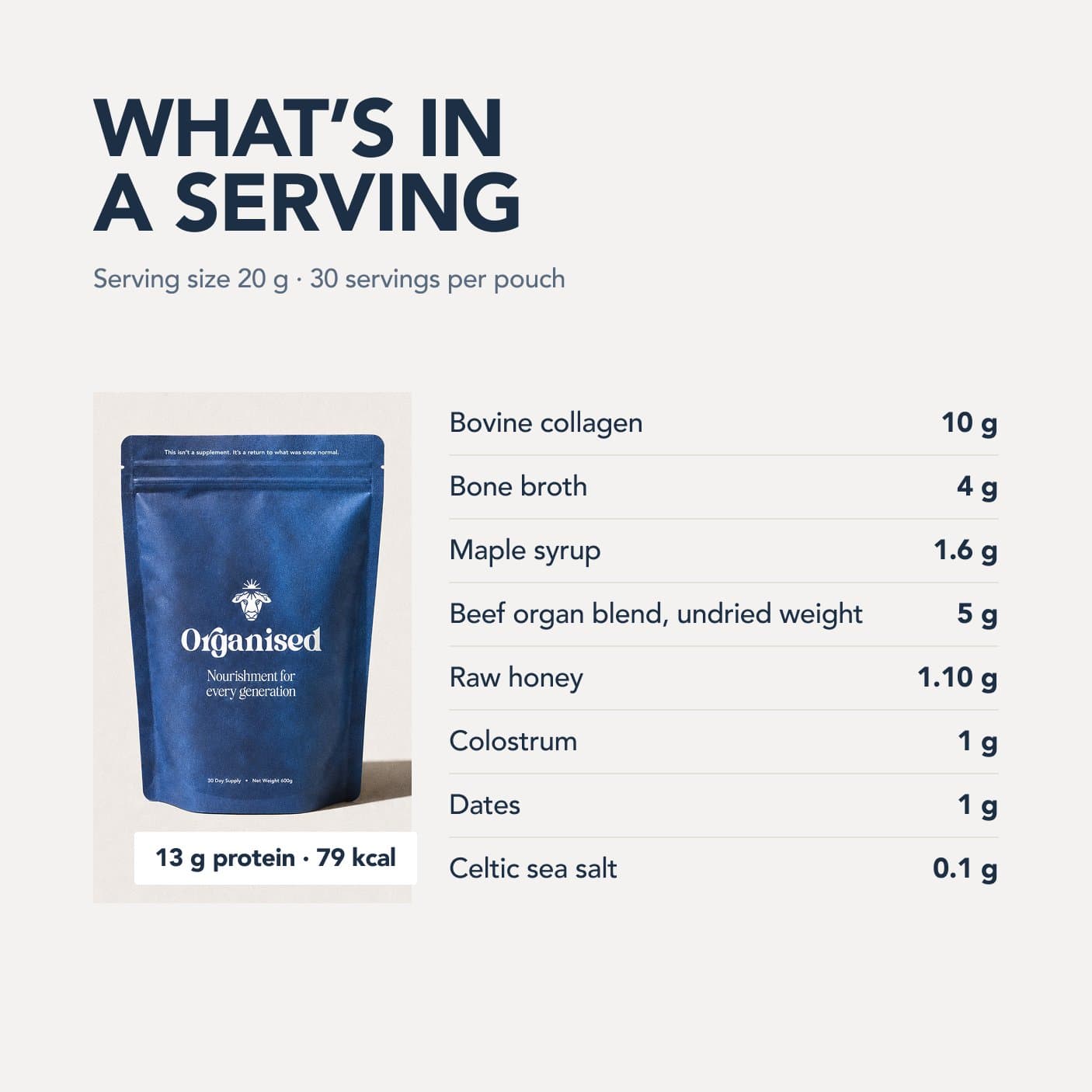
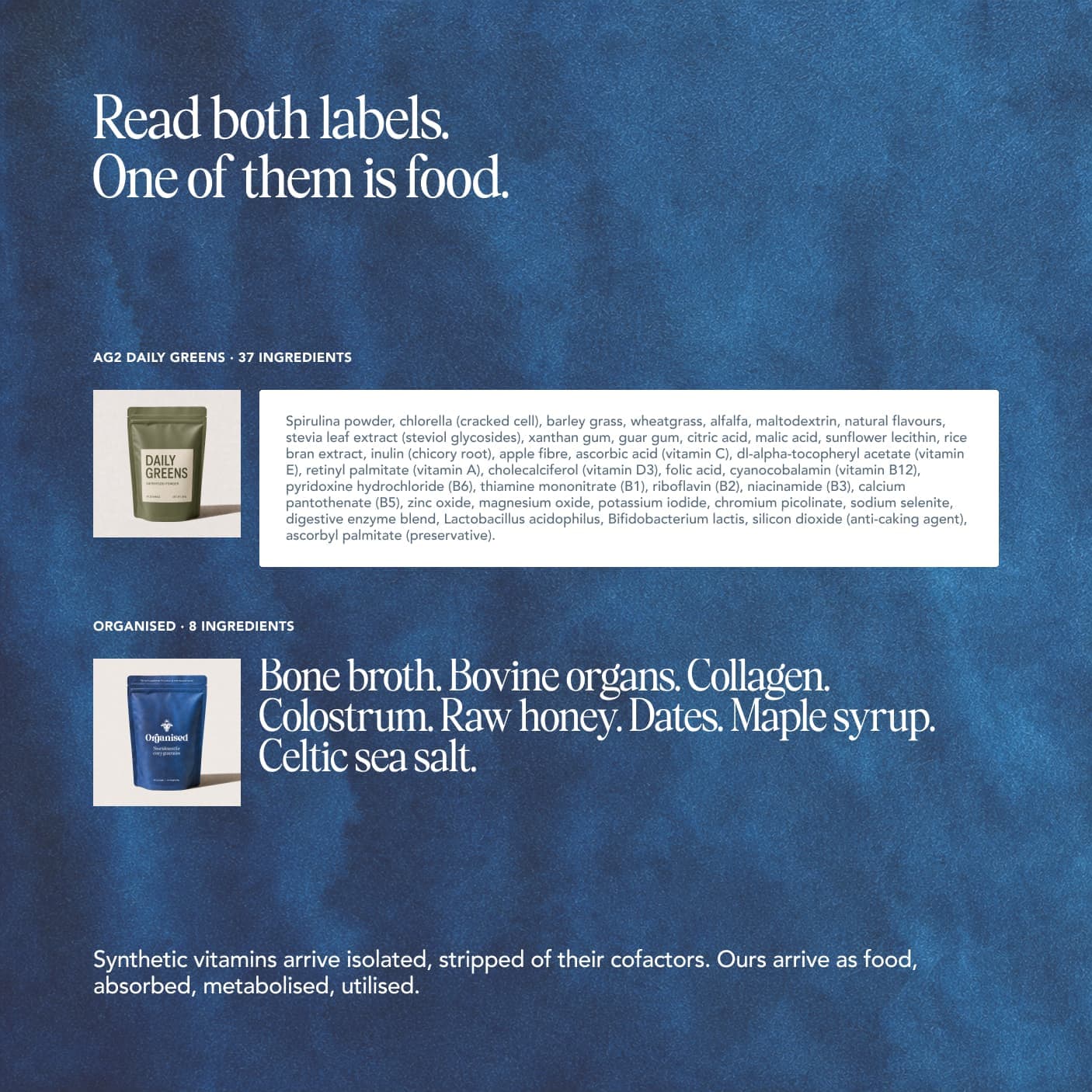
Eight real ingredients built around grass-fed beef organs, collagen and colostrum. Nothing synthetic added.
Free with your first order, worth £38. Plus £10 off the pouch with a subscription.
Free UK shipping · Made in England · 100 day money back guarantee on your first pouch · Skip, pause or cancel anytime
Ancestral Sourcing Perspective
Humans have consumed bovine collagen for millennia. Marine collagen consumption is historically recent. Vegan collagen alternatives are completely modern inventions.
From an evolutionary perspective, your body most readily recognises and processes bovine collagen because that's what humans have consumed longest. This doesn't mean other forms don't work, but bovine aligns with ancestral dietary patterns.
Taste and Palatability Profiles
Grass-fed bovine collagen has a subtle beef taste, barely noticeable when mixed into coffee or broth. Marine collagen has a distinct fishy taste that many find unpalatable. This taste might be the most important practical factor if it affects daily compliance.
Vegan amino acid blends typically taste neutral, appealing to those with fish aversion.
Absorption Enhancement Factors
Collagen absorption is enhanced by vitamin C consumption. Taking collagen with citrus, kiwi, or vitamin C supplements increases conversion to usable collagen in your body.
Fat-soluble absorption is enhanced by consuming with dietary fat. Collagen taken with meals containing fat (butter, oil, nuts) absorbs more efficiently.
These factors apply equally to all collagen types.
Research-Based Effectiveness Data
Studies on bovine collagen show consistent benefits for joint health (reduced pain, improved cartilage), skin health (improved elasticity, increased hydration), and bone health. Marine collagen shows similar benefits in the limited research available.
Most research uses 10-20 grams daily for 12+ weeks to show measurable improvements. Duration and consistency matter far more than which type you choose.
The Practical Recommendation
Choose based on: personal preference (taste matters for compliance), allergen status (fish sensitivity rules out marine), environmental values (grass-fed regenerative is superior), and budget. The differences between options are smaller than consistency of consumption.
The Real Decision Factor
The best collagen is the one you'll actually consume consistently. If you hate fish taste, marine won't work long-term. If you're allergic to beef, bovine is impossible. If you're vegan, you need the plant-based alternative.
Don't let theoretical perfection prevent actual consumption.
The bottom line
Grass-fed bovine collagen is the gold standard. It's real collagen, well-researched, rich in the amino acid profile your body needs, and comes from animals raised in ways that match their biology. Marine collagen is legitimate if you prefer it for ethical reasons, but it's less comprehensive for joint health. Vegan collagen isn't collagen at all, just amino acid salad. If you're going to supplement, get the real thing.
References
Every source below was checked on 27 August 2026. Each PubMed, PMC and DOI identifier was resolved against NCBI or Crossref, and what it opens is printed under the citation, so you can see the link goes where the citation says without leaving the page. Where a citation and its identifier disagreed, the citation was corrected to the record or the reference was deleted along with the sentence marker that pointed at it, and where the resolved paper turned out not to support the sentence, the sentence was cut back to what it does support. Borrowed authority is worse than none, because it looks like rigour.
- Shoulders MD, Raines RT. Collagen structure and stability. Annu Rev Biochem. 2009. PMC2846778.Checked 27 August 2026: PMC2846778 opens Shoulders MD, Raines RT, Collagen structure and stability. Annu Rev Biochem 2009;78:929-58. PubMed indexes it as: Review.
- Proksch E, et al. Oral supplementation of specific collagen peptides has beneficial effects on human skin physiology. Skin Pharmacol Physiol. 2014. PMID 23949208.Checked 27 August 2026: PMID 23949208 opens Proksch E, Segger D, Degwert J et al, Oral supplementation of specific collagen peptides has beneficial effects on human skin physiology: a double-blind, placebo-controlled study. Skin Pharmacol Physiol 2014;27(1):47-55. PubMed indexes it as: Randomized Controlled Trial.
Who wrote and reviewed this guide
Niall Kiddle
Author · Founder, Organised
Niall is the founder of Organised. He started the company in 2024 after fixing his own health the slow way: in 2022 he swapped a cupboard of synthetic supplements for real food, raw milk, organ meats, bone broth and honey, and felt the difference within months.
Areas of expertise: Ancestral nutrition, Organ meats, Whole-food supplementation, Gut health, Regenerative sourcing
Read Niall's full profile
Pedro Rodrigues
Reviewer · Agronomist (farming and sourcing only)
Pedro is the agronomist Organised works with on farming and sourcing. His job on the guides is to keep the science honest: he reviews what we publish about soil health, regenerative agriculture, grazing and the way food is actually produced.
Areas of expertise: Regenerative agriculture, Agronomy, Soil health, Grass-fed farming, Food sourcing
Reviewed this guide on
Read Pedro's full profileMore on nutrient comparisons
View all- Beef Liver vs Multivitamin: A Side-by-Side Nutrient Comparison
- Beef Organs vs Desiccated Liver: Why a Blend Is Better
- Beef Protein vs Plant Protein: A Nutritional Reality Check
- Bone Broth vs Collagen Supplements: Do You Need Both?
- Bone Broth vs Collagen: What Reddit Says You Actually Need
- Bovine Colostrum vs Goat Colostrum: Does the Source Matter?
- Celtic Sea Salt vs Table Salt: A Mineral Analysis
- Collagen vs Hyaluronic Acid: What Actually Works for Skin?
- Folate from Liver vs Folic Acid from Supplements
- Methylcobalamin vs Cyanocobalamin: Which B12 Is Better?
- Retinol from Food vs Retinol in Supplements: Bioavailability Compared
Browse the guides library
All guidesKeep reading

Comparisons
Bovine Colostrum vs Goat Colostrum: Does the Source Matter?
Compare bovine and goat colostrum. Learn about IgG content, fat profiles, availability, and cost to choose the right colostrum for your needs.
Comparisons
Celtic Sea Salt vs Table Salt: A Mineral Analysis
Celtic sea salt contains 84 minerals vs table salt's zero. Why the difference matters for electrolyte balance and your nervous system.
Comparisons
Beef Liver vs Spirulina: Which Is Really the Superfood?
Which is truly nutrient-dense? Compare beef liver and spirulina nutrient for nutrient, including retinol, B12, and contamination risk. You might be surprised.
Real food, made effortless
Try the blendA few ways to use it
All recipes
How to Make Bone Marrow Butter
Roast grass-fed marrow bones, scoop the marrow, and mix with butter and herbs. A nutrient-dense spread with fat-soluble vitamins.

Ancestral Breakfast Ideas from Around the World
Traditional breakfast recipes from cultures that got nutrition right. Japanese, Turkish, Scottish, and more. Whole-food breakfast inspiration.
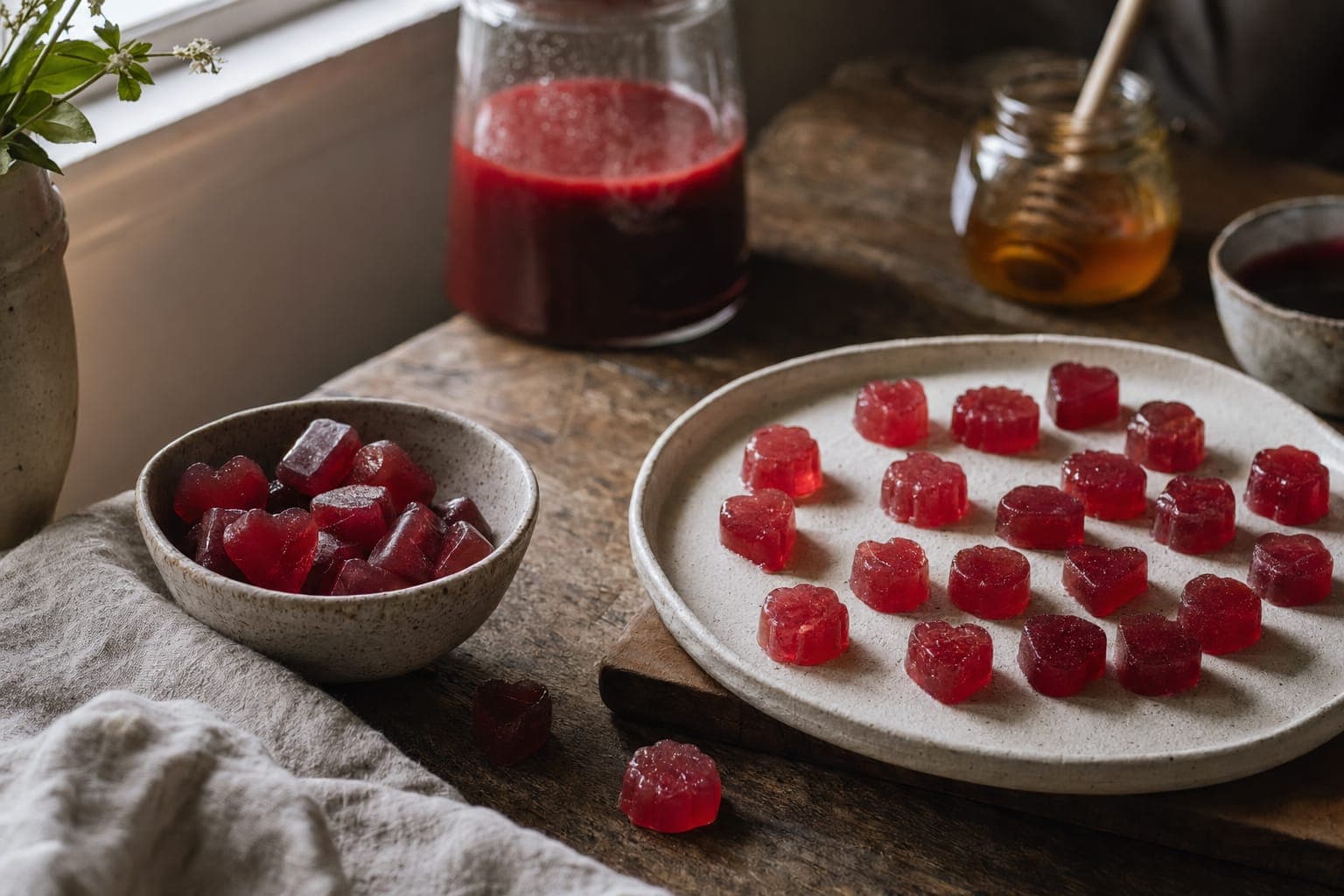
How to Make Your Own Gelatine Gummies
A simple recipe for homemade gelatine gummies using grass-fed gelatine, fresh juice, and raw honey. Better than shop-bought, kids love them.


 Join over 100,000+ members
Build a better food system with us
The Organised community is thousands of people choosing real food and backing the farmers who grow it, all of us trying to leave the world a little better than we found it. If that is what you care about too, you belong here.