Against Ultra-Processed: A Manifesto for Real Food
This is a manifesto. Not for a brand. For a way of eating that your body already understands. One where food is nourishment. Where eating doesn't require a biochemistry degree. Where your health isn't negotiable.
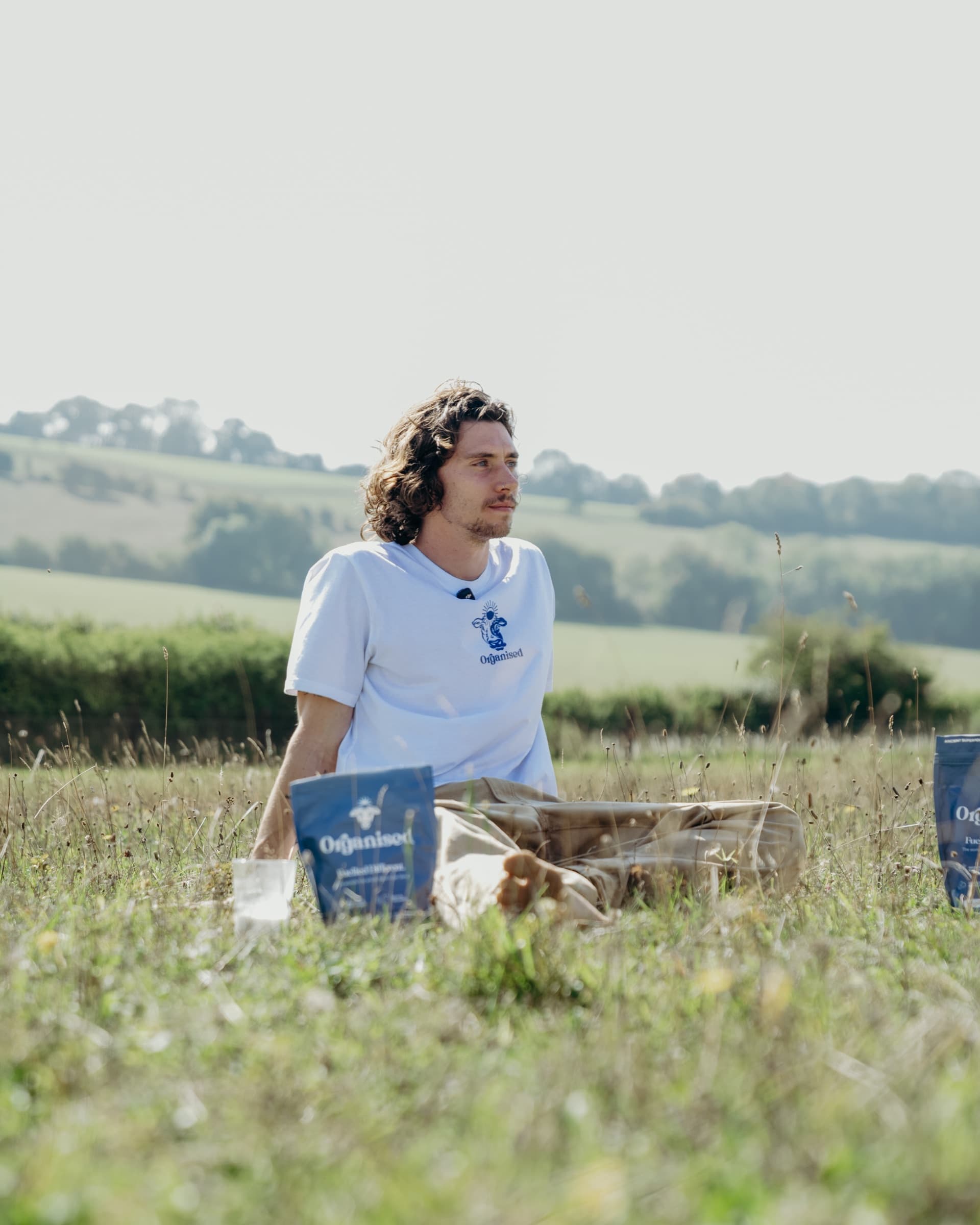
By Niall Kiddle, Founder, Organised

Reviewed by Pedro Rodrigues, Agronomist (farming and sourcing only) ·
6 min read · Published · Updated · 4 cited sources
Makers of the Organised Daily blend, a grass-fed beef organ supplement from regenerative UK farms
What's actually happened
In the last 50 years, we've fundamentally changed what humans eat. We've moved, almost entirely, to ultra-processed food. And we've done it so quietly that most people don't even realise it's happened.
A generation ago, most food came from real ingredients. It was prepared at home. It was recognisable as food. You could trace the ingredients back to something that grew or was raised or was made.
Now, most food comes from factories. It's highly processed. The ingredients are modified, extracted, reconstituted. You'd need a chemistry degree to understand what you're actually eating.
This wasn't inevitable. It was a choice made by the food industry. Because ultra-processed food is cheaper to produce. It's shelf-stable. It's addictive. It generates profit margins that real food never could.
And so the food supply shifted. Quietly. Almost invisibly. Until now, most people, in most places, have no choice but to eat it.
The cost nobody talks about
We count calories and we count nutrients. But we don't count the cost.
The cost is in energy. In stability. In the ability to think clearly and feel calm. In skin that glows rather than inflames. In digestion that works properly. In sleep that comes easily and feels restorative. In the simple ability to wake up and want to be alive.
The cost is also in chronic disease. Rates of obesity have tripled since ultra-processed food became ubiquitous. Type 2 diabetes is now normal in populations that didn't see it a generation ago.1 Autoimmune conditions are everywhere. Neurological decline is starting earlier. Fertility is down. Testosterone is down. Childhood allergies are epidemic.
Medicine attributes this to genetics. To aging. To sedentary life.4 Sometimes. But the common denominator is food. We've changed what we eat in a single generation and watched health deteriorate in perfect sync.
Ultra-processed food is engineered to override your satiety signals. It combines high-calorie density with low nutrient density.2 Your body eats it, doesn't receive the nutrients it signalled for, and sends another hunger signal. You eat more. The calories go up. The nutrients don't follow.
This is by design, not accident. The food industry knows this. The research is clear.3 But the profit margins are too good to care about public health.
Correlation isn't causation. But when the mechanism is clear, when the evidence is overwhelming, when you can point to the exact moment the food changed and the health problems began, at some point you have to acknowledge what's actually happening.
What real food is
Real food is simple. It's things that grew or were raised or were made by humans. It has an ingredient list you could read aloud to a five-year-old without needing a dictionary.
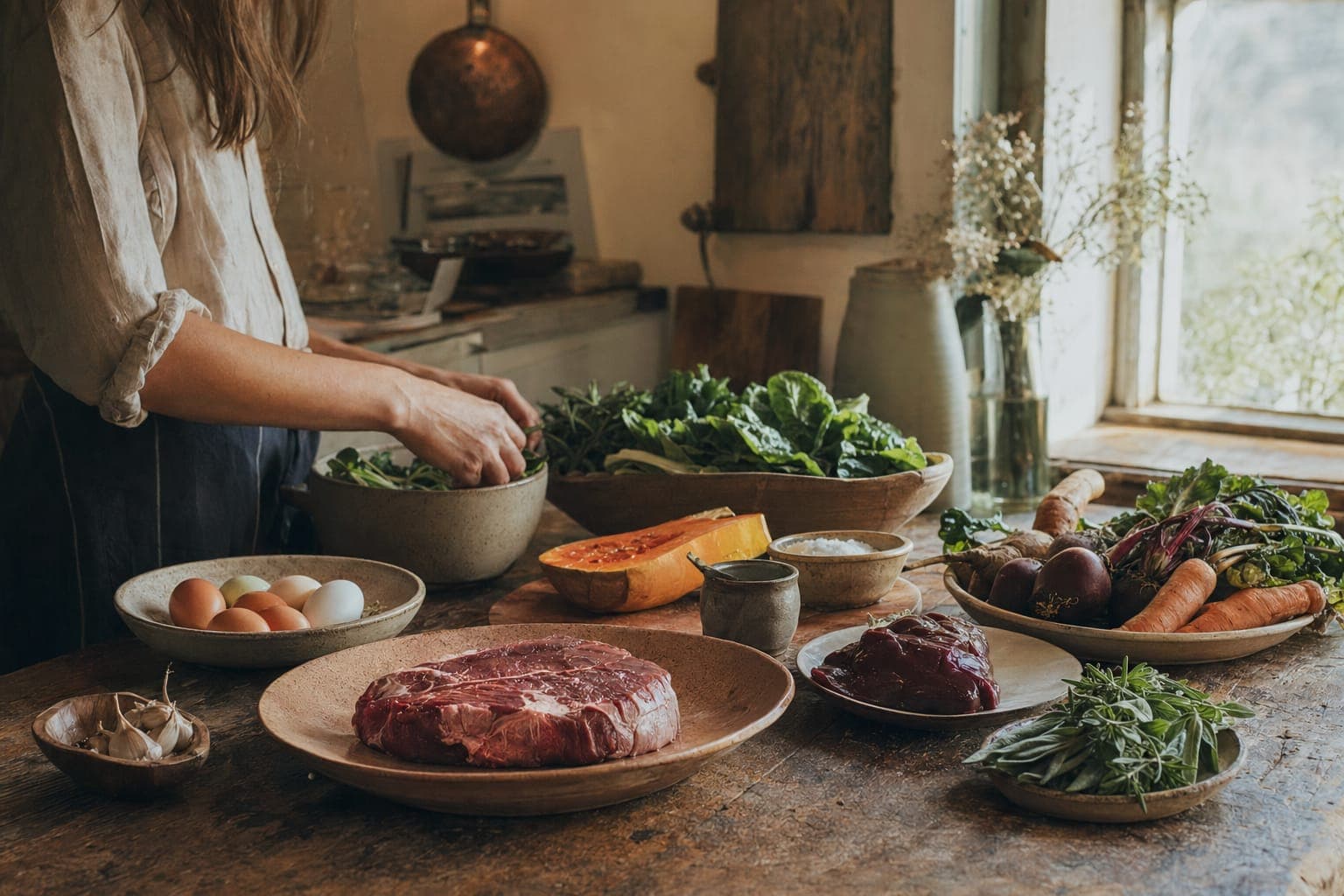
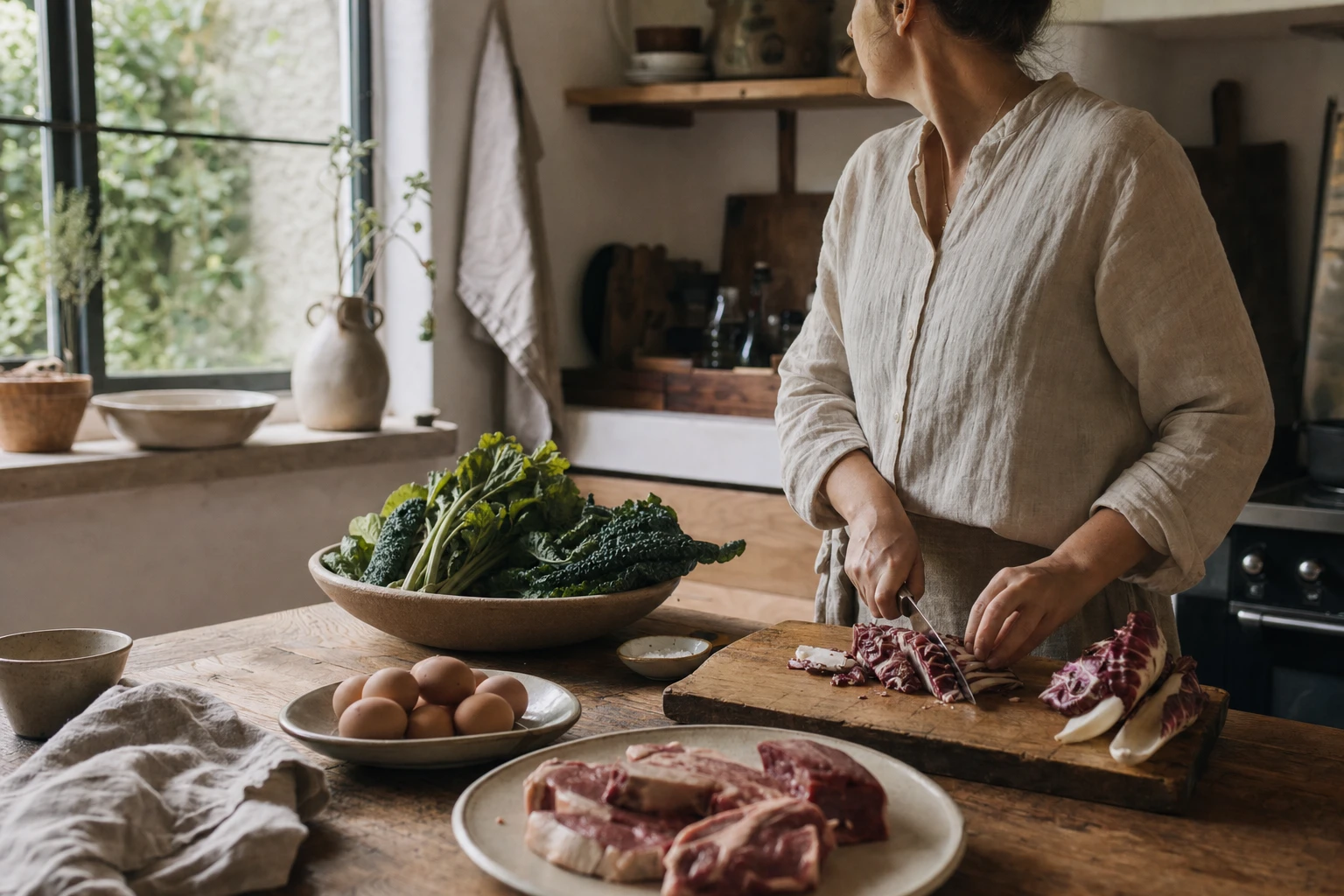
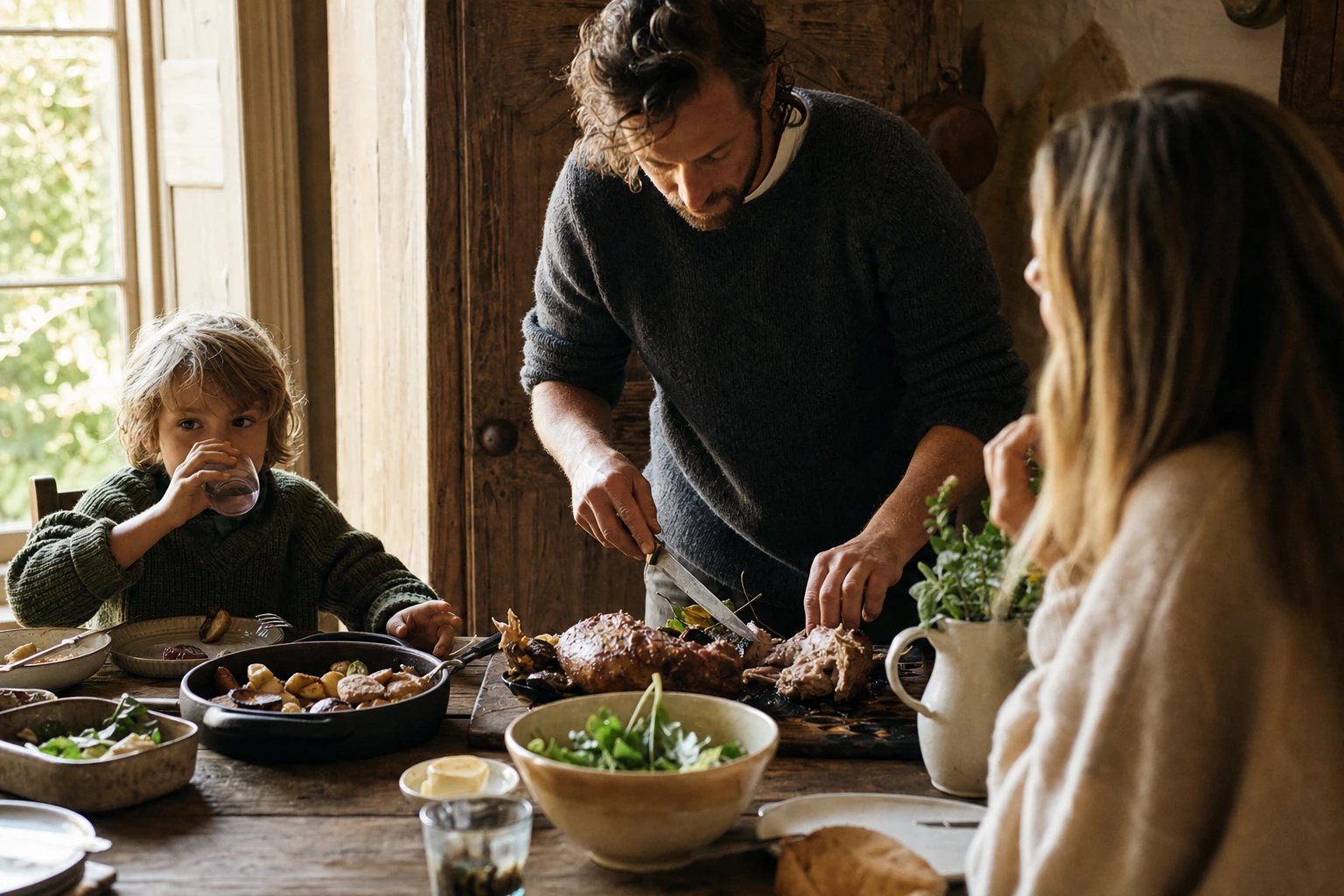
It's meat from an animal you could theoretically visit. It's vegetables from soil. It's fruit that ripens. It's eggs from chickens. It's milk from cows. It's fish from water. It's salt and spices and herbs.
It's the food that humans ate for the entire span of our existence until about 60 years ago. Not exotic. Not expensive. Not requiring preparation that demands a professional kitchen.
Just food that nourishes.
When you eat real food, your body knows what to do with it. It extracts the nutrients. It uses the energy appropriately. It signals fullness properly. It repairs itself. Everything works the way it's supposed to work. Your immune system recognises the food as compatible with your biology. Your microbiome flourishes and rebuilds. Your intestinal lining heals. Your neurotransmitter production normalises. Everything downstream works better because the foundation is finally solid and properly resourced.
This is why people report rapid shifts when they move to real food. It's not magic. It's biology returning to a state it recognises.
Why this matters now
Because we're at a choice point. The food industry is doubling down on ultra-processed. The marketing is relentless. The convenience is real. The cost is genuinely lower. The path of least resistance is to keep eating what's already here.
But a generation of people are waking up. They're noticing that their bodies don't work well. That their energy is unstable. That their health is precarious. And they're starting to ask: what if the food is the problem?
Once you ask that question, everything changes. You start noticing what you're eating. You start reading labels. You start realising that most things in supermarkets don't have to be there. They exist because they're profitable, not because they're food.
And you start choosing differently.
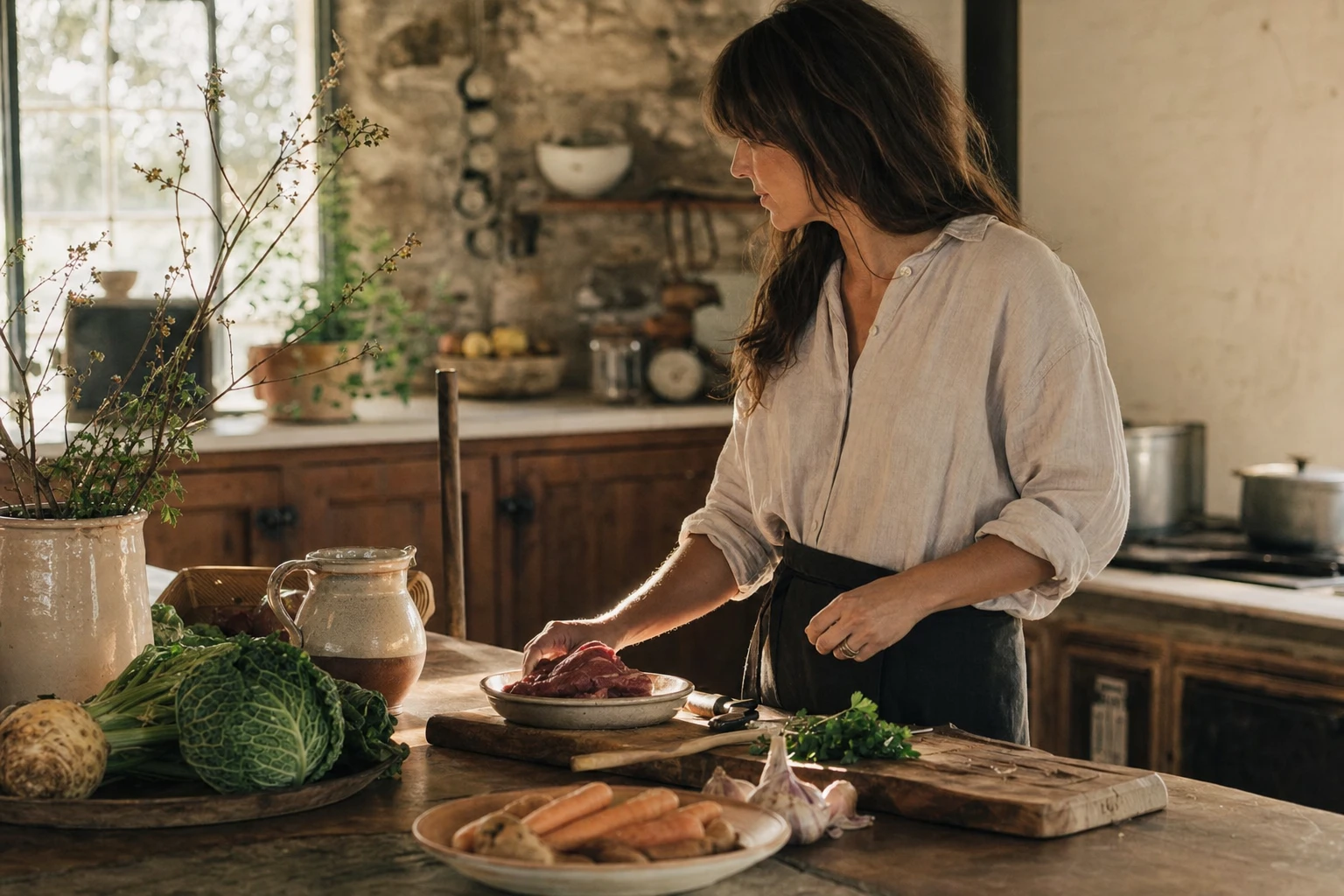
This is already happening. Quietly. In communities. On farms. In kitchens. People are shifting back to real food. They're sourcing differently. They're cooking. They're noticing their bodies work better. The energy comes back. The brain clears. The skin changes. The digestion normalises.
Get stories from the community, free
Two short reads a week on the farmers, the standards, and the return to real food.
By signing up you agree to receive emails from us. No spam, unsubscribe anytime.
The response from industry
The food industry is terrified of this. Not because real food is better. Obviously it is. But because real food is less profitable. Real food requires less processing. Real food doesn't have the margins. Real food can't be patented or owned or controlled.
So they're fighting back. With marketing. With the rhetoric that real food is elitist and expensive. With convenience as the solution. With the narrative that you can't afford to eat well. With influencers eating ultra-processed food and calling it wellness. With dietary guidelines that make ultra-processed options seem reasonable.
But underneath the rhetoric, people are waking up. They're trying real food. They're noticing the difference. And they're telling other people. One family at a time. One person at a time. One meal at a time.
What changing looks like
The shift back to real food doesn't require perfection. It requires intention. It means choosing more often. More meals built around real food. More cooking. More knowing where things come from. More time in kitchens and on farms and in markets talking to people who grow and raise food.
For some people, it's one meal a week that's completely real. For others, it's the morning coffee with real butter and organs that changes everything. For others, it's sourcing real meat and vegetables and building meals around those instead of around processed carbs and seed oils.
The point isn't purity. The point is moving the needle. Every meal of real food that replaces a meal of ultra-processed food is a vote for something different. It's a signal to your body that you're listening. It's a signal to the market that alternatives matter. It's a step back toward health.
Start small. Build from there. Your body will remember what it means to actually be nourished.
But you can. It just requires choosing differently.
1 of 9
Daily blend
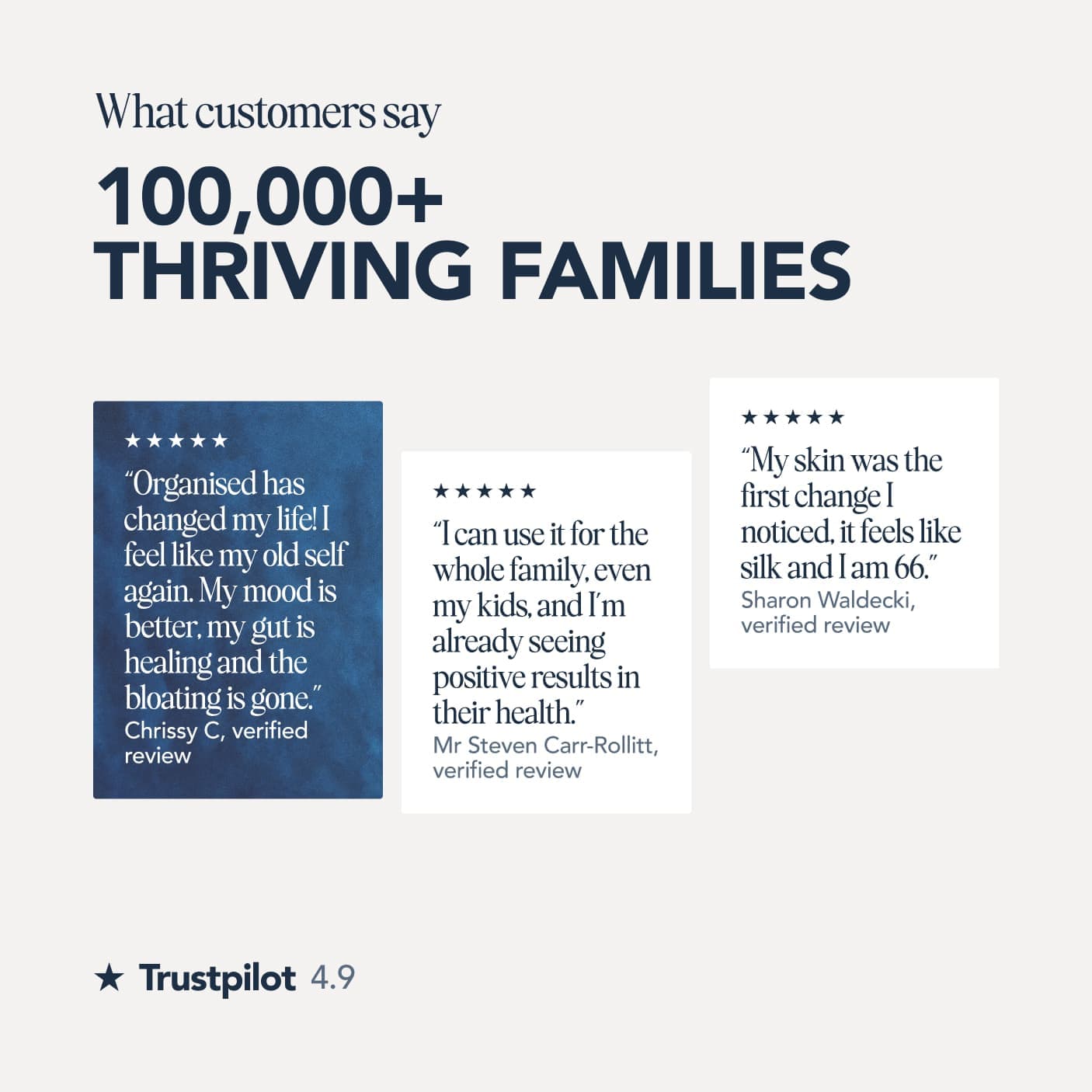
100,000+ thriving families4.9 on Trustpilot
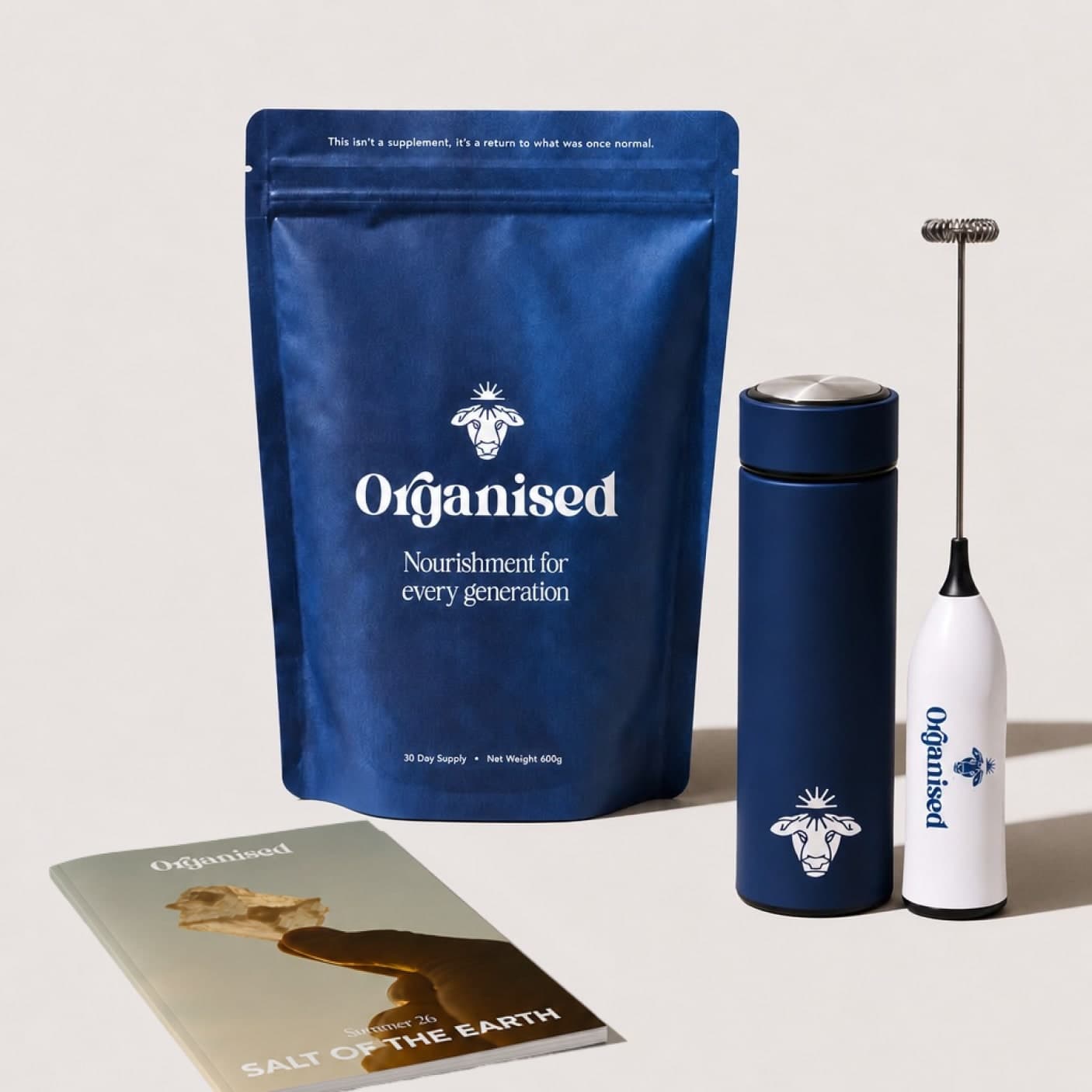
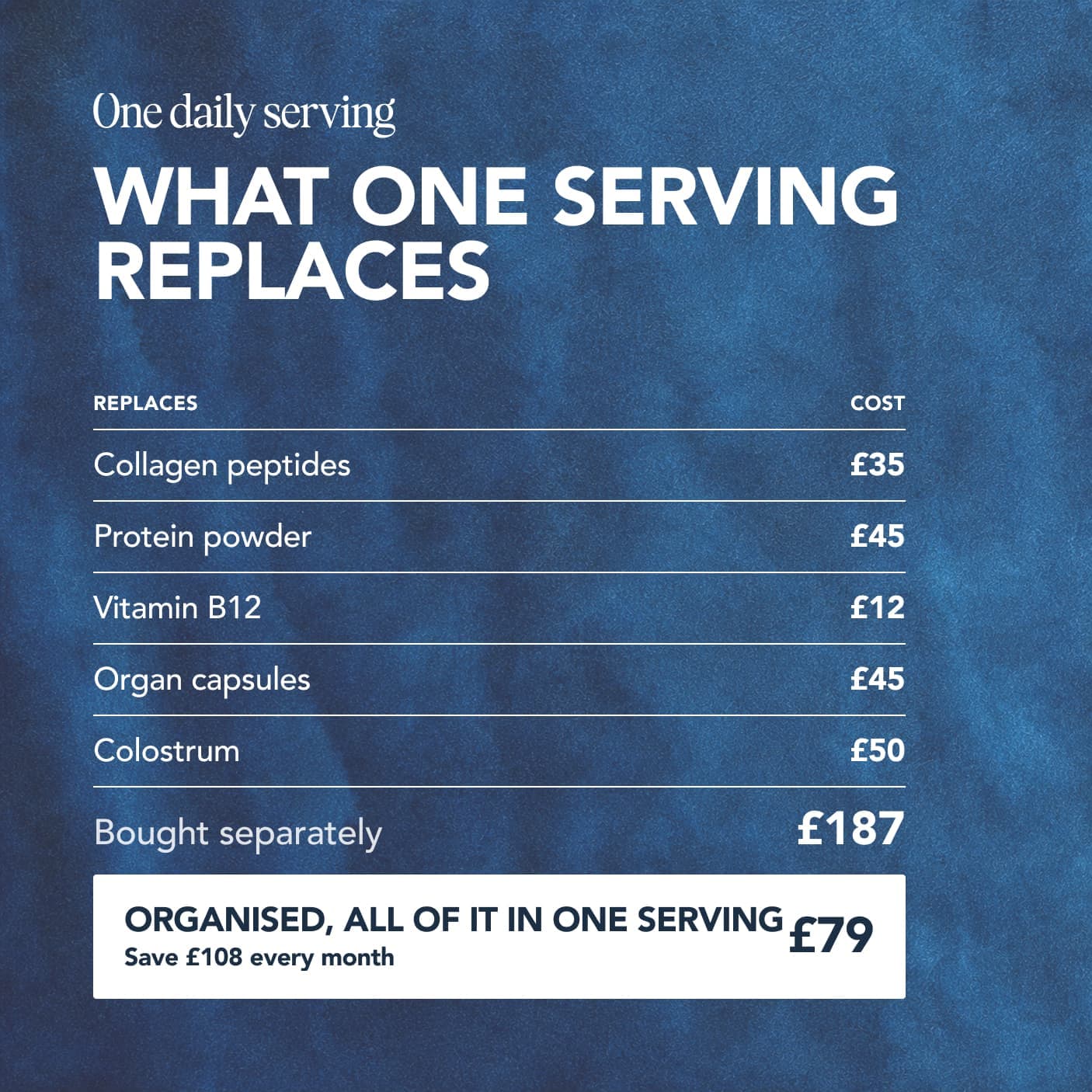
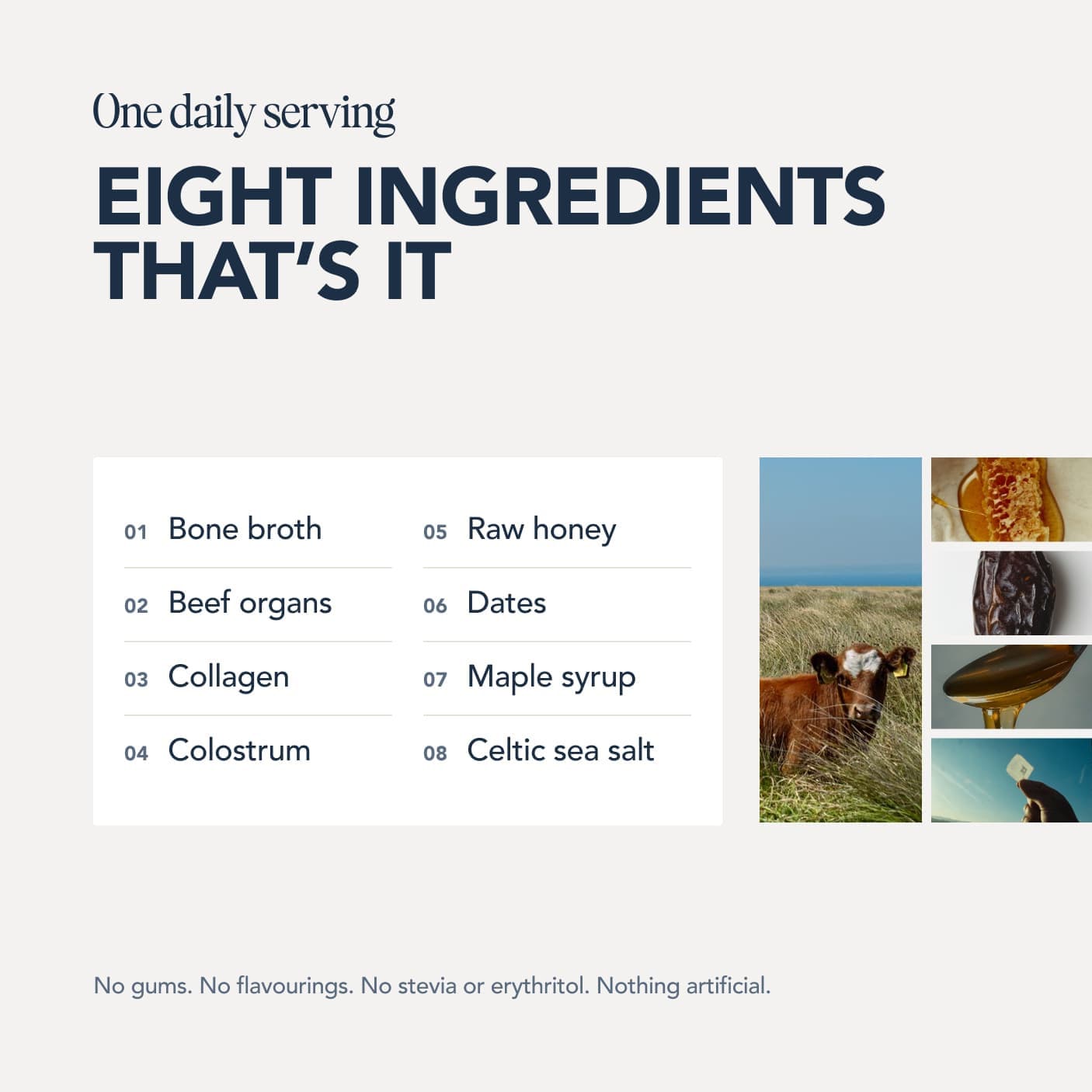
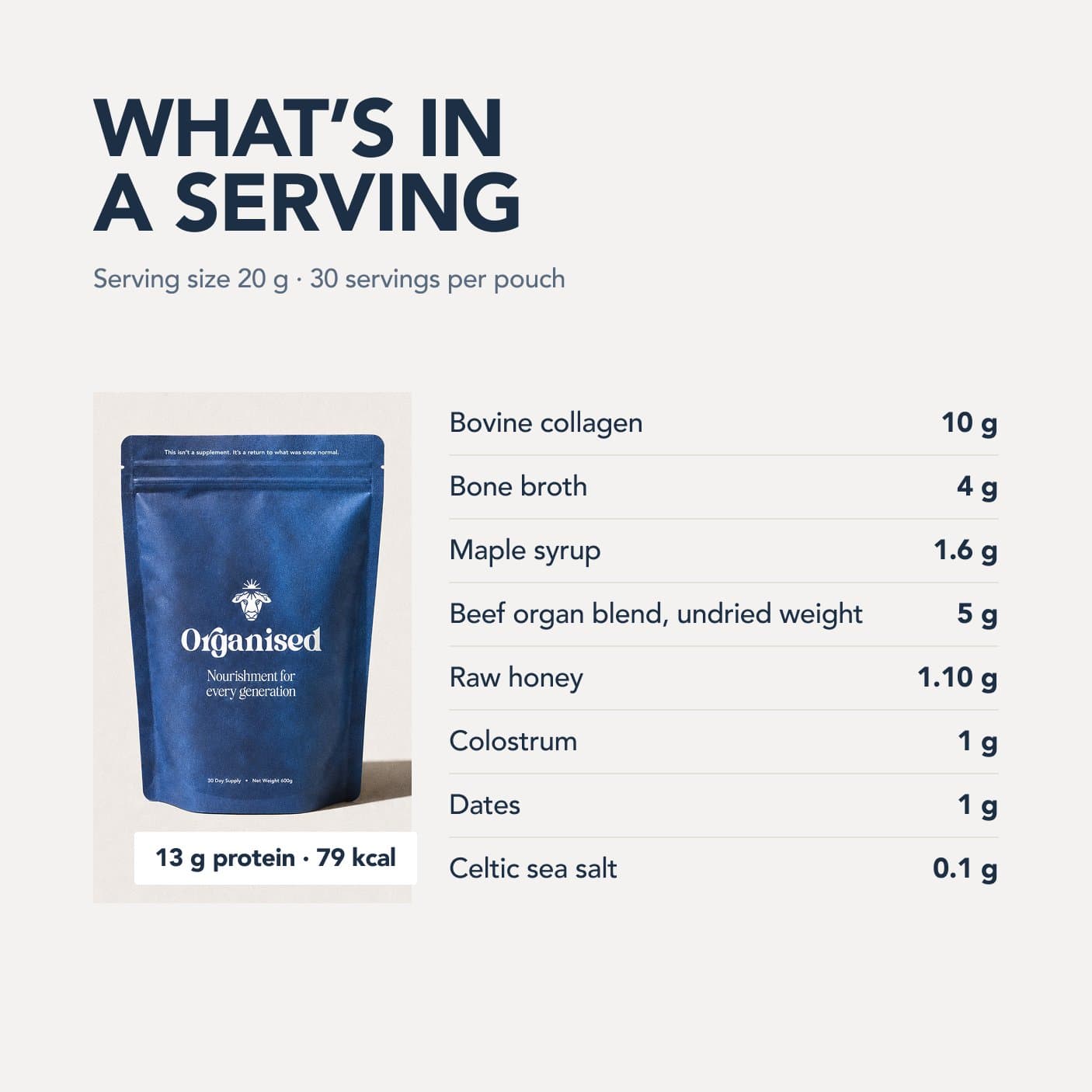
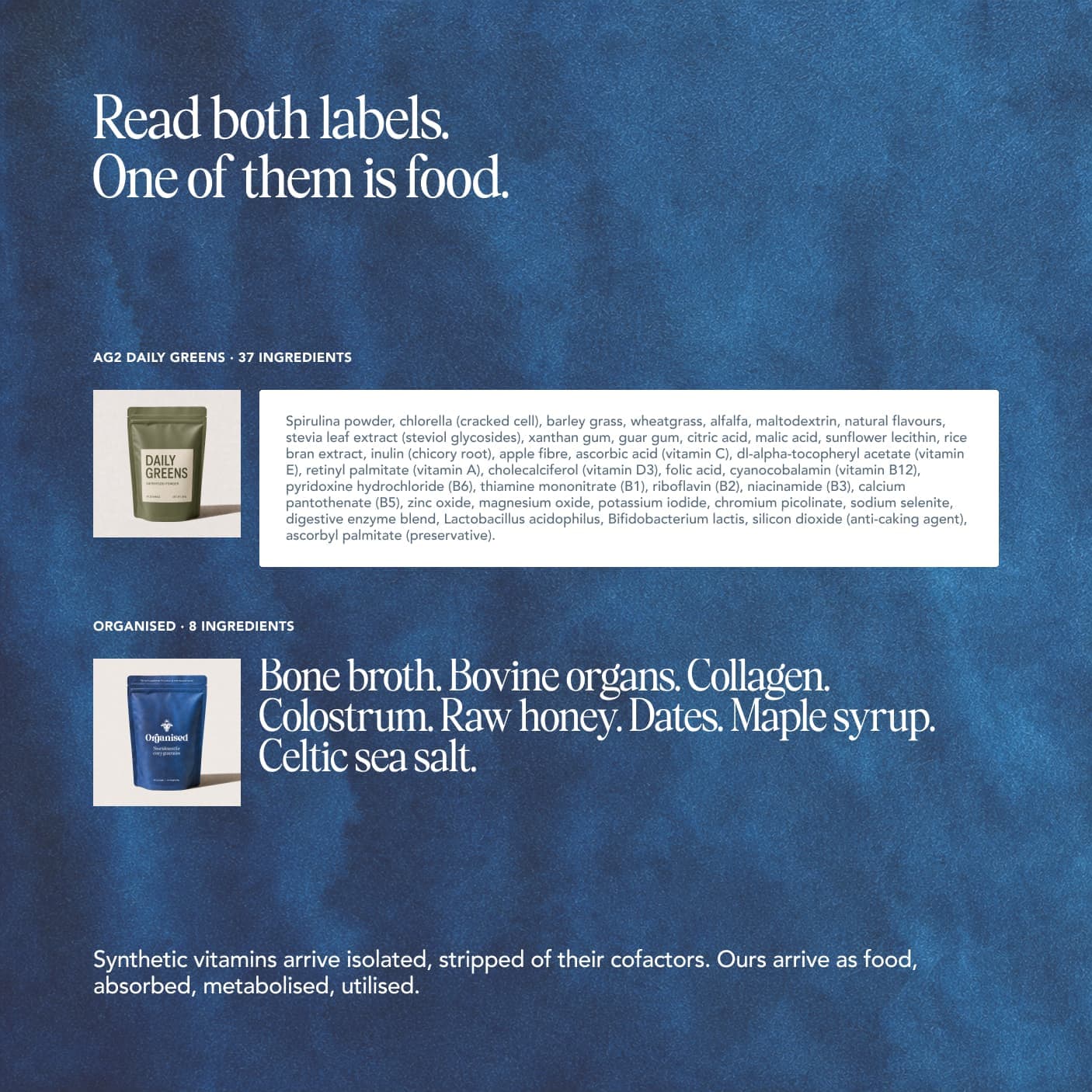
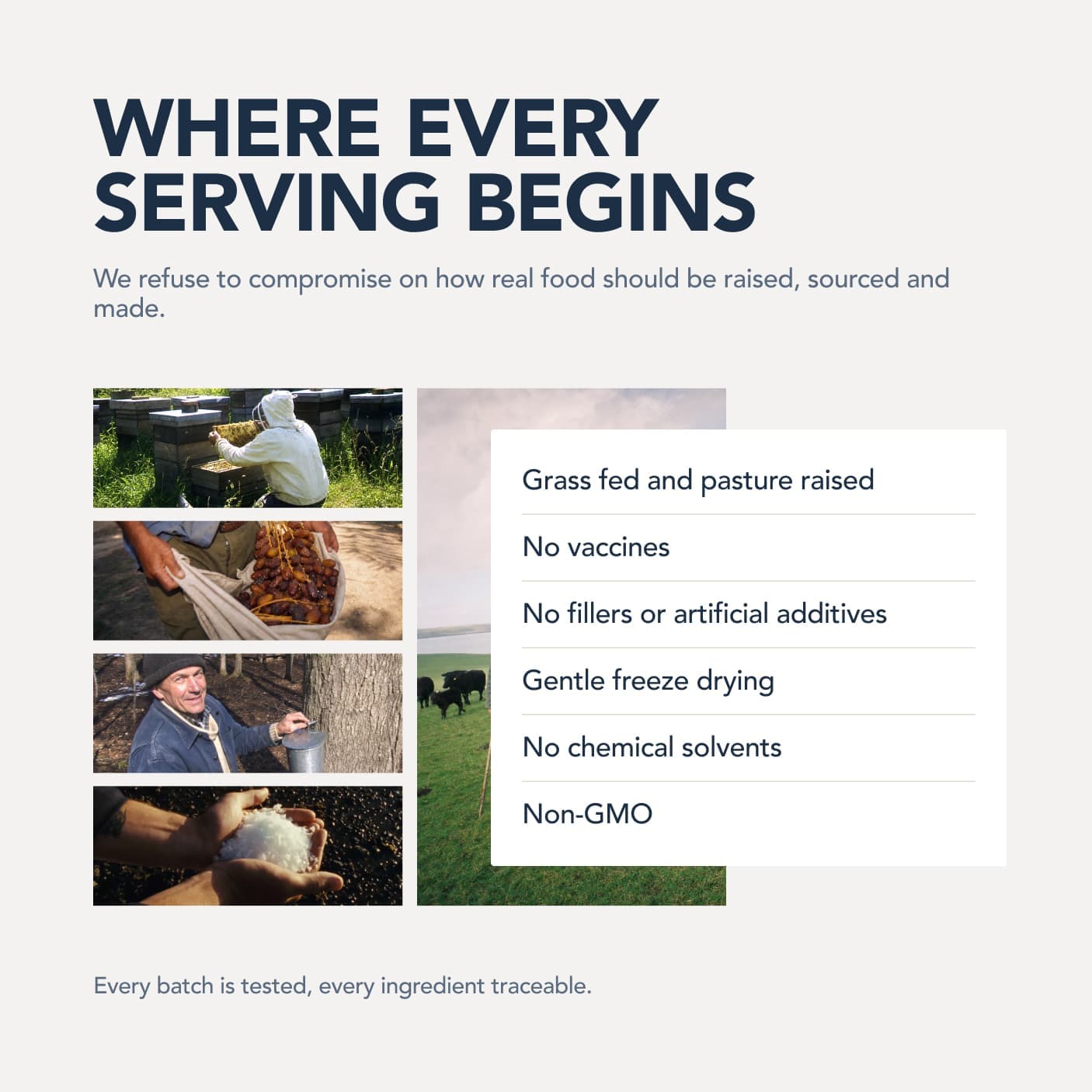
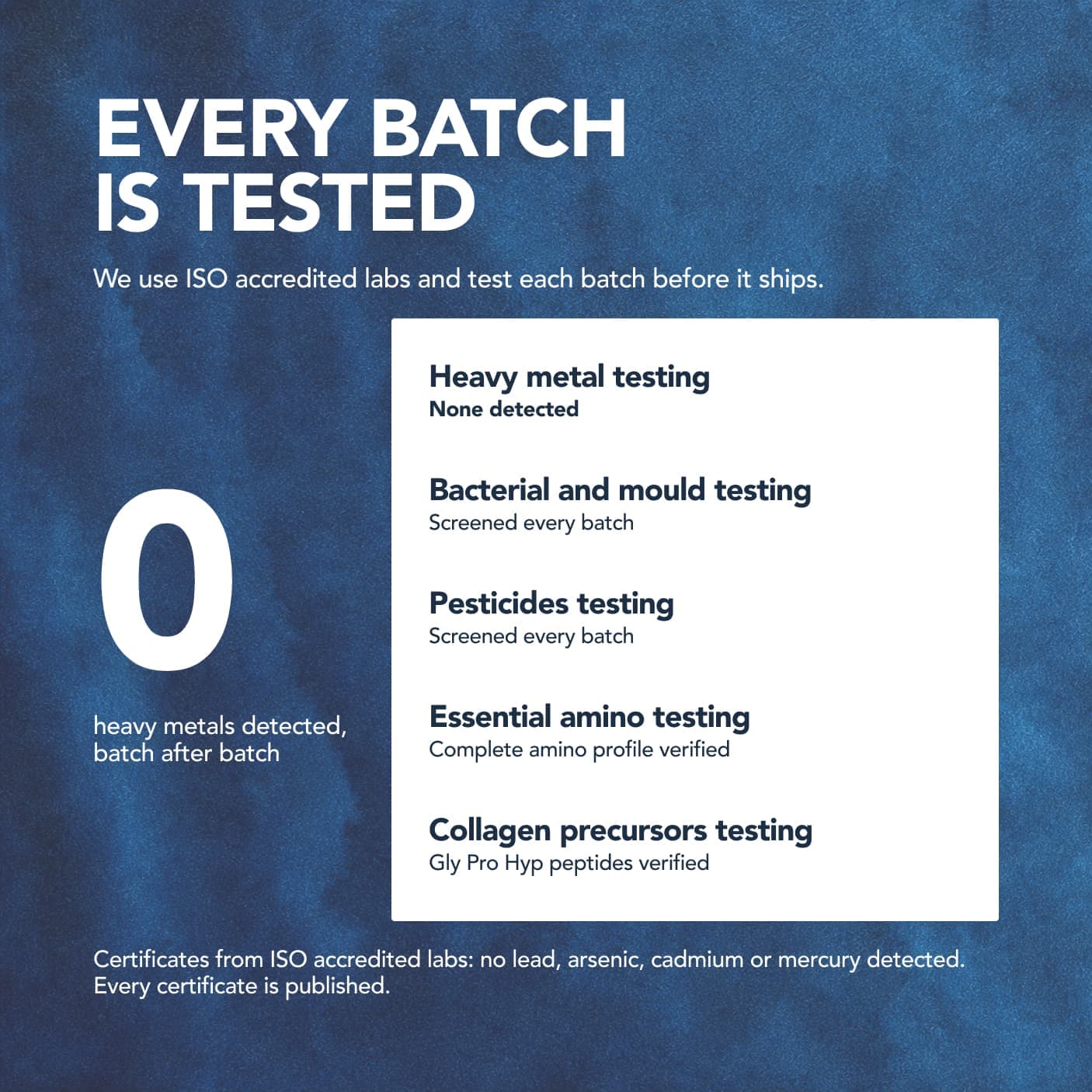
Eight real ingredients built around grass-fed beef organs, collagen and colostrum. Nothing synthetic added.
Free with your first order, worth £38. Plus £10 off the pouch with a subscription.
Free UK shipping · Made in England · 100 day money back guarantee on your first pouch · Skip, pause or cancel anytime
An invitation, not a sermon
This isn't about judgment. Some people will keep eating ultra-processed food. They'll keep scrolling past this. They'll keep living the way they're living. That's fine. Not everyone has the capacity to choose differently right now.
But if you've read this far, you probably have a sense that something is off. That your body doesn't feel the way you think it should. That the food system is broken in ways that nobody wants to acknowledge.
This is an invitation to choose differently. Not perfectly. Not exclusively. Just more. More real food. More cooking. More knowing where your food comes from. More eating things that are actually food.
It's not about supplements or brands or buying into a movement. It's about your body. About the only house you'll ever truly live in. About feeding it the way it's designed to be fed.
The industrial food system exists because it's convenient for industry. Real food exists because your body needs it. At some point, the choice becomes clear.
Start where you are right now. Eat one meal of real food. Then another. Build from there. Your body will thank you. And the land will heal.
References
Every source below was checked on 27 August 2026. Each PubMed, PMC and DOI identifier was resolved against NCBI or Crossref, and what it opens is printed under the citation, so you can see the link goes where the citation says without leaving the page. Where a citation and its identifier disagreed, the citation was corrected to the record or the reference was deleted along with the sentence marker that pointed at it, and where the resolved paper turned out not to support the sentence, the sentence was cut back to what it does support. Borrowed authority is worse than none, because it looks like rigour.
- UK Parliament House of Commons Library. Obesity statistics. House of Commons Library SN03336.
- Hall KD et al. Ultra-Processed Diets Cause Excess Calorie Intake and Weight Gain: An Inpatient Randomized Controlled Trial of Ad Libitum Food Intake. Cell Metab. PMC7946062.Checked 27 August 2026: PMC7946062 opens Hall KD, Ayuketah A, Brychta R et al, Ultra-Processed Diets Cause Excess Calorie Intake and Weight Gain: An Inpatient Randomized Controlled Trial of Ad Libitum Food Intake. Cell Metab 2019;30(1):67-77.e3. PubMed indexes it as: Randomized Controlled Trial.The authors' own declaration, from the record: Declaration of Interests. CG Forde has received reimbursement for speaking at conferences sponsored by companies selling nutritional products, serves on the scientific advisory council for Kerry Taste and Nutrition, and is part of an academic consortium that has received research funding from Abbott Nutrition, Nestec, and Danone. The other authors have no conflicts of interest.
- Monteiro CA et al. Ultra-processed foods: what they are and how to identify them. Public Health Nutr. PubMed PMID: 30744710.Checked 27 August 2026: PMID 30744710 opens Monteiro CA, Cannon G, Levy RB et al, Ultra-processed foods: what they are and how to identify them. Public Health Nutr 2019;22(5):936-941.
- Lane MM et al. Ultra-processed food exposure and adverse health outcomes: umbrella review of epidemiological meta-analyses. BMJ. PubMed PMID: 38418082.Checked 27 August 2026: PMID 38418082 opens Lane MM, Gamage E, Du S et al, Ultra-processed food exposure and adverse health outcomes: umbrella review of epidemiological meta-analyses. BMJ 2024;384:e077310. PubMed indexes it as: Systematic Review.The authors' own declaration, from the record: Competing interests: All authors have completed the ICMJE uniform disclosure form at www.icmje.org/coi_disclosure.pdf and declare: MML, EG, DNA, AJM, SG, FNJ, AO, and WM are affiliated with the Food & Mood Centre, Deakin University, which has received research funding support from Be Fit Food, Bega Dairy and Drinks, and the a2 Milk Company and philanthropic research funding support from the Waterloo Foundation, … (abridged; the full declaration is on the record)
Who wrote and reviewed this guide
Niall Kiddle
Author · Founder, Organised
Niall is the founder of Organised. He started the company in 2024 after fixing his own health the slow way: in 2022 he swapped a cupboard of synthetic supplements for real food, raw milk, organ meats, bone broth and honey, and felt the difference within months.
Areas of expertise: Ancestral nutrition, Organ meats, Whole-food supplementation, Gut health, Regenerative sourcing
Read Niall's full profile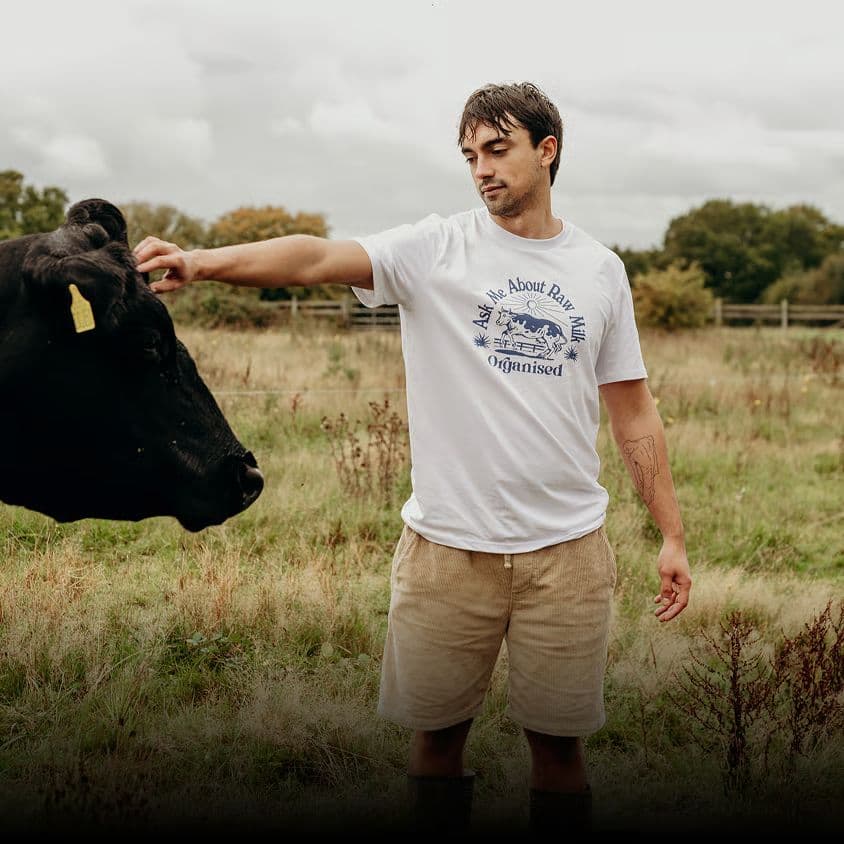
Pedro Rodrigues
Reviewer · Agronomist (farming and sourcing only)
Pedro is the agronomist Organised works with on farming and sourcing. His job on the guides is to keep the science honest: he reviews what we publish about soil health, regenerative agriculture, grazing and the way food is actually produced.
Areas of expertise: Regenerative agriculture, Agronomy, Soil health, Grass-fed farming, Food sourcing
Reviewed this guide on
Read Pedro's full profileMore on movement
View all- The Return to Real Food: Why Millions Are Rejecting Ultra-Processed Diets
- Find a Farm: How to Source Real Food Near You
- Food Sovereignty: Taking Back Control of What You Eat
- Processed Food Companies Don't Want You to Know This
- Social Media and Nutrition: Navigating the Noise
- The Anti-UPF Movement: What's Driving the Backlash Against Processed Food
- The Problem with 'Clean Label' Marketing
- The Raw Milk Renaissance: Our Documentary
- The Rise of Ancestral Eating in the UK
- What 'Nourishment for Every Generation' Really Means to Us
- Why 'Eat Less, Move More' Failed a Generation
- Why More Doctors Are Recommending Whole Food Over Supplements
Browse the guides library
All guidesKeep reading
Culture & community
The Raw Milk Renaissance: Our Documentary
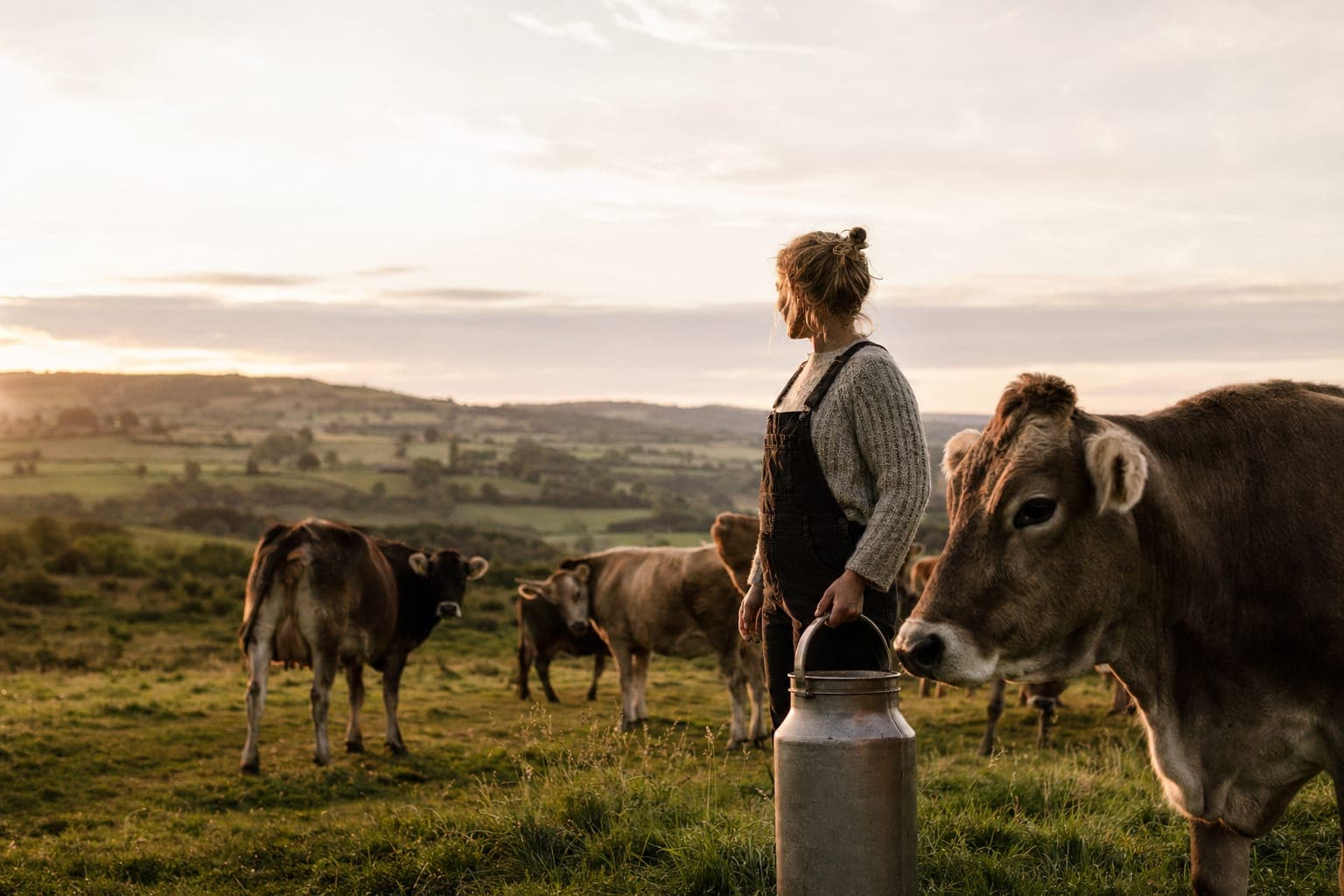
Our raw milk documentary, The Death of Normal: Milk, premieres 31 May 2026. Filmed at Plaw Hatch and UK farms still making milk the original way.
Culture & community
Why We Don't Call Ourselves a Supplement Brand
We're not a supplement company. We're not extracting, isolating, or dosing. We're returning to the foods your body actually recognises.
Culture & community
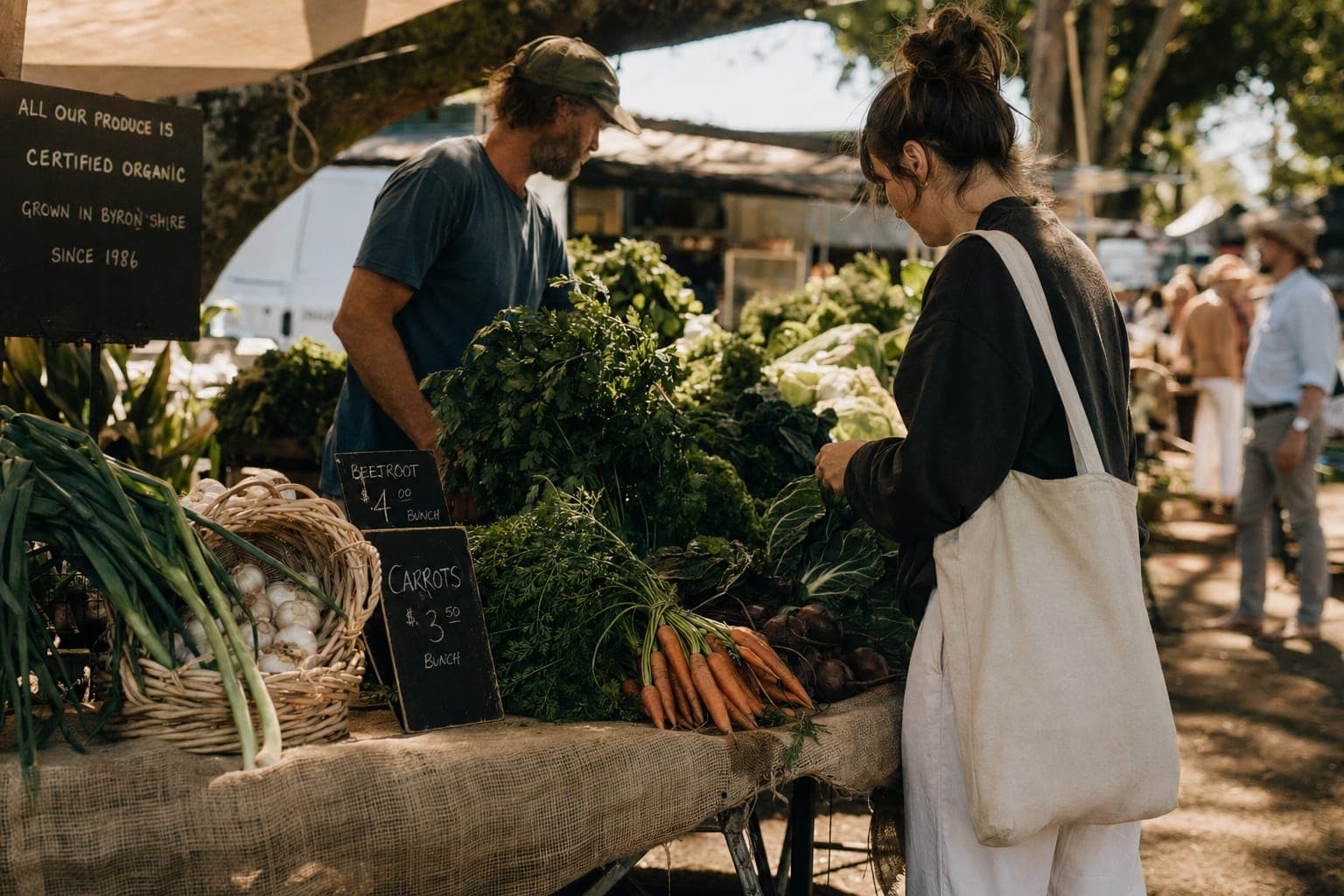
Find a Farm: How to Source Real Food Near You
A practical guide to finding local farms, farmers markets, and food sources you can trust. Real food sourcing made simple.
Real food, made effortless
Shop the blendA few ways to use it
All recipes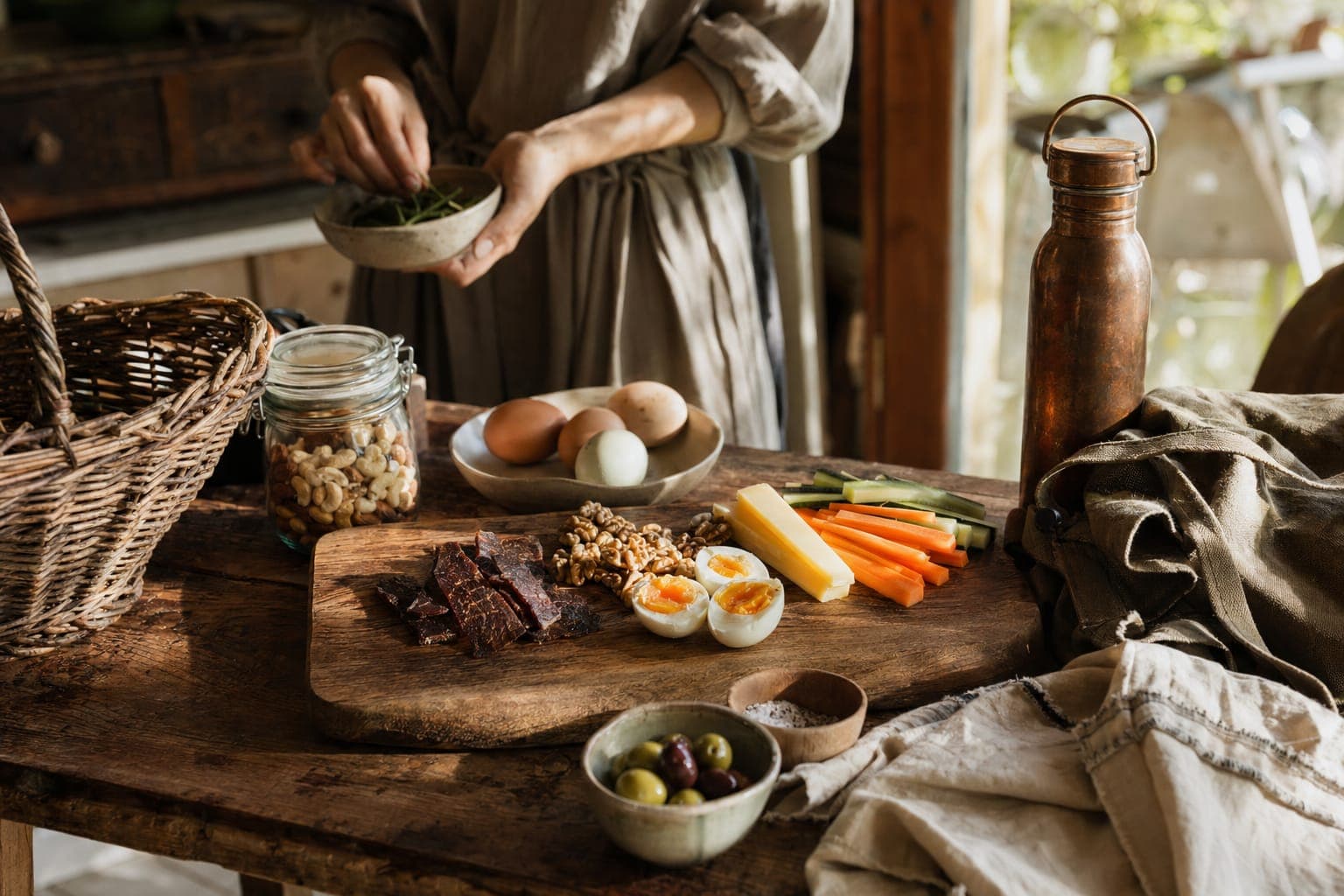
Whole Food Snacks for Busy Days
Practical whole food snacks that travel well and sustain energy. No refined carbs, no seed oils. Real food options for when you're busy.
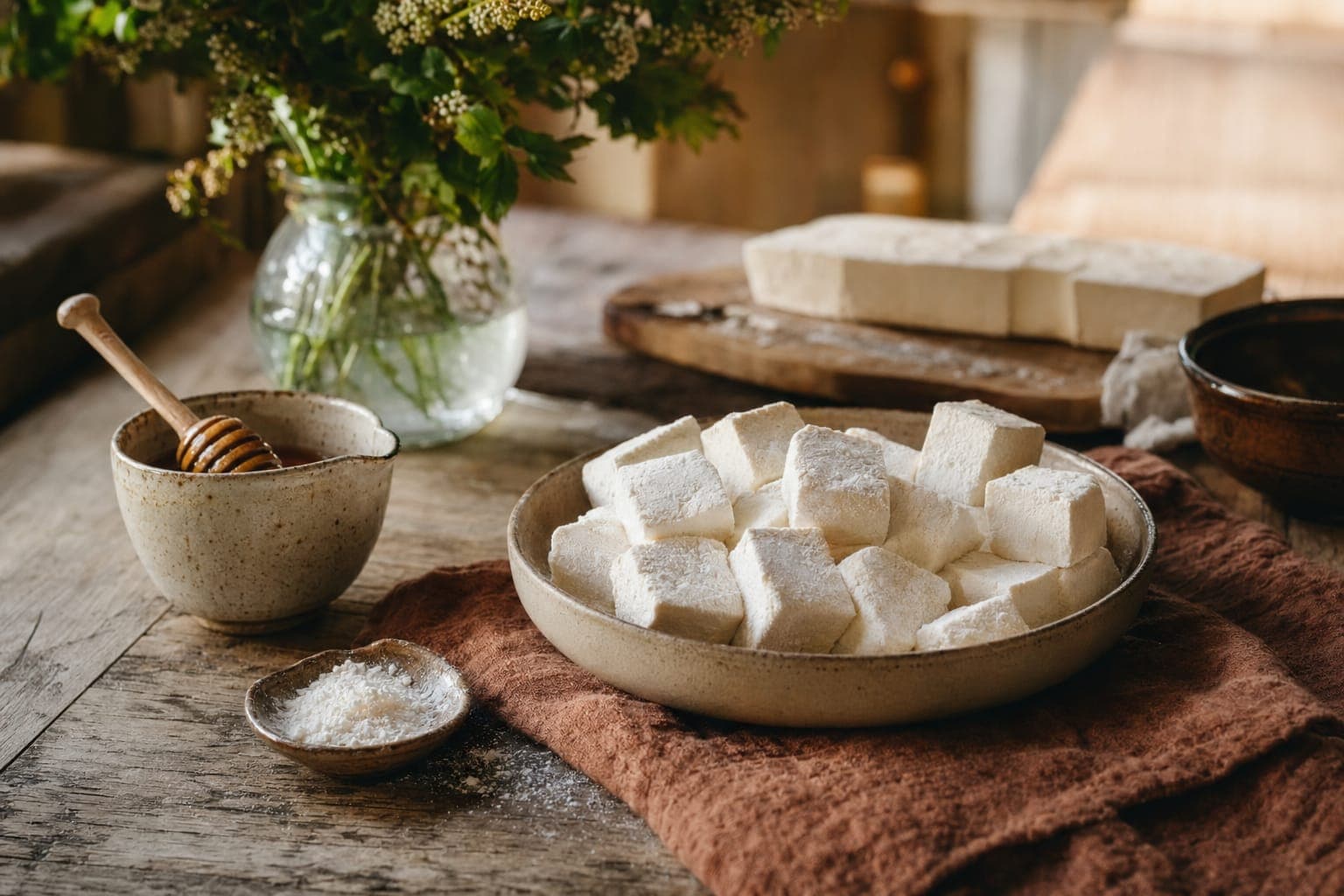
Gut-Healing Marshmallows with Collagen and Raw Honey
Learn to make gut-healing marshmallows with collagen and raw honey. A shareable treat that sneaks nutrition into every bite. Easy recipe with video tips.
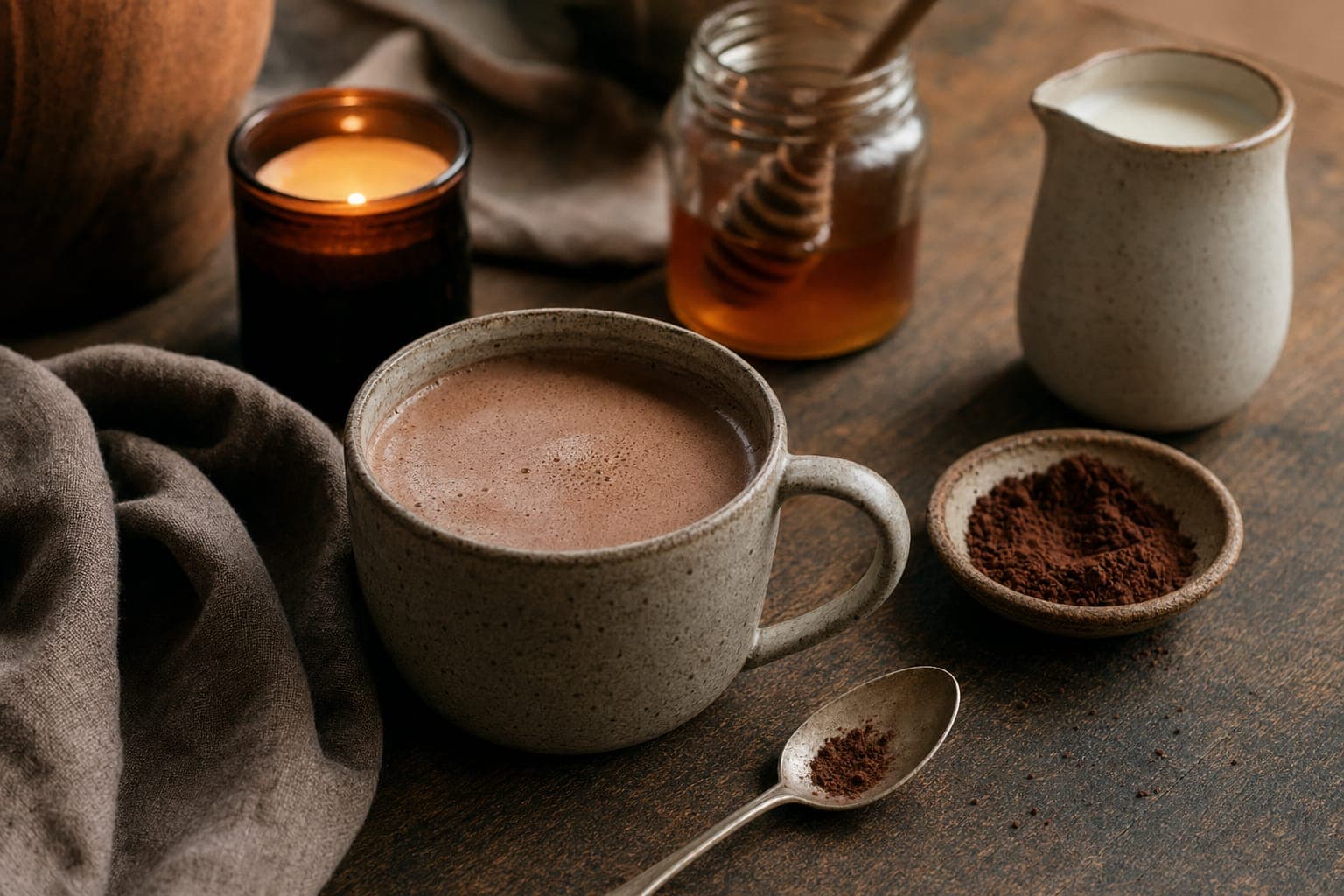
Raw Milk Hot Chocolate with Collagen
A nourishing evening hot chocolate made with raw milk, grass-fed collagen, raw cacao, and honey. A nighttime ritual that supports sleep and gut health.


 Join over 100,000+ members
Build a better food system with us
The Organised community is thousands of people choosing real food and backing the farmers who grow it, all of us trying to leave the world a little better than we found it. If that is what you care about too, you belong here.