Find a Farm: How to Source Real Food Near You
You've decided to eat real food. You've researched the benefits. You know what you're looking for. And then you get to the supermarket and stare at a shelf of meat that tells you nothing about how the animal was raised. No information about diet, no indication of farming practices, no way to know if what you're buying is actually nourishing or just another industrial product with premium pricing. So where do you actually find real food? How do you source it in a way that's practical, affordable, and trustworthy? Here's the honest answer.
By Niall Kiddle, Founder, Organised

Reviewed by Pedro Rodrigues, Agronomist (farming and sourcing only) ·
6 min read · Published · Updated · 4 cited sources
Makers of the Organised Daily blend, a grass-fed beef organ supplement from regenerative UK farms
You've decided to eat real food. You've researched the benefits. You know what you're looking for.
And then you get to the supermarket and stare at a shelf of meat that tells you nothing about how the animal was raised. No information about diet, no indication of farming practices, no way to know if what you're buying is actually nourishing or just another industrial product with premium pricing.
So where do you actually find real food? Here's the honest answer.
Start with what's near you
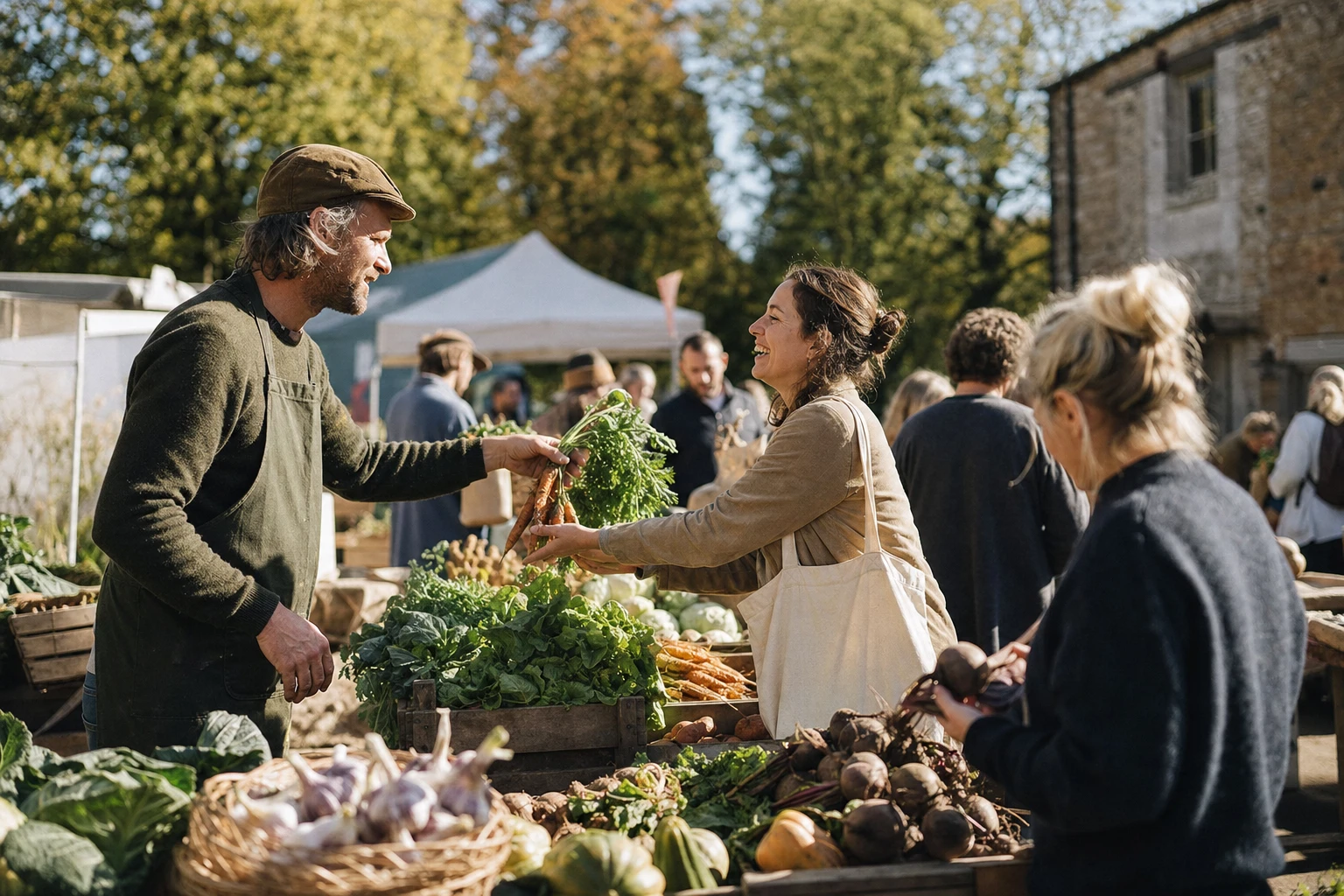
The first step is understanding that real food sourcing doesn't require moving to the countryside. Most UK areas have at least one farmers market within a reasonable distance. Even in cities, farm shops have proliferated as demand has grown.
The advantage of local sourcing is profound. You reduce transportation distance, which means fresher food. You can speak directly to the person who raised the animal or grew the vegetable. And you can make a relationship with the farmer, which is the foundation of trust.
Start by searching for farmers markets in your postcode. Most operate weekly. Visiting once gets you the lay of the land. Visiting twice shows you the seasonal pattern and helps you identify which vendors you trust.
Real food sourcing is about building relationships. The farmer who knows you, who knows what you're looking for, becomes invested in your satisfaction.
Farmers markets: the starting point
Farmers markets are where most people begin. They're accessible, they happen regularly, and they bring multiple farmers into one location.
The best ones operate weekly and have vendor consistency, so you can find the same farmer each week. The worst are one-off events with rotating vendors, where quality is inconsistent and you can't build relationships.
What to look for at farmers markets:
- Meat vendors who can tell you about grazing, breed, finishing diet. If they can't answer questions about farming practices, move on.
- Vegetable growers selling what's in season. If they have strawberries in February and asparagus in November, they're not growing it locally.
- Dairy vendors selling milk, cheese, and butter from known farms. Ask about breed, grazing, and whether raw milk is available.
- Egg producers with outdoor access details. Backyard hens are ideal. Field-raised is next best. Cage-free is not the same as pasture-raised.
The vendors who are happy to answer questions in detail are the ones worth building relationships with.
Farm shops and farm gates
Many farms sell directly to the public. Some operate farm shops with regular hours. Others operate by appointment or on specific market days.
Farm gate shopping offers something farmers markets don't: the ability to see the animals and land. You can verify that the herd is outdoors on pasture. You can understand the farming operation directly.
Farm shops also tend to have better availability of the foods that aren't economical to sell at farmers markets: organ meats, bones for broth, gelatinous cuts, eggs, dairy. The animals being raised for conventional meat usually end up as conventional cuts. The organs, joints, and other nutrient-dense parts often get wasted unless there's a direct market.
Finding farm shops is straightforward: search "farm shop" plus your region. Pasture for Life accreditation is worth looking for, as it indicates animals grazed on pasture year-round.1 Big Barn is a searchable directory of farm shops across the UK, with reviews and location details.2
Box schemes and direct delivery
Box schemes that deliver directly to your home have become mainstream. They solve the logistical challenge: if you don't live near a farm shop, you can still access direct farm produce.
Quality varies wildly. The best schemes work with a single farm or a small network of farms they know well. They're often seasonal, which means the contents vary by what's growing. They're usually more expensive than supermarkets, but the quality difference is profound.
Riverford is the largest and most established scheme, operating across most of the UK.4 They publish detailed information about their farming practices. Eversfield Organic and Pipers Farm offer premium meat and dairy delivery. Smaller, local schemes exist in most regions.
When evaluating a box scheme, ask: where does the food come from? Can I visit the farm? What are the farming practices? Is the pricing transparent? The best schemes make this information obvious.
The Soil Association approach
The Soil Association certifies organic producers and has a searchable directory of certified farms and retailers.3 Organic certification doesn't guarantee everything (grass-fed, pasture-raised, regenerative), but it provides a quality baseline.
Their website has a tool for finding certified producers by region. It's searchable by food type: meat, dairy, vegetables, eggs. Many farmers aren't certified (certification is expensive and bureaucratic), but those who are have verified their practices to an external standard.
Use it as a starting point. But remember that some of the best farmers aren't certified, either by choice or because they don't meet the scale of production that makes certification economic.
Get stories from the community, free
Two short reads a week on the farmers, the standards, and the return to real food.
By signing up you agree to receive emails from us. No spam, unsubscribe anytime.
Questions to ask
When you find a farmer, the questions you ask reveal whether they're genuinely producing real food or just marketing it as such.
For meat:
- What do the animals eat? (Answer should be: grass and forage. Red flags: grain-fed, concentrate-finished, soy-fed.)
- How much time on pasture? (Answer should be: year-round for cattle, most of the year for pigs and poultry.)
- What breed? (Heritage breeds, slower-growing breeds indicate quality focus.)
- How are they finished? (Grass-finished is best. Grain-finished at the end is common but lower quality.)
For dairy:
- What breed? (Jersey and Guernsey produce higher-butterfat milk. Holsteins are industrial breed.)
- Are they grass-fed? (Year-round or seasonal?)
- Is raw milk available? (Indicates confidence in herd health.)
- How long are cows in the herd? (Industrial dairies cull at 4-5 years. Good farms keep them 6-8 years.)
For vegetables:
- What's in season now? (If they can't tell you, they're not growing it.)
- Do you use pesticides? (Conventional farming uses legal pesticides. Organic doesn't.)
- How long has this been growing here? (Long history indicates soil quality.)
A farmer confident in their practices welcomes questions. A farmer vague about methods is trying to hide something.
1 of 9
Daily blend
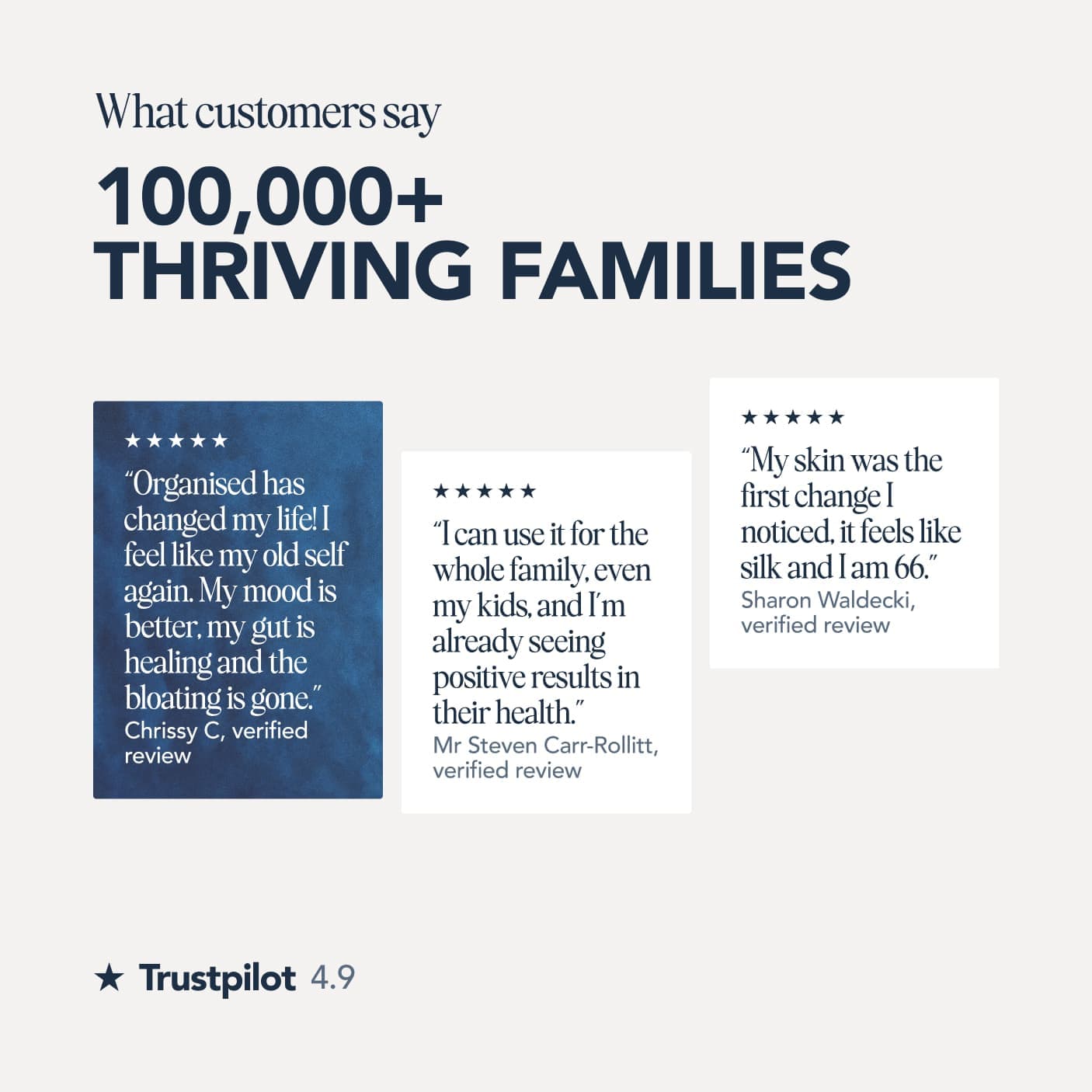
100,000+ thriving families4.9 on Trustpilot
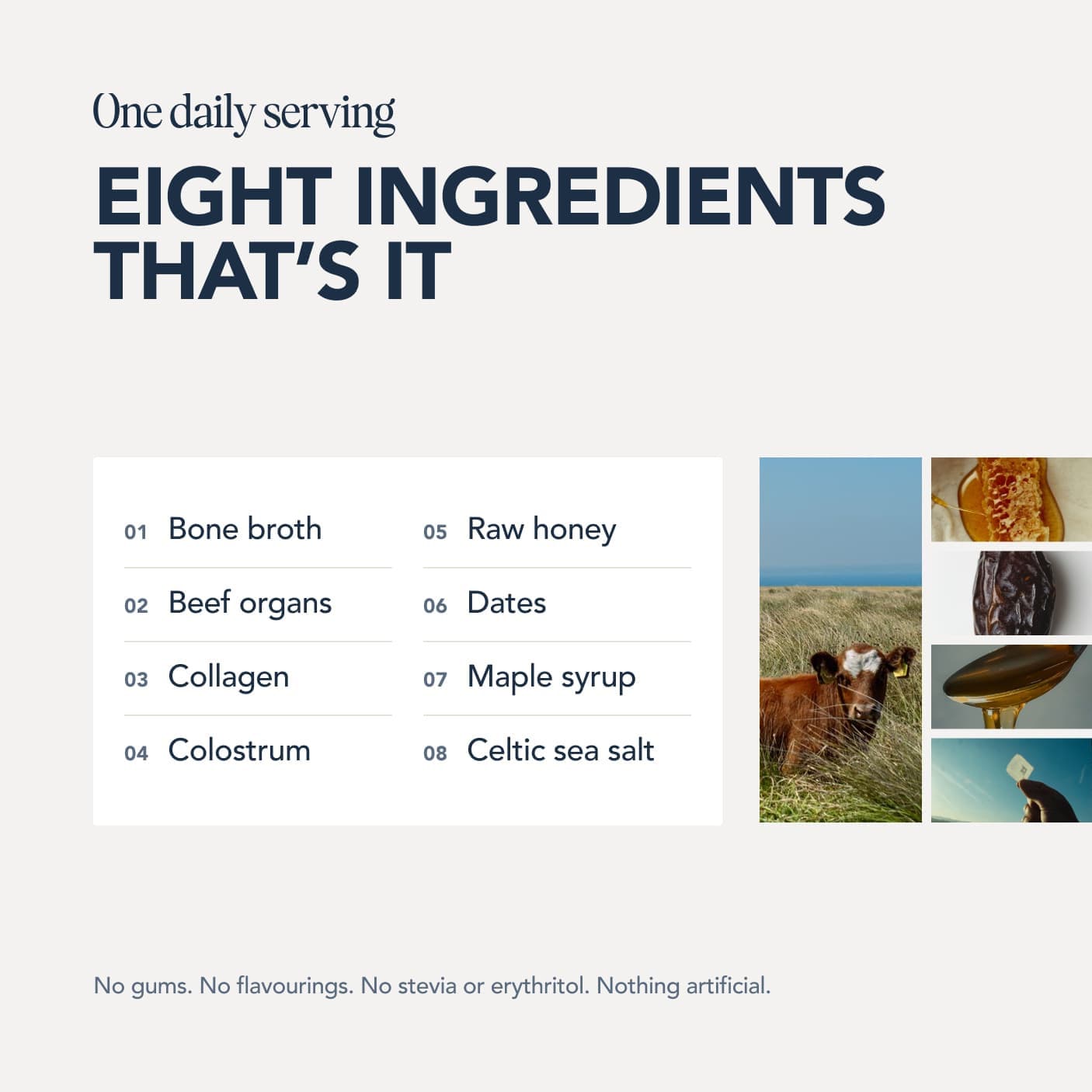
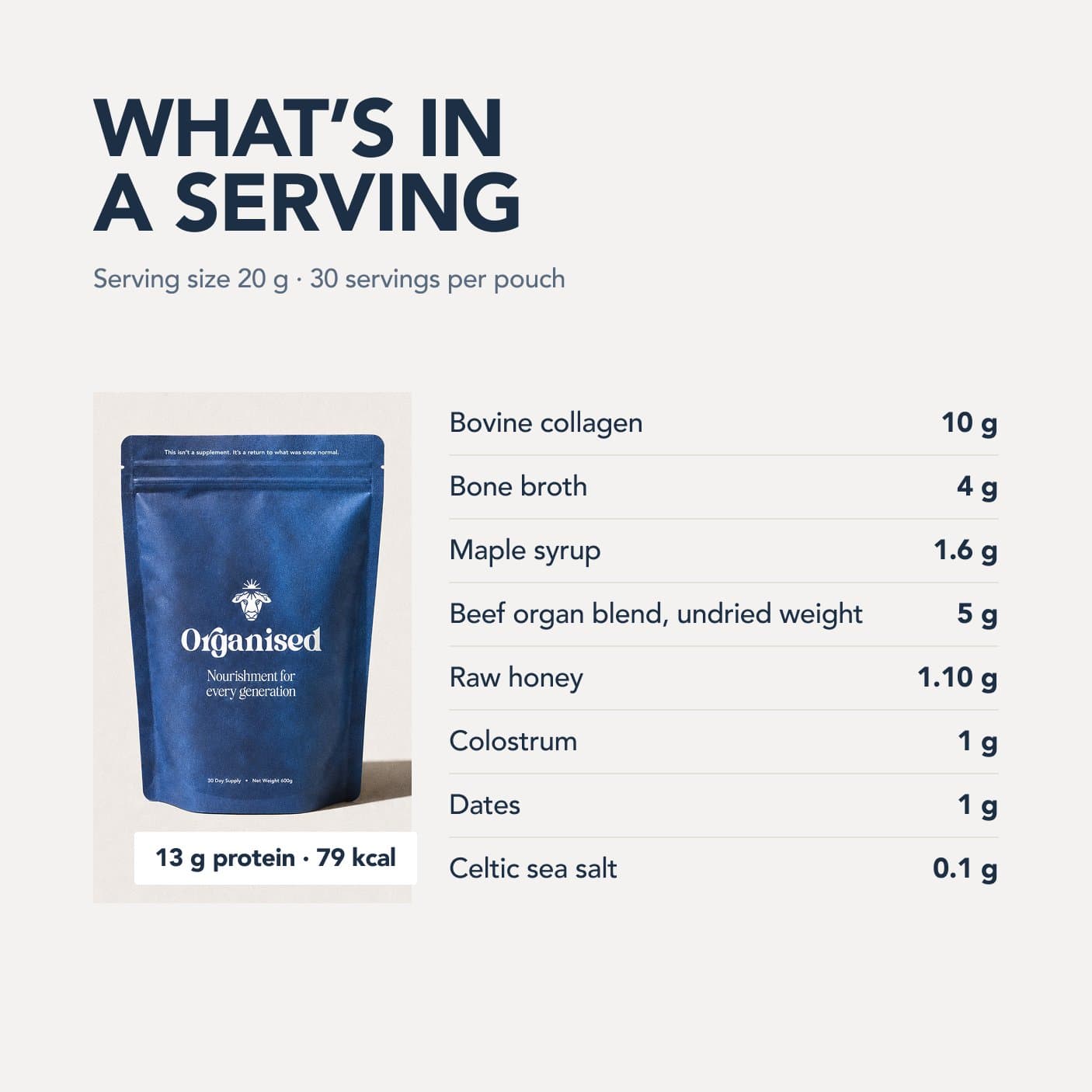
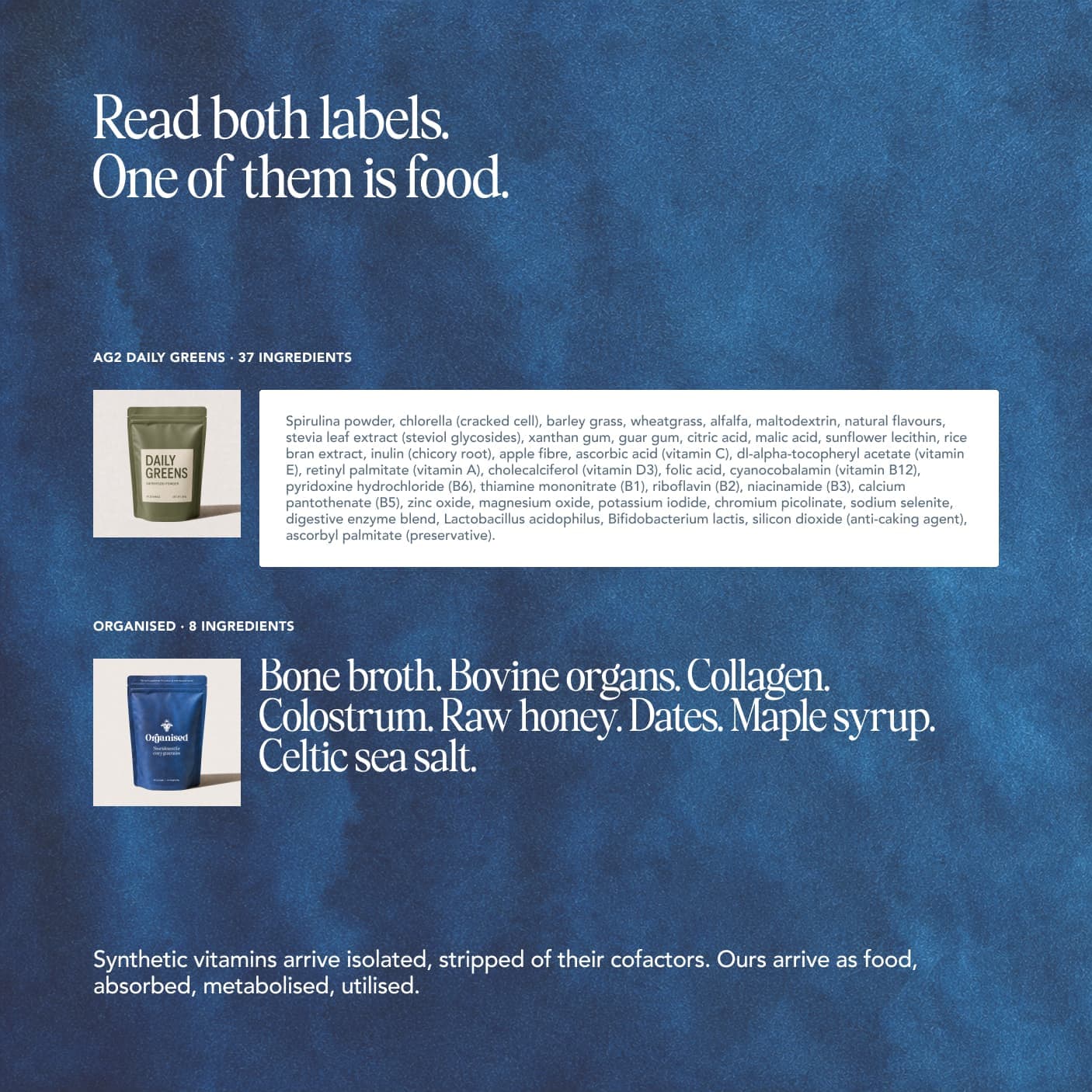
Eight real ingredients built around grass-fed beef organs, collagen and colostrum. Nothing synthetic added.
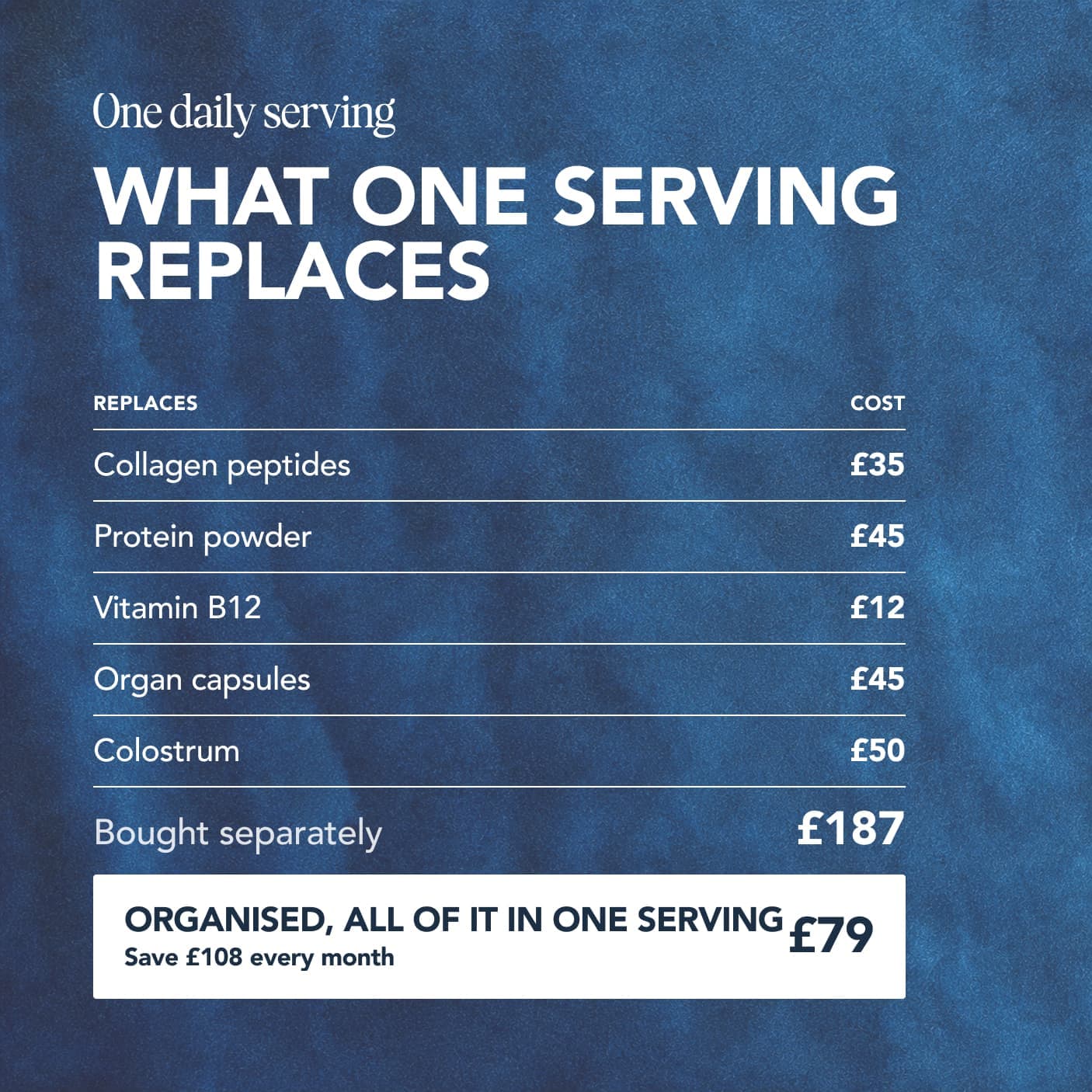
Free with your first order, worth £38. Plus £10 off the pouch with a subscription.
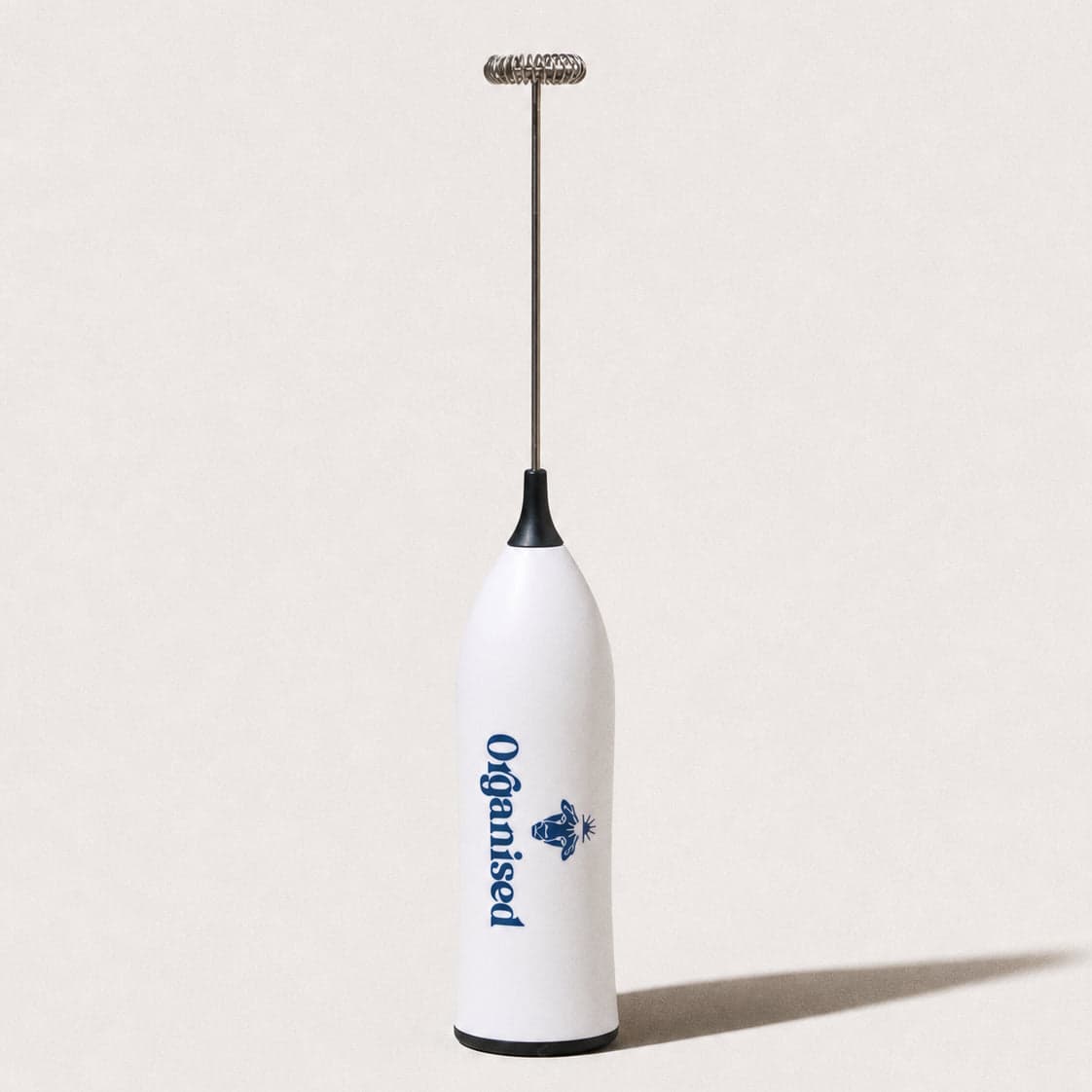
Free UK shipping · Made in England · 100 day money back guarantee on your first pouch · Skip, pause or cancel anytime
Building relationships
Once you find a farmer you trust, the best strategy is consistency. Buy from them weekly. Learn their seasonal patterns. Tell them what you're looking for so they can save it for you.
Most farmers will happily set aside organ meats, specific cuts, or items they don't usually have if they know you want them. They'll also adjust production slightly if they know what their customers need.
This relationship is valuable in both directions. Farmers benefit from predictable sales and feedback. Customers benefit from knowing their food source and getting exactly what they need.
Many farms now have online ordering systems where you can reserve items for pickup or delivery. Use them. It helps the farm plan and ensures you get what you need.
The economics actually work
Real food costs more than industrial food. That's true. But the gap is smaller than most people think, especially when you account for the health costs of ultra-processed diets.
A grass-fed ribeye costs more per gram than factory-farmed beef. But it's also more nutrient-dense and more satiating. You eat less of it and feel fuller longer. The price premium largely disappears when you account for quantity needed.
Organ meats are often dramatically cheaper than conventional cuts, despite being more nutritious. A chicken costs more from a farmer than in a supermarket, but you can make broth from the carcass, using every part.
Over time, as local food systems grow and competition increases, prices normalise. The goal isn't that real food becomes cheap. It's that fake food becomes recognized as the expensive, unhealthy option it actually is.
A practical action plan
Start small. Find one farmers market. Visit it three times. Identify one vendor for each category: meat, dairy, vegetables, eggs. Ask them questions. Make a purchase.
Once you've bought from them twice, ask if you can order ahead for the next week. Start building that relationship.
Expand from there. Try a second source. Experiment with a box scheme if farmers markets aren't viable for you. Visit a farm shop if one is accessible.
The goal isn't perfection. It's to source more real food than fake food. To know where most of your food comes from. To build relationships with the people growing it.
That's sourcing real food in the modern world. It's not complicated. It just requires intention and a willingness to ask questions.
References
Every source below was checked on 27 August 2026. Each link was requested and read. Where a citation and its identifier disagreed, the citation was corrected to the record or the reference was deleted along with the sentence marker that pointed at it, and where the resolved paper turned out not to support the sentence, the sentence was cut back to what it does support. Borrowed authority is worse than none, because it looks like rigour.
- Pasture for Life. Pasture for Life certification.
- Big Barn. Big Barn local food directory.
- Soil Association. Soil Association certification and directory.
- Riverford Organic Farmers. Riverford.
Who wrote and reviewed this guide
Niall Kiddle
Author · Founder, Organised
Niall is the founder of Organised. He started the company in 2024 after fixing his own health the slow way: in 2022 he swapped a cupboard of synthetic supplements for real food, raw milk, organ meats, bone broth and honey, and felt the difference within months.
Areas of expertise: Ancestral nutrition, Organ meats, Whole-food supplementation, Gut health, Regenerative sourcing
Read Niall's full profile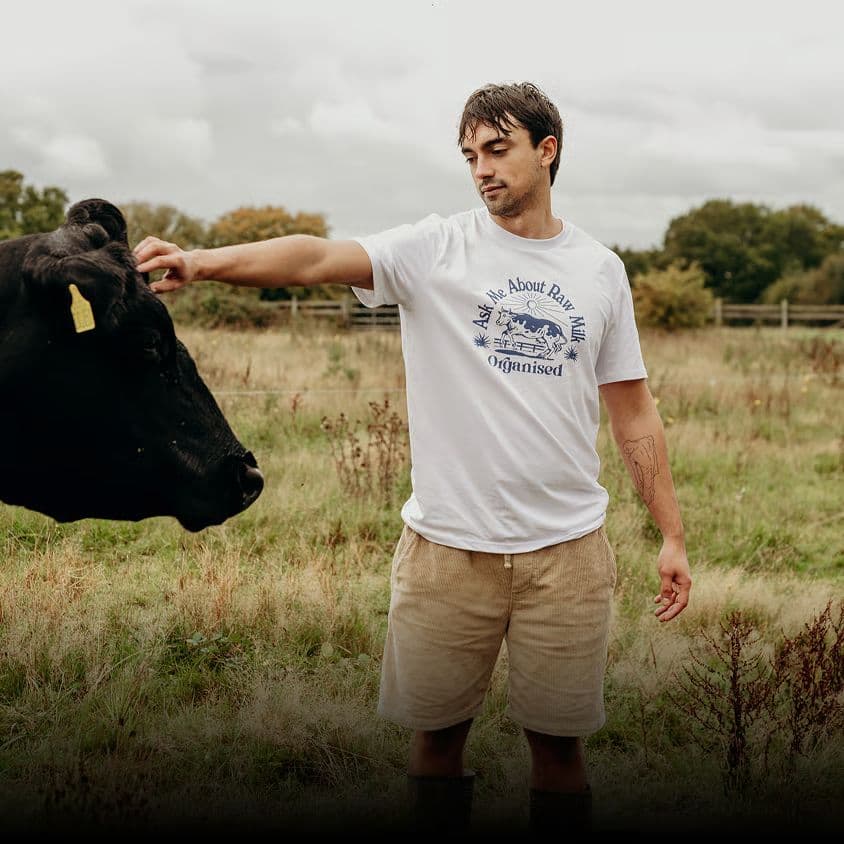
Pedro Rodrigues
Reviewer · Agronomist (farming and sourcing only)
Pedro is the agronomist Organised works with on farming and sourcing. His job on the guides is to keep the science honest: he reviews what we publish about soil health, regenerative agriculture, grazing and the way food is actually produced.
Areas of expertise: Regenerative agriculture, Agronomy, Soil health, Grass-fed farming, Food sourcing
Reviewed this guide on
Read Pedro's full profileMore on movement
View all- The Return to Real Food: Why Millions Are Rejecting Ultra-Processed Diets
- Against Ultra-Processed: A Manifesto for Real Food
- Food Sovereignty: Taking Back Control of What You Eat
- Processed Food Companies Don't Want You to Know This
- Social Media and Nutrition: Navigating the Noise
- The Anti-UPF Movement: What's Driving the Backlash Against Processed Food
- The Problem with 'Clean Label' Marketing
- The Raw Milk Renaissance: Our Documentary
- The Rise of Ancestral Eating in the UK
- What 'Nourishment for Every Generation' Really Means to Us
- Why 'Eat Less, Move More' Failed a Generation
- Why More Doctors Are Recommending Whole Food Over Supplements
Browse the guides library
All guidesKeep reading
Culture & community
The Raw Milk Renaissance: Our Documentary
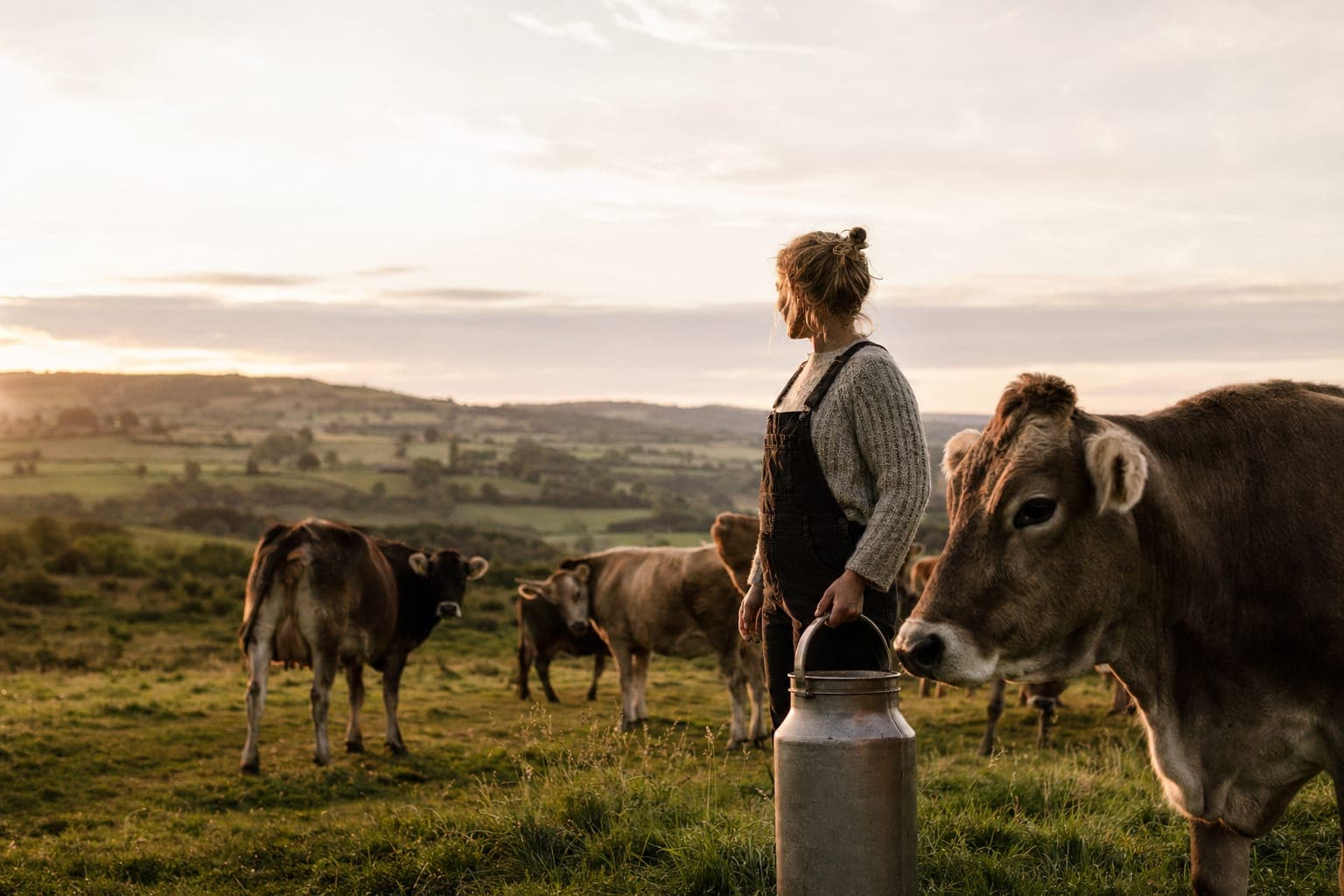
Our raw milk documentary, The Death of Normal: Milk, premieres 31 May 2026. Filmed at Plaw Hatch and UK farms still making milk the original way.
Culture & community
Meet the Farmers Behind Organised
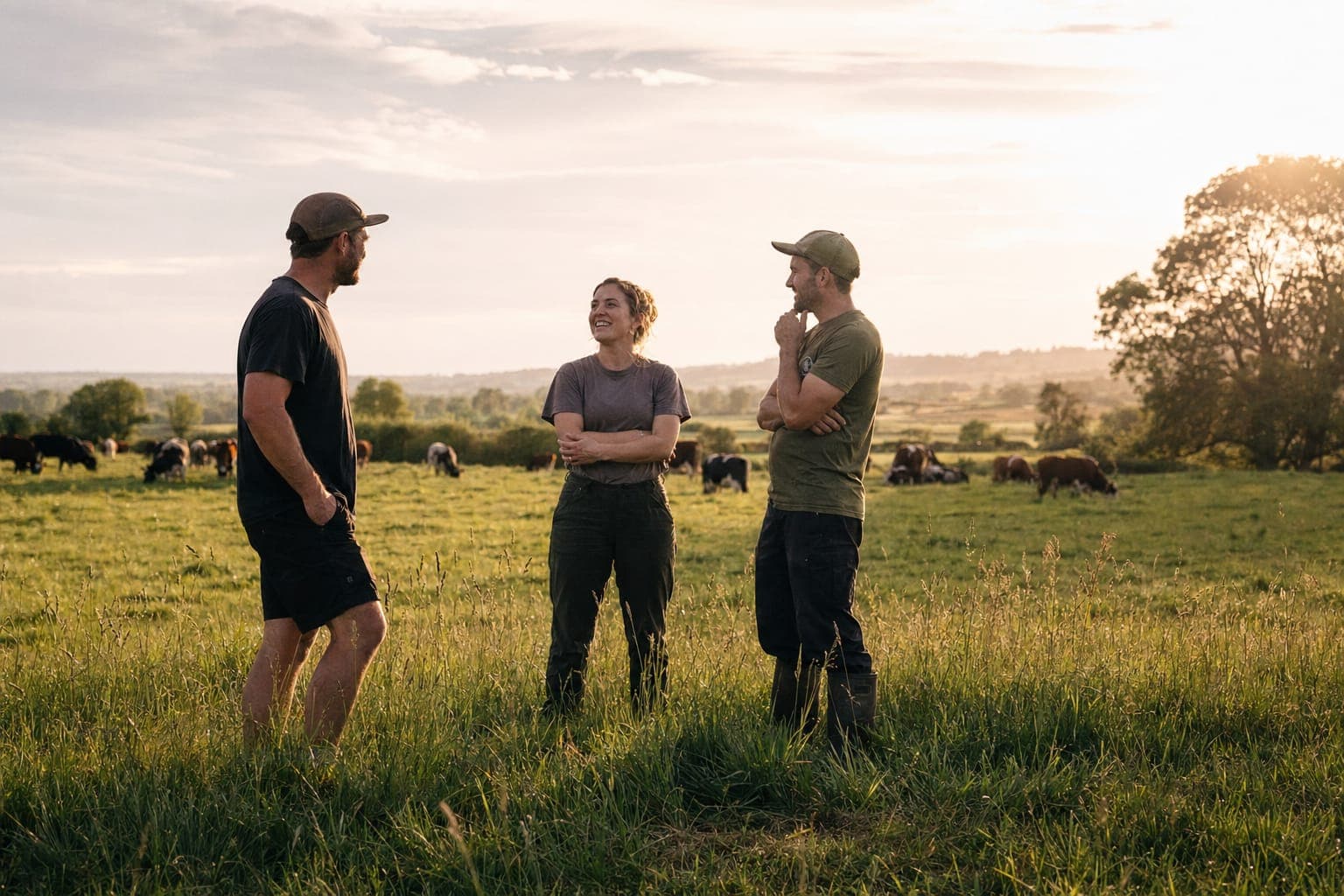
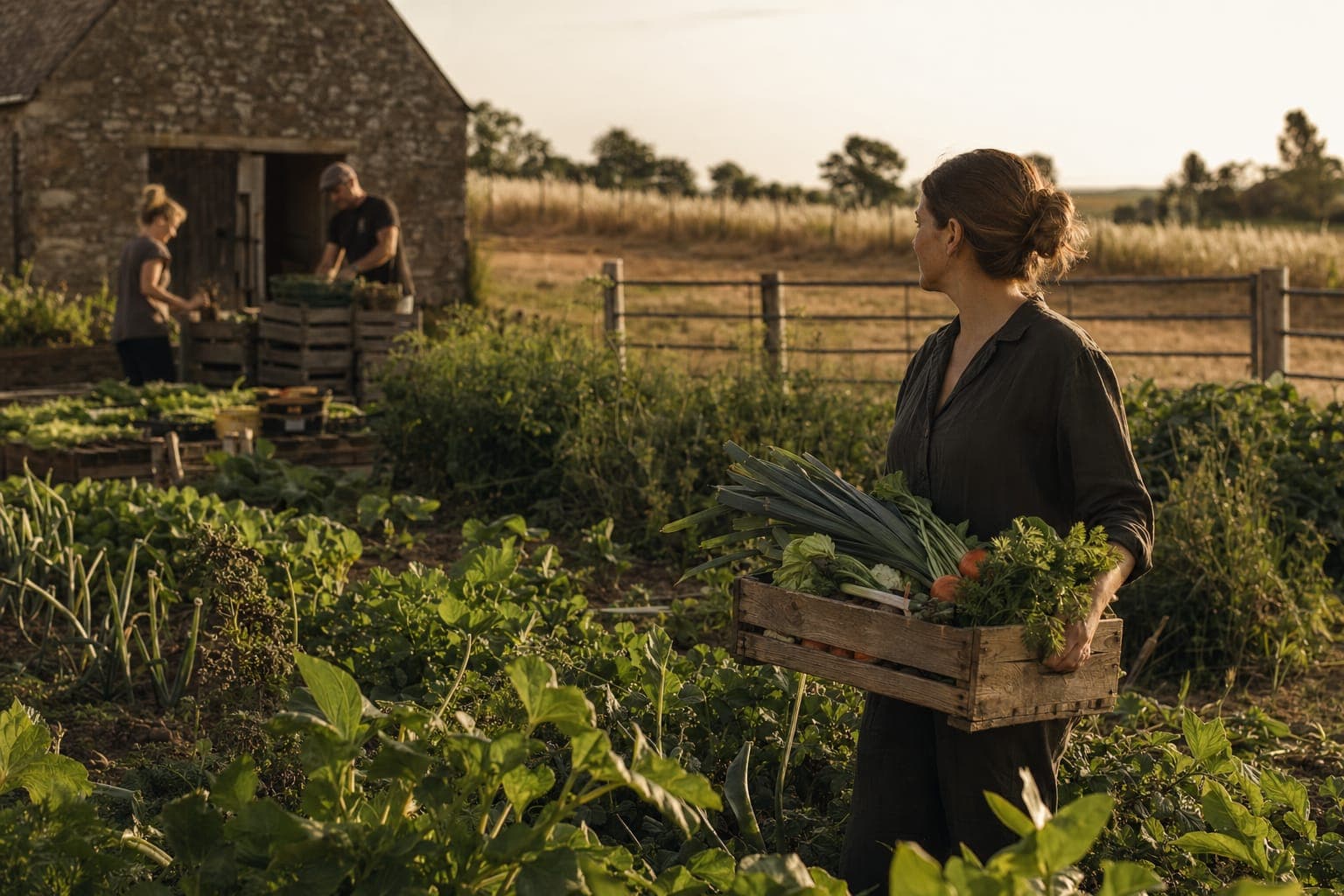
Organised doesn't just source from farms. We partner with them. Meet three farmers changing how animals and land work together.
Culture & community
Food Sovereignty: Taking Back Control of What You Eat
Understanding food sovereignty, why knowing your food sources matters, and how to resist industrial food systems through local and regenerative choices.
Real food, made effortless
Shop the blendA few ways to use it
All recipes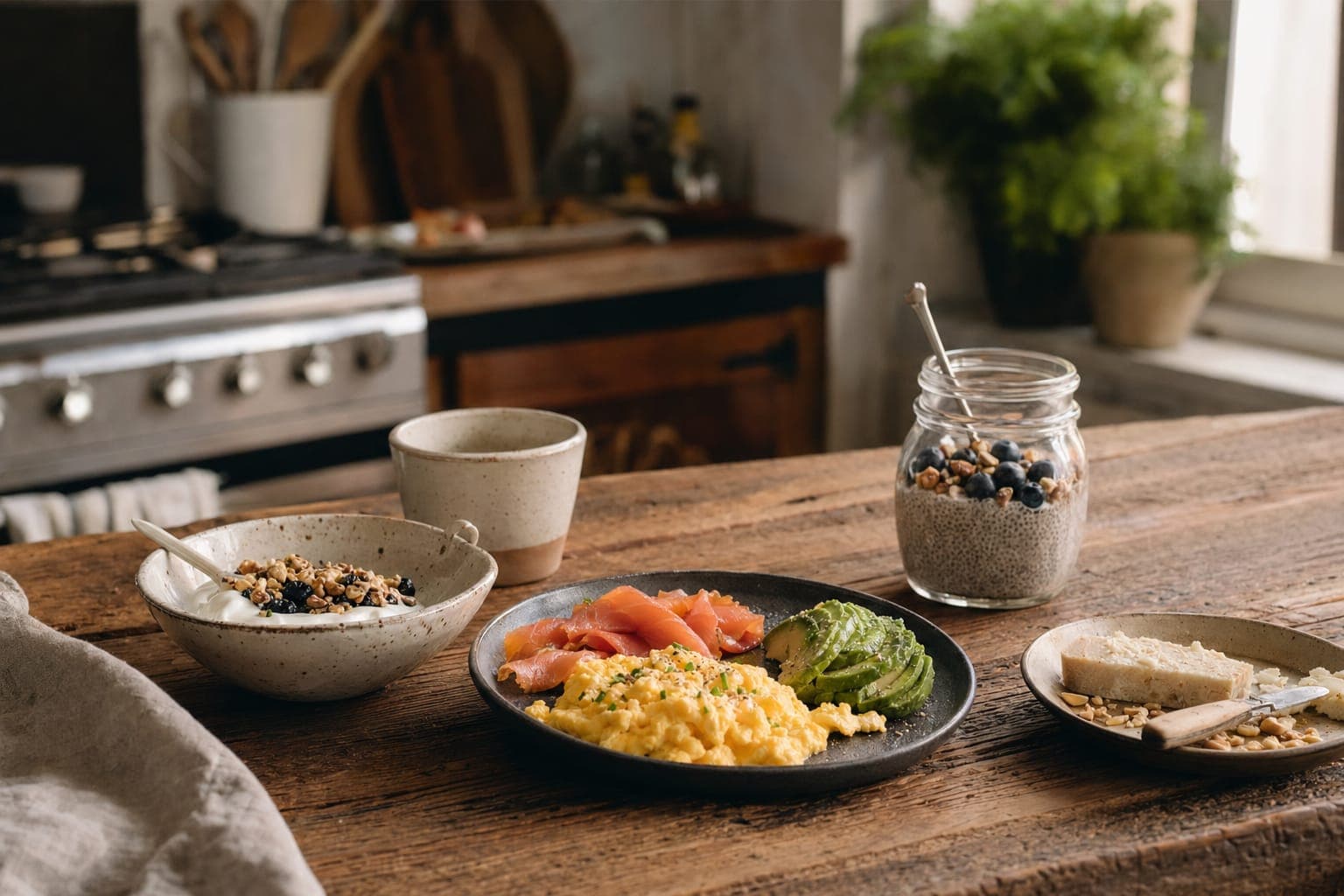
5-Minute High-Protein Breakfasts Using Organised
Quick, high-protein breakfast ideas using Organised. Five recipes you can make in minutes with real food. No fussing around.
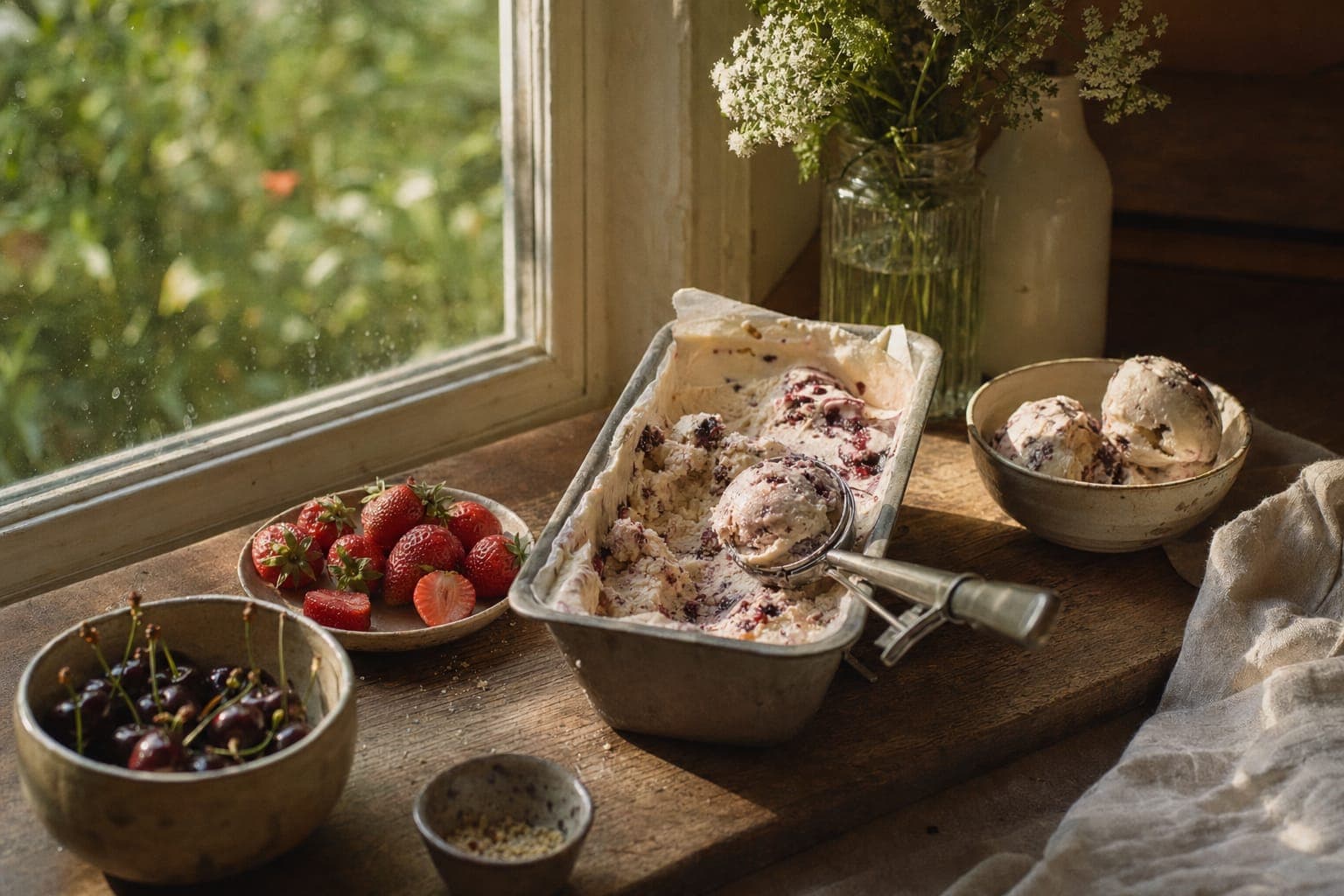
Raw Milk Ice Cream with Organised
Make raw milk ice cream at home with Organised for a seasonal, nutrient-dense treat. Three simple flavours to try whenever the craving strikes.
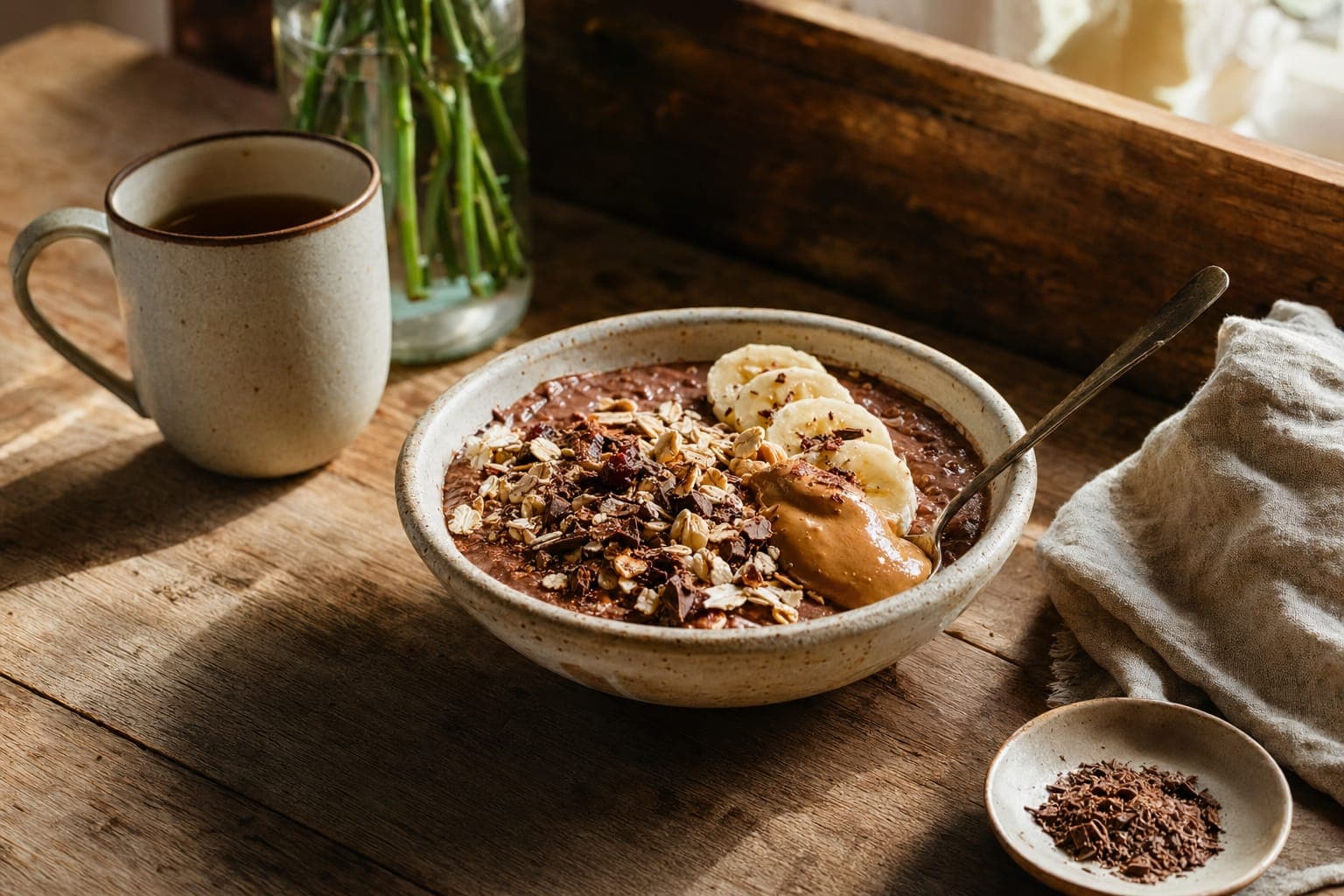
10 Ways to Use Organised That Aren't Just a Shake
Move beyond the basic shake. Discover 10 creative ways to use Organised in smoothie bowls, oats, yoghurt, baking, and more.


 Join over 100,000+ members
Build a better food system with us
The Organised community is thousands of people choosing real food and backing the farmers who grow it, all of us trying to leave the world a little better than we found it. If that is what you care about too, you belong here.