The Rise of Ancestral Eating in the UK
For 60 years, British cuisine forgot itself. Post-war processing, supermarket convenience, and industrial agriculture erased the foodways that kept previous generations resilient. Now, quietly, it's coming back. From London supper clubs serving nose-to-tail to farmgate communities bypassing supermarkets entirely, UK food culture is remembering what it had.
By Niall Kiddle, Founder, Organised

Reviewed by Pedro Rodrigues, Agronomist (farming and sourcing only) ·
5 min read · Published · Updated · 2 cited sources
Makers of the Organised Daily blend, a grass-fed beef organ supplement from regenerative UK farms
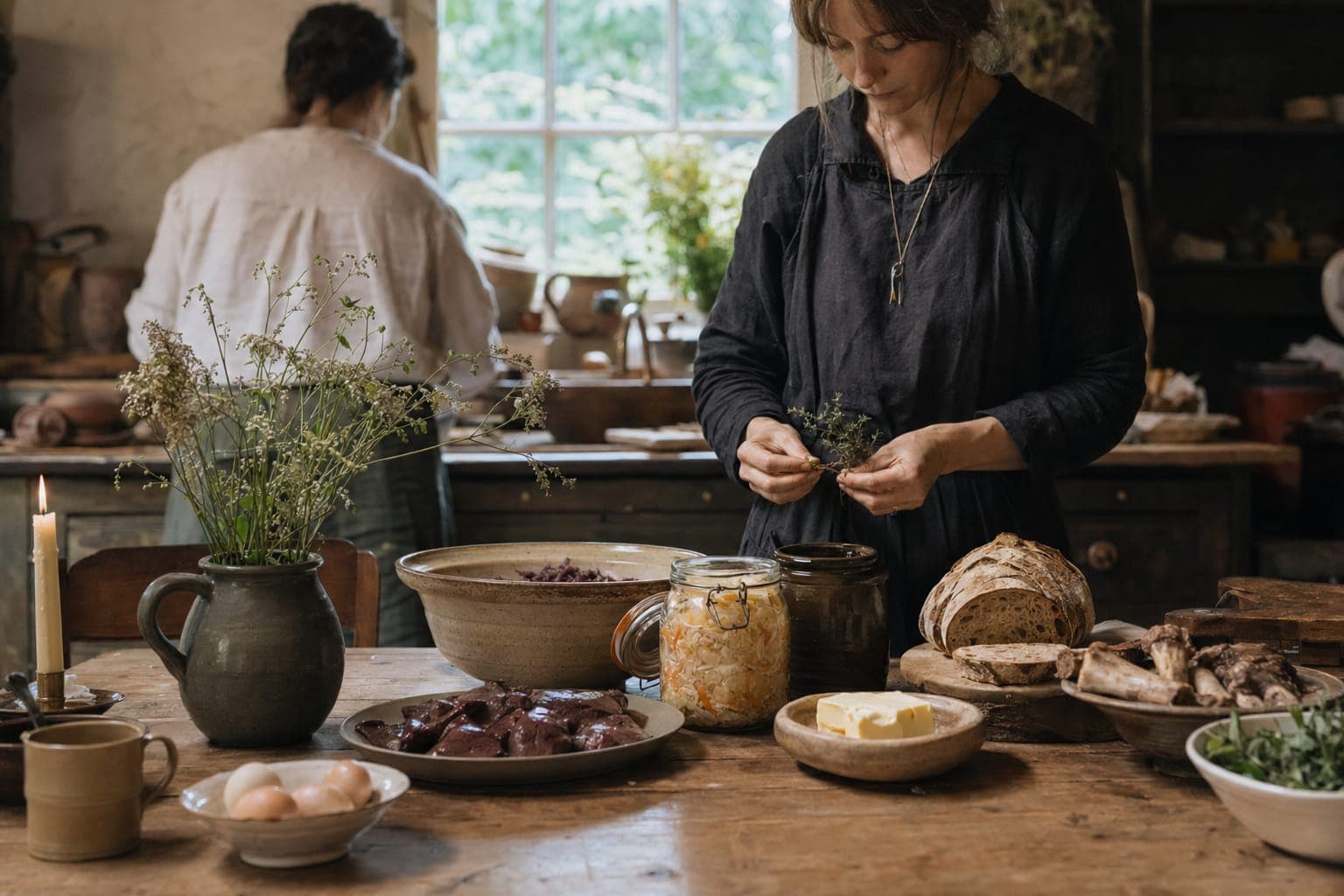
This isn't nostalgia or retro cooking. This is recognition that the modern food system made us sick, and the ancestral one knew what to do.
What ancestral British foodways actually were
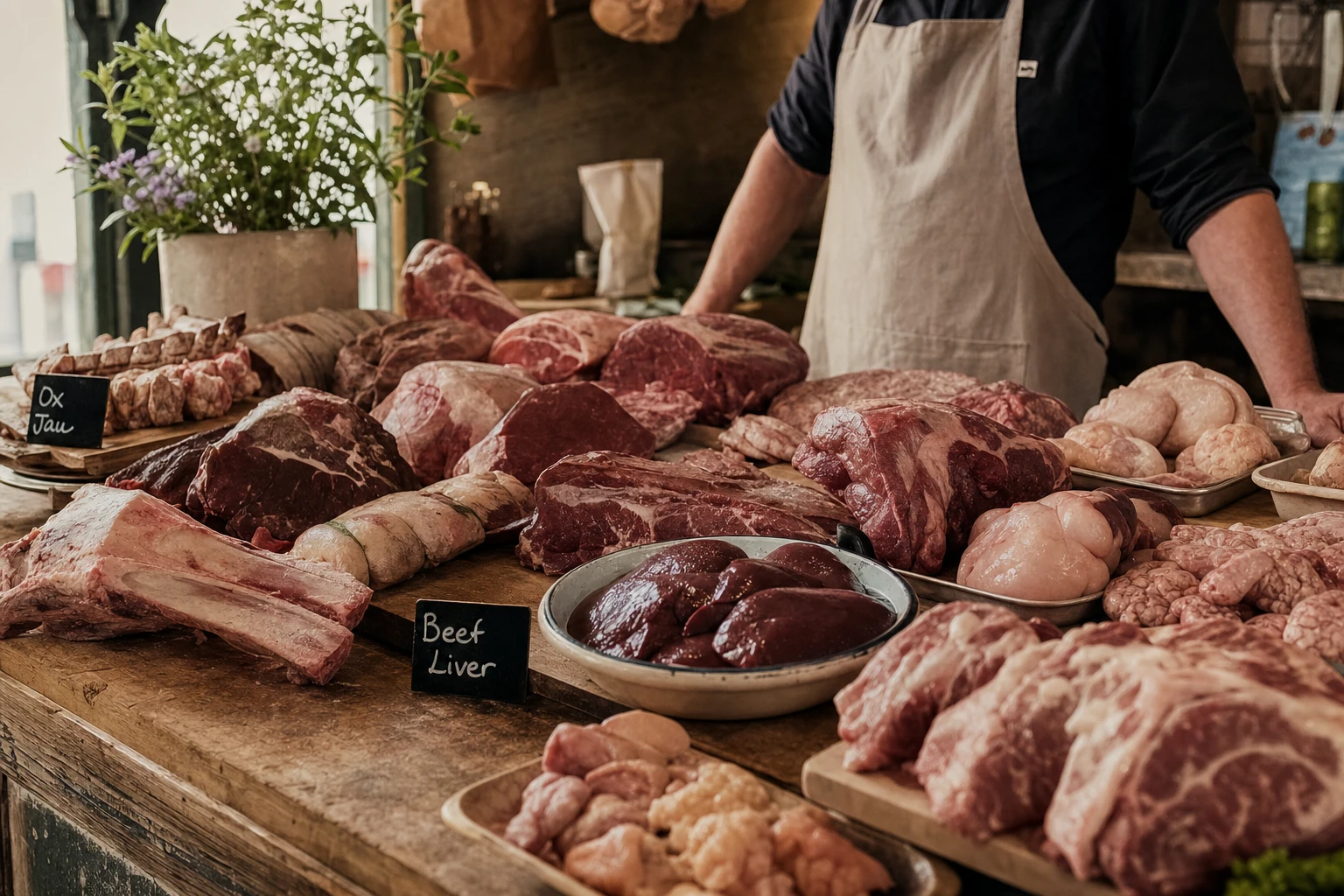
Your great-grandmothers didn't have a choice about nose-to-tail eating. Meat meant the whole animal. Liver, heart, kidneys, tongue, tripe. These weren't delicacies or special occasion foods. They were Wednesday dinner. The staple. Bones became broth, simmered overnight.2 Every part was used. Nothing was wasted because waste was literally impossible.
Vegetables were entirely seasonal. Spring meant the first greens, precious and anticipated. Summer brought abundance. Autumn was preservation time, fermenting and storing for winter. Winter meant root vegetables and preserved foods. Your great-grandmother ate asparagus in May, not all year. She ate carrots in January because that's what kept. This wasn't a limitation. It was nutritional wisdom.
Dairy was full-fat by necessity. Raw milk from known farms. Butter from cream. Cheese made by hand. Fermented foods like sauerkraut and aged cheese were part of the routine, not extras or supplements. Bread was sourdough, slow-fermented. Sugar was honey and dried fruit. Grain was eaten, certainly, but not separated into white bread and processed cereals. Whole grain porridge. Bread with visible fibre and density.
Fat was used for cooking: lard, beef dripping, butter. The fear of fat is post-war mythology. It arrived with processed seed oils. Before that, fat was understood as essential.
British foodways fed resilience for centuries. Then we forgot them. Now we're remembering.
Why the forgetting happened
Post-war rationing resolved into manufactured plenty. Supermarkets promised efficiency and abundance. Industrial agriculture promised yield over quality. Food science promised improvement. We could get everything, anytime, and shelf stability mattered more than nourishment.
Organ meats became class markers. As soon as people could afford to do so, they bought only muscle meat. Organs went to pet food or waste. Seasonal eating became irrelevant when you could buy tomatoes in December from Spain or Morocco. Fermented foods were replaced with shelf-stable ultra-processed alternatives with added sugars and seed oils.
Marketing did the rest. Butter became unhealthy (it wasn't, but the seed oil industry needed it to be). Fat became the enemy (it wasn't). Red meat became questioned (regeneratively raised meat should never have been). The result: 60 years of eating food designed for shelf stability, corporate profit margins, and marketing narrative, not nourishment.
The consequence is now obvious. Type 2 diabetes in children. Chronic disease at 50. Skin conditions, gut dysfunction, low energy, infertility, depression, autoimmune disease. The foods disappeared, and the diseases arrived on schedule.
The quiet return of organ meats and traditional cuts
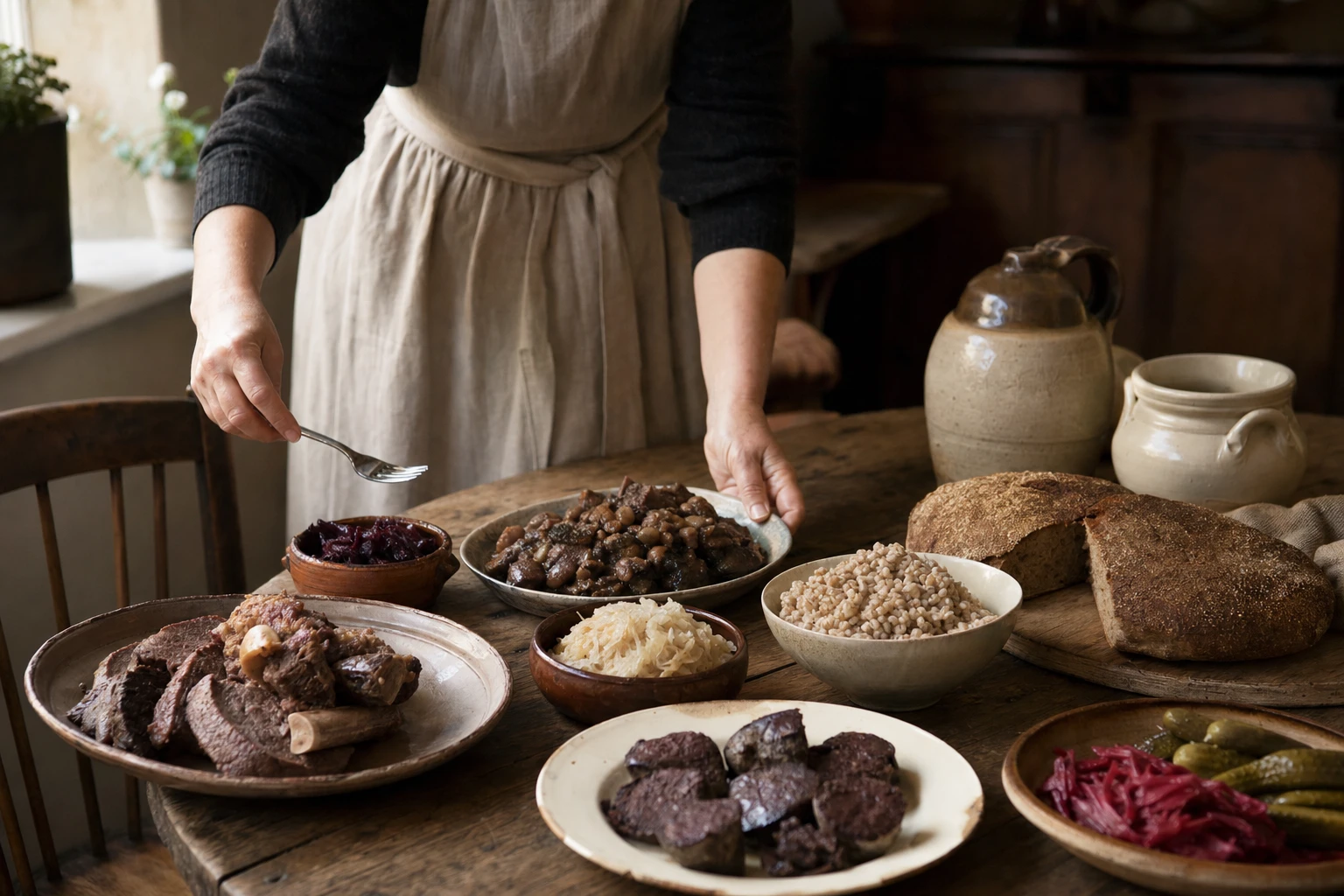
Organ meats are back. Not as a trend or novelty. Back as foundational. London restaurants that would've been unthinkable 15 years ago now serve liver, kidney, heart, and tongue regularly. Nose-to-tail cooking is no longer bohemian or alternative. It's normal amongst people paying attention.
Independent butchers are seeing demand shift. Not the supermarket packaged meat section (which is still selling commodity muscle). Independent butchers. They report that younger customers are asking for organs specifically. "I want calf's liver. Do you have lamb's heart? Beef tongue?" This wasn't happening a decade ago.
Farmers' markets have normalised what was unusual. Offal at the stall. Not exotic. Expected. You go to the market, you can buy liver, heart, kidney, tongue, bone marrow. It's become part of the infrastructure of eating well.
Why? Because people tried it. They felt the difference immediately. Energy shifted within weeks. Digestion improved. Skin cleared. Recovery from training accelerated. Sleep stabilised. The mechanism is biochemistry, not placebo. Organs are the most nutrient-dense foods available. Your body recognises it at a cellular level.
Get stories from the community, free
Two short reads a week on the farmers, the standards, and the return to real food.
By signing up you agree to receive emails from us. No spam, unsubscribe anytime.
Regenerative farming and the UK farm movement
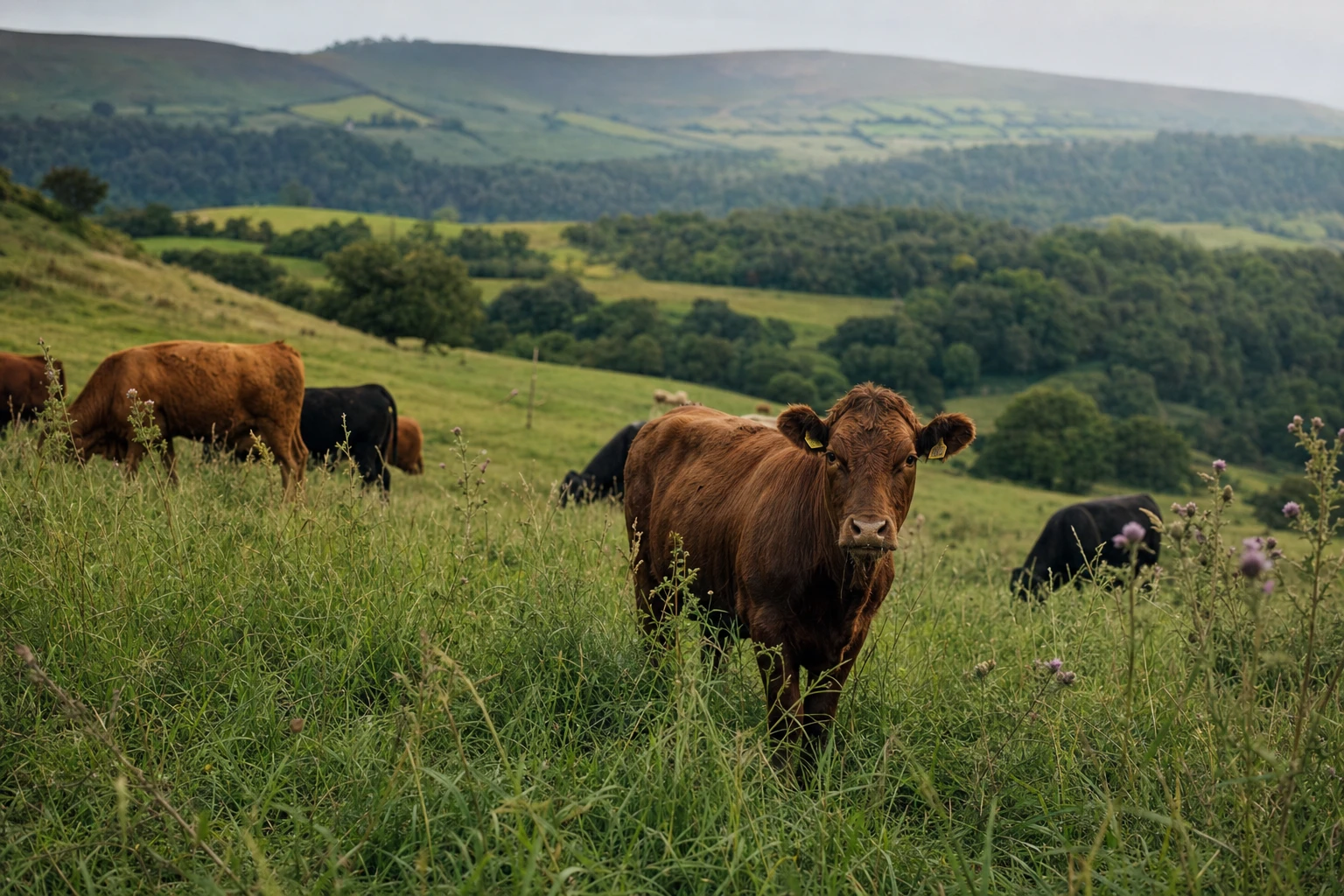
Alongside the return of organs comes the return of farming knowledge. Regenerative agriculture is not new or revolutionary. Your great-grandfather knew it. Rotational grazing. Building soil. Working with the land rather than mining it. Industrial agriculture dismantled that. Now it's being restored by young farmers who've realised that industrial approaches are destroying both the land and the food.
The Soil Association, organic certification, regenerative agriculture frameworks: these are creating infrastructure for food that actually heals land rather than depleting it. UK farms are slowly shifting. Not all. But the momentum is undeniable. Grass-fed meat from managed rotational grazing is becoming available. Raw milk from certified farms is becoming more accessible despite regulatory challenges. Heritage breed animals are being kept.
This matters because the nutrient content of animal products depends entirely on what the animal ate. Grass-fed beef has higher omega-3 ratios, higher CLA, higher vitamin E than feedlot beef. Raw milk has beneficial bacteria and enzymes that pasteurisation kills. Pasture-raised eggs have fundamentally different nutrient profiles than warehouse eggs. Ancestral foodways are being rebuilt alongside regenerative farming because they're inseparable.
Community and knowledge sharing
The movement is happening through communities, not corporations. Farmgate schemes. Box schemes. Supper clubs. Online communities discussing traditional preparation methods and recipe sharing. Knowledge that industrial food had tried to erase is being reconstructed, person by person, meal by meal.
You find a farmer. Buy directly. Learn how they raise animals. Connect with others doing the same. It becomes normal. Your children grow up seeing that this is how food works. Community rebuilds. Knowledge rebuilds. Culture rebuilds around actual nourishment.
This is the anti-industrial version of food. It requires effort. You can't buy organs at the supermarket checkout. You have to seek them. You have to learn to cook them. That friction is the point. It keeps the movement within communities of people who actually care, rather than becoming commodified and sterilised by corporate marketing.
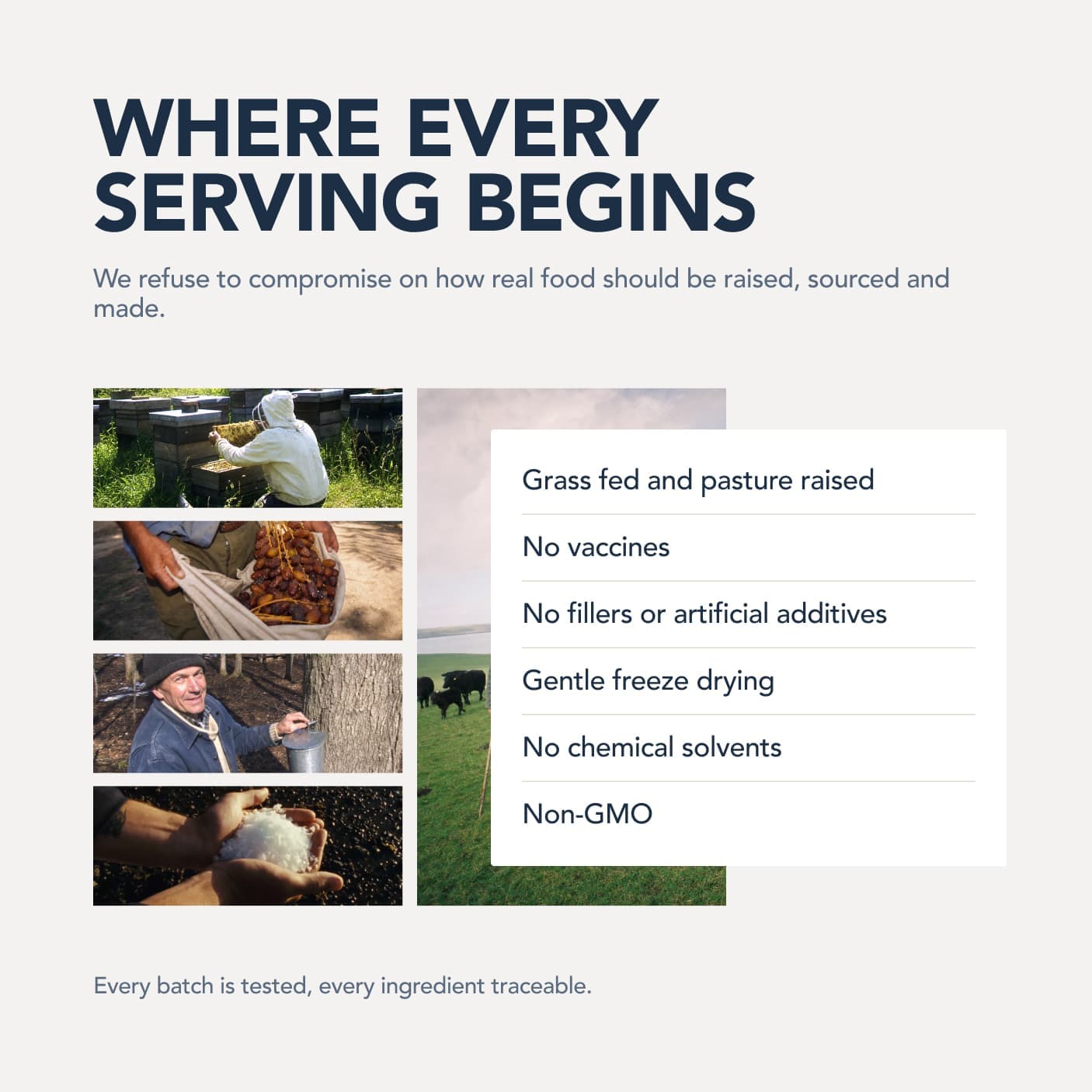
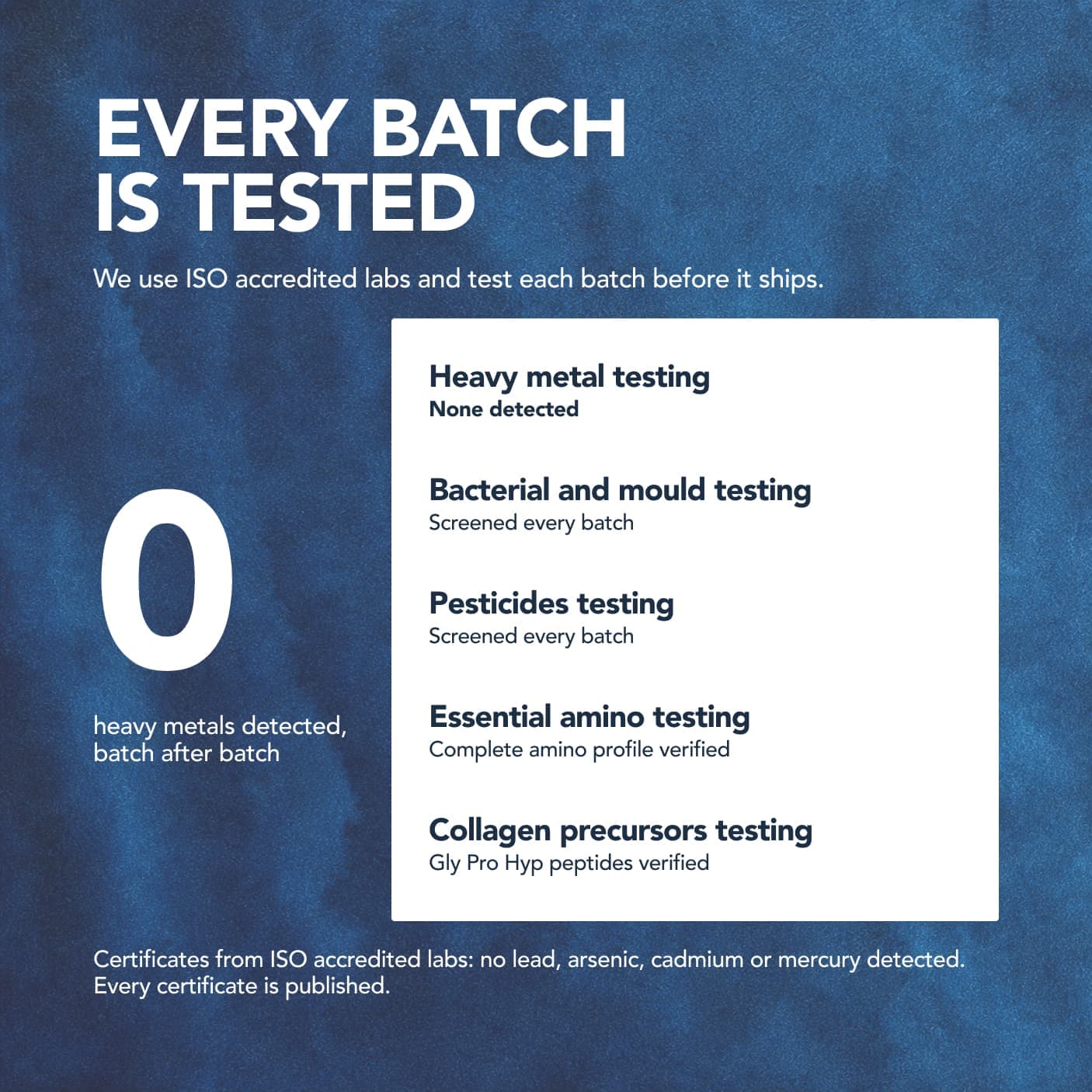
1 of 9
Daily blend
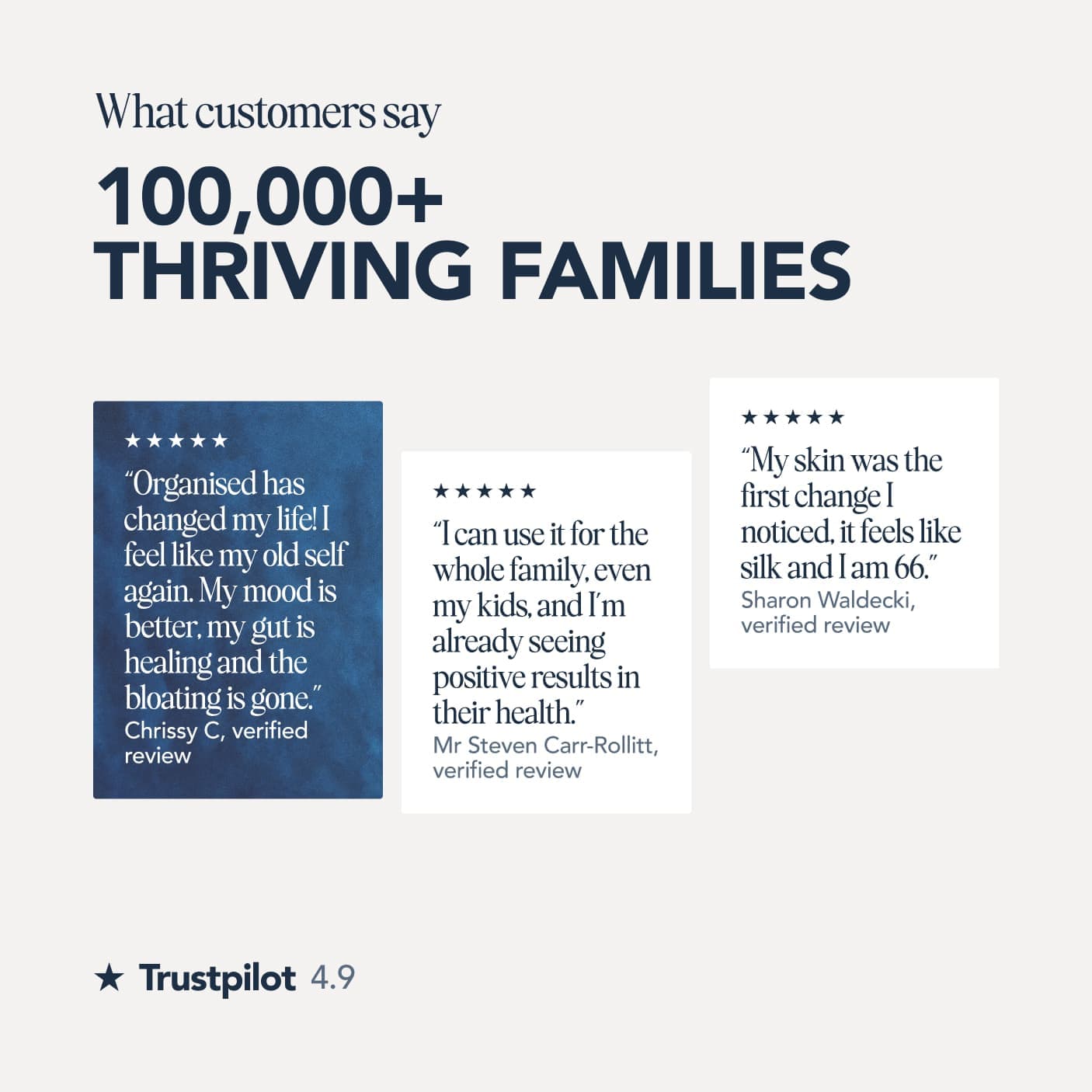
100,000+ thriving families4.9 on Trustpilot
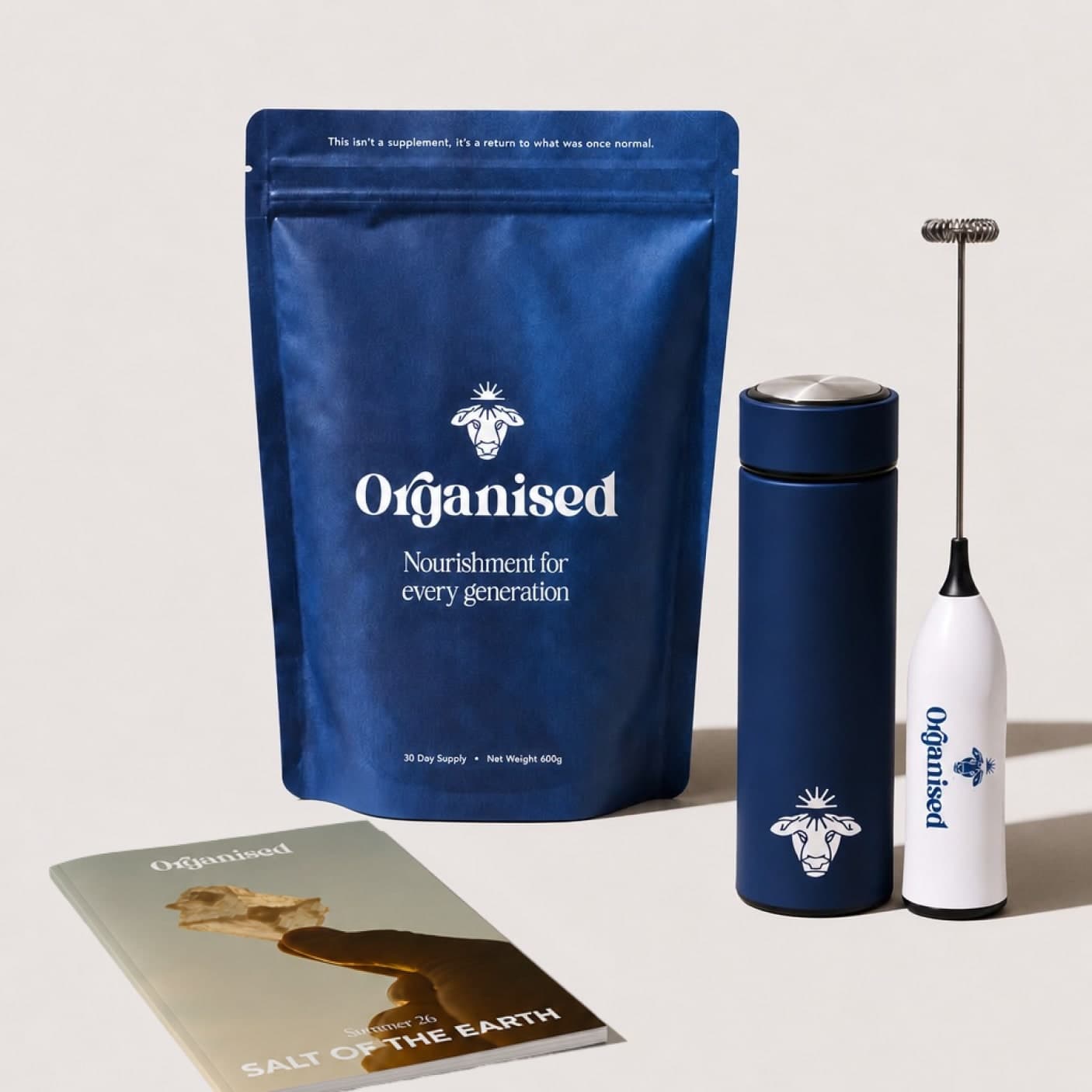
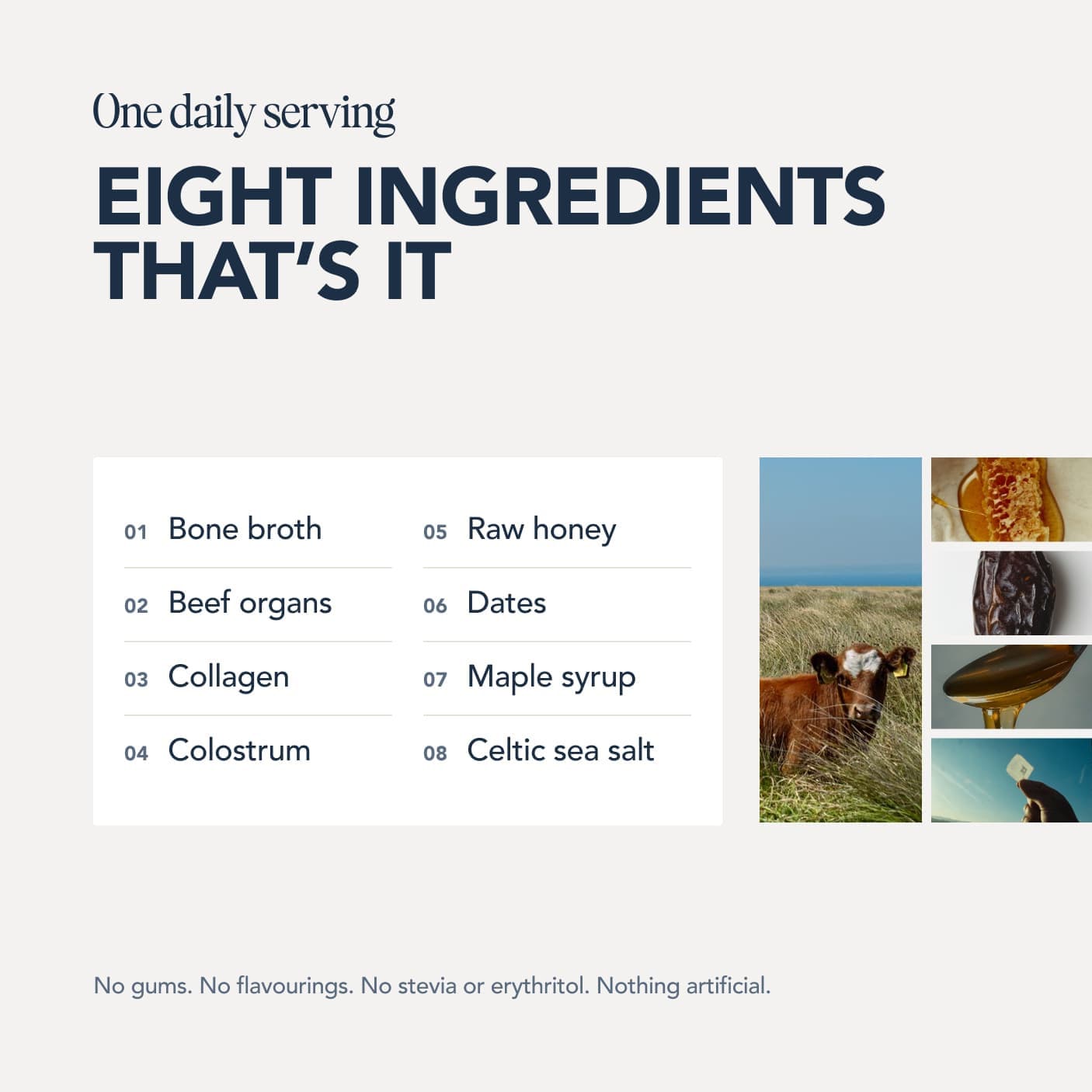
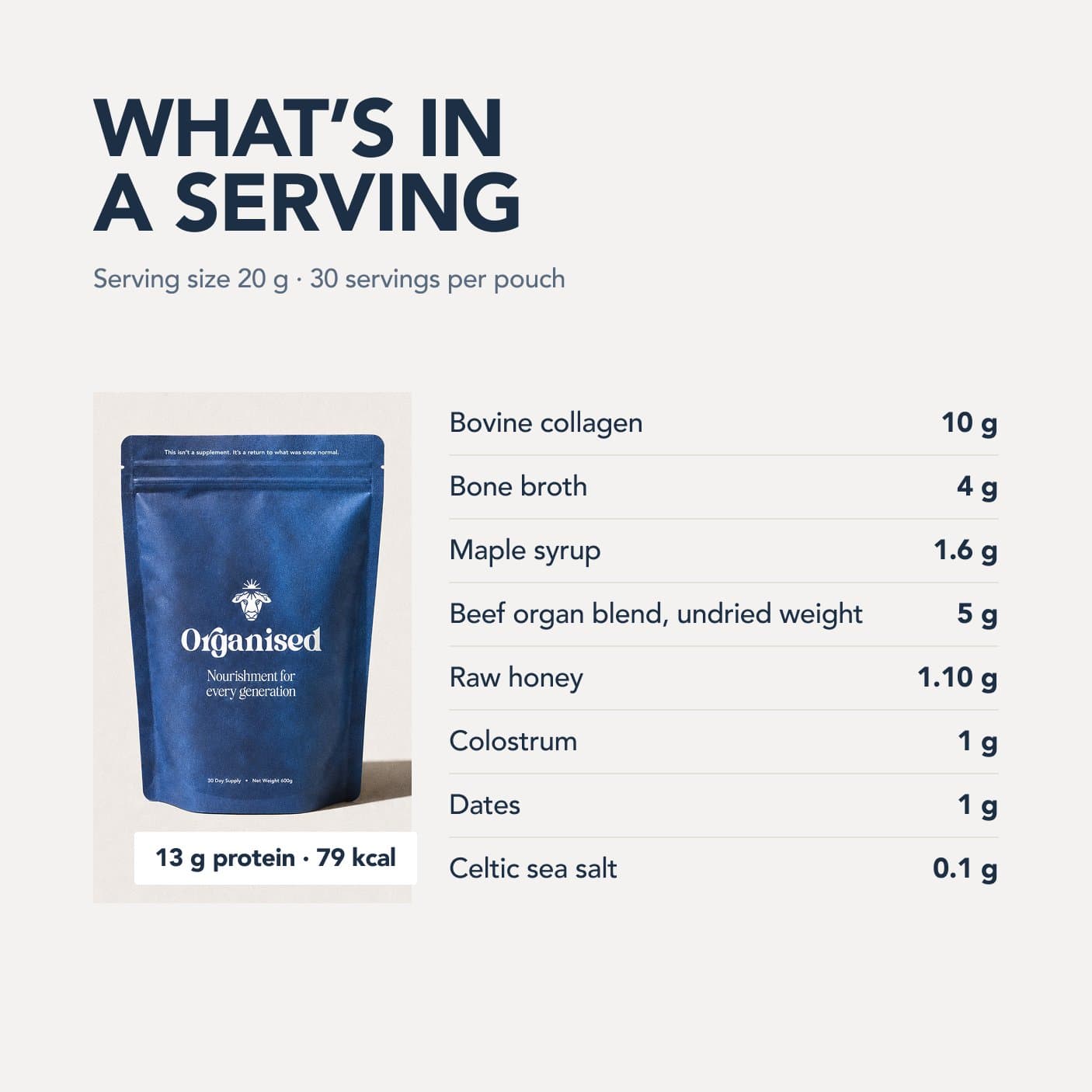
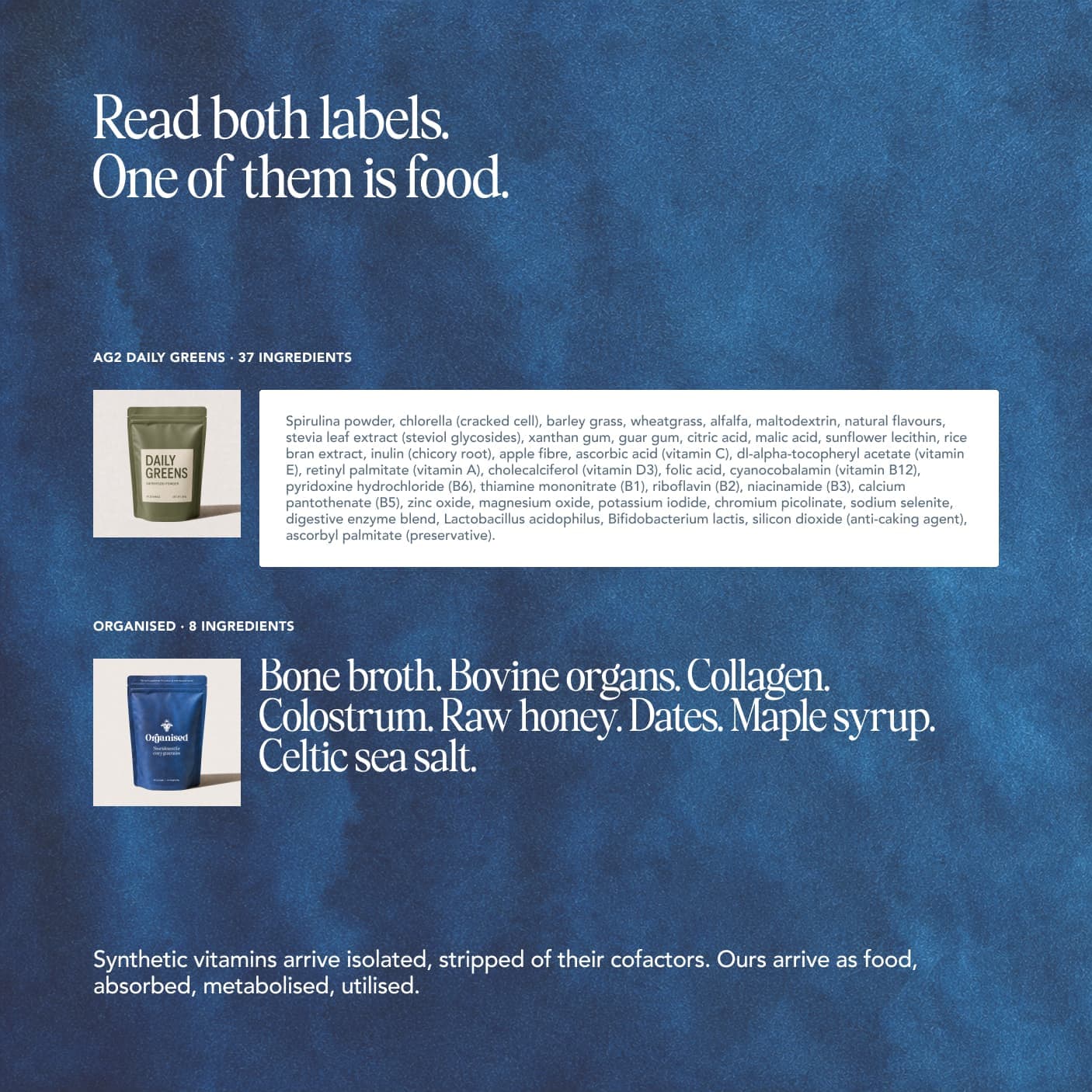
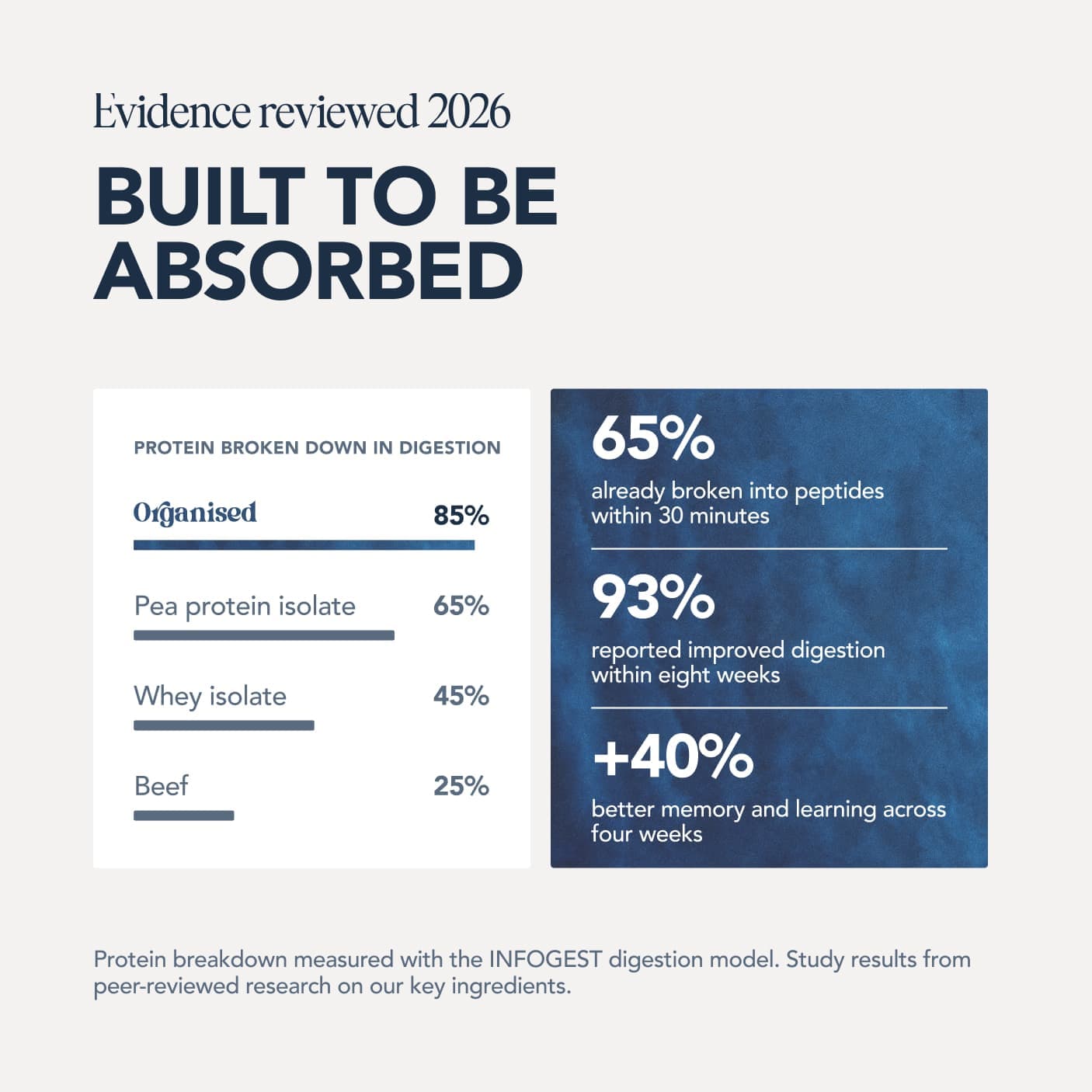
Eight real ingredients built around grass-fed beef organs, collagen and colostrum. Nothing synthetic added.
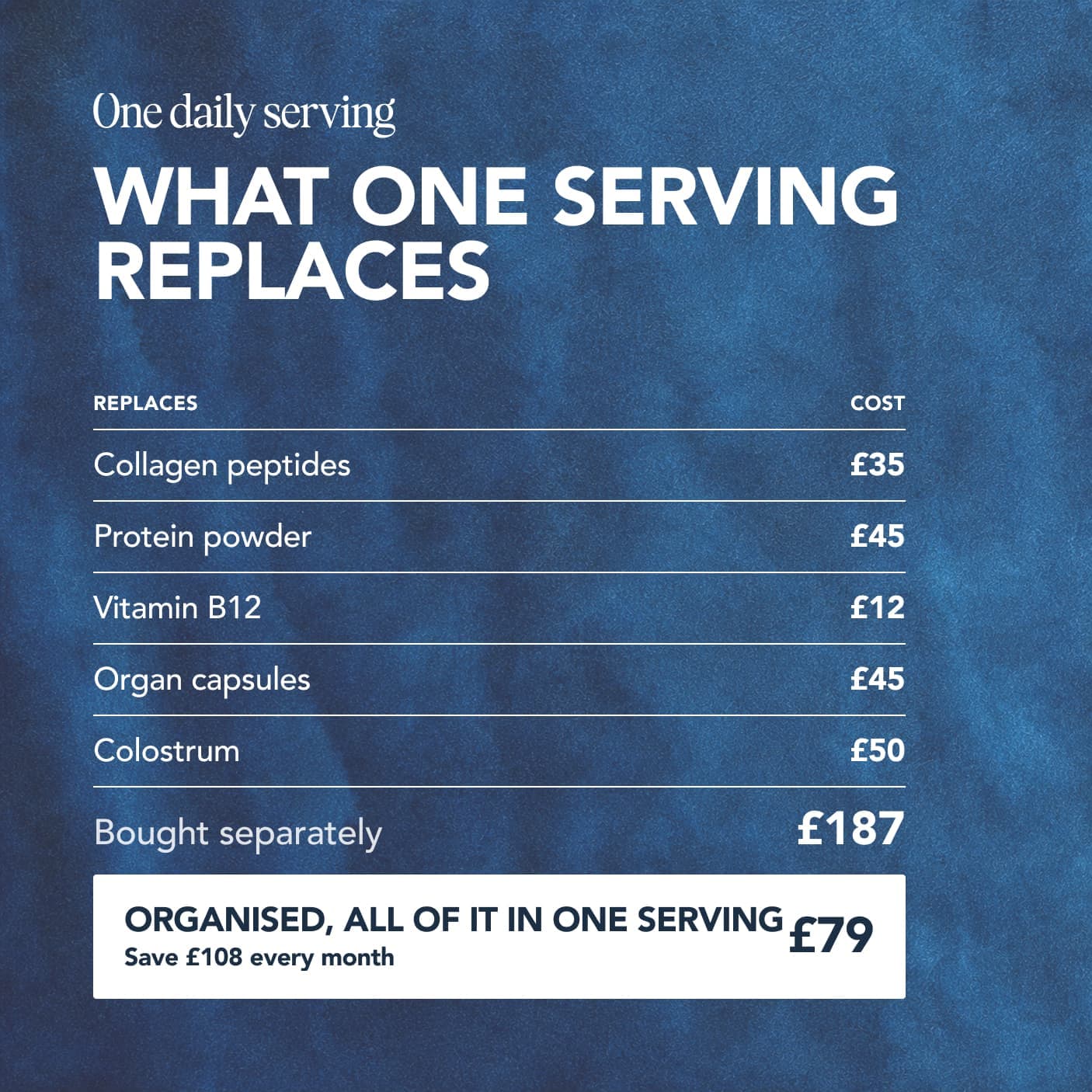
Free with your first order, worth £38. Plus £10 off the pouch with a subscription.


Free UK shipping · Made in England · 100 day money back guarantee on your first pouch · Skip, pause or cancel anytime
What's actually driving this shift
Health. People are sick. The modern food system made them sick. Doctors and nutritionists increasingly recommend whole food. NHS capacity is strained. People realise: I have to take responsibility. Real food works. Ancestral approaches work. Let's rebuild them.
Access. You can now find raw milk. You can now find organs. You can now find farmers growing regeneratively. The infrastructure that was destroyed is slowly being rebuilt by people who refuse to accept industrial food as inevitable.
Cultural memory. Your grandmother knew something. Fermented foods, organs, seasonal eating. Not superstition. Nutritional wisdom accumulated over centuries. Gen Z is recovering that wisdom from grandmothers, from books, from lived experiment. What worked 80 years ago works now.
Visibility. The problems are visible now. Obesity rates. Chronic disease. Infertility. Autoimmunity.1 They're undeniable. And the food system responsible for them is undeniable too.
Ancestral eating in the UK isn't retro. It's the future. It's how we rebuild resilience as a culture.
The bottom line
The UK is quietly remembering its foodways. Organs. Fermented foods. Seasonal eating. Regenerative farming. Community. These aren't trends or fashionable affectations. They're the restoration of something that worked for centuries and that modern life tried to erase.
The shift is underway. It's visible if you know where to look. Farmers' markets. Independent butchers. Supper clubs. Online communities discussing traditional cooking. It's quiet, but it's real. And it's working. People are getting well. Farms are healing. Culture is rebuilding around actual food.
References
Every source below was checked on 27 August 2026. Each PubMed, PMC and DOI identifier was resolved against NCBI or Crossref, and what it opens is printed under the citation, so you can see the link goes where the citation says without leaving the page. Where a citation and its identifier disagreed, the citation was corrected to the record or the reference was deleted along with the sentence marker that pointed at it, and where the resolved paper turned out not to support the sentence, the sentence was cut back to what it does support. Borrowed authority is worse than none, because it looks like rigour.
- Public Health England / Office for Health Improvement & Disparities. Health profile for England. gov.uk/health-profile-for-england.
- Wang W, et al. Glycine metabolism in animals and humans: implications for nutrition and health. Amino Acids. 2013. PMID 23615880.Checked 27 August 2026: PMID 23615880 opens Wang W, Wu Z, Dai Z et al, Glycine metabolism in animals and humans: implications for nutrition and health. Amino Acids 2013;45(3):463-77. PubMed indexes it as: Review.
Who wrote and reviewed this guide
Niall Kiddle
Author · Founder, Organised
Niall is the founder of Organised. He started the company in 2024 after fixing his own health the slow way: in 2022 he swapped a cupboard of synthetic supplements for real food, raw milk, organ meats, bone broth and honey, and felt the difference within months.
Areas of expertise: Ancestral nutrition, Organ meats, Whole-food supplementation, Gut health, Regenerative sourcing
Read Niall's full profile
Pedro Rodrigues
Reviewer · Agronomist (farming and sourcing only)
Pedro is the agronomist Organised works with on farming and sourcing. His job on the guides is to keep the science honest: he reviews what we publish about soil health, regenerative agriculture, grazing and the way food is actually produced.
Areas of expertise: Regenerative agriculture, Agronomy, Soil health, Grass-fed farming, Food sourcing
Reviewed this guide on
Read Pedro's full profileMore on movement
View all- The Return to Real Food: Why Millions Are Rejecting Ultra-Processed Diets
- Against Ultra-Processed: A Manifesto for Real Food
- Find a Farm: How to Source Real Food Near You
- Food Sovereignty: Taking Back Control of What You Eat
- Processed Food Companies Don't Want You to Know This
- Social Media and Nutrition: Navigating the Noise
- The Anti-UPF Movement: What's Driving the Backlash Against Processed Food
- The Problem with 'Clean Label' Marketing
- The Raw Milk Renaissance: Our Documentary
- What 'Nourishment for Every Generation' Really Means to Us
- Why 'Eat Less, Move More' Failed a Generation
- Why More Doctors Are Recommending Whole Food Over Supplements
Browse the guides library
All guidesKeep reading
Culture & community
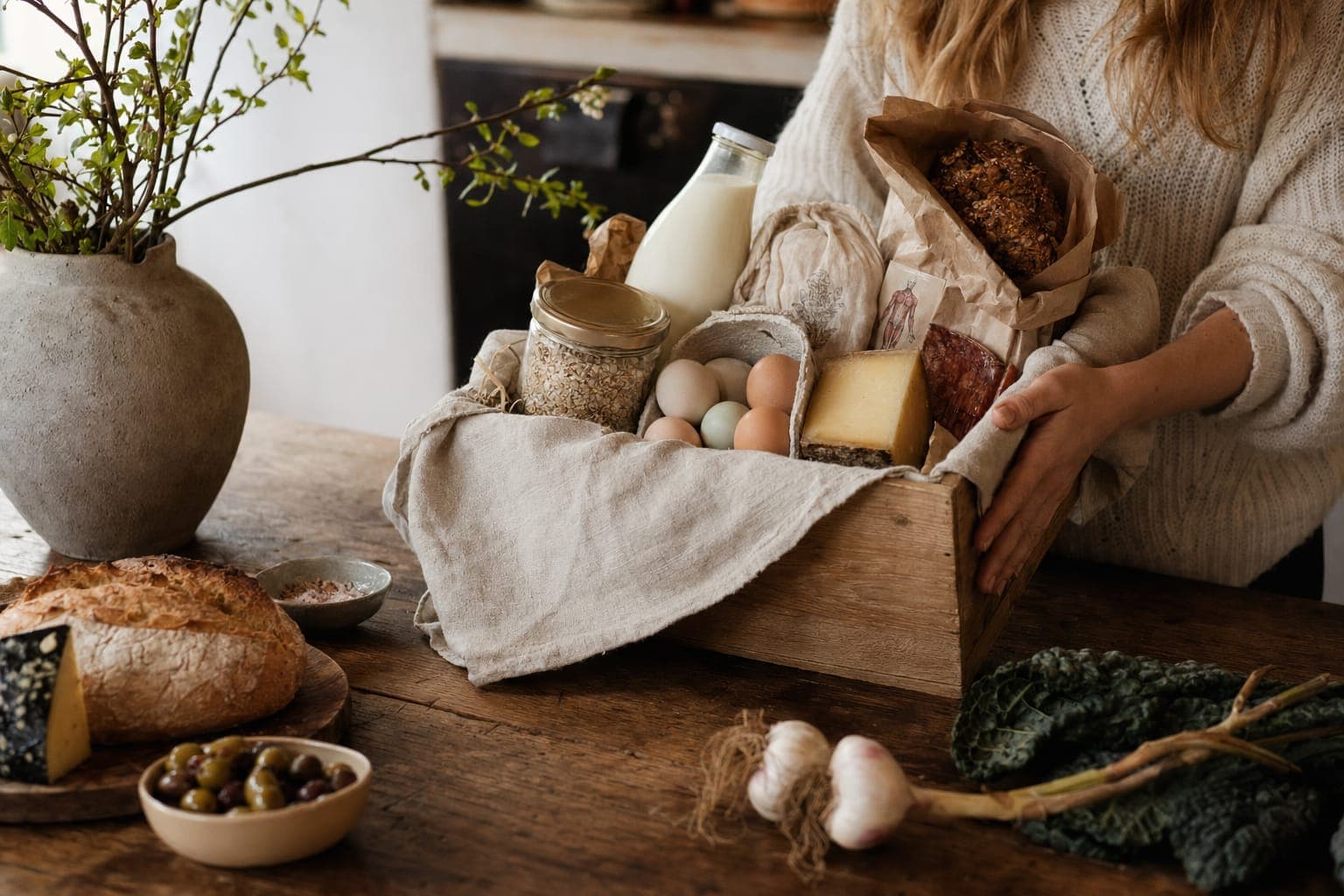
The Best Gift for Someone Who Cares About Their Health
Buying for someone health-conscious? Skip the expensive supplements. Real nourishment comes from whole food. Here's what actually works.
Culture & community
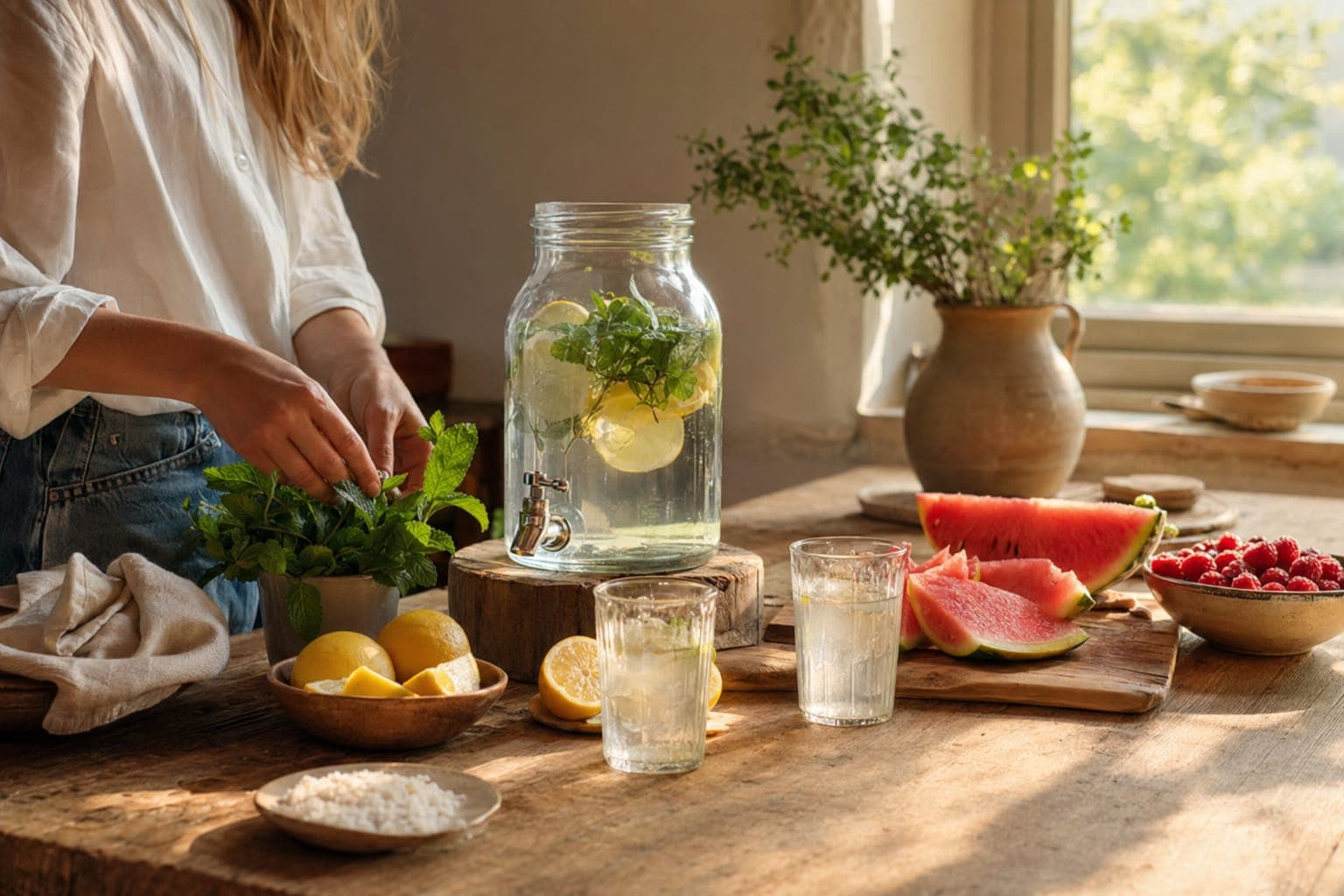
Summer Nutrition: Staying Hydrated and Energised
Stay hydrated and energised through summer with smart nutrition. Learn about electrolyte balance, Celtic sea salt, and seasonal foods that keep you going.

Culture & community
Why 'Eat Less, Move More' Failed a Generation
The calorie-counting doctrine didn't fail you. It failed the entire generation that followed it. Here's why, and what actually works.
Real food, made effortless
Shop the blendA few ways to use it
All recipes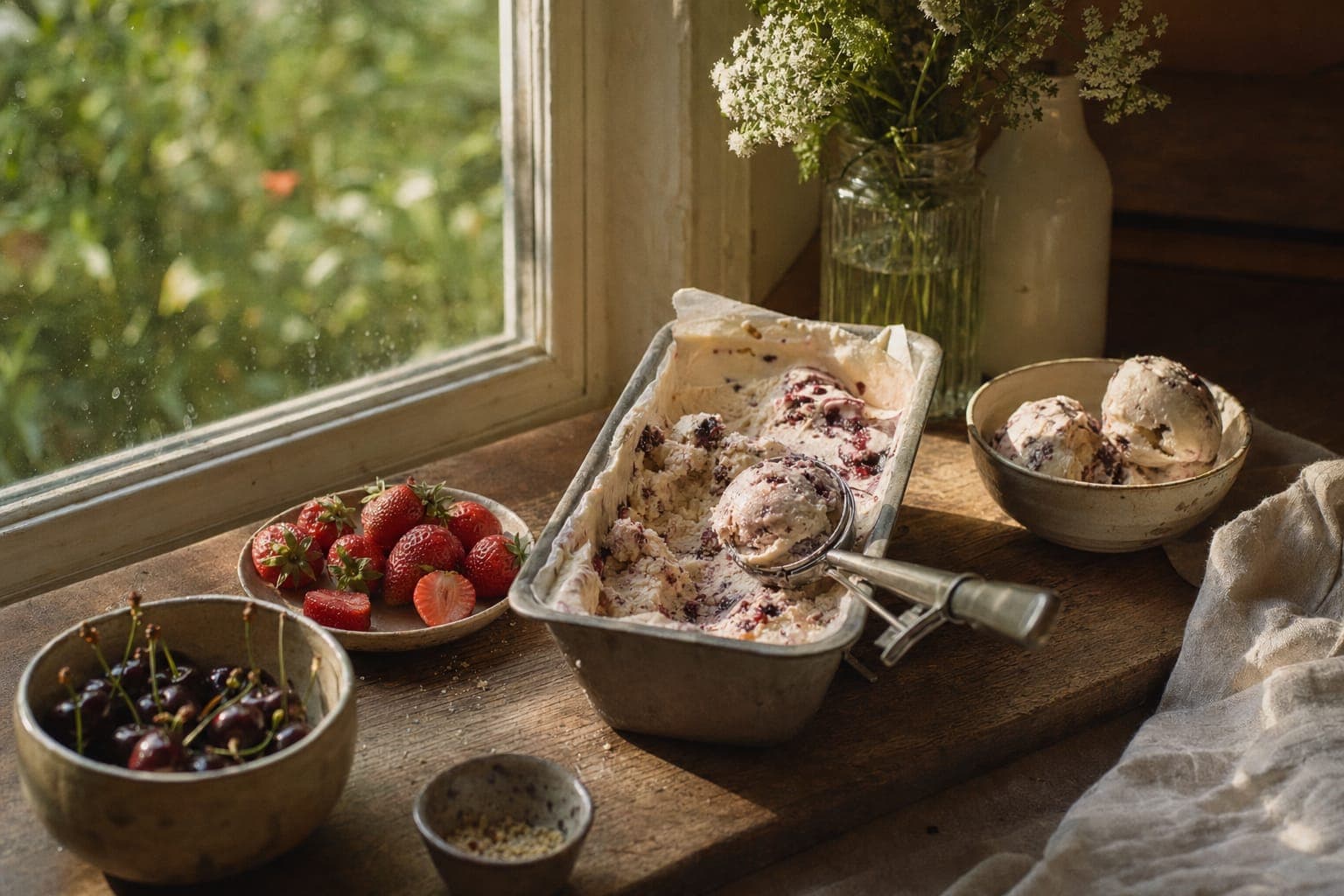
Raw Milk Ice Cream with Organised
Make raw milk ice cream at home with Organised for a seasonal, nutrient-dense treat. Three simple flavours to try whenever the craving strikes.
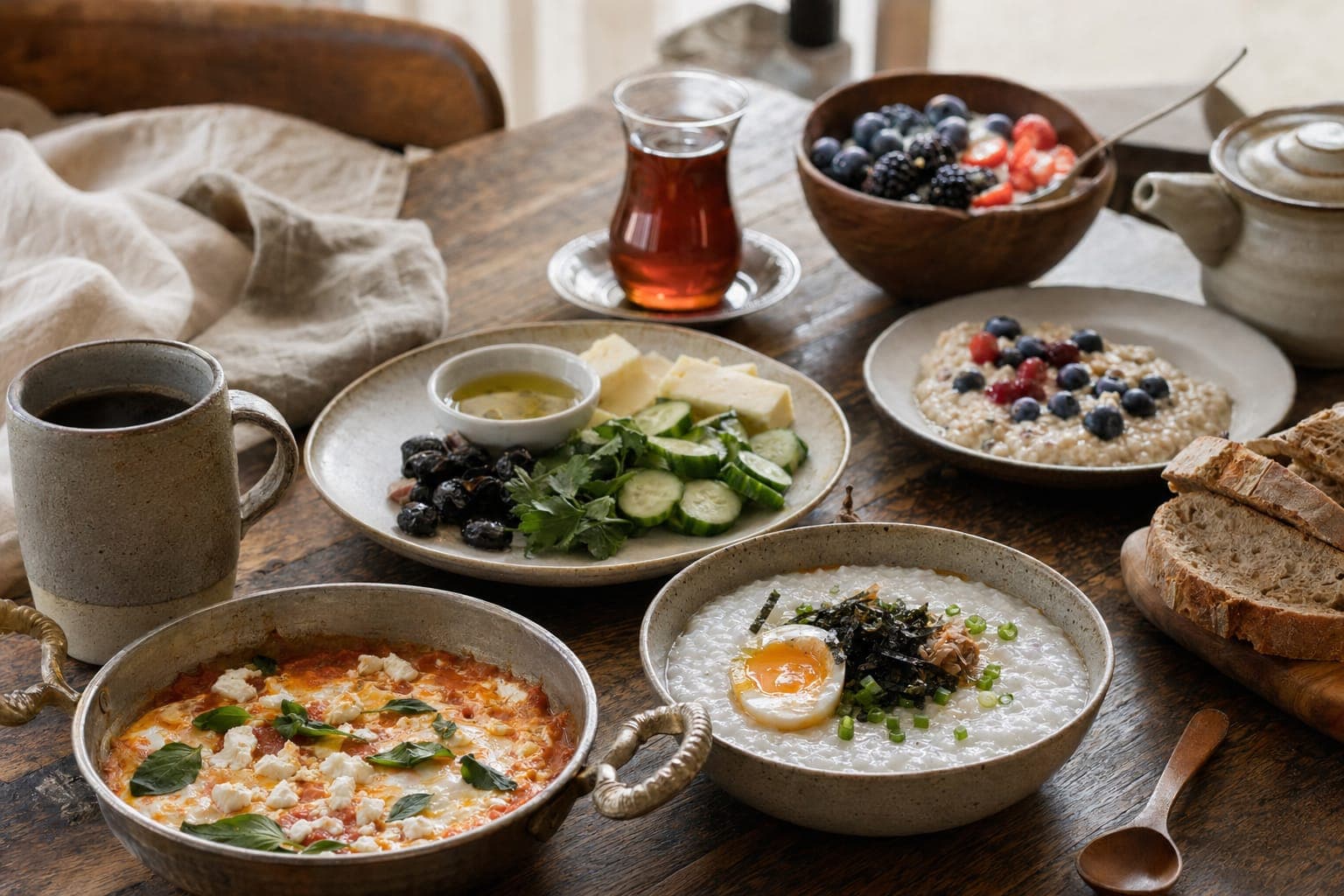
Ancestral Breakfast Ideas from Around the World
Traditional breakfast recipes from cultures that got nutrition right. Japanese, Turkish, Scottish, and more. Whole-food breakfast inspiration.
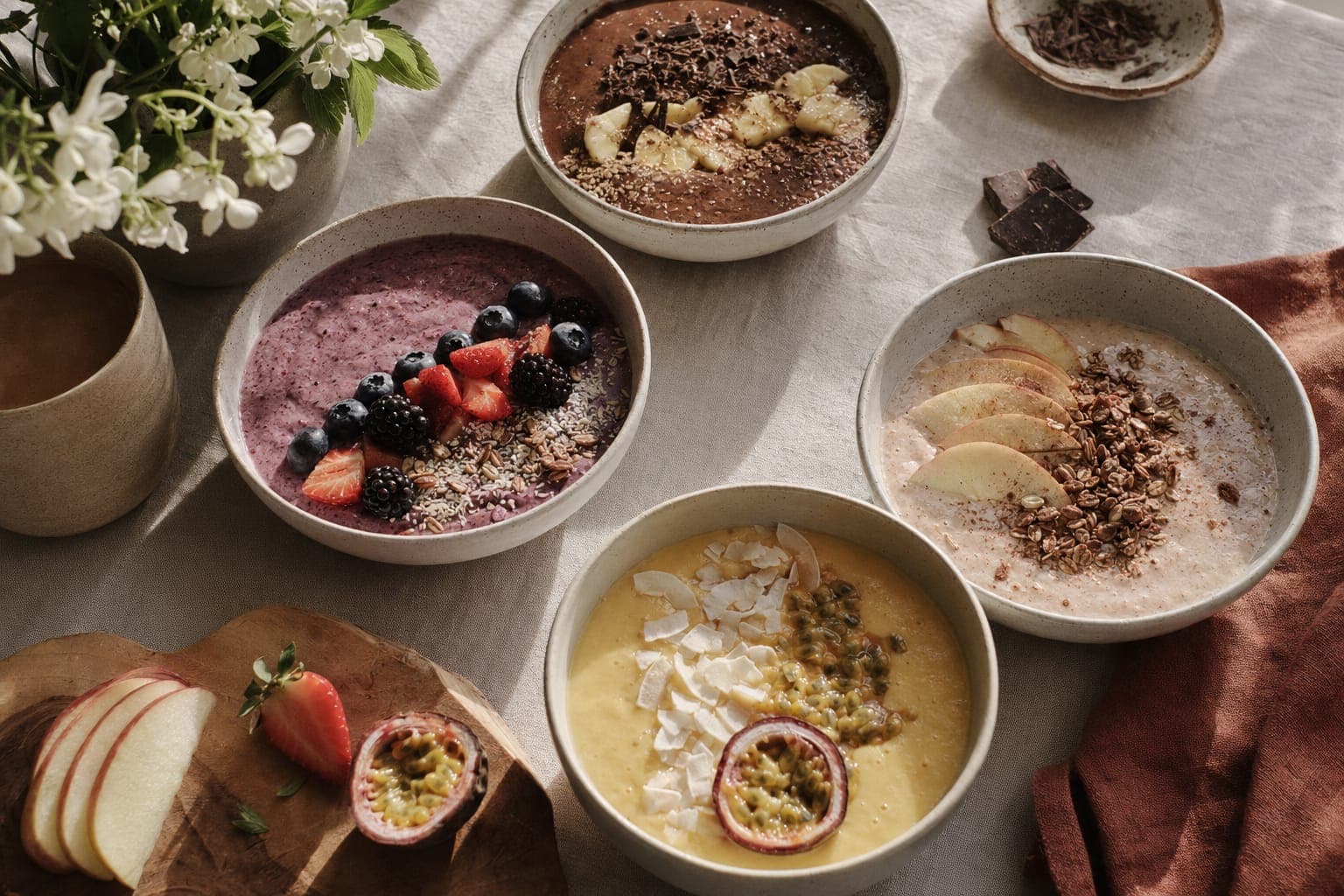
Organised Smoothie Bowl Recipes for Every Season
Four seasonal smoothie bowl recipes using Organised. Berry in summer, apple-cinnamon in autumn, tropical in spring, warming chocolate in winter.


 Join over 100,000+ members
Build a better food system with us
The Organised community is thousands of people choosing real food and backing the farmers who grow it, all of us trying to leave the world a little better than we found it. If that is what you care about too, you belong here.