Summer Nutrition: Staying Hydrated and Energised
Summer energy crashes aren't inevitable. That mid-afternoon slump isn't just the heat. It's what you're doing with your hydration and electrolytes. And it's fixable.
By Niall Kiddle, Founder, Organised

Reviewed by Pedro Rodrigues, Agronomist (farming and sourcing only) ·
5 min read · Published · Updated · 2 cited sources
Makers of the Organised Daily blend, a grass-fed beef organ supplement from regenerative UK farms
The problem starts with the assumption that hot weather requires more water. You drink more water. Your blood becomes diluted. Your electrolytes become unbalanced. Your performance tanks. It's counterintuitive but absolutely real.
Hydration is more complex than water
Water is essential. But water alone, especially in summer heat, is incomplete. Your body requires water, minerals, and fuel working together. Drink pure water without electrolytes and you're not hydrating optimally. You're diluting your system.
Proper hydration carries minerals into your cells. It manages blood volume. It allows your nervous system to function correctly. Water without minerals becomes something your body has to work around, not with.
This becomes obvious if you watch distance athletes. They don't drink plain water during endurance events. They drink electrolyte solutions. Your summer, if you're active at all, is similar on a smaller scale.
Hydration without electrolytes is incomplete. Electrolytes without water are equally incomplete. They work as a unit.
Electrolytes: the missing piece
Electrolytes are minerals that conduct electricity in your body. Sodium, potassium, magnesium, calcium. They regulate fluid balance, nerve function, and muscle contraction.1 In summer heat, when you're sweating regularly, they're not optional.
Sweat depletes sodium.2 This is why salt is essential in summer. A pinch of quality salt in your water or food matters more in summer than it does in winter. You're losing minerals that need to be replaced.
Potassium maintains the electrical gradient inside your cells. Magnesium relaxes muscles and supports energy production. Calcium works with sodium for fluid balance.
The modern problem is that we've been told salt is dangerous. In excess, it is. But avoiding salt entirely in summer is the opposite problem. Your body needs it, particularly when you're active or sweating.
Salt in summer isn't excess. It's replacement. Your sweat has salt in it. That salt has to come from somewhere.
Celtic sea salt and mineral balance
Not all salt is equal. Refined table salt is sodium chloride and little else. Celtic sea salt contains the full spectrum of minerals that your body actually needs. Trace magnesium. Potassium. Calcium. Iodine.
A pinch of Celtic sea salt in your water, on your food, or in a summer drink replaces what you've lost through sweat and supports electrolyte balance. This is why the old traditions of salt and vinegar summer drinks worked. They weren't superstition. They were understanding of hydration.
Quality matters. Look for unrefined Celtic sea salt. Grey colour means minerals are present. It should smell like the ocean.
Summer recipes for sustained energy
Instead of forcing water, make hydration interesting. Make it electrolyte-balanced. Make it taste like summer.
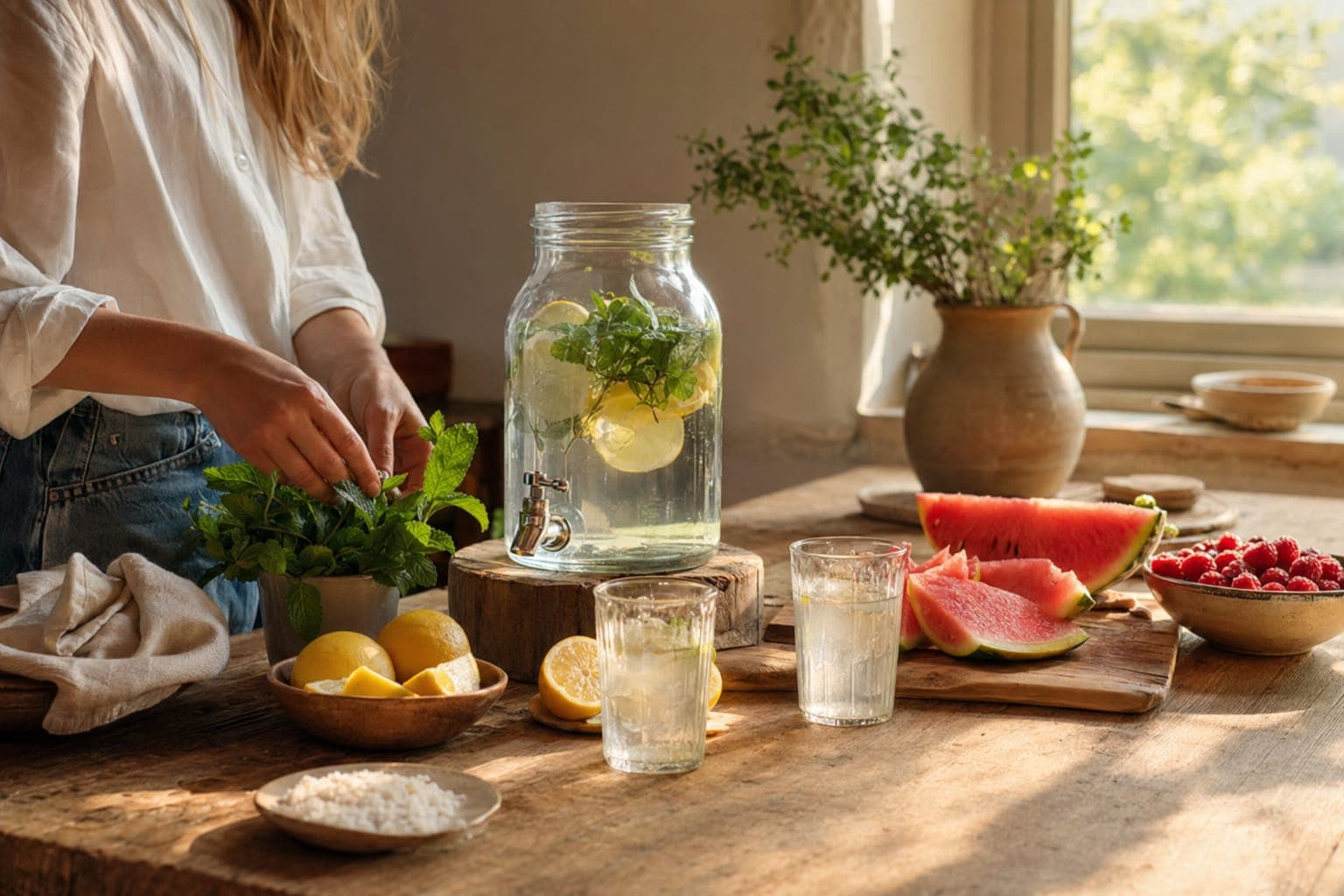
A simple summer drink: water with a squeeze of fresh lemon juice, a pinch of Celtic sea salt, and a small amount of honey. The lemon brings potassium and vitamin C. The salt replaces minerals. The honey provides glucose for sustained energy. This is electrolyte replacement, naturally.
Bone broth in summer sounds odd, but it works. Chilled bone broth contains collagen and minerals. A small cup alongside water keeps electrolytes balanced while supporting joint health and gut integrity.
Raw milk, if you can access it, is summer perfection. It contains calcium, potassium, and natural lactose for energy. It hydrates and fuels simultaneously. Unpasteurised varieties preserve the enzymes that help with digestion.
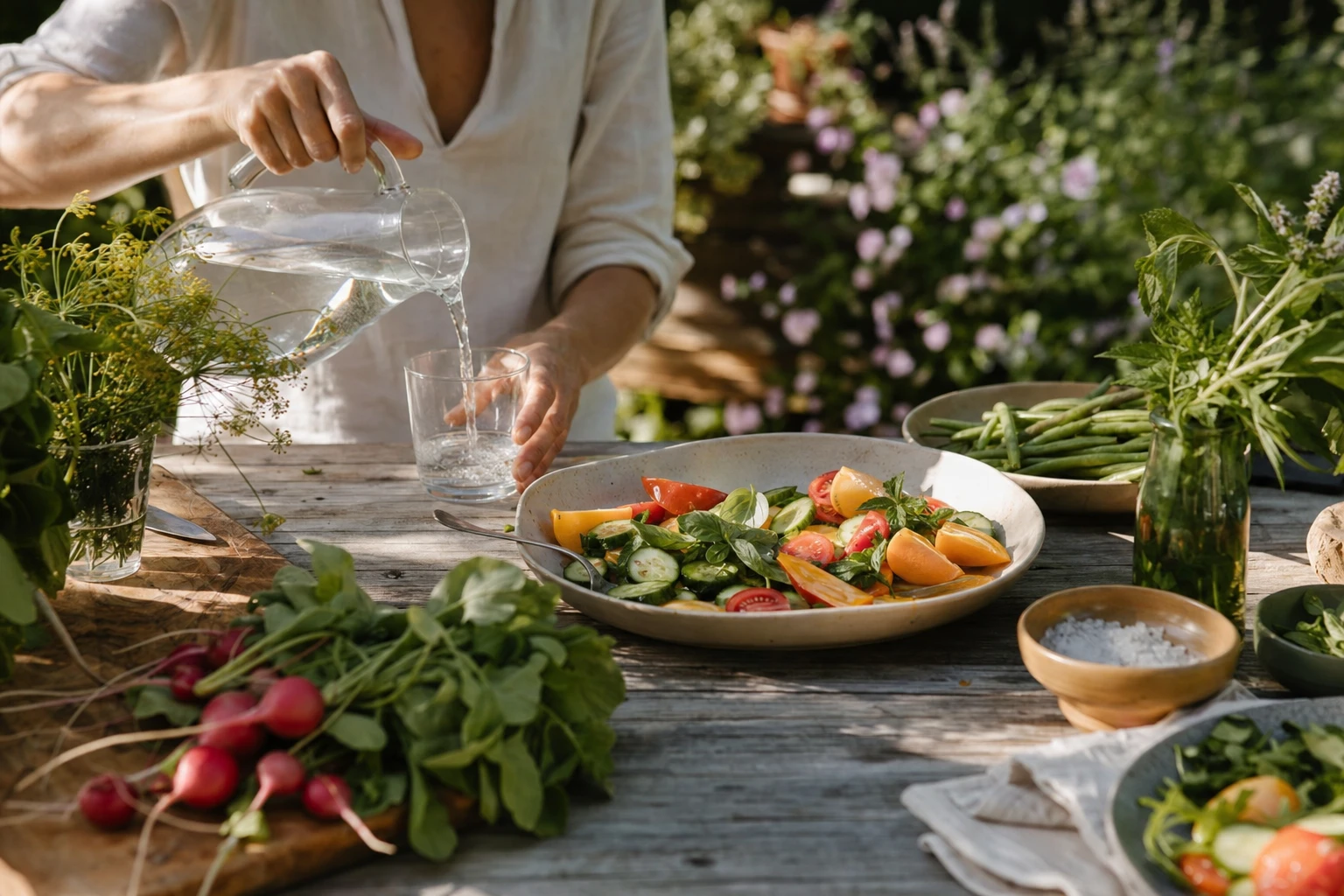
Fresh vegetables with quality salt replace minerals directly. Summer tomatoes with sea salt. Cucumber with salt and lime. Watermelon with a pinch of salt. These aren't fancy. They're biology.
Get stories from the community, free
Two short reads a week on the farmers, the standards, and the return to real food.
By signing up you agree to receive emails from us. No spam, unsubscribe anytime.
What to eat when it's hot
Hot weather changes your appetite for good reason. You naturally want lighter foods. Respect that but stay nourished.
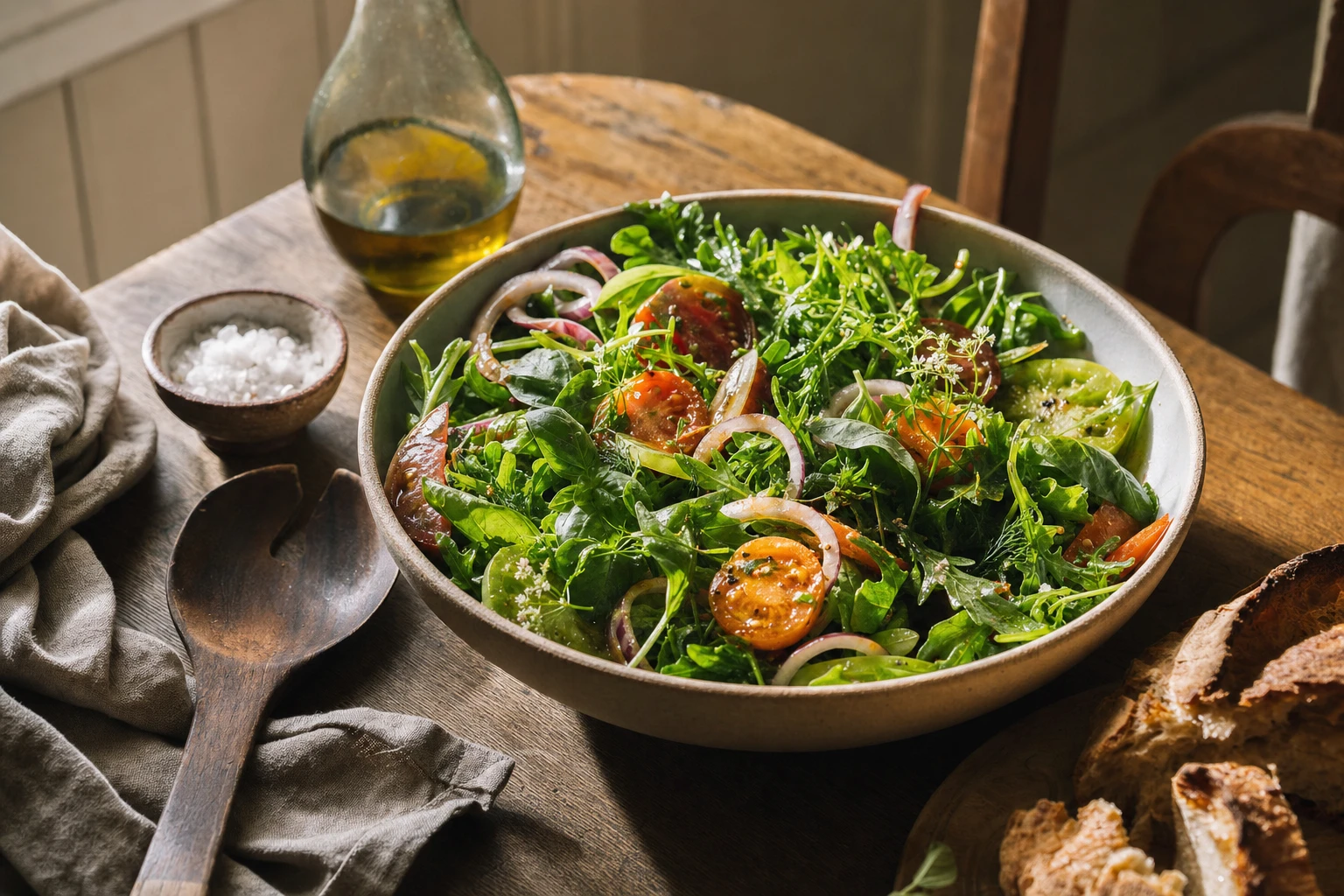
Light doesn't mean empty. Summer salads with quality fats work. Lettuce, tomato, cucumber, herbs, and olive oil with salt. Fatty fish like sardines or mackerel bring omega-3s and minerals. Cold seafood is perfect summer protein.
Cold soups, particularly those based on bone broth or full-fat yoghurt, keep you cool while maintaining nutrition. Gazpacho, if made with real vegetables and quality oil, is electrolyte replacement disguised as soup.
Fruit in summer makes sense. Not as a meal replacement, but as energy. Watermelon, berries, stone fruits. The natural sugars refuel quickly. The water content hydrates. The minerals support balance.
Summer food should be light enough to want to eat but substantial enough to sustain energy. That balance is about nutrient density, not portion size.
The bottom line
Summer energy crashes happen because we underestimate the complexity of hydration. You're not failing. You're working without the right mineral balance.
Salt isn't the enemy in summer. Water alone is incomplete. Electrolytes matter. Make them part of your summer strategy intentionally, and that afternoon slump becomes avoidable.
You'll have energy when the day is hot, and you'll have managed your body with respect for how it actually works.

1 of 9
Daily blend
100,000+ thriving families4.9 on Trustpilot
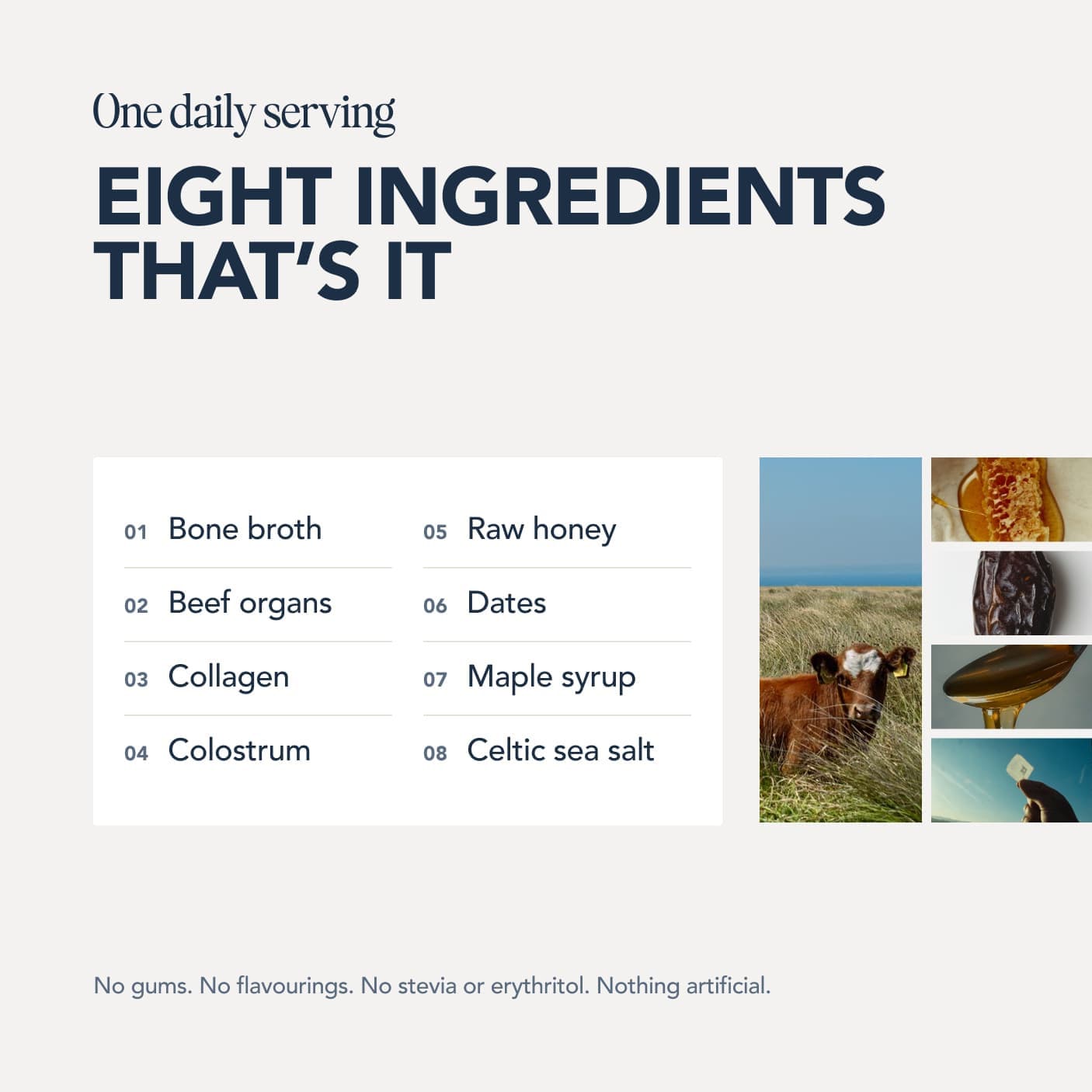
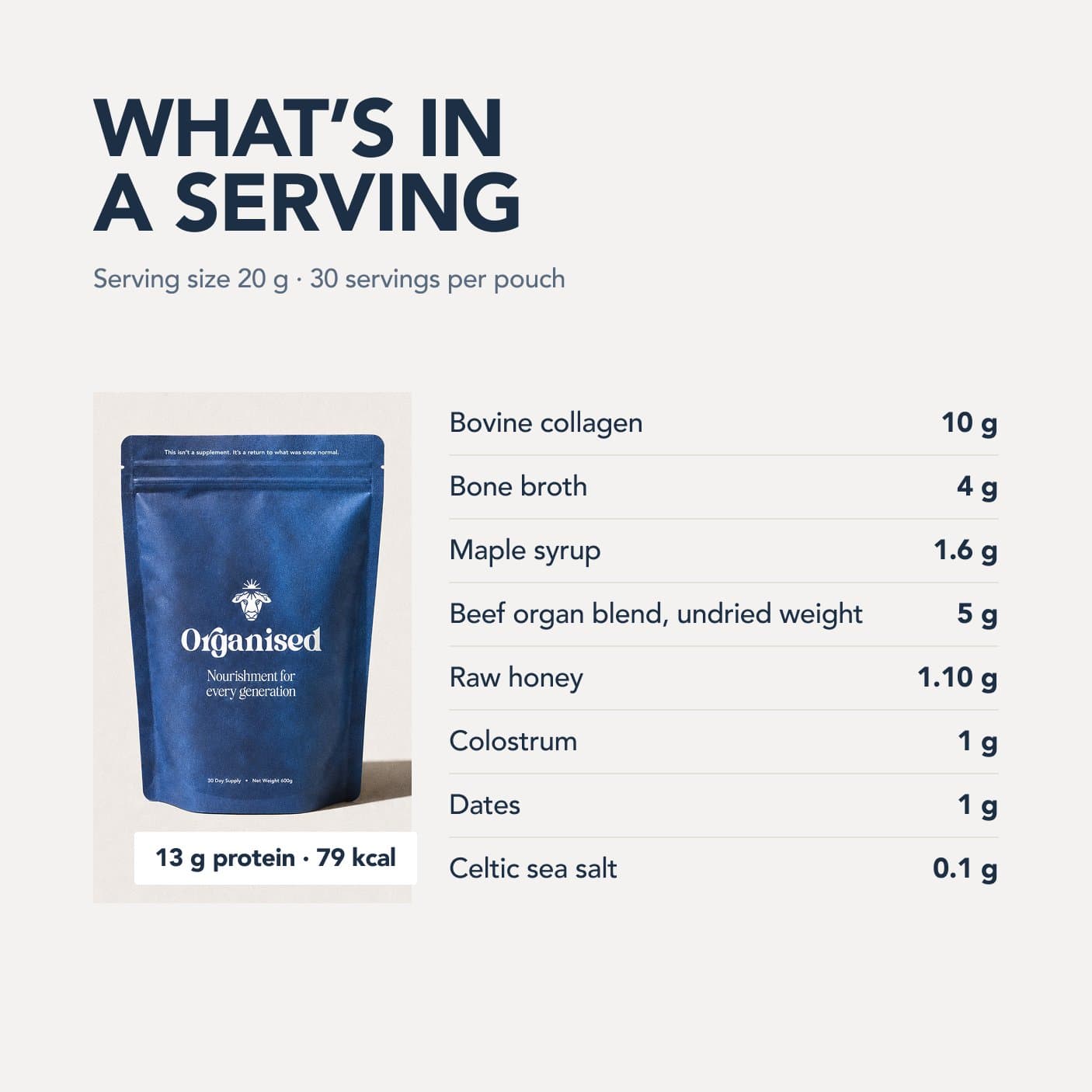
Eight real ingredients built around grass-fed beef organs, collagen and colostrum. Nothing synthetic added.
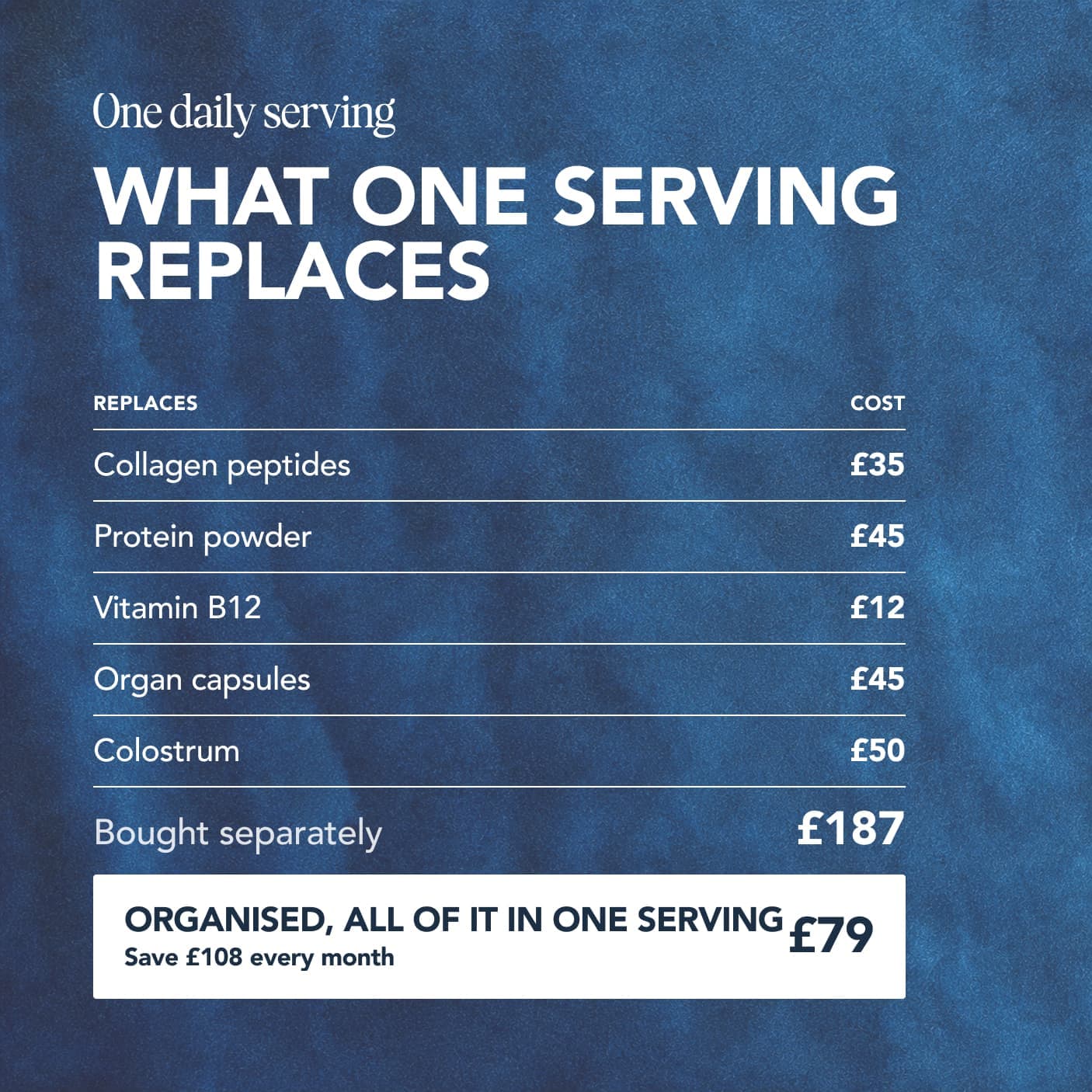
Free with your first order, worth £38. Plus £10 off the pouch with a subscription.

Free UK shipping · Made in England · 100 day money back guarantee on your first pouch · Skip, pause or cancel anytime
Electrolyte balance in heat
The reason summer nutrition is different is electrolytes. You're sweating more. You're losing sodium, potassium, and minerals. Drinking plain water can actually dilute your electrolyte status if you're sweating a lot and not replacing minerals. This is why salt matters in summer.
Celtic sea salt in water, salt on your food, bone broth (which is naturally salty), electrolyte-rich foods like coconut water or watermelon, these aren't fancy. They're how your body stays balanced when it's hot. If you're feeling fatigued in summer, low energy, muscle cramps, before blaming the heat, check that you're actually salting your food and staying mineral-replete.
Summer fatigue is often just dehydration and mineral depletion, not heat exhaustion. Salt and water fix it.
Summer foods that work
Summer produces foods that are naturally suited to the season: berries, stone fruit, lettuce, courgettes. These are lighter than winter foods. You can eat them raw, which requires less digestion than cooked food. Your body naturally wants lighter meals when it's hot. Listen to that signal.
But don't go all raw and lose protein and fat. A salad of raw vegetables with cold cooked meat, cheese, and good oil is still eating properly. It's light, but complete. Raw doesn't mean incomplete.
Hydration beyond water
Hydration is more than water. Broths, kefir, milk, herbal teas (served cold), even juicy foods like melon and cucumber contribute to hydration. Some people need to drink water explicitly in summer. Others get most of their hydration through food and beverages that contain water plus minerals.
How to tell: if you're thirsty constantly, you're probably not absorbing the water you're drinking. This usually means electrolytes are low. Increase salt. Your thirst will settle once your mineral status improves.
References
Every source below was checked on 27 August 2026. Each PubMed, PMC and DOI identifier was resolved against NCBI or Crossref, and what it opens is printed under the citation, so you can see the link goes where the citation says without leaving the page. Where a citation and its identifier disagreed, the citation was corrected to the record or the reference was deleted along with the sentence marker that pointed at it, and where the resolved paper turned out not to support the sentence, the sentence was cut back to what it does support. Borrowed authority is worse than none, because it looks like rigour.
- National Institutes of Health, Office of Dietary Supplements. Sodium - Health Professional Fact Sheet. https://ods.od.nih.gov/factsheets/Sodium-HealthProfessional/ [accessed May 2026].
- Sawka MN, Burke LM, Eichner ER, et al. American College of Sports Medicine position stand. Exercise and fluid replacement. Med Sci Sports Exerc. https://pubmed.ncbi.nlm.nih.gov/17277604/ [accessed May 2026].Checked 27 August 2026: PMID 17277604 opens American College of Sports Medicine, Sawka MN, Burke LM et al, American College of Sports Medicine position stand. Exercise and fluid replacement. Med Sci Sports Exerc 2007;39(2):377-90. PubMed indexes it as: Practice Guideline, Review.
Who wrote and reviewed this guide
Niall Kiddle
Author · Founder, Organised
Niall is the founder of Organised. He started the company in 2024 after fixing his own health the slow way: in 2022 he swapped a cupboard of synthetic supplements for real food, raw milk, organ meats, bone broth and honey, and felt the difference within months.
Areas of expertise: Ancestral nutrition, Organ meats, Whole-food supplementation, Gut health, Regenerative sourcing
Read Niall's full profile
Pedro Rodrigues
Reviewer · Agronomist (farming and sourcing only)
Pedro is the agronomist Organised works with on farming and sourcing. His job on the guides is to keep the science honest: he reviews what we publish about soil health, regenerative agriculture, grazing and the way food is actually produced.
Areas of expertise: Regenerative agriculture, Agronomy, Soil health, Grass-fed farming, Food sourcing
Reviewed this guide on
Read Pedro's full profileMore on seasonal
View allBrowse the guides library
All guidesKeep reading

Culture & community
How to Talk to Your Family About Changing the Way You Eat
Navigate family resistance to dietary change. Address common pushback, communicate benefits, and manage eating in a shared household without conflict.

Culture & community
Autumn Nourishment: Preparing Your Body for Winter
Build nutritional reserves in autumn to support immunity through winter. Vitamin D, mineral density, and seasonal foods that prepare your body.

Culture & community
Social Media and Nutrition: Navigating the Noise
Learn how to evaluate nutrition claims on social media. Build critical thinking skills to separate science from marketing hype.
Real food, made effortless
Shop the blendA few ways to use it
All recipes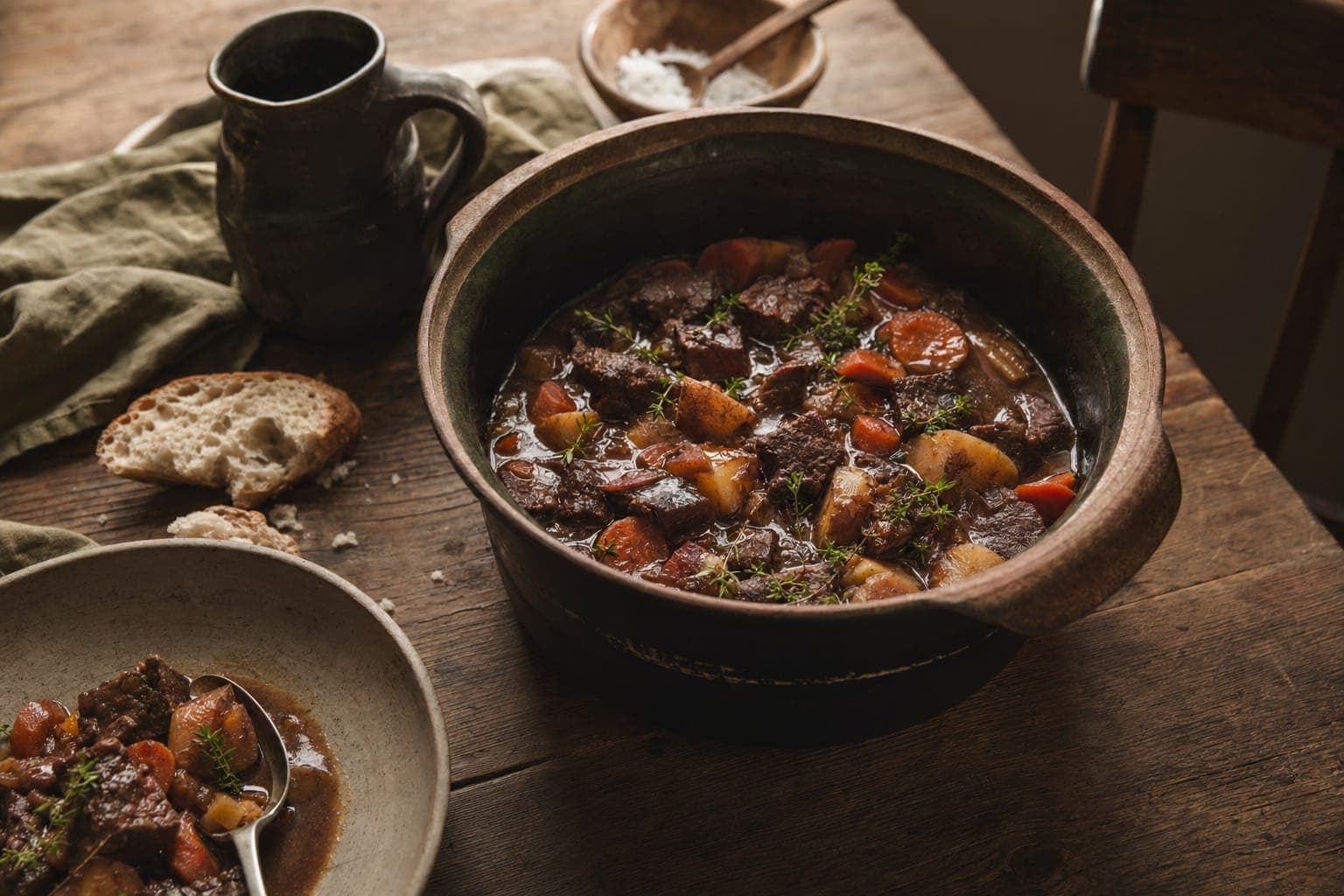
Collagen-Rich Beef Stew: Slow-Cooked Nourishment
Beef stew that delivers collagen from connective tissue and bone broth. Winter comfort food that actually nourishes. Simple slow cooker recipe.

Organ Bolognese: The Family Dinner That Heals
Practical organ meat recipe using fresh beef liver and heart. Family-friendly bolognese that bridges supplements to whole food.
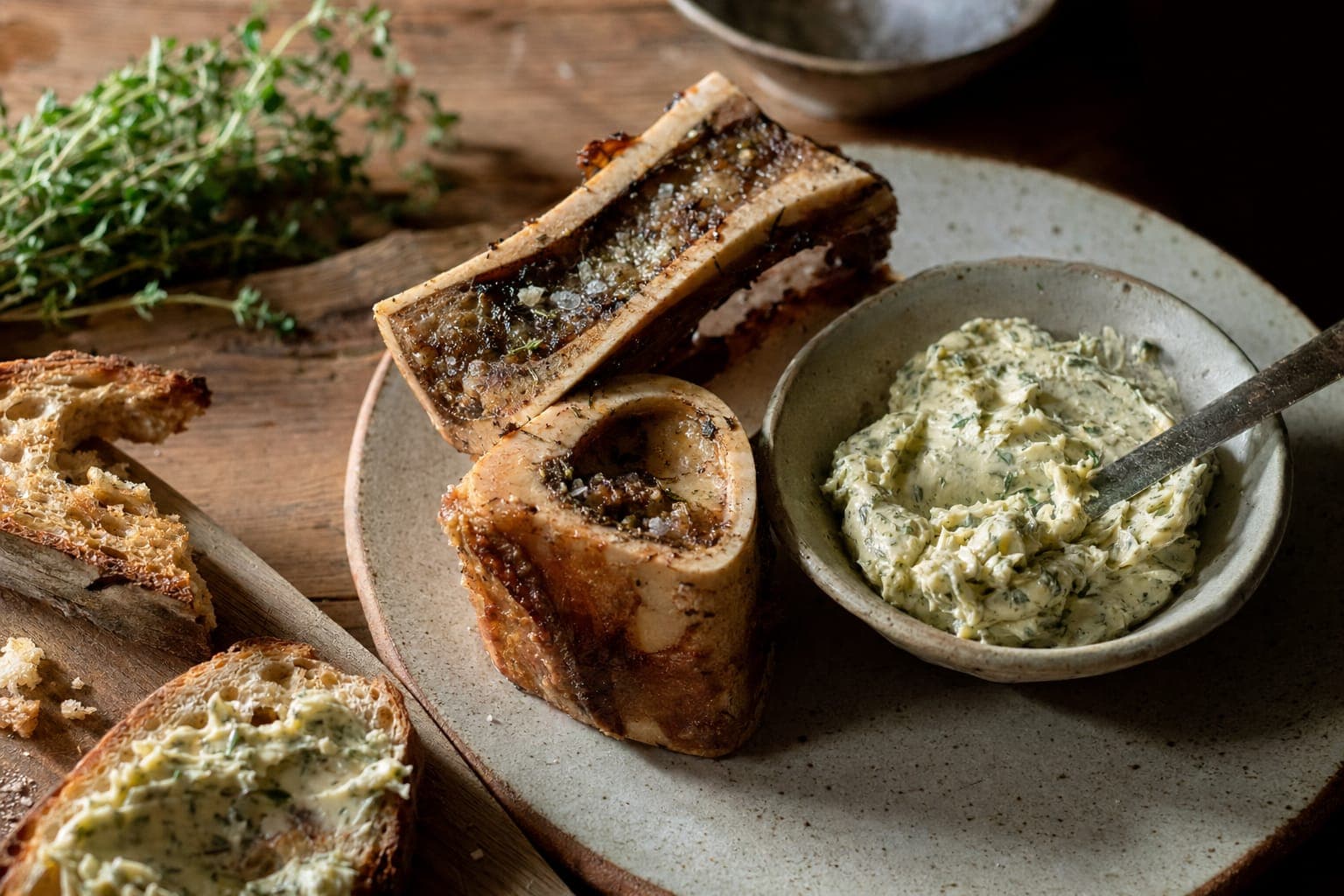
How to Make Bone Marrow Butter
Roast grass-fed marrow bones, scoop the marrow, and mix with butter and herbs. A nutrient-dense spread with fat-soluble vitamins.


 Join over 100,000+ members
Build a better food system with us
The Organised community is thousands of people choosing real food and backing the farmers who grow it, all of us trying to leave the world a little better than we found it. If that is what you care about too, you belong here.