Customer Stories: How Organised Changed Their Morning
The morning is where the day gets won or lost. For most people, it's fog. The alarm goes off. You stumble to coffee. Thirty minutes later, you're finally conscious. Here are stories from people who changed that.
By Niall Kiddle, Founder, Organised

Reviewed by Pedro Rodrigues, Agronomist (farming and sourcing only) ·
6 min read · Published · Updated · 2 cited sources
Makers of the Organised Daily blend, a grass-fed beef organ supplement from regenerative UK farms

Here are stories from people who stopped accepting that.

The mum who got her mornings back
Sophie works full-time and has two children under five. Her mornings were controlled by panic. Up at 6. The older one wouldn't eat. The younger one had a nappy explosion. She was running on coffee and the vague sense that everything was slightly on fire. Her cortisol was permanently elevated. She couldn't think clearly. She'd snap at her partner over nothing. By 10 AM she'd already feel defeated.
She ordered Organised out of desperation. She'd read about organ nutrition. She'd noticed how flat her energy was. She had nothing to lose.
The first morning she took it, she didn't notice anything. The second morning, the same. But on the fourth morning, something shifted. The chaos was still there. The kids still wouldn't eat their breakfast. The morning was still compressed. But she felt different. Present. Like she could actually choose her response instead of just reacting.
Two weeks in, she noticed she wasn't snapping at her partner before 7 AM. By week three, she'd started making breakfast for herself. Real breakfast. Not coffee standing over the sink. She had energy that wasn't jittery.
She says the difference isn't magical. The kids are still challenging. The schedule is still compressed. The demands are real. But her nervous system isn't in constant threat mode. She can be irritated without becoming angry. She can be tired without becoming frantic. She can handle the morning without feeling like she's drowning in it.
Most mornings now, she actually wants to be awake.
The athlete who stopped feeling broken
Marcus is a runner. Long distances. The kind of person for whom 10 kilometres before work is a normal Tuesday. But two years ago, something changed. His energy crashed. Training became agony. Recovery took days instead of hours.
He saw doctors. Thyroid was fine. Hormone levels were fine. He was told he was overtraining. So he trained less. It didn't help. He was told he needed more sleep. He got it. Nothing changed. The exhaustion was bone-deep and nothing fixed it.
He started reading about nutrient density. The research on organ meats and recovery. The data on B vitamins and iron and mitochondrial function. Most supplements were marketing nonsense. But organs were just food. Real food.
He ordered on a whim. And the first run after starting, something was different. Not better. Just different. Like his body was finally receiving something it had been screaming for.
Three weeks in, his long run felt easy. Not hard-easy. Actually easy. His recovery times dropped. His resting heart rate lowered. For the first time in two years, running felt like something his body wanted to do.
He's since learned that athletes can run low on iron and B12 stores, even when initial blood work appears normal.1 The organs restored what his training and the modern diet had stripped away. Now it's non-negotiable. Morning capsule, then coffee, then the day starts.

The desk worker who started thinking clearly
James sits at a computer for eight hours a day. Sales role. Lots of emails. Lots of context-switching. By 2 PM, his brain felt like sludge. He'd read the same email three times. He'd lose the thread of meetings mid-call. He'd come home unable to remember what he'd done all day. The coffee that helped at 9 AM made things worse by noon, leaving him jangled and still unclear. He wasn't depressed. He wasn't sick. He was just fogged. Quietly, consistently fogged.
He tried everything. Better sleep. Better exercise. Meditation. Nootropic supplements. The problem was structural, not motivational. A desk job in the modern food system meant a brain that was quietly starving whilst surrounded by food that looked substantial but delivered almost nothing.
He wasn't sure Organised would help. But he started anyway. The first week felt normal. The second week, something changed during a morning meeting. He was tracking the conversation. Actually tracking it. Not just hearing words and nodding. Processing. Contributing. Actually thinking.
By week three, he'd realised how fogged his baseline had become. He wasn't magical. He wasn't transformed. He was just present. He could follow complex chains of thought. He could remember what he'd said five minutes ago. He could write emails that were coherent on first draft. He could think strategically about problems instead of just reacting to them.
He's convinced it's the nutrients. The organs are nutrient-dense in the exact nutrients that a modern brain is deficient in: iron for oxygen transport, B vitamins for cellular energy, choline for neurotransmitter synthesis. Restore the nutrients and the brain works.
Get stories from the community, free
Two short reads a week on the farmers, the standards, and the return to real food.
By signing up you agree to receive emails from us. No spam, unsubscribe anytime.
The person who finally felt like themselves
This is the story that came up most often. Not transformation. Recognition. People saying, I forgot what this felt like. I forgot what it felt like to want to be awake. To have steady energy. To move through the morning without fighting my own physiology.
One customer said she'd lived so long feeling subtly wrong that she'd forgotten what right felt like. Once the nutrients were back, she recognised it immediately. This is how I'm supposed to feel. This is the baseline. Everything before was deficit. She'd normalised exhaustion and thought it was just part of being an adult.
Another described waking up without that lead-weight exhaustion that's become so normalised that most people don't even realise it's not supposed to be there. Just waking up and being able to move. Not dragging yourself through the first hour of consciousness.
A third said it felt like someone had finally turned up the volume on her own life. The world was always there. The capacity to engage with it suddenly was too. She'd been functioning in a low state for so long that she'd forgotten what it felt like to actually be present.
1 of 9
Daily blend
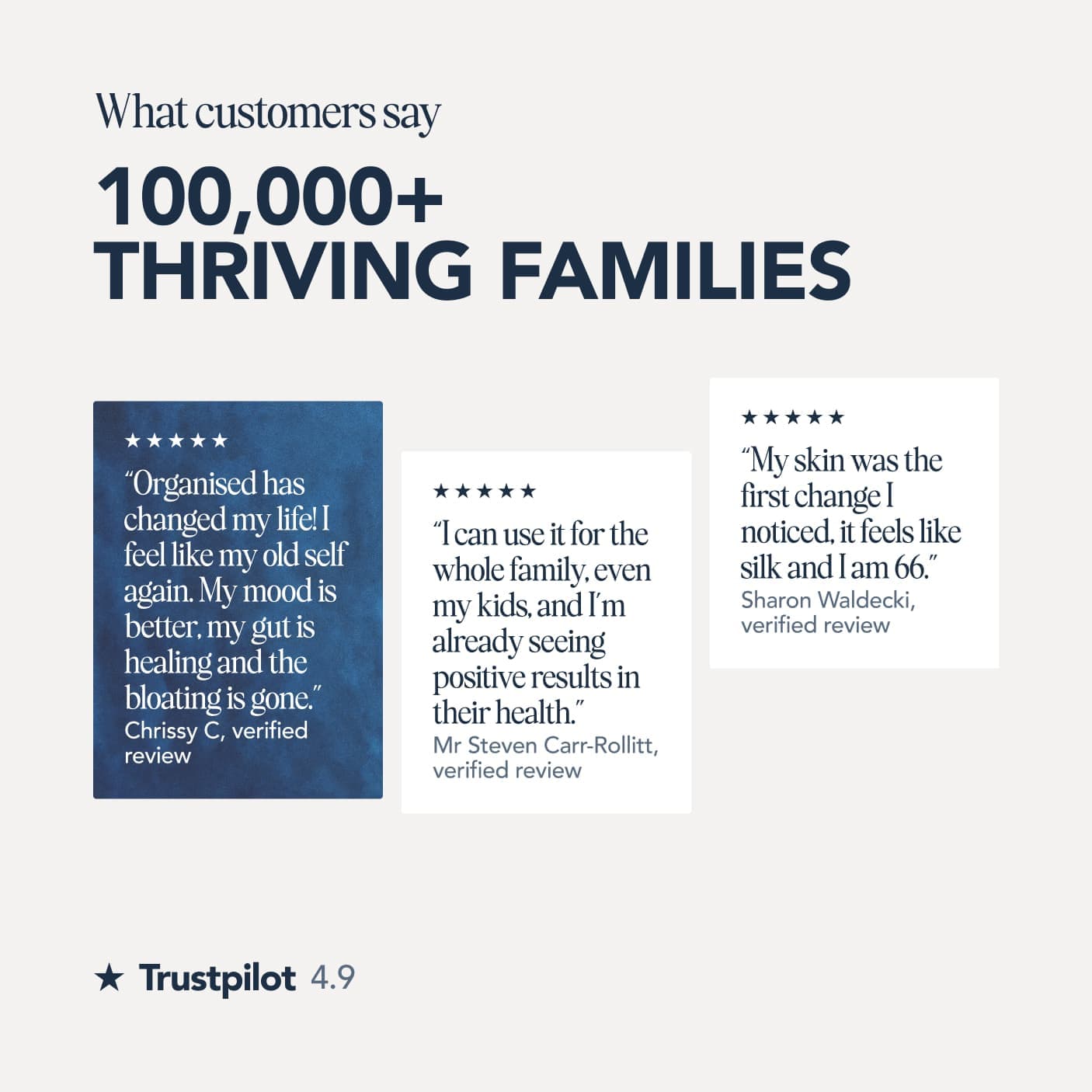
100,000+ thriving families4.9 on Trustpilot
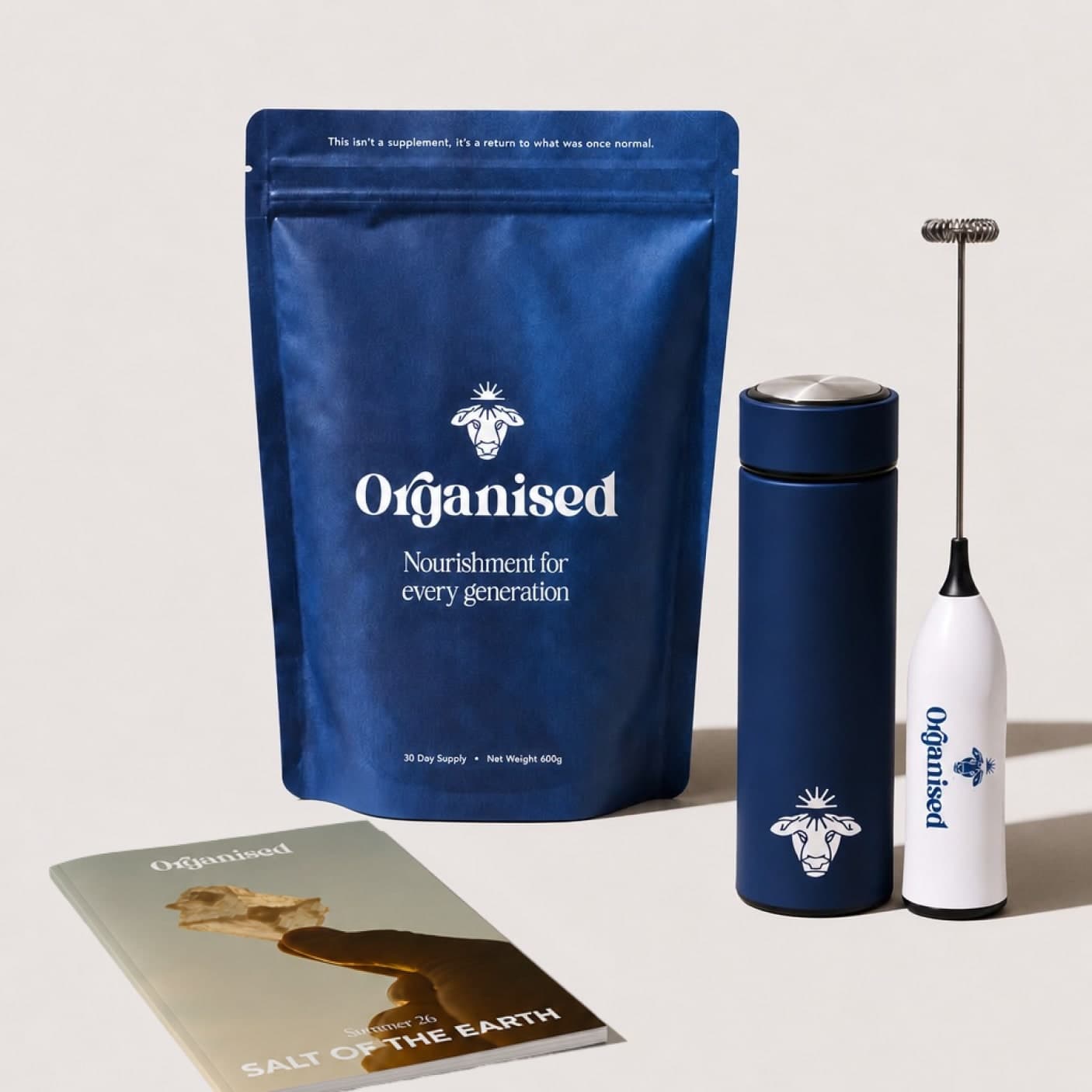
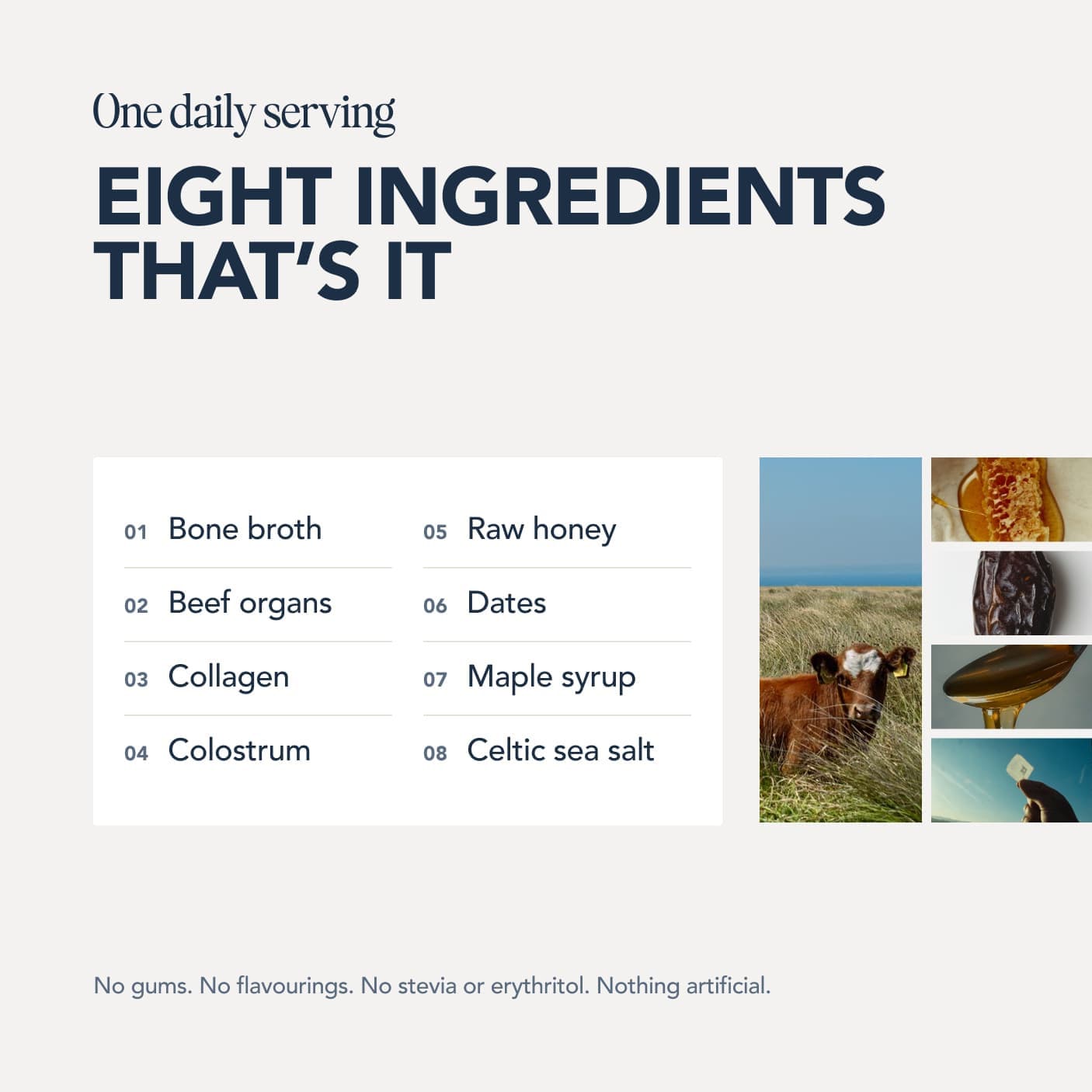
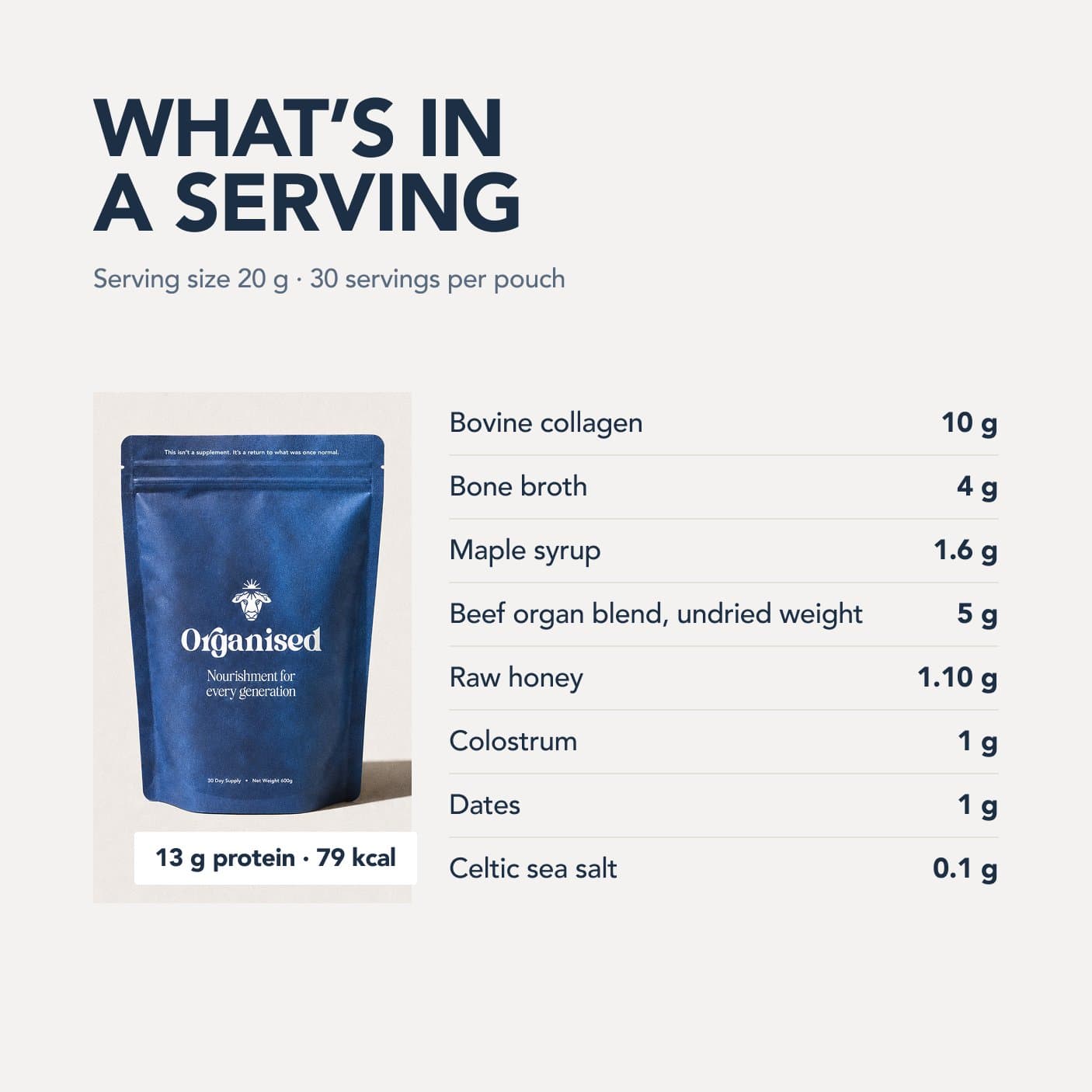
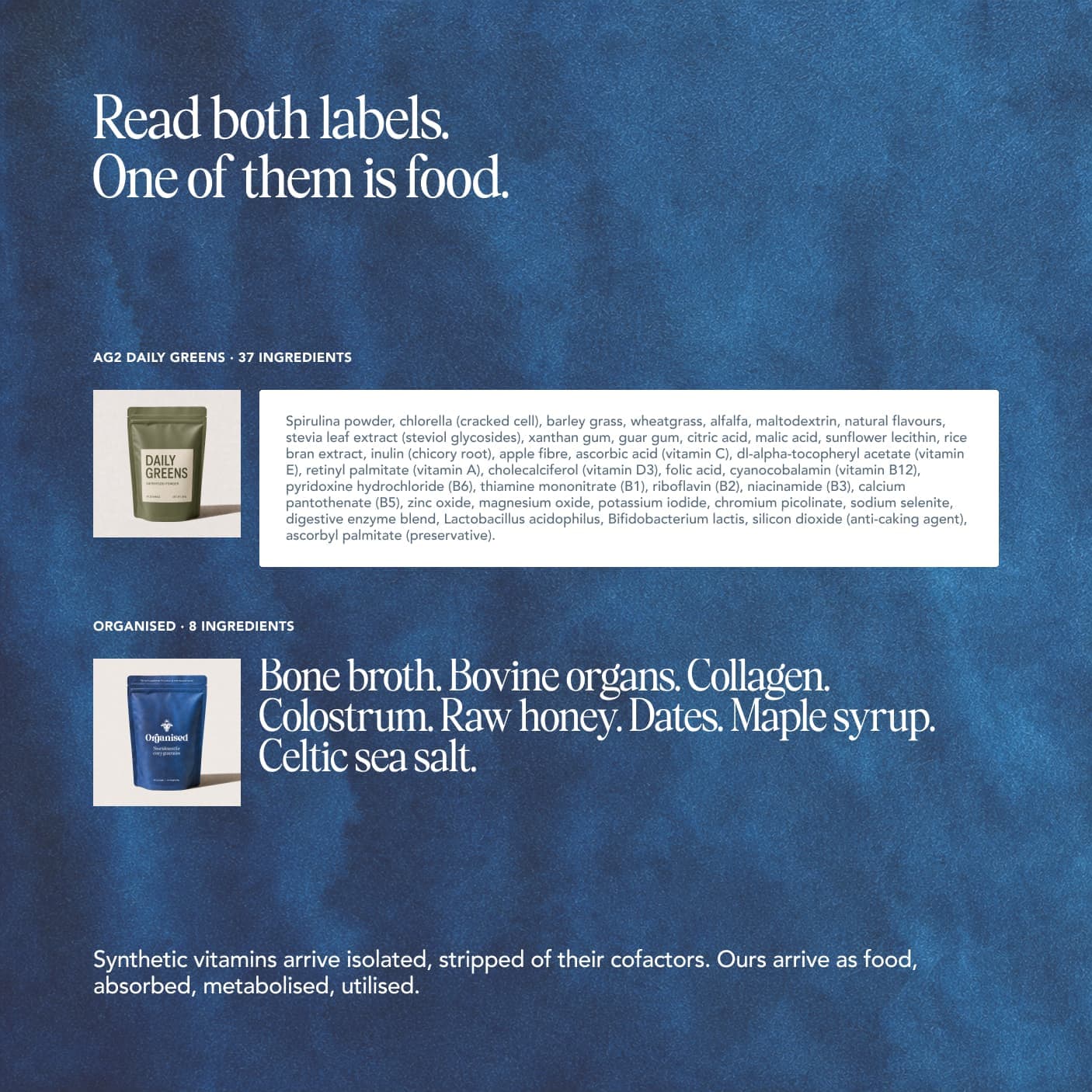
Eight real ingredients built around grass-fed beef organs, collagen and colostrum. Nothing synthetic added.
Free with your first order, worth £38. Plus £10 off the pouch with a subscription.

Free UK shipping · Made in England · 100 day money back guarantee on your first pouch · Skip, pause or cancel anytime
The common thread
These aren't extreme stories. No one ran a marathon after a single capsule. No one's life was magically transformed. No dramatic before-and-after claims. But every single person reported the same thing: clarity. Energy that was stable instead of crashing. A nervous system that wasn't in constant low-grade threat mode. The ability to be present in their own morning instead of just surviving it.
The mechanism is straightforward. Modern processed food is often lower in micronutrient density than traditional whole foods such as organ meats, which are particularly rich in iron, B12, folate, selenium, and zinc.2 Restore the nutrients, and the baseline function improves. Not overnight. Quietly, over weeks, as the body rebuilds what it needed.
The morning becomes less of a survival situation and more of an actual start to the day. That's the gift.

What they all notice first
The shift isn't dramatic. There's no single moment where everything changes. But there are patterns across these stories and dozens of others like them. Energy stabilises within the first week. Nothing crazy. Just an afternoon that doesn't collapse at 3 PM. Just waking up without that lead-weight feeling.
Mood clarifies within two weeks. Not euphoria. Just steadiness. The nervous system stops being in threat mode. Reactivity decreases. You can be frustrated without becoming angry. You can be tired without becoming desperate.
Sleep shifts within three weeks. For most people, it's the first time in years that sleep feels restorative instead of just obligatory. You wake up without that grogginess that persists no matter how long you slept.
By week four, most people report something deeper. A feeling of coming back online. Of remembering what baseline wellness felt like.
References
Every source below was checked on 27 August 2026. Each link was requested and read. Where a citation and its identifier disagreed, the citation was corrected to the record or the reference was deleted along with the sentence marker that pointed at it, and where the resolved paper turned out not to support the sentence, the sentence was cut back to what it does support. Borrowed authority is worse than none, because it looks like rigour.
- National Institutes of Health, Office of Dietary Supplements. Dietary Supplements for Exercise and Athletic Performance: Fact Sheet for Health Professionals.
- U.S. Department of Agriculture, FoodData Central. Beef, liver — nutrient profile.
Who wrote and reviewed this guide
Niall Kiddle
Author · Founder, Organised
Niall is the founder of Organised. He started the company in 2024 after fixing his own health the slow way: in 2022 he swapped a cupboard of synthetic supplements for real food, raw milk, organ meats, bone broth and honey, and felt the difference within months.
Areas of expertise: Ancestral nutrition, Organ meats, Whole-food supplementation, Gut health, Regenerative sourcing
Read Niall's full profile
Pedro Rodrigues
Reviewer · Agronomist (farming and sourcing only)
Pedro is the agronomist Organised works with on farming and sourcing. His job on the guides is to keep the science honest: he reviews what we publish about soil health, regenerative agriculture, grazing and the way food is actually produced.
Areas of expertise: Regenerative agriculture, Agronomy, Soil health, Grass-fed farming, Food sourcing
Reviewed this guide on
Read Pedro's full profileMore on community
View allBrowse the guides library
All guidesKeep reading

Culture & community
How Niall's Mum Reversed 15 Years of IBS
Niall's mum lived with IBS for 15 years before her symptoms eased after adding organs and collagen back to her diet. The story behind Organised.

Culture & community
The Organised Community: What 10,000+ Members Are Talking About
Peek inside the Organised community. Real conversations from real people about health, nutrition, and the journey back to real food.

Culture & community
Why We Made a Documentary About Raw Milk
The story behind Organised's raw milk documentary. What motivated the investigation, what we learned filming, and what viewers will discover.
Real food, made effortless
Shop the blendA few ways to use it
All recipes
Raw Milk Ice Cream with Organised
Make raw milk ice cream at home with Organised for a seasonal, nutrient-dense treat. Three simple flavours to try whenever the craving strikes.

Raw Milk Hot Chocolate with Collagen
A nourishing evening hot chocolate made with raw milk, grass-fed collagen, raw cacao, and honey. A nighttime ritual that supports sleep and gut health.

Energy Balls with Organised, Dates and Raw Honey
Make no-bake energy balls with Organised, dates, and raw honey. Perfect lunch box, pre-workout, or on-the-go snack. Simple recipe.


 Join over 100,000+ members
Build a better food system with us
The Organised community is thousands of people choosing real food and backing the farmers who grow it, all of us trying to leave the world a little better than we found it. If that is what you care about too, you belong here.