How Niall's Mum Reversed 15 Years of IBS
Fifteen years. That's how long Niall's mum had lived with IBS by the time her son sat down with her in 2022 and asked if she'd be willing to try something different. Fifteen years of bloating, urgency, food fear, social anxiety. Fifteen years of restriction diets, prescriptions and gastroenterology appointments that ended the same way. There's nothing structurally wrong. Manage it. She tried what he'd just tried himself, organs and collagen back in the diet, and reversed it.
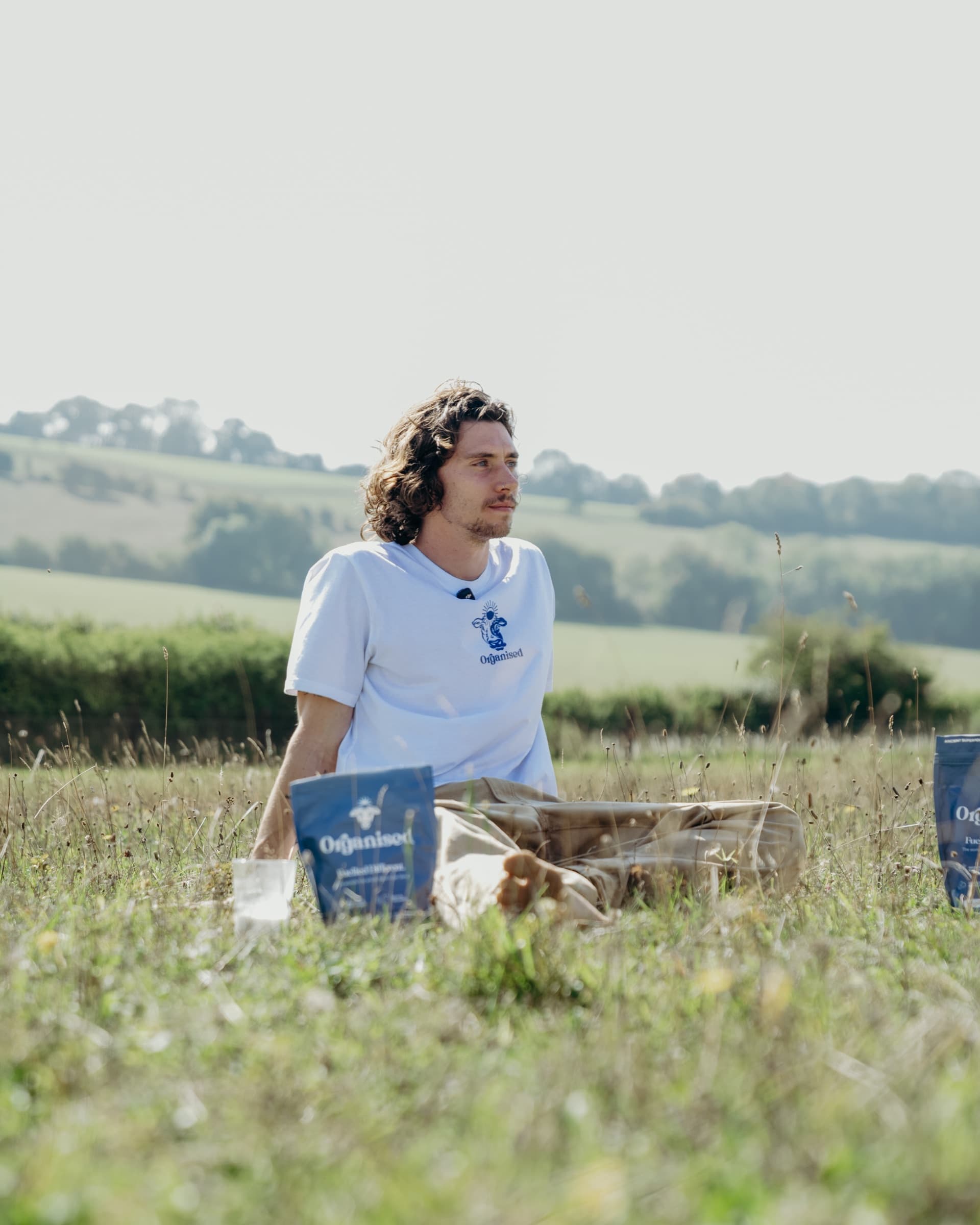
By Niall Kiddle, Founder, Organised

Reviewed by Pedro Rodrigues, Agronomist (farming and sourcing only) ·
6 min read · Published · Updated · 2 cited sources
Makers of the Organised Daily blend, a grass-fed beef organ supplement from regenerative UK farms
Fifteen years.
That's how long Niall's mum had lived with IBS by the time her son sat down with her in 2022 and asked if she'd be willing to try something different.
Fifteen years of bloating that turned every meal into a calculation. Fifteen years of urgency that made her plan her day around the nearest bathroom. Fifteen years of food fear, the kind that quietly narrows a life until you don't realise how small it's become. Fifteen years of restriction diets that worked for three weeks and then stopped. Fifteen years of being told there was nothing structurally wrong, here's a prescription, learn to manage it.
She tried what he'd just tried himself: organs and collagen back into the diet, alongside the bone broth and real food his grandmother had always eaten on her farm in Ireland. She reversed it.
Fifteen years of IBS
It's hard to convey the weight of fifteen years of chronic gut symptoms to anyone who hasn't lived through them. The physical part, the bloating, the urgency, the pain, is the easy part to describe. The harder part is what it does to the texture of your life.
You stop accepting dinner invitations. You eat before you go anywhere, just in case. You stop travelling. You stop trusting your own body to be in public with you. You learn the location of every public toilet in every shop you might possibly need to be in. The world contracts, slowly, around the assumption that you cannot rely on your gut.
That was Niall's mum's life. And by the time he started talking to her about food, she'd long since stopped expecting it to change. The medical message had been consistent for fifteen years: this is who you are now. The best you can hope for is management.
What conventional medicine couldn't fix
It wasn't that the doctors weren't trying. They were. The gastroenterologists were thorough. The tests were comprehensive. The prescriptions were the right ones for what the conventional approach to IBS offers.
The problem was the conventional approach itself. It's an approach built around elimination and symptom suppression. Cut out a food. Reduce a fibre. Add an antispasmodic. Lower stress. None of these are wrong, exactly. They just don't address the actual mechanism of a damaged gut.
Years of inflammation thin the gut lining. Years of restriction starve the beneficial bacteria. Years of antibiotics, however necessary they were at the time, decimate the microbial diversity that the system depends on. By the time someone has been managing IBS for fifteen years, the gut isn't just irritated. It's structurally underfed.
You can't heal a damaged gut by removing more foods. The gut heals through nourishment. It needs specific nutrients, in food form, to actually repair what years of inflammation have done.
The change Niall had already seen in himself
The conversation between Niall and his mum wasn't theoretical. By the time he sat down with her, he had just lived through his own version of it.
He'd spent the early part of 2022 obsessed with supplements and tracking his macros to the gram, and his own gut health was a wreck. Bloating, low energy, skin flares, brain fog. The supplements weren't working. The macros weren't working. By every metric the wellness industry told him to care about, he was doing everything right, and his body was telling him something else.
So he did the opposite of what he'd been told to do. He stopped the supplements. He stopped chasing perfectly balanced protein-fat-carb ratios. And he swapped them for what his grandmother had grown up eating on a raw dairy farm in Ireland, raw milk, organs, bone broth and honey.
His health transformed almost overnight. The bloating settled. The energy stabilised. The skin cleared. He wasn't optimised. He was just well, in a way the supplement cabinet had never managed to make him.
That was the experience he brought to the kitchen table when he asked his mum if she'd be willing to try.
Adding organs and collagen back in
The change he asked her to make was specific, and it was small. Add organs and collagen back into the diet. Not as a supplement protocol. As food. The way her own mother, on the Irish farm, had eaten her entire life.
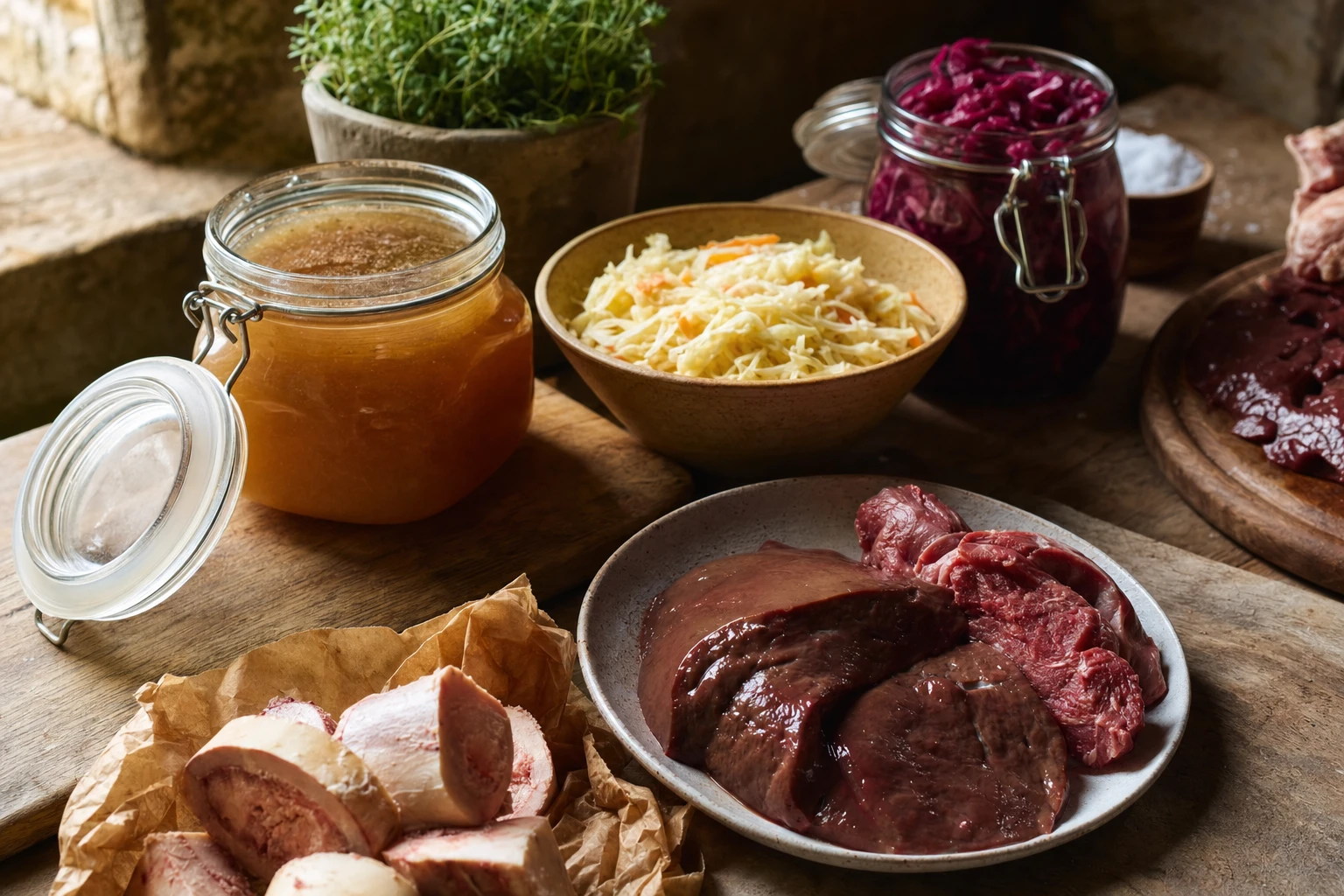
Liver, properly sourced from grass-fed cattle. The other organs that have been quietly removed from modern diets, heart, kidney, the cuts that used to be standard household food and are now sold as pet feed. Collagen from real bones, simmered down into broth, the way it had been made in her grandmother's kitchen.
Why those two? Because they directly address what years of IBS strips out of the system. Liver carries the bioavailable iron, B vitamins, retinol, and copper that the body can't manufacture for itself and that years of restricted eating quietly run down.1 Collagen is glycine. Glycine is one of the primary building blocks for the mucus layer that protects the gut lining.2 When that layer is damaged, everything irritates the system. When it's rebuilt, the inflammation has somewhere to go.
None of this was experimental. It was just food. Food humans have been eating for thousands of years, restored to the diet of one woman whose system had been quietly starving for the things it needed to repair itself.
Get stories from the community, free
Two short reads a week on the farmers, the standards, and the return to real food.
By signing up you agree to receive emails from us. No spam, unsubscribe anytime.
What started to shift
Within a few months, the bloating that had been present every single day was gone. The stomach pain reduced. For the first time in fifteen years, she could eat without calculating the risk of every choice.
Within six months, the change was deeper. The energy that had been absent for so long she'd stopped expecting it returned. The anxiety that had been the background noise of her relationship with food began to quieten. The constant background calculation, where will the bathroom be, can I eat that, will this ruin tomorrow, simply stopped running.
The most telling moment came when she accepted a dinner invitation she would have declined a year earlier. She went. She ate. She was fine. And in that moment, something fundamental shifted. The fear wasn't fully gone, but the body underneath it was finally getting what it needed, and the fear was finally allowed to fade.
This wasn't a miracle. It was the predictable result of feeding a depleted system the things it had been missing. The body, when it finally has the inputs it needs, knows how to do the rest.
1 of 9
Daily blend
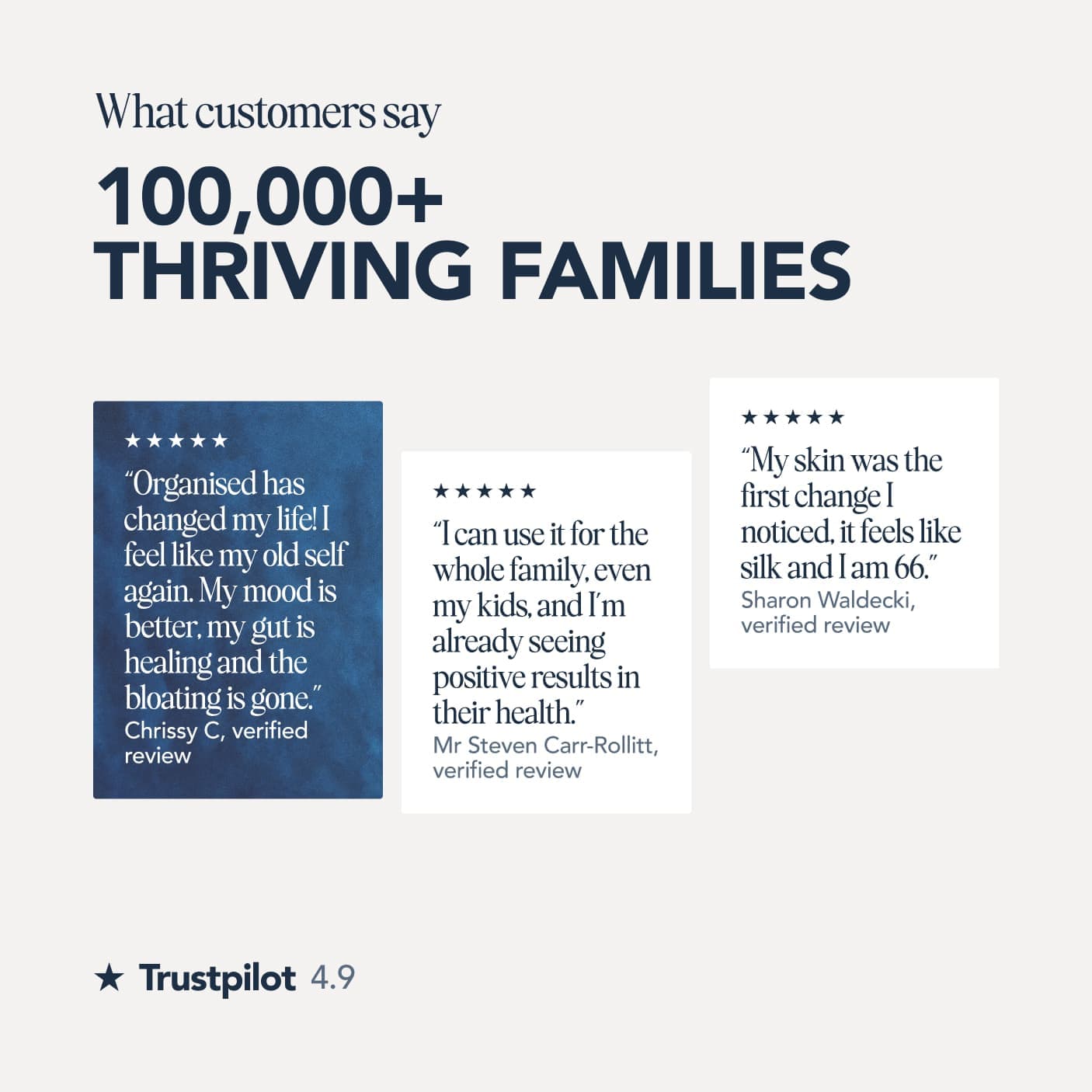
100,000+ thriving families4.9 on Trustpilot
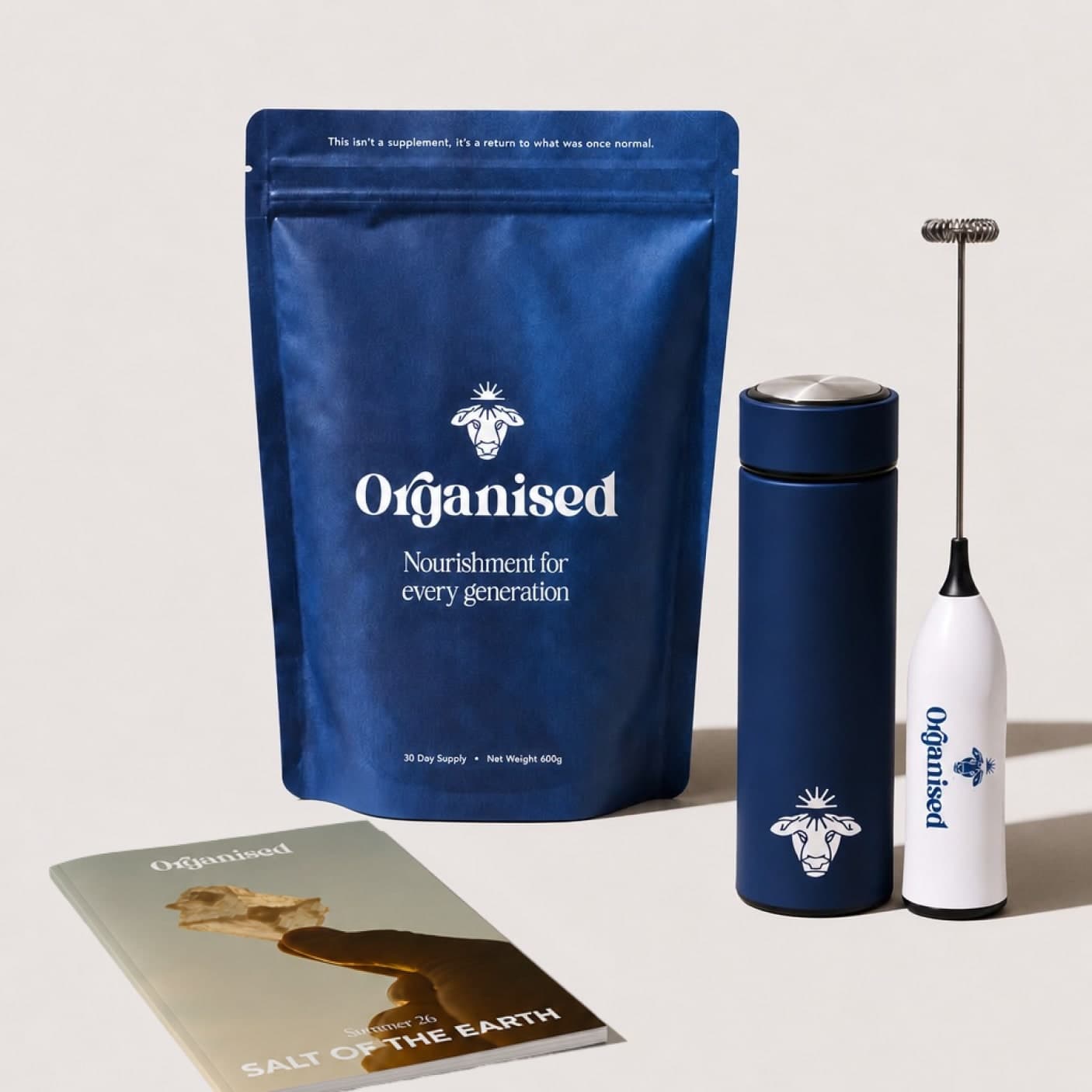
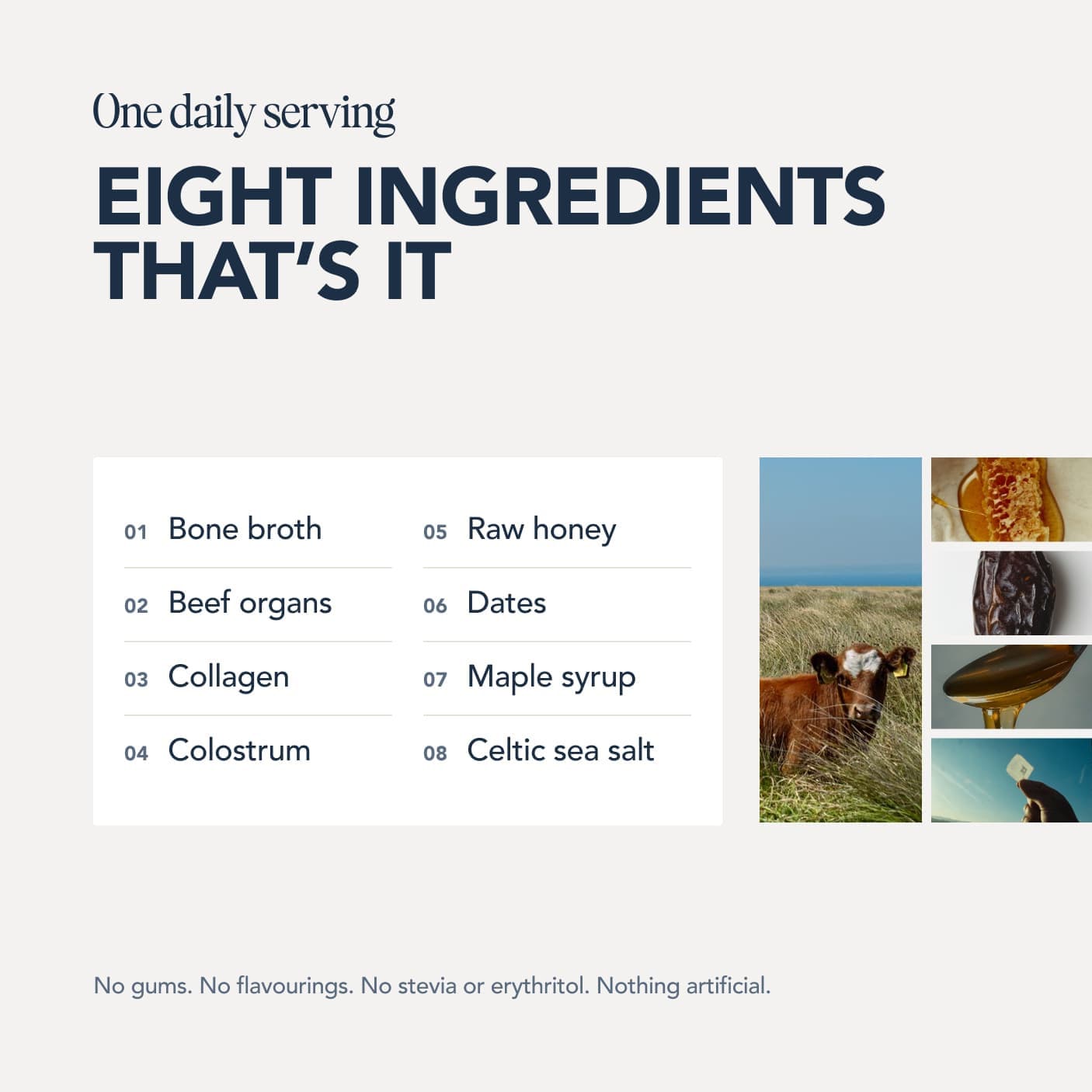
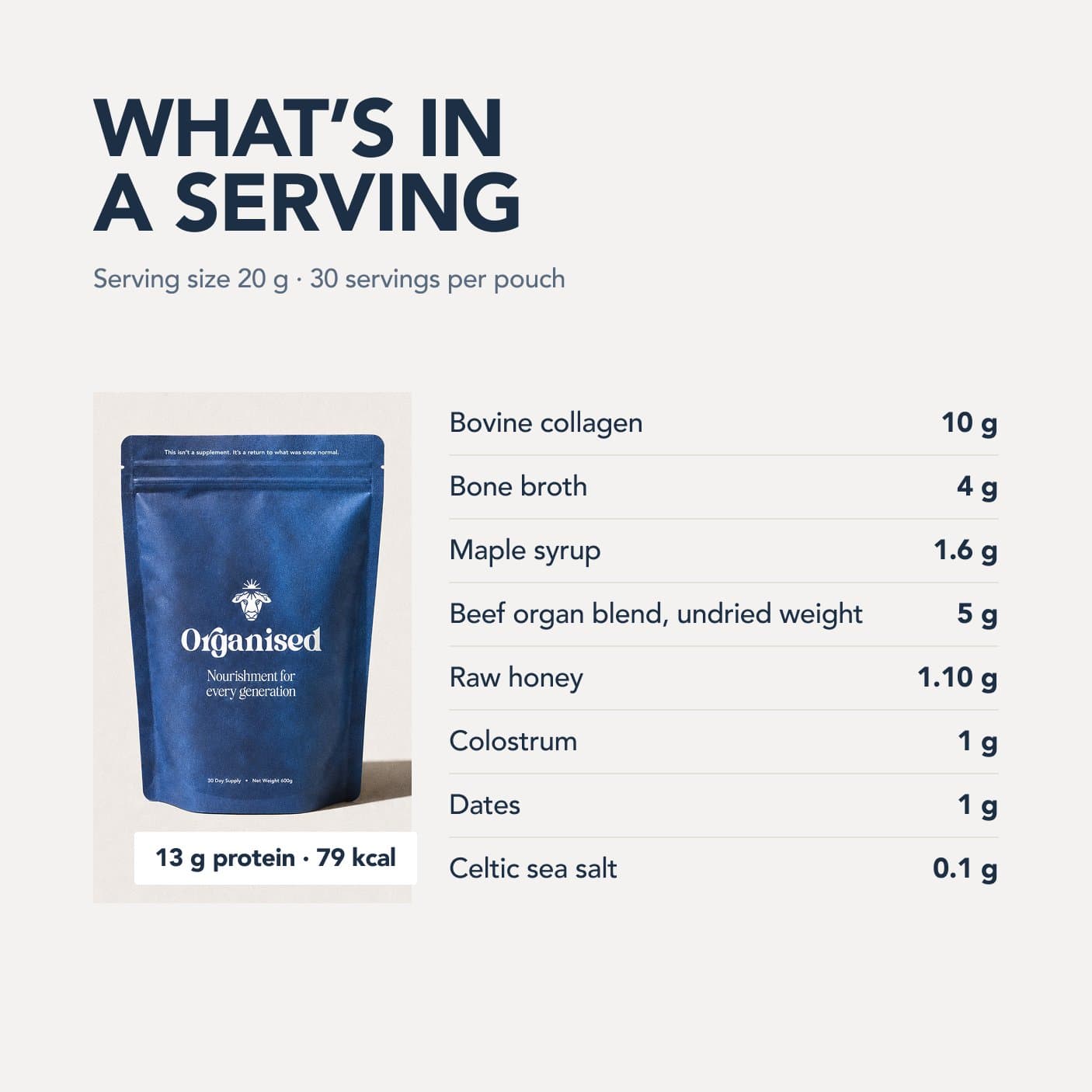
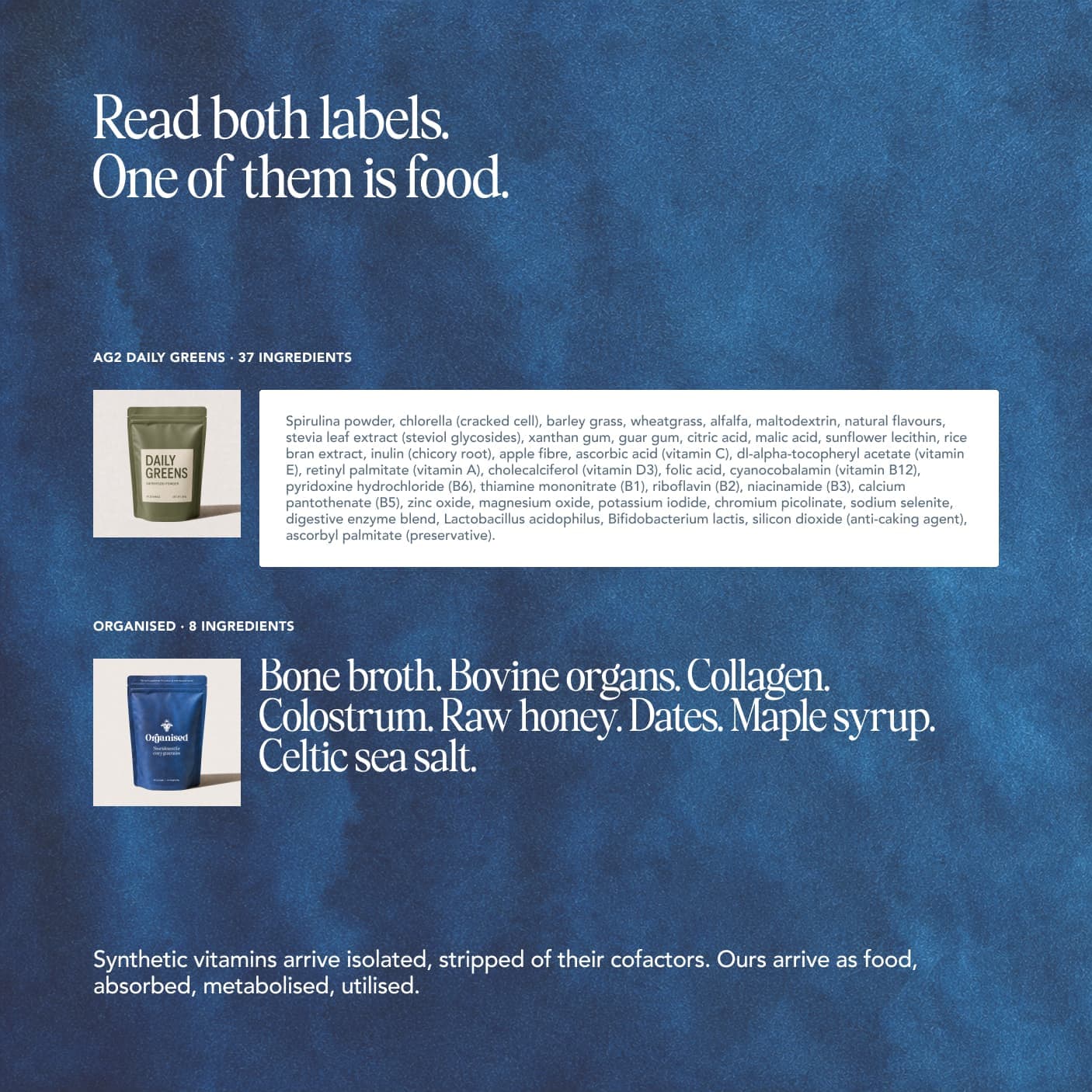
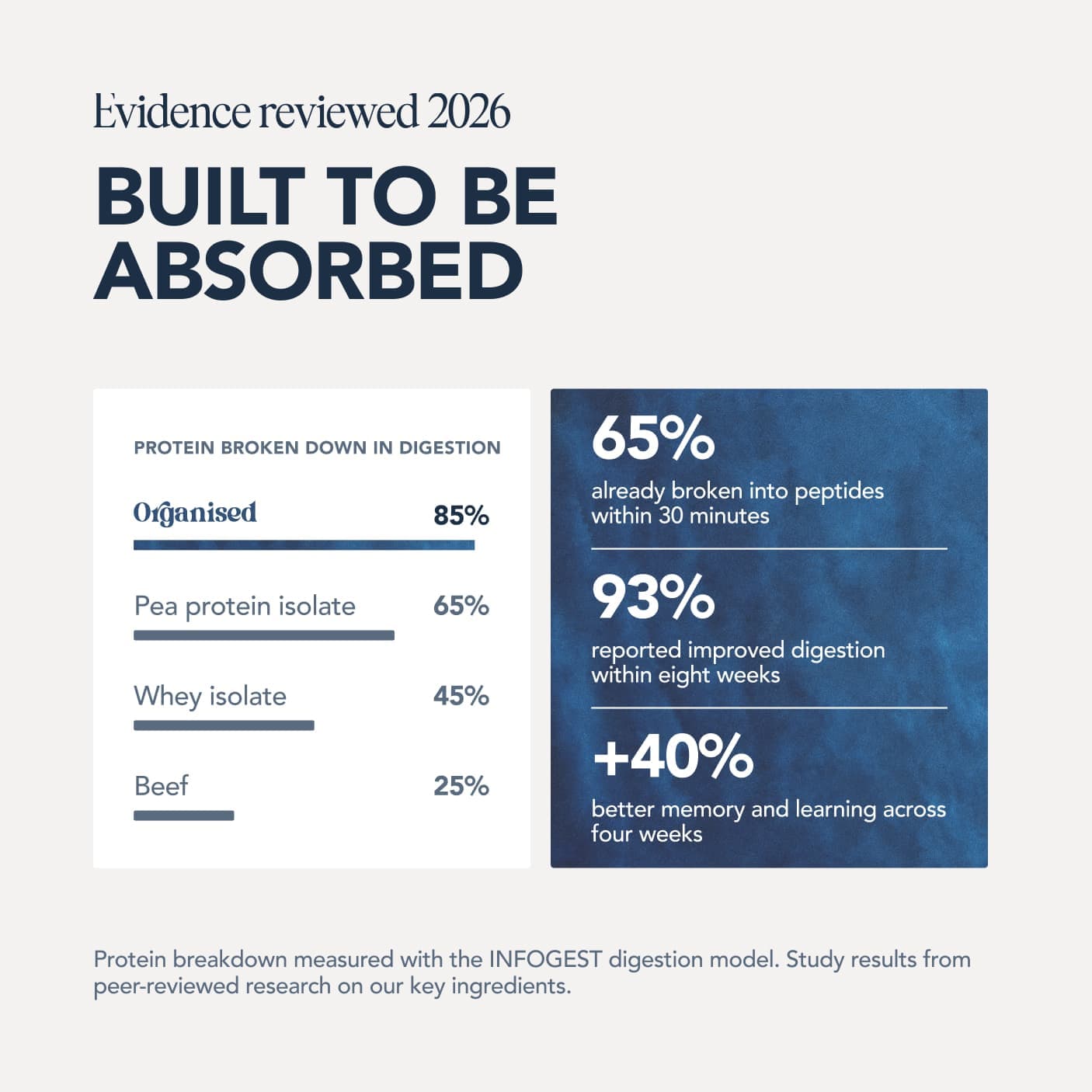
Eight real ingredients built around grass-fed beef organs, collagen and colostrum. Nothing synthetic added.
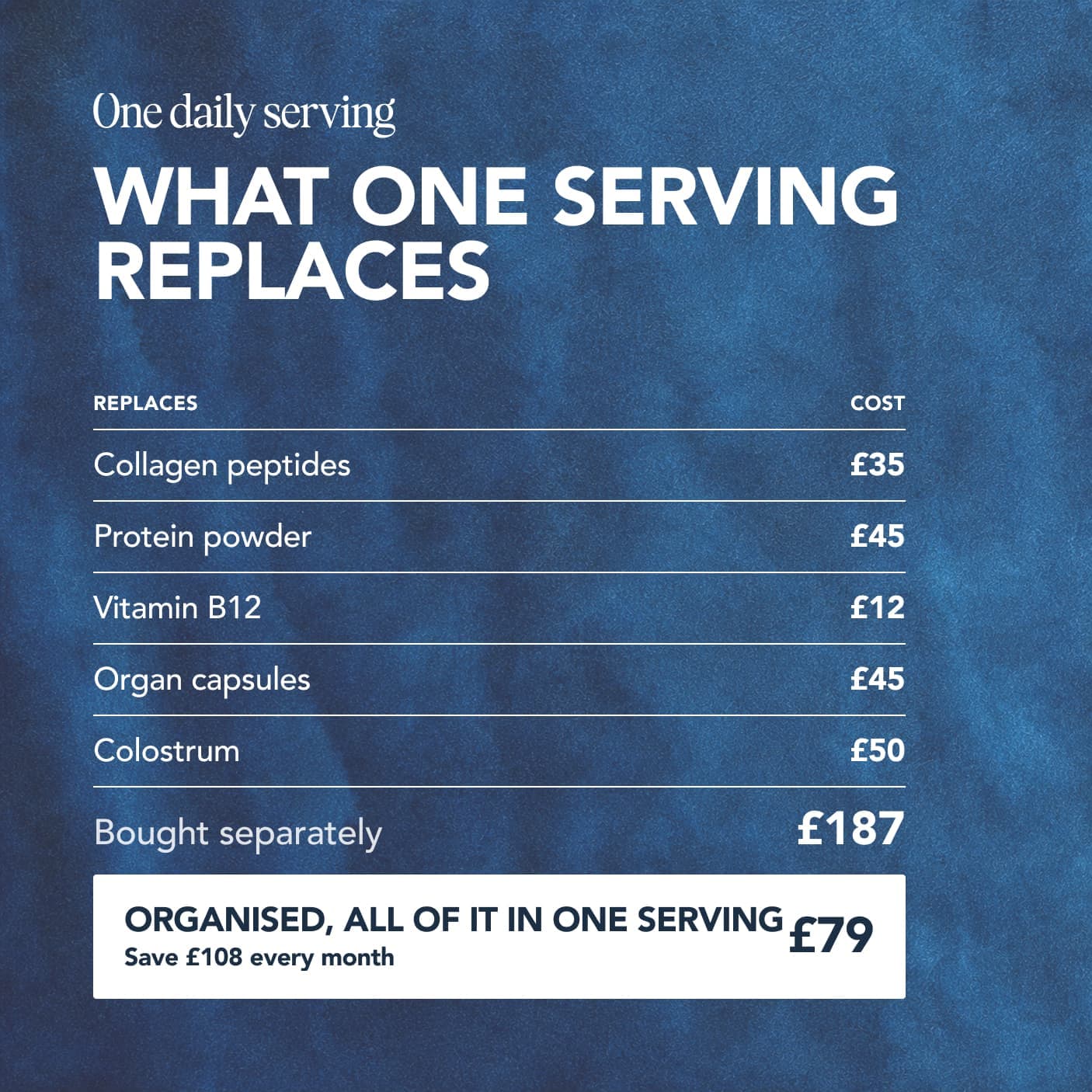
Free with your first order, worth £38. Plus £10 off the pouch with a subscription.
Free UK shipping · Made in England · 100 day money back guarantee on your first pouch · Skip, pause or cancel anytime
Why this became the Organised mission
Watching his mum heal was the moment Niall realised this was about more than nutrition. It was about giving people their lives back.
One person reversing IBS doesn't, by itself, justify a company. What justified it was the realisation that the same gap in modern nutrition was creating the same kind of suffering in millions of people, and that closing that gap, properly, with real food rather than another supplement, was a job nobody else was doing.
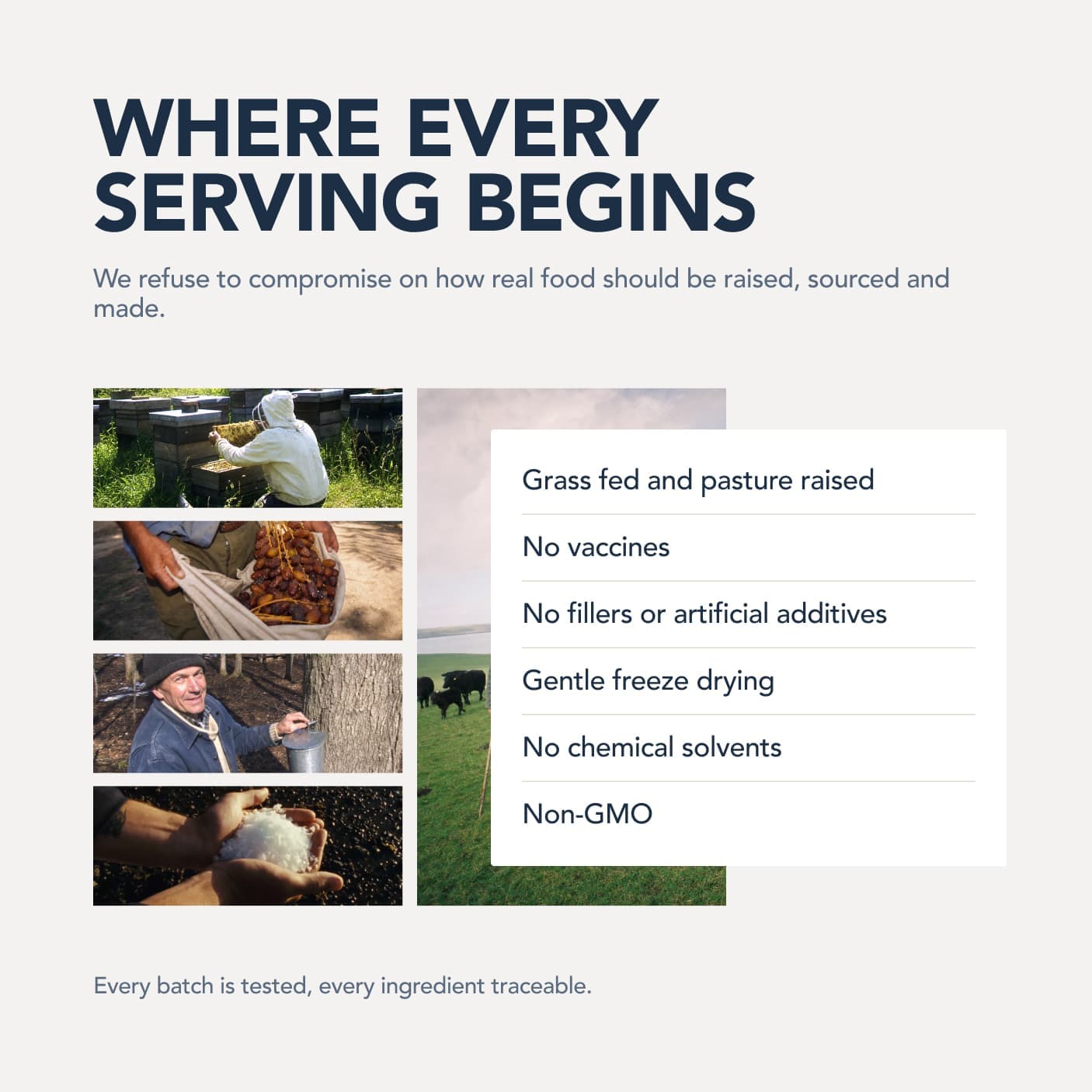
That's the work Organised was built to do. After two years of fighting supplement industry norms, the brand launched in 2024 as the world's first entirely whole food organ blend, eight ingredients, no fillers, no flavourings, no additives. The product that started as a kitchen suggestion to a mum after fifteen years of suffering became, over those two years, the standard everything else has been measured against.
Your body isn't broken. It's been underfed. Feed it properly, and it will remind you what health actually feels like.
Niall's mum still uses Organised every day. Fifteen years of IBS, behind her. Her grandmother's farm, in front of her, still shaping how the family eats. The story isn't unique, and that's the point. The mechanism that healed her is available to anyone willing to add the foods their body has always needed back into their diet.
References
Every source below was checked on 27 August 2026. Each PubMed, PMC and DOI identifier was resolved against NCBI or Crossref, and what it opens is printed under the citation, so you can see the link goes where the citation says without leaving the page. Where a citation and its identifier disagreed, the citation was corrected to the record or the reference was deleted along with the sentence marker that pointed at it, and where the resolved paper turned out not to support the sentence, the sentence was cut back to what it does support. Borrowed authority is worse than none, because it looks like rigour.
- National Institutes of Health, Office of Dietary Supplements. Vitamin A and Carotenoids: Fact Sheet for Health Professionals. https://ods.od.nih.gov/factsheets/VitaminA-HealthProfessional/ See also Vitamin B12, Iron, and Copper fact sheets [accessed May 2026].
- Melendez-Hevia E, De Paz-Lugo P, Cornish-Bowden A, Cardenas ML. A weak link in metabolism: the metabolic capacity for glycine biosynthesis does not satisfy the need for collagen synthesis. Journal of Biosciences. 2009;34(6):853-872. https://pubmed.ncbi.nlm.nih.gov/20093739/Checked 27 August 2026: PMID 20093739 opens Meléndez-Hevia E, De Paz-Lugo P, Cornish-Bowden A et al, A weak link in metabolism: the metabolic capacity for glycine biosynthesis does not satisfy the need for collagen synthesis. J Biosci 2009;34(6):853-72.
Who wrote and reviewed this guide
Niall Kiddle
Author · Founder, Organised
Niall is the founder of Organised. He started the company in 2024 after fixing his own health the slow way: in 2022 he swapped a cupboard of synthetic supplements for real food, raw milk, organ meats, bone broth and honey, and felt the difference within months.
Areas of expertise: Ancestral nutrition, Organ meats, Whole-food supplementation, Gut health, Regenerative sourcing
Read Niall's full profile
Pedro Rodrigues
Reviewer · Agronomist (farming and sourcing only)
Pedro is the agronomist Organised works with on farming and sourcing. His job on the guides is to keep the science honest: he reviews what we publish about soil health, regenerative agriculture, grazing and the way food is actually produced.
Areas of expertise: Regenerative agriculture, Agronomy, Soil health, Grass-fed farming, Food sourcing
Reviewed this guide on
Read Pedro's full profileMore on brand story
View allBrowse the guides library
All guidesKeep reading
Culture & community
Where It All Started: The Organised Origin Story
The Organised origin story: founder Niall on supplements that fell short, an Irish grandmother who knew better, and the first whole food organ blend.
Culture & community
The Organised Community: What 10,000+ Members Are Talking About
Peek inside the Organised community. Real conversations from real people about health, nutrition, and the journey back to real food.
Culture & community
The Anti-UPF Movement: What's Driving the Backlash Against Processed Food
Discover what's driving the global backlash against ultra-processed food. Policy shifts, health awareness, and the movement reshaping food culture.
Real food, made effortless
Shop the blendA few ways to use it
All recipes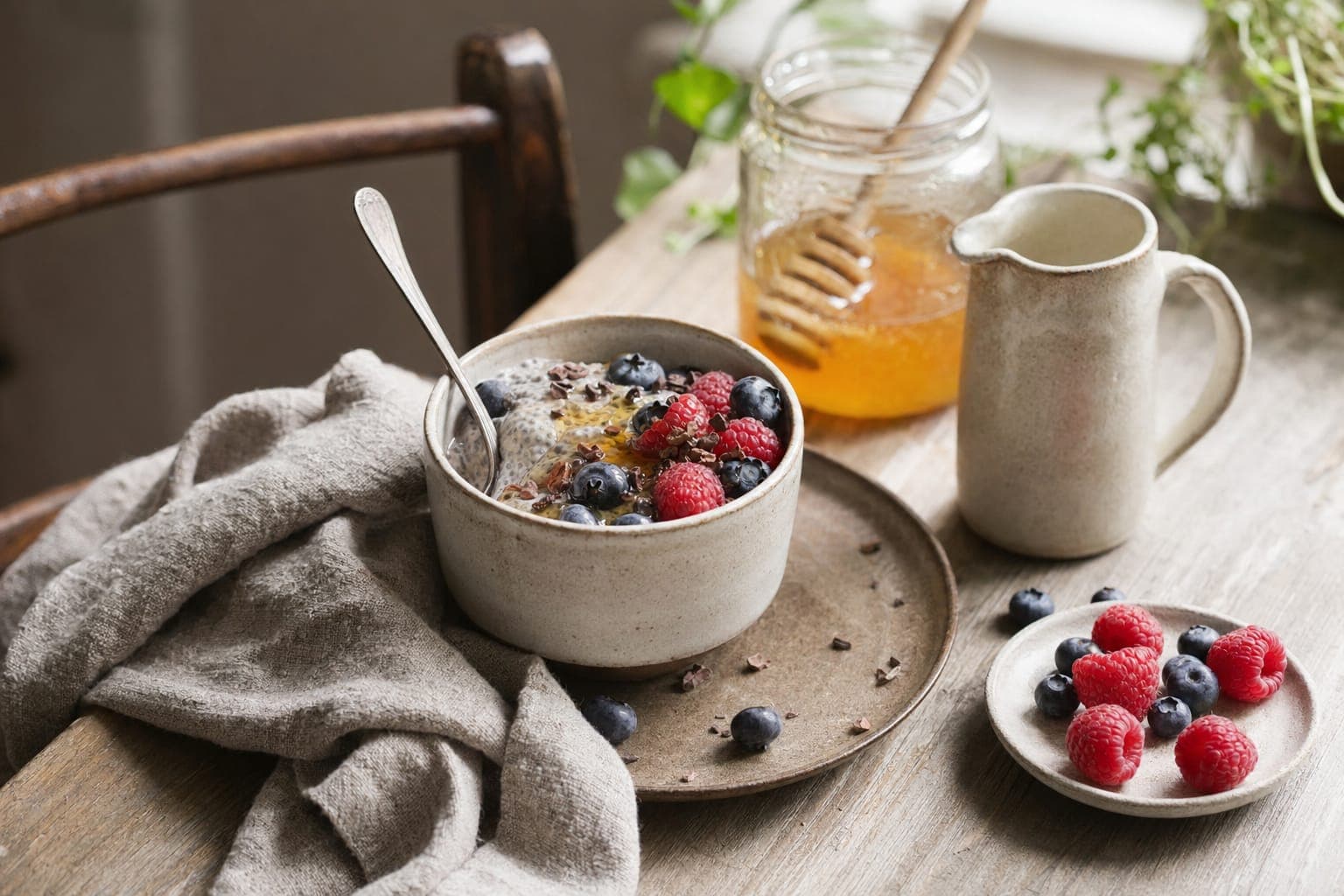
Organised Chia Pudding with Raw Honey and Berries
A no-cook chia seed pudding made with raw milk, collagen, berries, and raw honey. Prep it the night before and eat for breakfast.
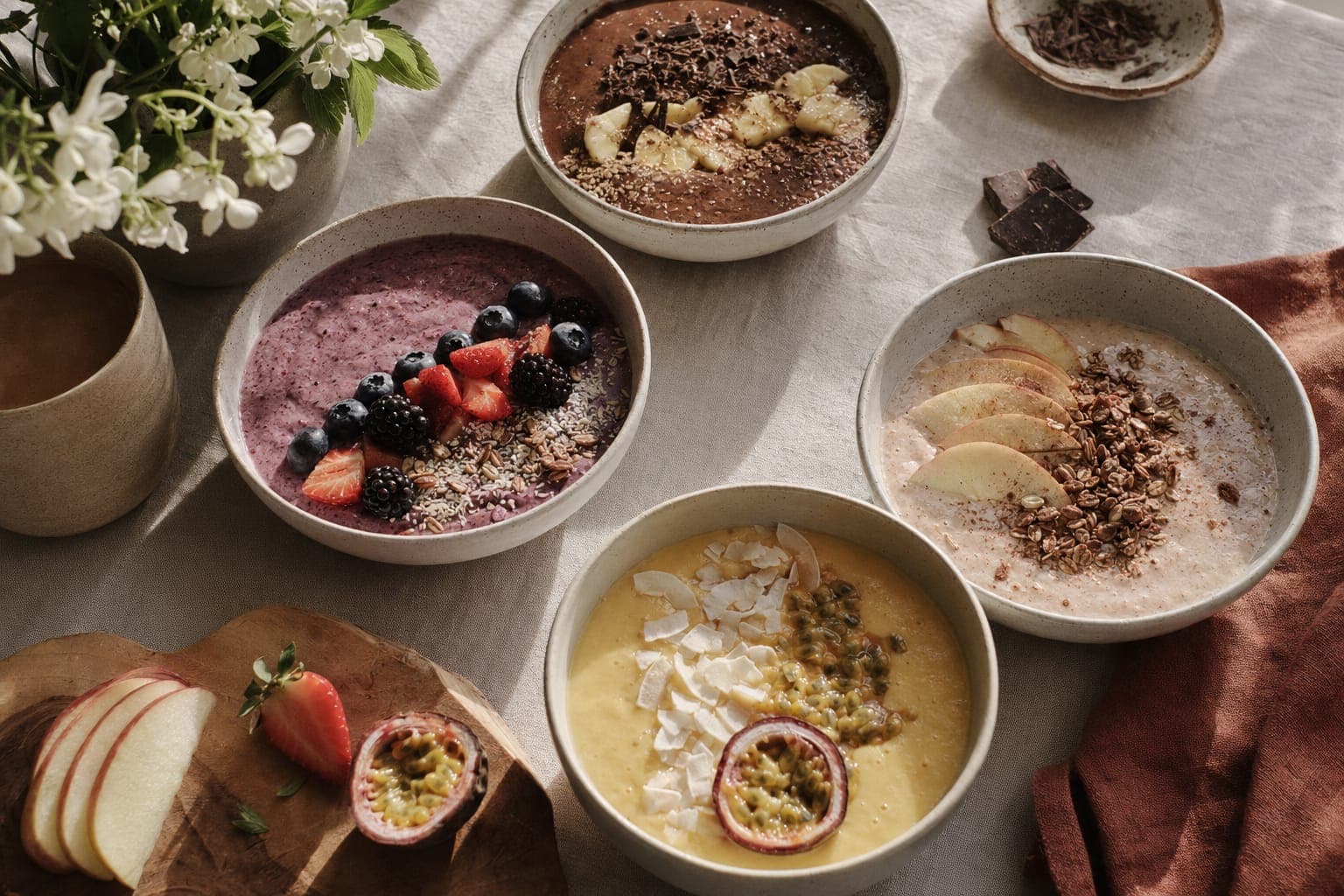
Organised Smoothie Bowl Recipes for Every Season
Four seasonal smoothie bowl recipes using Organised. Berry in summer, apple-cinnamon in autumn, tropical in spring, warming chocolate in winter.
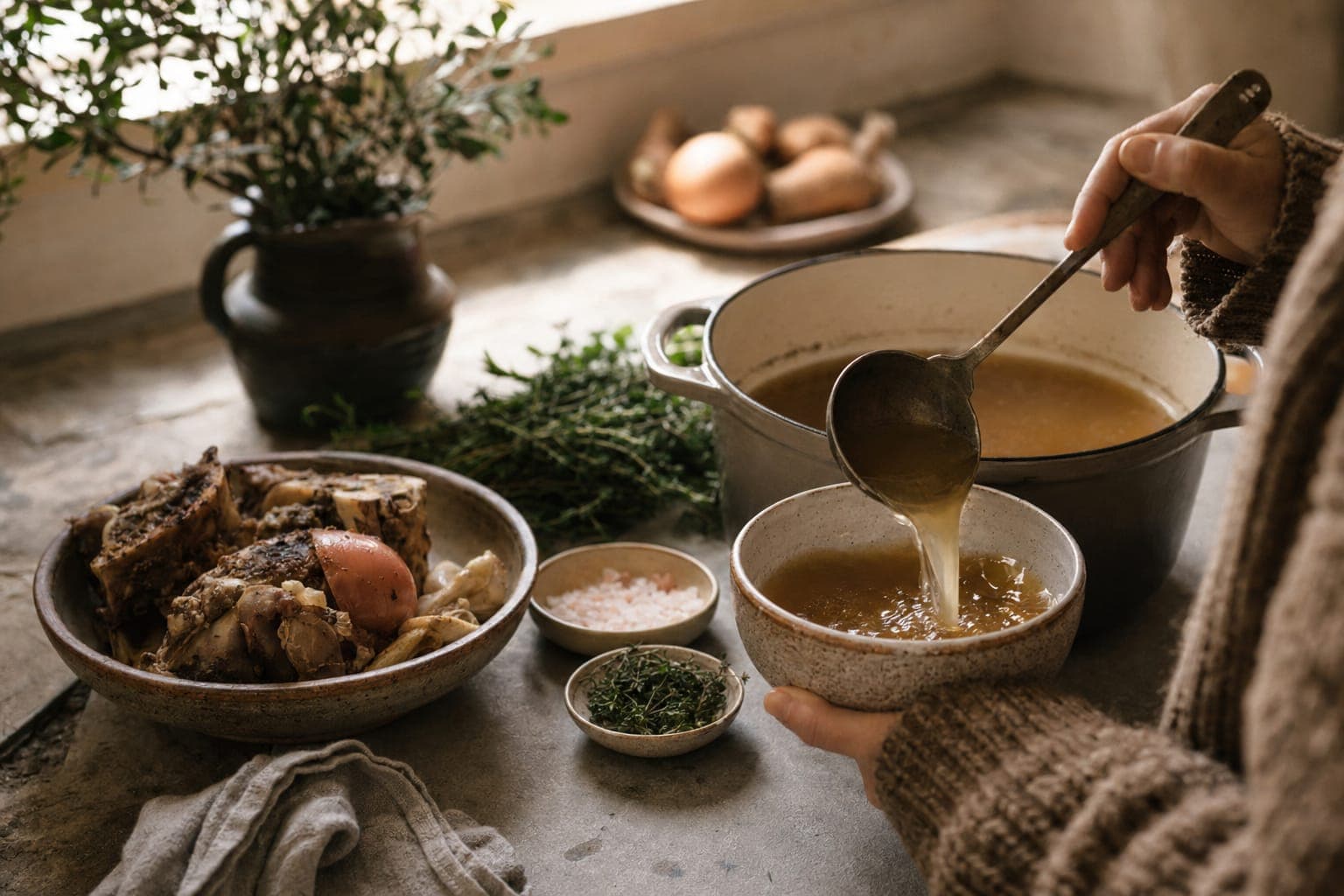
Bone Broth from Scratch: A Step-by-Step Guide
Step-by-step guide to making bone broth at home. Stovetop, slow cooker, and Instant Pot methods. Rich in collagen and gut-healing minerals.


 Join over 100,000+ members
Build a better food system with us
The Organised community is thousands of people choosing real food and backing the farmers who grow it, all of us trying to leave the world a little better than we found it. If that is what you care about too, you belong here.