How to Start Your Organised Journey: Stories from First-Time Users
You're reading about real food and you're thinking, "This makes sense. But how do I actually start?" You're imagining it's going to be dramatic. You're going to clean out your cupboards. You're going to overhaul your kitchen overnight. You're going to become a different person who eats differently. That's not how it works.
By Niall Kiddle, Founder, Organised

Reviewed by Pedro Rodrigues, Agronomist (farming and sourcing only) ·
5 min read · Published · Updated · 1 cited source
Makers of the Organised Daily blend, a grass-fed beef organ supplement from regenerative UK farms
That's not how it works.
The first week is boring
Most people's first week is completely unremarkable. You buy some eggs. You buy some meat. You make breakfast differently. You notice that you're not thinking about food at 10 AM, which is different. You feel fine. Maybe a bit clearer. Maybe the same. Nothing dramatic. Nobody around you notices. It's just breakfast, but different.
This is actually the best case scenario. If you're waiting for a transformation moment, for something to feel momentously different, you're going to get impatient and quit. The first week is just you, doing the thing, in a normal way, on a normal Tuesday morning.
Real change is slow. It's boring. It's the absence of something (the fog you used to feel at 10 AM) more than it's the presence of something (a dramatic high). Your body just starts working a bit better. You notice because you're paying attention. Everyone else doesn't notice because nothing about you visibly changes yet.
The first week of eating real food is anticlimactic. That's how you know you're doing it right.
Story 1: The breakfast person
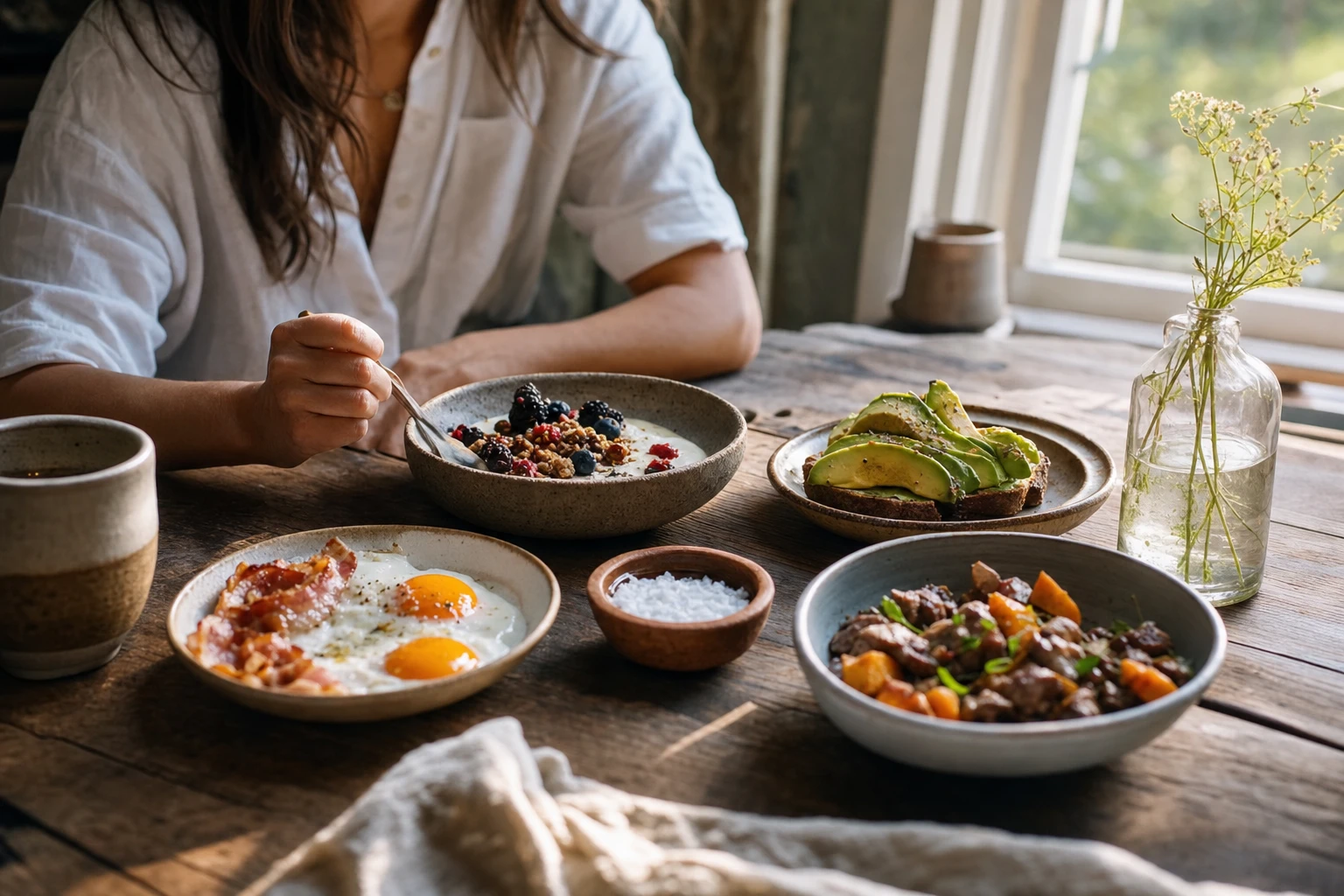
Tom is a consultant. He's busy. He's been drinking coffee and eating nothing (or sometimes a banana) for breakfast for ten years. He reads about real food and thinks, "Okay, I'll try eggs."
Day one: He fries an egg in butter, adds some salt, eats it in five minutes. It's fine. Different from what he usually has, but fine. He's still hungry, but he can't face food, so he just drinks more coffee.
Day two, he realises that an egg isn't enough. He adds bacon. Still feels slight on lunch but the hunger is quieter. By day five, he's figured out that two eggs, bacon, and some salt makes him feel good until noon. By week three, he's not even thinking about food until 12 PM. By week six, people are asking him why he looks less tired.
Tom's change: one meal. One breakfast. That's it. Everything else in his diet stayed the same, and the ripple was visible.
Story 2: The overwhelmed parent
Sarah has three kids. She's tired. She feeds her family takeaway three times a week because she doesn't have energy for cooking. She reads about real food and thinks, "I'll never be able to do this."
But then she makes a simple trade. Instead of calling for pizza on a Wednesday, she buys a rotisserie chicken, some potatoes, and some salad. She roasts the potatoes in butter. It takes thirty minutes start to finish and costs less than pizza. She feeds her family. Nobody complains.
Next week, she does it again. Then she adds another meal. Roasted meat and vegetables on a Sunday. Takes an hour (if that), and she can reheat it through the week. By month three, she's cooking real food twice a week, her takeaway has dropped from three times to maybe once, and her kids have stopped asking for crisps quite so much.
Sarah's change: one meal. One dinner. Scaled gradually. Not revolutionary. Just slightly better, repeated.
Get stories from the community, free
Two short reads a week on the farmers, the standards, and the return to real food.
By signing up you agree to receive emails from us. No spam, unsubscribe anytime.
Story 3: The sceptical partner
Jessica wanted to change how her family ate. Her partner, Mark, was sceptical. "This is too complicated," he said. "I'm not eating weird food."
Jessica didn't fight. She just started cooking differently. She made burgers instead of packet burgers. She made spaghetti bolognese with real meat and tomatoes. She made curry with real spices and real meat. She changed the ingredients but not the meals. Mark ate exactly what he was already eating, just better.
By week four, Mark said, "My stomach feels fine for the first time in years. What changed?" And she could point to actual changes (no industrial vegetable oil, better meat, real vegetables) without it being ideological. The food tasted better. That's all he needed to know.
Jessica's change: complete stealth. She changed the underlying ingredients but not the surface-level meals. By the time Mark noticed anything, he was already feeling better, so he wasn't resistant anymore.
1 of 9
Daily blend
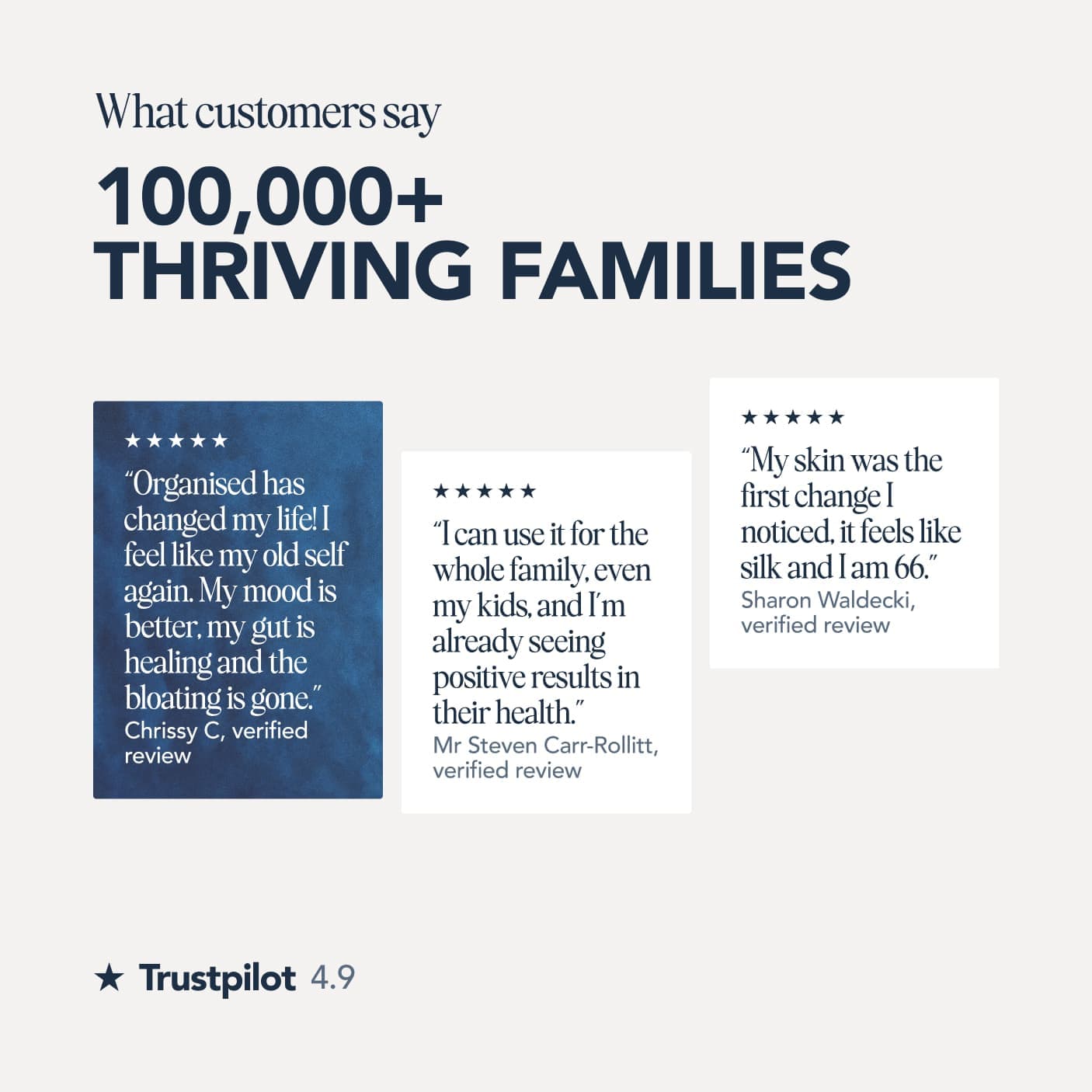
100,000+ thriving families4.9 on Trustpilot
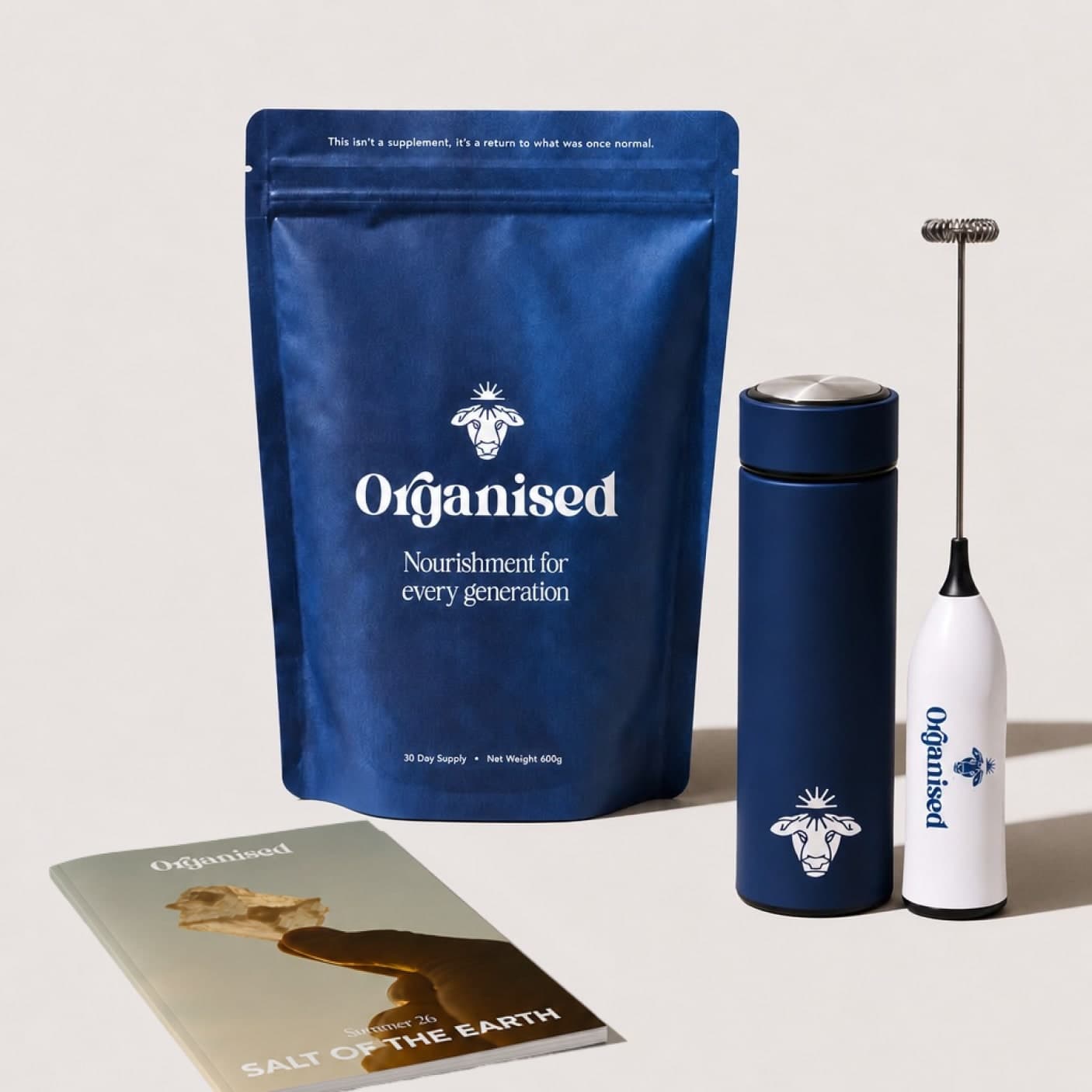
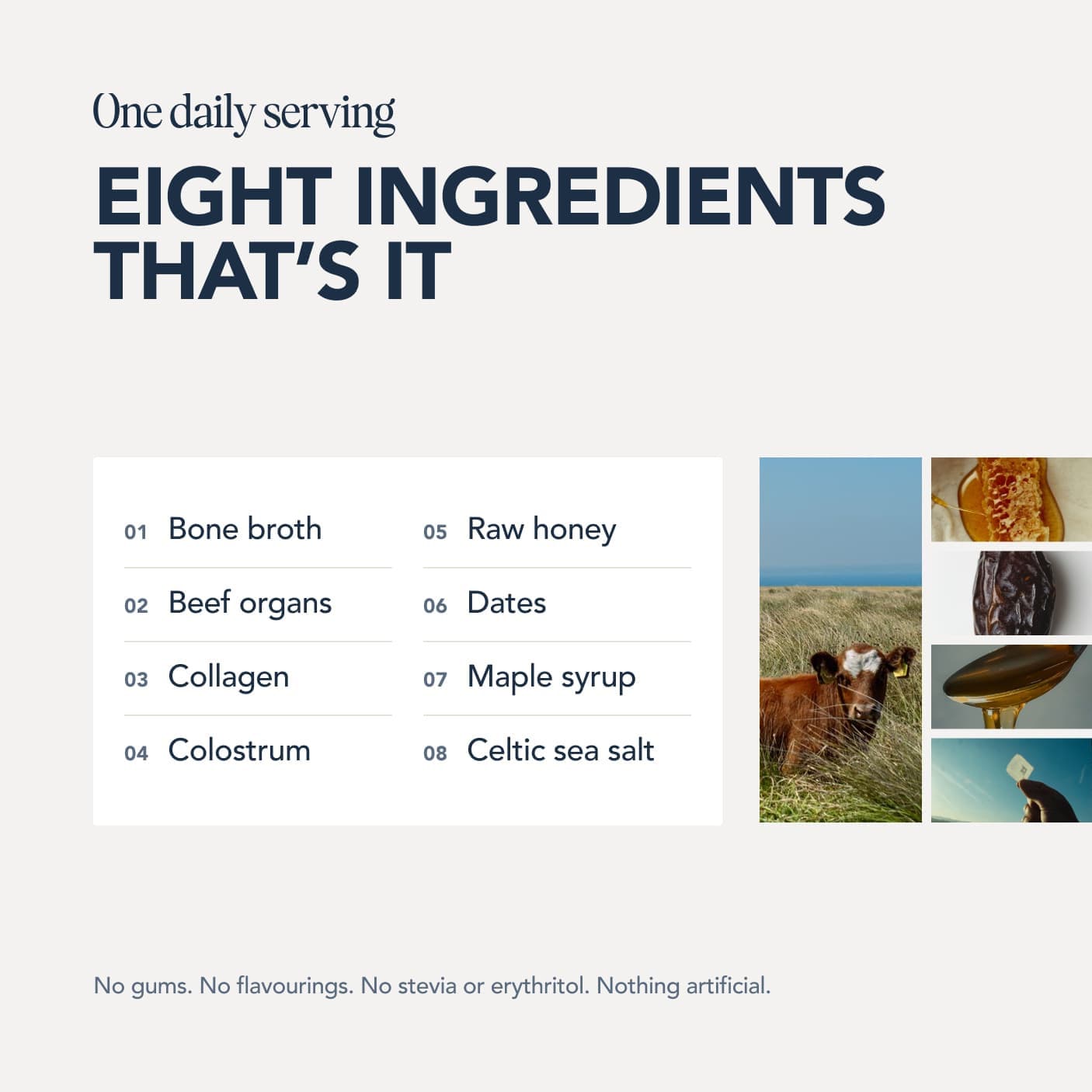
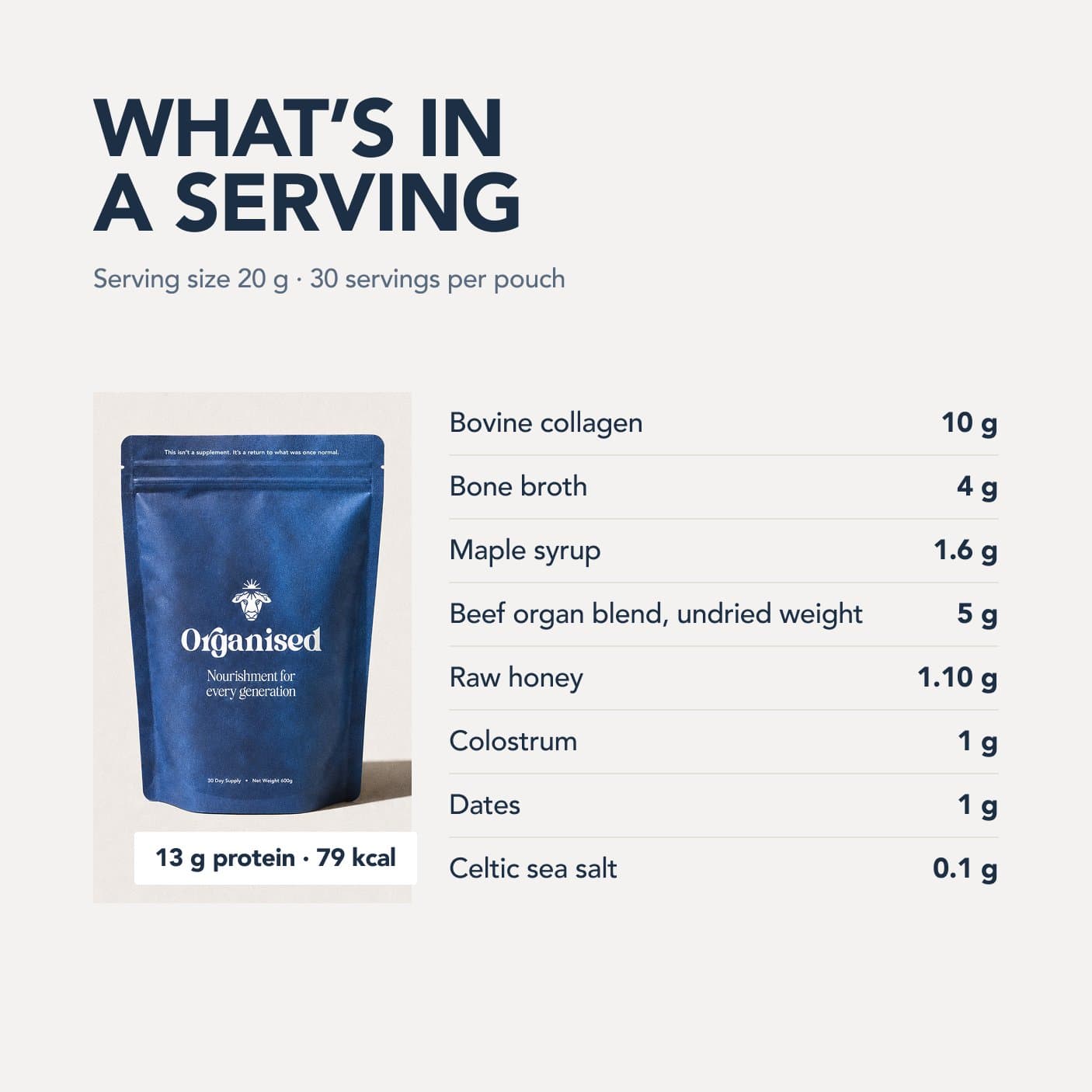
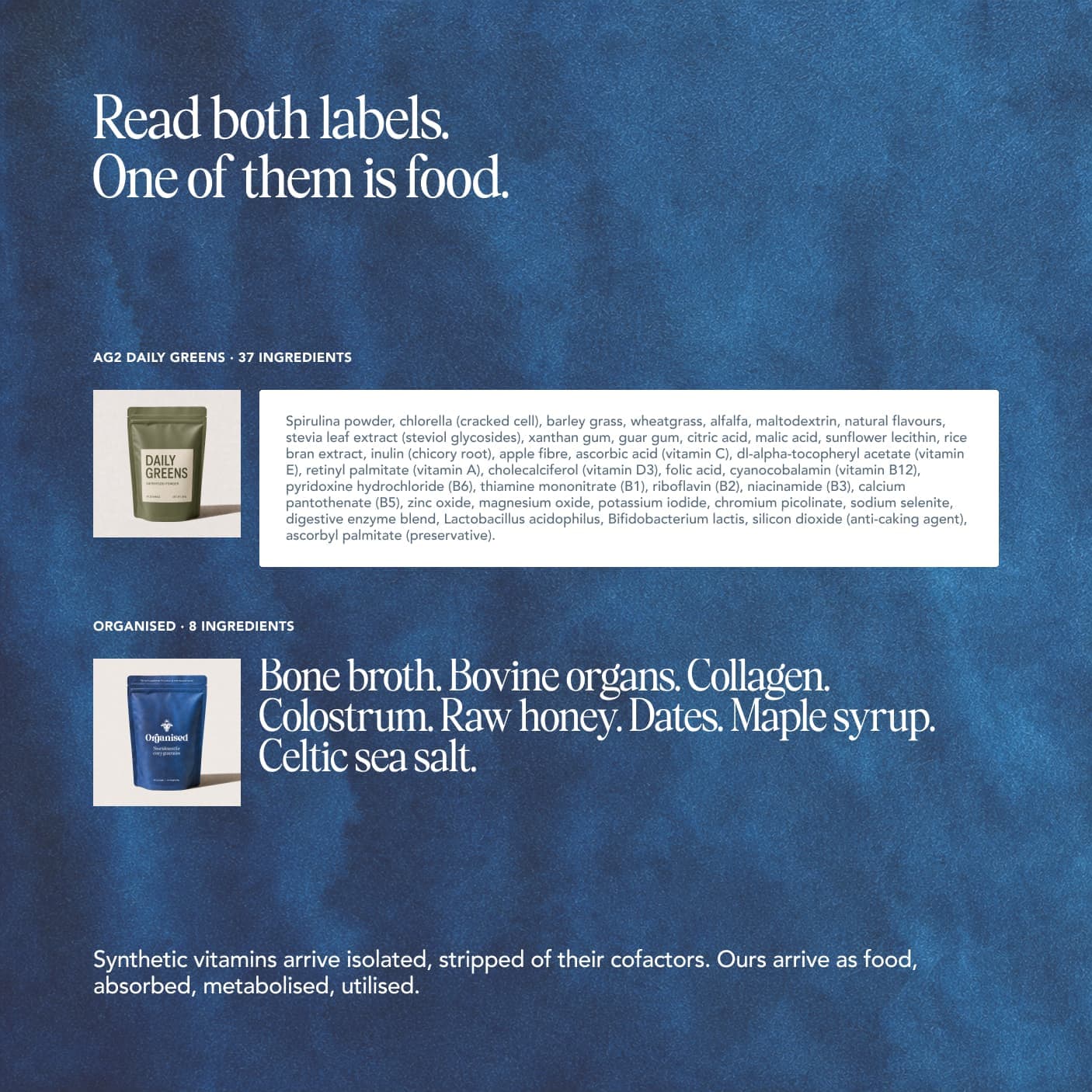
Eight real ingredients built around grass-fed beef organs, collagen and colostrum. Nothing synthetic added.
Free with your first order, worth £38. Plus £10 off the pouch with a subscription.
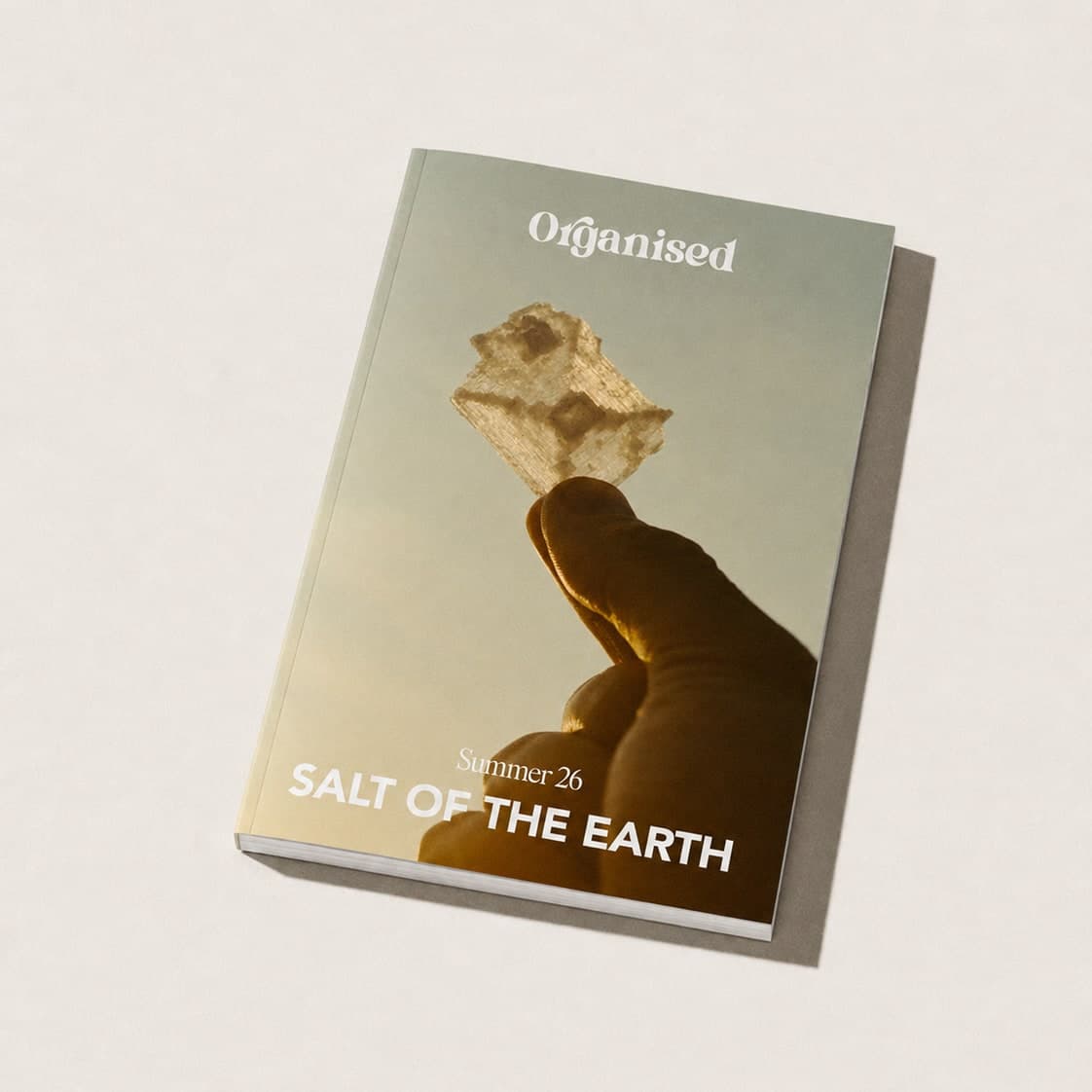
Free UK shipping · Made in England · 100 day money back guarantee on your first pouch · Skip, pause or cancel anytime
What actually changes in the first month
Most people report one or more of these in the first 30 days.
Energy becomes more stable. You stop having that sharp energy crash at 3 PM or 10 AM. You're just… okay throughout the day. Not caffeinated, not depleted. Just okay. For some people, this is the biggest thing. They've been living in energy cycles for so long that stable energy feels like a miracle.
Digestion settles. Your stomach stops being volatile. You're not bloated after eating. You're not constipated or the opposite. You just… digest. It's unremarkable. That's how you know it's working.
Sleep improves. Not always dramatically, but most people sleep more deeply within the first month. They wake up less in the night. They feel less groggy in the morning.
Hunger becomes logical. You eat when you're hungry. You stop when you're satisfied. You're not constantly thinking about food, or constantly restraining yourself from eating. Your appetite just works.
Mental clarity increases. This is harder to quantify, but people describe it as the fog lifting. Not that they suddenly feel brilliant. Just that they feel more like themselves.
The first month of change feels like you're finally operating the way you're supposed to. Boring. Stable. Fine.
The things that stick, and why
People don't stick with real food because they're forced to. They stick because they feel better. Tom still eats eggs for breakfast because he's not hungry at 10 AM anymore and he likes that. Sarah still cooks at home because she has more energy, her kids are healthier, and honestly, it's cheaper. Mark eats real food because his stomach doesn't hurt anymore.
The change sticks when it's built on feeling better, not on willpower. When it's practical, not ideological. When you can explain it to yourself without reaching for phrases like "I'm eating clean" or "I'm optimising my health." You're just eating the food that makes your body work. That's all.
If you start, and nothing changes in the first month, that's worth investigating. If nothing shifts, you may need to change more than one meal, or have an underlying issue (such as iron deficiency or malabsorption) that needs medical assessment.1
And then the question becomes: do you keep going? Most people do. Not because they're disciplined. Because they prefer how they feel. And that's the only reason that lasts.
References
Every source below was checked on 27 August 2026. Each link was requested and read. Where a citation and its identifier disagreed, the citation was corrected to the record or the reference was deleted along with the sentence marker that pointed at it, and where the resolved paper turned out not to support the sentence, the sentence was cut back to what it does support. Borrowed authority is worse than none, because it looks like rigour.
- National Institutes of Health, Office of Dietary Supplements. Iron — Health Professional Fact Sheet. https://ods.od.nih.gov/factsheets/Iron-HealthProfessional/
Who wrote and reviewed this guide
Niall Kiddle
Author · Founder, Organised
Niall is the founder of Organised. He started the company in 2024 after fixing his own health the slow way: in 2022 he swapped a cupboard of synthetic supplements for real food, raw milk, organ meats, bone broth and honey, and felt the difference within months.
Areas of expertise: Ancestral nutrition, Organ meats, Whole-food supplementation, Gut health, Regenerative sourcing
Read Niall's full profile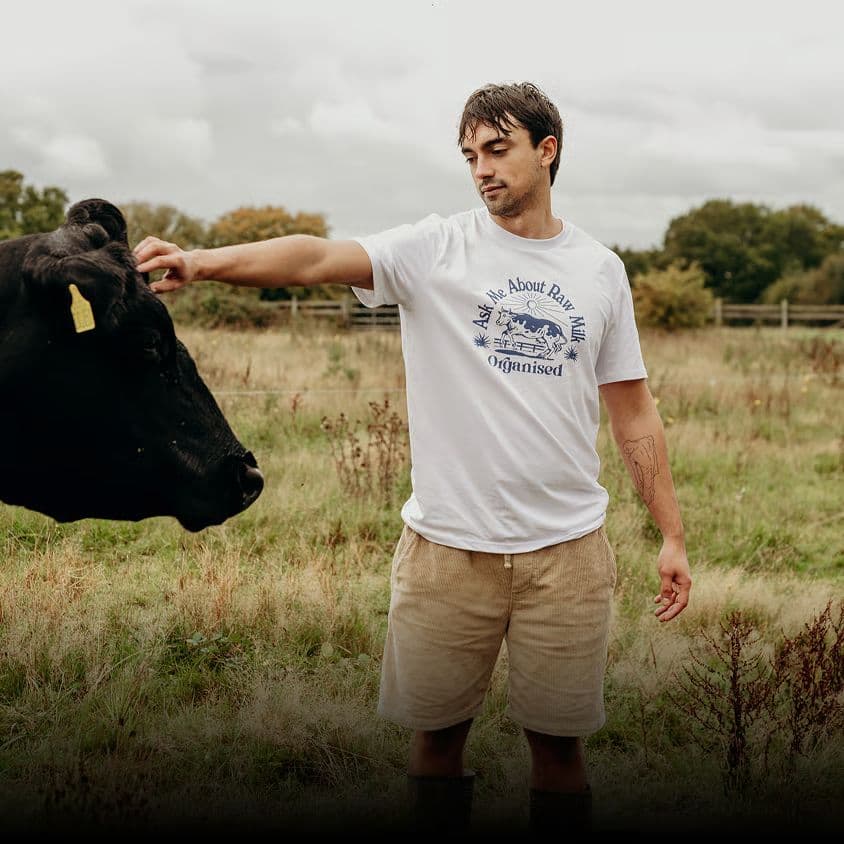
Pedro Rodrigues
Reviewer · Agronomist (farming and sourcing only)
Pedro is the agronomist Organised works with on farming and sourcing. His job on the guides is to keep the science honest: he reviews what we publish about soil health, regenerative agriculture, grazing and the way food is actually produced.
Areas of expertise: Regenerative agriculture, Agronomy, Soil health, Grass-fed farming, Food sourcing
Reviewed this guide on
Read Pedro's full profileBrowse the guides library
All guidesKeep reading

Culture & community
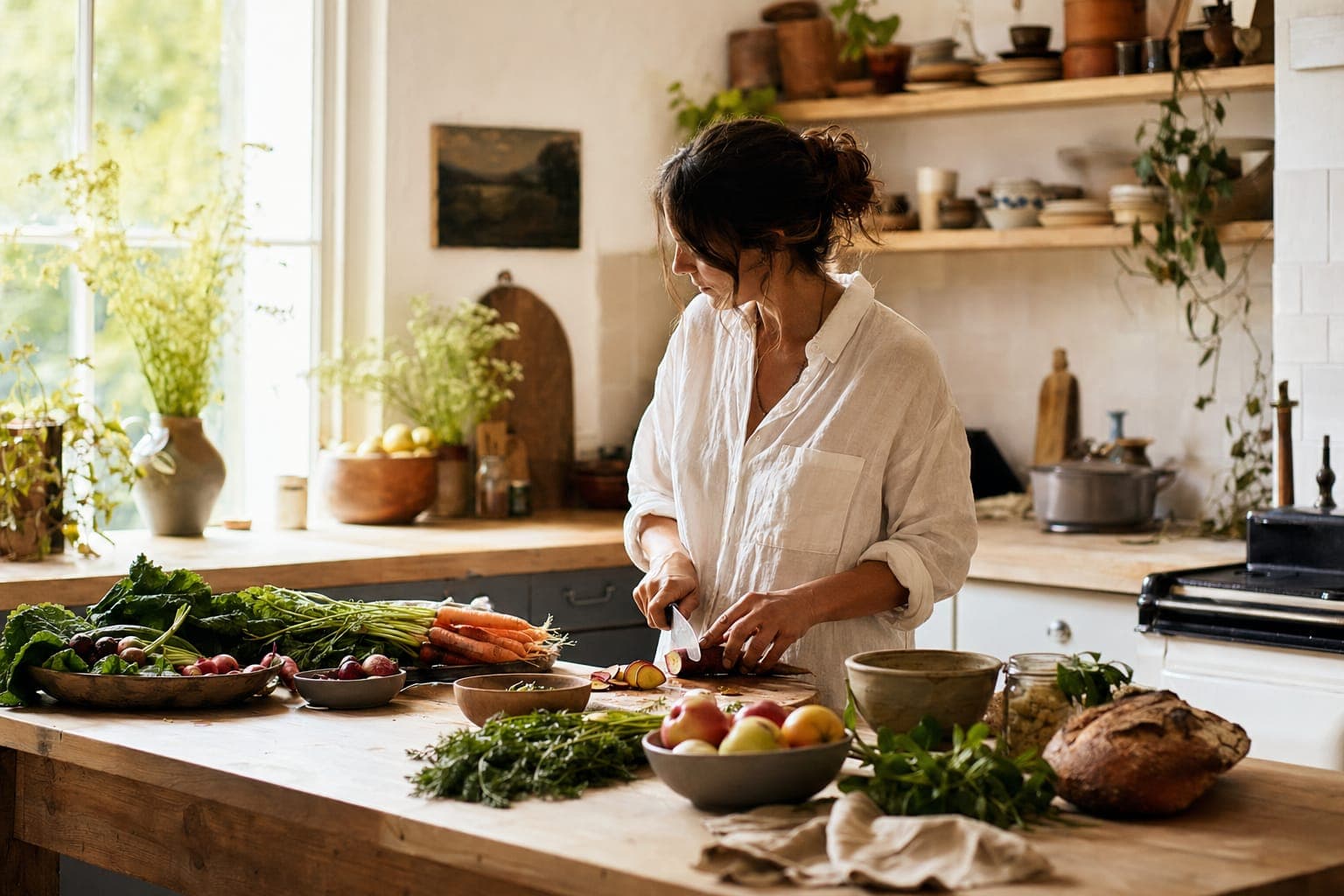
How the Organised Community Supports Each Other's Health Journeys
See how community health support drives real change, with stories of accountability and shared knowledge from people transforming their health together.
Culture & community
New Year, Real Food: A Whole Food Resolution That Actually Works
January diets fail. Here's why, and how to build a resolution based on adding real food instead of restriction. Sustainable change that lasts.
Culture & community
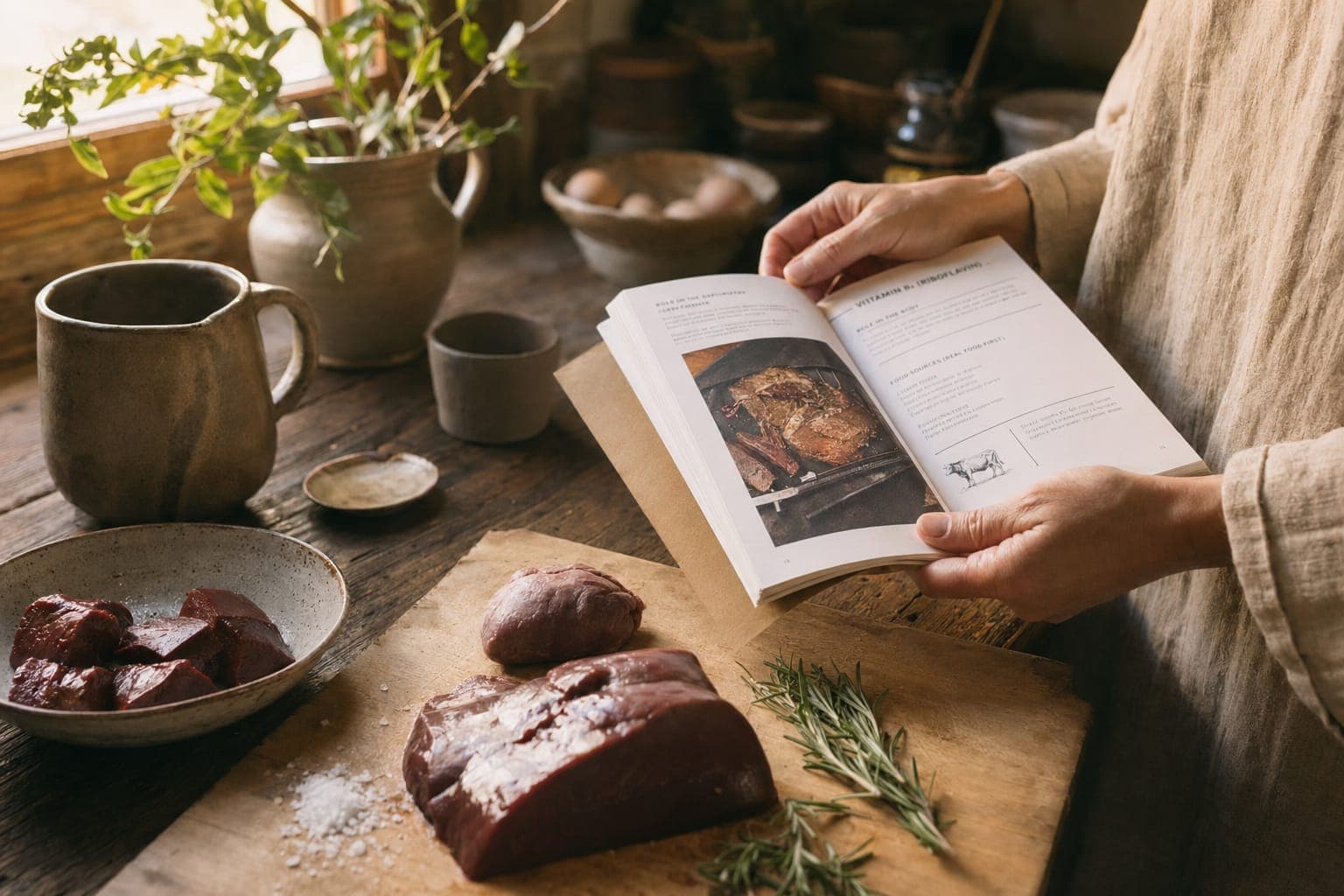
The Organised Field Guide: What's Inside and Why We Made It
A transparent resource for real food nutrition. What's in the Organised Field Guide and how to use it to build a whole food eating pattern.
Real food, made effortless
Shop the blendA few ways to use it
All recipes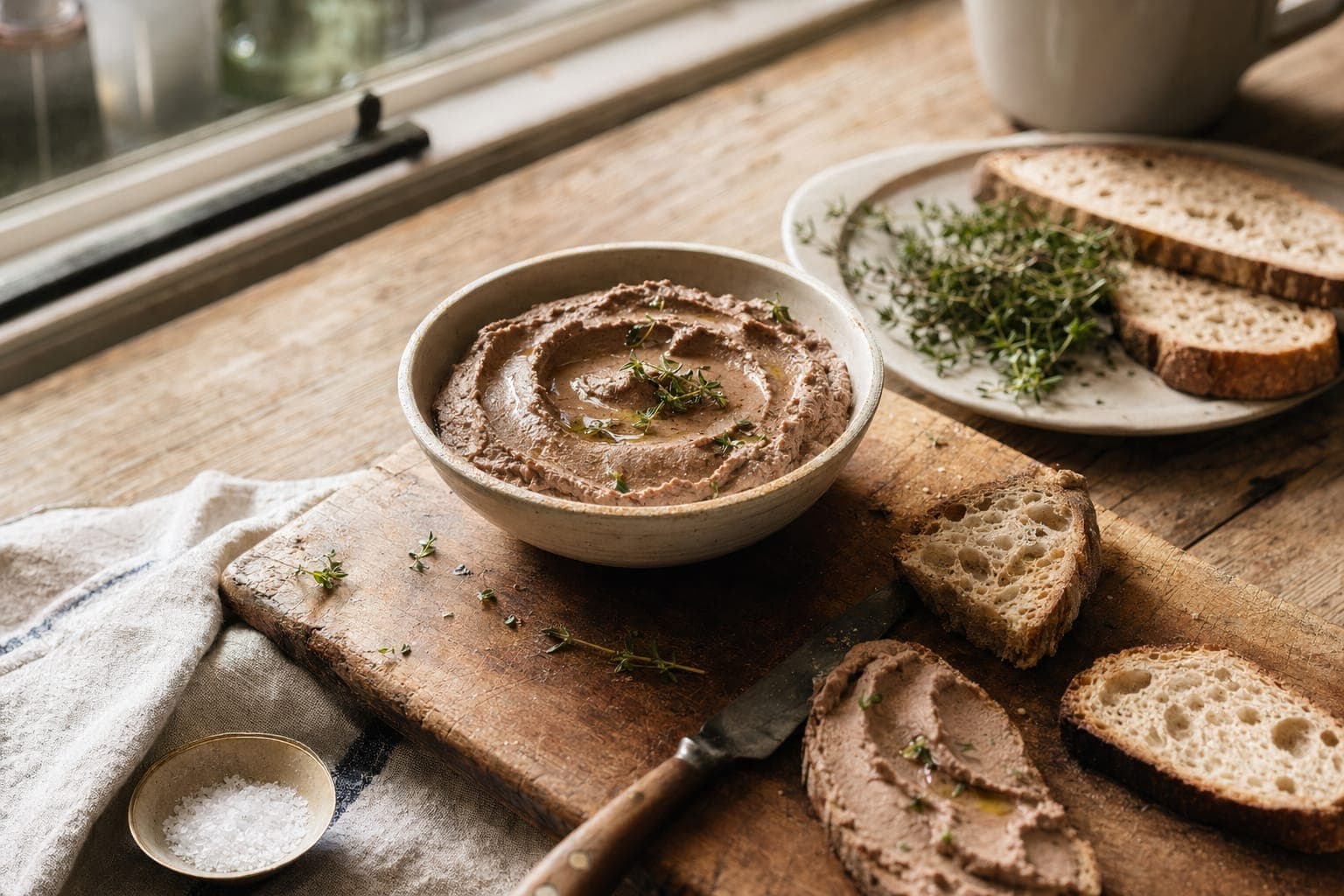
Liver Pate for Beginners: A Gentle Introduction to Organ Meats
Simple liver pate recipe to start eating organ meats. Chicken liver, butter, and herbs. Gentle introduction to nutrient-dense whole foods.
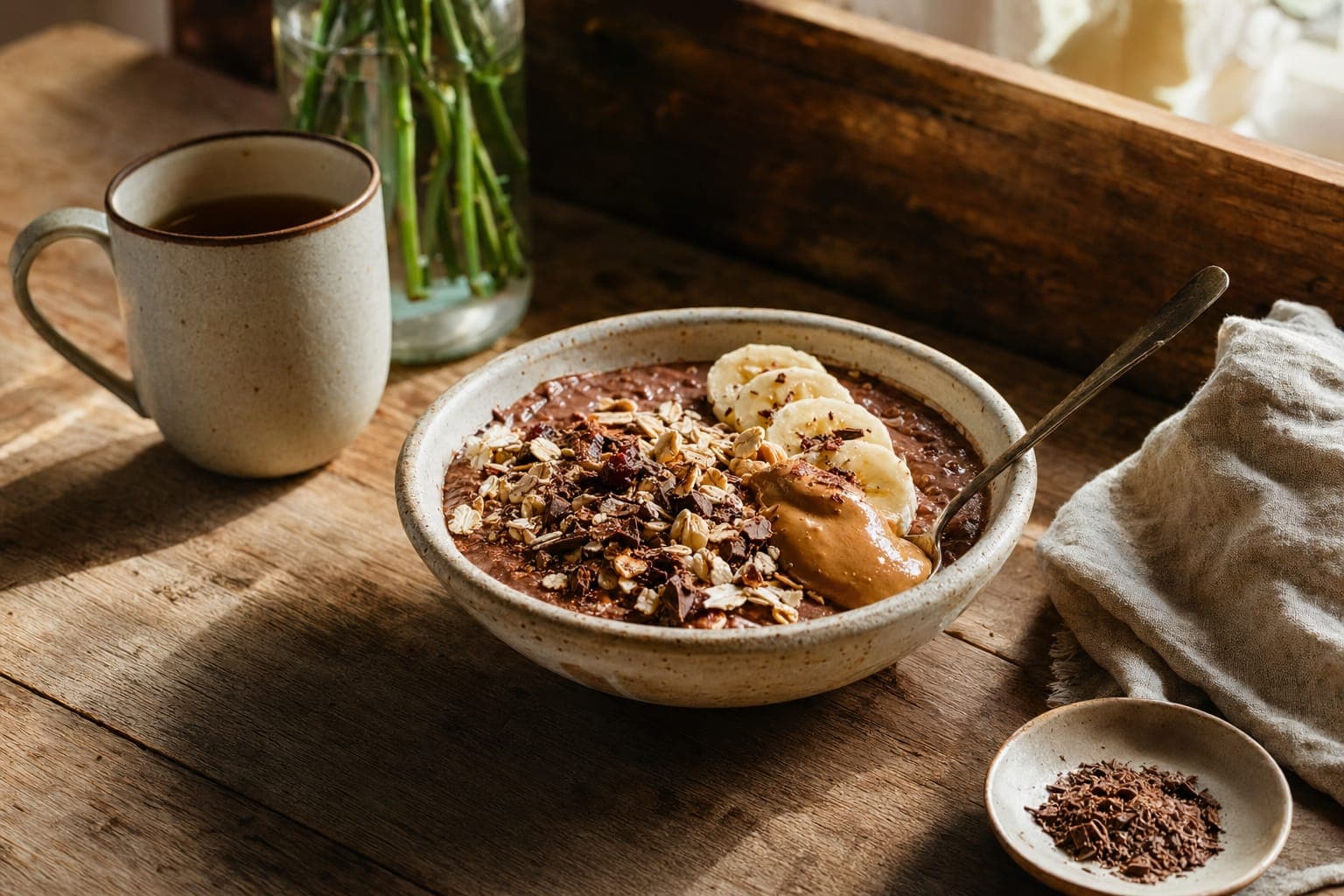
10 Ways to Use Organised That Aren't Just a Shake
Move beyond the basic shake. Discover 10 creative ways to use Organised in smoothie bowls, oats, yoghurt, baking, and more.
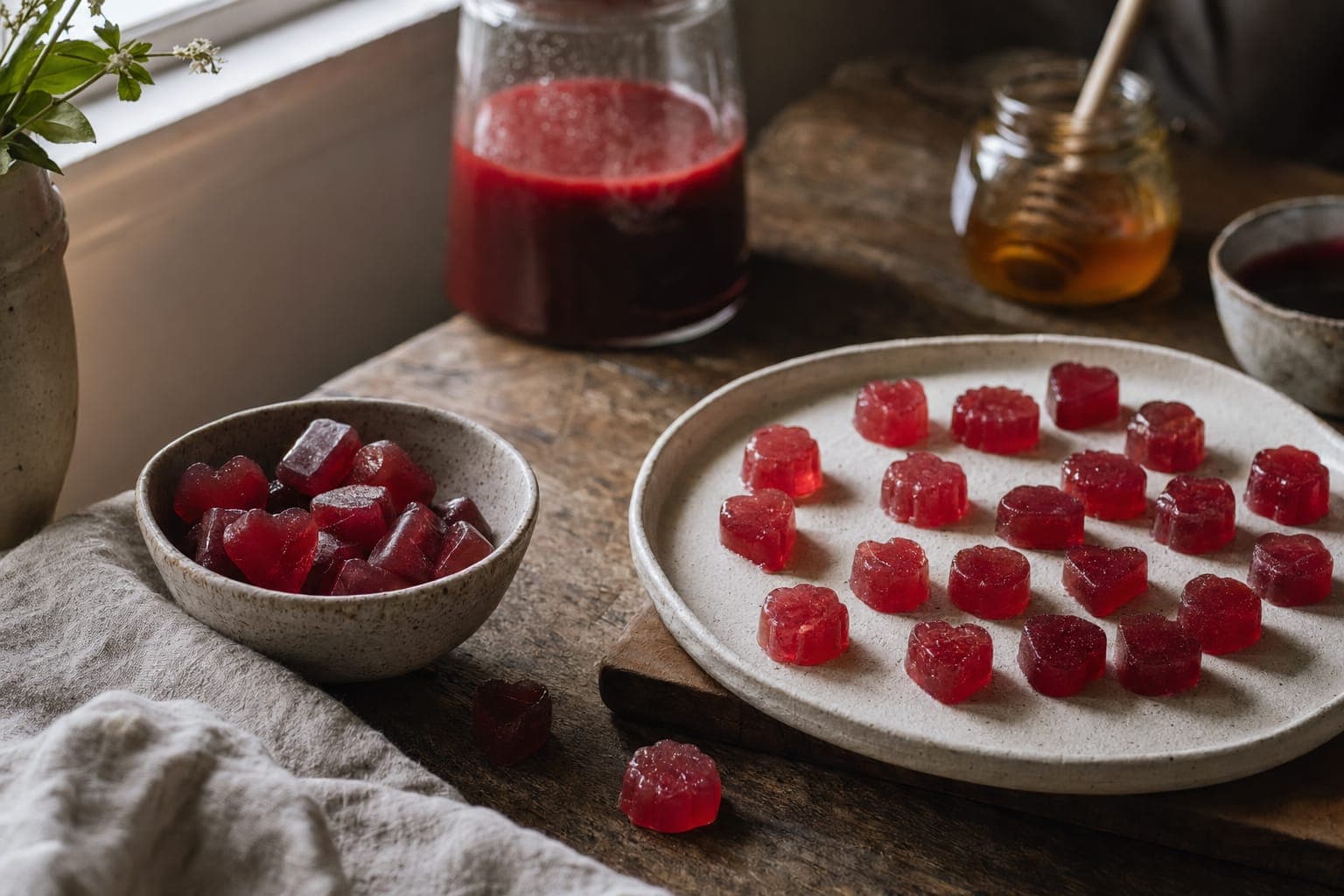
How to Make Your Own Gelatine Gummies
A simple recipe for homemade gelatine gummies using grass-fed gelatine, fresh juice, and raw honey. Better than shop-bought, kids love them.


 Join over 100,000+ members
Build a better food system with us
The Organised community is thousands of people choosing real food and backing the farmers who grow it, all of us trying to leave the world a little better than we found it. If that is what you care about too, you belong here.