The Organised Field Guide: What's Inside and Why We Made It
We made a field guide. Not a diet book. Not a cookbook. A field guide. Like the kind that helps you identify birds, or plants, or stars in the night sky. This one helps you identify real food, and builds out from there.
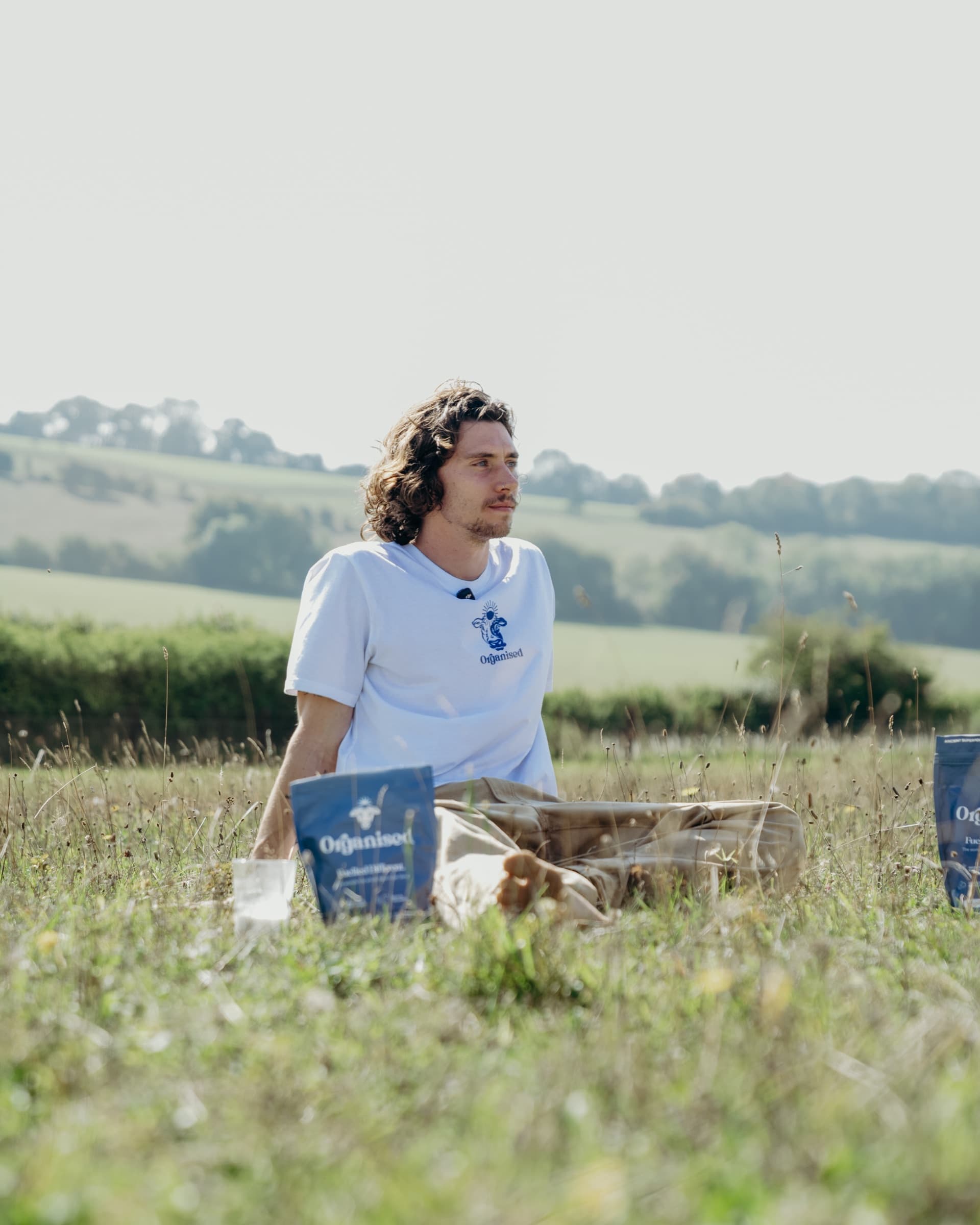
By Niall Kiddle, Founder, Organised

Reviewed by Pedro Rodrigues, Agronomist (farming and sourcing only) ·
4 min read · Published · Updated · 1 cited source
Makers of the Organised Daily blend, a grass-fed beef organ supplement from regenerative UK farms
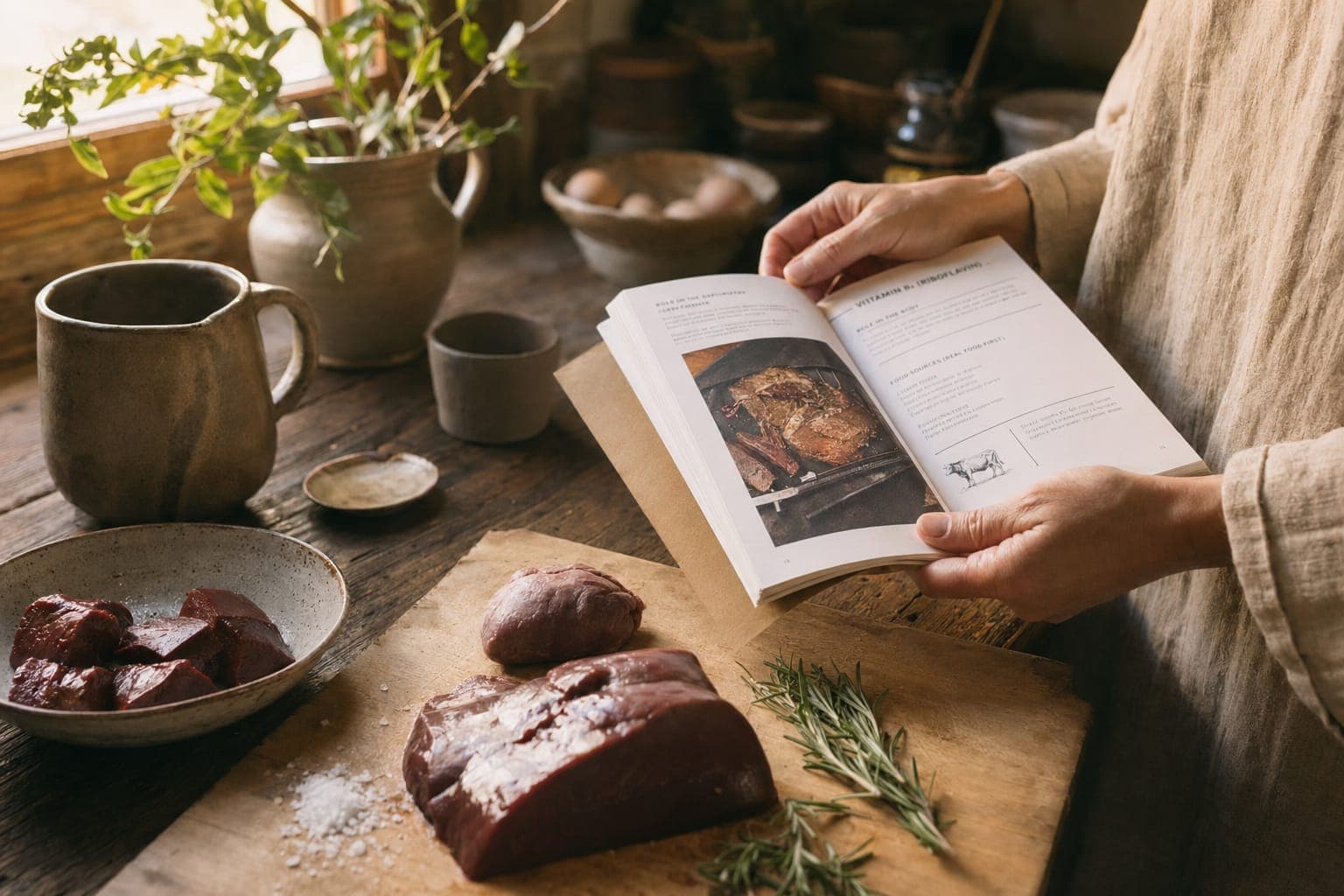
The reason for that specific choice of format matters.

Why a field guide, not a diet book
Most nutrition books come with a narrative. Here's the problem (usually: you're eating too much, or the wrong things, or not enough). Here's the solution (usually: eat like this, avoid that, follow this plan). Here's the science (sometimes real, sometimes selective). By the end, you either believe the narrative or you don't, and your relationship with food changes accordingly, for better or worse.
We didn't want to do that. We didn't want to tell you that you're broken and need fixing. We didn't want to sell you a blueprint. We didn't want to create a narrative that only works if you accept every premise.
Instead, we wanted to create a reference tool. Something you could open and say, "Okay, what's in eggs? What makes them different from other foods? What's actually inside an organ like liver?" Something that shows you the nutrients, the science, the practical reality of real food without telling you that you must eat a specific way.
A field guide assumes you're intelligent. It trusts you to look something up, read the information, and make your own choice. That felt honest to us.
We wanted to show you the terrain, not draw you a map and insist it's the only way to walk.
The structure and what's inside
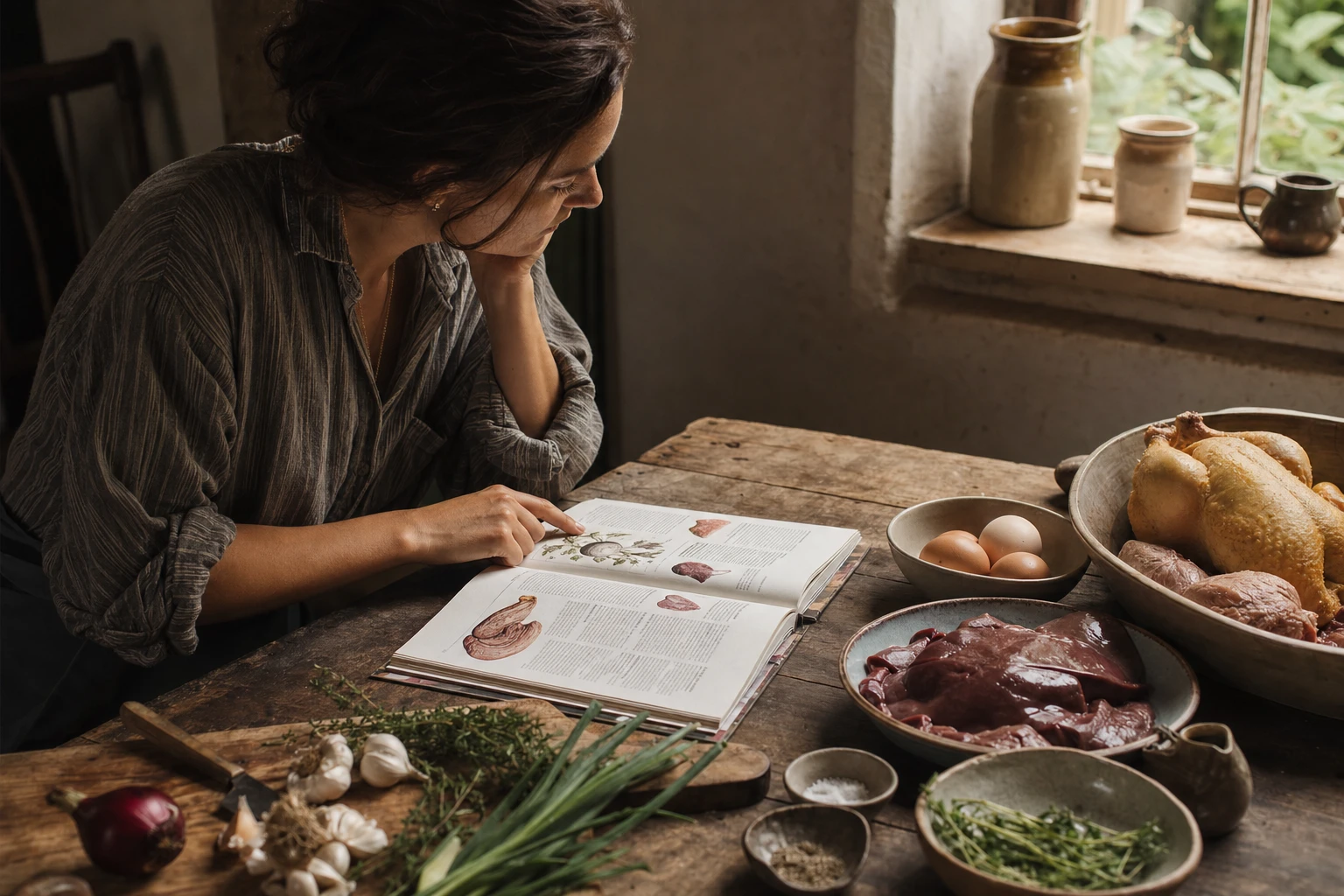
The field guide is organised around foods, not around nutrients or dietary dogma. You have sections on proteins, fats, vegetables, fruits, herbs, fermented foods. Within each, we've documented the major foods that show up in ancestral eating patterns and whole food diets.
For each food, you get several things. First, what's actually in it. Not marketing language. Not vague terms like "superfoods." Actual nutrients. Vitamin content. Mineral content. Protein. Fat composition. The bits that actually matter to your body.
Second, context. How this food was eaten traditionally. Whether it was a daily staple or a seasonal luxury. What combination of foods would typically appear together. The real patterns of how humans ate, not invented patterns designed to fit a philosophy.
Third, practical notes. How to select it. How to prepare it. What to look for when you're buying. Whether frozen or fresh makes a difference. Whether cooking changes anything important. The real, practical stuff that separates theory from dinner.
We also included what we didn't know. Where the science is genuinely unclear. Where different populations seem to have done well on different versions of a food. Where our certainty ends and honest uncertainty begins.
How to actually use it
You don't read a field guide cover to cover. You use it when you need it. You're standing in the farmers market looking at brassicas and you're thinking, "What's actually different between kale and cabbage?" You open the guide. You read. You know.
Or you're meal-planning and thinking about iron, and you want to know which foods are actually iron-dense. You look up beef, liver, oysters, spinach. You see what's in them. You choose based on what you actually like and what you have access to.
Or you're reading an article about why sardines are good for you, and you're sceptical, so you look up sardines in the field guide and you see what they actually contain. You don't have to take anyone's word for it. You have the information.
A field guide works when you use it to answer your own questions, not when you memorise it.
Get stories from the community, free
Two short reads a week on the farmers, the standards, and the return to real food.
By signing up you agree to receive emails from us. No spam, unsubscribe anytime.
What we don't include, and why
We don't include processing instructions for seed oils or recipes for processed foods. Not because those things don't exist or aren't sometimes convenient. But because the purpose of the guide is to help you build a relationship with real food, and including a detailed section on extracting and refining vegetable oils didn't serve that purpose.
We don't include calorie counts. Not because calories are meaningless, but because we wanted the guide to avoid the trap of nutrient reduction (the idea that food is just numbers, so you can optimise by the math). It's not. Your body responds to real food differently than to processed food with the same calorie count.1 The guide reflects that reality.
We don't include supplement formulations. Not because supplements have no place (for some people, they genuinely do). But because the purpose of the guide is to orient you toward foods first. If you're building a diet around supplements, you've already started in the wrong direction.
We don't include a specific meal plan, or a prescription about what percentage of your diet should be protein versus carbohydrate. Not because those things don't matter, but because they're individual. Different bodies need different ratios. The guide gives you the information to figure out what yours needs.
1 of 9
Daily blend
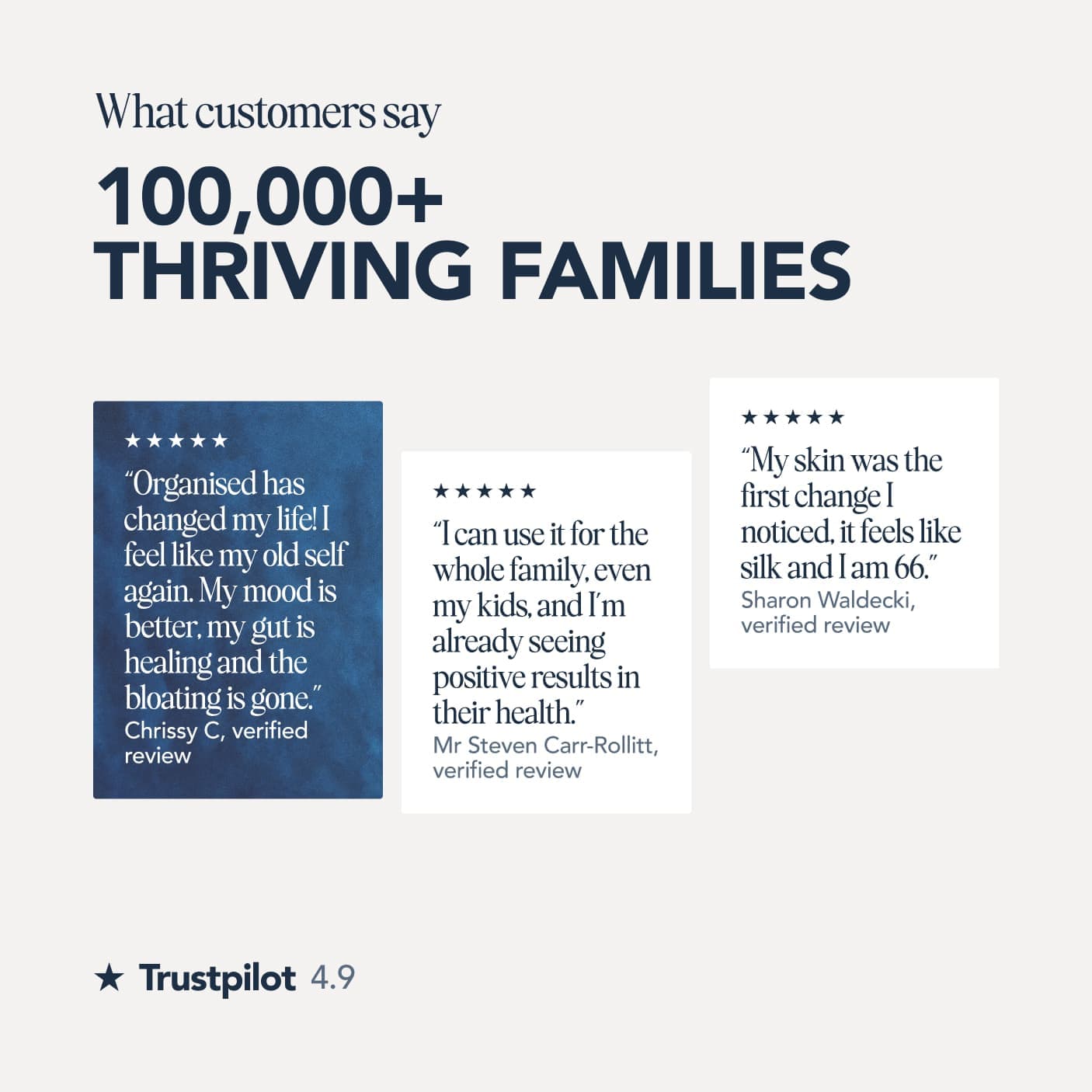
100,000+ thriving families4.9 on Trustpilot
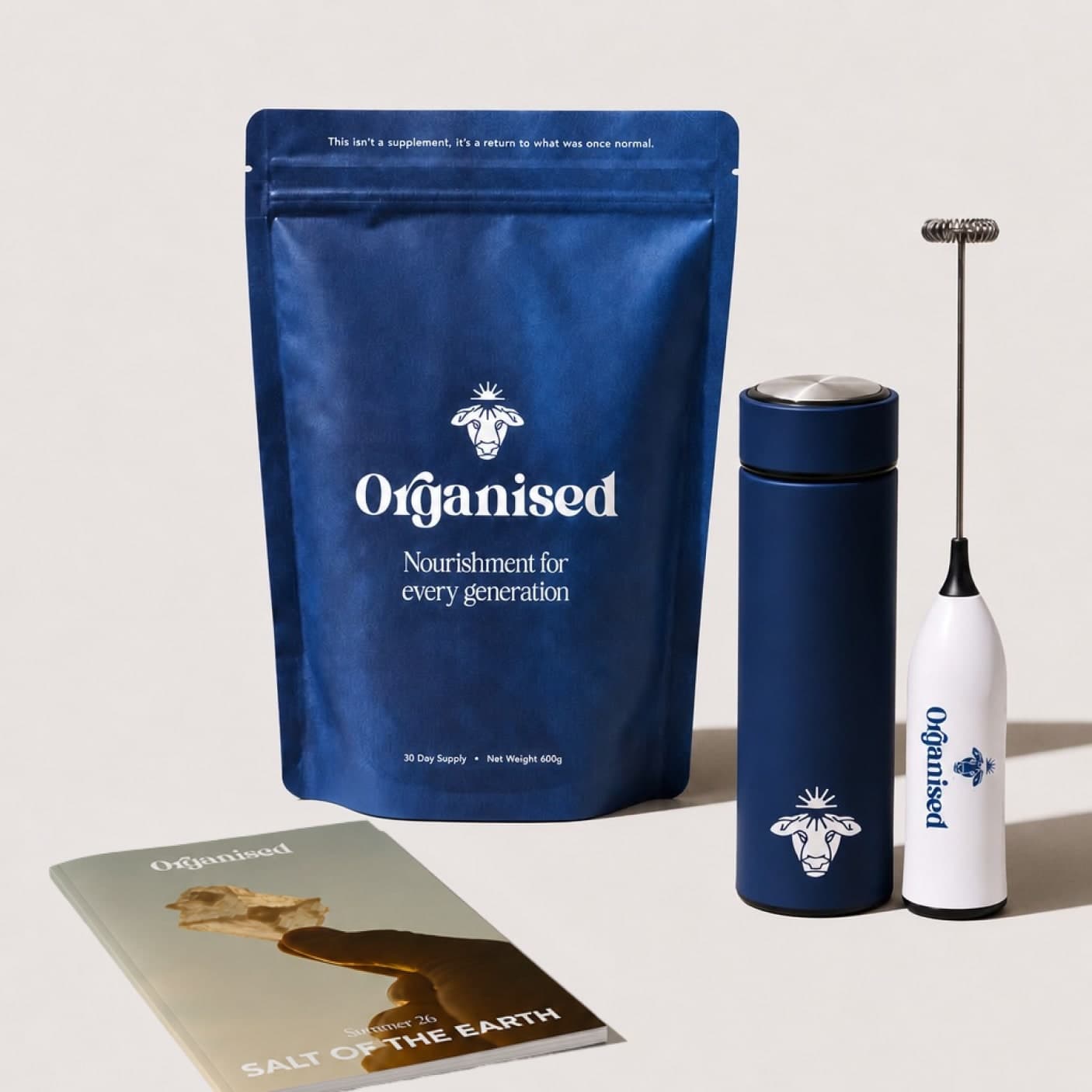
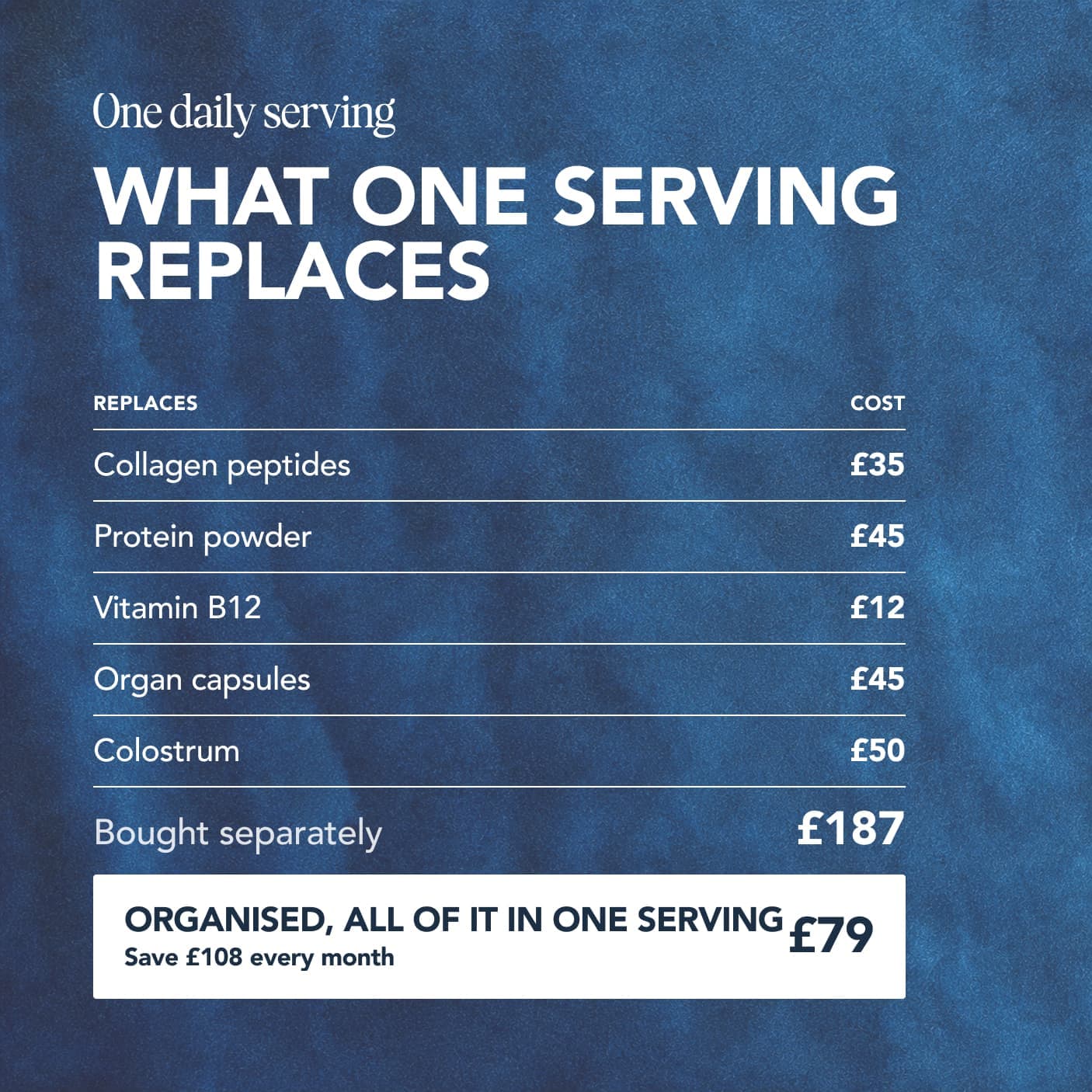
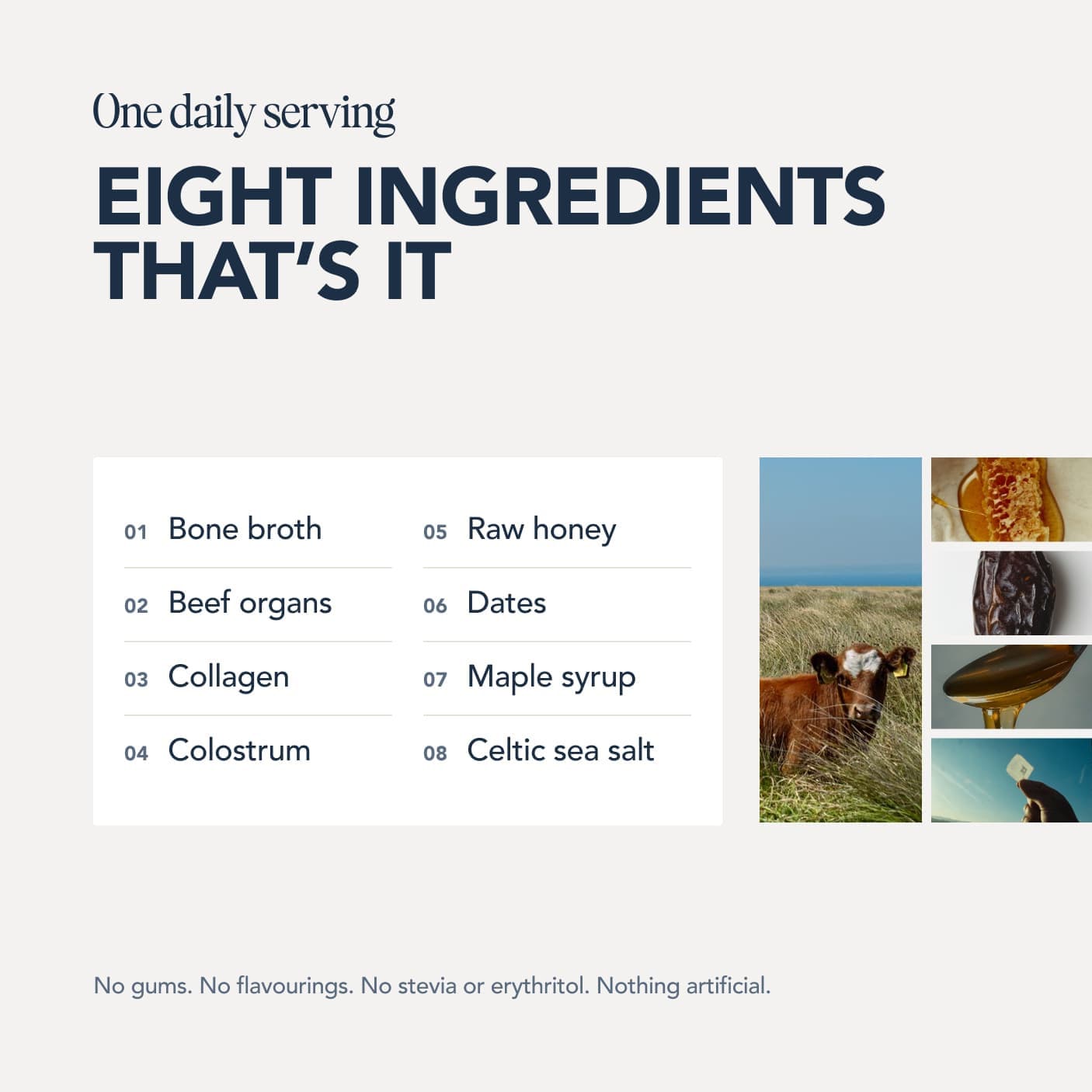
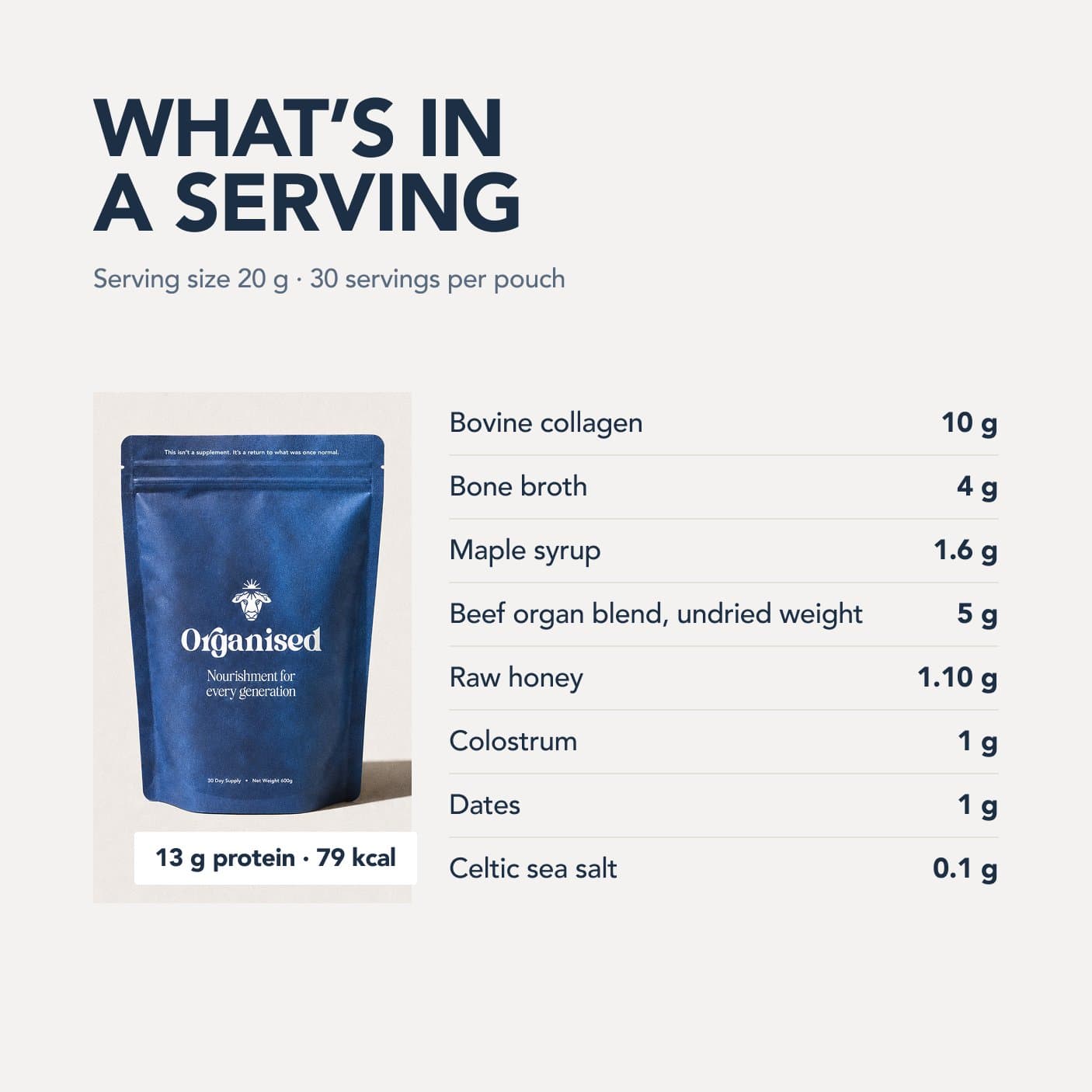
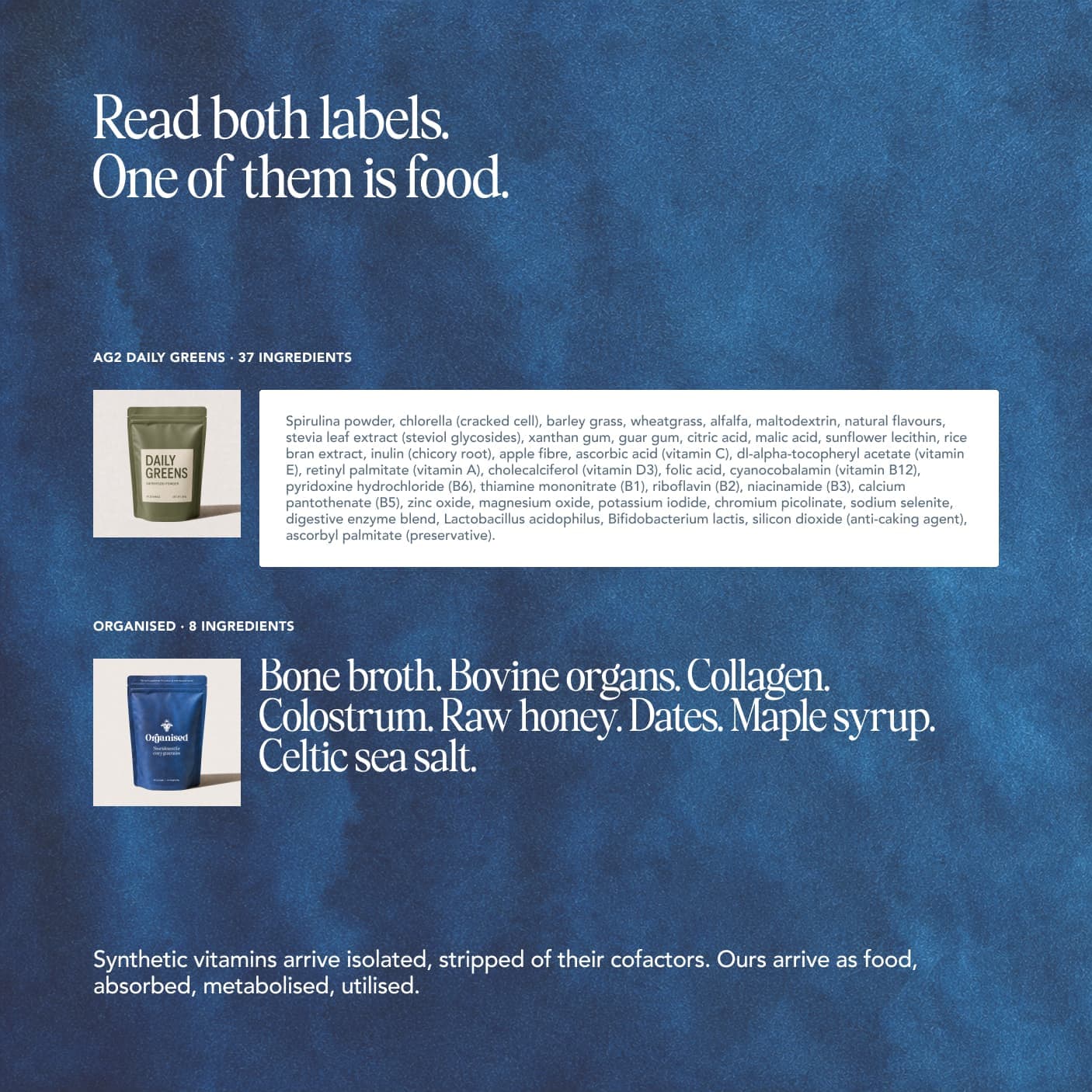
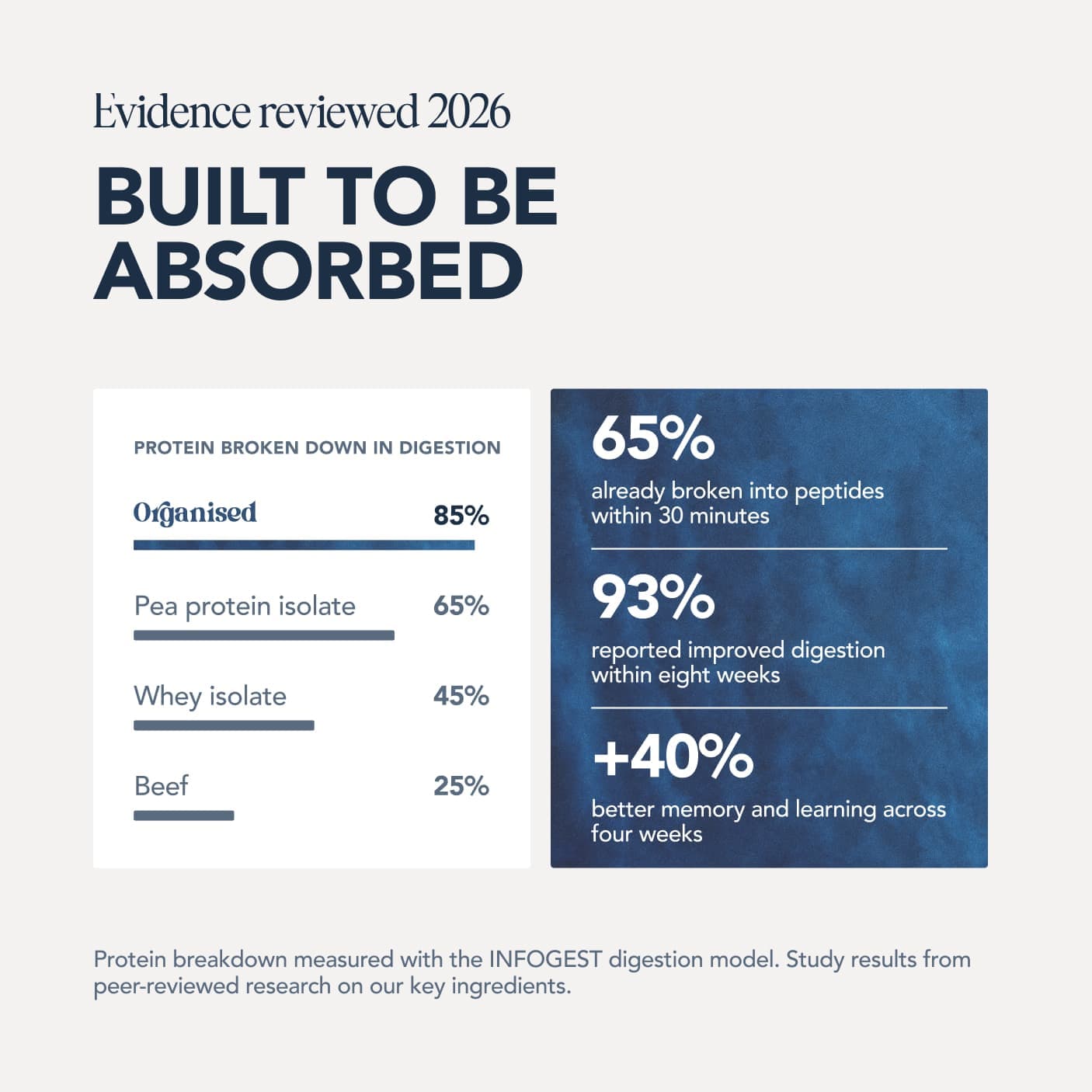
Eight real ingredients built around grass-fed beef organs, collagen and colostrum. Nothing synthetic added.
Free with your first order, worth £38. Plus £10 off the pouch with a subscription.
Free UK shipping · Made in England · 100 day money back guarantee on your first pouch · Skip, pause or cancel anytime
Building from transparency
The entire purpose of the field guide is transparency. Here's what's actually in your food. Here's what humans have historically eaten. Here's what we know with confidence, and here's what we're genuinely uncertain about. Make your own decisions from there.
We're not hiding. We're not selectively presenting data that supports one framework. We're saying: this is the terrain. Walk it however makes sense for you.
That's the whole thing. A resource built on the assumption that you're smart enough to read information and draw your own conclusions. That your body is wise enough to respond to real food. That you don't need to be told what to do as much as you need to be shown what's true.
References
Every source below was checked on 27 August 2026. Each PubMed, PMC and DOI identifier was resolved against NCBI or Crossref, and what it opens is printed under the citation, so you can see the link goes where the citation says without leaving the page. Where a citation and its identifier disagreed, the citation was corrected to the record or the reference was deleted along with the sentence marker that pointed at it, and where the resolved paper turned out not to support the sentence, the sentence was cut back to what it does support. Borrowed authority is worse than none, because it looks like rigour.
- Hall KD et al. Ultra-Processed Diets Cause Excess Calorie Intake and Weight Gain: An Inpatient Randomized Controlled Trial of Ad Libitum Food Intake. Cell Metabolism, 2019. PMID 31105044.Checked 27 August 2026: PMID 31105044 opens Hall KD, Ayuketah A, Brychta R et al, Ultra-Processed Diets Cause Excess Calorie Intake and Weight Gain: An Inpatient Randomized Controlled Trial of Ad Libitum Food Intake. Cell Metab 2019;30(1):67-77.e3. PubMed indexes it as: Randomized Controlled Trial.The authors' own declaration, from the record: Declaration of Interests. CG Forde has received reimbursement for speaking at conferences sponsored by companies selling nutritional products, serves on the scientific advisory council for Kerry Taste and Nutrition, and is part of an academic consortium that has received research funding from Abbott Nutrition, Nestec, and Danone. The other authors have no conflicts of interest.
Who wrote and reviewed this guide
Niall Kiddle
Author · Founder, Organised
Niall is the founder of Organised. He started the company in 2024 after fixing his own health the slow way: in 2022 he swapped a cupboard of synthetic supplements for real food, raw milk, organ meats, bone broth and honey, and felt the difference within months.
Areas of expertise: Ancestral nutrition, Organ meats, Whole-food supplementation, Gut health, Regenerative sourcing
Read Niall's full profile
Pedro Rodrigues
Reviewer · Agronomist (farming and sourcing only)
Pedro is the agronomist Organised works with on farming and sourcing. His job on the guides is to keep the science honest: he reviews what we publish about soil health, regenerative agriculture, grazing and the way food is actually produced.
Areas of expertise: Regenerative agriculture, Agronomy, Soil health, Grass-fed farming, Food sourcing
Reviewed this guide on
Read Pedro's full profileBrowse the guides library
All guidesKeep reading

Culture & community
How the Organised Community Supports Each Other's Health Journeys
See how community health support drives real change, with stories of accountability and shared knowledge from people transforming their health together.
Culture & community
Beyond Supplements: Building a Whole Food Lifestyle
Nutrition is just one piece. Real health comes from cooking, sleep, sunlight, movement, and relationships. Here's how to build a whole system.
Culture & community
How Organised Fits into Different Dietary Frameworks
See how whole food nutrition fits dietary frameworks from carnivore and paleo to keto and flexitarian, with simple ways to adapt the principles to your plate.
Real food, made effortless
Shop the blendA few ways to use it
All recipes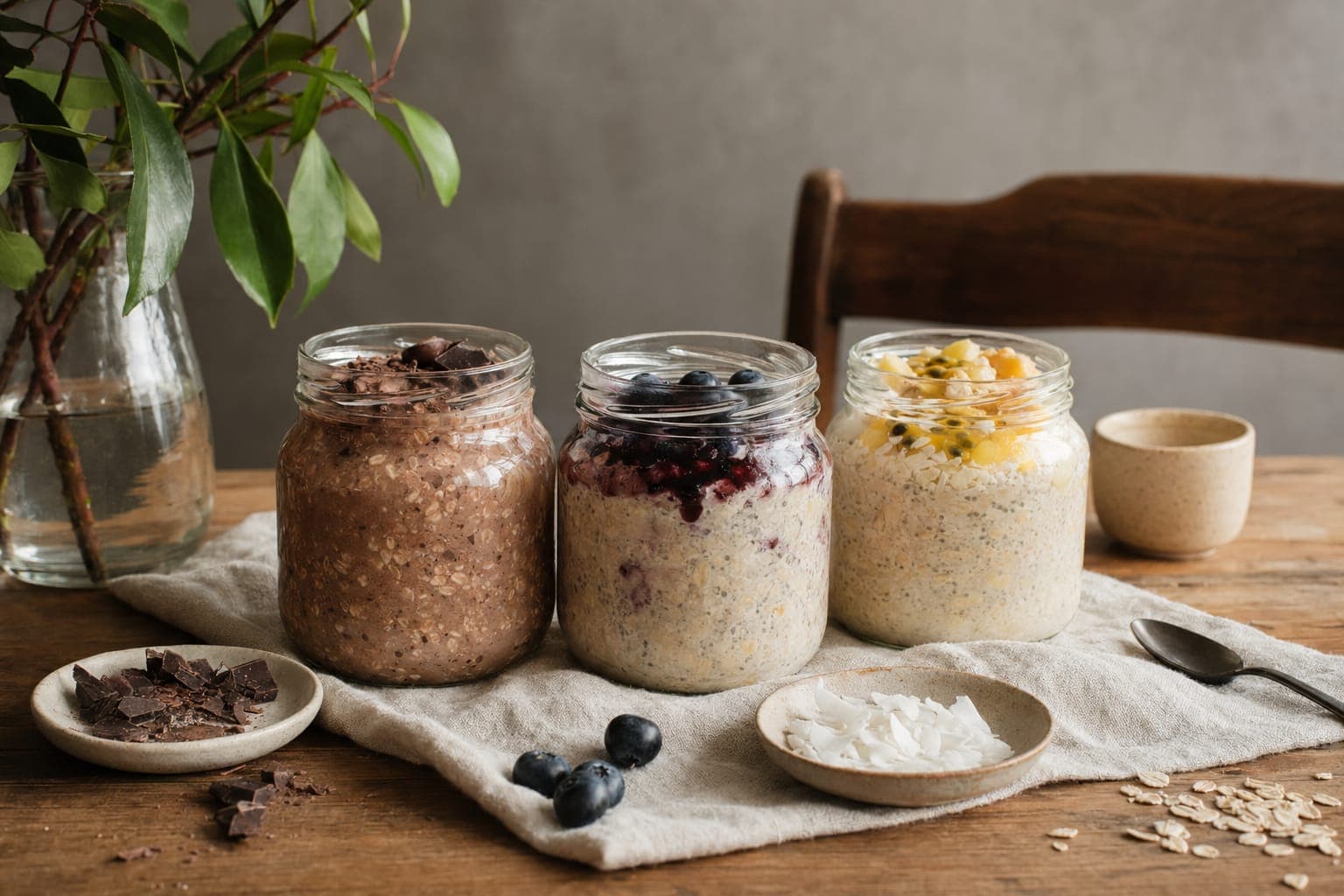
Organised Overnight Oats: 3 Variations
Three delicious overnight oats variations with Organised. Chocolate, berry, tropical flavours. Make them Sunday, eat them all week.
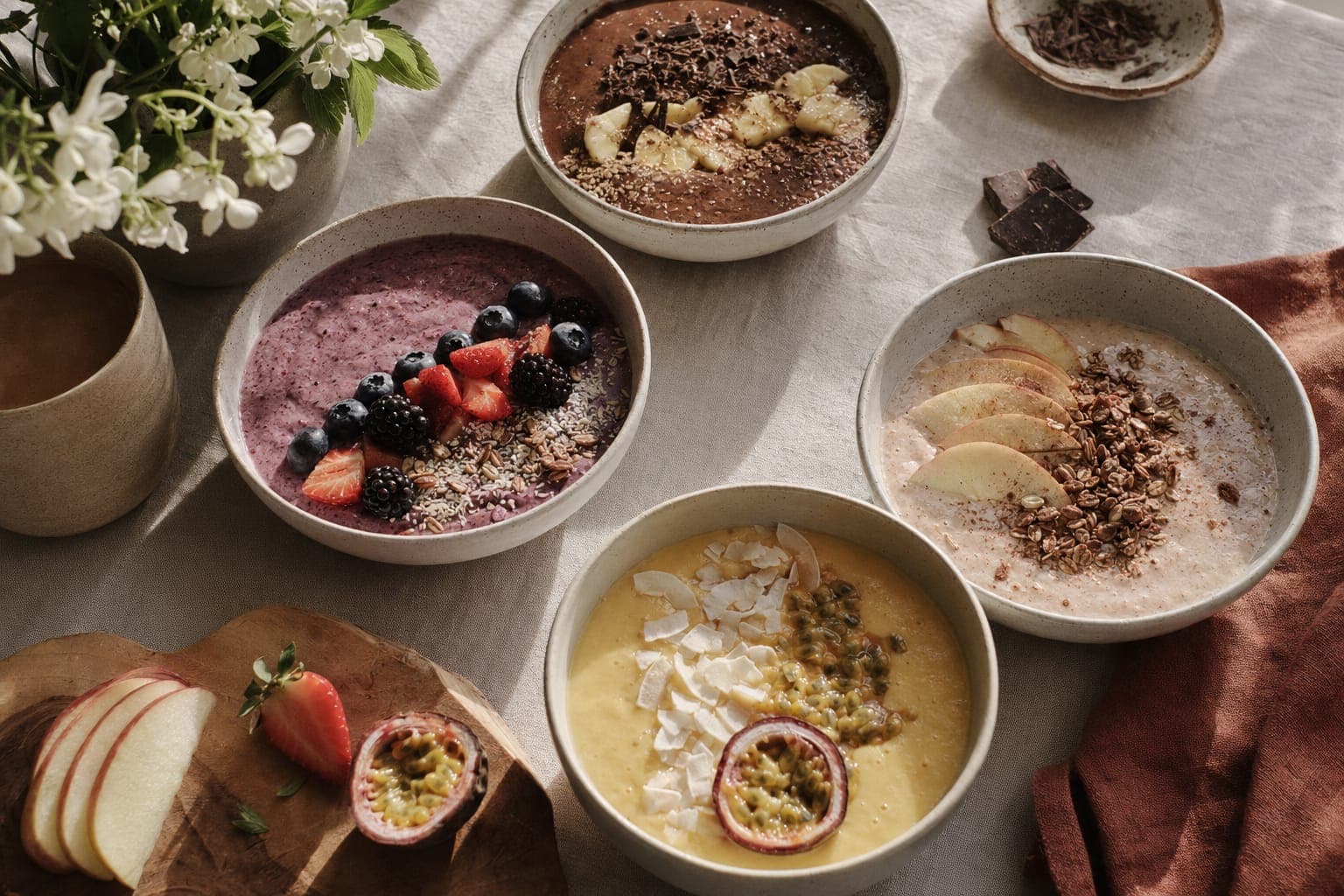
Organised Smoothie Bowl Recipes for Every Season
Four seasonal smoothie bowl recipes using Organised. Berry in summer, apple-cinnamon in autumn, tropical in spring, warming chocolate in winter.
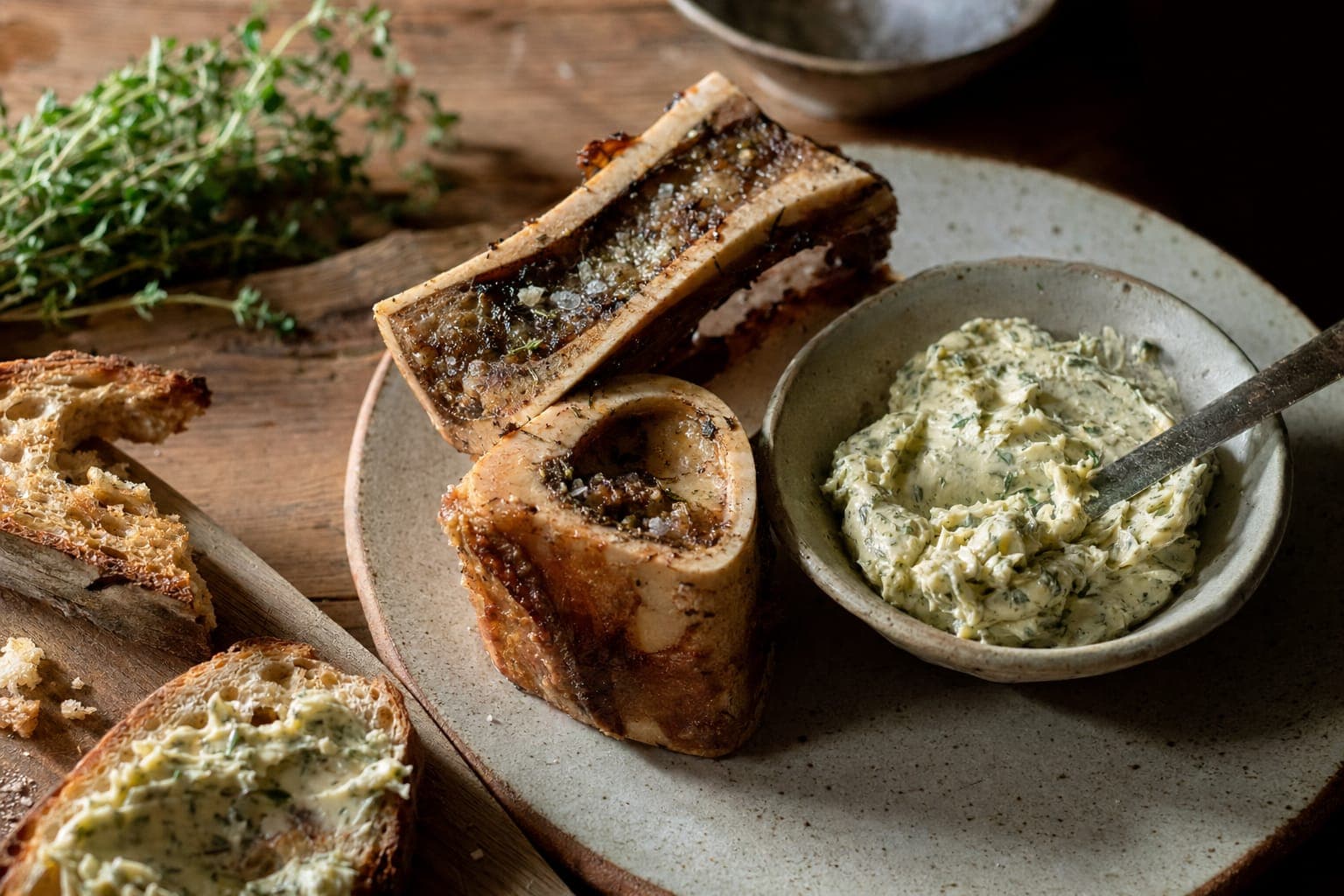
How to Make Bone Marrow Butter
Roast grass-fed marrow bones, scoop the marrow, and mix with butter and herbs. A nutrient-dense spread with fat-soluble vitamins.


 Join over 100,000+ members
Build a better food system with us
The Organised community is thousands of people choosing real food and backing the farmers who grow it, all of us trying to leave the world a little better than we found it. If that is what you care about too, you belong here.