ADHD and Nutrition: Emerging Research and Practical Approaches
ADHD is framed as a brain chemistry problem, and it is. But brain chemistry is built on nutrition. The neurotransmitters that regulate attention and impulse control require specific nutrients to be made. If those nutrients are deficient, no amount of medication fully compensates. This is why some people see dramatic improvements in focus, impulse control, and emotional stability when they simply address nutritional deficiencies.

By Niall Kiddle, Founder, Organised

Reviewed by Pedro Rodrigues, Agronomist (farming and sourcing only) ·
6 min read · Published · Updated · 5 cited sources
Makers of the Organised Daily blend, a grass-fed beef organ supplement from regenerative UK farms

This is why some people see dramatic improvements in focus, impulse control, and emotional stability when they simply address nutritional deficiencies.

What ADHD is neurologically
ADHD is characterised by dysfunction in the dopamine and noradrenaline systems. Dopamine is the attention, motivation, and reward neurotransmitter. Noradrenaline is involved in alertness and arousal. When these systems don't work well, you get poor sustained attention, difficulty with impulse control, poor emotional regulation, and trouble with executive function.
Medication (stimulants like methylphenidate or amphetamines) increases dopamine and noradrenaline availability in the brain. This works. But the foundation of these neurotransmitters is nutrition. Your brain makes dopamine and noradrenaline from amino acids (tyrosine and phenylalanine) and cofactors (iron, zinc, B6, copper). Without these, you can't make enough of these neurotransmitters no matter what medication you take.
The exciting part is that many people with ADHD who've been on medication for years find that when they address nutritional deficiency, their medication works better at lower doses, or sometimes they need less medication altogether. This doesn't mean medication is bad. It means that filling the nutritional gap allows the medication to work more efficiently.
ADHD medication works better when the nutritional foundation is solid. Most people with ADHD are deficient in multiple nutrients that neurotransmitter synthesis requires.
Iron and attention
Iron is essential for the enzyme that converts tyrosine into dopamine. Iron is also required for myelin formation, the insulation around nerves that allows them to communicate efficiently. Without adequate iron, your dopamine production is compromised and your neural communication slows down.
Research on ADHD consistently shows that children with ADHD have lower ferritin (iron stores) than children without ADHD.1 Studies show that iron supplementation improves attention and impulse control in children with low ferritin, even without medication.2 For children with ADHD and adequate ferritin, supplementing iron doesn't help much. For those with low ferritin, it's transformative.
The issue is that iron deficiency is common, particularly in vegetarian or vegan diets, and symptoms are subtle until they're severe. If your child (or you) has ADHD, low energy, or concentration problems, ferritin should be tested. If it's below 50, rebuilding iron stores is non-negotiable. Liver is the richest source of absorbable iron, followed by red meat, oysters, and eggs. Three to six months of consistent iron intake usually brings low ferritin back to normal, and improvements in focus often follow.
The relationship between iron and focus is linear. As ferritin rises from 15 to 50, you'll see gradual improvements in attention span and impulse control. The improvements are most dramatic if you've been severely iron-deficient. Some people notice differences within weeks. Others take months. Consistency matters more than speed.

Zinc and impulse control
Zinc is a cofactor for the enzymes that produce dopamine and work in the prefrontal cortex, the part of your brain responsible for impulse control and decision-making.3 Zinc deficiency is associated with poor impulse control, emotional dysregulation, and worse ADHD symptoms. Children with ADHD have been consistently shown to have lower zinc levels than children without ADHD.3
Zinc is required for the enzyme that converts the amino acid histidine, which affects dopamine regulation and attention. It's also required for metallothionein, a protein that protects the brain from oxidative damage and regulates neurotransmitter levels.
Zinc supplementation in children with ADHD and low zinc shows improvements in attention and impulse control, though the improvements are typically smaller than iron supplementation if ferritin is very low. Oysters, beef, pumpkin seeds, and eggs are excellent sources. Getting adequate zinc through food is usually enough if deficiency isn't severe.
Zinc absorption is heavily influenced by phytic acid in grains and legumes. If you're eating a lot of whole grains or beans without soaking and sprouting them first (which reduces phytic acid), you may be eating zinc without absorbing it. Animal foods don't have this problem, which is why consistently eating meat and oysters is more effective than trying to get zinc from plant sources.
Omega-3 and brain structure
Omega-3 fatty acids, particularly DHA (docosahexaenoic acid), are structural components of neuronal membranes.5 DHA makes up a large percentage of your brain's cell membranes. Without adequate DHA, neurons don't work as efficiently. DHA is also involved in neuroinflammation, and research suggests that some ADHD may involve neuroinflammation.
Studies on omega-3 supplementation in ADHD show modest improvements in attention and impulse control, particularly when combined with other nutritional support.4 This is less dramatic than addressing iron or zinc deficiency, but it matters. DHA is found almost exclusively in animal foods: fish (especially fatty fish like mackerel, sardines, and wild salmon), oysters, eggs, and beef from grass-fed animals. A diet rich in these foods provides adequate DHA without supplementation.
Omega-3 works best when you're also reducing omega-6 from seed oils. If you're eating a lot of omega-6 without adequate omega-3, you're creating an imbalanced inflammatory environment in the brain. The ratio matters as much as the absolute amounts. Cut seed oils, add fatty fish twice weekly, and most people see modest improvements in attention and emotional regulation within four to eight weeks.

Get health guides like this, free
Two short reads a week on eating for energy, gut health, skin, sleep and more.
By signing up you agree to receive emails from us. No spam, unsubscribe anytime.
Protein and blood sugar
Dopamine production depends on adequate tyrosine, an amino acid found in protein. Without enough protein, you don't have enough tyrosine. Tyrosine is also required for thyroid hormone production, so protein deficiency drives both ADHD symptoms and fatigue.
Additionally, blood sugar dysregulation worsens ADHD dramatically. When blood sugar crashes, your brain loses fuel and you get worse attention, worse impulse control, and worse emotional stability. This is why children with ADHD do worse in the afternoon, particularly if they've eaten carbohydrates without protein and fat.
Adequate protein at every meal stabilises blood sugar and ensures adequate tyrosine for dopamine production. Pair carbohydrates with protein and fat. Eggs, meat, fish, dairy. These should be at every meal.
The amount matters. Children and teenagers with ADHD need more protein than average peers because their neurotransmitter turnover is higher. Aim for at least 20 to 30 grams of protein at each meal. This can feel like a lot if your child has been on a standard diet, but the improvements in focus and emotional stability are worth the adjustment.
What actually helps
If you or your child have ADHD, the first step is testing: ferritin, zinc (serum zinc and zinc-to-copper ratio), and thyroid function. Most people with ADHD are deficient in at least two of these metrics. Address the deficiencies.
Eat liver twice a week. This provides iron, zinc, copper, B vitamins, and choline, nearly everything the ADHD brain needs. Eat red meat three to four times weekly. Eat eggs daily. Eat fish or oysters weekly. Add sea salt. Remove seed oils and ultra-processed food completely. They drive inflammation and impair nutrient absorption.
Don't skip meals. Eat breakfast even if you're not hungry. Eat regular carbohydrates with protein and fat. Blood sugar stability matters more for ADHD than it does for most conditions.
Expect improvements in focus and impulse control within four to six weeks if nutrient deficiency was driving symptoms. Real changes in emotional regulation and executive function usually take eight to twelve weeks as the brain rebuilds its neurochemical foundation.
This doesn't replace medication if medication is helping. But it makes medication work better and often allows for lower doses. And for some people, particularly those with mild ADHD and significant nutritional deficiency, addressing nutrition alone is enough.



1 of 9
Daily blend
100,000+ thriving families4.9 on Trustpilot
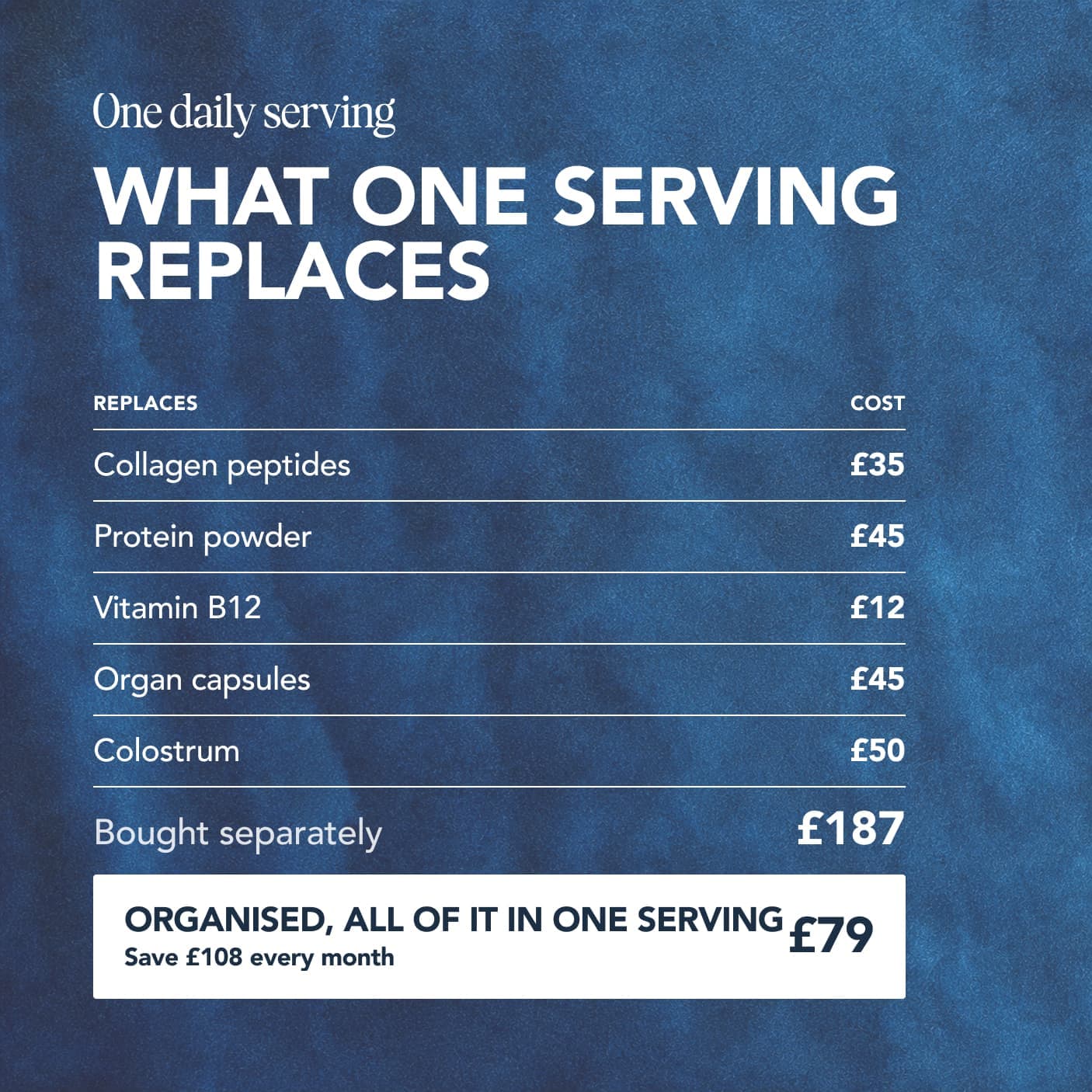
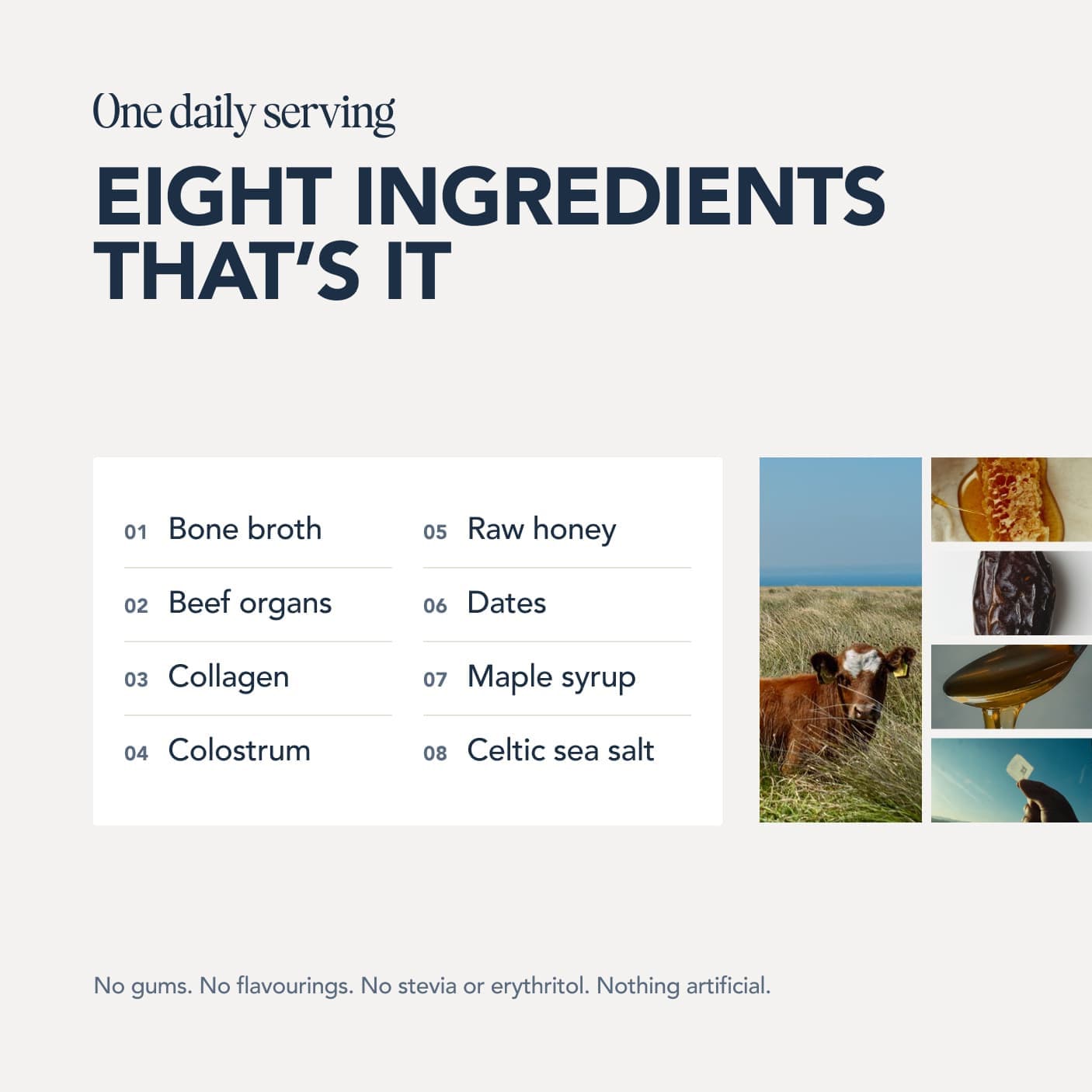
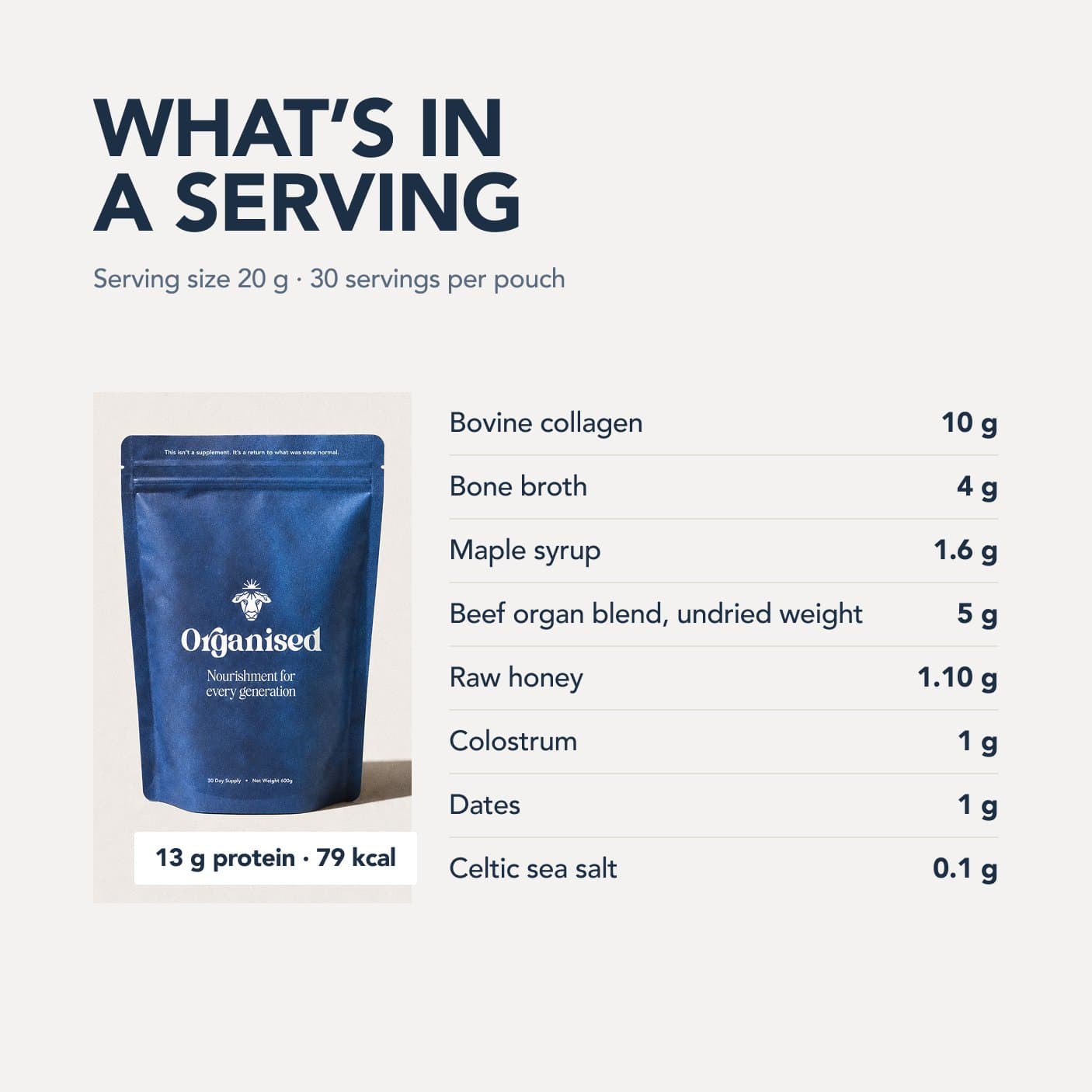
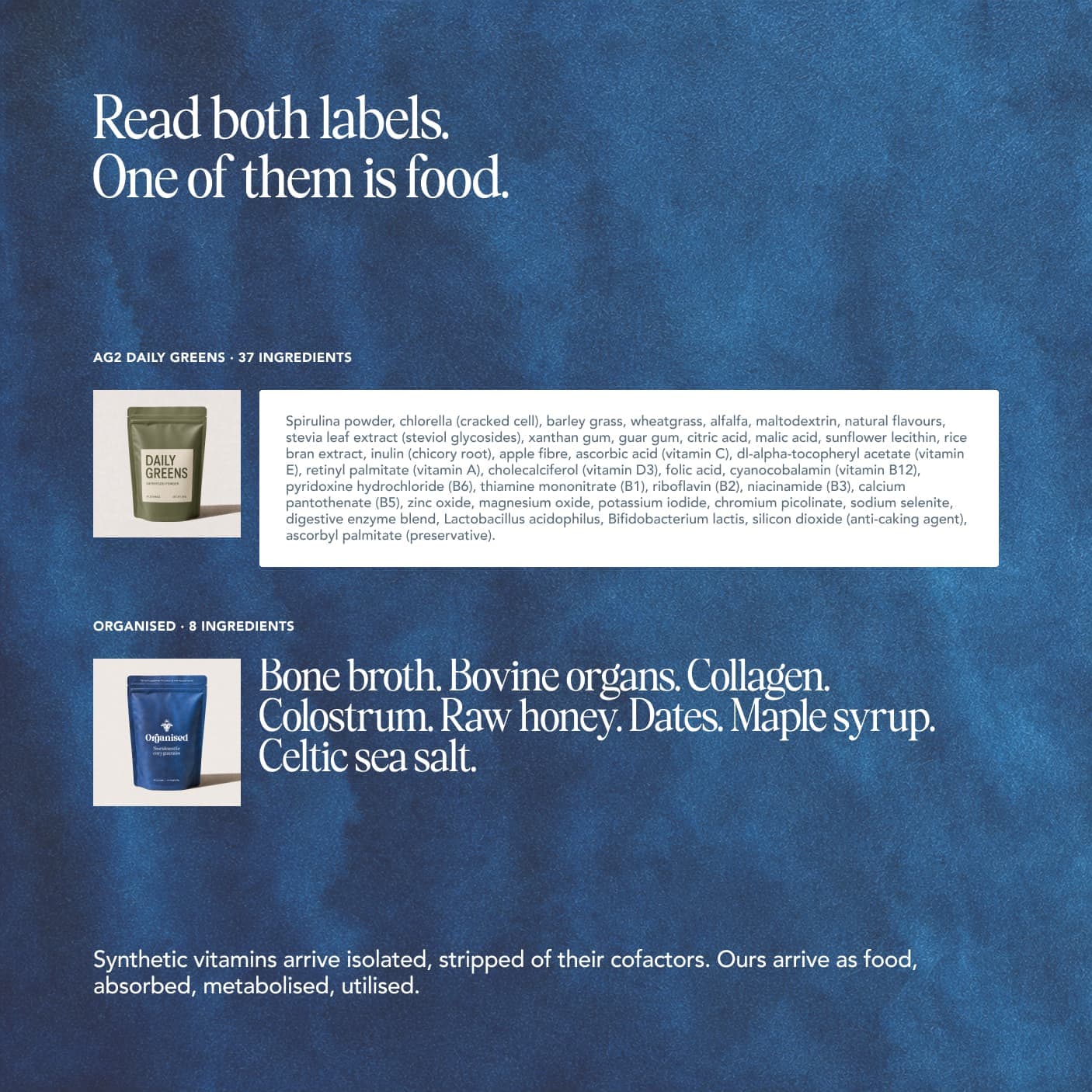
Eight real ingredients built around grass-fed beef organs, collagen and colostrum. Nothing synthetic added.
Free with your first order, worth £38. Plus £10 off the pouch with a subscription.


Free UK shipping · Made in England · 100 day money back guarantee on your first pouch · Skip, pause or cancel anytime
The bottom line
ADHD is real and complex. But it has nutritional foundations. Iron, zinc, omega-3, adequate protein, stable blood sugar. These aren't a cure. But they're often the missing piece that makes the difference between ADHD being manageable and ADHD being life-limiting. Feed the brain what it needs. Let's see what shifts.
References
Every source below was checked on 27 August 2026. Each PubMed, PMC and DOI identifier was resolved against NCBI or Crossref, and what it opens is printed under the citation, so you can see the link goes where the citation says without leaving the page. Where a citation and its identifier disagreed, the citation was corrected to the record or the reference was deleted along with the sentence marker that pointed at it, and where the resolved paper turned out not to support the sentence, the sentence was cut back to what it does support. Borrowed authority is worse than none, because it looks like rigour.
- Wang Y et al. Iron Status in Attention-Deficit/Hyperactivity Disorder: A Systematic Review and Meta-Analysis. PLoS One. PLoS One.Checked 27 August 2026: doi:10.1371/journal.pone.0169145 opens Wang Y, Huang L, Zhang L et al, Iron Status in Attention-Deficit/Hyperactivity Disorder: A Systematic Review and Meta-Analysis PLOS ONE 2017;12(1):e0169145.
- Konofal E et al. Effects of iron supplementation on attention deficit hyperactivity disorder in children. Pediatr Neurol. PubMed PMID: 18054688.Checked 27 August 2026: PMID 18054688 opens Konofal E, Lecendreux M, Deron J et al, Effects of iron supplementation on attention deficit hyperactivity disorder in children. Pediatr Neurol 2008;38(1):20-6. PubMed indexes it as: Randomized Controlled Trial.
- Bilici M et al. Double-blind, placebo-controlled study of zinc sulfate in the treatment of attention deficit hyperactivity disorder. Prog Neuropsychopharmacol Biol Psychiatry. PubMed PMID: 14687872.Checked 27 August 2026: PMID 14687872 opens Bilici M, Yildirim F, Kandil S et al, Double-blind, placebo-controlled study of zinc sulfate in the treatment of attention deficit hyperactivity disorder. Prog Neuropsychopharmacol Biol Psychiatry 2004;28(1):181-90. PubMed indexes it as: Clinical Trial, Randomized Controlled Trial.
- Bloch MH, Qawasmi A. Omega-3 fatty acid supplementation for the treatment of children with ADHD symptomatology: systematic review and meta-analysis. J Am Acad Child Adolesc Psychiatry. PMC3625948.Checked 27 August 2026: PMC3625948 opens Bloch MH, Qawasmi A, Omega-3 fatty acid supplementation for the treatment of children with attention-deficit/hyperactivity disorder symptomatology: systematic review and meta-analysis. J Am Acad Child Adolesc Psychiatry 2011;50(10):991-1000. PubMed indexes it as: Meta-Analysis, Systematic Review.
- Dyall SC. Long-chain omega-3 fatty acids and the brain: a review. Front Aging Neurosci. PMC4404917.Checked 27 August 2026: PMC4404917 opens Dyall SC, Long-chain omega-3 fatty acids and the brain: a review of the independent and shared effects of EPA, DPA and DHA. Front Aging Neurosci 2015;7:52. PubMed indexes it as: Review.
Who wrote and reviewed this guide
Niall Kiddle
Author · Founder, Organised
Niall is the founder of Organised. He started the company in 2024 after fixing his own health the slow way: in 2022 he swapped a cupboard of synthetic supplements for real food, raw milk, organ meats, bone broth and honey, and felt the difference within months.
Areas of expertise: Ancestral nutrition, Organ meats, Whole-food supplementation, Gut health, Regenerative sourcing
Read Niall's full profile
Pedro Rodrigues
Reviewer · Agronomist (farming and sourcing only)
Pedro is the agronomist Organised works with on farming and sourcing. His job on the guides is to keep the science honest: he reviews what we publish about soil health, regenerative agriculture, grazing and the way food is actually produced.
Areas of expertise: Regenerative agriculture, Agronomy, Soil health, Grass-fed farming, Food sourcing
Reviewed this guide on
Read Pedro's full profileMore on brain & cognition
View all- Feeding Your Brain: The Nutrients Behind Focus, Memory and Clarity
- Brain Fog: Nutritional Causes and How to Clear It
- Choline and Brain Development: From Pregnancy to Old Age
- Memory and Nutrition: Feeding Your Brain at Every Age
- Neuroinflammation: The Hidden Driver of Brain Fog and Low Mood
- The Link Between Iron Deficiency and Poor Concentration
Browse the guides library
All guidesKeep reading

Health goals
Feeding Your Brain: The Nutrients Behind Focus, Memory and Clarity
Discover which nutrients power your brain: DHA, choline, B12, iron, zinc, creatine. Food sources for lasting focus, memory, and mental clarity.

Health goals
Can Beef Organ Supplements Support Weight Loss?
Beef organ supplements may support weight loss through satiety and nutrient sufficiency. No magic bullet, but a useful tool in a broader strategy.

Health goals
The Best Foods for Thicker, Stronger Hair
Build thicker, stronger hair from within with the best foods for thick hair: organs, eggs, oysters, bone broth, and raw dairy, all packed with key nutrients.
Real food, made effortless
Start my daily blendA few ways to use it
All recipes
How to Make Bone Marrow Butter
Roast grass-fed marrow bones, scoop the marrow, and mix with butter and herbs. A nutrient-dense spread with fat-soluble vitamins.

Whole Food Snacks for Busy Days
Practical whole food snacks that travel well and sustain energy. No refined carbs, no seed oils. Real food options for when you're busy.

10 Ways to Use Organised That Aren't Just a Shake
Move beyond the basic shake. Discover 10 creative ways to use Organised in smoothie bowls, oats, yoghurt, baking, and more.


 Join over 100,000+ members
Build a better food system with us
The Organised community is thousands of people choosing real food and backing the farmers who grow it, all of us trying to leave the world a little better than we found it. If that is what you care about too, you belong here.