The Best Foods for Thicker, Stronger Hair
Fine, wispy hair is a sign of malnutrition. Not starvation, but the kind of quiet undernourishment that happens when you're eating processed foods void of minerals, fat, and whole protein. Your hair reflects what you're truly fed, not what you think you're eating.

By Niall Kiddle, Founder, Organised

Reviewed by Pedro Rodrigues, Agronomist (farming and sourcing only) ·
6 min read · Published · Updated · 5 cited sources
Makers of the Organised Daily blend, a grass-fed beef organ supplement from regenerative UK farms
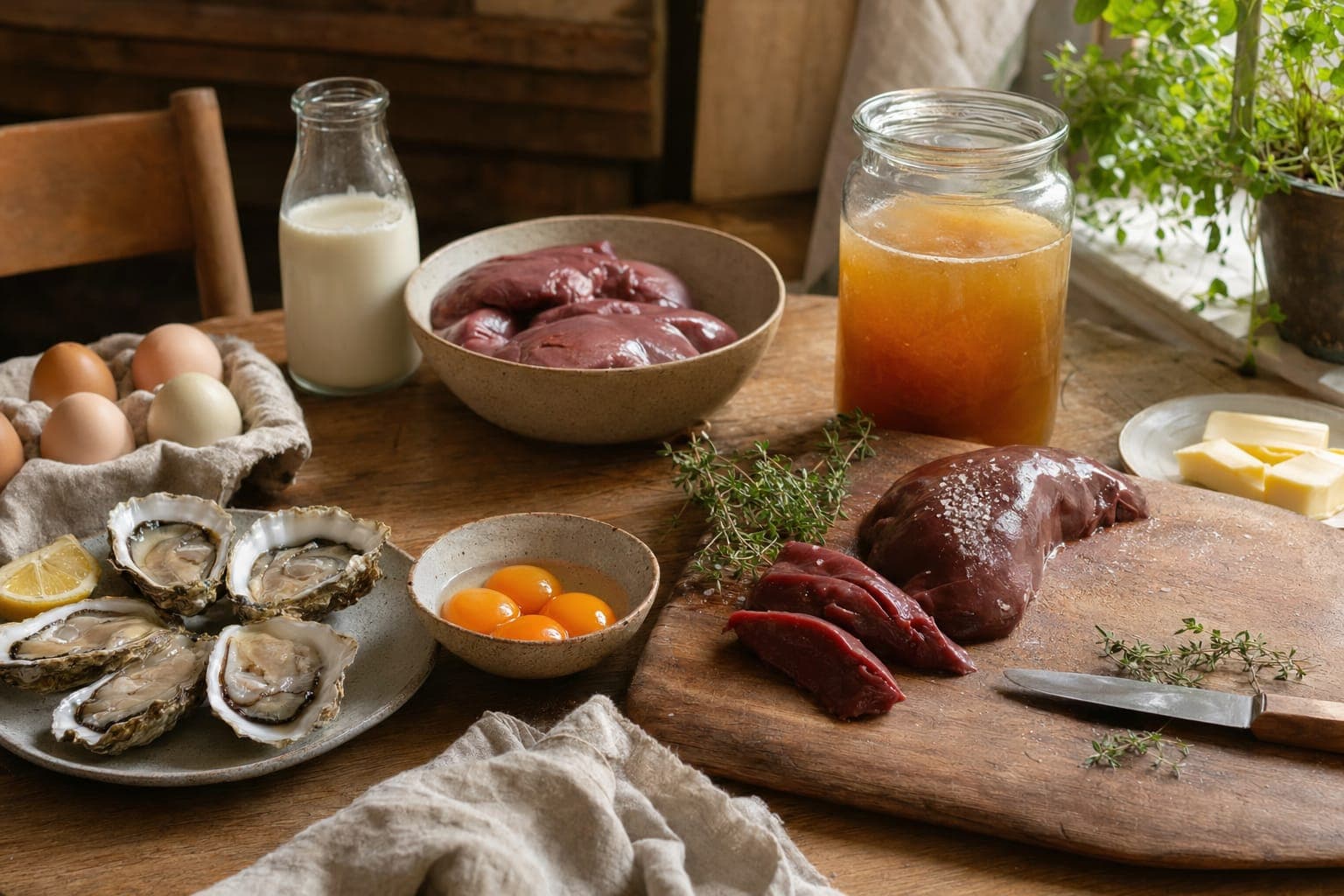
Your hair reflects what you're truly fed, not what you think you're eating.
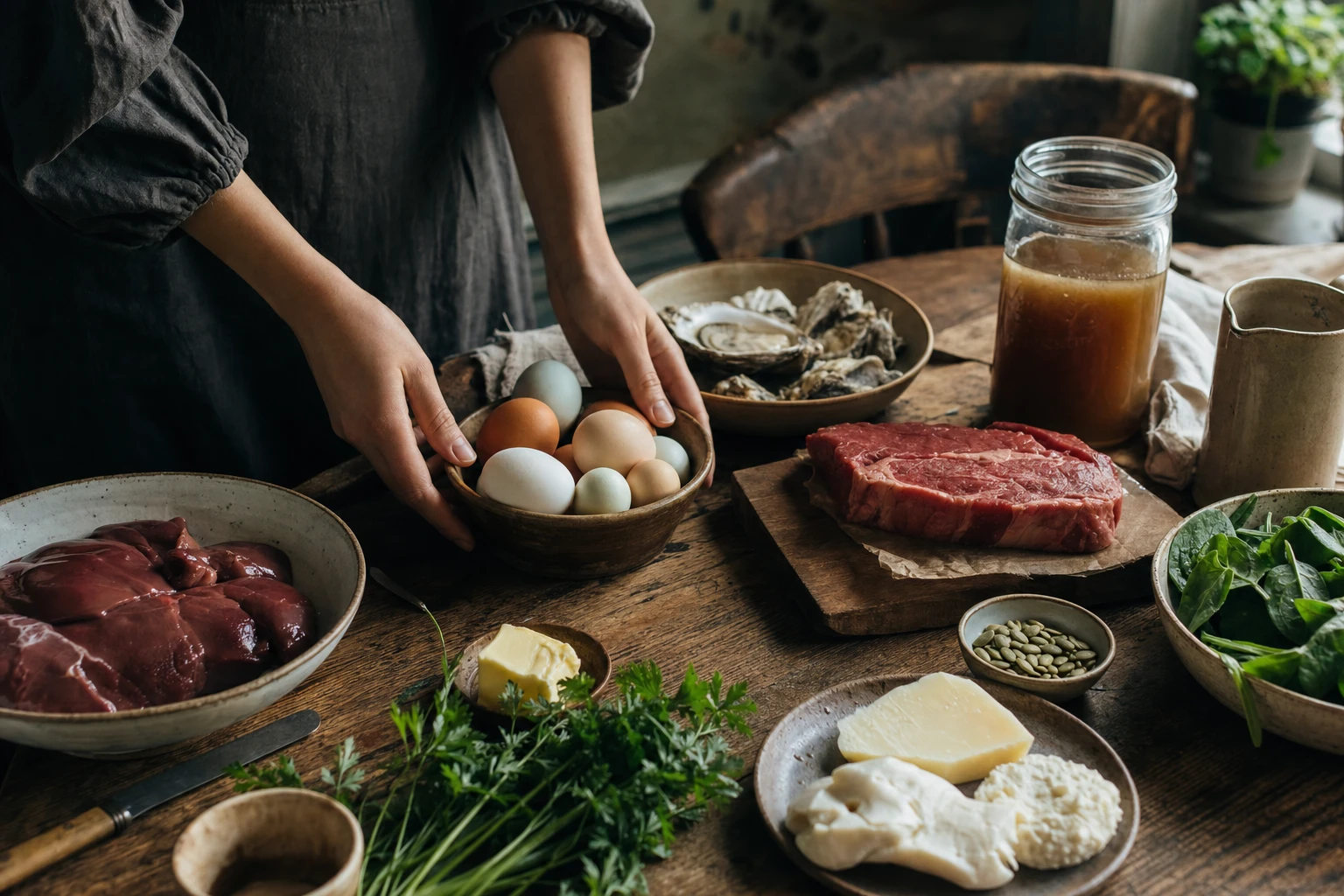
Organs first
If there is one category of food that will visibly thicken your hair, it's organs. Not one organ. All of them, rotated weekly for comprehensive nutrient coverage.
Beef liver is the starting point. It's the most nutrient-dense food on the planet. One 100-gram serving delivers more iron, zinc, copper, selenium, and B vitamins than you could get from a week of mainstream foods. Your hair doesn't just grow in liver. It thrives in it. Every cell in the follicle benefits from the nutrient profile.
Beef kidney delivers exceptional levels of selenium, the mineral that regulates thyroid function.1 The thyroid governs hair growth cycles completely. Without thyroid function, hair doesn't grow, period. Kidney is milder than liver, easier to cook. Pan-fry with butter and onions and it's genuinely delicious.
Tongue is overlooked and underrated. It's extremely high in zinc and fatty acids. It tastes almost beef-like, familiar. Many people who resist liver find tongue the gateway organ. The texture is fine and dense, not as offputting as other organs.
Organs are the hair food. Rotate liver, kidney, heart, tongue. One serving weekly transforms hair thickness within eight weeks.
Fish roe deserves equal attention. It's rich in iodine, selenium, amino acids, and the omega-3 fats that keep hair lustrous and strong. A small serving of caviar or lumpfish roe multiple times weekly changes hair quality visibly. The omega-3s reduce inflammation, and scalp inflammation is common in people with thin hair.
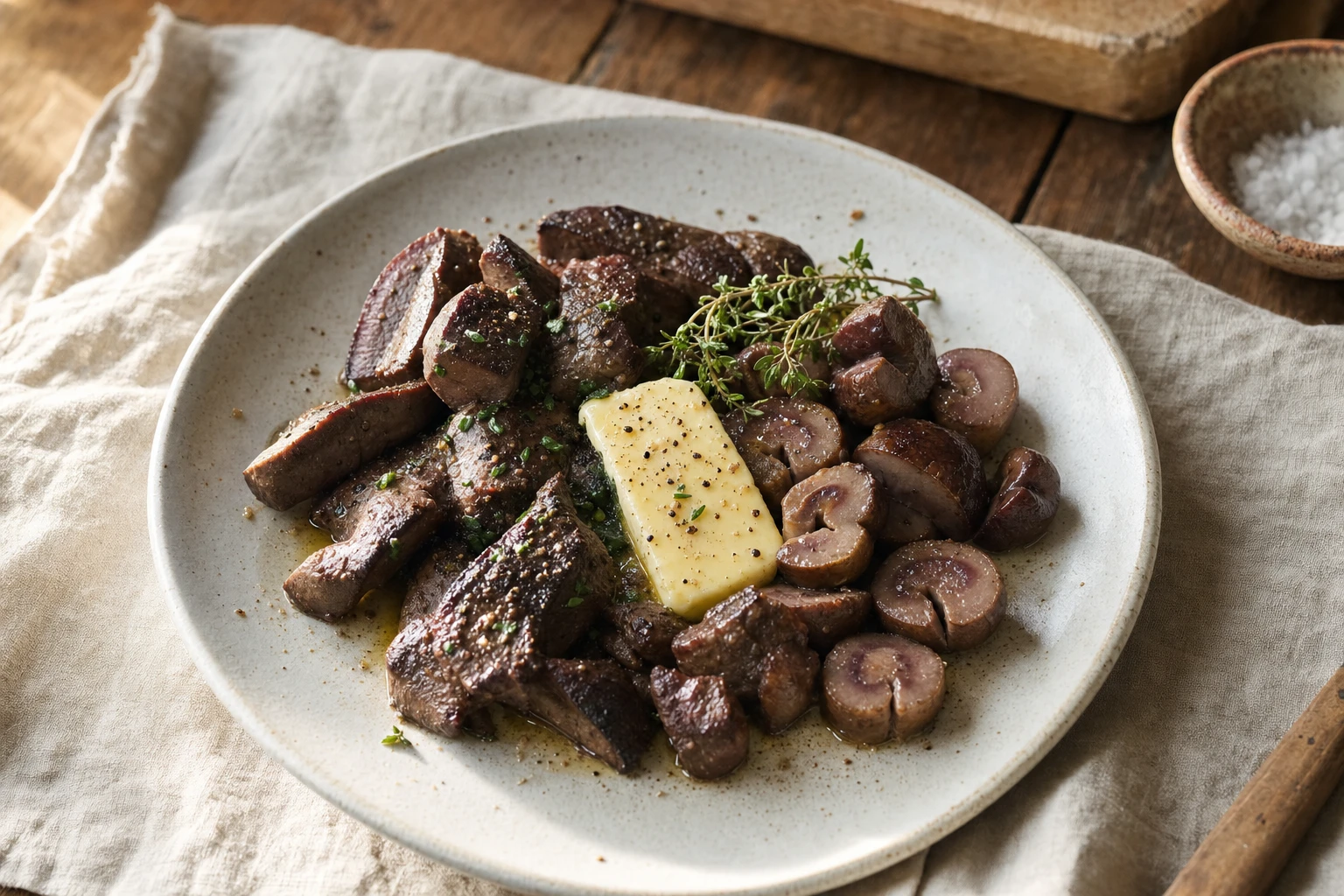
Eggs and full-fat dairy
Eggs are the most complete protein source available. They contain choline, which supports hair growth. They contain lutein and zeaxanthin, which protect hair follicles. They're rich in selenium and iron. Additionally, the yolk contains all the fat-soluble vitamins your hair needs.
But here's the catch: the nutrients are concentrated in the yolk. Egg white eaters are missing the entire point. Eat the whole egg. The yolk is where the fat-soluble vitamins live, where the minerals hide, where the choline concentrates. Two to three whole eggs daily is a legitimate hair thickening intervention.
Full-fat dairy matters too. Milk, yoghurt, cheese, butter. The fat in milk carries vitamin A and vitamin D, both essential for hair growth. Vitamin D deficiency is almost universal in the modern world, especially for people who don't spend time outdoors.5 Pasteurised and processed dairy lose much of this nutrient profile. Raw milk, if you can access it, is dramatically superior. Cultured butter, aged cheese, these are nutrient-dense hair foods.
Eggs and full-fat dairy are the daily foundation. They're easy, accessible, and transformative when combined with organs.
Butter especially. The fat-soluble vitamins in grass-fed butter (A, D, K2) are the hormonal and structural basis for healthy hair. A knob of good butter on everything is not excess. It's medicine. It tells your body that nutrition is abundant.
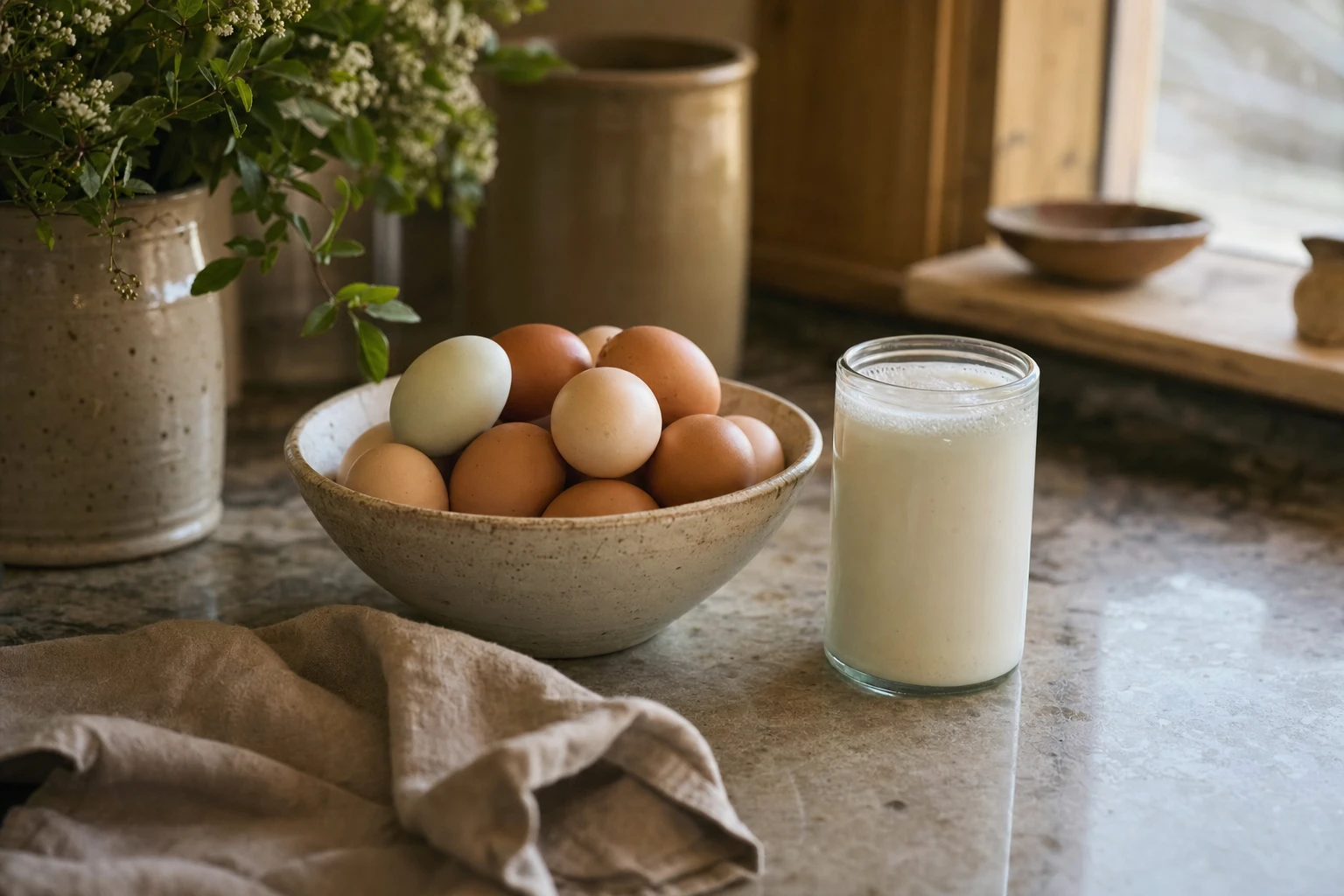
Oysters and shellfish
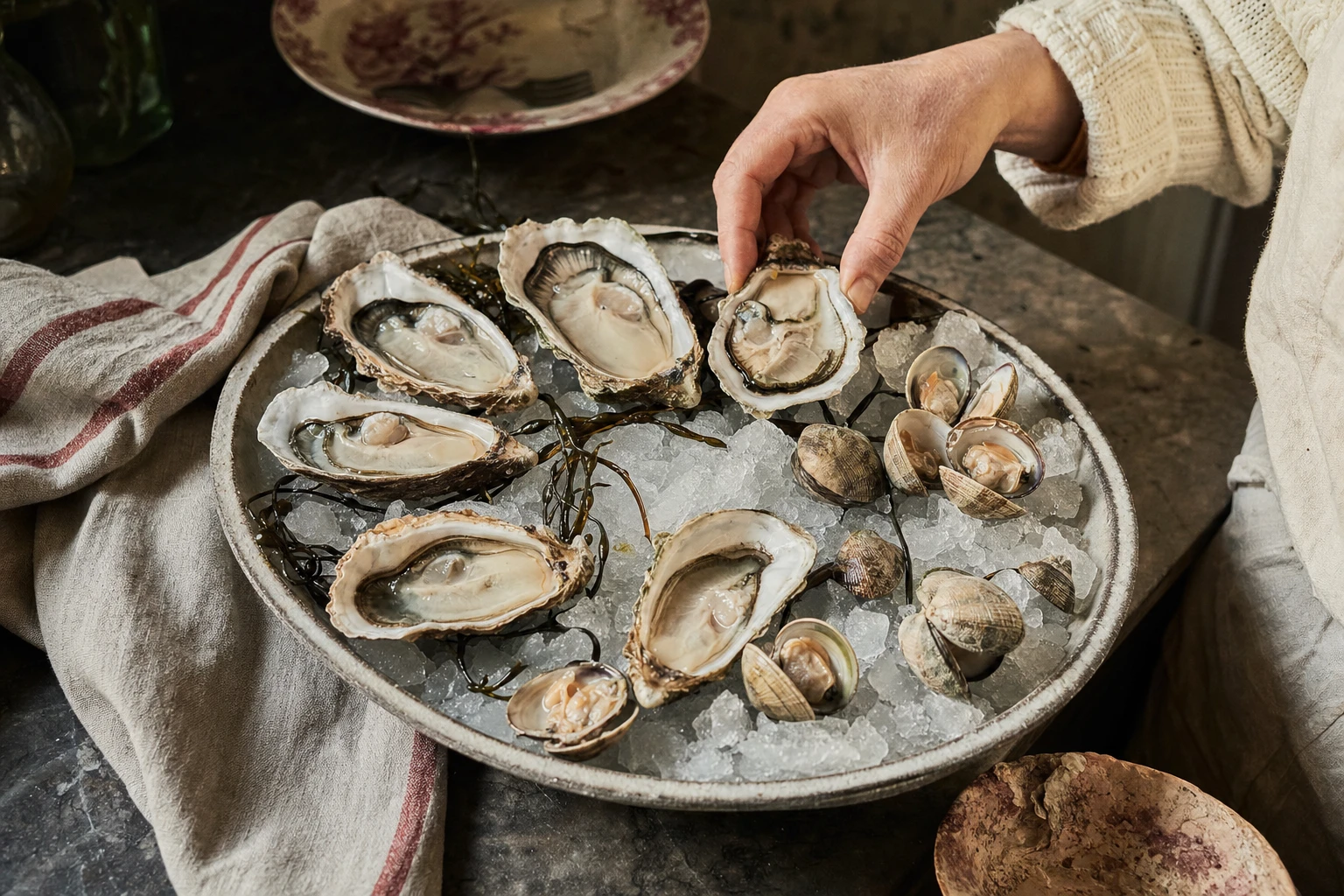
Oysters contain more zinc per gram than any other food except liver and kidney. Zinc is the hair mineral. Without it, hair thins, breaks, and falls out prematurely.2 The zinc-hair connection is direct and immediate.
A dozen oysters weekly is the ideal hair intervention, though even two to four oysters daily makes a difference. If raw oysters intimidate, they're equally nutritious steamed or cooked. The zinc bioavailability is essentially identical. Cooking doesn't destroy the zinc.
Clams and mussels are similar. Slightly lower in zinc than oysters, but still exceptional. They're also rich in iron and B12, especially important if you're not eating organs regularly. The iron is haem iron, highly bioavailable.
Shrimp and crab contain bioavailable zinc and the amino acids your hair needs to build keratin. Fish, particularly fatty fish like salmon and mackerel, deliver omega-3 fatty acids that reduce inflammation and support the scalp environment that healthy hair needs. Omega-3s also modulate hormones that affect hair growth.
Shellfish is the zinc delivery system your hair has been waiting for. Include it multiple times weekly and thickness returns.
Importantly, shellfish is also iodine-rich. Iodine regulates thyroid function, which governs hair growth cycles.3 Most modern diets are iodine-deficient outside of iodised salt, and the iodine in salt is less bioavailable than iodine from shellfish. Shellfish is your premium iodine source.
Get health guides like this, free
Two short reads a week on eating for energy, gut health, skin, sleep and more.
By signing up you agree to receive emails from us. No spam, unsubscribe anytime.
Bone broth and collagen
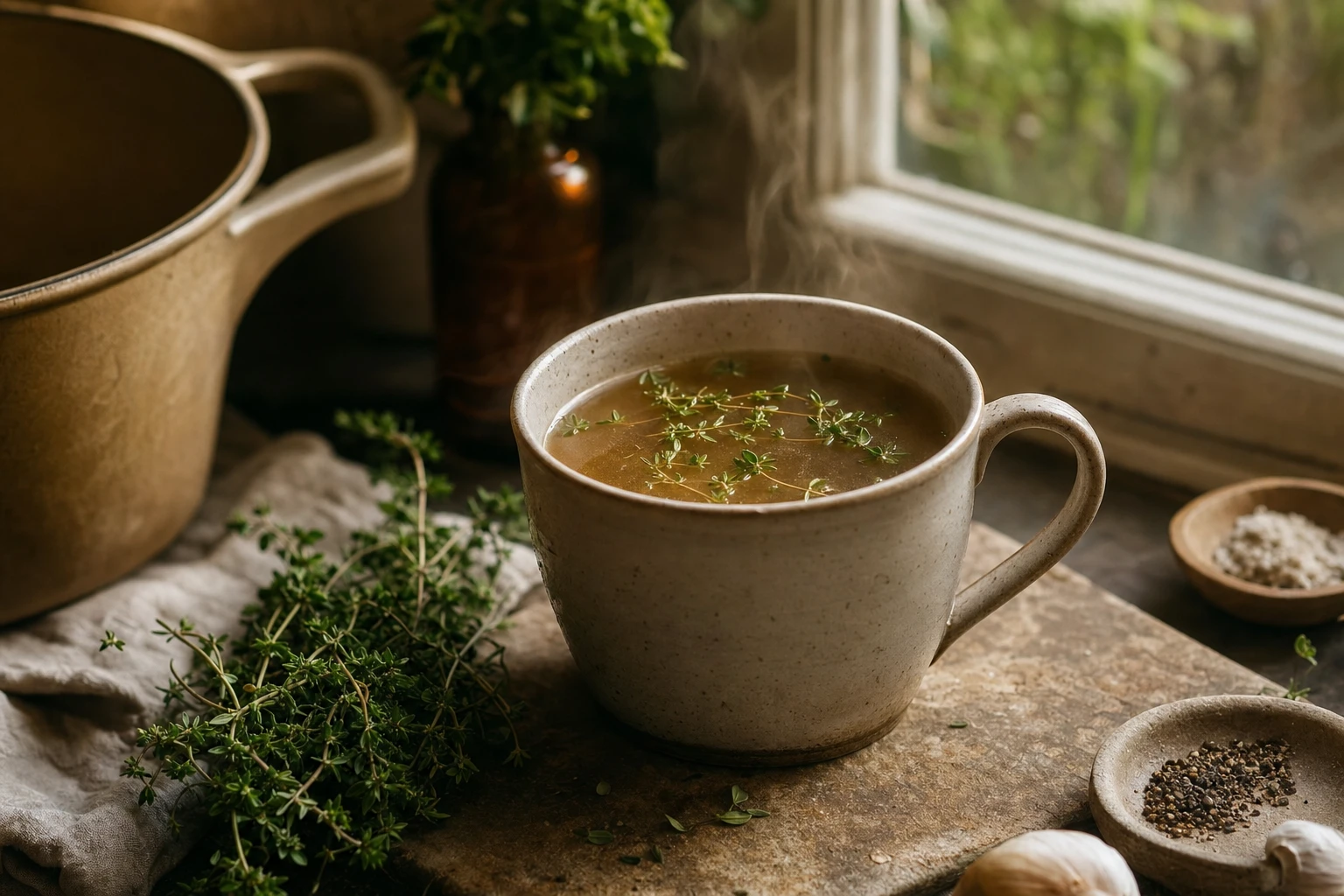
Hair is built from collagen and keratin. Bone broth is pure collagen, gelatin, and glycine. Sipping 250 millilitres of bone broth daily for three months noticeably improves hair thickness.
The gelatin and collagen in bone broth provide the amino acids your body needs to synthesise hair protein. The minerals released during the cooking process are also absorbed readily. This is not a supplement. It's food as medicine. The collagen is broken down into amino acids and used by your body to build new collagen and keratin.
Make it yourself from bones left over from roasted chicken or beef. Simmer for 12 to 24 hours. The longer it simmers, the more gelatin is extracted. Drink it as is, or use it as a base for soups and stews. The taste improves with time as more gelatin releases.
One mug of bone broth daily plus organs weekly equals noticeably stronger, thicker hair within two months.
If you can't make bone broth, buy quality versions from suppliers who simmer for adequate time. Avoid the processed versions with added flavourings and thickeners. You want pure collagen, nothing else.
1 of 9
Daily blend
100,000+ thriving families4.9 on Trustpilot
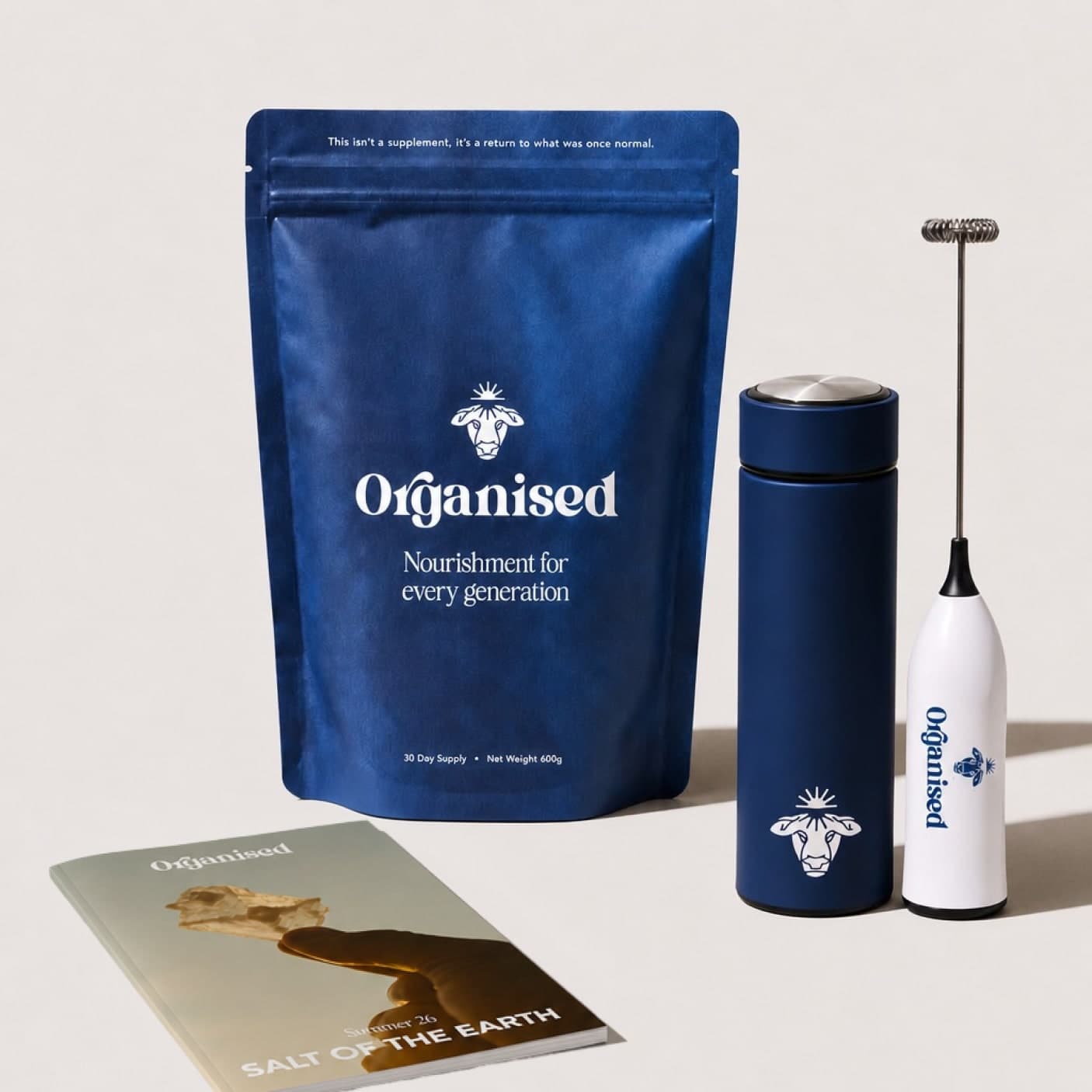
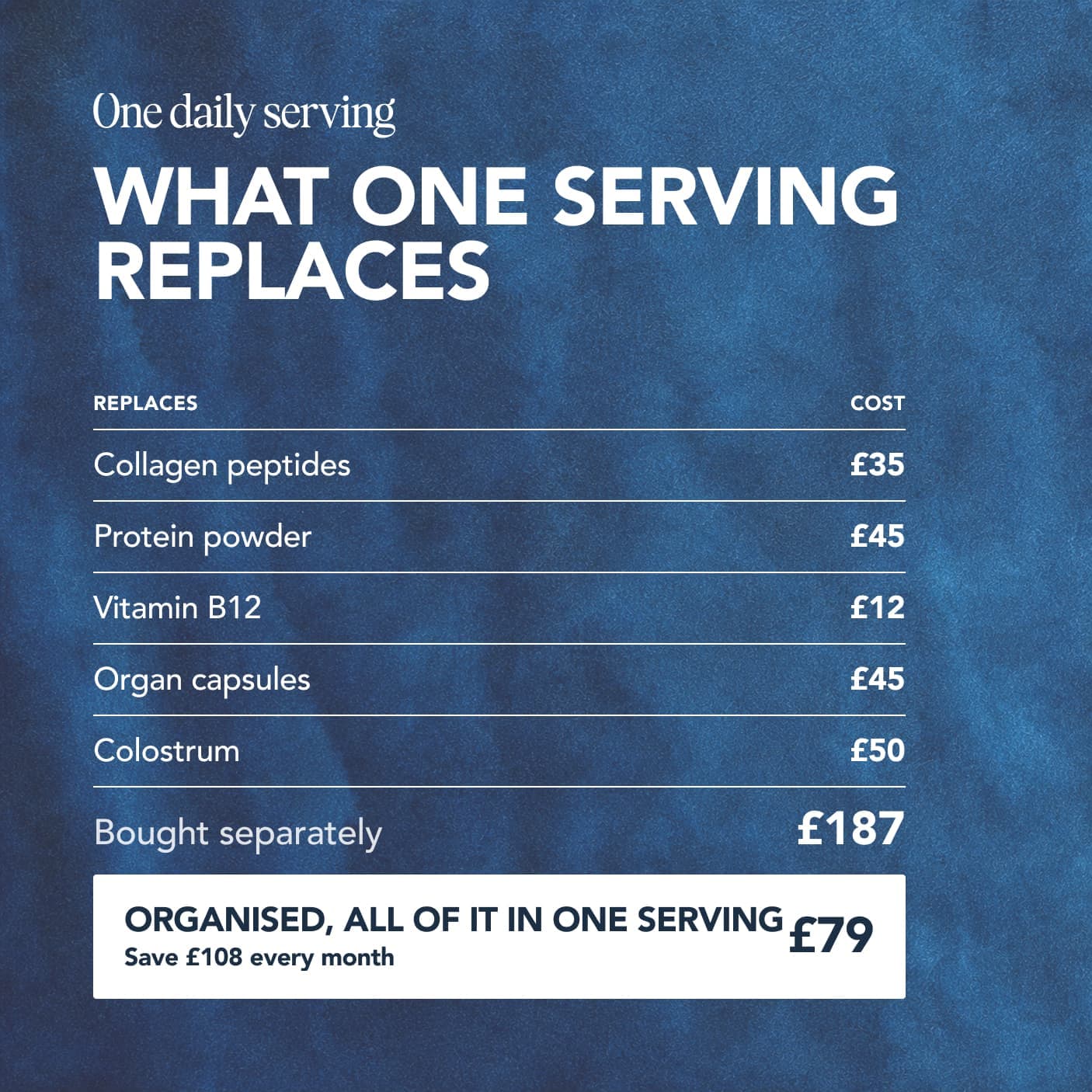
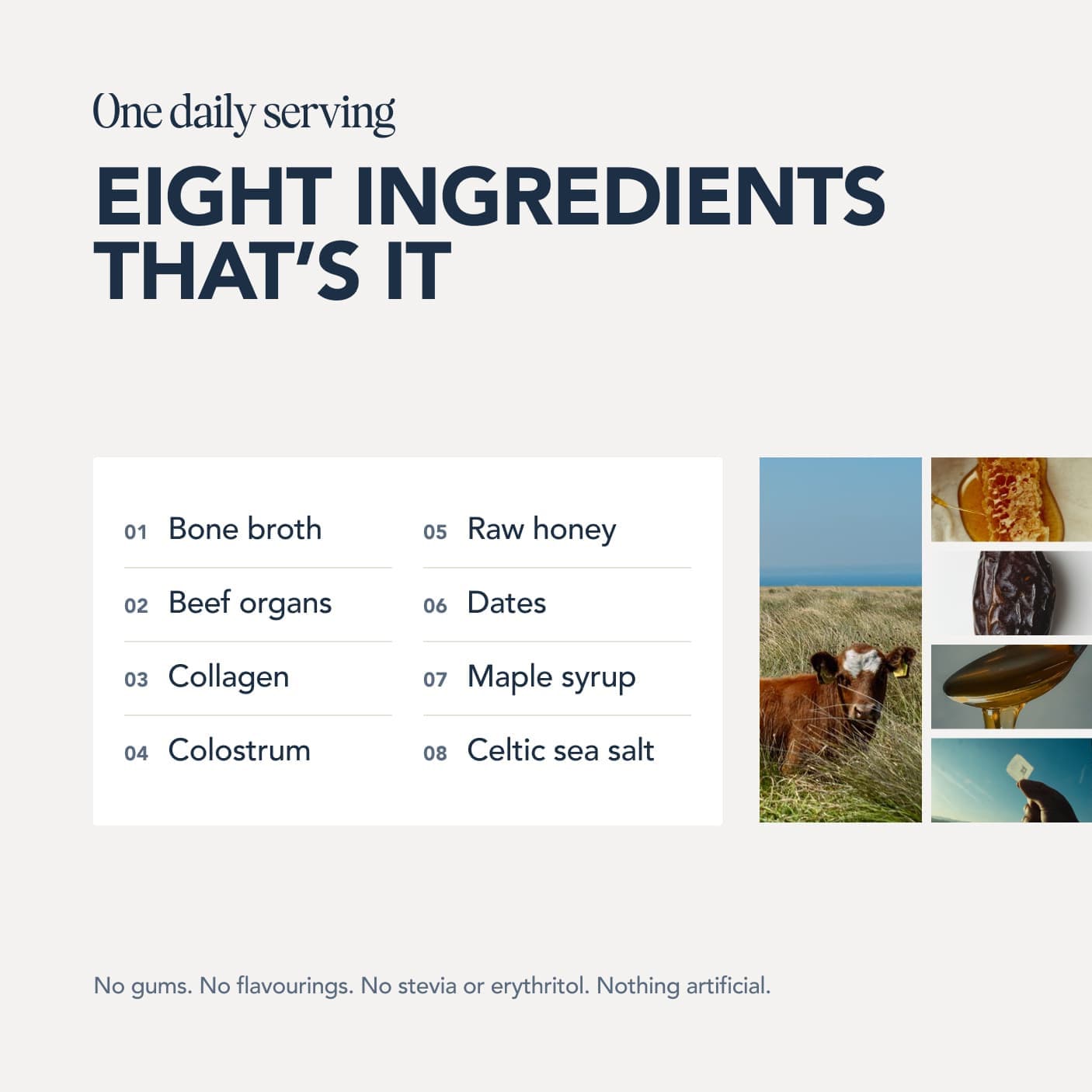
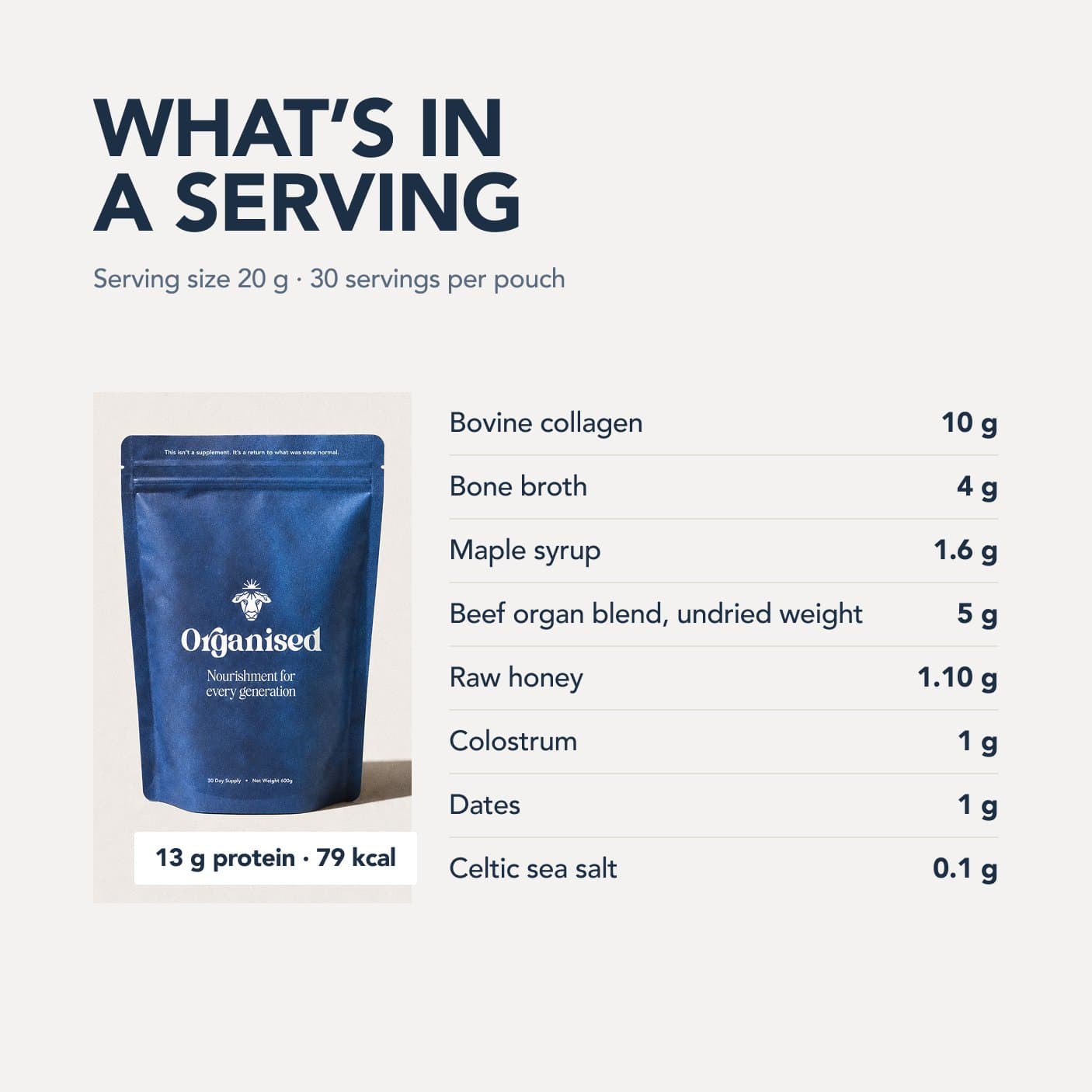
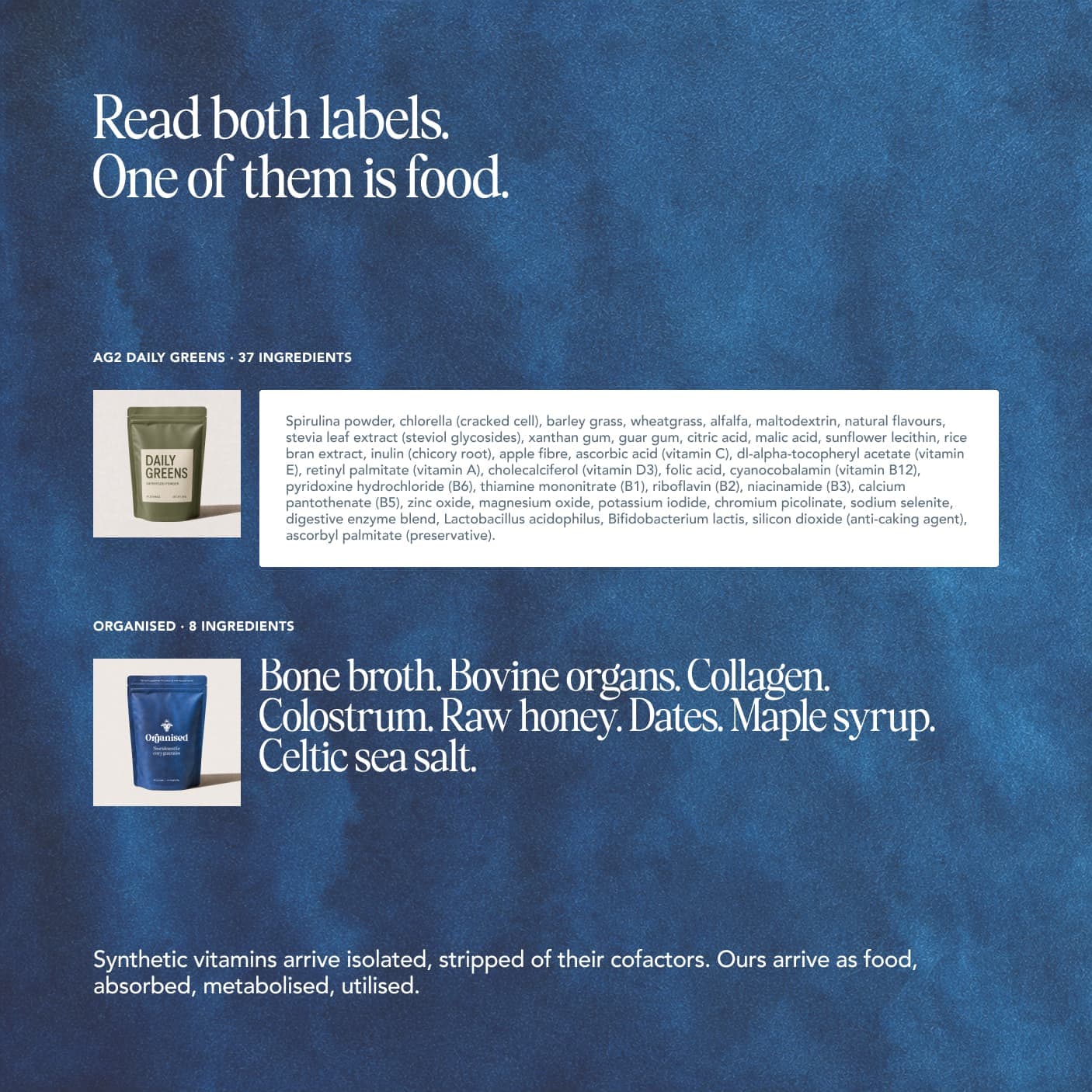
Eight real ingredients built around grass-fed beef organs, collagen and colostrum. Nothing synthetic added.
Free with your first order, worth £38. Plus £10 off the pouch with a subscription.
Free UK shipping · Made in England · 100 day money back guarantee on your first pouch · Skip, pause or cancel anytime
The supporting players
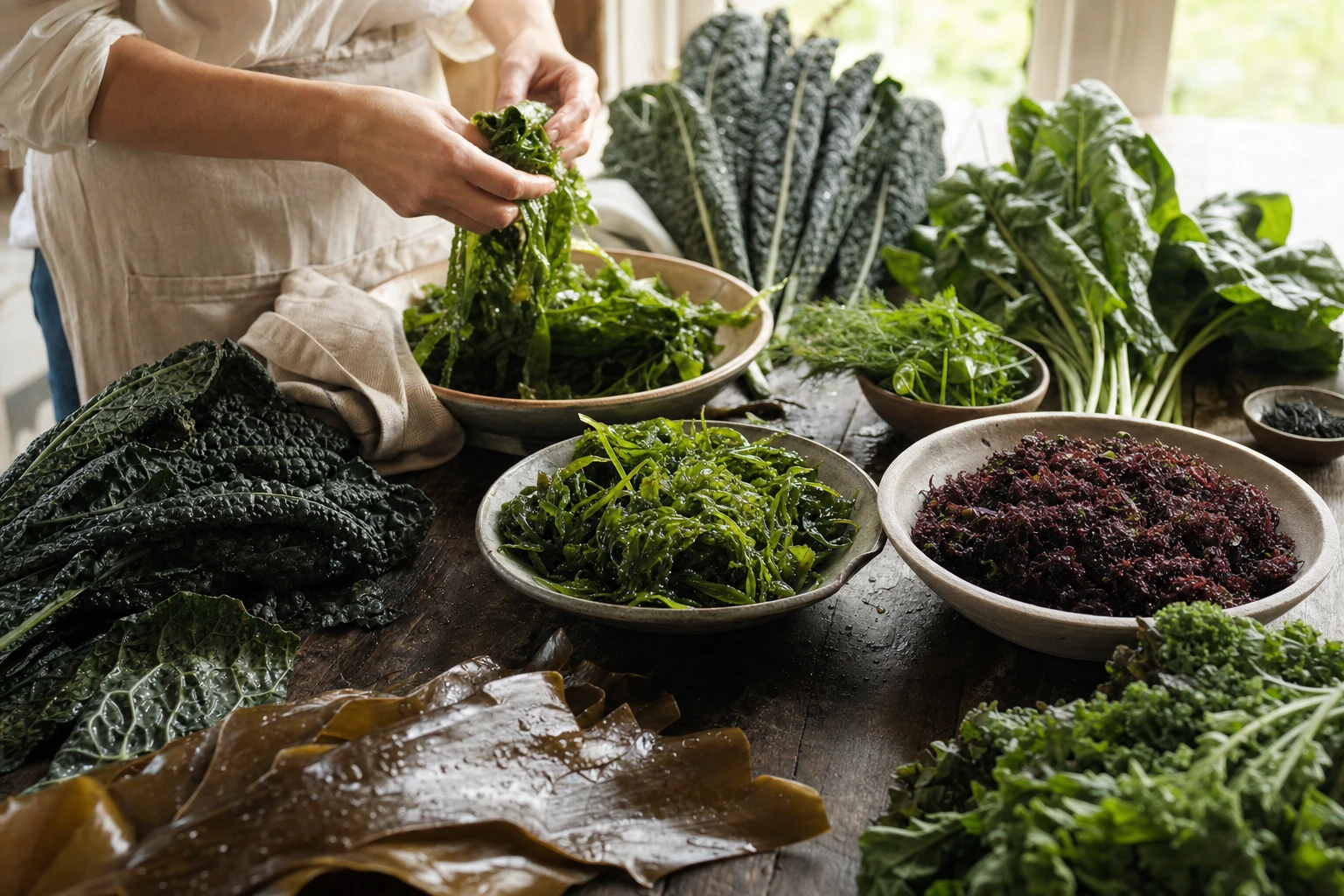
Whilst organs, eggs, shellfish, and bone broth do the heavy lifting, other foods support the foundation. Leafy greens deliver minerals, particularly iron and copper. Raw dairy contains living enzymes that enhance mineral absorption. Mushrooms, particularly shiitake, contain vitamin D and minerals that support hair growth. Sea vegetables deliver iodine and trace minerals in forms your body recognises.
Vitamin C-rich foods enhance iron absorption substantially. Citrus, berries, cruciferous vegetables. Pair these with organ meats or red meat and iron bioavailability increases by as much as 300 percent. The mechanism is that vitamin C reduces iron, making it more absorbable.4
Healthy fats are everywhere in this framework. Butter, olive oil, coconut oil, fatty fish, egg yolks, full-fat dairy. These aren't additions. They're the foundation. Hair needs fat to grow. Fat is where the fat-soluble vitamins live. Without fat, your hair can't access vitamins A, D, K, E.
Hair food is not complicated. Organs, shellfish, eggs, dairy, bone broth. Everything else is supporting cast.
The timeline to visible thickness
Hair doesn't grow overnight. New hair takes three to four months to emerge from the follicle.2 Week one to four: your follicles receive nourishment but visible change is minimal. Week five to eight: new growth is visible at the roots if you look closely. Month three: hair thickness becomes noticeably improved. Month four: the change is undeniable. Most people see meaningful thickness improvement by week twelve of consistent organ, shellfish, and broth intake.
Consistency matters more than intensity. Eating organs twice weekly for twelve weeks beats eating organs intensively for two weeks. Your hair cares about reliability, not heroic effort.
The bottom line
Thick, strong hair is built from the inside out. It requires organs, shellfish, eggs, and full-fat dairy eaten consistently. It requires bone broth. It requires fat at every meal. It takes time. Hair growth is slow. But within eight to twelve weeks of eating this way, the difference is unmistakable. Your hair becomes visibly thicker, stronger, shinier. That's not vanity. That's what well-nourished hair looks like. You're not failing at hair health because your genetics are bad or because you're not using the right shampoo. You're failing because you're not eating organs. Fix that and watch your hair transform.
References
Every source below was checked on 27 August 2026. Each PubMed, PMC and DOI identifier was resolved against NCBI or Crossref, and what it opens is printed under the citation, so you can see the link goes where the citation says without leaving the page. Where a citation and its identifier disagreed, the citation was corrected to the record or the reference was deleted along with the sentence marker that pointed at it, and where the resolved paper turned out not to support the sentence, the sentence was cut back to what it does support. Borrowed authority is worse than none, because it looks like rigour.
- National Institutes of Health Office of Dietary Supplements. Selenium - Health Professional Fact Sheet. NIH ODS Selenium.
- National Institutes of Health Office of Dietary Supplements. Zinc - Health Professional Fact Sheet. NIH ODS Zinc.
- National Institutes of Health Office of Dietary Supplements. Iodine - Health Professional Fact Sheet. NIH ODS Iodine.
- Lynch SR, Cook JD. Interaction of vitamin C and iron. PubMed PMID: 6940487.Checked 27 August 2026: PMID 6940487 opens Lynch SR, Cook JD, Interaction of vitamin C and iron. Ann N Y Acad Sci 1980;355:32-44.
- National Institutes of Health Office of Dietary Supplements. Vitamin D - Health Professional Fact Sheet. NIH ODS Vitamin D.
Who wrote and reviewed this guide
Niall Kiddle
Author · Founder, Organised
Niall is the founder of Organised. He started the company in 2024 after fixing his own health the slow way: in 2022 he swapped a cupboard of synthetic supplements for real food, raw milk, organ meats, bone broth and honey, and felt the difference within months.
Areas of expertise: Ancestral nutrition, Organ meats, Whole-food supplementation, Gut health, Regenerative sourcing
Read Niall's full profile
Pedro Rodrigues
Reviewer · Agronomist (farming and sourcing only)
Pedro is the agronomist Organised works with on farming and sourcing. His job on the guides is to keep the science honest: he reviews what we publish about soil health, regenerative agriculture, grazing and the way food is actually produced.
Areas of expertise: Regenerative agriculture, Agronomy, Soil health, Grass-fed farming, Food sourcing
Reviewed this guide on
Read Pedro's full profileMore on hair
View all- The Nutritional Root Causes of Hair Loss
- Hair Loss in Men: Nutrition Beyond Finasteride
- How to Stop Hair Shedding with Ancestral Nutrition
- Keratin Supplements Are a Waste of Money. Here's Why.
- Postpartum Hair Loss: Why It Happens and How to Recover
- Scalp Health: Why It Matters for Hair Growth
- Thinning Hair After 40: What Your Body Is Trying to Tell You
Browse the guides library
All guidesKeep reading

Health goals
B12 Deficiency: Signs, Causes and the Fastest Way to Fix It
Spot B12 deficiency symptoms early and correct them with whole food sources. We explain methylcobalamin versus cyanocobalamin so you choose well.

Health goals
The Link Between Iron Deficiency and Poor Concentration
Find out how iron deficiency can blur concentration, why heme iron and ferritin matter, and how to rebuild your stores with food. Clear, practical guidance.
Health goals
5 Foods You Think Are Healthy (But Are Secretly Ruining Your Gut)
What you think is healthy food might be quietly damaging your gut. Discover the five sneaky culprits sabotaging your digestion, and what to eat instead.
Real food, made effortless
Start my daily blendA few ways to use it
All recipes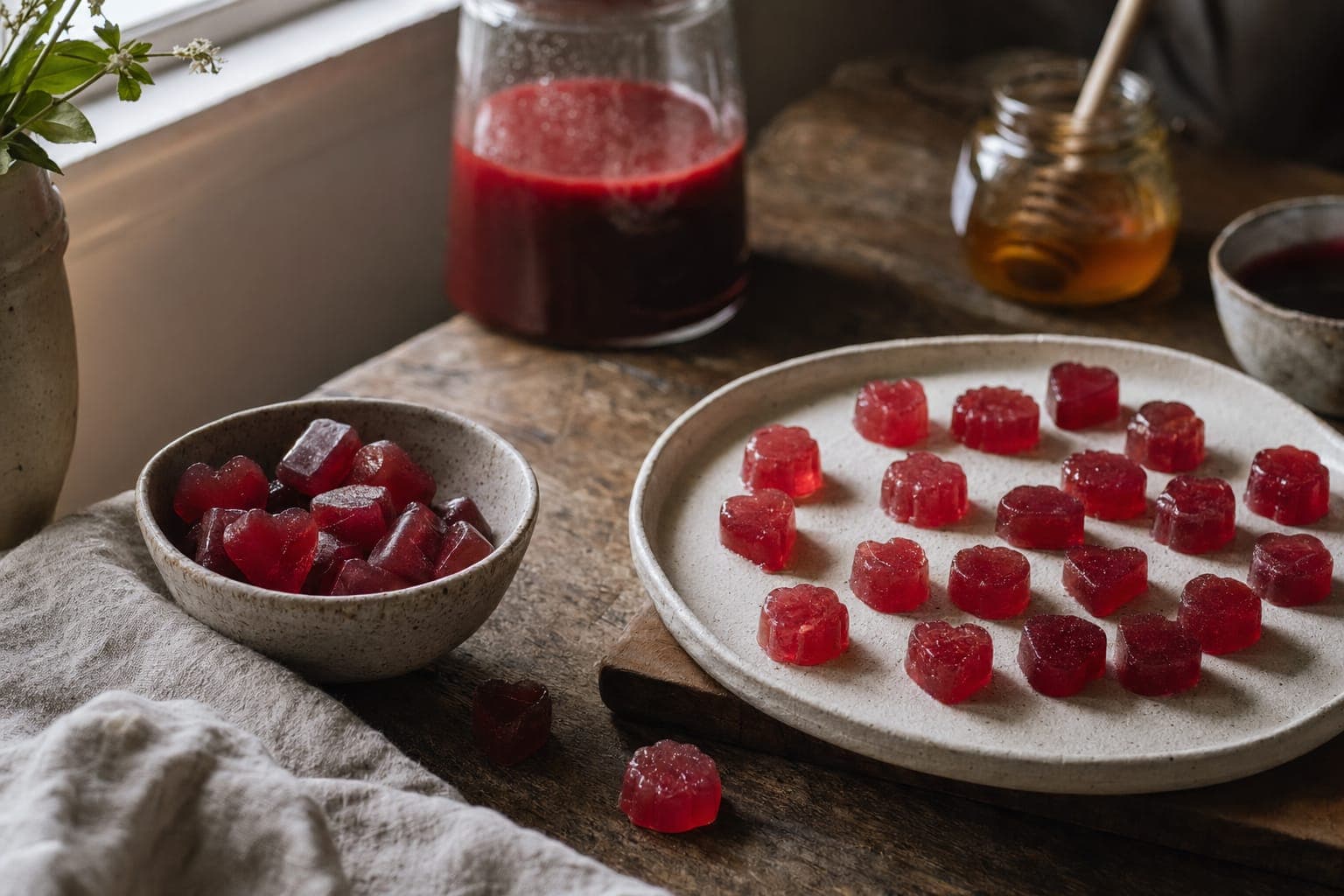
How to Make Your Own Gelatine Gummies
A simple recipe for homemade gelatine gummies using grass-fed gelatine, fresh juice, and raw honey. Better than shop-bought, kids love them.
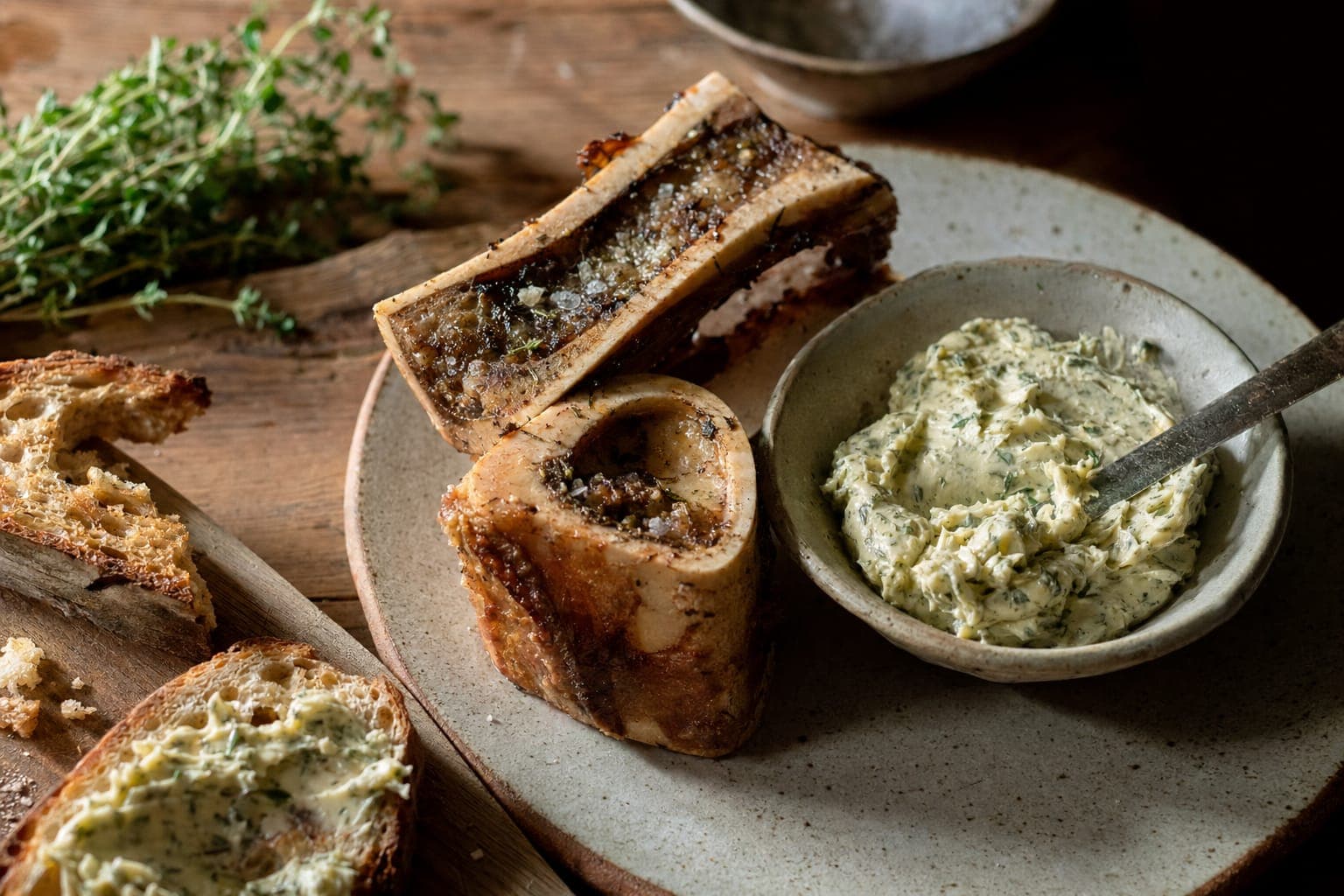
How to Make Bone Marrow Butter
Roast grass-fed marrow bones, scoop the marrow, and mix with butter and herbs. A nutrient-dense spread with fat-soluble vitamins.

Organised Protein Pancakes: A Weekend Favourite
A high-protein pancake recipe using beef protein, eggs, and raw milk. Cooked in cast iron, naturally sweetened with banana and honey. Real food breakfast.


 Join over 100,000+ members
Build a better food system with us
The Organised community is thousands of people choosing real food and backing the farmers who grow it, all of us trying to leave the world a little better than we found it. If that is what you care about too, you belong here.