Can Beef Organ Supplements Support Weight Loss?
Beef organ supplements won't magically make weight fall off. There is no magic bullet. But there's a mechanism by which nutrient-dense organ meat, including in supplement form, can genuinely help with weight management. Here's the science and the honest limitations.

By Niall Kiddle, Founder, Organised

Reviewed by Pedro Rodrigues, Agronomist (farming and sourcing only) ·
7 min read · Published · Updated · 5 cited sources
Makers of the Organised Daily blend, a grass-fed beef organ supplement from regenerative UK farms

Beef organ supplements won't magically make weight fall off. There is no magic bullet. But there's a legitimate mechanism by which nutrient-dense organ meat, including in supplement form, can genuinely help with weight management. Here's the science and the honest limitations.
The satiety mechanism
Satiety is the feeling of fullness and satisfaction after eating. Satiety is what stops you from eating more. When satiety is low, you eat more. When satiety is high, you eat less.
Different foods trigger different levels of satiety. Some foods, like highly processed carbohydrates, trigger low satiety. You can consume thousands of calories and still feel hungry. Other foods, like protein and fat-rich whole foods, trigger high satiety. You feel full and satisfied on fewer calories.
Weight loss is fundamentally about eating fewer calories than you burn.5 Satiety is one of the most effective levers for reducing calorie intake naturally. Eat foods that trigger high satiety and you'll naturally eat less without forcing yourself to restrict.
The most effective approach to weight loss isn't willpower and restriction. It's eating foods that naturally satisfy you so you don't have to fight hunger constantly.
Protein and fullness
Protein is the most satiating macronutrient. Gram for gram, protein triggers greater satiety than fat or carbohydrates.1 When you eat protein, your body signals that it's satisfied. You naturally eat less.
Beef organ supplements are extremely high in protein. Organ meat is protein-dense, often 20-25% protein by weight. Desiccated organ supplements concentrate this further, providing high protein in a small volume.
Consuming adequate protein, from whole foods or supplements, is one of the most reliable ways to naturally reduce calorie intake. You don't have to restrict deliberately. You just eat until you're full, which happens sooner with protein-rich foods.
Nutrient density and craving reduction
Many people experience cravings that have nothing to do with true hunger. These cravings often signal nutrient deficiency. Your body is seeking nutrients it's missing, and it expresses this as hunger or cravings.
When you're deficient in B vitamins, you might crave sugar. When you're deficient in iron or magnesium, you might crave specific foods. When you're deficient in multiple micronutrients, you might experience constant cravings and never feel satisfied.
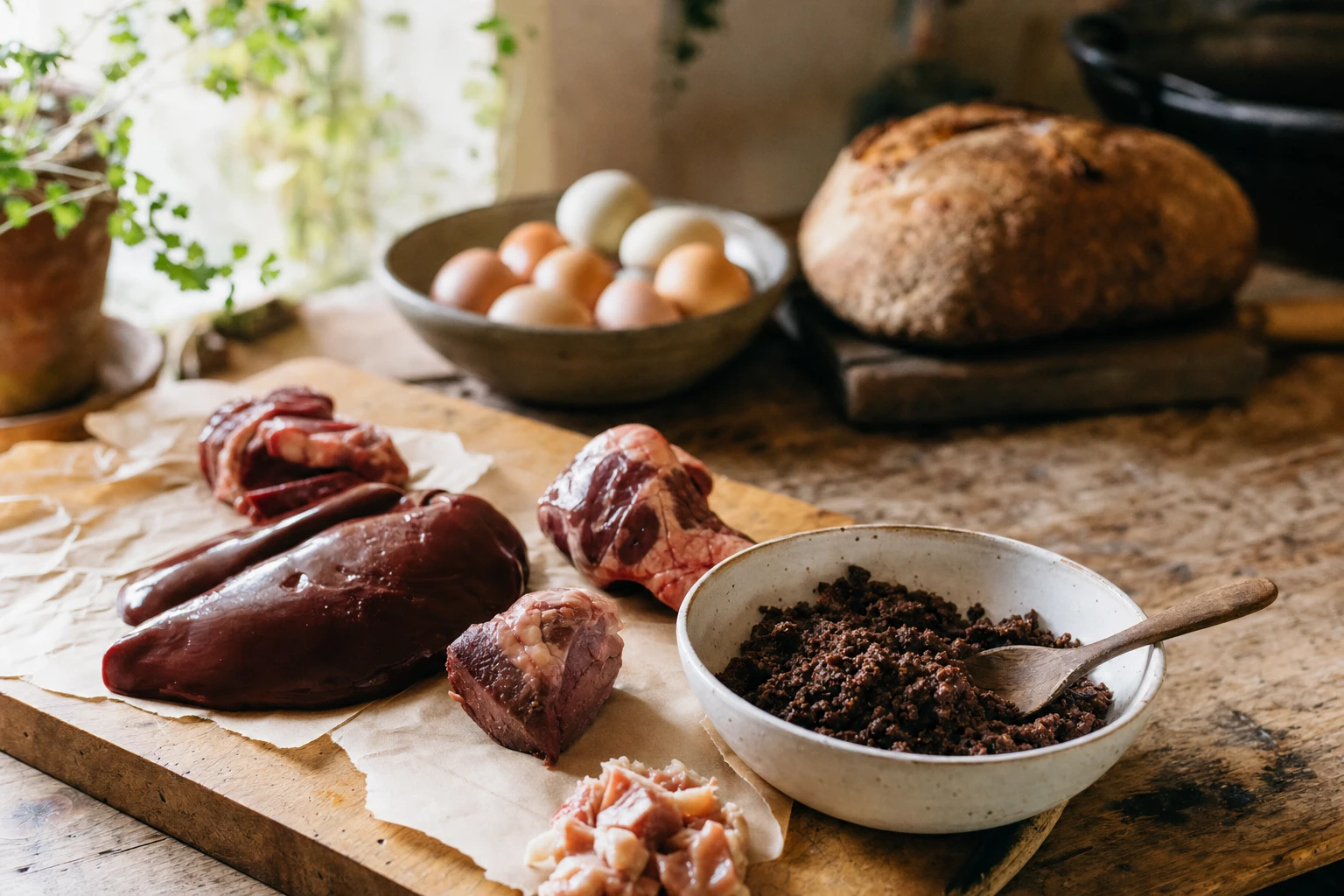
Beef organs are the most nutrient-dense foods available. Liver is 2000+ micrograms of vitamin A per 100 grams.2 Kidney contains extraordinary amounts of selenium. Heart is rich in taurine and B vitamins. Eating organs or consuming organ supplements addresses micronutrient deficiencies that might otherwise drive constant hunger.
When your micronutrient status improves, cravings often decrease dramatically. You feel satisfied with less food. You eat fewer calories naturally because your body is no longer signalling that it's deficient.

Nutrient deficiency and hunger
Research shows a strong correlation between micronutrient deficiency and obesity. People who are deficient in vitamins, minerals, and amino acids tend to eat more because their bodies are desperately signalling that something is missing.
This is why eating less fails for most people long-term. If you restrict calories without ensuring adequate nutrient density, your body remains deficient. It continues signalling hunger. You eventually cave and return to overeating because you've been fighting genuine biological signals.
The specific deficiencies matter. Chromium deficiency is associated with increased sugar cravings. Zinc deficiency drives food craving and overindulgence.4 Selenium deficiency is linked to poor appetite regulation. Iron deficiency produces fatigue that makes movement harder and overrides satiety signals.3
Beef organs address nearly all of these simultaneously. A single gram of desiccated liver provides meaningful amounts of chromium, zinc, selenium, iron, and virtually every other micronutrient your body needs for proper appetite regulation.
The antidote is eating nutrient-dense foods. Organs, eggs, fish, meat, vegetables. When your nutrient status improves, hunger naturally decreases. You eat less without feeling deprived.
What beef organ supplements contain
Desiccated organ supplements are made by freeze-drying or dehydrating organ meats. The water is removed, concentrating the nutrients. One gram of desiccated organ supplement is equivalent to roughly 5-10 grams of fresh organ meat.
Common beef organ supplements include liver, kidney, heart, and sometimes a blend. Liver is the most micronutrient-dense. Heart is rich in specific amino acids. Kidney contains unique micronutrients.
Quality varies wildly between manufacturers. The best supplements are made from organs of pasture-raised animals, freeze-dried to preserve nutrients, and minimally processed. Poor quality supplements may be made from factory-farmed animals, overly heated, or contaminated.
Get health guides like this, free
Two short reads a week on eating for energy, gut health, skin, sleep and more.
By signing up you agree to receive emails from us. No spam, unsubscribe anytime.
Desiccated organs as a tool
Desiccated organ supplements can be a useful tool for people who don't eat whole organ meats regularly. They provide the nutrient density of organs in a convenient, shelf-stable form.
Taking 3-6 grams daily of a quality organ supplement provides meaningful nutrient support. Combined with adequate protein intake from whole foods, adequate fibre, and basic movement, organ supplements can contribute to weight management by improving satiety and reducing cravings.
The convenience factor matters. If the choice is between taking an organ supplement and not getting organ nutrients at all, the supplement wins. Real liver is nutritionally superior, but a desiccated organ supplement you actually take is infinitely better than perfect food you never eat.
But supplements are supplements. They're not a replacement for real food. A diet built on whole foods, with organ supplements as a supporting layer, is far more effective than supplements alone. Think of organ supplements as insurance for your micronutrient status, not as the foundation of your strategy.
Realistic expectations
Beef organ supplements won't cause weight loss by themselves. They're not a magic bullet. Weight loss still requires a calorie deficit, and that deficit still comes from eating fewer calories or moving more.
But organ supplements can make that deficit more sustainable. By improving satiety, reducing cravings, and ensuring nutrient sufficiency, they make eating fewer calories feel less punishing. You're naturally satisfied on fewer calories rather than fighting hunger constantly. This is not magic. This is practical biology.
The weight loss is often modest, particularly if other factors are neglected. If you're sleeping poorly, chronically stressed, exercising excessively, or eating processed foods, organ supplements won't overcome those problems. But as part of a broader strategy, they genuinely help. Most people who add organ supplements to a solid nutrition plan find that hunger decreases and energy stabilises within weeks.
The difference between struggling through a calorie deficit and naturally being satisfied on fewer calories is the difference between success and failure for most people. Organ supplements help tip that balance toward success by addressing the micronutrient deficiencies driving hunger.

1 of 9
Daily blend
100,000+ thriving families4.9 on Trustpilot
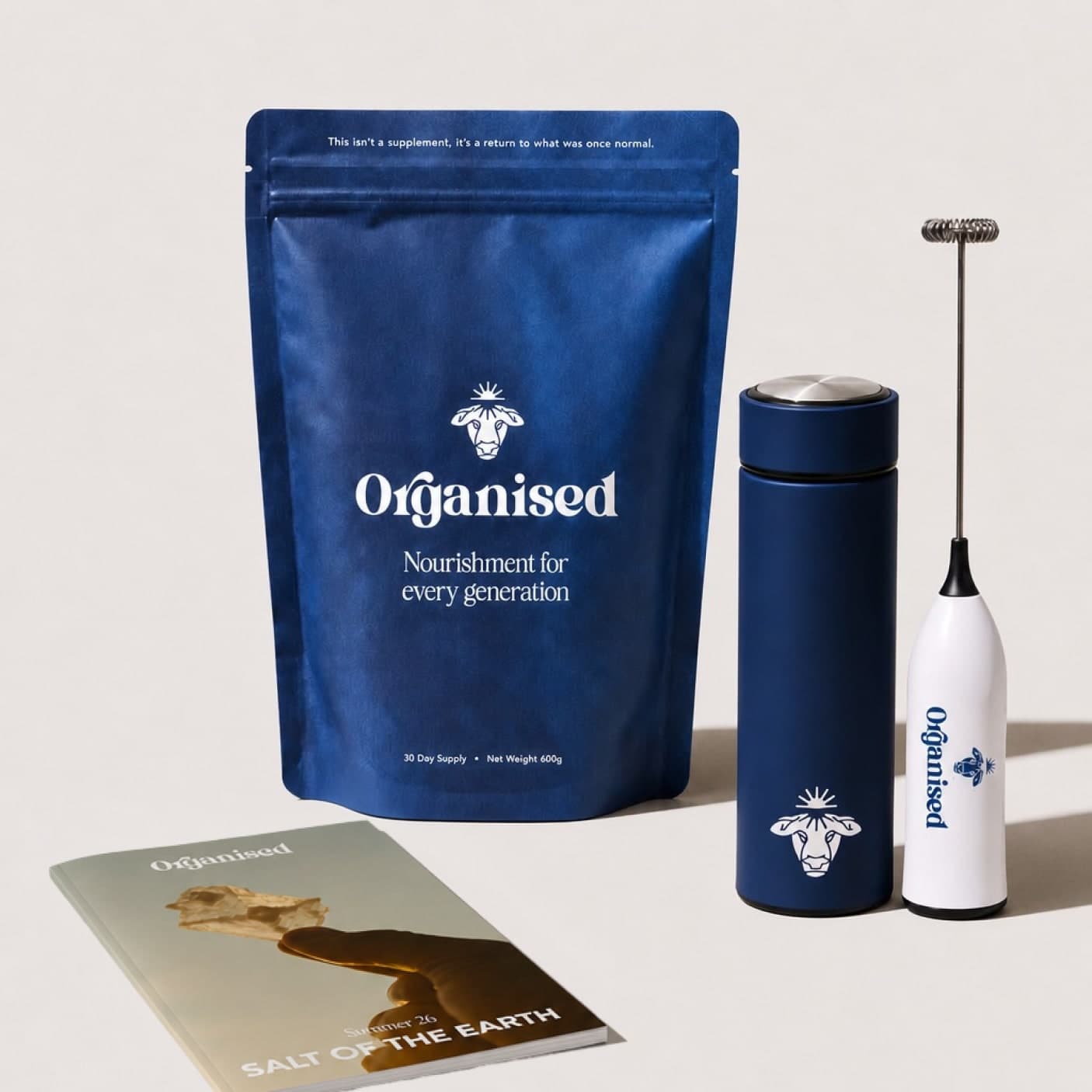
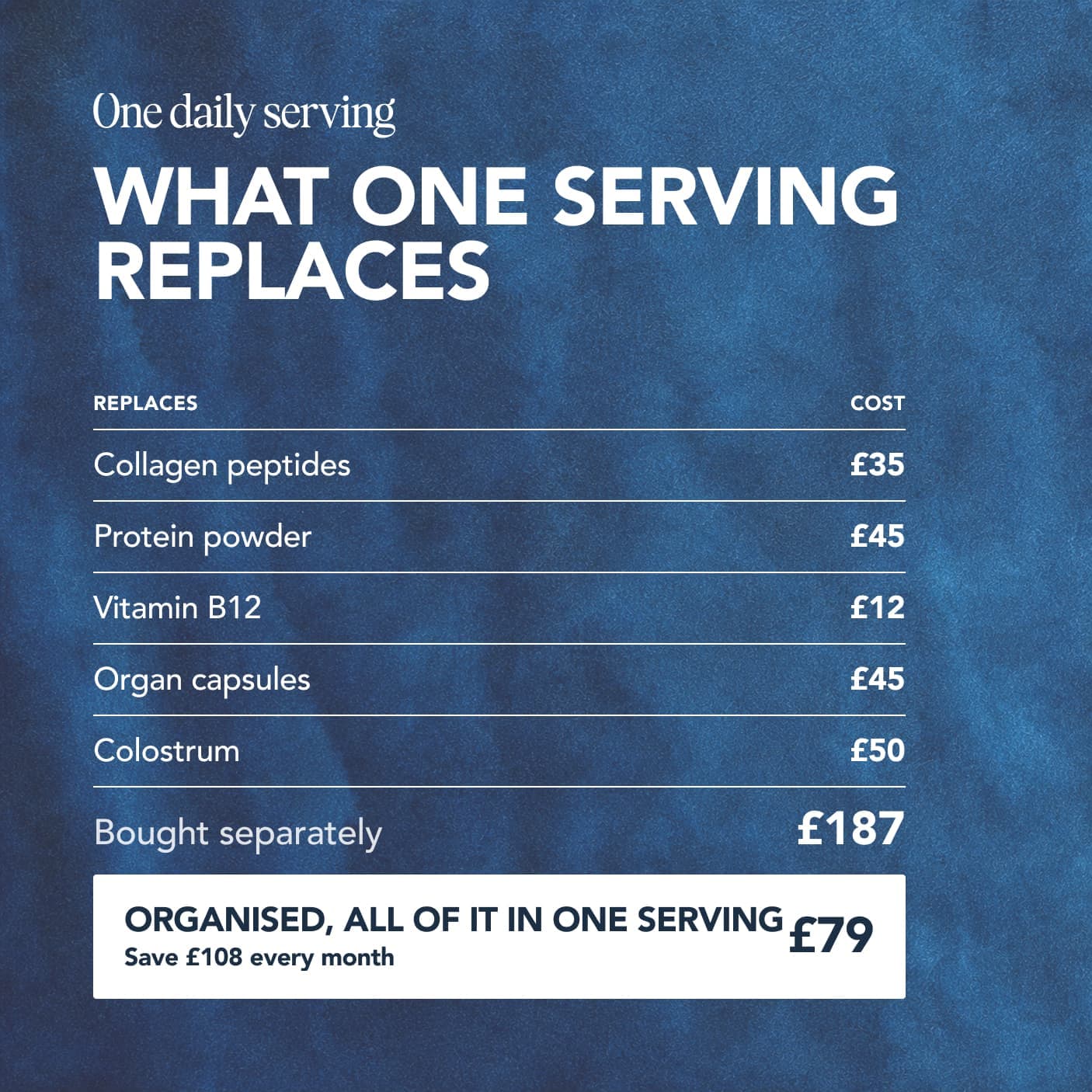
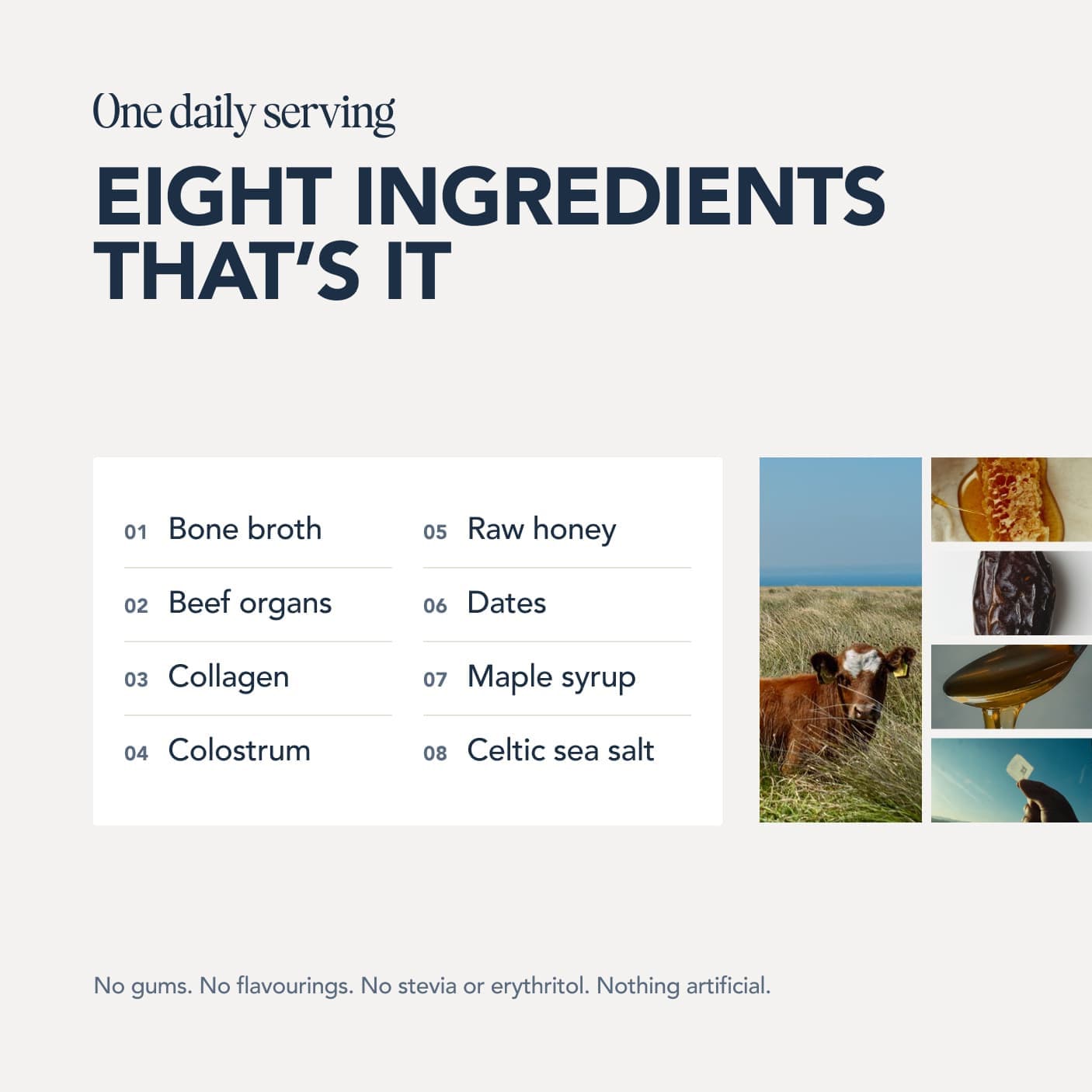
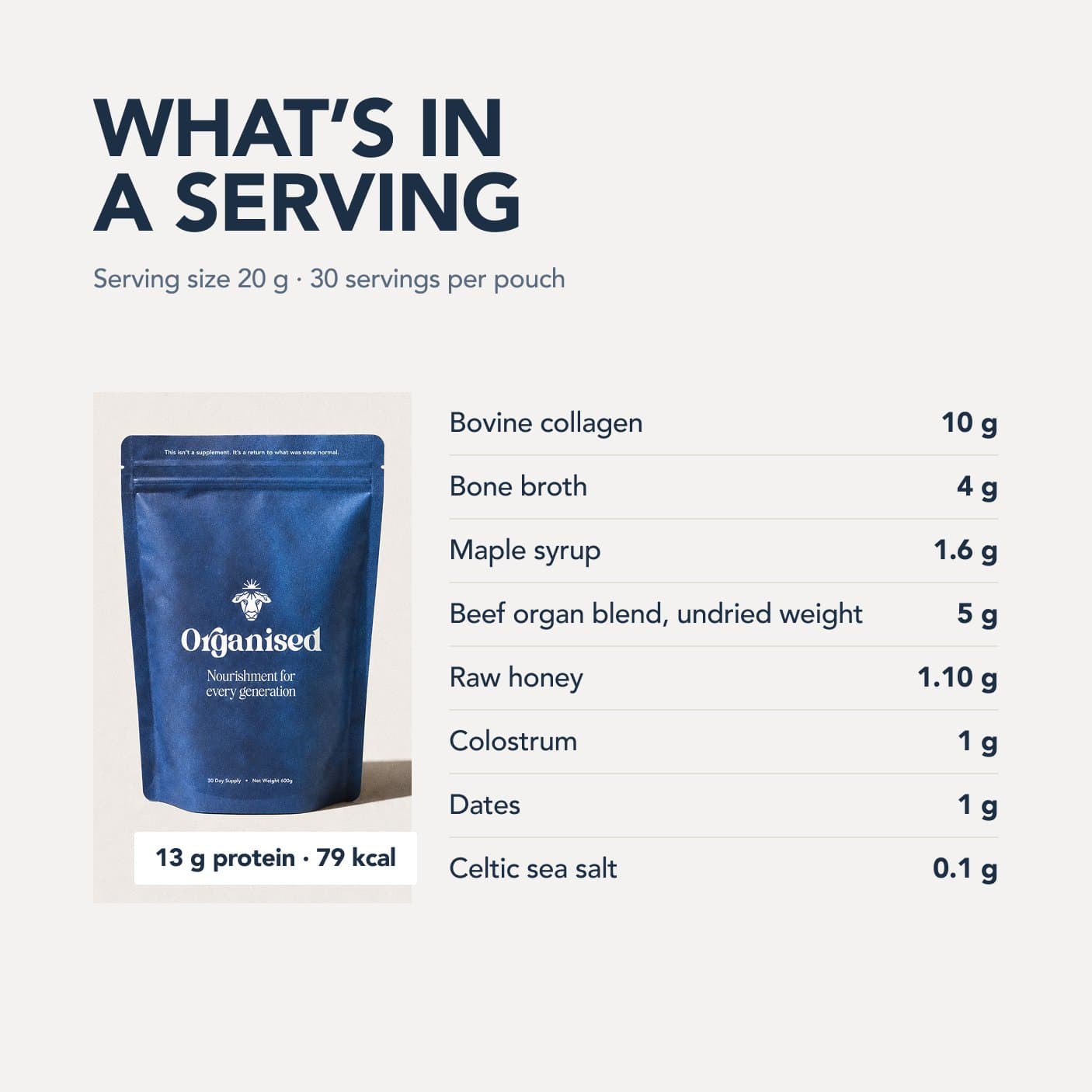
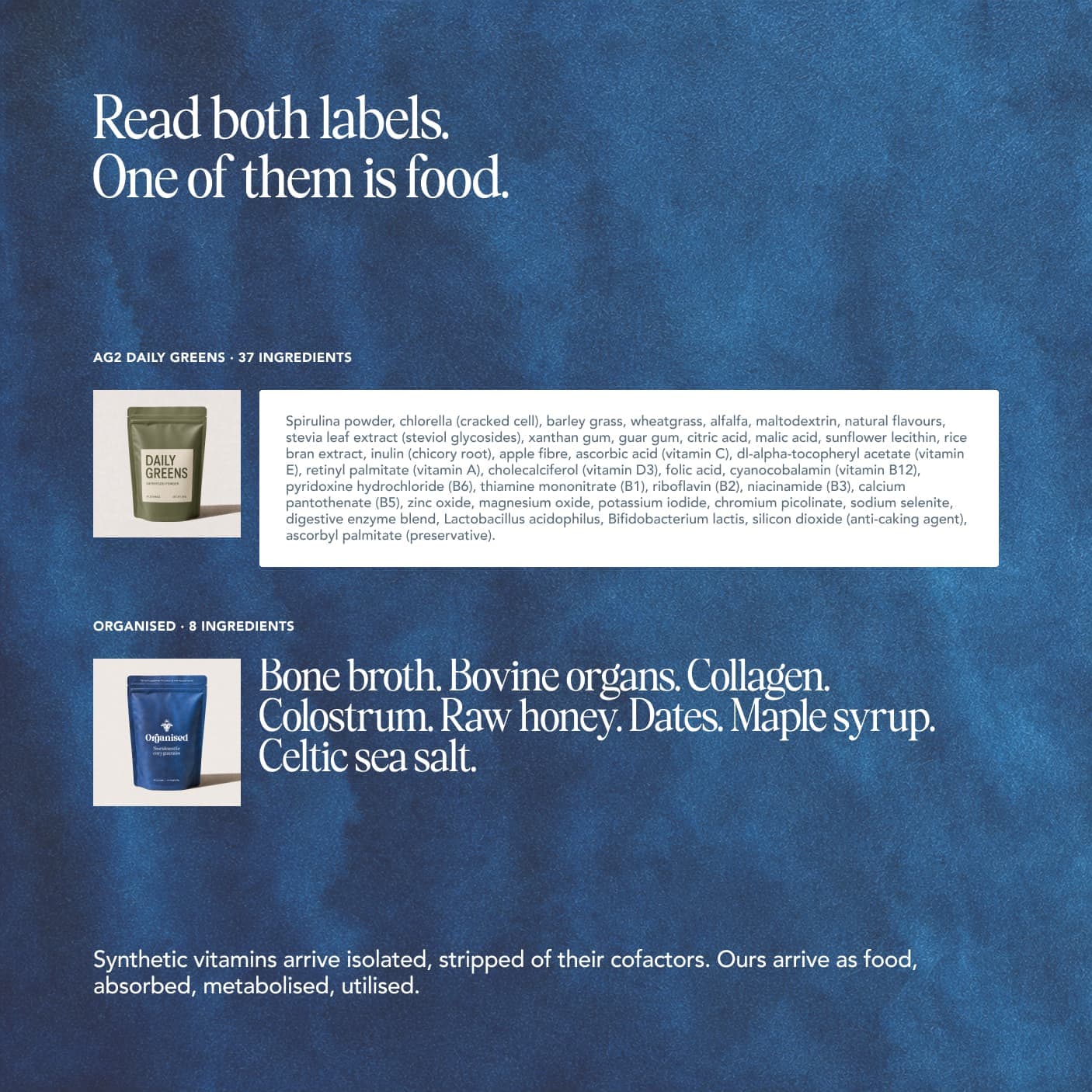
Eight real ingredients built around grass-fed beef organs, collagen and colostrum. Nothing synthetic added.
Free with your first order, worth £38. Plus £10 off the pouch with a subscription.


Free UK shipping · Made in England · 100 day money back guarantee on your first pouch · Skip, pause or cancel anytime
Where supplements fit in strategy
A rational approach to weight loss looks like this. First, nail the foundational nutrition. Remove processed foods. Eat whole foods. Include protein with every meal. Eat colourful vegetables. Ensure adequate fat. Drink adequate water.
Second, address sleep and stress. Poor sleep and chronic stress drive weight gain through hormonal mechanisms that no supplement can overcome. These must be addressed.
Third, move regularly at an intensity that doesn't leave you ravenous. Walking, strength training, and moderate intensity activity all work. Excessive exercise often backfires by driving overconsumption.
Within this framework, beef organ supplements are a useful tool. They provide nutrient density that addresses deficiencies, improve satiety, and reduce cravings. But they're support for a good strategy, not a replacement for one.
Weight loss works when you eat foods that satisfy you, sleep well, manage stress, and move regularly. Organ supplements support this strategy but cannot replace it.
The bottom line
Beef organ supplements can support weight loss, but not as magic. They work through two distinct mechanisms. First, they're high in protein which triggers satiety and naturally reduces calorie intake. Second, they're nutrient-dense which addresses micronutrient deficiencies that might otherwise drive constant hunger and cravings.
These are real mechanisms grounded in physiology and research. They genuinely work. But they work best within the context of good nutrition, adequate sleep, managed stress, and regular movement. A supplement cannot overcome a fundamentally broken foundation.
If your nutrition is solid, your sleep is good, your stress is managed, and you're exercising regularly but you're still struggling with hunger and cravings, a quality beef organ supplement is worth trying. Most people notice reduced hunger and more stable energy within 2-4 weeks. The reduction in cravings is often the most noticeable change.
But start with the fundamentals. Build a sustainable foundation of whole foods, sleep, stress management, and movement. Then, if needed, add organ supplements as the final piece. That's when they work best. Weight loss that lasts is built on stable foundations, not on supplements alone.
References
Every source below was checked on 27 August 2026. Each PubMed, PMC and DOI identifier was resolved against NCBI or Crossref, and what it opens is printed under the citation, so you can see the link goes where the citation says without leaving the page. Where a citation and its identifier disagreed, the citation was corrected to the record or the reference was deleted along with the sentence marker that pointed at it, and where the resolved paper turned out not to support the sentence, the sentence was cut back to what it does support. Borrowed authority is worse than none, because it looks like rigour.
- Westerterp-Plantenga MS et al. Dietary protein, weight loss, and weight maintenance. Annu Rev Nutr. PubMed PMID: 19400750.Checked 27 August 2026: PMID 19400750 opens Westerterp-Plantenga MS, Nieuwenhuizen A, Tomé D et al, Dietary protein, weight loss, and weight maintenance. Annu Rev Nutr 2009;29:21-41. PubMed indexes it as: Review.
- National Institutes of Health Office of Dietary Supplements. Vitamin A and Carotenoids - Health Professional Fact Sheet. NIH ODS Vitamin A.
- National Institutes of Health Office of Dietary Supplements. Iron - Health Professional Fact Sheet. NIH ODS Iron.
- National Institutes of Health Office of Dietary Supplements. Zinc - Health Professional Fact Sheet. NIH ODS Zinc.
- Hall KD et al. Energy balance and its components: implications for body weight regulation. Am J Clin Nutr. PMC3302369.Checked 27 August 2026: PMC3302369 opens Hall KD, Heymsfield SB, Kemnitz JW et al, Energy balance and its components: implications for body weight regulation. Am J Clin Nutr 2012;95(4):989-94. PubMed indexes it as: Consensus Statement.
Who wrote and reviewed this guide
Niall Kiddle
Author · Founder, Organised
Niall is the founder of Organised. He started the company in 2024 after fixing his own health the slow way: in 2022 he swapped a cupboard of synthetic supplements for real food, raw milk, organ meats, bone broth and honey, and felt the difference within months.
Areas of expertise: Ancestral nutrition, Organ meats, Whole-food supplementation, Gut health, Regenerative sourcing
Read Niall's full profile
Pedro Rodrigues
Reviewer · Agronomist (farming and sourcing only)
Pedro is the agronomist Organised works with on farming and sourcing. His job on the guides is to keep the science honest: he reviews what we publish about soil health, regenerative agriculture, grazing and the way food is actually produced.
Areas of expertise: Regenerative agriculture, Agronomy, Soil health, Grass-fed farming, Food sourcing
Reviewed this guide on
Read Pedro's full profileBrowse the guides library
All guidesKeep reading
Health goals
Feeding Your Brain: The Nutrients Behind Focus, Memory and Clarity
Discover which nutrients power your brain: DHA, choline, B12, iron, zinc, creatine. Food sources for lasting focus, memory, and mental clarity.

Health goals
Why Your Grandparents Ate Better Than You
Explore the nutritional shift since the 1970s. Your grandparents' whole-food diet contained far more nutrient density than modern food. Here's what changed.

Health goals
ADHD and Nutrition: Emerging Research and Practical Approaches
Explore the nutritional side of ADHD. See what the research suggests about iron, zinc and omega-3, and practical food approaches that may help support focus.
Real food, made effortless
Start my daily blendA few ways to use it
All recipes
5-Minute High-Protein Breakfasts Using Organised
Quick, high-protein breakfast ideas using Organised. Five recipes you can make in minutes with real food. No fussing around.

Ancestral Breakfast Ideas from Around the World
Traditional breakfast recipes from cultures that got nutrition right. Japanese, Turkish, Scottish, and more. Whole-food breakfast inspiration.

Organ Bolognese: The Family Dinner That Heals
Practical organ meat recipe using fresh beef liver and heart. Family-friendly bolognese that bridges supplements to whole food.


 Join over 100,000+ members
Build a better food system with us
The Organised community is thousands of people choosing real food and backing the farmers who grow it, all of us trying to leave the world a little better than we found it. If that is what you care about too, you belong here.