Adrenal Fatigue: Is It Real and What Can You Do About It?
Your doctor probably won't diagnose adrenal fatigue. The condition isn't officially recognised. But the experience is real: you're exhausted despite sleeping, you crave salt, your energy crashes mid-afternoon, you recover slowly from stress, and stimulants only make you feel worse. Whether it's called adrenal fatigue or HPA axis dysregulation, the underlying mechanism is real and addressable.

By Niall Kiddle, Founder, Organised

Reviewed by Pedro Rodrigues, Agronomist (farming and sourcing only) ·
7 min read · Published · Updated · 4 cited sources
Makers of the Organised Daily blend, a grass-fed beef organ supplement from regenerative UK farms

Your doctor probably won't diagnose adrenal fatigue. The condition isn't recognised by mainstream endocrinology.2 But the experience is real: you're exhausted despite sleeping, you crave salt, your energy crashes mid-afternoon, you recover slowly from stress, and stimulants only make you feel worse.
Whether it's called adrenal fatigue or HPA axis dysregulation, the underlying mechanism is real and addressable.

The adrenal fatigue debate: terminology matters
The term "adrenal fatigue" is controversial in conventional medicine. The adrenal glands don't fatigue in the way muscles do. But the HPA axis (hypothalamic-pituitary-adrenal axis) can become dysregulated, and that dysregulation produces the cluster of symptoms people call adrenal fatigue.
What's happening: after months or years of chronic stress, your HPA axis becomes blunted. Cortisol rhythms flatten. Morning cortisol doesn't rise appropriately, so you wake exhausted. Evening cortisol doesn't fall appropriately, so you can't sleep. Your capacity to respond to acute stress declines. You're stuck in a state of chronic, low-grade activation.
This is not laziness. This is not depression (though dysregulated cortisol can contribute to depression). This is a measurable physiological state: the HPA axis has been driven hard for so long that it's stopped responding optimally.
Adrenal fatigue is a real problem with a contested name. The physiology is clear. The recovery is straightforward.

What's actually happening at the HPA axis
The HPA axis is a feedback loop. Your brain (hypothalamus) detects stress and sends a signal to your pituitary gland. The pituitary releases ACTH, which tells your adrenal glands to release cortisol.1 Cortisol mobilises energy and shuts down non-essential functions (digestion, immune function, reproduction). When stress passes, cortisol returns to baseline and the system resets.
But if stress is constant, cortisol never returns to baseline. The system never resets. Your brain becomes desensitised to cortisol (you need more cortisol to get the same effect). Your adrenal glands work harder and harder to maintain even baseline function. Eventually, they can't keep up.
The result: chronically low cortisol in the evening (you can't sleep), chronically low cortisol in the morning (you wake tired), and a blunted stress response (you can't cope with new stressors).
Why you crave salt
If you have dysregulated cortisol, you crave salt. This is not a sign of weakness or poor willpower. This is your body asking for what it needs.
Cortisol regulates sodium balance. When cortisol is dysregulated, sodium handling becomes impaired. Your body senses sodium is needed and sends a craving signal. Salt cravings in the context of low energy and poor stress recovery are a marker of adrenal dysregulation.
This is actually useful information. Your body is telling you to increase salt intake. Not because you have high blood pressure (dysregulated cortisol often comes with low blood pressure), but because your HPA axis needs sodium to function optimally.
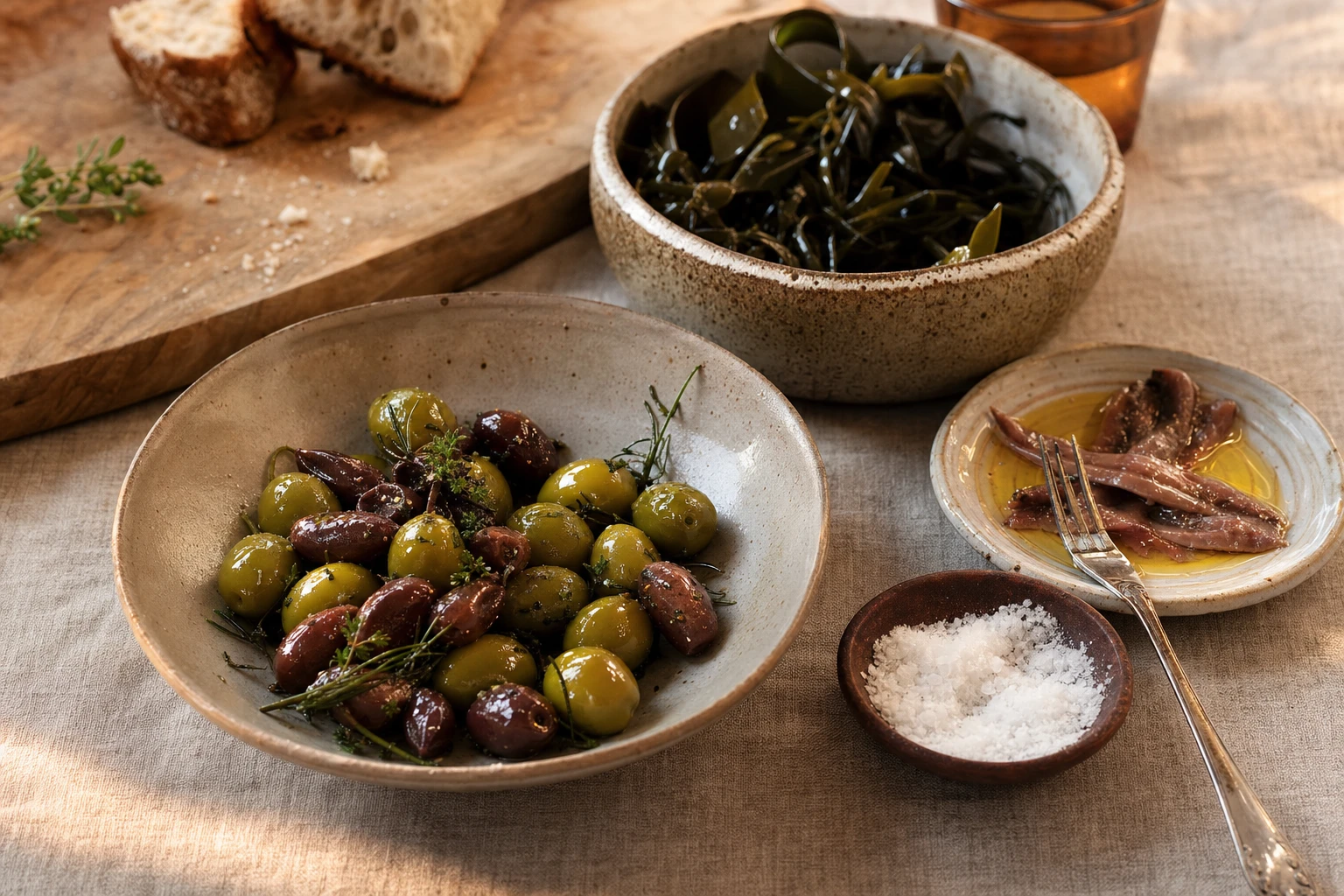
Add quality sea salt to your food. Eat salty foods (olives, anchovies, seaweed). This isn't cutting corners on health. This is supporting your HPA axis. Salt cravings often resolve once cortisol regulation improves.
Blood sugar stability: the foundation
Blood sugar crashes trigger cortisol release. If you're eating in a way that causes constant blood sugar swings, you're spiking cortisol multiple times daily. Over months, this drives HPA axis dysregulation.
Stabilise blood sugar: eat protein and fat with every meal and snack. Start your day with eggs or meat, not cereal or juice. Never eat carbohydrates alone. Pair them with protein and fat. This single change often improves energy and stress capacity within a week.
Avoid coffee on an empty stomach. Coffee raises cortisol. If you're already dysregulated, coffee without food may further elevate cortisol3, exacerbating the problem. Eat breakfast first, then have coffee.
Eat regularly. Don't skip meals. Don't fast for extended periods. Your dysregulated HPA axis can't handle the metabolic stress. You need consistent nutrient input throughout the day.

Protein and nutrient density
HPA axis recovery requires adequate amino acids. Your brain and adrenal glands are literally built from protein. If you're not eating enough, you're working against your own recovery.
Eat protein at every meal: meat, fish, eggs, dairy. Aim for 25-30g per meal. Include organ meats (especially liver) for their nutrient density. Organ meats contain B vitamins, iron, copper, and other nutrients that directly support adrenal function and stress recovery.
Don't fear fat. Fat carries fat-soluble vitamins (A, D, E, K) essential for HPA axis function. Eat whole eggs, not just whites. Eat fatty fish, not just lean fish. Eat butter, not margarine.
Sleep quality and cortisol rhythm
Sleep is when your HPA axis repairs itself. Without deep, consistent sleep, no other intervention works. Prioritise sleep above everything else during recovery.
Go to bed early (before 10 PM ideally). Wake at a consistent time daily. Get morning sunlight exposure (sets your circadian rhythm). Avoid blue light after sunset. Your body heals in darkness and in alignment with natural light cycles.
Magnesium (300-400mg in the evening) and glycine (3-5g in the evening) have evidence for supporting sleep without being sedating.4 Most people notice improved sleep quality within 3-5 days of adding these.
Get health guides like this, free
Two short reads a week on eating for energy, gut health, skin, sleep and more.
By signing up you agree to receive emails from us. No spam, unsubscribe anytime.
Reducing stress inputs
Your dysregulated nervous system is hypervigilant. It's interpreting neutral inputs as threats. Some stress inputs you can control, others you can't. Control what you can:
- News and social media deliberately designed to keep you agitated. Eliminate them during recovery.
- Difficult relationships assess which relationships are genuinely life-sustaining and which are draining. You can't afford to spend energy on relationships that don't reciprocate.
- Overcommitment say no to new obligations. You're recovering, not climbing.
- Excessive exercise exercise is stress. During recovery, do gentle movement (walking, swimming, yoga) not intensity.
Stress reduction is not about becoming passive. It's about conscious prioritisation. You're directing your limited resources toward recovery.

Supporting recovery: what actually works
The core interventions: stable blood sugar (protein and fat with carbohydrates), adequate sleep (early bedtime, consistent wake time, dark room), nutrient density (whole foods, organ meats, adequate salt), and stress reduction (eliminate non-essential obligations and media inputs).
These four pillars often produce noticeable improvement within 4-6 weeks. Energy returns. Sleep improves. The afternoon crash resolves. Your capacity to handle stress increases. This isn't a placebo. This is HPA axis function improving.
Some people benefit from adaptogenic herbs (ashwagandha, rhodiola) which support stress adaptation. These are tools, not foundations. Use them alongside the core interventions, not instead of them.
1 of 9
Daily blend
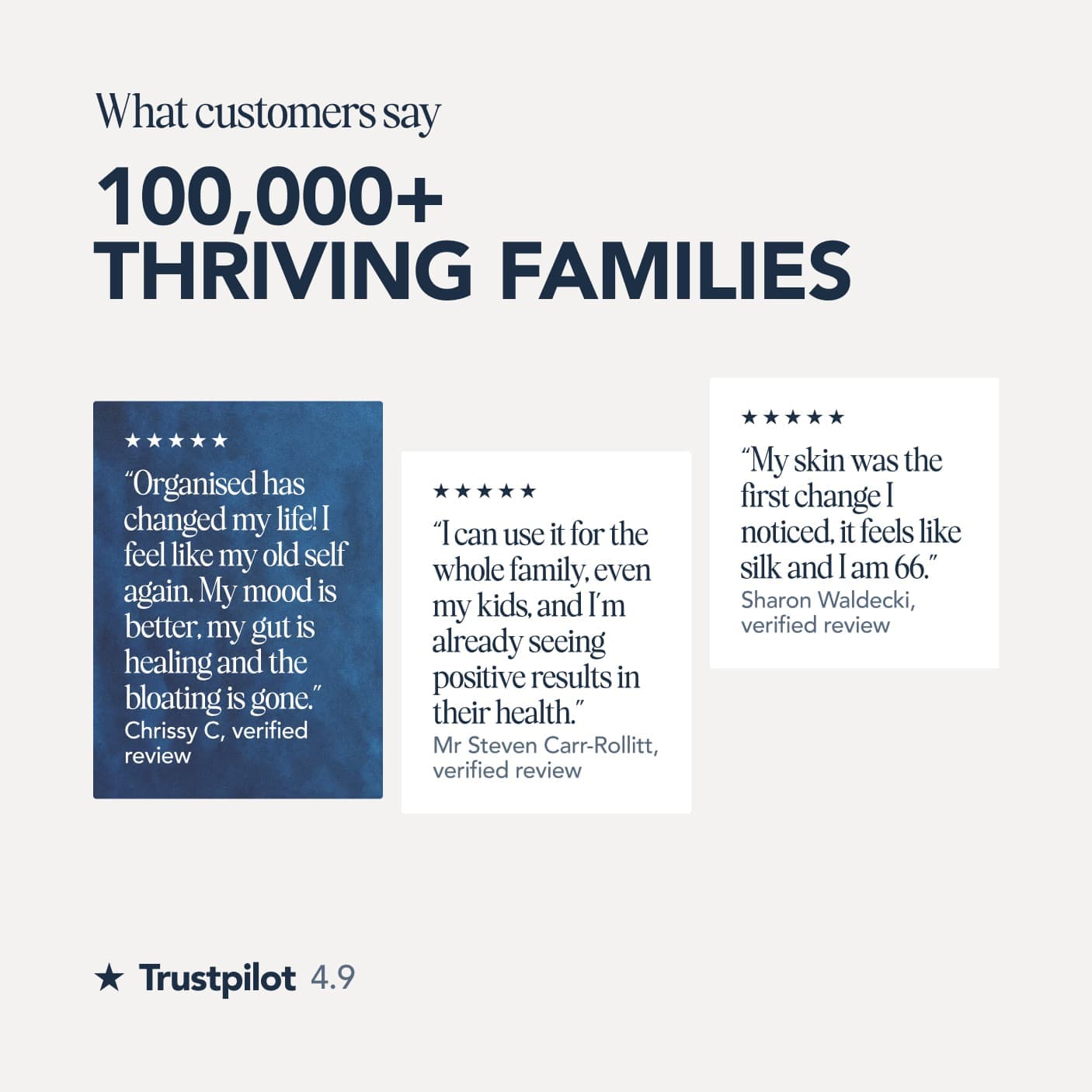
100,000+ thriving families4.9 on Trustpilot
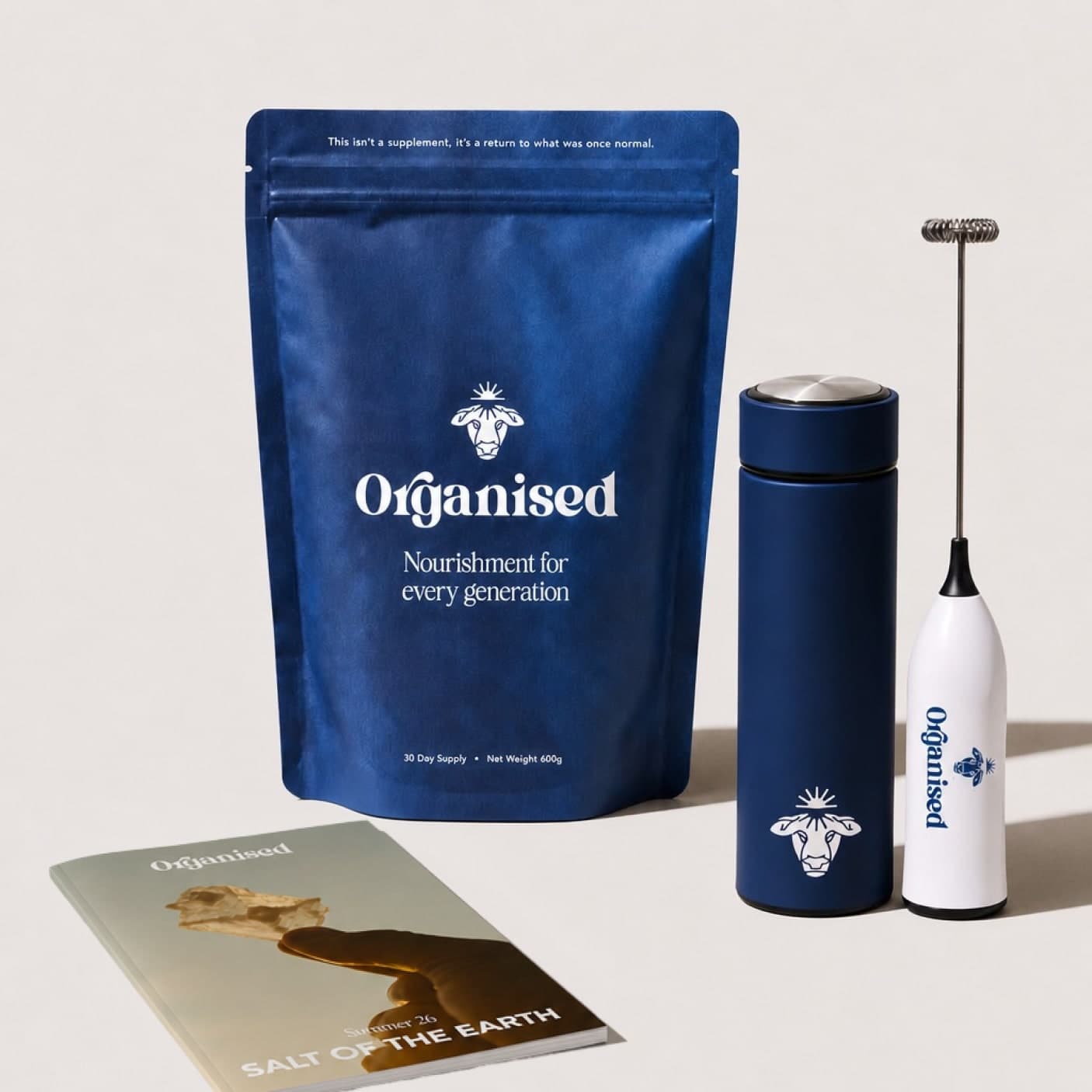
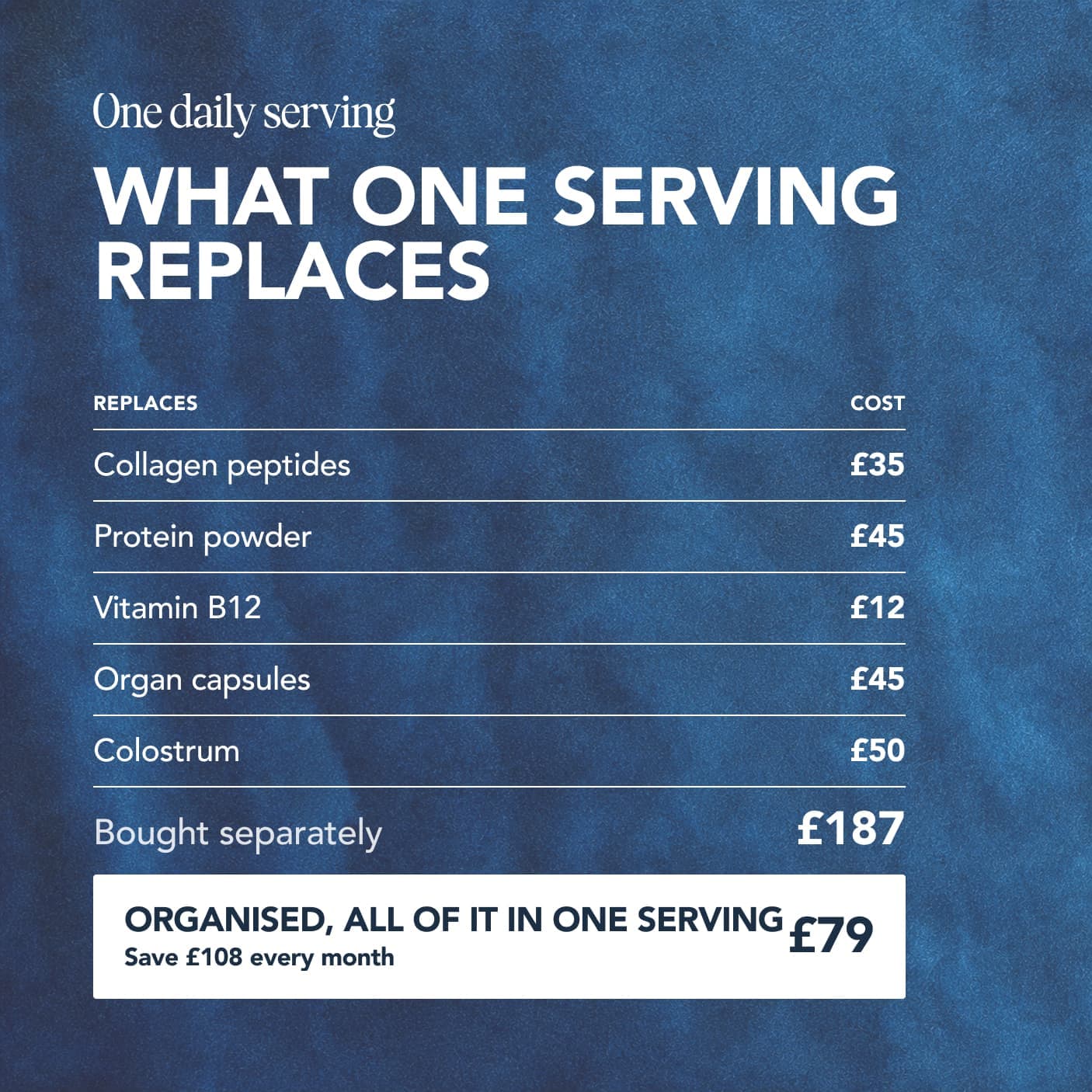
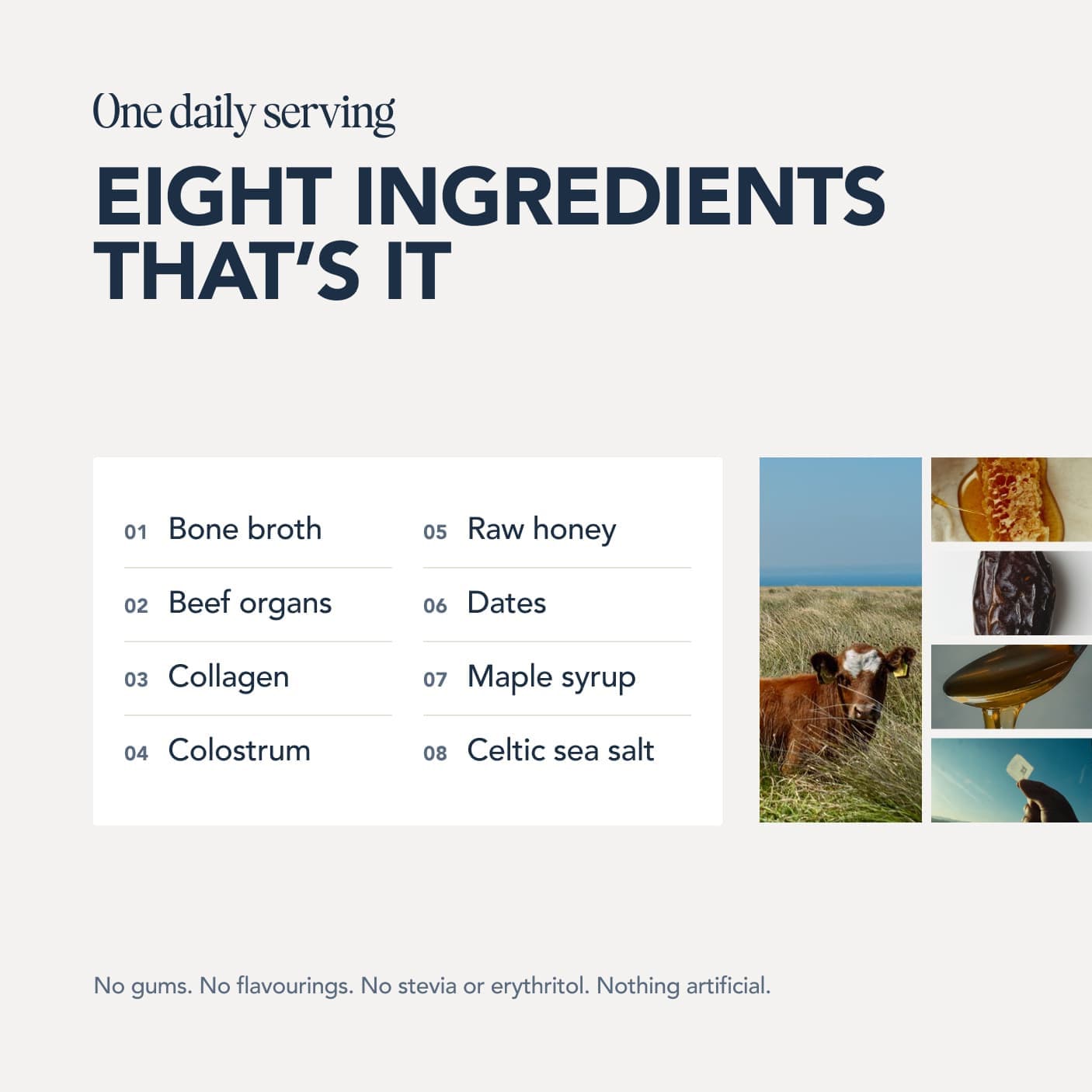
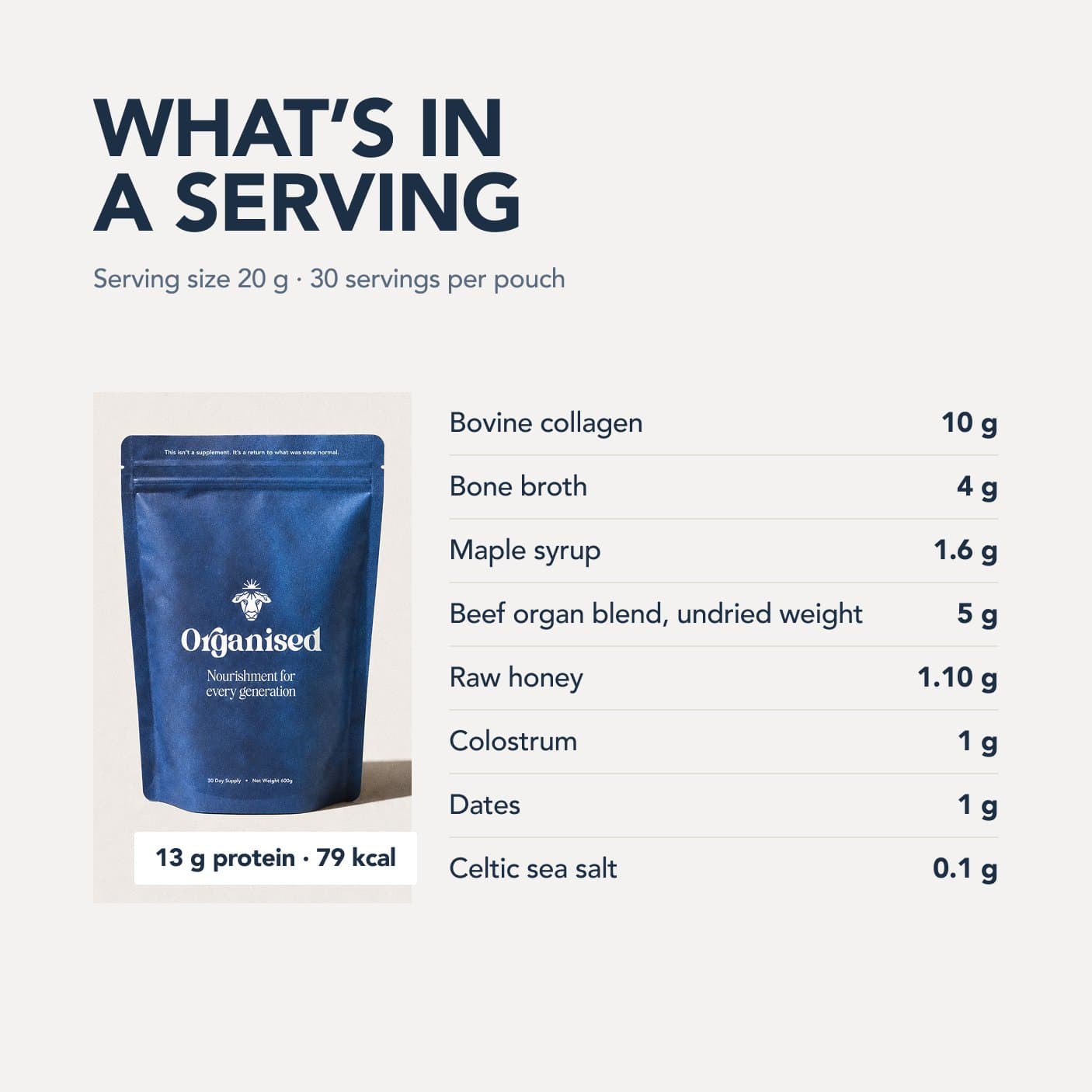
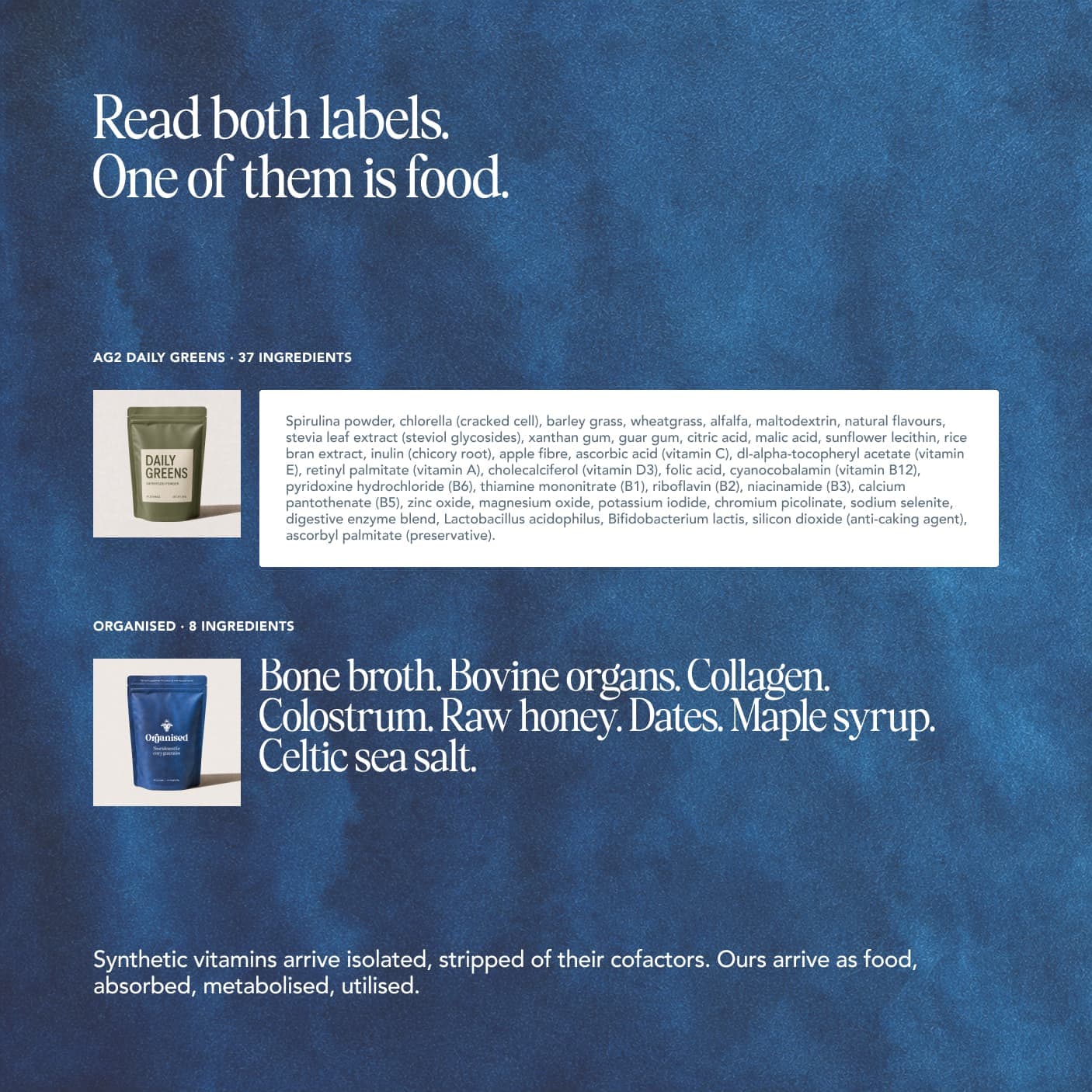
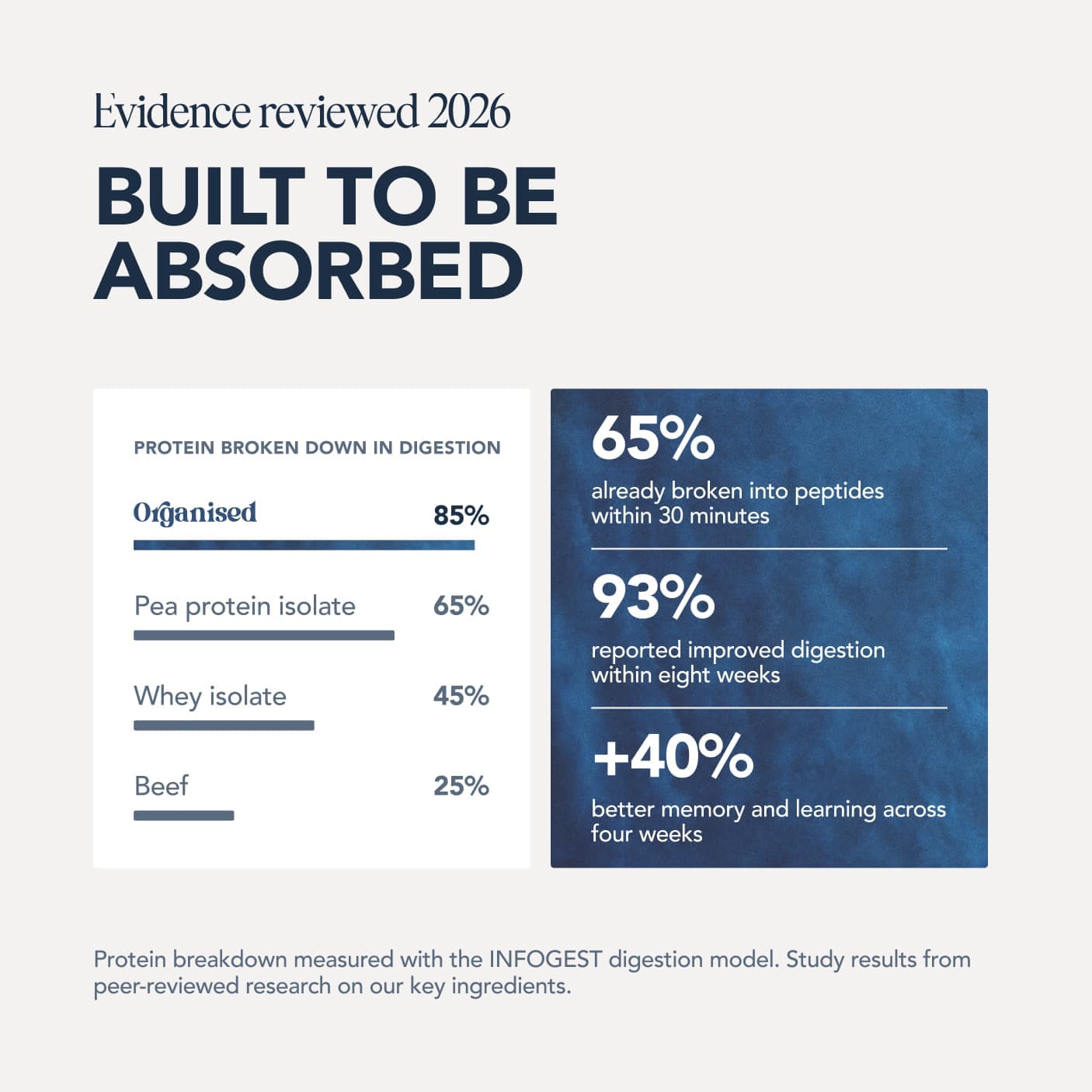
Eight real ingredients built around grass-fed beef organs, collagen and colostrum. Nothing synthetic added.
Free with your first order, worth £38. Plus £10 off the pouch with a subscription.


Free UK shipping · Made in England · 100 day money back guarantee on your first pouch · Skip, pause or cancel anytime
The recovery timeline and what to expect
HPA axis dysregulation doesn't develop overnight and it doesn't resolve overnight. Understanding the timeline helps you stay consistent when improvements feel slow.
Weeks 1 to 2: Sleep often improves immediately. Your nervous system begins to calm. Energy might still be low, but sleep quality deepens noticeably. Some people report this shift within 3 to 5 days of better sleep and reduced stimulants.
Weeks 2 to 4: The afternoon energy crash begins to improve. You stop hitting the wall at 3 PM. Brain fog starts to lift. Some days feel almost normal.
Weeks 4 to 8: Morning energy improves. You wake without an alarm feeling something close to rested. The constant exhaustion fades. Mood stabilises. Your capacity to handle small stressors returns.
Weeks 8 to 12: You notice you can handle moderate stressors without collapsing. Recovery from stress is faster. The hypervigilance of the dysregulated nervous system begins to fade. Life feels manageable again.
Months 3 to 6: Full recovery. Your cortisol rhythm normalises. You sleep deeply. You wake refreshed. Stress response is proportional. You're no longer operating from an empty tank.
If your timeline is slower than this, it usually means one of the four pillars (blood sugar stability, sleep quality, nutrient density, stress reduction) isn't being addressed adequately. Double-check each one. The body is remarkably resilient and responsive when given what it actually needs.
The bottom line
Adrenal fatigue is a real dysregulation of the HPA axis that responds predictably to: stable blood sugar (protein and fat with meals), adequate sleep (early, consistent, dark), sufficient protein and nutrient density, adequate salt, and stress reduction.
Recovery takes time. You didn't become dysregulated in weeks and you won't recover in weeks. Most people see substantial improvement in 8-12 weeks and full recovery in 6-12 months. But the trajectory changes almost immediately once you implement these interventions correctly.
You're not broken. Your system is just overwhelmed. Give it what it needs and it will recover.
References
Every source below was checked on 27 August 2026. Each PubMed, PMC and DOI identifier was resolved against NCBI or Crossref, and what it opens is printed under the citation, so you can see the link goes where the citation says without leaving the page. Where a citation and its identifier disagreed, the citation was corrected to the record or the reference was deleted along with the sentence marker that pointed at it, and where the resolved paper turned out not to support the sentence, the sentence was cut back to what it does support. Borrowed authority is worse than none, because it looks like rigour.
- Sapolsky RM, Romero LM, Munck AU. How do glucocorticoids influence stress responses? Integrating permissive, suppressive, stimulatory, and preparative actions. Endocr Rev. 2000;21(1):55-89. PMID: 10696570.Checked 27 August 2026: PMID 10696570 opens Sapolsky RM, Romero LM, Munck AU, How do glucocorticoids influence stress responses? Integrating permissive, suppressive, stimulatory, and preparative actions. Endocr Rev 2000;21(1):55-89. PubMed indexes it as: Review.
- Cadegiani FA, Kater CE. Adrenal fatigue does not exist: a systematic review. BMC Endocr Disord. 2016;16(1):48. PMID: 27557747.Checked 27 August 2026: PMID 27557747 opens Cadegiani FA, Kater CE, Adrenal fatigue does not exist: a systematic review. BMC Endocr Disord 2016;16(1):48. PubMed indexes it as: Systematic Review.
- Lovallo WR et al. Cortisol responses to mental stress, exercise, and meals following caffeine intake in men and women. Pharmacol Biochem Behav. 2006;83(3):441-7. PMID: 16631247.Checked 27 August 2026: PMID 16631247 opens Lovallo WR, Farag NH, Vincent AS et al, Cortisol responses to mental stress, exercise, and meals following caffeine intake in men and women. Pharmacol Biochem Behav 2006;83(3):441-7. PubMed indexes it as: Comparative Study, Randomized Controlled Trial.
- Bannai M, Kawai N. New therapeutic strategy for amino acid medicine: glycine improves the quality of sleep. J Pharmacol Sci. 2012;118(2):145-8. PMID: 22293292.Checked 27 August 2026: PMID 22293292 opens Bannai M, Kawai N, New therapeutic strategy for amino acid medicine: glycine improves the quality of sleep. J Pharmacol Sci 2012;118(2):145-8. PubMed indexes it as: Review.
Who wrote and reviewed this guide
Niall Kiddle
Author · Founder, Organised
Niall is the founder of Organised. He started the company in 2024 after fixing his own health the slow way: in 2022 he swapped a cupboard of synthetic supplements for real food, raw milk, organ meats, bone broth and honey, and felt the difference within months.
Areas of expertise: Ancestral nutrition, Organ meats, Whole-food supplementation, Gut health, Regenerative sourcing
Read Niall's full profile
Pedro Rodrigues
Reviewer · Agronomist (farming and sourcing only)
Pedro is the agronomist Organised works with on farming and sourcing. His job on the guides is to keep the science honest: he reviews what we publish about soil health, regenerative agriculture, grazing and the way food is actually produced.
Areas of expertise: Regenerative agriculture, Agronomy, Soil health, Grass-fed farming, Food sourcing
Reviewed this guide on
Read Pedro's full profileMore on energy
View all- Why You're Always Tired (And What to Eat About It)
- Always Tired? What Reddit Says to Eat (and What Actually Works)
- B12 Deficiency: Signs, Causes and the Fastest Way to Fix It
- Chronic Fatigue and Nutrient Deficiency: What Blood Tests to Ask For
- How to Maintain Energy All Day Without Caffeine Dependency
- How Your Thyroid Affects Your Energy Levels
- Iron Deficiency: Why It's So Common and How Organs Can Help
- Metabolism Maxxing: How to Support Your Metabolic Rate with Real Food
- The Desk Worker's Guide to Staying Strong and Energised
- What Does Your Afternoon Slump Actually Mean?
- Why Intermittent Fasting Might Be Tanking Your Energy
Browse the guides library
All guidesKeep reading

Health goals
Protecting Your Joints as You Age: A Nutritional Blueprint
Protect your joints as you age. The role of collagen, glycine, vitamin C, glucosamine, and real food in joint longevity.

Health goals
The Desk Worker's Guide to Staying Strong and Energised
Desk work erodes energy and muscle. This guide fixes it with protein timing, movement breaks, light exposure, and cortisol management.

Health goals
How to Eat for a Natural Glow (Without Products)
A natural skin glow starts from the inside. Learn how to eat for skin glow with the foods and nutrients that support radiant skin, no products needed.
Real food, made effortless
Start my daily blendA few ways to use it
All recipes
Organised Chia Pudding with Raw Honey and Berries
A no-cook chia seed pudding made with raw milk, collagen, berries, and raw honey. Prep it the night before and eat for breakfast.

Collagen-Rich Beef Stew: Slow-Cooked Nourishment
Beef stew that delivers collagen from connective tissue and bone broth. Winter comfort food that actually nourishes. Simple slow cooker recipe.

How to Make Your Own Gelatine Gummies
A simple recipe for homemade gelatine gummies using grass-fed gelatine, fresh juice, and raw honey. Better than shop-bought, kids love them.


 Join over 100,000+ members
Build a better food system with us
The Organised community is thousands of people choosing real food and backing the farmers who grow it, all of us trying to leave the world a little better than we found it. If that is what you care about too, you belong here.