The Desk Worker's Guide to Staying Strong and Energised
A desk job doesn't just bore the mind. It quietly dismantles the body. Your posture collapses. Your energy crashes. Your muscles atrophy. But it doesn't have to be this way.
By Niall Kiddle, Founder, Organised

Reviewed by Pedro Rodrigues, Agronomist (farming and sourcing only) ·
6 min read · Published · Updated · 3 cited sources
Makers of the Organised Daily blend, a grass-fed beef organ supplement from regenerative UK farms

The problem isn't the desk itself. It's what most desk workers do (and don't do) around the desk. They skip breakfast, drink coffee on an empty stomach, sit without interruption for hours, stare at blue light, and wonder why their body feels hollowed out by 3 PM.

Why desk work crashes your energy
Sitting for long periods reduces protein synthesis signalling and is associated with reduced muscle conditioning over time.1 Without muscle, your metabolic rate drops. Without metabolic rate, your energy production falls. It's a cascade that accelerates if not interrupted.
Prolonged sitting also impairs glucose metabolism. The muscles aren't contracting, so they're not pulling glucose from the blood and burning it for energy.2 Blood sugar rises and falls erratically. Insulin sensitivity drops. Energy becomes unstable. By mid-afternoon, you're exhausted.
Add to this the fact that most desk workers are chronically dehydrated (they forget to drink water when focused on work), eating refined carbohydrates at lunch (which spike blood sugar then crash it), and sitting under fluorescent lights in rooms with no natural ventilation and poor air quality, and you have a recipe for afternoon energy collapse so severe that people turn to caffeine and sugar just to function.
The problem isn't your willpower or your motivation. It's your environment and your fuelling strategy. Fix those, and the energy transforms.
You can't expect your body to feel energised if you're treating it like a piece of furniture.
Protein timing is non-negotiable
Muscle is built and maintained through protein synthesis, which happens primarily in the post-meal window when amino acids are abundant and when muscles have been stimulated through movement or resistance.
Eat protein within 30 to 60 minutes of waking. Your overnight fast has emptied your amino acid pool. Breakfast (proper breakfast, not a granola bar) replenishes it and sets the tone for stable energy throughout the morning. Aim for at least 30 grams of protein at breakfast: eggs and bacon, red meat and vegetables, fish and butter, or all four combined.
Eat protein again at lunch (at least 40 grams), and again at dinner (at least 40 grams). Distribute protein across the day rather than front-loading it at dinner. This keeps muscle protein synthesis stimulated consistently and prevents the post-lunch energy crash that affects most office workers.
Your body is constantly breaking down and rebuilding muscle tissue. If you're not providing protein regularly throughout the day, that rebuilding never happens. The result is slow muscle loss, metabolic slowdown, and energy decline.
Stand every hour
Set a timer. Every hour, stand up. Walk to the bathroom, the water cooler, the window. Stand for two to three minutes. Brief activity breaks have been shown to improve postprandial glucose and insulin responses compared with uninterrupted sitting.2
This tiny movement reactivates glucose uptake in the muscles, stabilising blood sugar. It resets your posture (even briefly), preventing the cumulative damage of slouching. It stimulates nitric oxide production in your blood vessels, improving circulation and oxygen delivery. It costs nothing and takes 60 seconds.
If you can add a few bodyweight squats or a set of push-ups against the desk or wall, even better. You don't need a gym or special equipment. A 30-second set of squats at 11 AM and 3 PM makes a measurable difference in afternoon energy and in muscle preservation.
The best antidote to a sedentary day is not a two-hour gym session. It's regular brief interruptions throughout the day.
Morning sunlight before coffee
This is non-negotiable if you want stable energy throughout the day. Bright light exposure in the morning helps entrain the circadian system, advancing sleep-wake timing and influencing cortisol and melatonin rhythms.3 This controls when your body releases cortisol (which should be highest in the early morning) and when it releases melatonin (which should be highest at night). It regulates blood sugar. It synchronises your entire endocrine system.
Coffee on an empty stomach, before adequate light exposure, spikes cortisol and adrenaline unnaturally. Your nervous system wakes up in fight-or-flight mode. By 10 AM, you've already burned through a significant portion of your stress hormone budget. By 3 PM, the tank is empty. You crash.
Walk outside for five minutes before you have your first coffee. Even on cloudy days, the ambient light is dramatically brighter than indoor light. If you live somewhere with limited morning light, use a light therapy lamp for 20 to 30 minutes. Then have your coffee. Your energy will be fundamentally different.
Get health guides like this, free
Two short reads a week on eating for energy, gut health, skin, sleep and more.
By signing up you agree to receive emails from us. No spam, unsubscribe anytime.
Don't skip breakfast
Skipping breakfast in hopes of intermittent fasting results is one of the fastest ways to crater energy levels during a work day. You've already fasted overnight (typically 10 to 12 hours). If you extend that fast through the morning, your cortisol spikes, your blood sugar becomes unstable, and your afternoon productivity is sacrificed for a marginal calorie deficit that undermines your health.
Breakfast doesn't have to be large. But it should be real. Eggs and butter. Leftover meat and vegetables. Full-fat yoghurt with nuts and honey. Anything with protein and fat to stabilise blood sugar. These nutrients stabilise blood sugar, provide sustained energy, and kick-start muscle protein synthesis.
Cortisol is silently running high
Desk workers have chronically elevated cortisol. It comes from the unnatural light (which tricks the brain into thinking it's midday all day), the constant notifications on your phone (which keep your nervous system in a state of alert), the zero recovery between tasks, the absence of genuine quiet or privacy.
Chronically elevated cortisol suppresses testosterone (making it harder to build muscle), raises blood sugar (creating cravings and energy crashes), and destroys gut health (making nutrient absorption poor). It's a vicious cycle that perpetuates itself unless interrupted.
You can't eliminate work stress, but you can manage the physiological response to it. This means moving regularly, eating adequately, getting morning light, and creating genuine off-time (not just time away from the desk, but time with your phone off and your mind genuinely resting).
Movement between meetings
If you have back-to-back meetings, you're not actually at your desk continuously, but the mental intensity is continuous, and movement breaks are non-negotiable. Between calls, stand. Stretch. Do five minutes of light mobility work (shoulder rolls, hip openers, spinal twists). Walk around the building.
This does two things: it breaks the mental tension accumulation that happens during focused work, and it physically interrupts the metabolic stagnation of sitting. Your nervous system gets a reset.


1 of 9
Daily blend
100,000+ thriving families4.9 on Trustpilot
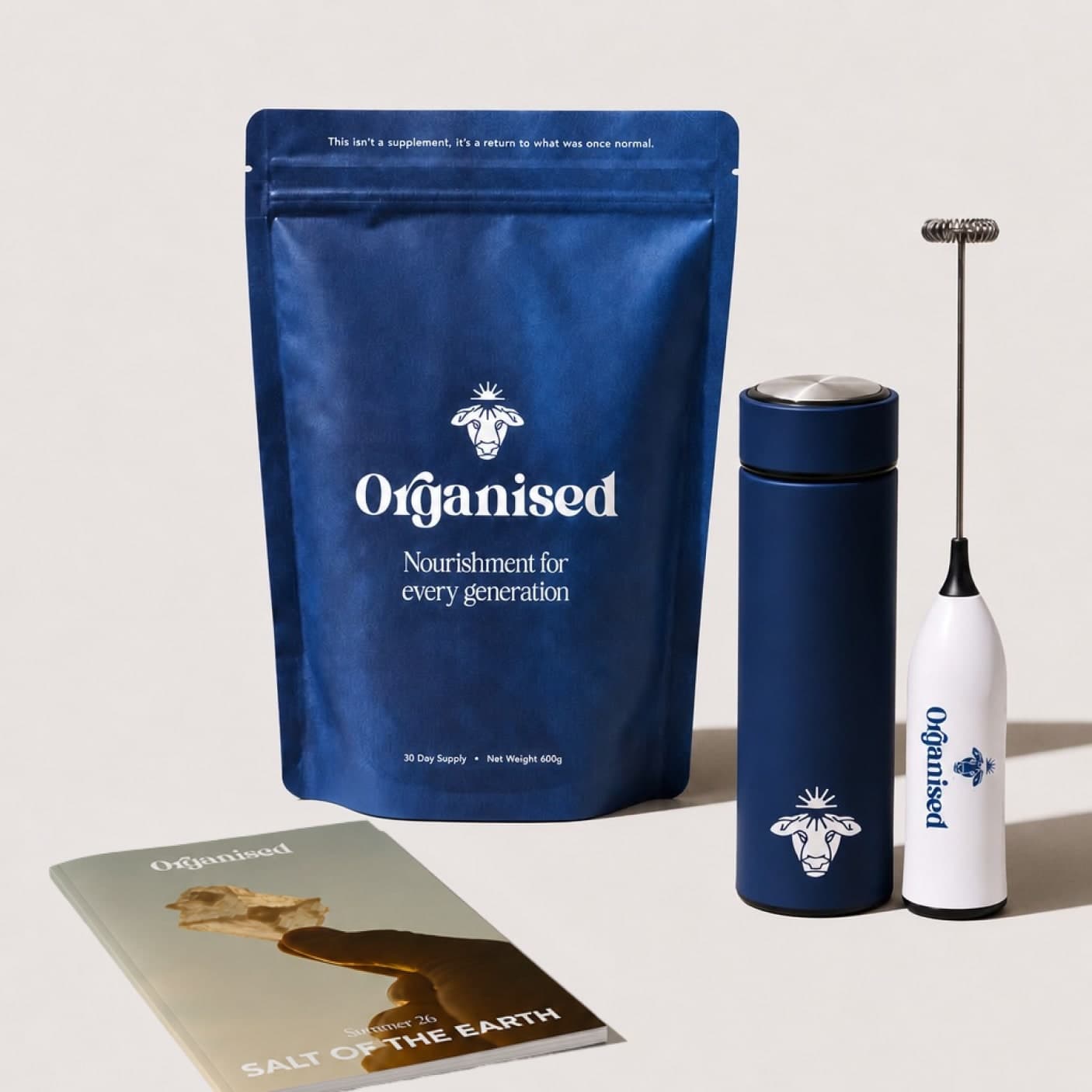
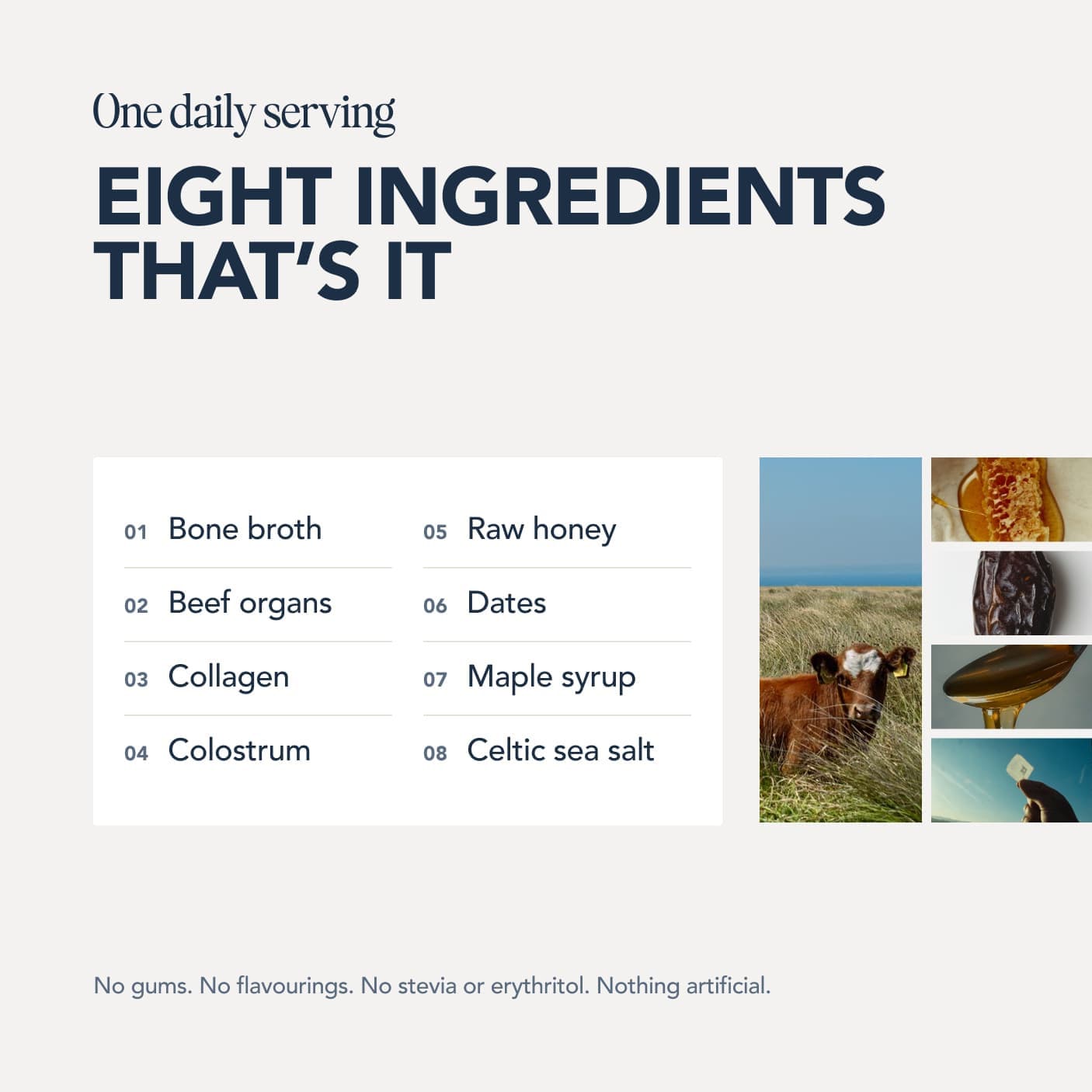
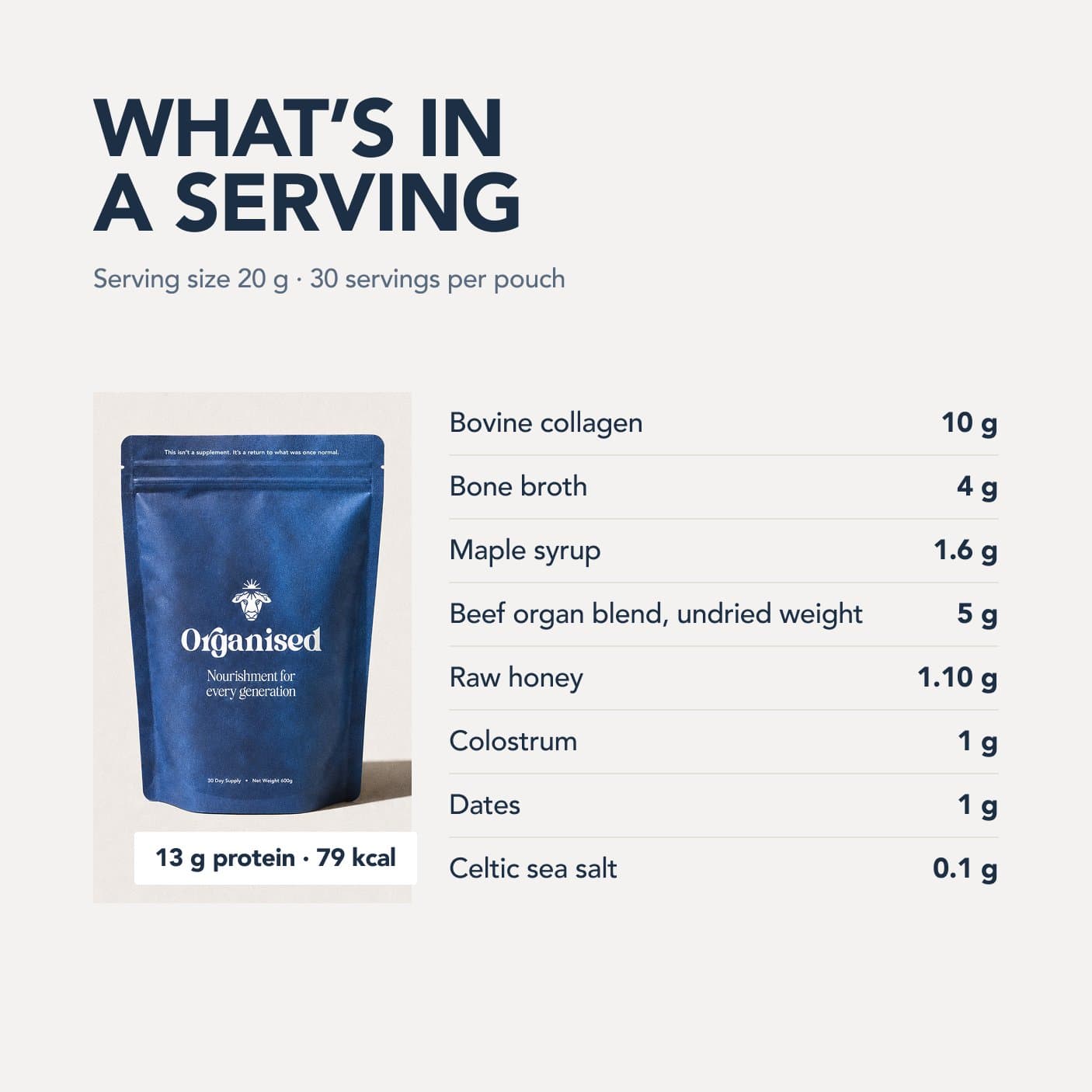
Eight real ingredients built around grass-fed beef organs, collagen and colostrum. Nothing synthetic added.
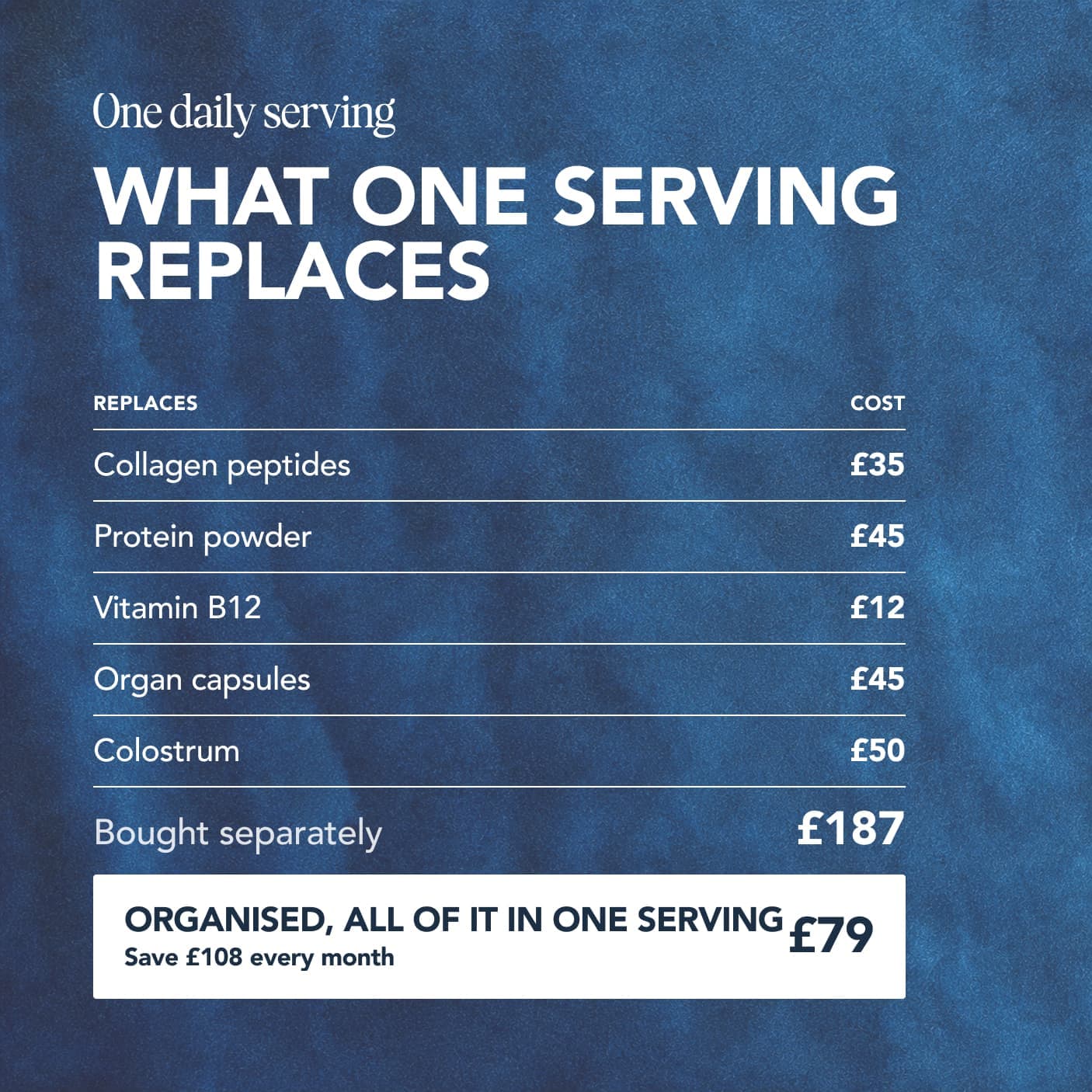
Free with your first order, worth £38. Plus £10 off the pouch with a subscription.


Free UK shipping · Made in England · 100 day money back guarantee on your first pouch · Skip, pause or cancel anytime
The evening reset
If you've spent nine hours at a desk, your body is tight, your nervous system is sympathetic-dominant (stuck in mild fight-or-flight), and your movement patterns are compromised. A 20-minute walk after work, ideally in natural light and fresh air, resets this. It shifts the nervous system back toward parasympathetic (rest-and-digest), allows your muscles to move through their full range, and gives your mind genuine recovery.
This walk should be easy. Not a workout. Not a fitness activity. Just movement. The benefit isn't cardiovascular. It's nervous system regulation, posture reset, and metabolic recovery.
An evening walk costs nothing and does more for energy recovery than most supplements.
The bottom line
Desk work doesn't have to mean losing your energy, your strength, or your health. The fixes are simple and they're free. Eat real breakfast with protein. Drink water consistently. Stand every hour. Get morning light before coffee. Move between meetings. Walk in the evening. Your body will respond within two weeks. By month two, the difference will be unmistakable. Your energy will stabilise. Your posture will improve. Your afternoon crashes will fade.
References
Every source below was checked on 27 August 2026. Each PubMed, PMC and DOI identifier was resolved against NCBI or Crossref, and what it opens is printed under the citation, so you can see the link goes where the citation says without leaving the page. Where a citation and its identifier disagreed, the citation was corrected to the record or the reference was deleted along with the sentence marker that pointed at it, and where the resolved paper turned out not to support the sentence, the sentence was cut back to what it does support. Borrowed authority is worse than none, because it looks like rigour.
- Dirks ML, et al. One Week of Bed Rest Leads to Substantial Muscle Atrophy and Induces Whole-Body Insulin Resistance. Diabetes. 2016;65(10):2862-75. PMID 27358494Checked 27 August 2026: PMID 27358494 opens Dirks ML, Wall BT, van de Valk B et al, One Week of Bed Rest Leads to Substantial Muscle Atrophy and Induces Whole-Body Insulin Resistance in the Absence of Skeletal Muscle Lipid Accumulation. Diabetes 2016;65(10):2862-75.
- Dunstan DW, et al. Breaking up prolonged sitting reduces postprandial glucose and insulin responses. Diabetes Care. 2012;35(5):976-83. PMID 22374636Checked 27 August 2026: PMID 22374636 opens Dunstan DW, Kingwell BA, Larsen R et al, Breaking up prolonged sitting reduces postprandial glucose and insulin responses. Diabetes Care 2012;35(5):976-83. PubMed indexes it as: Randomized Controlled Trial.
- Czeisler CA, et al. Bright light induction of strong (type 0) resetting of the human circadian pacemaker. Science. 1989;244(4910):1328-33. PMID 2734611Checked 27 August 2026: PMID 2734611 opens Czeisler CA, Kronauer RE, Allan JS et al, Bright light induction of strong (type 0) resetting of the human circadian pacemaker. Science 1989;244(4910):1328-33.
Who wrote and reviewed this guide
Niall Kiddle
Author · Founder, Organised
Niall is the founder of Organised. He started the company in 2024 after fixing his own health the slow way: in 2022 he swapped a cupboard of synthetic supplements for real food, raw milk, organ meats, bone broth and honey, and felt the difference within months.
Areas of expertise: Ancestral nutrition, Organ meats, Whole-food supplementation, Gut health, Regenerative sourcing
Read Niall's full profile
Pedro Rodrigues
Reviewer · Agronomist (farming and sourcing only)
Pedro is the agronomist Organised works with on farming and sourcing. His job on the guides is to keep the science honest: he reviews what we publish about soil health, regenerative agriculture, grazing and the way food is actually produced.
Areas of expertise: Regenerative agriculture, Agronomy, Soil health, Grass-fed farming, Food sourcing
Reviewed this guide on
Read Pedro's full profileMore on energy
View all- Why You're Always Tired (And What to Eat About It)
- Adrenal Fatigue: Is It Real and What Can You Do About It?
- Always Tired? What Reddit Says to Eat (and What Actually Works)
- B12 Deficiency: Signs, Causes and the Fastest Way to Fix It
- Chronic Fatigue and Nutrient Deficiency: What Blood Tests to Ask For
- How to Maintain Energy All Day Without Caffeine Dependency
- How Your Thyroid Affects Your Energy Levels
- Iron Deficiency: Why It's So Common and How Organs Can Help
- Metabolism Maxxing: How to Support Your Metabolic Rate with Real Food
- What Does Your Afternoon Slump Actually Mean?
- Why Intermittent Fasting Might Be Tanking Your Energy
Browse the guides library
All guidesKeep reading

Health goals
Why Your Grandparents Ate Better Than You
Explore the nutritional shift since the 1970s. Your grandparents' whole-food diet contained far more nutrient density than modern food. Here's what changed.

Health goals
Collagen Loading Protocol: When and How Much
How much collagen do you need and when should you take it? A clear collagen loading protocol for timing your dose around exercise for better results.

Health goals
Perimenopause Nutrition: What Changes and What to Eat
Perimenopause isn't a deficiency disease. It's a transition requiring nutritional adjustment. Here's what changes and what to prioritise.
Real food, made effortless
Start my daily blendA few ways to use it
All recipes
Raw Milk Hot Chocolate with Collagen
A nourishing evening hot chocolate made with raw milk, grass-fed collagen, raw cacao, and honey. A nighttime ritual that supports sleep and gut health.

Bone Broth from Scratch: A Step-by-Step Guide
Step-by-step guide to making bone broth at home. Stovetop, slow cooker, and Instant Pot methods. Rich in collagen and gut-healing minerals.

Liver Pate for Beginners: A Gentle Introduction to Organ Meats
Simple liver pate recipe to start eating organ meats. Chicken liver, butter, and herbs. Gentle introduction to nutrient-dense whole foods.


 Join over 100,000+ members
Build a better food system with us
The Organised community is thousands of people choosing real food and backing the farmers who grow it, all of us trying to leave the world a little better than we found it. If that is what you care about too, you belong here.