B12 Deficiency: Signs, Causes and the Fastest Way to Fix It
A numb, tingling sensation starts in your fingers. Your memory gets shaky. You're exhausted no matter how much you sleep. Your tongue feels swollen. Then you mention it to a doctor and they tell you nothing's wrong. You're not losing your mind. B12 deficiency is quietly sabotaging your nervous system, and it's far more common than anyone admits.

By Niall Kiddle, Founder, Organised

Reviewed by Pedro Rodrigues, Agronomist (farming and sourcing only) ·
7 min read · Published · Updated · 2 cited sources
Makers of the Organised Daily blend, a grass-fed beef organ supplement from regenerative UK farms

You're not losing your mind. B12 deficiency is quietly sabotaging your nervous system, and it's far more common than anyone admits.

What B12 actually does
Vitamin B12 is essential for nervous system function, energy metabolism and the formation of red blood cells. It is required as a cofactor for DNA synthesis and for the maintenance of myelin, the protective coating around nerve fibres.1
The problem is that B12 is found almost exclusively in animal foods, and as people shift toward plant-based or processed diets, deficiency becomes common. Vegans and vegetarians are at risk. But so are meat-eaters with poor stomach acid, chronic stress, or who've been on acid-reducing medications.
Once B12 deficiency takes hold, it doesn't just cause tiredness. It causes neurological damage that can become irreversible if left untreated for years. This is why recognising the signs early matters.
B12 deficiency is one of the few nutritional deficiencies that can cause permanent neurological damage. The damage is often silent at first, then suddenly obvious.
The signs nobody connects to B12
Fatigue is the most obvious symptom. A bone-deep exhaustion that doesn't improve with sleep. It happens because B12 is required for energy production in every cell. Without it, ATP production falters. You might sleep ten hours and still wake exhausted.
Brain fog and memory problems are early signs. You can't hold onto information. Names slip away. You walk into a room and forget why. Concentration becomes impossible. This happens because your brain needs B12 for myelin formation and neurotransmitter synthesis. People often attribute this to age or stress when it's actually nutrient deficiency.
Tingling and numbness, usually starting in the fingers and toes, is a hallmark of B12 deficiency. This is neurological damage beginning. Pins and needles sensations. A feeling like you're wearing socks when you're not. This is your peripheral nerves signalling that they're damaged. If this symptom appears, B12 deficiency has likely been present for months. It's a sign you need treatment immediately.
Pallor and a pale or yellowish complexion happens because B12 is required for red blood cell formation. Without it, you develop pernicious anaemia, a specific type of megaloblastic anaemia. Your red blood cells are larger than normal and fewer in number. You might look grey or sallow without understanding why.
Mood changes including depression, anxiety, and irritability are common early signs. B12 is required for serotonin and dopamine synthesis. Deficiency silently erodes mood regulation. You might find yourself snapping at people or feeling inexplicably sad without understanding the cause.
Difficulty with balance and coordination suggests that the neurological damage has progressed. This is a late sign and suggests the deficiency has been present for a long time. At this point, damage might not fully reverse.
Mouth and tongue symptoms including a swollen tongue (glossitis), mouth ulcers, or a burning sensation are classic B12 deficiency signs. The tongue changes appearance, becoming smooth and red. This is often dismissed as thrush or a mouth ulcer when it's actually B12 deficiency.
Why B12 deficiency happens
B12 is found almost exclusively in animal foods. The richest sources are organ meats (beef liver provides around 60 mcg per 100 g cooked), followed by clams, mussels, fish, red meat, eggs, and dairy.12
But food content isn't the only factor. Absorption matters more.
Stomach acid is required to free vitamin B12 from food protein, after which it binds to intrinsic factor (a protein made in the stomach) for absorption in the terminal ileum. People with reduced gastric acid — including older adults and those on proton pump inhibitors or H2 blockers — absorb less food-bound B12.1
Pernicious anaemia is an autoimmune condition where your body attacks the cells that produce intrinsic factor. This is genetic and runs in families. If you have pernicious anaemia, dietary B12 won't help you much. You need injections or sublingual supplements that bypass the absorption problem.
Intestinal damage from coeliac disease, Crohn's disease, or other inflammatory conditions prevents B12 absorption even when intrinsic factor is present and stomach acid is normal.
Certain medications reduce B12 absorption. Proton pump inhibitors (used for acid reflux), H2 blockers, metformin, and antibiotics all interfere with either stomach acid production or gut bacteria that help synthesise B12.
Long-term stress reduces stomach acid production, making B12 absorption harder even if you're eating adequate amounts. This is why chronically stressed people often develop deficiencies despite eating well.

Absorption is the real problem
This is crucial. Most people with B12 deficiency don't have it because they're not eating B12. They have it because they can't absorb it.
Simply eating more liver might help slightly. But if your stomach acid is low or you have pernicious anaemia or intestinal damage, food won't solve it. You need either higher dose oral supplements (which can sometimes be absorbed without intrinsic factor through passive diffusion if the dose is high enough) or intramuscular injections (which bypass the absorption problem entirely).
Serum B12 alone has limitations as a diagnostic test; methylmalonic acid (MMA) and homocysteine are functional markers that often rise before serum B12 falls into the overtly deficient range, and can identify cellular B12 deficiency in people whose serum levels appear borderline or normal.1
You can have normal serum B12 levels and still be B12 deficient at the cellular level. The standard test lies. Ask for methylmalonic acid or homocysteine testing instead. It's more expensive but actually tells you whether your body can use B12.
Get health guides like this, free
Two short reads a week on eating for energy, gut health, skin, sleep and more.
By signing up you agree to receive emails from us. No spam, unsubscribe anytime.
The fastest way to fix it
If you have pernicious anaemia or documented absorption problems, oral supplements won't work well enough. You need intramuscular B12 injections (usually cyanocobalamin or hydroxocobalamin). Your GP can arrange these. They're usually given monthly or every three months depending on severity. One injection contains 1000 mcg, which bypasses the absorption issue entirely.
If you have low stomach acid but no autoimmune component, high-dose oral B12 supplements can work. The dose matters. You need at least 1000 mcg daily, taken sublingually (under the tongue, where it can absorb without stomach acid). Sublingual tablets dissolve under your tongue for 30 seconds before swallowing.
If you're vegan or vegetarian, supplementation is essential. Food sources simply don't exist in sufficient quantity. Take a B12 supplement daily (at least 25 mcg) or weekly (2000 mcg). This is not optional. B12 deficiency in vegans develops silently and can cause permanent damage.
If your stomach acid is low, fix the underlying cause first. Reduce stress. Eliminate processed foods. Add mineral-rich salt. Eat bone broth. Stomach acid is strongly affected by magnesium, zinc, and sodium status. These foundational changes take weeks but improve absorption naturally.
Even if you're supplementing, eat organ meats regularly. B12 from whole foods carries other cofactors that synthetic supplements don't. Liver provides not just B12 but also folate, iron, and other B vitamins that B12 deficiency often depletes.




1 of 9
Daily blend
100,000+ thriving families4.9 on Trustpilot
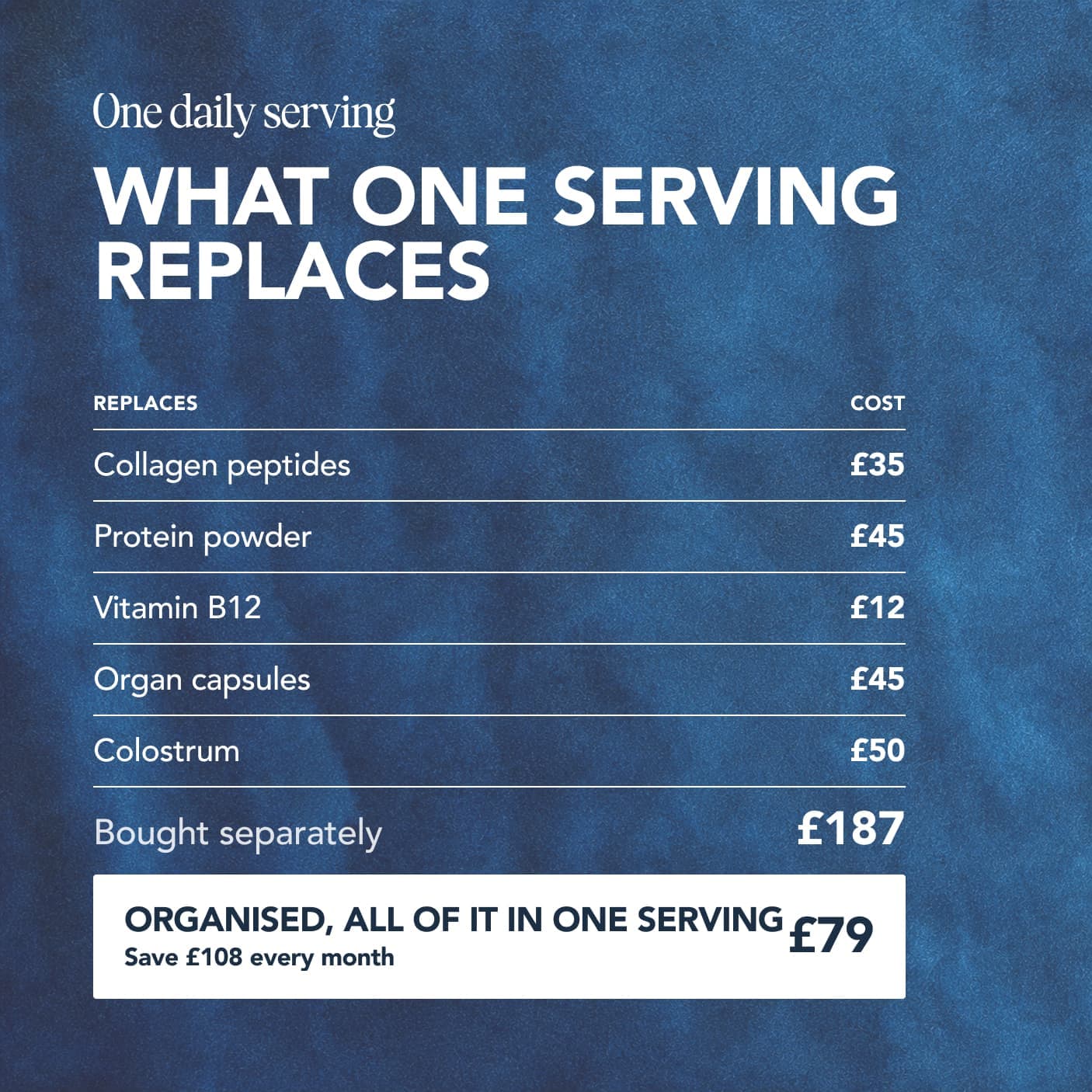
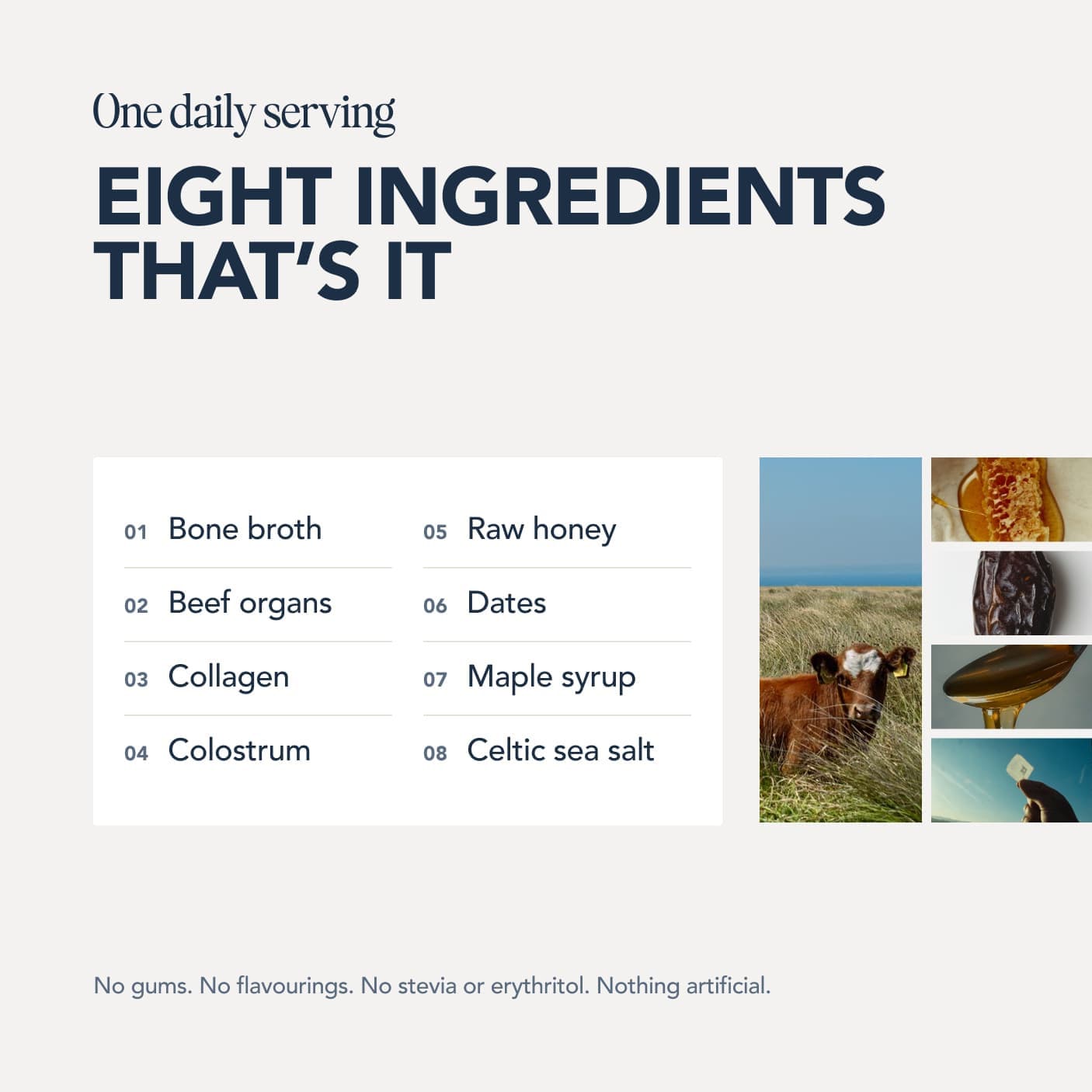
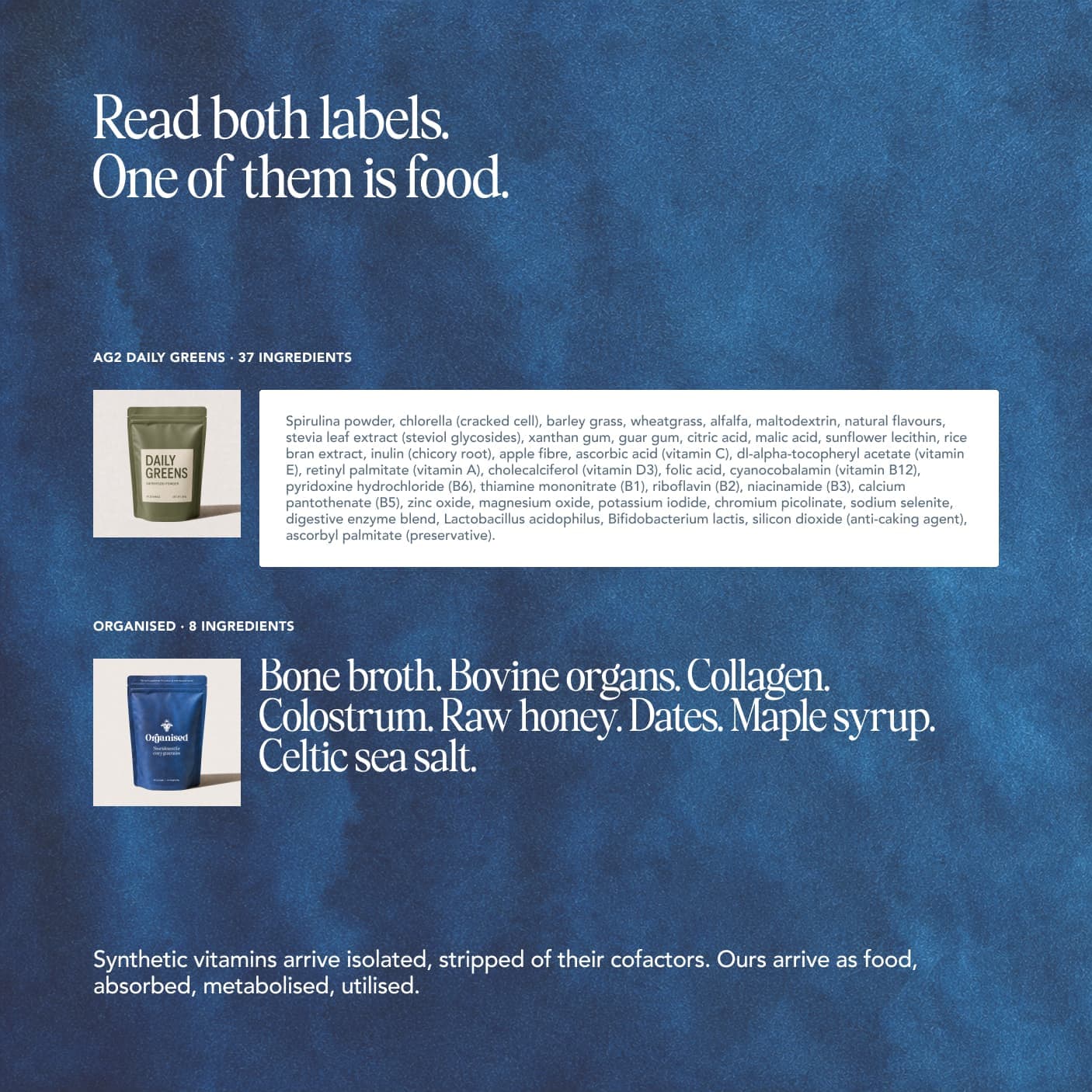
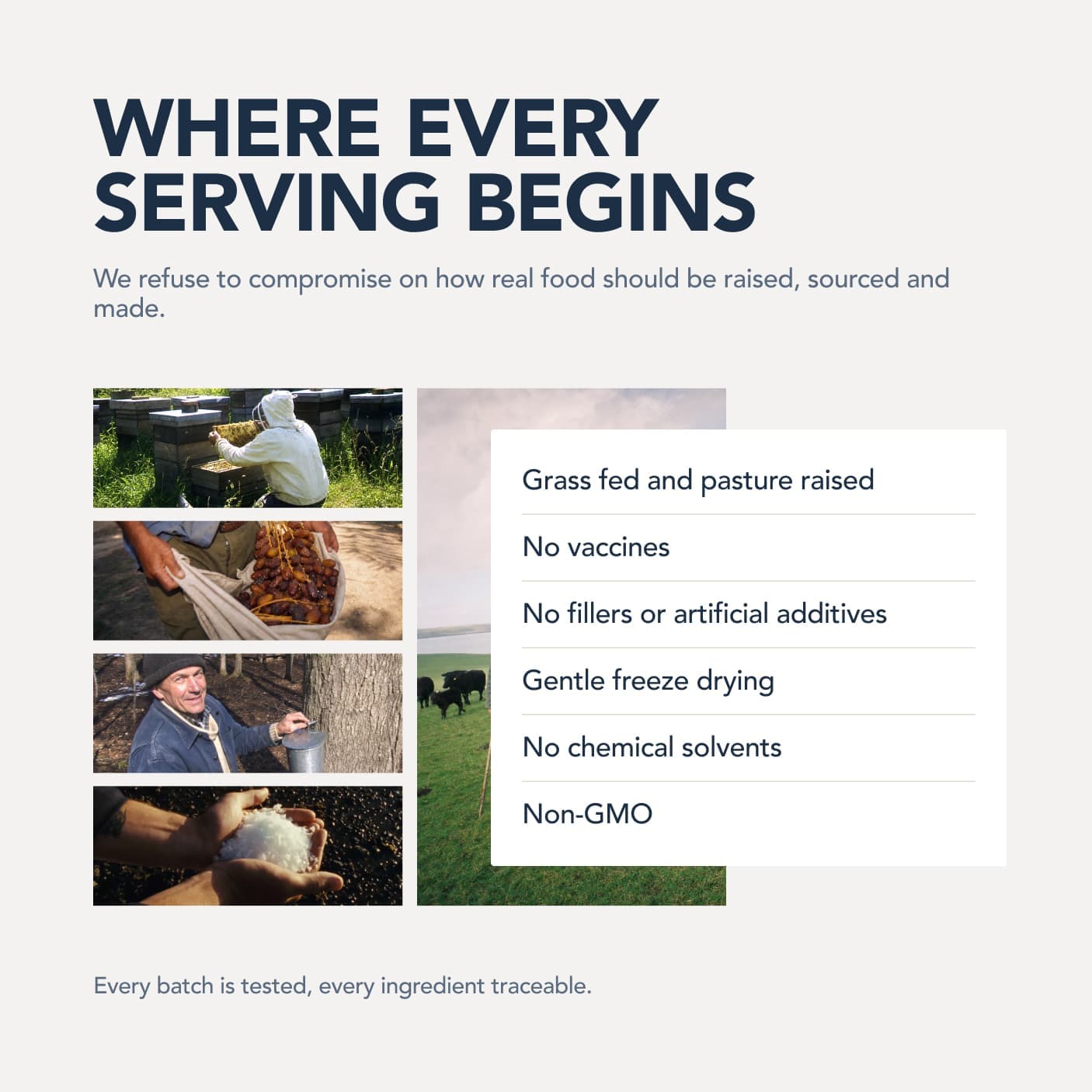
Eight real ingredients built around grass-fed beef organs, collagen and colostrum. Nothing synthetic added.
Free with your first order, worth £38. Plus £10 off the pouch with a subscription.


Free UK shipping · Made in England · 100 day money back guarantee on your first pouch · Skip, pause or cancel anytime
Methylcobalamin vs cyanocobalamin
You'll see two main forms of B12 supplements: methylcobalamin and cyanocobalamin. They're different.
Cyanocobalamin is the most common supplement form and the most stable. It is converted to active forms (methylcobalamin and adenosylcobalamin) in the body. The NIH ODS notes existing evidence does not show meaningful differences among forms in absorption or bioavailability for most people.1
Methylcobalamin is the active form. It doesn't need conversion. If you have MTHFR polymorphisms (which about 30-40 percent of the population have), methylcobalamin might work better for you. It's also more expensive and less stable, degrades faster, but for some people it's noticeably more effective. If you try cyanocobalamin and feel no difference after weeks, switch to methylcobalamin.
If you're taking oral supplements, try methylcobalamin first, especially sublingually. If you're getting injections, cyanocobalamin is fine, it's effective and well-studied. Ask your GP which they have available.
The recovery timeline
This depends on severity and which symptoms you're experiencing.
Fatigue and brain fog typically improve within 2-4 weeks of starting supplementation or injections.
Numbness and tingling take longer, weeks to months, and may not fully reverse if the damage has been present for years. The longer you've been deficient, the slower the recovery.
Mood changes improve gradually alongside other symptoms, usually within weeks.
If you're getting injections, you'll feel improvement faster, usually within days to a week for energy and mood. The difference is dramatic enough that you'll know supplementation is working.
The key is catching it early. If you wait years with untreated deficiency, the neurological damage can become permanent. This is why it's important to test if you have symptoms, rather than waiting and hoping.
The bottom line
B12 deficiency is common, easily missed, and can cause permanent damage if untreated. If you're tired, foggy, or experiencing neurological symptoms, get tested. But get the right tests: methylmalonic acid or homocysteine, not just serum B12.
If deficiency is confirmed, eating more liver helps, but absorption is the real issue. Supplementation, especially injections, works faster and more reliably than food alone. Start high-dose B12 immediately and keep testing to ensure your levels are recovering. Your nervous system is too important to leave this to chance.
References
Every source below was checked on 27 August 2026. Each link was requested and read. Where a citation and its identifier disagreed, the citation was corrected to the record or the reference was deleted along with the sentence marker that pointed at it, and where the resolved paper turned out not to support the sentence, the sentence was cut back to what it does support. Borrowed authority is worse than none, because it looks like rigour.
- National Institutes of Health, Office of Dietary Supplements. Vitamin B12 — Health Professional Fact Sheet. https://ods.od.nih.gov/factsheets/VitaminB12-HealthProfessional/
- U.S. Department of Agriculture, FoodData Central. Beef, variety meats and by-products, liver, raw. https://fdc.nal.usda.gov/food-search/
Who wrote and reviewed this guide
Niall Kiddle
Author · Founder, Organised
Niall is the founder of Organised. He started the company in 2024 after fixing his own health the slow way: in 2022 he swapped a cupboard of synthetic supplements for real food, raw milk, organ meats, bone broth and honey, and felt the difference within months.
Areas of expertise: Ancestral nutrition, Organ meats, Whole-food supplementation, Gut health, Regenerative sourcing
Read Niall's full profile
Pedro Rodrigues
Reviewer · Agronomist (farming and sourcing only)
Pedro is the agronomist Organised works with on farming and sourcing. His job on the guides is to keep the science honest: he reviews what we publish about soil health, regenerative agriculture, grazing and the way food is actually produced.
Areas of expertise: Regenerative agriculture, Agronomy, Soil health, Grass-fed farming, Food sourcing
Reviewed this guide on
Read Pedro's full profileMore on energy
View all- Why You're Always Tired (And What to Eat About It)
- Adrenal Fatigue: Is It Real and What Can You Do About It?
- Always Tired? What Reddit Says to Eat (and What Actually Works)
- Chronic Fatigue and Nutrient Deficiency: What Blood Tests to Ask For
- How to Maintain Energy All Day Without Caffeine Dependency
- How Your Thyroid Affects Your Energy Levels
- Iron Deficiency: Why It's So Common and How Organs Can Help
- Metabolism Maxxing: How to Support Your Metabolic Rate with Real Food
- The Desk Worker's Guide to Staying Strong and Energised
- What Does Your Afternoon Slump Actually Mean?
- Why Intermittent Fasting Might Be Tanking Your Energy
Browse the guides library
All guidesKeep reading

Health goals
Why You're Always Tired (And What to Eat About It)
Tired all the time? Explore the nutrition behind low energy and how whole foods help rebuild stamina at the cellular level. Practical, food-first guidance.

Health goals
How to Recognise the Early Signs of Poor Gut Health
The signs of poor gut health reach beyond digestion: fatigue, skin issues, brain fog, and mood. Learn what to watch for and when to take action.

Health goals
Acid Reflux and Low Stomach Acid: A Nutritional Perspective
Discover why acid reflux is often low stomach acid, not too much. Learn how to tell the difference and the nutritional steps that may help support digestion.
Real food, made effortless
Start my daily blendA few ways to use it
All recipes
Gut-Healing Marshmallows with Collagen and Raw Honey
Learn to make gut-healing marshmallows with collagen and raw honey. A shareable treat that sneaks nutrition into every bite. Easy recipe with video tips.

Whole Food Snacks for Busy Days
Practical whole food snacks that travel well and sustain energy. No refined carbs, no seed oils. Real food options for when you're busy.

Matcha Latte Gummies with Collagen and Gelatine
Make visually stunning matcha latte gummies infused with collagen and gelatine. Simple recipe for gut-healing sweets you'll actually want to eat.


 Join over 100,000+ members
Build a better food system with us
The Organised community is thousands of people choosing real food and backing the farmers who grow it, all of us trying to leave the world a little better than we found it. If that is what you care about too, you belong here.