What to Eat for Muscle Recovery (Beyond Protein Shakes)
You work hard. You lift. You push. Your muscles feel the demand and grow. But the recovery happens at night, in the hours when you're sleeping and eating. And most people get that part completely wrong.
By Niall Kiddle, Founder, Organised

Reviewed by Pedro Rodrigues, Agronomist (farming and sourcing only) ·
7 min read · Published · Updated · 3 cited sources
Makers of the Organised Daily blend, a grass-fed beef organ supplement from regenerative UK farms

The standard approach is simple: get enough protein. Eat chicken breast. Drink a shake. Repeat.
But muscle recovery isn't a protein problem. Your muscles are 20% protein and 80% water and everything else. If you're only feeding protein, you're feeding 20% of the equation.
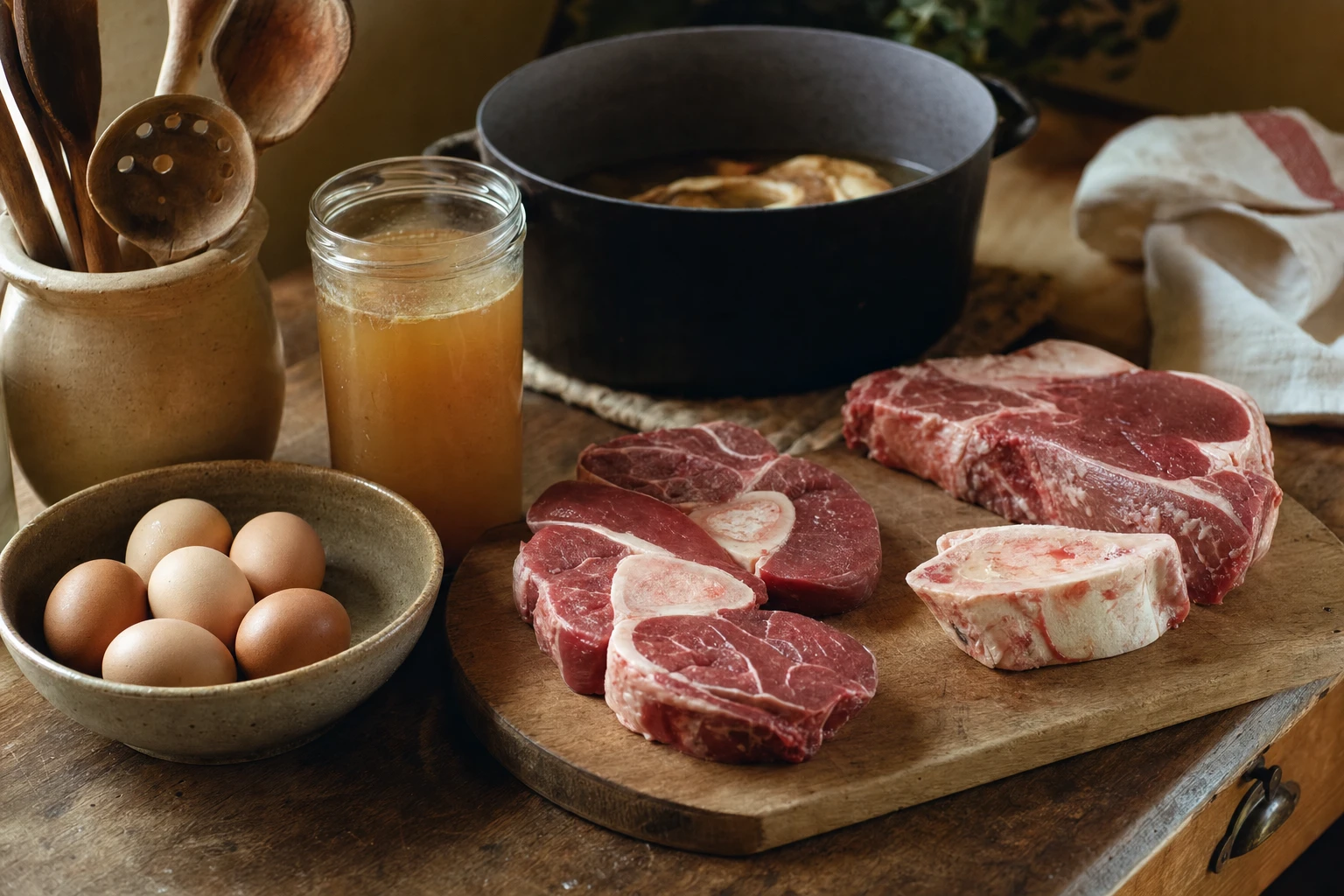
Recovery isn't just about protein
Protein matters. Absolutely. Your muscles are built from amino acids, and you need adequate protein to support their growth and repair. That part is non-negotiable.
But here's what gets missed: muscle is attached to tendons and ligaments. Those are made of collagen. When you train, you damage not just muscle tissue but also the connective tissue around it. That connective tissue doesn't heal with protein alone. It heals with collagen and the cofactors required to synthesise new collagen.
Additionally, you have joints, cartilage, and fascia. All collagen-based structures. All requiring specific nutrients to repair.
A program that builds muscle while degrading tendons isn't a success. It's a path to injury.
This is why athletes who train hard but only eat lean protein eventually hit problems. Tendon issues. Joint pain. Connective tissue breaks down faster than it's being rebuilt.
True recovery means feeding the entire structure, not just the muscle.
Collagen and vitamin C for connective tissue
Collagen is the most abundant protein in your body. It's the structure of your tendons, ligaments, cartilage, and skin. It's what holds everything together, literally.
When you train hard, you create microscopic damage to collagen structures. That damage needs to be repaired. Repairing it requires two things: collagen as the building block, and vitamin C as the cofactor that makes the repair possible.
Vitamin C is essential for collagen cross-linking via prolyl and lysyl hydroxylase enzymes, the process that makes collagen fibres stronger and more resilient.1 Without adequate vitamin C, new collagen is laid down but it's weak. It hasn't been properly cross-linked.
The research on this is clear. Trials of collagen peptide supplementation alongside vitamin C have shown improvements in collagen synthesis biomarkers and tendon outcomes in athletes.2
If you're training intensely and not actively supporting collagen synthesis, you're accumulating a debt. Eventually, you'll pay it in injury.
Collagen sources: bone broth, gelatinous cuts of meat (brisket, chuck, ribs), skin-on chicken, fish with skin, pig trotters, oxtail. Basically, all the parts we've learned to discard.
Vitamin C sources: citrus fruits, berries, kiwis, peppers, cabbage, broccoli. The combination matters. You need both.

Glycine: the underrated recovery nutrient
Glycine is a simple amino acid, but it's profoundly important for recovery. It's the primary amino acid in collagen, making up about a third of collagen's structure.2
Your body can synthesise glycine from other amino acids, but during heavy training, the demand exceeds what your body can produce. You become glycine-deficient. Collagen synthesis slows. Repair slows. Recovery stalls.
Glycine also acts as a neurotransmitter in the central nervous system. It supports sleep quality, and sleep is where the bulk of muscle repair happens. Better glycine intake correlates with better sleep, which correlates with better recovery.
Most foods don't contain much glycine, which is why it's easy to become deficient. Bone broth is the richest source. Gelatin (the cooked form of collagen) is pure glycine plus proline and hydroxylysine. Gelatinous cuts of meat contain it in the connective tissue itself.
The practical implication: if you're training hard and want to recover well, you need collagen-rich foods or collagen supplementation daily. Not occasionally. Daily.
Magnesium and the repair window
Magnesium is a cofactor in more than 300 enzyme systems regulating diverse biochemical reactions.3 One of those is muscle relaxation. Another is protein synthesis.
After training, your nervous system is in a heightened state. Cortisol is elevated. Your muscles are tense and contracted. Magnesium supports the shift from sympathetic (stressed, tense) to parasympathetic (rested, healing).
Without adequate magnesium, your nervous system can't fully relax. Your muscles stay tense. Sleep is poor. Repair is compromised.
If you want recovery to happen while you sleep, your body needs to be in a state where recovery is possible. That state requires magnesium.
Additionally, magnesium is required for ATP synthesis, the energy currency of your cells. Muscle repair is energy-intensive. Do it without adequate magnesium and the process is sluggish.
Magnesium sources: sea vegetables, dark leafy greens, nuts, seeds, fish, whole grains, and mineral-rich water. Most people are deficient. Many don't realise it until they supplement and suddenly sleep better and recover faster.
Bone broth: the real recovery drink
Protein shakes are convenient. But they're missing the entire spectrum of what your body needs for recovery.
Bone broth is genuinely different. It contains collagen, which breaks down into gelatin and amino acids including glycine, proline, and hydroxyproline. It contains minerals, extracted from the bones during the long simmer. It contains amino acids your muscles need.
When you drink bone broth, you're not just getting protein. You're getting the raw materials to rebuild connective tissue, signal your nervous system to relax, and support joint health.
A cup of bone broth post-workout, with vitamin C (squeeze of lemon, or a small portion of fruit), is more restorative than a protein shake.
The science backs this. Athletes incorporating collagen and gelatin into their post-workout routine show better tendon adaptation, faster recovery, and fewer injuries than those relying on whey-based shakes.
Get health guides like this, free
Two short reads a week on eating for energy, gut health, skin, sleep and more.
By signing up you agree to receive emails from us. No spam, unsubscribe anytime.
The case for whole food over shakes
Shakes are efficient. You can blend something up in two minutes. But efficiency isn't nutrition.
Whole foods contain the full spectrum of micronutrients, cofactors, and compounds that processed shakes lack. An egg contains not just protein but choline, fat-soluble vitamins, minerals, and compounds we haven't fully named yet. A piece of liver contains iron, B vitamins, and betaine.
Your body evolved to extract nutrition from whole foods. It has mechanisms to utilise and absorb nutrients in the form they naturally occur. Whey protein isolate, on the other hand, is a highly processed extract. Your body recognises it as protein and uses it, but you're missing everything else.
Recovery isn't just about feeding the muscles. It's about signalling to your entire body that abundance is available and resources can be devoted to repair.
Whole foods send a different signal than shakes. Real food says abundance. Processed shakes, no matter how carefully formulated, say efficiency.
If you want true recovery, eat. Don't drink. Real food.
Building a recovery plate
After training, your goal is a meal that supplies protein, collagen, glycine, magnesium, and vitamins. Here's what that looks like:
- Collagen + glycine: Bone broth as a base, or gelatinous cuts of meat (brisket, chuck steak, slow-cooked pork belly). Whole fish with skin. Chicken with skin.
- Protein: Eggs, red meat, fish, poultry. Something substantial.
- Vitamin C: Citrus fruit, berries, peppers, sauerkraut, or another fermented vegetable.
- Minerals: Salt (not low-salt), seaweed, mineral water. Your muscles need sodium and potassium to function.
- Carbohydrates: White rice, potatoes, fruit. These replenish glycogen and signal to your body that food is available, allowing it to shift into repair mode.
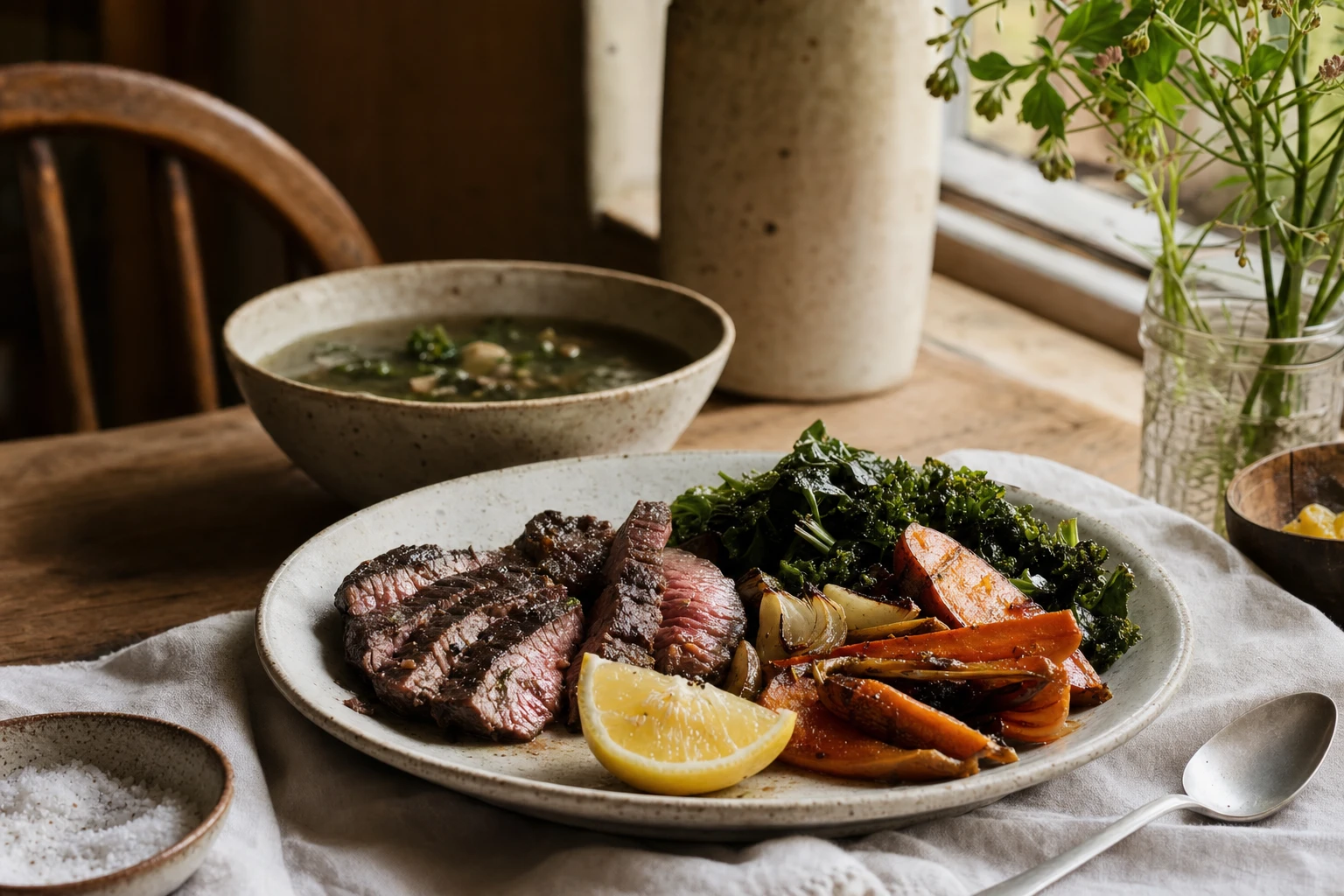
A specific example: grilled steak with bone broth gravy, a side of roasted root vegetables, lemon juice, sea salt. That's recovery.
Another: slow-cooked oxtail, white rice, steamed broccoli with lemon, mineral water. That's recovery.
What won't work: lean chicken breast, plain rice, no fat, no broth, no collagen source. This is what most gym-goers eat. It's incomplete.
1 of 9
Daily blend
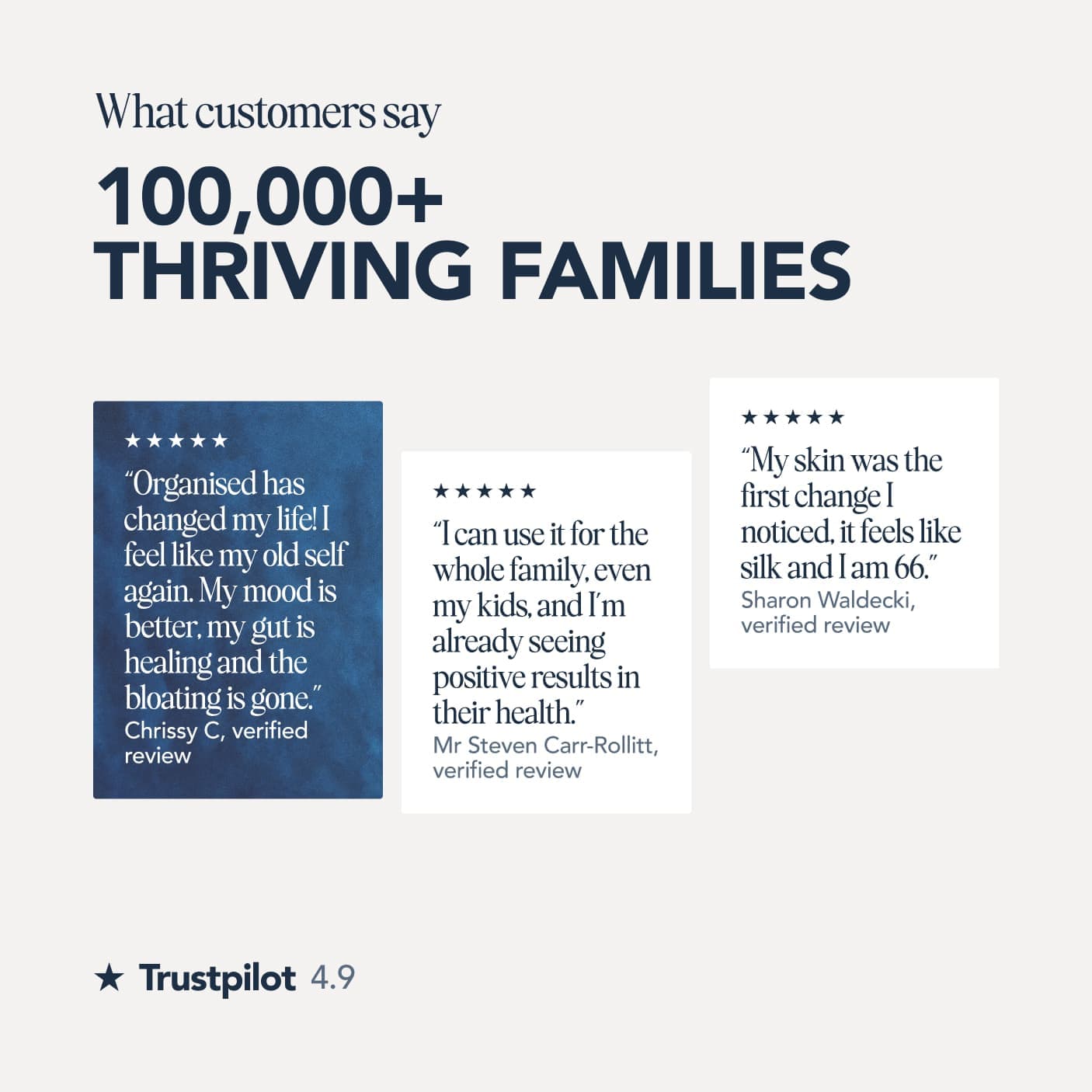
100,000+ thriving families4.9 on Trustpilot
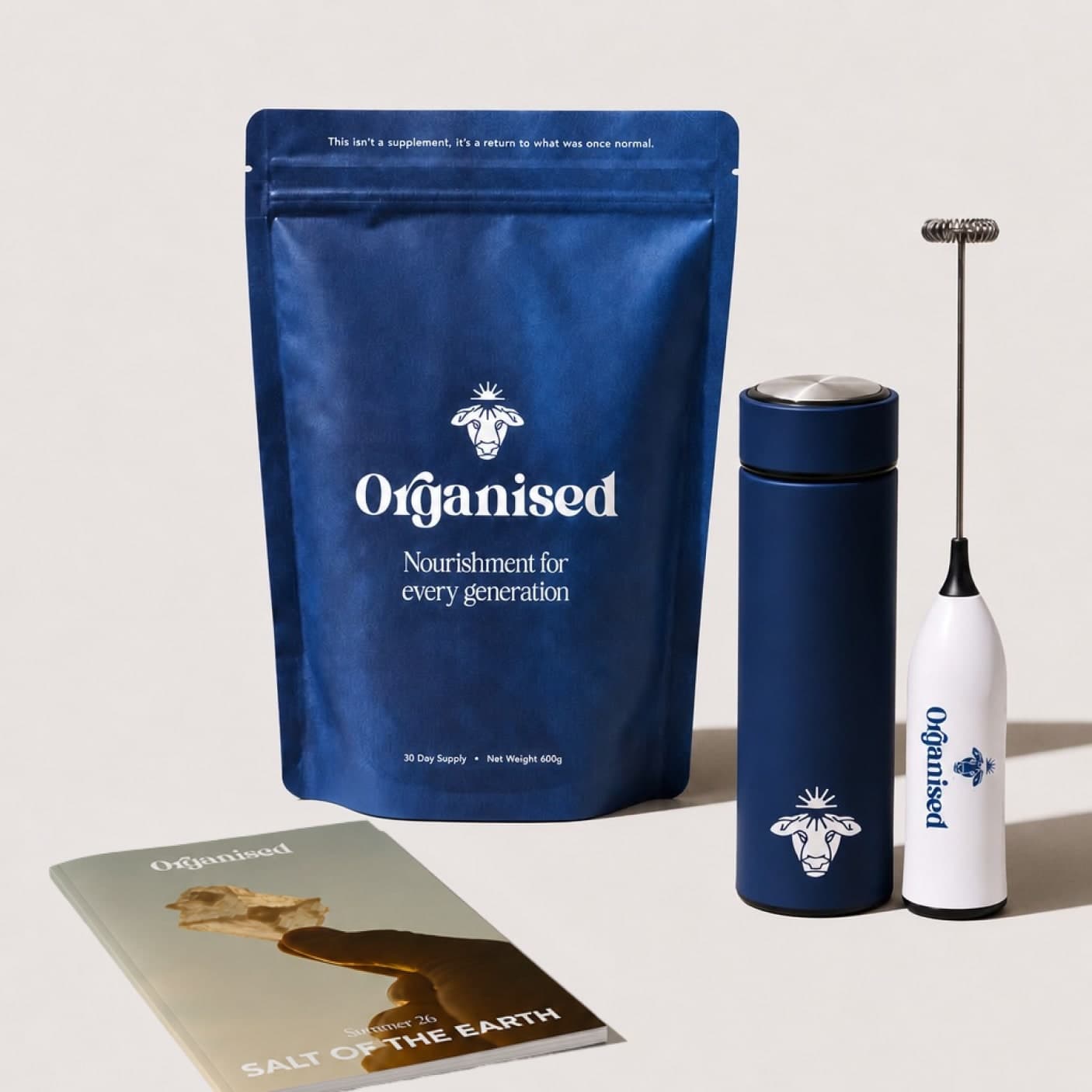
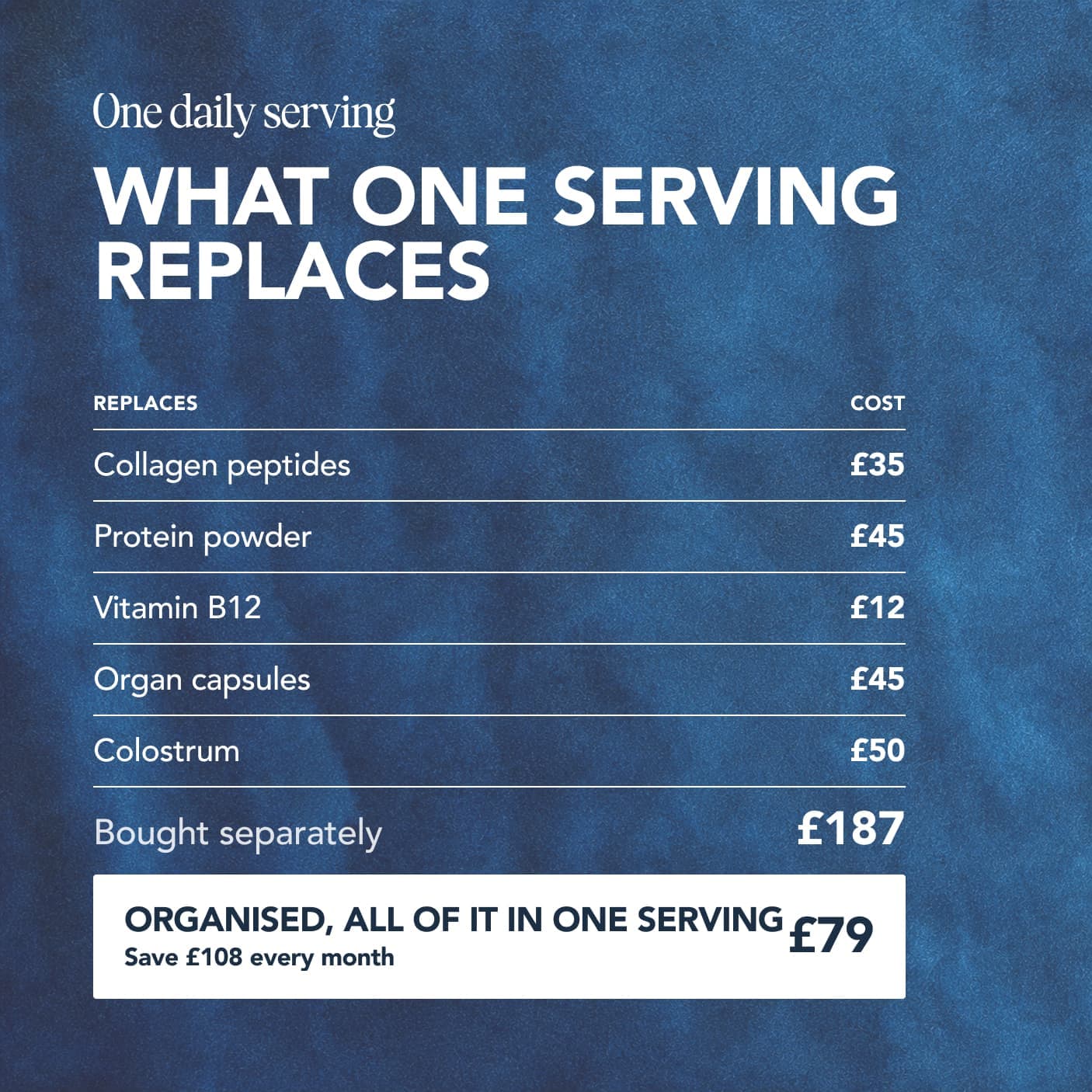
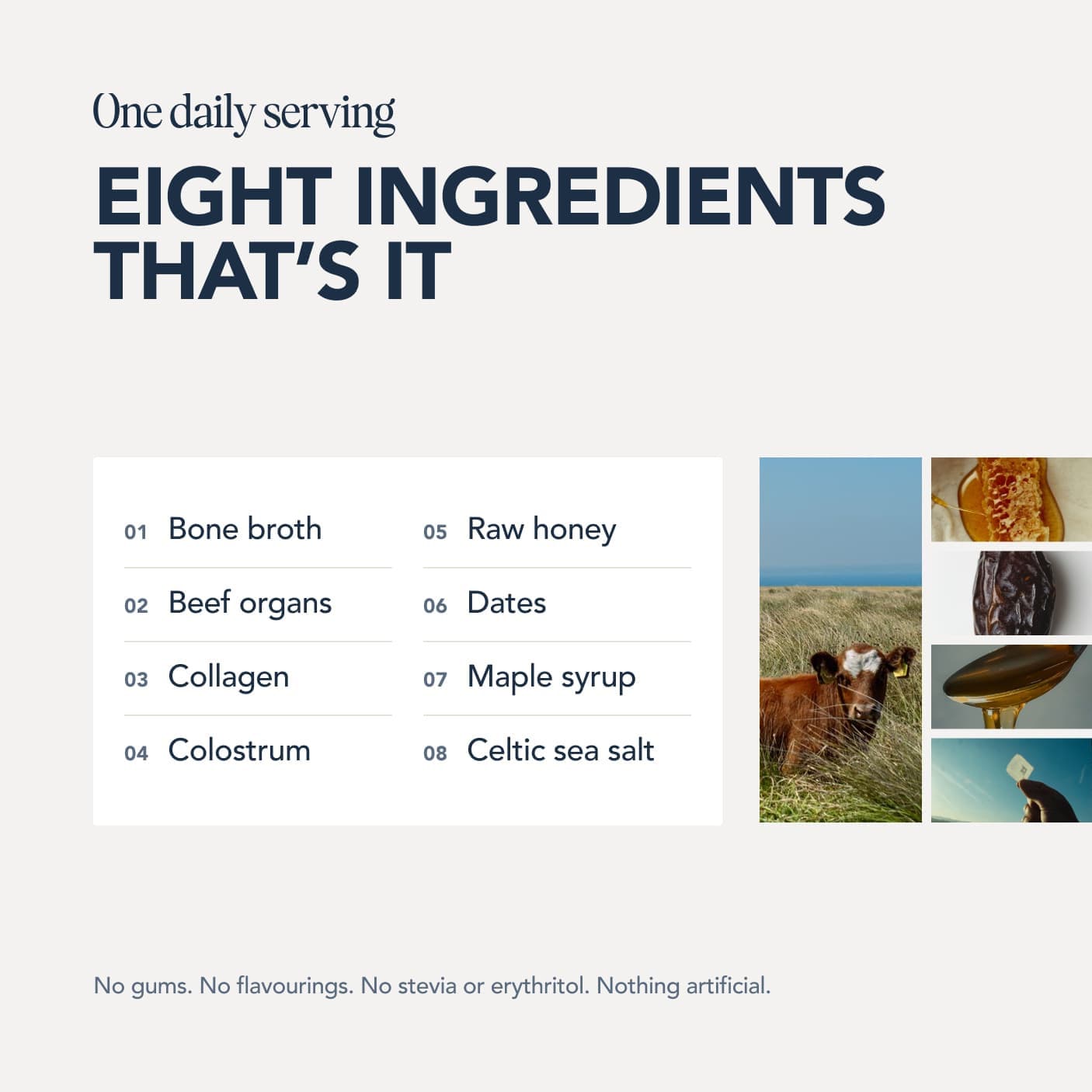
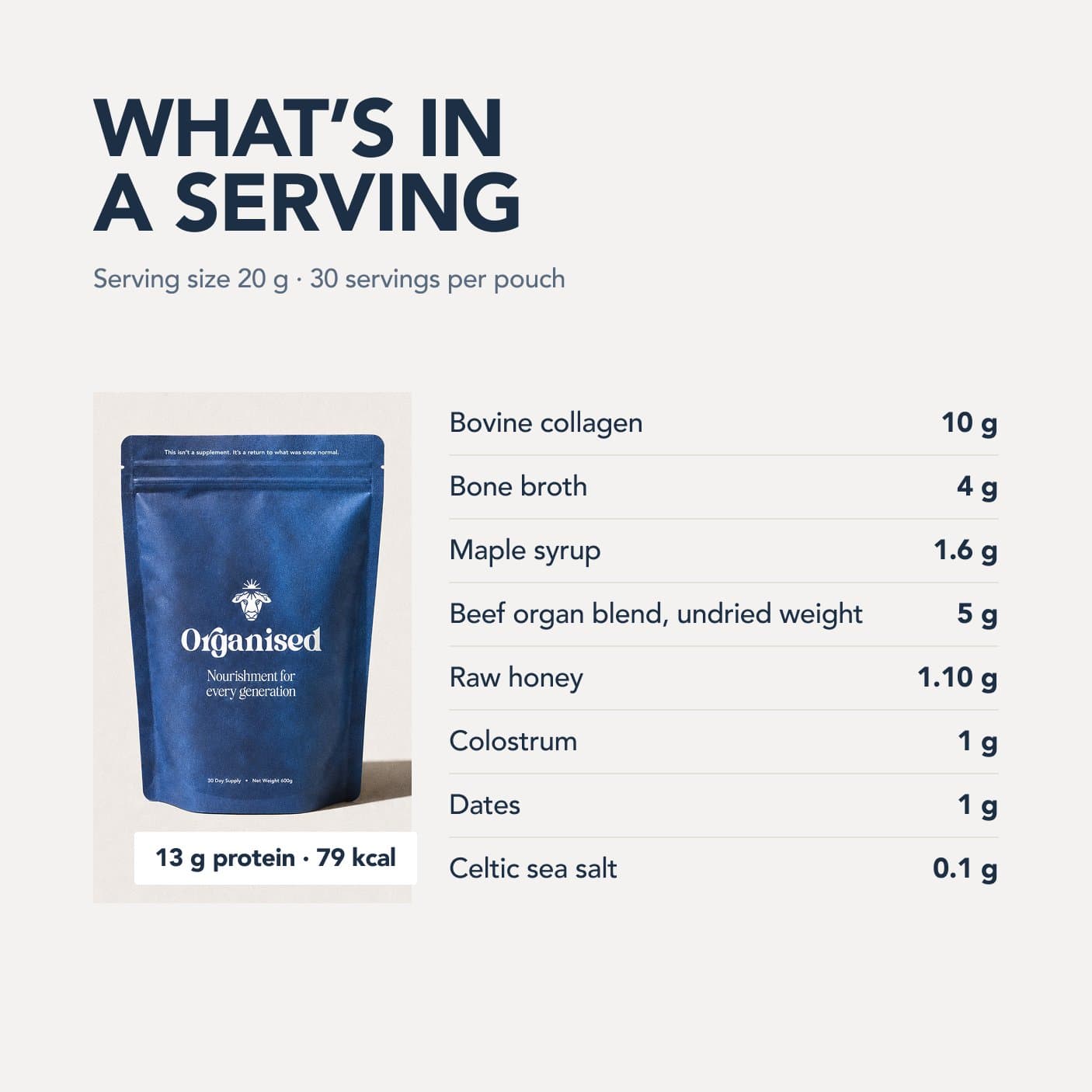
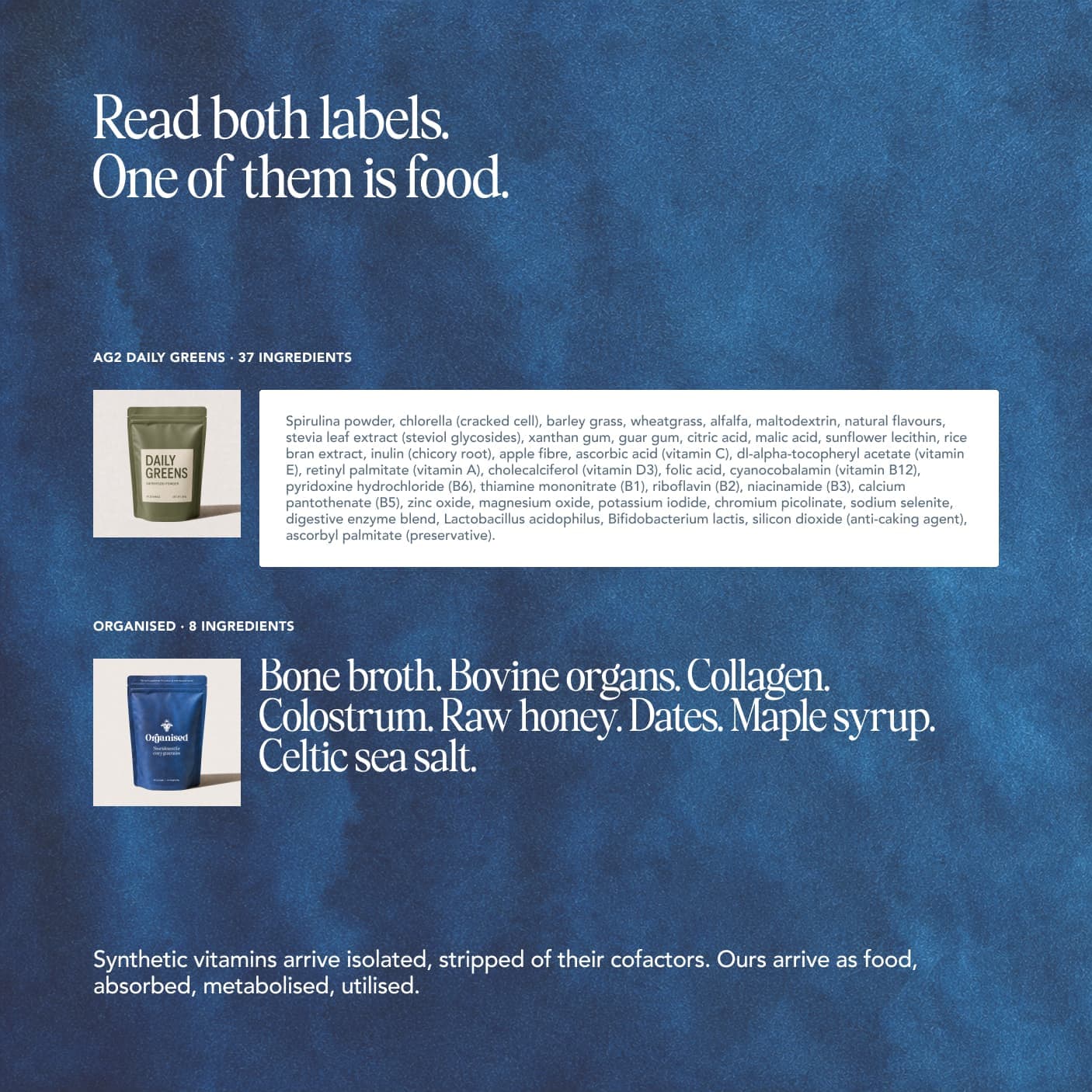
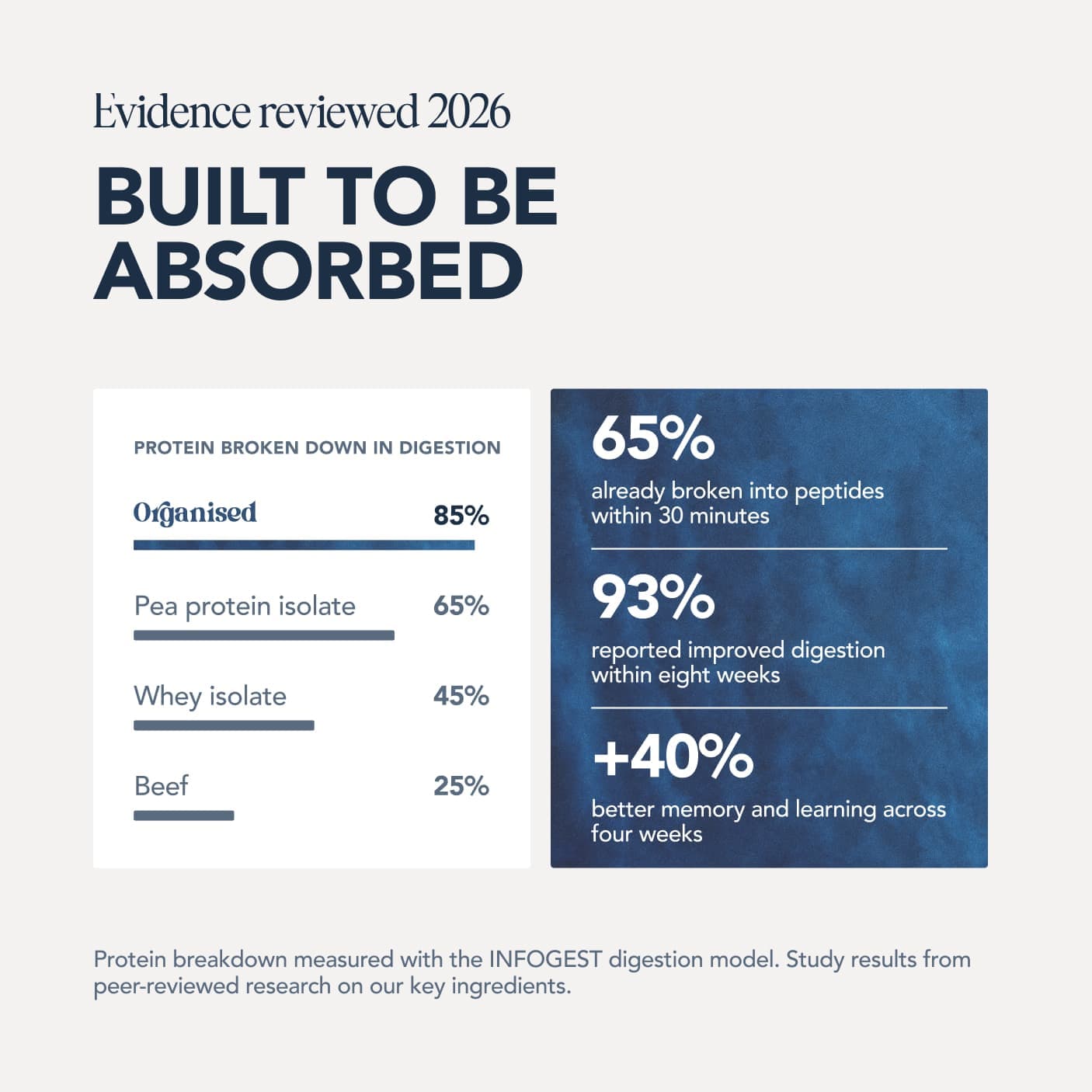
Eight real ingredients built around grass-fed beef organs, collagen and colostrum. Nothing synthetic added.
Free with your first order, worth £38. Plus £10 off the pouch with a subscription.

Free UK shipping · Made in England · 100 day money back guarantee on your first pouch · Skip, pause or cancel anytime
The mineral and electrolyte piece most people forget
Muscle recovery isn't just about protein and amino acids. It's equally about minerals. Magnesium is required for muscle protein synthesis, ATP production, and nervous system recovery. Potassium regulates fluid balance within muscle cells and is depleted with every heavy training session. Sodium helps retain both potassium and water in muscle tissue.
If you're training hard but mineral status is poor, your recovery stalls. You feel persistently fatigued. Your muscles feel constantly tight or sore. You might think you need more protein, when actually you're mineral deficient.
The solution is simpler than most recovery protocols suggest: salt your food generously (good sea salt provides sodium, potassium, magnesium, and trace minerals). Include potassium-rich whole foods like potato, sweet potato, avocado, and coconut water. These aren't supplements. They're foods. They work better and you actually enjoy eating them.
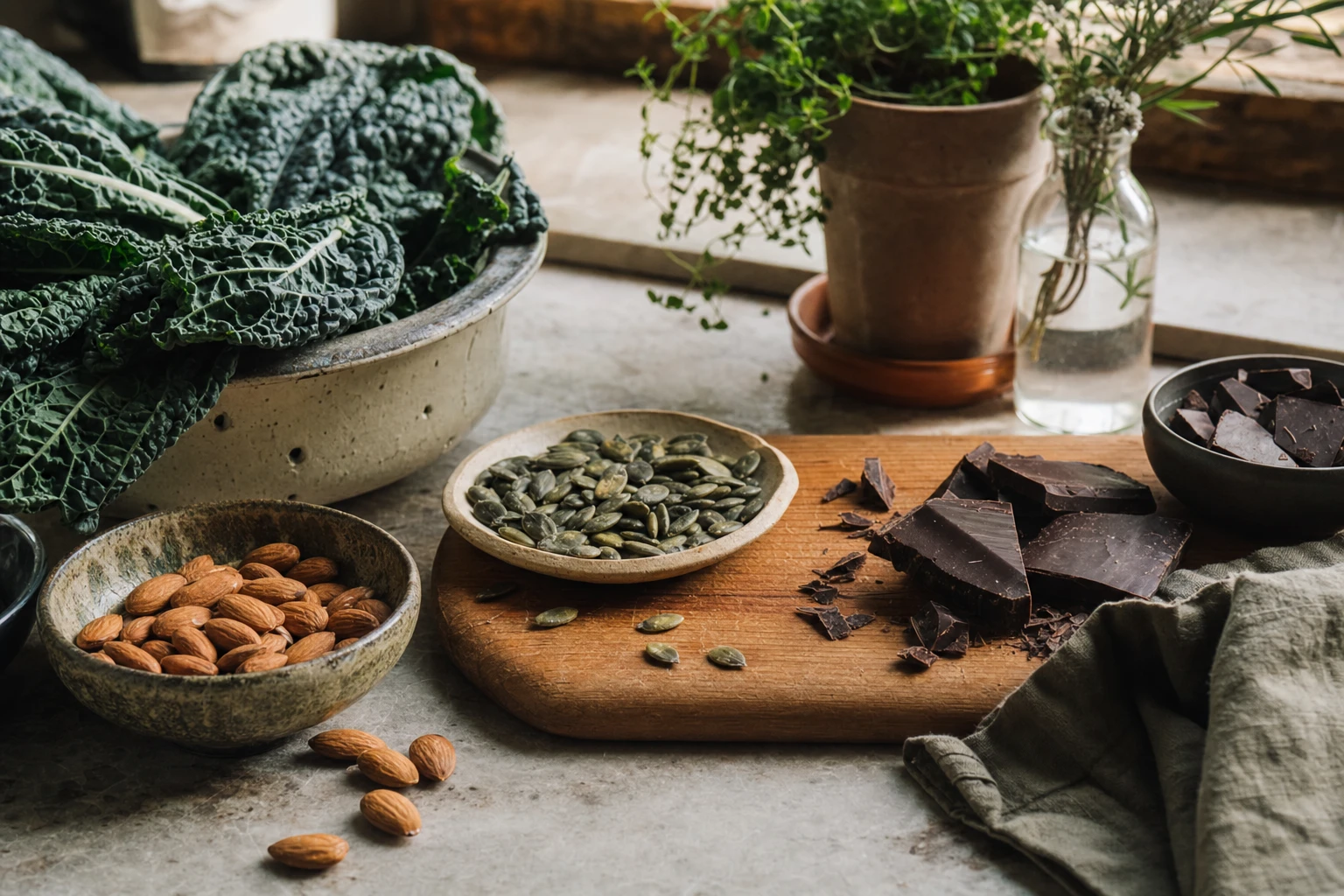
Additionally, magnesium-rich foods like pumpkin seeds, almonds, and dark leafy greens (though these are lower bioavailability than organ meats) support recovery. Many lifters overlook minerals entirely because the supplement industry pushes protein powder relentlessly. Protein matters, absolutely. But mineral status determines whether that protein actually builds muscle or just sits there unused.
You can't recover from the minerals you don't consume. Salt your food, eat whole foods rich in potassium, and watch your recovery improve.
The bottom line
Your training is only as good as your recovery. You can't out-work poor nutrition. You can't push hard, eat lean protein, and expect your body to repair optimal connective tissue.
Real recovery means collagen. It means glycine. It means magnesium. It means whole foods, not shakes. It means bone broth. It means the parts of the animal we've learned to discard.
Your tendons will thank you. Your joints will thank you. And most importantly, your ability to train hard year after year without injury will improve dramatically.
References
Every source below was checked on 27 August 2026. Each PubMed, PMC and DOI identifier was resolved against NCBI or Crossref, and what it opens is printed under the citation, so you can see the link goes where the citation says without leaving the page. Where a citation and its identifier disagreed, the citation was corrected to the record or the reference was deleted along with the sentence marker that pointed at it, and where the resolved paper turned out not to support the sentence, the sentence was cut back to what it does support. Borrowed authority is worse than none, because it looks like rigour.
- National Institutes of Health, Office of Dietary Supplements. Vitamin C - Health Professional Fact Sheet. ods.od.nih.gov
- Shaw G, et al. Vitamin C-enriched gelatin supplementation before intermittent activity augments collagen synthesis. Am J Clin Nutr. 2017;105(1):136-143. PMID 27852613Checked 27 August 2026: PMID 27852613 opens Shaw G, Lee-Barthel A, Ross ML et al, Vitamin C-enriched gelatin supplementation before intermittent activity augments collagen synthesis. Am J Clin Nutr 2017;105(1):136-143. PubMed indexes it as: Randomized Controlled Trial.
- National Institutes of Health, Office of Dietary Supplements. Magnesium - Health Professional Fact Sheet. ods.od.nih.gov
Corrections
What this page used to say, and why it no longer says it. Corrections are dated and are never removed, because deleting the record of an error is a second error. Every guide we have corrected is listed at our corrections log.
- 27 August 2026. “Trials of collagen peptide supplementation alongside vitamin C have shown improvements in collagen synthesis biomarkers and tendon outcomes in athletes” overstated the single study cited. Shaw et al. is eight healthy men doing rope-skipping: the biomarker half holds up, but the mechanical improvements were measured in engineered ligaments treated in vitro with the men's serum, not in anybody's tendons. The page now describes the study as it was run.
Who wrote and reviewed this guide
Niall Kiddle
Author · Founder, Organised
Niall is the founder of Organised. He started the company in 2024 after fixing his own health the slow way: in 2022 he swapped a cupboard of synthetic supplements for real food, raw milk, organ meats, bone broth and honey, and felt the difference within months.
Areas of expertise: Ancestral nutrition, Organ meats, Whole-food supplementation, Gut health, Regenerative sourcing
Read Niall's full profile
Pedro Rodrigues
Reviewer · Agronomist (farming and sourcing only)
Pedro is the agronomist Organised works with on farming and sourcing. His job on the guides is to keep the science honest: he reviews what we publish about soil health, regenerative agriculture, grazing and the way food is actually produced.
Areas of expertise: Regenerative agriculture, Agronomy, Soil health, Grass-fed farming, Food sourcing
Reviewed this guide on
Read Pedro's full profileMore on sports & performance
View allBrowse the guides library
All guidesKeep reading

Health goals
Why Intermittent Fasting Might Be Tanking Your Energy
Intermittent fasting works for some, but for many it suppresses thyroid function, raises cortisol, and causes undereating. Evidence-based alternative inside.

Health goals
Bloating After Eating: Common Causes and Whole Food Solutions
Discover the real reasons you bloat after meals and which whole foods actually help. Not all bloating is the same, and the fix isn't always less food.
Health goals
The Best Foods for Thicker, Stronger Hair
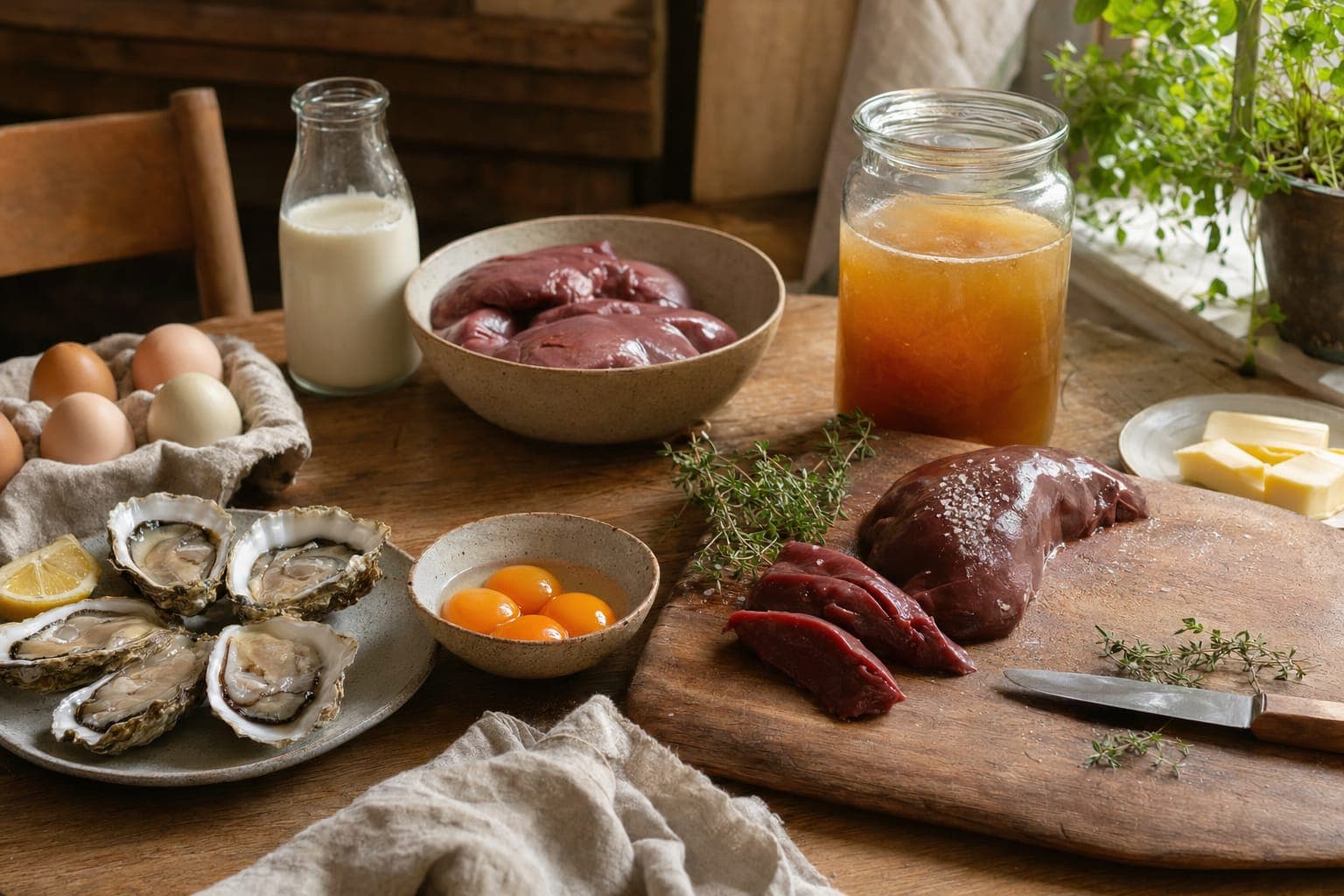
Build thicker, stronger hair from within with the best foods for thick hair: organs, eggs, oysters, bone broth, and raw dairy, all packed with key nutrients.
Real food, made effortless
Start my daily blendA few ways to use it
All recipes
Organised Protein Pancakes: A Weekend Favourite
A high-protein pancake recipe using beef protein, eggs, and raw milk. Cooked in cast iron, naturally sweetened with banana and honey. Real food breakfast.

Raw Milk Ice Cream with Organised
Make raw milk ice cream at home with Organised for a seasonal, nutrient-dense treat. Three simple flavours to try whenever the craving strikes.
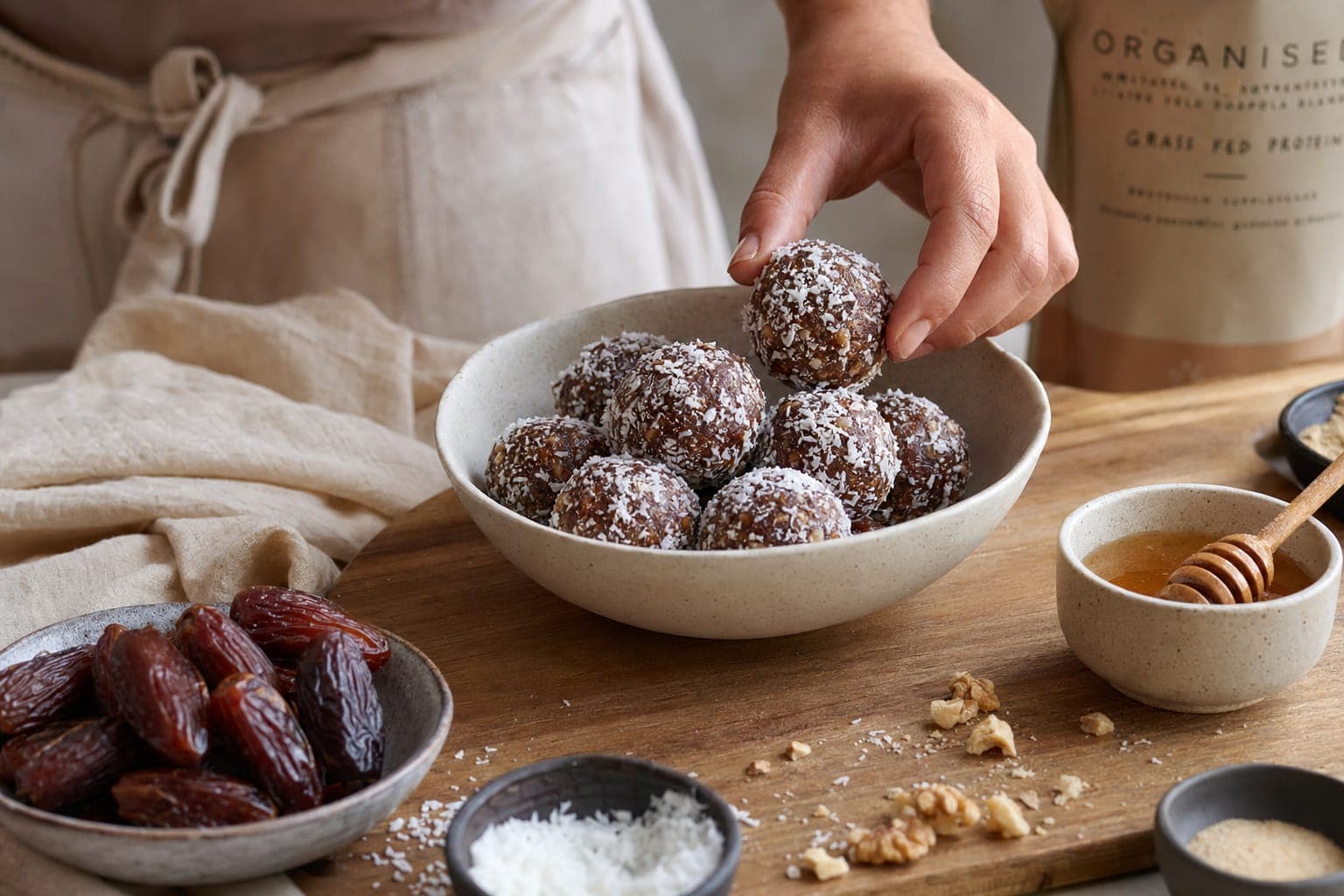
Energy Balls with Organised, Dates and Raw Honey
Make no-bake energy balls with Organised, dates, and raw honey. Perfect lunch box, pre-workout, or on-the-go snack. Simple recipe.


 Join over 100,000+ members
Build a better food system with us
The Organised community is thousands of people choosing real food and backing the farmers who grow it, all of us trying to leave the world a little better than we found it. If that is what you care about too, you belong here.