Bloating After Eating: Common Causes and Whole Food Solutions
You eat a salad and ten minutes later you're bloated. You look six months pregnant. Your trousers don't fit. It's not normal. It's not just 'sensitive digestion'. It's your gut telling you something is wrong. Here's what's actually happening.

By Niall Kiddle, Founder, Organised

Reviewed by Pedro Rodrigues, Agronomist (farming and sourcing only) ·
6 min read · Published · Updated · 4 cited sources
Makers of the Organised Daily blend, a grass-fed beef organ supplement from regenerative UK farms

Bloating after eating is one of the most common digestive complaints, and almost everyone blames the food itself. 'Salads bloat me.' 'Bread bloats me.' 'Anything heavy bloats me.' But the food isn't the problem. Your ability to digest the food is the problem.

It's usually not the food volume
You eat 300 calories of salad and your stomach expands visibly. If it were simply a volume issue, you'd bloat equally after 300 calories of soup or after drinking a large glass of water. You don't. The bloating is selective. Certain foods trigger it more than others.
This tells you the problem isn't food volume. It's food composition and your ability to digest it. Your stomach isn't stretching because you ate too much. Your stomach is stretching because fermentation is happening, because inflammation is present, or because your digestion is incomplete.
If bloating happens consistently after certain foods, you don't have a stomach size problem. You have a digestion problem.
Low stomach acid
Most people think low stomach acid is rare. It's not. It's increasingly common, particularly over the age of 30, and particularly in people with chronic stress or past antibiotic use.1
When your stomach acid is insufficient, you can't break down protein properly. Undigested protein travels to your small intestine. Your small intestine can't digest it either. It travels further down. Your colon bacteria ferment it. Fermentation produces gas. Gas bloats you.
This is why you sometimes bloat more after eating protein than after eating simple carbohydrates. Your stomach is screaming because it can't handle the protein.
The fix: Start meals with something acidic. Apple cider vinegar, lemon juice, or fermented foods signal to your stomach to produce acid. Chew thoroughly. Eat slowly. Avoid drinking with meals, which dilutes stomach acid. Over time, stomach acid often recovers. Some people benefit long-term from using betaine HCl supplements during meals, but this should be supervised.
Dysbiosis and fermentation
Your microbiome should be dominated by beneficial bacteria that ferment fibre slowly and produce short-chain fatty acids. If you have dysbiosis, pathogenic species dominate. These organisms ferment everything rapidly, producing excessive gas as a byproduct.
This is why bloating from dysbiosis happens predictably. You eat, the dysbiotic bacteria feast, they ferment, you bloat. The food isn't the problem. The bacterial ecosystem is.
Dysbiosis is created by seed oils, artificial sweeteners, processed foods, antibiotics, chlorinated water. It's sustained by eating foods that feed dysbiotic bacteria (refined sugars, industrial seed oils) and by not eating foods that feed beneficial bacteria (fermented foods, resistant starch, diverse plant foods prepared traditionally).
The fix: Remove dysbiosis-promoting foods. Add fermented foods daily. Sauerkraut, kefir, aged cheese, sourdough, miso. These inoculate good bacteria. Add resistant starch sources like cooled potatoes or cooked and cooled rice. This feeds beneficial bacteria directly. Give this protocol four to six weeks. Most people report significantly less bloating by week three.

Food sensitivities and inflammation
Some foods trigger an immune response. Lectins, gluten, seed oils, emulsifiers. Your immune system attacks them. Inflammation increases in your gut. Your intestinal lining becomes oedematous. You bloat.
This bloating feels different than fermentation bloating. It's accompanied by other symptoms. Brain fog, joint pain, skin issues, mood changes. It's systemic inflammation, not just local fermentation.
The culprits vary per person, but the most common are grains (especially wheat), seed oils (in nearly all processed foods), artificial sweeteners, and highly processed foods with emulsifiers.
The fix: Remove suspect foods for three weeks. The most impactful starting point is removing all seed oils and processed foods. Most people experience bloating reduction immediately. If bloating persists, remove grains next. Then artificial sweeteners and emulsifiers. Do an elimination protocol properly. Remove one category at a time, give it two weeks, assess, then remove the next.
Rushed eating and stress digestion
Your vagus nerve regulates digestion. When you're stressed, your nervous system shifts into sympathetic mode (fight or flight). Digestion downregulates.4 Your stomach doesn't produce enough acid. Your intestines don't move food through properly. Undigested food ferments. You bloat.
If you eat whilst scrolling, whilst working, whilst standing up, whilst stressed, your digestion is compromised. You're eating without engaging your digestive system. Your body is in sympathetic mode, not parasympathetic (rest and digest) mode.
The fix: Eat sitting down. Chew thoroughly. Put your phone away. Take three deep breaths before eating. These tiny changes activate your parasympathetic nervous system and dramatically improve digestion. Many people report bloating reduction within days of making this change alone.

Get health guides like this, free
Two short reads a week on eating for energy, gut health, skin, sleep and more.
By signing up you agree to receive emails from us. No spam, unsubscribe anytime.
What actually fixes it
Bloating often has multiple causes. Start with the easiest fixes first.
- Eat sitting down, slowly, without your phone. This alone fixes bloating for many people. Give this two weeks before assuming you need anything else.
- Remove seed oils and processed foods. Cook with butter, ghee, lard, or olive oil. Most bloating improves within one week of removing seed oils.
- Add acidic foods before meals. Apple cider vinegar, fermented vegetables, lemon juice. This often immediately reduces bloating by supporting stomach acid production.
- Add fermented foods daily. Sauerkraut, kefir, miso, aged cheese, sourdough. This rebalances your microbiome and reduces fermentation gas.2
- If bloating persists, do a grain elimination. Remove all grains for three weeks.3 Many people discover grains are their primary trigger.
- Last resort: consider low stomach acid. If bloating is worse after protein and improves with acidic foods, you likely have low stomach acid. This often requires supplementation with betaine HCl or apple cider vinegar long-term.
Bloating is information. Your body is telling you that your digestion isn't working. Listen to it. Fix the digestion, and the bloating disappears.
Testing your stomach acid at home
Before spending money on supplements, assess whether you actually have low stomach acid. The baking soda test is simple. Dissolve 1 teaspoon of baking soda in 8 ounces of water. Drink it first thing in the morning on an empty stomach. If you have adequate stomach acid, it will react with your stomach acid and produce carbon dioxide gas, which you'll burp up within 2-3 minutes. If you don't burp within 3 minutes, or only burp weakly, your stomach acid is likely insufficient.
Another clue is symptom patterns. If you bloat worse after protein, if you see undigested food in your stool, if you have chronic indigestion that improves with acidic foods, you likely have low stomach acid. Taking antacids temporarily masks the problem but makes it worse long-term because the body adapts by producing even less acid.
The microbiome and gas production
Different bacterial species produce different gases. Some dysbiotic bacteria produce hydrogen and methane. Others produce hydrogen sulphide, which smells worse but indicates a different dysbiotic pattern.2 If your bloating is accompanied by foul-smelling gas, you have a specific dysbiotic pattern that often requires removing sulphur-containing foods (cruciferous vegetables, eggs, meat) temporarily whilst you restore beneficial bacteria. Once dysbiosis improves, these foods are usually tolerated again.
The shift from dysbiotic to beneficial bacteria-dominant takes weeks because bacteria reproduce on a timeline. It's not immediate, but it's reliable. Eat fermented foods daily, remove dysbiosis-promoting foods, be patient, and your gas production will normalise.


1 of 9
Daily blend
100,000+ thriving families4.9 on Trustpilot
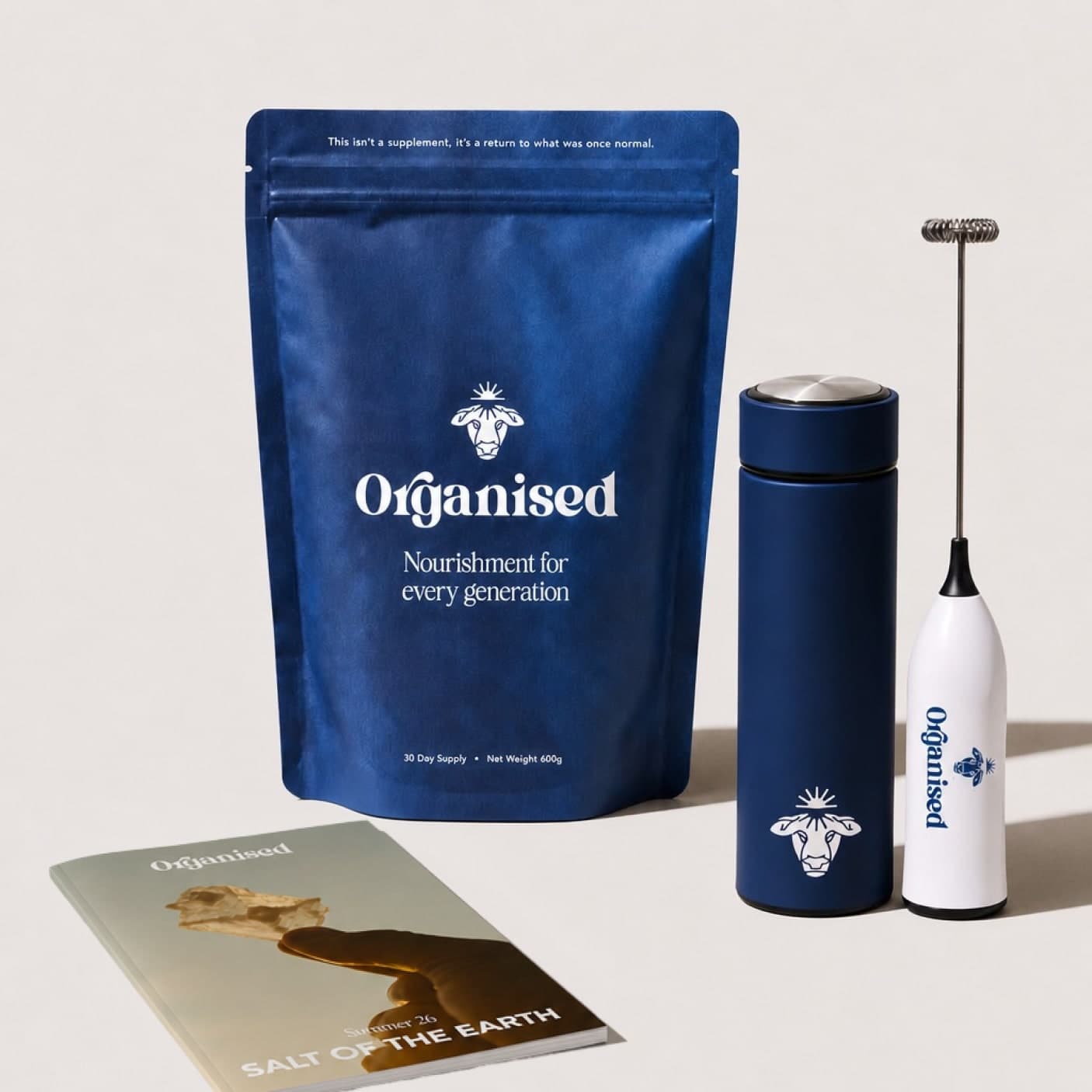
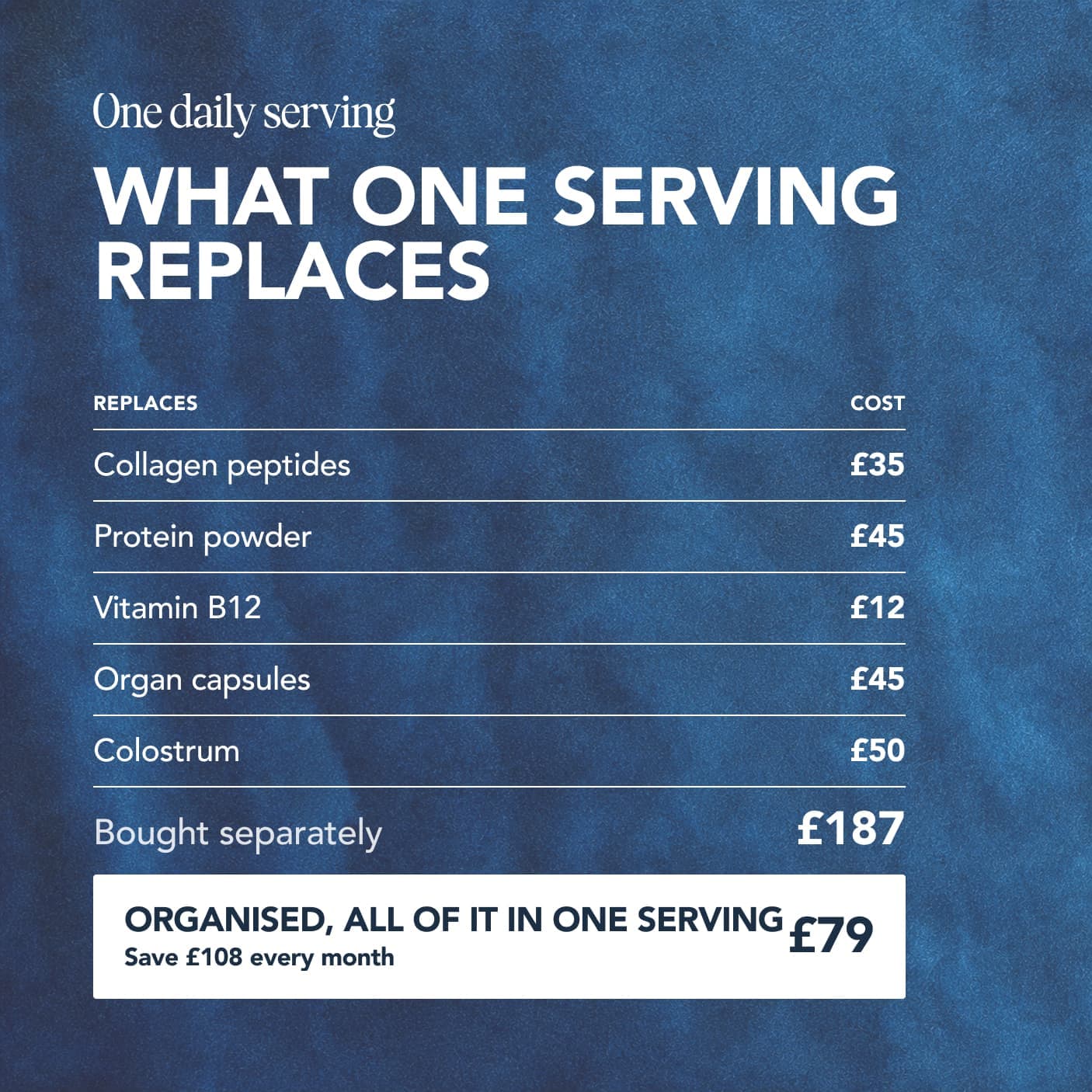
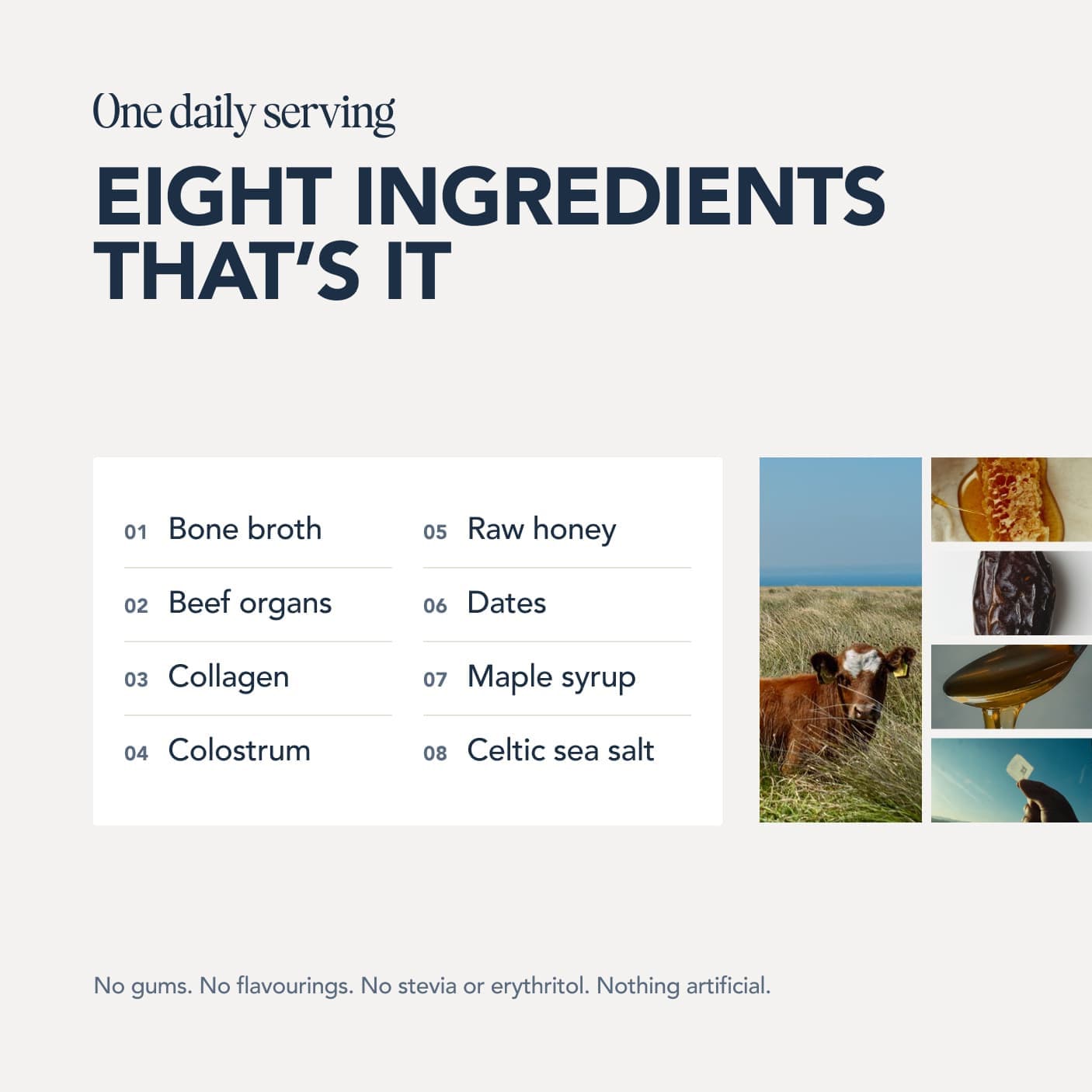
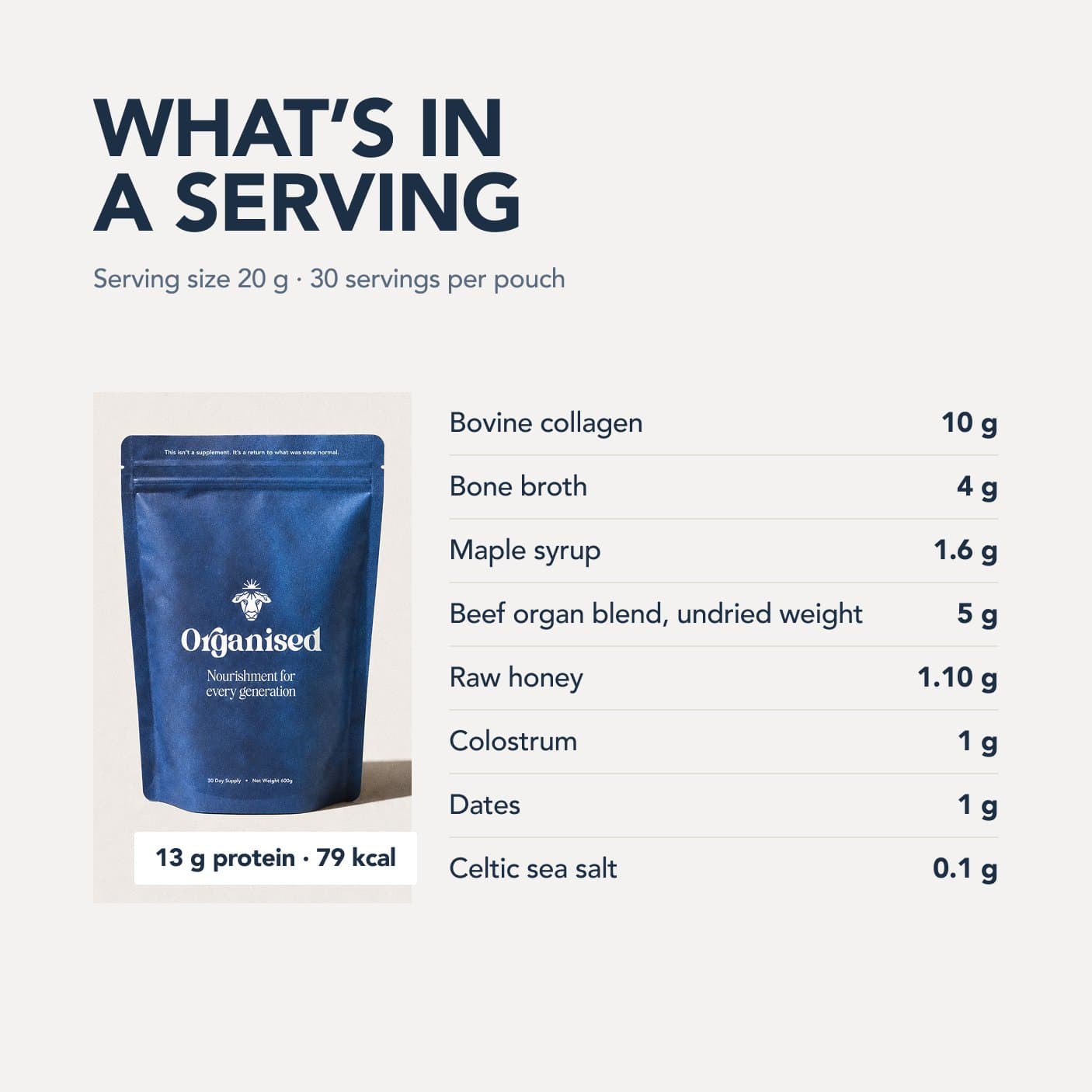
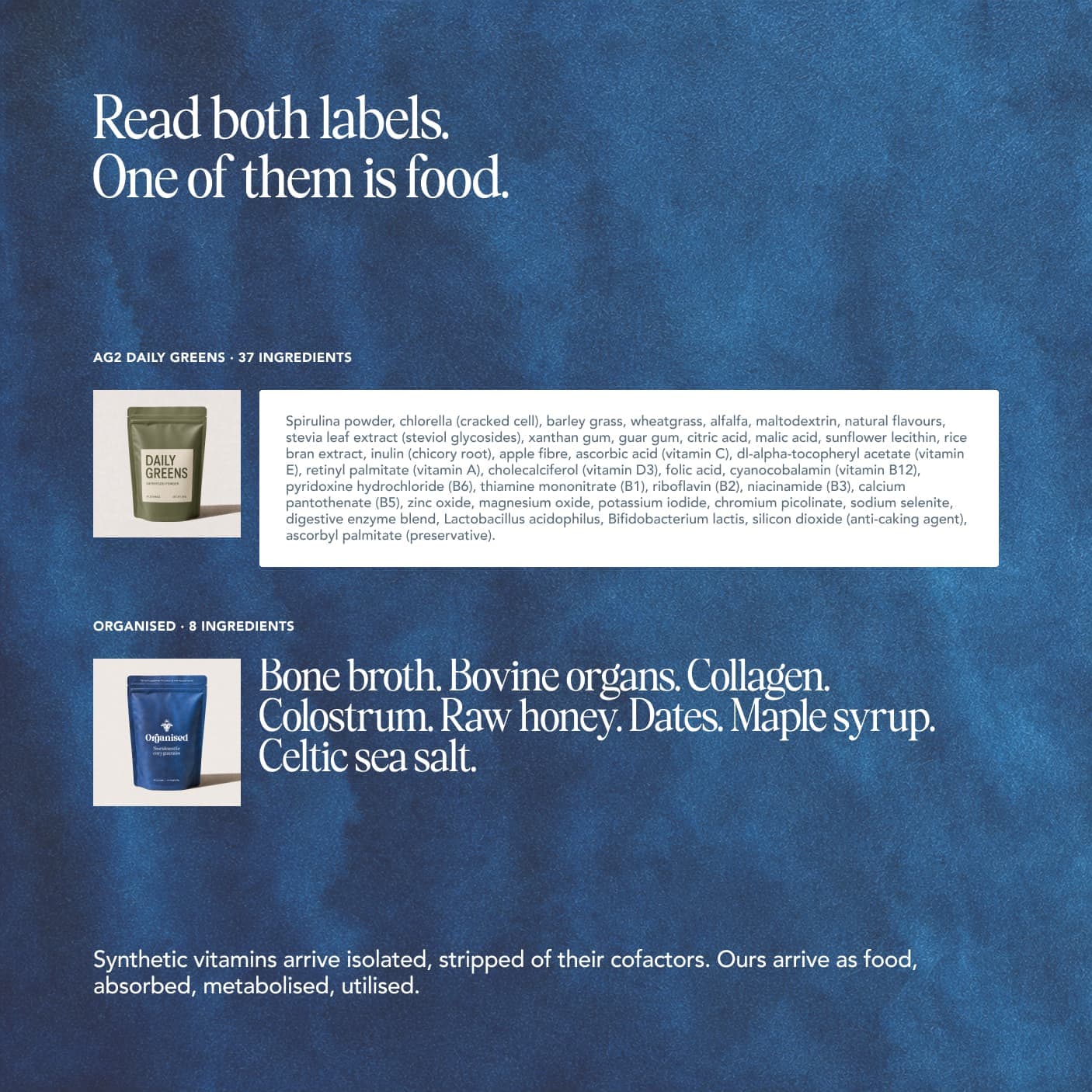
Eight real ingredients built around grass-fed beef organs, collagen and colostrum. Nothing synthetic added.
Free with your first order, worth £38. Plus £10 off the pouch with a subscription.

Free UK shipping · Made in England · 100 day money back guarantee on your first pouch · Skip, pause or cancel anytime
The bottom line
Bloating after eating is nearly always fixable. It's not about eating smaller portions or restricting your diet. It's about identifying what's actually causing your digestion to struggle. Start with eating practices, then remove inflammatory foods, then add fermented foods. Most people solve their bloating within two to four weeks with these changes.
References
Every source below was checked on 27 August 2026. Each PubMed, PMC and DOI identifier was resolved against NCBI or Crossref, and what it opens is printed under the citation, so you can see the link goes where the citation says without leaving the page. Where a citation and its identifier disagreed, the citation was corrected to the record or the reference was deleted along with the sentence marker that pointed at it, and where the resolved paper turned out not to support the sentence, the sentence was cut back to what it does support. Borrowed authority is worse than none, because it looks like rigour.
- Pilotto A, Franceschi M, Vitale D, et al. The prevalence of diseases associated with reduced gastric acid secretion increases with age. See also age-related gastric secretion review: https://pmc.ncbi.nlm.nih.gov/articles/PMC12292447/Checked 27 August 2026: PMC12292447 opens Vara-Luiz F, Mendes I, Palma C et al, Age-Related Decline of Gastric Secretion: Facts and Controversies. Biomedicines 2025;13(7). PubMed indexes it as: Review.The authors' own declaration, from the record: The authors declare no conflicts of interest. The funders had no role in the design of the study; in the collection, analyses, or interpretation of data; in the writing of the manuscript; or in the decision to publish the results.
- Kasti AN, Synodinou KD, Pyrousis IA, Nikolaki MD, Triantafyllou K. Probiotics and intestinal mucosa: a review of fermented food and gut microbiota. Microorganisms. 2022;10(2):330. See also Marco ML, Heeney D, Binda S, et al. Health benefits of fermented foods: microbiota and beyond. Current Opinion in Biotechnology. 2017;44:94-102. https://pubmed.ncbi.nlm.nih.gov/27998788/Checked 27 August 2026: PMID 27998788 opens Marco ML, Heeney D, Binda S et al, Health benefits of fermented foods: microbiota and beyond. Curr Opin Biotechnol 2017;44:94-102. PubMed indexes it as: Review.
- Black CJ, Staudacher HM, Ford AC. Efficacy of a low FODMAP diet in irritable bowel syndrome: systematic review and network meta-analysis. Gut. 2022;71(6):1117-1126. https://pubmed.ncbi.nlm.nih.gov/34376515/Checked 27 August 2026: PMID 34376515 opens Black CJ, Staudacher HM, Ford AC, Efficacy of a low FODMAP diet in irritable bowel syndrome: systematic review and network meta-analysis. Gut 2022;71(6):1117-1126. PubMed indexes it as: Systematic Review, Network Meta-Analysis.The authors' own declaration, from the record: Competing interests: None declared.
- Breit S, Kupferberg A, Rogler G, Hasler G. Vagus nerve as modulator of the brain-gut axis in psychiatric and inflammatory disorders. Frontiers in Psychiatry. 2018;9:44. https://pmc.ncbi.nlm.nih.gov/articles/PMC5859128/Checked 27 August 2026: PMC5859128 opens Breit S, Kupferberg A, Rogler G et al, Vagus Nerve as Modulator of the Brain-Gut Axis in Psychiatric and Inflammatory Disorders. Front Psychiatry 2018;9:44. PubMed indexes it as: Review.
Corrections
What this page used to say, and why it no longer says it. Corrections are dated and are never removed, because deleting the record of an error is a second error. Every guide we have corrected is listed at our corrections log.
- 27 August 2026. References 1 and 3 each named a paper their links do not open. Both now name the record the reader lands on, including the low-FODMAP entry, which is a narrative review rather than the network meta-analysis previously printed.
Who wrote and reviewed this guide
Niall Kiddle
Author · Founder, Organised
Niall is the founder of Organised. He started the company in 2024 after fixing his own health the slow way: in 2022 he swapped a cupboard of synthetic supplements for real food, raw milk, organ meats, bone broth and honey, and felt the difference within months.
Areas of expertise: Ancestral nutrition, Organ meats, Whole-food supplementation, Gut health, Regenerative sourcing
Read Niall's full profile
Pedro Rodrigues
Reviewer · Agronomist (farming and sourcing only)
Pedro is the agronomist Organised works with on farming and sourcing. His job on the guides is to keep the science honest: he reviews what we publish about soil health, regenerative agriculture, grazing and the way food is actually produced.
Areas of expertise: Regenerative agriculture, Agronomy, Soil health, Grass-fed farming, Food sourcing
Reviewed this guide on
Read Pedro's full profileMore on gut health
View all- The Complete Guide to Healing Your Gut with Whole Foods
- Why Your Gut Health Affects Everything (Not Just Digestion)
- 5 Foods You Think Are Healthy (But Are Secretly Ruining Your Gut)
- Acid Reflux and Low Stomach Acid: A Nutritional Perspective
- Bone Broth for Gut Health: What the Science Says
- Candida Overgrowth: What It Is and How Nutrition Can Help
- Histamine Intolerance: Could Your Gut Be the Cause?
- How Colostrum and Collagen Work Together to Repair the Gut Lining
- How Stress Destroys Your Gut (And What to Do About It)
- How to Recognise the Early Signs of Poor Gut Health
- How to Reset Your Gut After Antibiotics
- IBS and Nutrition: A Whole Food Approach
Browse the guides library
All guidesKeep reading

Health goals
The Gut-Brain Axis: How Your Digestion Affects Your Mind
Understand the gut-brain connection and how your digestion shapes mood, anxiety, and focus, plus simple ways to support both your gut and mind together.

Health goals
5 Foods You Think Are Healthy (But Are Secretly Ruining Your Gut)
What you think is healthy food might be quietly damaging your gut. Discover the five sneaky culprits sabotaging your digestion, and what to eat instead.

Health goals
How Colostrum and Collagen Work Together to Repair the Gut Lining
See how colostrum and collagen work together to help seal a damaged gut lining, why each plays a distinct role, and how to use both for steady gut repair.
Real food, made effortless
Start my daily blendA few ways to use it
All recipes
Organised Smoothie Bowl Recipes for Every Season
Four seasonal smoothie bowl recipes using Organised. Berry in summer, apple-cinnamon in autumn, tropical in spring, warming chocolate in winter.

Organised Chia Pudding with Raw Honey and Berries
A no-cook chia seed pudding made with raw milk, collagen, berries, and raw honey. Prep it the night before and eat for breakfast.
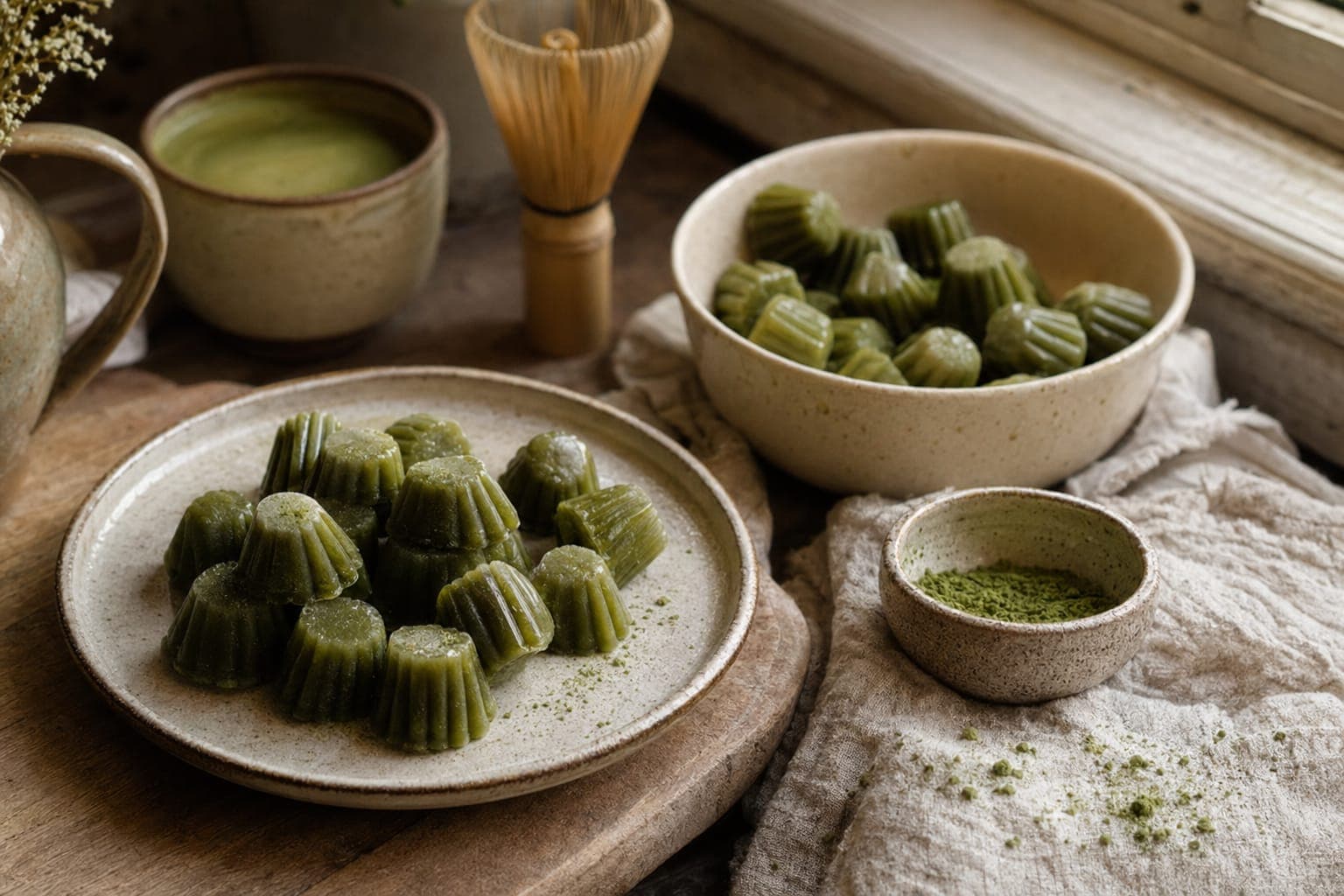
Matcha Latte Gummies with Collagen and Gelatine
Make visually stunning matcha latte gummies infused with collagen and gelatine. Simple recipe for gut-healing sweets you'll actually want to eat.


 Join over 100,000+ members
Build a better food system with us
The Organised community is thousands of people choosing real food and backing the farmers who grow it, all of us trying to leave the world a little better than we found it. If that is what you care about too, you belong here.