How Colostrum and Collagen Work Together to Repair the Gut Lining
Your gut lining is damaged. It didn't happen overnight. It won't heal overnight. But the right combination of nutrients can accelerate it dramatically.
By Niall Kiddle, Founder, Organised

Reviewed by Pedro Rodrigues, Agronomist (farming and sourcing only) ·
6 min read · Published · Updated · 4 cited sources
Makers of the Organised Daily blend, a grass-fed beef organ supplement from regenerative UK farms
Here's what most people don't understand: your damaged gut isn't just lacking bacteria. It's not just inflamed. It's structurally broken. And fixing structural damage requires structural materials.
That's where colostrum and collagen come in. They're not redundant. They're not interchangeable. They do fundamentally different things. And when you use them together, the repair happens faster and more thoroughly than either one alone.
The gut lining's three layers
Your intestinal epithelium (the inner lining of your gut) has three critical layers. First, the mucus layer. A protective barrier made of glycoproteins, IgA, and beneficial bacteria that sits directly on top of the cells. Second, the epithelial cells themselves, connected by tight junctions that control what passes through. Third, the underlying connective tissue made largely of collagen, supporting the epithelial cells above it.
When your gut is damaged, all three layers are compromised. The mucus layer is depleted. The epithelial cells are inflamed and the tight junctions are broken. The underlying collagen is degraded.
You need to repair all three. That requires different tools.
Why both matter
Collagen is the structural protein. It's the physical substance that holds things together. Without it, there is no lining. There's no barrier.
Colostrum is the signalling molecule. It tells your body to stop fighting itself, to calm down, to rebuild. It provides the specific factors that your immune system and healing response need to do their job.
One repairs the structure. One creates the conditions where repair becomes possible. They're complementary, not redundant.
Colostrum is the signal to heal. Collagen is the material to build with. You need both.
Colostrum: the immune and growth factor layer
Colostrum contains a constellation of bioactive compounds that directly address gut damage.
The immunoglobulins, particularly IgA, are antibodies designed to coat the gut lining and prevent unwanted particles and bacteria from crossing.1 When your gut is damaged, this protective layer is compromised. IgA from colostrum floods back in and restores that layer. It's not adding bacteria. It's adding the immune factors that keep bacteria in their place and prevent unwanted material from crossing.
The growth factors, particularly IGF-1 and transforming growth factor beta (TGF-beta), directly stimulate the growth and repair of intestinal epithelial cells.1 These are the signalling molecules that tell your gut cells to divide and rebuild. Your body produces these factors naturally, but when you're chronically stressed or malnourished, production drops. Colostrum provides them externally, accelerating the repair process.
Lactoferrin is an iron-binding protein that serves multiple functions. It reduces the colonisation of harmful bacteria, modulates immune response, and promotes the growth of beneficial bacteria.2 It creates selective pressure in favour of the bacteria you want.
Proline-rich polypeptides are smaller proteins with profound immune-modulating effects. They calm down overactive immune responses, reduce inflammation, and create an environment where healing becomes possible.
Together, these components do one thing: they tell your body that the threat has passed, that it's safe to stop fighting, and that it's time to rebuild.
Collagen: the structural layer
Collagen is different. It's not a signalling molecule. It's the material itself.
Your intestinal epithelium sits atop a layer of connective tissue called the lamina propria. This tissue is roughly 70 percent collagen. When your gut is damaged, collagen in this layer is degraded by inflammation, broken down by proteases, and not adequately replaced.
When you consume collagen (or collagen-rich bone broth), your digestive system breaks it down into amino acids and dipeptides. Your body then absorbs these and uses them to synthesise new collagen, which is deposited in the lamina propria and elsewhere.
Glycine and proline are the dominant amino acids in collagen. Glycine is particularly interesting because it's not just a building block. It's also a neurotransmitter that calms the nervous system, reduces inflammation systemically, and supports the synthesis of glutathione, your body's master antioxidant.3
Bone broth is superior to collagen powder alone because it provides not just collagen breakdown products, but also minerals like magnesium, calcium, and phosphate that are essential for tissue synthesis, plus other compounds like hyaluronic acid and glucosamine that support joint and tissue health.
The result is literal structural repair. You're rebuilding the connective tissue that supports your gut lining.
How they work together
This is where the synergy becomes clear.
You take colostrum. The immune factors calm down the inflammatory response. The growth factors stimulate epithelial cell repair and regeneration. IgA and lactoferrin begin to restore the protective layers.
At the same time, you're consuming collagen or bone broth. The amino acids and growth factors are absorbed and used to rebuild the connective tissue underneath.
The inflammation comes down. The structure strengthens. The epithelial cells begin to regenerate. The tight junctions between cells tighten. The mucus layer thickens.
Alone, colostrum addresses the immune and growth factor side. Alone, collagen addresses the structural side. Together, they address both dimensions of the problem simultaneously.
Colostrum reduces inflammation and signals repair. Collagen provides the material for that repair to happen. The combination is faster and more complete than either alone.
Get health guides like this, free
Two short reads a week on eating for energy, gut health, skin, sleep and more.
By signing up you agree to receive emails from us. No spam, unsubscribe anytime.
Synergy in action
Here's what happens over the first four weeks when you combine them.
Week one: inflammation begins to come down. The immune-modulating compounds in colostrum reduce the inflammatory response. You notice less bloating. Digestion feels less irritated. Your energy begins to improve because your body isn't spending energy fighting itself.
Week two: the structural repair accelerates. The collagen you've been consuming has been absorbed and deposited in the tissue. The epithelial cells, now receiving growth signals from colostrum and building materials from collagen, begin to regenerate visibly. The tight junctions tighten. Food moves through more comfortably. Symptoms continue to improve.
Week three and four: the cumulative effect becomes pronounced. The gut lining is substantially more intact. The mucus layer is thicker. The immune tolerance is higher. Your digestion normalises. Your energy stabilises. Skin often clears. Mood improves.
This timeline assumes you're also removing the inflammatory foods (seed oils, emulsifiers, artificial sweeteners, lectins, ultra-processed foods) and eating real, whole foods. If you keep poisoning the gut whilst trying to heal it, progress stalls.
The timeline for healing
Complete gut healing takes longer than four weeks. The gut epithelium is the fastest-renewing tissue in the body, but it takes roughly three to six months for a substantially damaged gut to repair fully.4
However, functional improvement happens much faster. Most people notice meaningful changes within 2-4 weeks. The acute symptoms resolve. The bloating goes. The energy returns. Digestion normalises.
The deeper structural repair continues for months. And that's fine. You'll continue to feel progressively better as the healing deepens.
After the acute damage is healed, you can reduce the colostrum and collagen doses. Some people continue them indefinitely at maintenance levels. Others come off them once the gut is healed.
Either way, once the gut lining is sealed and the inflammation is gone, your digestion will remain robust as long as you keep eating real food and avoid the substances that damaged it in the first place.
The goal is not lifelong supplement dependence. The goal is to repair the damage, restore function, and then maintain it with food.
Use colostrum and collagen together for 4-12 weeks depending on the severity of your damage. Remove the foods that caused the problem. Eat real food. Your gut will repair itself. Then you can step back and maintain what you've rebuilt.
1 of 9
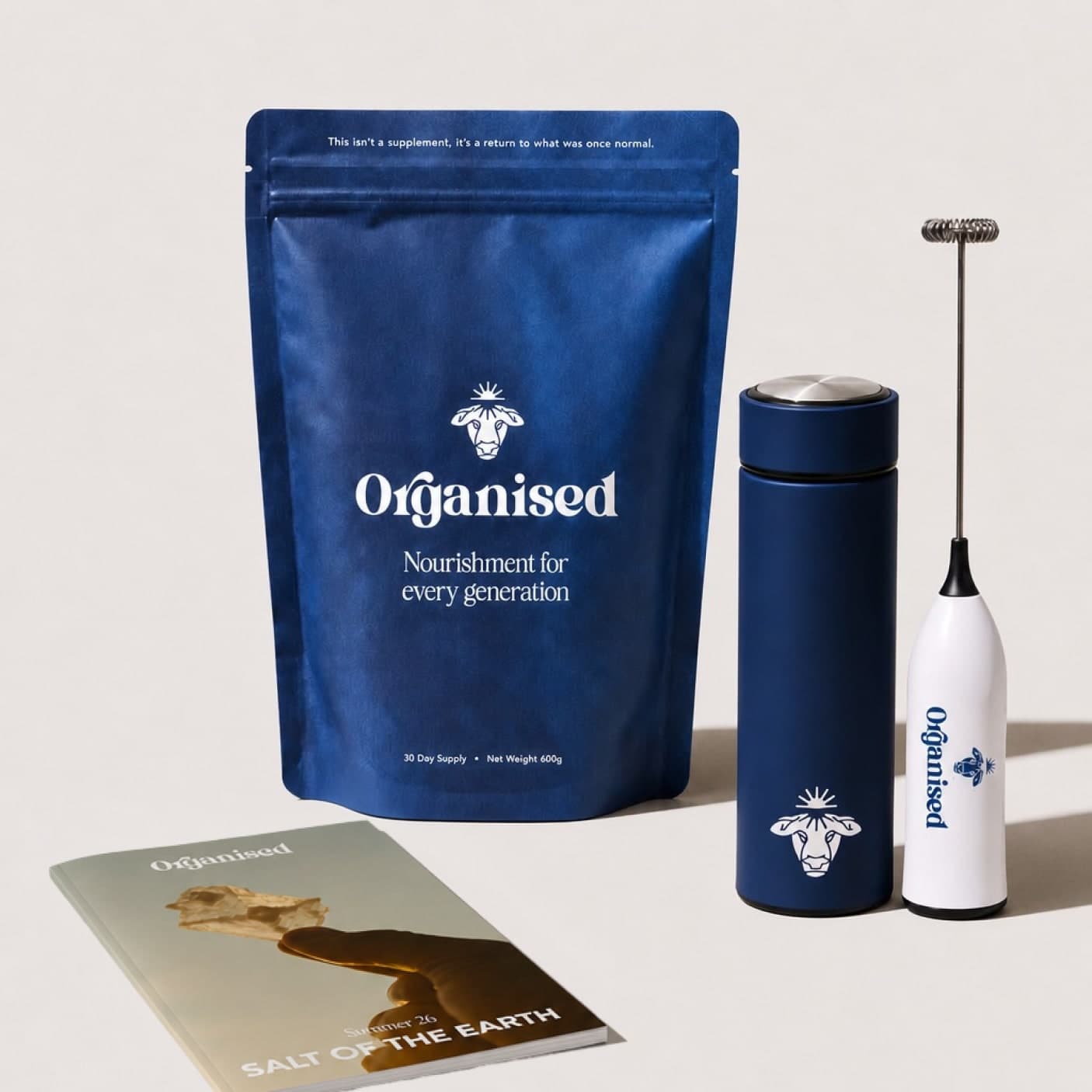
Daily blend
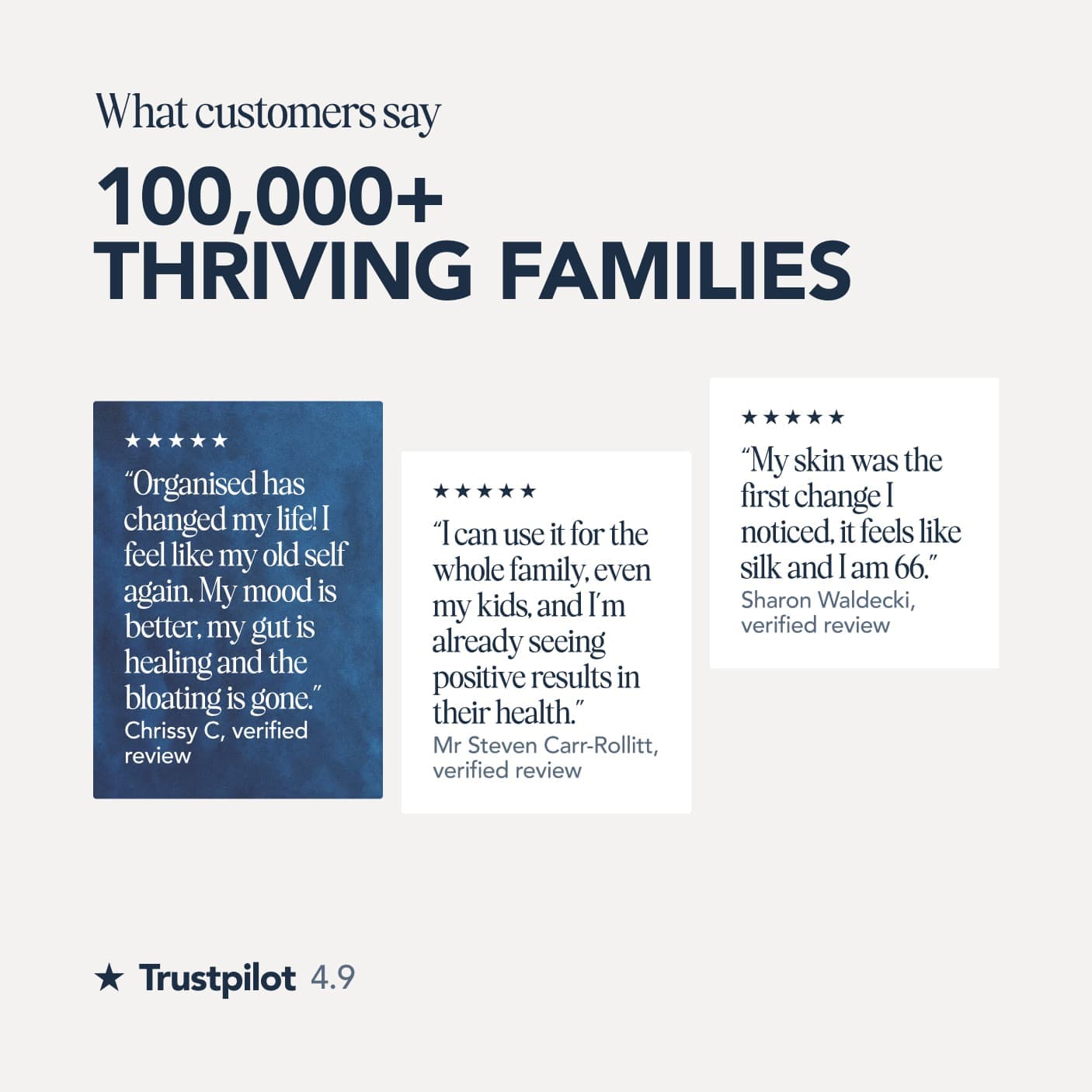
100,000+ thriving families4.9 on Trustpilot
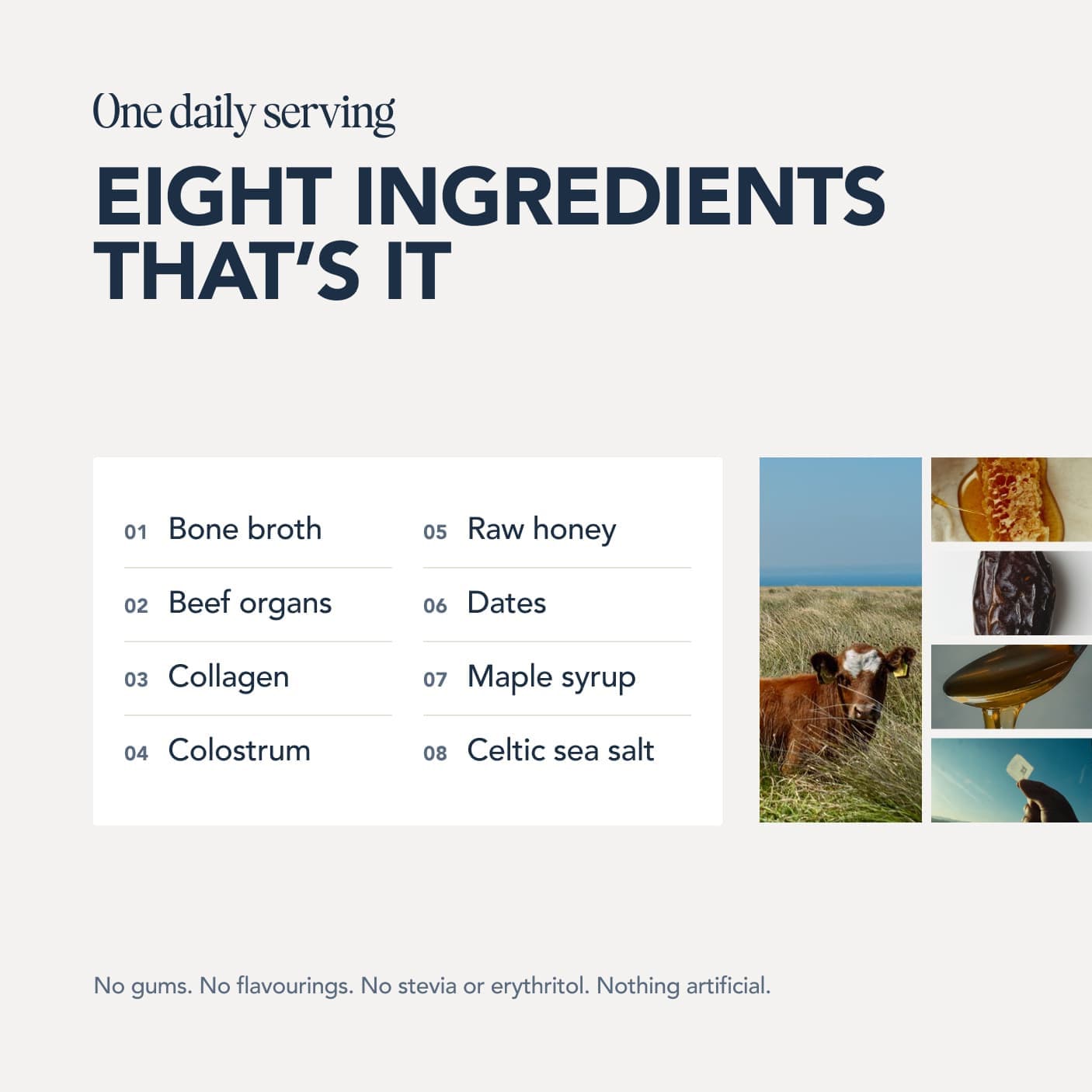
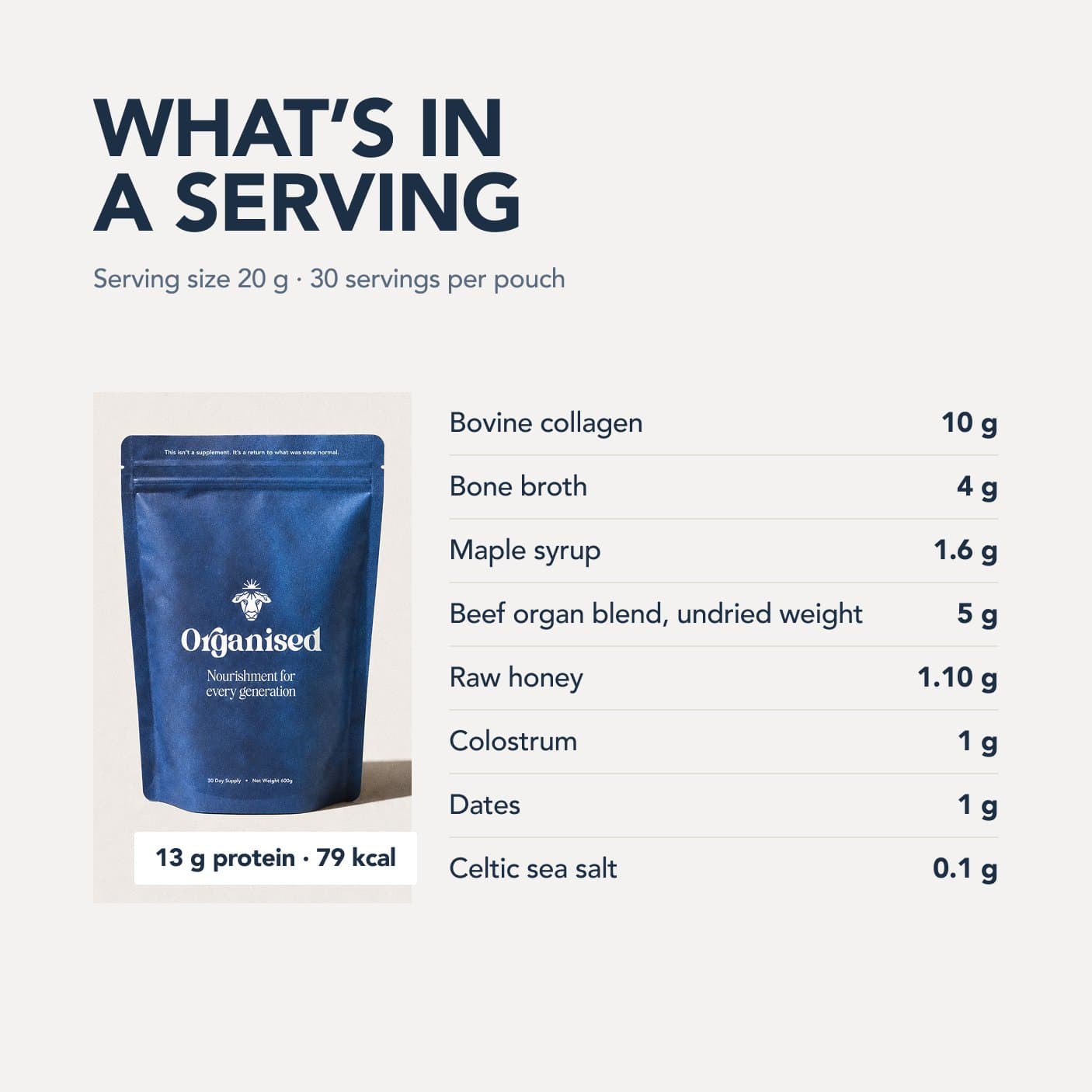
Eight real ingredients built around grass-fed beef organs, collagen and colostrum. Nothing synthetic added.
Free with your first order, worth £38. Plus £10 off the pouch with a subscription.
Free UK shipping · Made in England · 100 day money back guarantee on your first pouch · Skip, pause or cancel anytime
When to expect results
The timeline varies by individual, but patterns are consistent. Most people notice the first improvements within 3-5 days. The bloating reduces noticeably. Digestion feels less irritated. Energy lifts slightly as your body stops fighting itself.
Week two is when you notice structural changes. Your digestion becomes dramatically easier. Food moves through more smoothly. Symptoms that were constant begin to occur only occasionally.
By week four, most people report profound improvements. Acne clears. Energy normalises. Mood stabilises. Brain fog lifts. These aren't coincidences. They're the result of a sealed gut lining and a reduced inflammatory load.
Continue for 8-12 weeks for deeper healing. After that, you can often reduce doses or discontinue entirely, maintaining the benefit through food alone.
References
Every source below was checked on 27 August 2026. Each PubMed, PMC and DOI identifier was resolved against NCBI or Crossref, and what it opens is printed under the citation, so you can see the link goes where the citation says without leaving the page. Where a citation and its identifier disagreed, the citation was corrected to the record or the reference was deleted along with the sentence marker that pointed at it, and where the resolved paper turned out not to support the sentence, the sentence was cut back to what it does support. Borrowed authority is worse than none, because it looks like rigour.
- Playford RJ, Weiser MJ. Bovine Colostrum: Its Constituents and Uses. Nutrients. https://pmc.ncbi.nlm.nih.gov/articles/PMC7831509/ [accessed May 2026].Checked 27 August 2026: PMC7831509 opens Playford RJ, Weiser MJ, Bovine Colostrum: Its Constituents and Uses. Nutrients 2021;13(1). PubMed indexes it as: Review.The authors' own declaration, from the record: PanTheryx Inc supply BC to U.S., European, and Asia-Pacific markets. This does not affect our adherence to the Nutrients policies regarding sharing data and materials.
- Legrand D. Overview of Lactoferrin as a Natural Immune Modulator. J Pediatr. https://pubmed.ncbi.nlm.nih.gov/27234406/ [accessed May 2026].Checked 27 August 2026: PMID 27234406 opens Legrand D, Overview of Lactoferrin as a Natural Immune Modulator. J Pediatr 2016;173 Suppl:S10-5. PubMed indexes it as: Review.
- Razak MA, Begum PS, Viswanath B, Rajagopal S. Multifarious Beneficial Effect of Nonessential Amino Acid, Glycine: A Review. Oxid Med Cell Longev. https://pmc.ncbi.nlm.nih.gov/articles/PMC5350494/ [accessed May 2026].Checked 27 August 2026: PMC5350494 opens Razak MA, Begum PS, Viswanath B et al, Multifarious Beneficial Effect of Nonessential Amino Acid, Glycine: A Review. Oxid Med Cell Longev 2017;2017:1716701. PubMed indexes it as: Review.The authors' own declaration, from the record: The authors declare that they have no competing interests.
- Williams JM, Duckworth CA, Burkitt MD, et al. Epithelial Cell Shedding and Barrier Function: A Matter of Life and Death at the Small Intestinal Villus Tip. Vet Pathol. https://pmc.ncbi.nlm.nih.gov/articles/PMC4441880/ [accessed May 2026].Checked 27 August 2026: PMC4441880 opens Williams JM, Duckworth CA, Burkitt MD et al, Epithelial cell shedding and barrier function: a matter of life and death at the small intestinal villus tip. Vet Pathol 2015;52(3):445-55.The authors' own declaration, from the record: Declaration of Conflicting Interests: The author(s) declared no potential conflicts of interest with respect to the research, authorship, and/or publication of this article.
Who wrote and reviewed this guide
Niall Kiddle
Author · Founder, Organised
Niall is the founder of Organised. He started the company in 2024 after fixing his own health the slow way: in 2022 he swapped a cupboard of synthetic supplements for real food, raw milk, organ meats, bone broth and honey, and felt the difference within months.
Areas of expertise: Ancestral nutrition, Organ meats, Whole-food supplementation, Gut health, Regenerative sourcing
Read Niall's full profile
Pedro Rodrigues
Reviewer · Agronomist (farming and sourcing only)
Pedro is the agronomist Organised works with on farming and sourcing. His job on the guides is to keep the science honest: he reviews what we publish about soil health, regenerative agriculture, grazing and the way food is actually produced.
Areas of expertise: Regenerative agriculture, Agronomy, Soil health, Grass-fed farming, Food sourcing
Reviewed this guide on
Read Pedro's full profileMore on gut health
View all- The Complete Guide to Healing Your Gut with Whole Foods
- Why Your Gut Health Affects Everything (Not Just Digestion)
- 5 Foods You Think Are Healthy (But Are Secretly Ruining Your Gut)
- Acid Reflux and Low Stomach Acid: A Nutritional Perspective
- Bloating After Eating: Common Causes and Whole Food Solutions
- Bone Broth for Gut Health: What the Science Says
- Candida Overgrowth: What It Is and How Nutrition Can Help
- Histamine Intolerance: Could Your Gut Be the Cause?
- How Stress Destroys Your Gut (And What to Do About It)
- How to Recognise the Early Signs of Poor Gut Health
- How to Reset Your Gut After Antibiotics
- IBS and Nutrition: A Whole Food Approach
Browse the guides library
All guidesKeep reading
Health goals
You Don't Need Another Probiotic. You Need to Fix the Foundation.
Most people take the wrong probiotic for the wrong reason. Here's what your gut actually needs to heal, and why probiotics alone will never fix it.

Health goals
Bone Broth for Gut Health: What the Science Says
What bone broth actually does for your gut. The specific amino acids, the mechanism, what the research shows, and how to use it effectively.

Health goals
Glycine and Sleep: How Collagen Might Help You Rest Better
Glycine and sleep are closely linked: it lowers core body temperature and supports NREM sleep. See how collagen-rich foods can help you rest better.
Real food, made effortless
Start my daily blendA few ways to use it
All recipes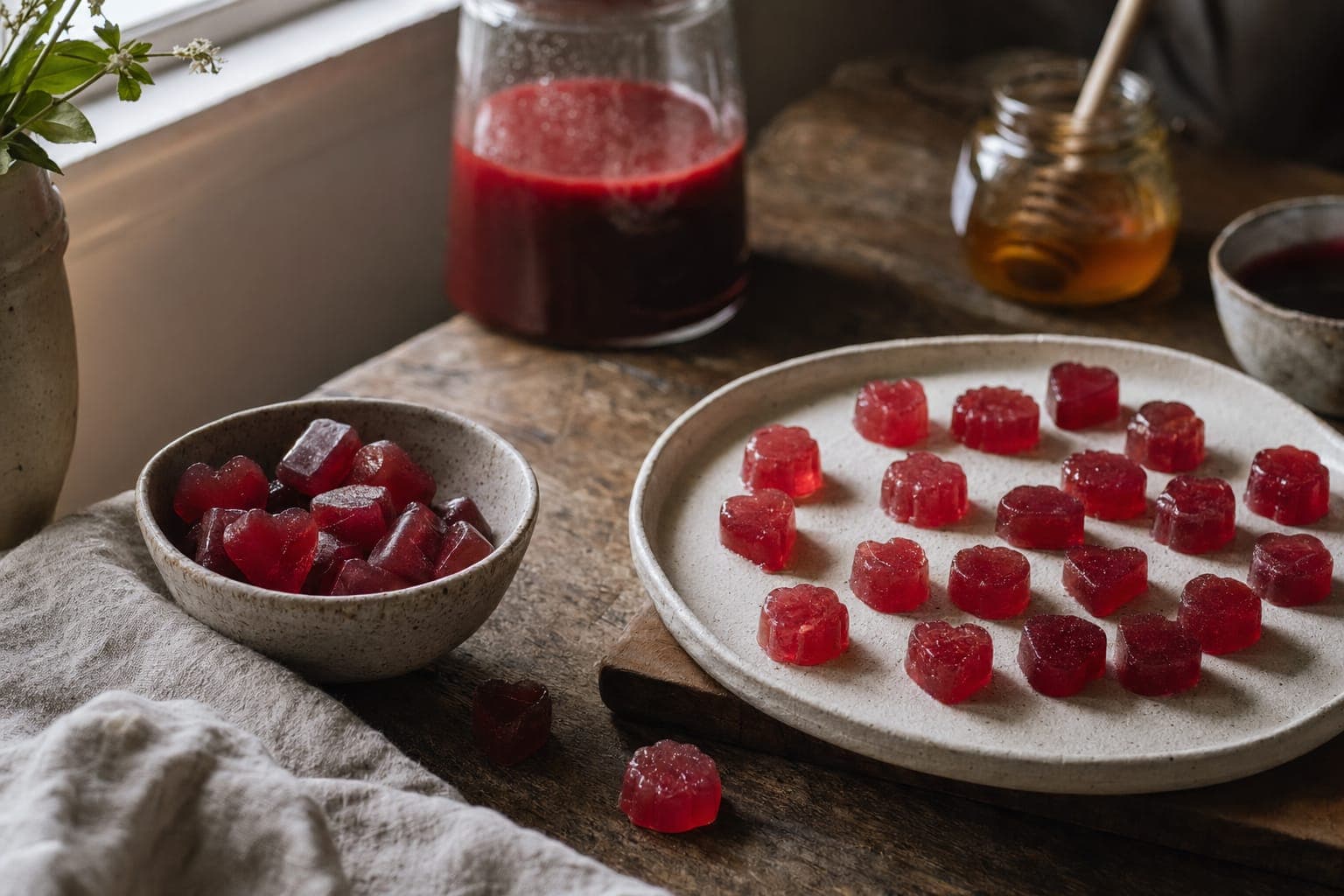
How to Make Your Own Gelatine Gummies
A simple recipe for homemade gelatine gummies using grass-fed gelatine, fresh juice, and raw honey. Better than shop-bought, kids love them.
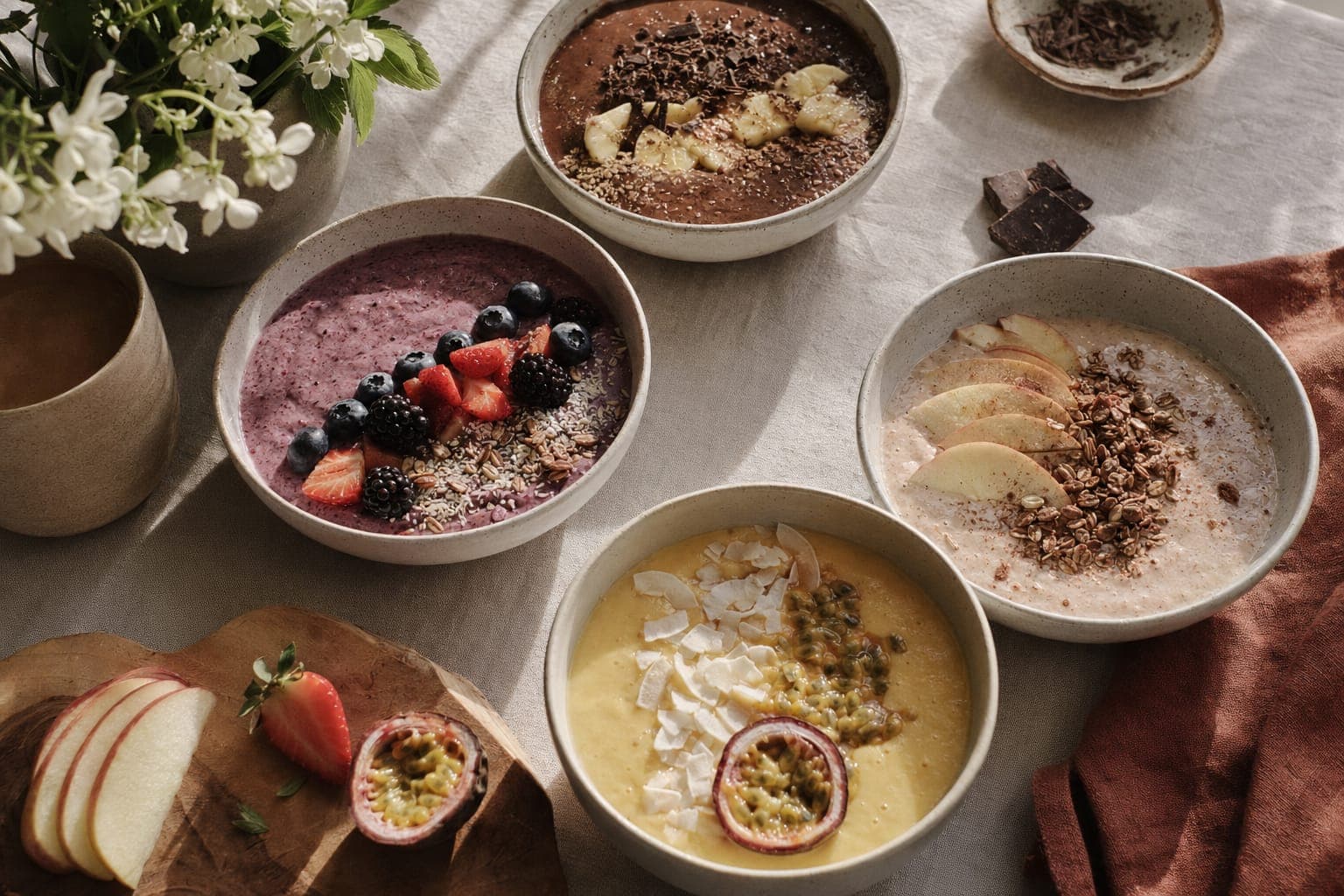
Organised Smoothie Bowl Recipes for Every Season
Four seasonal smoothie bowl recipes using Organised. Berry in summer, apple-cinnamon in autumn, tropical in spring, warming chocolate in winter.
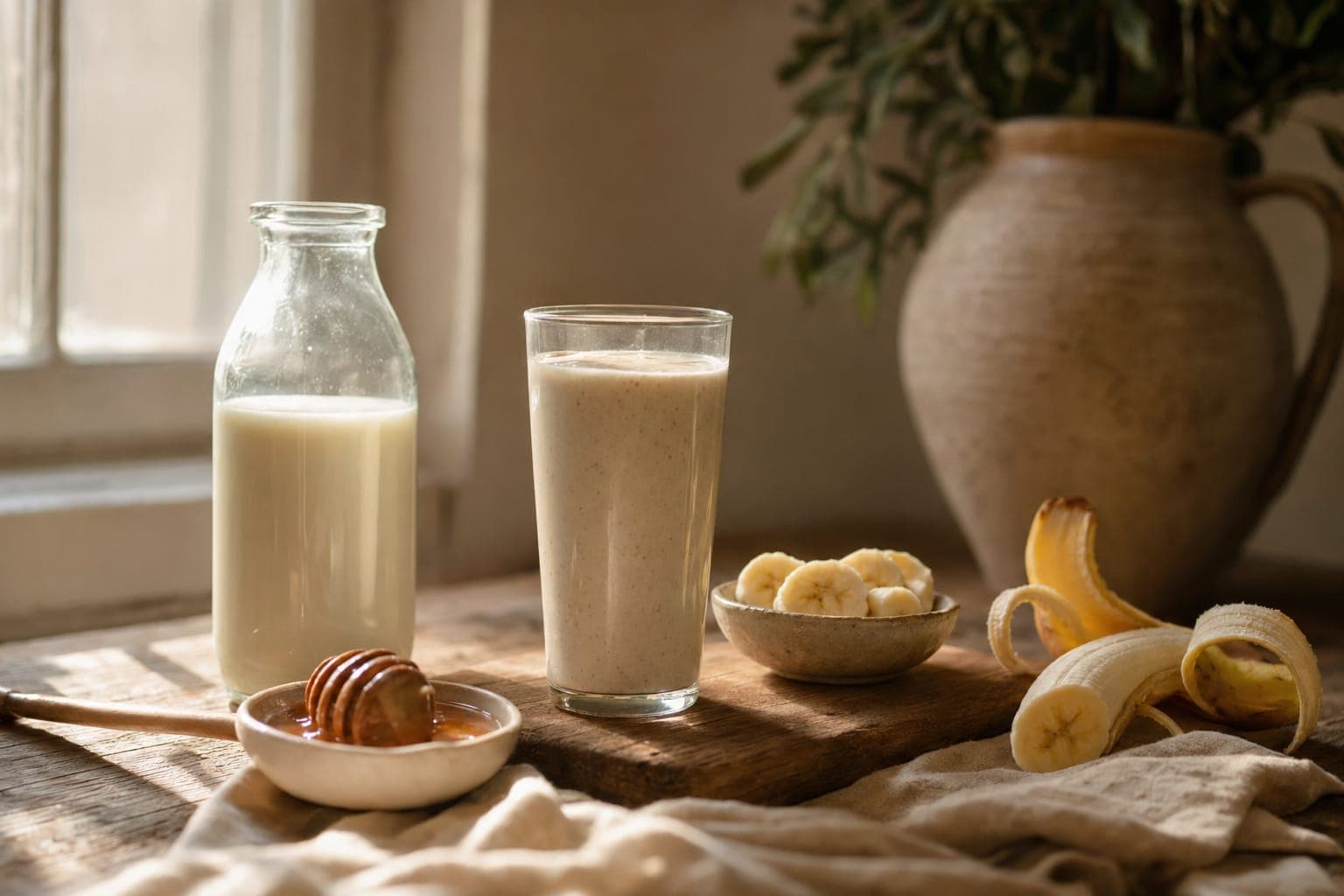
The Perfect Organised Morning Shake: Our Favourite Recipe
Our signature morning shake: Organised, raw milk, banana, honey. Simple, nourishing, and optimised for an empty stomach.


 Join over 100,000+ members
Build a better food system with us
The Organised community is thousands of people choosing real food and backing the farmers who grow it, all of us trying to leave the world a little better than we found it. If that is what you care about too, you belong here.