How Blood Sugar Instability Wrecks Your Hormones
Your hormones are chaotic. Your cycle is irregular, your mood swings are dramatic, your energy crashes in the afternoon, and your skin is breaking out. You've had your hormones tested and they're "normal". But they're not stable. The problem is your blood sugar. And nobody's told you that yet.
By Niall Kiddle, Founder, Organised

Reviewed by Pedro Rodrigues, Agronomist (farming and sourcing only) ·
8 min read · Published · Updated · 5 cited sources
Makers of the Organised Daily blend, a grass-fed beef organ supplement from regenerative UK farms

The problem is your blood sugar. And nobody's told you that yet.

The blood sugar-hormone cascade
Your hormones don't exist in isolation. They're part of a complex communication system. Blood sugar stability underpins the whole thing. When blood sugar is unstable, every hormone you produce becomes unstable.
Here's the cascade: You eat refined carbs. Blood sugar spikes rapidly. Pancreas releases insulin to bring it down. You feel temporarily fine. Then insulin brings blood sugar down too far. Blood sugar crashes. Your body senses emergency. Cortisol and adrenaline spike to raise blood sugar back up. But now cortisol is elevated. This interferes with all your other hormones. Progesterone, oestrogen, thyroid hormone, reproductive hormones all respond to cortisol dysregulation.
And then you get hungry. You reach for more refined carbs. The cycle repeats. Three or four times a day, every single day, your hormonal system is thrown into chaos.
Over weeks and months, the damage compounds. Your pancreas becomes resistant to its own insulin signalling. Your cortisol rhythm flattens. Your oestrogen becomes elevated. Your progesterone becomes depleted. Your thyroid function declines. All because blood sugar is unstable.
You cannot fix your hormones without fixing your blood sugar. Blood sugar is the foundation. Everything else is built on top of it.

Insulin dysregulation and oestrogen
Insulin and oestrogen are intimately connected. When insulin is chronically elevated, your liver can't efficiently clear oestrogen.1 Oestrogen recirculates. It accumulates. You end up with oestrogen dominance even if your absolute oestrogen levels aren't that high.
Oestrogen dominance shows up as heavy periods, painful periods, PMS, bloating, breast tenderness, mood swings, and anxiety. Many women attribute these symptoms to hormonal imbalance without realising the root cause is blood sugar instability driving insulin dysregulation.
When you stabilise blood sugar, insulin levels drop. The liver can now efficiently clear oestrogen. Oestrogen levels normalise. The symptoms resolve.
Insulin also affects androgen production. When insulin is high, androgen production increases. This can contribute to acne, excess facial hair, and hair loss.2 Again, stabilising blood sugar normalises androgen levels and the symptoms resolve.
The cortisol crash that destroys energy
Each time your blood sugar crashes, cortisol and adrenaline spike to bring it back up. You might feel a sudden surge of anxiety or urgency. Or you might not notice consciously, but your body is in a state of sympathetic activation.
If this happened once a week, you could adapt. But if it happens three or four times a day, your body never comes down. Your cortisol rhythm is flattened. Instead of high in the morning and low at night, it becomes chaotically elevated throughout the day or chronically low.
High cortisol suppresses progesterone (the calming hormone), suppresses thyroid function, increases fat storage, breaks down muscle, and impairs immune function.3 Low cortisol, on the other end, leaves you exhausted and unable to respond to stress.
The solution, again, is blood sugar stability. When blood sugar is stable, cortisol doesn't spike. Your natural cortisol rhythm is preserved. Mood stabilises. Energy stays consistent. Recovery happens.
Why your morning matters most
Your breakfast sets your blood sugar trajectory for the entire day. If you eat refined carbs (toast, cereal, pastries, juice) for breakfast, your blood sugar spikes. Insulin spikes. You crash two hours later. You're hungry again. You reach for more carbs. The cycle has begun.
You've now locked yourself into a day of blood sugar instability. Even if you eat well at lunch and dinner, the damage is done. Your hormones are chaotic because they were thrown into chaos before 8 AM.
Conversely, if you eat a protein-rich, fat-rich breakfast, blood sugar rises slowly and stays stable.4 Insulin rises appropriately and doesn't spike. You stay satisfied until lunch. Your hormones stay calm. Your energy is consistent throughout the day.
This single choice, breakfast, is often enough to transform hormonal stability. But it has to be the right breakfast.
Your breakfast is your most powerful hormone-regulating decision of the day. Get it right and everything else is easier.

The protein breakfast protocol
A hormone-stable breakfast contains three elements: protein, fat, and non-starchy carbohydrates. The protein should be substantial. At least 30 to 40 grams. This could be three to four eggs, or 150 grams of salmon, or a serving of leftover roasted meat from dinner.
The fat should come from whole-food sources. Butter, olive oil, avocado, or the fat in the animal protein. Fat slows glucose absorption and keeps blood sugar stable. It also provides satiety signals that keep you satisfied until lunch.
The non-starchy carbohydrate could be vegetables, or a small portion of fruit. Broccoli, leafy greens, peppers, or berries. The carbohydrate should not be from grains or simple sugars.
An example breakfast: three eggs cooked in butter with a side of sautéed vegetables and a handful of berries. This contains roughly 25 grams of protein, 20 grams of fat, and modest carbohydrate from the vegetables and berries. Blood sugar rises slowly. Insulin stays calm. Cortisol stays calm. Oestrogen and progesterone stay balanced.
Compare this to a typical breakfast: cereal with milk and juice. This contains roughly 30 grams of refined carbohydrate, 5 grams of protein, and 2 grams of fat. Blood sugar spikes. Insulin spikes. Cortisol spikes. Hormones become chaotic.
Get health guides like this, free
Two short reads a week on eating for energy, gut health, skin, sleep and more.
By signing up you agree to receive emails from us. No spam, unsubscribe anytime.
Timing carbs for hormonal stability
Once you've established a stable breakfast, you can think about carbs for the rest of the day. The key is that carbohydrates should come with protein and fat, which slows absorption and prevents rapid blood sugar spikes.
A piece of white bread (refined carb) eaten alone causes a dramatic blood sugar spike. The same piece of bread eaten with a thick spread of butter and a piece of cheese slows the absorption enough that blood sugar rises gradually. The hormone impact is completely different.
Timing also matters. Many people do better with more carbohydrate in the evening, after training, when the muscles are primed to take up glucose and use it for recovery and energy storage. Others do better with carbs at lunch when energy demands are highest.
But the fundamental principle is the same: all carbohydrates should be whole food, should come with adequate protein and fat, and should be consumed in amounts that don't create blood sugar spikes.
A good target for most people is to keep fasting blood glucose below 90 milligrams per decilitre.5 If you're consistently above that, you're likely eating too much refined carbohydrate and your hormones are paying the price.
Stable blood sugar isn't restrictive. It's just eating real food where carbs come packaged with protein and fat, the way they do in nature.

How blood sugar spikes disrupt each hormone individually
Blood sugar instability does not affect your hormones as a single system. It disrupts each hormone uniquely, and the cumulative effect is hormonal chaos.
Insulin spikes suppress growth hormone, which women need for muscle and bone density. Chronically elevated insulin essentially locks away growth hormone. You lose muscle tone and your bones weaken.
Sustained high blood sugar suppresses luteinising hormone (LH), which women need for ovulation and progesterone production. Your cycles become irregular. Your luteal phase (when progesterone should be high) becomes insufficient. You lose the stabilising effect of progesterone.
Oestrogen metabolism depends on liver function, which is impaired by chronically high blood sugar and insulin. Excess oestrogen accumulates (oestrogen dominance). You develop PMS, breast tenderness, mood swings, and potentially endometriosis and fibroids.
Cortisol, your stress hormone, rises in response to blood sugar crashes. Chronically elevated cortisol suppresses immune function, impairs sleep, and accelerates ageing. It also suppresses thyroid function, leaving you chronically fatigued.
Thyroid hormones decline under chronic stress (from blood sugar chaos). Your metabolism slows. Your temperature drops. Your energy crashes. You feel cold and tired despite eating enough.
Blood sugar instability does not just affect insulin. It cascades through every hormone in your body, disrupting the delicate balance that defines reproductive health.

The breakfast protocol for hormonal stability
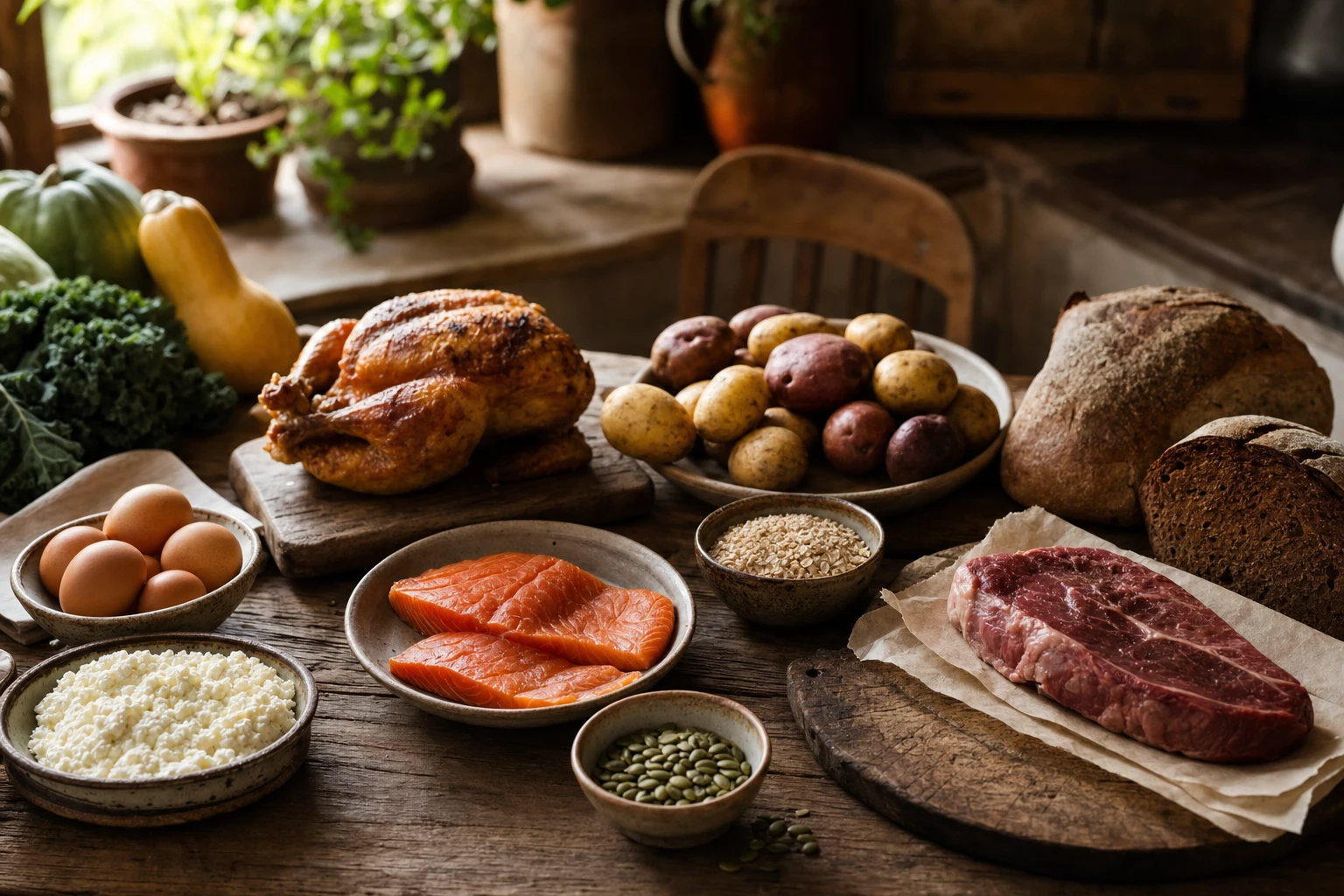
The most important meal for hormonal stability is breakfast. It sets your hormone tone for the entire day. Yet most people eat breakfast that guarantees blood sugar chaos: cereal with milk, toast with jam, bagels, pastries, fruit juice.
The correct breakfast for hormonal health contains substantial protein and fat, with complex carbohydrates. Eggs (at least three) with butter and toast. Steak with potatoes and vegetables. Full-fat Greek yoghurt with nuts and berries. These meals stabilise blood sugar and signal to your hormones that resources are abundant.
The protein quantity matters. A single egg and a piece of toast is insufficient. Your body needs 30 to 40 grams of protein at breakfast to properly signal satiety and hormone stability. Three to four eggs, or a portion of meat, achieves this.
Fat is equally critical. The fat in eggs, butter, meat, and dairy slows glucose absorption and extends satiety. It also provides the building blocks for hormone synthesis. A breakfast without adequate fat fails hormonally.
Timing matters too. Eating breakfast within an hour of waking breaks your overnight fast and prevents the morning cortisol surge from becoming excessive. It signals to your body that food is available. Your reproductive system responds by sustaining hormone production.
Breakfast is hormone medicine. Eat protein, fat, and carbohydrate within an hour of waking and your hormones stabilise all day.
Most women who shift to a protein and fat-rich breakfast notice cycle regularity, mood stability, and energy improvement within 4 to 6 weeks. The breakfast shift is the single most powerful hormonal intervention most people neglect.

1 of 9
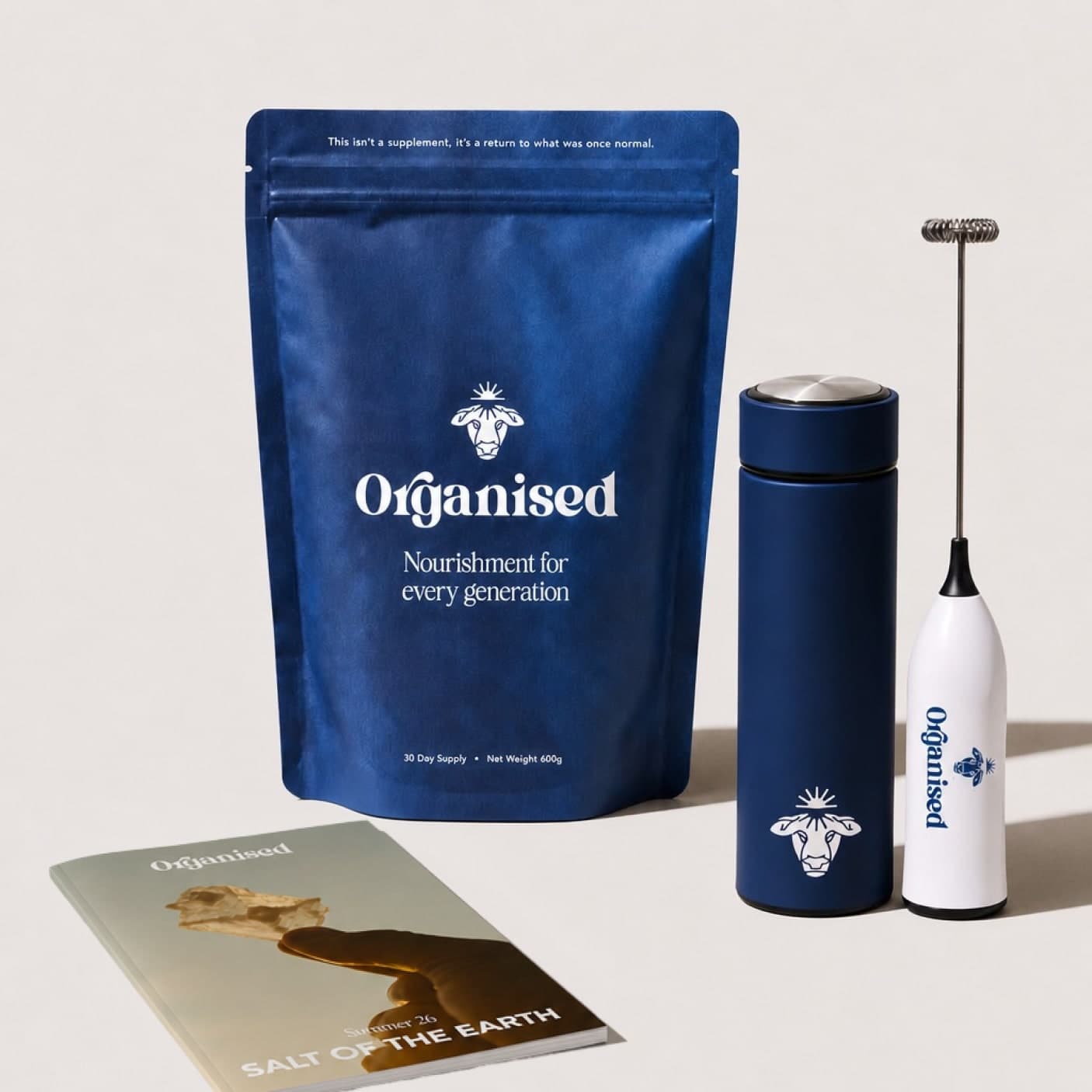
Daily blend
100,000+ thriving families4.9 on Trustpilot
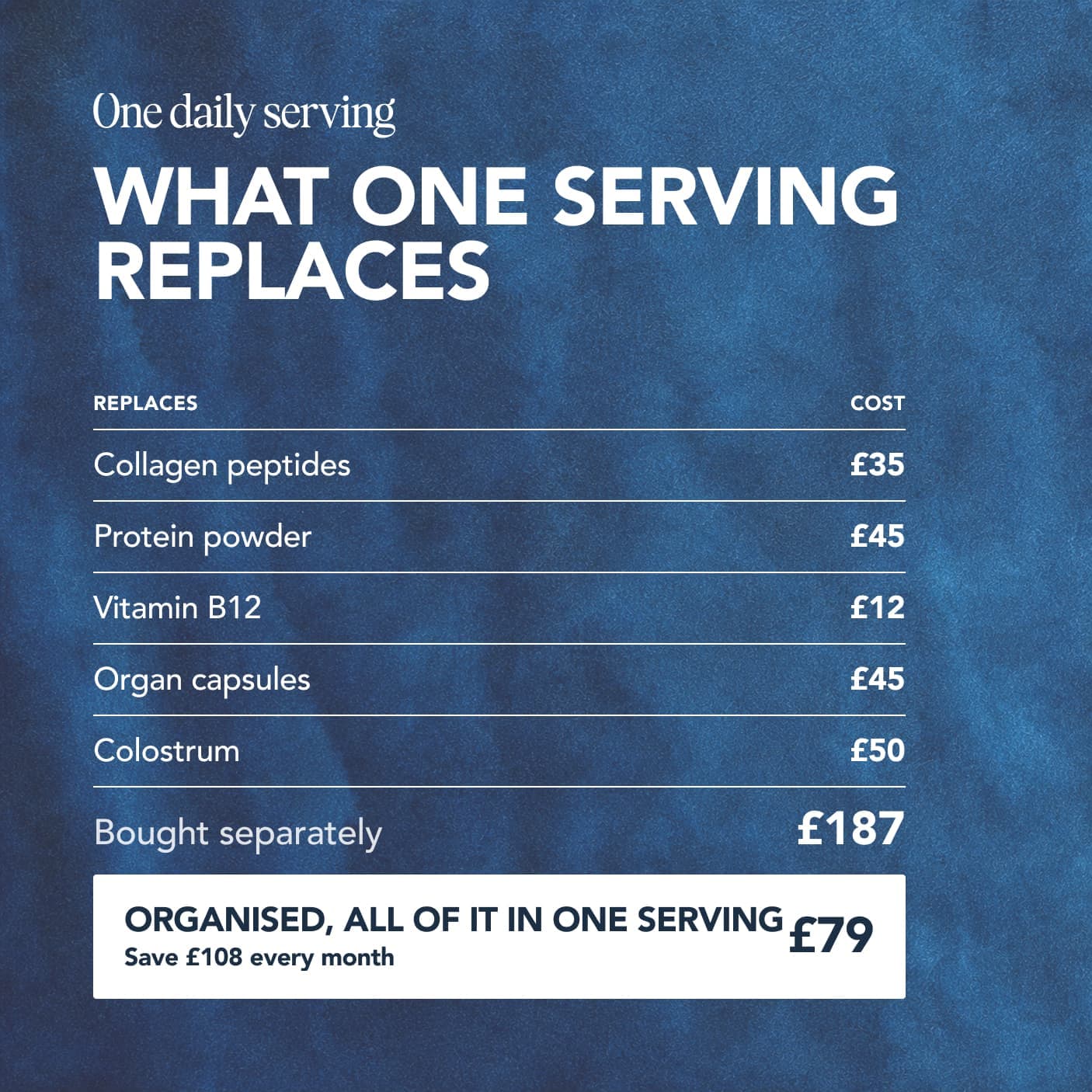
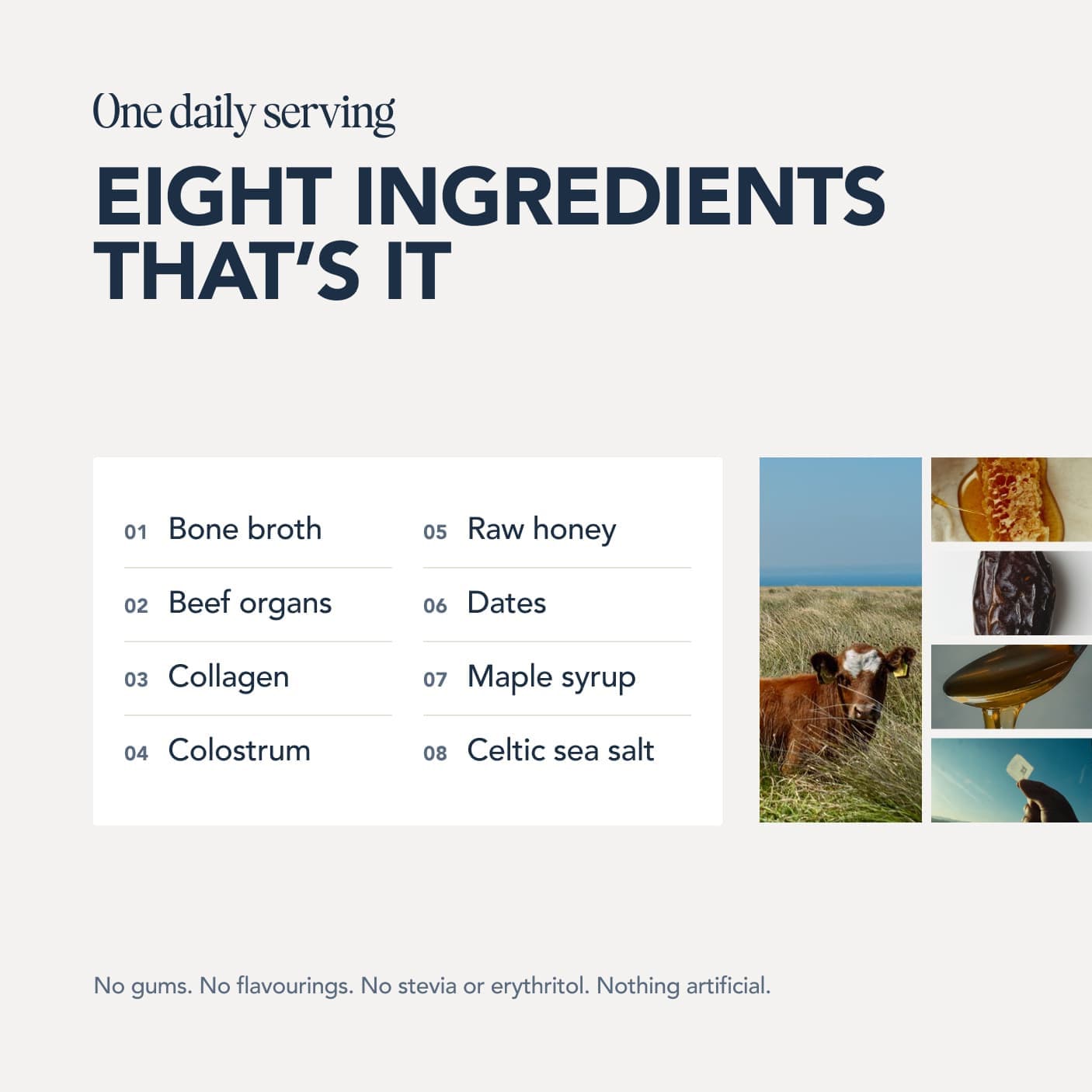
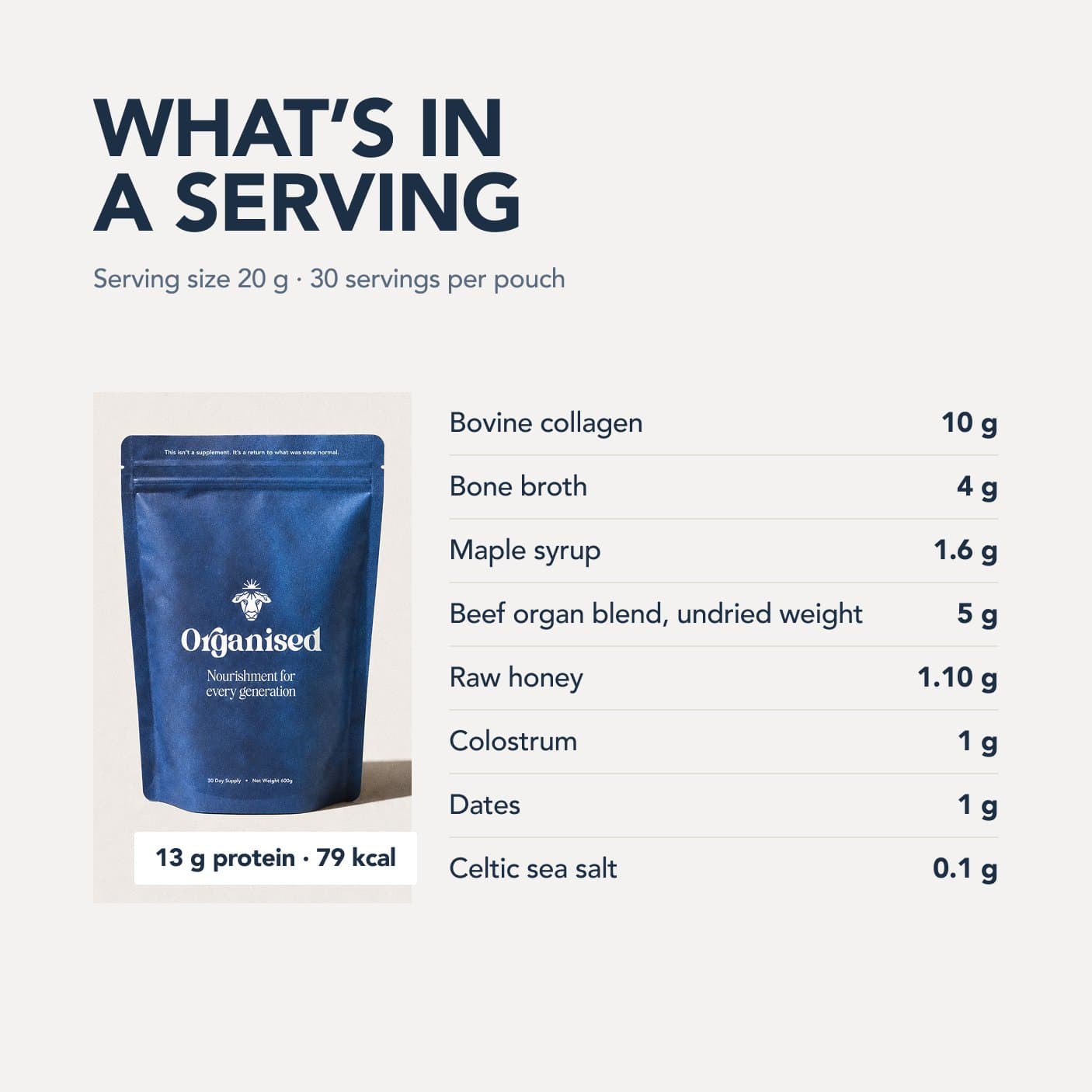
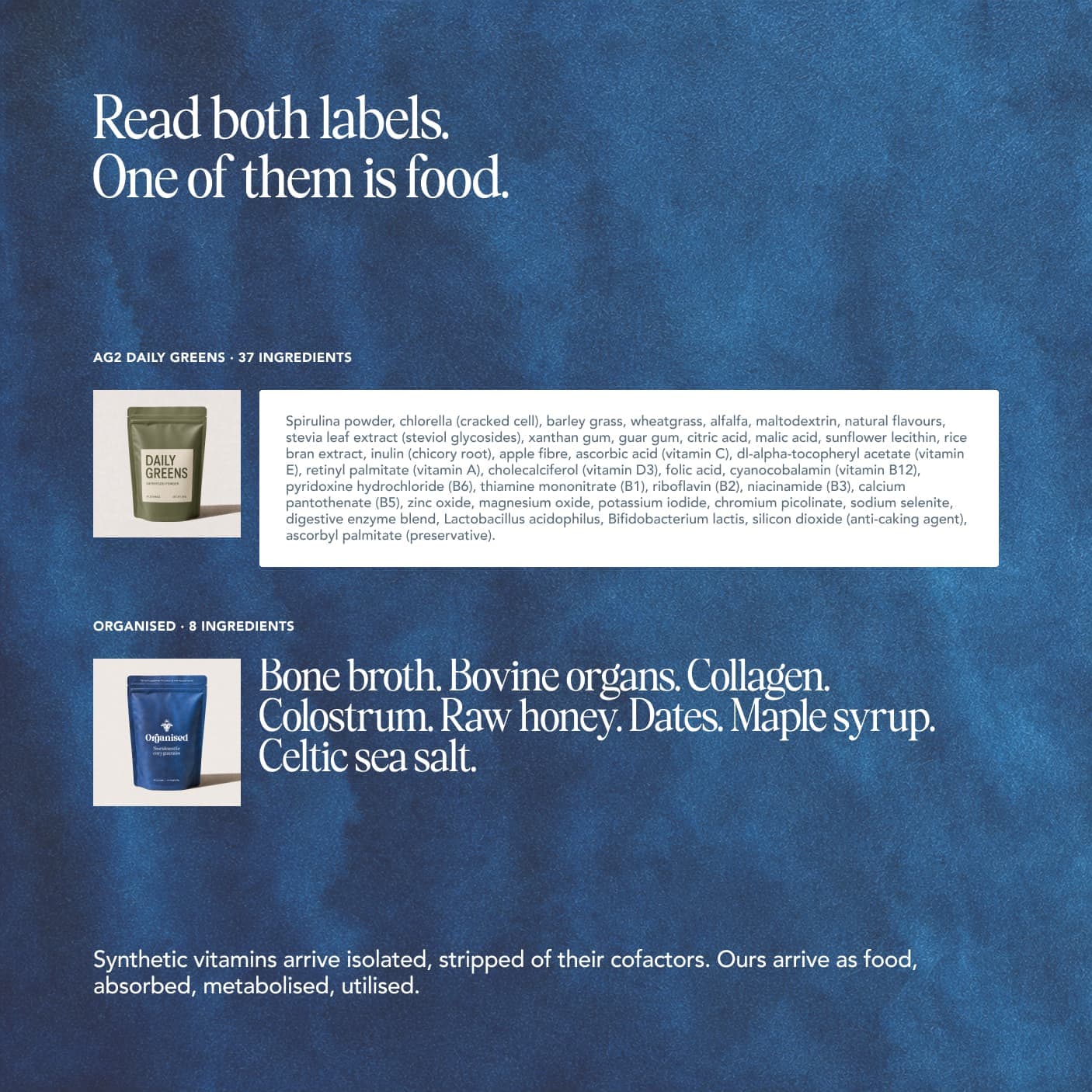
Eight real ingredients built around grass-fed beef organs, collagen and colostrum. Nothing synthetic added.
Free with your first order, worth £38. Plus £10 off the pouch with a subscription.


Free UK shipping · Made in England · 100 day money back guarantee on your first pouch · Skip, pause or cancel anytime
The bottom line
Your hormones are not broken. They're responding appropriately to blood sugar chaos. Fix the blood sugar and your hormones stabilise. This means starting with a protein-rich breakfast, eliminating refined carbohydrates, and eating carbs alongside protein and fat. The results are profound. Your energy stabilises. Your mood stabilises. Your cycle becomes regular. Your skin clears. PMS symptoms resolve. The transformation takes weeks to months, but it's remarkable. And it all starts with breakfast.
References
Every source below was checked on 27 August 2026. Each PubMed, PMC and DOI identifier was resolved against NCBI or Crossref, and what it opens is printed under the citation, so you can see the link goes where the citation says without leaving the page. Where a citation and its identifier disagreed, the citation was corrected to the record or the reference was deleted along with the sentence marker that pointed at it, and where the resolved paper turned out not to support the sentence, the sentence was cut back to what it does support. Borrowed authority is worse than none, because it looks like rigour.
- Brand JS, van der Schouw YT. Testosterone, SHBG and cardiovascular health in postmenopausal women. International Journal of Impotence Research. 2010;22(2):91-104. See also Mauvais-Jarvis F, Clegg DJ, Hevener AL. The role of estrogens in control of energy balance and glucose homeostasis. Endocrine Reviews. 2013;34(3):309-338. https://pmc.ncbi.nlm.nih.gov/articles/PMC3660717/Checked 27 August 2026: PMC3660717 opens Mauvais-Jarvis F, Clegg DJ, Hevener AL, The role of estrogens in control of energy balance and glucose homeostasis. Endocr Rev 2013;34(3):309-38. PubMed indexes it as: Review.
- Diamanti-Kandarakis E, Dunaif A. Insulin resistance and the polycystic ovary syndrome revisited: an update on mechanisms and implications. Endocrine Reviews. 2012;33(6):981-1030. https://pmc.ncbi.nlm.nih.gov/articles/PMC5393155/Checked 27 August 2026: PMC5393155 opens Diamanti-Kandarakis E, Dunaif A, Insulin resistance and the polycystic ovary syndrome revisited: an update on mechanisms and implications. Endocr Rev 2012;33(6):981-1030. PubMed indexes it as: Review.
- Whirledge S, Cidlowski JA. Glucocorticoids, stress, and fertility. Minerva Endocrinologica. 2010;35(2):109-125. https://pmc.ncbi.nlm.nih.gov/articles/PMC3547681/Checked 27 August 2026: PMC3547681 opens Whirledge S, Cidlowski JA, Glucocorticoids, stress, and fertility. Minerva Endocrinol 2010;35(2):109-25. PubMed indexes it as: Review.
- Berry SE, Valdes AM, Drew DA, et al. Human postprandial responses to food and potential for precision nutrition. Nature Medicine. 2020;26(6):964-973. https://pubmed.ncbi.nlm.nih.gov/32528151/Checked 27 August 2026: PMID 32528151 opens Berry SE, Valdes AM, Drew DA et al, Human postprandial responses to food and potential for precision nutrition. Nat Med 2020;26(6):964-973.The authors' own declaration, from the record: Conflict of interest statement: TD Spector, SE Berry, AM Valdes, F Asnicar, PW Franks, LM Delahanty, N Segata, are consultants to Zoe Global Ltd (“Zoe”). J Wolf, G Hadjigeorgiou, R Davies, H Al Khatib, J Capdevila, C Bonnett, S Ganesh, E Bakker, P Wyatt and I Linenberg are or have been employees of Zoe. Other authors have no conflict of interest to declare.
- American Diabetes Association. Standards of Medical Care in Diabetes. Diabetes Care. 2024;47(Suppl 1). https://diabetesjournals.org/care/issue/47/Supplement_1
Corrections
What this page used to say, and why it no longer says it. Corrections are dated and are never removed, because deleting the record of an error is a second error. Every guide we have corrected is listed at our corrections log.
- 27 August 2026. Reference 3 named a paper by Whirledge and Cidlowski. Its link opens “Stress and hormones” by Ranabir and Reetu. Corrected.
- 27 August 2026. Reference 1 led with a paper on testosterone and SHBG and linked a paper on estrogens and energy balance. The linked paper now leads the entry.
Who wrote and reviewed this guide
Niall Kiddle
Author · Founder, Organised
Niall is the founder of Organised. He started the company in 2024 after fixing his own health the slow way: in 2022 he swapped a cupboard of synthetic supplements for real food, raw milk, organ meats, bone broth and honey, and felt the difference within months.
Areas of expertise: Ancestral nutrition, Organ meats, Whole-food supplementation, Gut health, Regenerative sourcing
Read Niall's full profile
Pedro Rodrigues
Reviewer · Agronomist (farming and sourcing only)
Pedro is the agronomist Organised works with on farming and sourcing. His job on the guides is to keep the science honest: he reviews what we publish about soil health, regenerative agriculture, grazing and the way food is actually produced.
Areas of expertise: Regenerative agriculture, Agronomy, Soil health, Grass-fed farming, Food sourcing
Reviewed this guide on
Read Pedro's full profileMore on hormones
View all- Hormonal Health Starts in the Kitchen: A Whole Food Guide
- Perimenopause Nutrition: What Changes and What to Eat
- Coming Off the Pill? How to Support Your Body's Transition
- Cortisol, Stress and Nutrition: Breaking the Cycle
- Eating for Each Phase of Your Menstrual Cycle
- How Liver Supports Oestrogen Detoxification
- How Seed Oils Disrupt Your Hormones
- Insulin Resistance: The Silent Metabolic Crisis
- Is Polyester Bad For Hormones? Your Guide To Hormone Safe Clothing
- PCOS and Nutrition: A Whole Food Approach
- Testosterone and Nutrition: What Men Need to Know
- Thyroid Health: The Nutrients Your Thyroid Needs to Function
Browse the guides library
All guidesKeep reading

Health goals
Hormonal Health Starts in the Kitchen: A Whole Food Guide
Your hormones are built from food. Learn the hormonal health nutrition basics that support oestrogen, progesterone, and thyroid, starting in your kitchen.

Health goals
Can What You Eat Affect Your Anxiety?
Your anxiety might not be psychological. It might be nutritional. How gut health, blood sugar, magnesium, and seed oils fuel anxiety (and how to stop).

Health goals
What to Eat Before Bed for Better Sleep
Your sleep quality is determined by what you ate at dinner. Discover which foods naturally support deep sleep, from bone broth to tart cherry.
Real food, made effortless
Start my daily blendA few ways to use it
All recipes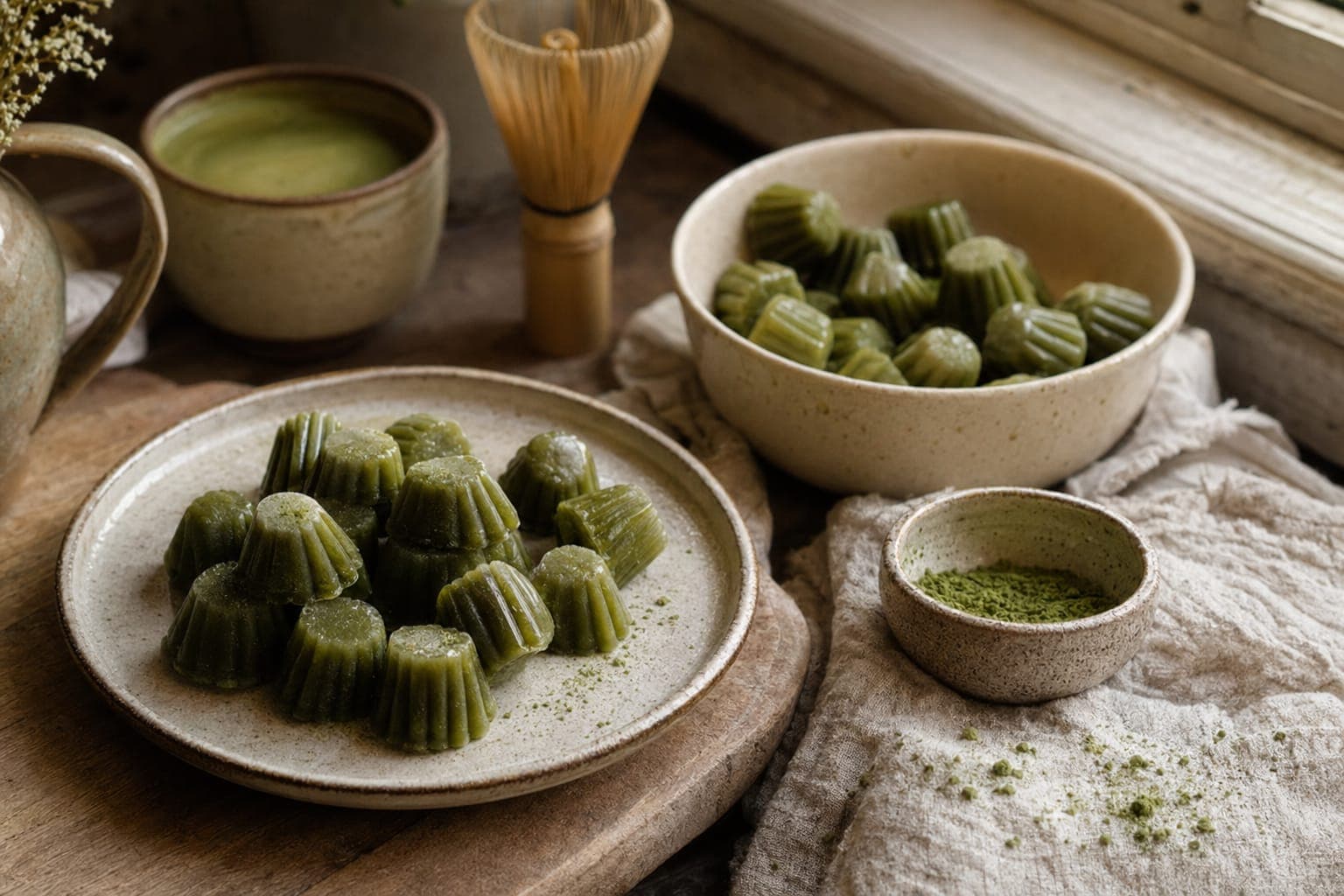
Matcha Latte Gummies with Collagen and Gelatine
Make visually stunning matcha latte gummies infused with collagen and gelatine. Simple recipe for gut-healing sweets you'll actually want to eat.

Gut-Healing Marshmallows with Collagen and Raw Honey
Learn to make gut-healing marshmallows with collagen and raw honey. A shareable treat that sneaks nutrition into every bite. Easy recipe with video tips.

Organ Bolognese: The Family Dinner That Heals
Practical organ meat recipe using fresh beef liver and heart. Family-friendly bolognese that bridges supplements to whole food.


 Join over 100,000+ members
Build a better food system with us
The Organised community is thousands of people choosing real food and backing the farmers who grow it, all of us trying to leave the world a little better than we found it. If that is what you care about too, you belong here.