Can What You Eat Affect Your Anxiety?
You're sitting quietly and your heart suddenly races. Your thoughts spiral. Your palms sweat. Nothing external triggered it. You assume it's anxiety, generalised and permanent. But what if the problem isn't in your head? What if it's in your gut, your blood sugar, or your dinner?

By Niall Kiddle, Founder, Organised

Reviewed by Pedro Rodrigues, Agronomist (farming and sourcing only) ·
6 min read · Published · Updated · 3 cited sources
Makers of the Organised Daily blend, a grass-fed beef organ supplement from regenerative UK farms

But what if the problem isn't in your head? What if it's in your gut, your blood sugar, or your dinner?

Anxiety is not always in your head
Anxiety is often framed as a purely psychological problem. A thought pattern. A cognitive distortion. Something to be fixed with therapy or medication. But anxiety is also profoundly physical.
Your nervous system doesn't distinguish between a real threat and a nutritional crisis. To your body, severe blood sugar dysregulation feels like an emergency. A damaged gut producing inflammatory signals feels like a threat. Magnesium deficiency that prevents your nervous system from downregulating feels like danger.2
The anxiety you're experiencing may be real. But the cause might not be psychological. It might be biological. And if the cause is biological, the solution isn't to think differently. The solution is to change what you're eating.
Anxiety is often presented as a thought problem. But if the root cause is nutritional, thinking your way out will never work. You have to eat your way out.
The gut-brain axis and anxiety
Your gut bacteria communicate directly with your brain via the vagus nerve1 and through production of neurotransmitter precursors. A healthy microbiome produces calming neurotransmitters like GABA. An imbalanced or damaged microbiome cannot.
When your gut is inflamed or dysbiotic, it sends constant low-level danger signals to your brain. Your nervous system remains in a state of low-grade alarm. Anxiety becomes the baseline. You're not broken. Your nervous system is responding appropriately to signals telling it that something is wrong.
Healing the gut means returning to real whole foods and removing foods that damage the gut lining. Processed foods, seed oils, excessive sugar, and in some people, gluten and dairy. It means adding fermented foods and bone broth that support beneficial bacteria. It means time and patience as your microbiome rebalances.
The anxiety often begins to ease as the gut heals. Not because you've changed your thoughts. Because you've changed your body's signalling system.
Blood sugar dysregulation and panic
Severe blood sugar dysregulation produces symptoms that feel identical to anxiety. Your heart races. You feel on edge. Your thoughts spiral. You might even feel like you're dying.
This happens because when blood sugar crashes, your body releases adrenaline to raise it back up. Adrenaline produces every physical symptom of anxiety. Elevated heart rate. Muscle tension. That sense of impending doom.
If your diet is full of refined carbohydrates and you skip meals or drink coffee on an empty stomach, your blood sugar is likely crashing repeatedly throughout the day. Every crash triggers adrenaline. Every adrenaline release feels like anxiety. You're not anxious. You're experiencing repeated small emergencies triggered by your blood sugar.
Stabilising blood sugar often eliminates anxiety almost entirely. Eat protein and fat with meals. Avoid refined carbohydrates. Don't skip breakfast. Don't drink coffee on an empty stomach. Within days, you may notice that the constant sense of dread has vanished.
Magnesium deficiency and nervous tension
Magnesium is your nervous system's primary brake. It signals your body that it's safe to relax. When magnesium is low, your nervous system cannot downregulate. You feel anxious, tense, unable to settle.
Magnesium deficiency is extremely common. Most people are running low on it. The consequences show up as anxiety, muscle tension, poor sleep, and irritability. All of these are magnesium deficiency symptoms.
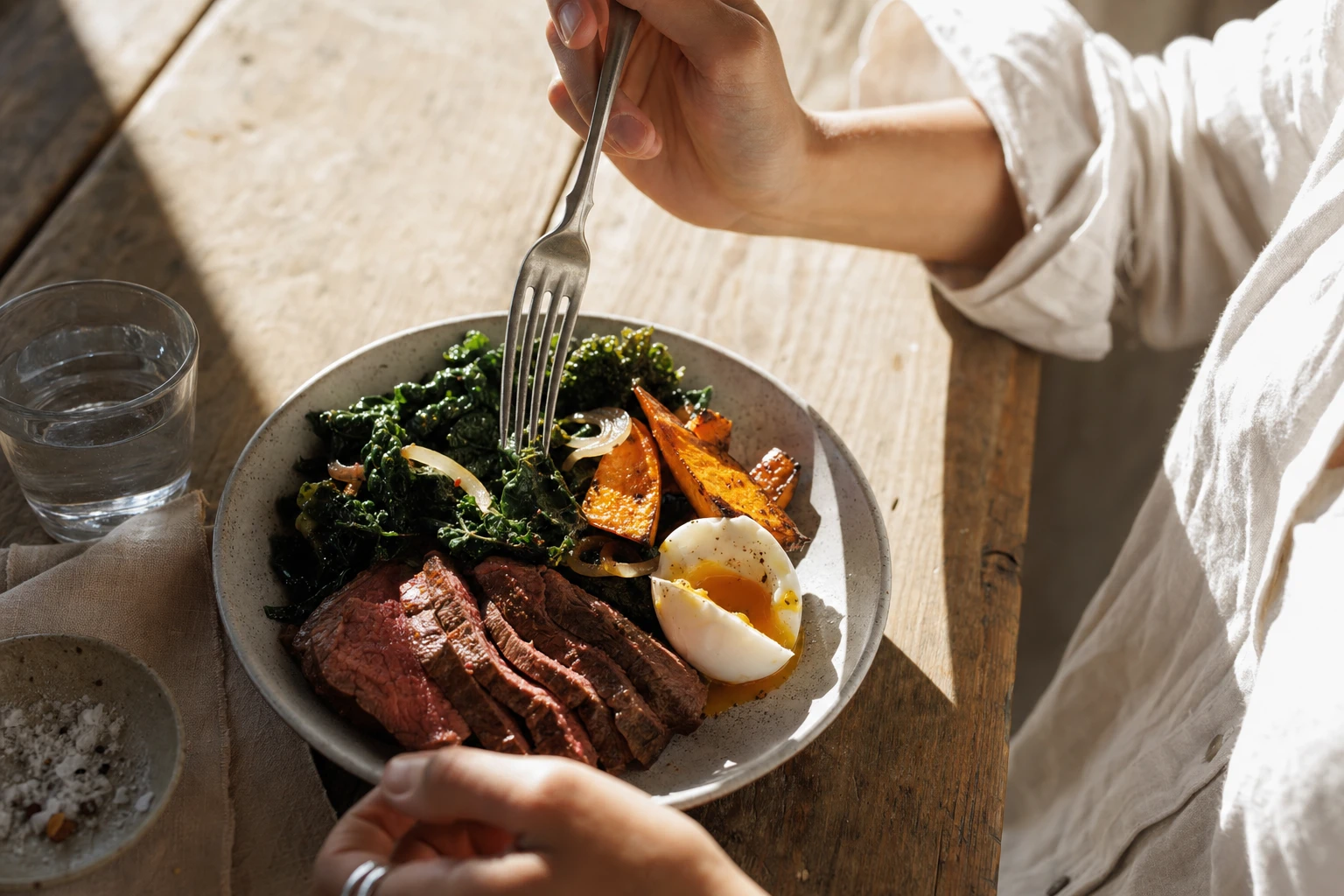
Magnesium can be obtained through food. Dark leafy greens, nuts, seeds, fish. But most people are so deficient that dietary intake alone isn't sufficient to restore levels. Supplementation, topical magnesium sprays, or magnesium baths can help. The anxiety relief often comes quickly once magnesium is restored.
B vitamins and neurotransmitter production
B vitamins are essential cofactors in neurotransmitter production. B6 is required to make serotonin. Folate is required to regulate homocysteine. B12 is required for nervous system function. When B vitamins are low, neurotransmitter production falters. Anxiety and depression follow.
B vitamins are found primarily in animal foods, particularly organ meats. If you're not eating liver, red meat, fish, and eggs regularly, B vitamin deficiency is likely. Adding these foods, particularly organ meats, often produces noticeable mood improvement within weeks.
Seed oils and systemic inflammation
Seed oils are high in omega-6 polyunsaturated fats. Omega-6 is inflammatory when consumed in excess, particularly in the absence of sufficient omega-3. Most modern diets are dramatically skewed toward omega-6 and away from omega-3.
This inflammatory imbalance produces systemic inflammation. Your brain is extremely sensitive to inflammatory signals. Elevated inflammation is associated with anxiety, depression, and poor mental health outcomes. Reducing seed oil consumption and increasing omega-3 intake often improves anxiety.
This means eliminating vegetable oils, seed oils, and processed foods containing them. Cooking with butter, coconut oil, or animal fats instead. Adding oily fish multiple times weekly. The inflammation decreases, and mental health often improves alongside it.

Get health guides like this, free
Two short reads a week on eating for energy, gut health, skin, sleep and more.
By signing up you agree to receive emails from us. No spam, unsubscribe anytime.
Omega-3 and omega-6 balance
Omega-3 fatty acids, particularly EPA and DHA from fish, have direct effects on mood and anxiety. Research shows supplementation with omega-3 reduces anxiety symptoms measurably. DHA specifically supports brain health and neuroplasticity.
The ideal ratio of omega-6 to omega-3 is roughly 4:1 or lower. Most modern diets are 20:1 or worse. This inflammatory imbalance alone can drive anxiety, depression, and poor mental health.
Correcting the ratio means reducing seed oil consumption and increasing oily fish intake. Salmon, mackerel, sardines, herring. Multiple times weekly. The mental health improvements often follow within weeks as inflammation decreases.
Practical dietary changes for anxiety
If anxiety is your primary problem, make these changes in this order.
First, stabilise blood sugar. Breakfast with protein and fat before any caffeine. No skipped meals. No refined carbohydrate snacking. This alone often produces noticeable anxiety reduction within days.
Second, eliminate seed oils. Cook with butter, coconut oil, or animal fat instead. This removes a major source of inflammatory stress on your system.
Third, the most reliable acute fix for an anxiety surge is sugar and salt. Adrenaline is, biochemically, a sugar-shortage signal. The classic prescription, a glass of orange juice with a pinch of sea salt, often calms a panicky body within minutes by giving the system the fuel it was reaching adrenaline for. Build the principle into your meals: real food carbohydrate, whole-fat protein, salt to taste. Fatty fish a couple of times a week is fine if you enjoy it, but the heavy lifting is done by the blood-sugar work, not by chasing high-dose omega-3 supplements.
Fourth, add magnesium. Through food, through supplementation, or through magnesium baths. Your nervous system needs it to downregulate properly.
Fifth, add organ meats. Liver particularly. This addresses B vitamin deficiency and provides nutrients your brain needs for neurotransmitter production.
Sixth, heal the gut. Remove processed foods. Add bone broth and fermented foods. Give your microbiome time to rebalance.
Anxiety often improves when you address the biological drivers. Blood sugar stability, inflammation reduction, nutrient sufficiency, and gut healing. All of these are dietary. All of these are controllable.

1 of 9
Daily blend
100,000+ thriving families4.9 on Trustpilot
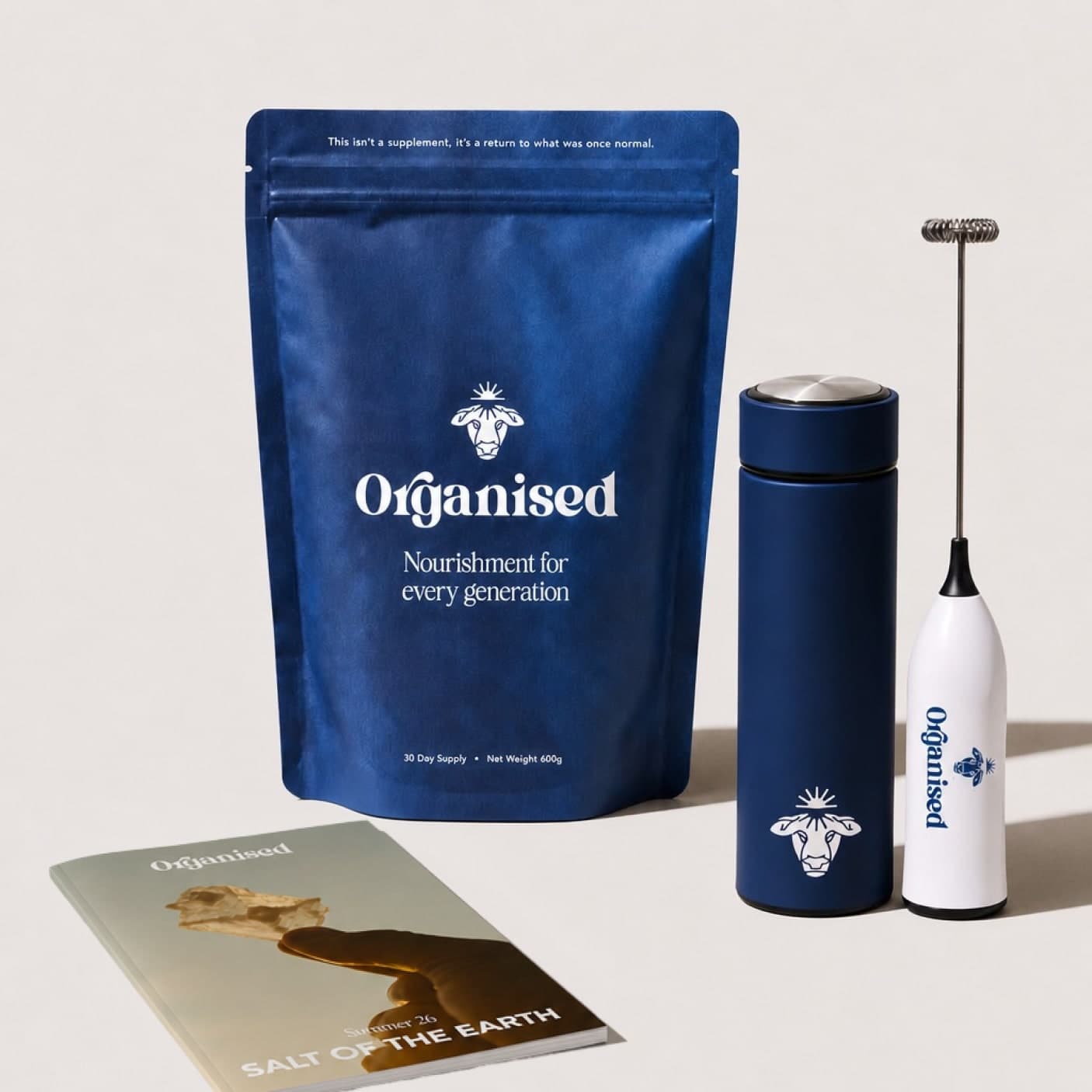
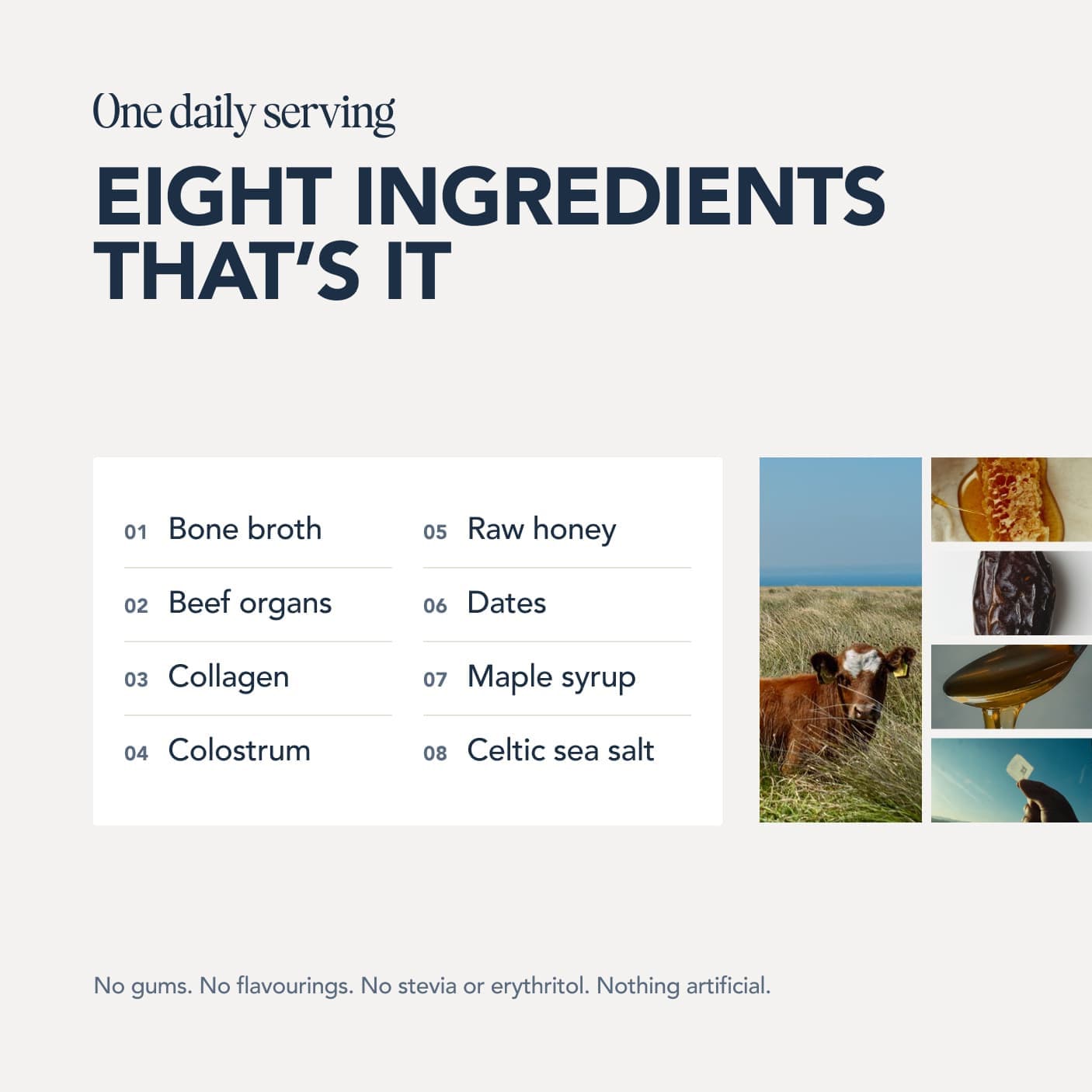
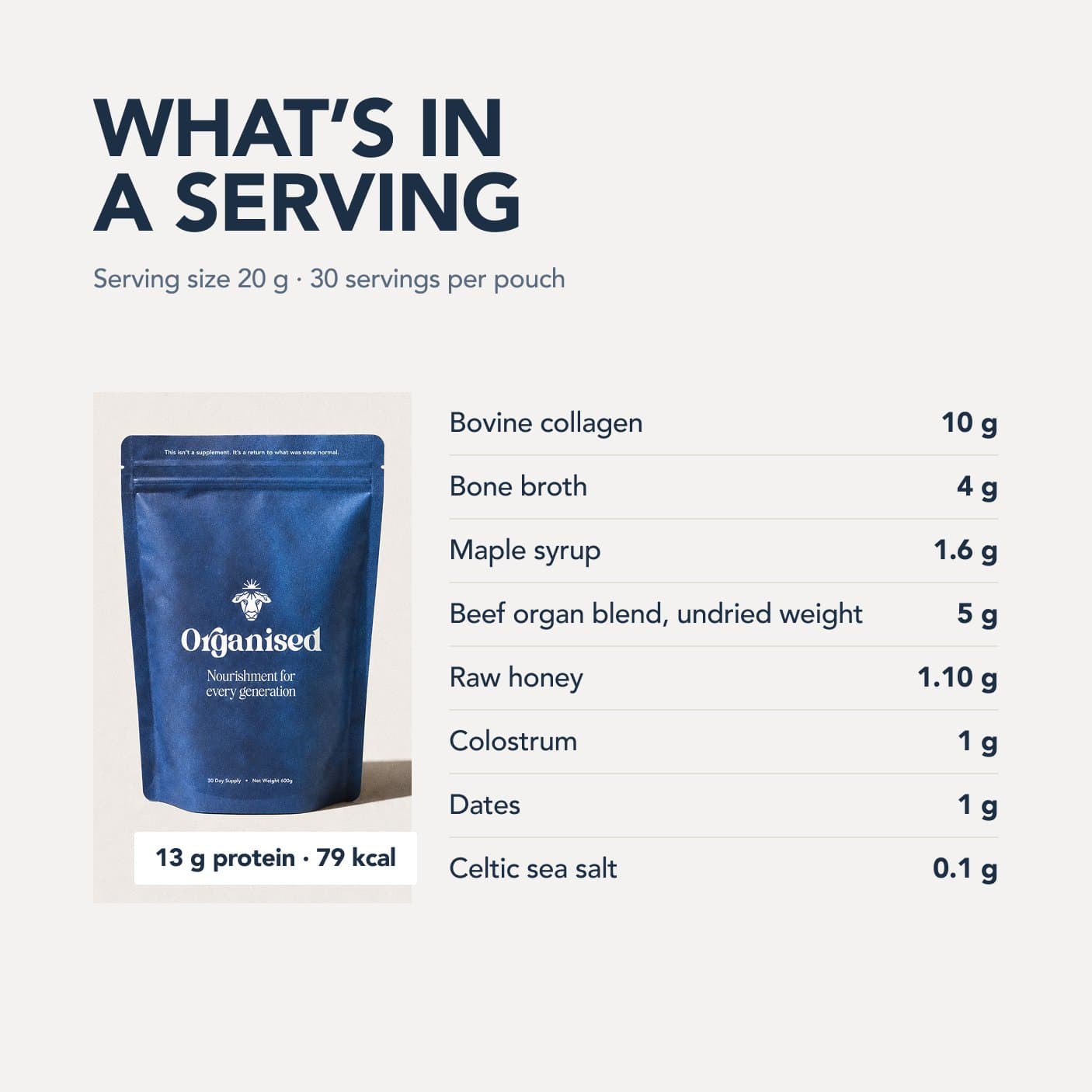
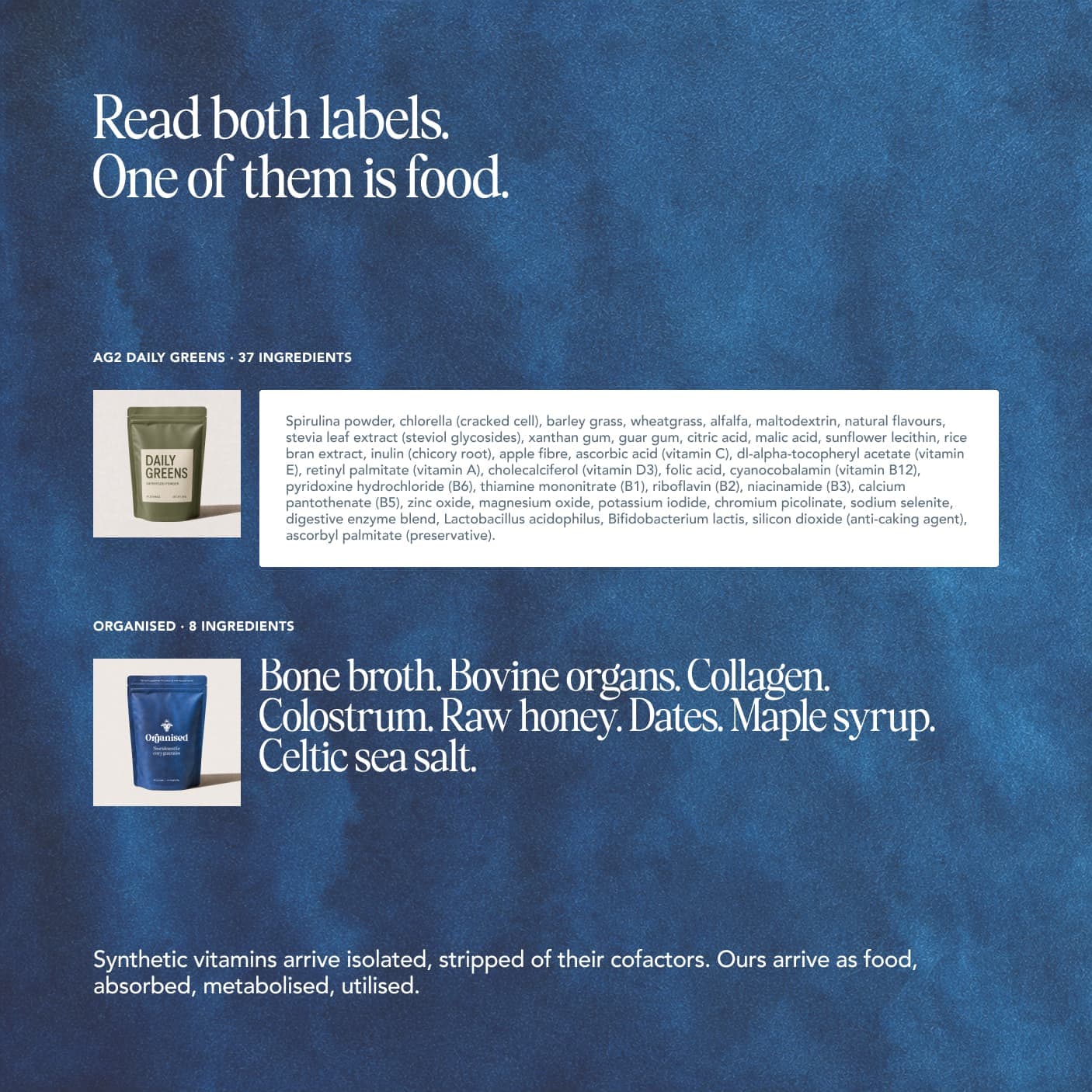
Eight real ingredients built around grass-fed beef organs, collagen and colostrum. Nothing synthetic added.
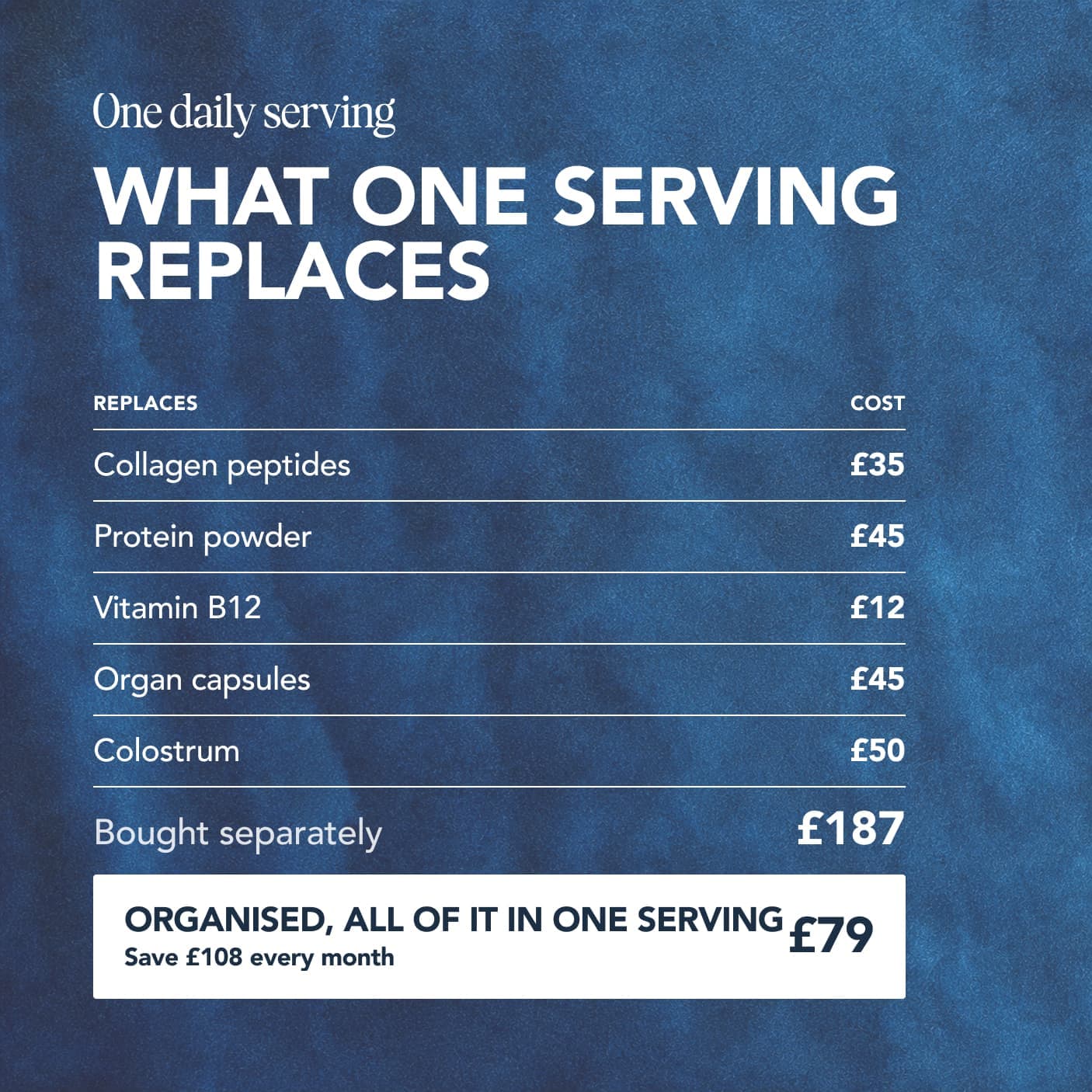
Free with your first order, worth £38. Plus £10 off the pouch with a subscription.

Free UK shipping · Made in England · 100 day money back guarantee on your first pouch · Skip, pause or cancel anytime
A note on professional support
Dietary changes are extraordinarily powerful for anxiety. But they are not a replacement for professional mental health support if you need it. If anxiety is severe, if you're in crisis, if you have a diagnosis that requires treatment, please work with a healthcare provider.3 Diet is a foundation, not a substitute for necessary care.
That said, most people find that addressing nutritional and digestive issues alongside professional support produces better outcomes than professional support alone. The brain functions better when it's properly nourished. The work of therapy becomes easier when your nervous system isn't hijacked by blood sugar crashes and inflammatory signals.
The bottom line
Anxiety is often presented as purely psychological. Something to be thought away or medicated away. But your body is a system. Your gut, your blood sugar, your nutrient status, your inflammation level. All of these speak to your brain. All of them influence how you feel.
If you're experiencing anxiety, before you assume it's permanent, before you resign yourself to medication, try this. Fix your breakfast. Eliminate seed oils. Add fish. Add magnesium. Eat organs. Give it three months. Most people find that their anxiety improves measurably when they address the biological drivers.
Your anxiety might be real. But the cause might be simpler than you think. And the solution might be sitting on your plate.
References
Every source below was checked on 27 August 2026. Each PubMed, PMC and DOI identifier was resolved against NCBI or Crossref, and what it opens is printed under the citation, so you can see the link goes where the citation says without leaving the page. Where a citation and its identifier disagreed, the citation was corrected to the record or the reference was deleted along with the sentence marker that pointed at it, and where the resolved paper turned out not to support the sentence, the sentence was cut back to what it does support. Borrowed authority is worse than none, because it looks like rigour.
- Cryan JF, et al. The microbiota-gut-brain axis. Physiol Rev. 2019. PMID 31460832.Checked 27 August 2026: PMID 31460832 opens Cryan JF, O'Riordan KJ, Cowan CSM et al, The Microbiota-Gut-Brain Axis. Physiol Rev 2019;99(4):1877-2013. PubMed indexes it as: Review.
- Boyle NB, et al. The effects of magnesium supplementation on subjective anxiety and stress: a systematic review. Nutrients. 2017. PMC5452159.Checked 27 August 2026: PMC5452159 opens Boyle NB, Lawton C, Dye L, The Effects of Magnesium Supplementation on Subjective Anxiety and Stress-A Systematic Review. Nutrients 2017;9(5). PubMed indexes it as: Systematic Review.The authors' own declaration, from the record: N.B. and C.L. declare no conflict of interest. L.D. is currently a member of the Sanofi Consumer Healthcare Advisory Board. Sanofi had no role in the collection, review or interpretation of data; in the writing of the manuscript, and in the decision to publish the review.
- NHS. Generalised anxiety disorder in adults. nhs.uk/mental-health/conditions/generalised-anxiety-disorder.
Who wrote and reviewed this guide
Niall Kiddle
Author · Founder, Organised
Niall is the founder of Organised. He started the company in 2024 after fixing his own health the slow way: in 2022 he swapped a cupboard of synthetic supplements for real food, raw milk, organ meats, bone broth and honey, and felt the difference within months.
Areas of expertise: Ancestral nutrition, Organ meats, Whole-food supplementation, Gut health, Regenerative sourcing
Read Niall's full profile
Pedro Rodrigues
Reviewer · Agronomist (farming and sourcing only)
Pedro is the agronomist Organised works with on farming and sourcing. His job on the guides is to keep the science honest: he reviews what we publish about soil health, regenerative agriculture, grazing and the way food is actually produced.
Areas of expertise: Regenerative agriculture, Agronomy, Soil health, Grass-fed farming, Food sourcing
Reviewed this guide on
Read Pedro's full profileBrowse the guides library
All guidesKeep reading

Health goals
Feeding Your Brain: The Nutrients Behind Focus, Memory and Clarity
Discover which nutrients power your brain: DHA, choline, B12, iron, zinc, creatine. Food sources for lasting focus, memory, and mental clarity.

Health goals
Brain Fog: Nutritional Causes and How to Clear It
Brain fog isn't your fault. B12 deficiency, iron, blood sugar dysregulation, poor sleep, and gut dysfunction often hide behind the mental haze.

Health goals
Neuroinflammation: The Hidden Driver of Brain Fog and Low Mood
Brain fog isn't laziness. It's inflammation in your brain. Here's how it develops and the nutritional strategies that actually reverse it.
Real food, made effortless
Start my daily blendA few ways to use it
All recipes
Ancestral Breakfast Ideas from Around the World
Traditional breakfast recipes from cultures that got nutrition right. Japanese, Turkish, Scottish, and more. Whole-food breakfast inspiration.

Raw Milk Hot Chocolate with Collagen
A nourishing evening hot chocolate made with raw milk, grass-fed collagen, raw cacao, and honey. A nighttime ritual that supports sleep and gut health.

Organised Smoothie Bowl Recipes for Every Season
Four seasonal smoothie bowl recipes using Organised. Berry in summer, apple-cinnamon in autumn, tropical in spring, warming chocolate in winter.


 Join over 100,000+ members
Build a better food system with us
The Organised community is thousands of people choosing real food and backing the farmers who grow it, all of us trying to leave the world a little better than we found it. If that is what you care about too, you belong here.