Brain Fog: Nutritional Causes and How to Clear It
You wake up feeling clear. By 10 AM, there's a fog descending. Your thoughts feel slow. Finding words becomes harder. Focusing is exhausting. You blame stress, age, or your own capacity. But most of the time, brain fog is not a mental problem. It's a nutritional one.

By Niall Kiddle, Founder, Organised

Reviewed by Pedro Rodrigues, Agronomist (farming and sourcing only) ·
6 min read · Published · Updated · 3 cited sources
Makers of the Organised Daily blend, a grass-fed beef organ supplement from regenerative UK farms

But most of the time, brain fog is not a mental problem. It's a nutritional one. And once you understand where it comes from, clearing it becomes straightforward.

Brain fog is a symptom, not a diagnosis
Here's what most people get wrong about brain fog: they treat it as a single condition with a single cause. They don't. Brain fog is a symptom cluster that can arise from dozens of different sources.
It can be nutritional deficiency. It can be blood sugar dysregulation. It can be poor sleep. It can be gut dysfunction. It can be food sensitivities. It can be chronic stress and elevated cortisol. It can be dehydration. It can be excessive caffeine intake. It can be electromagnetic sensitivity.
Most people experiencing brain fog are not dealing with just one cause. They're dealing with several compounding problems, each making the others worse. Your job is not to find the one magic fix. Your job is to systematically address the most common culprits until you've cleared enough of the fog to think straight again.
Brain fog is almost always multifactorial. You didn't wake up this way by accident. A dozen small choices led here. A dozen small choices will lead you back out.
B12 deficiency and neurological fog
Vitamin B12 is required for myelin maintenance, red blood cell formation and DNA synthesis; deficiency can cause cognitive symptoms including poor concentration and memory problems alongside neurological signs.1
B12 deficiency often goes unrecognised because blood tests can show normal B12 levels whilst your cells are still deficient. The absolute threshold for blood B12 is set too low. Many people with B12 levels technically within normal range are still symptomatic.
B12 is found almost exclusively in animal foods. The richest sources are liver, red meat, fish, and eggs. If you're not eating these foods regularly, B12 deficiency is likely. If you do eat them but have digestive issues, you may not be absorbing B12 properly, and deficiency is still possible.
If brain fog is your primary complaint and you're not eating B12-rich foods regularly, start there. Organ meats, fish, eggs, and red meat should appear in your diet multiple times weekly. The cognitive improvement often follows within weeks.
Iron and cognitive processing
Iron carries oxygen. When iron is low, oxygen delivery to your brain falters. Cognitive processing speed slows. Thinking becomes harder. Attention becomes fractured.
Iron deficiency anaemia is obvious when it's severe. But subclinical iron deficiency, the low-normal range where you're not technically anaemic but you're running on a depleted reserve, produces brain fog, fatigue, and reduced mental sharpness. Most doctors don't check for it unless you complain of symptoms, and most people don't realise their cognitive struggles are linked to iron.
Women of childbearing age are particularly vulnerable to iron deficiency due to menstrual losses. But men can also become iron deficient, particularly if they're not eating red meat or organ meats regularly, or if they have digestive issues that impair absorption.
Heme iron from animal sources has substantially higher bioavailability than non-heme iron from plant sources, with mixed diets containing meat absorbing roughly 14–18% of iron versus 5–12% from vegetarian diets.2

Blood sugar instability
Your brain runs on glucose. When blood sugar is stable, your brain has steady fuel and functions clearly. When blood sugar spikes and crashes, your brain loses fuel and fog rolls in.
Most modern diets are engineered to create blood sugar chaos. High-carbohydrate processed foods, coffee on an empty stomach, skipped meals, constant snacking on refined carbohydrates. All of it destabilises blood sugar. And destabilised blood sugar is a primary driver of brain fog.
The pattern is often this: you wake up and have coffee on an empty stomach. Blood sugar spikes briefly from the caffeine stress response. Then it crashes. You feel foggy, so you reach for a sugary snack or another coffee. Spike and crash again. By noon, your brain is exhausted from the blood sugar rollercoaster.
Stabilising blood sugar is straightforward. Start the day with protein and fat before caffeine. Breakfast should be eggs, meat, or fish with vegetables and butter. Skip the toast and jam. Avoid snacking on refined carbohydrates. Eat whole meals that include protein, fat, and vegetables. The fog often clears within days once blood sugar stabilises.
The gut-brain axis and digestion
The enteric nervous system communicates with the brain via the gut–brain axis, and the gut produces a large fraction of the body's serotonin (most of which acts locally on gut motility rather than crossing into the brain). Gut dysfunction is associated with cognitive and mood symptoms in observational studies.3
Gut dysfunction can arise from dysbiosis, intestinal permeability, or chronic inflammation from processed foods. Any of these situations damages the barrier between your gut and your bloodstream, triggering low-grade immune activation that produces brain fog, fatigue, and poor concentration.
Healing the gut means returning to real whole foods, removing processed foods, and allowing your gut bacteria to rebalance. Bone broth, fermented foods, vegetables, and organ meats all support gut healing. The cognitive improvements often follow gut healing closely.
Get health guides like this, free
Two short reads a week on eating for energy, gut health, skin, sleep and more.
By signing up you agree to receive emails from us. No spam, unsubscribe anytime.
Sleep deprivation and mental clarity
Your brain cleans itself whilst you sleep. During sleep, your glymphatic system activates and flushes metabolic waste products from your brain. When you're sleep deprived, that cleaning doesn't happen. Metabolic waste accumulates. Brain fog is the natural result.
If you're sleeping less than 7-8 hours nightly, particularly if you're waking in the middle of the night or not feeling rested upon waking, sleep is a primary driver of your brain fog. This is not something nutrition alone will fix. You need to sleep.
Improving sleep hygiene means consistent bedtime, darkness, cool temperature, no screens in the last hour before bed, and minimal blue light exposure after sunset. Magnesium supplementation can help. Reducing caffeine after midday is essential.

Dehydration and brain function
Your brain is roughly 75% water. Even mild dehydration impairs cognitive function. You don't need to drink obsessive quantities of water, but chronic low-level dehydration will produce brain fog.
Most people can assess their hydration status by urine colour. Pale yellow indicates adequate hydration. Dark yellow indicates dehydration. It's that simple. Drink until your urine is pale, then stop obsessing about it.


1 of 9
Daily blend
100,000+ thriving families4.9 on Trustpilot
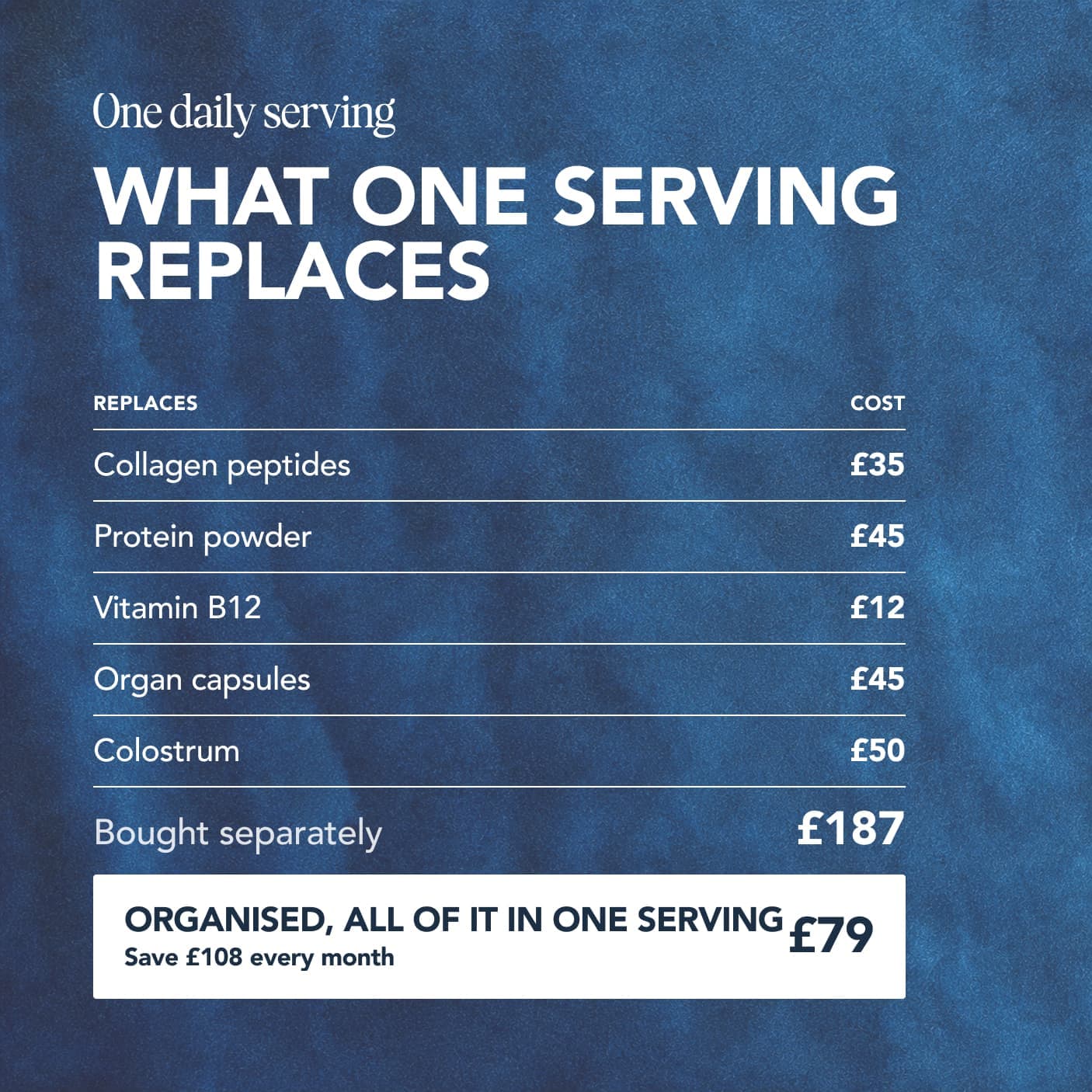
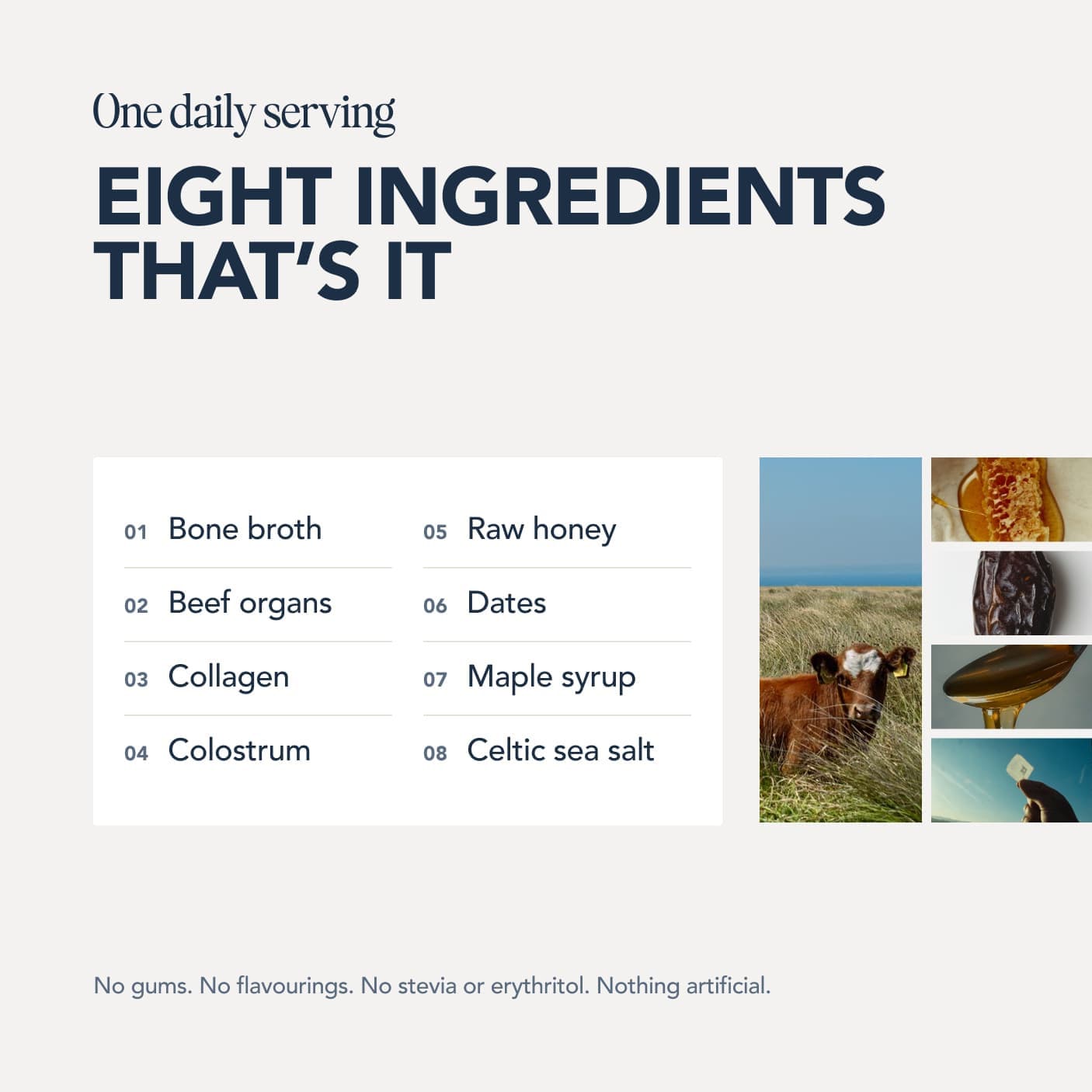
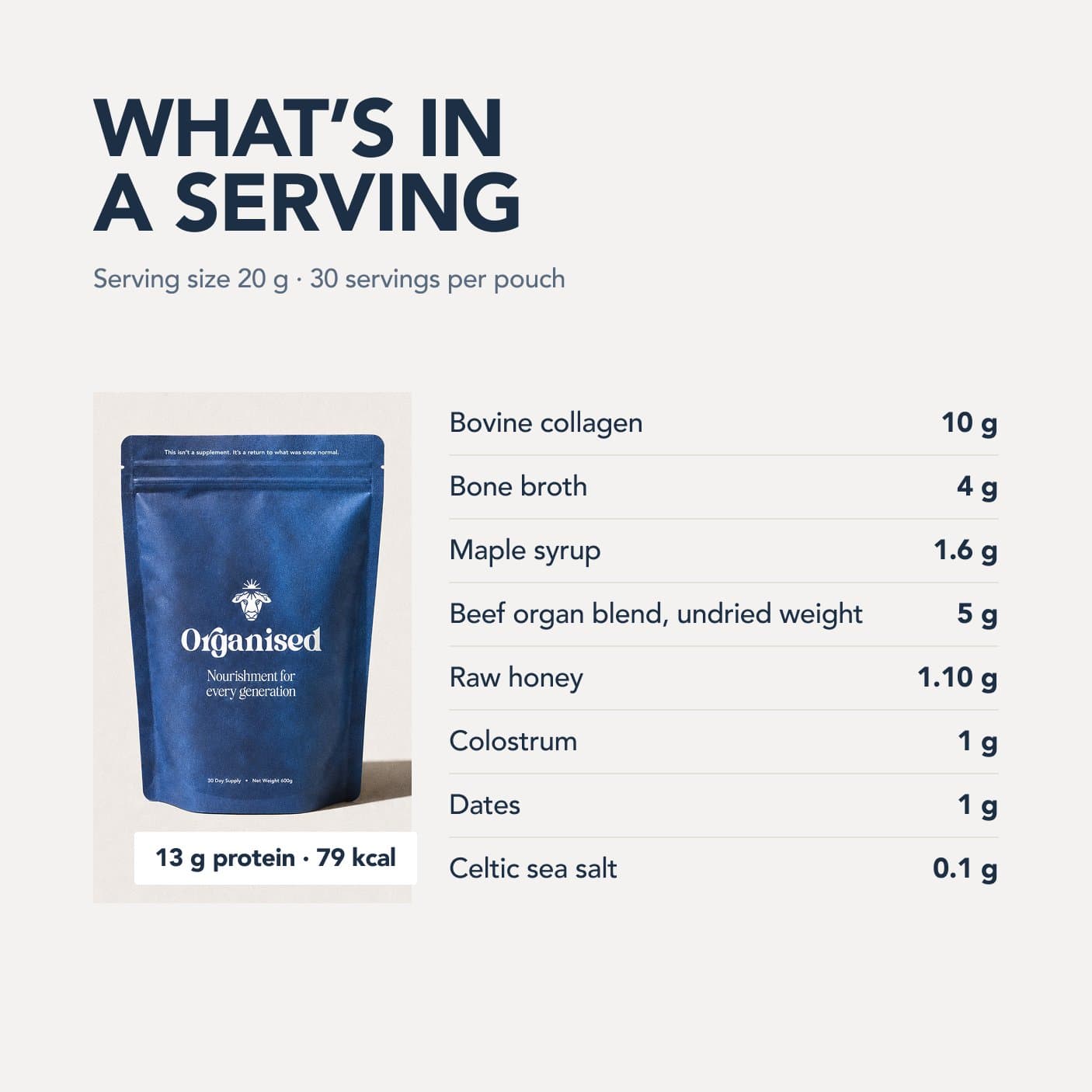
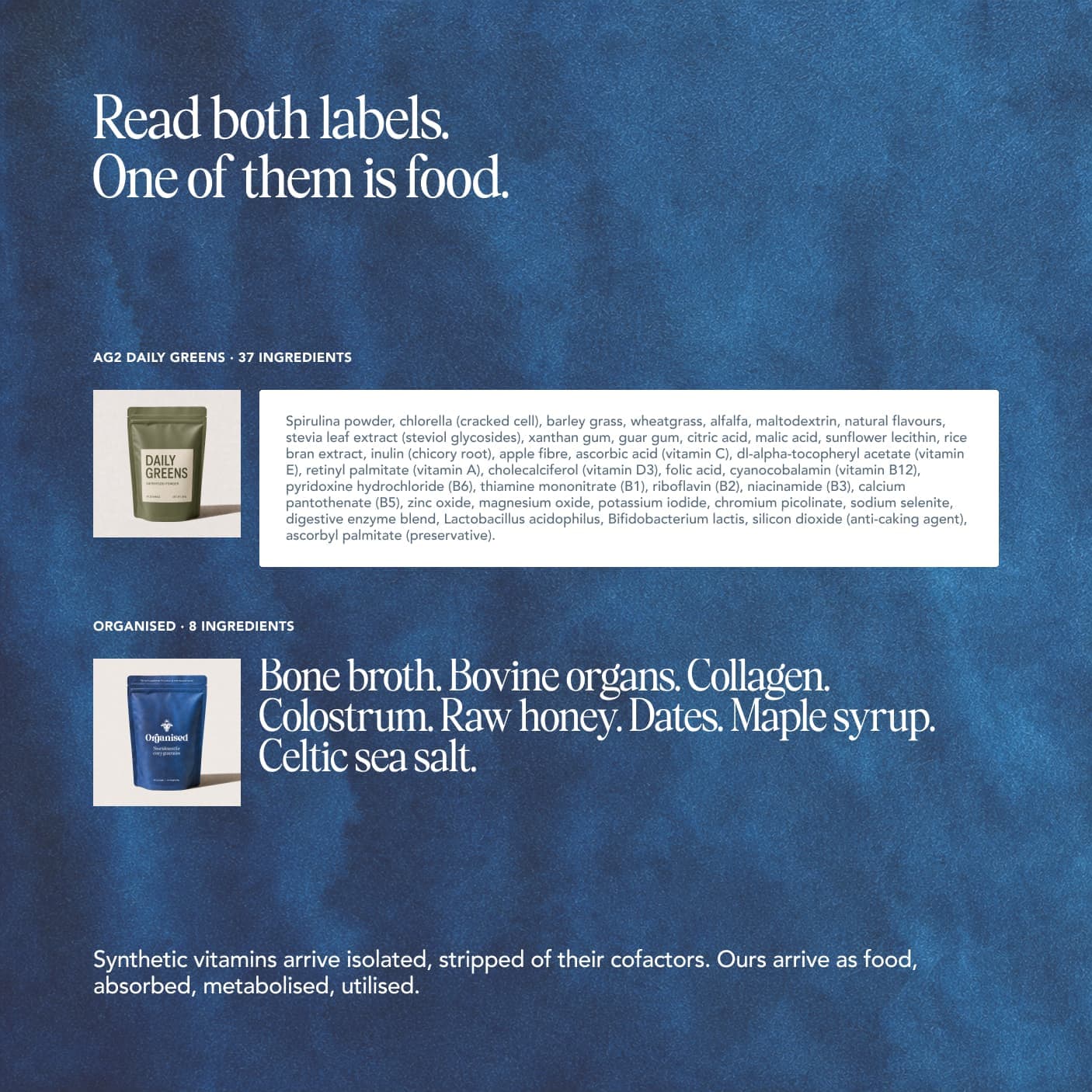
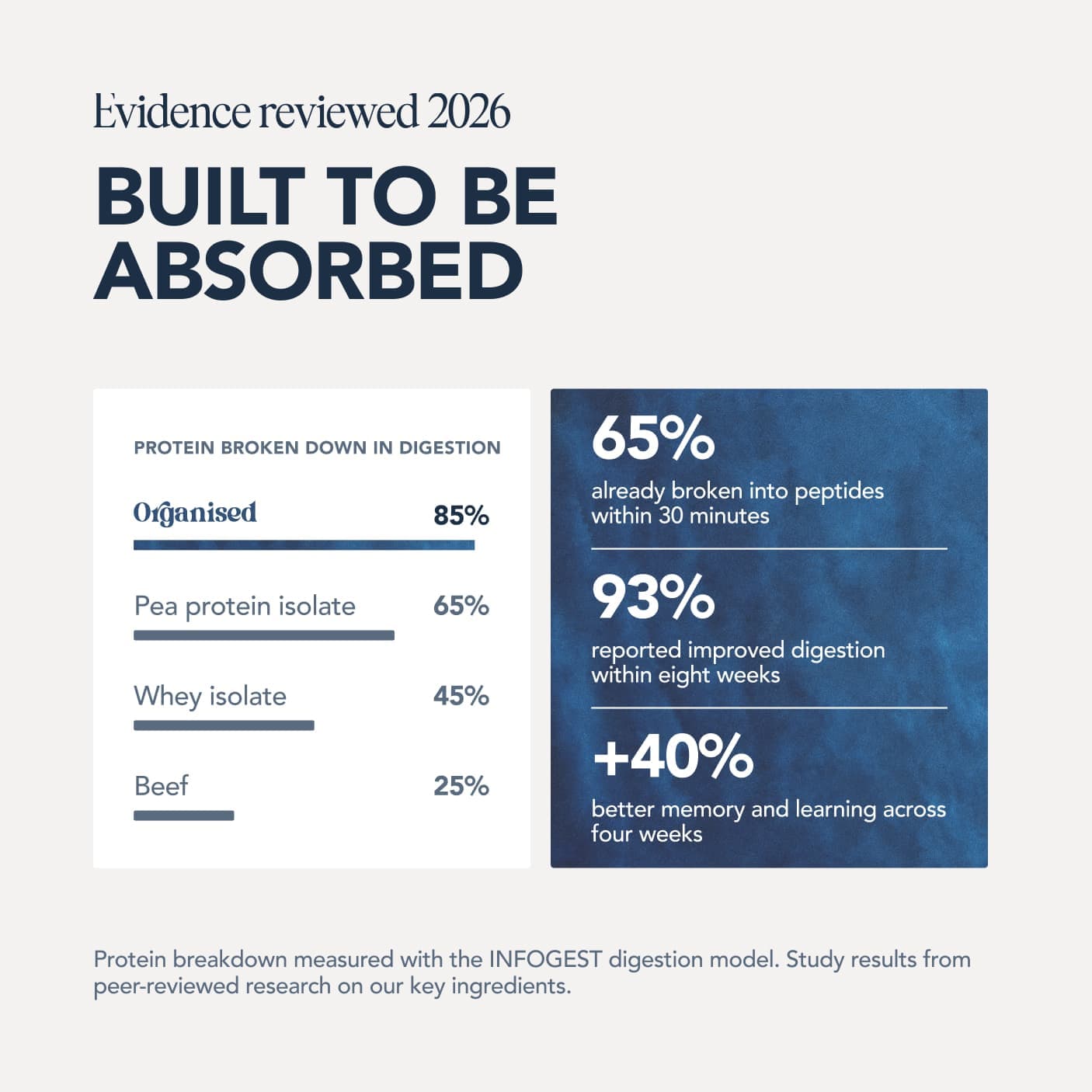
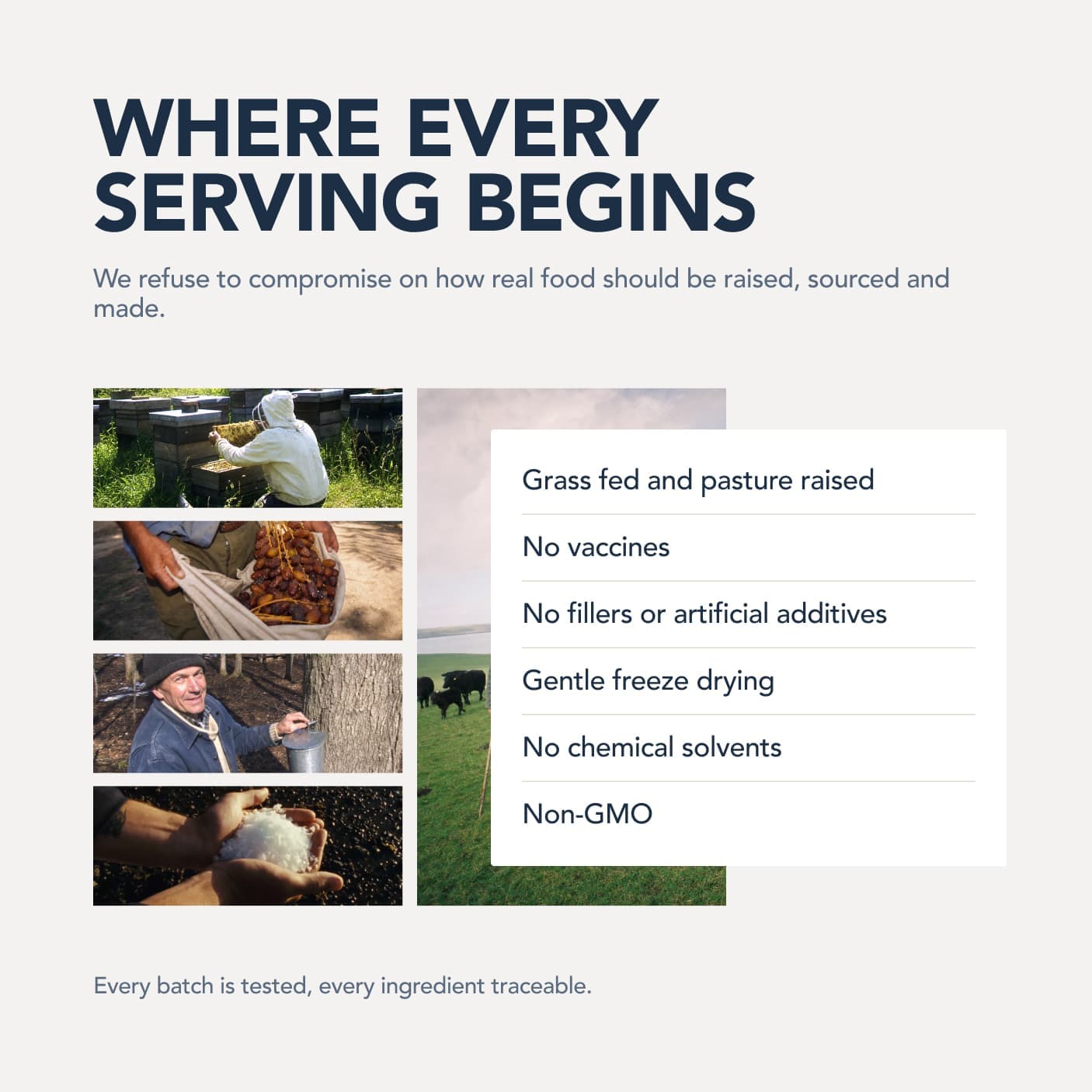
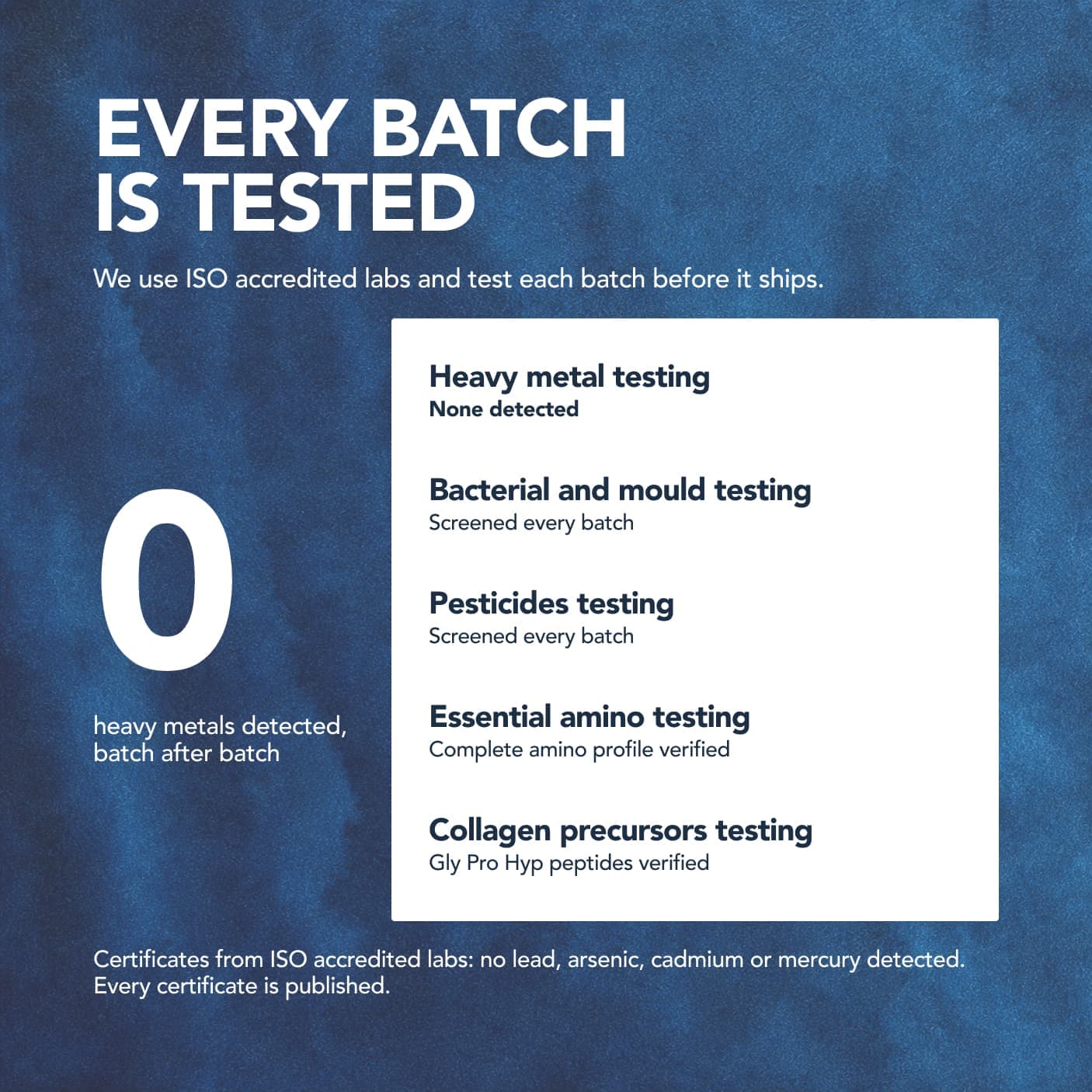
Eight real ingredients built around grass-fed beef organs, collagen and colostrum. Nothing synthetic added.
Free with your first order, worth £38. Plus £10 off the pouch with a subscription.


Free UK shipping · Made in England · 100 day money back guarantee on your first pouch · Skip, pause or cancel anytime
Hidden food sensitivities
Some people experience brain fog triggered by specific foods. Gluten and dairy are the most common culprits, but other foods can trigger inflammation and fog in sensitive individuals.
If you suspect food sensitivities, the elimination diet is the gold standard. Remove suspected foods completely for 30 days. Track your brain fog. Then reintroduce foods one at a time and notice if symptoms return. This is the most reliable way to identify if a food is contributing to your problem.
Clearing the fog: where to start
If brain fog is your primary complaint, start here. In this order:
First, fix breakfast. Stop drinking coffee on an empty stomach. Start eating protein and fat before any caffeine. This alone often produces noticeable improvement within days.
Second, remove processed foods. Return to whole foods. Real meat, real fish, real eggs, real vegetables. This stabilises blood sugar and reduces gut inflammation simultaneously.
Third, add organ meats. Liver particularly. If you're low in B12 or iron, organ meats will address both deficiencies faster than anything else. Even one small serving weekly makes a difference.
Fourth, improve sleep. Consistent bedtime, darkness, no screens. This is not optional if brain fog is your problem.
Fifth, check your hydration. Pale urine is the target. It's remarkably simple but profoundly effective.
Brain fog clears when you give your brain what it needs: nutrient-dense food, stable blood sugar, adequate sleep, and healthy digestion. Most of the time, fixing even two of these produces noticeable improvement.
The bottom line
Brain fog is not permanent. It's not a sign of declining mental capacity. It's a sign that something is wrong with your nutrition, sleep, digestion, or blood sugar management. Fix those things, and the fog lifts.
You don't need brain supplements or nootropic stacks. You need real food, proper sleep, and stable blood sugar. The brain fog will follow the same path it came in through, one day slightly clearer than the last, until one morning you wake up and notice you're thinking clearly again. That's when you realise how much the fog was costing you.
References
Every source below was checked on 27 August 2026. Each PubMed, PMC and DOI identifier was resolved against NCBI or Crossref, and what it opens is printed under the citation, so you can see the link goes where the citation says without leaving the page. Where a citation and its identifier disagreed, the citation was corrected to the record or the reference was deleted along with the sentence marker that pointed at it, and where the resolved paper turned out not to support the sentence, the sentence was cut back to what it does support. Borrowed authority is worse than none, because it looks like rigour.
- National Institutes of Health, Office of Dietary Supplements. Vitamin B12 — Health Professional Fact Sheet. https://ods.od.nih.gov/factsheets/VitaminB12-HealthProfessional/
- National Institutes of Health, Office of Dietary Supplements. Iron — Health Professional Fact Sheet. https://ods.od.nih.gov/factsheets/Iron-HealthProfessional/
- Carabotti M, Scirocco A, Maselli MA, Severi C. The gut-brain axis: interactions between enteric microbiota, central and enteric nervous systems. Annals of Gastroenterology. 2015. https://pmc.ncbi.nlm.nih.gov/articles/PMC4367209/Checked 27 August 2026: PMC4367209 opens Carabotti M, Scirocco A, Maselli MA et al, The gut-brain axis: interactions between enteric microbiota, central and enteric nervous systems. Ann Gastroenterol 2015;28(2):203-209.The authors' own declaration, from the record: Conflict of Interest: None
Who wrote and reviewed this guide
Niall Kiddle
Author · Founder, Organised
Niall is the founder of Organised. He started the company in 2024 after fixing his own health the slow way: in 2022 he swapped a cupboard of synthetic supplements for real food, raw milk, organ meats, bone broth and honey, and felt the difference within months.
Areas of expertise: Ancestral nutrition, Organ meats, Whole-food supplementation, Gut health, Regenerative sourcing
Read Niall's full profile
Pedro Rodrigues
Reviewer · Agronomist (farming and sourcing only)
Pedro is the agronomist Organised works with on farming and sourcing. His job on the guides is to keep the science honest: he reviews what we publish about soil health, regenerative agriculture, grazing and the way food is actually produced.
Areas of expertise: Regenerative agriculture, Agronomy, Soil health, Grass-fed farming, Food sourcing
Reviewed this guide on
Read Pedro's full profileMore on brain & cognition
View all- Feeding Your Brain: The Nutrients Behind Focus, Memory and Clarity
- ADHD and Nutrition: Emerging Research and Practical Approaches
- Choline and Brain Development: From Pregnancy to Old Age
- Memory and Nutrition: Feeding Your Brain at Every Age
- Neuroinflammation: The Hidden Driver of Brain Fog and Low Mood
- The Link Between Iron Deficiency and Poor Concentration
Browse the guides library
All guidesKeep reading

Health goals
Feeding Your Brain: The Nutrients Behind Focus, Memory and Clarity
Discover which nutrients power your brain: DHA, choline, B12, iron, zinc, creatine. Food sources for lasting focus, memory, and mental clarity.

Health goals
Can What You Eat Affect Your Anxiety?
Your anxiety might not be psychological. It might be nutritional. How gut health, blood sugar, magnesium, and seed oils fuel anxiety (and how to stop).

Health goals
Adrenal Fatigue: Is It Real and What Can You Do About It?
Adrenal fatigue is contested, but HPA axis dysregulation is real. Support cortisol rhythm with salt, protein, sleep, and blood sugar stability.
Real food, made effortless
Start my daily blendA few ways to use it
All recipes
How to Make Bone Marrow Butter
Roast grass-fed marrow bones, scoop the marrow, and mix with butter and herbs. A nutrient-dense spread with fat-soluble vitamins.

Liver Pate for Beginners: A Gentle Introduction to Organ Meats
Simple liver pate recipe to start eating organ meats. Chicken liver, butter, and herbs. Gentle introduction to nutrient-dense whole foods.

Collagen-Rich Beef Stew: Slow-Cooked Nourishment
Beef stew that delivers collagen from connective tissue and bone broth. Winter comfort food that actually nourishes. Simple slow cooker recipe.


 Join over 100,000+ members
Build a better food system with us
The Organised community is thousands of people choosing real food and backing the farmers who grow it, all of us trying to leave the world a little better than we found it. If that is what you care about too, you belong here.