The Connection Between Gut Health and Allergies
Your allergies may stem from a compromised gut barrier, not just a faulty immune system. See how gut health and allergies connect and how to support it.
 Niall Kiddle · Founder, OrganisedReviewed by Pedro Rodrigues7 min read · Updated
Daily blend
Colostrum. Bovine colostrum rich in immunoglobulins and growth factors that support immune function and gut health.
4.9 on Trustpilot · 200,000+ thriving familiesYou've had allergies your whole life. You assume you were born with a defective immune system. Maybe you're genetically predisposed. You take antihistamines, you avoid trigger foods, you accept that your immune system overreacts. But what if the real problem isn't your immune system? What if it's your gut barrier?

The allergy epidemic
Allergies have increased substantially in developed countries over recent decades.1 Pollen allergies, food allergies, environmental allergies. They're now so common that people treat them as inevitable. Your immune system is broken. Nothing you can do about it.
But thirty years ago, allergies were rare. Your grandparents didn't have seasonal allergies. They didn't carry antihistamines. They ate foods that now cause allergic reactions in millions of people. Something changed, and it wasn't our genetics. Our genes haven't changed in a generation. Our environment has. Specifically, our gut environment.
Allergies aren't a genetic inevitability. They're the symptom of a compromised immune system, and that compromise starts in your gut.

Why your immune system overreacts
Your immune system distinguishes harmless food from threats through a process called oral tolerance.2 When you eat a food, your gut lining samples it, presents it to immune cells, and teaches them: this is safe, don't attack it.
But oral tolerance requires a healthy gut barrier. If your gut lining is permeable, the teaching process breaks down. Large food molecules slip through undigested. Your immune system sees them as invaders. It learns to attack. You develop a food sensitivity or allergy.
The same mechanism applies to pollen and environmental allergens. A healthy gut barrier prevents molecular mimicry, where pollen proteins that resemble food proteins cause cross-reactions. A compromised gut fails to maintain that distinction.
Your immune system isn't defective. It's responding appropriately to a perceived threat. The threat is coming from your gut, not from the allergen itself.
Your immune system learned to attack your allergen because your gut barrier was compromised when it was exposed. The allergy isn't in your genetics. It's in your gut integrity.

The hygiene hypothesis misses the point
The hygiene hypothesis suggests that allergies increased because of reduced microbial exposure in early life.3 We sterilise everything, avoid microbes, and our immune systems never learn to distinguish between harmless and harmful. So the immune system overreacts to harmless things.
There's some truth to it, but it misses the more fundamental issue. Yes, certain microbe exposure helps train immune tolerance. But the real problem is that our gut bacteria are dysbiotic. We're eating foods that damage our gut lining. We're taking antibiotics that wipe out beneficial bacteria. We're using seed oils that promote inflammation. We're eating processed foods that don't provide the nutrients our gut barrier needs to function.
A child born into a healthy gut microbiome, raised on nutrient-dense whole food, and exposed to real dirt and diverse microbes develops immune tolerance naturally. A child born into dysbiosis, fed processed food, and sterilised of all microbe exposure develops allergies.
The allergen exposure is secondary. The gut barrier is primary.
Gut permeability and immune tolerance
Your gut lining contains a type of immune cell called regulatory T cells. Their job is to enforce tolerance. When you eat something, they say: this is allowed. Don't attack. But regulatory T cells require a healthy gut barrier, beneficial gut bacteria, and specific nutrients to function.
A dysbiotic gut lacks the bacteria that produce short-chain fatty acids such as butyrate, which support regulatory T cell function.4 A permeable gut barrier can't deliver the signals that teach tolerance. A nutrient-deficient diet lacks the zinc, vitamin A, and other nutrients that regulatory T cells need.
The result: your immune system stops tolerating. It starts attacking. You develop allergies.
You didn't develop allergies because you were born with a defective immune system. You developed them because your gut barrier was compromised when you encountered your allergen.

How to rebuild tolerance
The protocol is the same as healing any compromised gut: remove inflammatory foods (seed oils, gluten, processed foods), add healing foods (bone broth, organ meats, fermented foods), repair your bacteria (fermented foods, diverse whole foods), and give it time.
Many people report that once they've healed their gut, they can reintroduce foods they were previously allergic to. Their immune system, trained properly, tolerates them. The allergy was never inherent. It was a learned response to a compromised barrier.
For seasonal allergies, the same protocol applies. Heal your gut barrier, stabilise your immune system, reduce overall inflammation. Your body becomes less reactive to pollen. Many people find their seasonal allergies largely disappear after several months of consistent gut healing.
Your allergies are reversible. They're learned by your immune system, and they can be unlearned by healing your gut barrier.

Get health guides like this, free
Two short reads a week on eating for energy, gut health, skin, sleep and more.
Unsubscribe anytime.
How gut permeability triggers allergic responses
The mechanism connecting your gut to allergies is surprisingly direct. When your gut barrier is compromised, undigested food particles and bacterial fragments slip into your bloodstream. Your immune system encounters these foreign materials in an environment where they should not be. It interprets this as a threat.
Your immune system then produces IgE antibodies and IgG antibodies against these food particles. This is the beginning of food sensitivity. Your body has learned to react to foods it previously tolerated. You eat something, your immune system recognises the particle, and it triggers histamine release. Itching, swelling, inflammatory response.
This explains why some people develop food allergies seemingly overnight. They were not born allergic to peanuts or shellfish. They developed permeability, and their immune system learned to treat these foods as threats. Fix the permeability and many food sensitivities resolve.
Seasonal allergies follow a similar pattern. Your gut barrier is compromised. Pollen particles are small and can also cross a permeable barrier. Your immune system reacts to these as well. This is why people with compromised gut health often have multiple allergies (food and environmental) rather than a single specific allergy.
Many allergies are learned allergies. They develop because your gut barrier broke down. Heal the barrier and you unlearn them.

The specific foods that reduce histamine and support gut healing
Beyond removing inflammatory foods, certain foods actively reduce histamine and support the immune tolerance that allergies require.
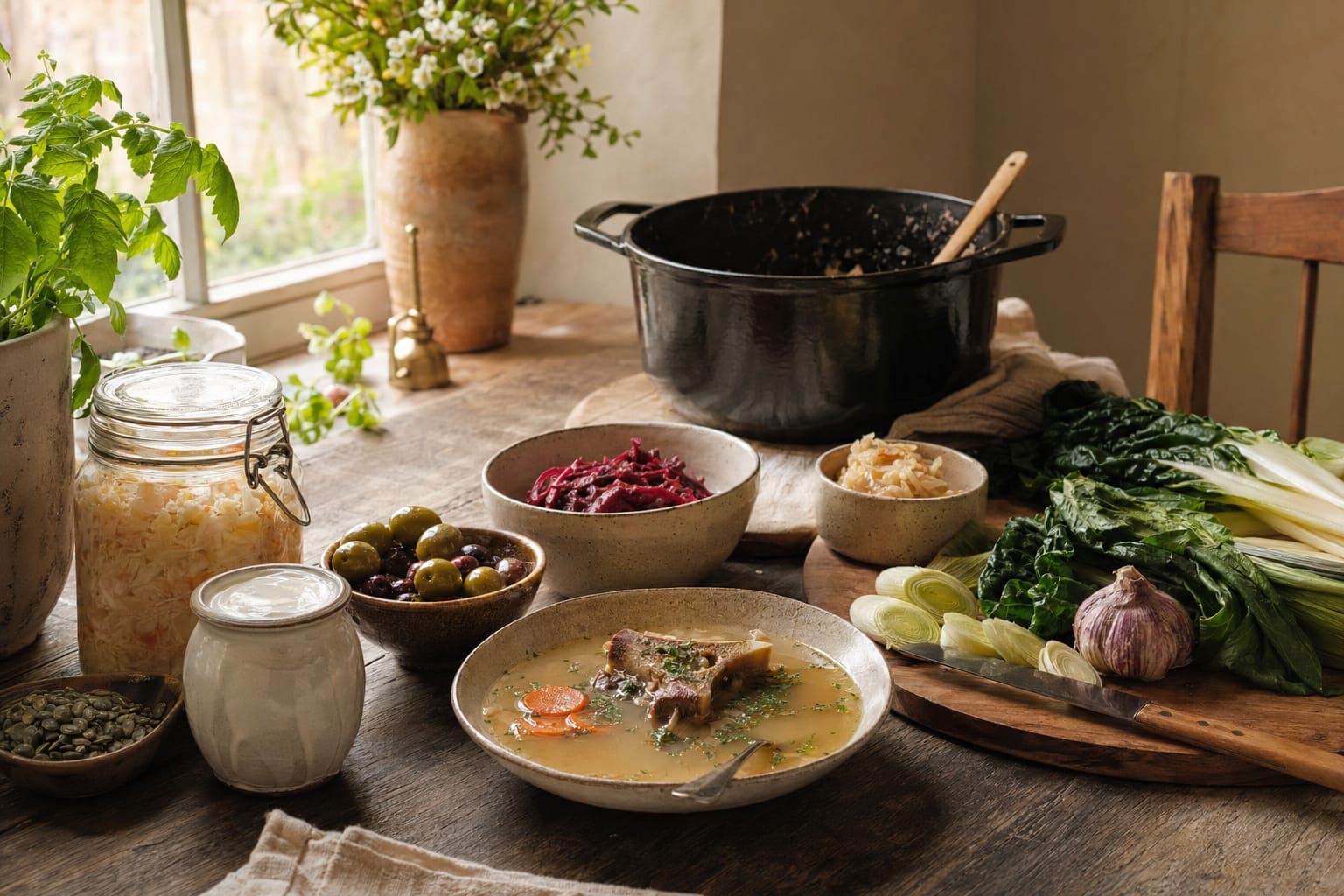
Bone broth contains glutamine, which seals your gut barrier. It also contains minerals that support immune regulation. Daily bone broth is genuinely the foundation of gut healing for allergic individuals.
Organ meats, particularly liver, contain high levels of vitamin A. Vitamin A is critical for maintaining the integrity of your mucosal surfaces, including your gut lining. It also regulates immune tolerance, teaching your immune system to tolerate harmless substances. Two servings of liver weekly is gut medicine.
Fermented foods like sauerkraut, kefir, and aged cheeses contain beneficial bacteria that improve gut barrier function. The bacteria in these foods release short-chain fatty acids like butyrate, which feed your gut lining cells and reinforce barrier integrity.
Grass-fed meat and fish are rich in omega-3 fats, which reduce systemic inflammation. Omega-3 fats also promote the development of regulatory T cells, which actively suppress allergic responses. Red meat and fatty fish are genuinely anti-allergy foods.
To reduce allergies, heal your gut with bone broth, organ meats, fermented foods, and omega-3 rich fish. Your immune system will gradually unlearn its false alarms.
Foods to eliminate are equally important. Seed oils (which are inflammatory), artificial sweeteners (which damage gut bacteria), and ultra-processed foods (which create permeability) are driving your allergies. Removing these is often enough to see allergy improvement within weeks.

The timeline for allergy improvement
How long until your allergies improve depends on how long you have had them and how damaged your gut barrier is. For newly developed food sensitivities, you can see improvement within four to eight weeks of gut healing. For seasonal allergies that have plagued you for years, expect three to six months of consistent gut healing before you notice significant improvement.
Seasonal allergies improve in a predictable pattern. The first year, your symptoms are slightly better. The second year, noticeably better. By the third year of consistent gut healing, many people find their seasonal allergies have largely resolved. Your immune system gradually unlearns its false alarm response to pollen.
This improvement is not mysterious. It is simply what happens when your gut barrier heals and your immune system regains the capacity to tolerate harmless substances. This capacity was your baseline before permeability developed. You are not fixing something broken. You are restoring something that was working before.
The bottom line
You weren't born with allergies. You developed them through a combination of gut barrier compromise and immune miseducation. The solution isn't avoiding your allergens forever or taking antihistamines constantly. The solution is fixing your gut.
Heal your gut barrier. Stabilise your bacteria. Give your immune system the conditions it needs to re-establish tolerance. Most allergies improve dramatically once your gut heals. Some disappear entirely. You don't have to accept lifelong allergies. You just have to address the actual root cause.
References
Every source below was checked on 27 August 2026. Each PubMed, PMC and DOI identifier was resolved against NCBI or Crossref, and what it opens is printed under the citation, so you can see the link goes where the citation says without leaving the page. Where a citation and its identifier disagreed, the citation was corrected to the record or the reference was deleted along with the sentence marker that pointed at it, and where the resolved paper turned out not to support the sentence, the sentence was cut back to what it does support. Borrowed authority is worse than none, because it looks like rigour.
- Pawankar R et al. White Book on Allergy: Update 2013. World Allergy Organization.
- Pabst O, Mowat AM. Oral tolerance to food protein. Mucosal Immunol. 2012;5(3):232-9. PMID: 22318493.Checked 27 August 2026: PMID 22318493 opens Pabst O, Mowat AM, Oral tolerance to food protein. Mucosal Immunol 2012;5(3):232-9. PubMed indexes it as: Review.
- Strachan DP. Hay fever, hygiene, and household size. BMJ. 1989;299(6710):1259-60. PMID: 2513902.Checked 27 August 2026: PMID 2513902 opens Strachan DP, Hay fever, hygiene, and household size. BMJ 1989;299(6710):1259-60.
- Furusawa Y et al. Commensal microbe-derived butyrate induces the differentiation of colonic regulatory T cells. Nature. 2013;504(7480):446-50. PMID: 24226770.Checked 27 August 2026: PMID 24226770 opens Furusawa Y, Obata Y, Fukuda S et al, Commensal microbe-derived butyrate induces the differentiation of colonic regulatory T cells. Nature 2013;504(7480):446-50.
Who wrote and reviewed this guide
Niall Kiddle
Author · Founder, Organised
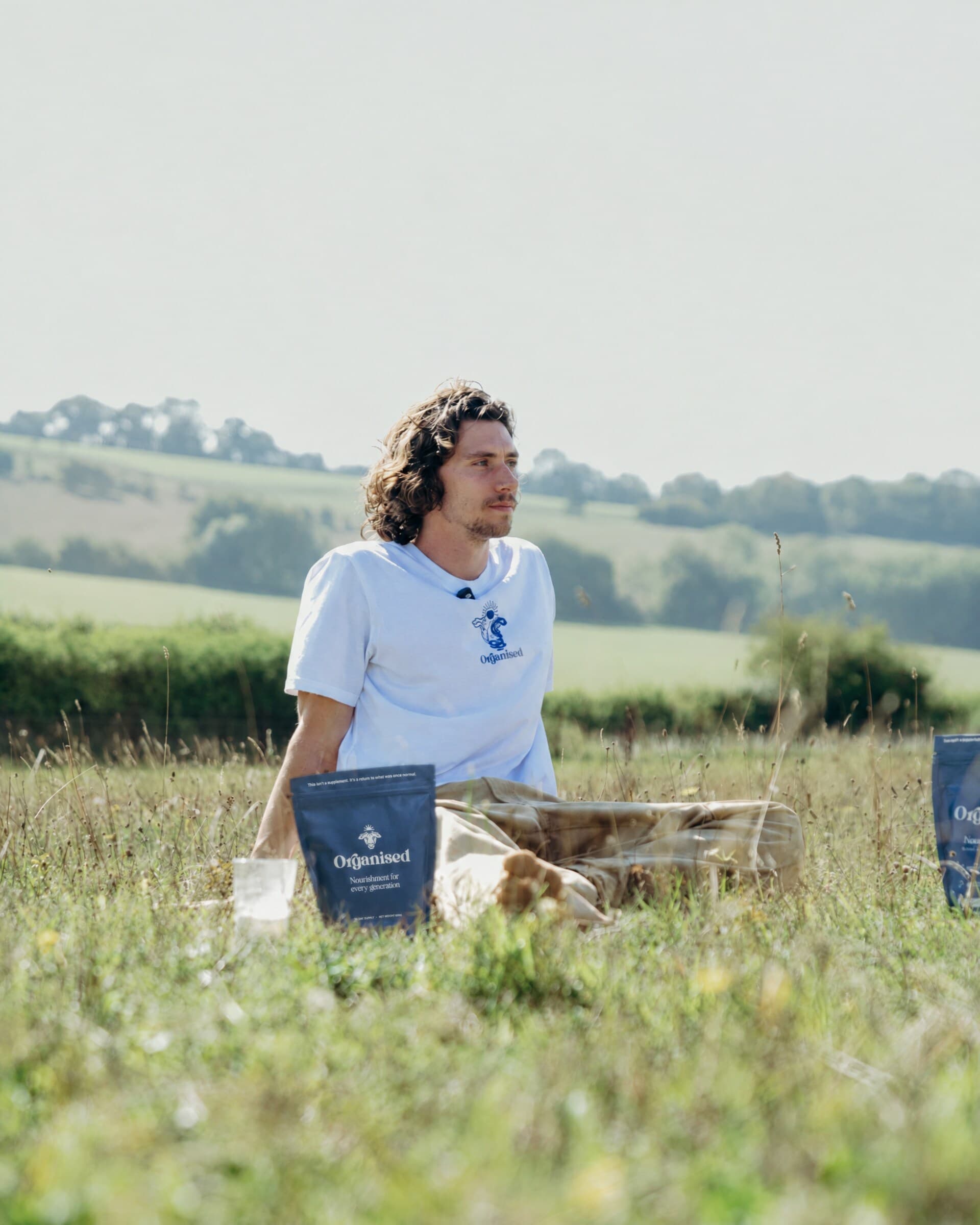
Niall is the founder of Organised. He started the company in 2024 after fixing his own health the slow way: in 2022 he swapped a cupboard of synthetic supplements for real food, raw milk, organ meats, bone broth and honey, and felt the difference within months.
Areas of expertise: Ancestral nutrition, Organ meats, Whole-food supplementation, Gut health, Regenerative sourcing
Read Niall's full profile
Pedro Rodrigues
Reviewer · Agronomist (farming and sourcing only)
Pedro is the agronomist Organised works with on farming and sourcing. His job on the guides is to keep the science honest: he reviews what we publish about soil health, regenerative agriculture, grazing and the way food is actually produced.
Areas of expertise: Regenerative agriculture, Agronomy, Soil health, Grass-fed farming, Food sourcing
Reviewed this guide on
Read Pedro's full profilePublished · Updated
4 cited sourcesMakers of the Organised Daily blend, a grass-fed beef organ supplement from regenerative UK farms

Daily blend
Read next