Chronic Fatigue and Nutrient Deficiency: What Blood Tests to Ask For
You're getting eight hours. You're sleeping well. And yet you wake up already exhausted. Your GP says you're fine but you're not fine. You're bone-deep tired. The kind of tired that doesn't shift with a weekend off. If that's your life right now, the problem may not be in your head. It's in your blood.

By Niall Kiddle, Founder, Organised

Reviewed by Pedro Rodrigues, Agronomist (farming and sourcing only) ·
8 min read · Published · Updated · 3 cited sources
Makers of the Organised Daily blend, a grass-fed beef organ supplement from regenerative UK farms

If that's your life right now, the problem may not be in your head. It's in your blood.

Why standard GP tests miss nutrient deficiency
Most people who walk into their GP's surgery complaining of chronic fatigue get a basic blood test. Full blood count. Thyroid-stimulating hormone. Maybe a glucose test. The results come back normal and you're left confused. How can everything look fine when you feel this broken?
The problem is that normal, from a standard GP test, often means "within the population reference range." That range is wide. You might be at the lower end of normal for B12, for example, and still be functionally deficient. You might have ferritin levels that technically pass the threshold but are too low for energy production. Standard tests are designed to catch severe deficiency. They're not designed to optimise your health.
Here's the uncomfortable truth: chronic fatigue is almost always multifactorial. It's never just one thing. But nutrient deficiency is almost always part of it. The question is, which nutrients are depleting your energy?
Your energy depends on a complex interplay of nutrients. Iron carries oxygen to your cells. B vitamins convert food into usable energy. Vitamin D regulates immune function and mood. Thyroid hormones set your metabolic rate. If any one of these is out of balance, you're exhausted. If several are out of balance simultaneously, you're exhausted and confused because nobody can figure out why.

Ferritin, iron and energy production
Iron is the mineral that carries oxygen through your bloodstream. Without it, your cells simply cannot generate ATP, the energy currency your body runs on.1 When iron is low, everything slows down. Mitochondrial function drops. Your brain feels foggy. Your muscles feel heavy.
Most GP tests check serum iron, which is useful but incomplete. What you actually need to know is your ferritin level. Ferritin is the storage form of iron, and it's the real measure of your iron reserves. A normal ferritin range is typically 15 to 200 nanograms per millilitre for women, but research suggests that for energy production and thyroid function, you want to be above 50. Many chronically fatigued people sit at 20 to 35, technically normal but functionally depleted.
This is particularly important if you're a woman. Women lose iron every month through menstruation. If your periods are heavy, if you've been on a plant-based diet without adequate supplementation, or if you have ongoing digestive inflammation that impairs iron absorption, your ferritin will be low. The fatigue that follows is profound and often blamed on depression or laziness when it's simply iron deficiency.
Ask your GP specifically for serum iron, iron saturation, total iron-binding capacity, and ferritin. Don't accept just ferritin alone.
Rebuilding iron stores takes time. If your ferritin is below 30, expect three to six months of consistent dietary iron intake or supplementation before you see real energy improvements. If your ferritin is between 30 and 50, you might see improvements within six to twelve weeks. But the timeline matters. You have to be consistent.
B12 and folate: the energy twins
B12 is essential for nervous system function, energy production, and DNA synthesis.2 It's found almost exclusively in animal foods, and the richest sources are organ meats, followed by red meat, fish, eggs, and dairy. When B12 is low, fatigue is often paired with brain fog, poor memory, and sometimes tingling in the fingers or toes.
The problem is that B12 deficiency can be slow. It can creep up on you. You might have a serum B12 level that looks normal but functional deficiency because you're not absorbing it properly or you're not carrying enough of it in the right form.
Ask for both serum B12 and methylmalonic acid (MMA). MMA is a more sensitive marker.2 If your B12 is low-normal but MMA is elevated, you have functional B12 deficiency even if standard tests say you're fine. This distinction matters because it explains why you're exhausted even though your B12 level technically looks acceptable.
Folate works hand in glove with B12. Both are involved in methylation, the process that keeps energy metabolism running smoothly. Low folate shows up as fatigue, poor concentration, and sometimes depression. Ask for red blood cell folate, not serum folate, as it's a better marker of tissue levels.
If both B12 and folate are low, your energy production is compromised at a fundamental level. You can't make neurotransmitters efficiently. You can't complete your energy-production cycles. Your mitochondria are starving for the nutrients they need to work.
Serum B12, methylmalonic acid, and red blood cell folate are three tests that often reveal the energy gap between normal and how you actually feel.
Vitamin D and chronic fatigue
This one is especially important if you live in the UK, where the sun barely achieves the angle needed for vitamin D synthesis for much of the year. Vitamin D isn't just about bone health. It's deeply involved in immune function, mood regulation, and cellular energy production.
Chronically fatigued people are frequently deficient in vitamin D. The optimal range is debated, but research suggests most people feel better with levels above 40 nanograms per millilitre.3 Many people are walking around at 20 to 30, which technically doesn't qualify as deficiency but is often enough to tank mood and energy simultaneously.
Ask for 25-hydroxyvitamin D, which is the main circulating form and the best indicator of your vitamin D status. If your level is below 30, supplementation is necessary. If it's between 30 and 50, you're in the grey zone. Some people feel okay. Others are exhausted. Testing and correcting this is worth doing.
Vitamin D is fat-soluble, so it requires fat for absorption. If you're supplementing vitamin D without eating adequate fat, you're wasting your money. Take it with food that contains fat. Butter, olive oil, eggs, meat. This matters.
Get health guides like this, free
Two short reads a week on eating for energy, gut health, skin, sleep and more.
By signing up you agree to receive emails from us. No spam, unsubscribe anytime.
Thyroid markers worth checking
Your GP will probably check thyroid-stimulating hormone (TSH). That's standard. But TSH alone is incomplete. A normal TSH doesn't rule out thyroid dysfunction, especially if you're suffering from chronic fatigue.
Ask for a full thyroid panel: TSH, free T4, free T3, and thyroid antibodies (TPO and thyroglobulin). If your free T3 is on the lower end of normal, that could explain the fatigue. T3 is the active form of thyroid hormone, the one that actually drives metabolism.
Many people with autoimmune thyroid dysfunction (Hashimoto's) have normal TSH but elevated antibodies and inadequate T3 conversion. A standard GP test would miss this entirely. Your immune system is attacking your thyroid. Your TSH looks fine. But your T3 is low and you're exhausted. This happens more often than anyone admits.
The TSH to T3 ratio matters too. If your TSH is normal but your T3 is low, your thyroid is struggling to convert T4 into the active T3. This can be a nutrient problem (selenium and iron are required for this conversion), a stress problem (high cortisol impairs conversion), or a combination.
TSH tells you very little on its own. You need the full picture: TSH, free T4, free T3, and antibodies.

1 of 9
Daily blend
100,000+ thriving families4.9 on Trustpilot
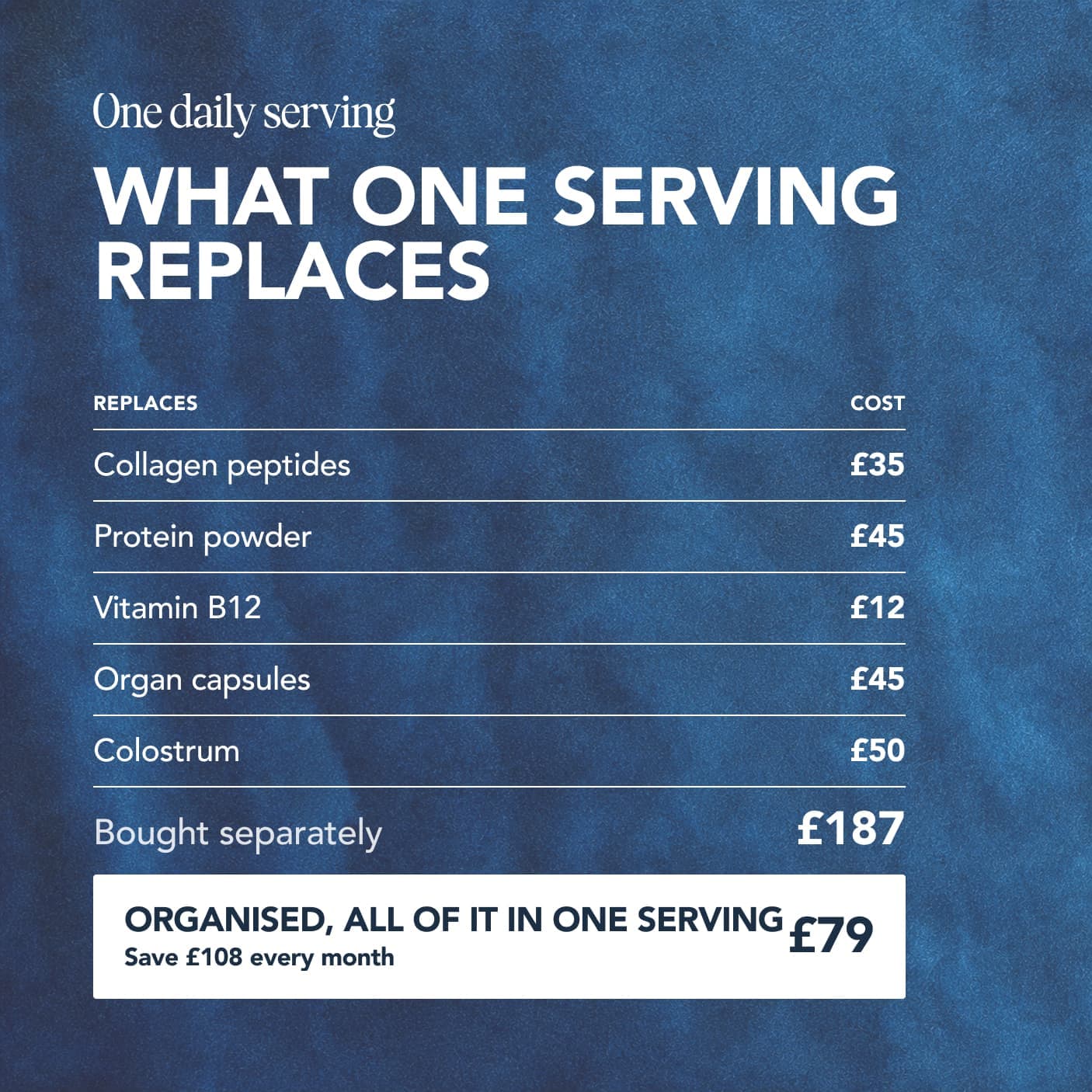
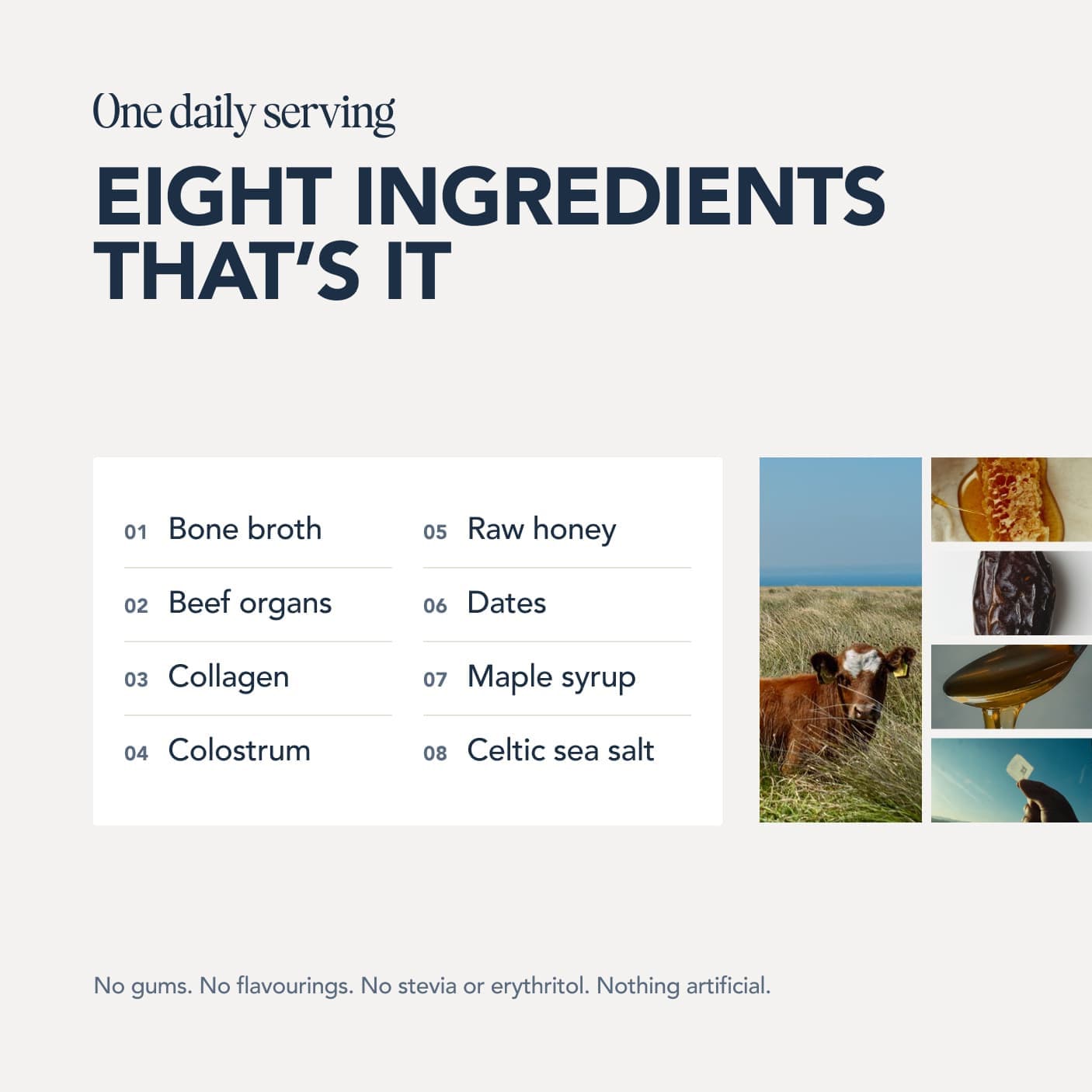
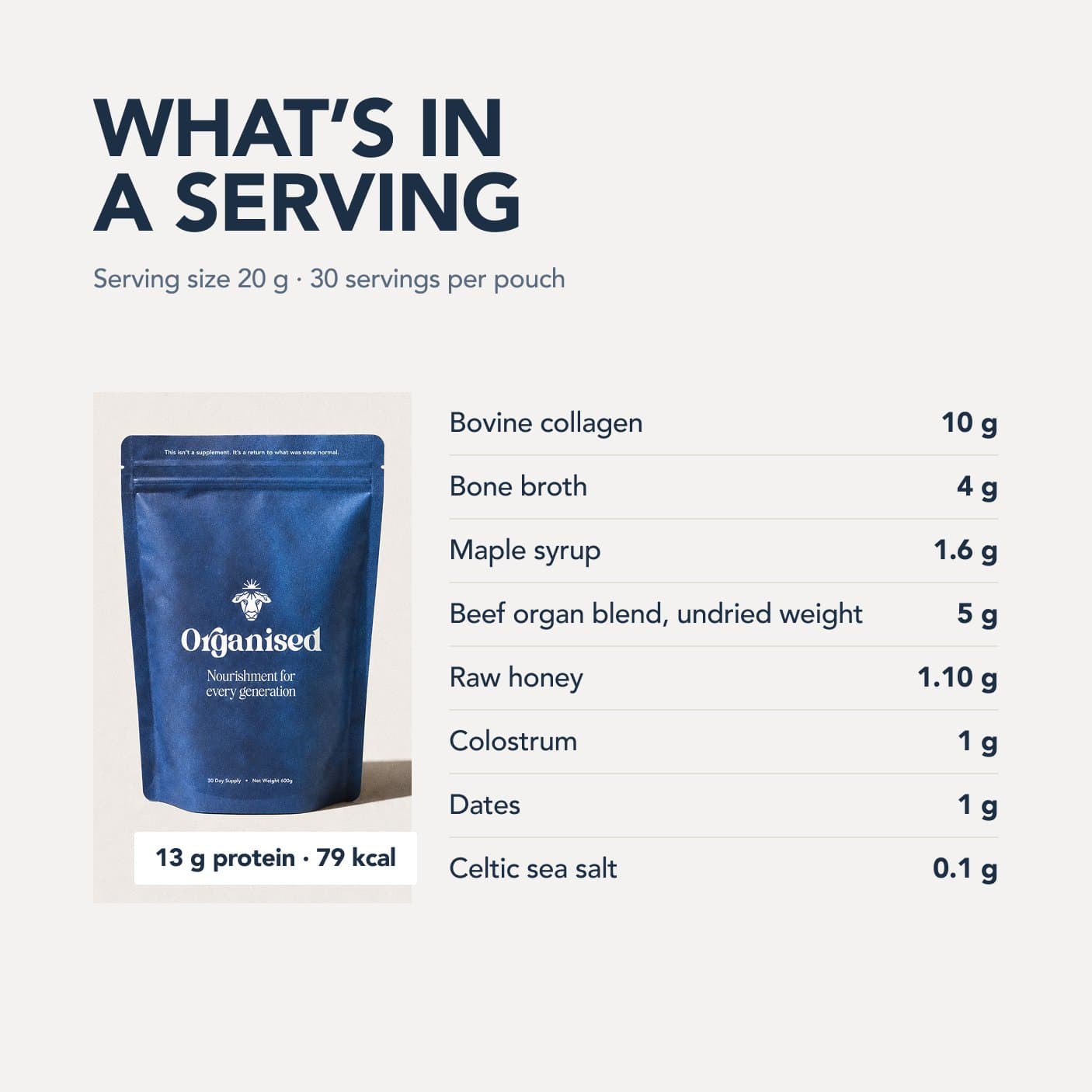
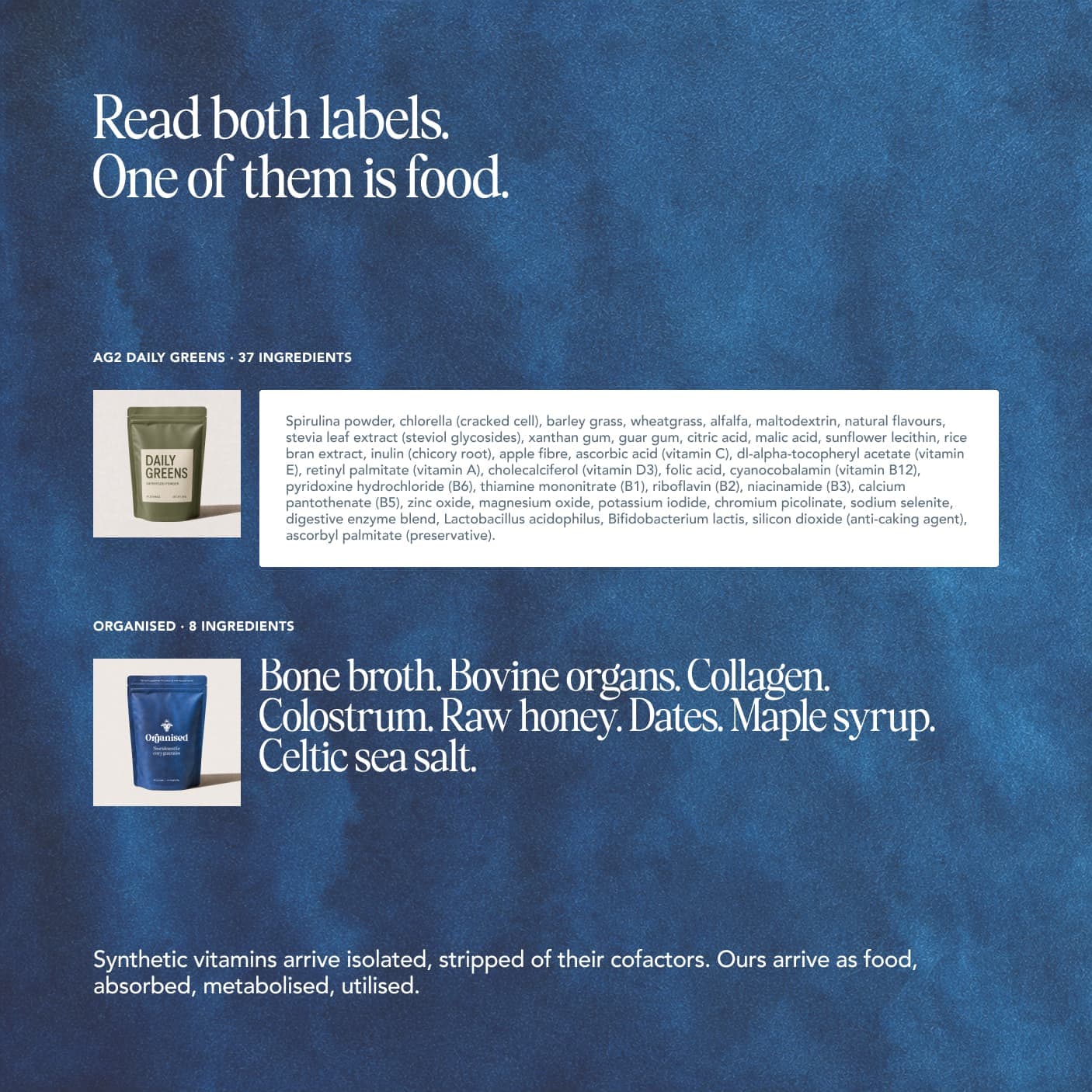
Eight real ingredients built around grass-fed beef organs, collagen and colostrum. Nothing synthetic added.
Free with your first order, worth £38. Plus £10 off the pouch with a subscription.


Free UK shipping · Made in England · 100 day money back guarantee on your first pouch · Skip, pause or cancel anytime
Zinc, selenium and immune exhaustion
Zinc is involved in hundreds of enzymatic reactions. It's critical for immune function, wound healing, protein synthesis, and energy production. When zinc is low, your immune system has to work harder to fight off infections, which exhausts you. You might not even realise you're fighting low-level infections because the symptoms are subtle.
Serum zinc can fluctuate with stress and infection, so it's not the most reliable marker. A better test is zinc in red blood cells, which shows tissue levels. Normal range is roughly 80 to 120 micrograms per decilitre, but many fatigued people run at 60 to 70.
Selenium is a cofactor for thyroid hormone conversion and for glutathione synthesis, your body's master antioxidant. Low selenium impairs both. Ask for plasma selenium, with an optimal range around 110 to 150 micrograms per litre.
If you're constantly fighting low-grade infections and your immune system is exhausted, zinc and selenium deficiency is often the culprit. Rebuild these and your immune system can finally rest. Your energy returns once your body isn't spending it all fighting invisible battles.
Inflammation markers that signal ongoing depletion
If your nutrients look fine but you're still exhausted, the next layer is inflammation. Chronic low-grade inflammation keeps your immune system activated and exhausts you the same way chronic stress does.
Ask for C-reactive protein (CRP) and erythrocyte sedimentation rate (ESR). Both are non-specific but useful. If either is elevated, your body is in a state of chronic activation. This might point to an ongoing infection, an autoimmune condition, or chronic gut inflammation that's draining your energy.
If you suspect food sensitivities or autoimmune issues, ask for food-specific IgE and IgG antibodies. Many people discover that gluten, dairy, or a specific food is driving their fatigue once they identify and remove the trigger.
Inflammation is an energy-draining state. Your body is literally burning calories fighting something it perceives as a threat. Find out what the threat is. Remove it. Your energy returns.
Fatigue is your body's signal that it's expending energy on something you can't see. Inflammation is one of the most common invisible drains.
The bottom line
Chronic fatigue is a legitimate signal. It's not all in your head. It's not laziness. It's your body telling you that something is out of balance. Most of the time, that imbalance involves nutrient deficiency, thyroid dysfunction, or chronic inflammation, all of which show up in blood work if you know what to ask for.
Print this list. Take it with you to your GP appointment. Ask for each marker specifically. If your GP resists, ask why. You have the right to understand your own biology. Once you have the full picture, you can actually address the problem instead of being told you're fine whilst you're falling apart.
References
Every source below was checked on 27 August 2026. Each link was requested and read. Where a citation and its identifier disagreed, the citation was corrected to the record or the reference was deleted along with the sentence marker that pointed at it, and where the resolved paper turned out not to support the sentence, the sentence was cut back to what it does support. Borrowed authority is worse than none, because it looks like rigour.
- National Institutes of Health, Office of Dietary Supplements. Iron - Health Professional Fact Sheet. https://ods.od.nih.gov/factsheets/Iron-HealthProfessional/ [accessed May 2026].
- National Institutes of Health, Office of Dietary Supplements. Vitamin B12 - Health Professional Fact Sheet. https://ods.od.nih.gov/factsheets/VitaminB12-HealthProfessional/ [accessed May 2026].
- National Institutes of Health, Office of Dietary Supplements. Vitamin D - Health Professional Fact Sheet. https://ods.od.nih.gov/factsheets/VitaminD-HealthProfessional/ [accessed May 2026].
Who wrote and reviewed this guide
Niall Kiddle
Author · Founder, Organised
Niall is the founder of Organised. He started the company in 2024 after fixing his own health the slow way: in 2022 he swapped a cupboard of synthetic supplements for real food, raw milk, organ meats, bone broth and honey, and felt the difference within months.
Areas of expertise: Ancestral nutrition, Organ meats, Whole-food supplementation, Gut health, Regenerative sourcing
Read Niall's full profile
Pedro Rodrigues
Reviewer · Agronomist (farming and sourcing only)
Pedro is the agronomist Organised works with on farming and sourcing. His job on the guides is to keep the science honest: he reviews what we publish about soil health, regenerative agriculture, grazing and the way food is actually produced.
Areas of expertise: Regenerative agriculture, Agronomy, Soil health, Grass-fed farming, Food sourcing
Reviewed this guide on
Read Pedro's full profileMore on energy
View all- Why You're Always Tired (And What to Eat About It)
- Adrenal Fatigue: Is It Real and What Can You Do About It?
- Always Tired? What Reddit Says to Eat (and What Actually Works)
- B12 Deficiency: Signs, Causes and the Fastest Way to Fix It
- How to Maintain Energy All Day Without Caffeine Dependency
- How Your Thyroid Affects Your Energy Levels
- Iron Deficiency: Why It's So Common and How Organs Can Help
- Metabolism Maxxing: How to Support Your Metabolic Rate with Real Food
- The Desk Worker's Guide to Staying Strong and Energised
- What Does Your Afternoon Slump Actually Mean?
- Why Intermittent Fasting Might Be Tanking Your Energy
Browse the guides library
All guidesKeep reading

Health goals
Why You're Always Tired (And What to Eat About It)
Tired all the time? Explore the nutrition behind low energy and how whole foods help rebuild stamina at the cellular level. Practical, food-first guidance.

Health goals
Osteoarthritis: Can Nutrition Slow the Progression?
Osteoarthritis is progressive, but the right nutrition may help slow it. See what the research shows about foods and nutrients that support your joints.

Health goals
Protein, Satiety and Why Diets Fail
Most diets fail because they ignore how protein controls hunger. Learn the protein leverage hypothesis and why 30g per meal matters.
Real food, made effortless
Start my daily blendA few ways to use it
All recipes
Raw Milk Ice Cream with Organised
Make raw milk ice cream at home with Organised for a seasonal, nutrient-dense treat. Three simple flavours to try whenever the craving strikes.

Liver Pate for Beginners: A Gentle Introduction to Organ Meats
Simple liver pate recipe to start eating organ meats. Chicken liver, butter, and herbs. Gentle introduction to nutrient-dense whole foods.

The Organised Recovery Smoothie for After Exercise
A recovery smoothie made with beef protein, raw milk, frozen berries, collagen, and honey. Optimal nutrition in the 30-minute window after exercise.


 Join over 100,000+ members
Build a better food system with us
The Organised community is thousands of people choosing real food and backing the farmers who grow it, all of us trying to leave the world a little better than we found it. If that is what you care about too, you belong here.