Coming Off the Pill? How to Support Your Body's Transition
You're coming off the pill. You've made the decision. But your body hasn't been without artificial hormones in years, maybe over a decade. When you stop, your natural hormones are going to roar back. They might bring acne, mood swings, irregular cycles, fatigue. This isn't a sign you should go back on it. It's a sign your body needs serious nutritional support during transition.
By Niall Kiddle, Founder, Organised

Reviewed by Pedro Rodrigues, Agronomist (farming and sourcing only) ·
7 min read · Published · Updated · 6 cited sources
Makers of the Organised Daily blend, a grass-fed beef organ supplement from regenerative UK farms

When you stop, your natural hormones are going to roar back. They might bring acne, mood swings, irregular cycles, fatigue. This isn't a sign you should go back on it. It's a sign your body needs serious nutritional support during transition.

What happens when you stop
The birth control pill works by suppressing your natural hormone production. Oestrogen and progesterone in the pill shut down your hypothalamus and pituitary gland.1 Your ovaries quieten. Your natural cycle stops. For as long as you take it, your body is hormonally dormant in this way.
When you stop, your brain immediately starts sending signals to restart ovulation. Your ovaries have to wake up. They haven't released an egg in years. They need to remember how. This process takes time, usually three to six months.
During this time, hormone levels swing wildly. Some months your oestrogen is high, then it crashes. Some months you ovulate, some you don't. This chaos is why post-pill acne, mood swings, and irregular cycles happen. It's not a malfunction. It's your body relearning its rhythm.
The first six months off the pill are a transition, not a stable state. Your body is rebooting. It needs nutrient support to do that well.
Additionally, the pill depletes specific nutrients. It depletes B vitamins, particularly B6 and folate. It depletes magnesium, zinc, and selenium.2 It impairs vitamin K status. After years of depletion, your stores are low. Stopping the pill means you have to replicate those nutrients from food, and do it aggressively, immediately.
The liver needs support
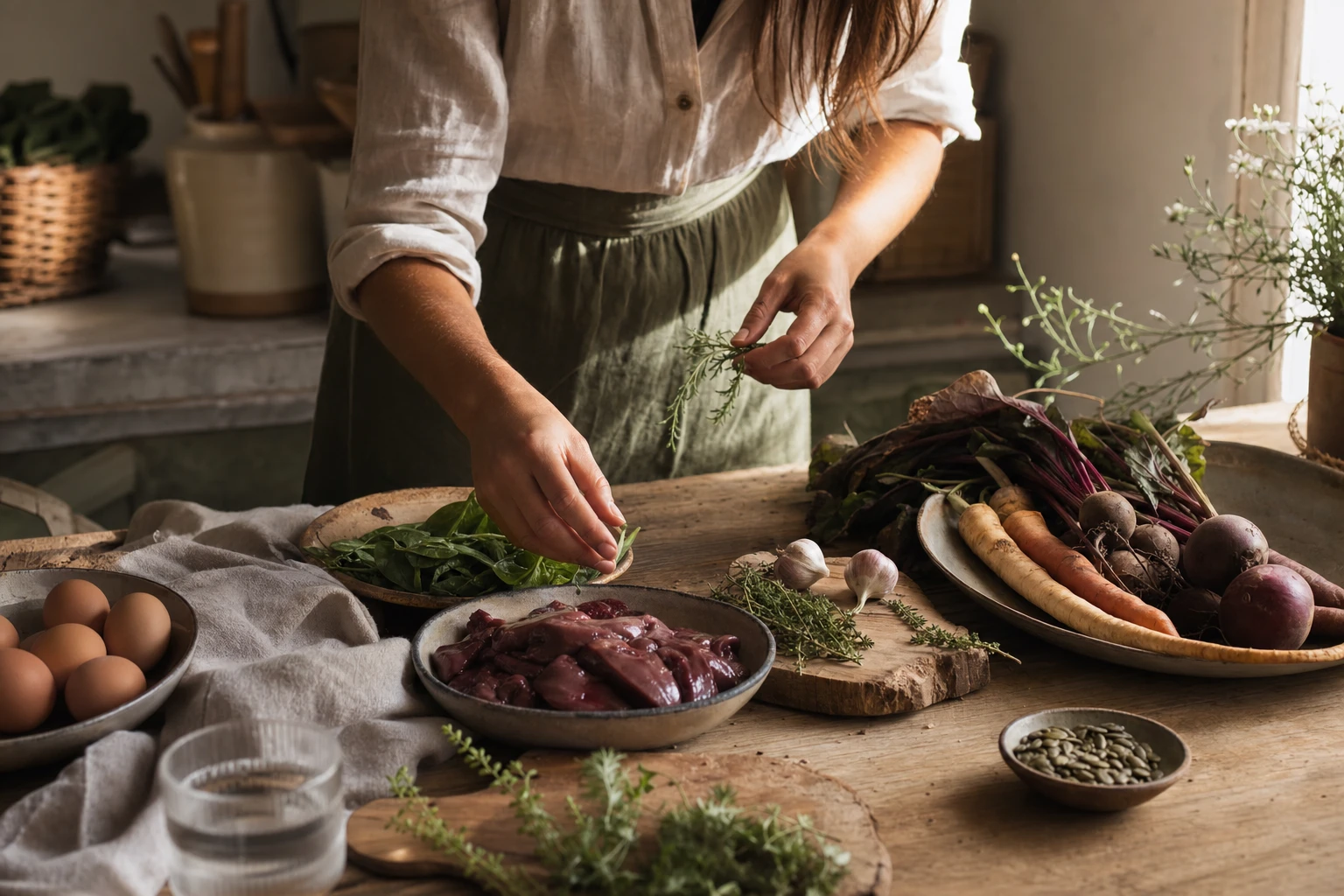
Your liver is the primary organ that metabolises hormones. It takes circulating oestrogen and packages it for excretion. When you're on the pill, your liver is working overtime, processing synthetic oestrogen that's slightly different from natural oestrogen and therefore harder to metabolise.
When you stop the pill, your liver gets a reprieve from the synthetic hormone, but now it has to process higher levels of natural hormones as your body reboots. It needs to be in peak function to do this without chaos.
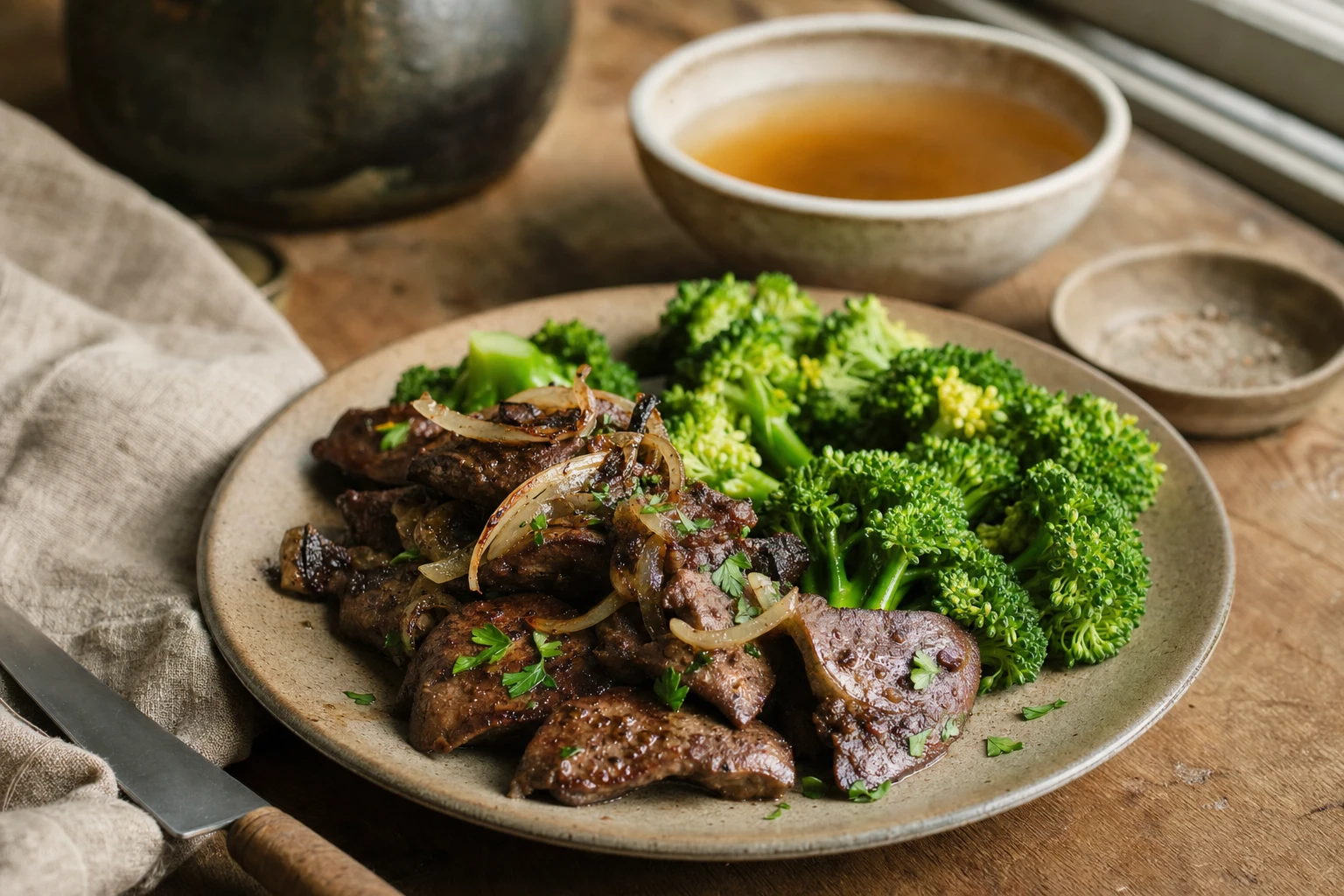
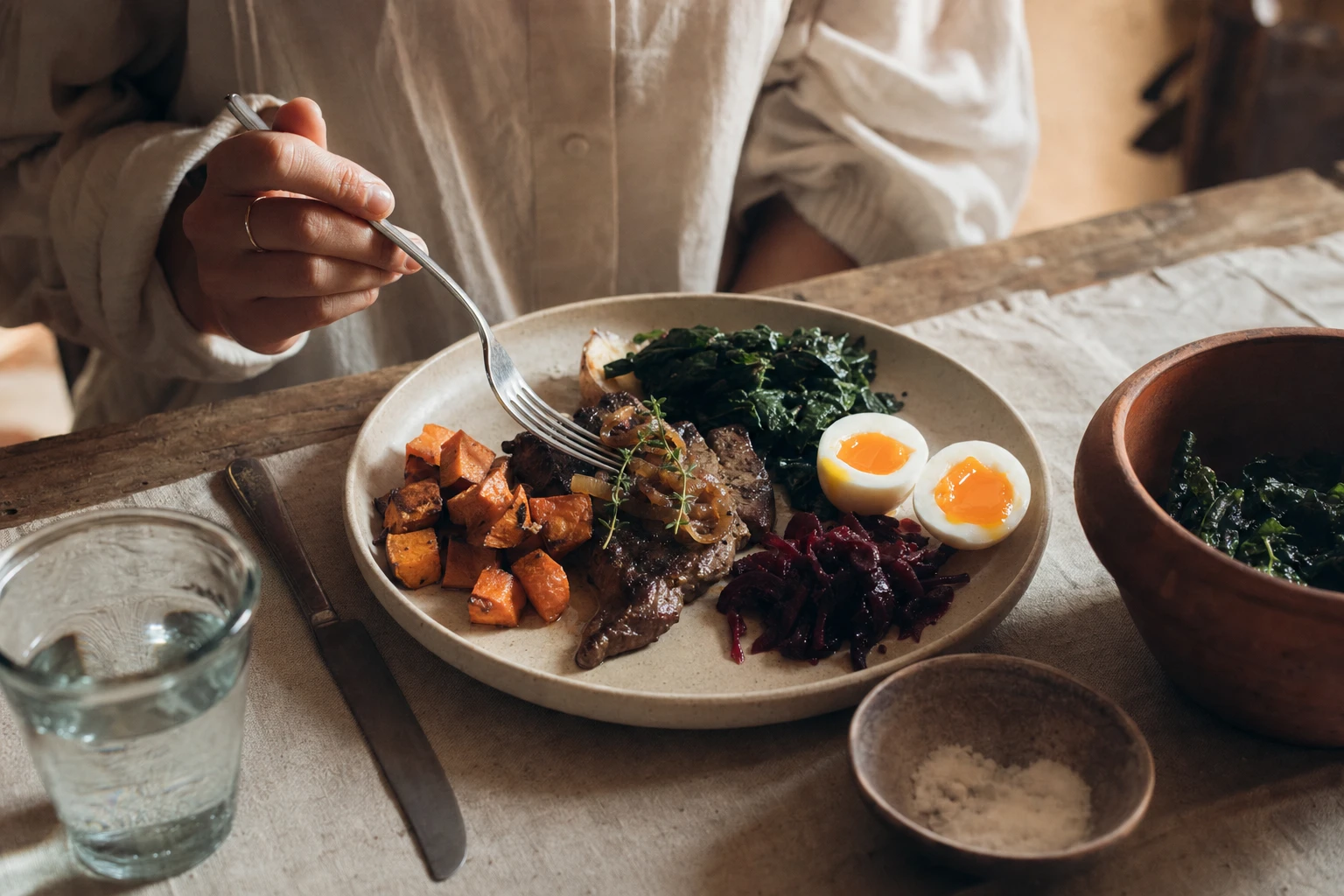
Liver support means eating liver. Not a supplement. Actual beef liver. The organ contains B vitamins (especially B6 and folate), iron, zinc, and selenium. These are the exact nutrients the pill depleted. Eating liver twice weekly during the transition is not optional. It's restorative medicine.
Your liver metabolises hormones. Feed it the nutrients it needs to do this well. Liver.
Cruciferous vegetables like broccoli, cabbage, and Brussels sprouts support liver function. They contain sulforaphane, a compound that upregulates liver detoxification pathways.3 A serving with meals, especially with protein, enhances hormone clearance.
The nutrient pattern of recovery
B6 is essential for progesterone production. The pill depleted it.2 You need to restore stores aggressively. B6 is found in beef, fish, chickpeas, potatoes, dried fruit. A small serving of salmon or beef daily alongside carbohydrates helps restore B6 quickly.
Folate is essential for DNA synthesis and methylation. The pill depleted it significantly.4 Natural sources are leafy greens (especially cooked spinach and collards), liver, asparagus, lentils. Aim for a generous serving of cooked greens daily. This is non-negotiable.
Magnesium was depleted by the pill and is further depleted by stress and erratic hormone swings. Magnesium deficiency worsens mood swings and period pain dramatically. Food sources are pumpkin seeds, almonds, dark chocolate, leafy greens, bone broth. Aim for multiple sources daily.
Zinc regulates reproductive hormones. It's essential for progesterone production and egg maturation. The pill depleted it. Oysters, beef, pumpkin seeds. Consistency matters more than single servings.
B6, folate, magnesium, zinc, iron. These are the recovery nutrients. They're found in organs, seafood, eggs, dark leafy greens, and seeds.
Selenium supports thyroid function, and thyroid dysfunction often presents during pill cessation. Thyroid hormones and reproductive hormones communicate. Selenium from fish, organs, and Brazil nuts (though be cautious with Brazil nuts, as too much selenium is toxic).5
Iron is critical, particularly if your periods were light on the pill and suddenly become heavier as your body reboots. Haem iron from red meat and organs is most bioavailable. Pair with vitamin C to enhance absorption dramatically.6
Specific foods and their roles
Bone broth made from beef bones is rich in gelatin, glycine, minerals. It supports the gut barrier, which is often compromised by years of pill use. Drink a mug daily. Magnesium, collagen, amino acids. Simple medicine.
Eggs, especially the yolks, contain choline and lutein. Choline supports liver detoxification. Lutein protects eye health (the pill depletes lutein). Three eggs weekly is a minimum during transition.
Red meat, particularly beef and lamb, provides iron, B6, zinc, and selenium. A meal three times weekly, paired with vegetables and starch, is the foundation of hormonal recovery.
Sardines and mackerel deliver omega-3 fats, which reduce inflammation and support healthy hormone production. The inflammation of post-pill transition is significant. Omega-3s mitigate it. A tin or two of sardines weekly is affordable medicine.
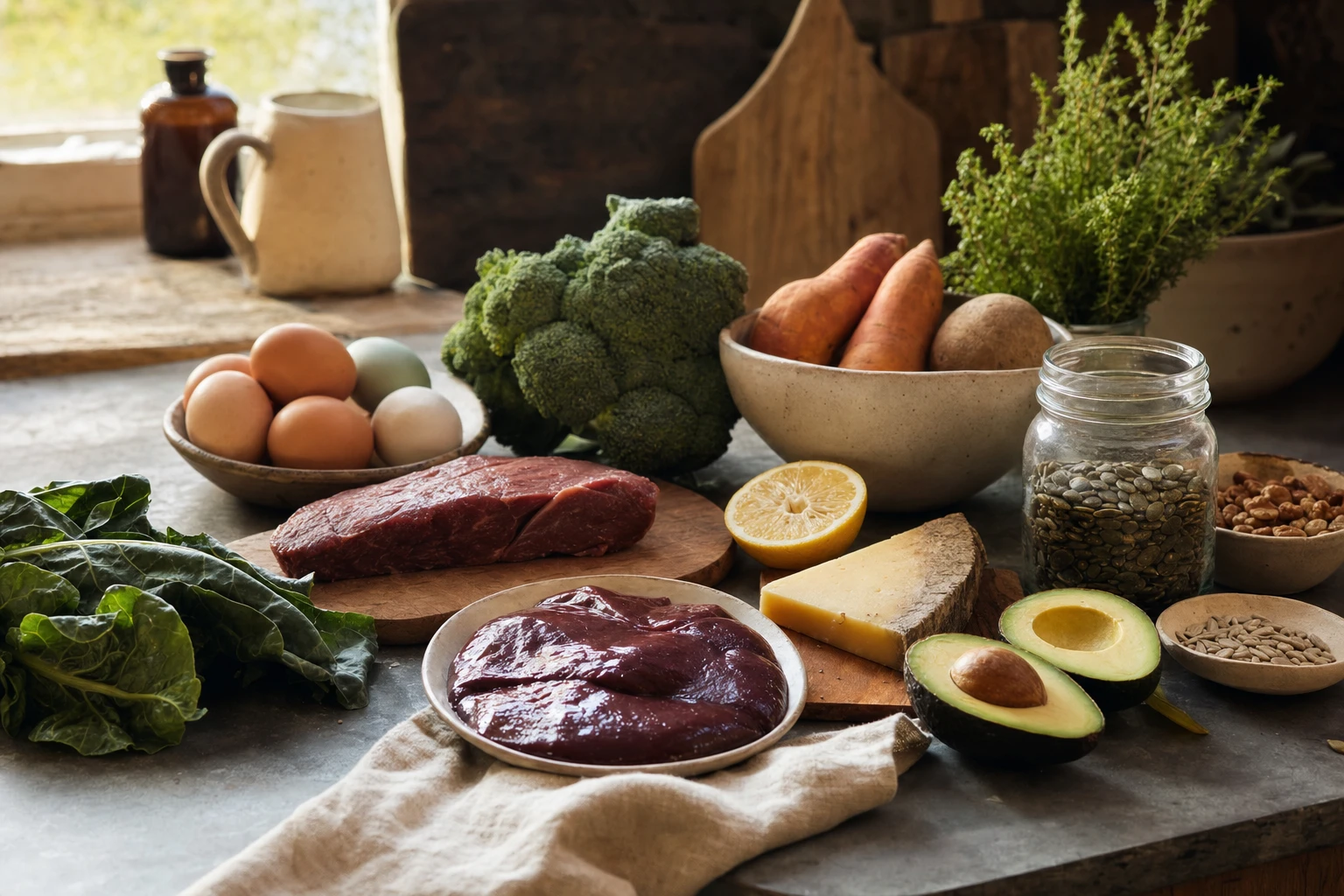
Liver twice weekly, beef three times, eggs three times, sardines twice, bone broth daily. That's the post-pill nutrition pattern.
Salt and minerals matter. Whilst coming off the pill, your mineral balance is unstable. Real salt, mineral water, and electrolyte-rich foods (broth, coconut water) support this transition. Don't restrict salt during this phase.
Carbohydrates matter too. Carbs signal fed state to your body. When your body senses adequate nutrition, hormones stabilise faster. Don't fear carbs during this transition. Potatoes, rice, oats, fruit. These are part of hormonal recovery.
Get health guides like this, free
Two short reads a week on eating for energy, gut health, skin, sleep and more.
By signing up you agree to receive emails from us. No spam, unsubscribe anytime.
The transition timeline
Expect the first three months to be chaotic. Hormones are swinging wildly. If you support nutrition aggressively, the chaos is manageable. If you restrict food or eat poorly, the chaos is severe and demoralising.
By month three to four, patterns begin to emerge. You might see ovulation signs. Cervical mucus changes. Basal body temperature shifts. Mood becomes more stable. Skin begins to clear if post-pill acne was present.
By month six, most women have re-established reasonably regular cycles. Hormone levels stabilise. Mood swings calm. Acne begins to genuinely resolve as liver function normalises and hormone production settles into a rhythm.
Six months is the transition window. Nutritional support for six months changes whether this transition is smooth or chaotic.
Some women take longer. Previous pill use duration, stress levels, and existing nutrient status all affect recovery speed. But consistent nutrition accelerates the process significantly. The ones who recover fastest are the ones who treat it as a serious nutritional healing phase, not a casual health change.
Practical steps to manage chaos
Post-pill acne is common and frustrating. It's not permanent. It's a sign that your skin is detoxifying and hormones are cycling. Support your liver and skin will clear. Avoid restricting dairy or fat, as these are needed for hormone production. Support your gut health with bone broth and fermented foods.
Irregular periods are normal. Track them but don't panic. By month six, regularity usually returns. If it doesn't, check for thyroid dysfunction or nutrient deficiency through testing.
Mood swings respond well to magnesium and omega-3 supplementation from food. Reduce stress. Sleep. These are non-negotiable during transition. You cannot out-supplement stress and poor sleep.
1 of 9
Daily blend
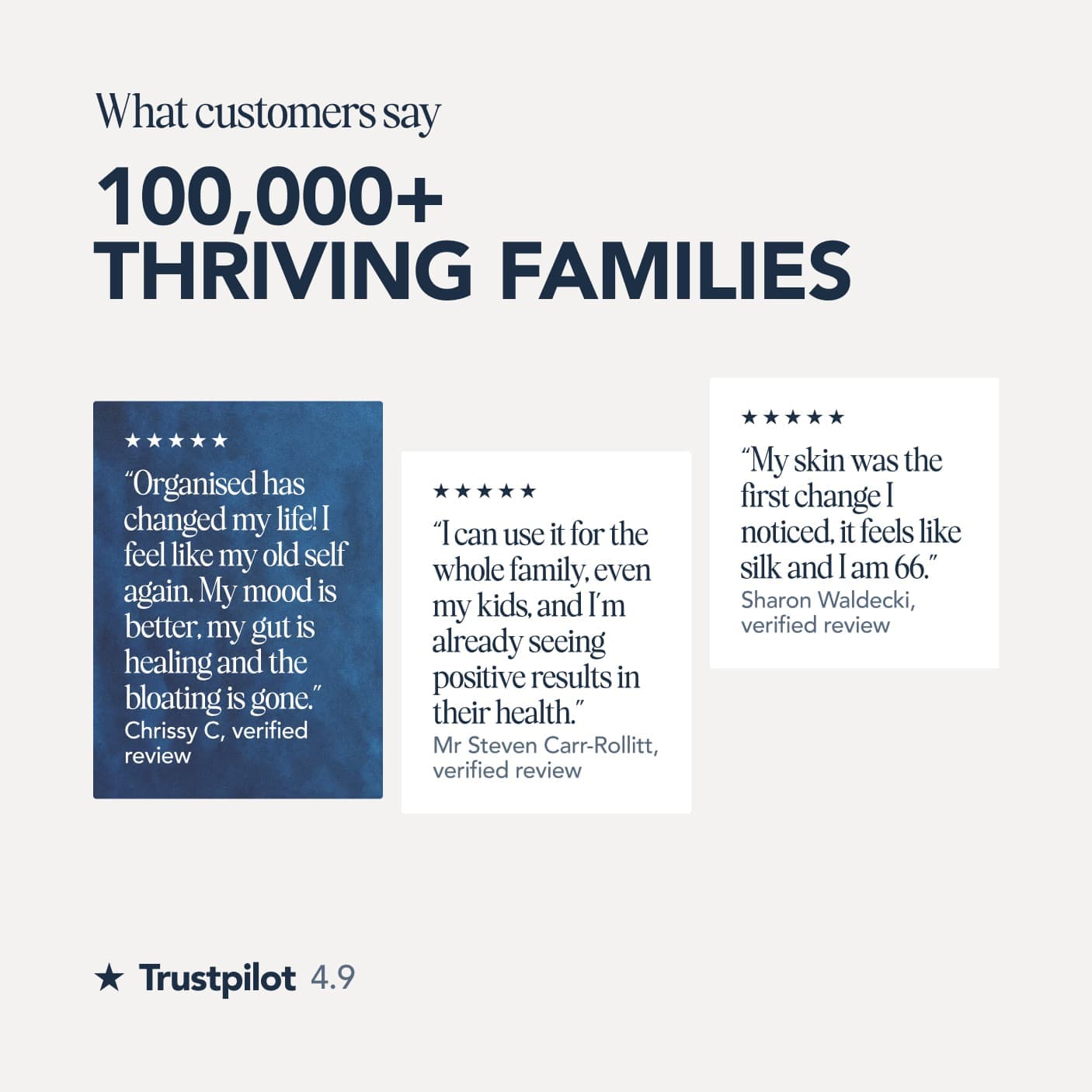
100,000+ thriving families4.9 on Trustpilot
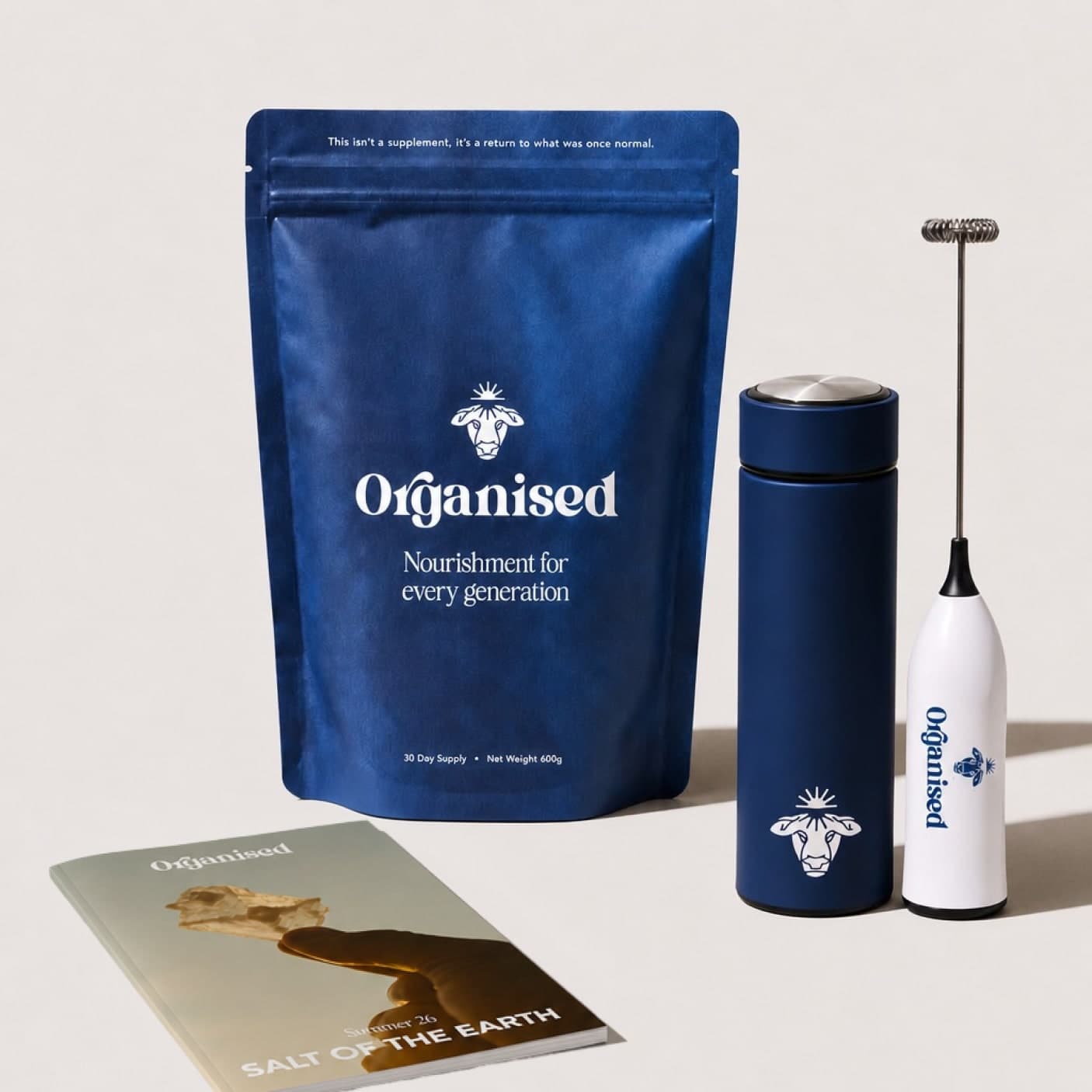
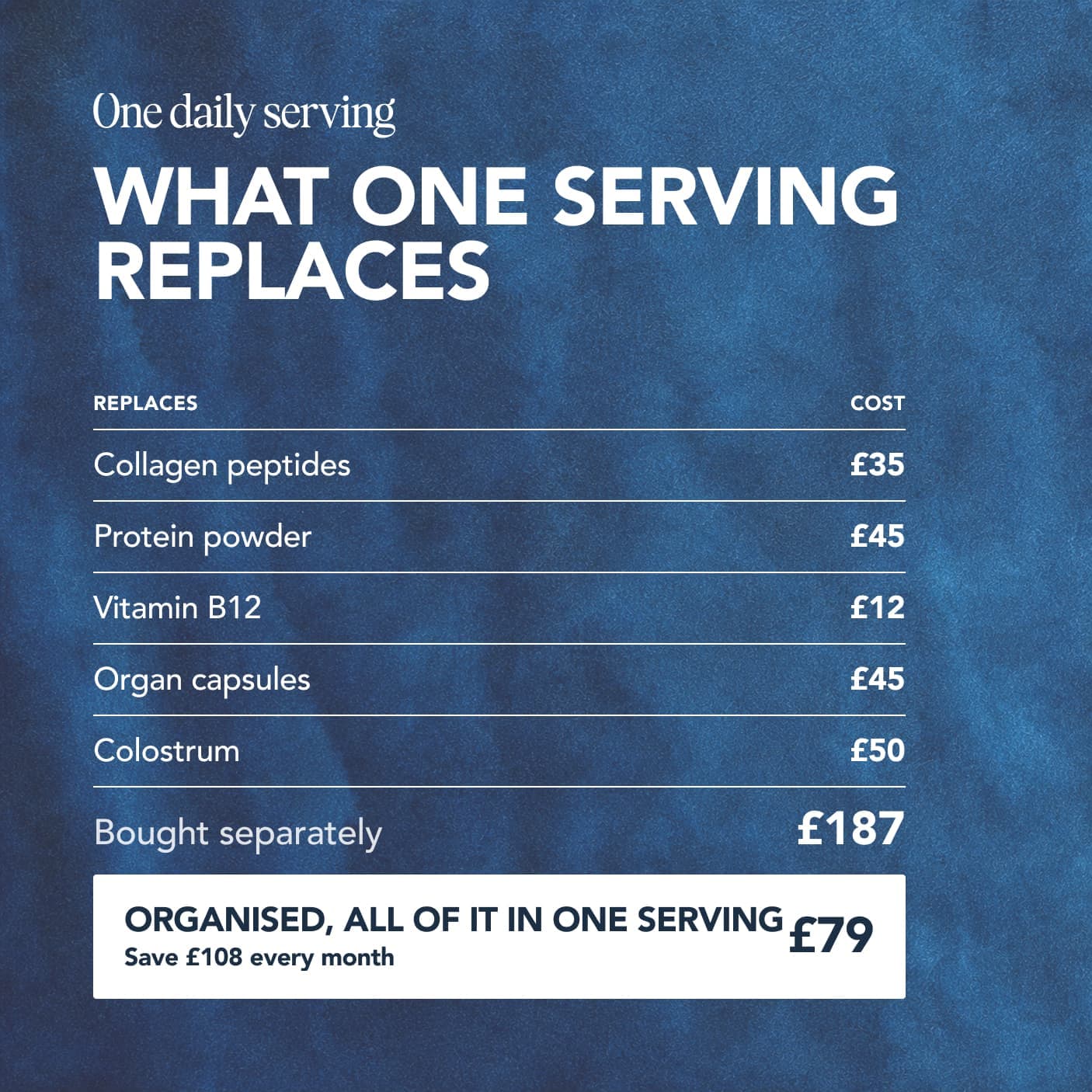
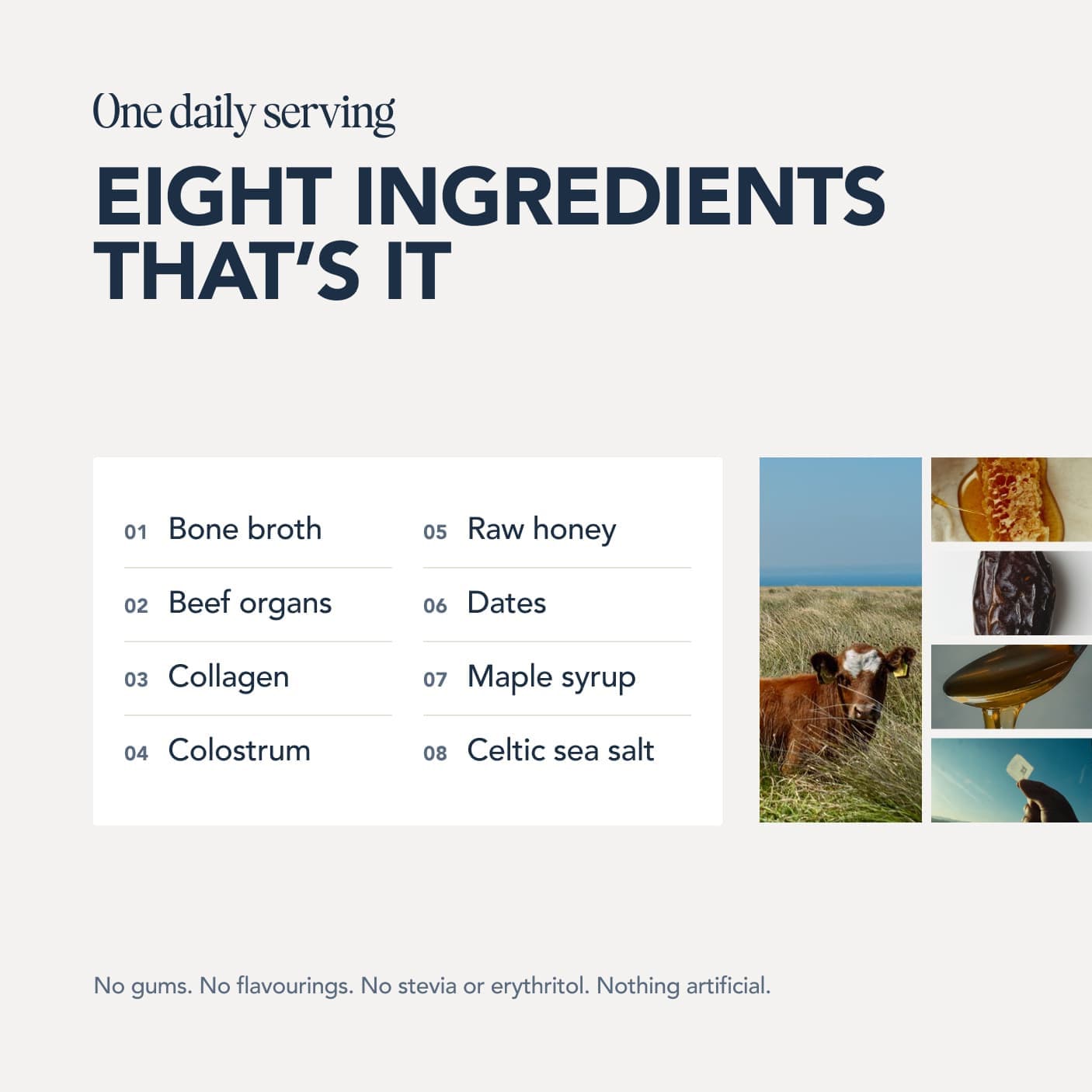
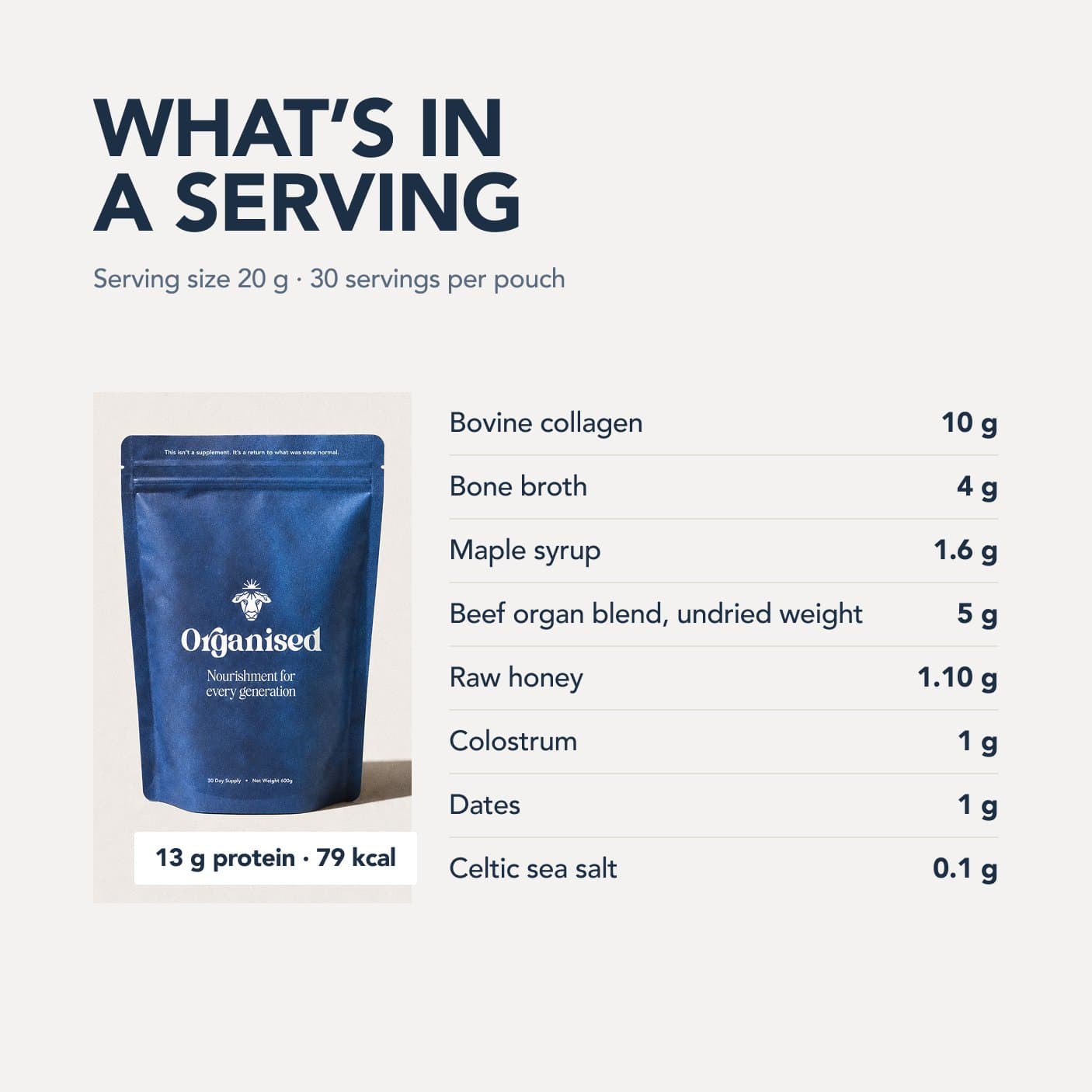
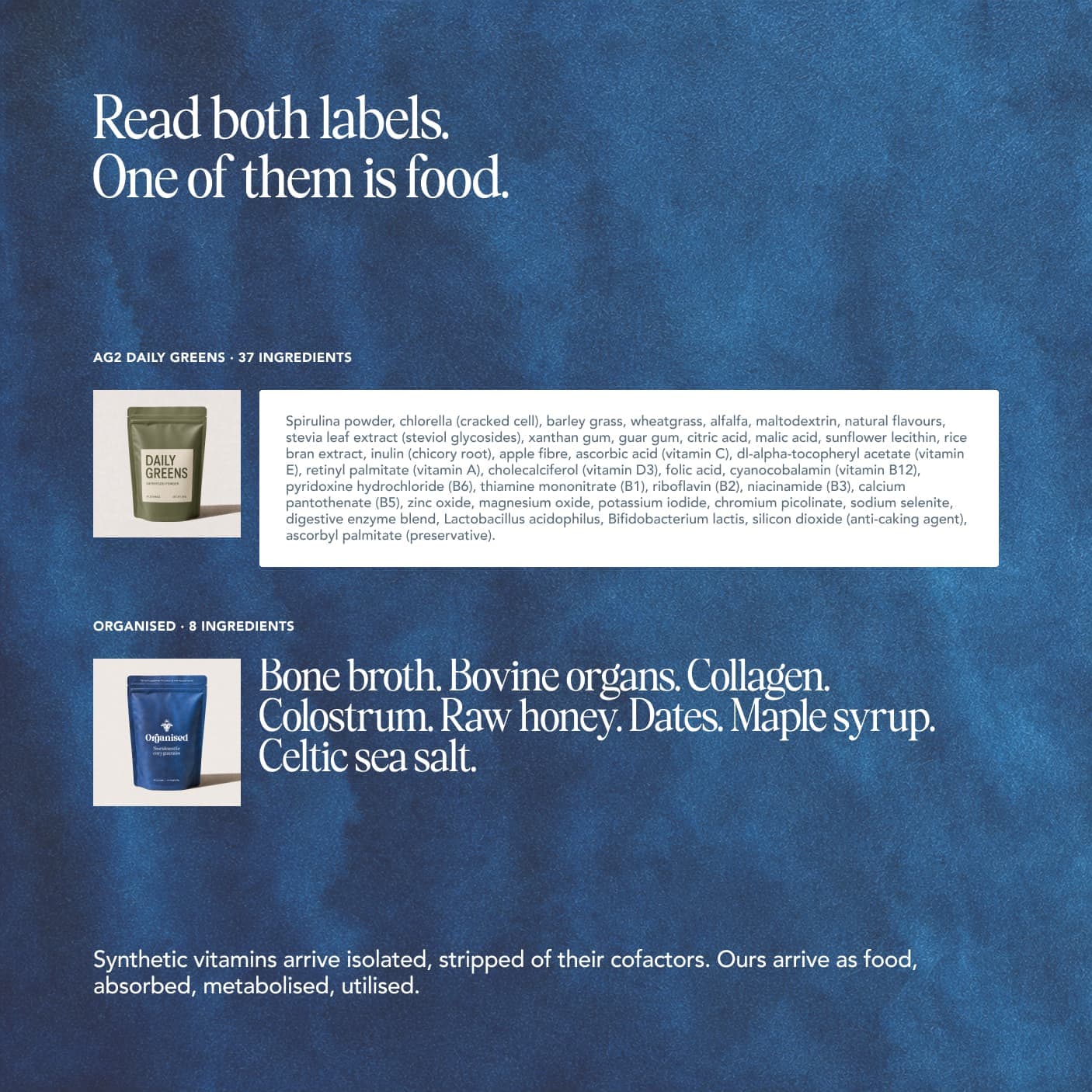
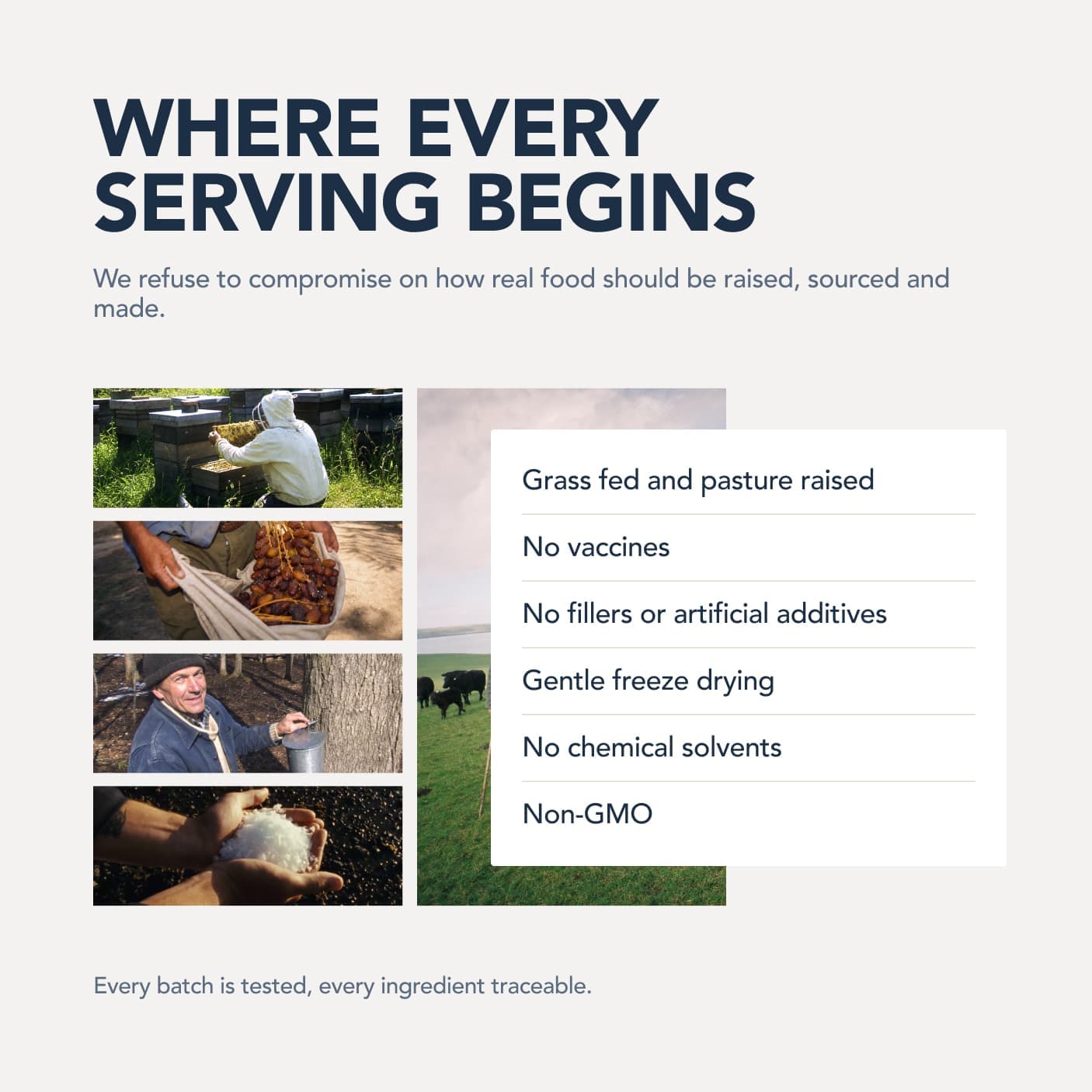
Eight real ingredients built around grass-fed beef organs, collagen and colostrum. Nothing synthetic added.
Free with your first order, worth £38. Plus £10 off the pouch with a subscription.
Free UK shipping · Made in England · 100 day money back guarantee on your first pouch · Skip, pause or cancel anytime
Listening to your body
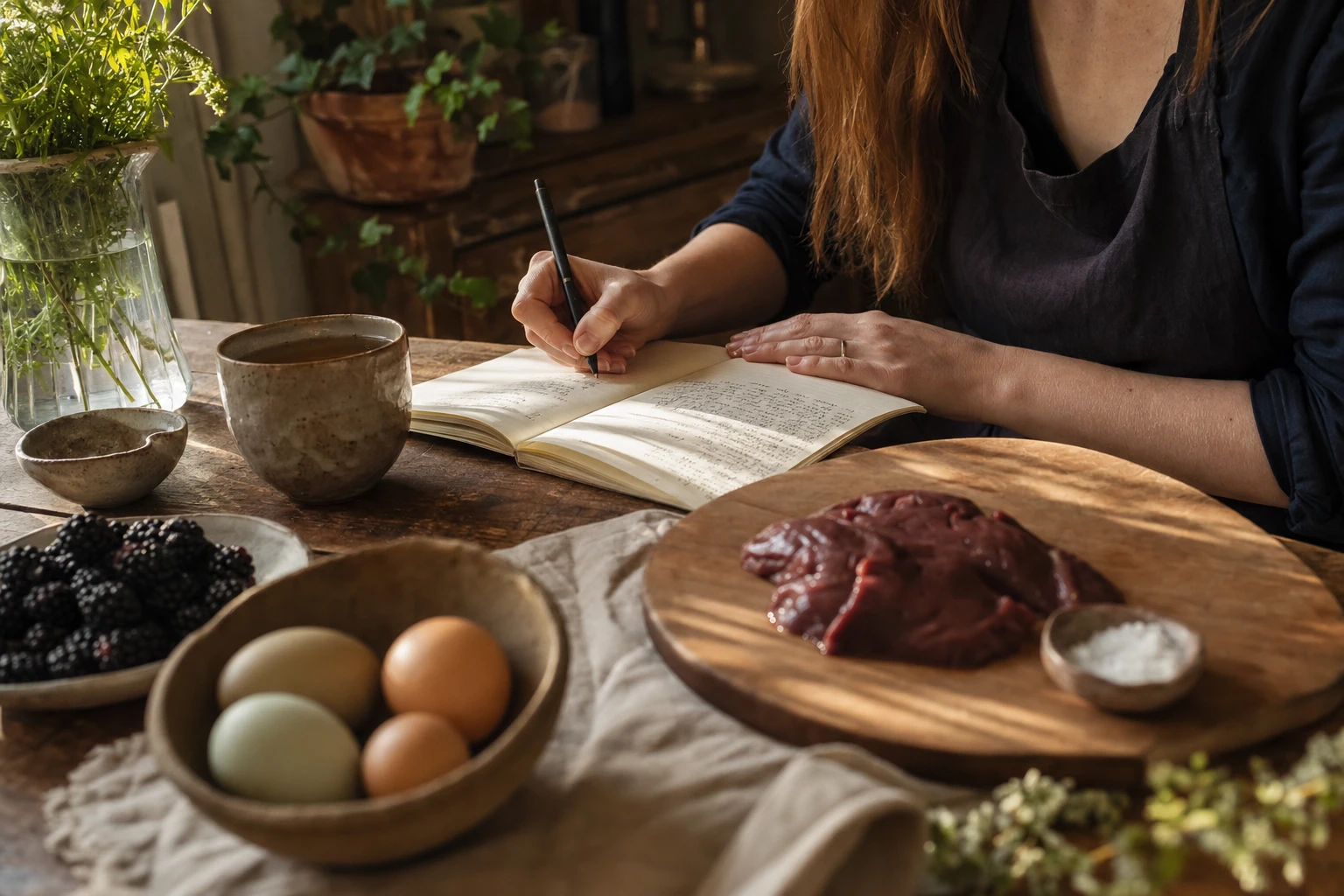
Post-pill transition is not about perfection. It's about paying attention. Track your cycle, your energy, your mood, your skin. These are signals from your body. When energy crashes, it's asking for more calories or minerals. When acne flares, it's asking for liver support. When mood swings, it's asking for magnesium. Learn to listen and respond.
Some days you'll eat like a queen. Some days you'll survive on bone broth and eggs. That's fine. There's no rigid protocol that works for everyone. Your body is unique. Feed it what it's asking for. Move toward the foods that make you feel good: organs, shellfish, starch, greens, fat. Away from foods that increase inflammation: seed oils, processed foods, excessive sugar.
This transition is an opportunity to learn what your body actually needs, not what the diet industry told you it needed. This knowledge will serve you for the rest of your life.
The bottom line
Coming off the pill is not a simple stop. It's a transition that requires nutritional support. Your liver needs to process higher hormone loads. Your body needs to rebuild nutrient stores depleted by years of pill use. Your reproductive system needs to relearn its rhythm.
Feed yourself liver twice weekly. Eat red meat three times weekly. Include organs, seafood, eggs, dark leafy greens, starchy carbohydrates, and good salt. Drink bone broth. Manage stress. Sleep when you can. This is not a time for restriction. It's a time for genuine nourishment. The first six months off the pill are an investment in hormonal health for the next decade. Make that investment through food.
References
Every source below was checked on 27 August 2026. Each PubMed, PMC and DOI identifier was resolved against NCBI or Crossref, and what it opens is printed under the citation, so you can see the link goes where the citation says without leaving the page. Where a citation and its identifier disagreed, the citation was corrected to the record or the reference was deleted along with the sentence marker that pointed at it, and where the resolved paper turned out not to support the sentence, the sentence was cut back to what it does support. Borrowed authority is worse than none, because it looks like rigour.
- Cooper DB et al. Oral Contraceptive Pills. StatPearls. NCBI Bookshelf NBK430882.
- Palmery M et al. Oral contraceptives and changes in nutritional requirements. Eur Rev Med Pharmacol Sci. PubMed PMID: 23852908.Checked 27 August 2026: PMID 23852908 opens Palmery M, Saraceno A, Vaiarelli A et al, Oral contraceptives and changes in nutritional requirements. Eur Rev Med Pharmacol Sci 2013;17(13):1804-13.
- Vanduchova A et al. Isothiocyanate from Broccoli, Sulforaphane, and Its Properties. J Med Food. PubMed PMID: 30372361.Checked 27 August 2026: PMID 30372361 opens Vanduchova A, Anzenbacher P, Anzenbacherova E, Isothiocyanate from Broccoli, Sulforaphane, and Its Properties. J Med Food 2019;22(2):121-126. PubMed indexes it as: Review.
- Lussana F et al. Blood levels of homocysteine, folate, vitamin B6 and B12 in women using oral contraceptives compared to non-users. PubMed PMID: 15013271.Checked 27 August 2026: PMID 15013271 opens Lussana F, Zighetti ML, Bucciarelli P et al, Blood levels of homocysteine, folate, vitamin B6 and B12 in women using oral contraceptives compared to non-users. Thromb Res 2003;112(1-2):37-41. PubMed indexes it as: Clinical Trial, Comparative Study, Controlled Clinical Trial.
- National Institutes of Health Office of Dietary Supplements. Selenium - Health Professional Fact Sheet. NIH ODS Selenium.
- National Institutes of Health Office of Dietary Supplements. Iron - Health Professional Fact Sheet. NIH ODS Iron.
Who wrote and reviewed this guide
Niall Kiddle
Author · Founder, Organised
Niall is the founder of Organised. He started the company in 2024 after fixing his own health the slow way: in 2022 he swapped a cupboard of synthetic supplements for real food, raw milk, organ meats, bone broth and honey, and felt the difference within months.
Areas of expertise: Ancestral nutrition, Organ meats, Whole-food supplementation, Gut health, Regenerative sourcing
Read Niall's full profile
Pedro Rodrigues
Reviewer · Agronomist (farming and sourcing only)
Pedro is the agronomist Organised works with on farming and sourcing. His job on the guides is to keep the science honest: he reviews what we publish about soil health, regenerative agriculture, grazing and the way food is actually produced.
Areas of expertise: Regenerative agriculture, Agronomy, Soil health, Grass-fed farming, Food sourcing
Reviewed this guide on
Read Pedro's full profileMore on hormones
View all- Hormonal Health Starts in the Kitchen: A Whole Food Guide
- Perimenopause Nutrition: What Changes and What to Eat
- Cortisol, Stress and Nutrition: Breaking the Cycle
- Eating for Each Phase of Your Menstrual Cycle
- How Blood Sugar Instability Wrecks Your Hormones
- How Liver Supports Oestrogen Detoxification
- How Seed Oils Disrupt Your Hormones
- Insulin Resistance: The Silent Metabolic Crisis
- Is Polyester Bad For Hormones? Your Guide To Hormone Safe Clothing
- PCOS and Nutrition: A Whole Food Approach
- Testosterone and Nutrition: What Men Need to Know
- Thyroid Health: The Nutrients Your Thyroid Needs to Function
Browse the guides library
All guidesKeep reading

Health goals
Is Polyester Bad For Hormones? Your Guide To Hormone Safe Clothing
You probably do not think much about the fibres that sit against your skin all day. The leggings you live in. The sports bra you sweat in. The school
Health goals
The Best Nutrients for Fighting Off Colds and Flu
The best nutrients for cold and flu support, from zinc and vitamin C to fire cider and bone broth. Build your whole-food kit before the season hits.
Health goals
The Surprising Link Between Protein and Sleep Quality
Learn how protein supports sleep quality through amino acids that help produce melatonin and serotonin, plus simple ways to eat for deeper, better rest.
Real food, made effortless
Start my daily blendA few ways to use it
All recipes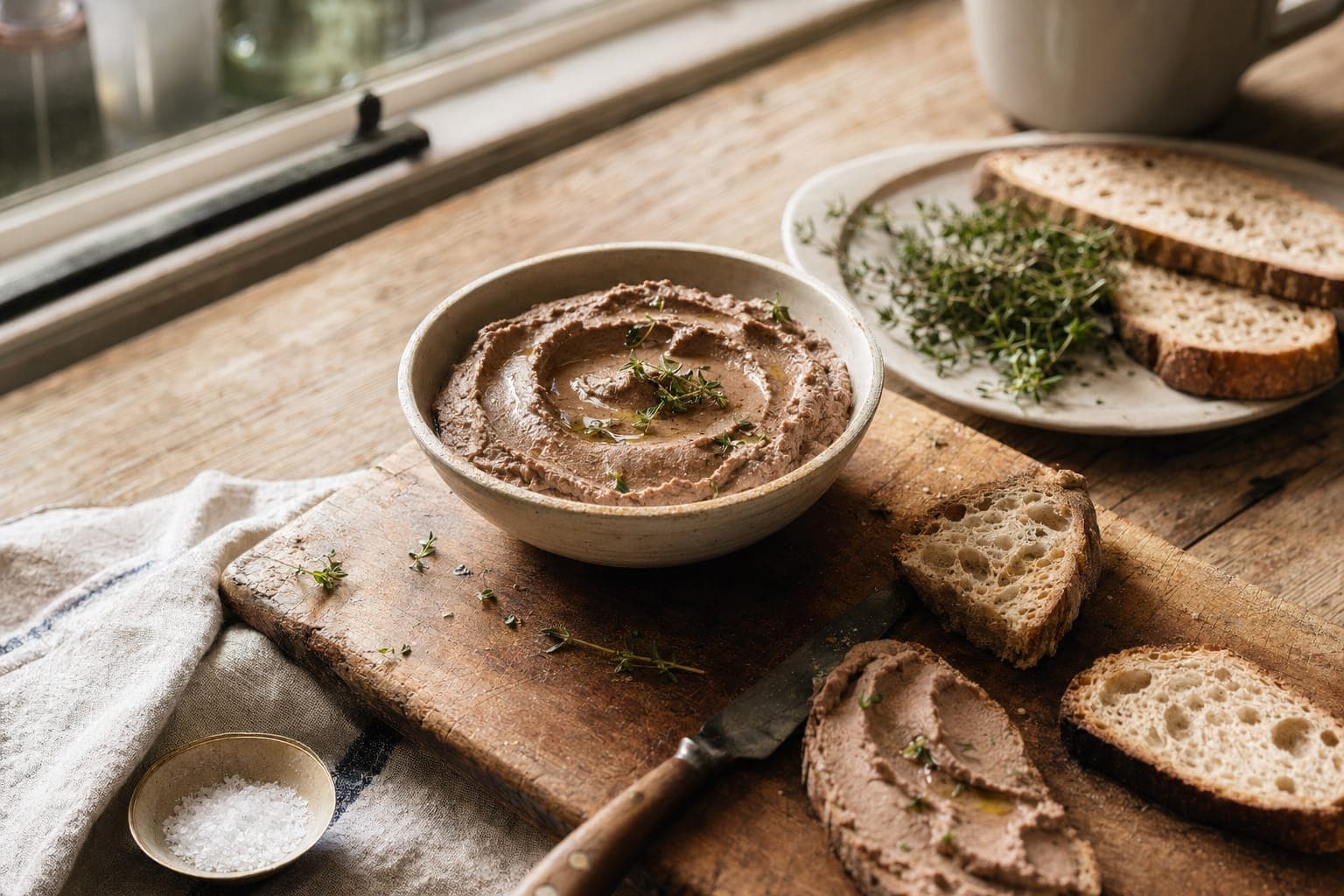
Liver Pate for Beginners: A Gentle Introduction to Organ Meats
Simple liver pate recipe to start eating organ meats. Chicken liver, butter, and herbs. Gentle introduction to nutrient-dense whole foods.
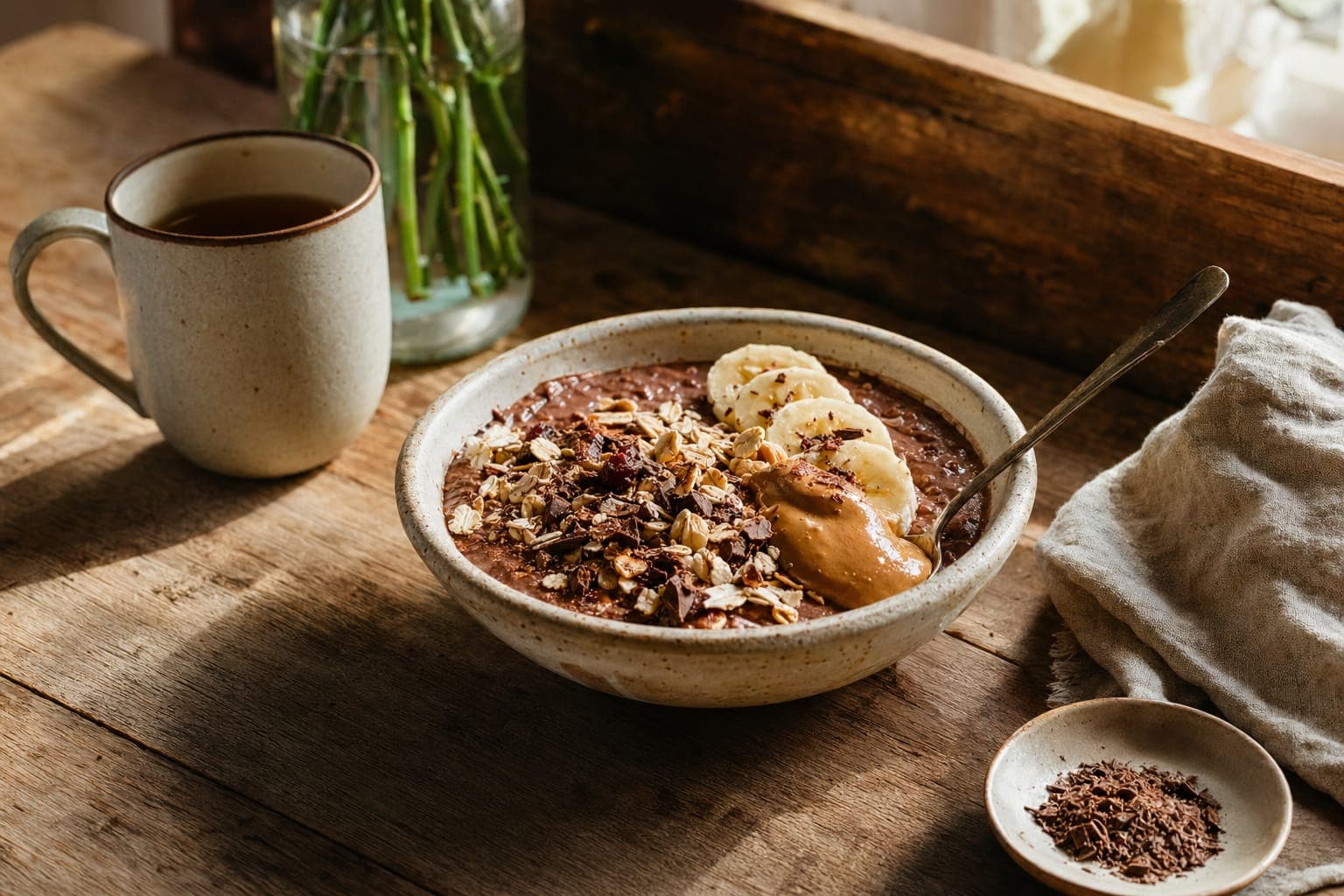
10 Ways to Use Organised That Aren't Just a Shake
Move beyond the basic shake. Discover 10 creative ways to use Organised in smoothie bowls, oats, yoghurt, baking, and more.
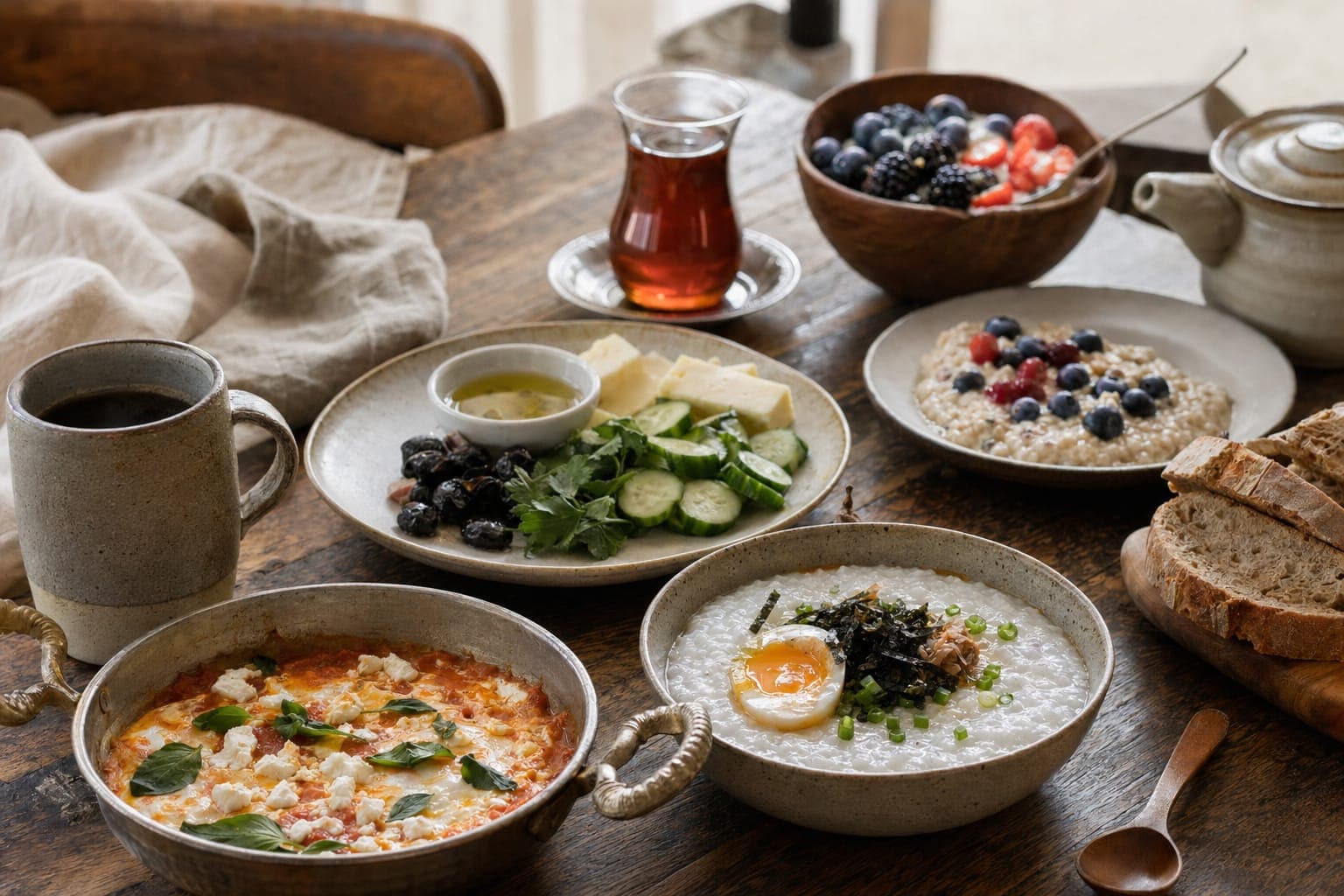
Ancestral Breakfast Ideas from Around the World
Traditional breakfast recipes from cultures that got nutrition right. Japanese, Turkish, Scottish, and more. Whole-food breakfast inspiration.


 Join over 100,000+ members
Build a better food system with us
The Organised community is thousands of people choosing real food and backing the farmers who grow it, all of us trying to leave the world a little better than we found it. If that is what you care about too, you belong here.