The Surprising Link Between Protein and Sleep Quality
You fall asleep fine at 10 PM. But at 2 or 3 AM, your eyes snap open. You lie there for an hour, your mind cycling through anxieties, unable to drift back. You assume it's stress, but it might be simpler: you're not eating enough protein, and your body is struggling to maintain the neurotransmitters that keep you asleep.

By Niall Kiddle, Founder, Organised

Reviewed by Pedro Rodrigues, Agronomist (farming and sourcing only) ·
5 min read · Published · Updated · 3 cited sources
Makers of the Organised Daily blend, a grass-fed beef organ supplement from regenerative UK farms


The midnight awakening problem
The specific pattern of waking at 2 to 4 AM is often blood sugar driven. You eat dinner around 6 PM. Blood sugar peaks and falls. By 2 AM, it's bottomed out. Your liver releases adrenaline to stabilise it. Adrenaline wakes you up. You're alert, anxious, and can't get back to sleep.
This is a metabolic problem, not a psychological one. The standard advice (anxiety management, meditation, sleep hygiene) misses the actual issue. Your metabolism is disrupted.
But there's a deeper layer. Even if your blood sugar stays stable, if your neurotransmitter levels are low, you wake easily. Your brain uses serotonin to maintain sleep and melatonin to deepen it. Both depend on amino acids from protein. Insufficient protein means insufficient amino acids. Insufficient amino acids means insufficient neurotransmitters. You wake up and can't get back down.
Sleep disruption that follows a specific pattern (waking at a certain time, difficulty falling back asleep) is often metabolic, not psychological. Feed your metabolism properly and sleep improves dramatically.

How tryptophan becomes serotonin and melatonin
Tryptophan is an amino acid found primarily in animal protein (meat, fish, eggs, dairy). Your body converts tryptophan to 5-hydroxytryptophan (5-HTP), which becomes serotonin.1 Serotonin is your calm neurotransmitter. It's what allows you to feel content during the day and relaxed at night. Low serotonin means anxiety, depression, and fragmented sleep.
When night falls and serotonin levels are adequate, your brain converts some of that serotonin to melatonin.1 Melatonin is the sleep hormone. It signals your body that it's time to rest and deepens sleep once you're down. If your serotonin is low, melatonin production suffers. You struggle to fall asleep and struggle to stay asleep.
This is why people taking SSRIs (selective serotonin reuptake inhibitors) often sleep better. They're not sedating. They're just raising serotonin levels, which normalises both mood and sleep.
You don't need medication. You need adequate tryptophan and the other amino acids that support neurotransmitter production.
Your sleep quality is directly tied to your neurotransmitter levels. Your neurotransmitter levels are directly tied to your amino acid intake.

Protein quality and amino acid balance
Not all protein is equal for sleep. You need complete protein, meaning all nine essential amino acids. Animal protein is complete. Plant protein is generally incomplete or low in tryptophan.
There's also an interesting wrinkle: tryptophan can struggle to cross the blood-brain barrier if other large amino acids are competing for transport. This is called the competing amino acid problem. When you consume protein rich in branched-chain amino acids (leucine, isoleucine, valine) without enough tryptophan, the competition means less tryptophan makes it to your brain.
This is one reason why eating a balanced amino acid profile matters more than obsessing over individual nutrients. Your body needs all the amino acids in balance. Red meat, fish, eggs, and dairy all provide complete, balanced amino acid profiles.
Whey protein powder, despite being complete, is high in branched-chain amino acids and relatively low in tryptophan.3 If you're using whey as your primary protein source and struggling with sleep, that could be part of the issue.
Whole food protein supports sleep better than processed protein powder, partly because of the amino acid balance.
Get health guides like this, free
Two short reads a week on eating for energy, gut health, skin, sleep and more.
By signing up you agree to receive emails from us. No spam, unsubscribe anytime.
The timing of protein for sleep
Protein timing matters for sleep, but differently than it matters for muscle building. You don't need protein immediately before bed. You need adequate total daily protein so that your amino acid pool is consistently available.
That said, a small amount of protein consumed a few hours before bed is helpful. This gives your body time to produce the serotonin and melatonin needed for deep sleep, without creating digestive stress immediately before sleep.
A light snack two to three hours before bed works well: a small glass of milk, a piece of cheese, a few nuts. Something with modest protein and fat that won't create digestive disturbance but will top up your amino acid availability.
What you want to avoid is skipping protein entirely through the day. If you're eating 60 grams of protein in one large dinner and nothing else, your amino acid levels are volatile. They're high right after dinner, then they plummet as your body uses them. By 2 AM, you're depleted.
Foods that support sleep through amino acids
Here are the foods that will support sleep through amino acid density.
- Eggs - complete protein with all amino acids including tryptophan. Three to four daily is ideal.
- Red meat - beef and lamb are particularly rich in amino acids. Three to four servings weekly.
- Fish - salmon and mackerel provide tryptophan, omega-3 fats that support neurological health, and complete protein. Two to three servings weekly.
- Full-fat dairy - milk contains tryptophan and casein protein that digests slowly and supports sustained amino acid availability. One to two servings daily if tolerated.
- Poultry - turkey is famous for tryptophan content, though the amount is modest. All poultry contributes.
- Bone broth - provides glycine, which supports calm and deep sleep. A cup before bed.
The pattern is obvious: animal protein at every meal, with emphasis on complete proteins. That guarantees your amino acid pool stays adequate, your neurotransmitters stay produced, and your sleep stays stable.
Sleep quality follows amino acid adequacy. Eat complete protein consistently throughout the day and your sleep will improve within two to three weeks.

1 of 9
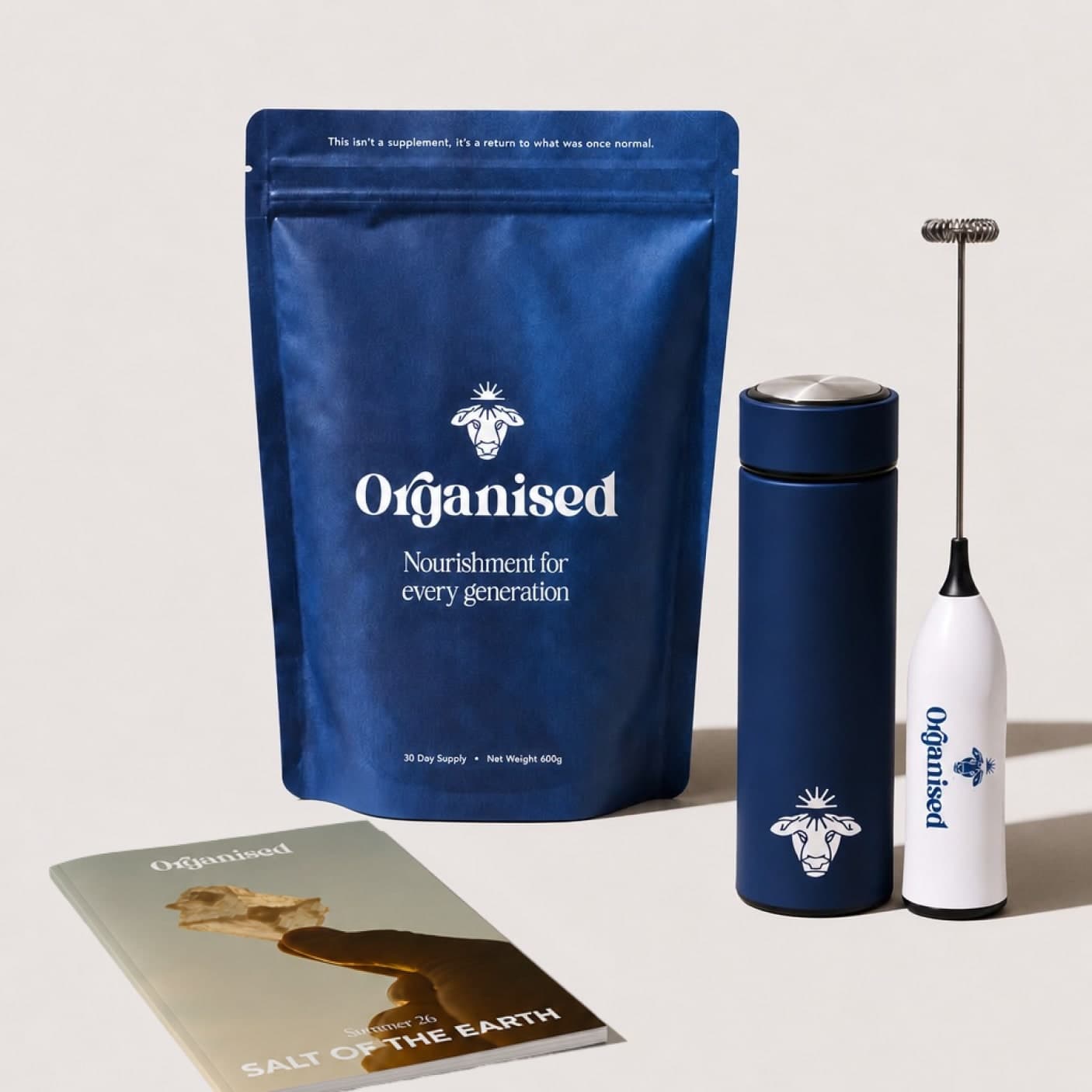
Daily blend
100,000+ thriving families4.9 on Trustpilot
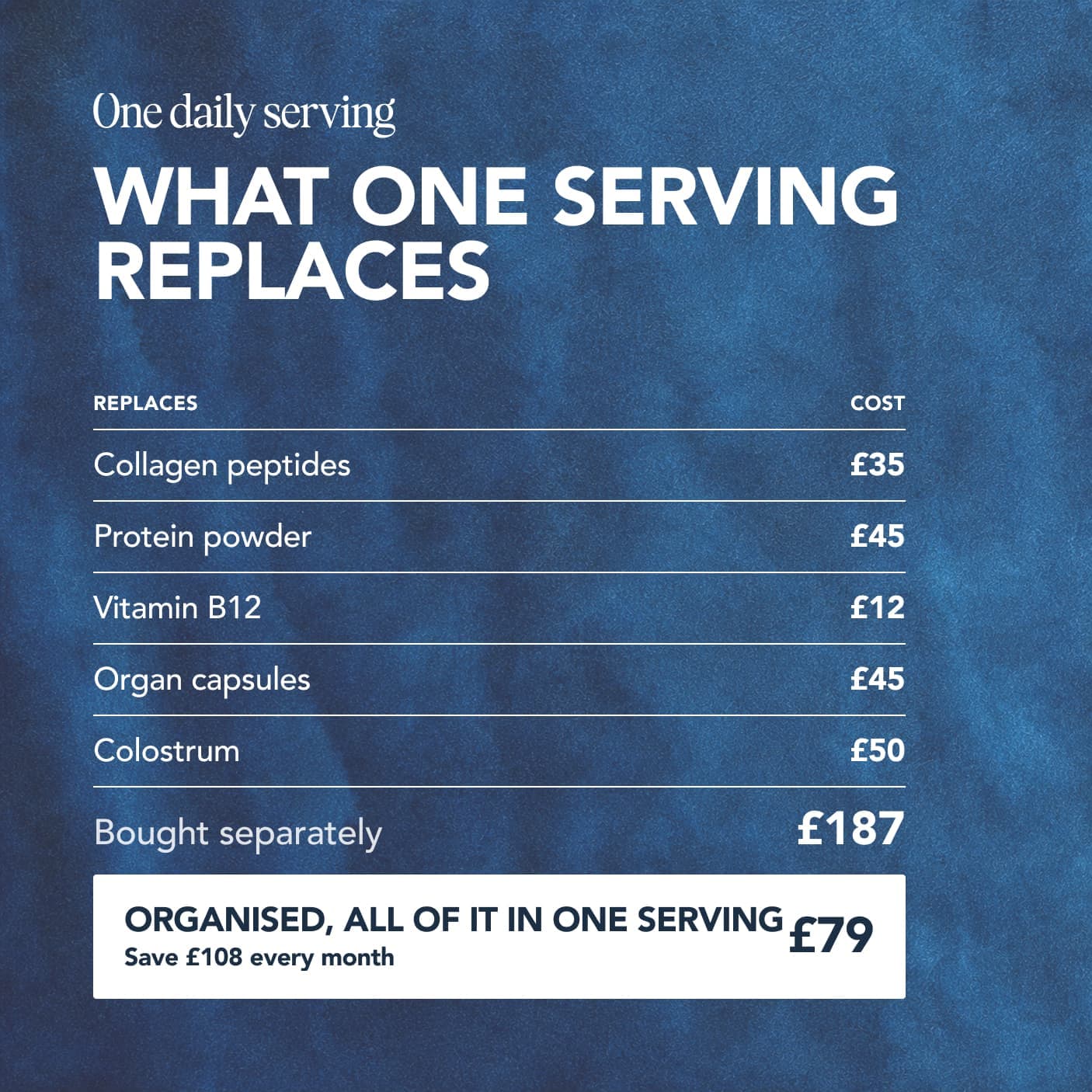
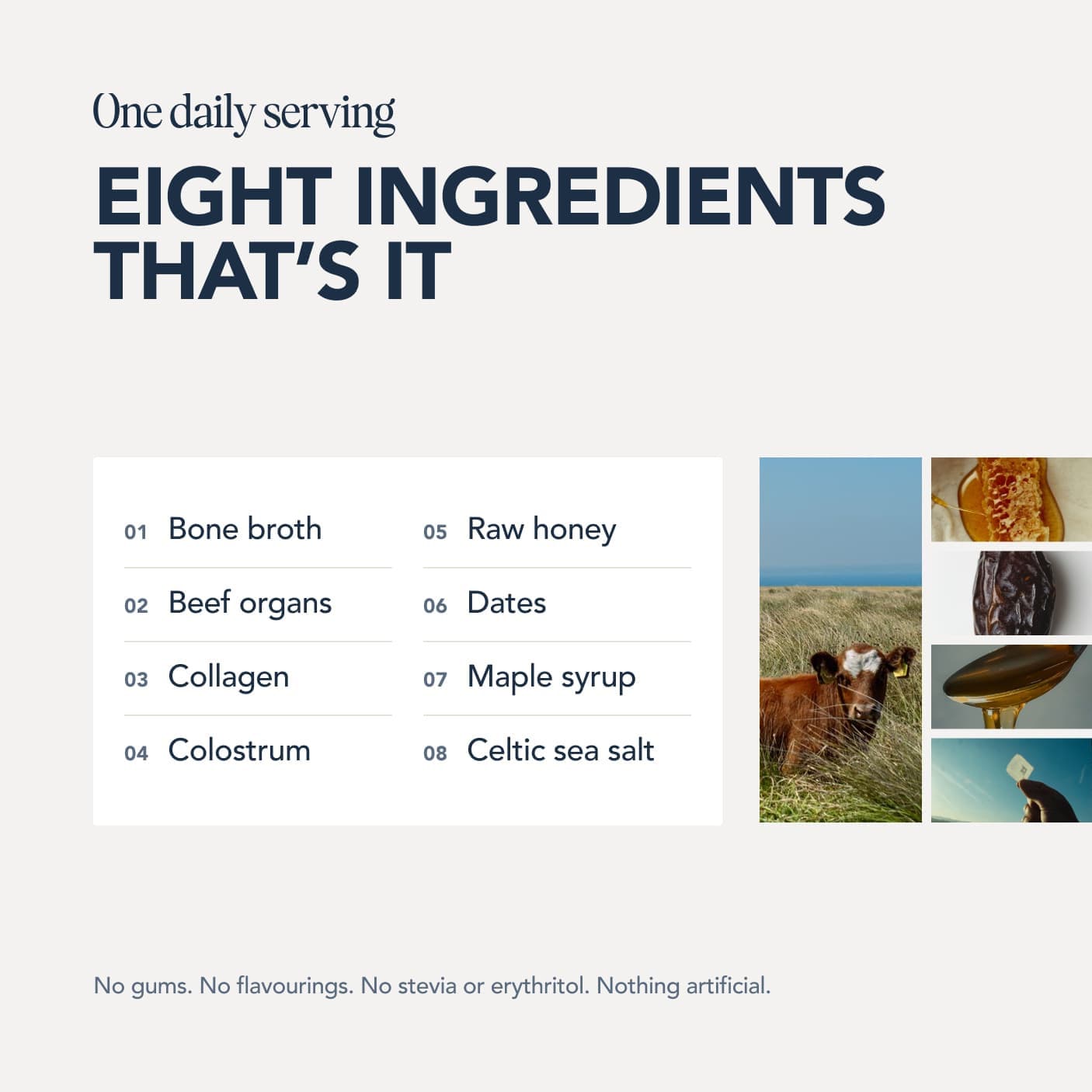
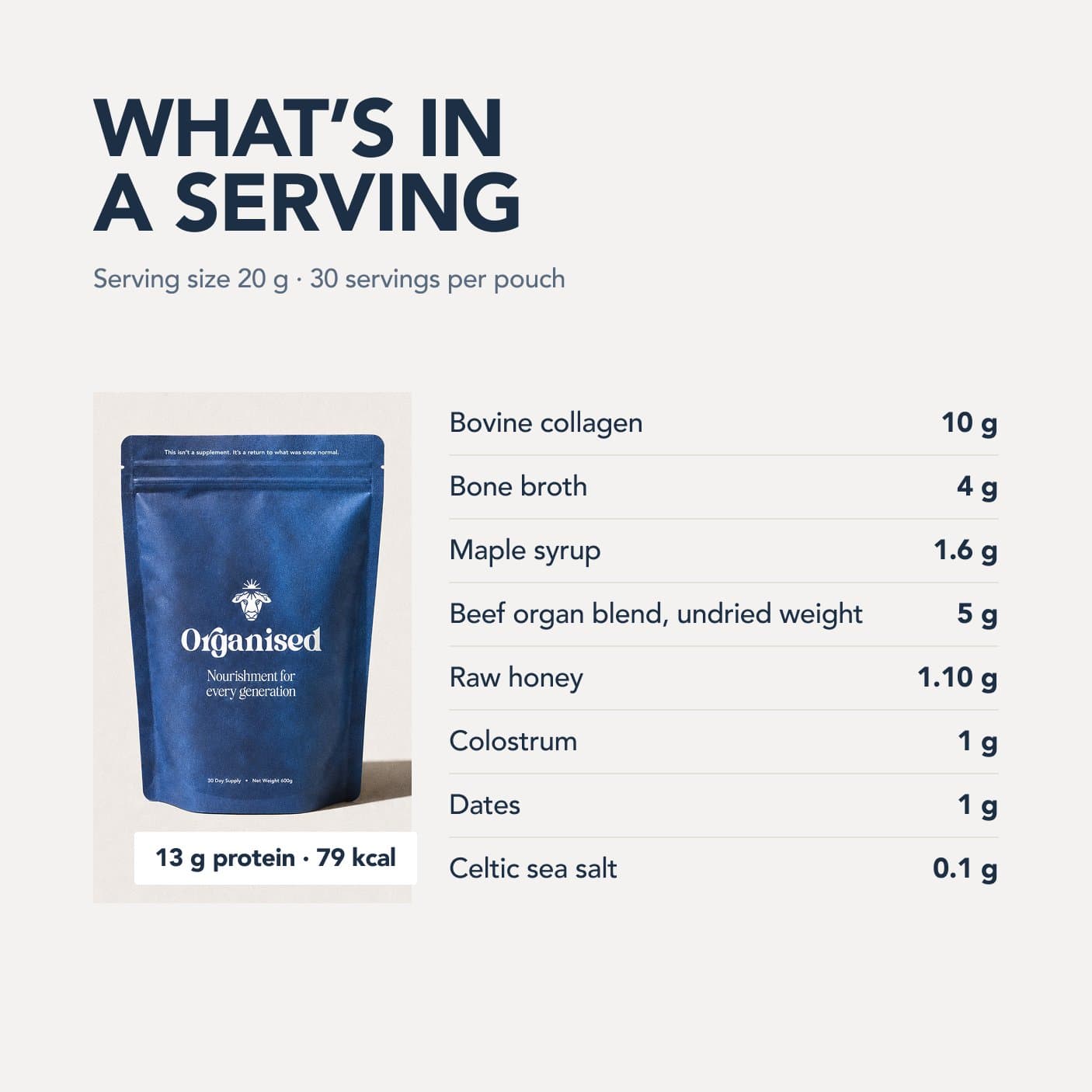
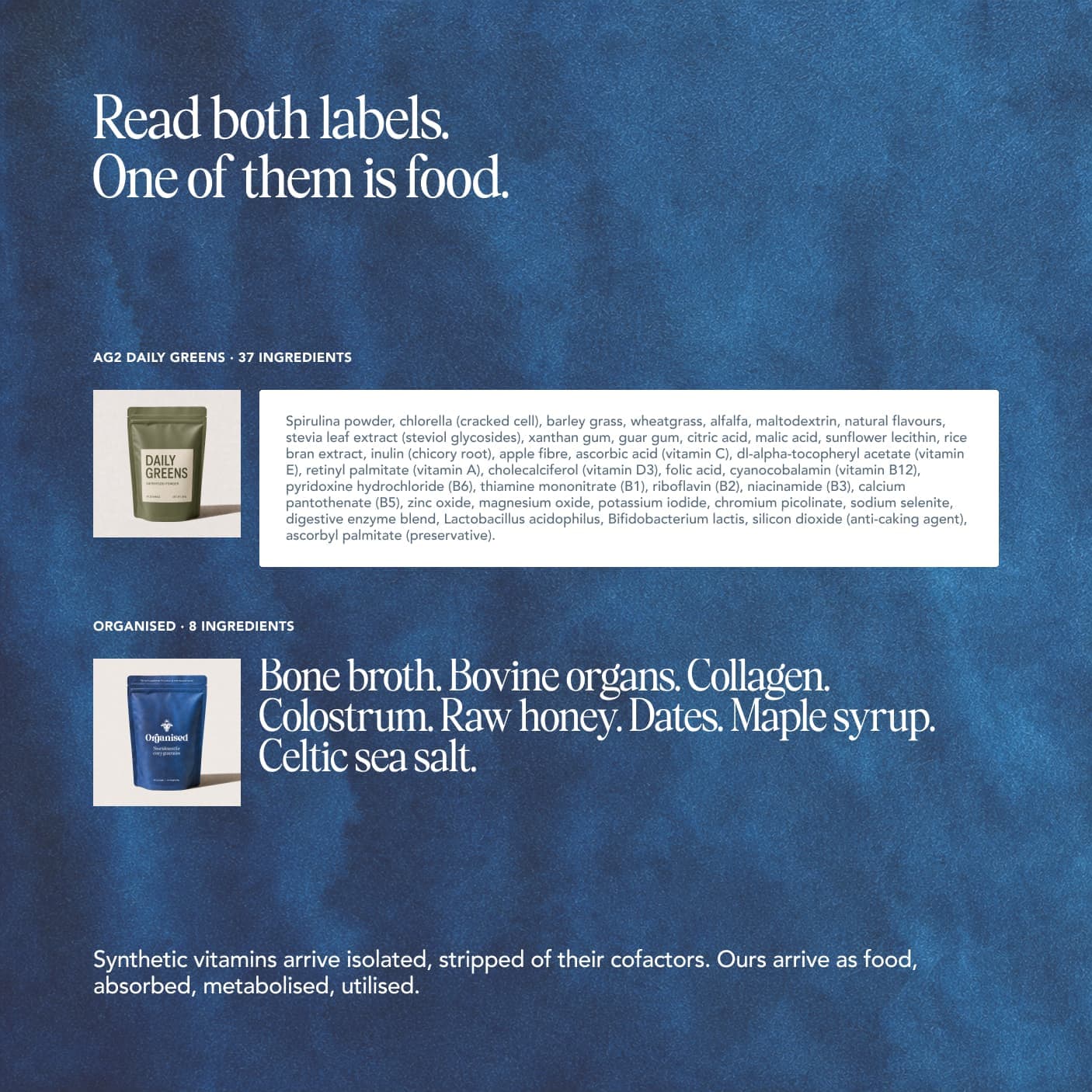
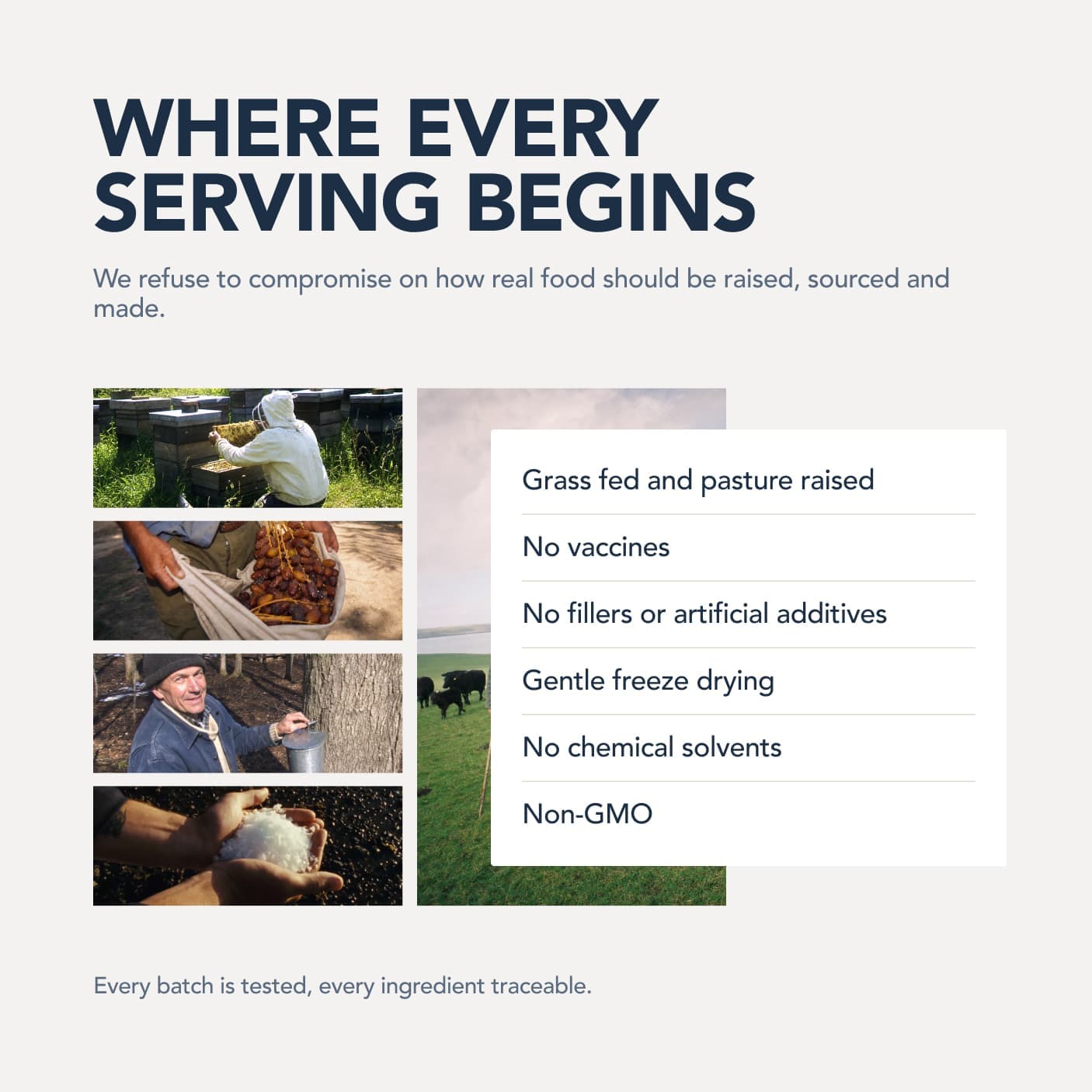
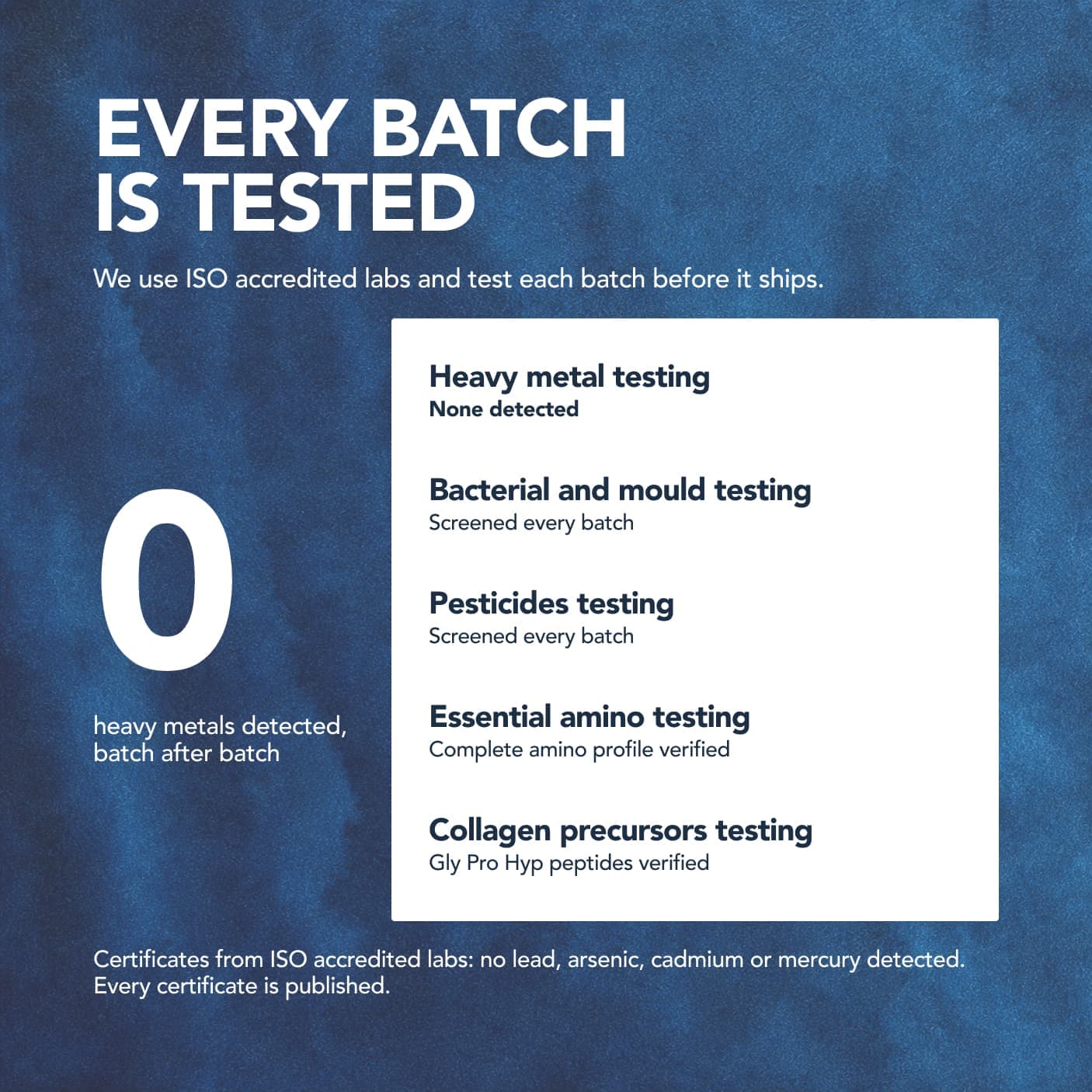
Eight real ingredients built around grass-fed beef organs, collagen and colostrum. Nothing synthetic added.
Free with your first order, worth £38. Plus £10 off the pouch with a subscription.
Free UK shipping · Made in England · 100 day money back guarantee on your first pouch · Skip, pause or cancel anytime
The bottom line
If you're waking in the middle of the night and struggling to get back to sleep, check your protein intake first. Most people eating modern food don't get enough. They're chronically deficient in the amino acids their brain needs to produce serotonin and melatonin.
Eat complete protein at every meal. Prioritise animal sources: meat, fish, eggs, dairy. Aim for 0.8 to 1 gram per pound of body weight daily. Distribute it throughout the day so your amino acid pool stays topped up. Give it three weeks. Your sleep will shift.
References
Every source below was checked on 27 August 2026. Each PubMed, PMC and DOI identifier was resolved against NCBI or Crossref, and what it opens is printed under the citation, so you can see the link goes where the citation says without leaving the page. Where a citation and its identifier disagreed, the citation was corrected to the record or the reference was deleted along with the sentence marker that pointed at it, and where the resolved paper turned out not to support the sentence, the sentence was cut back to what it does support. Borrowed authority is worse than none, because it looks like rigour.
- Peuhkuri K et al. Diet promotes sleep duration and quality. Nutr Res. PubMed PMID: 22652369.Checked 27 August 2026: PMID 22652369 opens Peuhkuri K, Sihvola N, Korpela R, Diet promotes sleep duration and quality. Nutr Res 2012;32(5):309-19. PubMed indexes it as: Review.
- Fernstrom JD. Branched-chain amino acids and brain function. J Nutr. PubMed PMID: 15930466.Checked 27 August 2026: PMID 15930466 opens Fernstrom JD, Branched-chain amino acids and brain function. J Nutr 2005;135(6 Suppl):1539S-46S. PubMed indexes it as: Review.
- Hoffman JR, Falvo MJ. Protein - Which is best? J Sports Sci Med. PMC3905294.Checked 27 August 2026: PMC3905294 opens Hoffman JR, Falvo MJ, Protein - Which is Best? J Sports Sci Med 2004;3(3):118-30. PubMed indexes it as: Review.
Who wrote and reviewed this guide
Niall Kiddle
Author · Founder, Organised
Niall is the founder of Organised. He started the company in 2024 after fixing his own health the slow way: in 2022 he swapped a cupboard of synthetic supplements for real food, raw milk, organ meats, bone broth and honey, and felt the difference within months.
Areas of expertise: Ancestral nutrition, Organ meats, Whole-food supplementation, Gut health, Regenerative sourcing
Read Niall's full profile
Pedro Rodrigues
Reviewer · Agronomist (farming and sourcing only)
Pedro is the agronomist Organised works with on farming and sourcing. His job on the guides is to keep the science honest: he reviews what we publish about soil health, regenerative agriculture, grazing and the way food is actually produced.
Areas of expertise: Regenerative agriculture, Agronomy, Soil health, Grass-fed farming, Food sourcing
Reviewed this guide on
Read Pedro's full profileMore on sleep
View allBrowse the guides library
All guidesKeep reading

Health goals
The Nutrients That Help You Sleep Deeper
Sleep deeper with the right nutrients for better sleep. We cover glycine, magnesium, B6 and gut serotonin, plus the whole-food approach to restorative rest.

Health goals
What to Eat Before Bed for Better Sleep
Your sleep quality is determined by what you ate at dinner. Discover which foods naturally support deep sleep, from bone broth to tart cherry.

Health goals
The Link Between Iron Deficiency and Poor Concentration
Find out how iron deficiency can blur concentration, why heme iron and ferritin matter, and how to rebuild your stores with food. Clear, practical guidance.
Real food, made effortless
Start my daily blendA few ways to use it
All recipes
The Perfect Organised Morning Shake: Our Favourite Recipe
Our signature morning shake: Organised, raw milk, banana, honey. Simple, nourishing, and optimised for an empty stomach.

Organised Chia Pudding with Raw Honey and Berries
A no-cook chia seed pudding made with raw milk, collagen, berries, and raw honey. Prep it the night before and eat for breakfast.
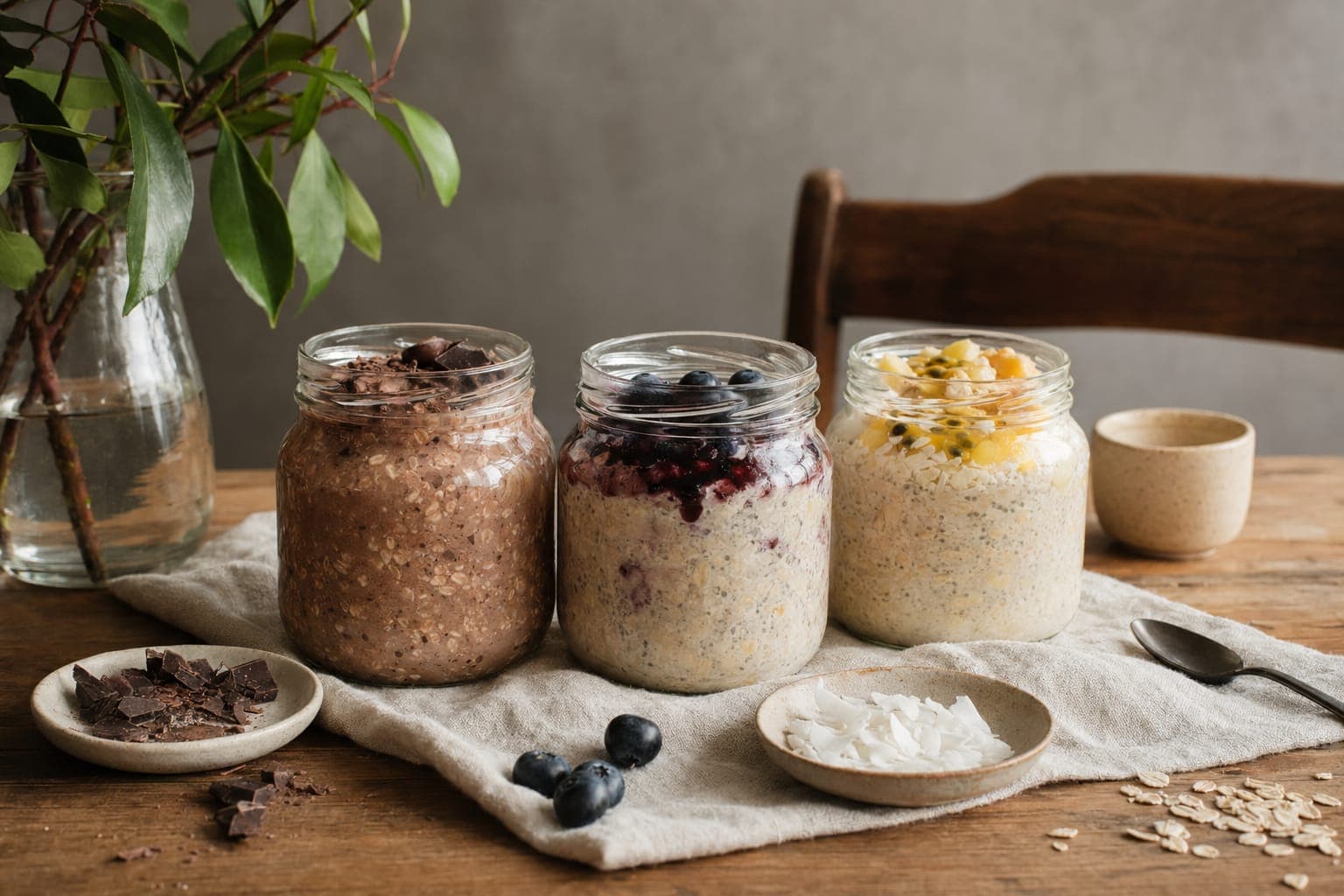
Organised Overnight Oats: 3 Variations
Three delicious overnight oats variations with Organised. Chocolate, berry, tropical flavours. Make them Sunday, eat them all week.


 Join over 100,000+ members
Build a better food system with us
The Organised community is thousands of people choosing real food and backing the farmers who grow it, all of us trying to leave the world a little better than we found it. If that is what you care about too, you belong here.