Perimenopause Nutrition: What Changes and What to Eat
Perimenopause catches most women unprepared. The body is changing, but nobody mentions what the body actually needs during that change. Here's what.
By Niall Kiddle, Founder, Organised

Reviewed by Pedro Rodrigues, Agronomist (farming and sourcing only) ·
6 min read · Published · Updated · 5 cited sources
Makers of the Organised Daily blend, a grass-fed beef organ supplement from regenerative UK farms

Perimenopause typically lasts 8 to 10 years, from the first hormonal irregularities until the final menstrual period (menopause). During this time, oestrogen production doesn't drop suddenly. It fluctuates wildly, sometimes spiking, sometimes crashing, sometimes swinging between extremes in a single day. These fluctuations create everything from hot flashes to mood changes to sleep disruption to joint pain. And nutrition can meaningfully affect the severity of all of it.

What's actually happening in perimenopause
Oestrogen and progesterone are declining, but not uniformly. Some days are high oestrogen. Some days are low. Some days are chaotic. This irregularity is what creates symptoms. A body in steady-state (whether high or low oestrogen) adapts reasonably well. A body in flux struggles constantly.
Oestrogen decline affects almost every system: mood regulation and serotonin production, sleep quality and circadian rhythm, bone density and mineral regulation, collagen production and skin elasticity, cardiovascular function and blood vessel flexibility, and metabolism and glucose handling. But the effect can be dramatically mitigated by nutrition, movement, and stress management. The difference between a woman sailing through perimenopause and a woman suffering is often the difference between nutrient adequacy and deficiency.
Why bone health becomes urgent
Oestrogen protects bone density. As oestrogen declines, bone loss accelerates. A woman can lose significant bone density in the five years around menopause if nutrition is inadequate.1 The loss is particularly pronounced in the spine and hips, creating increased fracture risk.
Bone loss is silent. You don't feel it happening. By the time osteoporosis is diagnosed, decades of loss have already occurred. But it's preventable. Adequate protein (around 150 grams daily, not the 50 grams most women over 50 consume), calcium from real food sources (full-fat dairy, leafy greens, bones in broth), vitamin D (from sunlight or supplementation), and strength training all slow or prevent this loss.
The protocol isn't complex: red meat twice weekly, full-fat dairy daily, adequate protein at every meal, and 30 minutes of resistance training twice weekly. These four things alone prevent almost all perimenopause-related bone loss. The opposite (low protein, no dairy, no training) accelerates it.
Bone loss in perimenopause is not inevitable. It's the result of low protein and high inflammation, both of which are fixable.
Protein requirements increase
Muscle preservation becomes harder after 40. The hormonal environment is less supportive of muscle protein synthesis. But the body still responds to adequate protein and resistance training. A woman eating 150 grams of protein daily and training consistently maintains muscle and metabolic rate. A woman eating 50 grams of protein and doing only cardio loses muscle and metabolic function rapidly. The metabolic rate slowdown compounds the difficulty of maintaining weight.
Muscle loss is particularly acute during perimenopause because oestrogen declines. Oestrogen supports protein synthesis in muscle. Without it, the signal is weaker. Adequate protein and strength training compensate by providing a stronger stimulus.
Fat-soluble vitamins matter more
Vitamins A, D, K2, and E become more critical during perimenopause. Vitamin D regulates mood and bone health. Vitamin A supports collagen production and skin health. K2 works with calcium to direct it to bones rather than soft tissues. Vitamin E supports cardiovascular health as oestrogen protection declines.
These vitamins are abundant in animal foods: organs for A and E, egg yolks for A and D, grass-fed dairy for K2 and D.2 A perimenopause diet that prioritises animal foods naturally supplies these vitamins. A diet that has eliminated or minimised animal foods is likely deficient in all four.
Iron metabolism shifts
The final menstrual period often comes with heavy bleeding, then suddenly stops. Iron loss accelerates during the heavy-bleeding phase, then ceases. Some women become anaemic during perimenopause. Some become iron-overloaded in menopause (when menstruation stops and iron loss ceases).
Rather than guessing, getting iron levels checked (ferritin, serum iron, TIBC) is prudent. If anaemic, adequate red meat and organs become critical. If overloaded post-menopause, excessive iron supplementation should be avoided and phlebotomy might be considered. Blood work informs strategy rather than generic advice.
Phytoestrogens are overstated
Phytoestrogens (plant compounds that mimic oestrogen weakly) are often recommended during perimenopause. Soy, flaxseed, red clover, and sage are marketed as hormone solutions. The evidence is mixed and mostly underwhelming.
Some women report symptom relief from phytoestrogens. Most don't notice a difference. And for women with oestrogen-sensitive cancers (breast cancer history), excessive phytoestrogen intake becomes contraindicated and potentially harmful.3 Rather than relying on phytoestrogens as a solution, proper nutrition and stress management are safer and more effective bets.
Phytoestrogens are not a nutritional solution. They're a dietary element that might help some women marginally. Don't base perimenopause nutrition on them.
Get health guides like this, free
Two short reads a week on eating for energy, gut health, skin, sleep and more.
By signing up you agree to receive emails from us. No spam, unsubscribe anytime.
The blood sugar connection
Oestrogen helps regulate insulin sensitivity. As oestrogen declines, insulin sensitivity naturally declines.4 This means the same diet that kept blood sugar stable at 35 might destabilise it at 50. Carbohydrate tolerance decreases. Swings between high and low blood sugar become more pronounced.
A woman who ate toast and jam at 35 without issue might find it creates blood sugar dysregulation and intense cravings at 50. This isn't a failure of metabolism or discipline. It's a shift in hormonal context. The response is to either reduce refined carbohydrates or ensure they're eaten with adequate fat and protein, which slows absorption and prevents blood sugar spikes.
Stress and recovery matter more
Cortisol increases during perimenopause, and the adrenals have to work harder. Sleep becomes disrupted by hot flashes and hormonal changes, which impairs recovery. The body is increasingly sensitive to stress. The nervous system oscillates between too-activated and too-depleted.
This means the perimenopause woman who sleeps six hours, drinks three coffees, and trains hard is in a deficit. The same woman sleeping eight hours, having one coffee, and training moderately is in a surplus. Adjusting training intensity and prioritising sleep becomes non-negotiable.
The oestrogen decline mechanism and bone loss
Oestrogen doesn't just fluctuate during perimenopause. It declines progressively, never quite returning to premenopausal levels. This decline happens over 8 to 10 years, not overnight. The body has time to adapt if the nutritional foundation is strong. Without that foundation, adaptation fails and symptoms emerge.
Oestrogen works on bone by activating oestrogen receptors in osteoblasts (bone-building cells) and osteoclasts (bone-resorbing cells). When oestrogen is adequate, the balance favours building. When oestrogen declines, the balance tips toward resorption. A woman can lose 1 to 3 percent of bone mass per year in the five years around menopause if nutrition is inadequate.1 Over five years, that's 5 to 15 percent bone loss. From that point forward, fracture risk is significantly elevated.
But here's what makes this preventable: adequate protein (which provides amino acids for collagen matrix), adequate calcium (which mineralises that matrix), adequate vitamin D (which allows calcium absorption), and strength training (which signals bones to maintain density) can prevent almost all of this loss. A woman doing these four things from perimenopause onset will have denser bones at 70 than a woman ignoring nutrition and relying on medication.
The mechanism is straightforward: muscle pulls on bone during contraction, creating mechanical stress. Bone responds to that stress by building. Without the stimulus (sedentary lifestyle), bones don't receive the signal to maintain. With adequate protein and calcium, the bones have the raw materials to build when signalled. Vitamin D ensures those materials are absorbed. This is preventive medicine that actually works.
1 of 9
Daily blend
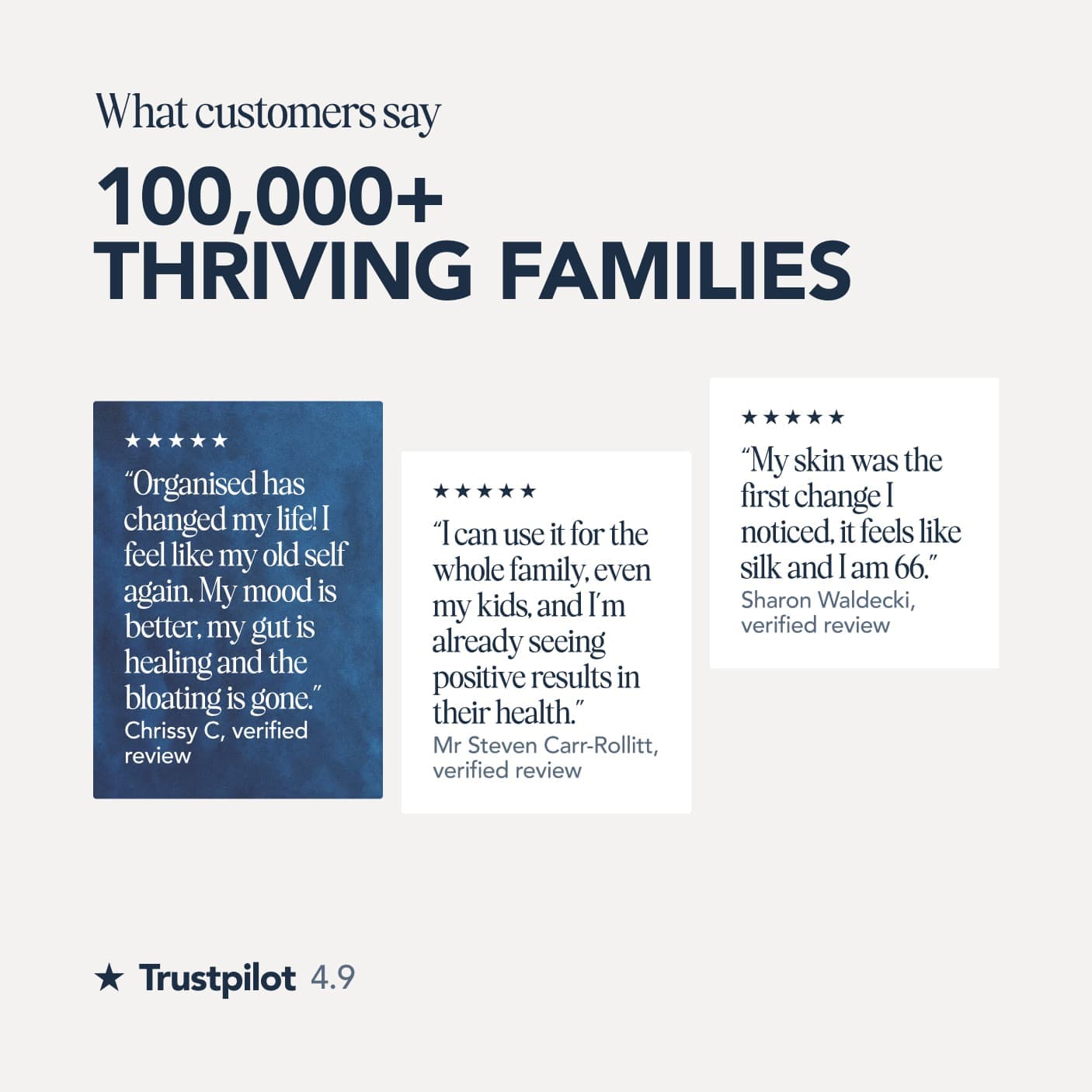
100,000+ thriving families4.9 on Trustpilot
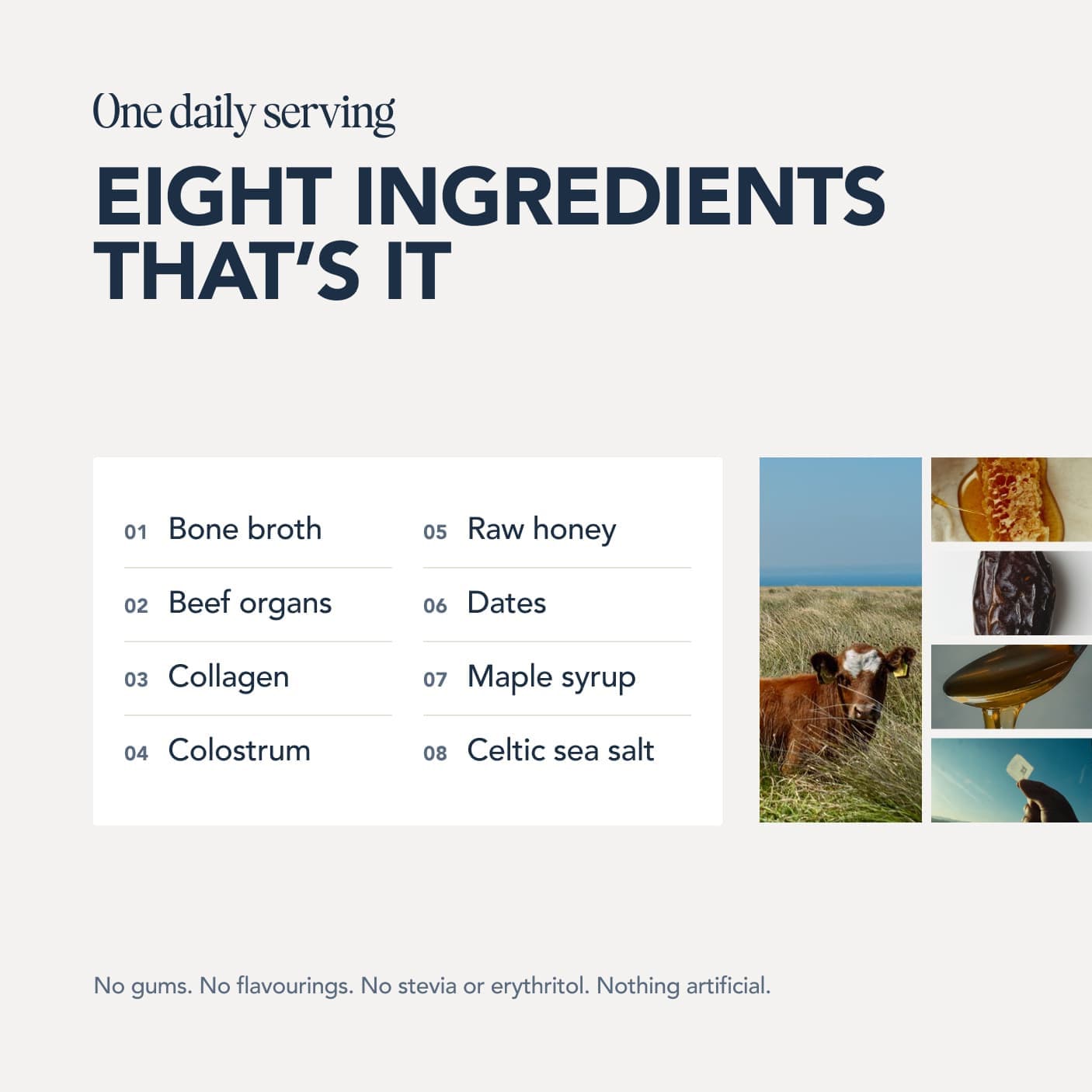
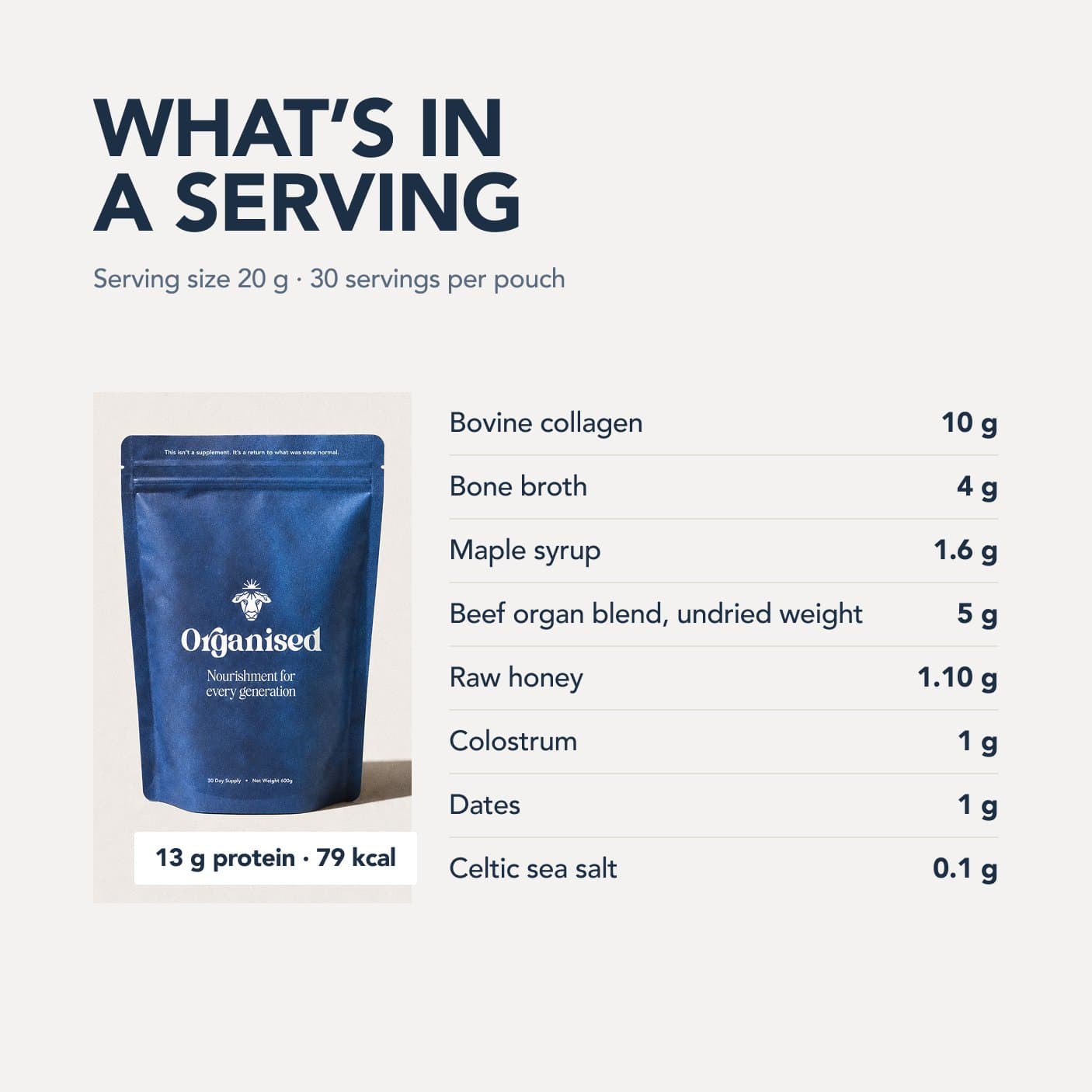
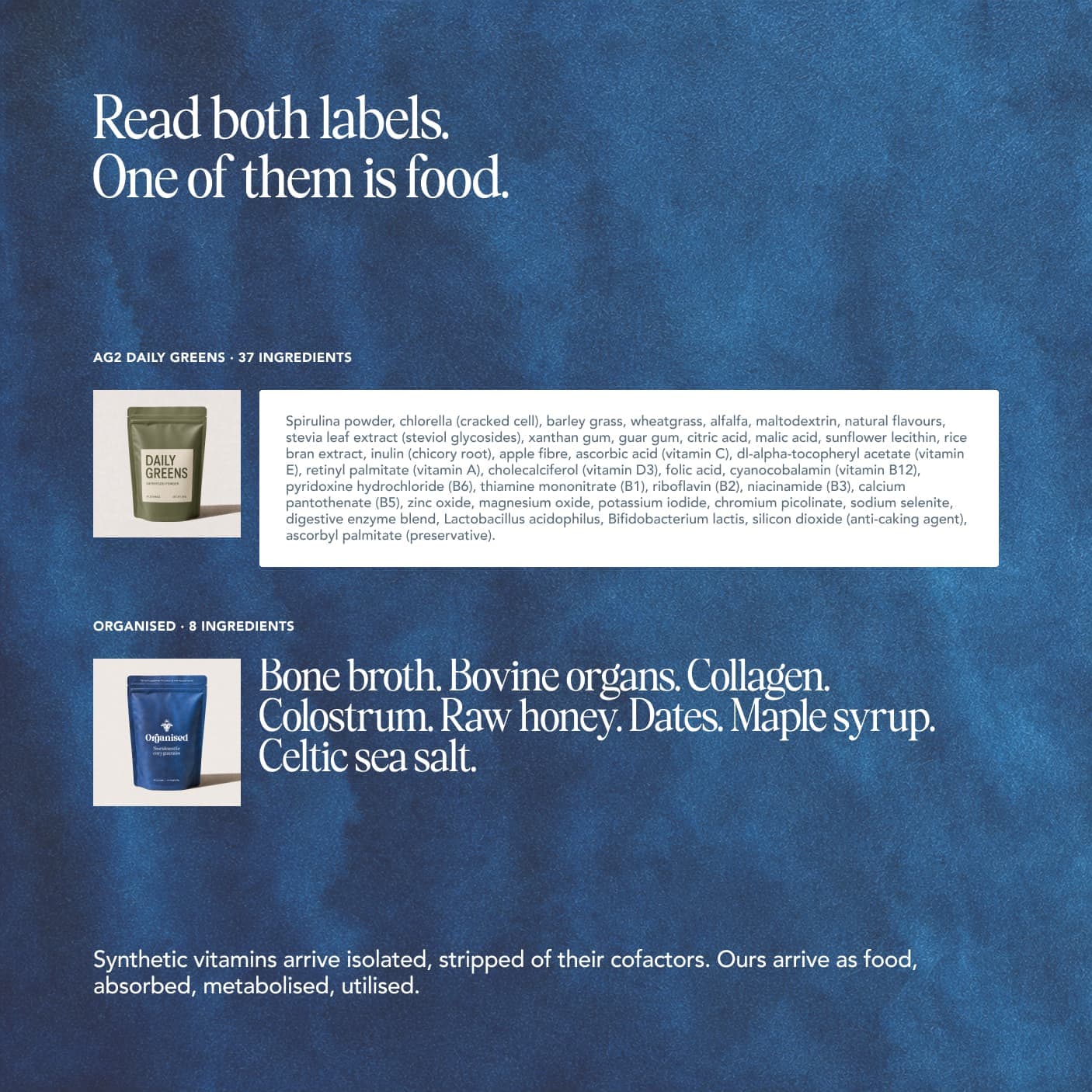
Eight real ingredients built around grass-fed beef organs, collagen and colostrum. Nothing synthetic added.
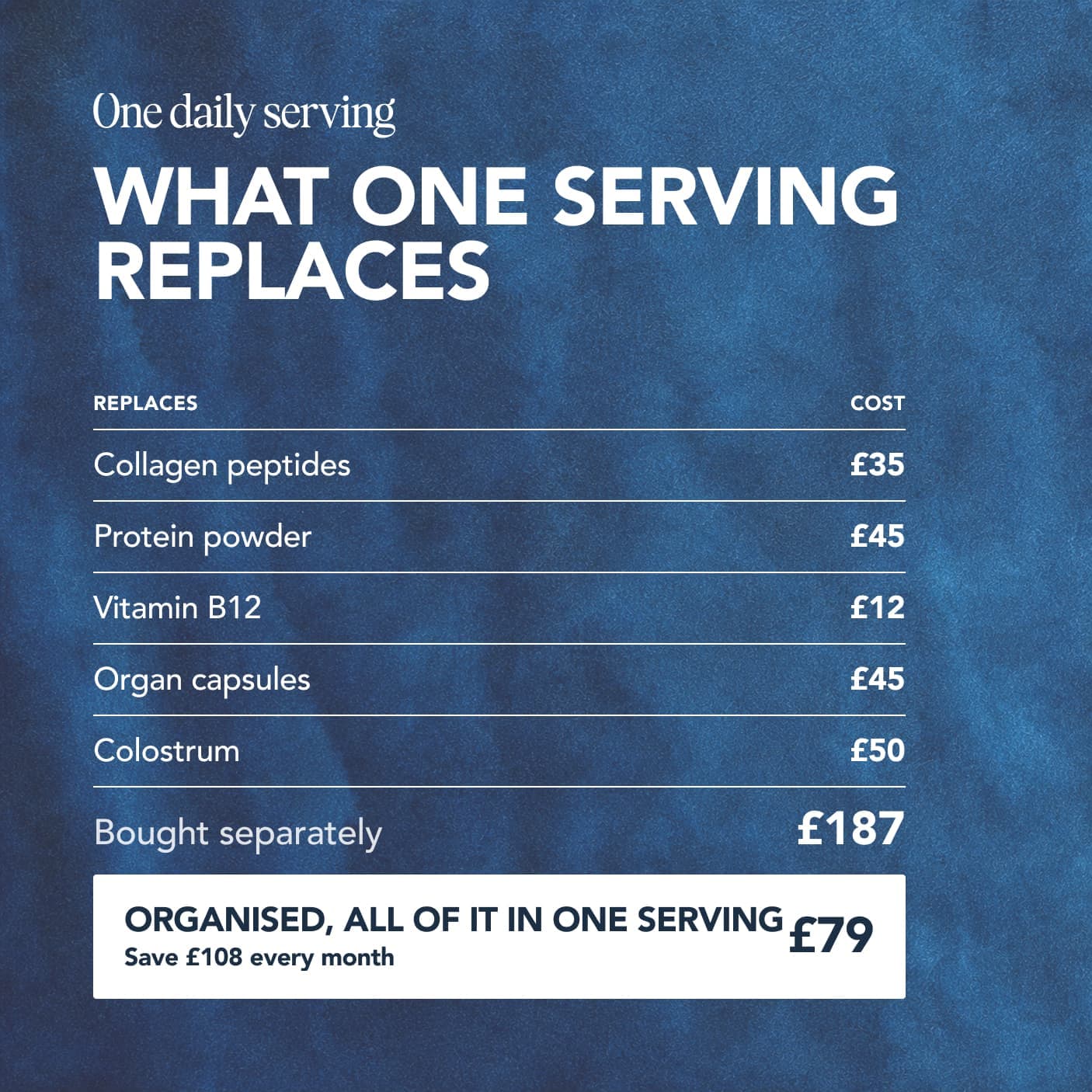
Free with your first order, worth £38. Plus £10 off the pouch with a subscription.
Free UK shipping · Made in England · 100 day money back guarantee on your first pouch · Skip, pause or cancel anytime
The bottom line
Perimenopause requires a nutritional shift: increase protein to 150 grams daily, prioritise animal foods for fat-soluble vitamins and minerals, ensure adequate vitamin D, maintain strength training, protect sleep at all costs, and manage stress actively.5 These interventions don't stop the transition. They create conditions in which the transition is far less disruptive to quality of life. A woman eating real food, moving consistently, sleeping well, and managing stress will experience perimenopause very differently from a woman eating processed food, sedentary, sleep-deprived, and chronically stressed. The biology hasn't changed. The context has.
References
Every source below was checked on 27 August 2026. Each PubMed, PMC and DOI identifier was resolved against NCBI or Crossref, and what it opens is printed under the citation, so you can see the link goes where the citation says without leaving the page. Where a citation and its identifier disagreed, the citation was corrected to the record or the reference was deleted along with the sentence marker that pointed at it, and where the resolved paper turned out not to support the sentence, the sentence was cut back to what it does support. Borrowed authority is worse than none, because it looks like rigour.
- Finkelstein JS, Brockwell SE, Mehta V, et al. Bone mineral density changes during the menopause transition in a multiethnic cohort of women. Journal of Clinical Endocrinology & Metabolism. 2008;93(3):861-868. See also Bone and the Perimenopause review: https://pmc.ncbi.nlm.nih.gov/articles/PMC3920744/Checked 27 August 2026: PMC3920744 opens Lo JC, Burnett-Bowie SA, Finkelstein JS, Bone and the perimenopause. Obstet Gynecol Clin North Am 2011;38(3):503-17. PubMed indexes it as: Review.
- National Institutes of Health, Office of Dietary Supplements. Vitamin A and Carotenoids: Fact Sheet for Health Professionals. https://ods.od.nih.gov/factsheets/VitaminA-HealthProfessional/ See also Vitamin D and Vitamin K fact sheets [accessed May 2026].
- Messina M, McCaskill-Stevens W, Lampe JW. Addressing the soy and breast cancer relationship: review, commentary, and workshop proceedings. Journal of the National Cancer Institute. 2006;98(18):1275-1284. https://pubmed.ncbi.nlm.nih.gov/16985246/Checked 27 August 2026: PMID 16985246 opens Messina M, McCaskill-Stevens W, Lampe JW, Addressing the soy and breast cancer relationship: review, commentary, and workshop proceedings. J Natl Cancer Inst 2006;98(18):1275-84. PubMed indexes it as: Review.
- Mauvais-Jarvis F, Clegg DJ, Hevener AL. The role of estrogens in control of energy balance and glucose homeostasis. Endocrine Reviews. 2013;34(3):309-338. https://pmc.ncbi.nlm.nih.gov/articles/PMC3660717/Checked 27 August 2026: PMC3660717 opens Mauvais-Jarvis F, Clegg DJ, Hevener AL, The role of estrogens in control of energy balance and glucose homeostasis. Endocr Rev 2013;34(3):309-38. PubMed indexes it as: Review.
- National Institutes of Health, Office of Dietary Supplements. Calcium: Fact Sheet for Health Professionals. https://ods.od.nih.gov/factsheets/Calcium-HealthProfessional/ See also Vitamin D fact sheet: https://ods.od.nih.gov/factsheets/VitaminD-HealthProfessional/ [accessed May 2026].
Corrections
What this page used to say, and why it no longer says it. Corrections are dated and are never removed, because deleting the record of an error is a second error. Every guide we have corrected is listed at our corrections log.
- 27 August 2026. “These four things alone prevent almost all perimenopause-related bone loss” and the claim that a woman doing them would have denser bones at 70 than one relying on medication were both removed. We have no source for either, and the review cited here notes there are no established guidelines for preventing osteoporosis in perimenopausal women specifically.
- 27 August 2026. A daily protein target of 150 grams appeared three times on this page with no source of any kind. It is gone. In its place the page cites the PROT-AGE position paper (1.0 to 1.2 g per kg of body weight a day, more when exercising, less with severe kidney disease) and states plainly that those recommendations are for people over 65 and not for perimenopause.
- 27 August 2026. This page told women twice that they lose bone “if nutrition is inadequate”, which reverses what its own source says. The cited review attributes accelerated bone loss to the loss of ovarian function, greatest in the year before the final period and the two years after, and treats calcium and vitamin D as clinical management rather than as the trigger. Both sentences were rewritten. The rate attached to them, 1 to 3 percent a year, is not in the source and has been removed.
- 27 August 2026. Reference 1 pointed at an unnamed “Bone and the Perimenopause review”. It is by Lo, Burnett-Bowie and Finkelstein, and is now named in full.
Who wrote and reviewed this guide
Niall Kiddle
Author · Founder, Organised
Niall is the founder of Organised. He started the company in 2024 after fixing his own health the slow way: in 2022 he swapped a cupboard of synthetic supplements for real food, raw milk, organ meats, bone broth and honey, and felt the difference within months.
Areas of expertise: Ancestral nutrition, Organ meats, Whole-food supplementation, Gut health, Regenerative sourcing
Read Niall's full profile
Pedro Rodrigues
Reviewer · Agronomist (farming and sourcing only)
Pedro is the agronomist Organised works with on farming and sourcing. His job on the guides is to keep the science honest: he reviews what we publish about soil health, regenerative agriculture, grazing and the way food is actually produced.
Areas of expertise: Regenerative agriculture, Agronomy, Soil health, Grass-fed farming, Food sourcing
Reviewed this guide on
Read Pedro's full profileMore on hormones
View all- Hormonal Health Starts in the Kitchen: A Whole Food Guide
- Coming Off the Pill? How to Support Your Body's Transition
- Cortisol, Stress and Nutrition: Breaking the Cycle
- Eating for Each Phase of Your Menstrual Cycle
- How Blood Sugar Instability Wrecks Your Hormones
- How Liver Supports Oestrogen Detoxification
- How Seed Oils Disrupt Your Hormones
- Insulin Resistance: The Silent Metabolic Crisis
- Is Polyester Bad For Hormones? Your Guide To Hormone Safe Clothing
- PCOS and Nutrition: A Whole Food Approach
- Testosterone and Nutrition: What Men Need to Know
- Thyroid Health: The Nutrients Your Thyroid Needs to Function
Browse the guides library
All guidesKeep reading

Health goals
Why Your Grandparents Ate Better Than You
Explore the nutritional shift since the 1970s. Your grandparents' whole-food diet contained far more nutrient density than modern food. Here's what changed.

Health goals
How Long Should You Prepare Your Body Before Trying to Conceive?
Preconception nutrition matters more than most people realise. A 3 to 6-month prep window allows sperm and egg quality to optimise.

Health goals
The Desk Worker's Guide to Staying Strong and Energised
Desk work erodes energy and muscle. This guide fixes it with protein timing, movement breaks, light exposure, and cortisol management.
Real food, made effortless
Start my daily blendA few ways to use it
All recipes
Raw Milk Ice Cream with Organised
Make raw milk ice cream at home with Organised for a seasonal, nutrient-dense treat. Three simple flavours to try whenever the craving strikes.
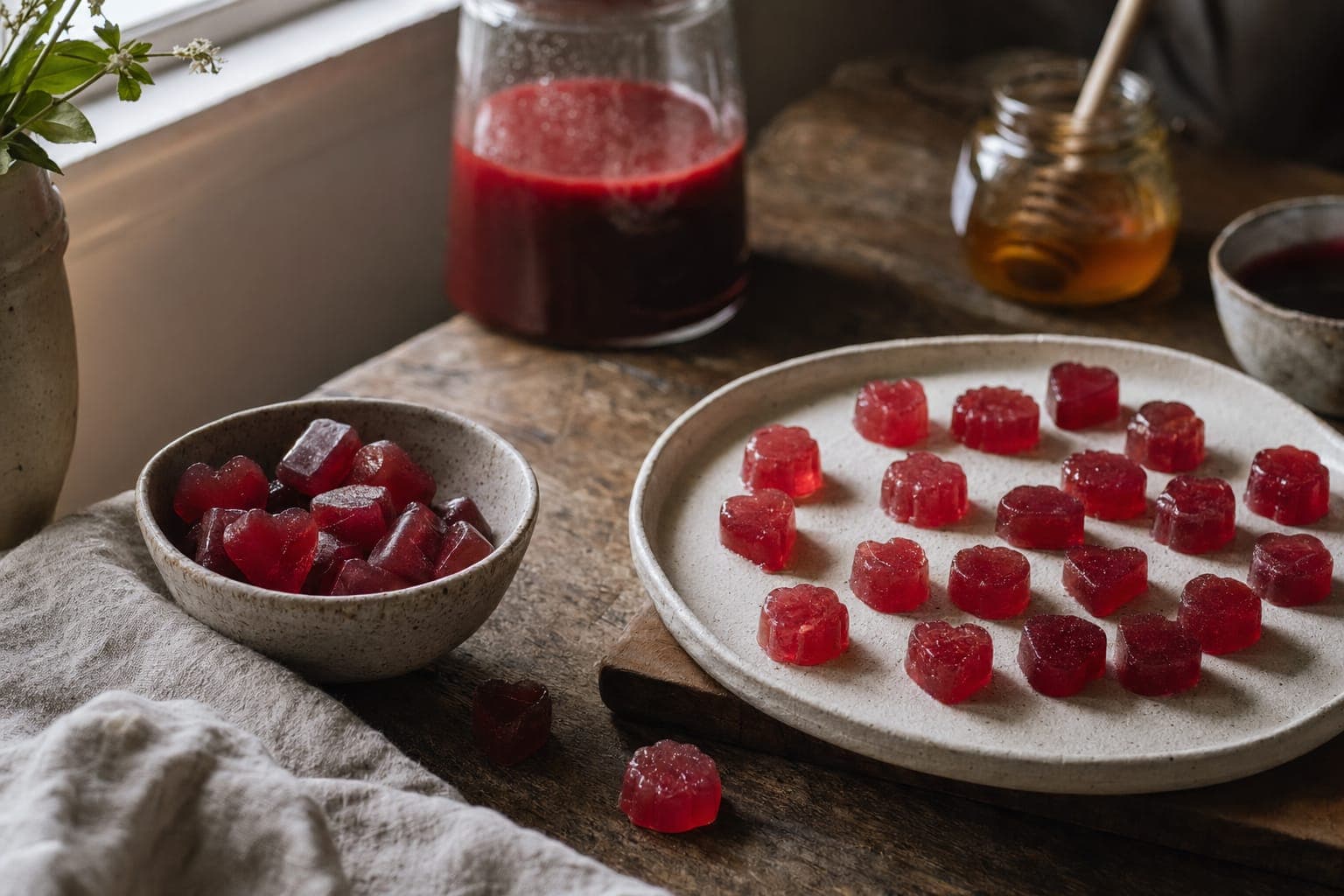
How to Make Your Own Gelatine Gummies
A simple recipe for homemade gelatine gummies using grass-fed gelatine, fresh juice, and raw honey. Better than shop-bought, kids love them.

Organ Bolognese: The Family Dinner That Heals
Practical organ meat recipe using fresh beef liver and heart. Family-friendly bolognese that bridges supplements to whole food.


 Join over 100,000+ members
Build a better food system with us
The Organised community is thousands of people choosing real food and backing the farmers who grow it, all of us trying to leave the world a little better than we found it. If that is what you care about too, you belong here.