Egg Quality and Nutrition: What the Research Suggests
You walk into a supermarket and face a wall of eggs. The difference between the cheapest carton and the most expensive seems minimal until you crack one open. The yolk colour tells a story the label never will.
By Niall Kiddle, Founder, Organised

Reviewed by Pedro Rodrigues, Agronomist (farming and sourcing only) ·
6 min read · Published · Updated · 3 cited sources
Makers of the Organised Daily blend, a grass-fed beef organ supplement from regenerative UK farms
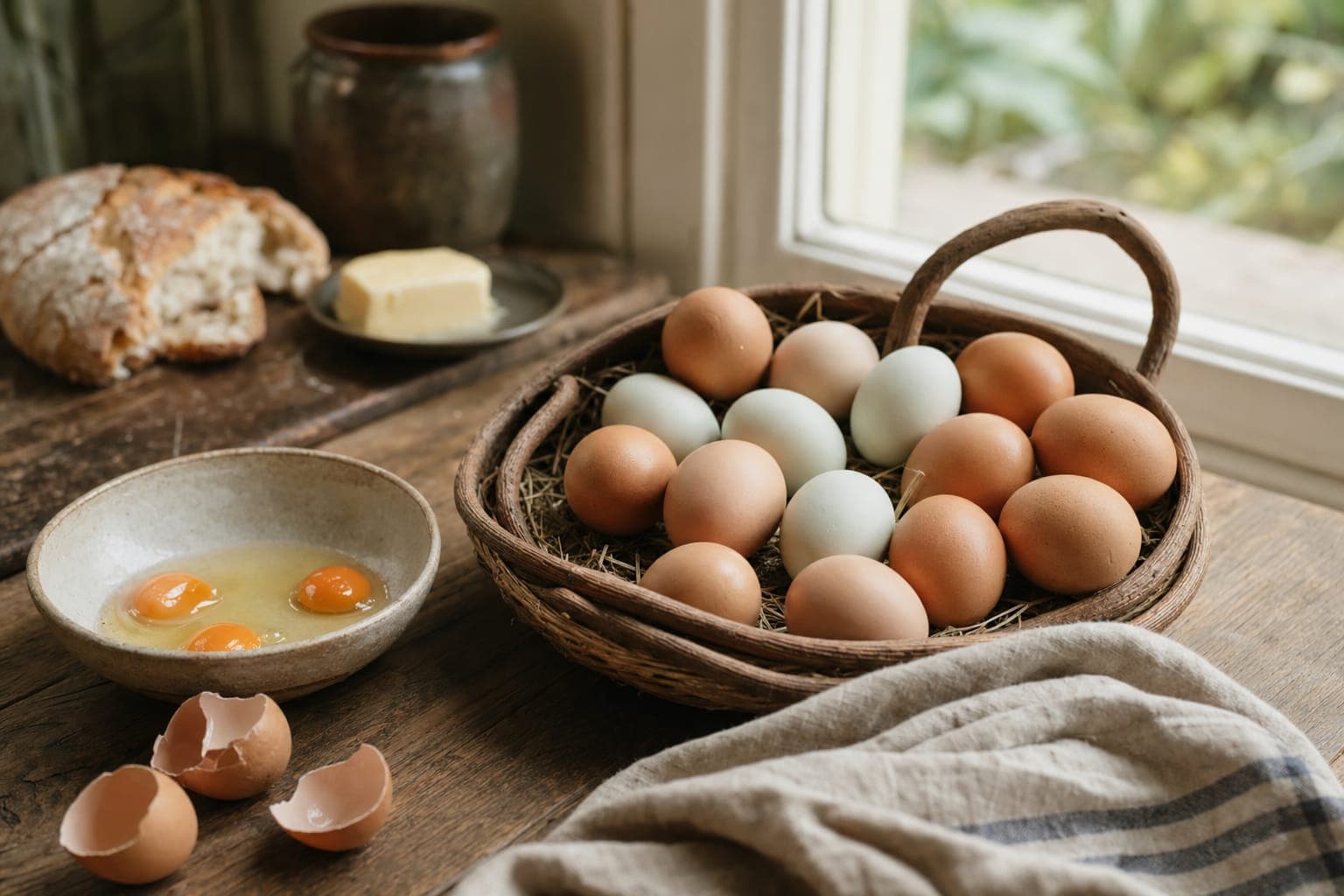
Most people assume eggs are eggs. The protein content is roughly the same, yes. But the nutrient profile, the micronutrient density, the fat-soluble vitamins, the omega-3 content? That varies wildly based on how the bird was raised.
The hidden difference in your egg carton
An egg is only as nutrient-dense as the diet of the bird that laid it. This isn't controversial. It's basic nutritional science.
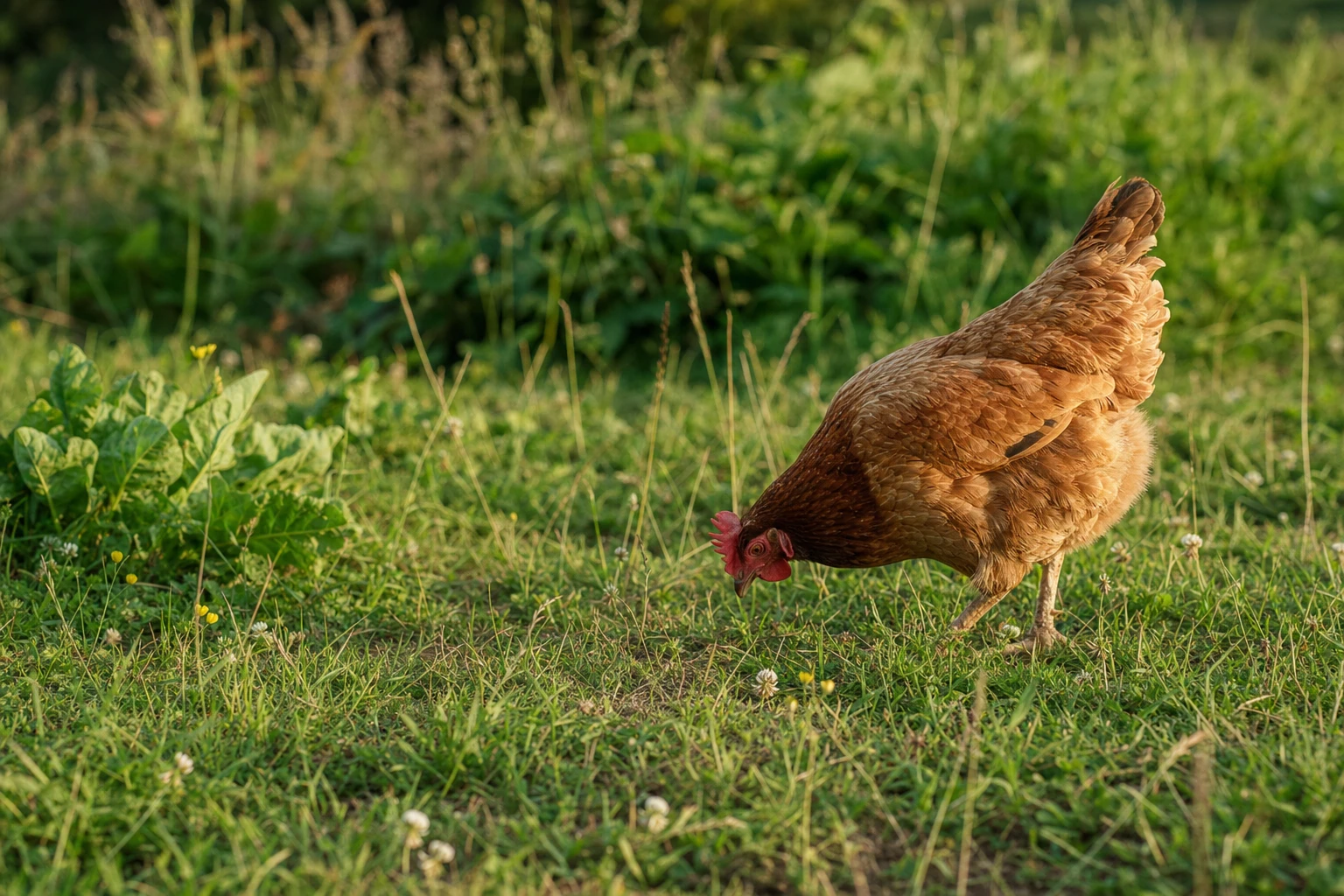
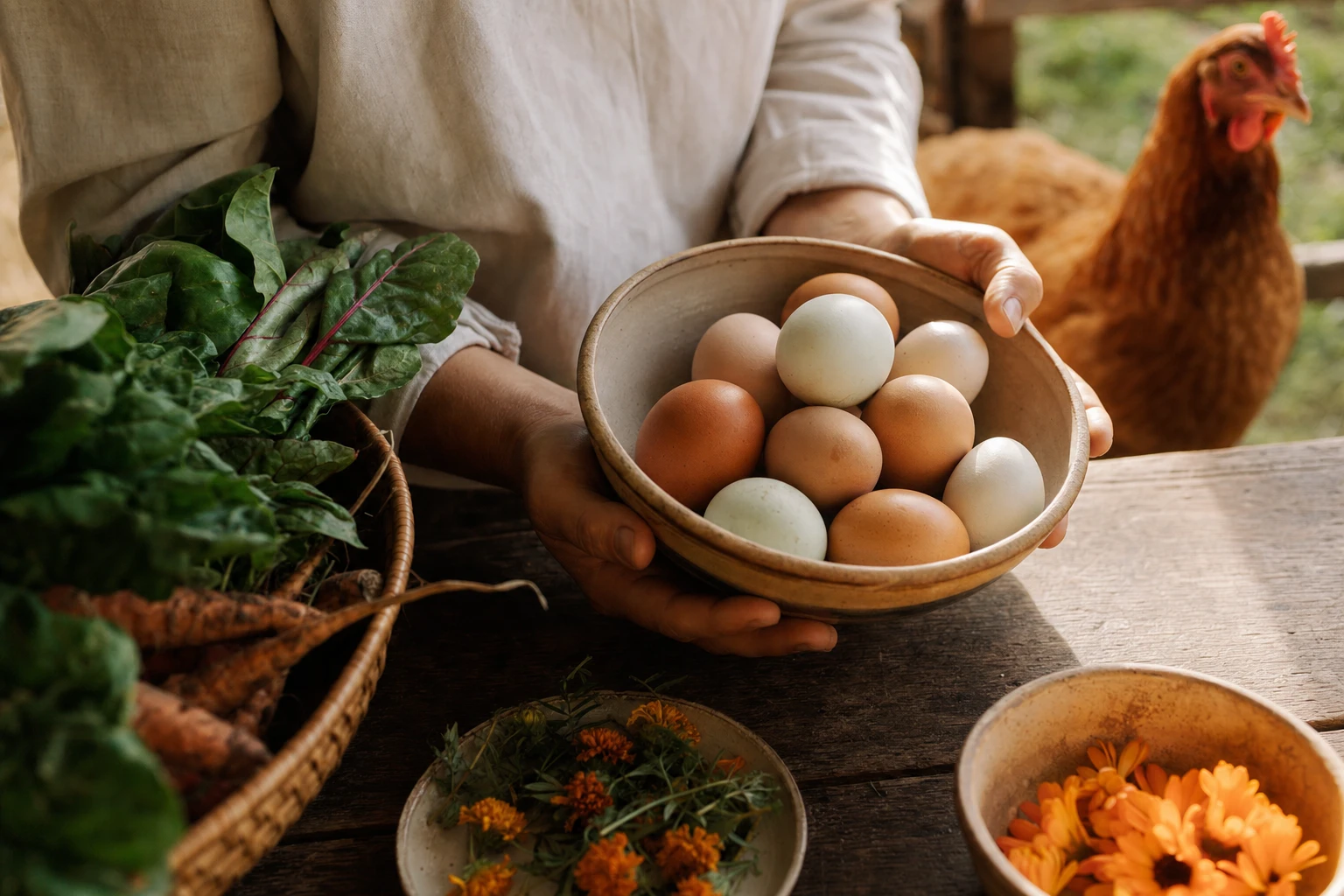
A hen in a cage, fed on grain and soya, lays an egg. A hen roaming a pasture, eating insects, worms, grass, and varied plant matter, lays a completely different product. The nutrient profile shifts. The colour shifts. The very structure of the fat changes.
A pastured egg isn't just "better". It's a different food entirely.
Research comparing eggs from different production systems consistently finds the same pattern. When hens have access to pasture, when they eat what they were designed to eat, the nutrient density of their eggs climbs. Not slightly. Dramatically.
What really changes when hens are pastured
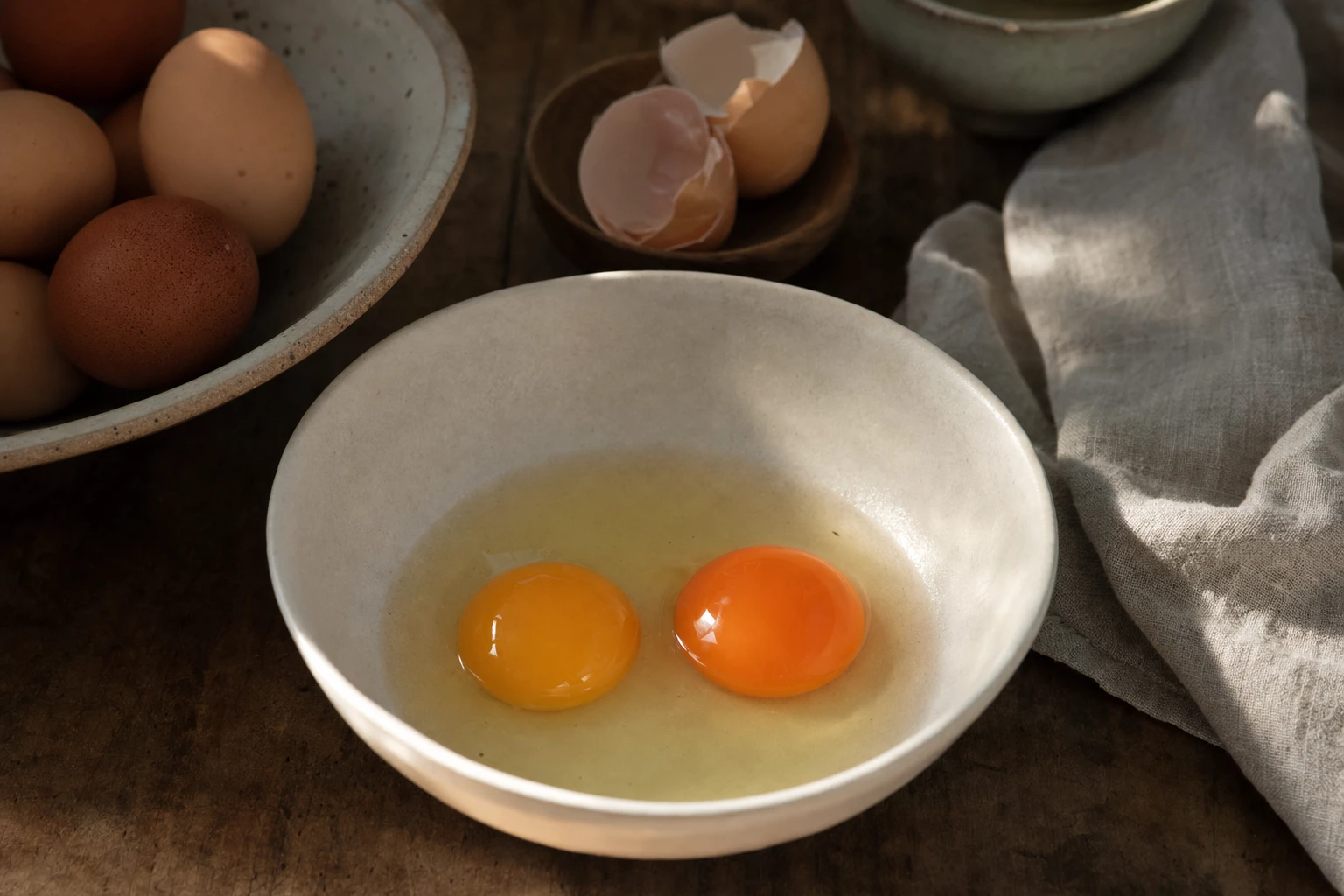
Start with the yolk colour. That deep, almost orange-red hue you see in a truly free-range egg? That's carotenoids. Xanthophyll. These are the pigments from the plants and insects the hen ate. A pale, anaemic-looking yolk tells you the bird ate grain, not greens.
The yolk colour is a visual marker of what's actually in the egg. Pale yolk equals pale nutrient profile. Deep orange yolk equals nutrient density.
But colour is just the beginning. Pastured eggs contain higher levels of fat-soluble vitamins, particularly vitamin A, vitamin D, and vitamin E. They contain more cholesterol in a form your body can actually use, which matters because cholesterol is the precursor to all steroid hormones, including testosterone, oestrogen, and progesterone.
The fat composition shifts too. Pastured eggs contain a better ratio of omega-3 to omega-6 fatty acids. Not by accident, but because the bird's diet contained the foods that supply those fats.
Choline: the nutrient nobody talks about
Of all the nutrients in an egg, choline might be the most important and the most overlooked.
Choline is essential for brain development, memory formation, and methylation, one of the most fundamental biochemical processes in your body. It's critical for fetal brain development. It's protective against neurodegeneration in ageing. It's required for the production of acetylcholine, the neurotransmitter that governs focus, memory, and attention.
Most people are deficient in choline, and eggs are one of the richest food sources.
A single pastured egg yolk contains about 140 milligrams of choline. That's roughly a quarter of the daily requirement for most adults.1
But here's the thing that matters: the choline content varies by what the hen ate. Research from Penn State University comparing conventional versus pastured eggs found that pastured eggs contained higher choline levels.2 Not marginally higher. Measurably higher.
This is particularly important if you're pregnant, breastfeeding, or ageing. The choline in eggs is in a highly bioavailable form called phosphatidylcholine, which crosses the blood-brain barrier and directly supports brain function.1 You cannot get this from plant sources.
Carotenoids and eye health
The xanthophyll and lutein in pastured egg yolks aren't just visual. They're the same carotenoids that protect the macula of your eye from age-related degeneration.
Lutein and zeaxanthin accumulate in the macula, the region responsible for central vision and visual acuity.3 As you age, these pigments decline. By 70 or 80, many people have lost significant macular function. Age-related macular degeneration is one of the leading causes of vision loss in ageing populations.
The research is clear: higher dietary intake of lutein and zeaxanthin slows this decline. And pastured eggs are one of the few animal foods delivering these in meaningful quantities.
A conventional caged egg? The yolk is pale because the hen never saw grass or ate the insects that contain these compounds. Pastured eggs, measured from the same study, contained 4 to 5 times higher levels of these protective carotenoids.2
Get health guides like this, free
Two short reads a week on eating for energy, gut health, skin, sleep and more.
By signing up you agree to receive emails from us. No spam, unsubscribe anytime.
Omega-3 content and where it comes from
Pastured eggs contain approximately 3 times more omega-3 fatty acids than conventional eggs.2 That's not a marketing claim. That's measurable in the lab.
Where does this come from? The insects and plant matter the hen consumes. When a hen eats grass, clover, insects like grasshoppers and flies, she's eating organisms rich in alpha-linolenic acid, the plant-based omega-3 precursor. The hen's body converts some of this into the long-chain omega-3s, EPA and DHA, which then appear in the yolk.
Omega-3 fatty acids matter because they're anti-inflammatory. They support brain function. They're structural components of cell membranes. Most modern diets are chronically depleted in omega-3s relative to omega-6s, driving systemic inflammation.
The difference between a pastured egg and a caged egg is the difference between a food that fights inflammation and one that's neutral at best.
The grain fed to conventional layers is heavy in omega-6 linoleic acid. It's cheap and abundant. But it shifts the fatty acid ratio of the egg. A pastured egg has a healthier fat profile because the bird ate a healthier diet.
British Lion versus truly free-range
In the UK, egg labelling can be confusing. British Lion is a welfare certification that sounds like it guarantees high quality, but the bar is lower than many assume.
British Lion certified eggs come from hens with outdoor access. But that outdoor space might be a concrete run. The hens may spend most of their time inside. They're still primarily fed on grain-based pellets rather than foraged foods.
British Lion is meaningfully better than caged eggs, which is the bar set by the welfare standard. The nutrient profile is incrementally improved. But it's not the same as buying from a farmer market where you can see the hens actually grazing in pasture.
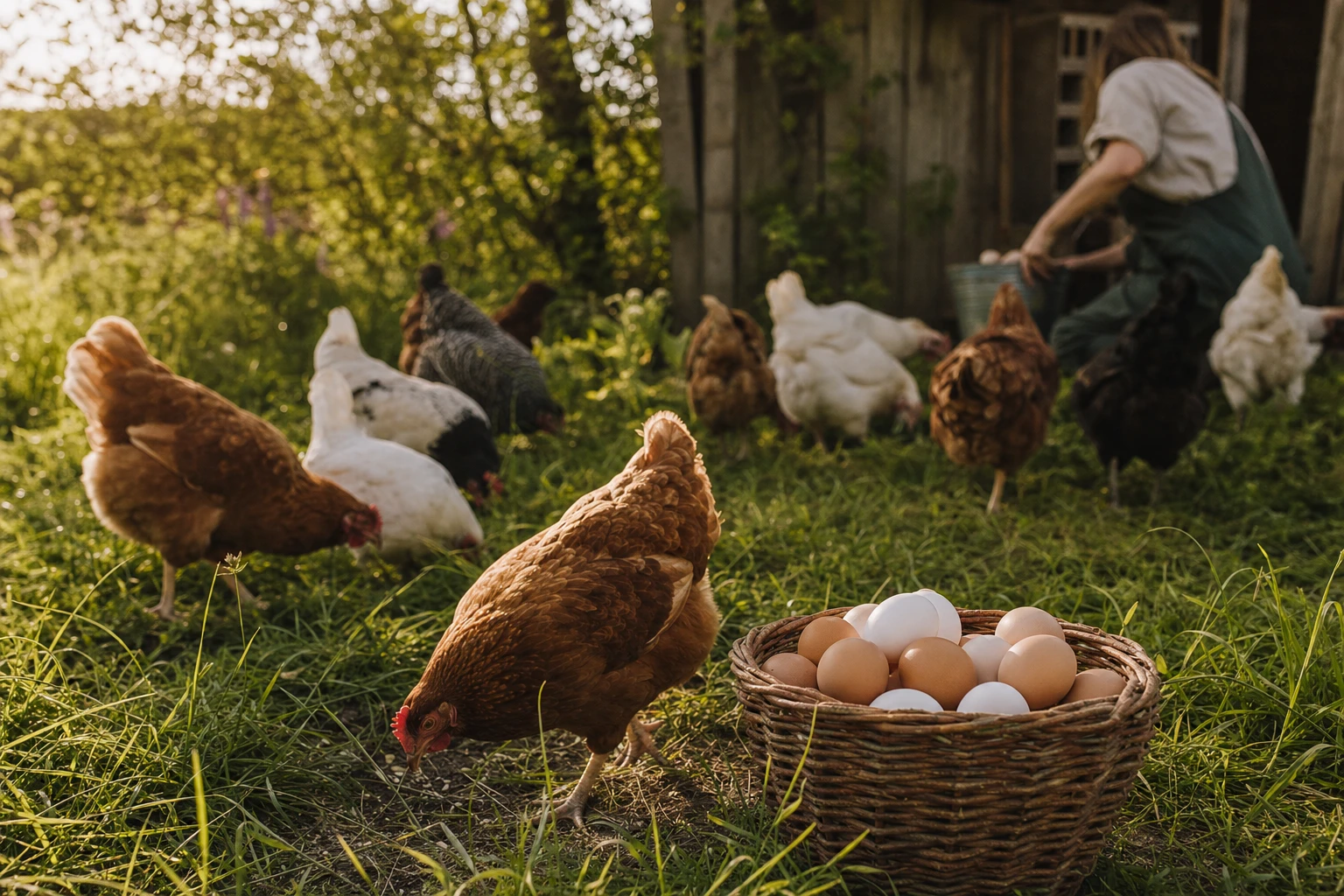
The truly nutrient-dense eggs come from producers where hens spend genuine time foraging. You can identify these because the yolk colour is deep and consistent. The farmer can tell you what the birds are eating. The eggs taste different.
1 of 9
Daily blend
100,000+ thriving families4.9 on Trustpilot
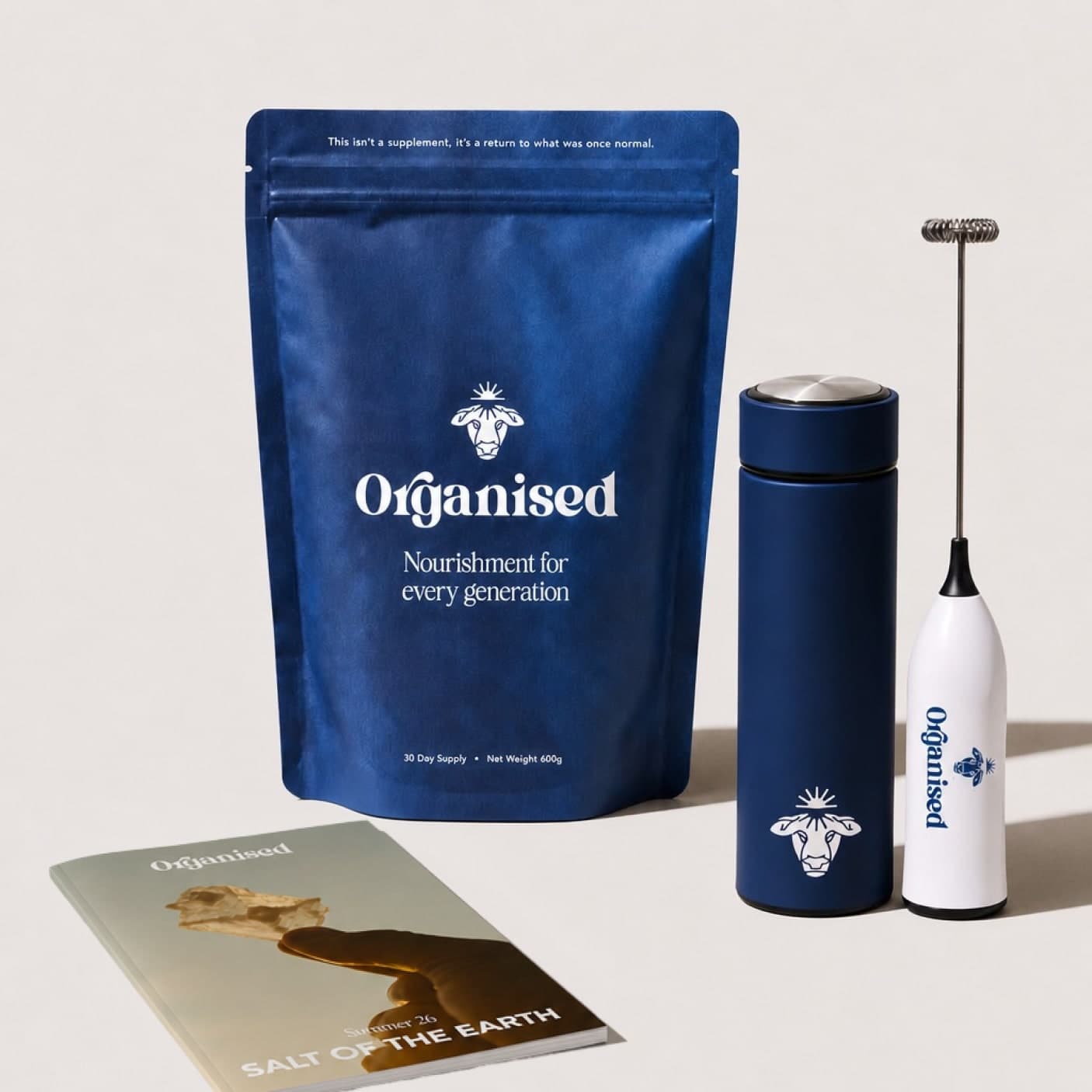
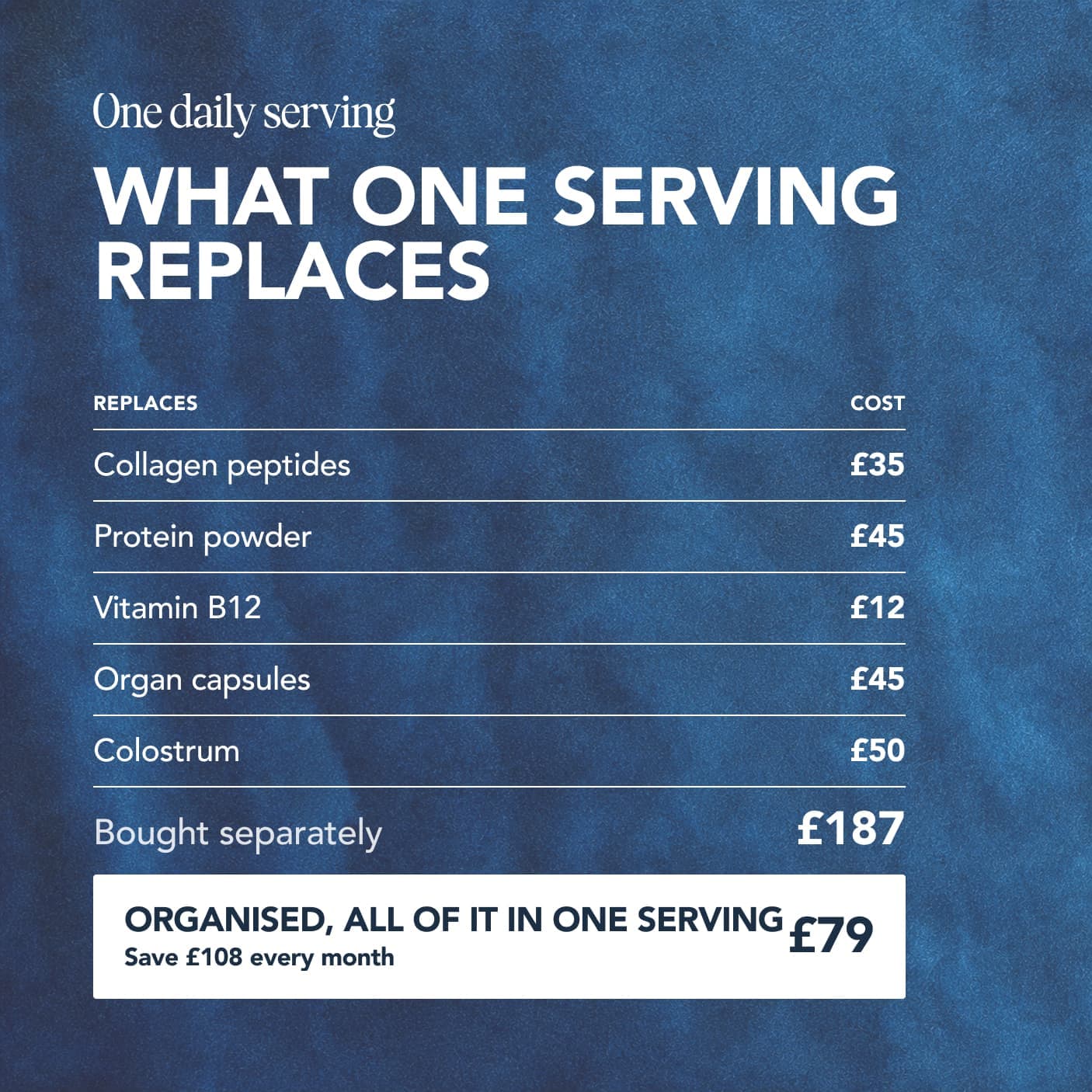
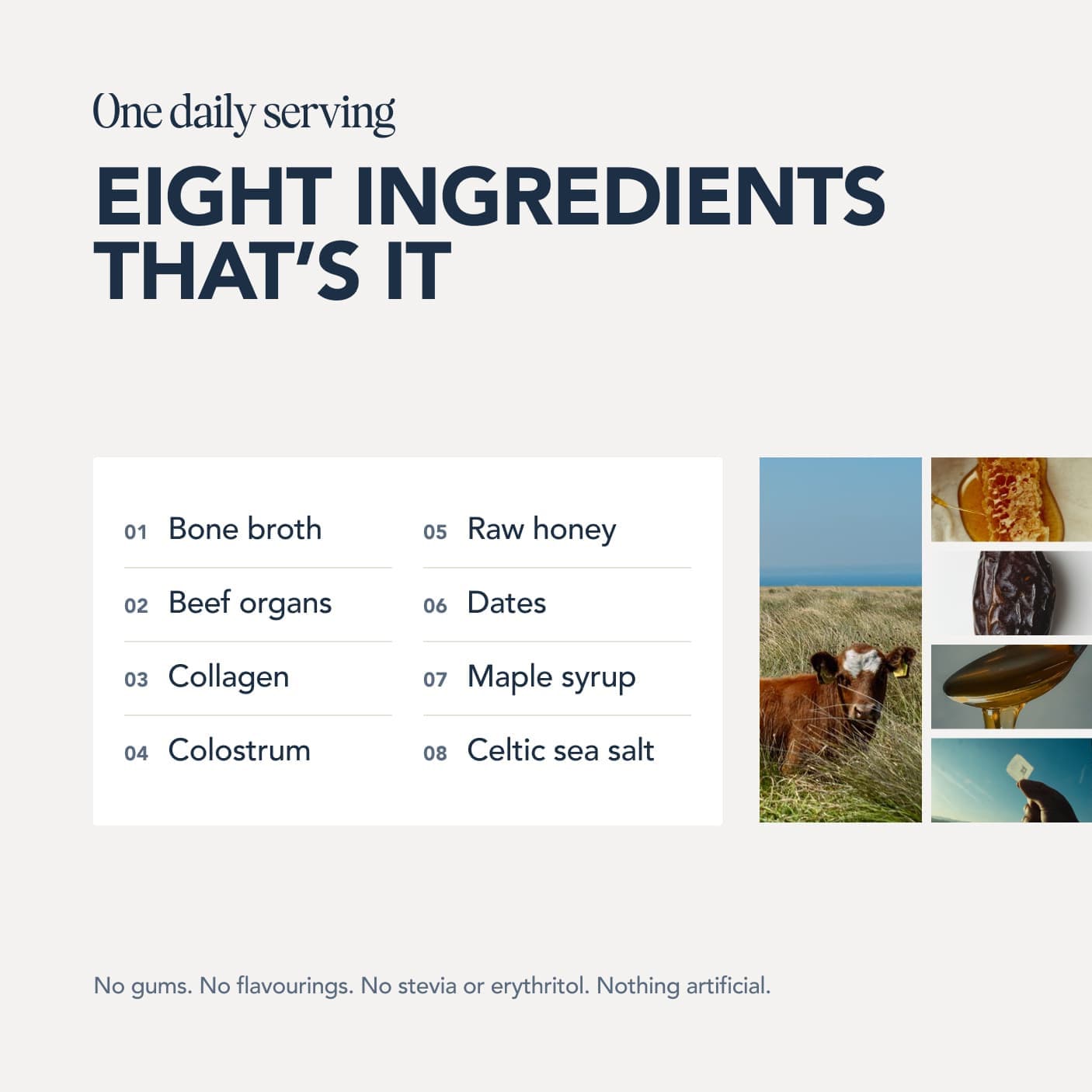
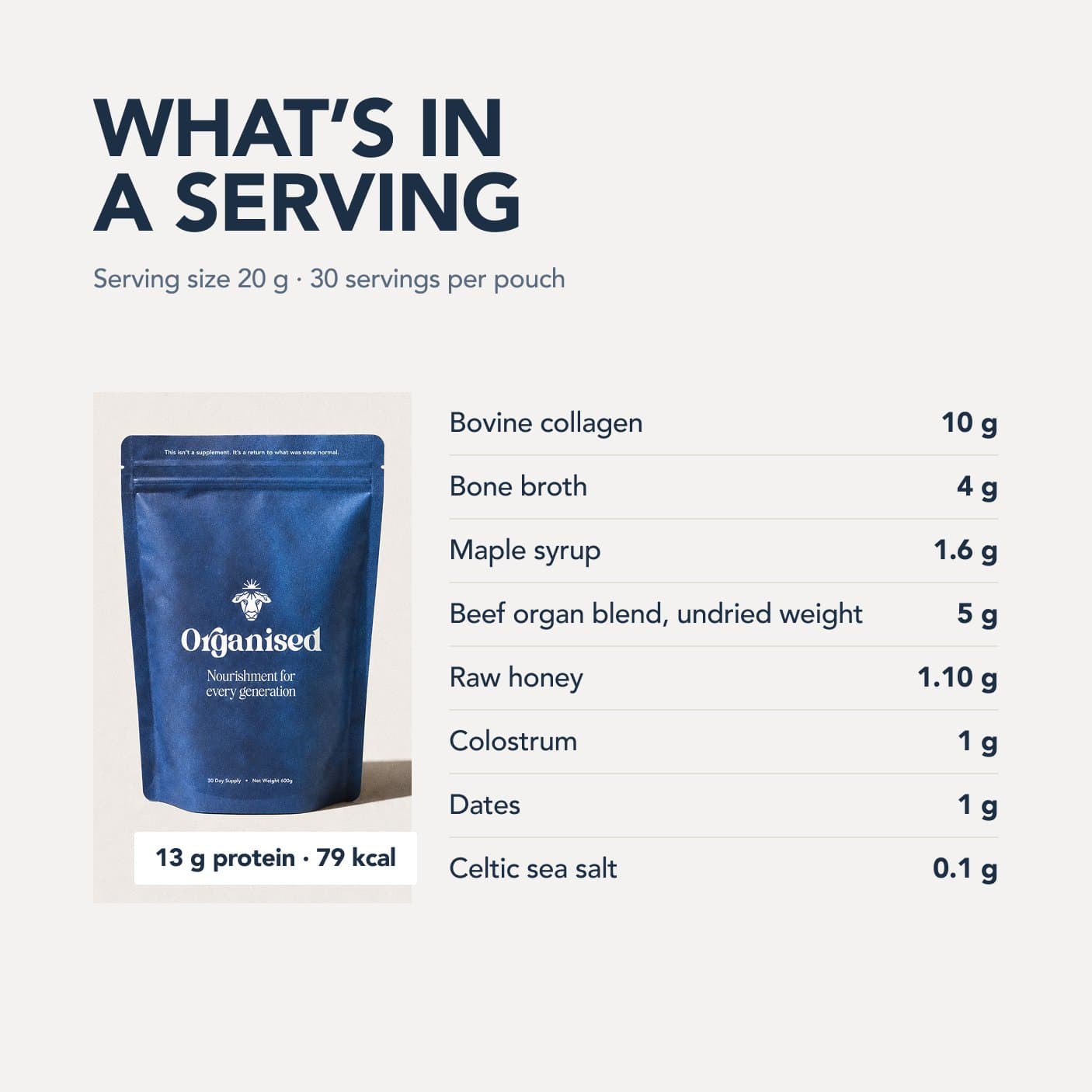
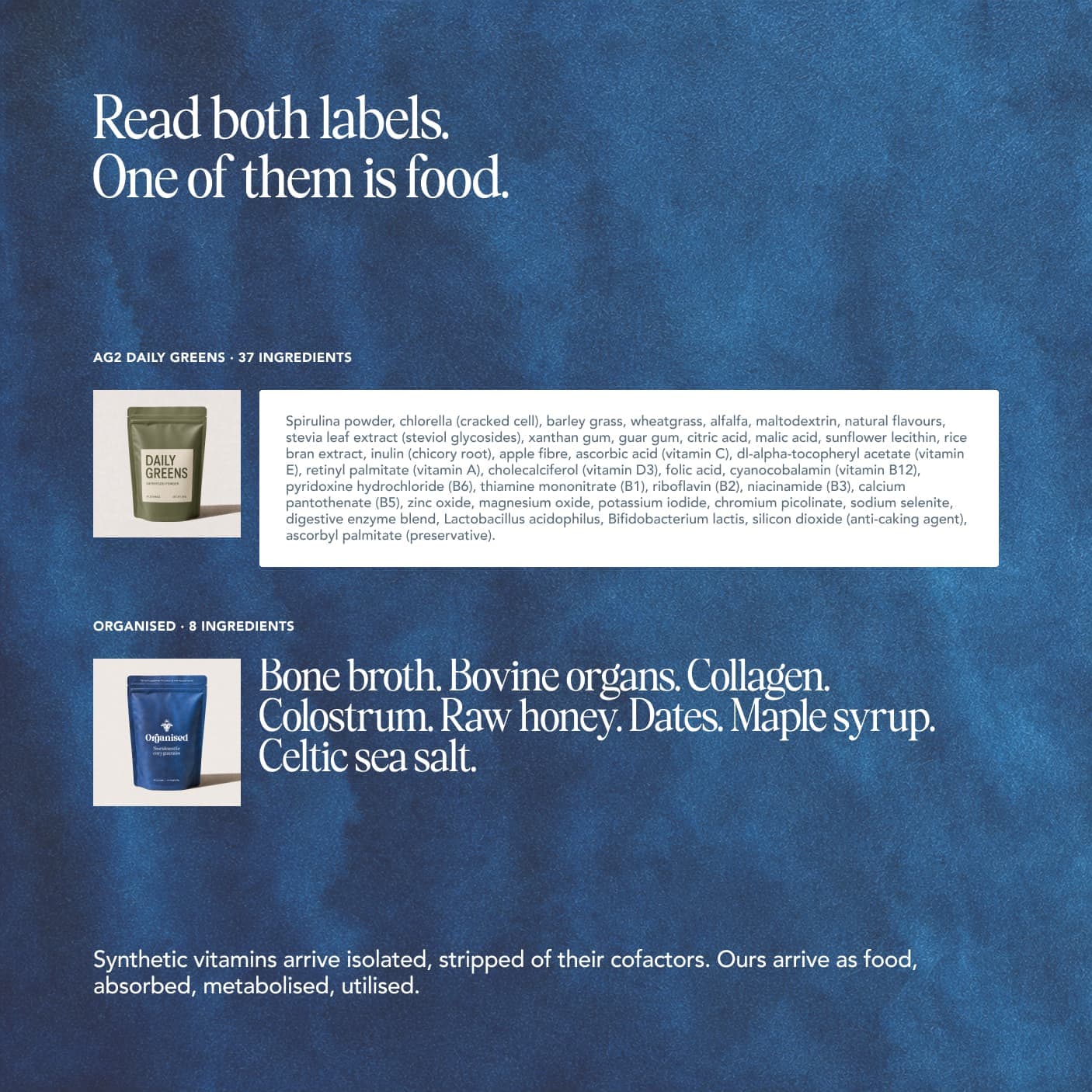
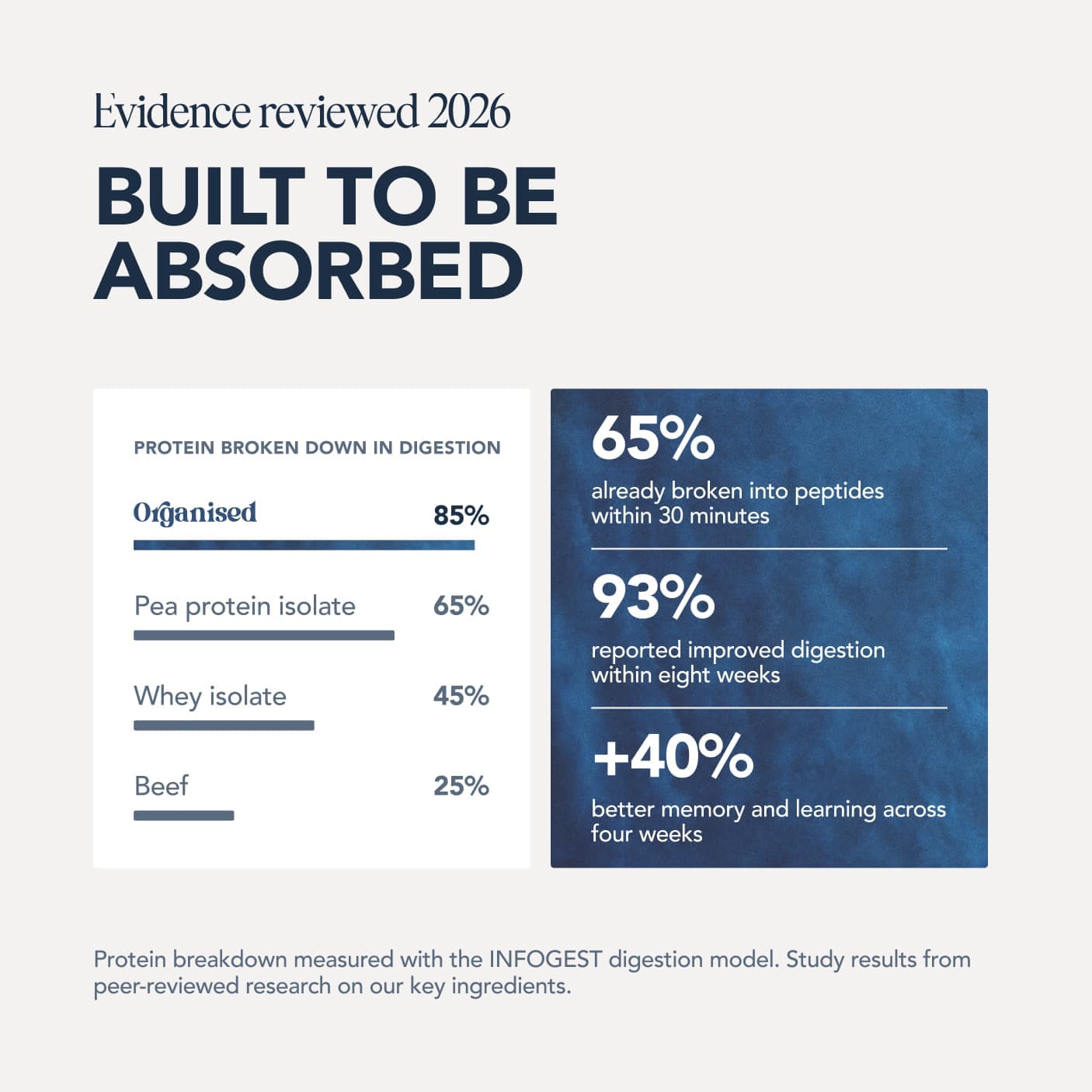
Eight real ingredients built around grass-fed beef organs, collagen and colostrum. Nothing synthetic added.
Free with your first order, worth £38. Plus £10 off the pouch with a subscription.
Free UK shipping · Made in England · 100 day money back guarantee on your first pouch · Skip, pause or cancel anytime
What to actually look for
If you can find true pastured eggs from a local farm, that's the gold standard. Look for farmers markets, local box schemes, or farm shops.
If those aren't available, look for this hierarchy:
- Pasture-raised or truly free-range: Hens visibly foraging outdoors, yolk colour deep orange. These are rare in supermarkets but some independent retailers stock them.
- British Lion certified: A meaningful step up from conventional. Hens have outdoor access and the eggs are fresher than mass-produced alternatives. Available in most UK supermarkets.
- Free-range (non-British Lion): Hens have outdoor access but it may be minimal. Better than cage eggs, but the nutrient profile doesn't match pastured.
- Conventional cage eggs: Cheapest, lowest nutrient density, lowest welfare standard.
The pale yolk is a warning signal. If you're buying eggs with a pale yellow yolk, you're buying a commodity product with a compromised nutrient profile.
Eggs from Burford Browns, a heritage breed, often have a deeper yolk colour than white-shelled egg layers. This is partly breed, partly diet. If you can find Burford Browns from a decent producer, they're worth seeking out.
The bottom line
Egg quality matters. Not all eggs are equivalent. The bird's environment and diet directly determine the nutrient profile of the yolk.
A pastured egg is a genuinely different food from a caged egg. Better choline. Better carotenoids. Better omega-3 ratio. Better colour. Better taste.
If eggs feature regularly in your diet, which they should, the source is worth caring about. Spend the extra money where you can. Your brain, your eyes, and your hormones will thank you.
References
Every source below was checked on 27 August 2026. Each PubMed, PMC and DOI identifier was resolved against NCBI or Crossref, and what it opens is printed under the citation, so you can see the link goes where the citation says without leaving the page. Where a citation and its identifier disagreed, the citation was corrected to the record or the reference was deleted along with the sentence marker that pointed at it, and where the resolved paper turned out not to support the sentence, the sentence was cut back to what it does support. Borrowed authority is worse than none, because it looks like rigour.
- National Institutes of Health Office of Dietary Supplements. Choline - Health Professional Fact Sheet. NIH ODS Choline.
- Karsten HD et al. Vitamins A, E and fatty acid composition of the eggs of caged hens and pastured hens. Renew Agric Food Syst. Cambridge Core.
- Bernstein PS et al. Lutein, zeaxanthin, and meso-zeaxanthin: The basic and clinical science underlying carotenoid-based nutritional interventions against ocular disease. Prog Retin Eye Res. PMC4698241.Checked 27 August 2026: PMC4698241 opens Bernstein PS, Li B, Vachali PP et al, Lutein, zeaxanthin, and meso-zeaxanthin: The basic and clinical science underlying carotenoid-based nutritional interventions against ocular disease. Prog Retin Eye Res 2016;50:34-66. PubMed indexes it as: Review.
Who wrote and reviewed this guide
Niall Kiddle
Author · Founder, Organised
Niall is the founder of Organised. He started the company in 2024 after fixing his own health the slow way: in 2022 he swapped a cupboard of synthetic supplements for real food, raw milk, organ meats, bone broth and honey, and felt the difference within months.
Areas of expertise: Ancestral nutrition, Organ meats, Whole-food supplementation, Gut health, Regenerative sourcing
Read Niall's full profile
Pedro Rodrigues
Reviewer · Agronomist (farming and sourcing only)
Pedro is the agronomist Organised works with on farming and sourcing. His job on the guides is to keep the science honest: he reviews what we publish about soil health, regenerative agriculture, grazing and the way food is actually produced.
Areas of expertise: Regenerative agriculture, Agronomy, Soil health, Grass-fed farming, Food sourcing
Reviewed this guide on
Read Pedro's full profileMore on nutrition
View allBrowse the guides library
All guidesKeep reading
Health goals
Muscle Loss After 40: Why Protein Quality Matters More Than Ever
After 40, your muscles are less responsive to protein. Here's why quality matters, what leucine does, and why animal protein is superior.

Health goals
Do Beef Organs Help with Fertility? An Ancestral Guide
If you’ve been trying to conceive (or just thinking ahead), you’ve probably fallen down the usual rabbit holes: fertility diets, seed cycling, supplements
Health goals
Feeding Your Brain: The Nutrients Behind Focus, Memory and Clarity
Discover which nutrients power your brain: DHA, choline, B12, iron, zinc, creatine. Food sources for lasting focus, memory, and mental clarity.
Real food, made effortless
Start my daily blendA few ways to use it
All recipes
Raw Milk Hot Chocolate with Collagen
A nourishing evening hot chocolate made with raw milk, grass-fed collagen, raw cacao, and honey. A nighttime ritual that supports sleep and gut health.
Raw Milk Ice Cream with Organised
Make raw milk ice cream at home with Organised for a seasonal, nutrient-dense treat. Three simple flavours to try whenever the craving strikes.

Organised Protein Pancakes: A Weekend Favourite
A high-protein pancake recipe using beef protein, eggs, and raw milk. Cooked in cast iron, naturally sweetened with banana and honey. Real food breakfast.


 Join over 100,000+ members
Build a better food system with us
The Organised community is thousands of people choosing real food and backing the farmers who grow it, all of us trying to leave the world a little better than we found it. If that is what you care about too, you belong here.