Hair Loss in Men: Nutrition Beyond Finasteride
Hair loss in men is usually framed as genetic and hormonal, something that happens to you. If you've got the genes, you're going bald. If finasteride works, great. If not, you're out of options. But this misses what's actually driving hair loss for most men, which is nutritional deficiency operating on top of genetic susceptibility.

By Niall Kiddle, Founder, Organised

Reviewed by Pedro Rodrigues, Agronomist (farming and sourcing only) ·
6 min read · Published · Updated · 2 cited sources
Makers of the Organised Daily blend, a grass-fed beef organ supplement from regenerative UK farms

But this misses what's actually driving hair loss for most men, which is nutritional deficiency operating on top of genetic susceptibility.

The DHT story (and why it's incomplete)
Men genetically predisposed to male pattern (androgenetic) alopecia have hair follicles that are sensitive to dihydrotestosterone (DHT), a more potent androgen converted from testosterone by 5-alpha reductase. Finasteride inhibits 5-alpha reductase and is approved for androgenetic alopecia in men.1
But here's what the medical model doesn't address: not all men with elevated DHT go bald. Not all men with the genes for baldness actually lose their hair. And some men on finasteride see improvement while others see nothing. Why?
The answer lies in the structural and nutritional foundation of the hair follicle itself. A hair follicle that's well-nourished and has all the minerals it needs is more resilient. A follicle that's chronically undernourished will fall out even if DHT is normal. And a follicle that's deficient in the minerals that regulate growth cycling will have shortened growth phases no matter what your genetics say.
Hair loss is rarely just hormones. It's hormones acting on follicles that have been starved of the minerals they need to resist.
The minerals that hold your hair
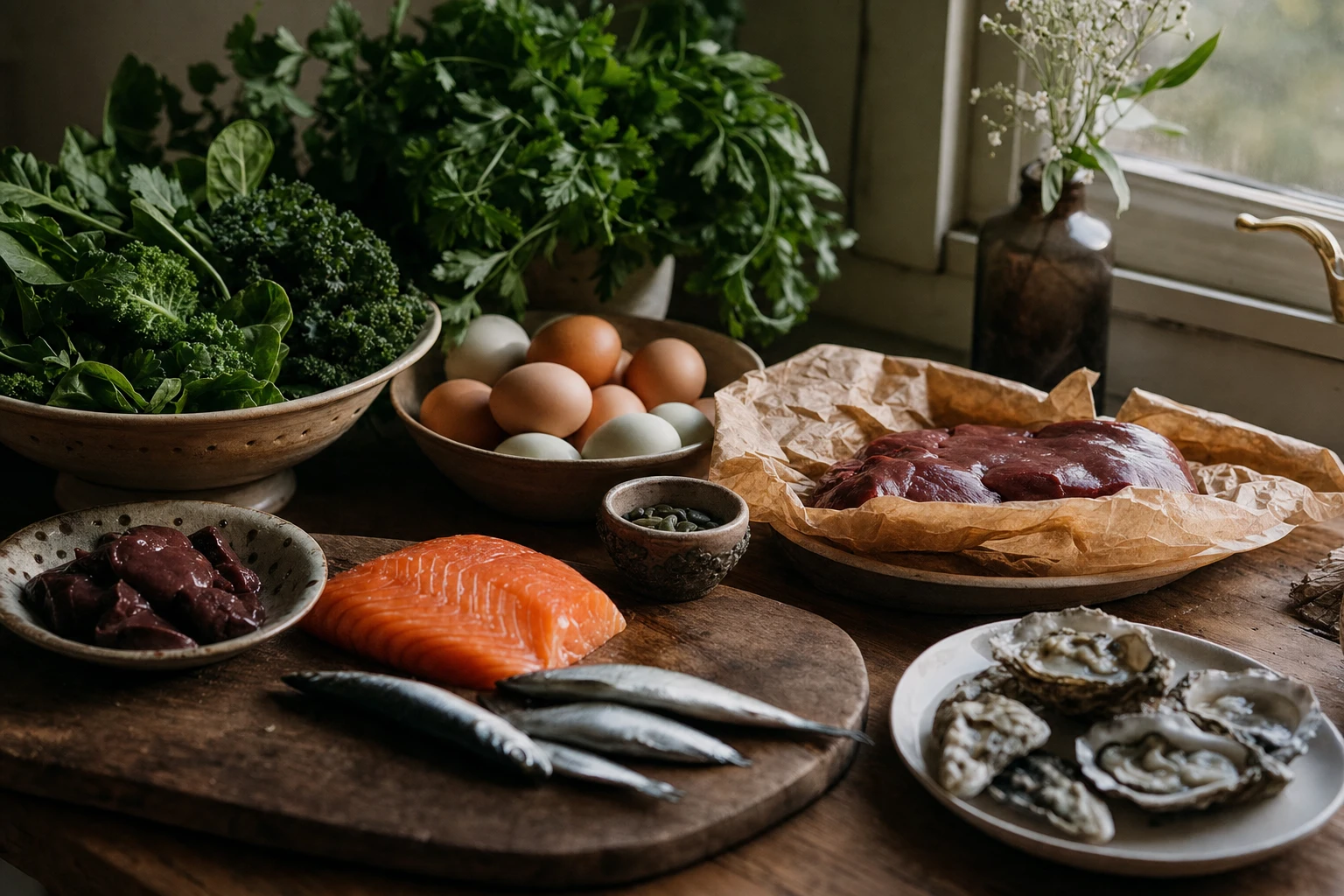
Zinc is the foundation. Hair follicles have some of the highest zinc concentration of any tissue in your body. Zinc is required for the protein that allows your hair to grow. It regulates the anagen phase, the active growth phase of your hair cycle. When zinc is low, your growth phase shortens, and you shift into shedding earlier. Zinc is also required for the enzyme that converts testosterone to DHT, which means chronic zinc deficiency can paradoxically increase DHT sensitivity in your follicles. Oysters are the richest source by far, followed by beef, pumpkin seeds, and eggs.
Iron is essential for cells with high turnover, including hair follicle matrix cells. Low ferritin (iron stores) has been associated with hair loss in observational studies, particularly with telogen effluvium, although causality remains debated.2
Copper works with iron and is required for the cross-linking of collagen that gives your hair elasticity and strength. It's also needed for the enzyme that synthesises melanin, the pigment that colours your hair. Copper and zinc are in balance, and too much supplemental zinc without adequate copper can actually worsen hair loss. Oysters, beef liver, and nuts are good sources, though most people get adequate copper from a normal diet unless they're obsessively supplementing zinc alone.
Silica is a mineral in bone broth and certain foods that's necessary for hair, skin, and connective tissue integrity. Bone broth provides it easily, as do green leafy vegetables and whole grains.
What actually matters
The research on hair loss and nutrition shows a consistent pattern: men with adequate zinc, iron, and vitamin B12 retain more hair. Men with low serum ferritin (iron stores) have accelerated hair loss. Men with adequate protein intake have thicker, stronger hair. This isn't controversial in the research world. It's well established. What's less discussed is how to actually fix it.
Here's what matters more than finasteride for most men with early-stage hair loss: adequate protein, adequate iron and zinc, adequate B vitamins (especially B12, which is only found in animal foods), and adequate fat-soluble vitamins like vitamin D and vitamin A, which are essential for hair follicle cycling. These are not supplements. These are foods.
A man eating liver twice a week, red meat regularly, and eggs daily is nutritionally positioned to hold his hair. Finasteride is the bonus if he needs it, not the foundation.
Get health guides like this, free
Two short reads a week on eating for energy, gut health, skin, sleep and more.
By signing up you agree to receive emails from us. No spam, unsubscribe anytime.
How to support your hair
If you're experiencing male pattern hair loss, the first move isn't medication. It's assessment. Get your iron (serum iron and ferritin), zinc, and B12 tested. Most men experiencing hair loss are deficient in at least two of these, often all three.
Once you know where you stand, the protocol is straightforward. Eat liver, which contains all of these nutrients in concentrated form, twice a week. Add red meat to your diet regularly, three to four times a week minimum. Beef provides iron, zinc, and B vitamins your hair needs. Add oysters if you can, even canned oysters count. Add eggs daily, which provide choline, protein, selenium, and other nutrients hair follicles demand.
Bone broth provides collagen, glycine, and minerals in easily absorbable form. If you're not making broth, at minimum get gelatinous cuts of meat like oxtail or slow-cooked chicken thighs, which provide similar nutrients.
If you're deficient, you may need to supplement zinc and iron initially, but the goal is to get your levels stable through food. Iron supplementation taken long-term can cause problems, so it's best kept temporary and guided by testing. Zinc supplementation is safer, but again, food is the goal.
Cut out the seed oils and ultra-processed foods, which drive systemic inflammation and divert nutrients toward repair instead of allowing them to support hair growth. Vitamin D matters too, especially if you live somewhere with low winter sun. Most men are deficient.
Give it three to six months minimum. Hair growth cycles take time. You won't see new thick hairs in four weeks. But you should see slowing of shedding within six to eight weeks if your deficiencies were the primary driver. Real regrowth or significant reduction in loss typically takes four to six months.

1 of 9
Daily blend
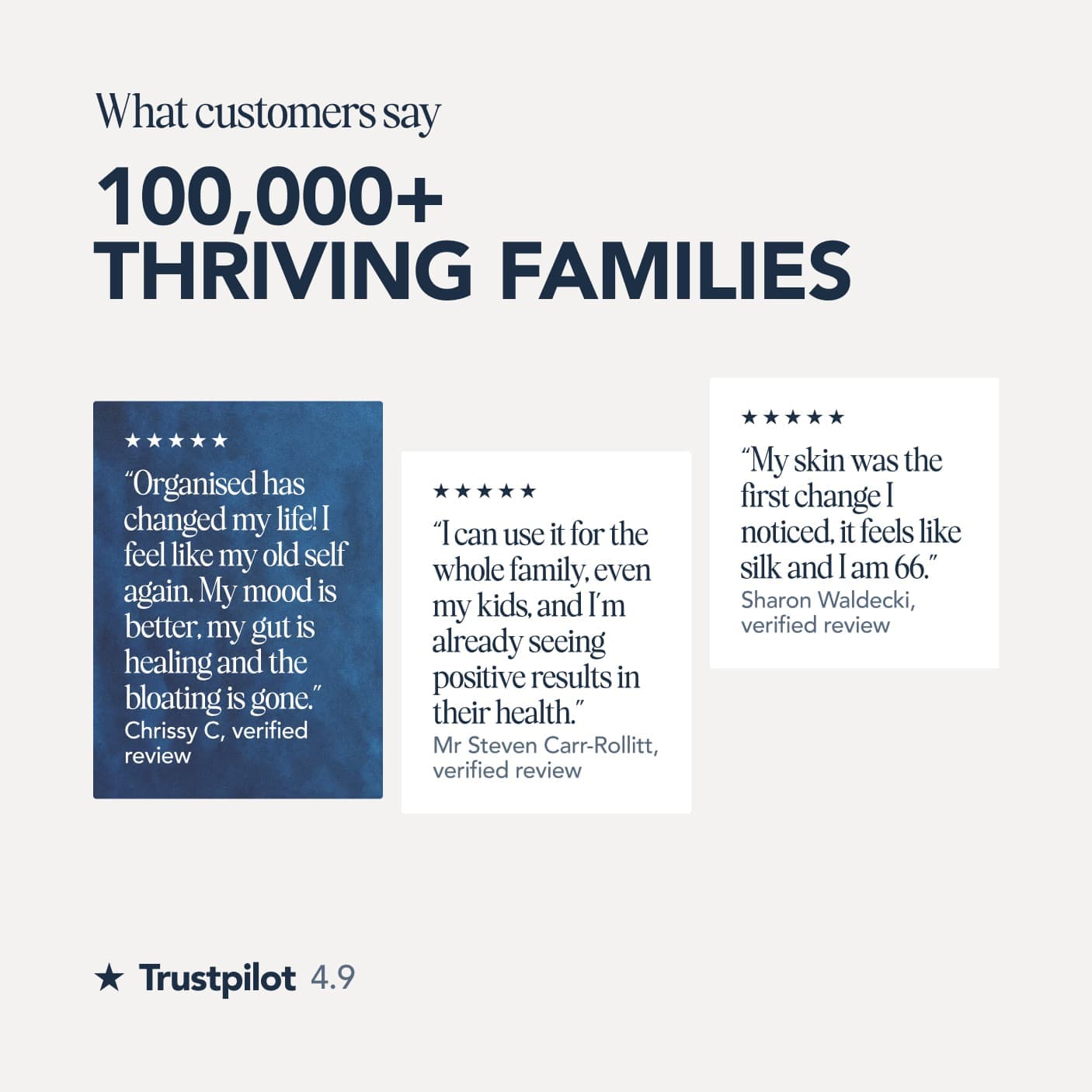
100,000+ thriving families4.9 on Trustpilot
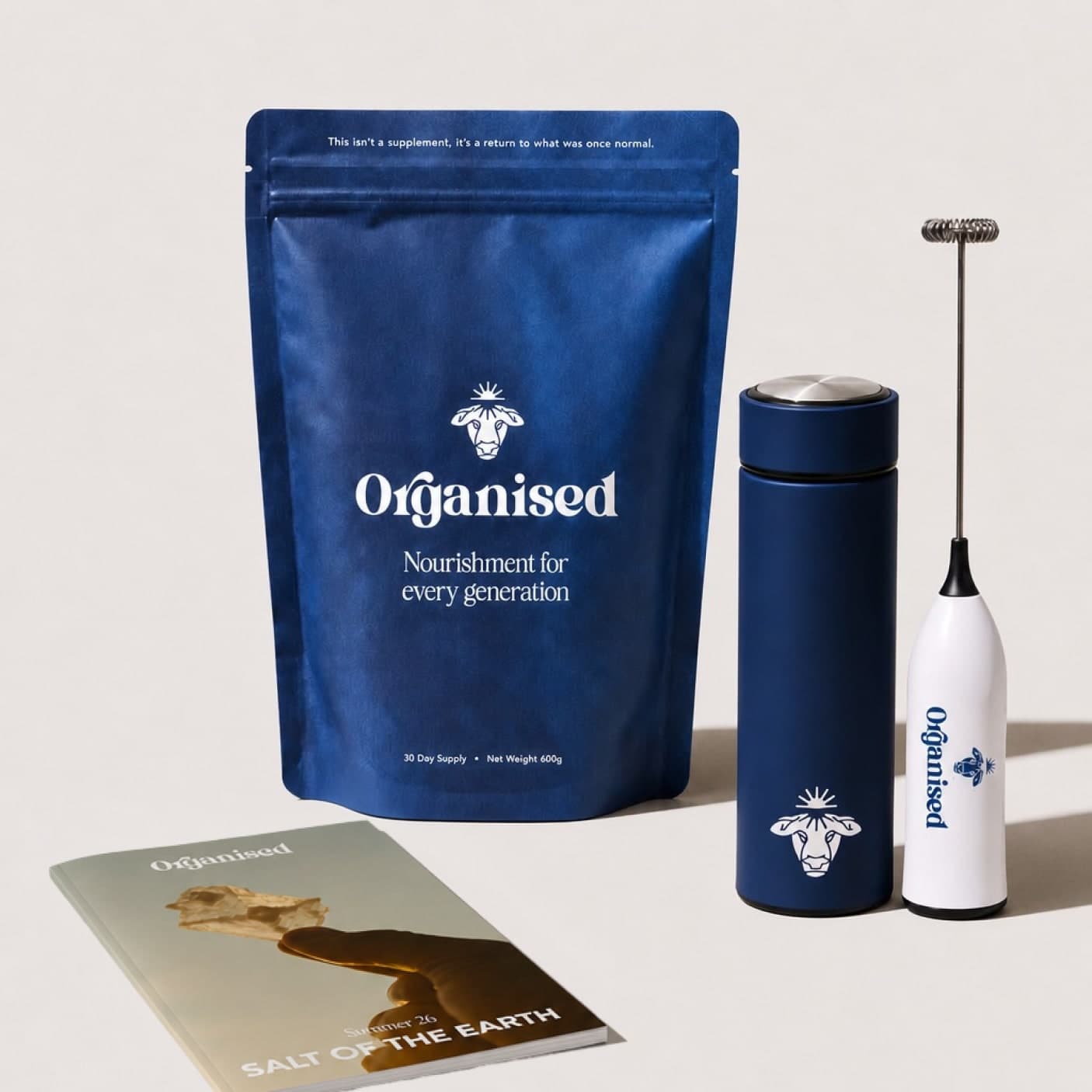
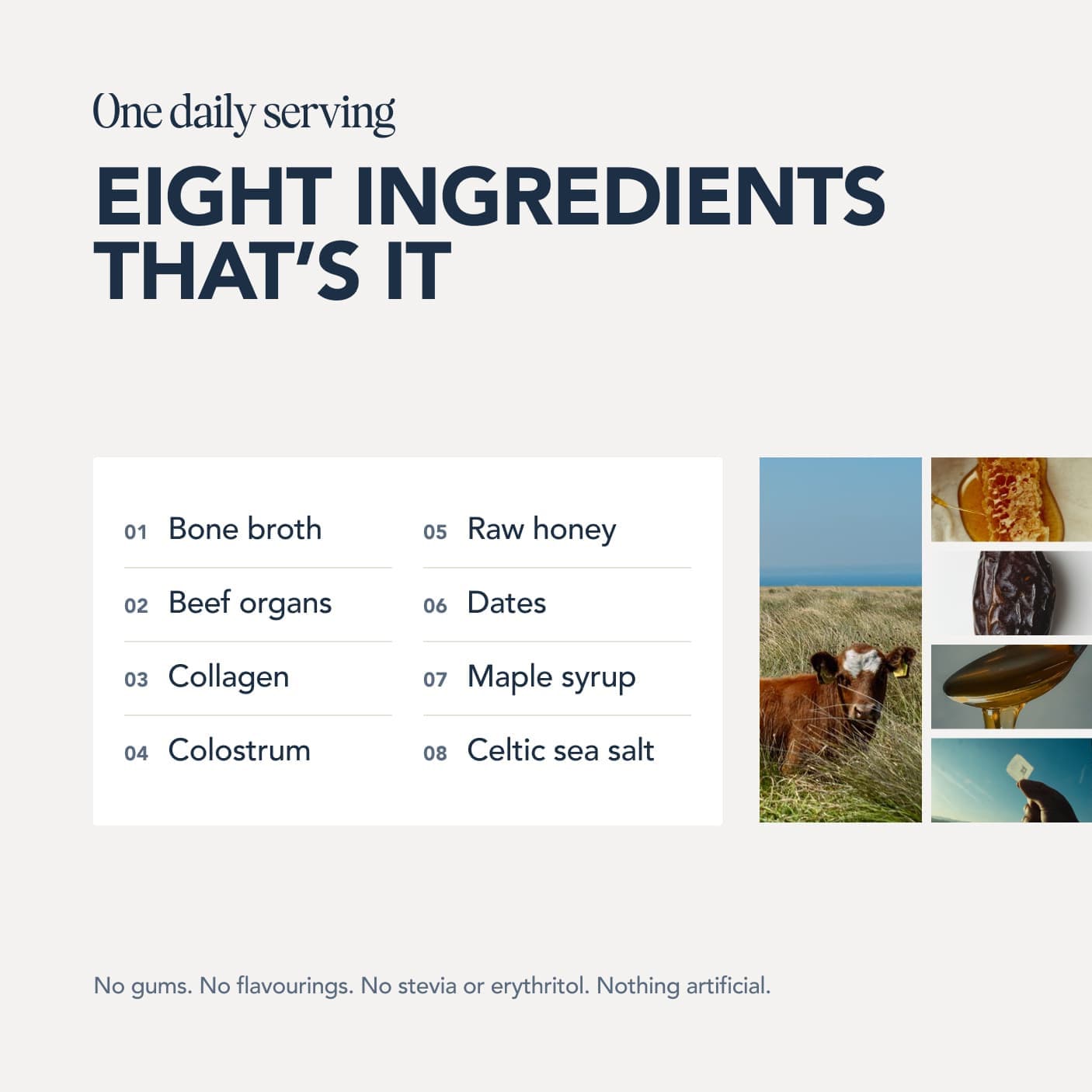
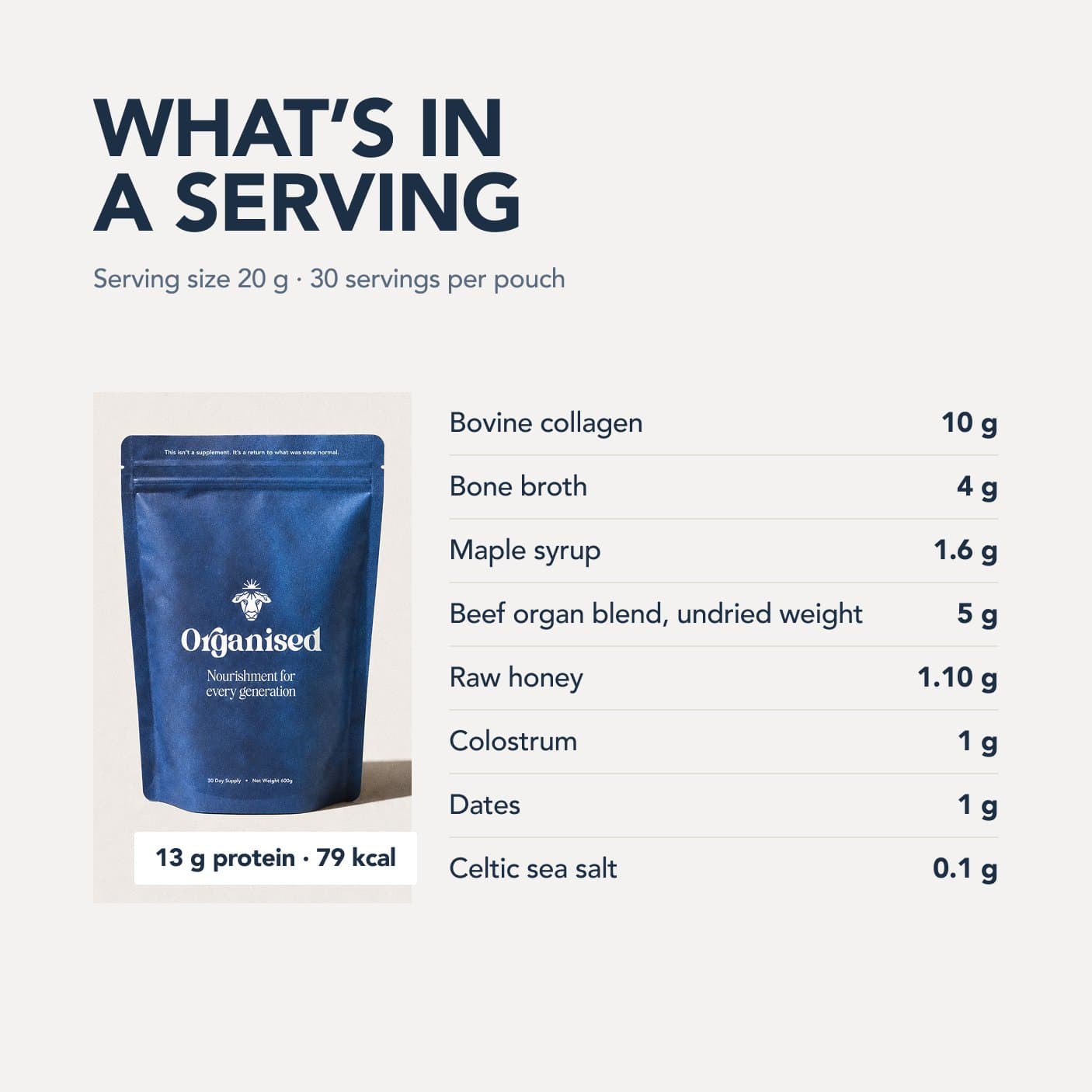
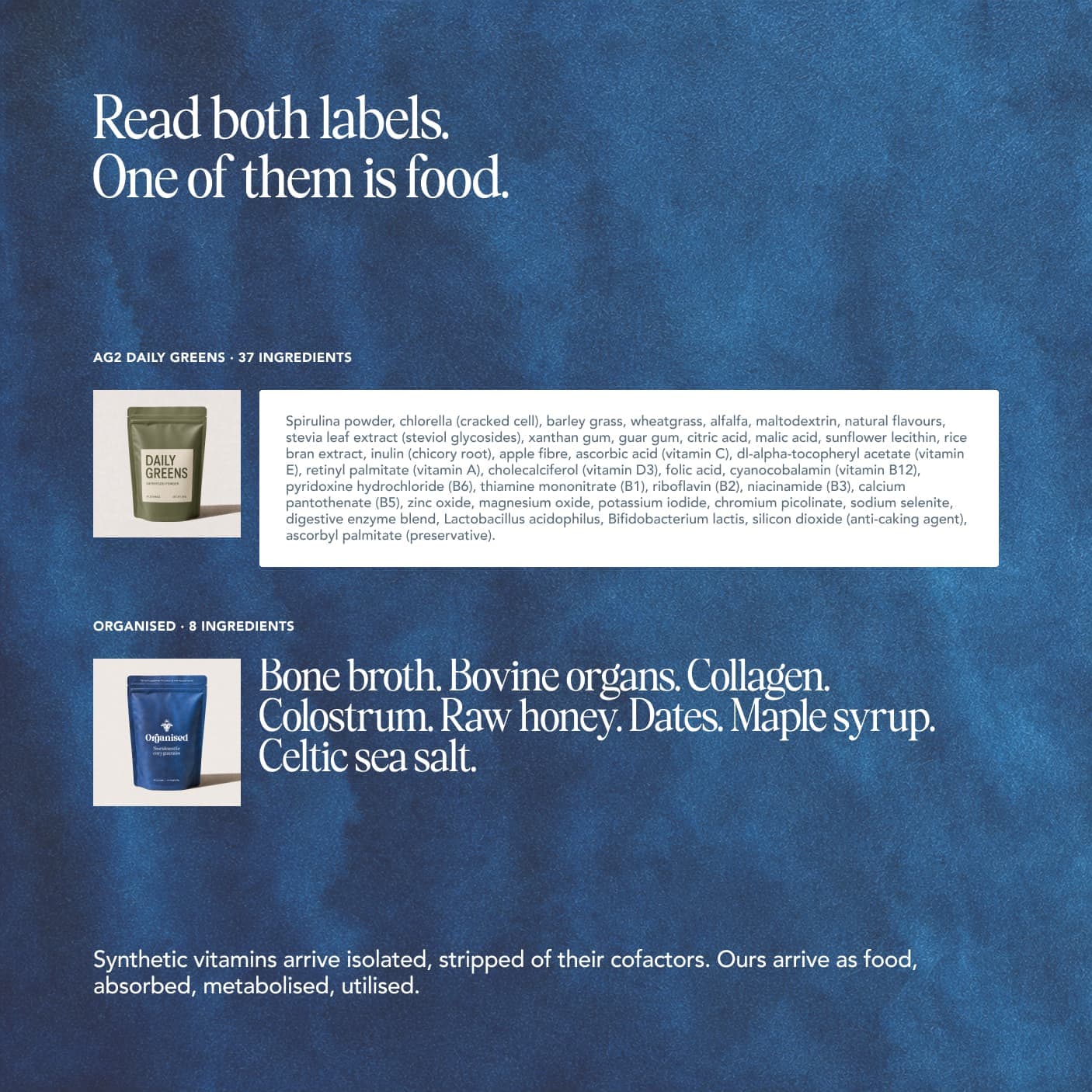
Eight real ingredients built around grass-fed beef organs, collagen and colostrum. Nothing synthetic added.
Free with your first order, worth £38. Plus £10 off the pouch with a subscription.
Free UK shipping · Made in England · 100 day money back guarantee on your first pouch · Skip, pause or cancel anytime
DHT sensitivity and nutritional modification
The conventional narrative says DHT causes male pattern baldness and finasteride blocks DHT conversion. This is true but incomplete. Not all men with elevated DHT go bald. Not all men with genetic predisposition experience rapid loss. The difference lies in how resilient the hair follicle is to DHT sensitivity.
A follicle that's well-nourished, with adequate zinc, iron, and protein, is more resistant to DHT-driven miniaturisation. A follicle that's chronically undernourished will miniaturise more readily and more rapidly. This is why nutrition and medication aren't opposing approaches. They work together.
Additionally, zinc is required for the enzyme that converts testosterone to DHT. When zinc is adequate, DHT production is normal and appropriate. When zinc is deficient, the process becomes dysregulated. Some men find that restoring zinc actually stabilises their hormonal environment in ways that support hair retention.
The combination of strong nutritional foundation (liver, red meat, oysters) plus finasteride if needed, creates the conditions for either hair retention or regrowth. One without the other is less powerful than both together. Feed your follicles and address the hormonal component simultaneously.
Timeline for hair regrowth in men
Hair growth cycles take time. You won't see regrowth in four weeks. But if nutrition is the primary driver of your loss, you will see measurable changes within a realistic timeframe.
- Weeks 1-4: No visible change. Your body is absorbing and utilising the nutrients you're providing.
- Weeks 4-8: Shedding decreases. You notice fewer hairs in the shower. This is the first sign it's working.
- Weeks 8-12: New hairs begin to appear, particularly at the hairline and crown. They're finer than terminal hair initially, but they're growing.
- Months 4-6: New hairs thicken and lengthen. If you've been using minoxidil or finasteride alongside the nutrition, results are often dramatic by month 4.
If you see no change in shedding by week 8, the primary driver of your loss is likely genetic sensitivity to DHT rather than nutritional deficiency. At that point, medication becomes the necessary tool. But most men haven't given nutrition an honest try. Give it 8 to 12 weeks of consistency. If results are happening, you'll see them by then.
The bottom line
Male pattern baldness is real and genetics matter. But genetics alone rarely explain the severity of hair loss you see. Nutritional deficiency does. Feed your follicles what they need. If you've done that and you're still losing hair, then medication might help. But most men haven't given nutrition a real chance.
References
Every source below was checked on 27 August 2026. Each PubMed, PMC and DOI identifier was resolved against NCBI or Crossref, and what it opens is printed under the citation, so you can see the link goes where the citation says without leaving the page. Where a citation and its identifier disagreed, the citation was corrected to the record or the reference was deleted along with the sentence marker that pointed at it, and where the resolved paper turned out not to support the sentence, the sentence was cut back to what it does support. Borrowed authority is worse than none, because it looks like rigour.
- NHS. Hair loss. https://www.nhs.uk/conditions/hair-loss/
- Almohanna HM, et al. The Role of Vitamins and Minerals in Hair Loss: A Review. Dermatology and Therapy. 2019. https://pmc.ncbi.nlm.nih.gov/articles/PMC6380979/Checked 27 August 2026: PMC6380979 opens Almohanna HM, Ahmed AA, Tsatalis JP et al, The Role of Vitamins and Minerals in Hair Loss: A Review. Dermatol Ther (Heidelb) 2019;9(1):51-70. PubMed indexes it as: Review.
Who wrote and reviewed this guide
Niall Kiddle
Author · Founder, Organised
Niall is the founder of Organised. He started the company in 2024 after fixing his own health the slow way: in 2022 he swapped a cupboard of synthetic supplements for real food, raw milk, organ meats, bone broth and honey, and felt the difference within months.
Areas of expertise: Ancestral nutrition, Organ meats, Whole-food supplementation, Gut health, Regenerative sourcing
Read Niall's full profile
Pedro Rodrigues
Reviewer · Agronomist (farming and sourcing only)
Pedro is the agronomist Organised works with on farming and sourcing. His job on the guides is to keep the science honest: he reviews what we publish about soil health, regenerative agriculture, grazing and the way food is actually produced.
Areas of expertise: Regenerative agriculture, Agronomy, Soil health, Grass-fed farming, Food sourcing
Reviewed this guide on
Read Pedro's full profileMore on hair
View all- The Nutritional Root Causes of Hair Loss
- How to Stop Hair Shedding with Ancestral Nutrition
- Keratin Supplements Are a Waste of Money. Here's Why.
- Postpartum Hair Loss: Why It Happens and How to Recover
- Scalp Health: Why It Matters for Hair Growth
- The Best Foods for Thicker, Stronger Hair
- Thinning Hair After 40: What Your Body Is Trying to Tell You
Browse the guides library
All guidesKeep reading

Health goals
The Nutritional Root Causes of Hair Loss
Discover the nutritional causes of hair loss, from iron, zinc and biotin to thyroid health, and how nutrient-dense whole foods can help support regrowth.

Health goals
The Connection Between Gut Health and Skin Breakouts
Your skin breakouts aren't just skin problems. They're gut problems expressing through your skin. Here's the science and what actually fixes it.

Health goals
Bloating After Eating: Common Causes and Whole Food Solutions
Discover the real reasons you bloat after meals and which whole foods actually help. Not all bloating is the same, and the fix isn't always less food.
Real food, made effortless
Start my daily blendA few ways to use it
All recipes
The Perfect Organised Morning Shake: Our Favourite Recipe
Our signature morning shake: Organised, raw milk, banana, honey. Simple, nourishing, and optimised for an empty stomach.

Raw Milk Ice Cream with Organised
Make raw milk ice cream at home with Organised for a seasonal, nutrient-dense treat. Three simple flavours to try whenever the craving strikes.

Organised Smoothie Bowl Recipes for Every Season
Four seasonal smoothie bowl recipes using Organised. Berry in summer, apple-cinnamon in autumn, tropical in spring, warming chocolate in winter.


 Join over 100,000+ members
Build a better food system with us
The Organised community is thousands of people choosing real food and backing the farmers who grow it, all of us trying to leave the world a little better than we found it. If that is what you care about too, you belong here.